The annual observance, held every September 28, seeks to raise awareness of rabies, promote vaccination of animals and educate communities on how to prevent the disease.
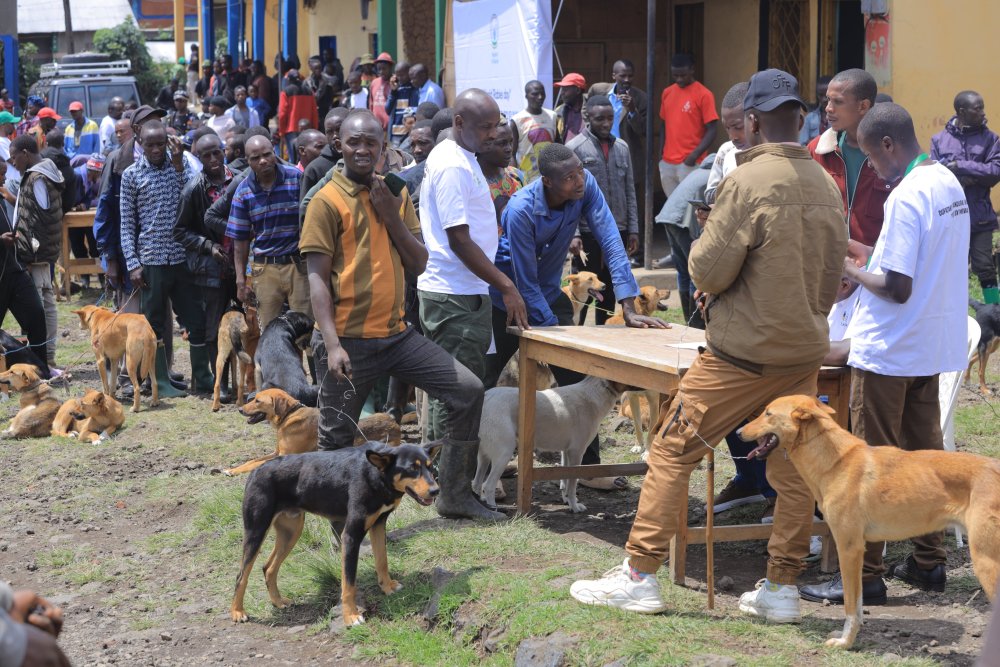
This year’s national event was held in Bisate Sector, Musanze District, an area close to Volcanoes National Park.
Among the activities carried out during the event were dog vaccination, spaying and neutering, as well as microchipping to help identify and keep records of the animals.
Uwingabire Claudine, a resident living near Volcanoes National Park, said she was pleased to have her dogs vaccinated.
“I have two dogs, and recently they went after a neighbour as if they wanted to bite them, which could have sparked a dispute. So I was happy that they came to vaccinate them for free,” she told IGIHE.
Prosper Uwingeri, the Chief Park Warden of the Volcanoes National Park, urged residents living near the park to keep their dogs from entering the protected area, particularly for hunting.
He said dogs entering the park could threaten wildlife and also create challenges for conservation and tourism.
“Preventing rabies through a One Health approach will help us protect the park and the different species found there. People living around the park depend on activities such as farming, livestock keeping and access to water, but these activities should not lead to dogs being sent into the park because they can harm wildlife,” Uwingeri said.
“The issue of dogs concerns us. They do not create a good image for tourism when they are released and end up hunting in the forest. We love dogs and want to protect them,” he added.
Nshimiyimana Laslas, Director of the Neglected Tropical Diseases (NTDs) and Other Parasitic Diseases Unit at RBC, reminded residents that both dogs and cats can transmit rabies.
“Both cats and dogs can transmit rabies. Once symptoms appear, the disease is almost always fatal. We want to eliminate rabies by 2030, and this requires ensuring that no one dies from rabies after being bitten by an infected animal,” he said.
Nshimiyimana called for closer cooperation between the human, animal and environmental health sectors in the fight against rabies, particularly in communities surrounding Volcanoes National Park.
“People who keep dogs at home are the first line of defence against rabies. We should have them vaccinated, keep them properly confined, take good care of them and prevent them from coming into contact with other animals. Releasing them can also expose animals in the park to the disease,” he said.

Leave a Reply