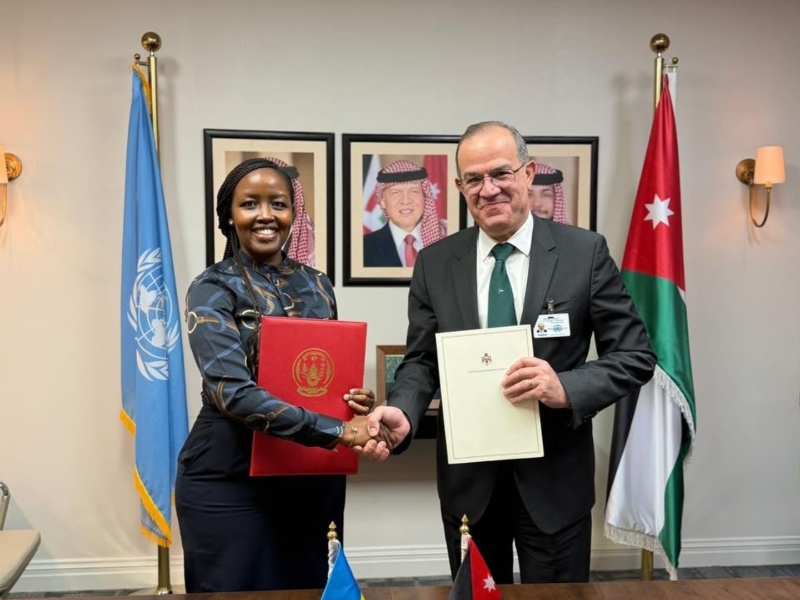
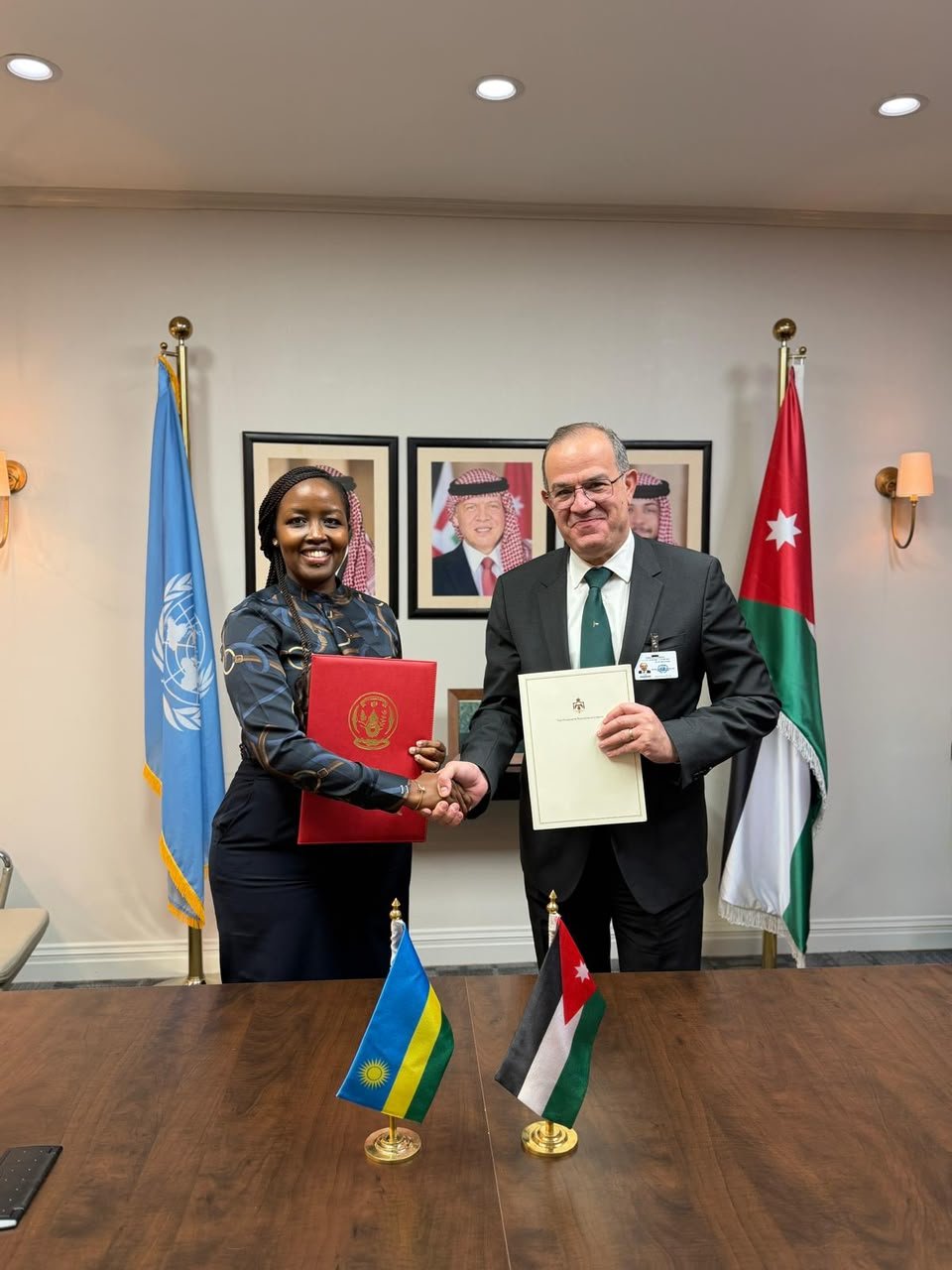
The agreement was signed by ICT and Innovation Minister Paula Ingabire and her Jordanian counterpart Sami Smeirat on the margins of the 81st United Nations General Assembly (UNGA81) in New York, according to a statement issued by the ministry on Thursday, September 24.
Discussions between the officials focused on opportunities for knowledge exchange, institutional collaboration and reciprocal visits as the two countries work to translate the agreement into concrete areas of cooperation.
Jordan also highlighted its national digital platforms, including its Super App, as part of its experience in delivering digital public services. The app functions as a single gateway combining digital identity, government services, and everyday digital transactions into one platform.
“Both sides discussed opportunities for knowledge exchange, institutional collaboration and reciprocal visits to translate the MoU into concrete areas of cooperation,” the ministry said.
The agreement comes as Rwanda continues to expand the use of digital technologies in public service delivery and other areas of the economy.
During UNGA81, Minister Ingabire also participated in Anthropic’s Global Development Briefing, which brought together governments, development organisations, humanitarian actors and technology partners to discuss how artificial intelligence can support development.
The discussions covered the use of AI in healthcare, education, science and humanitarian response, as well as access to technology, infrastructure, skills and responsible deployment.
Ingabire highlighted Rwanda’s focus on practical AI applications, noting that more than 30 AI use cases are currently underway. She also pointed to opportunities to develop solutions that can be scaled across Africa.
The minister further participated in a session hosted by the UN Office for Digital and Emerging Technologies and the UN Development Programme on strengthening digital public infrastructure across borders.
The session brought together experiences from Africa, Brazil and Latin America, with discussions focusing on digital identity, interoperable payments, federated data exchange, common application programming interfaces (APIs) and shared standards.
The participants also discussed governance frameworks needed to sustain digital public infrastructure systems across borders.
Rwanda shared its experience with digital identity and payment interoperability, with the discussions examining how national digital public infrastructure can support deeper regional integration and enable more seamless cross-border services.

Leave a Reply