
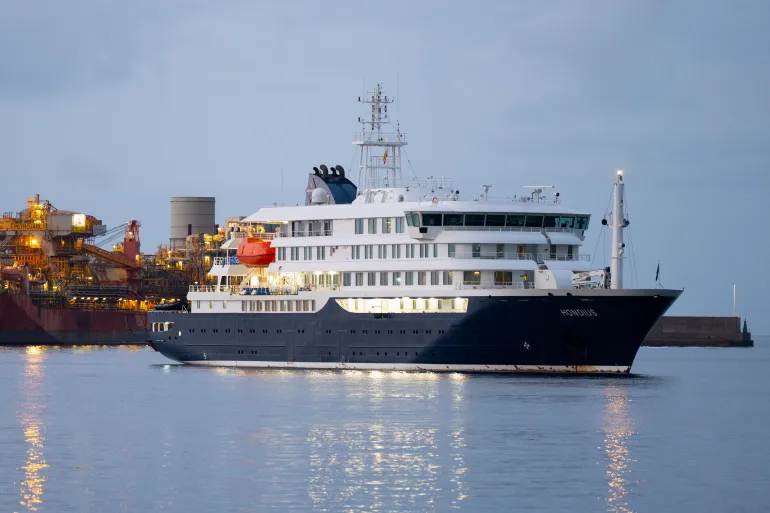
The ship docked in Tenerife, Spain, on Sunday as authorities began evacuating nearly 150 passengers and crew members in a tightly controlled international operation coordinated by the World Health Organisation (WHO) and Spanish authorities.
According to the WHO, at least eight people aboard the vessel fell ill during the voyage, with six cases confirmed as Andes virus hantavirus infections. Three passengers, including a Dutch couple and a German national, died from the disease.
The outbreak has drawn global attention because the Andes virus is the only known strain of hantavirus capable of limited person-to-person transmission, although experts say such spread is rare and usually requires prolonged close contact.
The Rwanda Biomedical Centre said on Sunday that health officials are closely monitoring the situation while continuing public awareness efforts on prevention and early detection. The centre is Rwanda’s national health implementation agency, responsible for disease prevention, public health surveillance, diagnostics, and coordinating health programmes.
“Rwanda’s health authorities are closely monitoring the situation regarding the #Hantavirus disease, which has recently been reported in some countries,” RBC
said.
RBC explained that hantaviruses are primarily transmitted between animals and humans, with wild rodents serving as the main carriers. Infection typically occurs when people inhale airborne particles from contaminated rodent urine, droppings, or saliva.
The RBC also noted that the Andes virus linked to the cruise ship outbreak can, in rare cases, spread between humans through close and prolonged contact, particularly among household members or healthcare workers.
WHO officials have classified all passengers and crew aboard the MV Hondius as “high-risk contacts” and recommended active health monitoring for 42 days after disembarkation, despite no new symptomatic cases being reported during the evacuation phase.
Passengers leaving the vessel were screened for symptoms before boarding repatriation flights to their home countries. Some were transported wearing face masks and protective gear as a precautionary measure.
Spanish authorities stressed that the evacuation operation posed “very low” risk to the general public, a position echoed by WHO Director-General Tedros Adhanom Ghebreyesus, who reassured residents in Tenerife that “this is not another Covid.”
Health experts say early symptoms of hantavirus infection may include fever, headaches, chills, muscle pain, nausea, vomiting, diarrhoea, and abdominal pain. In severe cases, the disease can progress into respiratory complications.
The MV Hondius is expected to continue to the Netherlands after all passengers are evacuated and health protocols completed.
Leave a Reply