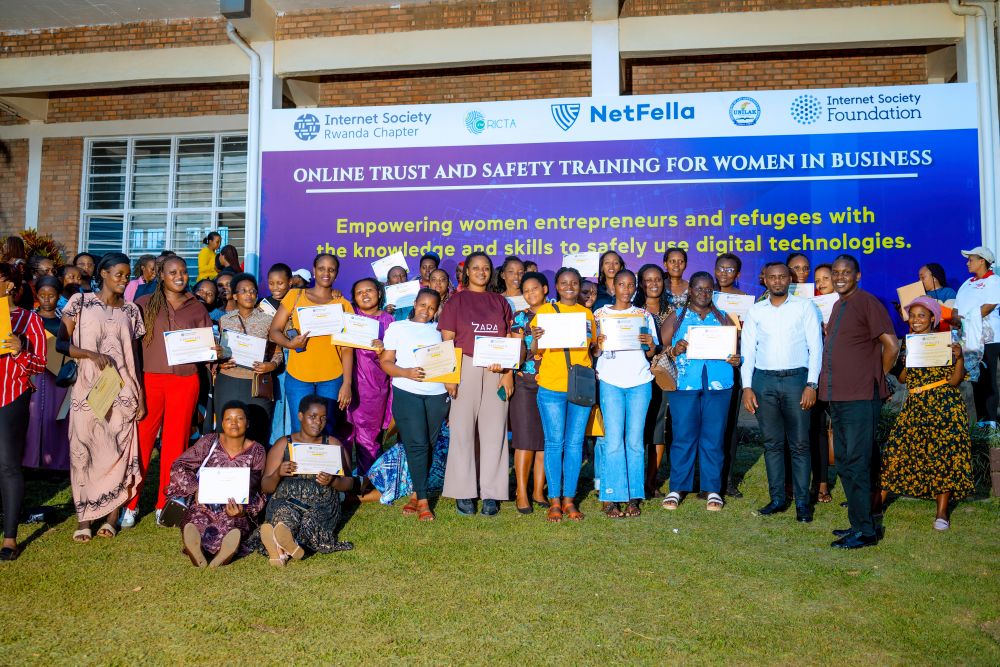
To address these challenges, the Rwanda Internet Community and Technology Alliance (RICTA), in partnership with the Internet Society (ISOC) Rwanda Chapter, NetFella, and the Internet Society Foundation, has launched an Online Trust and Safety Training programme aimed at equipping women entrepreneurs with the skills needed to navigate the digital space safely.
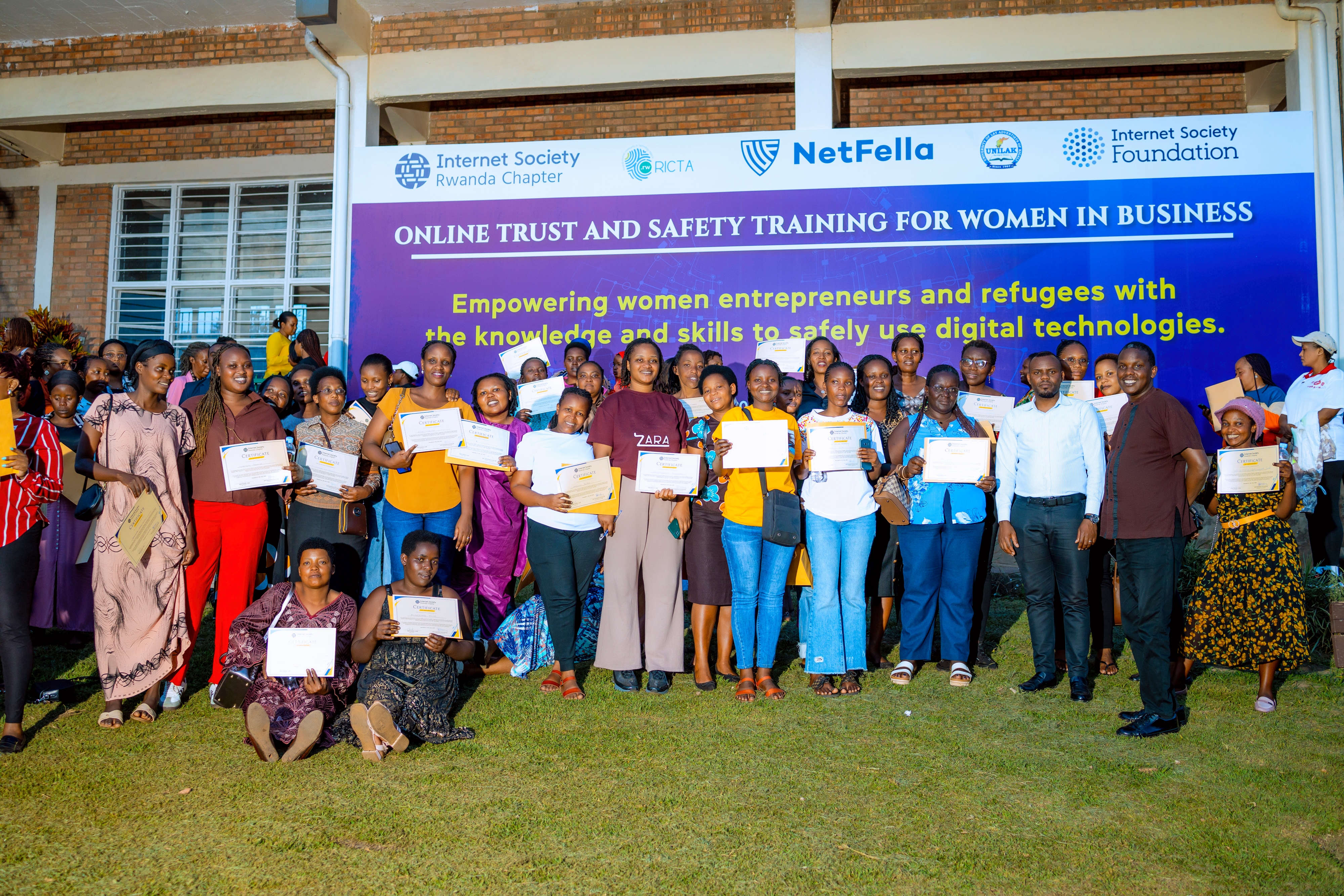
The first cohort of the programme graduated on Thursday, June 4, at the University of Lay Adventists of Kigali (UNILAK), having received practical training on online safety, data protection, cybersecurity, responsible use of social media, and identifying online scams.
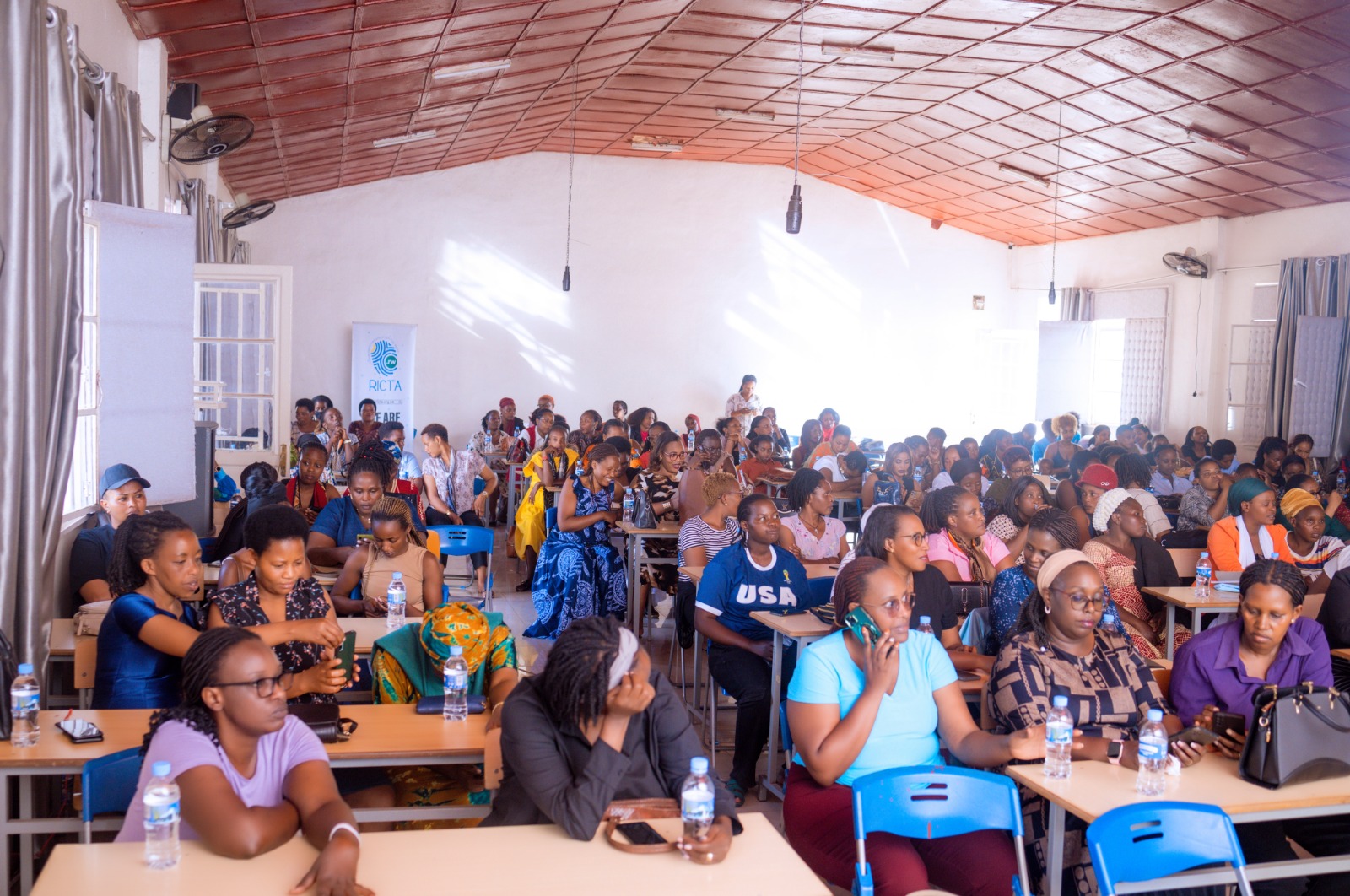
The four-day training forms part of a broader initiative targeting 500 beneficiaries, including women entrepreneurs and refugees in Mahama Refugee Camp, as Rwanda continues its journey towards a digital economy.
Speaking during the event, Geoffrey Karegeya, Business Development and Partnership Manager at RICTA, said the programme responds to the growing need for online safety among business owners who increasingly rely on digital platforms for commerce.
“We have trained more than 500 women through our digital marketing programme since 2022. We realised that as more women move their businesses online, they also become more exposed to cyber risks. This training equips them with the skills to identify scammers, protect themselves, and conduct online transactions safely,” he said.
RICTA is the official registry responsible for managing and administering the .rw country-code top-level domain (ccTLD). Formed in 2005, RICTA operates as a not-for-profit organisation representing the Rwandan internet community, with a mandate granted by the Rwanda Utilities Regulatory Authority (RURA).
Karegeya noted that many participants had previously experienced online fraud or encountered suspicious transactions, highlighting the importance of strengthening digital trust and safety skills among internet users.
The initiative builds on efforts that began in 2020 under the Internet Society Rwanda Chapter, initially targeting young people before expanding to women entrepreneurs. RICTA joined the effort in 2022 through its digital marketing programme for women in business.
According to Emmanuel Mfitumukiza, Chairperson of the Internet Society Rwanda Chapter, the training comes at a critical time as more people gain internet access and increasingly depend on digital services.
“With the rise of artificial intelligence, social media use, and online commerce, new risks continue to emerge. We are seeing cases of financial fraud, identity theft, misinformation, disinformation, and data breaches. Women entrepreneurs are among the groups most exposed because of the multiple responsibilities they balance while running businesses,” he said.
Participants were trained on how to verify the authenticity of websites, protect personal and financial information, identify phishing attempts, and understand Rwanda’s legal framework on data protection and online security.
Among the graduates was Delphine Nkusi, owner of Rwanda Blossom Ltd, an online trading business dealing in coffee, fresh vegetables, and other agricultural products.
Nkusi said the training provided practical knowledge that will help her safeguard both her business and personal information online.
“I learned about online safety, cyberbullying prevention, privacy and data protection, and how to identify scams and fraud. Before this training, I was not aware of some of the laws that protect internet users in Rwanda,” she said.
She also shared her experience of being targeted through a fraudulent bank transaction, an incident that reinforced the importance of cybersecurity awareness.
“Fortunately, the money was recovered, but the experience showed me how vulnerable we can be online. This training has given me skills that will help me avoid similar situations in the future,” she added.
The broader programme will now move to Mahama Refugee Camp in Kirehe District from 8-11 June and Karongi District from 15-18 June, where additional participants will receive training through a community-based approach supported by trained facilitators.
Organisers expect to complete the training of all 500 beneficiaries by October, coinciding with Cyber Security Awareness Month.
Beyond improving digital literacy, the programme aims to foster a culture of responsible internet use, enabling participants to confidently leverage digital technologies while protecting themselves from online threats.





Leave a Reply