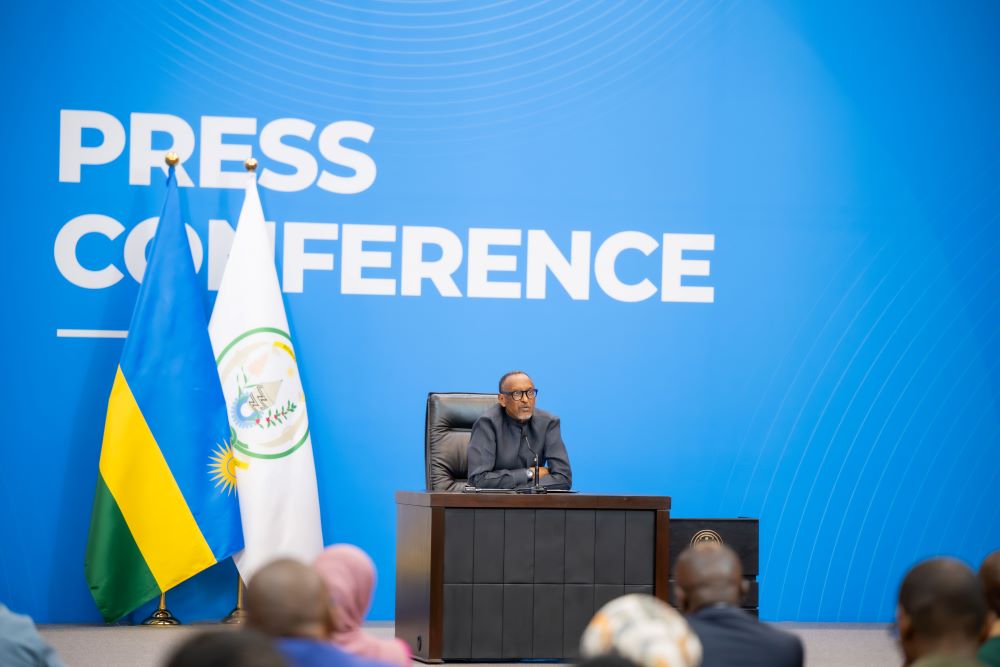
Kagame made the remarks during a press conference on August 24, 2026, while responding to concerns raised by a journalist about shortages and service challenges affecting some areas.
Rwanda has made significant progress in expanding access to basic services in recent years.
According to Rwanda’s Seventh Integrated Household Living Conditions Survey (EICV7), household electricity access increased from 34% in 2017 to 72% in 2024, with rural access rising sharply from 24% to 65%.
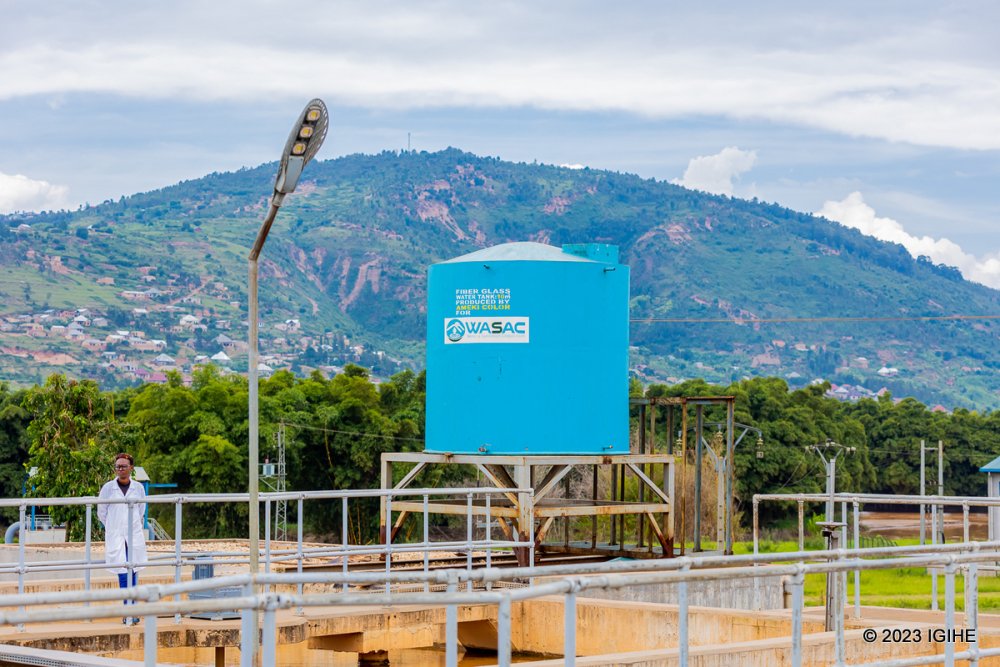
Access to improved drinking water also increased from 87% to 90% over the same period.
Kagame said Rwanda’s current situation is different from where the country started, but acknowledged that the demand for services continues to outpace available resources.
“You mentioned where we started from, and I think the situation we have today is different from what it was then. I think there are investments that need to be made. But as I said when answering another question, there are many things we want to do.”
Kagame said limited resources remain one of the constraints, particularly as the country seeks to expand access to essential services such as water and electricity.
“But the resources we have are not equal to all those needs. We are always looking for ways to increase those resources, whether it is for water or electricity.”
However, he said not every challenge can be attributed to a lack of resources, arguing that some improvements could be achieved through more efficient management of what is already available.
“As for some of the other things you mentioned, they do not necessarily require some completely different or extraordinary resources. They require us to efficiently use what we already have. There are also things that can be done by individuals or jointly with the government. They are within our capacity, but sometimes they are not done as they should be.”
The President called for stronger follow-up and accountability, saying the government should not use resource constraints as an explanation for failing to address problems that are within its existing capacity to solve.
“We cannot always have an excuse for not doing what we already have the capacity to do, because there are many things we are capable of doing but which are not being done.”
Kagame said the government should continue looking for resources to address areas where its existing capacity is insufficient, while also speeding up interventions where solutions are already possible.
“For the things we do not have the capacity to do, we should look for the resources. And where it is possible to move faster, that is what we want.”
He described water and electricity challenges as issues that require continuous attention, stressing the importance of having people responsible for delivering projects properly and on time.
“These are challenges that continue over the years, but we have to keep finding people who can do things properly and on time, using the resources available. And where resources are not available, there are ways of continuing to look for them.”
Kagame also linked the quality of public services to how citizens assess their leaders and the government, saying people ultimately have the right to demand answers when problems that could have been addressed remain unresolved.
“That is how Rwandans measure whether their leaders are serving them properly, or whether their government is serving them properly. When the time comes, we pay for it. And if there are things that could have been done better, citizens will ask us why we did not do enough when it was possible.”
He said citizens should also play a role in holding leaders accountable.
“They have their time as well. They also need to have a role in it and hold us accountable.”
Leave a Reply