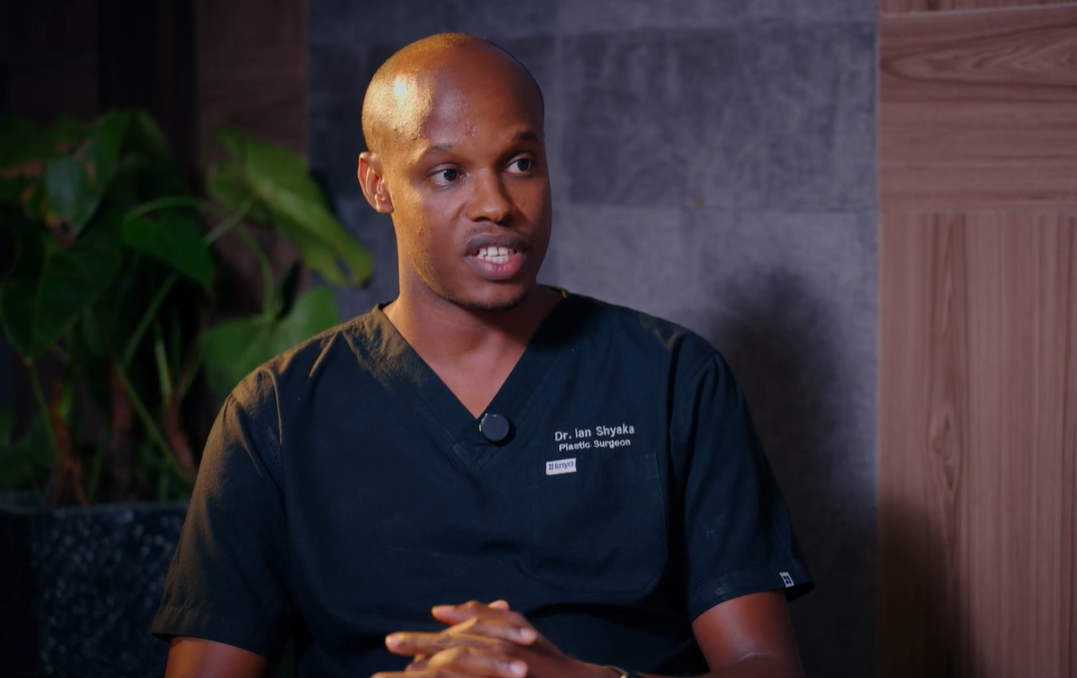
In an interview with IGIHE, Dr. Ian Shyaka, a reconstructive and aesthetic plastic surgeon at NeoDerma Clinica, breaks down what plastic surgery really involves, the difference between surgical and non-surgical treatments, and what patients should understand before making any decisions.
Understanding plastic surgery vs aesthetic treatments
According to Dr. Shyaka, plastic surgery is fundamentally a medical specialty that involves surgical procedures aimed at reconstructing or refining the shape, form, or function of the body.
“Plastic surgery involves surgical procedures to reconstruct or refine the shape, form, or function of the body,” he explained. “It is generally more invasive than aesthetic treatments and often provides more definitive, longer-lasting results.”
He contrasts this with aesthetic treatments, which are non-surgical, office-based procedures such as Botox, dermal fillers, and laser treatments.
These procedures are typically quick, often taking around 30 minutes, and allow patients to return home the same day. However, their effects are temporary and usually require repeated sessions every few months.
In contrast, surgical procedures are designed to deliver more lasting outcomes in a single intervention. For example, conditions such as excess skin or overly large breasts can be corrected surgically, offering long-term improvement in both appearance and comfort, even though natural aging continues.
Services offered in modern plastic surgery practice
At NeoDerma Clinica, Dr. Shyaka explains that patients can access both non-surgical aesthetic services and surgical procedures.
He contrasts this with aesthetic treatments—non-surgical, office-based procedures. These include Botox to smooth wrinkles, dermal fillers to restore facial volume, and laser treatments to target scars and skin imperfections.
On the surgical side, procedures include breast reduction, liposuction for stubborn fat deposits, and gynecomastia correction, a procedure addressing enlarged male breast tissue.
He notes that some of these conditions are not only aesthetic but also medical. For instance, large breasts in women may lead to chronic back pain, difficulty finding suitable clothing, and limitations in physical activity. Similarly, gynecomastia in men can affect confidence and comfort in daily life.
“These procedures can significantly improve quality of life and confidence,” he noted.
What patients should know before surgery
Dr. Shyaka emphasizes that plastic surgery should never be taken lightly, as it is a medical procedure that involves both physical and psychological preparation.
A key requirement, he says, is having realistic expectations. Patients must understand what is achievable for their individual body type and engage in thorough consultations with qualified surgeons.
“It’s essential to discuss expectations, risks, recovery timeline, and downtime,” he said.
He also warns against unrealistic timing, such as scheduling surgery shortly before major life events like weddings, expecting immediate results.
Understanding the full recovery process is crucial for informed decision-making and patient satisfaction.
Common myths about plastic surgery
Despite its growing acceptance, plastic surgery remains surrounded by misconceptions.
One of the most common myths, according to Dr. Shyaka, is that plastic surgery is purely about vanity.
“In reality, it’s about helping people gain confidence and live better versions of themselves,” he explained.
He also highlights the important role of reconstructive surgery, which goes beyond aesthetics. This includes restoring function and appearance after trauma such as road traffic accidents, cancer surgery, or other injuries. In some cases, these procedures can be life-changing or even life-saving.
Another misconception is that plastic surgery offers instant results. Dr. Shyaka clarifies that recovery is a gradual process.
“It’s not a quick fix. It’s a journey that includes surgery, aftercare, and time for healing,” he said. Results continue to improve as swelling reduces and the body heals.
Changing attitudes toward plastic surgery
Dr. Shyaka observes that public perception of plastic surgery has improved significantly over time.
In the past, stigma often prevented people from openly discussing or admitting to undergoing procedures. Today, however, greater awareness and access to information have helped shift attitudes.
“There used to be a lot of stigma,” he said. “Today, more people understand they have the right to feel better about themselves.”
He adds that as more individuals share positive experiences, acceptance continues to grow, allowing others to make informed choices with greater confidence.
The importance of aftercare
One of the most critical aspects of plastic surgery, according to Dr. Shyaka, is aftercare.
“Aftercare is not optional, it is an essential part of the journey,” he emphasized.
Proper recovery may include wearing compression garments, taking prescribed medication, attending follow-up sessions or massages, and avoiding certain activities during healing.
These steps directly influence the final outcome and overall satisfaction with the procedure.
Overcoming misconceptions through education
Dr. Shyaka believes that education and access to reliable information are key to addressing remaining misconceptions about plastic surgery.
While the internet provides a wealth of information, he stresses the importance of consulting qualified professionals.
“A proper consultation helps clear doubts, set realistic expectations, and avoid complications or misinformation,” he said.
By combining accurate information with professional guidance, patients can better understand both the benefits and limitations of plastic surgery.
Watch the full video below to learn more.
Leave a Reply