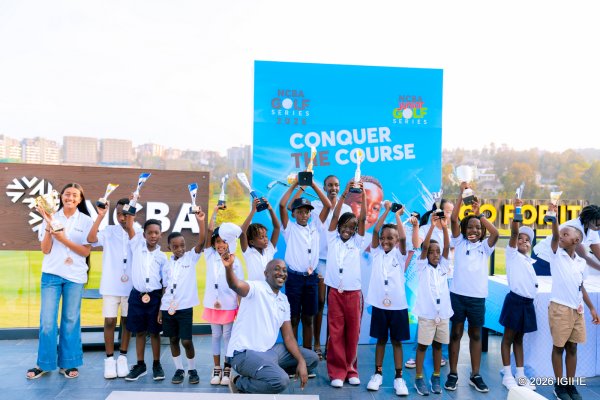
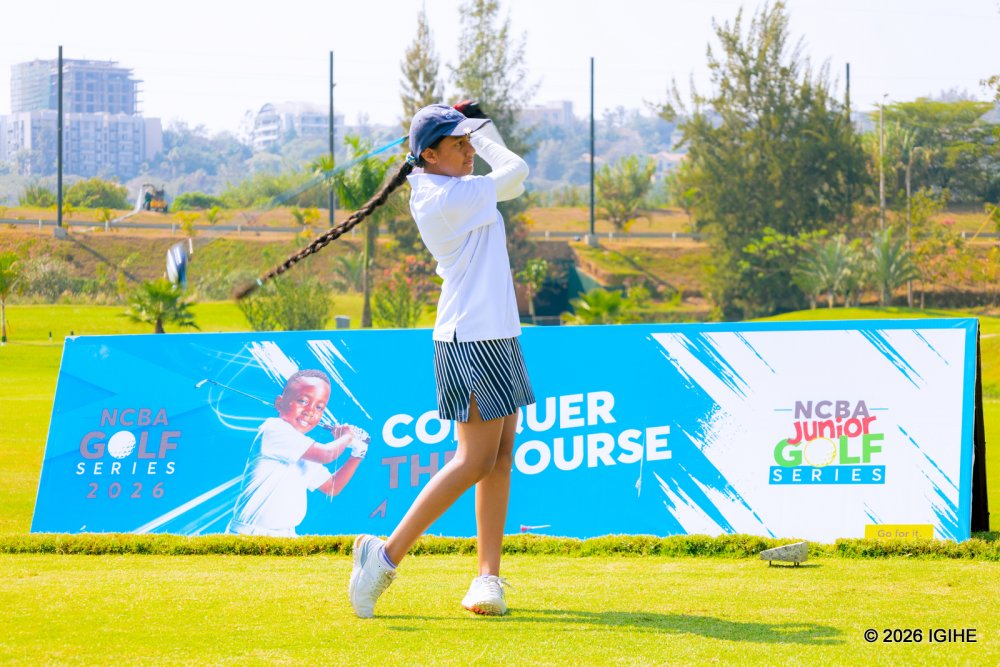
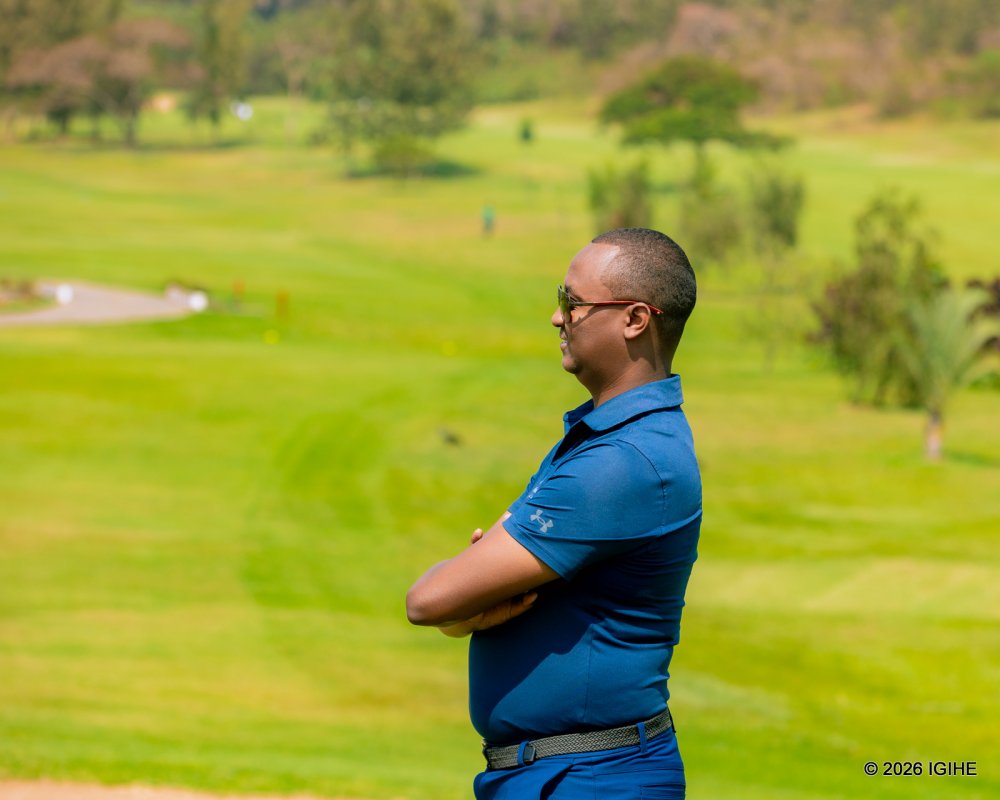
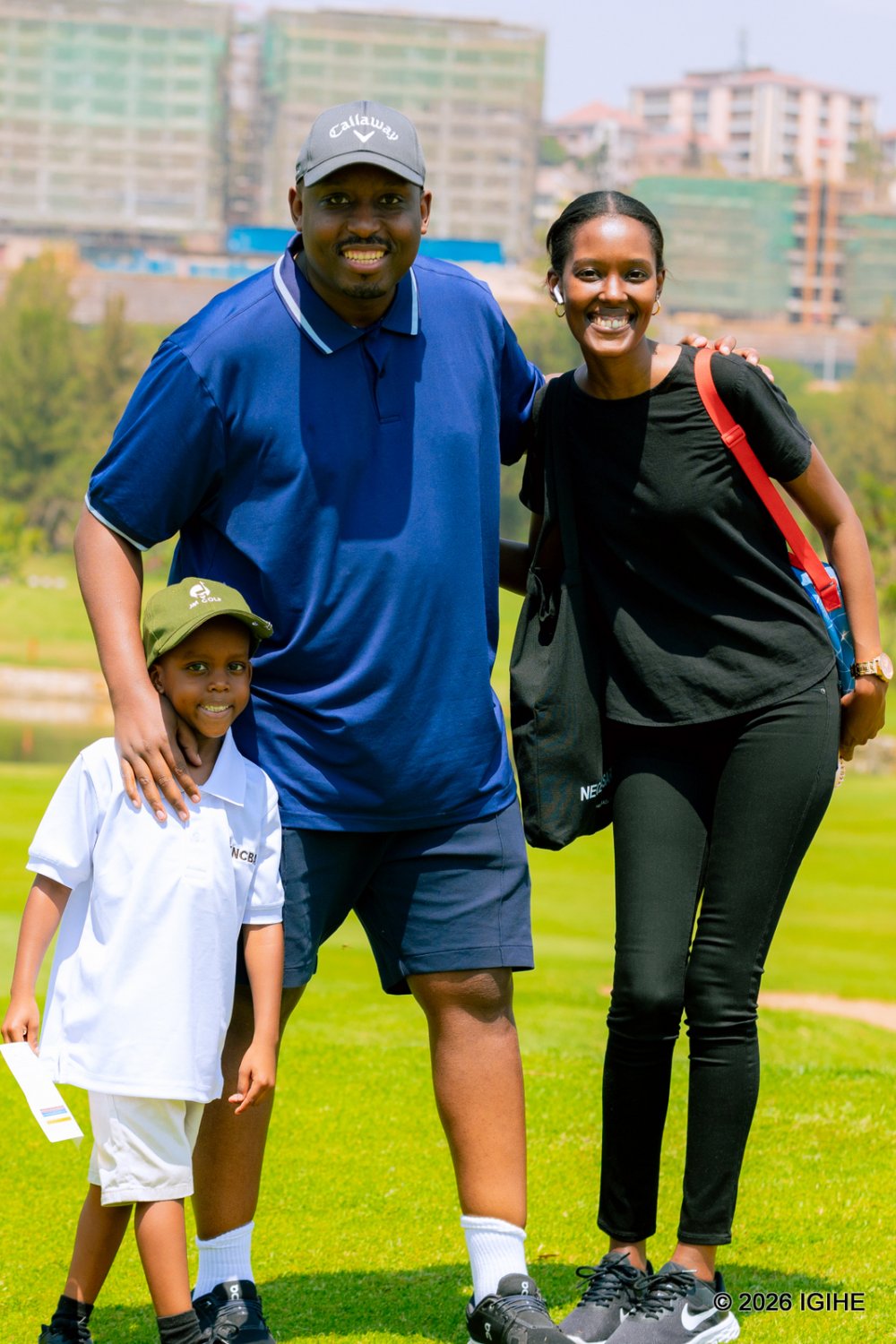
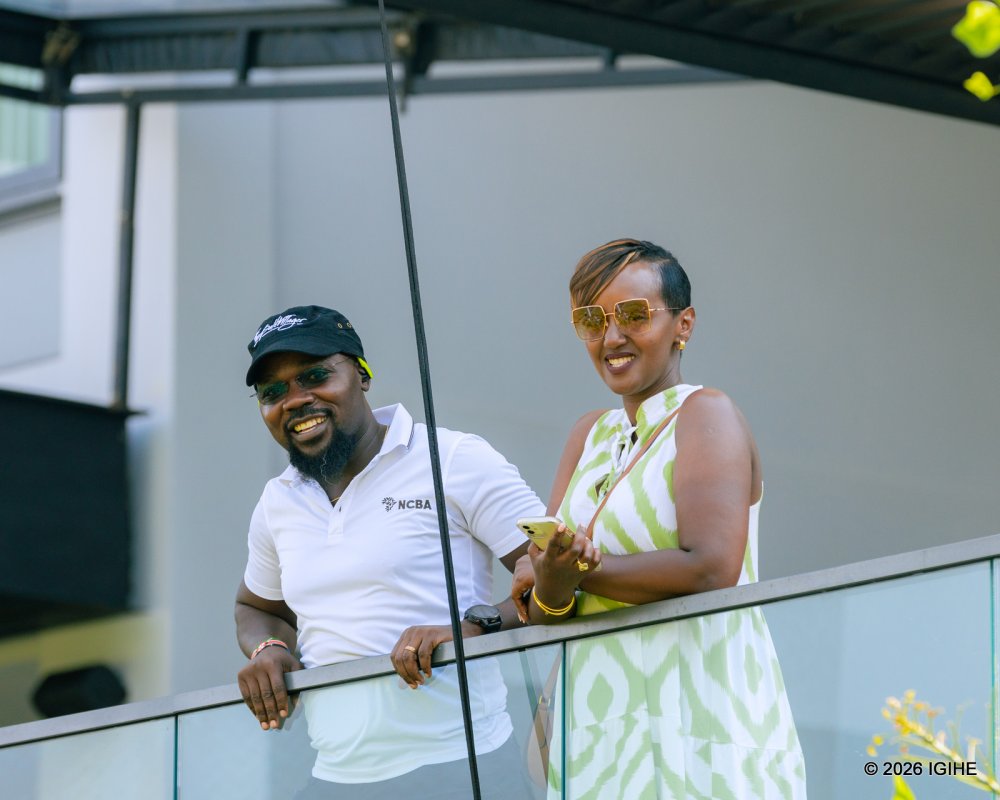
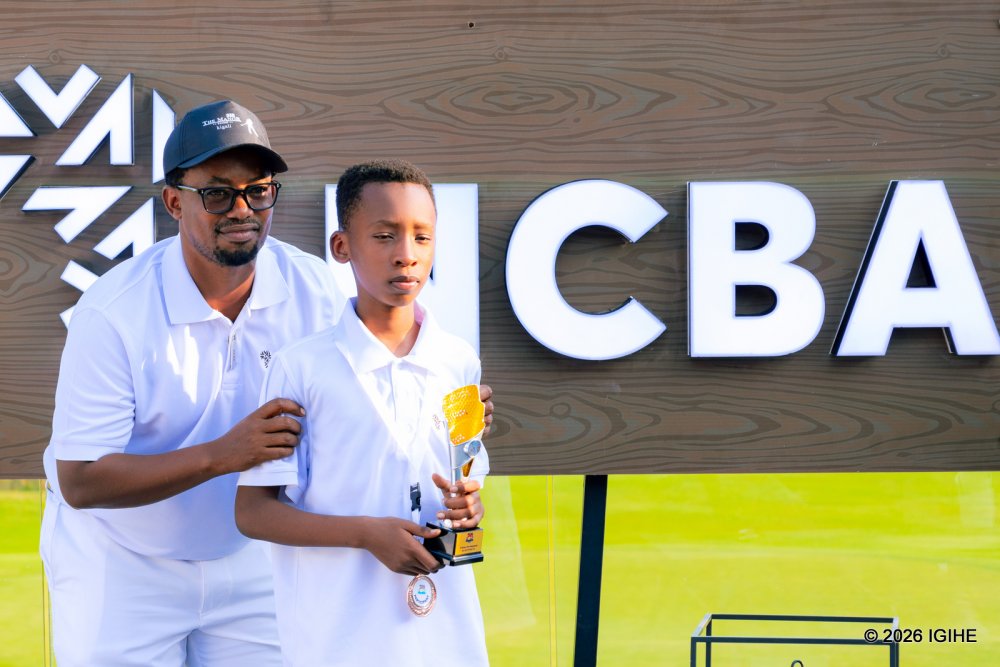
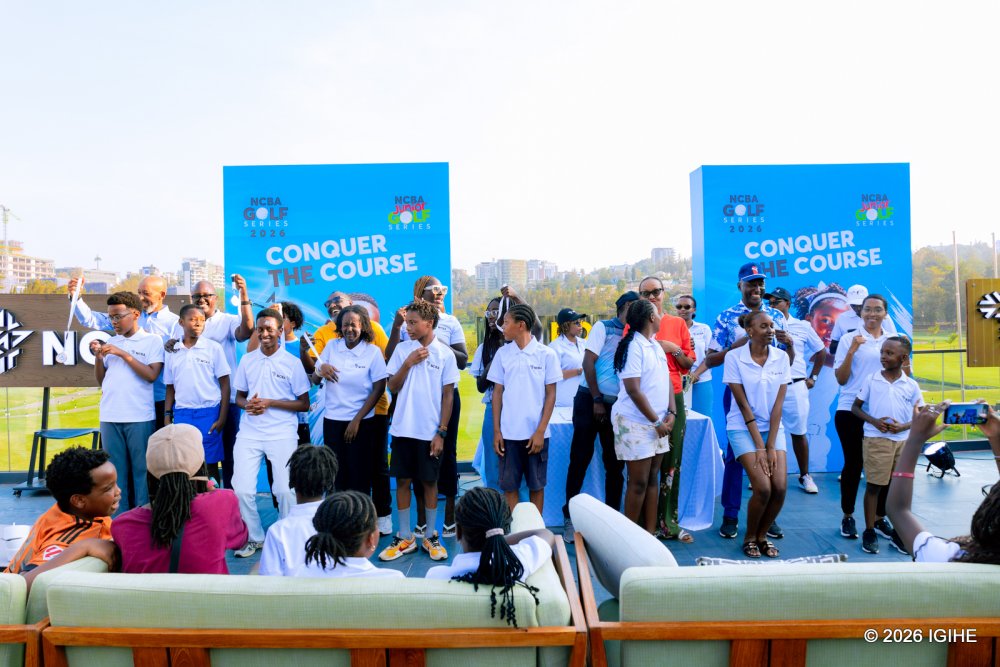
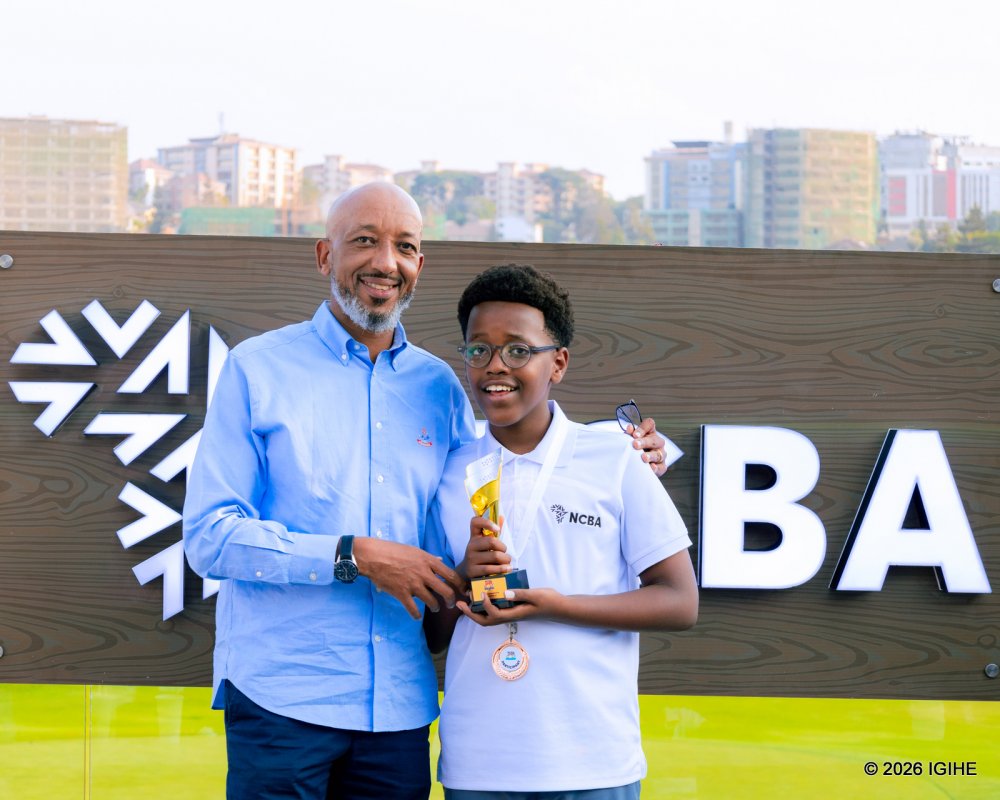
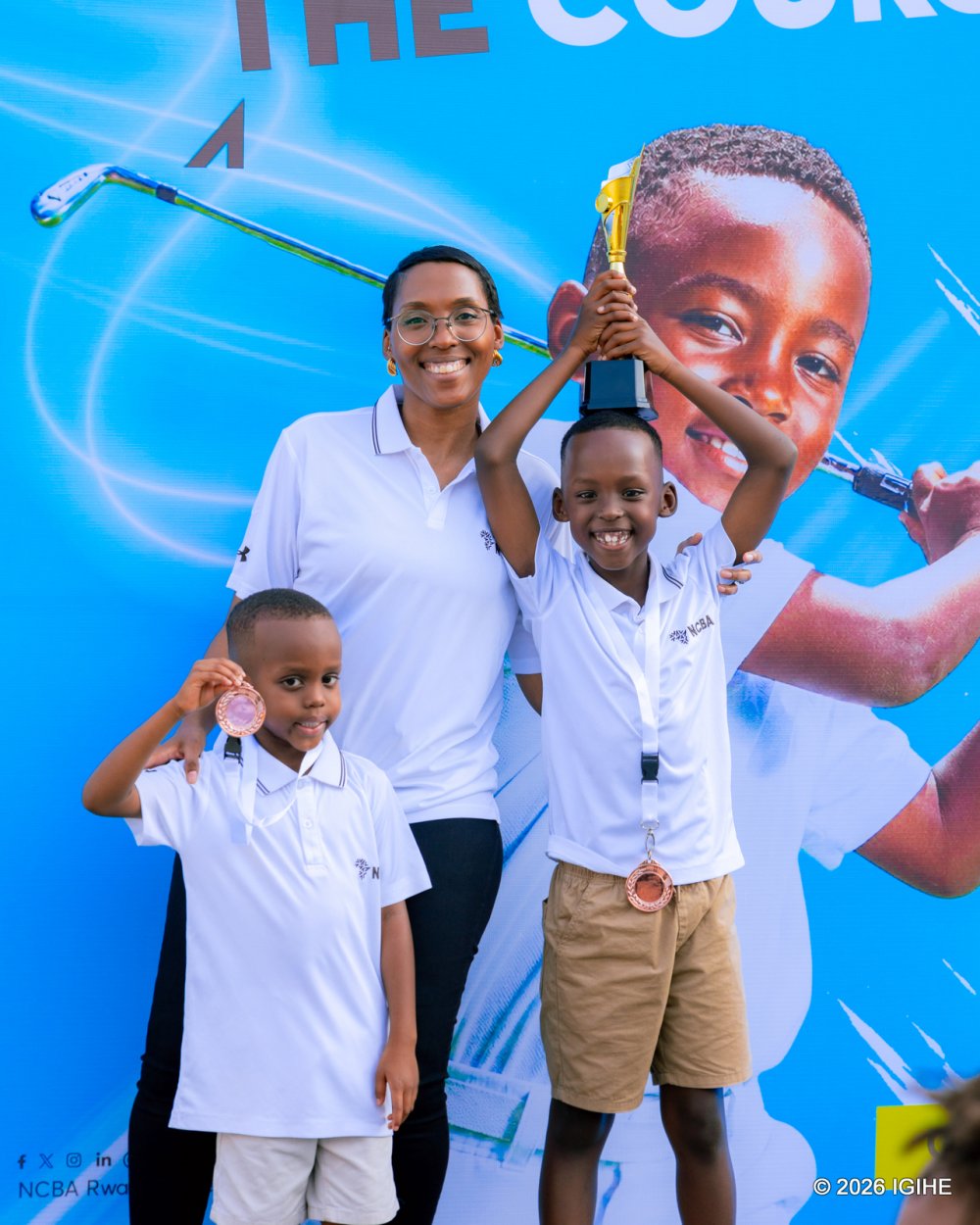
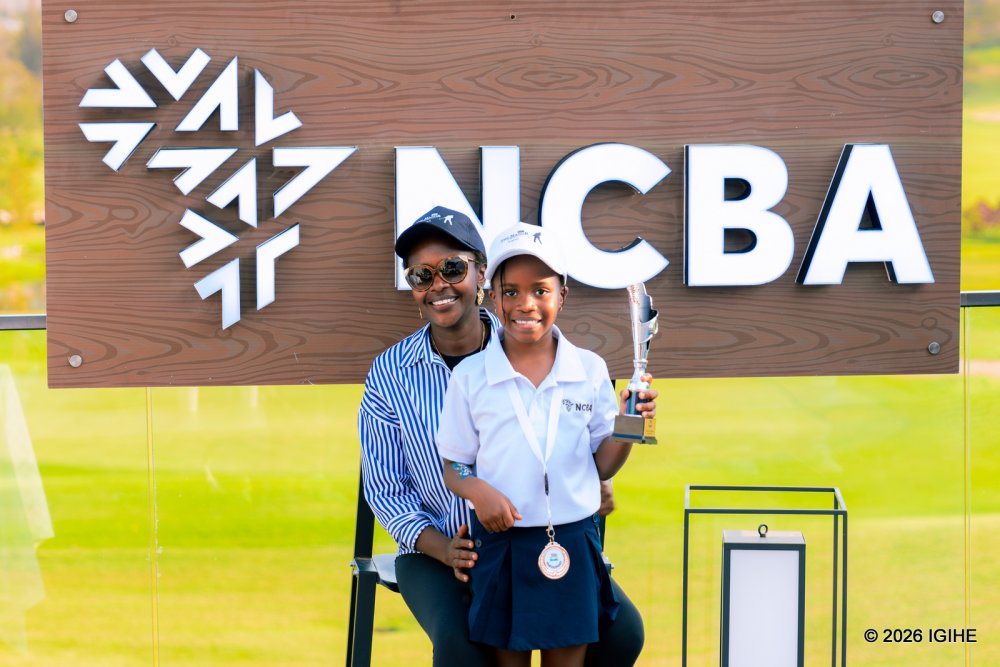
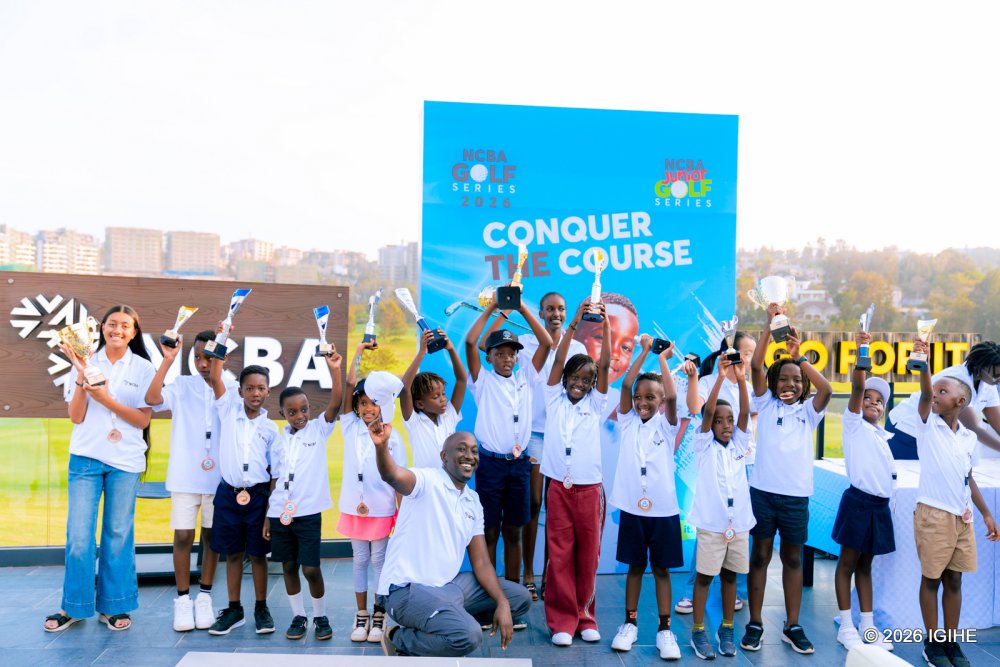
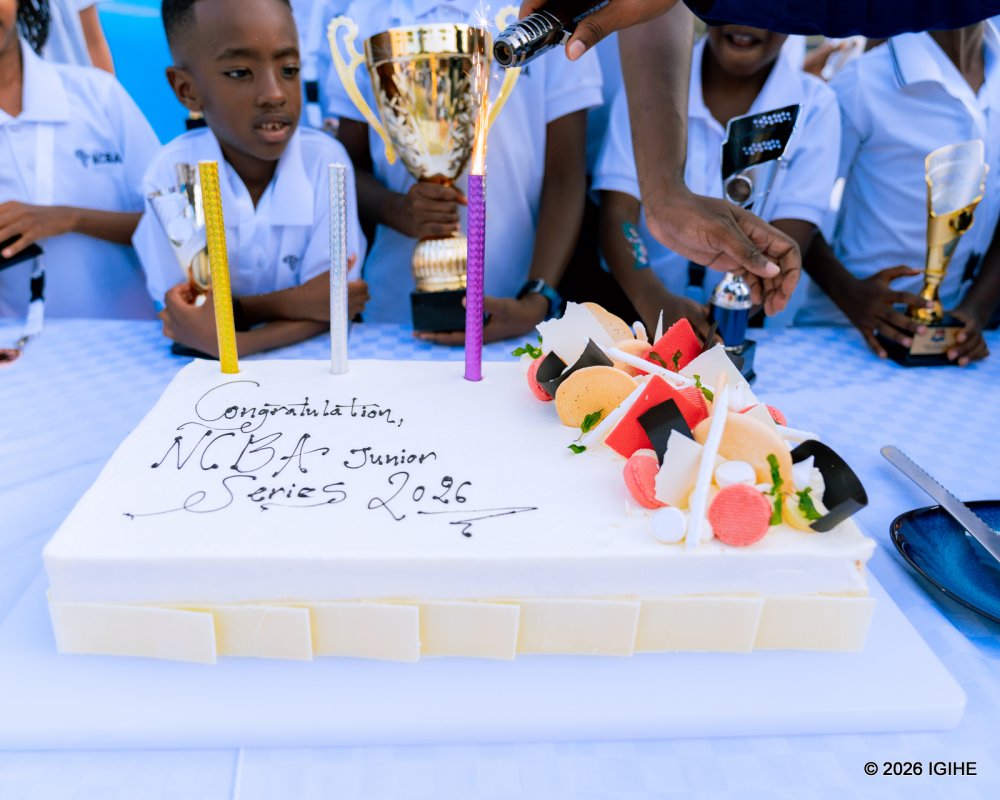
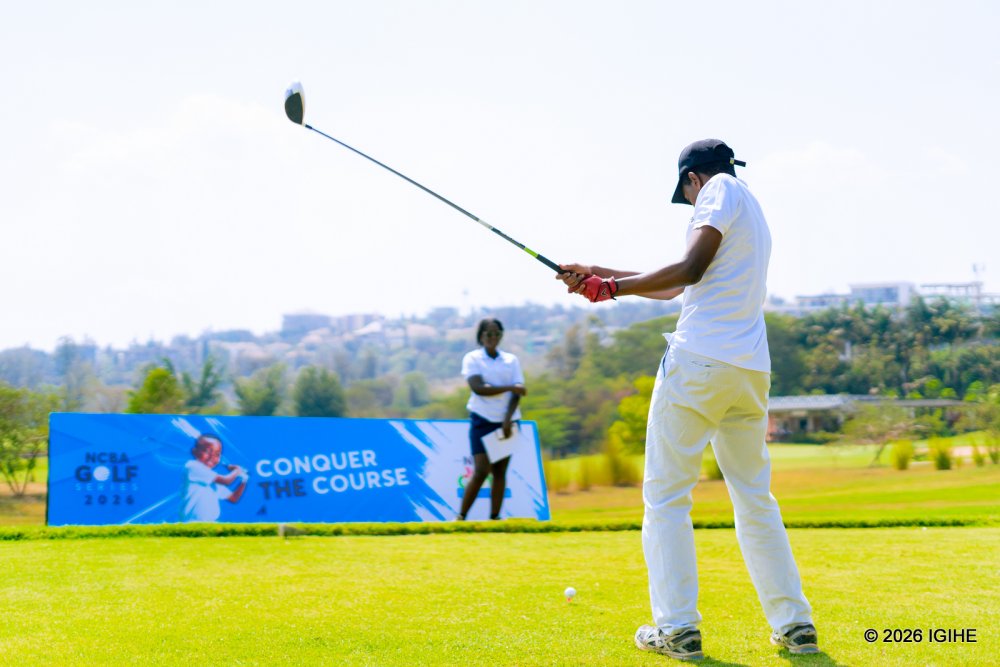
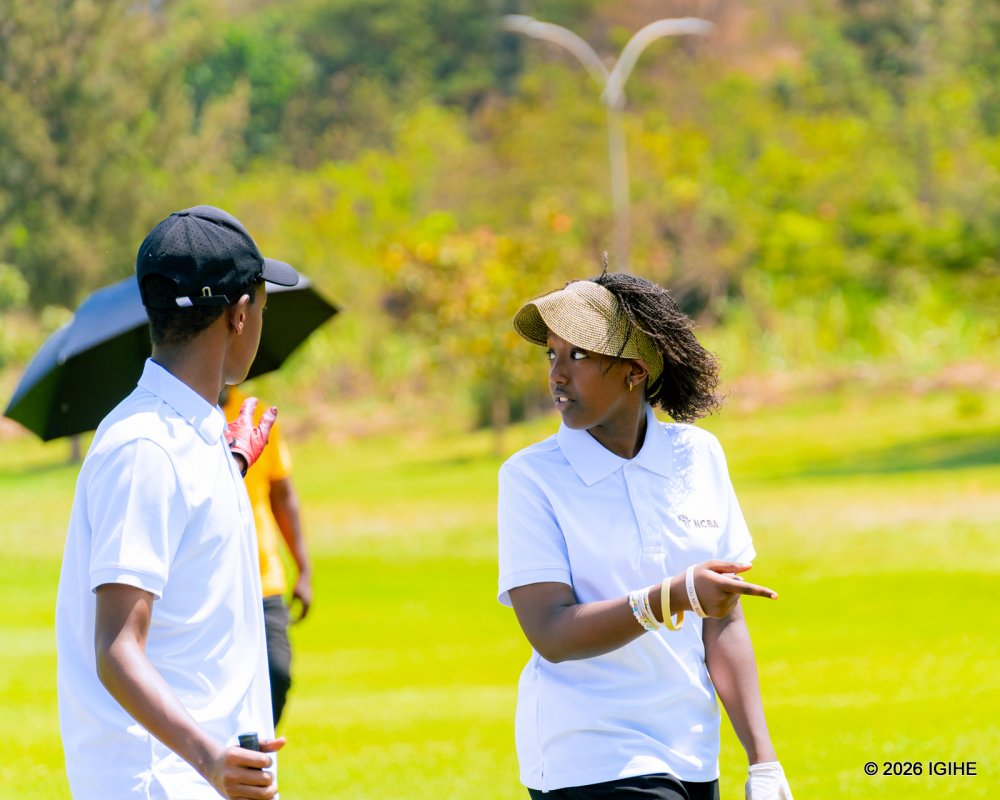
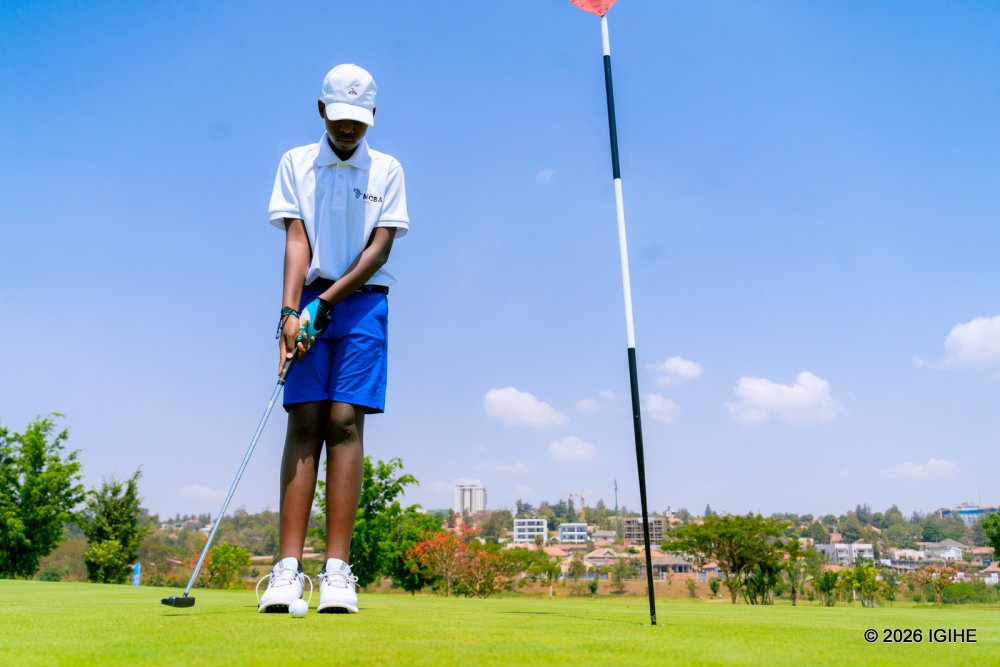
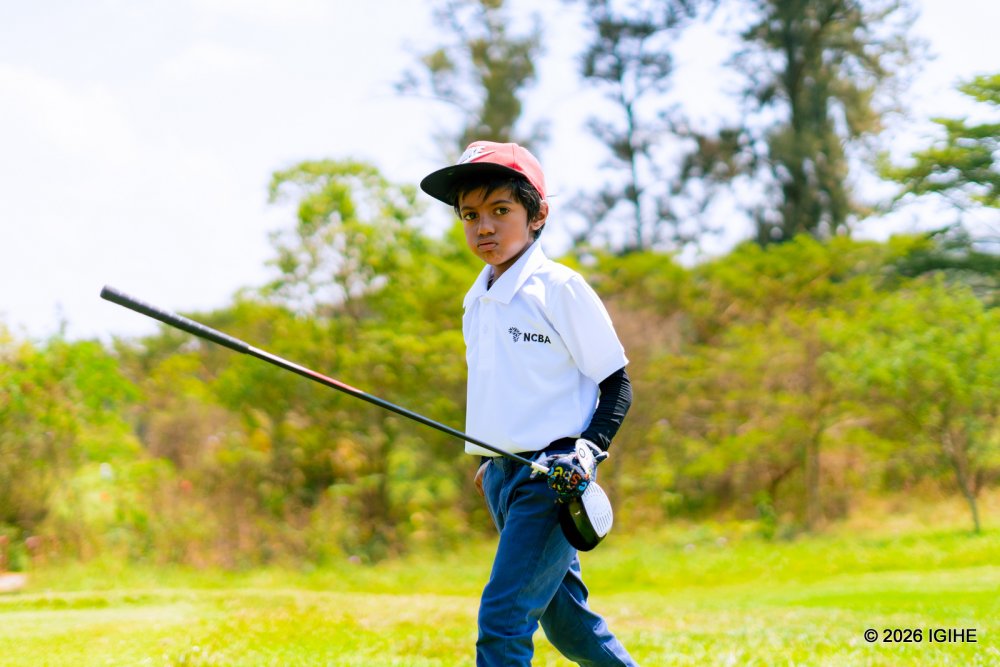
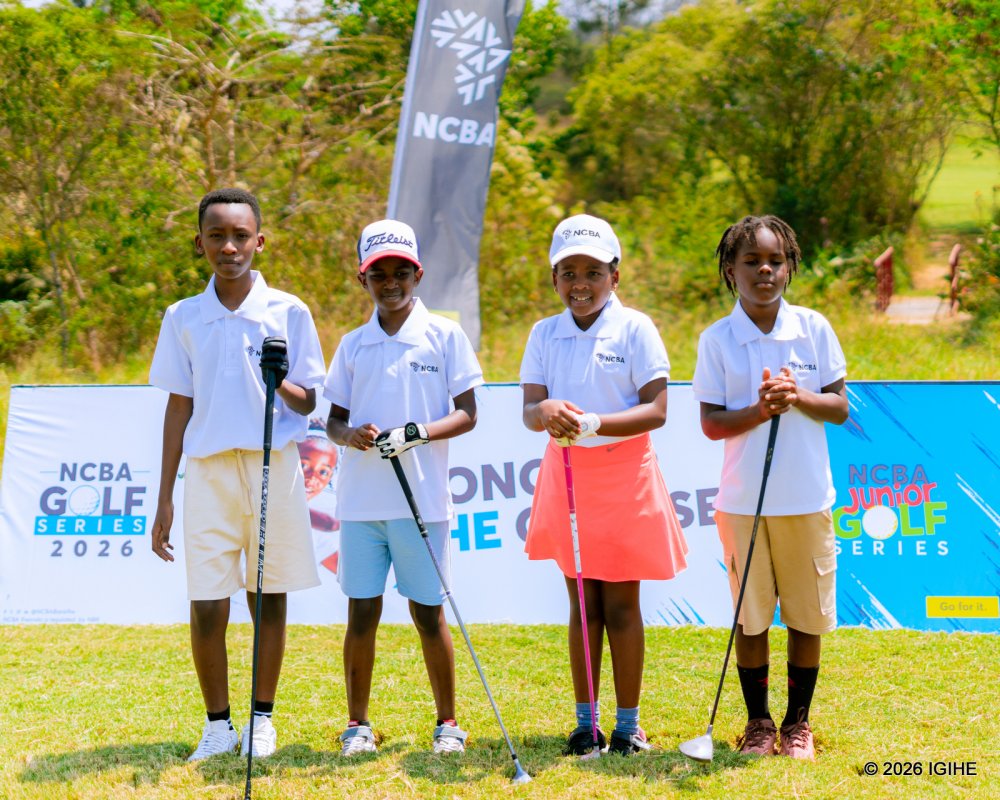
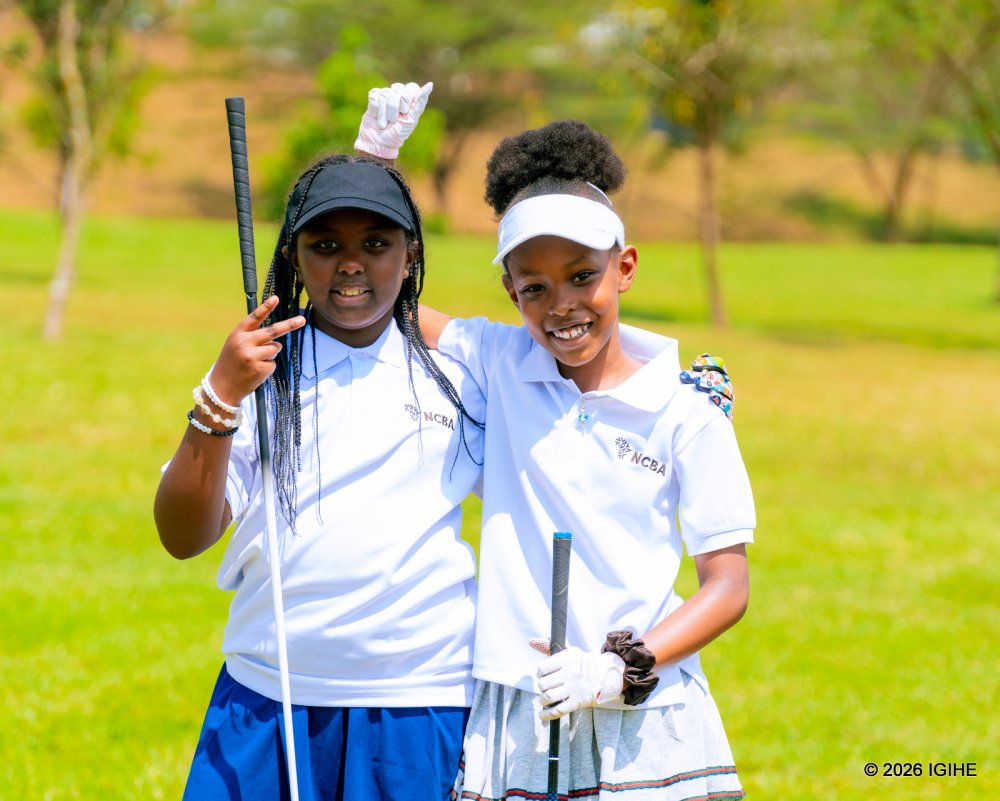
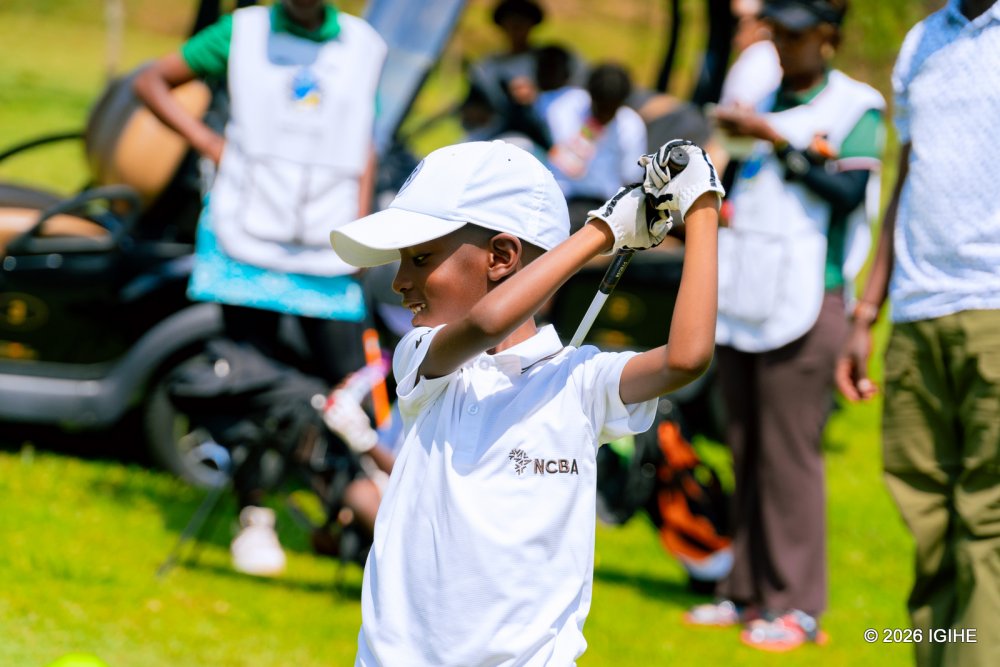
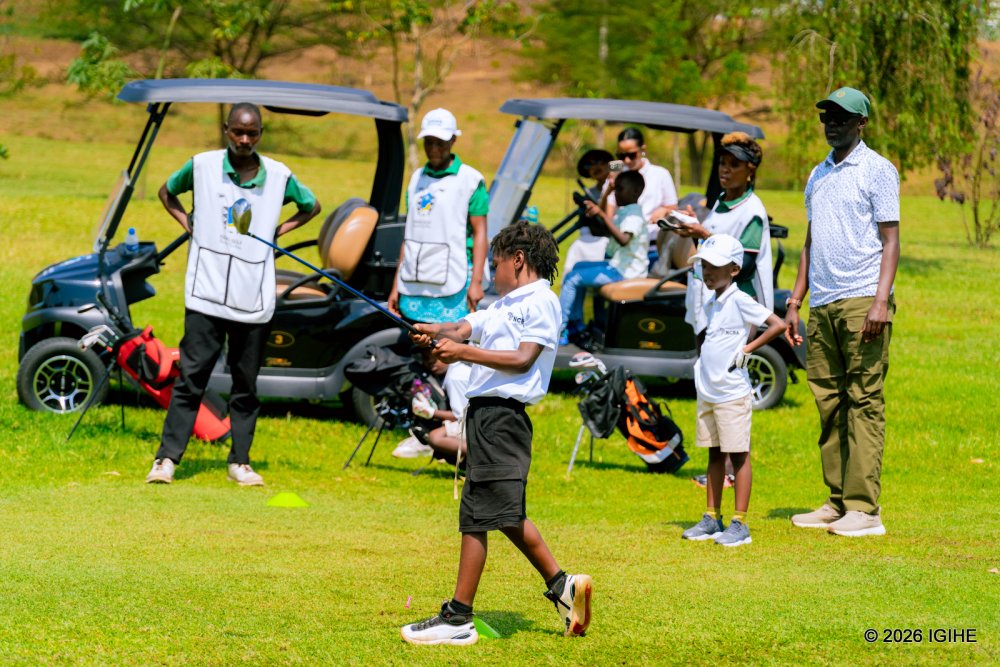
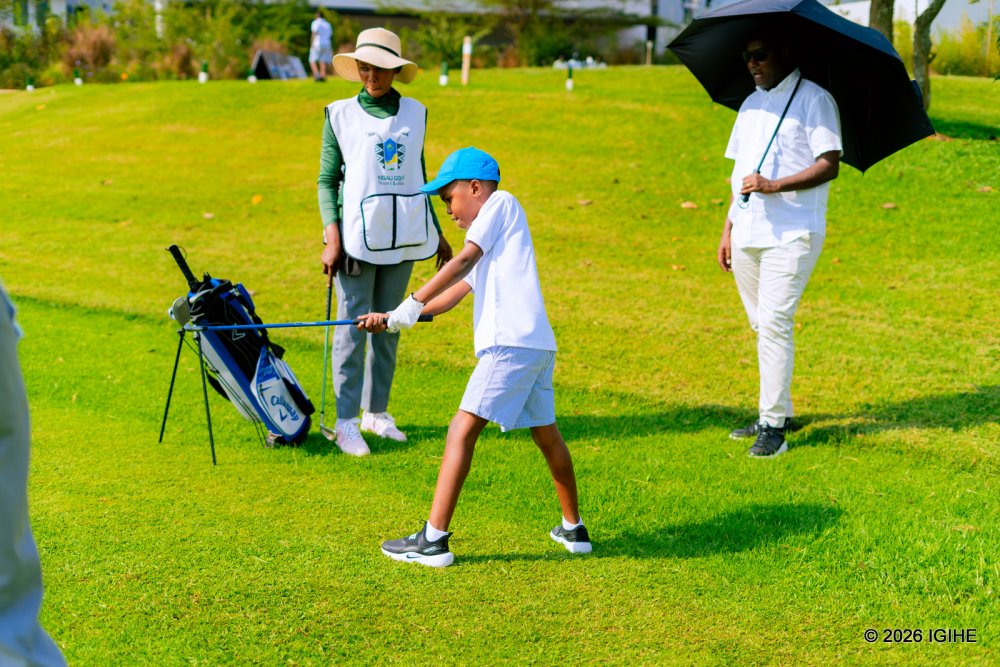
The tournament, which started on Friday, 25 July 2026, brought together young players aged between four and 16 years old, who competed in various categories depending on their experience and age groups. Some participants played three holes, while others competed over nine and 18 holes.
The competition was organised as part of efforts to promote golf among young people in Rwanda and nurture future talent in a sport that has been identified as one of the areas with potential to boost sports tourism in the country.
The NCBA Junior Golf Series is also held in other East African countries, including Kenya, Uganda, and Tanzania, where participation has continued to grow, with more than 1,000 children taking part every year.
According to NCBA Bank Rwanda, supporting young golfers goes beyond developing sporting skills, as the game helps children build discipline, confidence, and strong personal values while preparing them for possible professional careers in golf in the future.
The Kigali tournament featured several categories, including the 18-hole category, the nine-hole categories of Red Tee Box and Second Category, as well as the six-hole categories of Category 1 and Category 2. The youngest golfers competed in the three-hole category.
In the main 18-hole competition, Malakai Bwimba claimed the overall victory after recording 100 points. He was followed by Alfie Wafula, who finished with 102 points, while Roshni Shah secured third place with 103 points.
The NCBA Junior Golf Series is organised by NCBA Bank as part of its golf development programme, following the success of the NCBA Golf Series, which brings together adult golfers.
Top performers in other categories
Nine holes – Red Tee Box
Joseph Zane Uwimfura Mutaboba
Keilla Tona Rwiyamirira
Joshua Mutangana
Nine holes – Second Category
Kanyana
Guo Guo
Kwizera Gisa Julius
Six holes – Category 1
Yosiah Kinuka
Sine Saro Taliah
Elijah Mutangana
Six holes – Category 2
Xu Xu
Travis Yuhi Emile
Ngabo Oz Kabarebe
Three holes
Gihan Nkera
Wendy Rugomboka
Hosea Murenzi
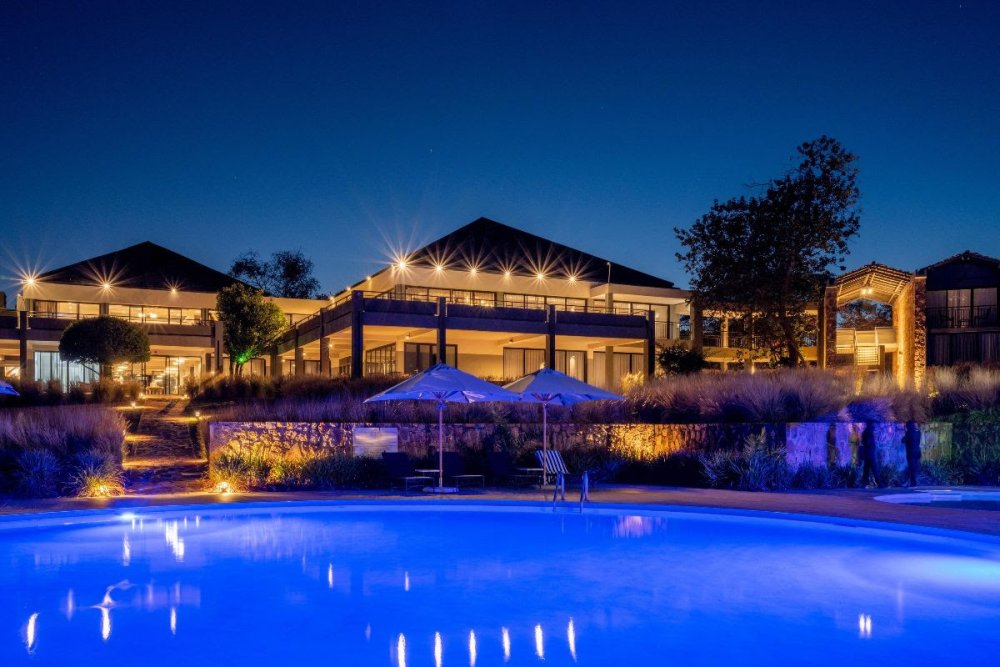
The tournament was held at Kigali Golf Resorts & Villas.
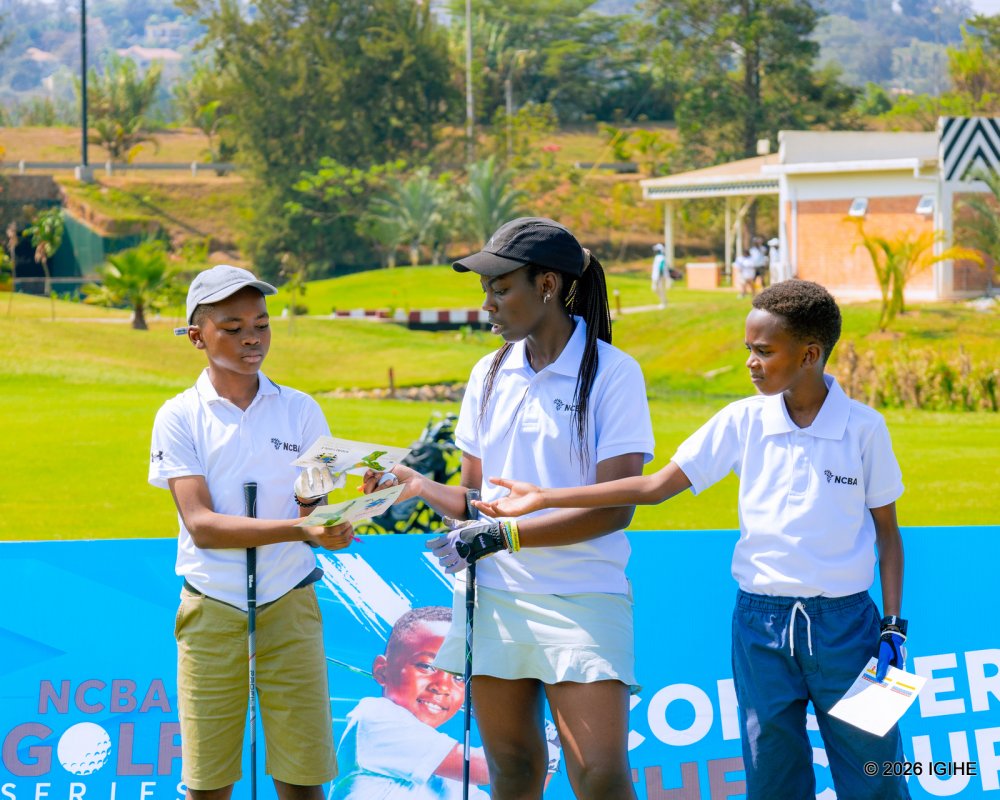
The young golfers carried scorecards to record their scores during the tournament.
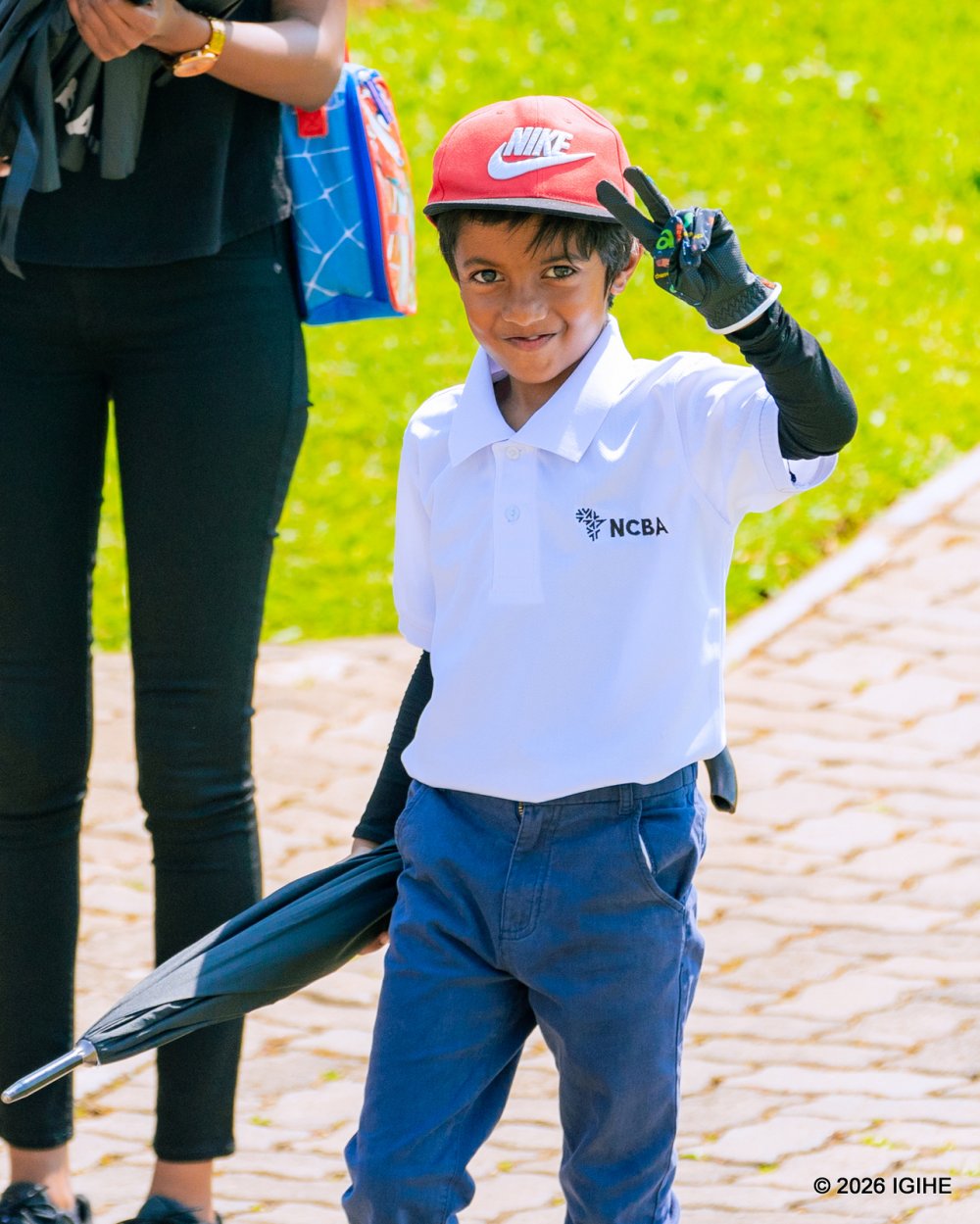
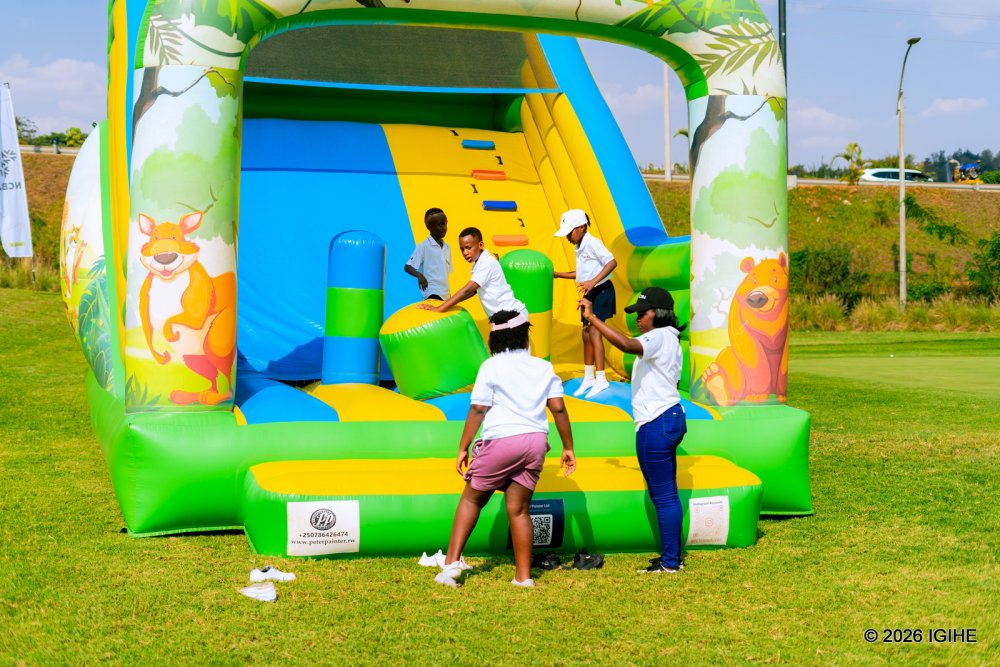
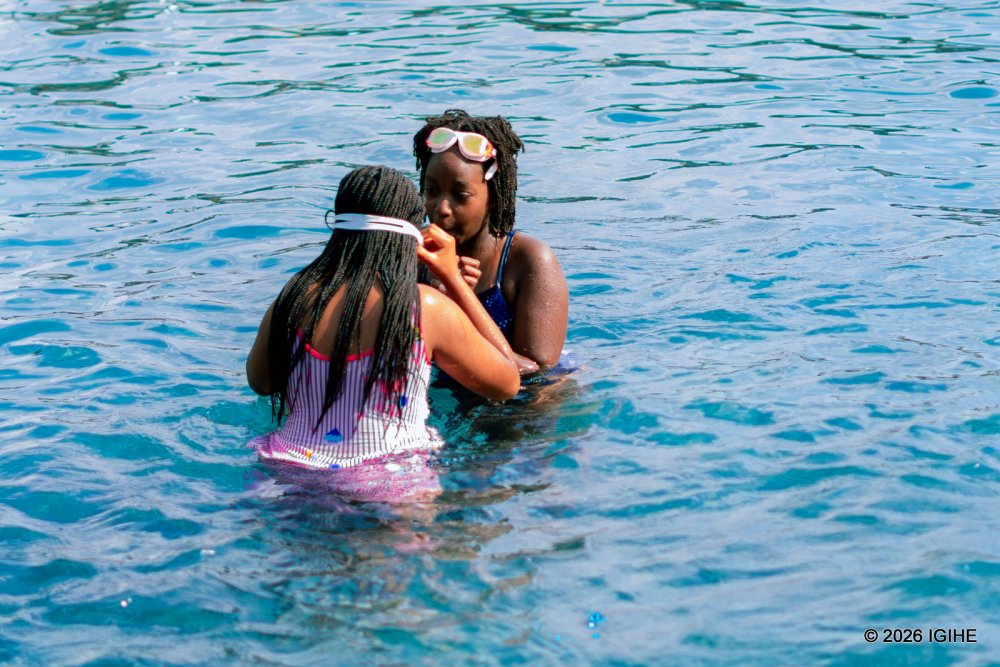
The tournament was played in different categories.Donel Rama, Golf Operations Manager at Kigali Golf Resorts & Villasfollows the competition.Parents supported their children during the tournament.Alice Rwigema, a regular golf player, was among those who followed the tournament.Akanigi Ishimwe Melissa holds the record for the fastest completion of an 18-hole golf course.The youngest children played three holes.Kigali Golf Resorts & Villas junior coach Dusabe Jules presents an award to one of the outstanding young golfers.The NCBA Junior Golf Series tournament is held annually.NCBA Bank Rwanda sponsors the junior golf tournament.Older children played the full 18-hole course.The tournament featured children aged between four and 16 years.The children shared a meal as they celebrated the tournament.The children also played in groups of four, as is customary in golf.Golf continues to bring children together.Young golfers were accompanied by their caddies during the tournament.Kigali Golf Resorts & Villas aims to nurture young golfing talentAfter the competition, some of the young golfers enjoyed a swim in the pool at Kigali Golf Resorts & Villas.
After months of living in fear, deprivation and constant uncertainty, Nkurunziza found a chance to escape. He made his way back to Rwanda, a country he had been told would punish him if he returned.
Instead, he found support and a second chance. He was reintegrated into society, granted citizenship, trained in a vocational skill and supported in developing his talent in music.
His journey is a story of survival, resilience and hope; a story of a child whose childhood was taken away but who later found an opportunity to rebuild his future.
A childhood spent in exile
Nkurunziza was born in the Democratic Republic of Congo in 1997 to Mvuyekure Bernard and Uwiragiye Jeannette, parents who had fled Rwanda during the 1994 Genocide against the Tutsi.
Growing up in exile, Nkurunziza continued his education and dreamed of building a better future. He was a student at Institut Katwe, where he was studying in Senior Four, when his life changed forever.
While in Rutshuru, he and his friend John were abducted by FDLR fighters and taken to Walikale Territory. There, they were brought to an FDLR military camp and informed that they would become soldiers.
However, during the first weeks at the camp, they were not immediately trained in combat. Instead, they were forced to perform tasks that supported the rebel group, including carrying ammunition, transporting property taken from civilians and collecting supplies needed by fighters.
Nkurunziza believes his abduction was also part of an attempt by FDLR to force his father to join the armed group.
According to him, the rebels wanted his father to become a fighter, but he refused because he had a family to support.
“My father was already old, and he told them, ‘No, I have a family to take care of. I do not want to join the army or become part of those activities.’ That is when they decided to use me as a way to force him to join,” Nkurunziza recalled.
The rebels later contacted his family and threatened to kill him if his father refused to join FDLR.
When Nkurunziza managed to communicate with his father, he urged him not to accept the group’s demands, even though he knew the decision could put his own life at risk.
“Be strong, my father. I will follow their rules and do whatever they tell me so that I can protect your life. I have already reached this point. If I die, let me die, but the life I am living here is extremely difficult,” he told his father.
From a rebel camp to a new beginning
After enduring months of hardship under the control of FDLR, Nkurunziza eventually found an opportunity to escape. His journey out of the rebel-controlled forests marked the beginning of a new chapter in his life.
Instead of facing rejection, he received assistance that helped him return to normal life. He was supported through reintegration programmes, acquired skills that helped him become self-reliant and was encouraged to pursue his passion for music.
Today, Nkurunziza’s story stands as a reminder that even after experiencing unimaginable hardship, survivors can find opportunities to rebuild their lives when they receive support and a second chance.
At just 14 years old, Nkurunziza was abducted and forcibly recruited into FDLR, where he was forced into a life of violence and armed activities.
Nkurunziza says that when he arrived at an FDLR camp, he found many other children, both boys and girls. Some were around his age, while others were even younger.
The children were used to carry out various activities for the armed group, including stealing from civilians, transporting supplies, collecting items needed by fighters and participating in violent operations. Some were also forced to bring women and girls who were subjected to sexual violence.
Nkurunziza says that before witnessing such acts himself, he had never believed that such cruelty could exist.
“Before I saw it with my own eyes, I thought such things were impossible. But sometimes you would see young people being sent to bring women and girls, and they would return saying, ‘My commander, we have brought them,’” he recalled.
After three weeks at the camp, Nkurunziza and his friend John began military training that lasted three months. He expected to be taught how to use weapons and become a soldier, but he says much of the training focused on spreading hatred and extremist ideology.
“What surprised me was that I thought I was going to become a strong soldier who would receive serious military training. Instead, we were taught to hate the country, hate Tutsi people and hate the RPF,” he said.
According to Nkurunziza, the recruits were told that Tutsi people and supporters of the Rwanda Patriotic Front (RPF) were their enemies.
They were also told that the 1994 Genocide against the Tutsi had not happened as it was documented and were encouraged to prepare to overthrow the Rwandan government.
The teachings made Nkurunziza question why the group spent so much time spreading hatred instead of preparing them for legitimate military responsibilities.
Forced into combat and mineral exploitation
After completing the training, Nkurunziza was sent on FDLR operations. He was involved in attacks, raids against civilians and missions to extract minerals.
He says it was painful to see senior members of the group sending their own children to schools in cities such as Goma, Beni and Butembo, while abducted children like him were forced into armed activities.
“We would go and steal minerals and bring them, while at the same time hearing that their own children were studying in Goma, Beni and Butembo. We were young children who had been denied the kind of life their children were enjoying,” he said.
Nkurunziza says refusing orders often resulted in severe punishment, including beatings, being suspended in the air as a form of torture, or other forms of abuse.
Whenever he refused to carry out certain orders, such as bringing a woman or performing tasks assigned to him, his commanders would contact his family and threaten to kill him.
“When you live with constant pain and suffering, there comes a time when you become numb to it,” he said.
Despite enduring extreme hardship, Nkurunziza says he continued to persevere because he remained determined to protect his parents and keep them alive.
He explained that he was forced into combat and that much of the indoctrination he received was centred on promoting hatred against Tutsi people.
The man who helped him find a way out
Six months after being taken to an FDLR camp, Nkurunziza met a soldier named Harerimana, who already knew his family.
Harerimana asked him how he had ended up with the armed group. Nkurunziza briefly explained how he had been abducted and the suffering he had endured since being taken into the forest.
Harerimana later asked Nkurunziza’s commander to allow him and his friend John to accompany him and help transport supplies. However, his real intention was to take them away from the camp so he could listen carefully to their story.
After learning what Nkurunziza had gone through, Harerimana advised him not to attempt an escape without careful planning.
“My young brother, be patient and continue enduring this suffering for now. If you try to escape without a proper plan, you will be killed. I will go and tell your parents how they should behave so that they do not end up in the same situation,” Harerimana told him.
As time passed, Nkurunziza opened up to Harerimana about his desire to leave the forest and escape the life he had been forced to live.
“I am already living a life that feels as if I died long ago. I am alive, but it feels like I am already dead. How can I continue living like this?” he asked.
That was when Harerimana began preparing their escape.
He instructed Nkurunziza and John to carefully study the routes used by FDLR fighters during operations, identify the times when security was weakest, count the number of soldiers guarding different areas and look for possible escape paths.
In December 2009, Harerimana finally told them that the time to leave had arrived.
A dangerous escape between life and death
Harerimana once again asked Nkurunziza and John to accompany him on what appeared to be a mission to collect supplies.
After moving far away from the FDLR camp, he asked them to hand over their weapons, but then quickly changed his mind and decided to give them more ammunition instead.
“No, my children, that will not work. The journey ahead will not be easy. Instead, let me give you more ammunition because you still have a difficult task ahead,” he told them.
He gave each of them two magazines of ammunition and showed them the mountain routes they needed to follow.
They began their journey at around 10:00 a.m. and continued walking until night fell.
At around 11:00 p.m. or midnight, they encountered an ambush by armed men. A gunfight broke out, forcing Nkurunziza and John to retreat and hide behind rocks.
They later discovered that FDLR had already realised they had escaped and was trying to prevent them from reaching the positions of the United Nations peacekeeping mission in the Democratic Republic of Congo, MONUSCO.
That night, they survived by taking turns sleeping. One would rest for about 20 minutes while the other remained awake to watch over their surroundings.
At dawn the following day, they saw a MONUSCO base in the distance. However, reaching it meant passing through another heavily guarded position.
This time, Nkurunziza and John decided they had no choice but to move forward.
“We had no other option. We decided to fight our way through, knowing that we would either die or survive,” Nkurunziza recalled.
Although they were still young and wearing oversized, worn-out boots, they gathered their courage and fought to break through the forces surrounding them.
Nkurunziza says that in that moment, he found strength he never knew he had.
“I fought with determination. They used to tell me that I was an Interahamwe, that I was a Hutu, and many other things. But at that moment, none of that mattered. I found a strength that I do not know where God placed inside me,” he said.
They eventually broke through the ambush and ran towards the MONUSCO base.
When they arrived, they raised their hands to show they had surrendered. Their weapons were taken away, and they were received and protected by MONUSCO forces.
A helicopter later transported them to Goma, from where they were taken by boat to Bukavu, a location far from FDLR-controlled areas.
For Nkurunziza, that journey marked the beginning of a new chapter, a move from captivity and fear towards freedom and the possibility of rebuilding his life.
Nkurunziza said he finally reached the MONUSCO base as FDLR fighters were still chasing after him, turning his escape into a race between life and death.
The family tragedy that pushed Nkurunziza to return home
On his second day in Bukavu, Nkurunziza was approached by a former fighter who delivered devastating news: his family had been killed.
The revelation left him overwhelmed with grief.
“I became silent. I reflected and cried. But before I could finish crying, I asked him, ‘Were they all killed?’” Nkurunziza recalled.
He was told that the information available suggested that all members of his family could have lost their lives. At that moment, Nkurunziza began wondering where he could go next.
For years, FDLR had taught him that the Rwanda Patriotic Front (RPF) were enemies, that the Rwanda Defence Force (RDF) killed people, and that Rwanda was not a place where he could find safety.
However, he also knew that staying in the Democratic Republic of Congo exposed him to the possibility of being captured again or losing his life.
He eventually made the decision to travel to the country his parents had always told him was his homeland.
“I told myself, ‘Let me go to the place my parents said I belong to. Let me go there, even if I die there. If I am killed by a Rwandan, then there is nothing else I can do,’” he said.
A Rwanda different from what he had been told
When Nkurunziza arrived at the border in Rusizi District, he was filled with fear.
One of the first things that surprised him was hearing people speak the same language he spoke.
While living with FDLR, he had been taught that his language was “Igihutu”. However, after arriving in Rwanda, he discovered that it was simply Kinyarwanda, the language spoken by Rwandans.
“I heard people speaking like me, yet I had been taught that I spoke Igihutu. They told me, ‘No, this is Kinyarwanda,’” he said.
Nkurunziza expected government officials to receive him with anger and accuse him of being part of FDLR.
Instead, he was welcomed, provided with support and taken to a centre designed to help former combatants return to normal life.
Despite the warm reception, he initially suspected that it was a trick.
He quietly told his friend John:
“Look at this deception. Are they not going to kill us?”
The two were taken to Mutobo Demobilisation and Reintegration Centre, where former fighters receive support to reintegrate into society.
Nkurunziza says it was there that he gradually realised that he was safe.
When he arrived, he was in poor condition, with dirty clothes, overgrown hair, worn-out clothing and damaged shoes.
He was given a haircut, new clothes, shoes and food. Because he was still a child, he was separated from adults and transferred to Nyarubande in Musanze District.
“When I arrived there, I found a life that looked like children living with their own families. It felt as if they were being cared for by their parents. I told myself, ‘I am not going to die. I have found a real parent. Even though I no longer have my own parents, I can still have a future,’” he said.
Learning to live as a Rwandan
At Nyarubande, Nkurunziza began receiving lessons aimed at helping him overcome the hateful ideas that had been instilled in him by FDLR.
He was taught that he was first and foremost a Rwandan and that he should not define himself by ethnic identity, but instead build his life around unity and coexistence.
He received guidance from teachers, trauma counselors and local leaders who supported his recovery and reintegration.
Later, he was issued a Rwandan national identity card.
The Demobilisation and Reintegration Commission gave him an opportunity to choose a profession he wanted to pursue.
He chose to study hospitality in Kayonza District.
Afterwards, those supporting him asked whether he had any talent he wanted to develop. He chose music.
With the support of music trainer Intore Semanza Jean Baptiste, Nkurunziza travelled to Kigali in 2014.
He stayed at a hotel near Sainte Famille, where he was introduced to producer Bob Pro, who helped him record his songs.
He was given the opportunity to produce 12 audio songs and 12 music videos.
“Although I had lost my parents, I had found a parent — a truly good country. I was satisfied,” he said.
Through his music, Nkurunziza wanted to reach young people who were still carrying guns in the forests of the Democratic Republic of Congo and encourage them to abandon violence and return home.
A father, employee and artist
After completing his reintegration programme, Nkurunziza began looking for employment.
Today, he works in the department of marketing at Airtel Rwanda in Musanze District.
He has also built a family of his own and become a father. He continues to pursue music whenever opportunities arise, using it both as a passion and an additional source of income.
Nkurunziza’s story highlights the devastating impact that conflict and extremist ideology can have on children. However, it also demonstrates how rehabilitation, support and opportunities can transform the life of someone who was once deprived of hope.
He says his experience taught him an important lesson: people should not blindly believe everything they are told about a country, a community or a group of people. Instead, they should seek the truth through careful reflection and understanding.
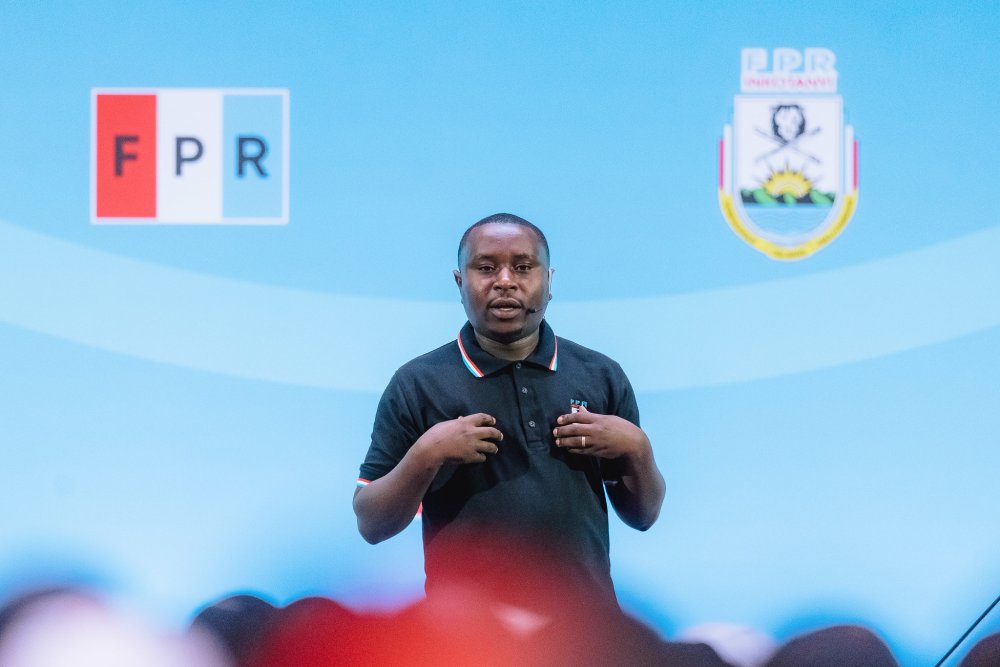
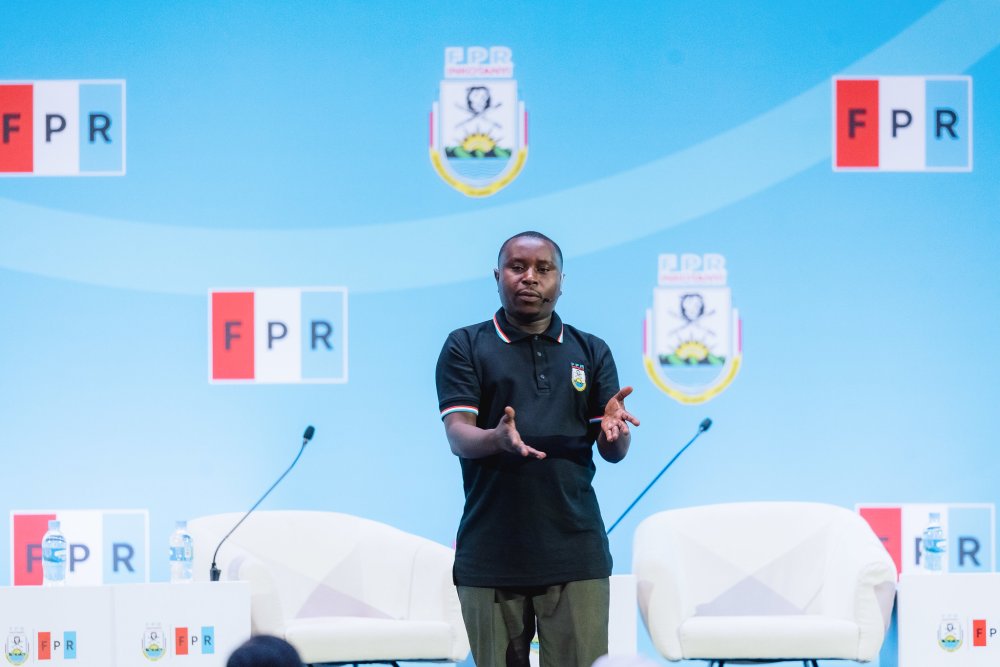
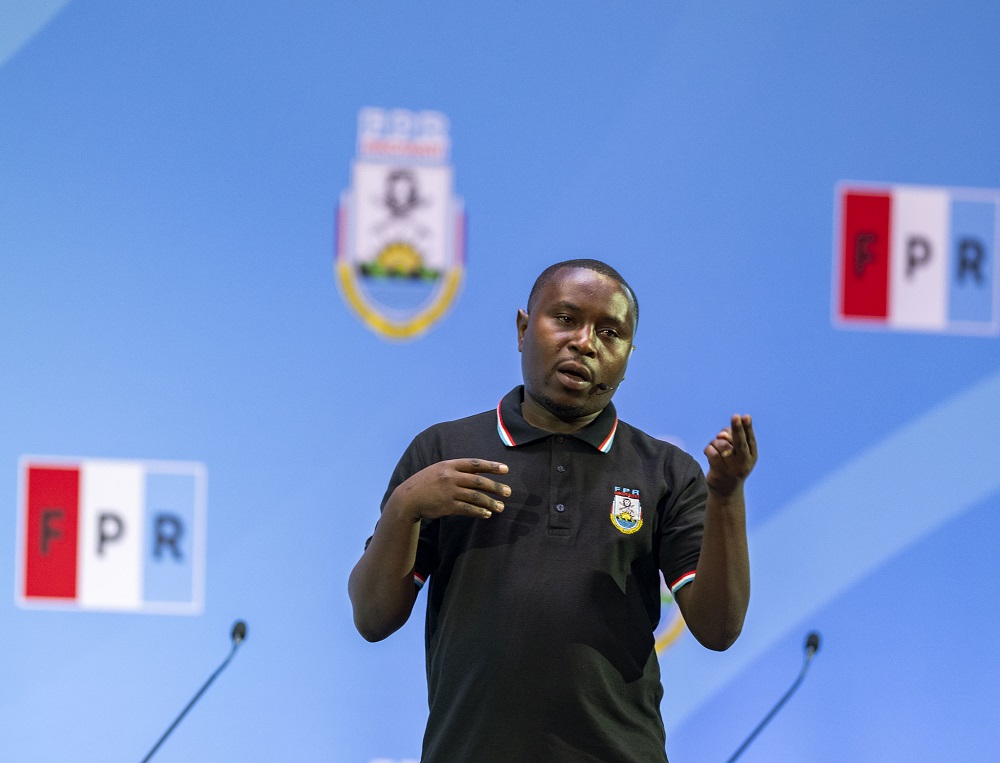
Sharing a message with young people, Nkurunziza said: “Young people, whenever you hear a word or a name such as the RPF, take time to think carefully and understand it.”
He added: “There is one important lesson: we must learn resilience. We must remain strong and never give up.”
For a child born in exile, abducted, forced to carry a gun and taught to hate his own country, resilience eventually came to mean something different: surviving, rebuilding his life and using the second chance he received to ensure that his future would no longer be controlled by war.
Nkurunziza Patrick has recounted his journey from FDLR to rebuilding his life in Rwanda.
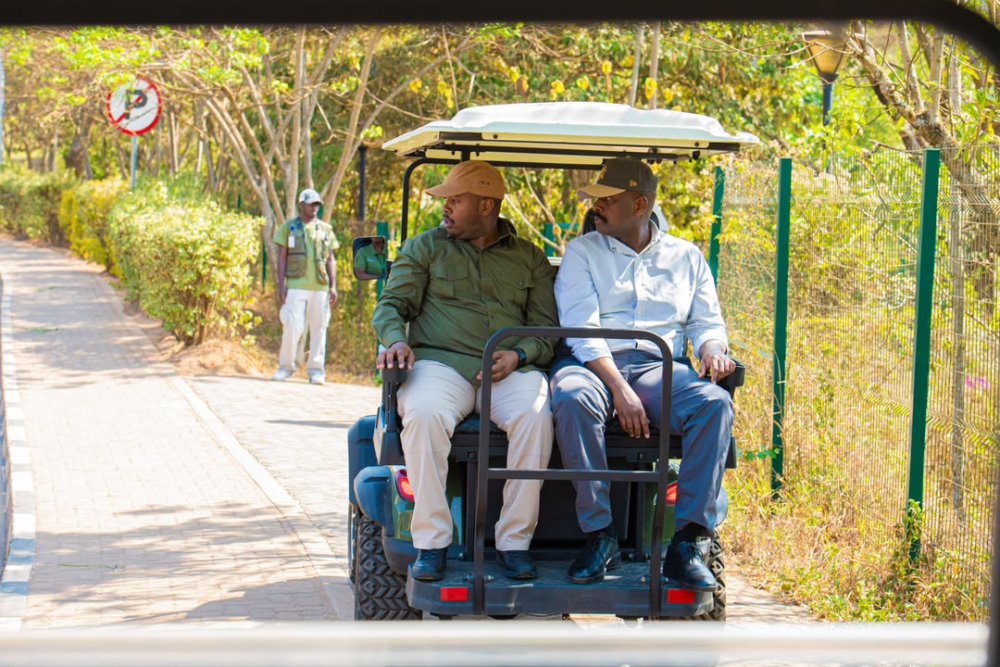
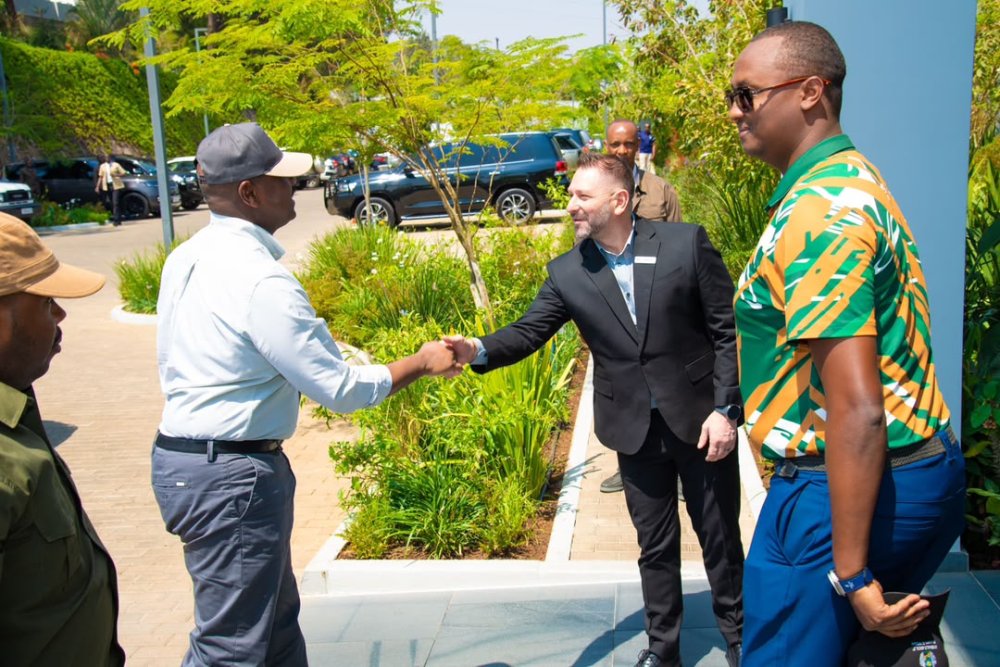
Gen Muhoozi arrived in Kigali on July 25, 2026, where he was welcomed by the Chief of Defence Staff of the Rwanda Defence Force (RDF), Gen Mubarakh Muganga.
As part of his visit, the Ugandan military chief was on Sunday taken on a guided tour of major infrastructure and urban development projects by the Mayor of Kigali, Samuel Dusengiyumva, highlighting initiatives that are expected to transform the city’s landscape and improve the quality of life for residents.
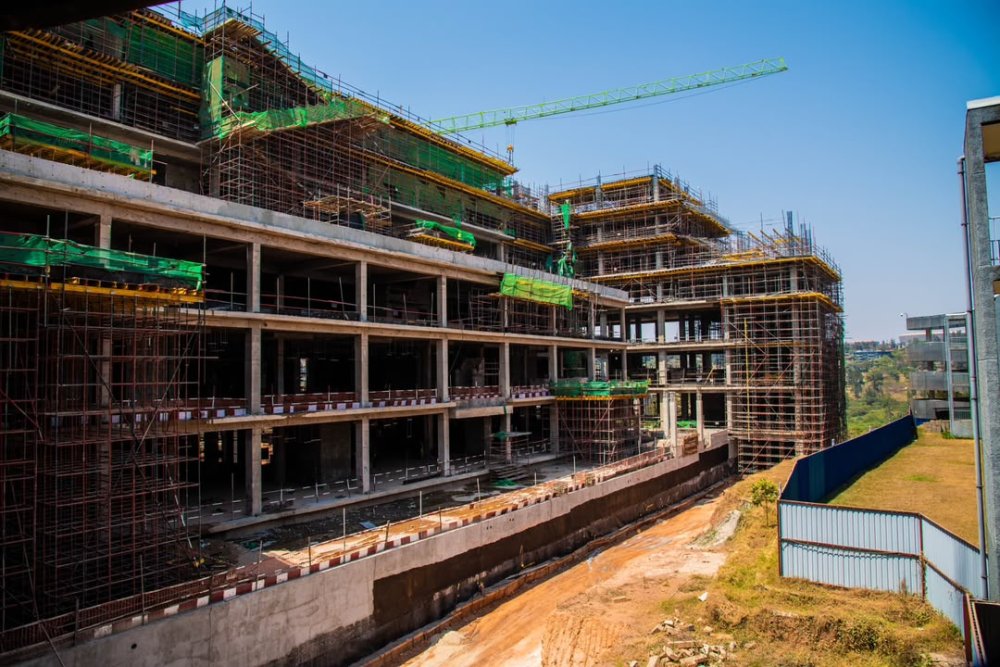
Gen Muhoozi visited the ongoing expansion of King Faisal Hospital, one of Rwanda’s flagship healthcare projects. Once completed, the expansion will increase the hospital’s bed capacity threefold, bringing the total number of beds to 600 and significantly enhancing its ability to provide specialised medical services.
He also toured Nyandungu Eco-Park, a restored urban wetland and recreational park that has become one of Kigali’s leading green public spaces since its opening in 2022.
The park has continued to record steady growth in visitor numbers, welcoming 67,222 visitors in 2023 and 76,754 in 2024. Attendance rose even further in 2025, surpassing 100,000 visitors by November.
The increase in visitor numbers has been accompanied by higher revenue generation. The park’s earnings grew from Rwf158 million in 2024 to more than Rwf200 million in 2025, reflecting its growing popularity as a leisure and tourism destination.
Gen Muhoozi was also shown the Gacuriro Housing Development Project in Gasabo District, an ambitious residential development being implemented by Shelter Group Africa. The project forms part of Kigali’s broader efforts to expand access to modern housing and support the city’s rapid urbanisation.
Beyond the project visits, Gen Muhoozi held talks with President Paul Kagame on July 25, 2026. Their discussions focused on strengthening military cooperation between Rwanda and Uganda, while also exploring other areas of mutual interest between the two neighbouring countries.
The meeting concluded with President Kagame and Gen Muhoozi sharing a friendly game of basketball, underscoring the warm relations between the two leaders.
Gen Muhoozi tours key development projects in Kigali.Gen Muhoozi visits King Faisal Hospital expansion project.Gen Muhoozi tours Nyandungu Eco-Park.
The park recorded 8,919 paying visitors during the quarter, with average visitor spending reaching US$108 per person.
Revenue was driven by tourism and hospitality activities, including park entry fees, guiding services, accommodation-related income, concession fees and fisheries.
The improved financial performance contributed to progress towards self-sustainability, with Akagera’s sustainability ratio rising from 76 per cent in April to 104 per cent in June, strengthening the park’s ability to fund conservation activities and community programmes.
The quarter also saw the official opening of SALT of Akagera, a new eco-luxury lodge operated by The Lux Collective.
The 60-room facility, overlooking Lake Ihema, replaced Akagera Game Lodge, which had been managed by Mantis Collection since 2017. The launch marked The Lux Collective’s entry into Rwanda and forms part of its wider tourism expansion plans in the country.
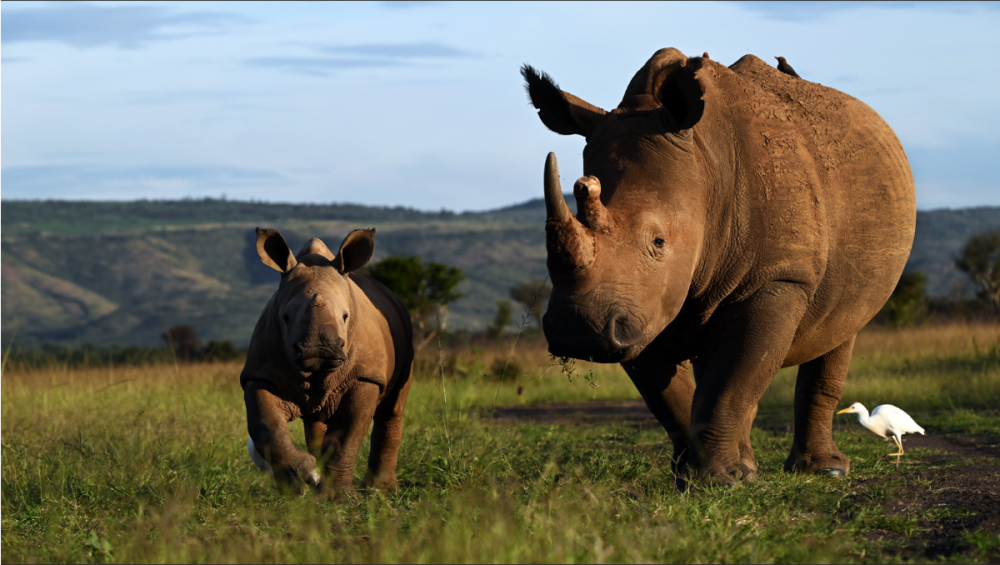
Wildlife conservation recorded notable achievements during the period, including the birth of three rhino calves; one black rhino and two white rhinos. The park said the births indicate that its rhino population continues to adapt well and reproduce successfully.
Rhino monitoring teams recorded more than 2,600 white rhino sightings and over 400 black rhino sightings through daily foot and aerial patrols.
At the same time, law enforcement teams conducted nearly 1,600 patrols covering about 35,000 kilometres, with no animals lost to poaching during the quarter. Rangers also removed 12 snares and arrested five illegal fishermen.
Akagera continued investing in neighbouring communities, with local cooperatives generating US$226,263 in income through activities such as fishing, beekeeping, guiding, community centre operations and construction work.
An additional US$229,374 entered surrounding communities through local procurement, bringing the total economic benefit to approximately US$455,637.
Community development initiatives included training for teachers, cooperative members, beekeepers, fishers and vocational learners.
More than 31,000 people were reached through environmental education and outreach activities, while the Akagera Lion Cup tournament brought together communities bordering the park, attracting more than 24,000 spectators across 13 matches.
As the dry season began, the park intensified fire management efforts, clearing more than 52 kilometres of firebreaks along the fence line and around key infrastructure to reduce wildfire risks and support vegetation regeneration.
The park also expanded its conservation research efforts. A June elephant survey identified six new individuals, bringing the elephant database to 115 known elephants, while 85 camera traps across 57 locations were deployed to monitor large carnivores, including lions, leopards and hyenas.
Staff capacity building remained a priority, with ranger refresher training, GIS training involving teams from Akagera, Nyungwe and Gambella National Parks, and knowledge exchanges focused on strengthening conservation skills.
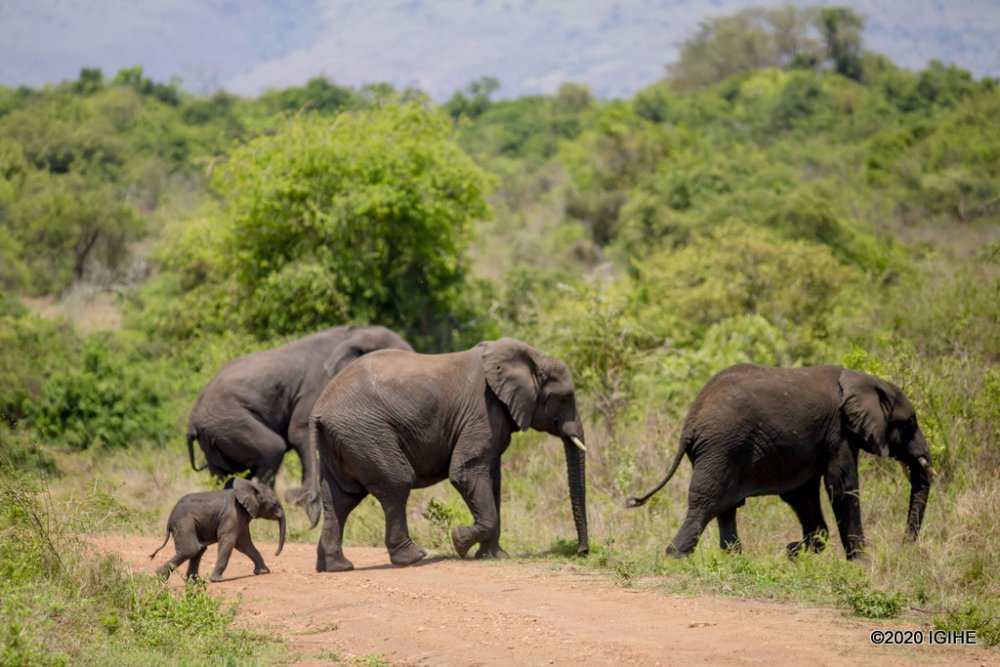
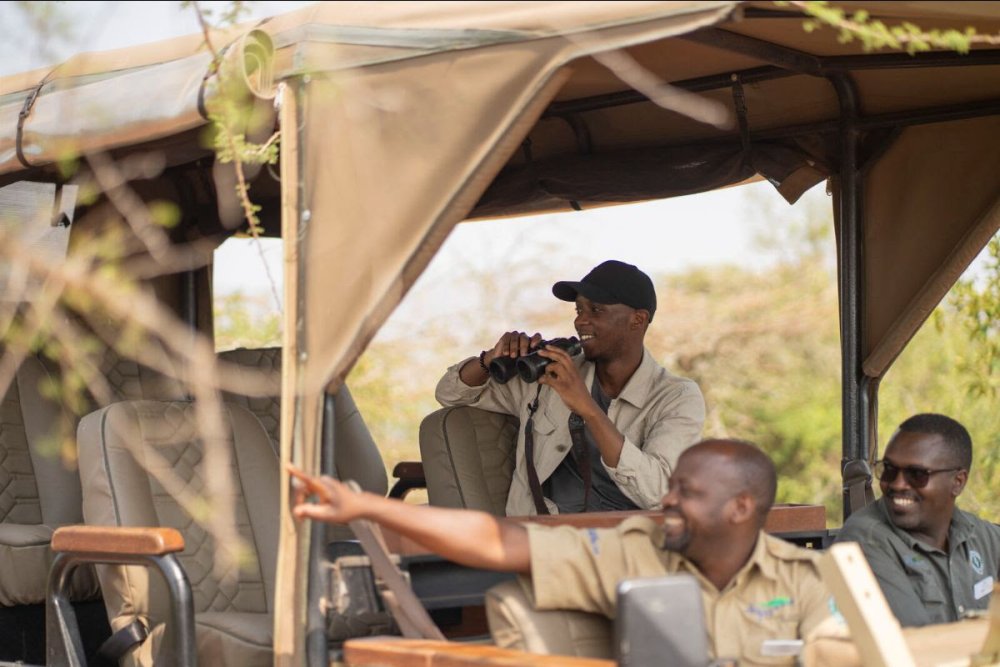
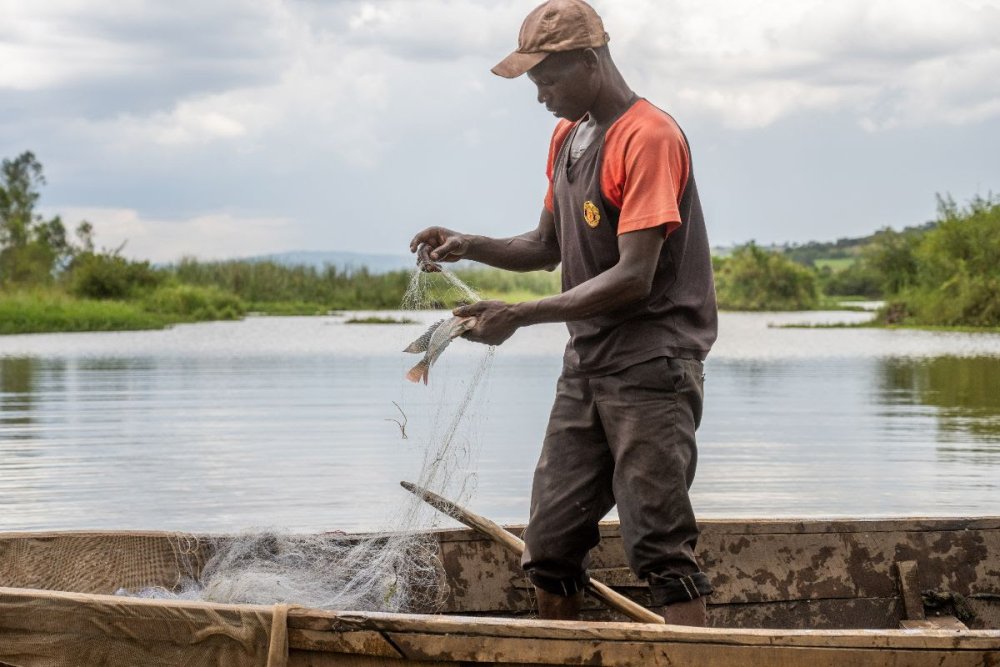
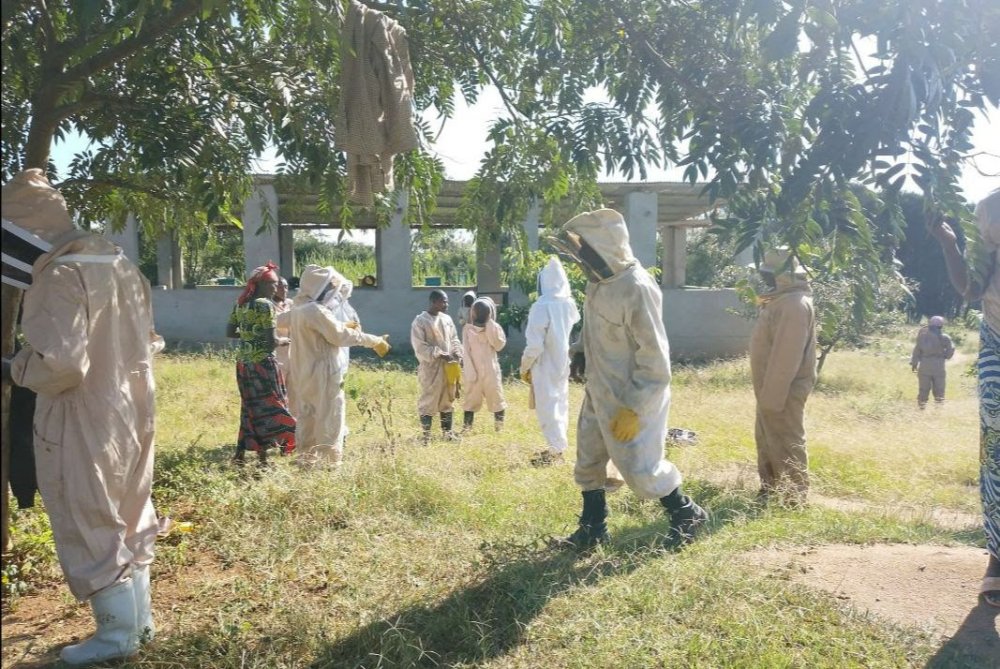
Visitors explore Akagera National Park, which welcomed 8,919 paying guests between April and June 2026.Professional fishing has become a source of livelihood for many communities living around Akagera National Park.Beekeeping cooperatives are among the beneficiaries of efforts to conserve Akagera National Park.SALT of Akagera opened its doors overlooking Lake Ihema as part of Rwanda’s growing luxury tourism sector.Wildlife conservation recorded notable achievements during the period, including the birth of three rhino calves.A June elephant survey identified six new individuals, bringing the elephant database to 115 known elephants .
The discussions focused on efforts to grow the sport, nurture young talent and create more opportunities for basketball players in Uganda.
The meeting builds on earlier engagements held in Uganda in March 2026, when Gen. Muhoozi and Akamanzi discussed possible collaboration with the Ministry of Education and Sports to establish a Junior NBA League aimed at developing young players while promoting teamwork, discipline, leadership and work ethic.
During the March discussions, Akamanzi highlighted NBA Africa’s initiatives across the continent, including partnerships with governments and private sector actors to develop basketball ecosystems and create economic opportunities linked to the sport.
The talks also explored ways to improve basketball infrastructure in Uganda and strengthen pathways for young players to progress into professional leagues.
Gen. Muhoozi arrived in Kigali on Saturday for an official visit that included meetings with Rwanda’s senior military leadership and President Paul Kagame.
During his visit, the Ugandan military chief toured several infrastructure and recreational facilities in Kigali, including the King Faisal Hospital Expansion Project, Nyandungu Eco Park and Parklane Estate, a residential development in Gacuriro.
NBA Africa, led by Akamanzi, has been working to expand basketball across the continent through youth development programmes, partnerships and initiatives aimed at growing the sport’s professional ecosystem.
The planned Junior NBA League in Uganda is expected to provide a platform for secondary school students to develop their skills and compete in an organised basketball structure.
Veteran Ugandan journalist Andrew Mwenda also joined Gen. Muhoozi and Akamanzi during the meeting. The meeting builds on earlier engagements held in Uganda in March 2026, when Gen. Muhoozi and Akamanzi discussed possible collaboration with the Ministry of Education and Sports to establish a Junior NBA League.
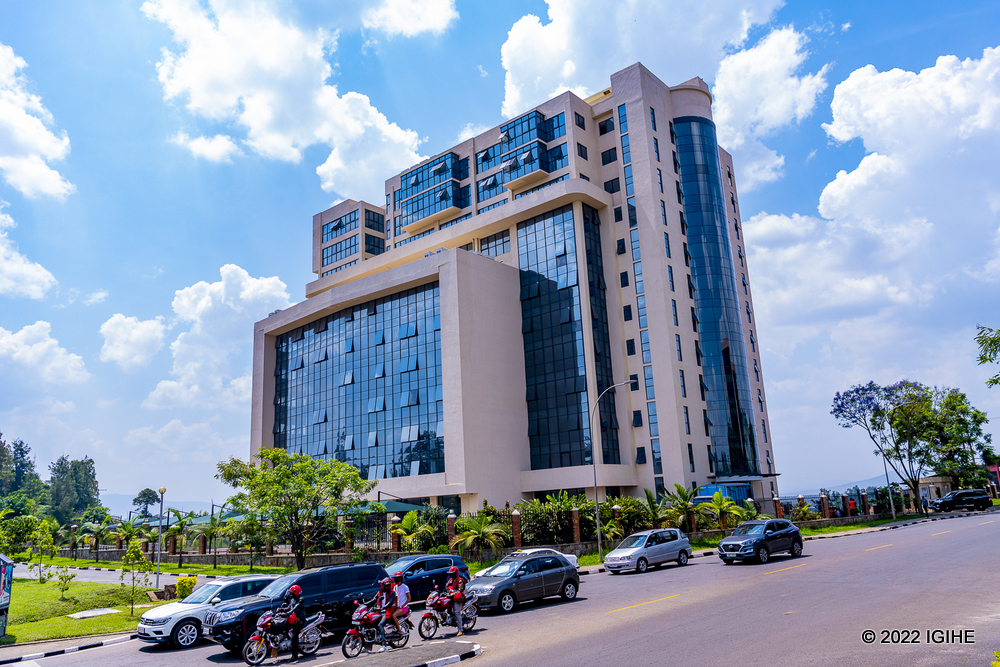
In a public notice issued on Monday, July 27, RDB announced that it had begun operating from its new premises on KN 69 Street, opposite St. Michael Cathedral, with all services now available from the new location.
“Effective 27 July 2026, the RDB office has relocated to new premises,” the agency said, noting that the move applies to the public, development partners, investors and the wider business community.
RDB said all of its services will now be provided from the new offices, while the One Stop Centre, which offers a range of government and business services to investors, will operate from the ground floor of the building.
The agency added that its digital platforms remain fully operational, allowing clients to continue accessing online services and information without interruption. Customer support teams will also remain available to assist stakeholders during the transition.
RDB said details on the relocation of its subsidiaries, the Rwanda Convention Bureau (RCB) and the Rwanda Mines, Petroleum and Gas Board (RMB), will be communicated at a later date.
The move follows the temporary closure of the RDB Building in Gishushu on May 5, 2026, to pave the way for planned renovation and upgrade works.
At the time, RDB relocated its One Stop Centre services to the Ministry of Infrastructure offices in Kimihurura, while other services continued to be offered through the institution’s digital platforms.
The 12-storey Gishushu building, which also housed the Rwanda Housing Authority (RHA), had become the subject of scrutiny after assessments identified structural and construction-related defects.
RDB had long operated from this building in Gishushu before it was closed in May to allow renovations aimed at addressing structural defects.
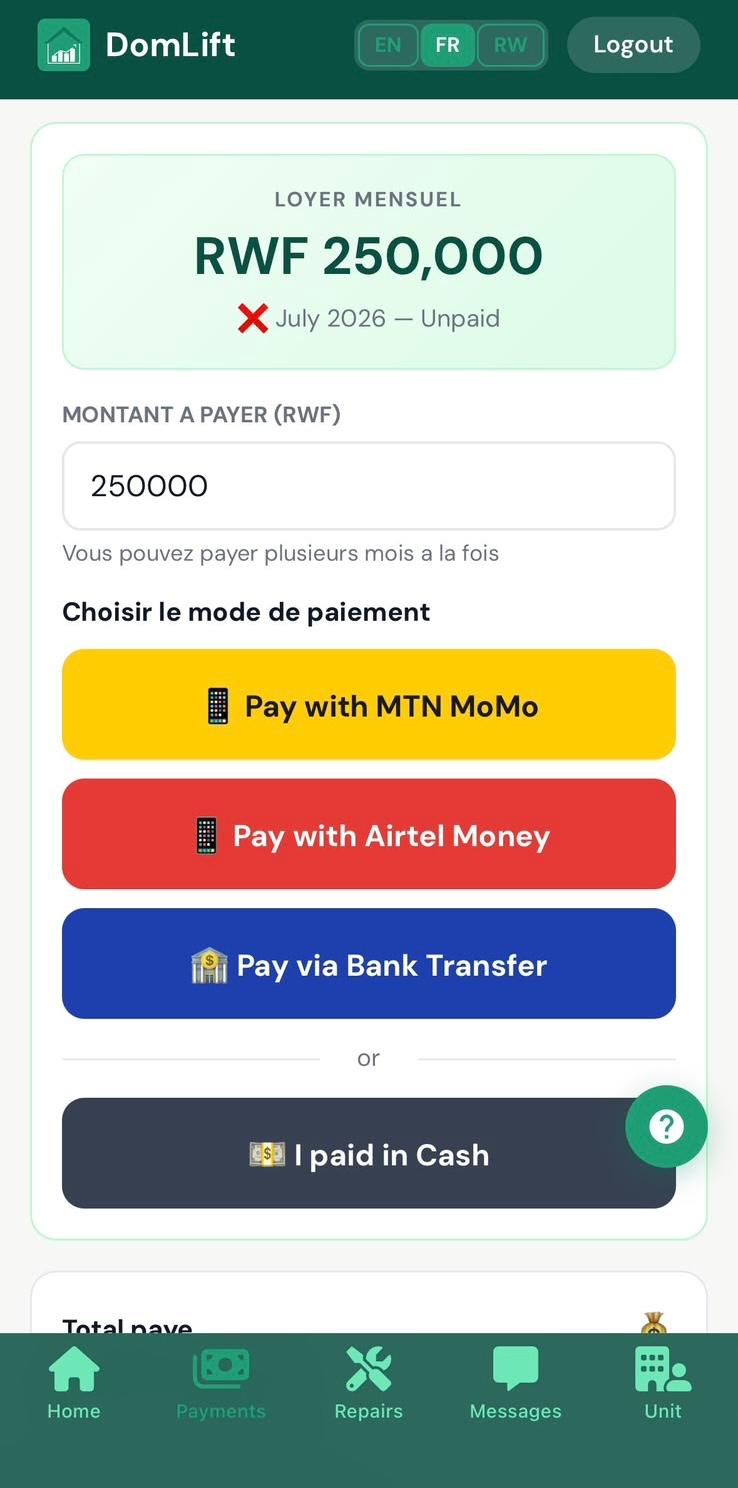
Tracking rent payments, managing lease agreements, maintaining properties, and communicating with tenants often require either a physical presence or the support of a trusted third party.
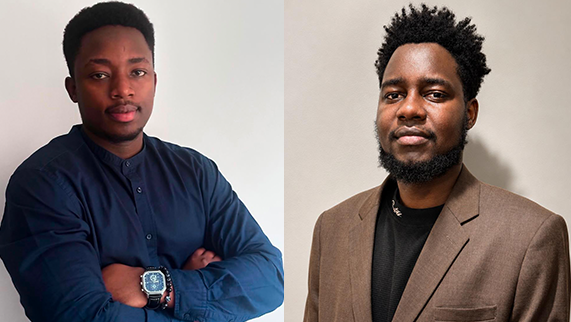
To address these challenges, Aristide Shema, a young Rwandan entrepreneur based in Wrocław, Poland, developed DomLift, a digital platform that enables property owners to manage their real estate from anywhere in the world.
In an interview with IGIHE, he discusses his background, the inspiration behind the platform, and his vision for the digital transformation of Rwanda’s real estate sector.
IGIHE: Could you briefly introduce yourself and tell us about your academic and professional background?
Shema: My name is Aristide Shema. I was born in Gisozi, Kigali. Even after leaving Rwanda to pursue my studies and career abroad, I have always remained deeply connected to my country. That attachment has inspired me to stay engaged with Rwanda’s challenges and to think about how I could contribute to its development, even while living thousands of kilometers away.
I studied International Business with a specialization in technology at WSHiU – Academy of Applied Sciences in Poznań, Poland. Today, I work as an IT Support Engineer at Hemmersbach on the Thales Alenia Space project, while based in Wrocław.
This experience has allowed me to combine business management skills with technology expertise, a combination that proved invaluable in building DomLift.
IGIHE: How did the idea for DomLift come about?
Shema: Several factors inspired this project. First, President Paul Kagame’s consistent call for young Rwandans to embrace innovation and develop solutions that address the country’s challenges has always inspired me.
At the same time, I became interested in the real estate sector. The figures speak for themselves: Rwanda currently faces a housing deficit of more than 200,000 units, a number projected to reach nearly 310,000 by 2032. I realized there was a genuine need to modernize property management.
I have always been passionate about real estate. However, I did not have the financial resources to invest in property myself. So I told myself that if I could not contribute as an investor, I could still contribute by building a technological solution that supports those who already invest in the sector.
IGIHE: How did you turn that idea into a working platform?
Shema: I trained myself in software development through online courses for more than nine months. After that, I designed and developed DomLift entirely on my own, from the very first line of code to the platform’s launch.
For me, it was a way to contribute to the development of Rwanda’s real estate sector without having investment capital. I wanted to create a tool that genuinely makes life easier for landlords, property managers, and tenants.
IGIHE: Who are the people working with you to make this possible?
Shema: I am fortunate to have my co-founder, Landry Rudasingwa, by my side. He is originally from Nyakabanda and holds a degree in Hydraulic Engineering earned in China. He is currently pursuing a degree in International Business in Poznań, Poland.
He also works as an Integration Engineer at Jitterbit while serving as DomLift’s Chief Technology Officer (CTO). His technical expertise plays a vital role in the continued development of our platform.
IGIHE: How does DomLift work in practice?
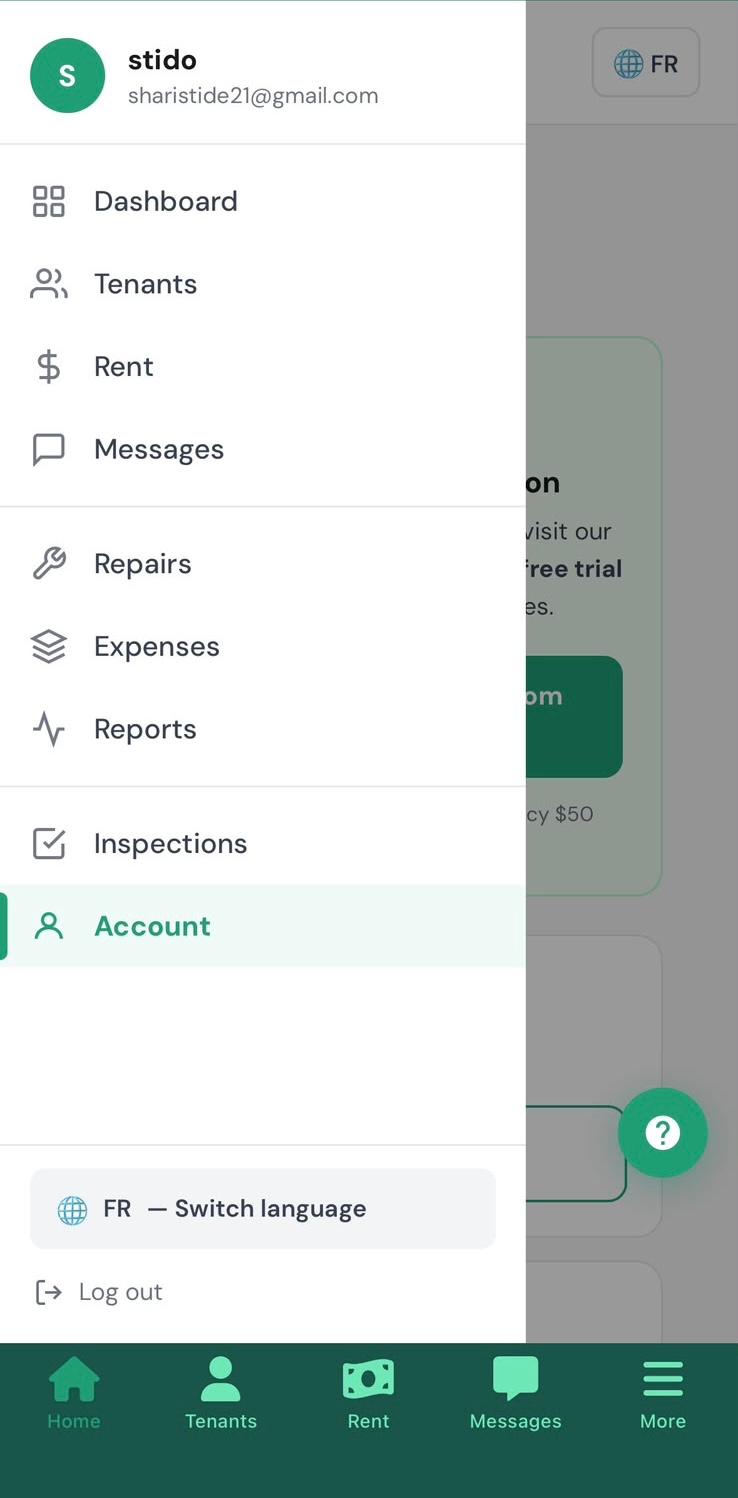
Shema: DomLift operates through two connected portals: one for landlords and property managers, and another for tenants.
Everything starts with onboarding. Property owners register their properties and individual units, then assign tenants to each unit. From that point onward, every piece of information related to that property is stored in one centralized place.
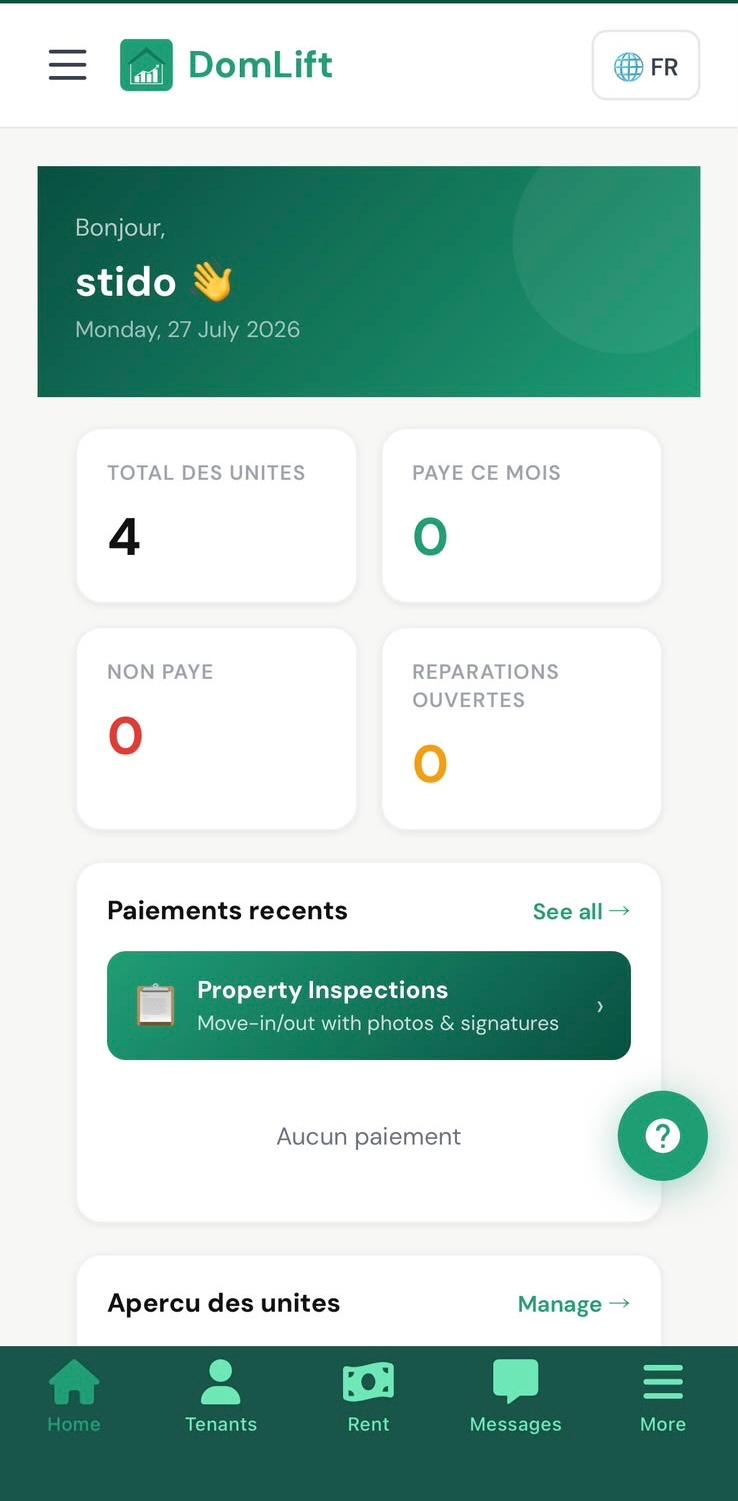
Rent can be paid through MTN Mobile Money, Airtel Money, bank transfers, or even cash. Regardless of the payment method, every transaction is automatically recorded, allowing landlords to instantly see who has paid without having to reconcile payments manually.
When maintenance is needed, tenants submit repair requests directly through their portal. The landlord receives a notification, assigns the work, and tracks the request until it is completed.
We have also integrated an internal messaging system that allows landlords and tenants to communicate directly within the platform, eliminating the need for scattered WhatsApp conversations.
One of the features we are particularly proud of is the property inspection system. Landlords can carry out detailed inspections using photographs, notes, checklists, and electronic signatures, creating a reliable record of each property’s condition over time.
This feature becomes especially valuable when an owner wants to sell a property, increase its rental value, or apply for bank financing.
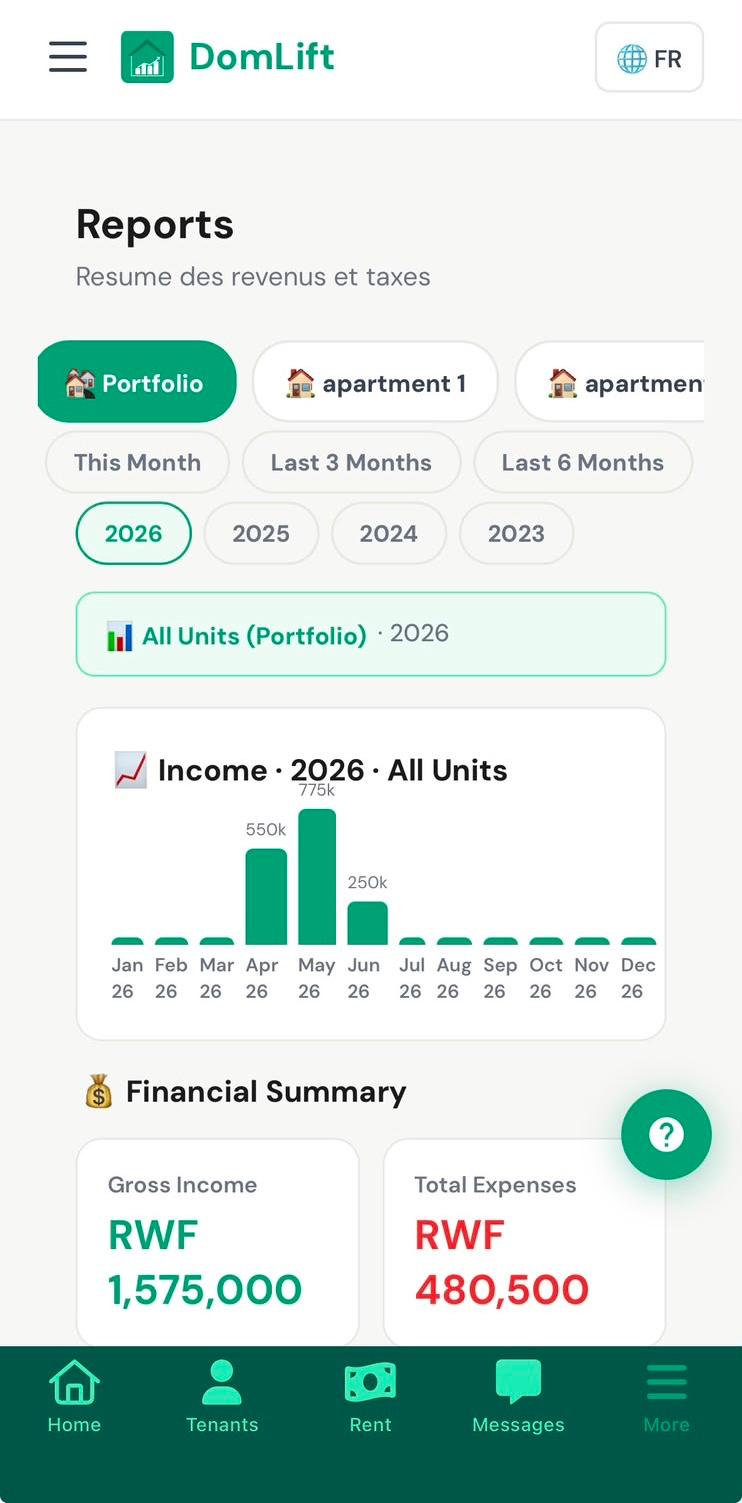
DomLift also generates financial reports that help landlords analyze the performance of their property portfolio. We are currently developing even more detailed reports for each individual unit so owners can track income, expenses, and occupancy history separately.
Our goal is to provide a solution that works equally well for an individual managing a few rental units as it does for a company managing hundreds of properties.
IGIHE: How long has DomLift been available?
Shema: The platform has been publicly available for just over two months. Despite being relatively new, we are already seeing encouraging growth, with between 60 and 150 active users. Our goal is to continue expanding this community and support even more property owners in managing their real estate.
IGIHE: On which platforms is DomLift available?
Shema: DomLift is available on the web as well as through native Android, iPhone, and iPad applications. Users can download it free of charge from Google Play and the App Store. Automatic updates ensure that everyone always has access to the latest features and improvements.
The idea is simple: to allow someone to manage their property portfolio from Kigali, Brussels, London, Toronto, or anywhere else in the world directly from a smartphone or computer.
IGIHE: What is your vision for the coming years?
Shema: Our ambition is for every landlord and property manager to have access to a professional property management system.
We want to go beyond simple rent collection. By providing reliable data, the platform helps property owners analyze their investments, prepare bank financing applications, and make informed decisions when expanding their portfolios.
We also aim to serve professional property management companies. In the long term, our ambition is to expand DomLift across the East African Community after strengthening our presence in Rwanda.
IGIHE: What message would you like to share with Rwandans, especially those living abroad?
Shema: I want to tell Rwandans that technology offers an incredible opportunity to contribute to the development of our country, wherever we may live.
DomLift was born from that belief. We want to provide a modern, reliable, and accessible solution that simplifies property management while helping owners make better investment decisions through accurate data.
Our ambition is to build a platform that will support real estate investors not only in Rwanda but eventually across East Africa.
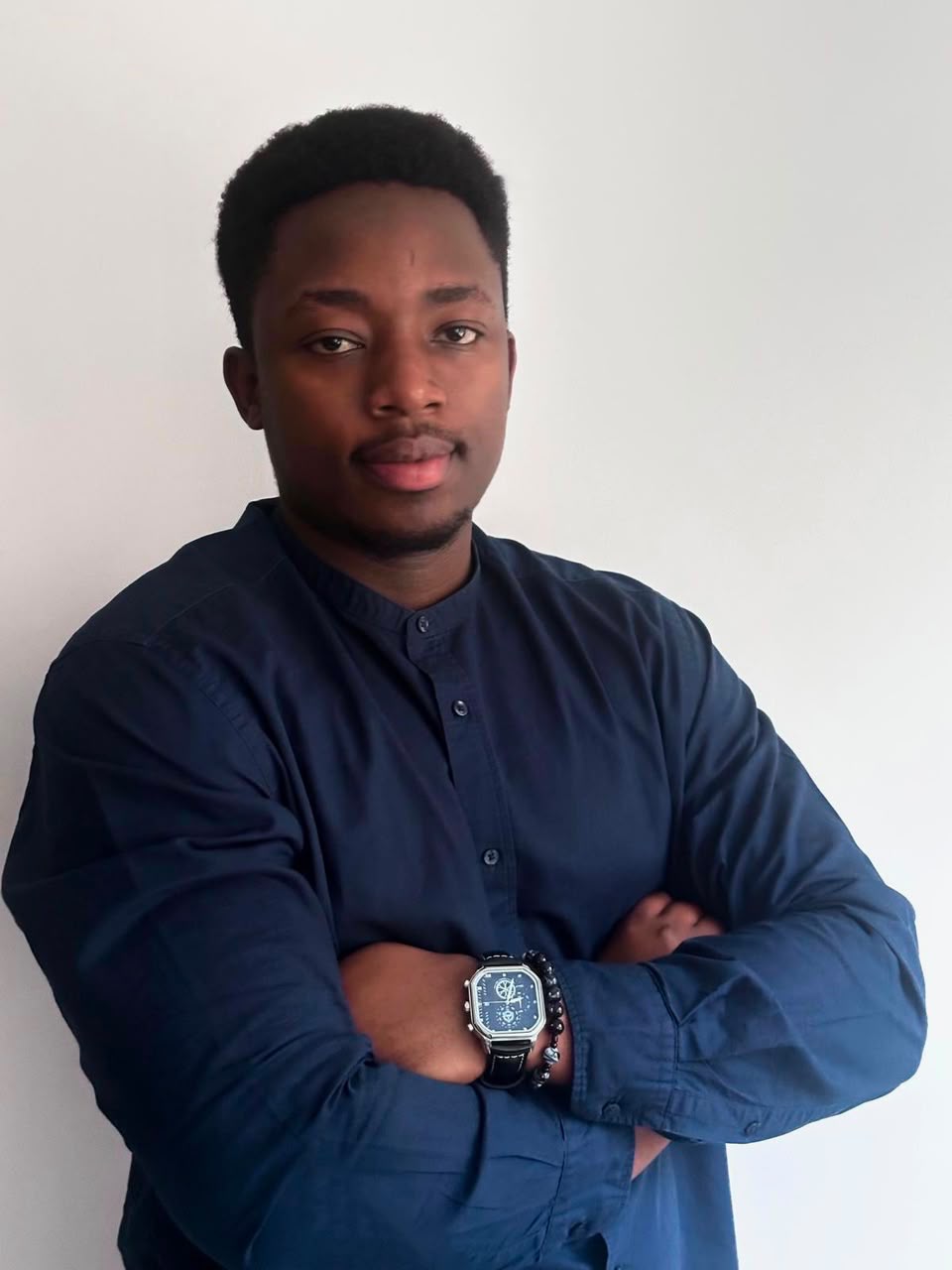
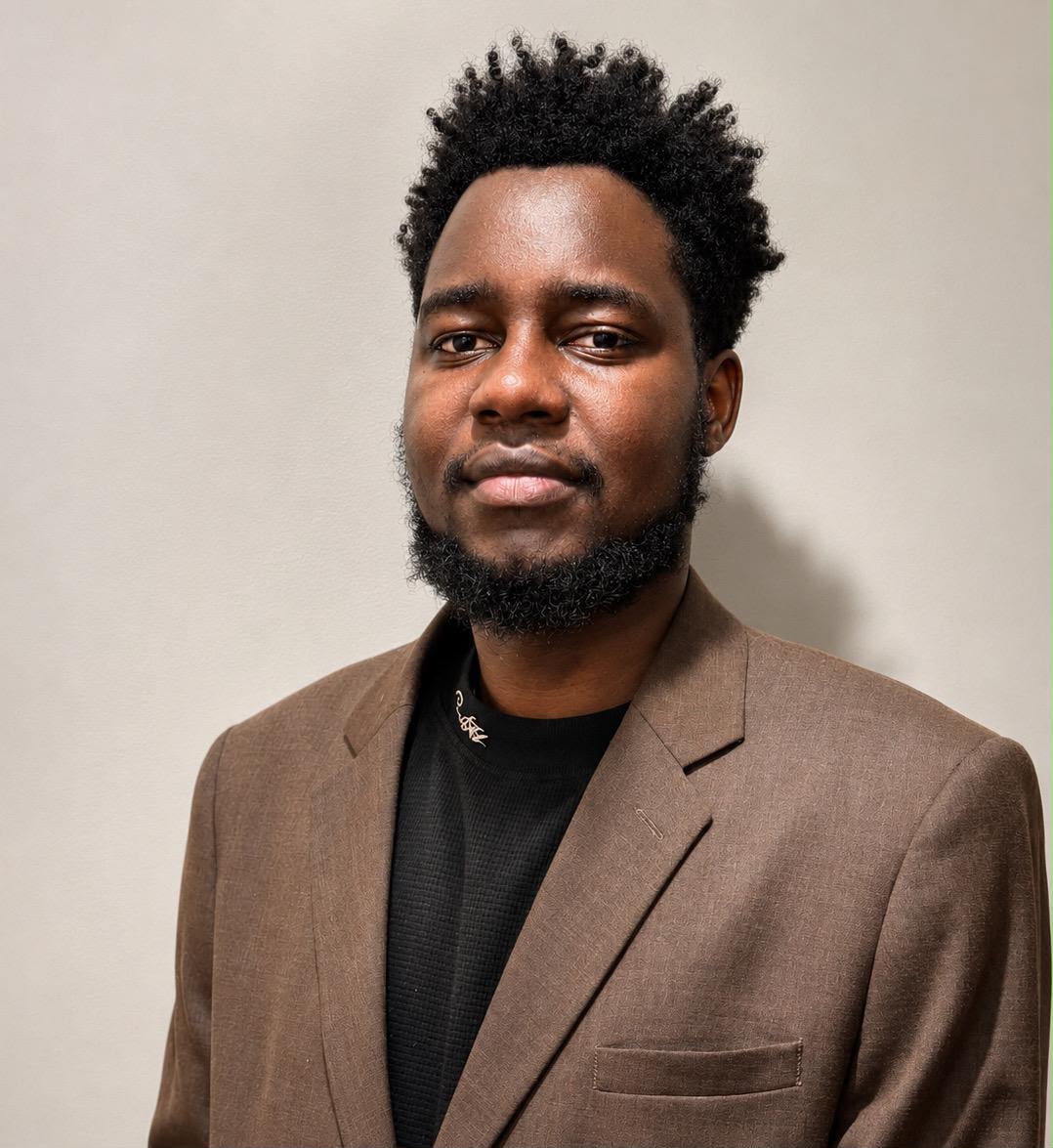
Aristide Shema i sthe founder of DomLift, a digital property management platform.Landry Rudasingwa, Co-founder and Chief Technology Officer (CTO) of DomLift.
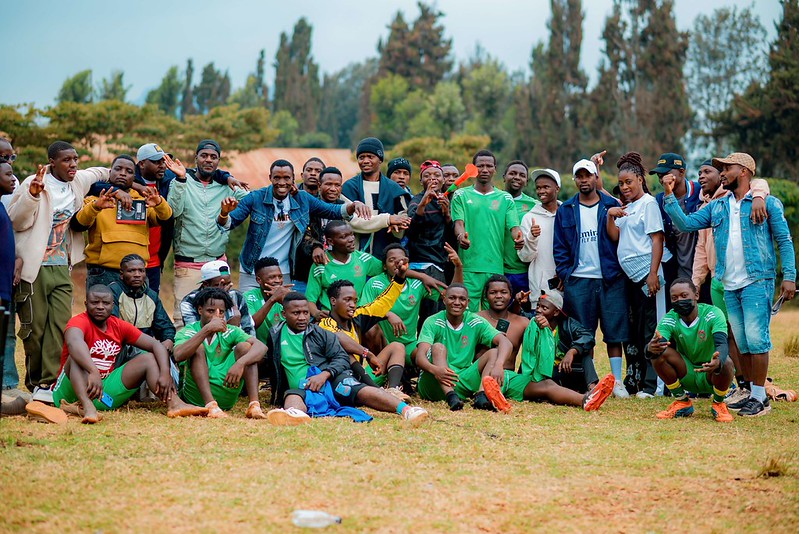
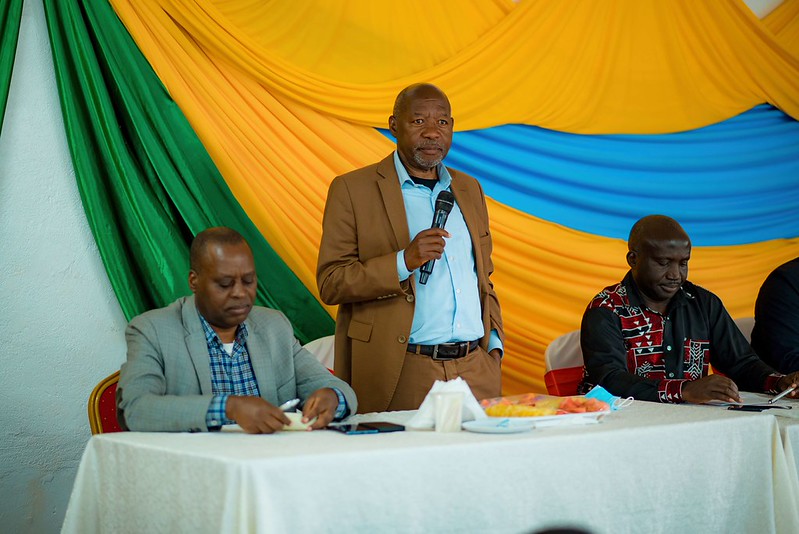
The call was made on Saturday by the Chairperson of the Rwandan Community in Kenya (RCK), Dr. Innocent Butare, during a meeting with members of the community in Nyeri County following a quarter-final match of the ongoing RCK Imena Cup 2026 football tournament.
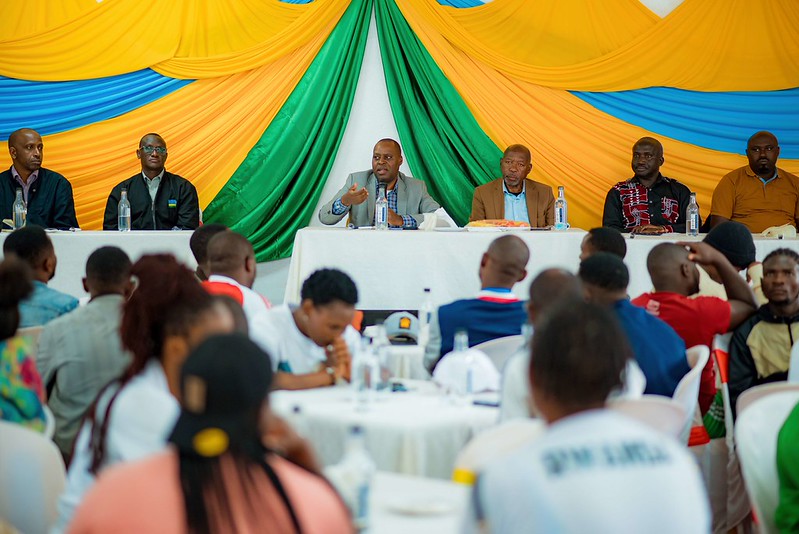
The meeting was attended by Rwanda’s High Commissioner to Kenya, Ambassador Ernest Rwamucyo, diplomats from the Rwandan High Commission, members of the RCK Committee, and 200 members of the Rwandan community from Nyeri, Embu, and Meru counties.
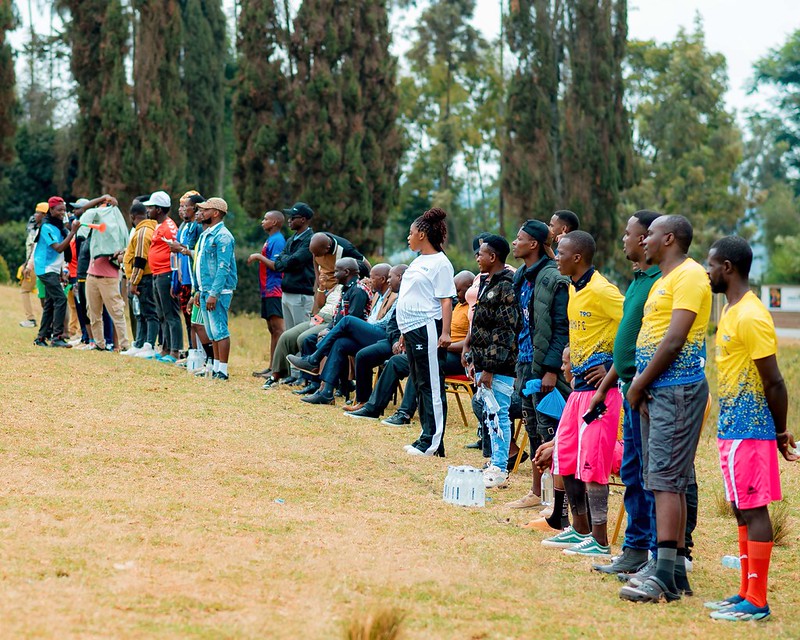
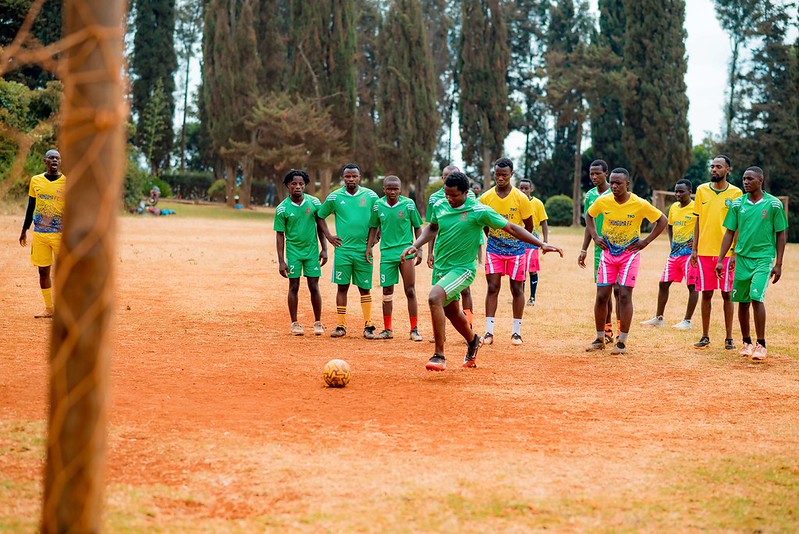
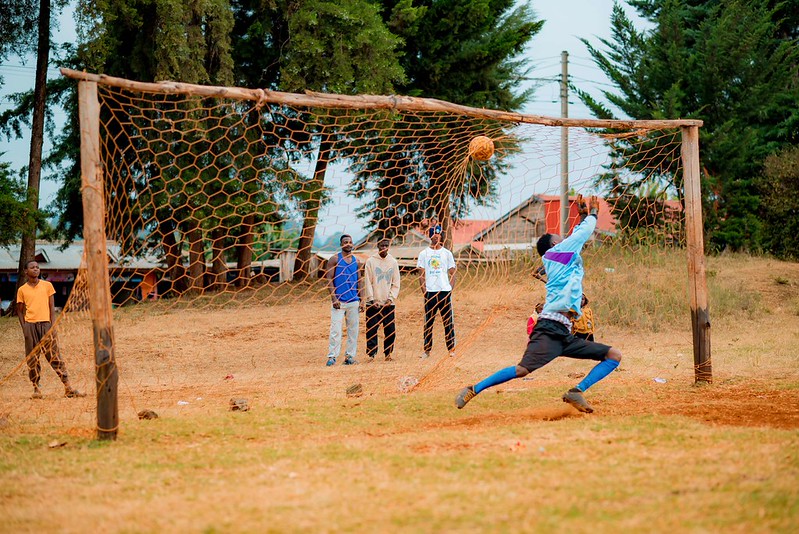
Earlier, Ambassador Rwamucyo, accompanied by diplomats from the High Commission and members of the RCK Committee, watched the quarter-final match between Elite FC and Vision de la Jeunesse FC. The tournament brings together Rwandan teams from across Kenya.
Vision de la Jeunesse FC of Embu County secured a place in the semi-finals, which will be held in Nairobi this October.
Addressing the gathering, Ambassador Rwamucyo congratulated Vision de la Jeunesse FC on reaching the semi-finals. He also highlighted the consular services offered by the High Commission and national development programmes that members of the community can participate in.
The High Commissioner encouraged Rwandans living in Kenya to continue upholding Rwandan values and to preserve the strong bilateral relations between Rwanda and Kenya by respecting the laws of their host country.
Dr. Butare urged the community to continue upholding the values of unity and social cohesion, which he said are key to fostering a strong, connected, and resilient RCK.
He also encouraged Rwandans living in Kenya to save through savings groups and urged those who are able to invest in investment schemes established by the Government of Rwanda, including Ejo Heza and the RNIT Iterambere Fund.
Rwanda’s High Commissioner to Kenya, Ambassador Ernest Rwamucyo, addresses members of the Rwandan community in Nyeri County following a quarter-final match of the RCK Imena Cup 2026.The RCK Imena Cup 2026 brings together Rwandan teams from across Kenya, strengthening connections among members of the Rwandan community.Rwandan Community in Kenya Chairperson Dr. Innocent Butare urged members to uphold the values of unity and social cohesion during a community meeting in Nyeri County.Members of the Rwandan community in Kenya gathered in Nyeri County for a meeting with Ambassador Ernest Rwamucyo and RCK Chairperson Dr. Innocent Butare.
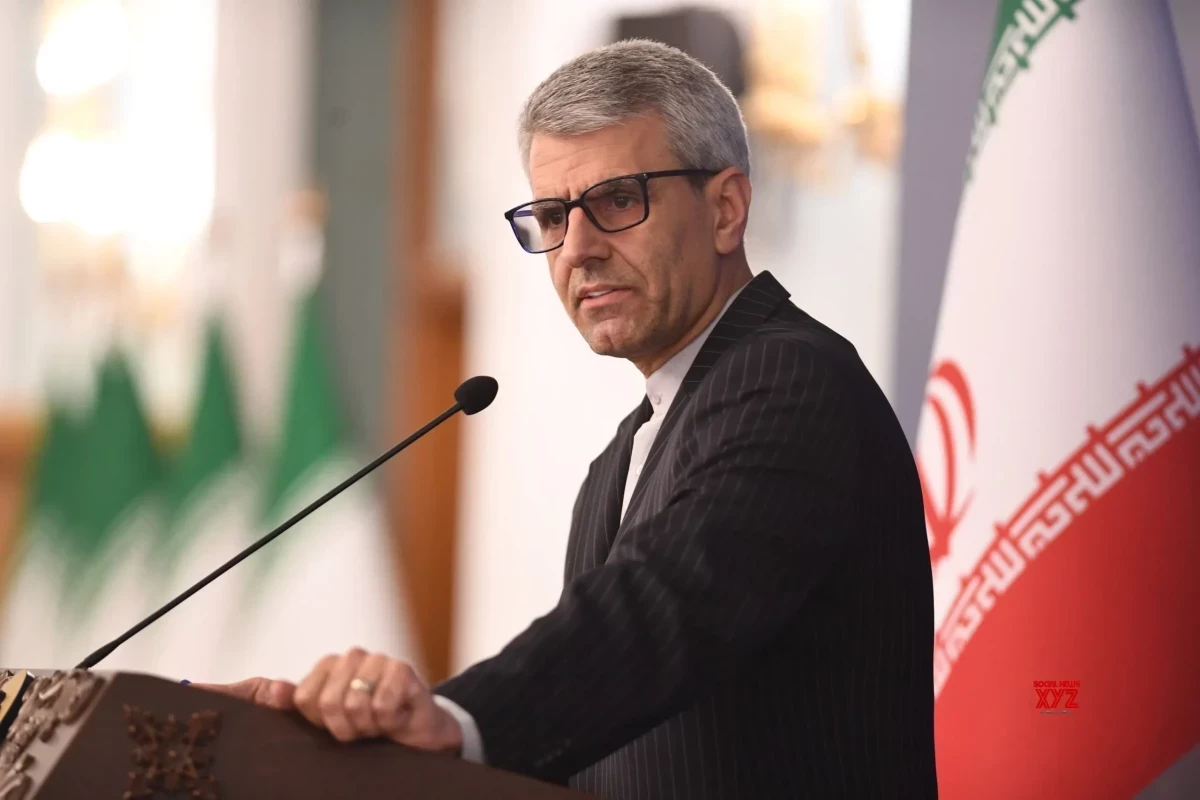
Baghaei stressed in the interview that for any dialogue to be formed, the “proper ground” must be prepared, noting that the United States has destroyed such a ground, Iranian media reported on Sunday.
He accused Washington of violating “all its provisions” in practice under the memorandum of understanding (MoU) between Iran and the United States.
The spokesman said Iran’s current priority “is to defend its sovereignty and territorial integrity and protect its people against the war crimes that are being perpetrated by the United States.”
Under the MoU signed on June 18, the United States and Iran were scheduled to hold talks within a period of 60 days to reach a final agreement, but the talks’ fate is hanging in the balance following renewed clashes between the two over the past two weeks.
Esmail Baghaei, spokesperson of the Iranian Ministry of Foreign Affairs
Mmamoloko Kubayi, chairperson of the Inter-Ministerial Committee on Migration, made the remarks at a media briefing in Pretoria on the government’s latest progress in dealing with the migration challenges in the country.
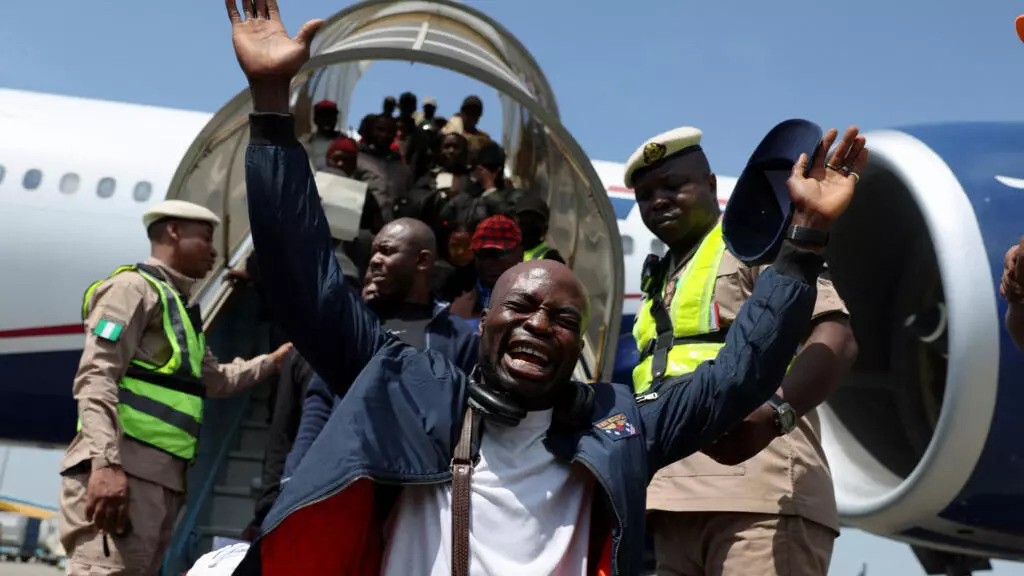
The repatriations come amid a recent rise in attacks targeting foreign nationals in South Africa, which has prompted some migrants to opt for voluntary return. Kubayi said the government has been working with representatives of countries of origin to facilitate the repatriation process.
“Regarding deportations and repatriations, we can confirm that since Malawian nationals assembled at Sherwood in KwaZulu-Natal from June 14 to July 24, a total of 68,138 foreign nationals have been processed, the majority repatriated following processing at the Musina Temporary Repatriation Processing Centre,” said Kubayi, who is also minister of justice and constitutional development.
According to Kubayi, the Border Management Authority processed 72,906 repatriations involving various nationalities at ports of entry between June 7 and July 14, including those handled at the temporary repatriation center.
She said dedicated immigration courts finalized 28,736 immigration-related cases, mainly involving deportations, between April 1 and the end of June. Kubayi also warned against unauthorized identity checks targeting foreign nationals, saying migration management remains the responsibility of state authorities and must be conducted in accordance with the law.
“To date, law enforcement authorities have registered 354 cases of arrests and prosecutions against individuals who are in contravention of the law related to the issue of migration. An additional 69 people were arrested in Eastern Cape last weekend, and appeared in court on Monday. Government is making it clear that migration management is fundamentally a rule-of-law matter. Criminality will not be tolerated, regardless of who is involved,” she said.
Since April, a total of 93 joint border operations have been conducted to crack down on the illegal movement of illicit goods, human trafficking and drug syndicates, according to Kubayi.
She said the government has also intensified engagement with neighboring countries and countries of origin to strengthen cooperation on migration management, documentation, repatriation and information sharing.
A man disembarks from a government-chartered flight repatriating Nigerian citizens fleeing xenophobic attacks in South Africa, in Lagos on 11 June 2026. The South African government has been accused of failing to crack down on anti-immigrant violence