The move follows a January 2025 decision to stop issuing licenses for new petrol-powered commercial motorcycles, commonly known as moto taxis, in the City of Kigali.
The directive applies to new entrants into the motorcycle taxi business, meaning that anyone seeking authorisation from the Rwanda Utilities Regulatory Authority (RURA) to operate as a moto taxi rider must use an electric motorcycle.
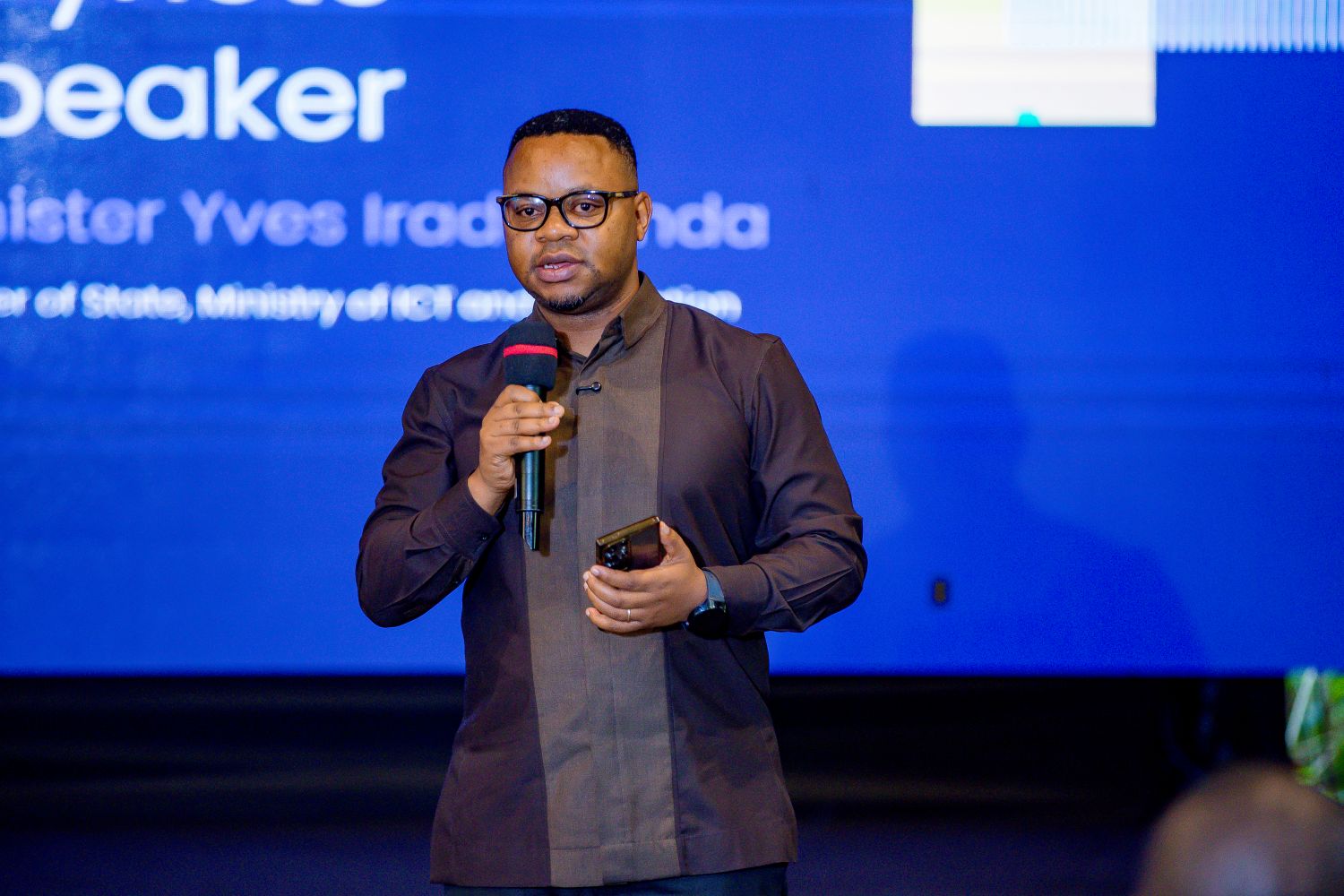
Speaking on the development, Amb. Uwihanganye said the policy is already delivering results and will soon be expanded beyond Kigali to cover the entire country.
“As you know, the government decided that passenger motorcycles must be electric, especially in the City of Kigali. In the coming days, we will scale up this measure to the national level. No motorcycle that is not electric will be allowed to enter the country, and this will apply to passenger motorcycles across Rwanda,” he said.
He noted that the market for electric motorcycles has matured significantly, making nationwide implementation possible.
“The market has already responded. There are importers bringing in motorcycles, and companies providing charging services. While everything may not yet be perfect, the sector has grown enough for us to expand the policy,” he added.
Statistics show that at least 14,031 motorcycles were sold in Rwanda in 2025, marking a 28 percent increase compared to the previous year.
A significant share of these were electric motorcycles, whose sales have surged by 686 percent since they were introduced in Rwanda, according to data from MotorcyclesData.
Under the policy, motorcycles already registered and operating on fuel will be allowed to continue their services. The restriction mainly targets new registrations of petrol- and diesel-powered motorcycles used for passenger transport.
Petrol-powered motorcycles are set to be phased out of Rwanda’s market.Spiro, an e-mobility company, is a dominant player in the Rwandan market.Ampersand is also gaining traction in the Rwandan market.
The agreements were concluded on April 22, 2026, at the 12th session of the Joint Permanent Commission (JPC) held in Kampala, where officials from both countries reiterated their commitment to closer cooperation and regional integration.
Uganda’s Minister of State for Foreign Affairs, John Mulimba, described the meeting as a clear sign of shared ambition between the two neighbours.
“This session is a testament to our mutual resolve to strengthen ties and work together for the prosperity of our two peoples. Uganda and Rwanda are not just neighbours; we are partners bound by history, culture, and kinship,” he said.
Mulimba noted that collaboration would continue across key areas such as trade, cross-border movement, infrastructure, and security, stressing the need for tangible benefits for citizens.
“As the host, Uganda reaffirms its commitment to a peaceful and open neighbourhood, regional integration, and pan-Africanism. A stable and prosperous Rwanda is in Uganda’s interest, just as a stable and prosperous Uganda is in Rwanda’s interest,” he added.
Rwanda’s Minister of State in charge of Regional Cooperation, Usta Kaitesi, emphasised the deep-rooted ties between the two nations.
“Our relations are rooted in a shared history, strong people-to-people ties, and a common aspiration for peace, stability, and prosperity,” she said.
Kaitesi highlighted the JPC as a vital platform for tracking progress, resolving challenges, and identifying new opportunities for collaboration.
The newly signed agreements are expected to strengthen service delivery, enhance cross-border cooperation, and reinforce ties between Kigali and Kampala, signalling renewed momentum in relations between the two countries.
Rwanda and Uganda reaffirmed commitment to regional integration and stronger bilateral ties at the JPC meeting.Delegations from Kigali and Kampala meet to review progress and expand cooperation across key sectors.Rwanda’s Minister of State for Regional Cooperation, Usta Kaitesi, highlighted strong historical ties between Rwanda and Uganda.Uganda’s Minister of State for Foreign Affairs, John Mulimba, speaks during the closing session of the Joint Permanent Commission in Kampala.Officials from Rwanda and Uganda pose after concluding the 12th Joint Permanent Commission in Kampala on April 22, 2026.
Speaking at a Symposium on Genocide Prevention organised by the Embassy of Rwanda in Kenya as part of the 32nd commemoration of the Genocide against the Tutsi, Lumumba urged the international community to move beyond rhetoric and ensure practical measures are taken to prevent future atrocities.
“We are not gathered here because it is an annual jamboree at which we congregate and make speeches to ourselves,” he said, stressing that the commemoration must serve as a serious reminder of humanity’s failures and responsibilities.
Warning against historical amnesia
Lumumba cautioned against revisionism and denialism, arguing that forgetting history increases the risk of repeating it.
“We are gathered here because history has taught us that if we are not careful, the only thing we learn from history is that we learn nothing from history,” he said.
He pointed to past global failures, including the inability of the international community to prevent the 1994 Genocide against the Tutsi, where a million people were killed over a 100-day period.
The scholar criticised the role of international institutions during the genocide, saying the world “watched in eloquent silence” as violence unfolded.
“The United Nations, East Africa, Africa, and the big powers with nuclear weapons watched,” he said, adding that places of worship were turned into sites of mass killings while the world remained paralysed.
He also referenced broader historical injustices, including slavery, colonial partitioning of Africa, and genocides in other parts of the world, arguing that global systems have repeatedly failed to prevent mass atrocities.
*Call for stronger international responsibility*
Lumumba urged international and regional bodies to take a more proactive role in preventing genocide, rather than issuing declarations without implementation.
“It is not the function of the international community to issue diktats without understanding circumstances on the ground,” he said, calling instead for meaningful engagement with local realities amid concerns over rising ethnic slurs targeting Banyamulenge and Tutsi communities in eastern DRC.
He stressed that prevention requires moral responsibility rooted in shared human values found across all major religions and philosophies.
Lessons from Rwanda’s recovery
While reflecting on the 1994 Genocide against the Tutsi, Lumumba also highlighted Rwanda’s recovery as a powerful example of resilience and reconstruction.
He praised the country’s leadership, led by President Paul Kagame and citizens for rebuilding a nation once devastated, noting that Rwanda has become a model of governance, order, and development.
“Rwanda, like the phoenix, rose from the ashes,” he said, describing Kigali as a benchmark for urban planning, infrastructure, and institutional efficiency.
He further commended Rwanda’s use of the Gacaca courts, which he described as an African-rooted system that contributed to reconciliation and justice by handling millions of cases at the community level.
Technology and new risks
Lumumba also warned that modern technology could accelerate the spread of hate and violence if misused.
“We are today in the era of artificial intelligence… if those who wanted to commit genocide decided to do so, they would do it in the twinkling of an eye,” he cautioned, highlighting the risks posed by social media and digital platforms in spreading misinformation and hate speech.
Concluding his remarks, Lumumba insisted that remembrance must be tied to responsibility.
“Never again must not be a slogan; it must be action,” he said, urging governments, institutions, and citizens to actively work to prevent the conditions that lead to genocide.
He ended with a call for unity and vigilance, emphasising that the lessons of history must be translated into sustained global action to ensure such atrocities are never repeated.
PLO Lumumba cautioned against revisionism and denialism, arguing that forgetting history increases the risk of repeating it.
Speaking at a Symposium on Genocide Prevention organised by the Embassy of Rwanda in Kenya as part of the 32nd commemoration of the Genocide against the Tutsi on Wednesday, Lumumba paid tribute to Rwanda’s recovery journey, saying the country has risen “like the phoenix from the ashes” to become a reference point for effective governance and development.
“We are gathered here 32 years since the genocide against the Tutsi in Rwanda,” Lumumba said, noting that the commemoration is not ceremonial but a reminder of humanity’s duty to prevent recurrence of such atrocities.
He warned against historical revisionism and denialism, stressing that the world must remain vigilant.
“If we choose to consign these things to the museums of history, then it will be repeated again,” he said.
Global failures and lessons from history
Lumumba traced the roots of genocide and mass atrocities to historical injustices, including slavery, colonial partitioning of Africa at the Berlin Conference of 1884–1885, and global failures to act decisively in the face of warning signs.
He criticised the international community for its inaction during the 1994 Genocide against the Tutsi, saying world powers, the United Nations, and regional actors “watched in silence for 100 days” as atrocities unfolded in Rwanda.

More than a million people were killed during the 1994 Genocide against the Tutsi, while survivors continue to live with the scars of one of the worst tragedies of modern history.
Critique of international justice systems
The scholar also questioned the effectiveness of international legal systems in delivering justice and preventing atrocities, arguing that global institutions have often failed to act in time.
He contrasted international mechanisms with Rwanda’s community-based Gacaca courts, which he praised as an example of African-led justice and reconciliation.
“The Gacaca system is African, Afrocentric, and authentic,” Lumumba said, noting that while international tribunals handled fewer than 100 cases, Gacaca courts processed nearly 1.9 million, helping communities begin the process of healing.
Rwanda’s reconstruction as a model
Lumumba lauded Rwanda’s post-genocide reconstruction, crediting national leadership led by President Paul Kagame and citizen resilience for the country’s transformation.
“Rwanda, like the phoenix, rose from the ashes,” he said, highlighting improvements in infrastructure, governance, public service delivery, and technology adoption.
He described Kigali as a “model city” for urban planning, infrastructure development, and anti-corruption enforcement, saying it has become a benchmark for African development.
“If you want to see how roads ought to be built, you go to Kigali. If you want to see how roundabouts are manicured, you go to Kigali. If you want to move away from the disorderly borders, you go to Kigali,” he remarked.
“If you want to see policemen who reject your money when you want to corrupt them, you go to Kigali. If you want to see how football stadia and basketball pitches are built within time and within budget, you go to Kigali. Kigali has become our pride.”
While praising Rwanda’s progress, Lumumba cautioned that the risk of mass atrocities persists in the modern era, especially with the rise of digital technology and misinformation.
“We are today in the era of artificial intelligence. Today it would be quicker. Today, in the days of fake news, in the days of Instagram, in the days of WhatsApp, in the days of all these things, if the genocide wanted to commit genocide, they would do it in the twinkling of an eye. Today they would use drones,” he warned, amid concerns over rising ethnic slurs targeting Banyamulenge and Tutsi communities in the eastern DRC.
He urged global institutions and regional bodies, including the East African Community, to move beyond rhetoric and take concrete action to ensure prevention of future atrocities.
Lumumba emphasised that genocide prevention is a shared moral duty rooted in all major faith traditions and ethical systems, citing teachings from Christianity, Islam, Judaism, Hinduism, and African traditional beliefs.
“Never again must not be a slogan; it must be a commitment,” he said, urging the international community to uphold its responsibility to protect vulnerable populations.
Speaking at a Symposium on Genocide Prevention organised by the Embassy of Rwanda in Kenya on Wednesday, Lumumba paid tribute to Rwanda’s recovery journey, saying the country has risen “like the phoenix from the ashes” to become a reference point for effective governance and development.
The Minister of State for Infrastructure, Jean de Dieu Uwihanganye, said Rwandans should begin adjusting to what he described as “extraordinary situations,” noting that the impact of the crisis will continue to be felt in the country’s energy sector.
Speaking on April 23, 2026, during a morning programme on TV1 Rwanda, Uwihanganye explained that the conflict has disrupted global oil supply chains, pushing up prices. He pointed to the closure of the Strait of Hormuz, a key route through which about 20% of global trade passes, as a major factor behind the surge.
He called on citizens to reduce fuel consumption and adjust their behaviour accordingly.
“Regardless of the measures we put in place, we cannot do this alone. We need Rwandans themselves to change their behaviour and adapt to these extraordinary times,” he said.
“We are not seeing a reduction in consumption levels. We need people to help ensure that the fuel we import is used responsibly.”
Fuel prices in Rwanda have already risen sharply, with petrol currently selling at 2,938 Rwandan francs per litre, while diesel stands at Rwf 2,205 per litre.
Uwihanganye encouraged the public to limit non-essential travel, make use of public transport and consider carpooling where possible.
“People should only make necessary trips. Public buses are available in Kigali and across the provinces, or individuals can share vehicles. But we want to see this reflected in the data. Since prices increased, we have not observed any decline in consumption, meaning behaviour has not yet changed,” he said.


He stressed that efforts to reduce fuel usage should not undermine economic activity but rather promote more efficient use of available resources.
The minister warned that even if the conflict in the Middle East were to end immediately, its effects on global and local fuel markets would persist.
“These conditions will continue. Even if the war stopped today, it would take time for us to return to previous levels. What we import takes about two months to arrive, and the international market also needs time to stabilize,” he said.
He was unequivocal about the outlook: “Prices will continue to rise—that is the reality, and it is important that people understand it. Diesel prices have increased significantly on the international market. If we were to fully reflect global prices locally, diesel could be between 3,000 and 3,500 francs per litre. No matter the effort, we cannot prevent prices from exceeding current levels.”
Despite the pressure on prices, Uwihanganye reassured the public that Rwanda is taking steps to avoid fuel shortages. He said the country has sufficient strategic reserves, which have not yet been tapped, with supply currently being drawn from stocks held by private operators.
Fuel prices in Rwanda have already risen sharply, with petrol currently selling at 2,938 Rwandan francs per litre, while diesel stands at Rwf 2,205 per litre.
The Rwanda Basic Education Board (REB) says the current teacher training model for primary schools needs to be revised, noting that the duration of training is too short and should be extended. Under the proposed reforms, individuals seeking to teach at the primary level would first be required to complete university education.
The Ministry of Education’s 2024/2025 performance report, released on March 30, 2026, shows that Rwanda has 4,996 schools. Of these, 2,083 operate under government-aided agreements, 1,576 are public schools, and 1,337 are privately owned.
As of December 2025, Rwanda had 133,029 teachers across primary and secondary schools. Among them, 71,011 hold only secondary school qualifications, 10,667 have undergraduate degrees, while 21,147 possess postgraduate qualifications.
REB Director General, Dr Nelson Mbarushimana, has told RBA that the current system used to train teachers in teacher training colleges needs to be modernised to align with evolving education standards.
Rwanda currently has 16 teacher training colleges that admit students after lower secondary education. After three years of study, graduates are qualified to teach in primary schools.
However, Dr Mbarushimana said this training period is relatively short compared to regional and global standards, and ongoing research is exploring ways to extend it.
“They study to become primary school teachers, but when you compare the time they spend in training with other countries in the region and globally, it is still short. We are reviewing this through research and working to improve it,” he said.
He pointed out that in some countries, teacher training extends by an additional two to four years, meaning primary school teachers may hold advanced diplomas or university degrees.
“Teaching is not an easy profession. When you see a doctor performing surgery, using anaesthesia and carrying out complex procedures, teaching may not involve machines, but it requires equally intensive training,” he added.
Dr Mbarushimana emphasised that primary education forms the foundation of learning, where children acquire essential skills such as reading, writing and numeracy.
“When learners have competent teachers at this level, it prepares them better for secondary education and beyond, whether they pursue technical training or higher education. This ultimately contributes to building a capable citizen who can drive national development,” he said.
Asked whether, in the near future, graduates of university-level teacher training programmes could go on to teach in primary schools, he replied, “It is true.”
Reforms aim to address gaps in curriculum delivery
The proposed changes come alongside broader education reforms introduced last year, which replaced traditional subject combinations in secondary schools with a new system known as “learning pathways.”
According to Dr Mbarushimana, the shift was informed by research and international benchmarks, which revealed limitations in the previous system that restricted students’ ability to make flexible academic choices.
“We identified gaps that limited students’ freedom to choose their academic paths. We introduced three main learning pathways: science and mathematics, humanities, and languages,” he said.
Within the science pathway, students can specialise in combinations such as mathematics, physics, biology and chemistry, or mathematics, physics, geography and economics.
“This allows a student interested in science to follow that path and make informed choices when they reach university,” he added.
REB also noted that the reforms have led to an oversupply of teachers in certain subjects, as schools now combine students from the same level into larger classes for specific subjects, reducing the number of teachers previously required.
The government says the ongoing reforms are designed to strengthen the overall education system and better align it with both national development goals and global standards.
As of December 2025, Rwanda had 133,029 teachers across primary and secondary schools.
The unrest, which involved heavy exchanges of gunfire between the two branches of the Democratic Republic of the Congo’s (DRC) security forces, reportedly stemmed from a disputed arrest operation.
The clashes ignited on the afternoon of April 21 in the Mabulu area along Elengesa Road. According to local reports, officers from a police rapid response unit were in the process of arresting several youths suspected of theft.
The situation escalated when FARDC soldiers stationed nearby intervened to obstruct the arrests. Witnesses noted a troubling development as some of the youths, allegedly members of the notorious Kuluna criminal gangs, aligned themselves with the soldiers to confront the police.
The fighting quickly spread from Elengesa Road toward Kibambi 1 Road, eventually reaching a police station on Kimfumu Road. As the gunfire intensified, students at a nearby school were forced to lie on the floor to avoid stray bullets, while residents fled the area or barricaded themselves in their homes as the standoff transitioned from a local dispute into a broader tactical skirmish.
The violence resulted in significant property damage, including the complete destruction of a small police station and the reported looting of several residential houses during the chaos.
Makala Mayor Ngudia Kabongo confirmed the extent of the damage on April 22 but offered a reprieve regarding casualties.
“No fatalities have been recorded in these clashes,” Kabongo stated, though he acknowledged that the destruction of the police post and the trauma to the community were significant.
By the evening of April 22, the central government moved to de-escalate the situation. A joint team of senior military and police officials was deployed to Makala to conduct coordinated security operations and re-establish a unified command structure.
The clashes ignited on the afternoon of April 21 in the Mabulu area along Elengesa Road. According to local reports, officers from a police rapid response unit were in the process of arresting several youths suspected of theft.
Iyacu will take over from Paula Hunter who is retiring. She is expected to step down from her Executive Director role during the transition period.
Based in Kigali, Iyacu brings more than 15 years of experience in inclusive financial systems, digital finance and Digital Public Infrastructure (DPI), with a track record of advancing initiatives linked to the Sustainable Development Goals.
His appointment signals the foundation’s continued focus on scaling inclusive, real-time payment systems, particularly in underserved markets.
In his new role, Iyacu is expected to steer the foundation’s long-term sustainability efforts, mobilise additional funding and support deployments across multiple regions where the organisation works with governments, central banks and other partners.
“Inclusive finance is one of the defining challenges and opportunities of our time. Mojaloop has already demonstrated the power of open, interoperable infrastructure to transform economies and improve lives,” Iyacu said.
“I’m excited to build on this momentum, working with partners around the world to expand access to inclusive digital financial services and ensure long-term sustainability for the organization,” he added.
Kosta Peric, Chairperson of the Mojaloop Foundation, said Iyacu’s appointment comes at a pivotal moment for the organisation.
“Jean Bosco brings an exceptional combination of regional insight, leadership experience and deep understanding of Digital Public Infrastructure. This marks an important step in Mojaloop’s evolution as we continue to scale our global impact,” Peric said.
Iyacu currently serves as Chief Executive Officer of Access to Finance Rwanda (AFR), where he leads a team of more than 40 staff and has played a key role in mobilising donor funding and expanding the institution’s interventions over the past five years.
Beyond AFR, he chairs the Financial Sector Deepening (FSD) Network Council, which coordinates collaboration across nine African markets. He is also a member of the Consultative Group to Assist the Poor (CGAP) FinEquity Technical Advisory Committee and holds private sector board roles, including at Salvo Grima Africa Distribution.
The Mojaloop Foundation, a non-profit organisation, focuses on promoting financial inclusion by supporting interoperable payment systems through its open-source software. Its platform is used by governments, banks and mobile money providers to build and enhance real-time payment ecosystems aimed at expanding access to digital financial services worldwide.
Jean Bosco Iyacu has been appointed as Chief Executive Officer, effective June 1, 2026.
Furthermore, any such operation is unlikely to be carried out until the U.S.-Israeli war with Iran comes to an end, members of the House Armed Services Committee were told on Tuesday, according to the report. This means gasoline and oil prices could remain elevated through the U.S. midterm elections.
Iran may have emplaced 20 or more mines in and around the strait. Some were floated remotely using GPS technology, which has made it difficult for U.S. forces to detect the mines as they are deployed, a senior defense official told lawmakers. Others are believed to have been laid by Iranian forces using small boats.
The disclosure was made in a classified briefing for lawmakers, Pentagon spokesman Sean Parnell acknowledged in a statement, while criticizing the related reports as “inaccurate.”
“As we said in March, one assessment does not mean the assessment is plausible, and a six month closure of the Strait of Hormuz is an impossibility and completely unacceptable to the (Defense) Secretary,” Parnell said, without specifying how long it could take.
U.S. President Donald Trump told Fox News on Wednesday there is “no time frame” for ending the U.S.-Israeli war with Iran.
This file photo taken on Feb. 19, 2025 shows the Strait of Hormuz.
While the move is welcome, it has yet to generate momentum for dialogue. Iran has made it clear that it will not engage in a new round of talks unless Trump lifts his blockade on ships entering or exiting Iranian ports in the Strait of Hormuz. The contrast between a prolonged ceasefire and stalled diplomacy underscores the fragility of the current situation.
Against this backdrop, several key questions arise: Why has Tehran refused to attend the talks? What is Washington’s real intention in extending the ceasefire while maintaining pressure? And where might the situation head next?
Why Iran refuses to negotiate
Iranian Foreign Ministry spokesperson Esmaeil Baghaei said Monday that Iran currently has no plan for the second round of peace negotiations with the United States.
Tehran’s attendance depends on Washington meeting preconditions, Iran’s semi-official Tasnim news agency reported, citing the U.S. naval blockade and “excessive demands” as key obstacles.
Iran’s Foreign Minister Seyed Abbas Araghchi said Monday that U.S. “provocative actions” and ceasefire violations are major obstacles to continuing peace negotiations between the two countries.
The United States takes actions that are in no way indicative of its seriousness in pursuing a diplomatic process, Baghaei said, noting that since the ceasefire took effect on April 8, “we have been faced with the breaking of promises and nagging by the United States.”
He also noted an attack against an Iranian commercial ship earlier in the day, which he said is also considered a violation of the ceasefire.
Baghaei said that under UN General Assembly resolutions, the blockade of a country’s seas and ports is an act of aggression. He said Iran will carefully decide on how to proceed based on a single guiding principle: safeguarding the Iranian nation’s interests.
He said the issue of transferring Iran’s enriched uranium has never been an option in any of the negotiations, stressing the importance for Iran to maintain its nuclear, industrial and scientific achievements.
This file photo taken on Feb. 19, 2025 shows the Strait of Hormuz.
What’s Washington’s real intention?
The U.S. decision to extend the ceasefire indefinitely has been widely interpreted as an attempt to preserve a diplomatic window, but analysts caution that it also serves broader strategic purposes.
“Trump … remains eager for a diplomatic solution to the war, wary of reviving an unpopular conflict he’s claimed the United States already won,” CNN reported Wednesday.
However, the United States has not scaled back its military posture in the region. Multiple media outlets reported that U.S. naval deployments and surveillance activities in the Gulf have been maintained—and even intensified—during the ceasefire, suggesting continued pressure and the retention of military options.
The United States is expected to deploy three aircraft carrier strike groups simultaneously in the Middle East in the coming days, NBC reported on Monday.
The U.S. military will continue the blockade against Iran and “remain ready and able,” Trump said Tuesday, although Pakistan’s Army Chief, Field Marshal Asim Munir, told him that the blockade of Iranian ports would remain a major obstacle to meaningful diplomatic progress.
In this sense, the ceasefire extension is less a definitive step toward peace than a tactical maneuver to buy time for both negotiation and contingency planning.
This photo taken on April 18, 2026 shows a view of the White House in Washington, D.C., the United States.
Where are U.S.-Iran talks headed?
“Trump’s ceasefire extension means nothing,” said Mahdi Mohammadi, an adviser to Iranian Parliament Speaker Mohammad Baqer Qalibaf, who led the Iranian negotiating delegation.
“The losing side cannot dictate terms. The continuation of the siege is no different from bombardment and must be met with a military response,” he added.
Araghchi said Monday that Iran would decide whether to continue diplomacy based on “all aspects of the issue” and U.S. behavior, adding that Tehran would take steps to protect its interests and national security.
“Honoring commitments is the basis of meaningful dialogue,” Iranian President Masoud Pezeshkian wrote in a post on X on Monday. He said deep mistrust of U.S. conduct persists in Iran, with “unconstructive and contradictory signals” from American officials suggesting they seek Iran’s surrender.
Despite significant hurdles, a U.S. official said there is still a chance that U.S. and Iranian negotiators will meet soon, though whether and when such talks might occur is far from certain, according to CNN reports.
“The question now is not whether diplomacy has failed, but whether both sides are willing to keep trying despite that failure,” said an analysis article published by Geojuristoday, a non-partisan think tank based in New Delhi.
This photo taken on April 20, 2026 shows an interior view of the Golestan Palace damaged by the U.S.-Israeli attacks, in Tehran, Iran.