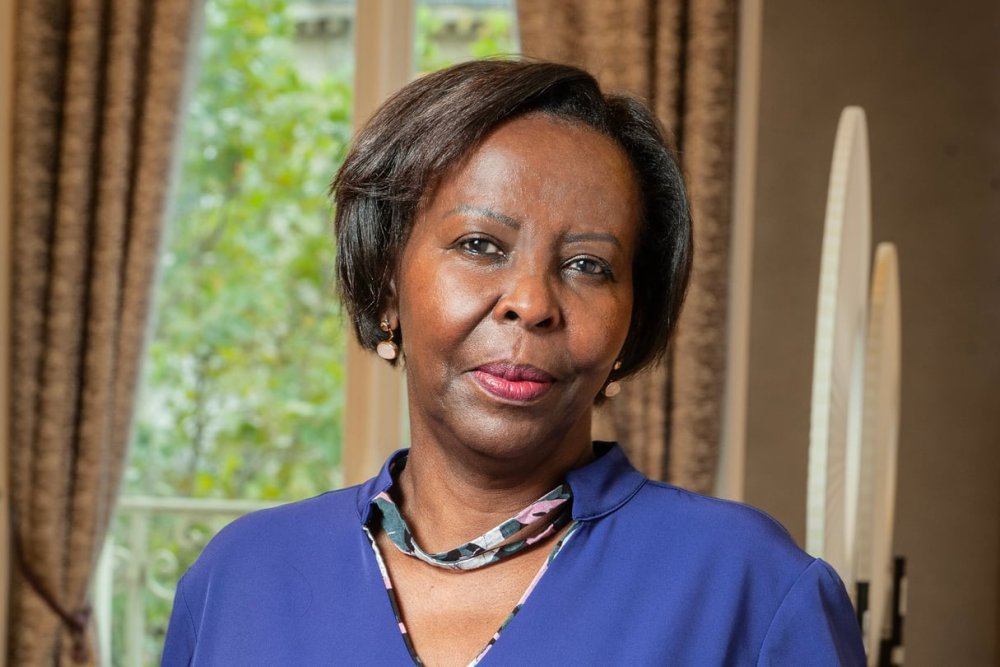
Mushikiwabo was elected Secretary General of the OIF in 2018 and took office in January 2019. She was re-elected for a second term in 2022 in Djerba, Tunisia, with the support of all member states, becoming the first African woman to lead the organisation.
The OIF currently brings together 90 states and governments representing more than 396 million French speakers worldwide.
As Mushikiwabo’s second term approaches its end, she is seeking a third mandate in an election that also features candidates from the Democratic Republic of Congo, Mauritania and Romania.
It is also a moment to look at what her seven years at the helm have delivered, with the figures highlighting programmes and reforms that have strengthened the OIF’s existing foundations and continue to shape its future priorities.
Since 2019, the OIF says it has mobilised €336 million, with 97% of its activities implemented.
During the same period, the organisation introduced annual financial audits conducted by an independent external body as part of efforts to strengthen transparency and accountability in its financial management.
Women’s economic empowerment has been another major area of activity. In 2020, amid the Covid-19 pandemic, the OIF launched the “La Francophonie avec Elles” fund to support women’s economic independence.
The programme has since reached nearly 100,000 women through 354 projects implemented in 36 countries. According to the OIF, the average income of women benefiting from the initiatives has tripled.
The organisation has also increased its engagement with young people. Through “La Francophonie de l’avenir”, more than 10,000 young people in 134 countries were consulted on the priorities they want the OIF to address in the coming years.
The Covid-19 pandemic also prompted the organisation to create initiatives connecting young people and supporting technology-based responses to challenges created by the crisis. Within two weeks, about 60 youth-led projects were identified, including initiatives focused on transport, food delivery and access to medicines.
Digital skills have since become a central area of the OIF’s work through the D-CLIC programme, which aims to increase the number of young people receiving technology-related training from 20,000 to 100,000.
The organisation has also launched CAP Innovation to support young entrepreneurs in Francophone countries as they develop innovation-based projects. Artificial intelligence has emerged as another area of focus as the OIF considers technologies likely to shape the future of French-speaking countries.
Education and language have also featured prominently in its programmes. Through ELAN, the OIF has reached 12 million students, using 46 African languages and working with about 230,000 teachers. The programme promotes early literacy and learning in children’s mother tongues before they transition to French.
The focus on Africa is particularly significant for the OIF, with projections indicating that by 2050, the majority of French speakers worldwide will be on the continent.
Mushikiwabo’s seven years at the OIF have also brought changes to the way its Secretary General is elected. The organisation previously relied heavily on consensus among member states, while the revised system gives each country one vote and allows candidates to compete more openly.
The new system will be applied in the 2026 election. On June 30, all four candidates appeared before foreign ministers of OIF member states to present their visions and answer questions, an exercise that had not previously taken place in the organisation’s 56-year history.
Mushikiwabo is competing against Juliana Amato Lumumba of the Democratic Republic of Congo, Mauritanian candidate Coumba Ba and former Romanian Prime Minister Dacian Cioloș.
Her bid for a third term has attracted support from many countries. At the Francophonie Ministerial Conference held in Kigali in November 2025, the call for her to seek another mandate initially came from two countries before the number of countries expressing support rose to more than 15 by the end of the meeting.
Rwanda has also stepped up efforts to rally support for her candidacy, with senior officials travelling to Francophonie member states, carrying messages from President Paul Kagame to heads of state.
Leave a Reply