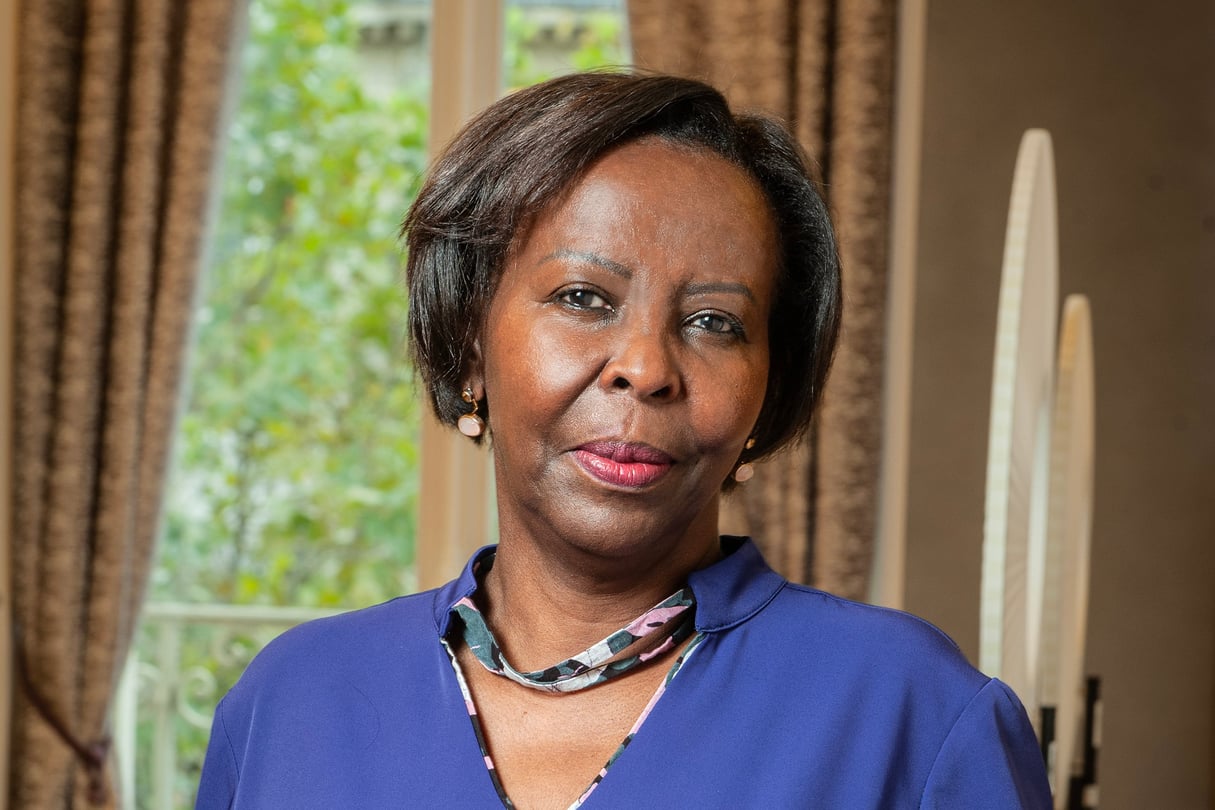
Mushikiwabo made the remarks in an interview with Africa24 when asked about reports that the DRC could consider leaving the organisation if she is re-elected for the 2027–2030 term.
She said the DRC had been involved in the election process since the beginning of 2026, including presenting its own candidate, and argued that withdrawing at this stage would be inappropriate for a country of its stature.
“The rumours you mentioned regarding the Democratic Republic of Congo’s potential withdrawal are something I have heard about. However, as a great country with great people, one cannot resort to blackmail,” she said.
She noted that the DRC had participated in the process, including the candidate hearings, which concluded in June, adding that the election had now reached its final stage.
“We are now at the final stage, so such a move would not be worthy of a great country,” she said.
Mushikiwabo also stressed that decisions within the OIF are collective and that no individual member state has veto powers over the others.
“A country may have a national position, but the International Organisation of La Francophonie has 53 decision-making countries, and therefore, there is no right of veto in our organisation. It is a matter of the collective will of a process that has already been concluded and belongs to all member states,” she said.
She reiterated that she would be surprised if the DRC withdrew because of the election outcome.
“In any case, I would be very surprised. Congo is too great a country to throw tantrums,” she said.
Mushikiwabo is seeking another term against three challengers; the DRC’s Juliana Amato Lumumba, Dr Cumba Ba of Mauritania and Dacian Cioloș of Romania.
The election will take place on November 16, 2026, during the 20th Francophonie Summit in Phnom Penh, Cambodia, which runs from November 15 to 16.
Leave a Reply