The Minister of Education Joseph Nsengimana says that over the next five years, children completing Primary Three should be able to read and write proficiently in both Kinyarwanda and English, while also being able to communicate effectively in English.
Rwanda has introduced several reforms aimed at improving the quality of education, including changes taking effect in the 2026/27 academic year to raise the academic qualifications of primary school teachers, with teachers expected to attain university-level qualifications in the future.
The government is also placing greater emphasis on activities that complement the curriculum, recognising that when students are given opportunities to apply what they learn, they are better able to understand and use the knowledge in everyday life.
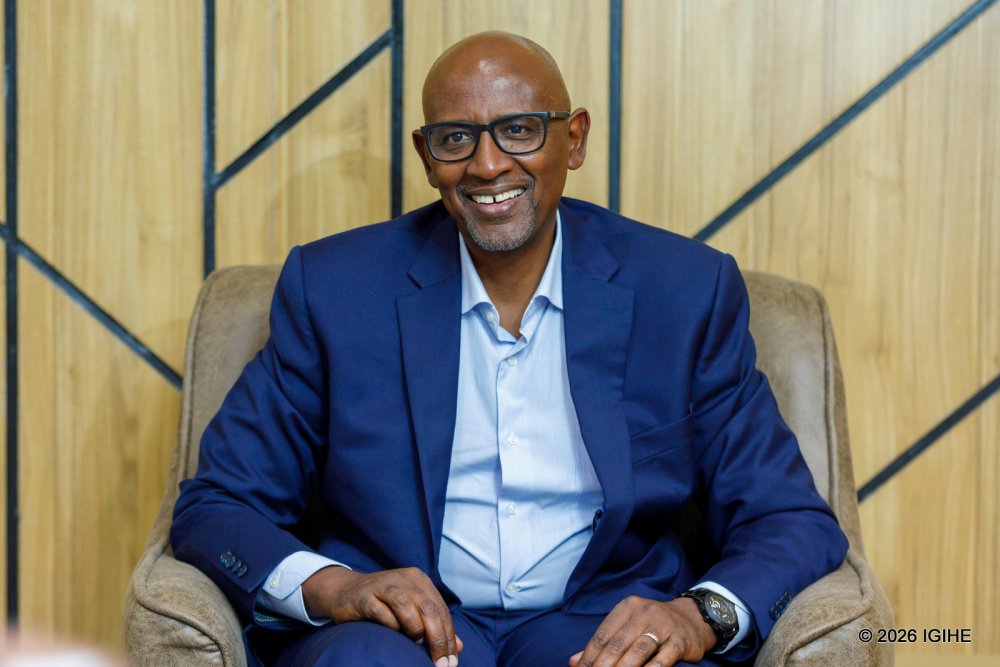
Speaking to IGIHE, Minister Nsengimana said the reforms being implemented are expected to deliver significant improvements over the next five years, particularly in foundational learning.
“Over the next five years, a child should complete Primary Three able to read, write, in Kinyarwanda and English, speak English well enough to have a conversation with someone and be understood, perform mathematics at the Primary Three level and understand science at that level,” he said.
The 2025 Learning Achievement in Rwandan Schools (LARS 2025) assessment found that 70.8% of Primary Three pupils reached the required level in reading a passage of connected words, with an average reading speed of 45 words per minute.
However, comprehension remains a major challenge. At national level, only 43.6% of Primary Three pupils were able to correctly answer at least six of the seven questions assessing their understanding of a passage they had read.
Nsengimana said improving reading, writing and comprehension in both English and Kinyarwanda would be a key measure of progress.
“More importantly, it is about reading and writing, and understanding what they have read in English and Kinyarwanda. If every child completing Primary Three reaches that level, then we will be in a good position,” he said.
He added that pupils completing primary school should have a strong foundation for secondary education, while those completing secondary school should be prepared to pursue higher education and eventually enter the workforce.
“The other thing is that a child completing primary school should have a solid foundation to enable them to pursue secondary education, and someone completing secondary school should be able to go to university, choose what they want to study, succeed in their studies, enter the workforce and perform well,” he said.
The minister said the same standards should apply to students who do not pursue university education but instead enter the workforce after completing Technical and Vocational Education and Training (TVET).
“Whether it is someone who studies TVET and goes directly into the workforce, they should graduate able to produce something of quality. The same applies to someone who studies general education and produces quality work, or someone who studies nursing or accounting and performs their duties with quality,” he said.
“For us to produce people with knowledge across all these areas, that is when we will say we have made progress in improving the quality of education. Within five years, I believe we should have achieved what we have discussed: the child completing Primary Three, the one completing primary school and moving to secondary school, and the one completing secondary school and moving to university.”
Primary teachers to receive higher qualifications
Among the reforms in the education sector is an increase in the duration of teacher-training programmes, with students in teacher education expected to study for five years and graduate with an Advanced Diploma (A1) qualification.
Nsengimana said the reform would gradually raise the quality of teaching as both newly trained teachers and those already in the profession attain higher qualifications.
“Although we will not have completed the process, teachers will start coming with A1 qualifications, while those already teaching will also have reached this level. The quality of education will therefore improve immediately,” he said.
He added that universities should also produce graduates with practical knowledge and skills that enable them to contribute meaningfully to the economy.
“Universities will produce people who are not the kind that people complain about, but people who come with demonstrable knowledge and are able to immediately start contributing to productivity.”
Universities to track graduates’ employment
Nsengimana also said that from 2026, universities will be required to track their graduates and report on where they end up after completing their studies.
“Now all universities will conduct follow-up on the students they have trained to show, for example, after three, six or nine months, how many of those who graduated have found jobs and how many have created jobs for themselves,” he said.
The findings will then be submitted to the Higher Education Council (HEC) for publication, allowing parents, students and other stakeholders to compare how graduates from different universities are performing and the contribution they are making to national development.
The minister said the system would also encourage universities to work more closely with the private sector and ensure that the programmes they offer are aligned with the needs of the labour market.
More than 13,000 international students were studying at universities in Rwanda as of June 2026.
By the 2024/25 academic year, Rwanda had 39 higher learning institutions and universities, up from 37 the previous year.
Looking ahead to the next decade, the Ministry of Education expects university enrolment to increase, including a rise in the number of international students.
“There are now more than 13,000 foreign students studying in Rwanda’s universities, but we want this number to increase so that Rwanda becomes a destination where people from everywhere want to come and study. That is at the university level, but the majority of students will still be Rwandans,” Nsengimana said.
Leave a Reply