The conservatory orders, issued by High Court Judge Patricia Nyaundi, also prohibit Kenyan authorities from admitting, receiving, transferring or facilitating the entry of persons exposed to or infected with Ebola under the disputed arrangement until the case is fully heard and determined.
The ruling followed an urgent petition filed by the Katiba Institute, a Kenyan rights organisation, which challenged the legality and constitutionality of the reported agreement between Nairobi and Washington concerning the handling of Ebola-exposed US nationals.
The court directed the petitioner to serve all respondents within 24 hours, while the respondents were ordered to file their responses within 48 hours. The matter is expected to return to court next week for further directions.
The decision effectively suspends plans to establish Ebola-related quarantine and treatment facilities in Kenya pending a full hearing.
The controversy emerged after the United States announced a commitment of $13.5 million (about Rwf 20 billion) to strengthen Kenya’s Ebola preparedness amid a worsening outbreak in Central Africa.
According to a statement attributed to US State Department spokesperson Tommy Pigott, Secretary of State Marco Rubio held discussions with Kenyan President William Ruto on regional Ebola response efforts and medical preparedness.
“The United States Government intends to commit $13.5 million toward Kenya’s Ebola preparedness efforts and has already committed to providing $112 million in bilateral assistance to the regional response,” the statement said.
Reports indicated that a 50-bed isolation facility for US nationals exposed to Ebola was due to open at Laikipia Air Base, approximately 200 kilometres north of Nairobi, and would be managed by American medical personnel.
The proposed arrangement triggered criticism from health workers, legal experts and rights activists, who warned that Kenya lacked adequate high-containment infrastructure to safely manage such a facility.
The Katiba Institute argued in court filings that the agreement had been pursued “secretively” without public participation or parliamentary oversight and posed “grave and imminent risks” to public health.
The Kenya Medical Practitioners, Pharmacists and Dentists Union also threatened industrial action, accusing the government of jeopardising national biosecurity.
Union secretary-general Davji Atellah said Kenya should not become a “dumping ground” for Ebola-exposed individuals rejected elsewhere.
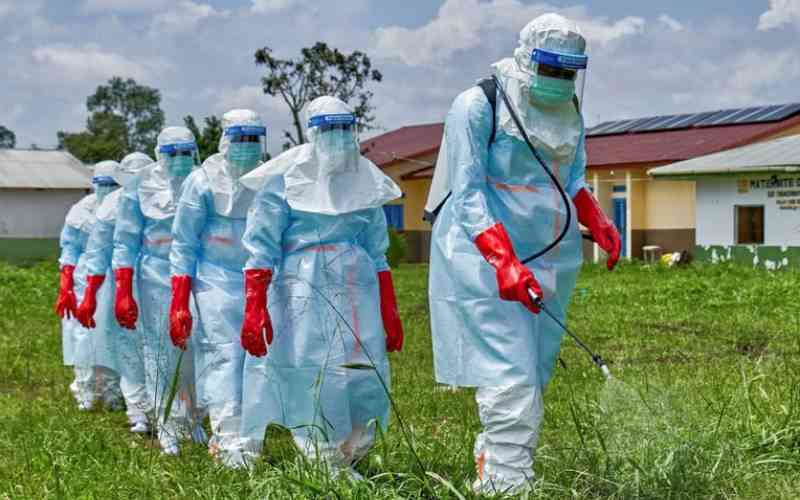
The dispute comes amid a deadly Ebola outbreak centred in eastern Democratic Republic of Congo, where more than 220 deaths and over 1,000 suspected cases have been reported since mid-May. Uganda has also confirmed at least seven cases linked to the outbreak.
Leave a Reply