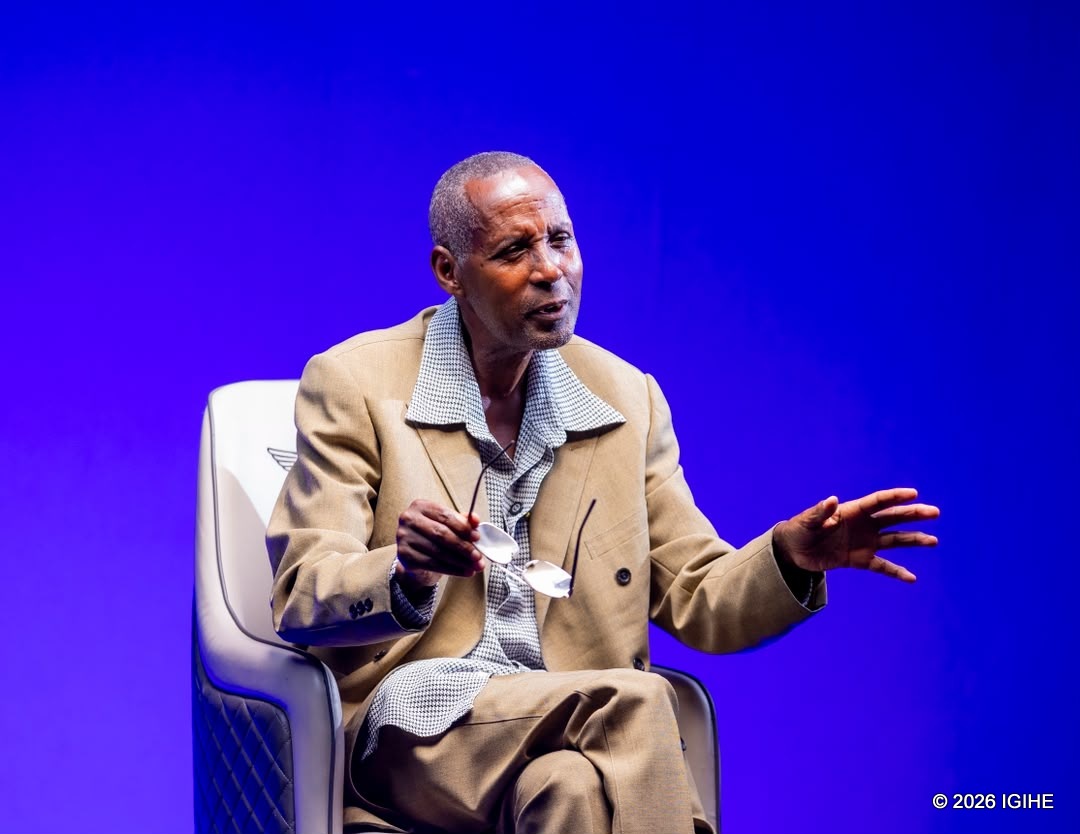
After spending more than five decades abroad, Karuranga has returned to Rwanda, bringing with him accounts of his political activities in Uganda and Sweden, his opposition to previous Rwandan governments and his eventual decision to dissolve the Rwanda People’s Party (RPP).
In an interview with IGIHE, Karuranga revealed that while living in Sweden, he was approached by some Europeans, including individuals associated with organisations claiming to defend human rights, who proposed that he help organise grenade attacks in Kigali to destabilise Rwanda.
He said he rejected the proposals, questioning the purpose of killing innocent civilians, including children and parents going about their daily activities.
“They suggested going to a market and sending someone to kill civilians. I asked them what would be gained from throwing a grenade that kills people, children and parents who had gone shopping,” he said.
Karuranga said those who approached him insisted that such an attack would send a political message, but he maintained that violence against civilians would not achieve meaningful political change.
He also said he declined invitations from BBC and Voice of America journalists when he felt they wanted to dictate what he should say.
From Uganda to Sweden
Karuranga said his political involvement began in Uganda during Idi Amin’s rule and continued under Yoweri Museveni, who took power in 1986. He served as Museveni’s secretary in Masaka, Sembabule and Lyantonde districts.
He recalled that in April 1986, he and fellow Rwandan exiles publicly expressed their desire to return home.
The declaration, reported by the Uganda Post newspaper, led to his arrest and six-month detention at Luzira Military Prison.
Following discussions with Rwandan officials, he was eventually released and, on December 29, 1986, travelled to Sweden with his family.
He said they continued advocating for their return to Rwanda while in Sweden.
When the Rwanda Patriotic Army (RPA) launched its liberation struggle on October 1, 1990, Karuranga said he supported the movement but could not join the fighting because of his family responsibilities in Europe.
“We stood with the RPF in our hearts. What mattered was that the struggle succeeded and Rwandans were able to return home,” he said.
Why he dissolved RPP
In 2010, Karuranga established the Rwanda People’s Party (RPP), which he said was intended to participate in elections and promote political representation based on citizens’ choices.
The party advocated for inclusive development, decentralisation of public services and the development of secondary cities to reduce the concentration of government institutions and economic opportunities in Kigali.
However, he said he later recognised that the RPF government had implemented many of the ideas that had motivated the party’s establishment.
He cited efforts to ensure that no one was left behind, decentralise services and develop other urban centres.
Karuranga said he consequently decided to halt RPP’s activities in 2015, arguing that the issues the party had sought to address had largely been resolved.
Plans for permanent return
Karuranga arrived in Kigali on October 15, 2026, and said he intends to return to Sweden after three months before eventually settling permanently in Rwanda.
He said his father, before his death, had urged him to return to his country, a wish he has carried for decades.
He praised Rwanda’s development, particularly the transformation of Kigali, the quality of public services and the country’s security, which he described as better than that of several European cities.
He also criticised the Democratic Forces for the Liberation of Rwanda (FDLR), which operates in eastern Democratic Republic of Congo, and supported Rwanda’s security measures as long as the threat persists.
Karuranga further criticised individuals living in Europe who deny or downplay the 1994 Genocide against the Tutsi, arguing that some do so for personal or financial reasons.
He said he hopes to contribute to Rwanda’s development after returning permanently, although he may not necessarily pursue political activities.
Leave a Reply