The DRC commemorates August 2 as “genocost” day, a term coined by the Congolese government to refer to what it describes as the killing of millions of Congolese people since 1996, allegedly linked to the exploitation of the country’s natural resources.
The concept was incorporated into Congolese law in December 2022, with President Félix Tshisekedi presiding over the first official commemoration ceremony a year later. In 2025, he inaugurated a memorial site dedicated to the commemoration in Kinshasa.
During the fourth “genocost” commemoration ceremony held in Kinshasa on August 2, 2026, Tshisekedi accused Rwanda and the AFC/M23 coalition of responsibility for atrocities committed in eastern DRC over the past three decades.
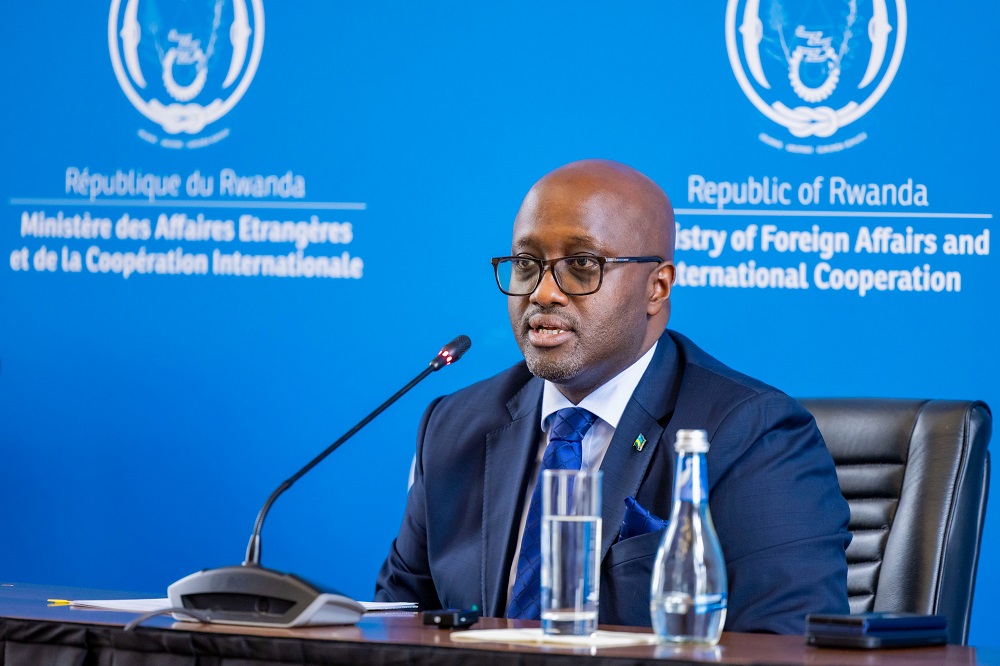
However, speaking in an interview on the ‘Agasaro Kaburaga’ platform, Nduhungirehe rejected the claims, saying the date chosen for the commemoration coincides with events in which Tutsis in the DRC were targeted.
“What Congo is doing is a deliberate distortion. I want to remind people that August 2, 1998, the date they chose to commemorate genocost, was actually a horrific period in Congo’s history, particularly in Kinshasa, where Tutsis were openly targeted, pursued and attacked by mobs. Some were captured on bridges and thrown down. These are events documented through photographs and videos,” Nduhungirehe said.
He accused the Congolese government of failing to acknowledge such incidents, instead using “genocost” to present itself as a victim.
Nduhungirehe also cited remarks made by former DRC Foreign Minister Abdoulaye Yerodia Ndombasi, who publicly used dehumanising language against Tutsis during the 1998 conflict.
The minister said Ndombasi’s statements prompted Belgium to issue an international arrest warrant against him over allegations related to incitement, although he was never prosecuted by Congolese authorities.
Ndombasi died in February 2019, and Nduhungirehe criticised President Tshisekedi’s decision to grant him a state funeral, noting that Belgian authorities had previously investigated him over alleged war crimes and crimes against humanity.
“What Congo is doing by introducing something called genocost, which is not recognised under international law, is a deliberate attempt to portray itself as innocent while it is part of the problem. The Congolese government has targeted Tutsis for many years, and even today that continues,” he said.
The minister’s remarks come as Kinshasa pursues legal and diplomatic efforts over its allegations against Rwanda. On June 26, 2026, the DRC filed a case at the International Court of Justice (ICJ), accusing Rwanda of genocide-related crimes allegedly committed between 1996 and the present.
The DRC’s “genocost” campaign has been part of broader efforts by Kinshasa to frame decades of conflict and violence in the country as a result of external exploitation and foreign involvement.
Nduhungirehe further questioned the credibility of the DRC’s claims, citing its continued engagement with the Democratic Forces for the Liberation of Rwanda (FDLR), a militia group founded by perpetrators of the 1994 Genocide against the Tutsi in Rwanda.
“The FDLR is a group that committed genocide in Rwanda. You cannot claim to be mourning genocide while cooperating with a group that carried out genocide,” he reiterated.
The Rwandan government has repeatedly accused the DRC of supporting the FDLR.
No country has so far formally adopted the “genocost” terminology or joined the DRC’s campaign to promote it at the international level.
Leave a Reply