The ruling was delivered by IRMCT President Judge Graciella Gatti Santana, who found that neither Kambanda nor Kamuhanda had demonstrated exceptional circumstances that would justify their release before completing the required period under the Mechanism’s legal framework.
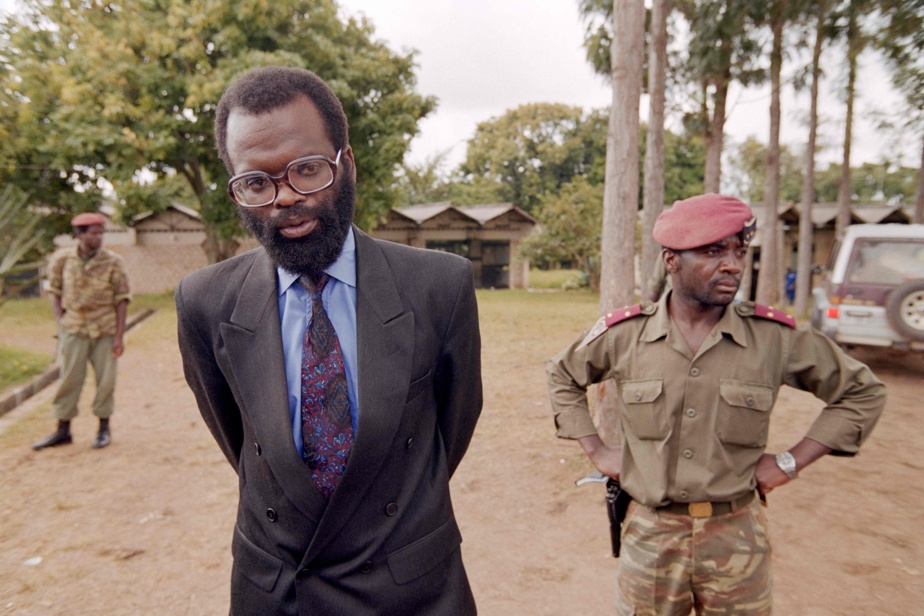
Kambanda, 70, served as Prime Minister of Rwanda’s Interim Government established after the assassination of President Juvénal Habyarimana in April 1994.
He was arrested in Kenya in July 1997 and transferred to the International Criminal Tribunal for Rwanda (ICTR) in Arusha, Tanzania.
On 4 September 1998, an ICTR Trial Chamber convicted him of genocide, conspiracy to commit genocide, direct and public incitement to commit genocide, and crimes against humanity, including murder and extermination.
He was sentenced to life imprisonment. His conviction and sentence were later upheld by the ICTR Appeals Chamber on 19 October 2000.
Following his conviction, Kambanda was transferred to a prison facility in Mali before later being moved to Senegal, where he is currently serving his sentence.
On June 25 , 2026, Kambanda requested early release, arguing that he had already spent nearly three decades in prison. He based his request on Senegalese law, which allows individuals serving life sentences to apply for release after 25 years of imprisonment.
He also cited his advanced age and deteriorating health, arguing that he required medical attention closer to his family. In addition, he expressed concerns about a possible transfer to Rwanda to continue serving his sentence.
However, Judge Graciella explained that requests for early release by individuals convicted by the IRMCT or its predecessor tribunals are determined by Mechanism’s own legal rules, rather than the laws of the country where the prisoner is being held.
She said that, in general, prisoners sentenced by the IRMCT become eligible to apply for early release after serving two-thirds of their sentence.
For individuals serving life sentences, the Mechanism considers life imprisonment equivalent to a 45-year sentence, meaning that eligibility for early release consideration begins after 30 years in custody.
Since Kambanda had served approximately 29 years, Judge Graciella ruled that he had not yet reached the required period.
The judge acknowledged that exceptional circumstances, particularly serious health conditions, could allow a prisoner serving a life sentence to seek early release before completing 30 years.
However, she determined that Kambanda’s age and health concerns did not amount to exceptional circumstances that would justify his release.
The IRMCT further noted that the length of time spent in prison alone is not sufficient grounds for early release, and that the possibility of being transferred to another country to continue serving a sentence does not constitute a valid reason for release.
After consulting Judges Jean-Claude Antonetti and Fatimata Sanou Touré, who agreed with her assessment, Judge Graciella rejected Kambanda’s application.
Kamuhanda also denied early release
Kamuhanda, who served as Rwanda’s Minister of Higher Education and Scientific Research during the 1994 Genocide against the Tutsi, was arrested in France in November 1999.
On January 22, 2003, the ICTR convicted him of genocide and extermination for his role in attacks against Tutsi civilians in Gikomero Commune, sentencing him to life imprisonment. The sentence was confirmed on appeal in September 2005.
He was transferred to a prison facility in Mali in November 2008 and later moved to Senegal in December 2021, where he remains incarcerated.
Kamuhanda submitted his early release request after spending 26 years and six months in prison. He acknowledged that he had not yet completed the 30-year period required for consideration under IRMCT rules but argued that possible changes regarding the transfer of UN tribunal convicts should be considered an exceptional circumstance.
He said that if the United Nations Security Council decided to transfer him and other convicted persons to Rwanda to complete their sentences, such a decision would create grounds for a humanitarian release.
Kamuhanda also told the Mechanism that he hoped to reunite with his family and children in France. However, he acknowledged that European countries might not accept individuals convicted by UN tribunals and said he would remain in Senegal if released, while respecting any conditions imposed by the IRMCT.
In her ruling issued on 23 July, Judge Graciella said Kamuhanda had served more than 26 years in prison but had not yet reached the required period for early release consideration.
She also examined whether there were exceptional circumstances that could justify his release before reaching the required threshold but concluded that the possibility of being transferred to another country to continue serving his sentence did not qualify as an exceptional reason.
The judge added that Kamuhanda had not provided additional evidence demonstrating circumstances strong enough to support his request.
After consulting Judges William H. Sekule and René José Andriatianarivelo, who agreed with her assessment, Judge Graciella rejected Kamuhanda’s request for early release.
The IRMCT’s decisions mean that both former officials will remain in custody until they meet the legal requirements for possible consideration of early release or until other decisions are made under the Mechanism’s rules.
Leave a Reply