The decision was delivered on September 22, 2026, a day after the prosecution and Shema’s defence agreed to a settlement under which he admitted to two charges.
The charges are issuing a dishonoured cheque, provided for under Article 126 of Law No. 060/2021 of October 14, 2021, governing negotiable instruments, and obtaining another person’s property through fraud, provided for under Article 174 of Law No. 68/2018 of August 30, 2018, on offences and penalties in general.
The offences stemmed from Shema issuing two cheques worth a combined $600,000 to settle obligations under a contract between his company, Africa Media Supplier, and ABZL International General Trading LLC, a company based in the United Arab Emirates.
In the plea agreement submitted to the court, the prosecution told the court that Shema had already paid the money and requested that he be sentenced to six months in prison, suspended for one year, and fined Rwf3 million.
In its ruling on Tuesday, the court approved the agreement and sentenced Shema to six months in prison, suspended for one year, and a Rwf3 million fine.
The court ordered that the terms of the agreement take effect immediately following the reading of the decision, resulting in his release.
The ruling came as Shema’s defence had previously appealed to the Nyarugenge Intermediate Court against a decision concerning his 30-day pre-trial detention.
One of Shema’s lawyers told IGIHE that following his release, they would withdraw the appeal they had filed.
Nyarugenge Primary Court has ordered the release of Fabrice Shema
Under the agreement, Shema admitted to two offences: issuing a cheque without sufficient funds and fraudulently obtaining another person’s property.
The agreement was reached under Article 26 of Law Nº027/2019 of September 19, 2019, on criminal procedure, as well as Articles 5 and 9 of the Prosecutor General’s Guidelines Nº6/2022 of July 19, 2022, on plea agreements.
Shema admitted to the offences after reaching an agreement with the prosecution on September 15, 2026.
He admitted to issuing a cheque without sufficient funds, an offence provided for under Article 126 of Law Nº060/2021 of October 14, 2021, governing negotiable instruments.
He also admitted to fraudulently obtaining another person’s property, an offence provided for under Article 174 of Law Nº68/2018 of August 30, 2018, determining offences and penalties in general.
How the case started
The prosecution said the case stemmed from a business transaction between ABZL International General Trading LLC, a company based in the United Arab Emirates and represented by Jesse Harry Ndambala, and Africa Medical Supplier, represented by Shema.
The two companies entered into an agreement on January 23, 2024, for the purchase of medical equipment worth €1,092,736.
On October 3, 2025, ABZL International General Trading LLC, through lawyer Gahizi Safari, filed a complaint against Africa Medical Supplier and Shema, accusing them of issuing two bounced cheques and fraudulently obtaining its property.
According to the prosecution, Shema repeatedly delayed payment despite being contacted by the company. He responded by email, promising to settle the debt, before issuing two cheques drawn on I&M Bank.
One cheque was for $400,000 and the other for $200,000. The company alleged that the cheques had been incorrectly written in a way intended to prevent the bank from processing them.
When the investigation began, Shema denied the offences. He has since admitted that there was not enough money in his account when he issued the cheques.
He told investigators that he intended to deposit funds from accounts he held in other banks. He also said the cheques were cancelled by the bank before they could be presented for payment and that he has since resolved the dispute by paying the company.
Terms of the plea agreement
Under the agreement, the prosecution will ask the court to convict Shema of issuing a cheque without sufficient funds and fraudulently obtaining another person’s property.
The prosecution will also ask the court to impose a six-month prison sentence suspended for one year and a fine of Rwf3 million.
ABZL International General Trading LLC did not participate in the plea agreement because the payment dispute had already been resolved and the company had been paid.
The agreement applies only to the prosecution of the two offences covered by it.
It does not affect the right of any person to bring civil, commercial, labour or administrative proceedings, nor does it affect any other decisions that may be taken by other authorities.
The parties agreed that if the court rejects the agreement, it will have no legal effect and the prosecution will continue as though the agreement had not been made.
The prosecution also agreed that information provided by Shema during the plea-bargaining process cannot be used for any purpose other than those related to the agreement.
Until the agreement is approved by the court, either party may withdraw from it in writing, provided the reasons are explained to the other party.
The agreement was signed on September 21, 2026, by Shema, his lawyers Rutagengwa Jean Damascène, Me Sangano Yves and Me Niyomugabo Christophe, and prosecutor Tuyisenge Vestine.
What happens next?
Shema is expected to appear before court on September 23, 2026.
His lawyers had notified the Nyarugenge Intermediate Court on September 17 that they were not ready to proceed with the appeal concerning his detention and provisional release because of the agreement reached with the prosecution, which had not yet been presented to the court.
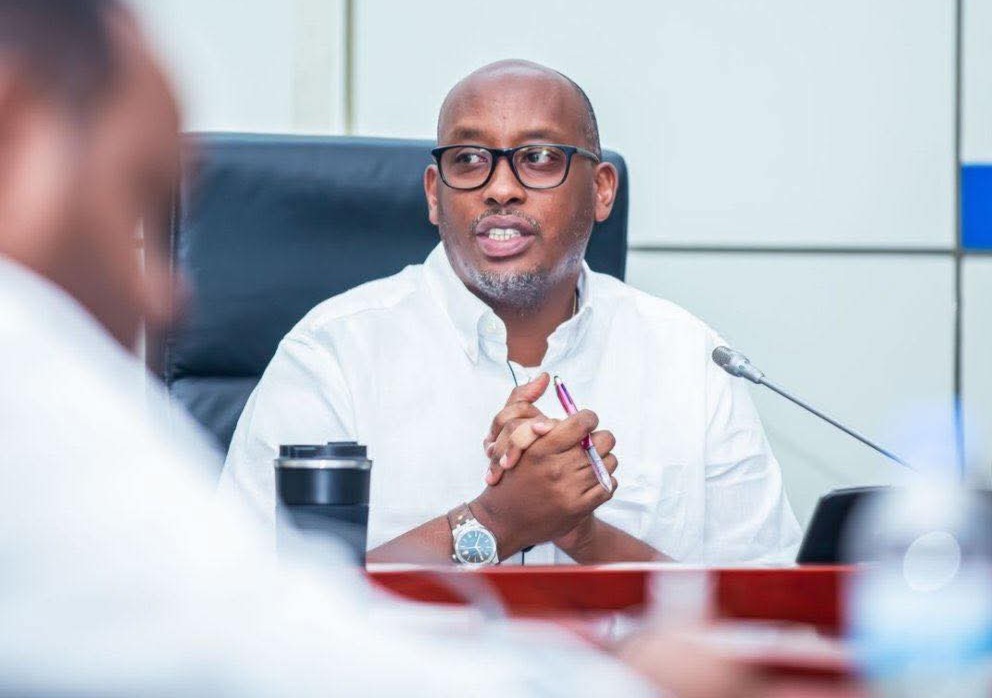
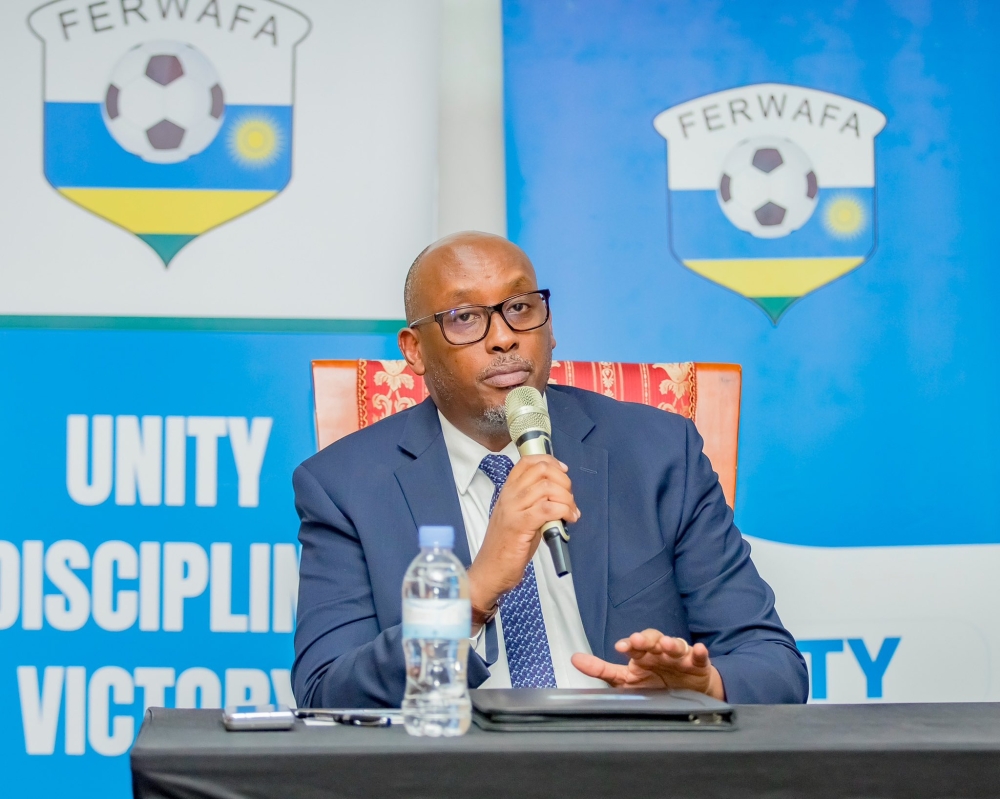
Businessman and Rwanda Football Federation (FERWAFA) President Shema Fabrice Ngoga paid $600,000 owed in a case involving two bounced cheques after reaching a plea agreement with the prosecution.
The Crown Prosecution Service (CPS) said on September 21 that Dr Vincent Bajinya, now known as Vincent Brown, had been charged with one offence of conduct ancillary to genocide and six offences of conduct ancillary to murder as a crime against humanity.
The charges are brought under Section 52 of the International Criminal Court Act 2001.
According to the CPS, the charges relate to allegations that Bajinya took part in the Genocide against the Tutsi in April 1994 and directed and incited acts of murder and genocide carried out by others.
“The Crown Prosecution Service made its decision after reviewing a file of evidence submitted by the War Crimes Team at the Metropolitan Police. We concluded that our legal test for bringing criminal charges had been met,” said Frank Ferguson, head of the CPS Special Crime and Counter Terrorism Division.
The CPS said its decision to prosecute was made independently of the police and government and based on the available evidence.
Bajinya, who was born in Kigombe Cell, Karago Commune, in the former Gisenyi Prefecture, now lives in Islington, north London, and is due to appear at Westminster Magistrates’ Court on Tuesday, September 22.
Bajinya trained as a medical practitioner and later worked as a physician at King Faisal Hospital in Kigali. He also held a position at the National Office for Population (ONAPO), where his work included family planning and related public education.
He has been alleged to have had links to the Akazu, an informal network associated with President Juvénal Habyarimana and his wife, Agathe. The network was widely described as influential in Rwanda’s political and economic affairs during Habyarimana’s presidency, which began after he took power in a 1973 coup.
Allegations against Bajinya also include involvement in the organisation of roadblocks during the 1994 Genocide against the Tutsi. He was accused of helping to recruit and oversee people manning roadblocks in Rugenge district of Kigali, where he lived, and near Kibihekane School in north-western Rwanda, an area where large-scale killings of Tutsi were reported in the early stages of the genocide.
Witnesses have further alleged that he was involved in the killings of Dominique Leandre in Rugenge, and Charlotte Kamugaja and her infant child.
The historic charges follow years of legal proceedings and investigations involving Bajinya, who was among five genocide suspects living in the UK.
Bajinya arrived in the UK in 1999 with his family. In 2004, he changed his name from Bajinya to Brown after obtaining British citizenship.
He was arrested by UK police in December 2006 alongside three other genocide suspects as part of an extradition case. In 2008, a Westminster Magistrates’ Court judge ruled that the four could be extradited to Rwanda, but the decision was overturned on appeal by the Divisional Court in 2009.
A second extradition attempt began in 2013. In 2015, a UK court ruled that Bajinya and the other suspects could not be extradited to Rwanda on the grounds that they were at risk of not receiving a fair trial. The decision was upheld by the High Court in 2017.
Following a request from Rwandan officials in 2018 for the UK to investigate the five suspects, the Metropolitan Police began assessing available evidence in 2019.
Four of the five suspects, including Bajinya, were voluntarily questioned by police in September 2020 over allegations of genocide and crimes against humanity.
The CPS said criminal proceedings against Bajinya are now active and warned against reporting or sharing information that could prejudice the proceedings.
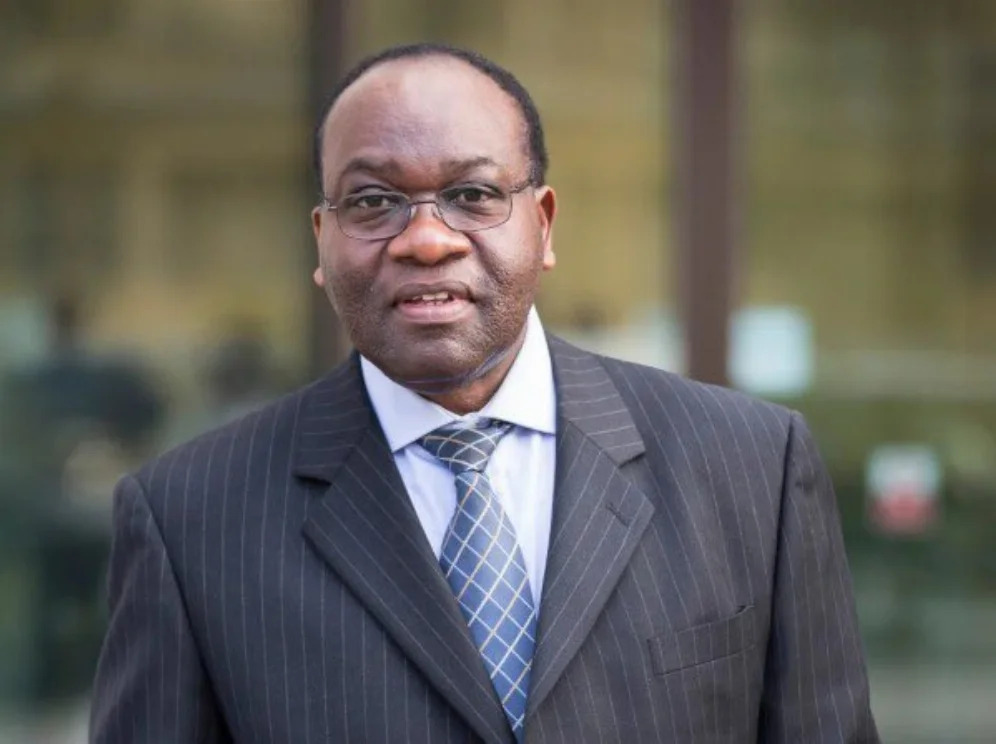
Vincent Bajinya, who was born in Kigombe Cell, Karago Commune, in the former Gisenyi Prefecture, now lives in Islington, north London, and is due to appear at Westminster Magistrates’ Court on Tuesday, September 22.
The prosecution, represented by two prosecutors, continued presenting testimony and evidence it said linked Ingabire to the alleged formation and activities of an organised criminal group.
Among the evidence presented was testimony by Fred Kananura, a fighter captured in eastern Democratic Republic of Congo (DRC), who reportedly said some members of the P5 coalition had previously been associated with FDU-Inkingi, the party founded and led by Ingabire.
The prosecution also cited testimony by Théoneste Habumukiza, who was captured after taking part in a 2019 attack in Musanze attributed to RUD-Urunana.
According to the testimony presented in court, FDU-Inkingi members inside Rwanda had agreed to meet at Cyanika and Kadatemwa during the attack.
The prosecution alleged that Ingabire later formed DALFA-Umurinzi to distance herself from attacks attributed to RUD-Urunana, but argued that the two political organisations remained linked.
It cited testimony from Boniface Nzabandora, who served as Ingabire’s secretary and lived at her home. When asked why she had left FDU-Inkingi and formed DALFA-Umurinzi, Nzabandora reportedly replied: “They were the same.”
The prosecution also referred to statements attributed to Ingabire that FDU-Inkingi members inside Rwanda joined DALFA-Umurinzi when it was established.
An audio recording of a November 16, 2018 conversation between Ingabire and Kelly Maroney, a foreign national, was also played in court.
According to the prosecution, Ingabire said FDU-Inkingi was the only P5 party with members inside Rwanda.
Alleged coup plans
The prosecution said testimony by Gaston Munyabugingo described an alleged plan by P5 to stage a coup during a leadership retreat in Gabiro, while Ingabire would organise demonstrations in support of the move.
According to the testimony, Ingabire had asked Munyabugingo to accommodate her because she feared for her safety during the alleged coup.
The prosecution further said Munyabugingo later hid Ingabire after she abandoned plans to move to Gicumbi. She was allegedly disguised in Muslim clothing and was not wearing glasses.
The court also heard allegations that Ingabire communicated with Charlotte Mukankusi, who was responsible for diplomatic affairs within the Rwanda National Congress (RNC), a group founded by Kayumba Nyamwasa.
Prosecutors said an RNC document outlining how Rwanda would be governed after an alleged coup was recovered from Ingabire’s phone.
They said the document included a list of 79 people, including government and military officials, alongside proposed changes to their positions based on ethnicity.
Military training in Burundi
The court listened to a May 21, 2020 telephone conversation between Ingabire and Cassien Ntamuhanga, in which they discussed military training and what prosecutors described as preparations for a coup.
The prosecution interpreted coded references in the conversation as discussions about heavy weapons and grenades, and alleged that the two also discussed training fighters in Mutaga, Burundi.
According to the prosecution, Ingabire asked Ntamuhanga to work with a person identified as Pracide to develop the training arrangements.
Prosecutors further alleged that Ingabire was expected to become head of state if the coup succeeded. They also said Ntamuhanga was expected to work with Phocas Ndayizera, who is in custody, on a phone-based system intended to detonate explosives in Kigali.
The court adjourned the hearing at 1:27 p.m. and scheduled the trial to resume on September 22, when the prosecution is expected to continue presenting its case.
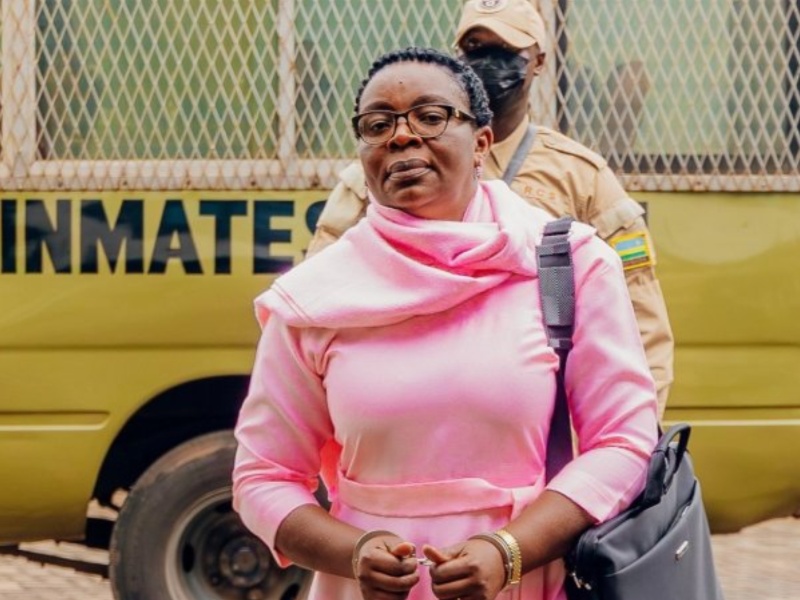
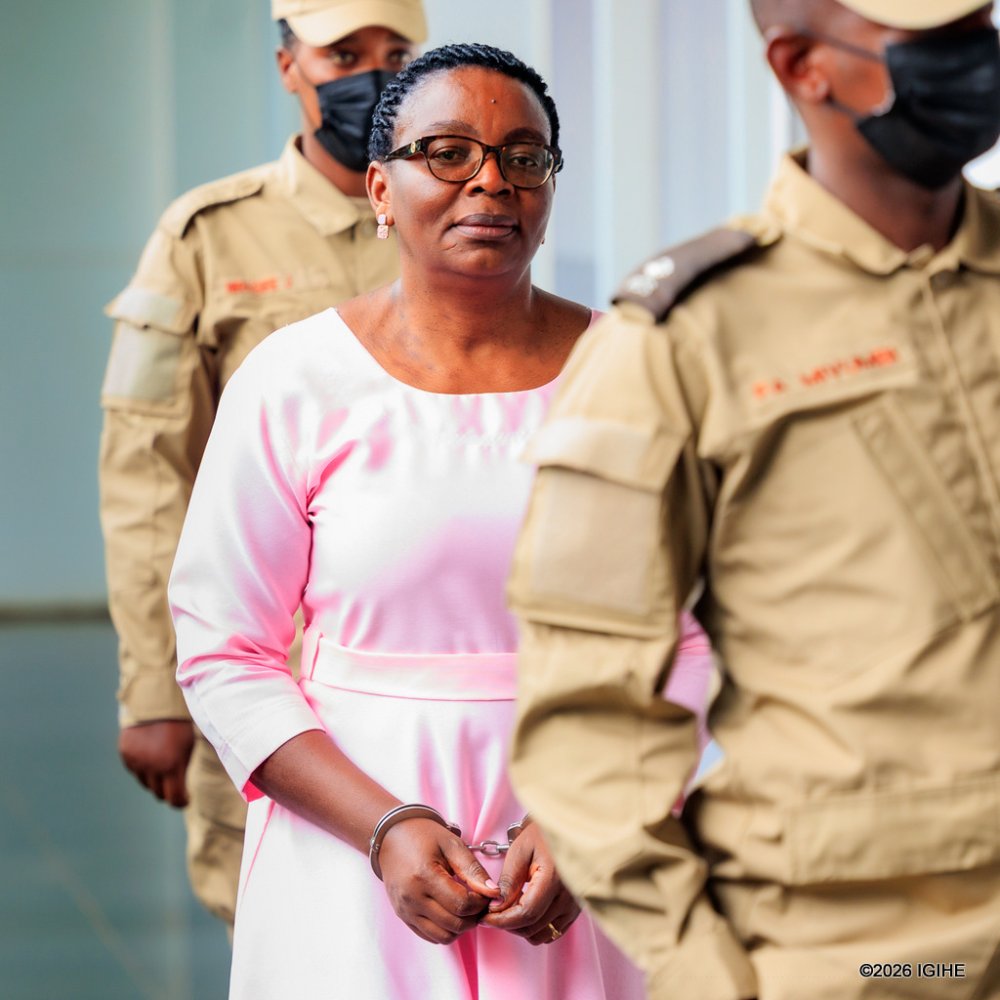
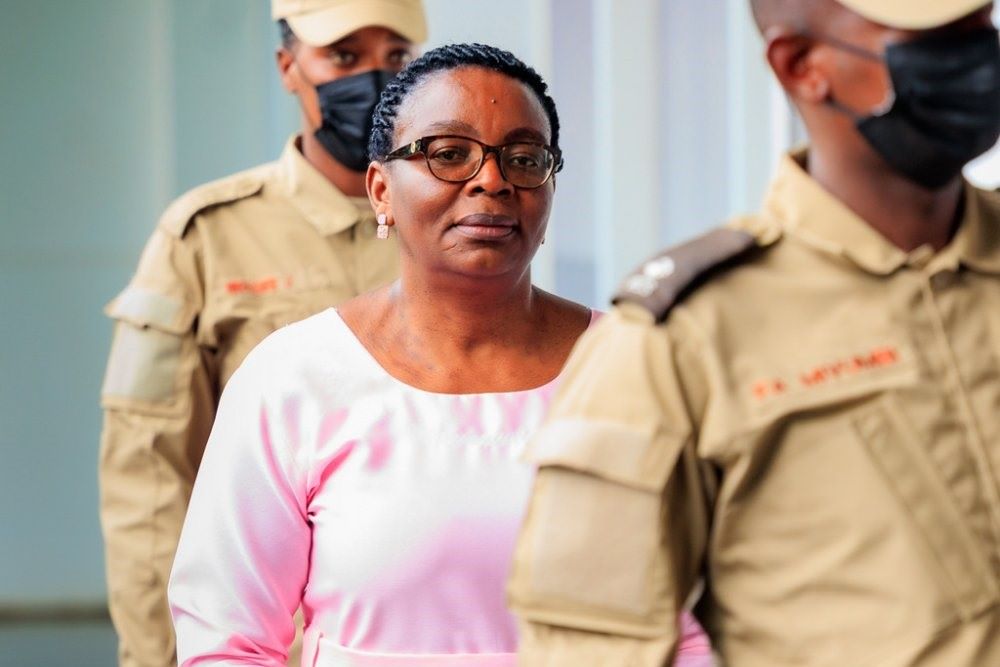
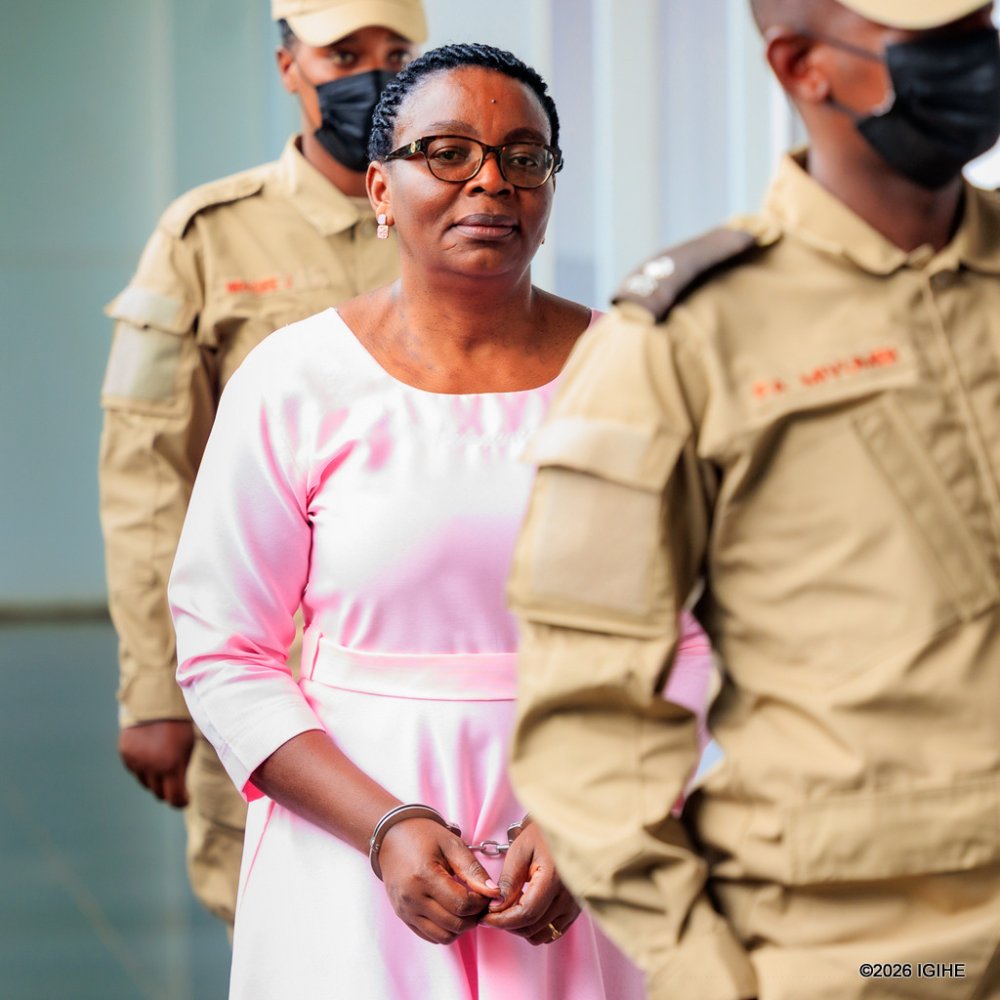
Ingabire Victoire has been accused of planning a coup that would have made her President.
The charges include forming or joining a criminal organisation, inciting riots or public disorder, attempting to undermine the established government, and spreading false information or propaganda intended to turn foreign countries against Rwanda.
The prosecution began presenting its case after earlier proceedings in which Ingabire and her lawyers challenged the panel of judges hearing the case and were fined Rwf500,000 for allegedly delaying the proceedings. The challenge was rejected by the Court of Appeal, which also upheld the fine.
Prosecutors alleged that although Ingabire had advocated removing the government through non-violent means, investigations showed that she was also involved in efforts involving force or weapons.
The prosecution said that after Ingabire was pardoned and released from prison in September 2018, she resumed working with FDU Inkingi and groups based outside Rwanda in efforts aimed at removing the government.
It also linked her to the P5 coalition, which included the Rwanda National Congress (RNC), FDU Inkingi, Amahoro People’s Congress, PDP-Imanzi and a faction of PS-Imberakuri led by Bernard Ntaganda.
The prosecution alleged that P5 was involved in attacks in Rwanda, including an October 2019 attack in Musanze District that killed civilians and injured others.
Ingabire’s lawyer, Bruce Bikotwa, asked prosecutors to demonstrate her specific role in FDU Inkingi while the group was part of P5. The prosecutor responded that Ingabire founded and continued to lead FDU Inkingi during that period.
The prosecution also referred to a covert investigation and alleged that Ingabire and former FDU Inkingi member Cassien Ntamuhanga were recorded discussing plans to overthrow the government. The recordings, it said, will be presented in court.
Prosecutors further alleged that after Ingabire realised an armed overthrow was not possible, she changed strategy and organised training sessions described as English classes for DALFA Umurinzi members.
According to the prosecution, participants were taught strategies including “protest and persuasion”, “non-cooperation”, “boycott” and “mobilisation”. They were allegedly encouraged to use methods such as refusing to participate in some government programmes and to use media platforms to publicise their activities.
The prosecution also alleged that Ingabire coordinated participants inside and outside Rwanda, while journalists Théoneste Nsengimana and Dieudonné Niyonsenga, known as Cyuma Hassan, were expected to help publicise the activities.
The court has given the prosecution four days to present its case, after which the defence will respond.
The hearing was adjourned on Friday afternoon and will resume on September 21 at 9 a.m. when the prosecution will continue presenting its case.
The High Court in Kigali on Friday, September 18, began hearing the case against Victoire Ingabire and 10 co-defendants accused of offences linked to an alleged plot to overthrow the government.
The verdict was delivered on September 18, 2026, following proceedings over the management of funds held by the Fund for the Repair and Compensation of Victims of Uganda’s Illicit Activities in the Democratic Republic of Congo (FRIVAO).
The court also sentenced Chançard Bolukola Osony, the fund’s former acting coordinator, to seven years of forced labour. Both men were also barred from voting and standing for election for five years and excluded from public office for the same period.
The case concerns several financial transactions involving FRIVAO funds. During the proceedings, prosecutors cited, among other transactions, $14.3 million transferred to Congo Energy and $4 million allocated to the Congolese Institute for Nature Conservation (ICCN), alongside other payments that the prosecution considered irregular.
The funds managed by FRIVAO are linked to reparations paid to the DRC following the International Court of Justice’s ruling ordering Uganda to compensate Congo for damage caused by its activities during the conflict in the country.
The money was intended to support reparations and compensation for Congolese victims.
The prosecution had requested a 15-year forced-labour sentence for Mutamba and Bolukola. The court ultimately handed Mutamba a 10-year sentence and Bolukola seven years.
Mutamba had rejected the accusations against him and did not appear during the final stage of the proceedings.
He had previously said he was being targeted by people opposed to him and had maintained that the case was linked to his position on transparency while serving as justice minister.
The latest verdict is Mutamba’s second conviction since leaving the justice ministry in 2025.
On September 2, 2025, the Court of Cassation sentenced him to three years of forced labour after finding him guilty of misappropriating $19 million intended for the construction of a prison in Kisangani.
The court also ordered him to return the money and barred him from voting or standing for election for five years after completing his sentence, as well as from holding public office.
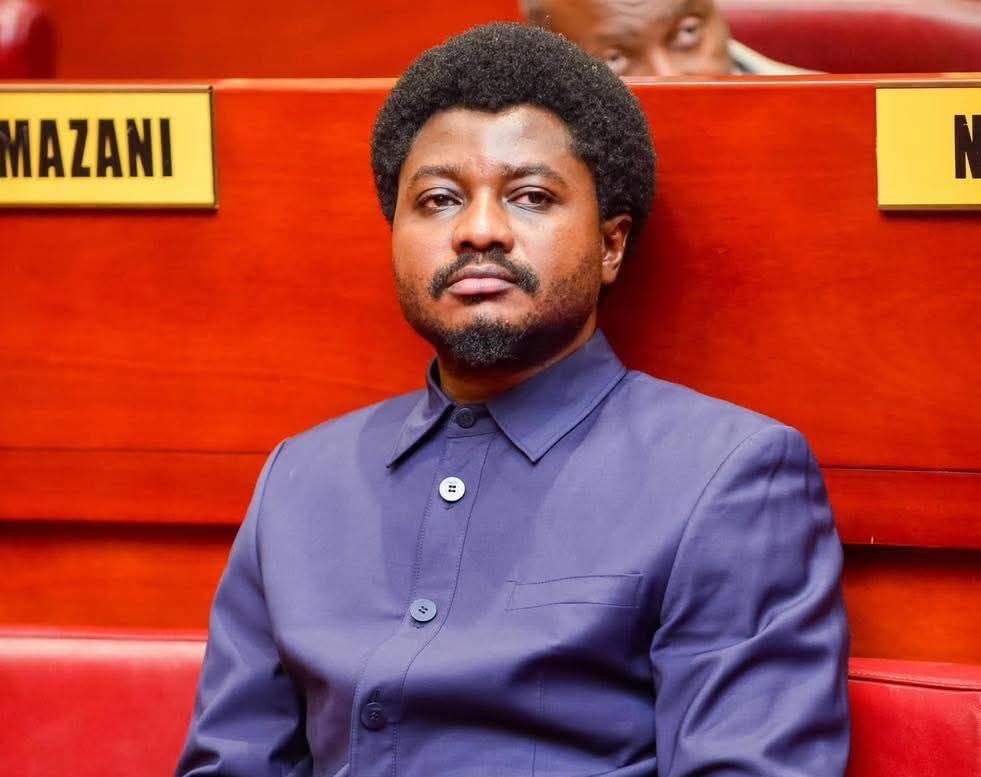
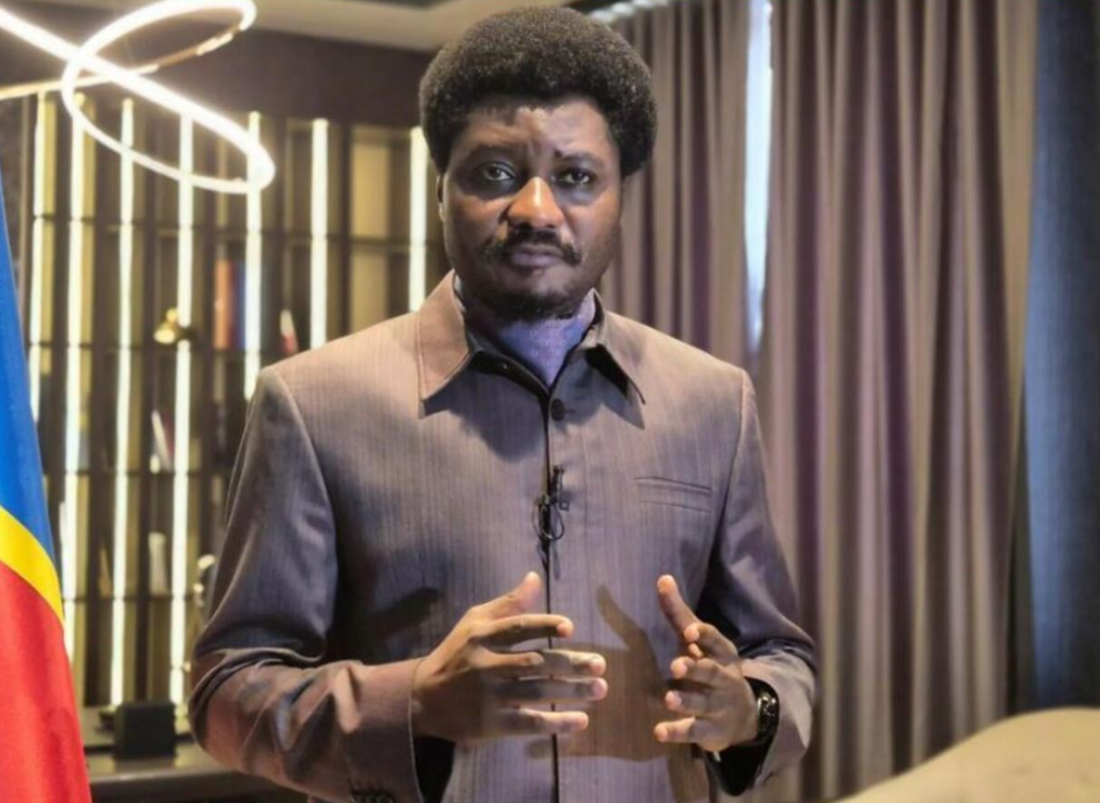
Former DRC justice minister has been handed 10 years of forced labour over FRIVAO funds
Shema appeared before the Nyarugenge Intermediate Court on September 17, 2026, to appeal a decision by the Nyarugenge Primary Court ordering his 30-day pre-trial detention.
His lawyer, Niyomugabo Christophe, told the court that Shema had signed an agreement with the Prosecution. The prosecutor confirmed the agreement, saying it remained to be submitted to the court.
The judge adjourned the hearing to September 23, 2026. Shema was arrested on August 11, 2026, and is charged with issuing uncovered cheques worth $600,000 (about Rwf883.5 million) and obtaining another person’s property through fraud.
The case stems from a contract worth more than €1 million between Africa Medical Supplier Plc, a company owned by Shema that deals in medical equipment, and ABZL International General Trading LLC. The agreement, signed on January 23, 2024, was linked to World Bank procurement for the supply of medical equipment to the Democratic Republic of Congo.
Under the agreement, Africa Medical Supplier was required to pay ABZL within 60 days. The prosecution told the court that the company failed to meet the payment deadline and repeatedly delayed ABZL before eventually promising to settle the outstanding amount by email.
On August 5, 2025, Shema allegedly issued ABZL two cheques worth $400,000 and $200,000. The prosecution said the cheques were dishonoured because the company’s account did not have sufficient funds between August 1 and 10, 2025.
Shema denied the charges, saying ABZL was a financial services company based in the United Arab Emirates with which he had maintained business relations since 2017. He said their previous contracts had been successfully completed.
He told the court that Africa Medical Supplier had paid $400,000 in May 2024 and another $400,000 in December 2024, but that the second payment could not be completed because of an issue with ABZL’s account. He said the contract required ABZL to provide an alternative account in such circumstances.
Shema also said a dispute between ABZL shareholders led one of them to take the cheques, add payment instructions and request that the money be paid into a US bank account. He questioned why cheques originally intended for payment in Dubai would be redirected to the United States.
Shema maintained that he would not flee if released and told the court that he owns assets worth more than Rwf5 billion that could be used as security.
His defence counsel challenged the validity and handling of the cheques, arguing that the bank had cancelled them on July 16, 2025, before the alleged offence date of August 5. The lawyer also pointed to a change in the payment destination from the UAE to a US bank account on June 25, 2025.
The defence asked the court to grant Shema bail, arguing that the dispute arose from a commercial contract rather than a personal criminal matter.
In its September 2 ruling, the Nyarugenge Primary Court said that if Shema believed there had been fraud involving the payment arrangements, he should have reported it so the person responsible could be investigated.
Shema appealed the 30-day pre-trial detention order, arguing that he should be allowed to await further proceedings outside prison.
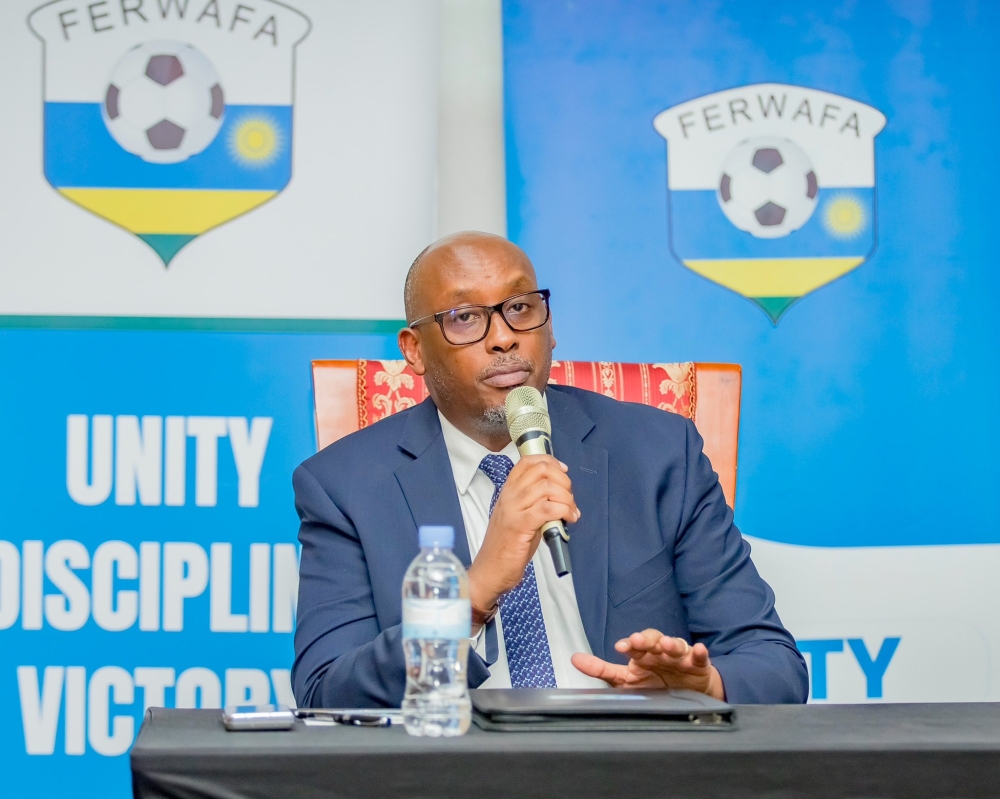
FERWAFA president Shema Fabrice has reached an agreement with the Prosecution.
Ingabire is accused of forming or joining a criminal organisation, causing unrest or disturbances, undermining the established government, and disseminating false information or propaganda intended to turn foreign countries against Rwanda, among other charges.
She was detained on June 19, 2025, after the court was not satisfied with her explanations regarding her alleged involvement in training sessions attended by former DALFA-Umurinzi members. She had been summoned to their trial to provide information.
The prosecution told the court that the training sessions were intended to overthrow the government by encouraging people to oppose it. Ingabire, however, said the training had not been organised by DALFA-Umurinzi and that she was not aware of it.
The preliminary hearing was scheduled to begin in June 2026, but Ingabire raised several concerns, including restrictions on her communication with her family, which she said was important because her family would help facilitate the payment of her lawyers.
Ingabire told the court that she was not ready to stand trial because she was struggling physically, emotionally and spiritually as a result of the difficulties she had experienced. She also said she needed to meet her co-accused before she could properly prepare her defence.
She requested three months to prepare her case. The court instructed her to have her defence submissions ready by the end of July and informed the parties that the preliminary hearing would resume in September 2026.
The proceedings were then adjourned for nearly three months, partly because of the judiciary’s annual recess, which ended in September.
Ingabire returned to court on September 8, 2026, where she challenged the panel of judges hearing her case. Her objection would have required the proceedings to be postponed while another panel was constituted.
The President of the High Court found that Ingabire’s request was intended to delay the proceedings and fined her Rwf500,000.
The case is scheduled to resume on September 18, 2026.
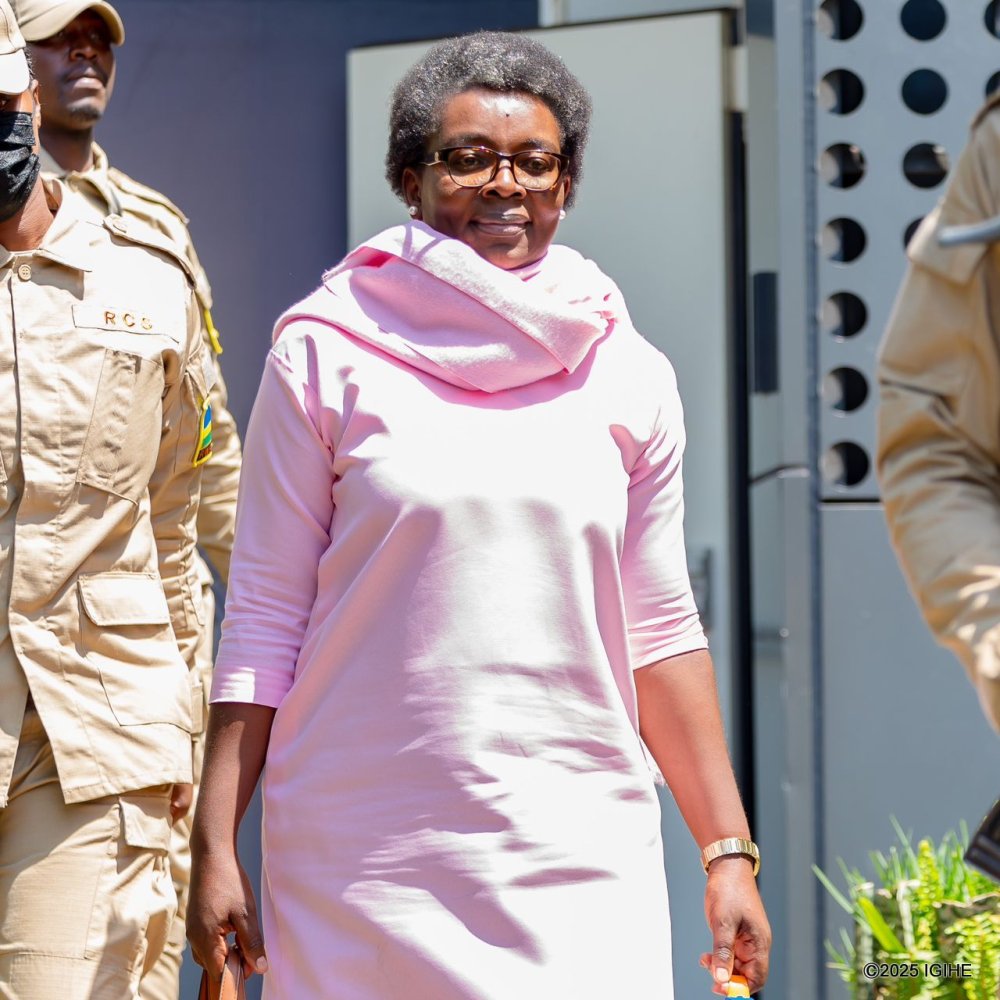
Victoire Ingabire was detained on June 19, 2025, after the court was not satisfied with her explanations about her alleged involvement in training attended by former DALFA-Umurinzi members.
The Seoul Central District Prosecutors’ Office formally charged Yoon with failing to fulfill his official reporting duty under the Improper Solicitation and Graft Act, despite knowing that his wife, Kim Keon-hee, had accepted high-priced gifts.
Kim was accused of accepting a luxury handbag valued at 3 million won (2,170 U.S. dollars), a cosmetics set worth 1.79 million won and premium liquor worth 400,000 won from a pastor between June and September 2022.
The prosecution initially dropped all charges against the couple in October 2024, but the case was reopened under a special counsel probe targeting Yoon’s wife.
A special police task force in charge of independent counsel referrals forwarded the case back to the prosecution with a recommendation for indictment in June.
Yoon was sentenced to life in prison in February for the insurrection stemming from his martial law declaration.
The emergency martial law was declared by Yoon on the night of Dec. 3, 2024, but it was revoked hours later by the National Assembly.
He was indicted under detention in January 2025 as a suspected ringleader of the insurrection, becoming the first sitting president to be arrested and indicted.
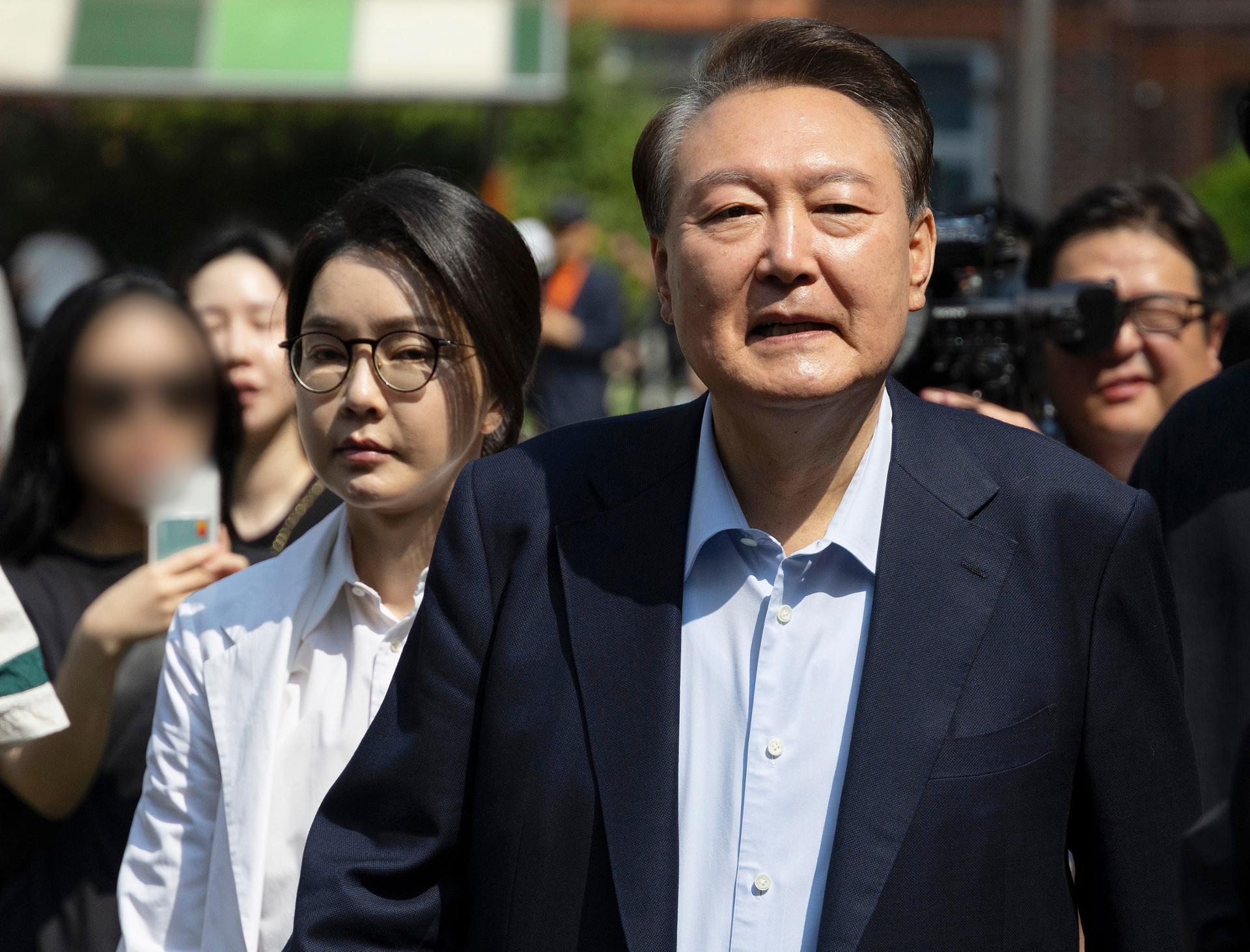
South Korea’s former President Yoon Suk-yeol has been indicted on charges of violating the anti-graft law.
“Applying the rule in the 2026 elections would be arbitrary and capricious in violation of the Administrative Procedure Act because state and local election officials do not have sufficient time to reasonably implement the rule before the elections,” it said.
The decision allows the U.S. Postal Service (USPS) to continue delivering ballots as it normally does.
On March 31, Trump signed an executive order directing federal agencies to compile state-by-state lists of U.S. citizens eligible to vote and instructing the U.S. Postal Service to establish a system under which mail ballots would be delivered only to voters included on state-provided lists.
Days after the executive order was issued, numerous organizations and a group of states led by California sued in the District of Massachusetts. The District Court entered a series of injunctions blocking implementation of the order. With the latest ruling from the nation’s highest court, that injunction is kept in place.
Under the USPS plan, which remains blocked, states would have been required to provide voters’ names and addresses and use specific barcodes on ballot envelopes for USPS delivery.
Mail-in voting has already begun in states including Alabama, North Carolina and Wisconsin, according to a report by National Public Radio. More states will soon begin mail-in voting, including Hawaii, Oregon and Washington, where elections are conducted largely or entirely by mail.
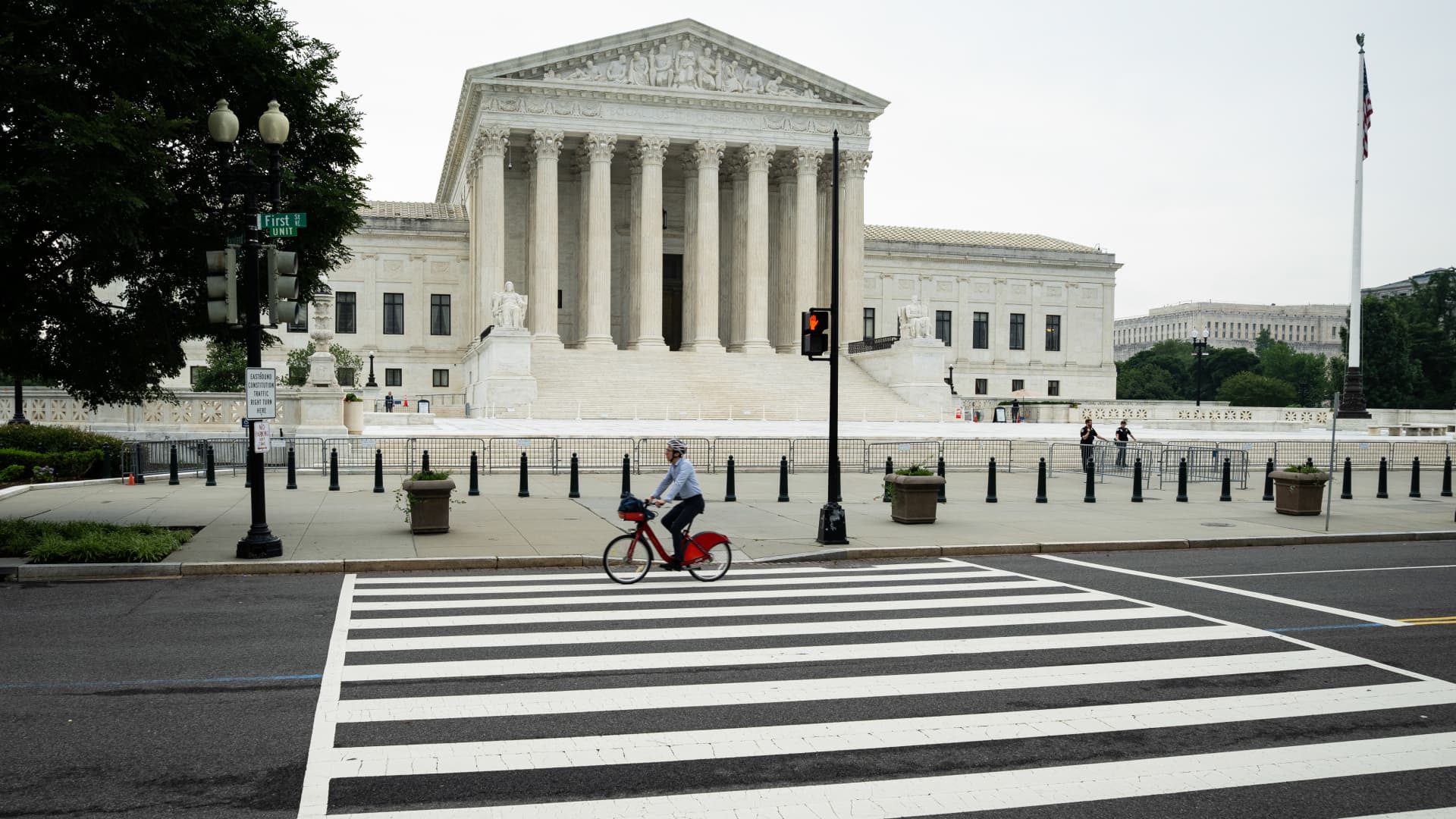
U.S. Supreme Court has rejected Trump’s mail voting restrictions for upcoming midterms