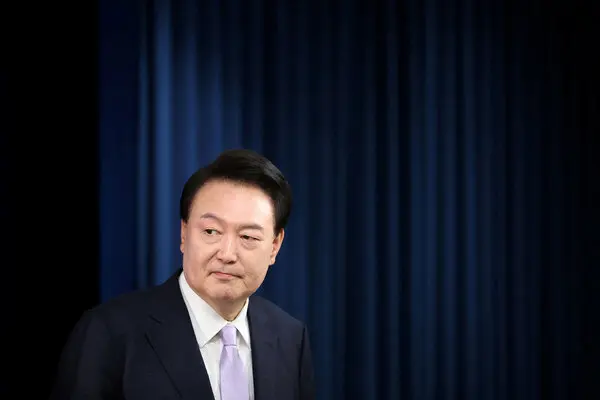
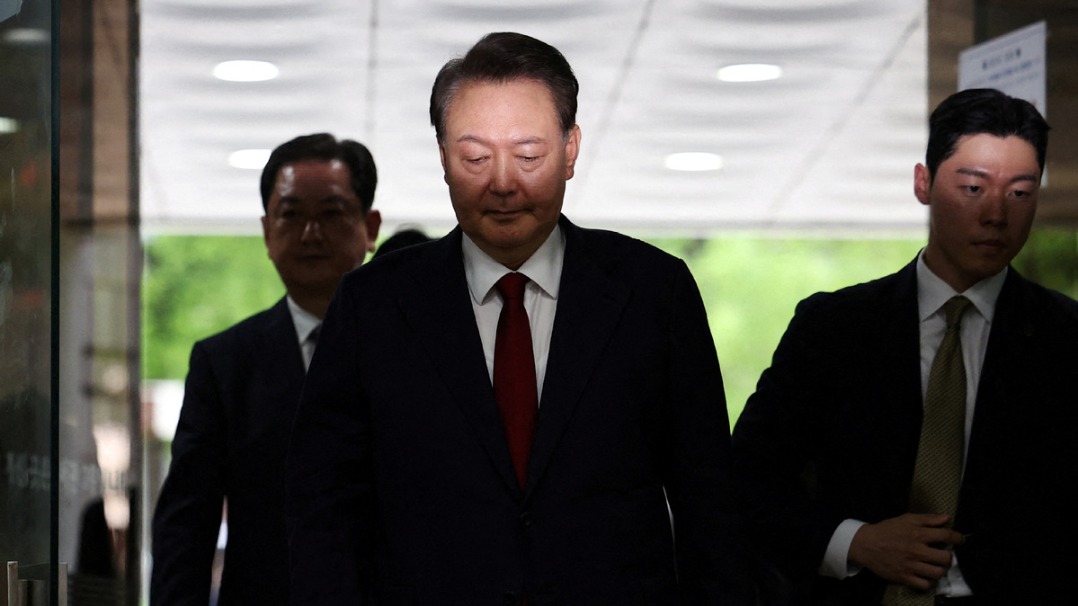
The team of a second special counsel Kwon Chang-young, who led investigations into leftover martial law allegations and other corruptions, indicted Yoon on charges stemming from his directive to spread messages to allied countries justifying his short-lived martial law declaration.
The emergency martial law was declared by Yoon on the night of Dec. 3, 2024, but it was revoked hours later by the National Assembly.
Yoon was accused of ordering the dissemination of distorted messages to major allies, including the United States, between Dec. 3 and 4, 2024, to validate the legitimacy of the martial law.
The special counsel team concluded that Yoon abused his power by forcing the presidential national security office and the foreign ministry to perform duties outside their legal obligations.
Shin Won-sik, former presidential national security advisor, was indicted without detention on charges of conspiring with Yoon to distribute the justification messages.
Yoon was sentenced to life in prison in February this year for the insurrection coming from his martial law declaration and 30 years in prison in June for the general treason relevant to the infiltration of drones into the Democratic People’s Republic of Korea (DPRK).
He was indicted under detention in January 2025 as a suspected ringleader of the insurrection, becoming the first sitting president to be arrested and indicted.
Yoon was sentenced to life in prison in February this year for the insurrection coming from his martial law declaration and 30 years in prison in June for the general treason relevant to the infiltration of drones into the Democratic People’s Republic of Korea (DPRK).
The ruling was delivered by IRMCT President Judge Graciella Gatti Santana, who found that neither Kambanda nor Kamuhanda had demonstrated exceptional circumstances that would justify their release before completing the required period under the Mechanism’s legal framework.
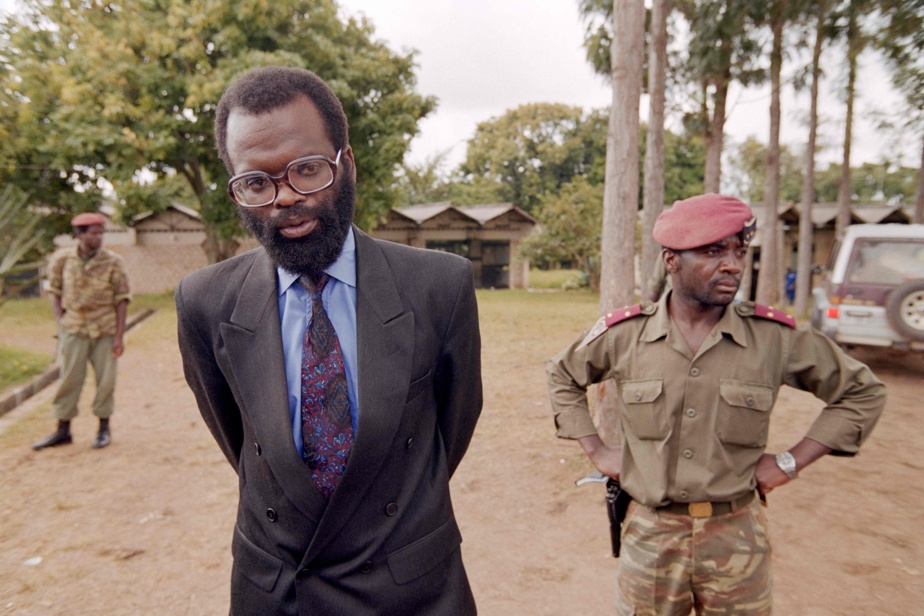
Kambanda, 70, served as Prime Minister of Rwanda’s Interim Government established after the assassination of President Juvénal Habyarimana in April 1994.
He was arrested in Kenya in July 1997 and transferred to the International Criminal Tribunal for Rwanda (ICTR) in Arusha, Tanzania.
On 4 September 1998, an ICTR Trial Chamber convicted him of genocide, conspiracy to commit genocide, direct and public incitement to commit genocide, and crimes against humanity, including murder and extermination.
He was sentenced to life imprisonment. His conviction and sentence were later upheld by the ICTR Appeals Chamber on 19 October 2000.
Following his conviction, Kambanda was transferred to a prison facility in Mali before later being moved to Senegal, where he is currently serving his sentence.
On June 25 , 2026, Kambanda requested early release, arguing that he had already spent nearly three decades in prison. He based his request on Senegalese law, which allows individuals serving life sentences to apply for release after 25 years of imprisonment.
He also cited his advanced age and deteriorating health, arguing that he required medical attention closer to his family. In addition, he expressed concerns about a possible transfer to Rwanda to continue serving his sentence.
However, Judge Graciella explained that requests for early release by individuals convicted by the IRMCT or its predecessor tribunals are determined by Mechanism’s own legal rules, rather than the laws of the country where the prisoner is being held.
She said that, in general, prisoners sentenced by the IRMCT become eligible to apply for early release after serving two-thirds of their sentence.
For individuals serving life sentences, the Mechanism considers life imprisonment equivalent to a 45-year sentence, meaning that eligibility for early release consideration begins after 30 years in custody.
Since Kambanda had served approximately 29 years, Judge Graciella ruled that he had not yet reached the required period.
The judge acknowledged that exceptional circumstances, particularly serious health conditions, could allow a prisoner serving a life sentence to seek early release before completing 30 years.
However, she determined that Kambanda’s age and health concerns did not amount to exceptional circumstances that would justify his release.
The IRMCT further noted that the length of time spent in prison alone is not sufficient grounds for early release, and that the possibility of being transferred to another country to continue serving a sentence does not constitute a valid reason for release.
After consulting Judges Jean-Claude Antonetti and Fatimata Sanou Touré, who agreed with her assessment, Judge Graciella rejected Kambanda’s application.
Kamuhanda also denied early release
Kamuhanda, who served as Rwanda’s Minister of Higher Education and Scientific Research during the 1994 Genocide against the Tutsi, was arrested in France in November 1999.
On January 22, 2003, the ICTR convicted him of genocide and extermination for his role in attacks against Tutsi civilians in Gikomero Commune, sentencing him to life imprisonment. The sentence was confirmed on appeal in September 2005.
He was transferred to a prison facility in Mali in November 2008 and later moved to Senegal in December 2021, where he remains incarcerated.
Kamuhanda submitted his early release request after spending 26 years and six months in prison. He acknowledged that he had not yet completed the 30-year period required for consideration under IRMCT rules but argued that possible changes regarding the transfer of UN tribunal convicts should be considered an exceptional circumstance.
He said that if the United Nations Security Council decided to transfer him and other convicted persons to Rwanda to complete their sentences, such a decision would create grounds for a humanitarian release.
Kamuhanda also told the Mechanism that he hoped to reunite with his family and children in France. However, he acknowledged that European countries might not accept individuals convicted by UN tribunals and said he would remain in Senegal if released, while respecting any conditions imposed by the IRMCT.
In her ruling issued on 23 July, Judge Graciella said Kamuhanda had served more than 26 years in prison but had not yet reached the required period for early release consideration.
She also examined whether there were exceptional circumstances that could justify his release before reaching the required threshold but concluded that the possibility of being transferred to another country to continue serving his sentence did not qualify as an exceptional reason.
The judge added that Kamuhanda had not provided additional evidence demonstrating circumstances strong enough to support his request.
After consulting Judges William H. Sekule and René José Andriatianarivelo, who agreed with her assessment, Judge Graciella rejected Kamuhanda’s request for early release.
The IRMCT’s decisions mean that both former officials will remain in custody until they meet the legal requirements for possible consideration of early release or until other decisions are made under the Mechanism’s rules.
The IRMCT ruled that Kambanda Jean will continue serving his life sentence after determining that he had not presented compelling reasons or exceptional circumstances to justify his release before completing the required period under the Mechanism’s rules.
The ruling upheld the verdict delivered on October 30, 2024, following an appeal trial that lasted for more than a month, from June 8 to July 18, 2026.
For the appeal proceedings, Rwamucyo was represented by a new team of seven lawyers. Among them was Jean-Baptiste Harelimana, a Rwandan lawyer who told the court that he had attended the Petit Séminaire de Butare during his secondary education.
The crimes for which Rwamucyo was convicted were committed in four communes of the former Butare Prefecture: Ngoma, Gishamvu, Ndora and Huye. At the time, he was Director of the Centre Universitaire de Santé Publique (CUSP) at the former National University of Rwanda (UNR) and was also serving as acting head of the Butare Health Region(Région sanitaire).
Unprecedented incidents during the trial
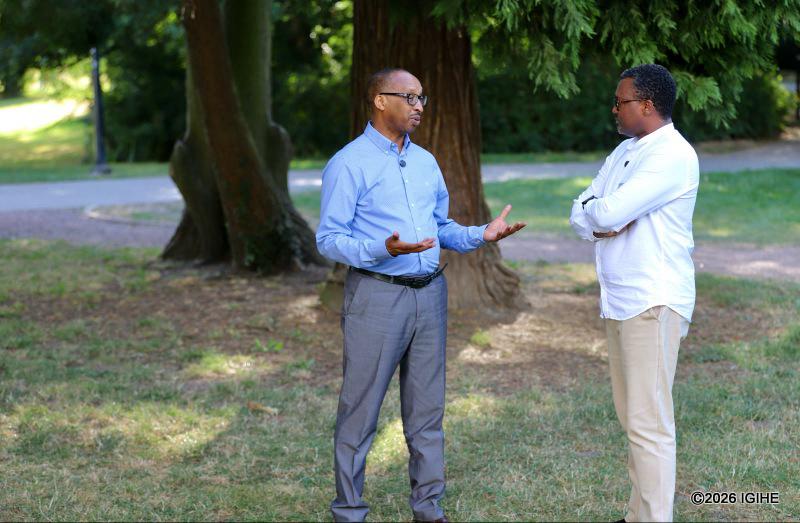
In an interview with IGIHE, André Martin Karongozi, one of the lawyers representing the civil parties, said the trial was marked by a number of unusual incidents targeting survivors of the 1994 Genocide against the Tutsi, as well as the RPF-Inkotanyi.
According to him, the first major incident occurred on the day the first genocide survivors, who had travelled from Rwanda specifically to testify before the court, took the stand.
As the first witness—a survivor represented by lawyer Karongozi—had just recounted her experience during the three months of the 1994 Genocide against the Tutsi and was awaiting questioning by the court and the parties, two people seated among Rwamucyo’s relatives and supporters suddenly stood up. Waving flags, one of them wearing a black face mask, they shouted slogans targeting President Paul Kagame.
French gendarmes immediately intervened and removed the protesters from the courtroom. The presiding judge ordered a suspension of the hearing to restore calm, allow security officers to assess the situation, and ensure the witness could continue testifying under appropriate conditions. The individuals involved were identified, and photos were taken for further investigation.
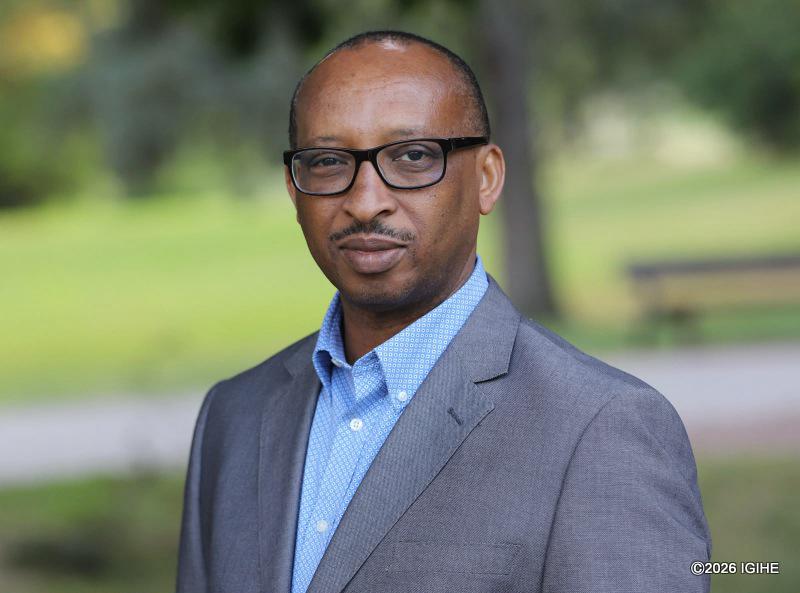
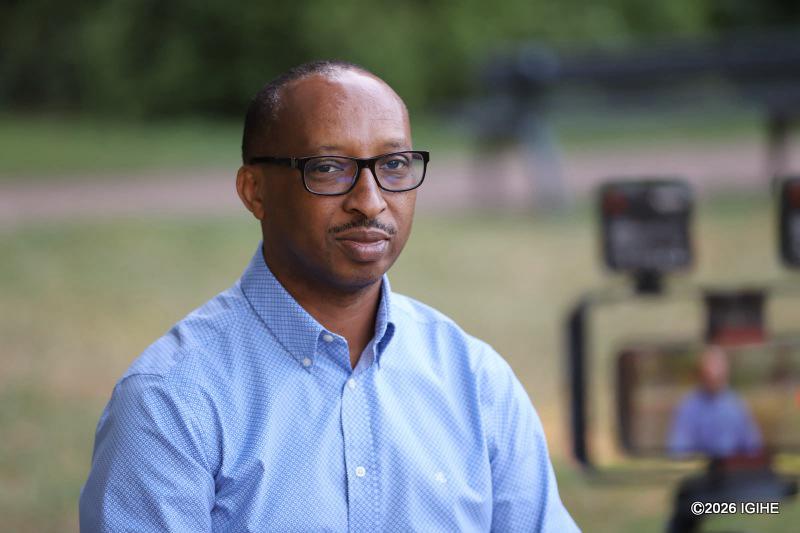
Lawyer André-Martin Karongozi during an interview with IGIHE’s Karirima A. Ngarambe. He said Rwamucyo ‘s trial was marked by unusual incidents targeting survivors of the 1994 Genocide against the Tutsi, as well as the RPF-Inkotanyi.
A traumatic experience for survivors
The lawyer said the disruption deeply traumatized the witness as well as several genocide survivors present in the courtroom.
The witness was unable to sleep throughout the night following the testimony. The next morning, his condition deteriorated to the point that an ambulance had to be called. After receiving medical attention, she was later able to go back to Rwanda.
According to Lawyer Karongozi, the fact that such an incident occurred on the very first day survivors testified suggests that it had been planned in advance.
A social media disinformation campaign
The lawyer also alleged that Rwamucyo’s supporters published very often distorted accounts of the court proceedings on social media in an effort to discredit the lawyers representing the civil parties as well as the Advocate General( prosecutor).
Toward the end of the trial, false claims began circulating that the lawyer had secretly met with Eugène Rwamucyo and had, moreover, distanced himself from the RPF-Inkotanyi.
According to him, these allegations were entirely fabricated.
Other lawyers were also targeted, including Richard Gisagara, lawyer Michel Laval, representative of the Collectif des Parties Civiles pour le Rwanda (CPCR), and the Advocate General.
Karongozi told IGIHE that Rwamucyo’s supporters published distorted daily accounts of the court proceedings on social media in an effort to discredit the lawyers representing the civil parties as well as the Advocate General.
Large-scale mobilization of Rwamucyo’s supporters
The lawyer said information circulating during the proceedings indicated that Rwamucyo’s supporters had planned to bring nearly 200 sympathizers to the courthouse in an attempt to exert pressure on the court. As a result, from July 16, judicial authorities significantly reinforced security measures around the courthouse.
Unprecedented support for a genocide convict
According to Karongozi, a lawyer who has represented civil parties before the assize courts since 2005, Eugène Rwamucyo is the first Rwandan prosecuted over the 1994 Genocide against the Tutsi to receive such a large show of support inside French or Belgian courtrooms.
He was told that some of those supporters may themselves have participated in the genocide.
He also noted that Rwamucyo called several witnesses known for denying or distorting the Genocide against the Tutsi including:
Patrick Mbeko, author of some writings about Rwanda whose statements were rejected during the hearing by one of Rwamucyo’s lawyers;
The former Commander of the Rwandan Gendarmerie, General Augustin Ndindiliyimana, who dared to say that the speech of April 19, 1994 in Butare by Théodore Sindikubwabo was positive;
Hervé Deguine, whose views align with those expressed by Pierre Péan in his book Noires fureurs, blancs menteurs): Tutsi are born liars, and the Hutu who hang out with them are tainted by it.
The Paris Court of Assizes recently upheld the conviction of Dr. Eugène Rwamucyo for complicity in genocide and crimes against humanity, confirming his 27-year prison sentence.
A different defense strategy on appeal
Finally, Lawyer Karongozi observed that Rwamucyo adopted a different approach during the appeal from the one he had taken during his first trial.
Having remained in custody since his 2024 conviction despite appealing the verdict, Rwamucyo spoke before the court about the hardships of prison life, even explaining that he once had to clean his prison cell soiled by the previous inmate.
According to the lawyer, this was part of a strategy aimed at gaining the court’s sympathy. On several occasions, Rwamucyo said he bowed in memory of the victims of the genocide and acknowledged the suffering of survivors, hoping to be cleared of all charges or to get a reduced sentence.
However, the lawyer argued that these statements failed to convince the court. In his view, despite expressing sympathy for the victims, Rwamucyo never changed his fundamental position. Instead, he continued to endorse the ideology of Parmehutu and the Coalition pour la Défense de la République (CDR), claiming that Tutsi victims had been killed by fellow Tutsi under the direction of the RPF-Inkotanyi and that the RPF was responsible for the massacres.
For Karongozi, these statements demonstrated that the accused had never abandoned a genocide denial narrative, which helps explain why the Paris Court of Assizes upheld both his conviction and his 27-year prison sentence.
French Prosecutor Aude Duret emphasised that without the steadfast dedication of CPCR founders Alain Gauthier and his wife, Dafroza Gauthier, who personally travelled to Rwanda to gather evidence and eyewitness testimonies from where the crimes occurred, many perpetrators would have evaded prosecution entirely.
Since its creation in 2001, CPCR has filed complaints against numerous key figures, including Dr. Sosthène Munyemana, Laurent Bucyibaruta, Pascal Simbikangwa, Octavien Ngenzi, Tito Barahira, Claude Muhayimana, Philippe Hategekimana, Fabien Neretse, and Dr. Eugène Rwamucyo. Most have been convicted and sentenced for their roles in the Genocide against the Tutsi.
Speaking to IGIHE, Alain Gauthier expressed satisfaction with the Paris Assize Court’s decision to uphold the 27-year prison sentence initially handed down on October 30, 2024. He said his thoughts remain with the civil parties represented by CPCR, including more than 500 victims from Ndora, as well as others from Kigali, Butare, and Gishamvu.
Politicisation tactics rejected
Gauthier said that throughout the trial, Dr. Rwamucyo and his defence team attempted to portray him as an innocent victim of renewed diplomatic relations between Rwanda and France, claiming CPCR was merely a tool of the Rwandan government. According to Gauthier, the claims were deliberate attempts to distract the court from the specific charges against Rwamucyo.
“But it was Rwamucyo who was on trial. He had to answer for his role in burying bodies in dozens of mass graves in and around Butare,” Gauthier stated.
“And then there was his speech on May 14, 1994, during Jean Kambanda’s visit. His words were unambiguous. Yet Rwamucyo and his lawyers tried to plead innocent. An untenable stance given the clarity of the facts.”
On the night of July 17 to July 18, the court acquitted Rwamucyo of genocide and crimes against humanity as a perpetrator, but convicted him of complicity in both crimes.
Gauthier stressed that this distinction does not diminish Rwamucyo’s responsibility in the Genocide against the Tutsi, as French law treats perpetrators and accomplices with equal severity.
“A judicial truth has been delivered. The essential work is done, and we accept this decision,” he said.
He further rejected Rwamucyo’s claim that he supervised the burial of Tutsi victims solely for public health reasons, saying witness testimonies showed there was no epidemic in Butare that justified such measures.
Dr. Rwamucyo and his defence team also repeatedly criticised Rwanda’s Gacaca courts, arguing that they did not deliver proper justice and attempting to discredit Gacaca judgment records as potentially fabricated.
Gauthier said the seven lawyers representing Dr. Rwamucyo either lacked knowledge of Gacaca or deliberately chose to ignore its crucial role in delivering justice to survivors.
“Rwamucyo’s seven lawyers understood nothing or chose not to understand the irreplaceable role of Gacaca,” Gauthier said. “Above all, it also showed a total lack of familiarity with Rwanda and its culture. French justice, even while recognising the weaknesses of the Gacaca procedure, respects it.”
The case of Agathe Kanziga and broader challenges
French courts have prosecuted and convicted several high-profile Rwandans from different sectors, including politicians, intellectuals, and security officials.
Gauthier expressed concern over how highly educated individuals, including medical professionals sworn to save lives, became involved in killings during the Genocide against the Tutsi. He said influential figures played a role in mobilising ordinary people to participate in the violence.
He noted that other intellectuals are still awaiting trial in France, including Dr. Charles Twagira, originally from the former Kibuye Prefecture, and Dr. Alphonse Karemera from Butare.
However, Gauthier raised concerns that investigating magistrates in France could dismiss investigations into other Rwandan suspects, as previously happened in the case of Agathe Kanziga, the widow of former President Juvénal Habyarimana.
He warned that delays in pursuing suspects create serious challenges for future cases, as ageing witnesses make it increasingly difficult to collect reliable testimony.
“For future cases, it is clear that it will become increasingly difficult to gather testimonies for the reasons you mentioned,” Gauthier explained. “The CPCR, like judges, faces the same issue. We have to deal with it, but we must be aware that investigating will become harder and harder.”
He added that as evidence collection becomes more difficult, more perpetrators of the 1994 Genocide against the Tutsi risk escaping justice.
“That is the sad reality,” he said.
In May 2026, a French appeals court ordered the reopening of the genocide investigation into Agathe Kanziga, which had been closed the previous year, following an appeal by the prosecution.
Gauthier, who filed the initial complaint against Kanziga in 2007 through CPCR, cautioned that the court’s decision does not guarantee that the case will ultimately proceed to trial, given the length of time it has taken.
“But it is not at all certain that this will ever lead to a trial,” Gauthier said. “We have waited too long. Our complaint dates back to 2007, so there is very little hope on that front. The same goes for [Laurent Serubuga].”
Despite these challenges, Alain Gauthier reaffirmed that CPCR will continue its pursuit of justice without seeking recognition, urging Rwandans to draw inspiration from the organisation’s work in building a reconciled society for the well-being of all.
For 25 years, Alain and Dafroza Gauthier have pursued individuals suspected of involvement in the Genocide against the Tutsi who fled to France, through their organisation CPCR.
The appeal judgment, delivered shortly after midnight on July 18, 2026, leaves unchanged the verdict handed down on October 30, 2024, when the court found the former Rwandan doctor guilty on both counts and sentenced him to 27 years in prison.
After losing his initial trial, Dr. Rwamucyo replaced the two lawyers who represented him in 2024, Françoise Marthe and Philippe Meilhac. For the appeal, he assembled a seven-member legal team comprising Daniel Fellous, Raphaël Constant, Salome Cohen, Michèle Siari, Jean-Baptiste Harelimana and Alexandre Sztulman.
Dr. Rwamucyo, a former head of the Centre for University Public Health (CUSP) at the former National University of Rwanda, was prosecuted over his role during the 1994 Genocide against the Tutsi.
Among the evidence examined by the court was his participation in a meeting held at the university on May 14, 1994, chaired by the then Prime Minister, Jean Kambanda.
Prosecutors argued that the gathering encouraged intellectuals to participate in the genocide and alleged that Dr. Rwamucyo addressed the meeting in support of the killings.
The prosecution also accused him of coordinating the burial of victims in various parts of Butare Prefecture using heavy machinery, including a bulldozer, in what it said was an effort to conceal evidence of the genocide.
According to the prosecution, he played a role in the burial of more than 214,000 victims in Butare with the intention of destroying evidence.
Throughout the proceedings, Dr. Rwamucyo denied the allegations. He told the court that he had never sought to conceal the bodies of genocide victims, arguing that it would have been impossible to hide atrocities that had unfolded over several weeks in full public view.
Following the ruling, lawyers representing the civil parties welcomed the appellate court’s decision.
“It is very good news for the civil parties from Rwanda, who have waited 32 years for this decision. They can now begin a new chapter on the path toward reconciliation,” said lawyer Alice Zarka.
Dr. Rwamucyo’s daughter expressed disappointment with the outcome, saying she had not expected the appeal to fail and was deeply saddened by the judgment.
During the appeal, the prosecution had sought a 30-year prison sentence, while the defence requested a full acquittal and Dr. Rwamucyo’s immediate release.
The Paris Court of Assizes in France has upheld the conviction of Dr. Eugène Rwamucyo for genocide and crimes against humanity
On October 30, 2024, the same court had sentenced Dr Rwamucyo to 27 years in prison. He appealed the verdict, with the appeal hearing starting on June 9, 2026, as he maintained that he had no involvement in the crimes he is accused of committing in the former Butare Prefecture.
Dr. Rwamucyo, who headed the Centre Universitaire de Santé Publique (CUSP), a public health institution at the former National University of Rwanda, was among intellectuals who attended a meeting convened by then Prime Minister Jean Kambanda at the university.
The meeting, held on May 14, 1994, encouraged intellectuals to take part in the Genocide against the Tutsi, and Dr. Rwamucyo is accused of making a speech in support of the killings.
He is also accused of overseeing the burial of Tutsi victims killed in different parts of Butare, using equipment including a road construction machine ‘caterpillar’.
Prosecutors argue that the operation was intended to conceal evidence of the genocide. However, Dr. Rwamucyo told the court that he never attempted to hide the bodies of Tutsi victims, arguing that it was impossible to conceal killings that had taken place openly over several weeks.
He told the court that the locations where Tutsi victims were buried in Butare were known by those involved in the killings, but said he never prepared maps or reports documenting them. He said he had written documents about the burials, but they were lost when he fled Rwanda in June 1994.
On July 13, 2026, lawyer Clothilde Hazard, representing civil parties in the case, told the court that the manner in which Tutsi victims were buried under Dr. Rwamucyo’s instructions was aimed at hiding evidence of the genocide.
“What has emerged from this trial is that he identified places for excavation, bodies were placed there in any manner possible, graves were not marked even with a simple cross, and there was no dignified burial that could be described as such. Even today, these graves remain visible,” she said.
Another lawyer, Alice Zarka, said the burials supervised by Dr. Rwamucyo revealed evidence of genocide that remains visible more than three decades later.
“Today, we are seeing pits and evidence of genocide. What happened during the genocide is still visible. Evidence is still being uncovered. That is why turning a blind eye and presenting it as a matter of hygiene and sanitation, while seeking to conceal the crime and his role in leading acts that destroyed a population, is something that victims cannot understand,” she said.
On July 15, 2026, prosecutor Aude Duret told the court that Dr. Rwamucyo was an intellectual who used his knowledge to serve a government that planned and carried out the genocide, and that he fully understood the actions he was taking.
She said evidence presented during the appeal hearing, along with testimonies, showed that Dr. Rwamucyo was part of networks supporting the extremist government, including the Coalition for the Defence of the Republic (CDR), and that he made statements targeting Tutsi people.
The prosecutor also said Dr. Rwamucyo supervised the burial of more than 214,000 Tutsi victims in Butare, including some victims who were buried alive, a claim supported by testimonies from witnesses.
Following the prosecution’s submissions, Dr. Rwamucyo and his lawyers were expected to present their arguments before the Paris Assize Court. The verdict is expected during the night of July 16 to July 17, 2026.
The Paris Assize Court is expected to deliver its verdict after French prosecutors sought a 30-year prison sentence for Dr Eugène Rwamucyo during his appeal trial.
During the 1994 Genocide against the Tutsi, Nyiramasuhuko lived at her home in Butare.
Witnesses have testified that she supervised roadblocks where Tutsi were intercepted, including one located near her residence.
Historical records indicate that after the killing of Jean Baptiste Habyalimana, the Tutsi prefect of Butare, Nyiramasuhuko called on Interahamwe militia, including those led by her son, Arsène-Shalom Ntahobali, to exterminate all Tutsi in the region.
Witnesses also testified that she ordered the Interahamwe to torture and kill Tutsi civilians, and instructed them to rape victims before murdering them.
In June 2011, the former International Criminal Tribunal for Rwanda (ICTR), based in Arusha, Tanzania, sentenced Nyiramasuhuko and her son to life imprisonment.
Both were convicted of conspiracy to commit genocide, genocide, direct and public incitement to commit genocide, and crimes against humanity, including rape and torture.
They appealed the verdict, and in December 2015 the ICTR Appeals Chamber reduced their sentences to 47 years in prison.
According to reports by the Collectif des Parties Civiles pour le Rwanda (CPCR), an organization that supports the prosecution of genocide suspects, Nyiramasuhuko’s name has repeatedly surfaced during Dr. Rwamucyo’s appeal hearings, which began on June 9, 2026.
On July 3, a witness who said he had known Dr. Rwamucyo since 1993 told the court he saw him at a roadblock in Butare alongside members of Maurice Ntahobali’s family, including Nyiramasuhuko, Shalom Ntahobali, and Chrysostome Nkezabahizi, the then head of the National Office of Population (ONAPO).
The witness testified that Dr. Rwamucyo and the others at the roadblock were wearing military uniforms and carrying firearms, adding that they appeared to be directing the Interahamwe militia responsible for killing Tutsi civilians.
CPCR further maintains that Dr. Rwamucyo had a long-standing relationship with Nyiramasuhuko and notes that his name appeared several times in her personal diary, which recorded meetings and appointments involving the two.
However, on July 7, Dr. Rwamucyo told the court that he did not know Nyiramasuhuko and had never spoken to or arranged meetings with her. He said the only time they crossed paths was briefly at ONAPO offices in Butare.
When questioned about his name appearing in Nyiramasuhuko’s diary, he denied that it referred to him, claiming it belonged instead to another “Eugène Rwamucyo from Butare.”
Two days later, on July 9, prosecutors pointed out that the telephone number listed next to the name in Nyiramasuhuko’s diary matched his own. Dr. Rwamucyo nevertheless repeated that the entry referred to another person with the same name.
As prosecutors continued pressing him about his relationship with the former minister, Dr. Rwamucyo changed his explanation. He argued that there was a reason why his name appeared at the end of the contact list and claimed the handwriting in the diary was inconsistent. “Why was I added to these diaries?” he asked the court.
Dr. Rwamucyo ultimately acknowledged that the “Eugène Rwamucyo” listed in Nyiramasuhuko’s diary was indeed him, but insisted that whoever entered his details into the diary had done so without informing him.
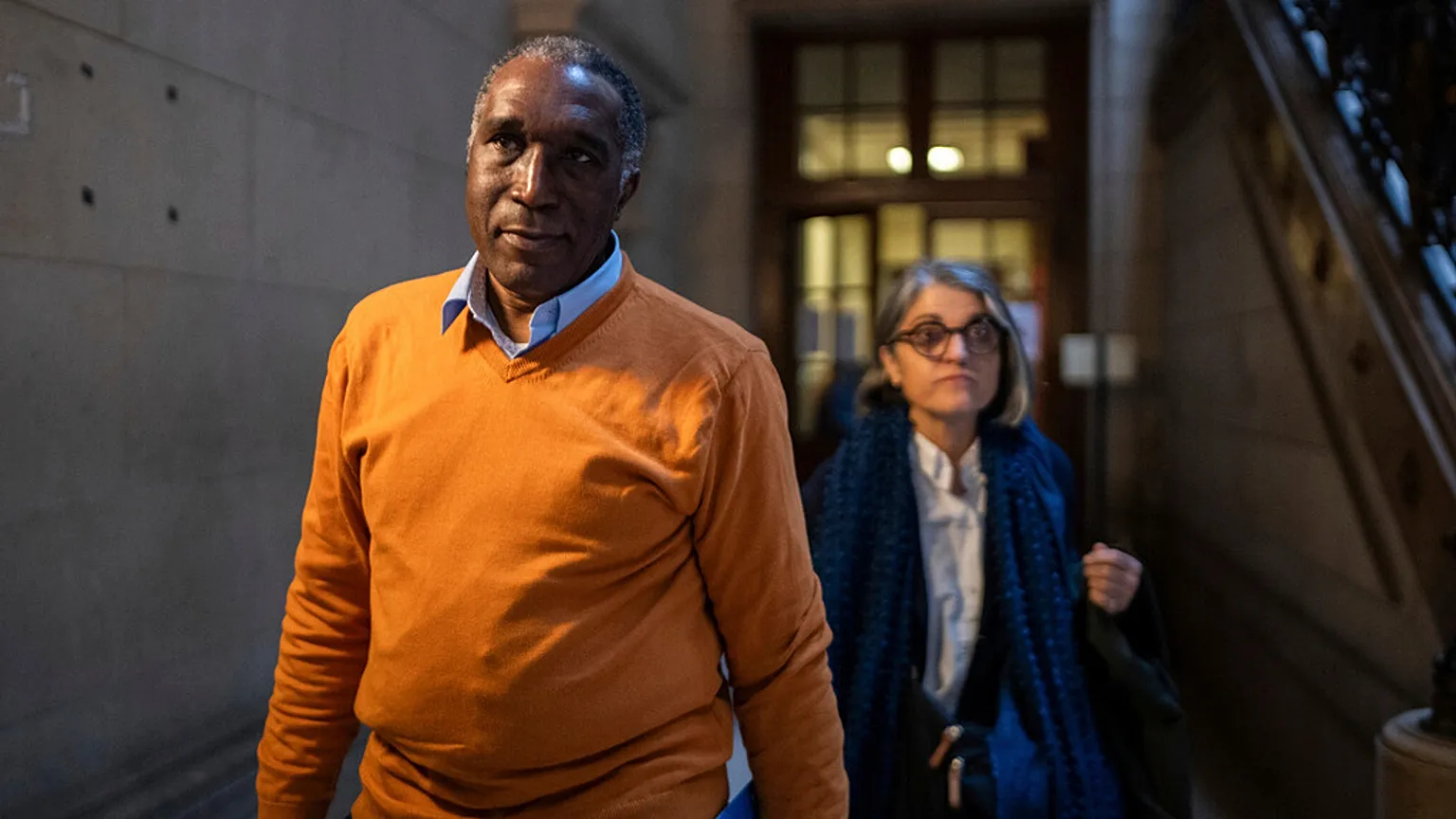
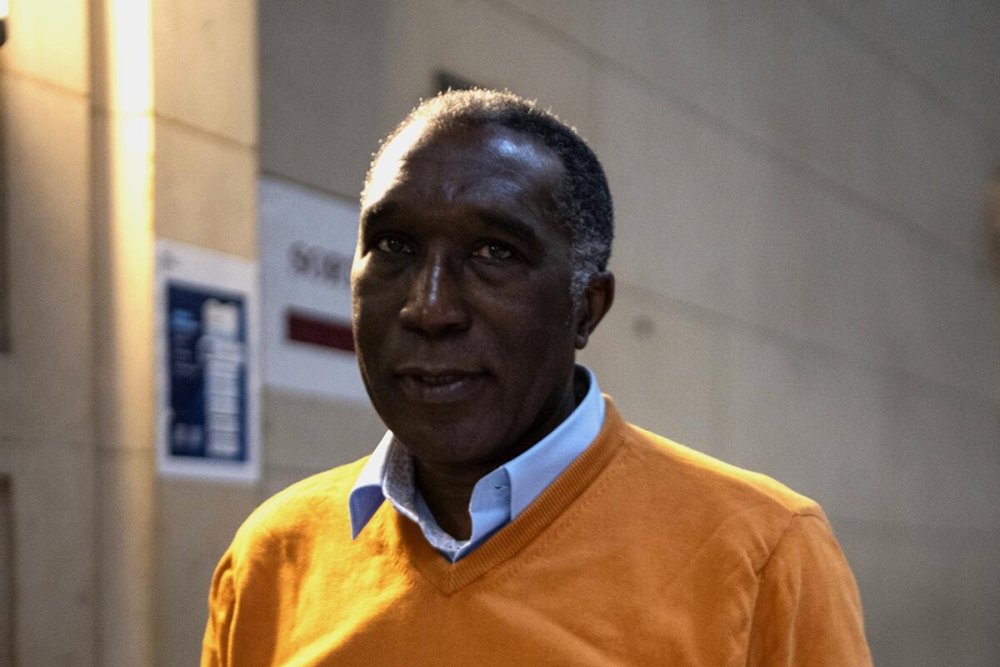
Dr. Eugène Rwamucyo, who was sentenced to 27 years in prison, told the court that he had no connection to Pauline Nyiramasuhuko.Pauline Nyiramasuhuko was convicted of genocide and crimes against humanity and sentenced to 47 years in prison.
The United Nations International Residual Mechanism for Criminal Tribunals (IRMCT) announced Kabuga’s death on the evening of May 16, at around 6:00 p.m.
Kabuga died nearly three years after the IRMCT suspended his trial, ruling that he was no longer mentally fit to stand trial due to age-related health conditions, including memory loss.
Following his death, the IRMCT permanently closed his case and appointed Judge Alphons Orie to investigate the circumstances surrounding his death.
On July 6, Orie submitted a 16-page report to IRMCT President Graciela Gatti Santana detailing the events before, during, and after Kabuga’s death.
The report was based on interviews with staff members and officials at the UN detention facility, as well as other available information, and aimed to determine whether there were any suspicious circumstances surrounding his death.
According to the report, on the morning of May 16, 2026, at around 8:30 a.m. Dutch time, staff members from Haaglanden Prison Hospital visited Kabuga’s room as part of their routine duties to assist him with personal care and provide him with breakfast.
At 11:13 a.m., Kabuga, with assistance from a UN prison staff member, made a phone call to one of his daughters. The conversation lasted about seven minutes.
At around noon, a staff member entered Kabuga’s room and served him lunch, which included rice, carrots, meat, tea, and yoghurt. The staff member then left the room and locked the door.
About 50 minutes later, at 12:50 p.m., another staff member looked through the observation window on Kabuga’s door and saw him sitting in his wheelchair with his head tilted. The staff member believed he was asleep.
A short time later, the door was opened and a cleaner was allowed to enter the room. Inside, the cleaner noticed that Kabuga had not finished his meal or the dessert that came with it.
When they checked on him more closely, they discovered that he was no longer breathing and immediately alerted their supervisors.
Because there were no cameras inside Kabuga’s room, investigators reviewed surveillance footage from outside the room. The footage showed that no one had entered the room after Kabuga was served lunch.
At 12:51 p.m., a nurse informed the doctor on duty about Kabuga’s condition. The doctor went to the room, checked him, and confirmed within about one minute that he had died.
Following confirmation of Kabuga’s death, prison officials began coordinating their response. At 12:59 p.m., the prison director ordered that Kabuga’s room be secured and that anyone entering or passing near the area be recorded.
Later that evening, at 10:20 p.m., the room was reopened for further examination. A forensic doctor entered the room accompanied by another medical professional, two nurses, and two prison officers.
The forensic doctor examined the room and found no signs of violence, struggle, or any object that could suggest Kabuga had been harmed.
Kabuga was found still sitting in his wheelchair, with part of his meal unfinished.
The medical team moved his body onto a bed and carried out an external examination, checking his head, eyes, mouth, neck, torso, and other parts of his body.
No injuries or signs of mistreatment were found, leading the doctor to conclude that Kabuga most likely died from natural causes.
At 10:37 p.m., the forensic doctor completed the examination and left the room.
Shortly after midnight, at 12:22 a.m., the prison director authorised the transfer of Kabuga’s body to a nearby mortuary after determining that no criminal investigation was necessary.
At 2:17 a.m., his body was removed from the detention facility and transferred to a mortuary in The Hague.
Investigators concluded that an internal autopsy, including tests to determine whether he had been poisoned, was unnecessary.
On May 20, 2026, a forensic specialist from Haaglanden issued another report confirming that Kabuga died from heart disease and that further examination was not required.
Orie said authorities in The Hague later issued an official death certificate, allowing Kabuga’s body to be released from the Netherlands.
On May 28, Kabuga’s family collected his body. Although Orie did not disclose where it was taken, reports later indicated that he was buried secretly in Waterloo, Belgium.
In his final assessment, Judge Orie informed the IRMCT president that Kabuga died of natural causes linked to several existing health conditions, including heart problems, and concluded that no further investigation into his death was necessary.
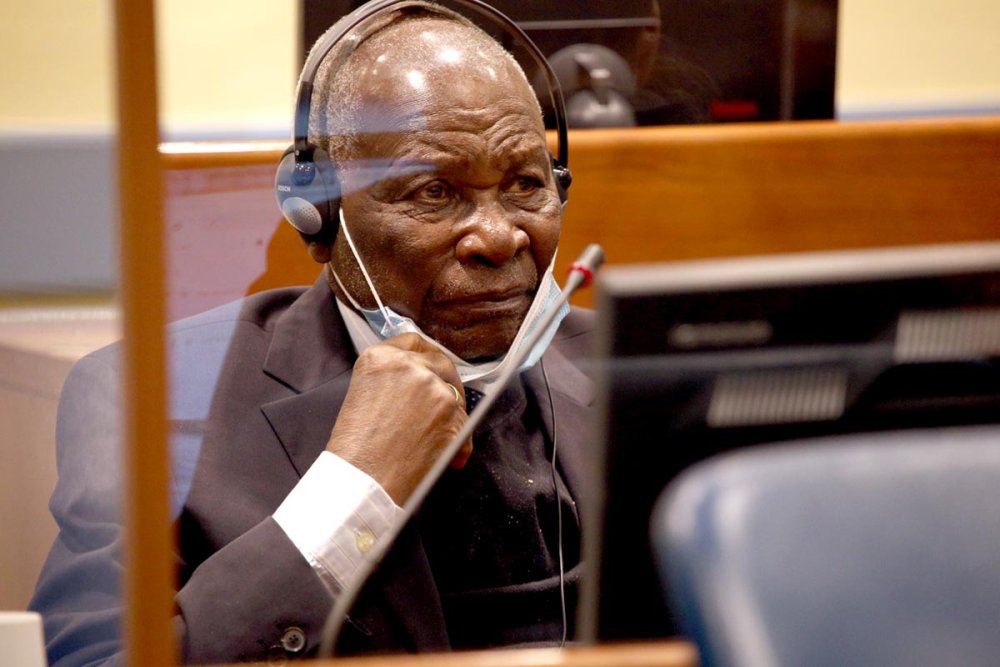
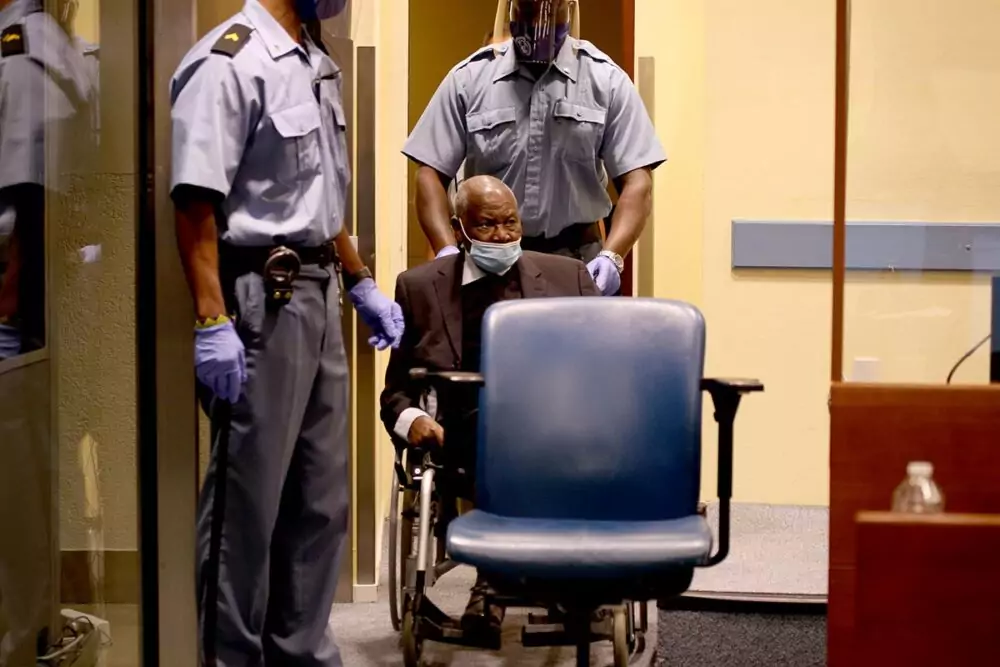
Report has confirmed that Kabuga is died while sitting in a wheelchair.The examination concluded that Kabuga died from natural causes, mainly associated with age-related health conditions.
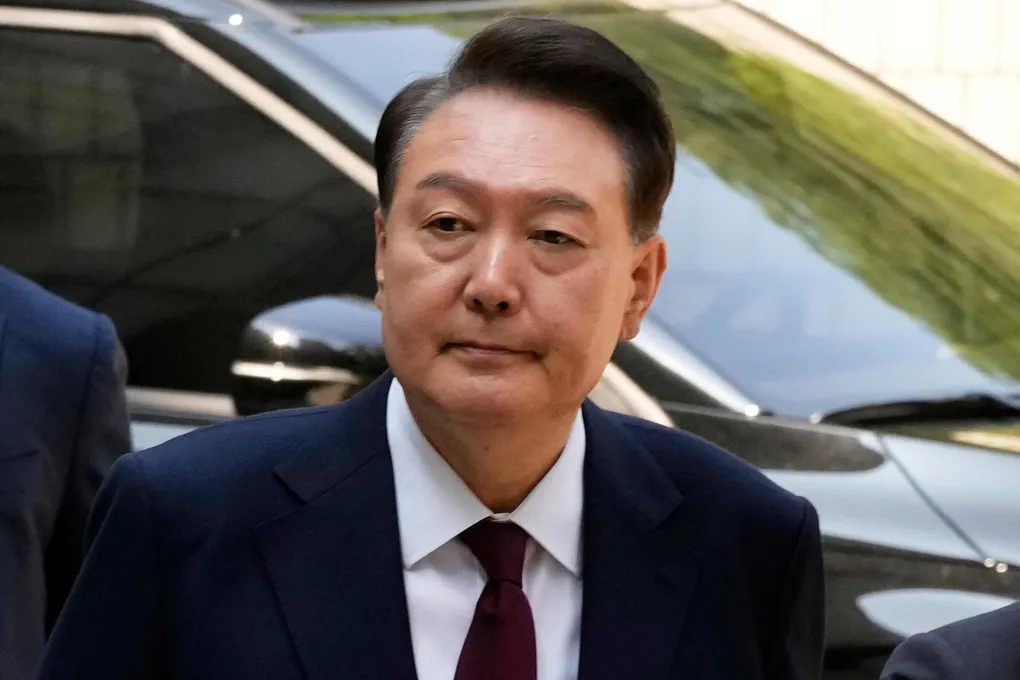
The Supreme Court delivered its final verdict on Yoon, saying the lower court committed no error in its application of legal principles.
It marked the top court’s first ruling on Yoon since the ousted leader’s martial law declaration in December 2024.
On April 29 this year, the Seoul High Court overturned a lower court’s ruling over Yoon’s obstruction of arrest, lengthening his prison term from five to seven years.
The team of Cho Eun-suk, an independent counsel who led investigations into Yoon’s insurrection and other charges, had sought a 10-year prison sentence in the first and second instances.
Yoon was charged with abusing the presidential security service to hinder the anti-corruption agency from executing its arrest warrant in January 2025.
The Corruption Investigation Office for High-ranking Officials (CIO) was once thwarted in its attempt to arrest Yoon when the presidential security service formed human shields and bus blockades to prevent investigators from entering the presidential residence.
Yoon was also accused of abusing his power to block nine cabinet members from exercising their rights to deliberate on the martial law declaration by calling a selective cabinet meeting before the declaration.
He faced charges of creating and later destroying a fabricated declaration document to make the declaration appear legal after the martial law was lifted, while ordering the dissemination of a press guidance containing a false claim that there was no intention to disrupt the constitutional order through the martial law.
The emergency martial law was declared by Yoon on the night of Dec. 3, 2024, but was revoked hours later by the National Assembly.
He was indicted under detention in January 2025 as a suspected ringleader of the insurrection, becoming the first sitting president to be arrested and indicted.
Yoon was charged with abusing the presidential security service to hinder the anti-corruption agency from executing its arrest warrant in January 2025.
The survivors shared their views during a visit by a group of journalists who cover justice-related stories, under Pax Press.
Dr. Eugène Rwamucyo, a Rwandan living in France, was convicted of genocide crimes committed against the Tutsi. During the genocide, he worked as a the head of the former National University of Rwanda’s health facility, formerly known as CUSP.
Historical accounts from Butare and surrounding areas describe Rwamucyo as a key figure in atrocities that earned him the nickname “Dr. Caterpillar,” due to his alleged involvement in mass killings of Tutsi in former Gishamvu and Ngoma communes.
Witnesses say he supervised acts of brutality, including the disposal of victims in mass graves while some were still alive, in places such as Nyumba Catholic Parish, Nyakibanda Major Seminary, the university arboretum, behind the former Butare prefecture offices, at Taba, and at Matyazo health facility.
A survivor from Gishamvu Sector told IGIHE that perpetrators in the area had been trained to mutilate victims’ tendons to prevent escape and prolong suffering.
“The Interahamwe were taught to cut the tendons in people’s feet so that they could not run away, find food, and other things, so that they would die painfully. These are the people who were found at sites where victims had been attacked with grenades or shot. Then the machine [caterpillar] brought by Dr. Rwamucyo would dig mass graves, collect both the dead and those still breathing, and bury them together,” she said.
She added that she was troubled by Rwamucyo’s continued denial of the allegations, noting that survivors believe his original sentence was too lenient and that he should be imprisoned for life.
Another witness, who said he saw Dr. Rwamucyo at Matyazo health centre and at the former Butare prefecture during the genocide, testified that he was involved in mobilising Hutu extremists against Tutsi civilians.
He said he personally saw Rwamucyo at the prefecture referring to Tutsi refugees as “filth” and calling for their removal.
“He said, [Rwamucyo], ‘how will I do my work with this filth here,’ and his intention was actually to have them killed,” he said.
The witness also recounted seeing Rwamucyo ordering the burial of Tutsi victims at Matyazo, including those who were not yet dead, and encouraging perpetrators to rape Tutsi women, calling for a stronger sentence to ensure justice for survivors.
The President of Ibuka in Gishamvu Sector, Rutazigwa Gérard, said Rwamucyo inflicted deep suffering on residents, noting that many victims were buried in mass graves.
“Besides those who had parts of their bodies cut, there were also those who were hiding among corpses covered in blood but not yet killed. Due to hunger and suffering, they lost strength and were also thrown into mass graves and buried by the machine he brought,” he said.
In his defense, Dr. Rwamucyo has argued that, as a health and hygiene official at the time, the use of machinery to bury bodies was intended to prevent disease outbreaks and speed up public health response, denying that anyone was buried alive.
The Executive Secretary of Gishamvu Sector, Niyibizi Boniface, said informing survivors about genocide perpetrators and how their cases are being handled abroad helps bring them emotional relief.
“Survivors carry grief and pain, although they have not been overwhelmed by sorrow. When we look at the more than 60,000 remains resting at the Nyumba memorial, and consider that Gishamvu Sector has about 15,000 residents, it immediately shows the magnitude and brutality of the genocide,” he said.
He added that local authorities remain committed to preserving genocide history, including digitising records so that the truth is never forgotten.
Dr. Eugène Rwamucyo is currently appealing his case before the French Assize Court, where he was previously sentenced to 27 years in prison.The CUSP facility headed by Dr. Rwamucyo during the Genocide against the Tutsi is located in Huye town.More than 40,000 people were killed at Nyumba Catholic Parish during the 1994 Genocide against the Tutsi, with survivors alleging that Dr. Rwamucyo was involved in the atrocities.