Originally scheduled for January 12, this marks the third delay, with the latest rescheduling set for February 9.
The latest delay is triggered by a general meeting held at Nyarungenge Intermediate Court.
According to a statement signed by the President of Nyarugenge Intermediate Court, Mr. Adolphe Udahemuka, and posted in the usual premises of the court, all scheduled activities have been suspended.
The document also indicates that those in need of judicial services can request them through the electronic IECMS system used by the courts.
Kazungu, 34, from Kicukiro District in Kigali, was arrested by the Rwanda Investigation Bureau (RIB) in September 2023, facing 10 charges including murder, rape, and desecration of human remains.
The defense cited insufficient preparation time during the previous hearing on January 12, with the court supporting the postponement to ensure the defendant’s right to legal representation and adequate defense preparation time.
The trial involves individuals seeking compensation for their losses, and some were present at the court but were informed of the delay.
The decision to utilize Skype for the trial was made to streamline proceedings.
As the trial commenced, the judge announced that the defense lawyer, Murangwa Faustin, had requested a postponement, citing insufficient time to adequately prepare the defense. Lawyer Murangwa clarified that the Rwanda Bar Association had appointed him to represent Kazungu shortly before the proceedings, leaving him with limited time for thorough preparation.
Kazungu Dennis, appearing via Skype, supported this request, underlining the necessity for additional time to ensure meticulous preparation and a fair trial.
Acknowledging the gravity and complexity of the crimes in question, the prosecution recognized the accused’s right to sufficient preparation time. Shyirambere Augustin’s representative, one of the complainants, accepted the postponement, expressing a desire for a prompt rescheduling.
The court has now rescheduled the trial for March 2, 2024, at 9 a.m.
Kazungu’s trial was initially slated to commence on January 5, 2024. At the prosecution’s request, it was delayed, primarily to consolidate two separate cases against him in this court.
Facing charges on ten counts, including voluntary manslaughter, torture, forced rape, concealing corpses, threats, and illegal possession of a firearm, Kazungu also stands accused of burglary, criminal trespass, forgery, and unauthorized access to computer data.
Investigations against Kazungu originated from allegations of the murder of 14 individuals and the forced rape of a woman, leading to his arrest on September 5, 2023.
Munyemana is the sixth suspect to face trial in France over the genocide, during which over 1 million Tutsis were brutally killed. The trial, held at the Assize Court in Paris over six weeks, commenced almost three decades after a complaint was filed against Munyemana in Bordeaux in 1995.
Impassive as the verdict was handed down, Munyemana was immediately incarcerated. His lawyers plan to appeal, criticizing the decision as “unacceptable” due to major contradictions in the defense testimonies, which they argue leave “room for doubt.”
The public prosecutor had sought a 30-year sentence, emphasizing that Munyemana’s choices displayed “the traits of a genocidaire.” Munyemana was accused of supporting the interim government by drafting a letter encouraging the massacre of Tutsis. He also faced allegations of aiding in setting up roadblocks and maintaining inhumane conditions before the killings in the Rwandan prefecture of Butare.
During the trial, Munyemana maintained his innocence, asserting that he had been a moderate Hutu trying to “save” Tutsis by offering them “refuge” in local government offices.
The judge, reading the verdict, stated that Munyemana was part of a group that “prepared, organized, and steered the genocide against the Tutsi on a daily basis.”
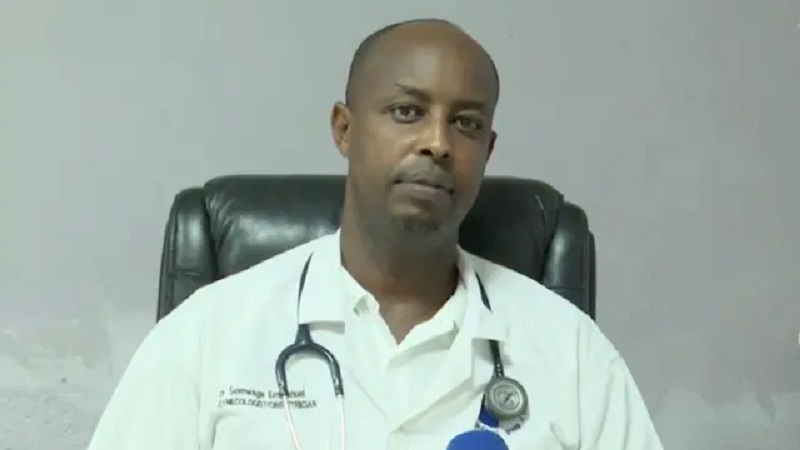
Munyemana arrived in France in September 1994, rebuilding his life in the country’s southwest. He worked as an emergency doctor and later as a geriatrician before his recent retirement. He was close to Jean Kambanda, the prime minister of the interim government, who is serving a life sentence imposed by the International Criminal Tribunal for Rwanda.
Munyemana’s case is the latest in a series of trials in France for alleged participants in the genocide, reflecting the country’s commitment to pursuing justice for those implicated in the Genocide.
The panel of five judges led by Deputy Chief Justice Richard Buteera received written submission and arguments from gay rights activists and civil society organizations seeking to declare the new legislation, which President Yoweri Museveni signed into law in May 2023, “null and void.”
Buteera said in court that the judges will deliver the court’s judgment on notice to the petitioners and government Attorney General defense lawyers.
At the court’s direction, all the parties filed written submissions and agreed not to introduce any new documents or pleadings during the hearings.
“The court will notify us when they are ready. The court has an opportunity to decide whether the constitution of Uganda affords all Ugandans, including LGBTQI+ (lesbian, gay, bisexual, transgender, queer and intersex) individuals, equal protection under the law,” Nicholas Opiyo, one of the petitioners’ lawyers, told the press after submission of the written statements.
Bunyoni, a former general who assumed the role of Prime Minister in July 2020 but was dismissed in September 2022, faced the court session at the prison where he was held. His removal occurred shortly after President Evariste Ndayishimiye issued a warning about a potential coup against his administration.
The court, acting on prosecution requests, not only sentenced Bunyoni to life imprisonment but also directed the authorities to seize four houses, buildings, a land parcel, and 14 vehicles owned by him. Among the five others in the trial, the main co-defendants—a police colonel and a senior intelligence agent—received sentences ranging from three to 15 years, while a seventh defendant, a driver, was acquitted, according to the judicial source.
During the trial, the 51-year-old Bunyoni pleaded not guilty to all charges, citing a lack of evidence.
He was a prominent figure in the ruling CNDD-FDD party and a close ally of former President Pierre Nkurunziza.
The “Migration and Economic Development Partnership,” initiated in April 2022, aimed to transfer individuals unlawfully present in the UK to Rwanda.
Delays in implementing the plan occurred when organizations advocating for migrants’ rights filed a complaint. This led to the Court of Appeal reviewing the case, ultimately ruling against the deportation of asylum seekers to Rwanda.
Despite the court’s decision, UK Prime Minister Rishi Sunak consistently defended the deportation plan, emphasizing Rwanda’s successful management of the refugee and migrant crisis, prompting the appeal to the Supreme Court.
However, the highest court’s unanimous rejection of the government’s deportation plans deals a blow to Rishi Sunak’s key immigration policy. The ruling, issued on Wednesday, November 15, 2023, upheld the Court of Appeal’s decision, expressing concerns about the ‘real risk of wrongful determinations and potential ill-treatment upon return to their countries of origin’.
The ruling followed the release of an incendiary letter by the sacked home secretary, Suella Braverman, accusing the prime minister of breaking an agreement to insert clauses into UK law that would have preempted legal challenges under the European Convention on Human Rights (ECHR) and the Human Rights Act.
Braverman warned of the lack of a “credible plan B” and cautioned that losing in the supreme court would result in a wasted year and parliamentary efforts. A meeting of hard-right Conservative MPs was anticipated to support calls to leave the ECHR.
Sir John Hayes, a close ally of Braverman, suggested tabling a narrow piece of legislation to enact the Rwanda plan before Christmas in the event of losing. Later, this could be included in the Tory election manifesto alongside withdrawing from the ECHR.
However, Rwanda maintains that it will remain committed to its international obligations, as a country with international repute in the treatment of refugees.
The charges against the trio relate to the violation of public tender procedures and the misuse of public resources. The prosecution had appealed the lower court’s decision, citing reasons such as overlooked critical evidence and premature completion of the investigation.
During the appeal ruling on November 9, the presiding judge noted that the prosecution failed to explain how the defendants, once released, would interfere with the ongoing investigation. The court observed the defendants’ consistent compliance with orders, leading to the conclusion that their detention was unnecessary. Consequently, the court ruled to grant them bail pending the trial.
In their appeal, the prosecution contested the lower court’s decision on various grounds.
Regarding Harelimana, they argued that the Primary Court had dismissed an audio recording submitted as evidence, in which Harelimana purportedly claimed authority to hire and fire anyone in the institution. The court considered the recording inadmissible, citing alleged lack of consent during its acquisition.
The prosecution also challenged the consideration of only audio evidence for the charge of influence peddling, claiming that other factors implicating Harelimana were disregarded.
Concerning Hakizimana, they asserted that the Primary Court overlooked evidence linking him to the crimes for which he was prosecuted.
In Gahongayire’s case, the prosecution argued against her dismissal as a suspect, contending that her signing of a delivery note for unreceived items led to improper payments by RCA.
Despite the prosecution’s request to remand the suspects for further investigation, the defendants pleaded not guilty, emphasizing their cooperation with reporting obligations and adherence to bail conditions, such as restricted travel beyond Kigali.
Emmanuel Gasana was suspended from his role as the Eastern Province Governor by the Prime Minister on October 25, one day prior to his arrest on October 26.
Faustin Nkusi, the prosecution spokesperson has said that the case file, received from the Rwanda Investigation Bureau (RIB) on October 30, was formally submitted to the court on November 6.
Nkusi emphasized that Gasana is facing two charges: soliciting and acceptance of illegal benefits, as well as the abuse of his official functions. These offenses are subject to the legal provisions outlined in Articles 4 and 15 of the anti-corruption law.
Gasana’s arrest, according to the Rwanda Investigation Bureau, stemmed from an investigation into alleged criminal activities he is suspected of committing during his tenure as Eastern Province Governor, allegedly for personal gain.
Gasana served as the Eastern Province Governor for two and a half years, having been appointed to the position by President Paul Kagame on March 15, 2021.
Prior to this role, he had also held the position of Governor of the Southern Province.
Additionally, he had previously served as the Commissioner General of the Rwanda National Police (RNP) and later as the Inspector General of Police between 2009 and 2018. Before transitioning to the RNP, Gasana held the rank of Brigadier General in the Rwanda Defence Force (RDF) and had served as the acting Chief of Logistics for the army.
He was found guilty of crimes against some Miss Rwanda contestants.
As he read the verdict on Friday 13th October 2023, the presiding judge emphasized that the High Court considered testimonies from victims and witnesses before the Investigation and Prosecution bodies, rather than relying on notarized letters and courtroom testimonies where the victims denied abuse.
This approach aligned with relevant legal provisions and prior case verdicts. The prosecution had initially sought a 16-year sentence, but a shorter sentence was given as it was the defendant’s first offense.
It’s unclear if an appeal is permitted. In 2022, the Nyarugenge Intermediate court acquitted Ishimwe due to insufficient evidence, prompting a prosecution appeal based on the disregard of crucial evidence. Ishimwe had pleaded not guilty from the beginning.
Karongozi made these comments on October 12, 2023, during the trial of the two suspects at the Court of Assise in Belgium. Pierre Basabose was notably absent from the proceedings due to health issues, similar to the trial’s opening day on Monday.
In a confrontational tone, Flamme expressed his disbelief in the events that transpired in Rwanda and labeled them as fabricated facts, attributing the turmoil to the RPF Inkotanyi.
He further claimed that four genocides had occurred in Rwanda, citing the Genocide against the Tutsi, ‘Genocide against the Hutu’, ‘Genocide against the Twa’, and ‘another targeting people from the Democratic Republic of Congo’.
The presiding judges swiftly interrupted Flamme, arguing that his statements were veering off-topic and delving into an attack on Rwanda’s leadership rather than focusing on his clients’ defense.
In an interview with IGIHE, Lawyer Karongozi raised concerns about Basabose’s mental health conditions and the apparent inconsistency in his request to be represented while also claiming to be unable to stand trial due to illness. Karongozi emphasized that defending the suspects should not imply assuming responsibility for the actions they are accused of committing.
Karongozi further pointed out that Flamme’s statements do not reflect the views of his client, Basabose. He voiced his suspicions about whether Flamme’s beliefs aligned with his statements, as they appeared to be a form of genocide denial.
“This becomes the sixth trial handled by Belgium involving suspects accused of a role in the Genocide against the Tutsi, underlining the country’s commitment to pursuing and prosecuting individuals associated with this tragic event. Though not the primary architects, Basabose and Twahirwa played significant roles in the Genocide against the Tutsi,” Karongozi stated.
He also called for heightened measures to combat genocide denial, which he noted was manifesting in various forms.
François Kayijuka, an observer following the trial, expressed his reservations about Flamme’s conduct, particularly his attempt to attribute blame to RPF Inkotanyi, yet it is credited with halting the Genocide.
Kayijuka remarked, “Flamme seems unwilling to acknowledge that the Genocide was perpetrated against the Tutsi; instead, he refers to it as a Genocide against Rwandans. His assertion that there were four genocides in Rwanda appeared to trigger frustration among judges and others present, not just among Rwandans.”
Furthermore, Kayijuka questioned Flamme’s motives, suggesting that the defense lawyer was propagating Genocide ideology rather than genuinely representing the defendants.
Both Basabose and Twahirwa are facing charges related to genocide and war crimes, with Twahirwa additionally accused of rape. The trial is expected to continue from October 9 to December 8.