
The visit follows a series of high-level exchanges and agreements that have expanded cooperation beyond diplomacy into aviation, logistics, technology, infrastructure, trade and investment.
For Rwanda, the relationship offers an opportunity to deepen access to the Gulf and attract investment from Omani businesses. For Oman, Rwanda provides a foothold in a fast-growing East African market and a potential gateway into the wider region.
The two countries established diplomatic relations in 1982 and have maintained ties through non-resident diplomatic missions. Oman is currently represented in Rwanda through its embassy in Nairobi, while Rwanda handles its diplomatic representation to Oman through its embassy in Cairo.
But the relationship has gained fresh momentum in recent years.
From diplomacy to economic cooperation
A major step came in January 2026, when Rwanda’s Foreign Affairs Minister Olivier Nduhungirehe led a high-level delegation to Muscat.
The visit produced agreements covering aviation, logistics, dry ports, supply chains, digital infrastructure, data centres, cloud computing and artificial intelligence.
One of the agreements brought together the Rwanda Development Board and Oman Airports Management Company, with the two sides agreeing to cooperate on airport development and management, exchange expertise and explore investment opportunities in aviation infrastructure.
Another cooperation programme focuses on logistics services, including the development and operation of dry ports and supply-chain services.
For Rwanda, which is landlocked and relies heavily on regional transport corridors to move imports and exports, logistics is a particularly important area of cooperation.
The two countries had already signed a memorandum of understanding on telecommunications, information technology and digital-economy development in April 2025, during Oman’s participation in the Global Summit on Artificial Intelligence in Africa in Kigali.
A new air bridge
Perhaps the most visible sign of the growing relationship is now in the sky.
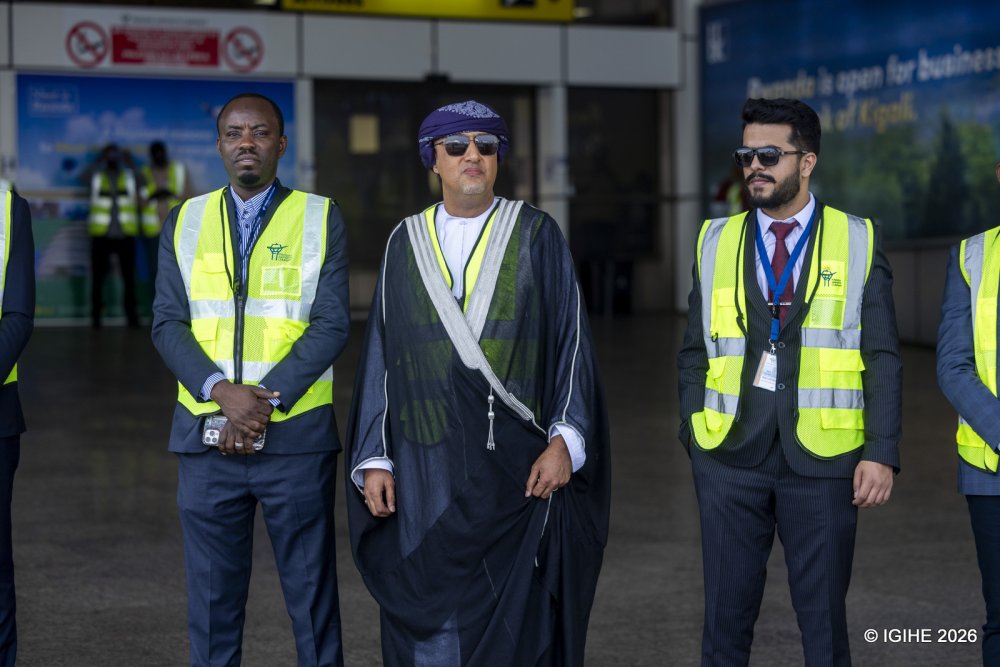
SalamAir launched direct flights between Muscat and Kigali on July 21, 2026, creating a direct connection between Rwanda and Oman.
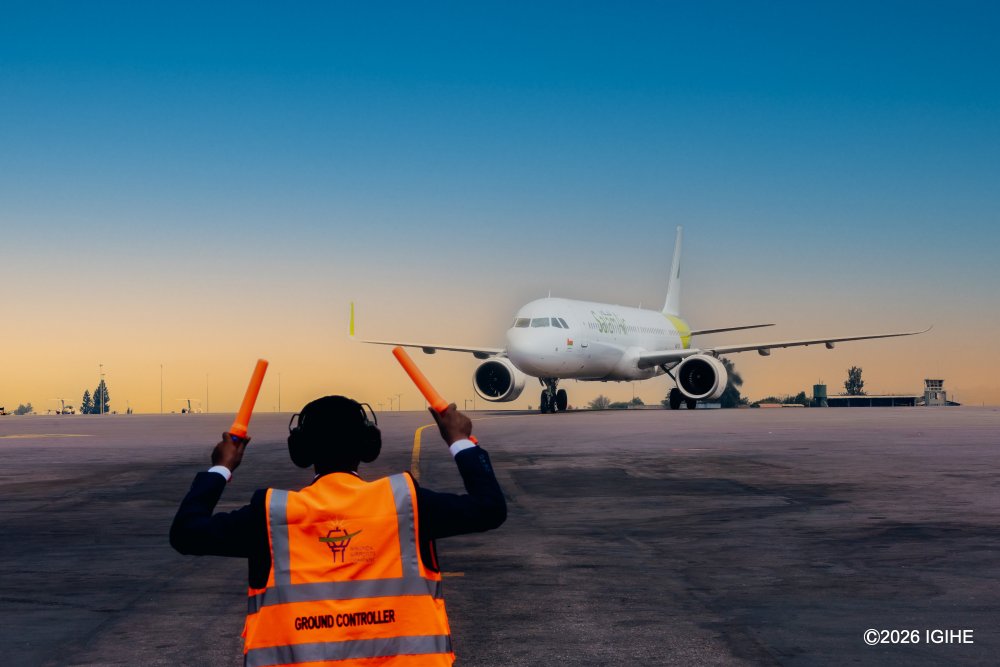
The airline operates the route twice a week, with a flight time of about five hours. The connection is expected to facilitate tourism, trade, investment and business exchanges between Rwanda, Oman and the wider Gulf region.
The new route followed an Air Services Agreement signed by the two countries in 2023 that entered into force in January 2026. Oman Air had also announced plans earlier this year to introduce direct Muscat-Kigali flights.
Beyond making travel easier, the route could become an important piece of economic infrastructure.
Direct flights reduce the time and complexity involved in moving businesspeople, tourists and investors between the two markets. They can also make it easier for companies to explore opportunities before committing capital.
For Kigali, the connection strengthens its ambition to position itself as a regional aviation and business hub. For Muscat, it creates another link to East Africa and a market with growing tourism and investment activity.
Where the investment opportunities lie
The two countries have identified a wide range of sectors in which they could deepen cooperation.
These include energy, renewable energy, mining, logistics, aviation, hospitality, healthcare, education and technology.
Rwanda is seeking investment that can support its transformation from an economy traditionally dependent on agriculture towards one increasingly driven by services, technology, tourism, finance and industry.
The country is also positioning itself as a regional centre for conferences, investment and business services.
Oman, meanwhile, is seeking to diversify its economy beyond oil and gas while expanding its international economic partnerships.
That creates potential areas of complementarity.
Omani companies have already shown interest in the Rwandan market.
In March 2020, more than 80 Omani companies participated in the Omani Products Exhibition, or OPEX, in Kigali. The companies showcased products including food, plastics and construction materials as they explored opportunities in the Rwandan market.
The exhibition also resulted in commercial agreements involving Omani industrial and pharmaceutical companies.
The latest push could take the relationship beyond individual commercial deals towards larger cooperation in infrastructure, logistics, technology and investment.
Why Oman matters to Rwanda
Oman occupies a strategically important position on the Arabian Peninsula, overlooking the Gulf of Oman and the Strait of Hormuz, through which around 20% of the world’s oil supplies pass.
Its location gives it connections to markets in the Gulf, Asia and beyond.
For Rwanda, the relationship offers additional access to Gulf markets and international destinations connected through Muscat. For Oman, Rwanda provides an entry point into an East African economy that is positioning itself as a regional business and investment hub.
The two countries therefore have potentially complementary economic interests.
From trade to logistics
The January agreements specifically included cooperation on dry ports and supply-chain services, with the two countries seeking to exchange expertise and improve logistical integration.
This is particularly relevant to Rwanda because of its position at the heart of the Great Lakes region.
As a landlocked country, Rwanda depends on transport corridors linking it to ports in neighbouring countries. Improving logistics can reduce the cost and time involved in moving goods, making the country more competitive as a regional distribution and investment hub.
Oman’s experience as a maritime and logistics centre could therefore provide opportunities for knowledge exchange and commercial partnerships.
The cooperation also comes as Rwanda continues to invest in infrastructure intended to strengthen its role in regional trade.
Technology adds another dimension
The relationship is also moving into areas that are less visible than trade but potentially more transformative.
Data centres, cloud computing and artificial intelligence are now part of the bilateral cooperation agenda.
The January agreement envisages collaboration in infrastructure, skills development, knowledge exchange and policy development in these fields.
This fits Rwanda’s broader ambition to build a knowledge-based and innovation-driven economy under Vision 2050.
For Oman, partnerships in Africa’s emerging digital markets can support its own economic diversification ambitions.
The result is a relationship that is no longer defined only by conventional trade in goods. It increasingly encompasses the digital infrastructure needed to support modern economies.
A relationship built over decades
Despite the recent acceleration, Rwanda-Oman relations are not new.
Diplomatic ties date back to 1982, while the two countries have historical links connected to Oman’s long-standing commercial and cultural presence in East Africa.
Political contacts have continued alongside the growing economic relationship.
Oman’s Foreign Minister, Sayyid Badr bin Hamad Al Busaidi, met Nduhungirehe in New York in September 2025 on the sidelines of the United Nations General Assembly to discuss bilateral relations and issues of mutual interest.
Kagame’s visit therefore comes at a moment when Rwanda and Oman are seeking to turn decades of diplomatic relations into a more practical and commercially focused partnership. It remains to be seen what new agreements will be signed during the visit and what new opportunities and results it will bring for the two countries.
Leave a Reply