This dangerous ideology intensified during the genocide, with the aim of accelerating the extermination of Tutsis across Rwanda. In just 100 days, from April 7 to July 4, 1994, more than one million Tutsis were killed simply because of their identity.
The Habyarimana regime deliberately promoted hateful language and stereotypes intended to dehumanize Tutsis and strip them of their dignity. They were increasingly accused of being accomplices of the RPF Inkotanyi and became targets of systematic persecution.
After learning that the commander of the RPA forces, Maj Gen Fred Gisa Rwigema, had been killed during the liberation struggle on October 2, 1990, authorities in the former Gisenyi Prefecture organized residents to participate in a mock burial ceremony. People were instructed to carry banana leaves and tree branches symbolizing Rwigema’s body.
In Rugamba Sector, within the former Kayove Commune, local leaders, teachers, students, and security personnel marched to the Butana River, where they dug pits and buried the bundles. Afterwards, celebrations were held to mark what they described as the “burial” of Rwigema.
Tensions escalated further following the deployment of a third battalion of 600 RPA soldiers to the former parliamentary building, known at the time as the CND, on 28 December 1993.
The soldiers had been assigned to protect RPF Inkotanyi politicians who were preparing to take up positions in state institutions under the Arusha Peace Accords.
Extremists within Habyarimana’s government were angered by the presence of the RPA soldiers at the CND.
Unable to attack them directly, they instead targeted Tutsis across the country, killing them while claiming they were “sending them to join their relatives” at the CND.
It was in this context that several locations and mass graves throughout Rwanda came to be known as “CND.”
Among them were sites in Kabuga in present-day Gasabo District, Rutabo in Ntongwe, and Cyugaro marsh in Ntarama, Bugesera District.
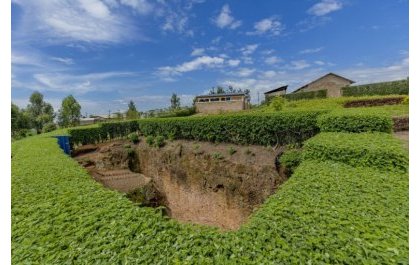
Retired Lt Col Régis Rurangirwa, who was among the RPA soldiers stationed at the CND and hails from Ntongwe, told IGIHE that the mass grave in Rutabo was dug in 1992 by teacher Jacques Habimana, then president of the extremist CDR party in Ntongwe Commune.
“It is a pit where many people were thrown,” he explained. “People killed in Ntongwe Commune, those murdered in Nyamukumba, and others captured later were dumped there. That is why they called it CND claiming they were being sent to join their relatives at the CND.”
Lt Col (Rtd) Rurangirwa further explained that a man known as Nsabimana, nicknamed “Pilato,” had placed a chair near the pit beneath a large tree, where he would oversee the killing of Tutsis before their bodies were thrown into the grave.
“That man called himself Pilato,” Rurangirwa said. “There was a large tree near the pit, and in 1994 they placed a chair there. Every person they intended to kill was brought before him and humiliated. He would pronounce judgment while holding a stick and weapons. He considered himself more powerful than everyone else.”
He added that it was not until 2014 that the bodies of Tutsis dumped into the pit were exhumed and given a dignified burial at Ruhango District Genocide Memorial.
Historian and Senator Prof. Jean Pierre Dusingizemungu told IGIHE that bars frequented by Tutsis and other places associated with them were often labeled “CND” in an attempt to portray them as connected to the RPA soldiers stationed at the parliament building.
“In other words, it was a way of identifying such places as centers associated with Tutsis,” he explained. “The pits they dug were symbolically linked to the CND. They used to fire bullets at the CND building, believing they were targeting Inkotanyi soldiers inside. There were both soldiers and politicians there.”
He continued, “Any place they suspected was frequented by Tutsis was immediately labeled CND so they could justify attacking or killing people there. They wanted to create the impression that such places were legitimate targets.”
Today, locations that were labeled “CND” remain important historical sites linked to the Genocide against the Tutsi and are preserved as memorials. In Ntarama, annual commemorations are held in honor of the victims killed there, while the mass grave in Rutabo has been protected and preserved as a genocide memorial site.


Leave a Reply