The conference, titled “Belgium’s Colonial Injustice and the 101-Year Path to Reparations,” was held on August 21 and organized by the Baku Initiative Group (BIG).
The discussions took place on August 21 during a conference titled “Belgium’s Colonial Injustice and the 101-Year Path to Reparations,” organized by the Baku Initiative Group (BIG).
The meeting brought together representatives of Rwanda, Burundi, the DRC, Morocco and South Africa, alongside UN Human Rights Council experts, diplomats, parliamentarians, human rights advocates, historians and international law experts.
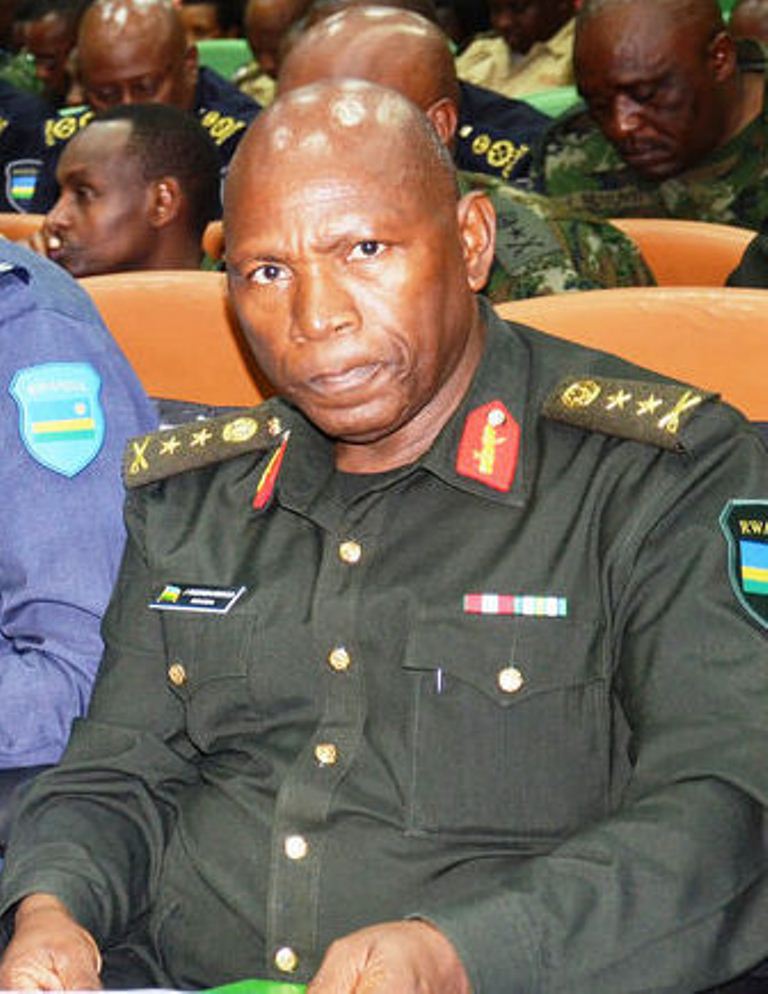
Rwanda was represented by Lt Gen (Rtd) Charles Kayonga, the country’s ambassador to Türkiye, who also represents Rwanda in Azerbaijan, Kazakhstan and Lebanon.
Participants examined the historical, political, economic and social consequences of Belgian colonial rule and discussed whether its legacy continues to shape the region. They also considered the restoration of historical justice, reparations and the return of cultural heritage taken from Central Africa during the colonial period.
A colonial legacy across the Great Lakes
Rwanda, Burundi and the DRC came under Belgian colonial rule in the aftermath of the First World War. Belgian administration of Ruanda-Urundi, which comprised present-day Rwanda and Burundi, began in 1916 after Germany lost control of the territory.
The Belgian colonial period formally ended as the countries gained independence between 1960 and 1962, but participants at the Baku conference argued that its effects have continued to be reflected in political, economic and social structures.
In Rwanda, the country had first been placed under German rule in the late 19th century, following the European partition of Africa associated with the Berlin Conference of 1884–1885.
Belgian rule later introduced policies that placed particular emphasis on economic production for colonial interests, including export-oriented agriculture and compulsory labour.
The colonial administration also played a significant role in reshaping Rwanda’s social and political structures. One of the most contested aspects of this period was the way Belgian authorities classified Rwandans along ethnic lines and institutionalized those classifications through identity documents.
Those policies contributed to the entrenchment of divisions that later continued under successive post-independence governments.
The colonial legacy remains a subject of debate in Rwanda, particularly because of the way policies introduced during the Belgian period were later maintained and adapted by governments after independence.
Rwanda became independent on July 1, 1962, while Belgian influence remained present during the early years of the new state.
The political divisions that had been reinforced during the colonial period continued into the First and Second Republics and formed part of the broader historical context preceding the 1994 Genocide against the Tutsi.
Calls for historical justice
At the Baku conference, BIG Executive Director Abbas Abbasov said addressing colonial crimes should go beyond financial compensation.
He called for recognition of historical responsibility, official apologies, reparations and legal safeguards, noting that the DRC, Rwanda and Burundi have long awaited concrete action.
Abbasov said reparations should be pursued transparently and in accordance with international law. Rwanda’s Ambassador Charles Kayonga said colonialism had left a lasting legacy that continues to affect former colonies.
He underscored the need to address that legacy in discussions on responsibility and reparations.
Participants also discussed the appropriation and restitution of cultural heritage from the colonial period, noting that Belgium’s Royal Museum for Central Africa holds around 85,000 objects from Central Africa.
The conference further highlighted the five forms of reparation set out in UN General Assembly Resolution 60/147: restitution, compensation, rehabilitation, satisfaction and guarantees of non-repetition.
The discussions come as debates continue across Africa over the historical consequences of slavery and colonialism, with countries and organizations increasingly examining how historical injustices can be addressed through recognition, restitution and reparations.
Participants at the Baku conference called for greater international recognition of colonial-era injustices, stronger legal mechanisms and more systematic discussions on reparations.
They stressed that restoring historical justice is important not only for addressing the past, but also for building a fairer international system for future generations.
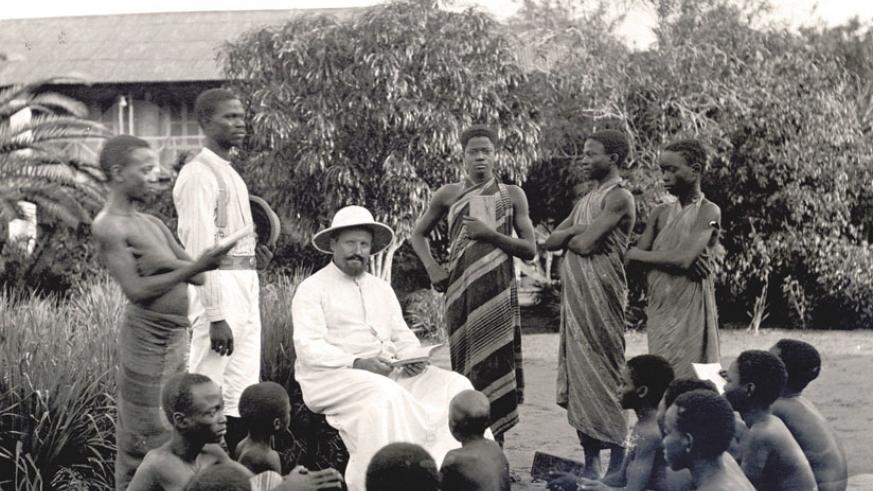
Belgian colonial authorities are accused of imposing policies in Rwanda to advance their own interests.
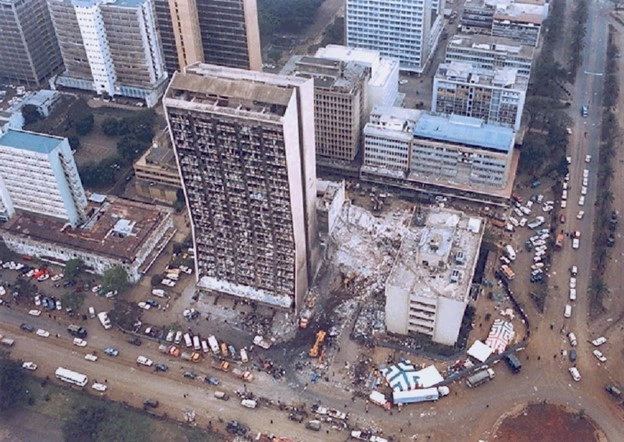
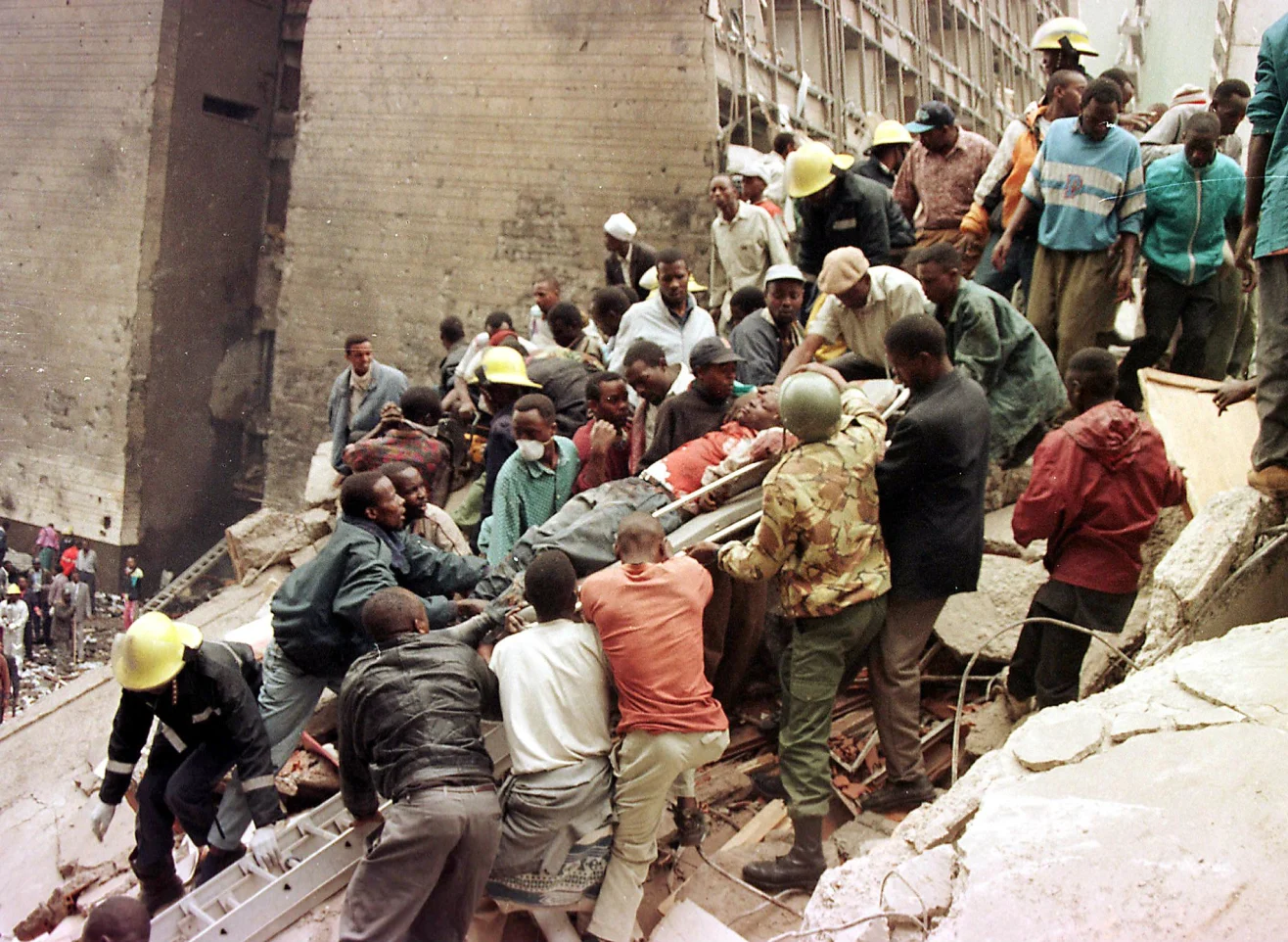
By the time the dust settled, 224 people were dead, including 12 Americans, and more than 4,500 were wounded. Nairobi accounted for the vast majority of the casualties: 213 killed and roughly 4,000 injured, most of them Kenyan office workers, students and bus commuters who had nothing to do with American diplomacy. Dar es Salaam recorded 11 dead and 85 injured.
What has aged worse than the rubble is how avoidable much of it was. Government investigators, and the ambassador who ran the Nairobi mission that day, later laid out in painstaking detail how a warning that reached Washington months earlier went unheeded, and how the embassy itself sat exposed on one of the city’s busiest corners, with no buffer between the public street and the chancery walls.
Nairobi accounted for the vast majority of the casualties: 213 killed and roughly 4,000 injured, most of them Kenyan office workers, students and bus commuters.
Al-Qaeda’s justification for the attacks was laid out months earlier. Osama bin Laden had grown increasingly hostile toward Washington over the US military presence in Saudi Arabia and Somalia, and sought to force American personnel out of the region.
In February 1998, he and Ayman al-Zawahiri’s Egyptian Islamic Jihad announced a “World Islamic Front” and issued a fatwa calling on Muslims to kill Americans and their allies “wherever and whenever they find them”. Prosecutors later called the East Africa bombings his first major attempt to carry that out. Bin Laden was indicted in the US that November.
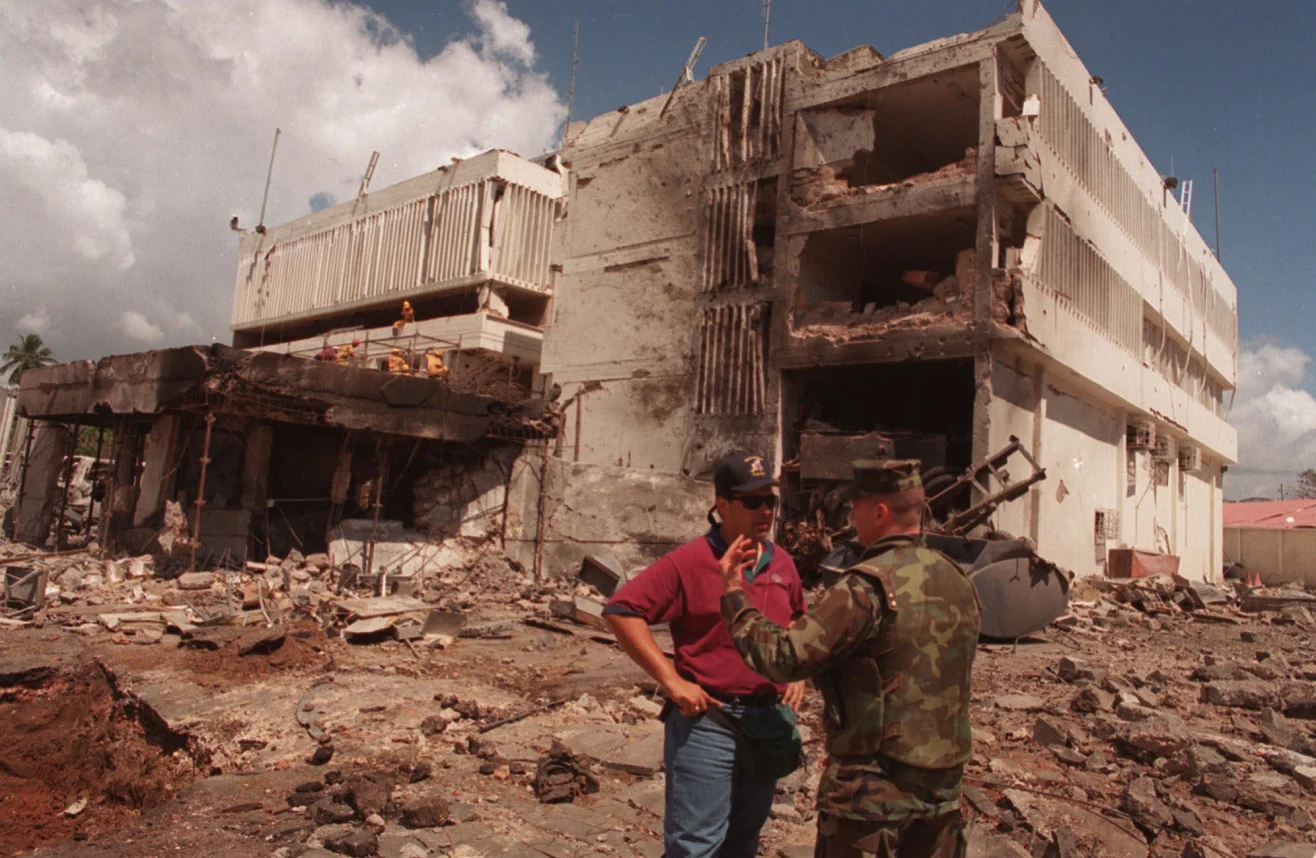
The Tanzania blast went off nearly simultaneously, to the one in Kenya on August 7, 1998, leaving 11 people dead.
A cable that went unanswered
Prudence Bushnell, then US ambassador to Kenya, had flagged the danger well before the bombing. In a cable to Washington on December 24, 1997, more than seven months before the attack, she laid out reports of terrorist and criminal threats against the mission and stressed that the embassy’s lack of standoff distance from the road left it acutely exposed. She asked for backing to build a new, more secure chancery.
The response, in January 1998, was that the post’s existing “medium” threat rating for political violence and terrorism was appropriate, and that the Bureau of Overseas Buildings Operations was not planning a new office building. Washington offered a security assessment team instead, and the exchange ultimately produced a reduction in embassy staff, with some personnel reassigned to Pretoria rather than the building itself being replaced or moved.
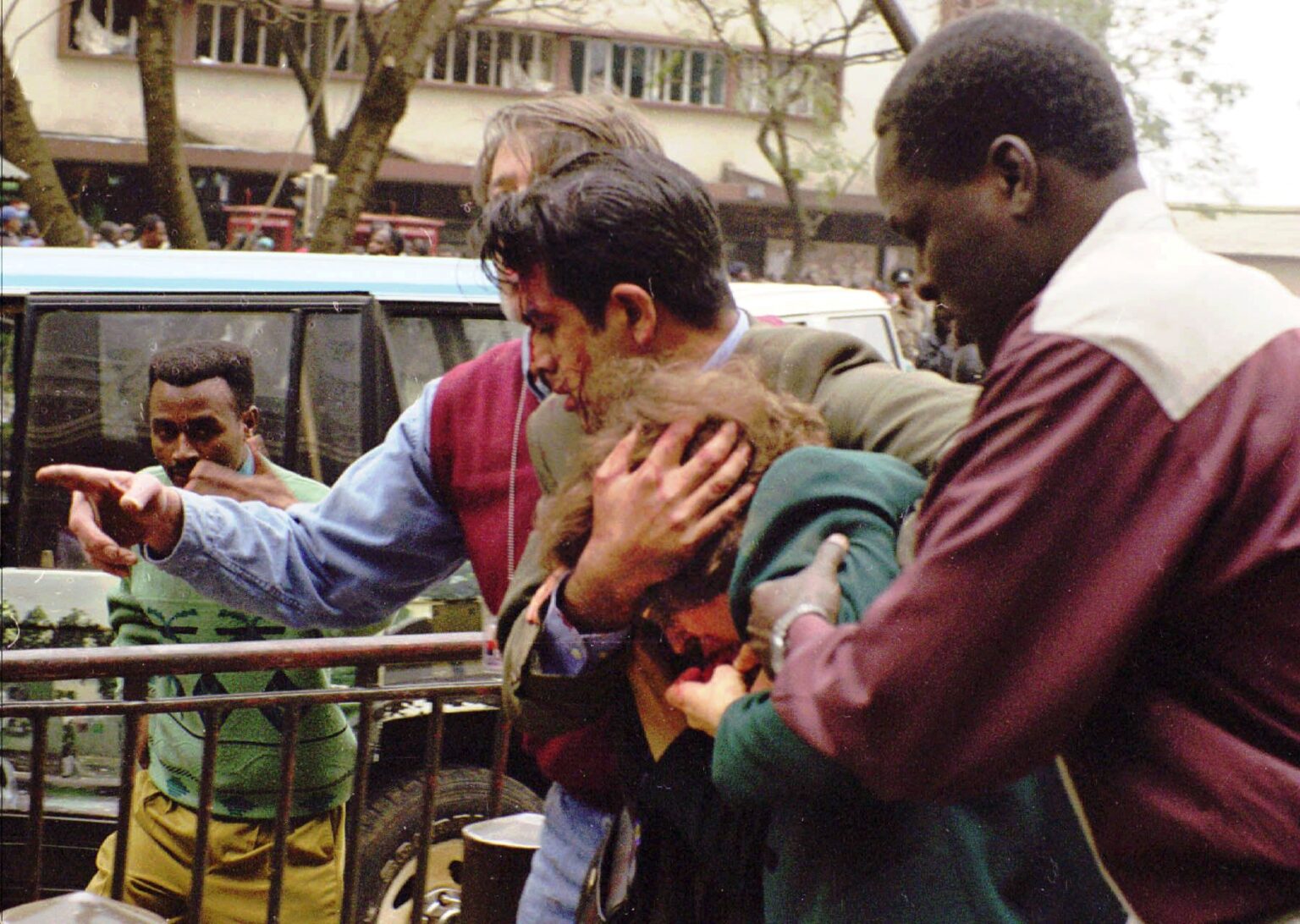
U.S. Ambassador Prudence Bushnell, center, is helped by unidentified men, as she is evacuated from the area of the U.S. Embassy following an explosion in downtown Nairobi, Friday, Aug. 7, 1998.
Bushnell has spent the years since turning that decision into a wider argument about institutional failure. In her 2018 memoir, Terrorism, Betrayal, and Resilience: My Story of the 1998 U.S. Embassy Bombings, she traces how intelligence agencies and policymakers had already been tracking Osama bin Laden’s Nairobi cell since 1996, yet the threat assessments and bureaucratic priorities in Washington failed to translate that scrutiny into protection on the ground. She has also noted that no congressional hearings followed the bombings and that the national security establishment conducted no broad after-action review. At the time, Congress was in recess, and Washington’s attention that week was consumed by the Clinton-Lewinsky scandal.
What the official inquiry found
The State Department’s own investigation, an Accountability Review Board chaired by retired admiral William Crowe, reached a more measured but still damning conclusion in January 1999. It found that security systems at both embassies generally met, and in places exceeded, the standard requirements set for posts rated at medium or low threat, but that those standards had simply never been built to withstand a large vehicle bomb. It also found that both the intelligence community and State Department policymakers had leaned too heavily on narrow, tactical intelligence to gauge the threat level at individual posts, rather than weighing the broader strategic picture building around al-Qaeda.
Despite documenting these systemic gaps, the Board stopped short of finding any individual government employee derelict in their duty, a conclusion that let the officials who turned down Bushnell’s request for a new chancery escape personal accountability, even as the report acknowledged the standoff problem directly contributed to the scale of the Nairobi casualties.
In Dar es Salaam, the picture was different. The Marine Security Guard detachment there had run bomb-response drills in the months before the attack and mobilised within minutes once the blast occurred, a response the review board credited for helping contain the chaos. The main operational failure flagged in Tanzania was logistical: Washington’s Foreign Emergency Support Team was delayed 24 hours in departing after a late decision to add a second aircraft, though the delay did not end up affecting the immediate crisis response.
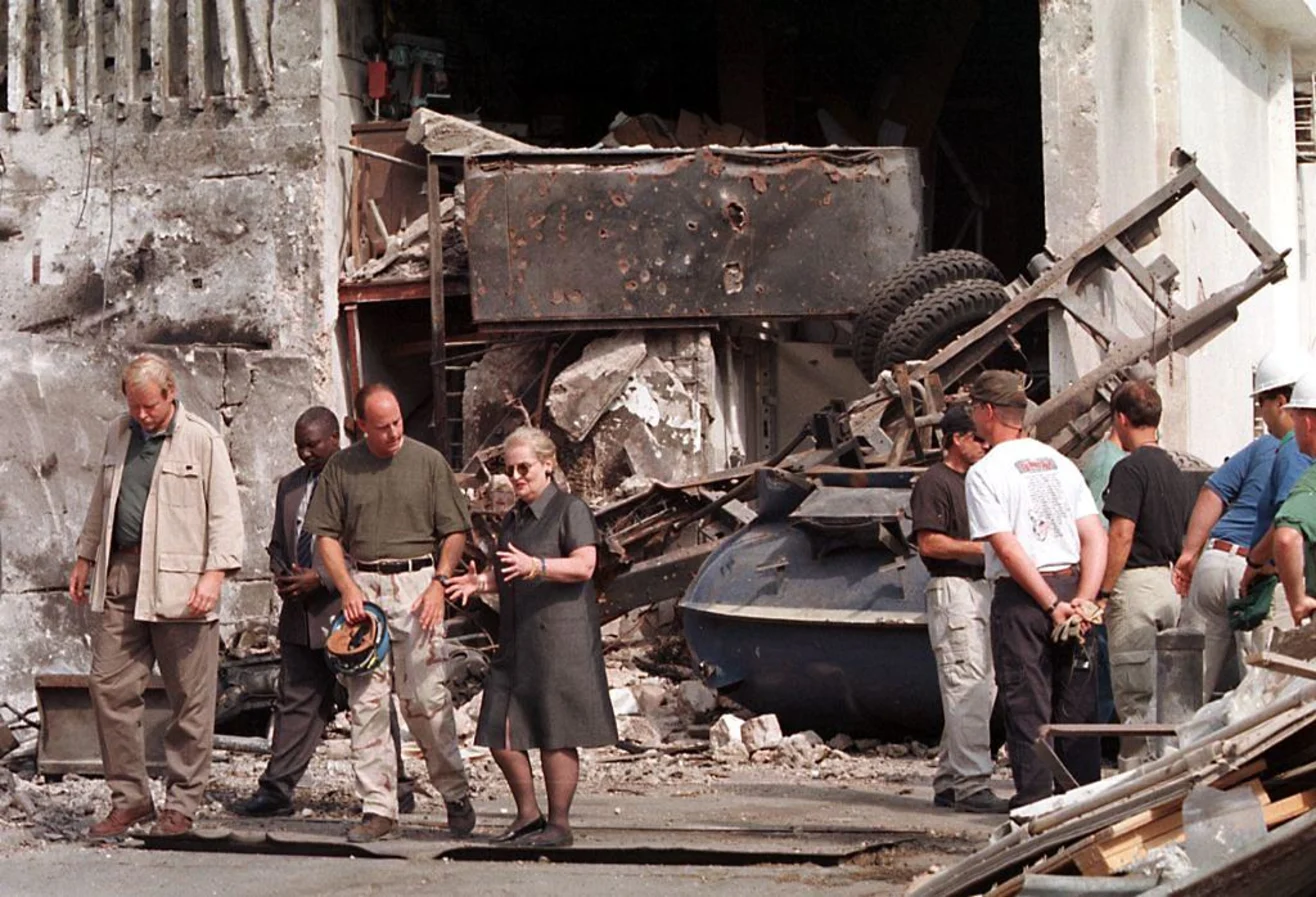
Scene of the Tanzania bomb blast.
The aftermath that reshaped US diplomatic security
The bombings forced a rethink of how American missions abroad are built and guarded. Congress approved roughly $1.4 billion for new, more secure embassy construction, and the Diplomatic Security Service saw a 25 percent increase in staffing in the years that followed. Regional security officers were given new authority, reporting directly to ambassadors rather than through a longer chain of command. The families of victims also pushed for the creation of the State Department’s Office of Casualty Assistance in 1999, to support the relatives of Americans killed or injured overseas, an office whose recent closure Congressional leaders have criticised as a disservice to the legacy of the 1998 victims.
But as Bushnell has argued in the years since, much of that institutional memory faded fast. Three years later, the September 11 attacks eclipsed East Africa’s bombings in the American public consciousness, turning what should have been a foundational case study in ignored warnings into what she has called “little more than a historical footnote” in Washington.
Compensation, and the gap that remains
American victims and their families pursued compensation for years through US courts, arguing that Sudan and Iran had provided material support to al-Qaeda before the bombings. Federal judges awarded them billions of dollars in default judgments from 2014 onward, upheld on appeal in 2017, though sovereign immunity protections made actually collecting on those judgments difficult. That changed in 2020, when Sudan’s transitional government, seeking removal from Washington’s list of state sponsors of terrorism, agreed to pay $335 million to settle claims from the 1998 bombings alongside other attacks, including the USS Cole bombing.
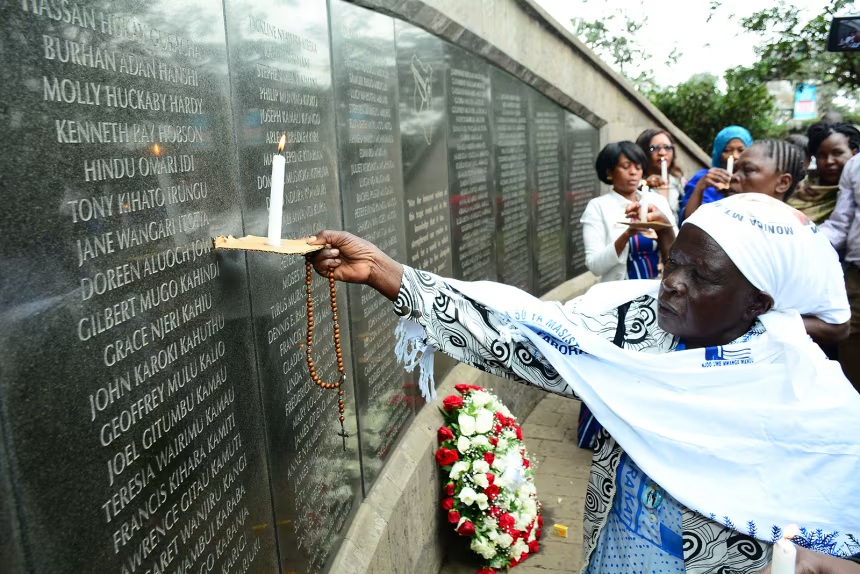
Margaret Achieng, who lost her daughter to the August 7, 1998 bombing of US Embassy in Nairobi seen praying at the August 7th Memorial Park in 2019.
The initial deal drew criticism for paying naturalised US citizens far less than those who held citizenship at the time of the attack, one advocacy estimate put the gap at roughly 8 percent, prompting Congress to pass the Sudan Claims Resolution Act that December, adding $150 million to narrow the disparity. According to a US Government Accountability Office review, the State Department ultimately found 78 people eligible for compensation under the Act, with individual payments ranging from $170,000 to $10 million.
For Kenyan and Tanzanian victims, who made up the overwhelming majority of the dead and wounded, the picture remains far less resolved. Of the 224 people killed, only 12 were American; most of the rest were Kenyans and Tanzanians killed on their own streets or at desks in nearby buildings, with 44 locally hired embassy staff among the dead. US law generally allows lawsuits against state sponsors of terrorism only on behalf of US citizens, government employees or contractors, which excludes most ordinary Kenyan bystanders from the same legal route available to American victims and locally hired embassy staff.
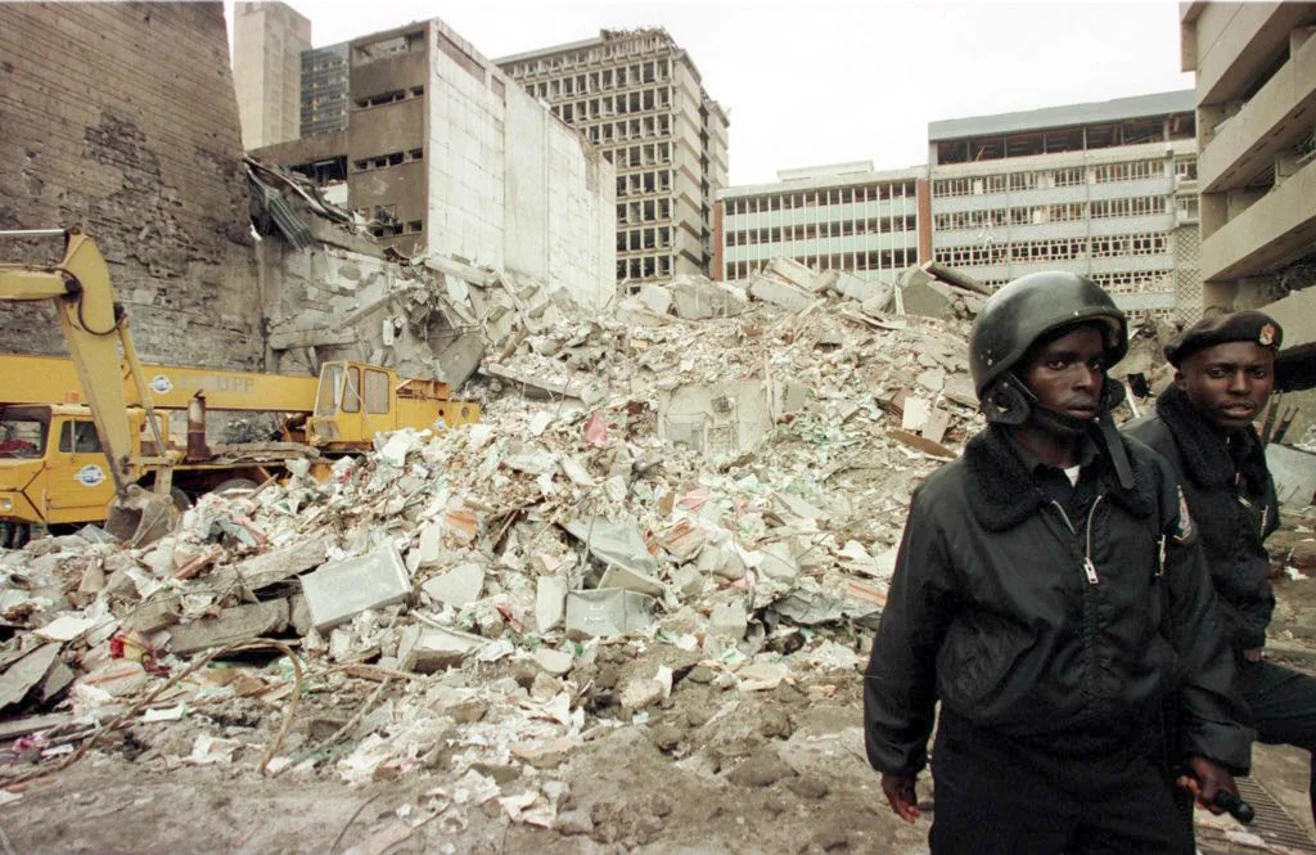
The blast on August 7, 1998 at the U.S. Embassy in Nairobi, Kenya, killed more than 200 people. Kenyan security guards keep watch on August 8, 1998, at the scene of explosion.
Survivors such as Douglas Sidialo, blinded in the Nairobi blast, have spent years appealing directly to Washington, including during President Barack Obama’s 2015 visit to Kenya, for compensation on humanitarian grounds. US officials have said Washington spent tens of millions of dollars assisting victims and families in the years after the bombing, but campaigners describe that assistance as ad hoc rather than a structured scheme comparable to what American victims eventually secured.
Doreen Oport, an American employee of the Nairobi embassy who was badly burned in the blast, put the disparity in blunt terms when the 2020 settlement terms became public:
“It’s unfair when they want to make us feel of a lesser value than Americans. It basically sets a value of human lives, both American and Kenyan… when basically, if it was not for Foreign Service Nationals doing the work, then these embassies or consulates would not stand. The work continues. Human lives should not have a value of who gets what and who doesn’t get what. We are all the same.”
Twenty-eight years on, that imbalance remains the East Africa bombings’ most visible unfinished business, as the legal and compensation framework continues to treat American and Kenyan lives lost in the same attack differently.
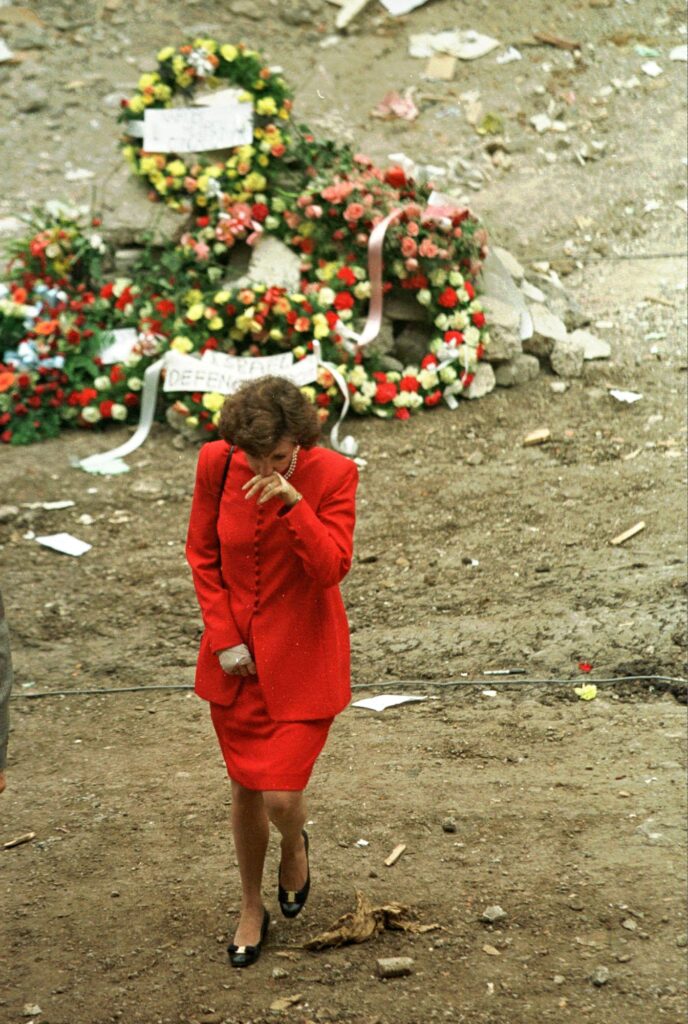
American Ambassador to Kenya Prudence Bushnell is overcome by emotion after laying a wreath at the site of the Nairobi U.S. Embassy bombing Wednesday, Aug. 12, 1998.
Marking the day in Nairobi
In Kenya, the memory has not faded the same way. The site of the old embassy on Haile Selassie Avenue is now the August 7th Memorial Park, opened in 2001, with a wall bearing the names of those who died. Survivors, victims’ families and government officials gather there every year to lay wreaths and light candles. Kenya’s National Counter Terrorism Centre typically marks the day with a renewed public pledge to prevent future attacks, and current and former US ambassadors have made a practice of attending the commemoration. Then-Secretary of State Antony Blinken laid a wreath at the memorial in 2021, and the US mission has continued the tradition at senior levels since.
For Bushnell, who returned to Kenya for the 20th and 25th anniversaries, the park itself has become part of the story she tells about recovery. Reflecting on the site in 2023, she called it “a green oasis on a busy street corner,” and the visible result of a Kenyan and American community that rebuilt after the attack and helped each other heal. Twenty-eight years on, the physical wound has become a green space in the middle of the city. The bureaucratic failure that helped cause it remains a cautionary tale in how governments weigh warnings against the cost of acting on them.
According to historical accounts, the King succumbed after receiving what has been described as a suspicious injection administered by Belgian physician Dr. Vyncke. His death has long been regarded as a political assassination, that preceded the violence against Tutsi that erupted later that year and eventually culminated in the 1994 Genocide against the Tutsi.
More than six decades later, the anniversary of King Rudahigwa’s death continues to serve as a moment to reflect on the legacy of a monarch remembered for championing unity, modernization and Rwanda’s quest for self-determination.
A reformer ahead of his time
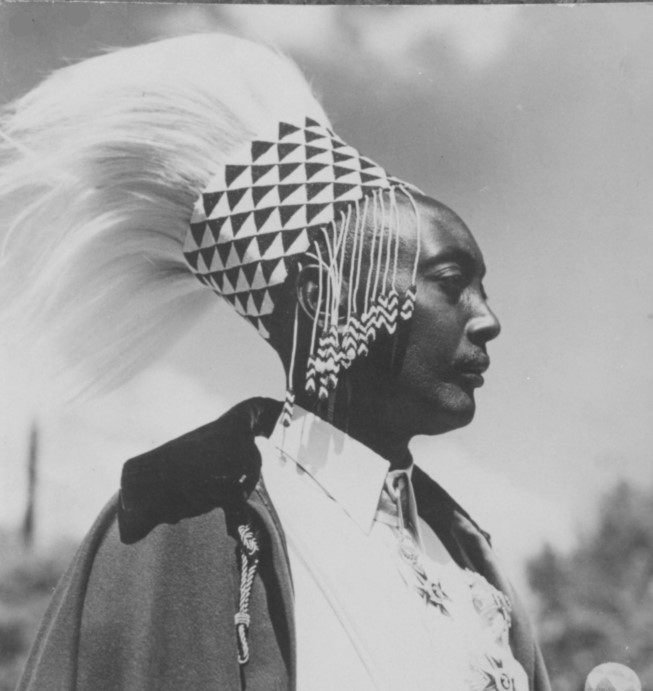
King Mutara III Rudahigwa ascended the throne during the colonial era but distinguished himself as a progressive leader determined to modernize Rwanda’s institutions and improve the lives of his people.
Among his most enduring achievements was the abolition of the Ubuhake clientship system and the Uburetwa and Shiku systems of forced labour, reforms widely regarded as milestones in promoting equality and national unity.
Rudahigwa also embraced modernization in his personal conduct. Rather than travelling in the traditional royal hammock, he purchased and used a motor vehicle, symbolizing his vision of a modern state.
To strengthen governance, he established the Conseil du Mwami (Council of the King), an advisory body that later evolved into the Conseil du Pays (Council of the Country) in 1942 and the Conseil Supérieur du Pays (Superior Council of the Country) in 1953, an institution comparable to today’s Senate.
His reign also saw significant investment in infrastructure. Rwanda’s road network expanded rapidly, linking major towns such as Kigali, Butare, Gisenyi, Ruhengeri, Cyangugu and Bujumbura, while international routes connected the country to Uganda, Tanzania and the port of Mombasa, facilitating trade and regional integration.
The mining sector also experienced considerable growth under his leadership. Companies including MINETAIN, SOMUKI, GEORWANDA and COREM expanded mineral exploration and extraction, producing tin, gold, columbo-tantalite, beryl and amblygonite. By the late 1950s, the industry employed an estimated 15,000 to 16,000 workers.
Champion of independence
Beyond economic and institutional reforms, King Rudahigwa increasingly advocated for Rwanda’s political future.
Historical records indicate that he pushed for Rwanda’s independence from Belgian colonial rule, called for the removal of ethnic designations from identity cards, promoted universal access to education and sought the establishment of a university in Rwanda similar to those already operating elsewhere in the region.
These positions placed him at odds with the colonial administration. Many historians and Rwandan officials argue that his determination to secure Rwanda’s sovereignty ultimately made him a target.
His death in July 1959 was followed by escalating political unrest and anti-Tutsi violence later that year.
Today, King Mutara III Rudahigwa is remembered not only as Rwanda’s last reigning monarch before the country’s political transformation but also as a leader whose vision centred on national unity, social reform and independence. His legacy continues to be commemorated as part of Rwanda’s historical journey and its ongoing commitment to unity, self-reliance and national development.
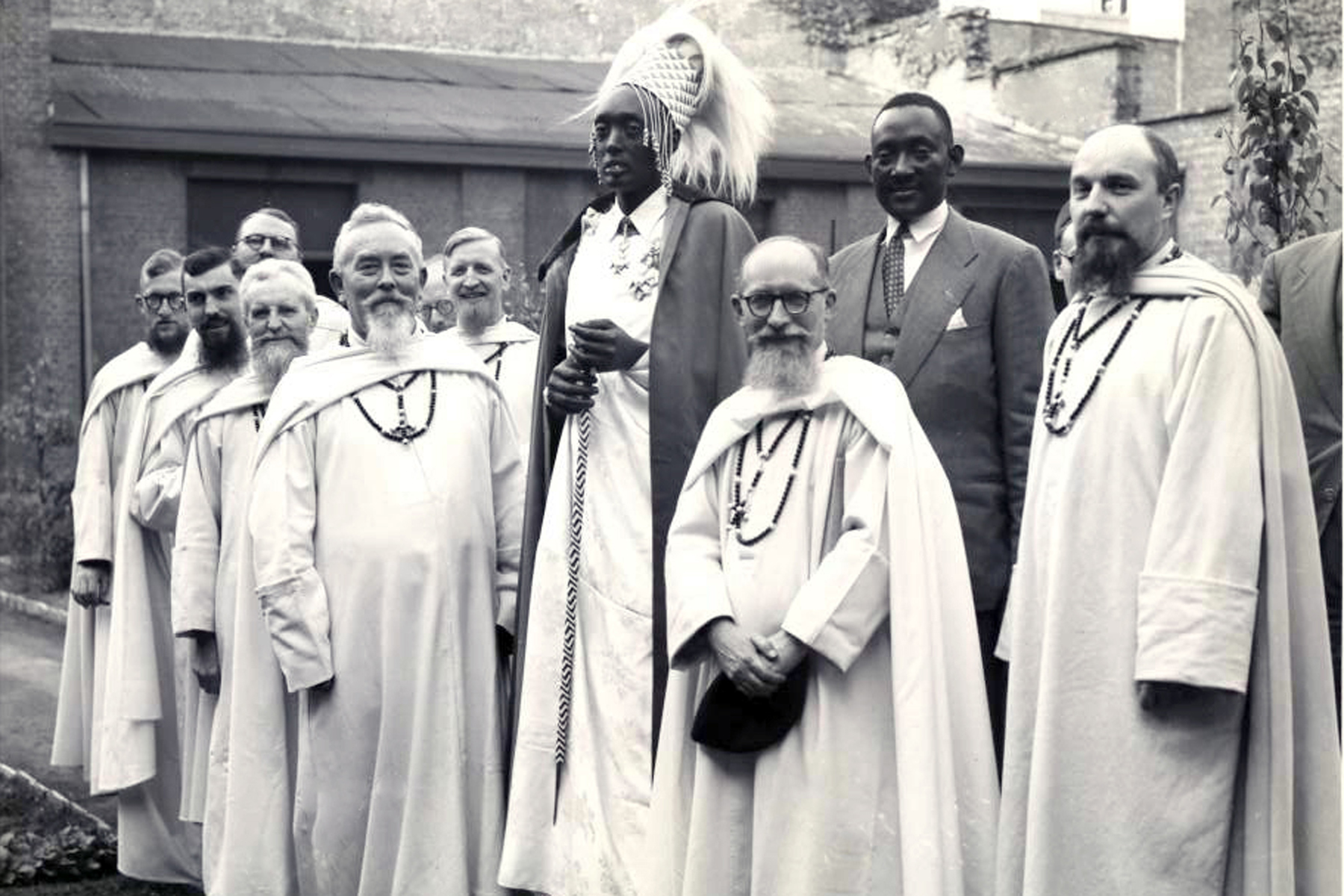
King Mutara III Rudahigwa ascended the throne during the colonial era but distinguished himself as a progressive leader determined to modernize Rwanda’s institutions and improve the lives of his people. This photo shows King Mutara-III-Rudahigwa and Catholic Church leaders.
For younger generations who did not witness the events of 1994, hearing accounts from elders offers a moment of reflection and a deeper appreciation of the peace they now enjoy and the country they call home.
For those who directly participated in the liberation struggle, the day is marked by solemn reflection on a difficult journey that shaped the nation’s destiny, a struggle that also came at the cost of many lives.
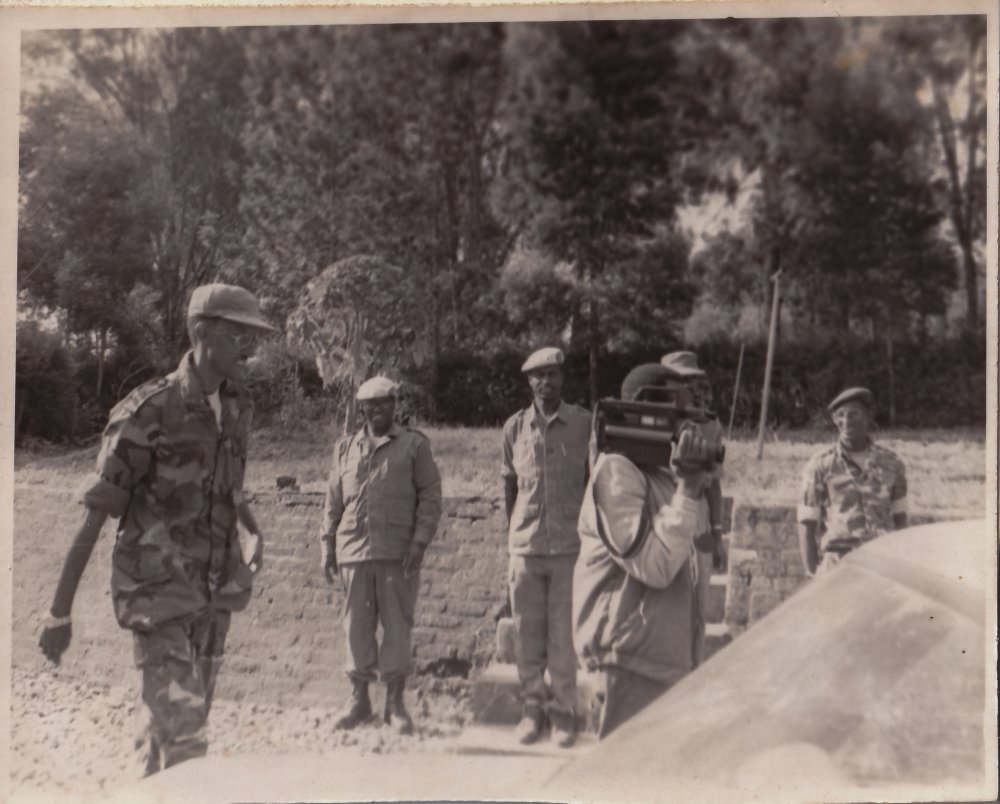
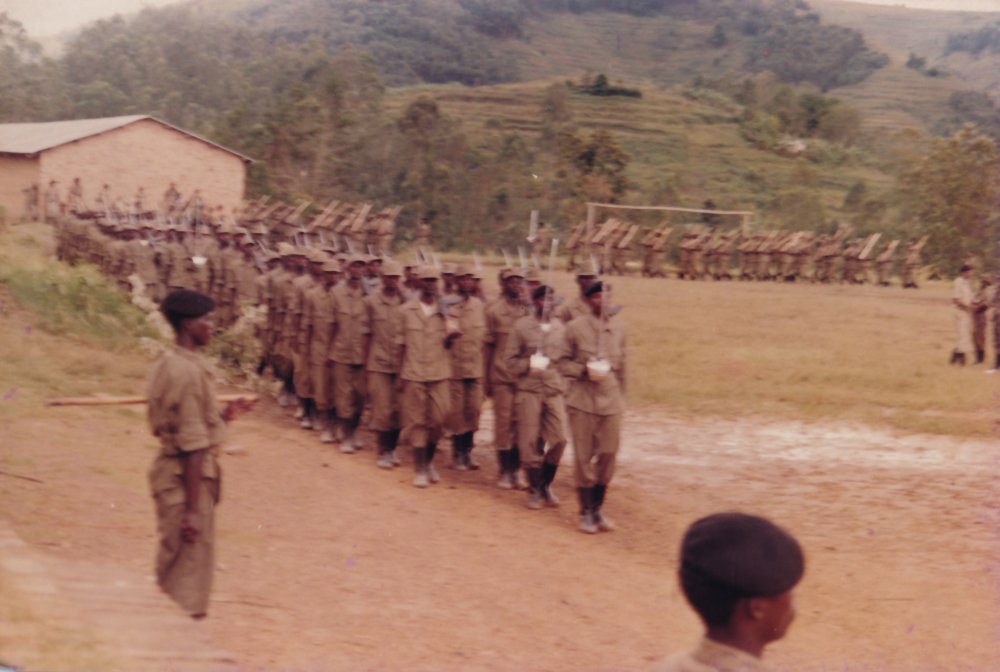
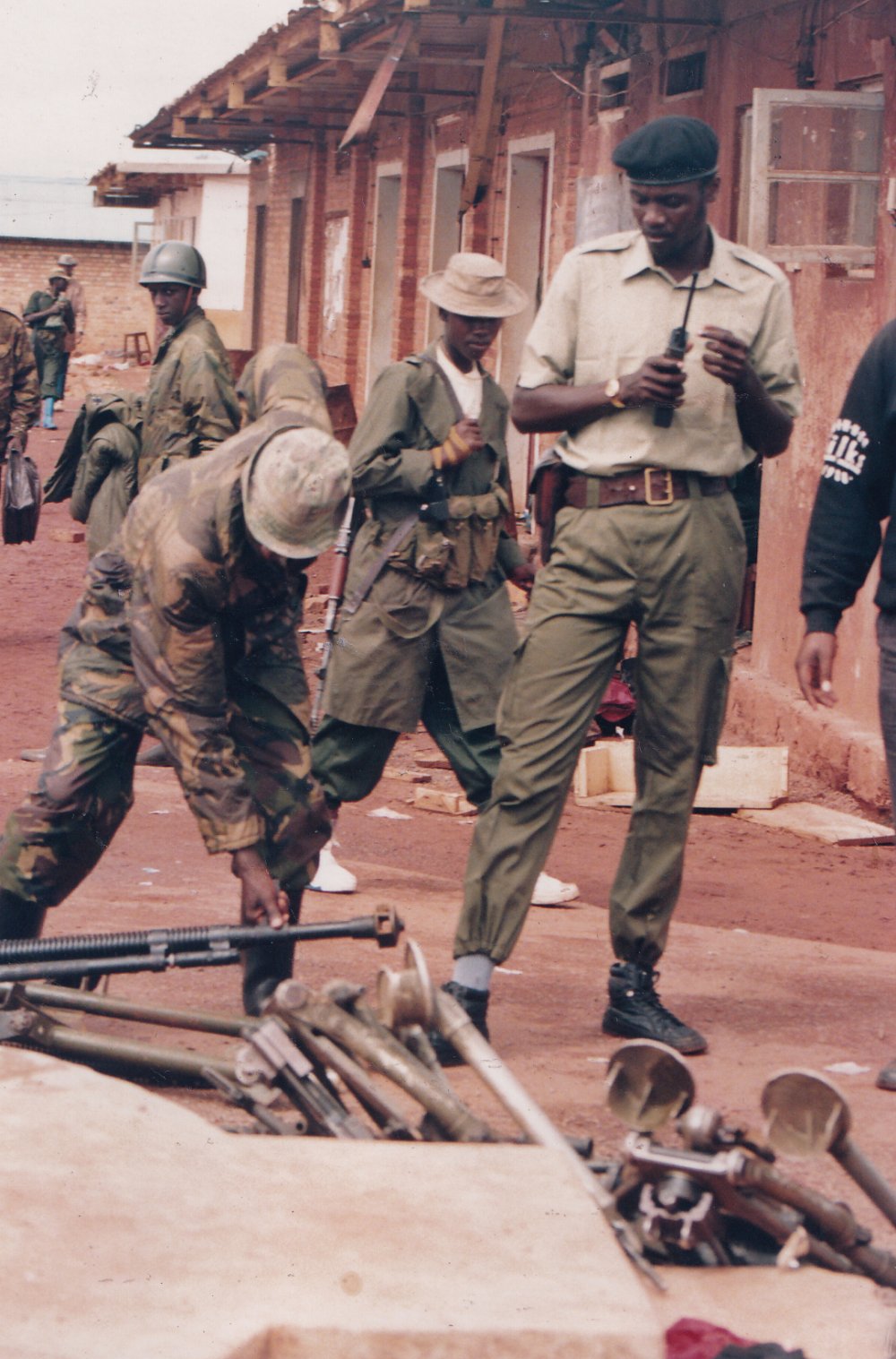
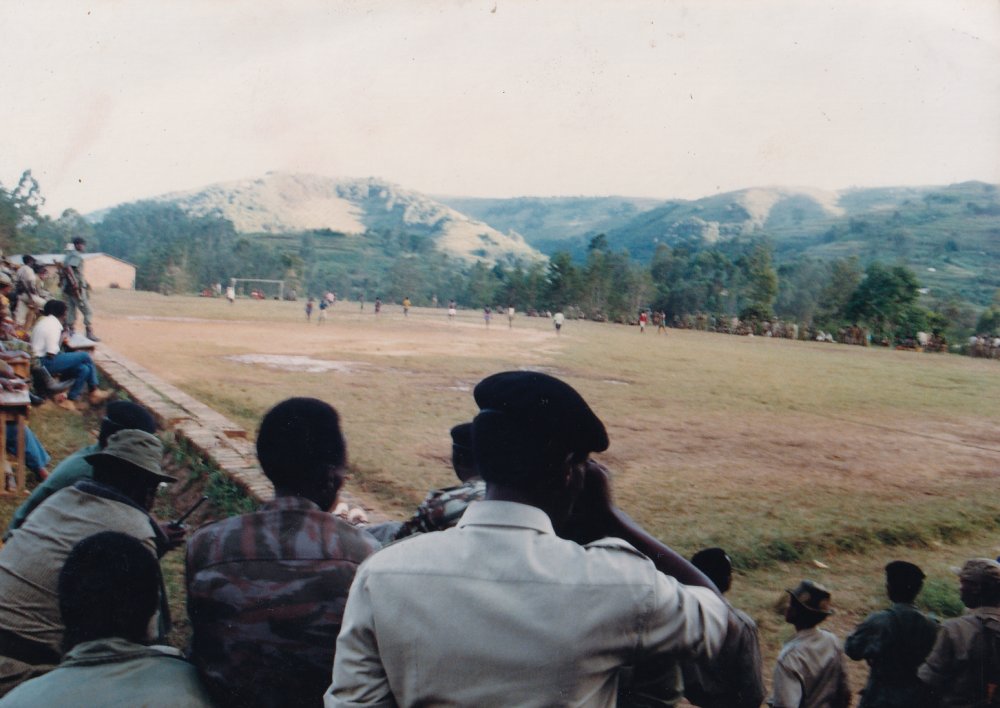
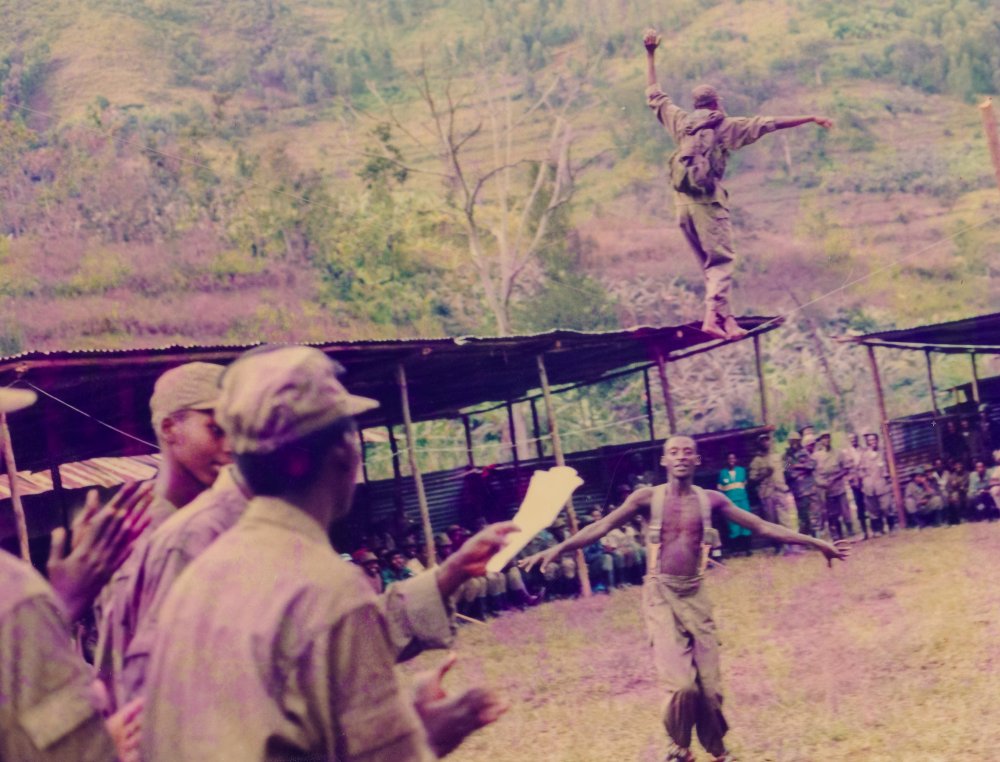
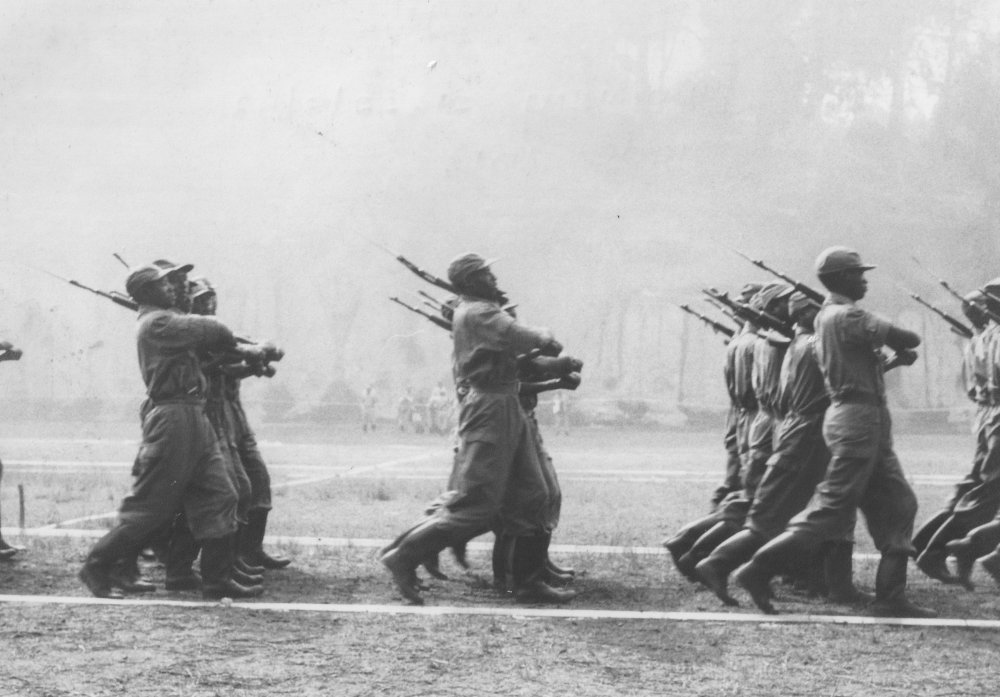
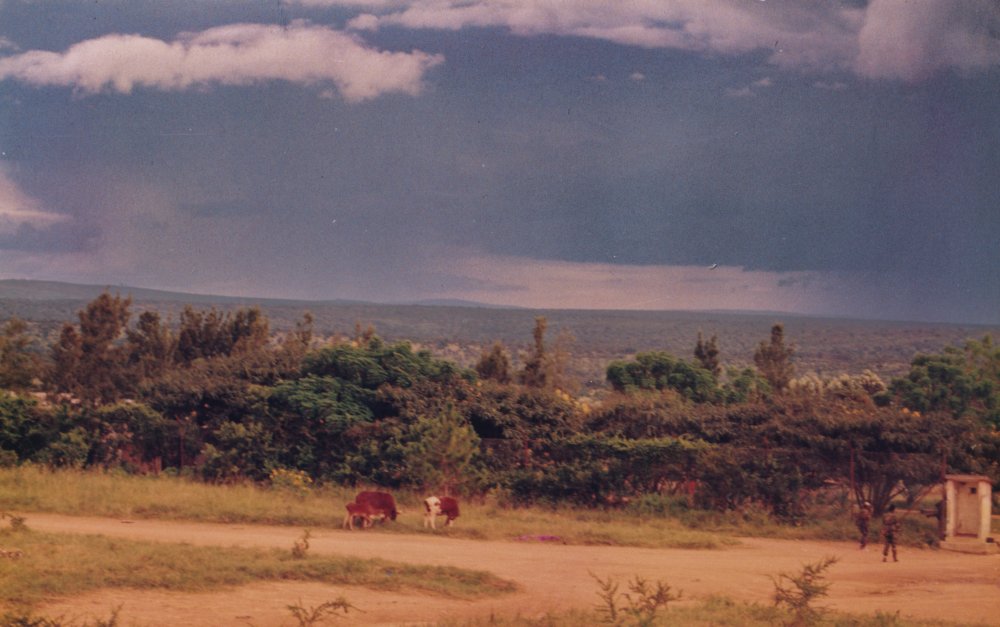
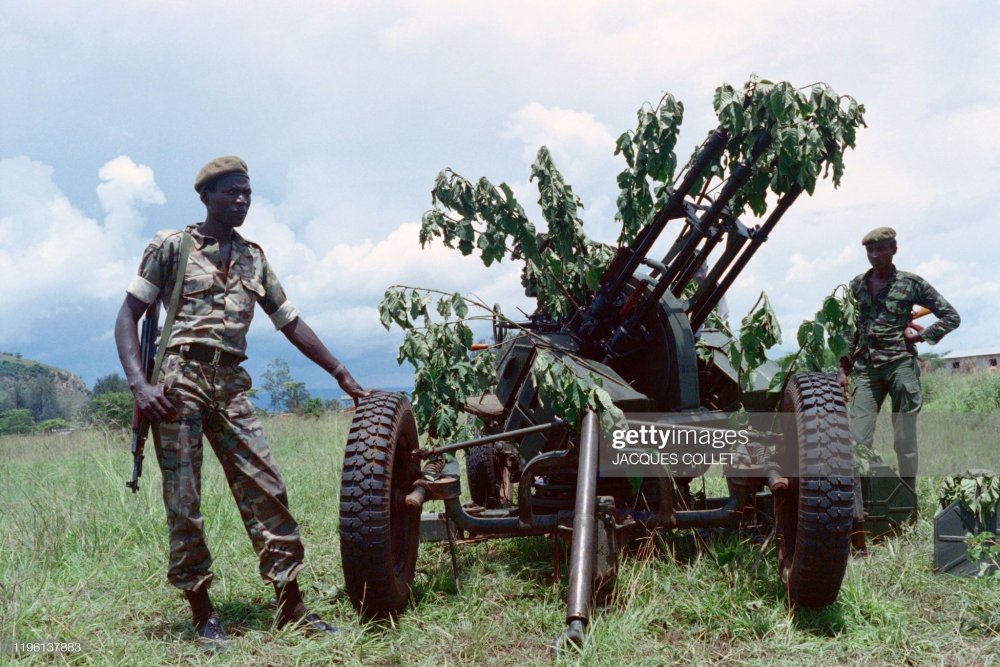
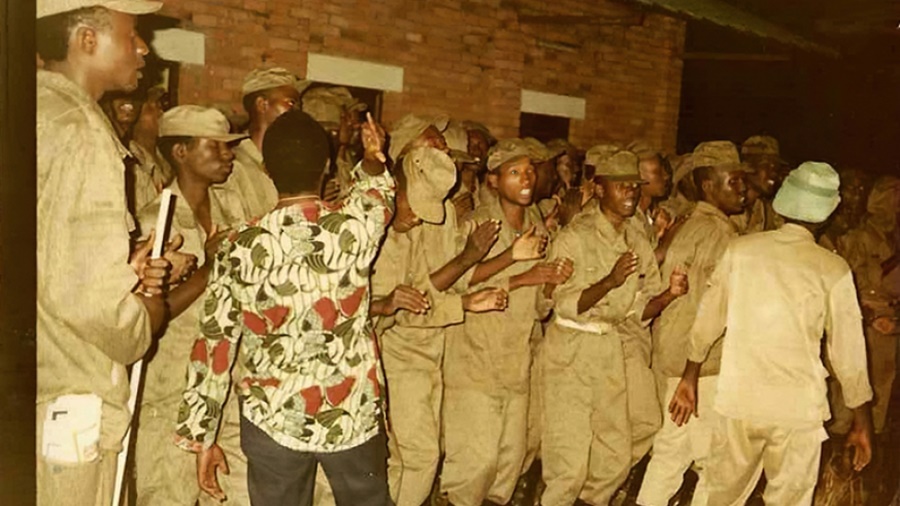
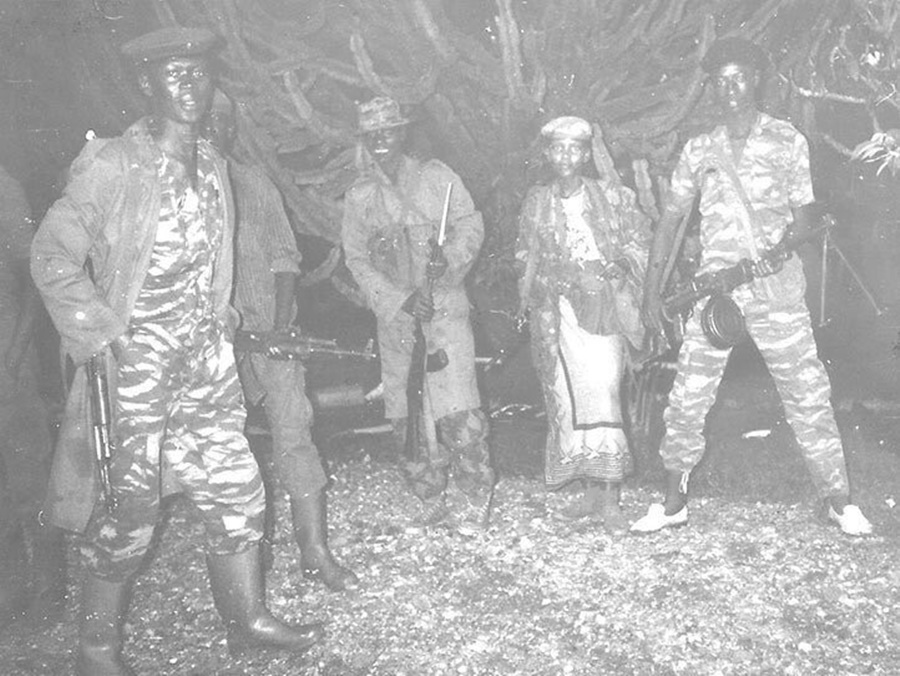
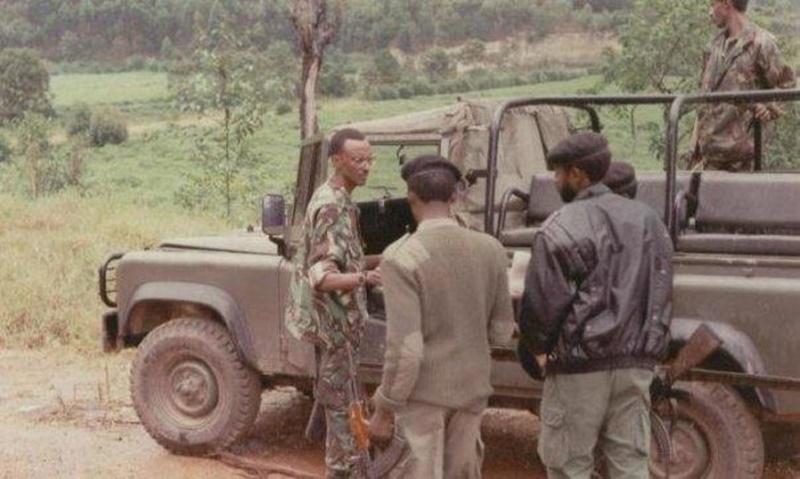
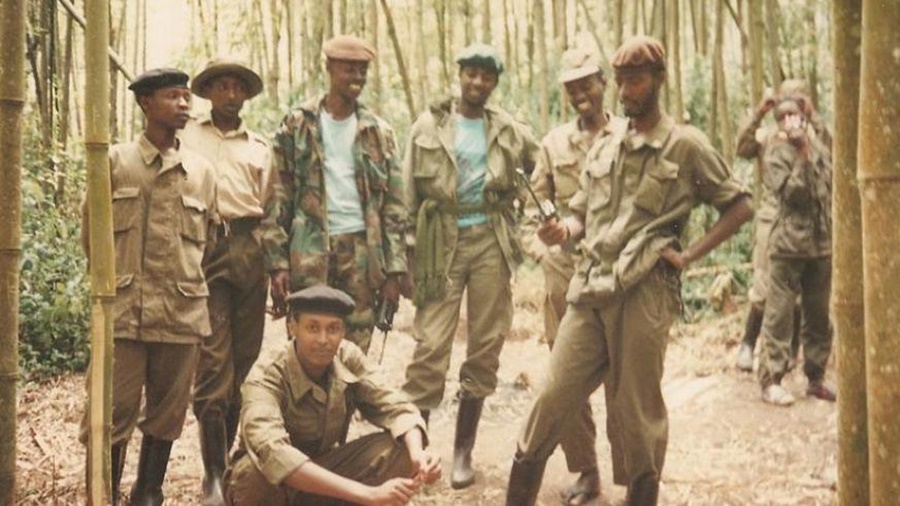
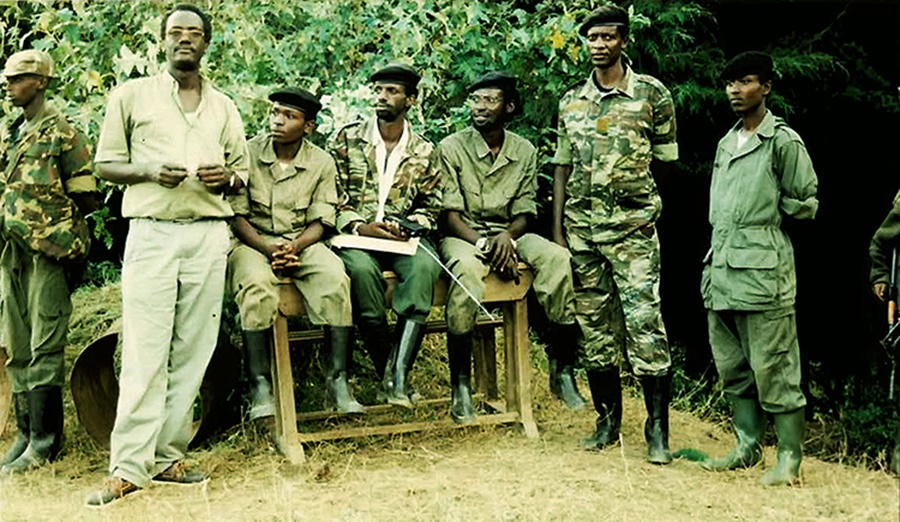
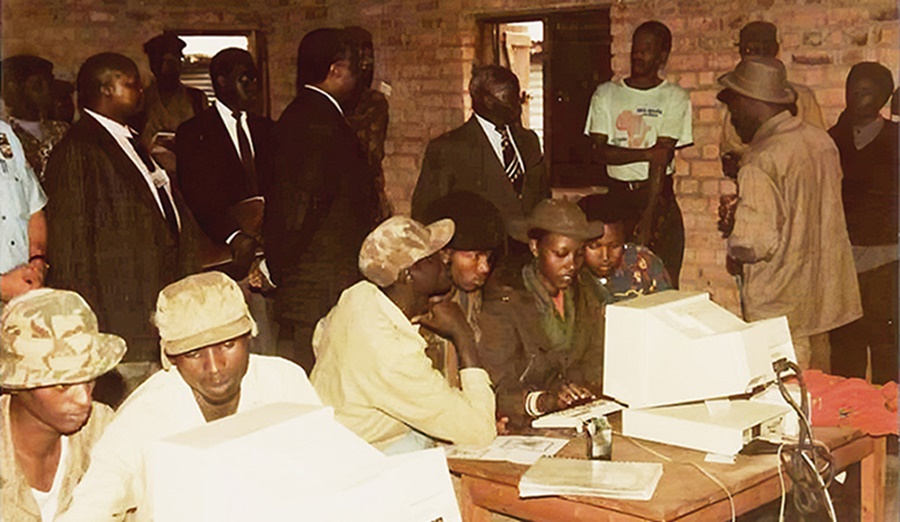
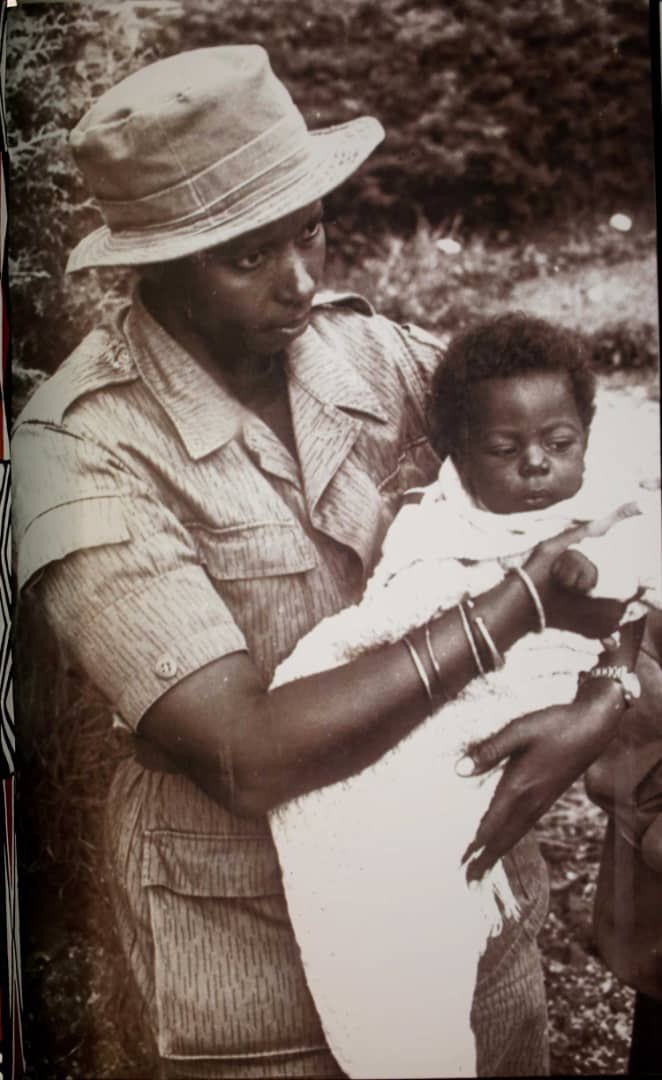
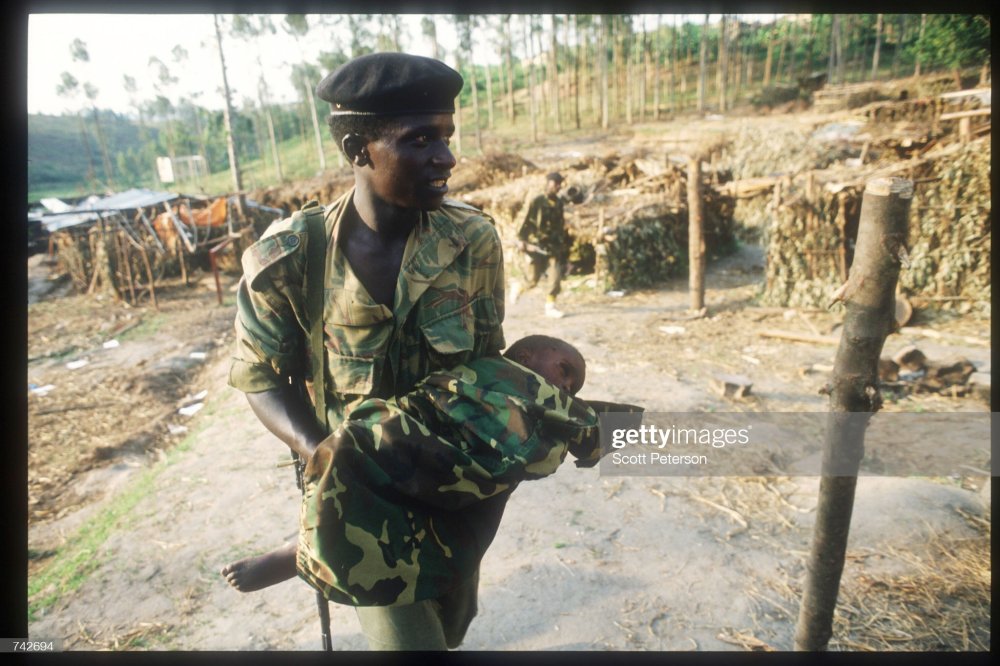
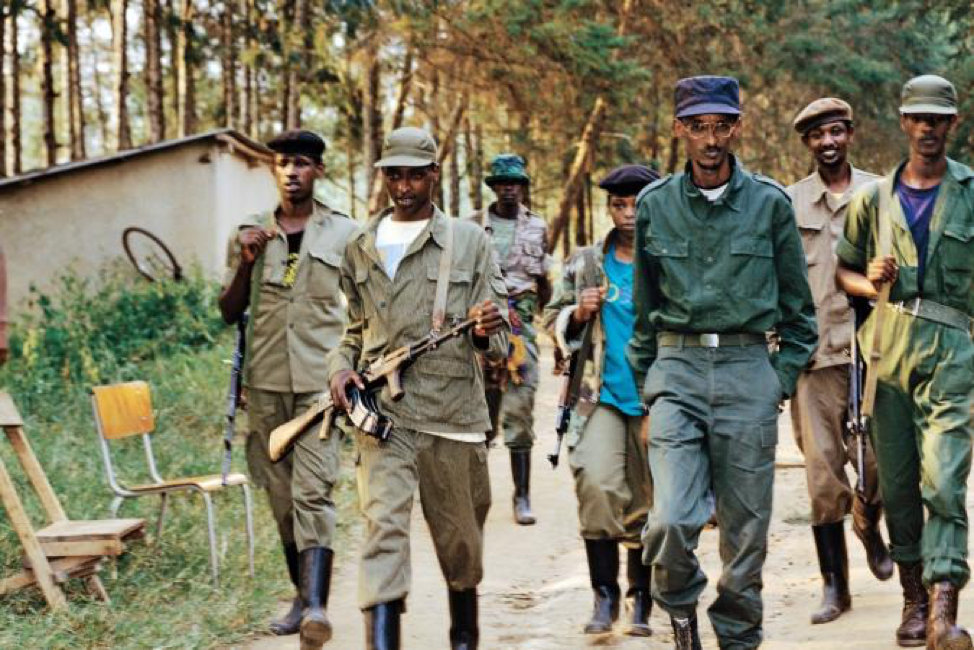
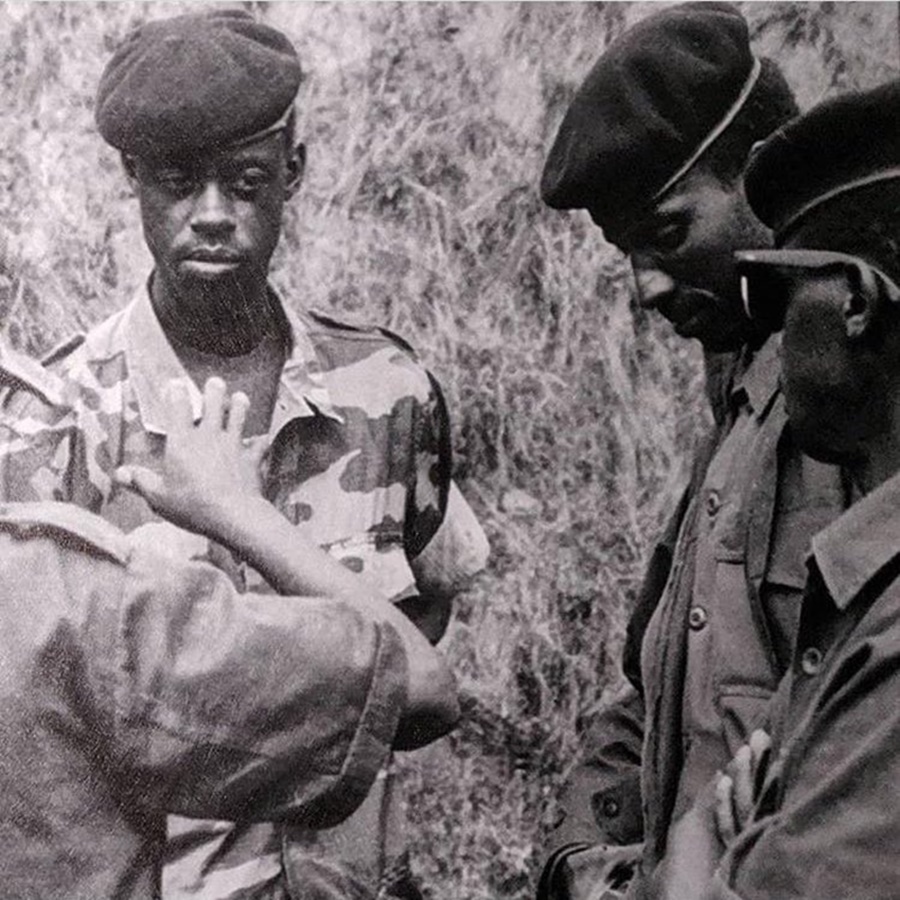
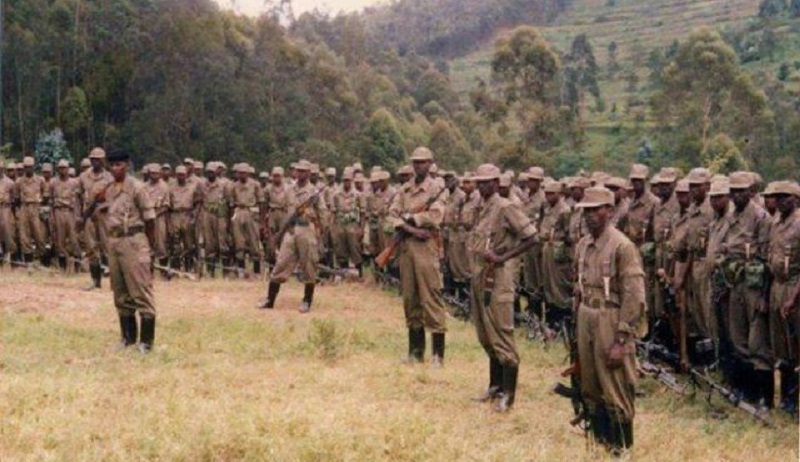
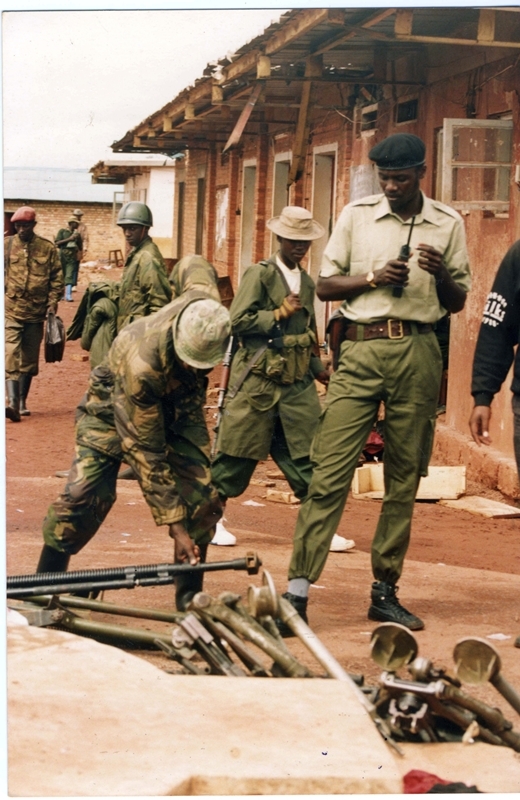
Each year on this date, Rwandans turn to archival and nostalgic photographs that capture moments from this historic period. These images, drawn from personal collections, public archives, and shared memories, document lived experiences, milestones, and Rwanda’s long journey of liberation.
Together, they serve as a powerful visual reminder of the liberation struggle led by the Rwandan Patriotic Army (RPA), under the leadership of President Paul Kagame, and its enduring place in the nation’s collective memory.
Here are the photos:
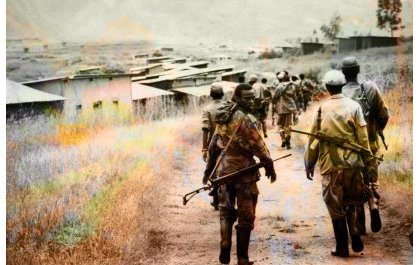
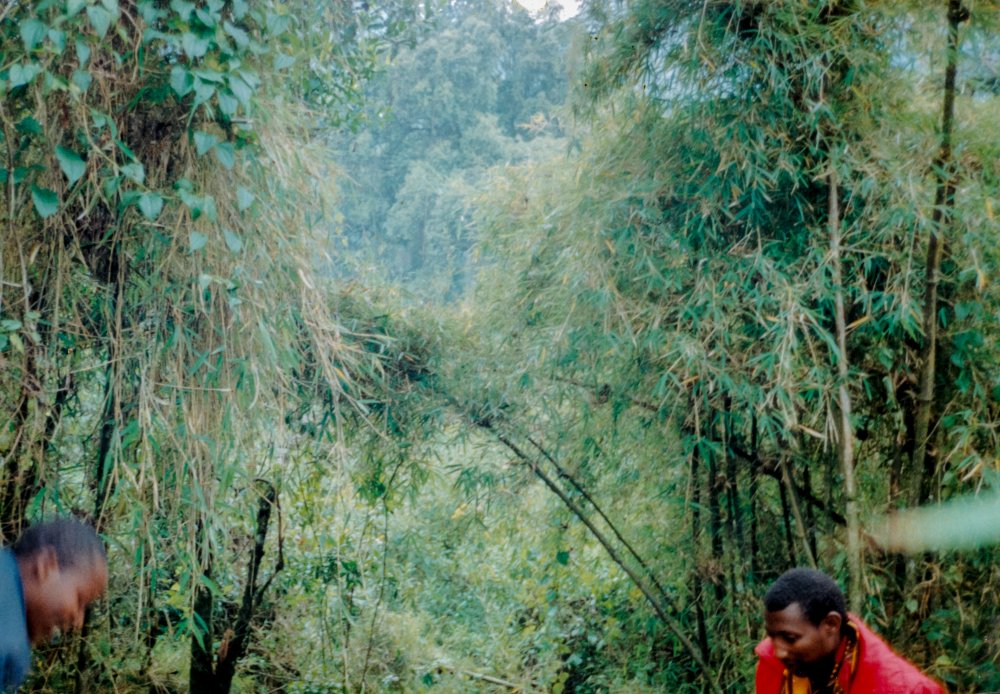
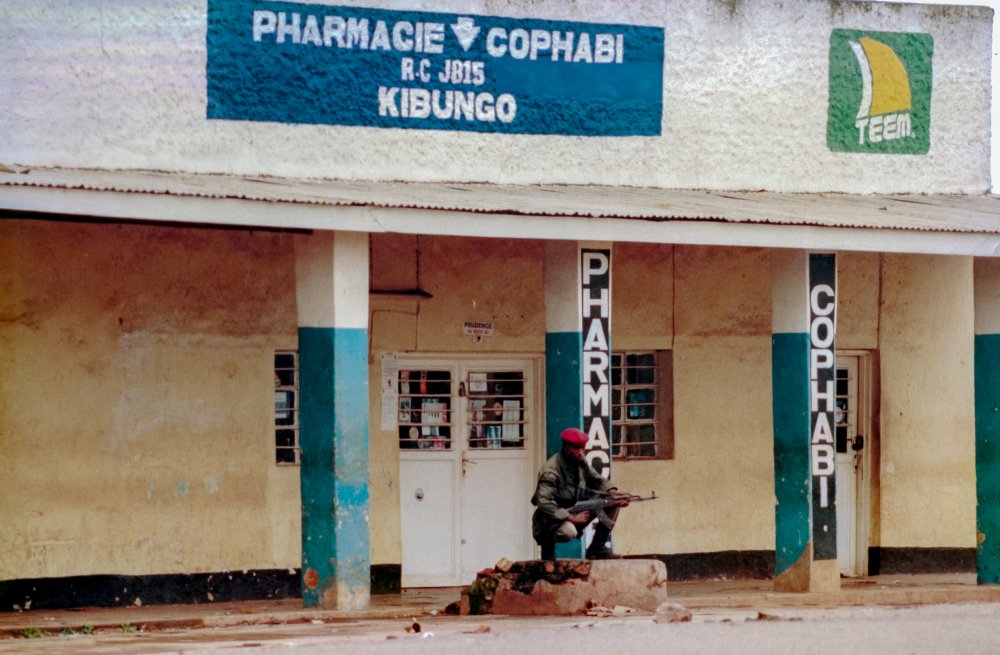
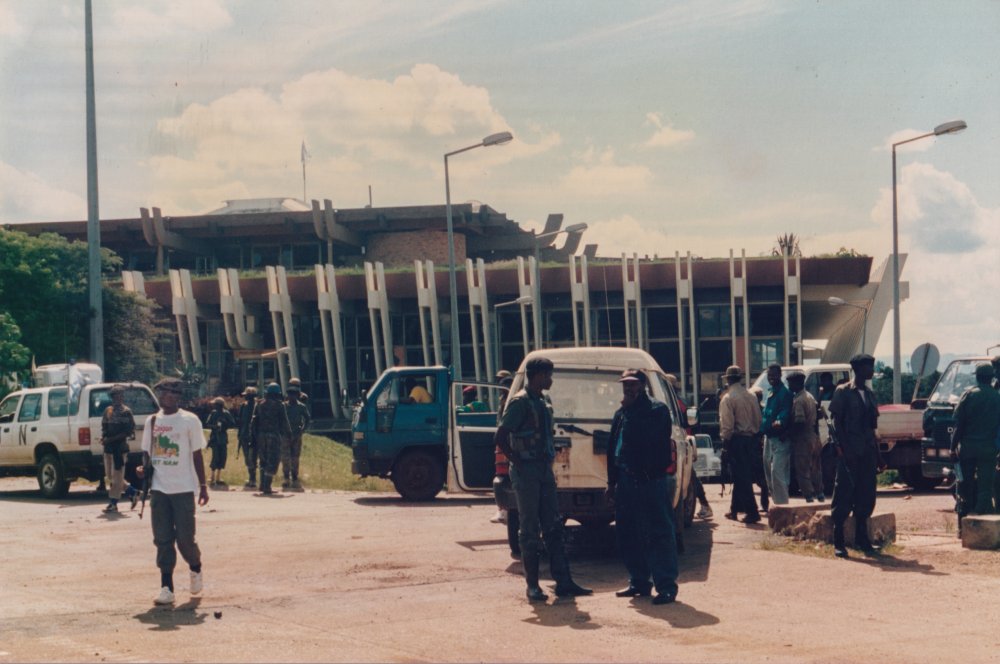
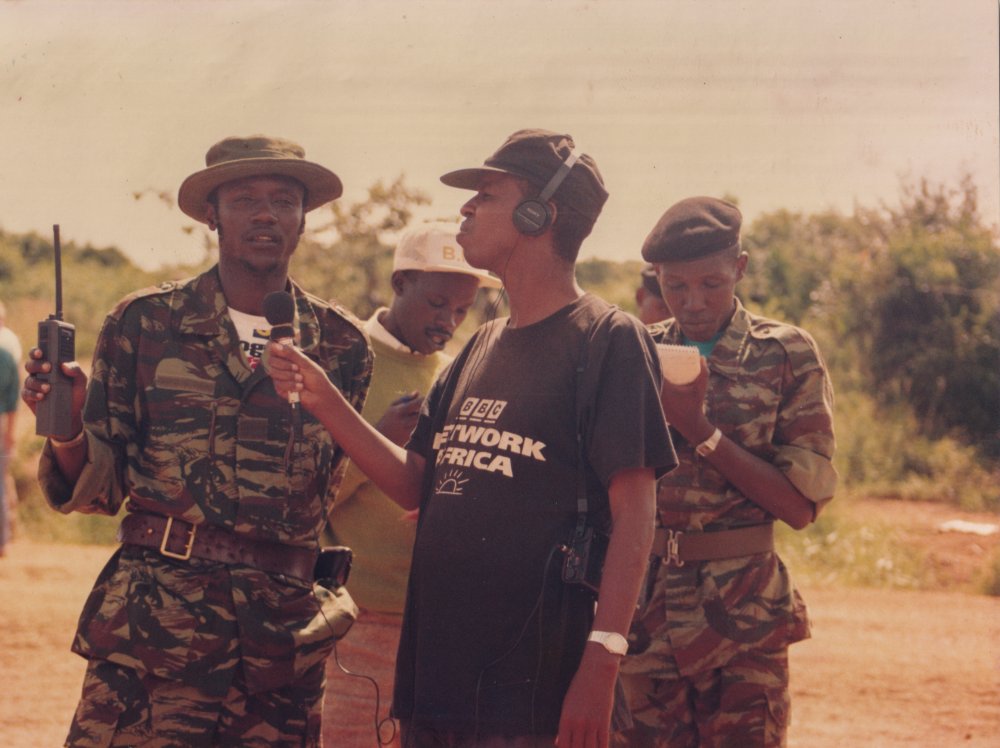
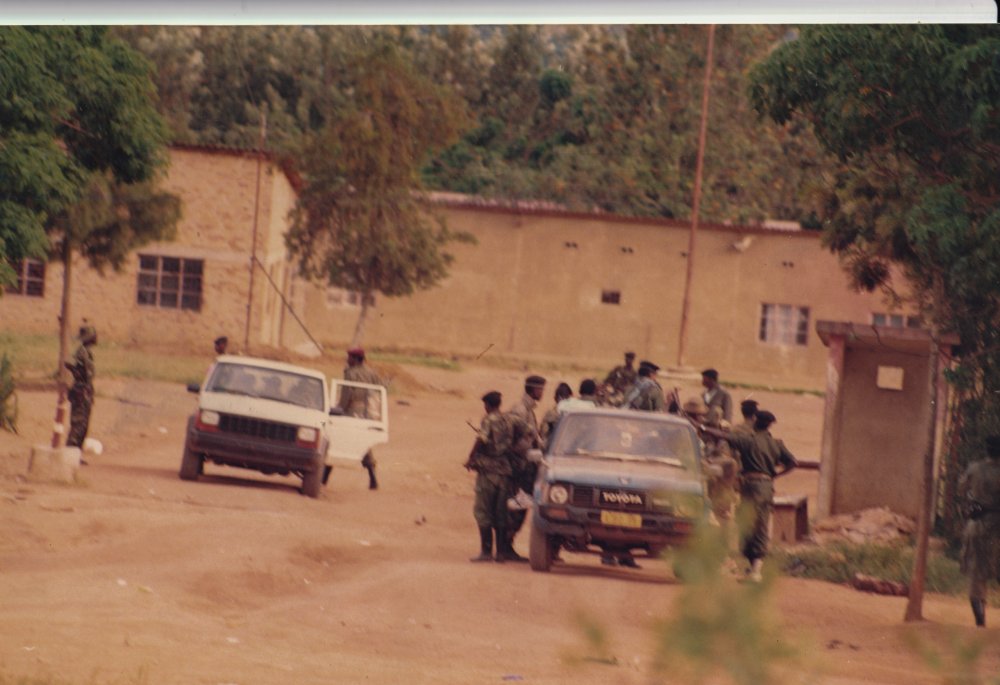
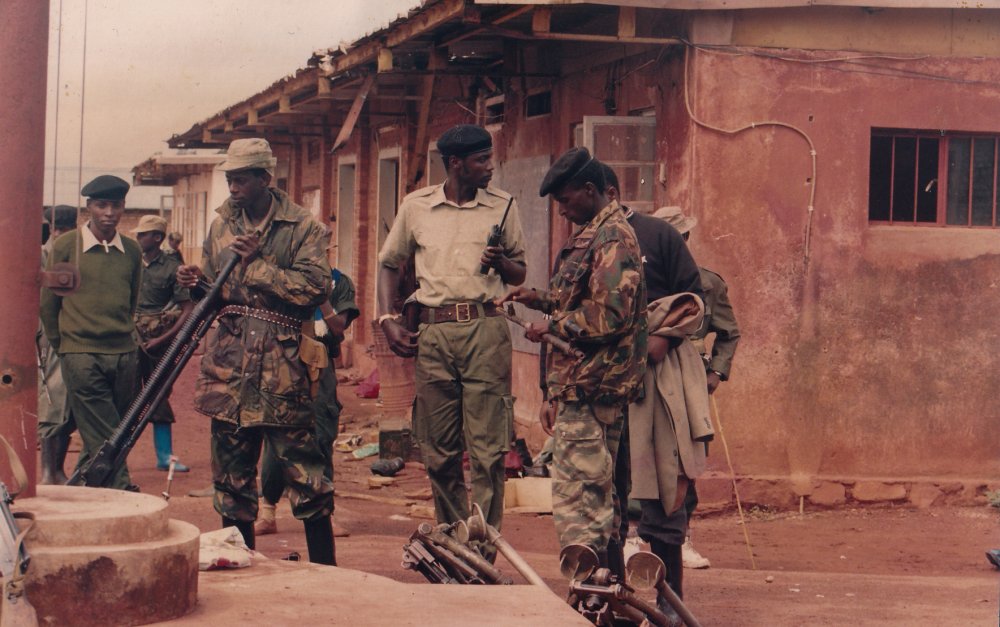
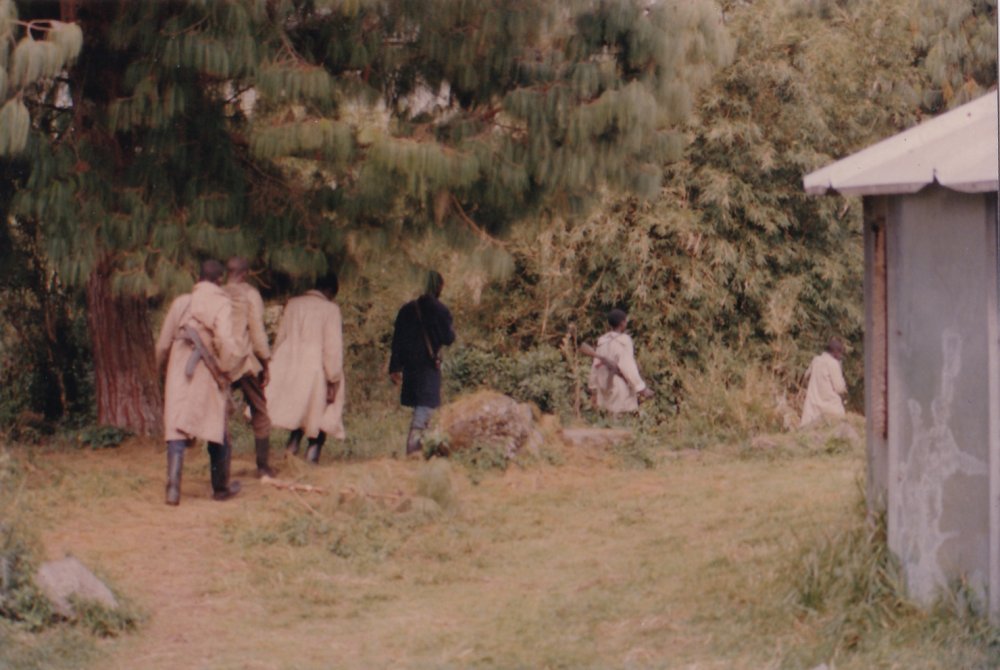
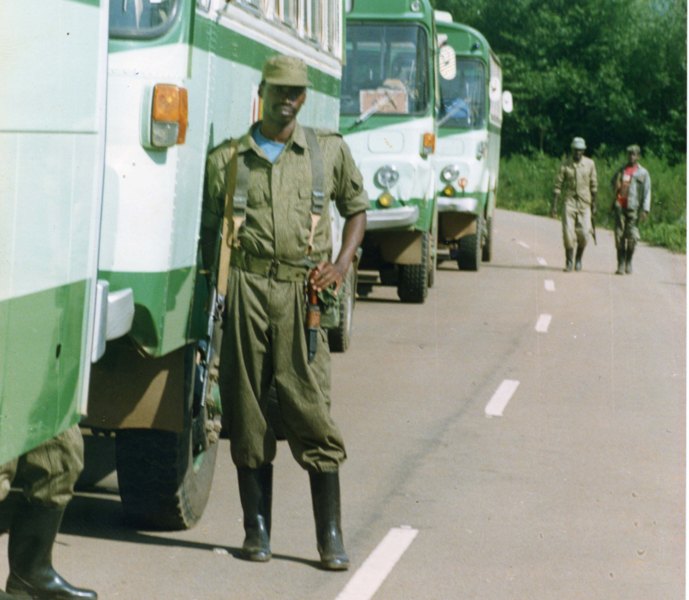
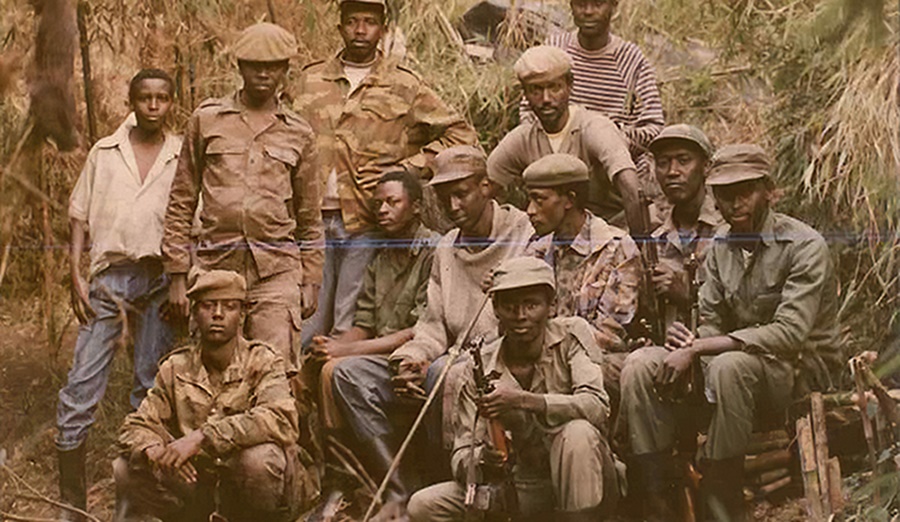
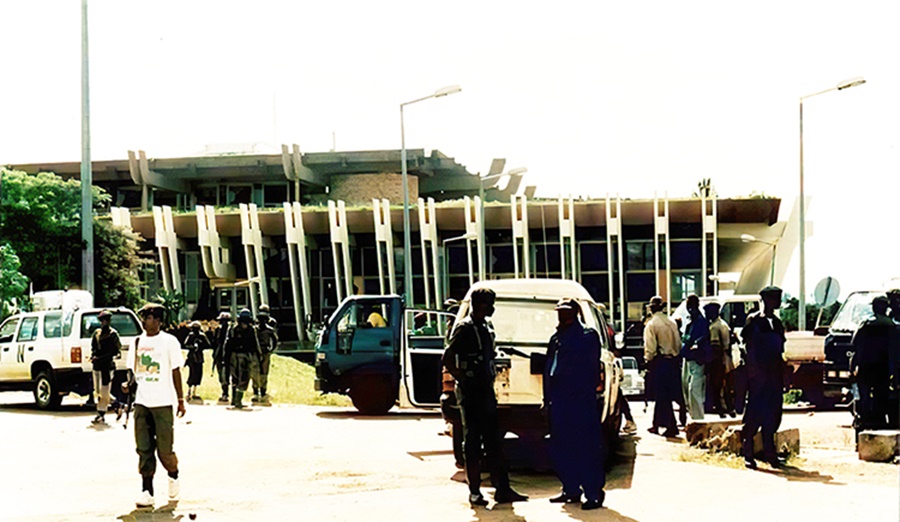
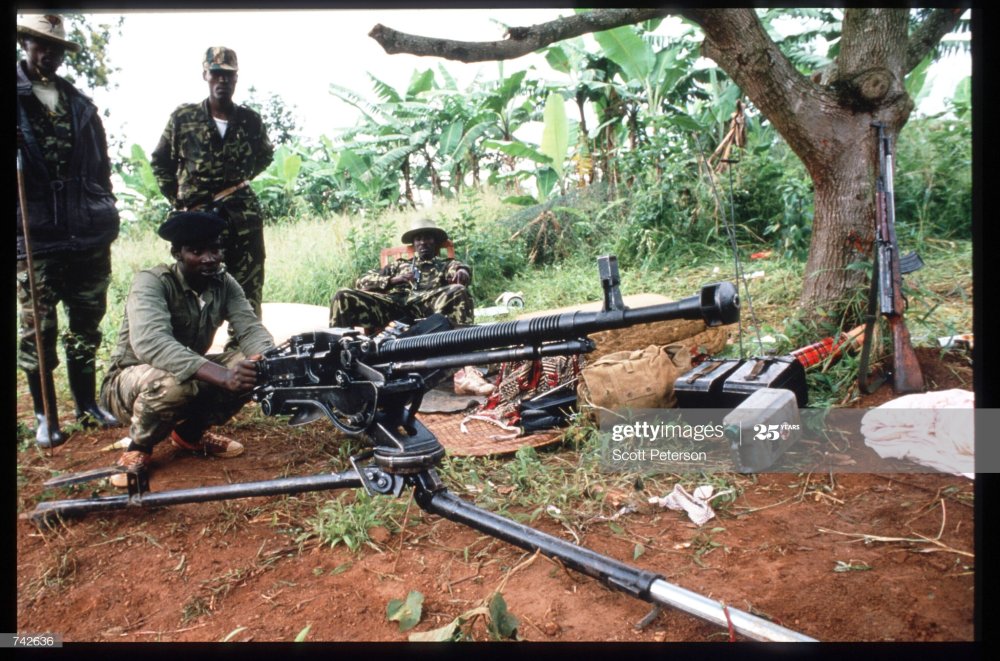
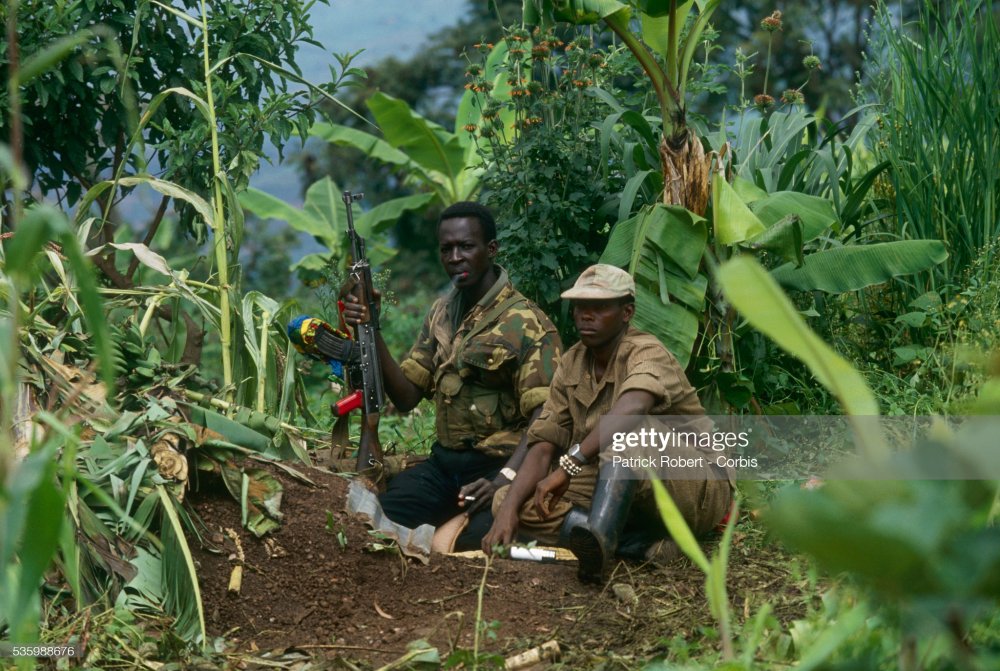
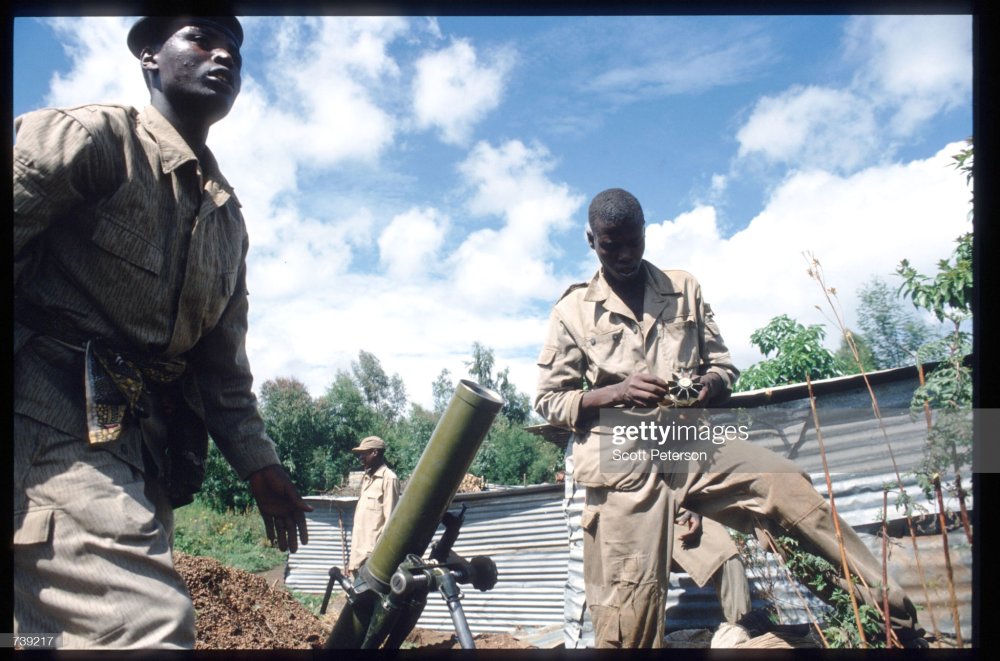
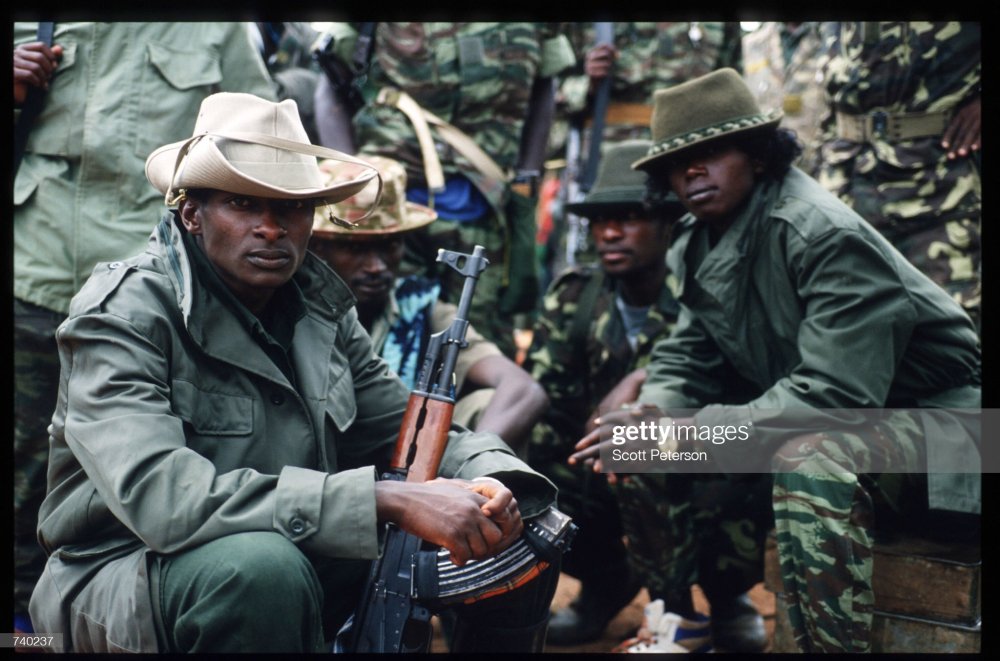
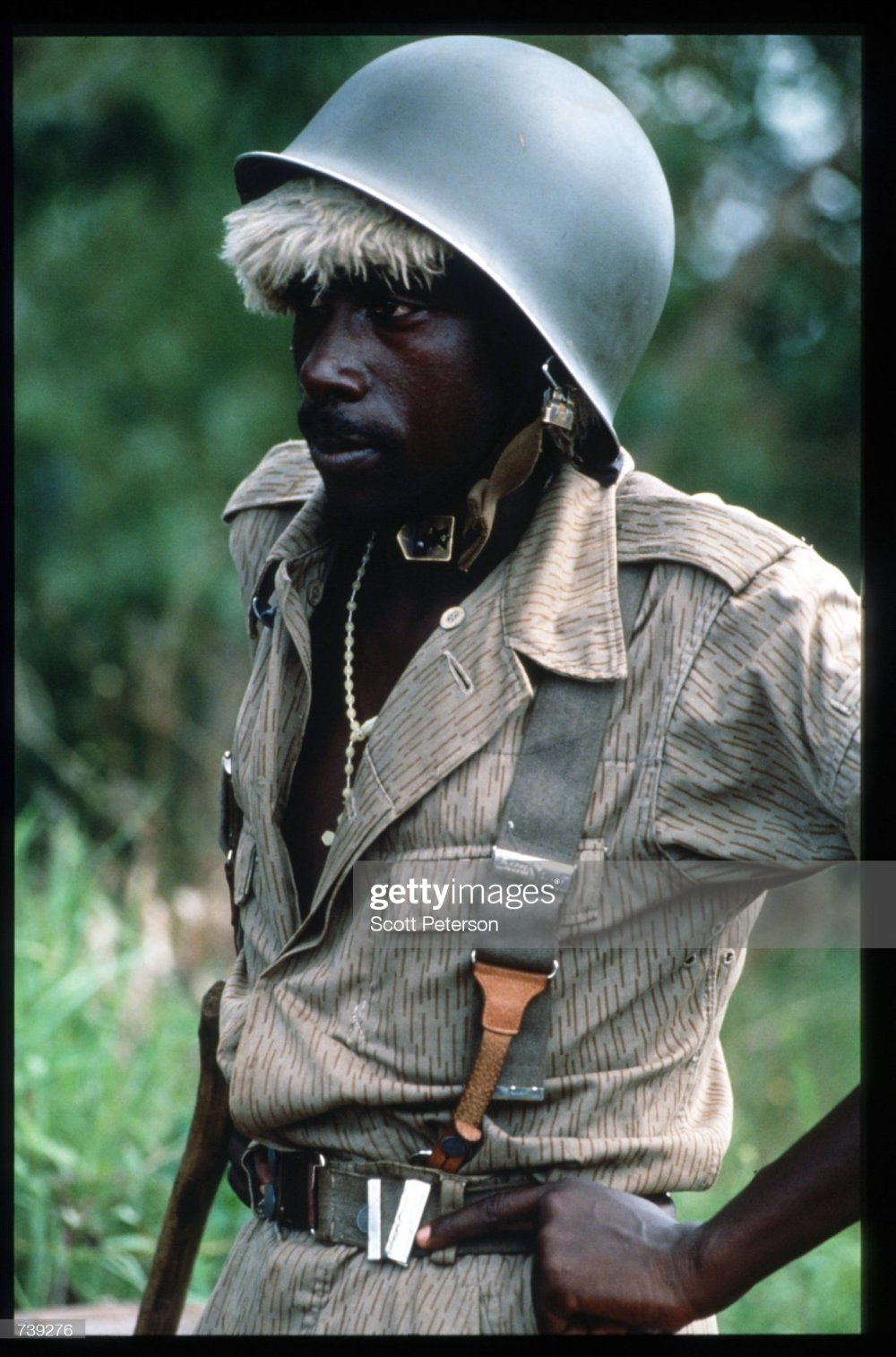
RPA forces moved into the Virunga Mountains through bushland after withdrawing from Mutara.This photo was taken after the RPA had liberated Kibungo.During the liberation struggle, sports played an important role, as soldiers would take time to relax and engage in recreational activities whenever the opportunity arose.RPA forces at the Kigali International Airport.Fred Ibingira during a conversation with a journalist about the liberation struggle.These are weapons that had been abandoned by FAR troops and were later recovered by RPA forces.
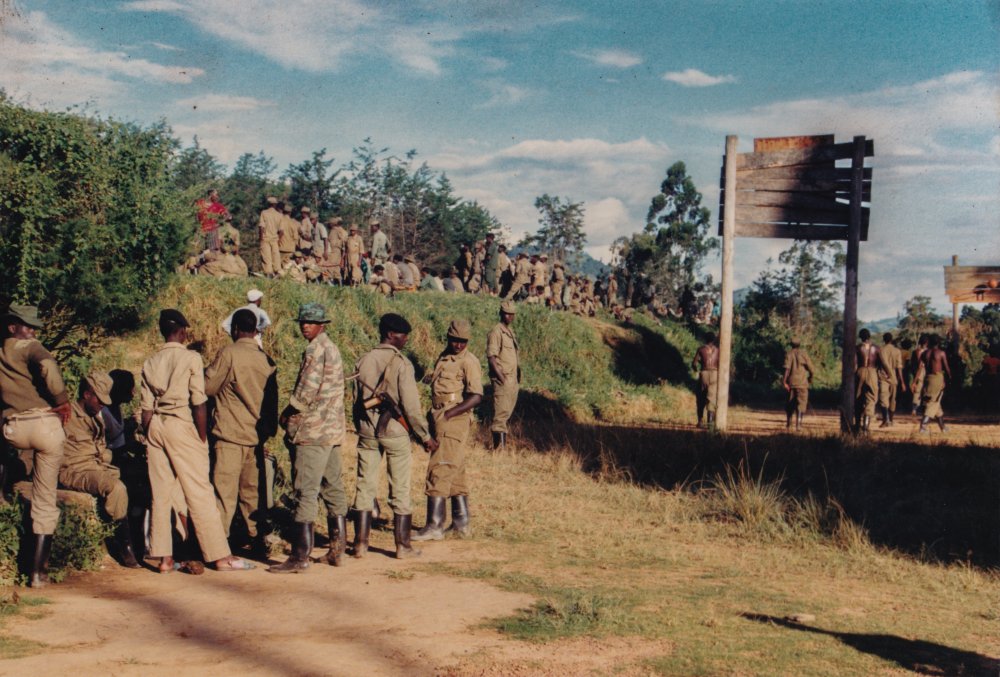
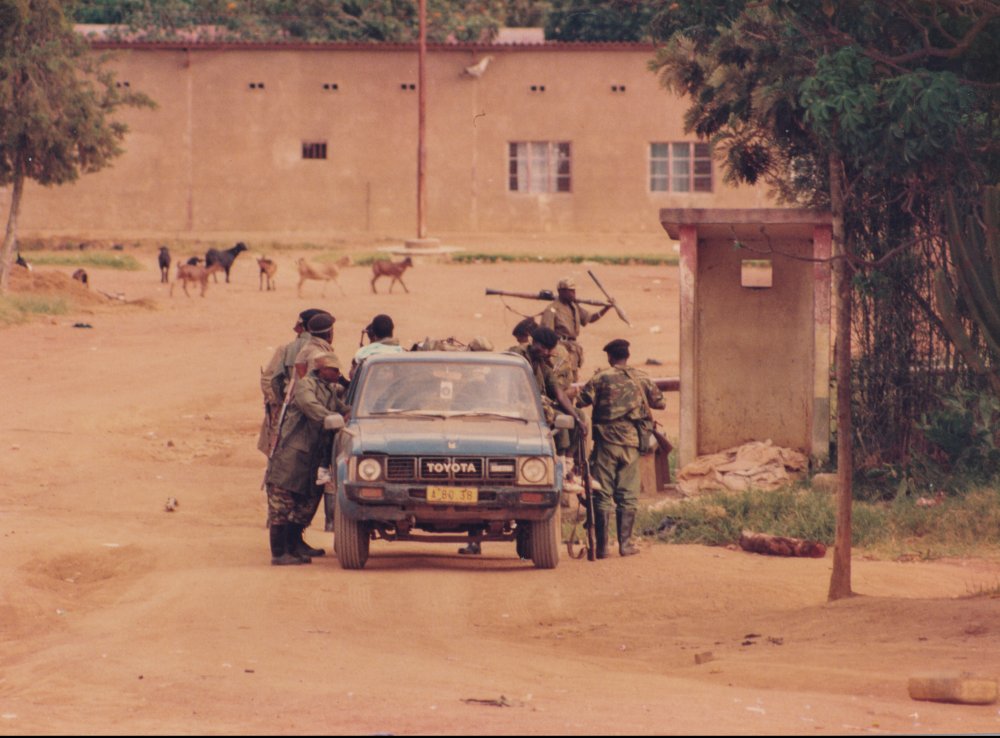
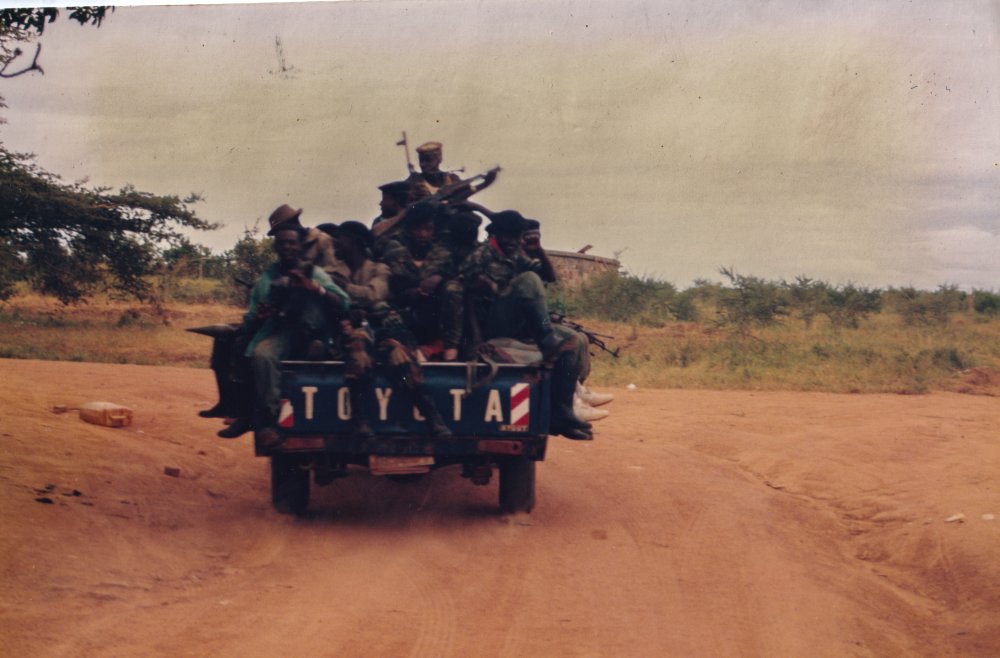
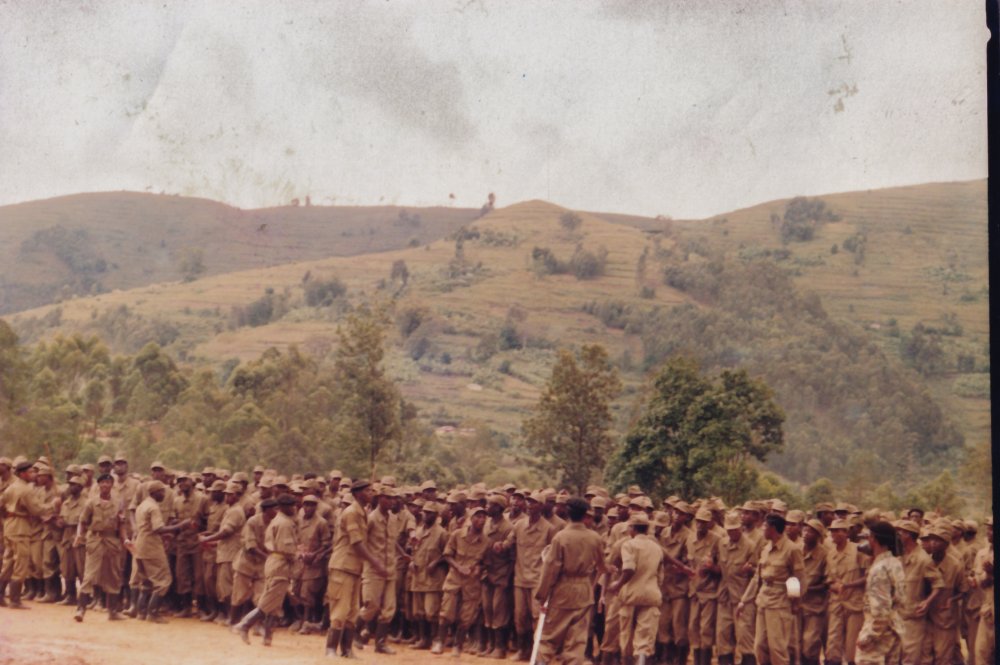
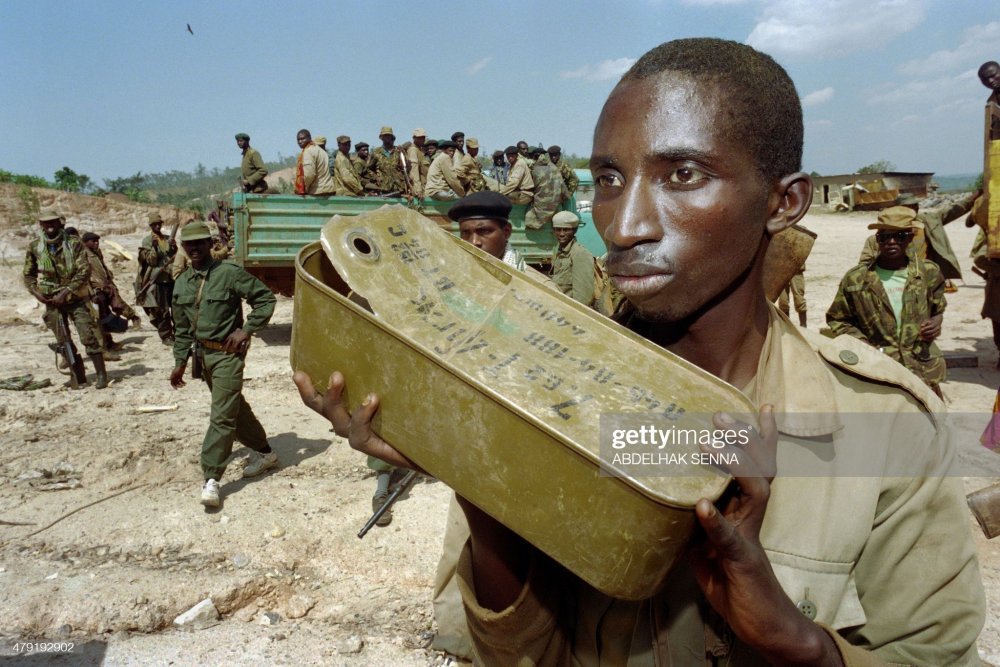
RPA troops in Kagitumba on October 22, 1990, during the early stages of the liberation struggle to free the country.A large number of RPA soldiers were young. The group shown here was photographed on May 26, 1994, as they advanced toward Kigali City.These RPA soldiers were photographed in a banana plantation within Kigali City during the liberation struggle to liberate the country.
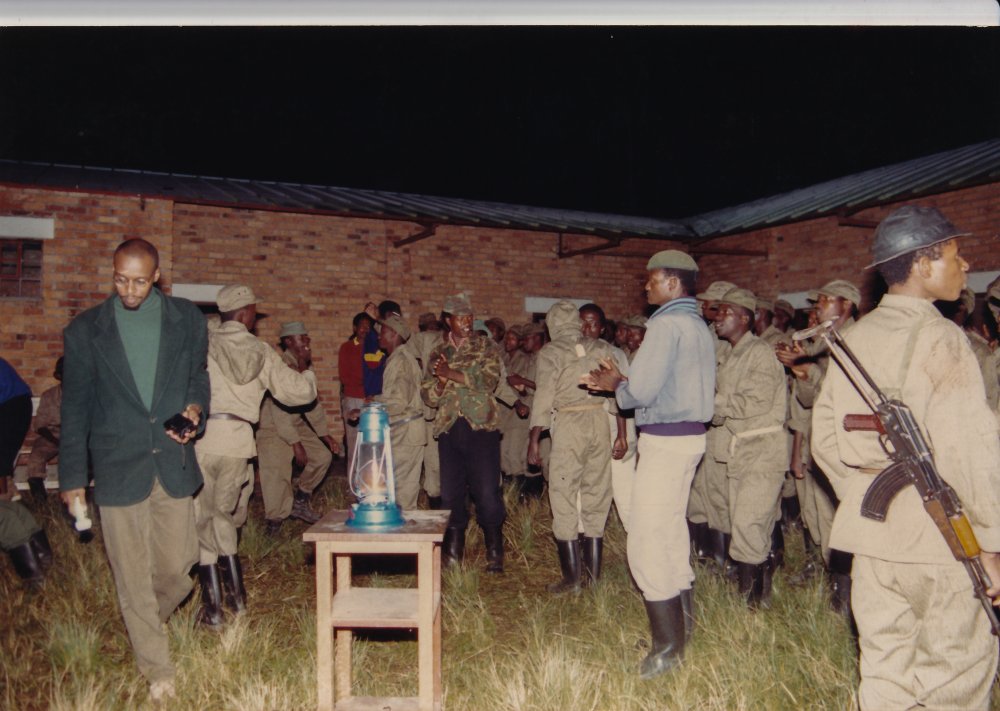
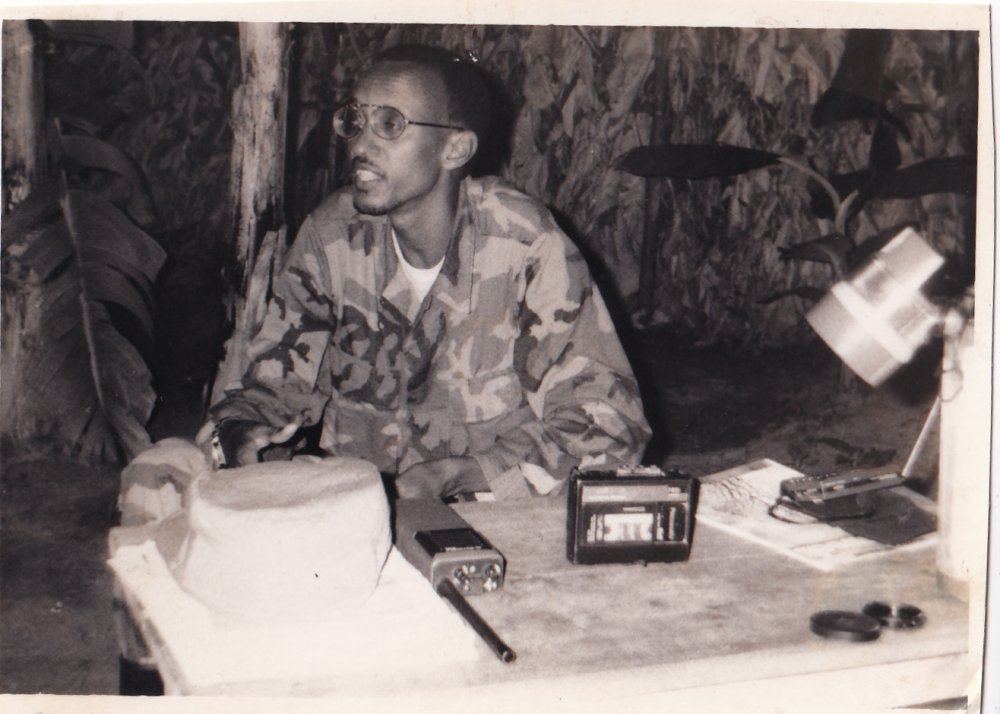
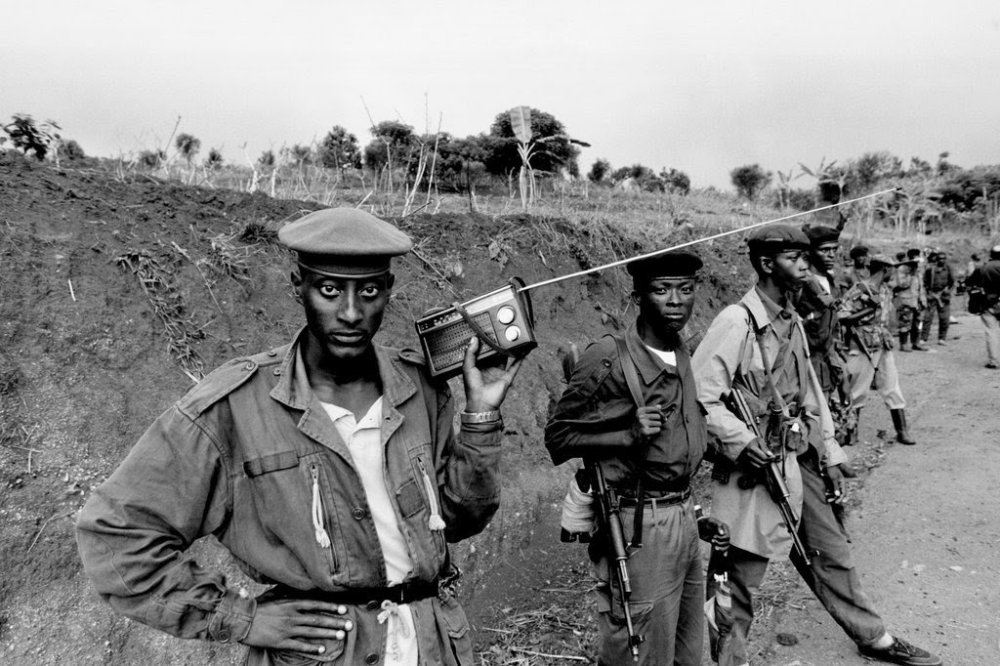
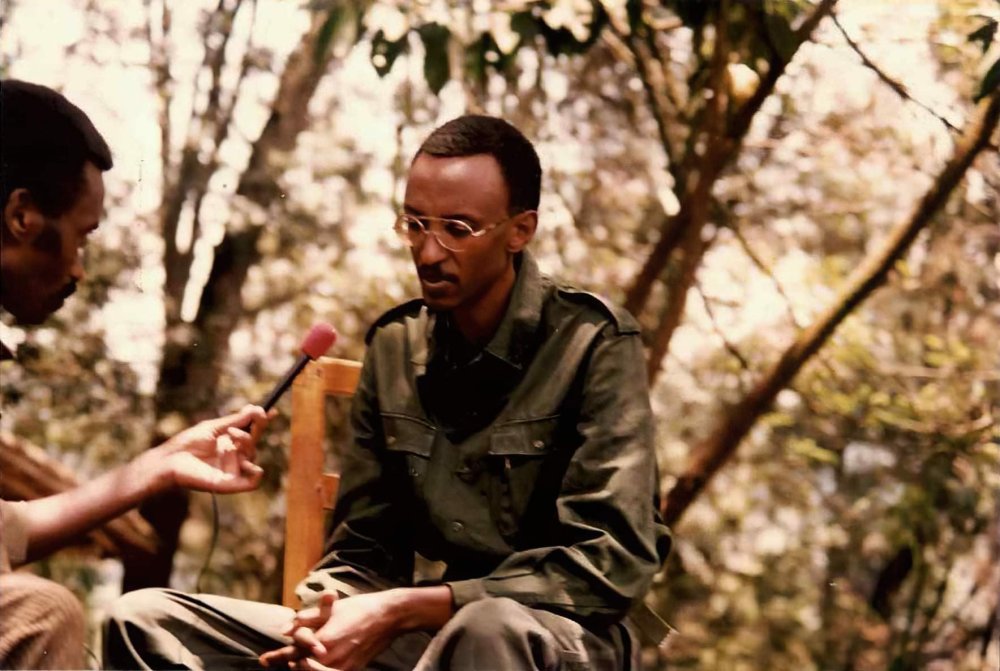
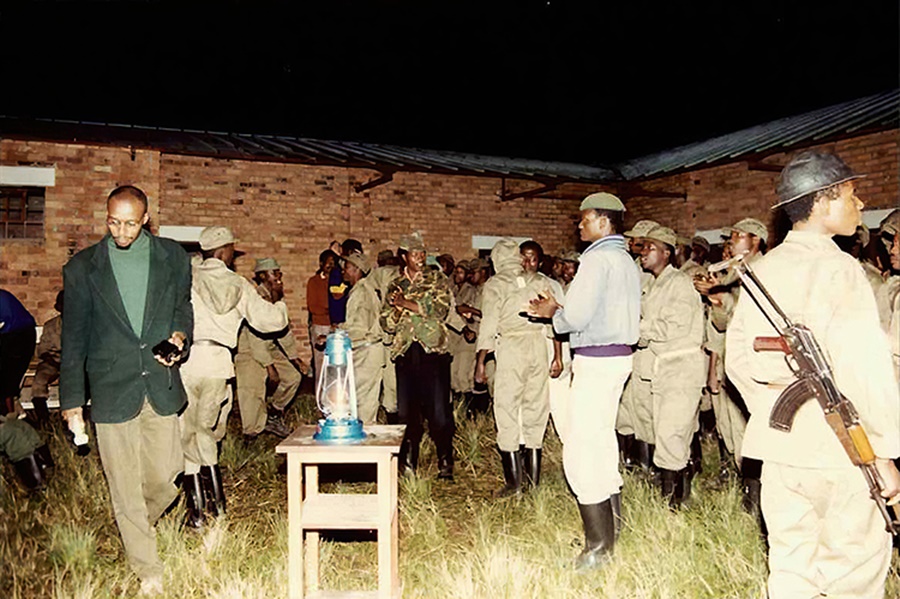
RPA soldiers in Nyamata during the liberation struggle. At the time, they relied on small radios to receive updates on the progress of the war, and they listened to Radio Muhabura.Gen. Maj. Paul Kagame often engaged with the media, emphasizing that his forces were fighting for the right to their country and to protect Rwandans who had long lived in exile and displacement.RPA forces departed from Mulindi and moved towards the CND.Nearly all the RPA soldiers who participated in the liberation of Rwanda were young at the time they joined the struggle. They abandoned their education and peaceful lives, choosing instead a difficult path that ultimately led Rwanda toward a better future.The RPA began with very limited resources, lacking both equipment and established bases, yet it ultimately achieved victory through determination, resilience, and a commitment to justice.Wherever they were deployed, RPA soldiers were characterized by strong morale. This image captures one of their night moments, illuminated by a kerosene lamp.
High morale was one of the key sources of their strength, enabling them to remain focused and determined despite the challenges of the battlefield and the loss of fellow soldiers.Gen. Maj. Paul Kagame was compelled to suspend his studies in the United States and return to lead the liberation struggle, a campaign that ultimately resulted in victory.
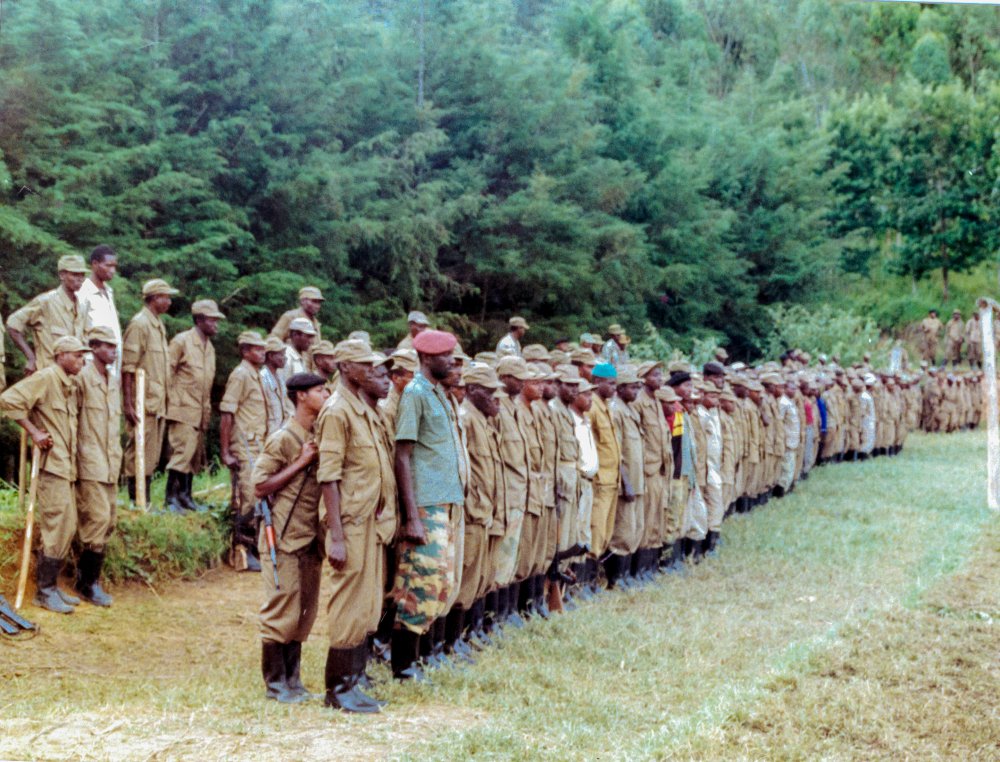
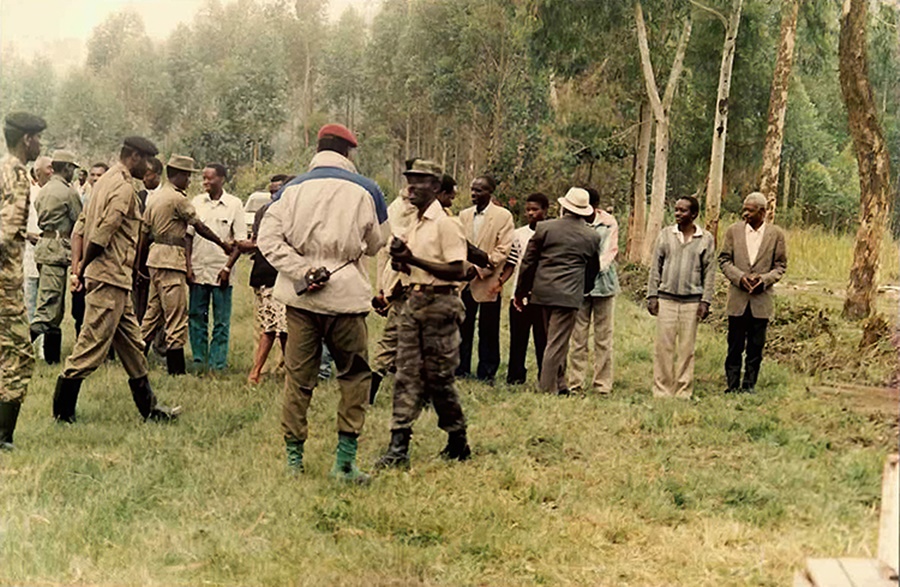
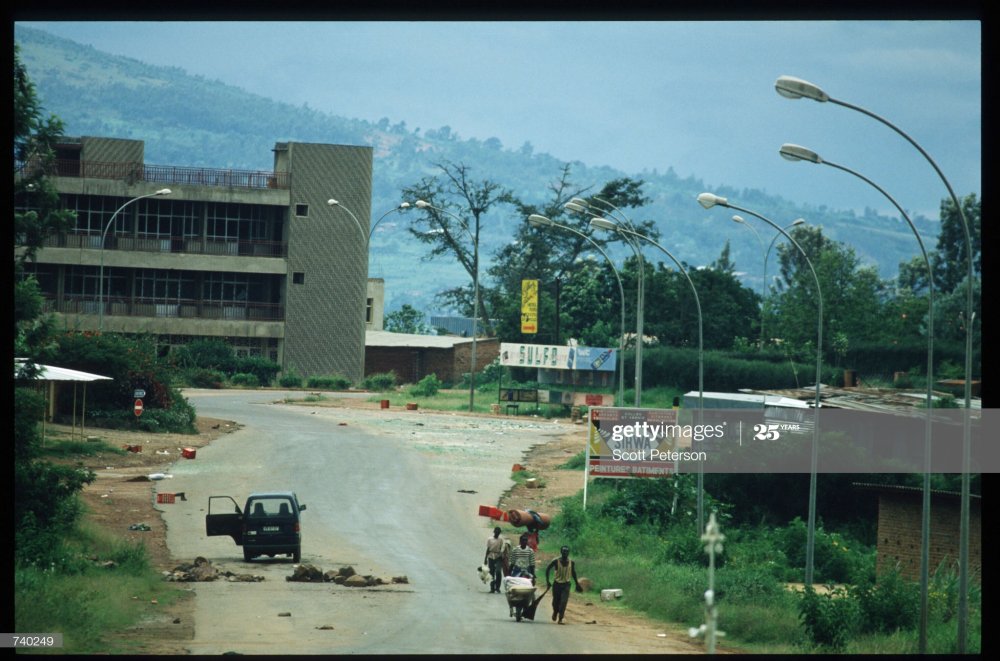
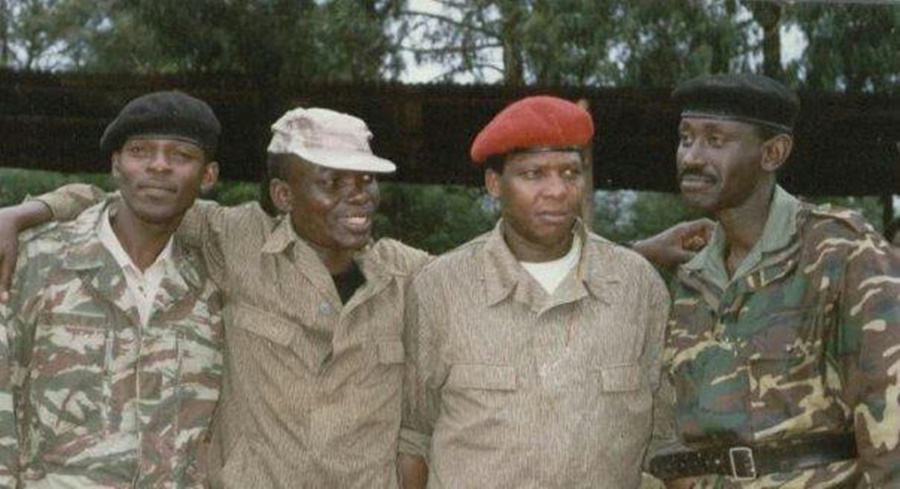
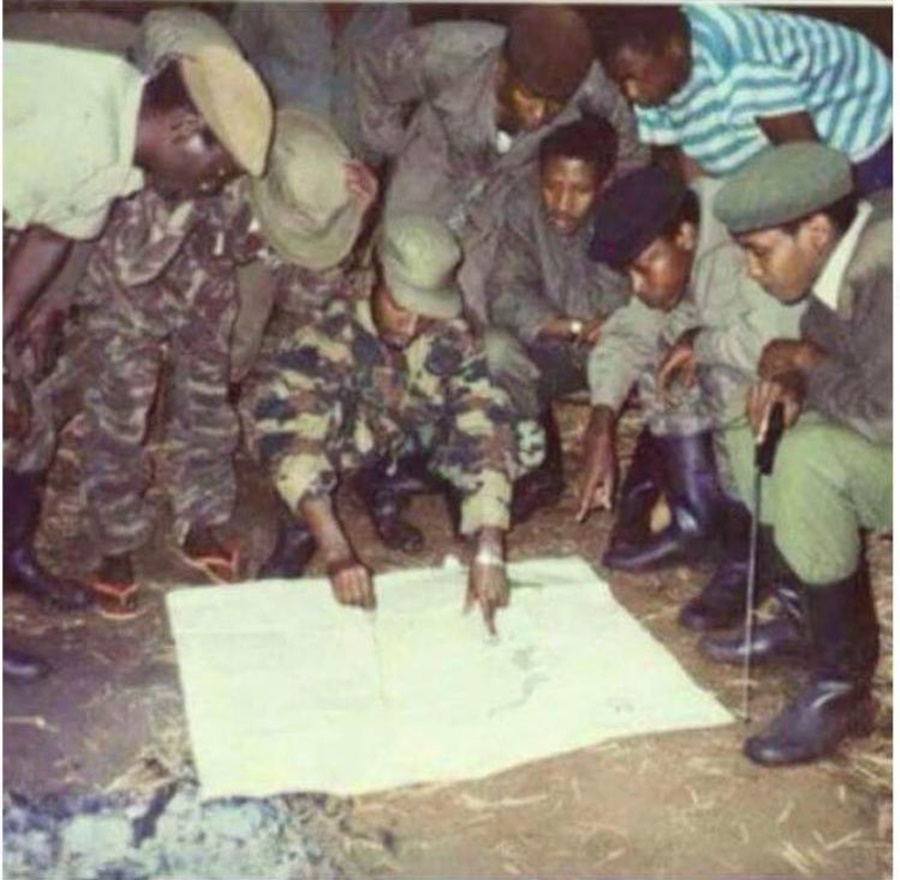
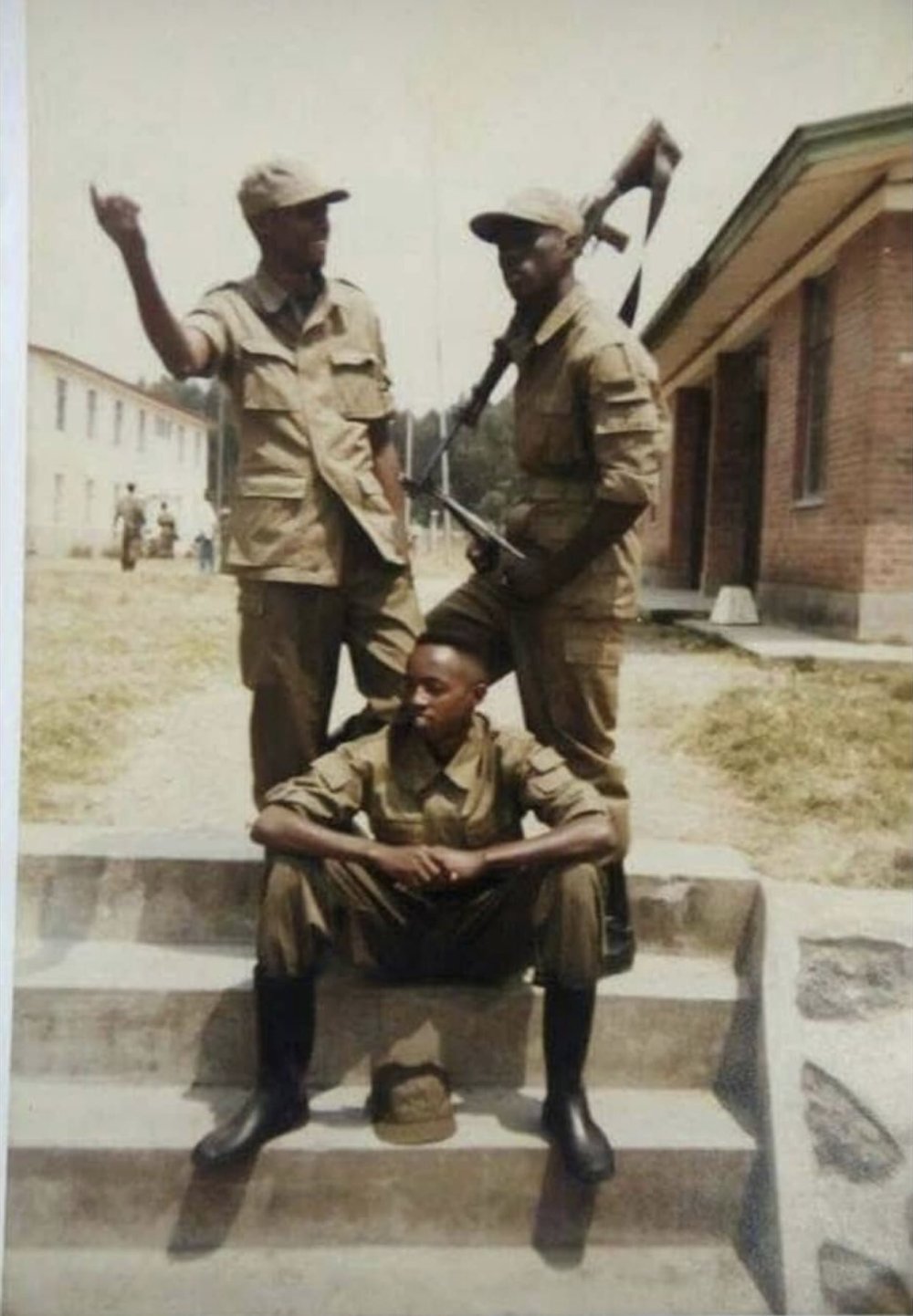
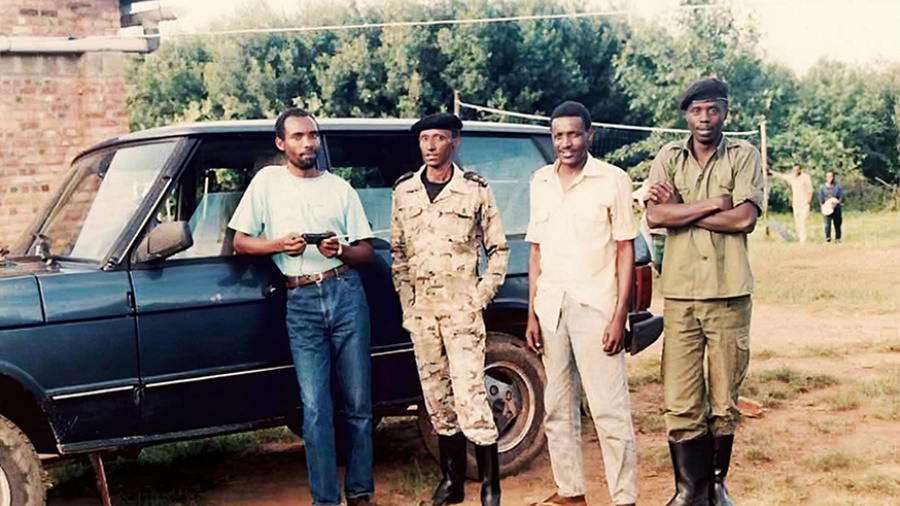
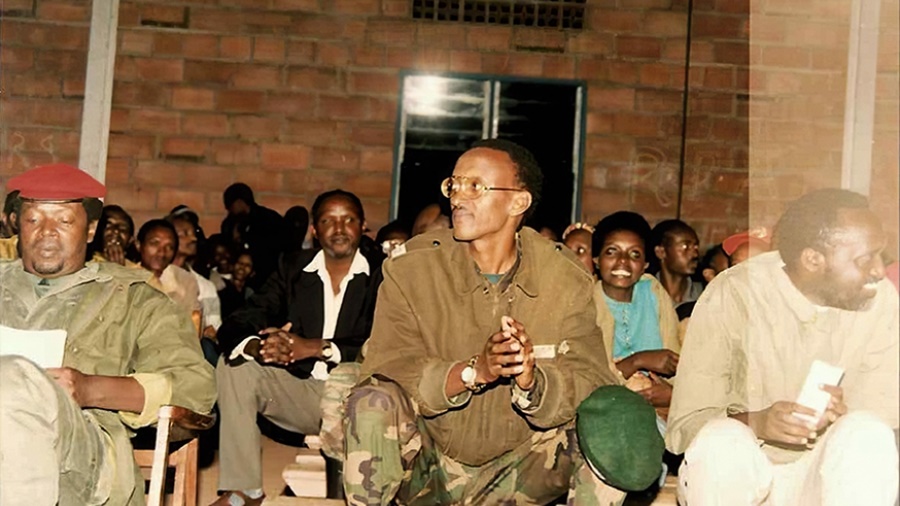
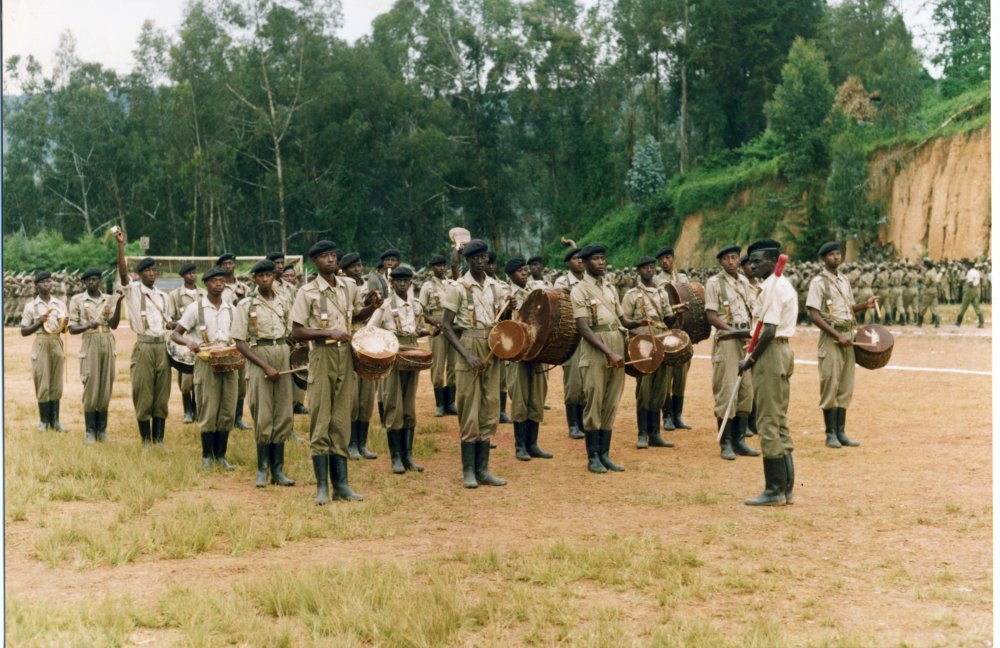
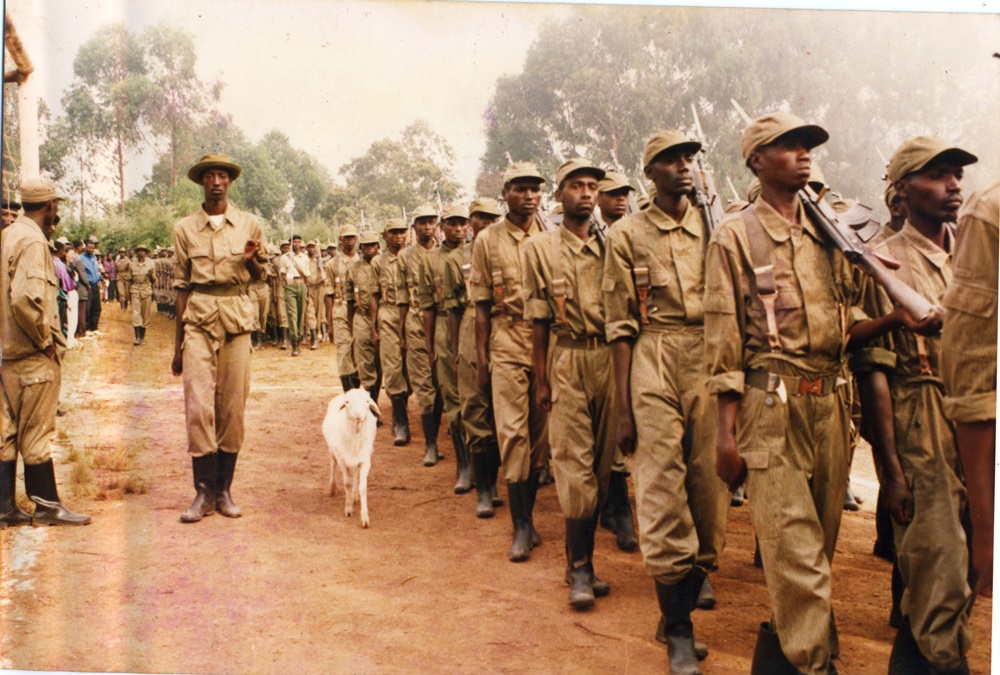
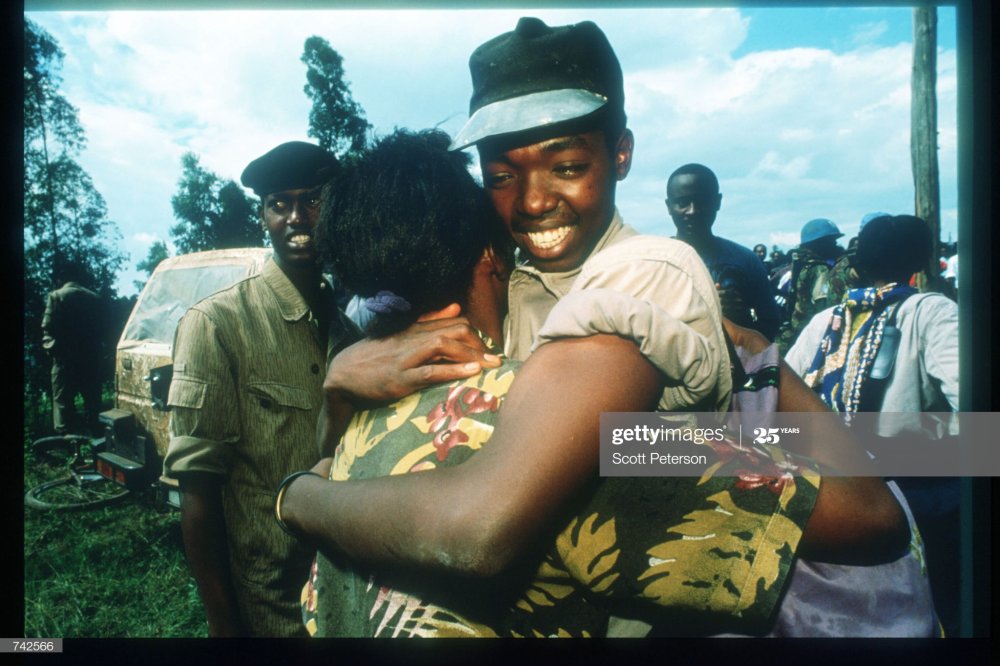
Among the RPA soldiers who served as bodyguards to Gen. Maj. Paul Kagame were Mugisha Pepekale, Happy Ruvusha, James Kabarebe, Alex Kagame, Charles Kayonga, and John Gasana, who is seen seated.Following the liberation of the country, a new phase of reconstruction began. The area once known as “kwa Lando,” which previously looked very different, has now been transformed and is filled with modern buildings.Rtd Col Ludovic Dodo Twahirwa, seen wearing a red hat, was among those who played a key role in planning and conceptualizing how the military operations should be conducted during the struggle.Day and night, RPA forces studied military strategies aimed at winning the war and rescuing Tutsi civilians who were being systematically massacred.They gave up their youth and committed themselves to liberating their country.RPA forces arrived at the CND in Kimihurura, at the Parliamentary building, where they secured the area and rescued Tutsi civilians as well as RPF political leaders who were inside.Lt. Gerald Mbanda, former Head of Media sector Development at the Rwanda Governance Board (RGB), is seen alongside colleagues who worked at Radio Muhabura, the radio station affiliated with the RPA during the liberation struggle.Gen. Maj. Paul Kagame is seen alongside other RPF members, including politicians such as Tito Rutaremara, who is positioned on the right.Maj. Gen. Paul Kagame being sworn in as Minister of Defence after the country’s liberation.Following the liberation war, RPA forces continued their humanitarian efforts by locating survivors, rescuing those who remained in hiding, and ensuring they were provided with necessary care and support.The RPA did not abandon or discriminate against the refugees who accompanied them, ensuring they were treated with care and inclusion.From the outset, the RPA had a unit dedicated to helping soldiers relax and maintain morale during the struggle.A white sheep features prominently in this photo, where it was captured during a parade of the 101 Battalion.RPA forces after the capture of Kigali International Airport.Gen. Maj. Paul Kagame in Rusumo during the early stages of the liberation struggle to liberate the country.The RPA fought the war while simultaneously rescuing persecuted Tutsi civilians, providing safety and relief to those who reached its protection.The RPA intensified its military operations until it captured Kigali, marking the declaration of victory.Some of the RPA soldiers who participated in the liberation struggle to free the country.
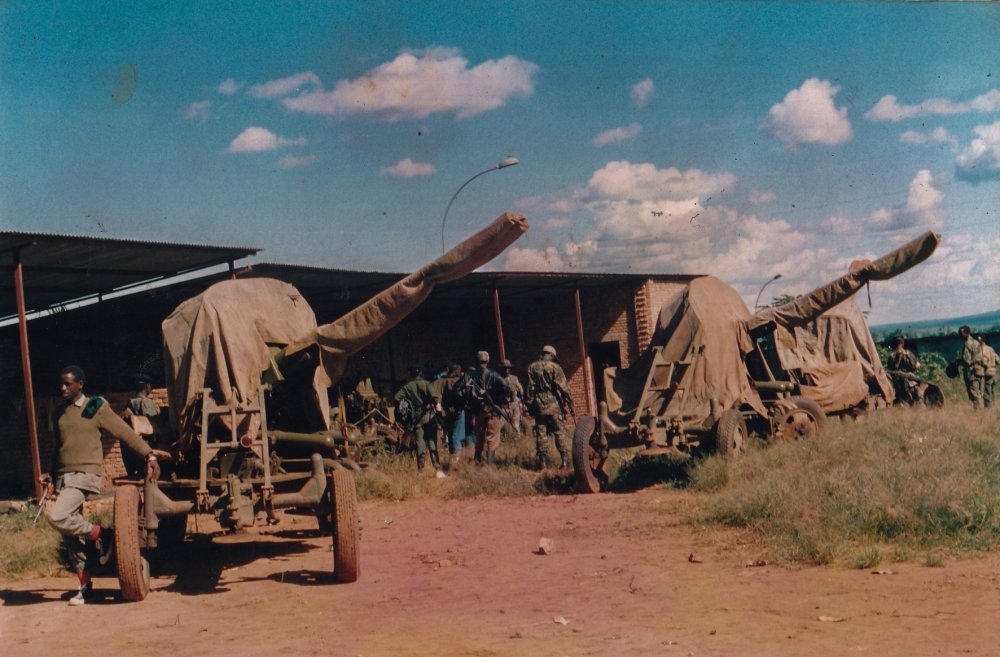
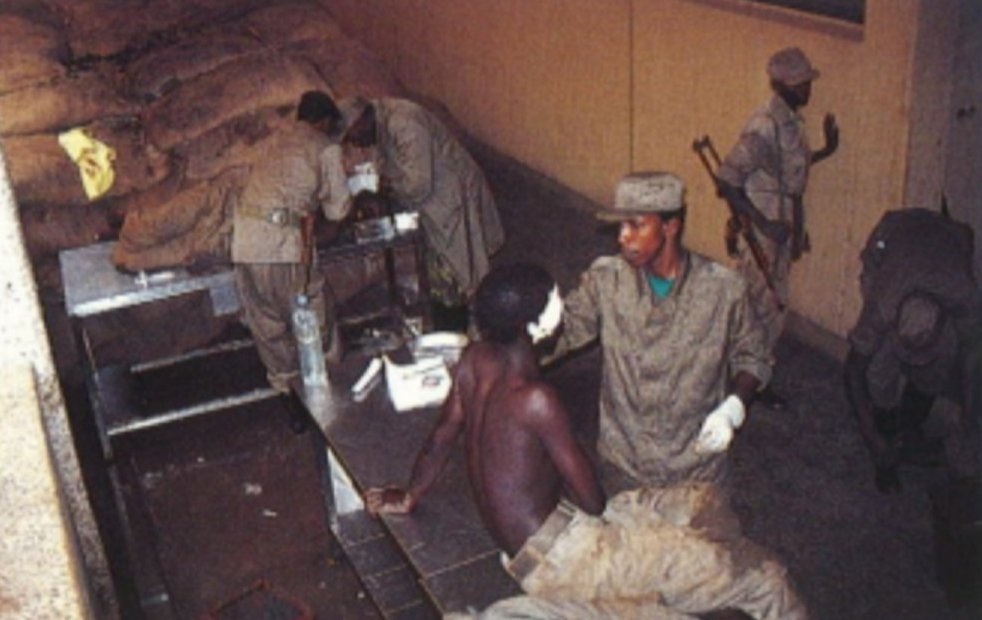
The bamboo forests of the Virunga Mountains provided RPA forces with a strategic advantage in their operations against FAR troops.They had a limited number of computers, which they used for writing and communicating information despite their scarcity.Rtd Capt. Daphrosa Intaramirwa was among those who took part in the liberation struggle, which was characterized by courage and deep compassion. In this image, she is seen carrying a child who had just been rescued.This soldier is among many who performed acts of bravery, helping to save numerous lives, including those of young children. This image was taken in Kabgayi on May 25, 1994.During the liberation struggle, it was difficult to find proper facilities for treating the wounded. Medical personnel often operated in makeshift conditions in the bush, yet continued to perform their duties with dedication and efficiency.Gen. (Rtd) James Kabarebe was among the soldiers who took part in the liberation struggle and has continued to play a role in the country’s development to the present day.The RPA lacked adequate military equipment to match its adversaries, but it relied on strong ideas, determination, and strategy that enabled it to achieve significant progress.
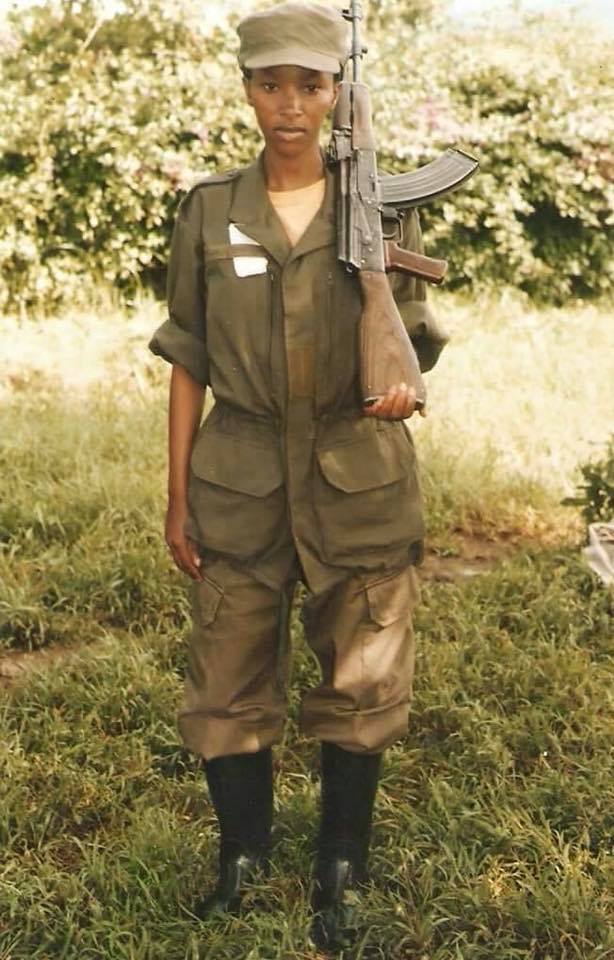
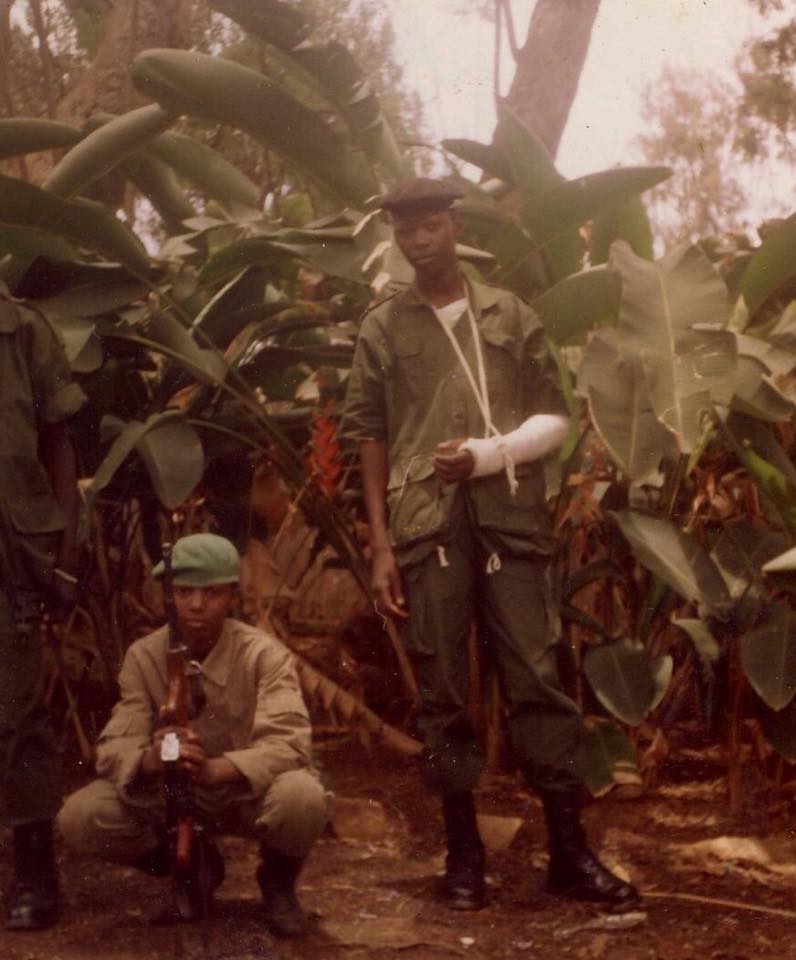
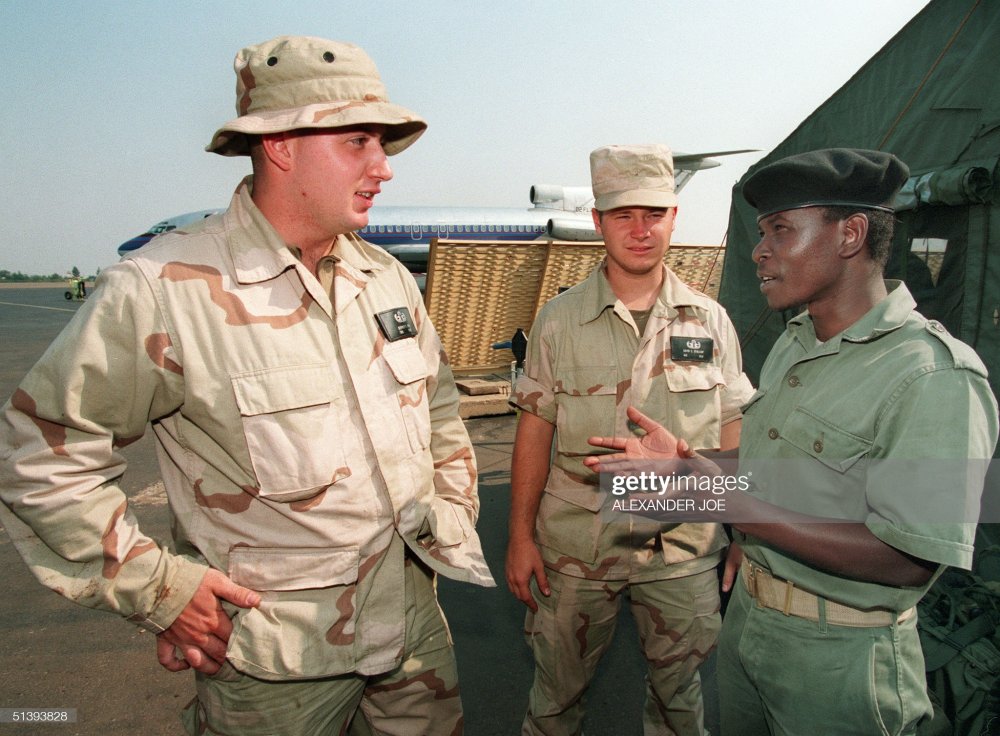
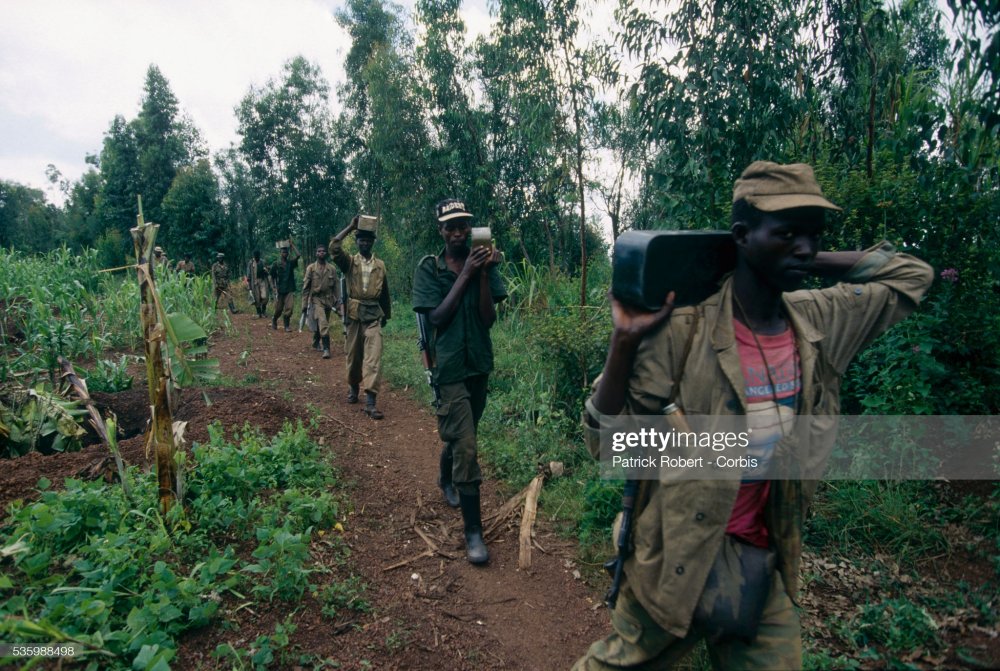
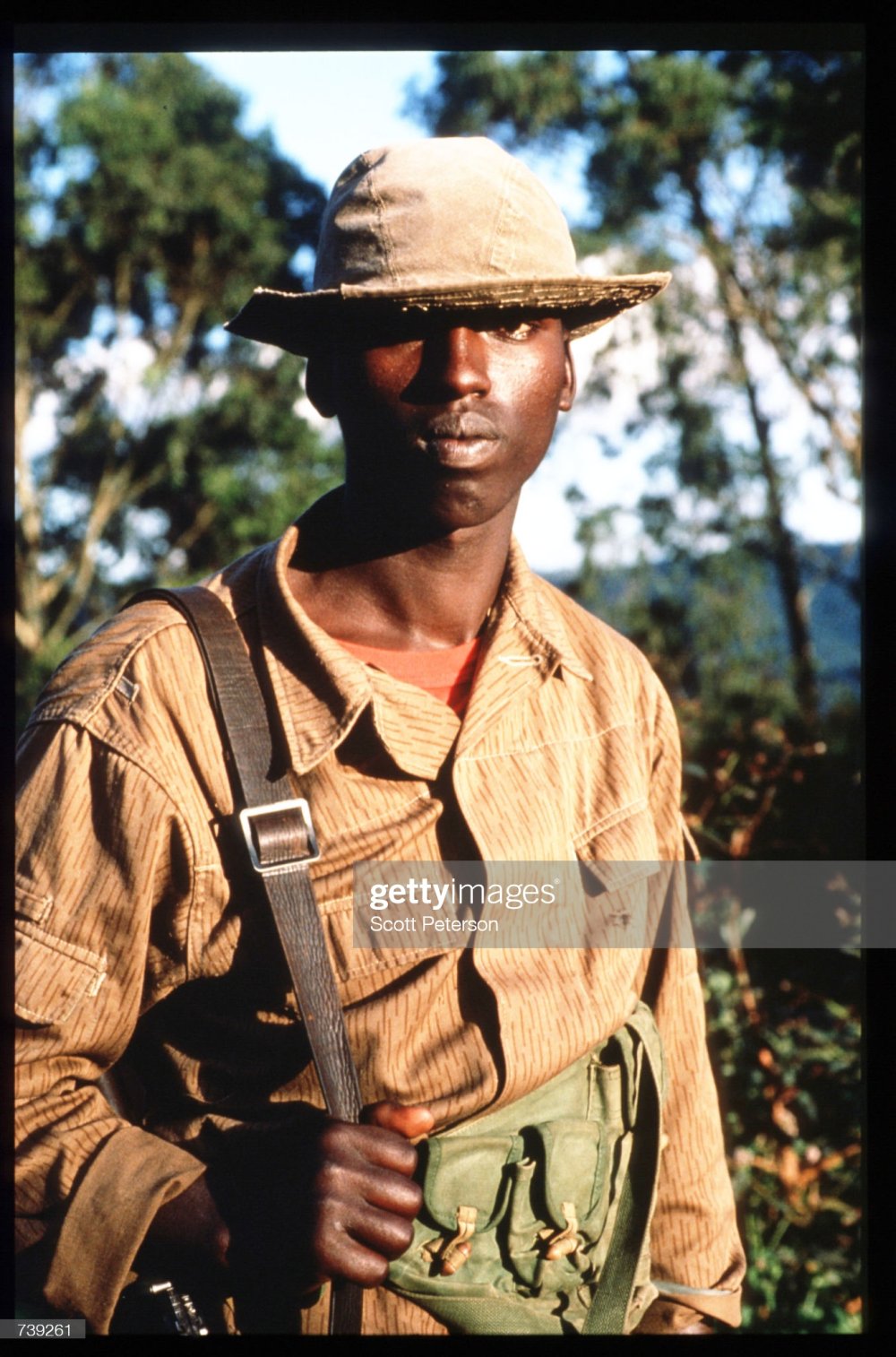
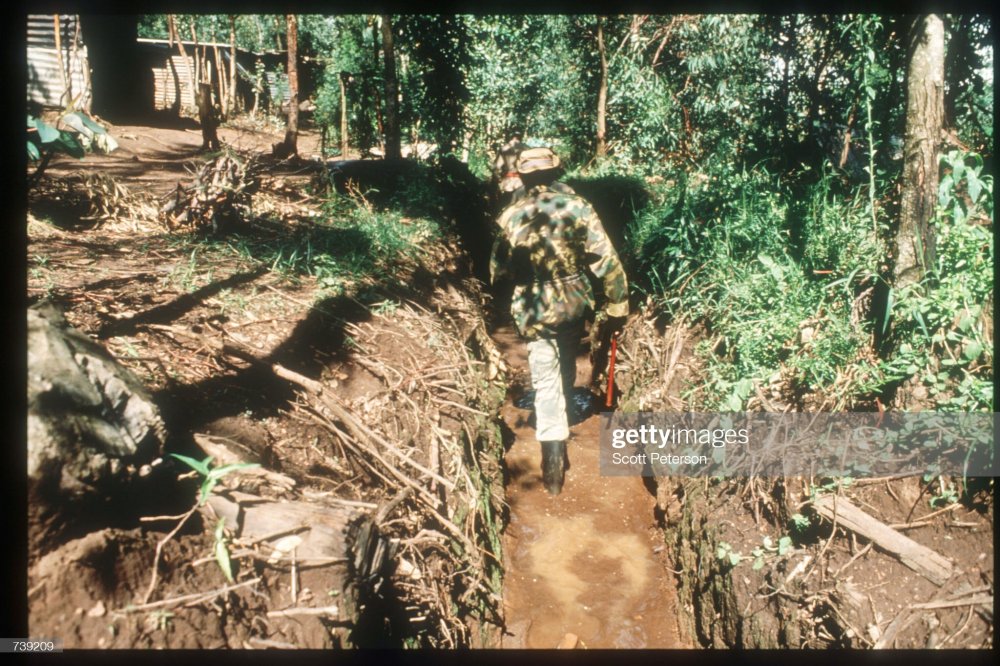
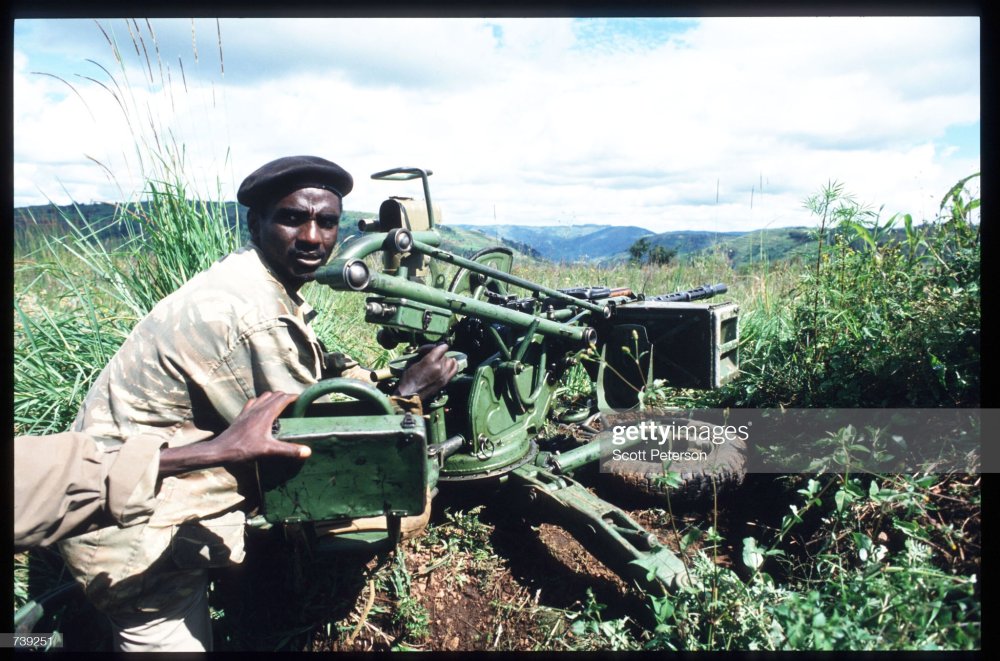
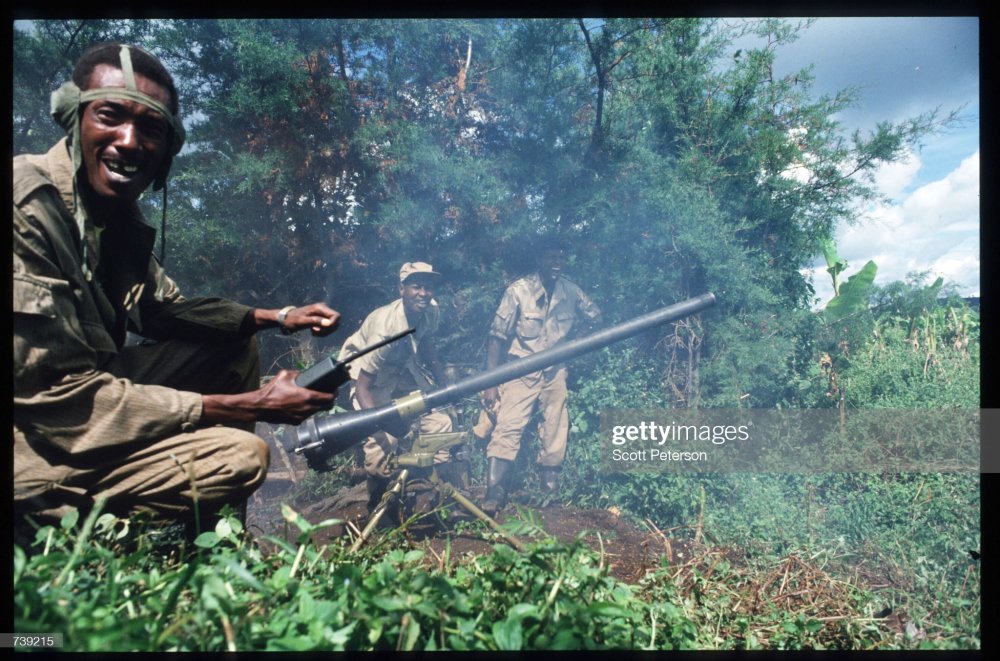
“Mukotanyi” is a uniform considered to be part of Rwanda’s exceptional historical heritage.Young women sacrificed their youth and dedicated themselves to serving and liberating their country.Even injuries did not prevent them from continuing the struggle.This photograph was taken shortly after the end of the Genocide against the Tutsi. It shows an RPA soldier in Kanombe in conversation with United States soldiers who were deployed in Rwanda.These RPA soldiers were photographed in a banana plantation in Kigali City during the liberation struggle to liberate the country.They had very limited resources and were forced to conduct the entire operation with improvised means. Here, they are seen advancing toward Kigali City, with some carrying ammunition boxes on their backs.This photograph shows an RPA soldier in the outskirts of Byumba positioned near a machine gun. It was taken on April 17, 1994.This young man is among those who sacrificed their youth and chose to dedicate themselves to serving their country. He was photographed in Byumba on April 7, 1994.This soldier was photographed near Nyanza in early June, carrying an ammunition box.Following the capture of Kigali City by the RPF-Inkotanyi forces, life in the country gradually began to return to normal.This photograph of Gen. Maj. Paul Kagame was taken on May 11, 1994, in Byumba, during a meeting with José Ayala Lasso, who was then the United Nations High Commissioner for Human Rights.On June 2, 1994, RPA forces were advancing toward Nyanza when they engaged in heavy fighting with FAR troops along the way.This RPF soldier was moving through a dug trench that had been used as a passageway. The image was taken in Byumba.Despite having very limited equipment, they made use of what was available to carry out acts of bravery that have become part of Rwanda’s history.This photograph was taken in southern Rwanda during the RPA’s liberation campaign. In many areas, the forces advanced on foot due to limited logistical capacity and scarce resources.Some RPA soldiers were photographed standing on one of the streets of Kigali on May 26, 1994.This RPA soldier was photographed in Byumba in the early days of April 1994.They fought the war with confidence that they would emerge victorious, and that belief itself gave them inner joy, motivation, and inner strength.
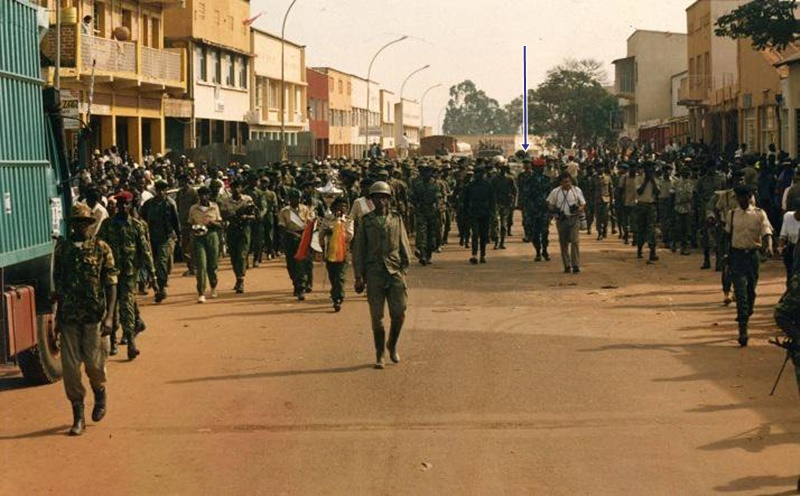
Day by day, despite the difficult and dangerous conditions, morale remained consistently high.This photograph taken on July 4, 1994 shows Gen. Maj. Paul Kagame, Commander of the APR forces (indicated by the blue arrow), alongside other soldiers after arriving in central Kigali.
The documents were recently uncovered by Seiya Matsuno, a historian and researcher at the International Peace Research Institute of Meiji Gakuin University, in Japan’s National Archives.
Matsuno said the materials not only provide new evidence about Japan’s wartime production of poison gas munitions but also illustrate the dark reality of a government and military apparatus that placed war above society and human life.
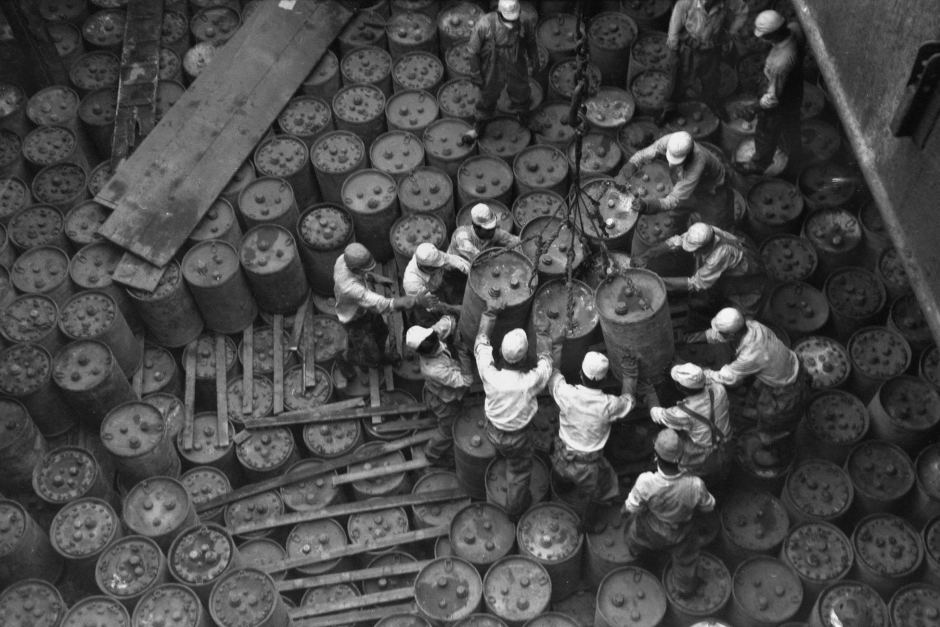
The newly found document, titled “Compilation of Reports on the Implementation of Military Mobilization,” is a production report covering fiscal 1941 operations at the Sone Manufacturing Plant of the Tokyo Second Army Arsenal.
Matsuno analyzed the material and published his findings in the June 2026 issue of the Japanese magazine Sekai.
According to Matsuno’s research, the Sone plant, formerly located in Kitakyushu City in Fukuoka Prefecture, was responsible for filling artillery shells with toxic chemical agents and assembling poison gas bombs. The facility also manufactured smoke shells and incendiary bombs.
The material documents accidents that occurred during poison gas bomb production and the injuries suffered by workers. Until now, such incidents had largely been known only through testimonies from former employees. The newly discovered records provide documentary evidence supporting those accounts.
Matsuno told Xinhua that the material also shows how poison gas bomb production expanded alongside Japan’s growing war efforts. During fiscal 1941, the Sone plant increased its workforce and boosted output.
He noted that, at the time, Japan was continuing its war in China, preparing for a possible conflict with the Soviet Union and planning military expansion into Southeast Asia.
Matsuno emphasized that the Japanese military’s use of chemical weapons in China and elsewhere violated international law, adding that the military also conducted human experiments and committed other war crimes, which reflected the brutal nature of Japan’s wartime aggression.
Under the rule of Japanese militarism, the country became increasingly consumed by war fervor.
Matsuno said that the newly discovered records reveal a period in which the government and military subordinated all aspects of society to the war effort, while dissenting voices were systematically suppressed.
War brings only suffering and misfortune, Matsuno noted, stressing the importance of uncovering the realities of wartime history to prevent similar tragedies from recurring.
Understanding how Japan became a country that inflicted serious harm on many Asian nations, and examining the conditions that made such developments possible, remain important tasks for contemporary Japanese society, he added.
Newly discovered historical records have shed fresh light on the operations of a Japanese poison gas bomb factory during World War II.
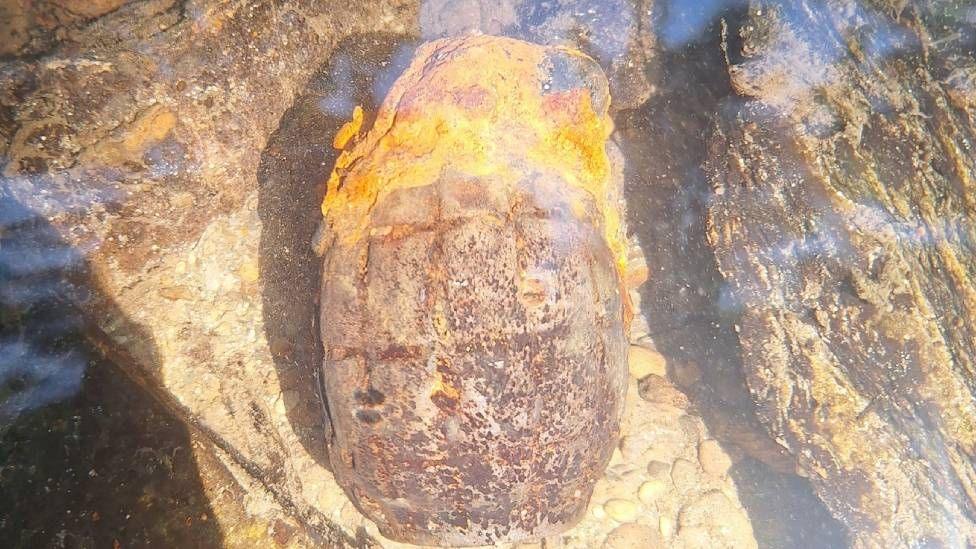
Biak Numfor Police Chief Ari Trestiawan said the grenade was found at the blast site and safely detonated by a bomb disposal unit at around 6:00 p.m. local time.
Residents have been warned to stay away from the area until it is declared free of explosive materials.
Police have not yet begun a formal crime scene investigation pending the completion of site sterilization efforts.
The explosion occurred at a fishery complex in Biak Kota district on Sunday afternoon, killing five people, including two children. Three others remain missing, and 19 people were injured.
The blast also damaged nine houses occupied by 10 families, displacing 55 residents who are currently being sheltered by local authorities.
The Mills bomb was first developed during World War One
In 1996, as the camps began to be dismantled and refugees were encouraged to return home, Musabyemungu decided to repatriate and join fellow Rwandans in rebuilding a nation devastated by the 1994 Genocide against the Tutsi.
While many civilians returned, former government soldiers (Ex-FAR) and Interahamwe militia members refused to do so. Instead, they organised armed groups with the aim of launching attacks on Rwanda and reclaiming power. Their continued presence eventually prompted military operations to facilitate their repatriation.
In 2000, these groups formally established the Democratic Forces for the Liberation of Rwanda (FDLR), a rebel movement that sought to continue armed operations against Rwanda. Musabyemungu’s husband, Jérôme Ngendahimana, then a colonel, became commander of the group’s Second Division before later being appointed head of intelligence.
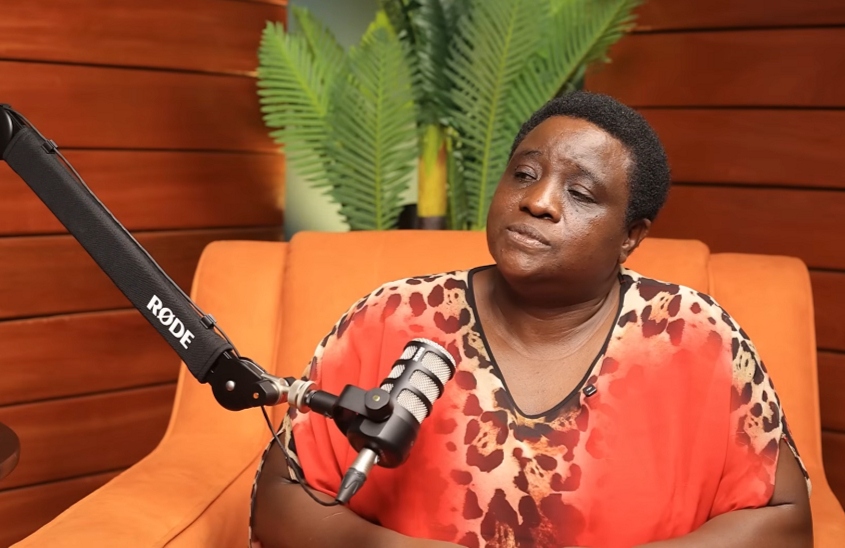
Speaking to KP Media24, Musabyemungu recalled how her efforts to bring combatants home began in 2001 after RPA forces captured approximately 2,000 FDLR fighters and transferred them to Mudende, in present-day Rubavu District.
“I decided to go and see them because I knew many of them,” she said. “Some had studied with me, worked with me, or lived with me in the refugee camps. I wanted to talk to them, explain the situation, and encourage them to return to their country.”
During one of those visits, Musabyemungu met James Kabarebe, who was serving as Chief of Defence Staff of the Rwanda Defence Forces at the time. Impressed by her determination, he agreed to support her proposal to travel into the forests of eastern Congo and persuade other FDLR members, including her husband, to return to Rwanda.
Two years later, in 2003, Musabyemungu embarked on the mission. She travelled across Lake Kivu to Bukavu and continued on foot through dense forests to reach FDLR-controlled territory.
Upon her arrival, she was housed with the wives of FDLR fighters, as many members of the group distrusted her motives. She later learned that some individuals within the movement had proposed killing her, but the group’s commander, Paul Rwarakabije, repeatedly intervened to protect her.
“Commander Rwarakabije saved my life,” she said. “Whenever reports recommending my execution were brought to him, he would reject them. Sometimes he would say, ‘Leave her alone; I will deal with her myself.’ At other times he would insist that they could not kill me before my husband arrived.”
Musabyemungu explained that her husband was stationed roughly a week’s journey away from the location where she first arrived. When she eventually reached him, she seized an opportunity to speak with him privately.
She told him she had come to take him home and relayed assurances from Gen. Kabarebe that he would be welcomed back and allowed to live peacefully in Rwanda.
Initially sceptical, Ngendahimana struggled to believe the guarantees. He asked for three days of fasting and prayer before making a decision. At the end of that period, he agreed to return, though he remained uncertain about what awaited him during the journey and upon arrival in Rwanda.
In October 2003, after a difficult trek through the forests of eastern Congo, Musabyemungu and Ngendahimana reached Bukavu before crossing into Rwanda through Rusizi. They later travelled to Kigali, where they were personally received by Gen. Kabarebe.
“It was already night when we arrived in Kigali,” she recalled. “I felt immense relief because I had managed to bring him back alive.”
According to Musabyemungu, Kabarebe welcomed them into his home and shared a meal with them.
Soon after Ngendahimana’s return, Kabarebe contacted Rwarakabije by telephone to inform him that the former FDLR commander’s colleague had safely arrived in Rwanda. He then entrusted Musabyemungu with another mission of bringing Rwarakabije home as well.
Musabyemungu said she later spoke directly with Rwarakabije, who told her he would only return if she personally came back to the forests and accompanied him to Rwanda, just as she had done with her husband.
“He had refused to come,” she said. “He told me that he would only return if I came back for him. I agreed and returned to Congo. By then, I was no longer thinking about the possibility of being killed. I was only focused on the outcome.”
Ngendahimana supported the new mission and assured Kabarebe that his wife was capable of accomplishing it.
Musabyemungu described the second mission as even more challenging than the first.
“The first time, I had my husband with me. If something happened, we would face it together. This time, I was alone. Reaching Rwarakabije’s base and convincing him to leave was much more difficult,” she said.
In November 2003, she successfully escorted Rwarakabije back to Rwanda. He returned alongside more than 120 soldiers, including 12 officers.
“When we reached Rusizi, an aircraft was sent to transport us because we were such a large group,” she said. “When we landed at Kanombe, senior military officers and generals were waiting for us.”
The return of Rwarakabije and the officers dealt a major blow to the FDLR. Musabyemungu said the group also brought back weapons and equipment from the movement’s headquarters, making it significantly harder for the organisation to regroup and rebuild its capabilities.
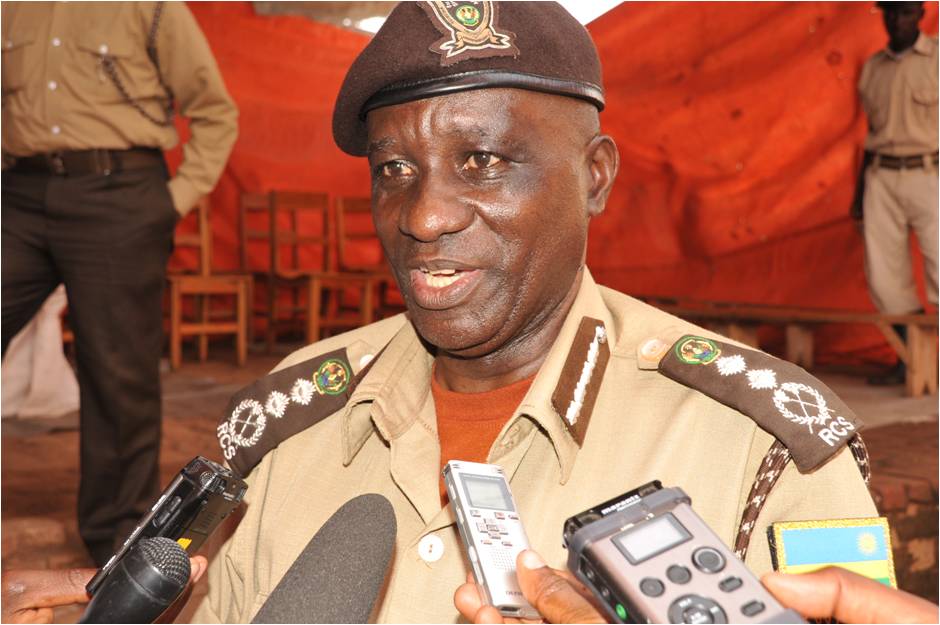
Following his repatriation, Rwarakabije joined the Rwanda Defence Forces and rose to the rank of Major General. After retiring from military service, he was appointed Commissioner General of the Rwanda Correctional Service.
Ngendahimana also joined the Rwanda Defence Forces and retired with the rank of Major General.
For her part, Musabyemungu continued her education, earning postgraduate qualifications from the former National University of Rwanda and later from Kigali Independent University (ULK). Between 2008 and 2013, she served as a member of Rwanda’s Parliament.
Maj. Gen. (Rtd) Jérôme Ngendahimana returned to Rwanda in October 2003.Maj. Gen. (Rtd) Paul Rwarakabije returned to Rwanda in November 2003, along with 120 other fighters.Anne Marie Musabyemungu said the mission to repatriate the generals was highly challenging, but that she remained confident.
This dangerous ideology intensified during the genocide, with the aim of accelerating the extermination of Tutsis across Rwanda. In just 100 days, from April 7 to July 4, 1994, more than one million Tutsis were killed simply because of their identity.
The Habyarimana regime deliberately promoted hateful language and stereotypes intended to dehumanize Tutsis and strip them of their dignity. They were increasingly accused of being accomplices of the RPF Inkotanyi and became targets of systematic persecution.
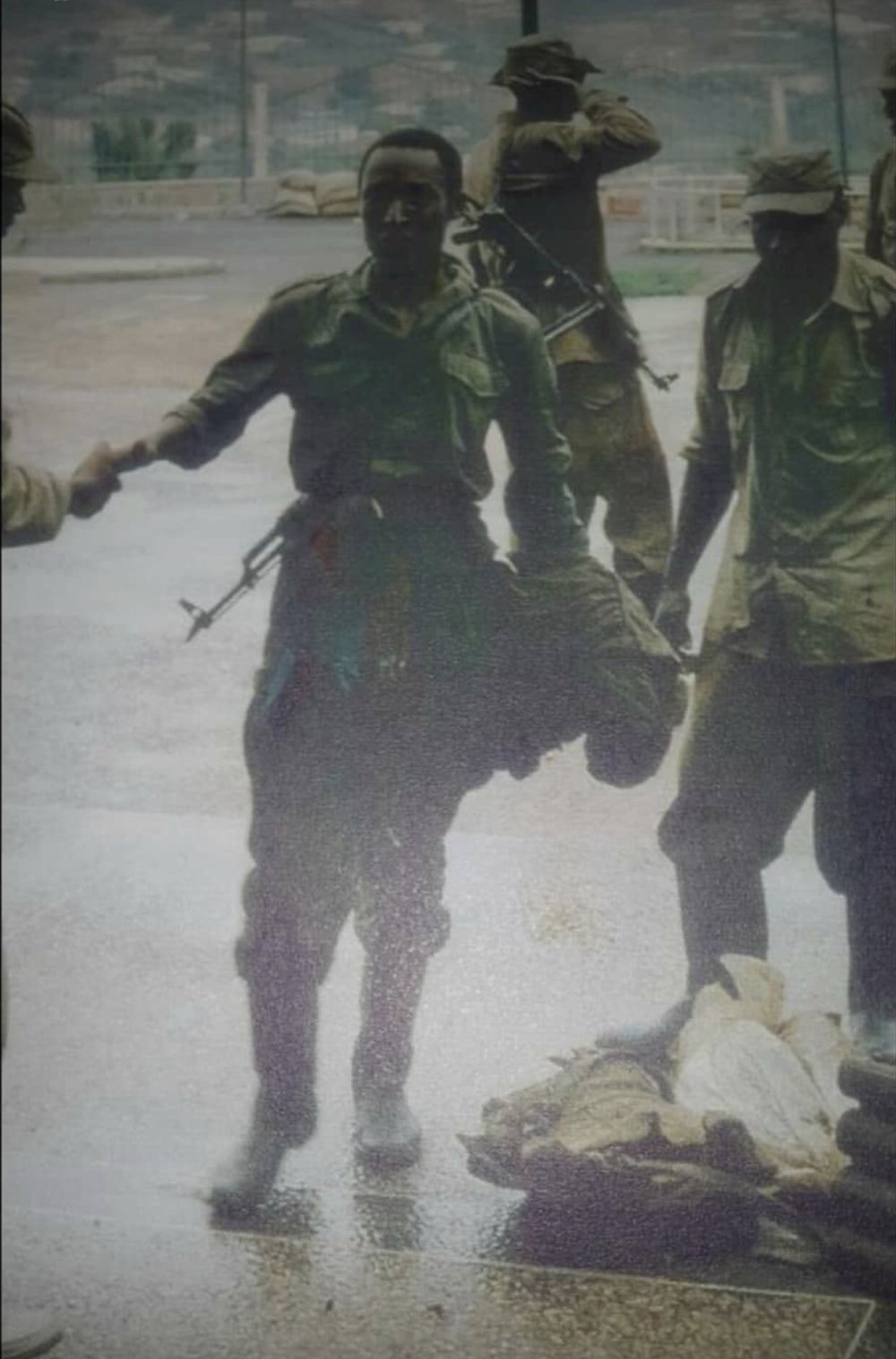
After learning that the commander of the RPA forces, Maj Gen Fred Gisa Rwigema, had been killed during the liberation struggle on October 2, 1990, authorities in the former Gisenyi Prefecture organized residents to participate in a mock burial ceremony. People were instructed to carry banana leaves and tree branches symbolizing Rwigema’s body.
In Rugamba Sector, within the former Kayove Commune, local leaders, teachers, students, and security personnel marched to the Butana River, where they dug pits and buried the bundles. Afterwards, celebrations were held to mark what they described as the “burial” of Rwigema.
Tensions escalated further following the deployment of a third battalion of 600 RPA soldiers to the former parliamentary building, known at the time as the CND, on 28 December 1993.
The soldiers had been assigned to protect RPF Inkotanyi politicians who were preparing to take up positions in state institutions under the Arusha Peace Accords.
Extremists within Habyarimana’s government were angered by the presence of the RPA soldiers at the CND.
Unable to attack them directly, they instead targeted Tutsis across the country, killing them while claiming they were “sending them to join their relatives” at the CND.
It was in this context that several locations and mass graves throughout Rwanda came to be known as “CND.”
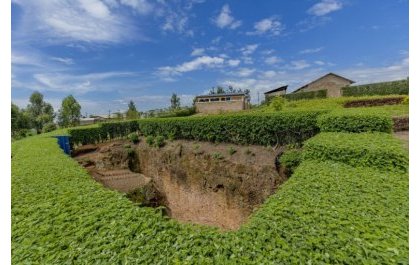
Among them were sites in Kabuga in present-day Gasabo District, Rutabo in Ntongwe, and Cyugaro marsh in Ntarama, Bugesera District.
Retired Lt Col Régis Rurangirwa, who was among the RPA soldiers stationed at the CND and hails from Ntongwe, told IGIHE that the mass grave in Rutabo was dug in 1992 by teacher Jacques Habimana, then president of the extremist CDR party in Ntongwe Commune.
“It is a pit where many people were thrown,” he explained. “People killed in Ntongwe Commune, those murdered in Nyamukumba, and others captured later were dumped there. That is why they called it CND claiming they were being sent to join their relatives at the CND.”
Lt Col (Rtd) Rurangirwa further explained that a man known as Nsabimana, nicknamed “Pilato,” had placed a chair near the pit beneath a large tree, where he would oversee the killing of Tutsis before their bodies were thrown into the grave.
“That man called himself Pilato,” Rurangirwa said. “There was a large tree near the pit, and in 1994 they placed a chair there. Every person they intended to kill was brought before him and humiliated. He would pronounce judgment while holding a stick and weapons. He considered himself more powerful than everyone else.”
He added that it was not until 2014 that the bodies of Tutsis dumped into the pit were exhumed and given a dignified burial at Ruhango District Genocide Memorial.
Historian and Senator Prof. Jean Pierre Dusingizemungu told IGIHE that bars frequented by Tutsis and other places associated with them were often labeled “CND” in an attempt to portray them as connected to the RPA soldiers stationed at the parliament building.
“In other words, it was a way of identifying such places as centers associated with Tutsis,” he explained. “The pits they dug were symbolically linked to the CND. They used to fire bullets at the CND building, believing they were targeting Inkotanyi soldiers inside. There were both soldiers and politicians there.”
He continued, “Any place they suspected was frequented by Tutsis was immediately labeled CND so they could justify attacking or killing people there. They wanted to create the impression that such places were legitimate targets.”
Today, locations that were labeled “CND” remain important historical sites linked to the Genocide against the Tutsi and are preserved as memorials. In Ntarama, annual commemorations are held in honor of the victims killed there, while the mass grave in Rutabo has been protected and preserved as a genocide memorial site.
Many Tutsis were killed at Cyugaro marsh in Ntarama.A genocide memorial site was set up at the marshThe pit dug by Nsabimana, also known as Pilato, in Rutabo, formerly part of Ntongwe Commune, was named ‘CND’.Senator Prof. Dusingizemungu explained that places considered to be frequented by Tutsis were commonly referred to as ‘CND’.
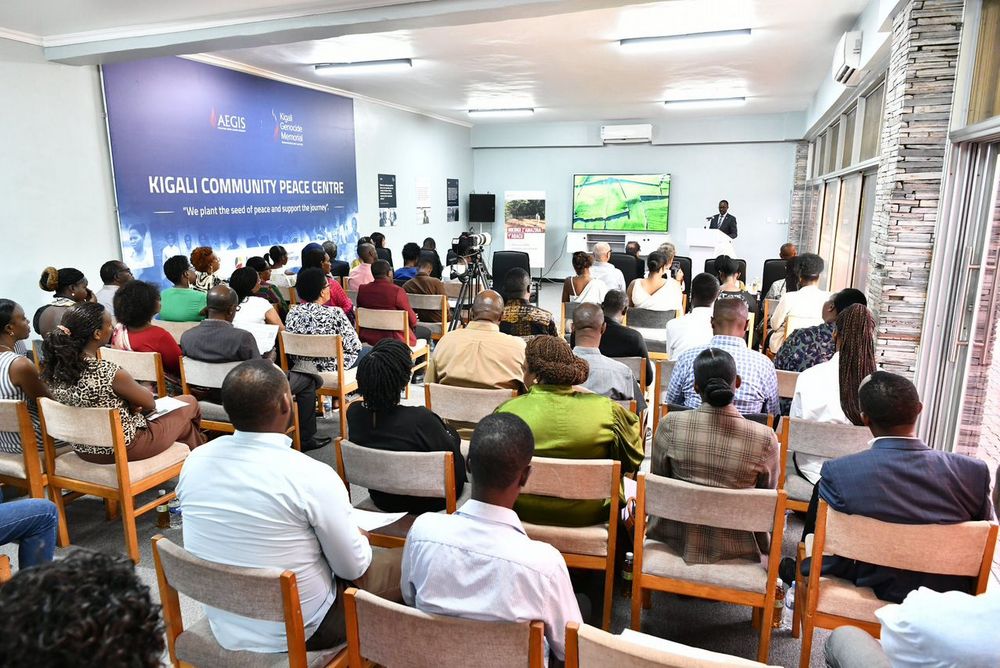
The project, titled “Inkingi z’Amazina y’Abacu”, was unveiled on May 14, 2026. It features names presented in a 3D digital structure, forming pillar-like columns that continuously display and honour the victims.
The initiative was inspired by Ancialla Umubyeyi, a resident of Vienna, Austria, who initially envisioned a physical wall bearing the names of victims of the Genocide against the Tutsi whose families live in Austria.
Although the idea was not approved in Austria, she later discussed it with memorial artists Béla Marx and Gilles Mussard, who are involved in remembrance projects combining art and memory. They advised her to transform the concept into a digital installation instead of a physical structure.
Umubyeyi explained that the project began with three digital pillars displaying 250 names provided by members of the Rwandan community in Austria. However, she said the number was too limited, prompting the team to collaborate with genocide memorials in Rwanda to ensure the use of verified names with clear historical records.
“We started with 250 names given by people living in Austria, but we realised this was not enough. We then requested to work with memorial sites in Rwanda so that we could use verified names with clear origins, which can help all Rwandans remember,” she said.
The Executive Secretary of Ibuka, Ahishakiye Naphtal, said the project represents another step forward in helping Rwandans, especially young people, to remember and learn about the history of the genocide.
“Genocide was not only about killing people, but also about erasing their identity, their history, and dehumanising them. This initiative restores dignity to each name and gives it a place in our shared history,” he said.
Aegis Trust, Rwanda Country Director Alphonse Munyantwali, said the project combines art, technology, and remembrance in a unique and meaningful way.
“This initiative will help us remember through technology by preserving and displaying the names of those killed in the 1994 Genocide against the Tutsi. It is a way of continuing to honour every name, every life, and every story. It also helps present the truth and counter genocide denial and distortion,” he said.
The project is expected to take five years to complete. It will eventually include all names recorded in genocide memorials across Rwanda, with plans to later add more personal details such as where victims lived, their families, and other historical information.
The project, titled “Inkingi z’Amazina y’Abacu”, was unveiled on May 14, 2026. The project features names presented in a 3D digital structure, forming pillar-like columns that continuously display and honour the victims. The Executive Secretary of Ibuka, Ahishakiye Naphtal, said the project represents another step forward in helping Rwandans, especially young people, to remember and learn about the history of the Genocide against the Tutsi.
The Government of Rwanda launched the nationwide program in 2019 to streamline Genocide memorials, with the aim of better preserving the history and evidence of the 1994 Genocide against the Tutsi.
Vedaste Ngarambe, President of Ibuka and also Chairperson of the District Advisory Council in Karongi, said the process is underway in the district.
Among the memorials already consolidated are Murangara, whose remains were transferred to Mubuga, and Bukiro, which was merged into Nyange Memorial in Ngororero District.
“The process is ongoing. The Gahunduguru memorial in Ruganda Sector will be relocated to Birambo Memorial in Gashali Sector. Mukimba memorial in Rugabano Sector will also be moved to Birambo,” he said.
District officials explained that the remaining consolidations have been delayed due to the need to upgrade Birambo Memorial, which is set to receive additional remains. However, feasibility studies have been completed, and construction is expected to begin next year.
Karongi District Mayor Gelard Muzungu said that once the process is complete, nine memorial sites will remain. These include Birambo, Mubuga, Ngoma, Bisesero, Gitesi, Rubengera, Gatwaro, Home Saint Jean, Saint Pierre, and Nyamishaba.
“We still have memorials that require construction or rehabilitation. As a priority, we plan to begin with Birambo next year, where we will relocate remains currently buried in inadequate conditions at Mukimba and Gahunduguru,” he said. “Gitesi memorial has not yet been built and is in worse condition than Home Saint Jean and Saint Pierre.”
Muzungu added that the district plans to construct or upgrade at least one memorial each year to ensure that all sites properly preserve the remains of victims, as well as the history and evidence of the Genocide against the Tutsi.
In 2022, Karongi District had initially planned to retain five memorial sites under the consolidation program. However, additional sites—Home Saint Jean, Saint Pierre, Nyamishaba, and Gitesi—were later included, bringing the total to nine.
This adjustment followed further assessment of the specific circumstances and historical significance of different locations during the Genocide.
Nyamishaba Memorial, for instance, was retained because it holds many remains recovered from Lake Kivu and will serve as a key site for commemorating victims who were thrown into the lake during the Genocide.
In 2022, Karongi District had initially planned to retain five memorial sites under the consolidation program. However, additional sites—Home Saint Jean, Saint Pierre, Nyamishaba, and Gitesi—were later included, bringing the total to nine.