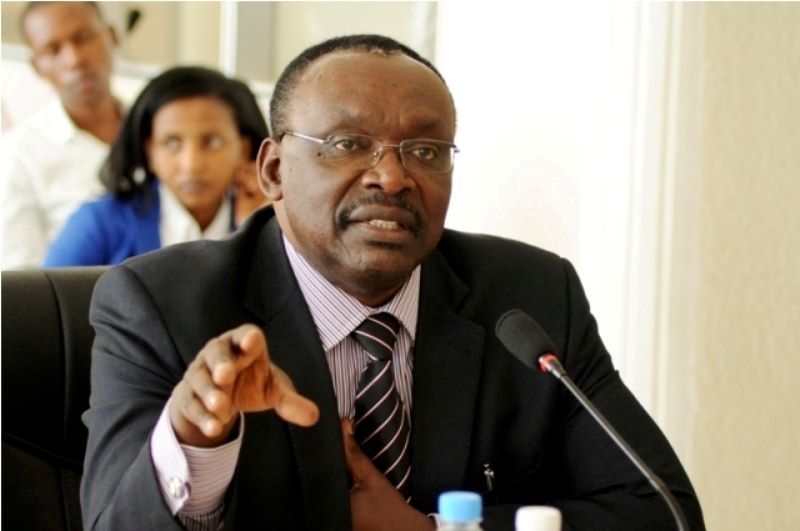
Kanimba made the remarks in an interview with KP Media24 about his career, leadership experience and some of the major decisions he took while serving in positions that shaped Rwanda’s economic development.
Kanimba joined the National Bank of Rwanda in 2000 as Deputy Governor and was appointed Governor in 2002.
When he took over as Governor, the Rwandan franc was weak and the country faced a serious shortage of foreign currency.
He explained that one of the reasons for the shortage was that some Rwandan businesspeople who had accumulated significant wealth had fled the country after the 1994 Genocide against the Tutsi, taking their money abroad.
Others who stayed in Rwanda had also kept their wealth outside the country rather than depositing it in local banks.
According to Kanimba, this was partly driven by a misconception that foreign currency belonged to the government and that individuals did not have the right to own it.
At the time, the central bank was the only institution authorizing people to access and use foreign currency, a system he said created room for corruption, favoritism and other irregularities.
“It is why we introduced a system where everyone could open a foreign currency account, just as they had a Rwandan franc account, and use the money as they wished,” Kanimba said.
He said the reform helped bring more foreign currency into Rwanda, with funds flowing into the central bank as well as commercial banks operating in the country at the time.
Tackling the informal foreign exchange market
As foreign currency began returning to the country and people became more aware of their right to use it, some foreign exchange service providers continued operating outside the legal framework.
Kanimba said one of the major areas where he believes he contributed to the country’s economic transformation was in organizing and formalizing Rwanda’s foreign exchange market.
“One of the major things I think I helped this country put in order was organizing and improving the foreign exchange market in Rwanda,” he said.
He recalled inviting some of the informal money changers to a meeting, where he explained that their activities were being conducted outside the law.
He then encouraged them to organize themselves into associations that could obtain legal authorization to operate as recognized foreign exchange businesses.
The proposal was initially met with resistance because some of the money changers feared that formalization was simply a way for the government to take away the little income they were making.
Kanimba said he reassured them that they would receive tax relief as they transitioned into the formal system.
“I immediately called the Commissioner at RRA, who came and addressed them, assuring them that those who followed that process would not pay taxes for three years,” he said.
Kanimba said the reforms became an important catalyst for the development of business and the wider economy.
By the end of June 2023, 26.8% of Rwanda’s foreign exchange reserves were invested in short-term assets, while 73.2% were held in medium- and long-term investments, broadly in line with BNR’s targets of 25% and 75%, respectively.
The reforms Kanimba described came as Rwanda continued to strengthen its financial sector and expand economic activity.
In 2025, the National Institute of Statistics of Rwanda reported that the country’s gross domestic product grew by 11.8% in the third quarter, following growth of 7.8% in the second quarter and 6.5% in the first quarter.
The International Monetary Fund (IMF) has also projected strong economic growth for Rwanda in 2026, with the country’s GDP expected to expand by 7.2%.
Leave a Reply