As Rwanda continues implementing land use master plans across the country, Nyamagabe District recently approved a detailed land use plan for the Kitabi area bordering Nyungwe National Park. The plan reserves a 10-hectare site specifically for hotel development.
The Kitabi Tourism Zone was officially approved and announced during the Cabinet meeting of November 28, 2025, when the Nyamagabe District Master Plan was adopted.
The initiative is regarded as a major step toward promoting nature-based tourism and attracting private investment to Nyamagabe District, home to one of Rwanda’s most important tourism destinations.
Despite its proximity to Nyungwe National Park, Nyamagabe has long lacked quality accommodation facilities. Most visitors touring the area have traditionally opted to spend the night in Huye District or other neighboring towns due to the limited hotel infrastructure in Nyamagabe, reducing the district’s ability to fully benefit from tourism.
Nyamagabe District Mayor Hildebrand Niyomwungeri said the newly approved master plan officially identifies Kitabi as a hotel development zone and is expected to transform the area by encouraging tourists to stay longer and spend more in the district.
“This will attract investors to build hotels in Kitabi so that visitors entering or leaving Nyungwe National Park can find quality accommodation and places to relax. It will also generate more revenue,” he said.
He added that although no concrete projects have yet been announced, several investors have already expressed interest in the area.
Yves Maniragaba, a tour guide at Nyungwe National Park, said the development is expected to significantly strengthen tourism in Nyamagabe.
“It will increase tourism infrastructure, especially hotels, which will attract more visitors. It will also create jobs, add value to local handicrafts and agricultural products, and encourage healthy competition among hotels that will ultimately improve the quality of services offered to tourists,” he said.
Biodiversity researcher and tourism expert Dr. Ange Imanishimwe, whose work focuses on Nyungwe National Park, told IGIHE that approving the master plan should be accompanied by investments in new tourism attractions within the park itself.
He noted that tourism development efforts around Nyungwe have so far been concentrated largely in Nyamasheke District, while other districts bordering the park, including Nyamagabe, have received comparatively less attention.
“There is still a need to strengthen tourism development on the eastern side of Nyungwe, particularly in Nyamagabe at the park’s entrance. Most visitors to Nyungwe travel from Kigali, but many head straight to Gisakura in Nyamasheke because tourism facilities there are more developed,” he said.
Kitabi is considered one of the areas with strong tourism potential because of its strategic location near Nyungwe National Park, one of Rwanda’s premier protected areas. The park is renowned for its rich biodiversity, including numerous bird and wildlife species, as well as attractions such as the Canopy Walkway and an extensive network of hiking trails that draw visitors from around the world.
Nyungwe National Park was inscribed on the UNESCO World Heritage List in September 2023. Covering approximately 101,900 hectares, the park is home to 322 bird species, around 200 orchid species, more than 300 butterfly species and a wide variety of other flora and fauna, making it a vital driver of tourism and economic opportunities for surrounding communities.
Nyungwe National Park was inscribed on the UNESCO World Heritage List in 2023.The Canopy Walk at Nyungwe National Park is one of the park’s most popular attractions, drawing thousands of visitors each year. Nyamagabe District Mayor Hildebrand Niyomwungeri said the approval of the Kitabi master plan has attracted investor interest in developing hotels in the area.Yves Maniragaba said increased investment in hotels at Kitabi would significantly improve local livelihoods. The shortage of quality accommodation in Kitabi has forced many visitors to seek lodging in neighboring districts after touring Nyungwe National Park.Environmental and biodiversity expert Dr. Ange Imanishimwe said hotel development in Kitabi should go hand in hand with expanding tourist attractions within Nyungwe National Park.
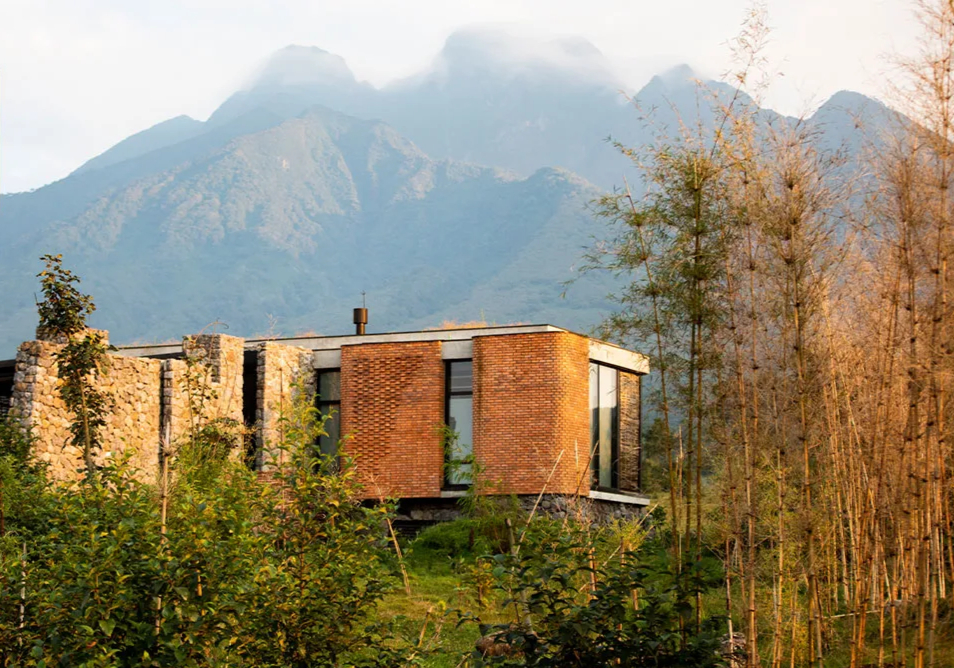
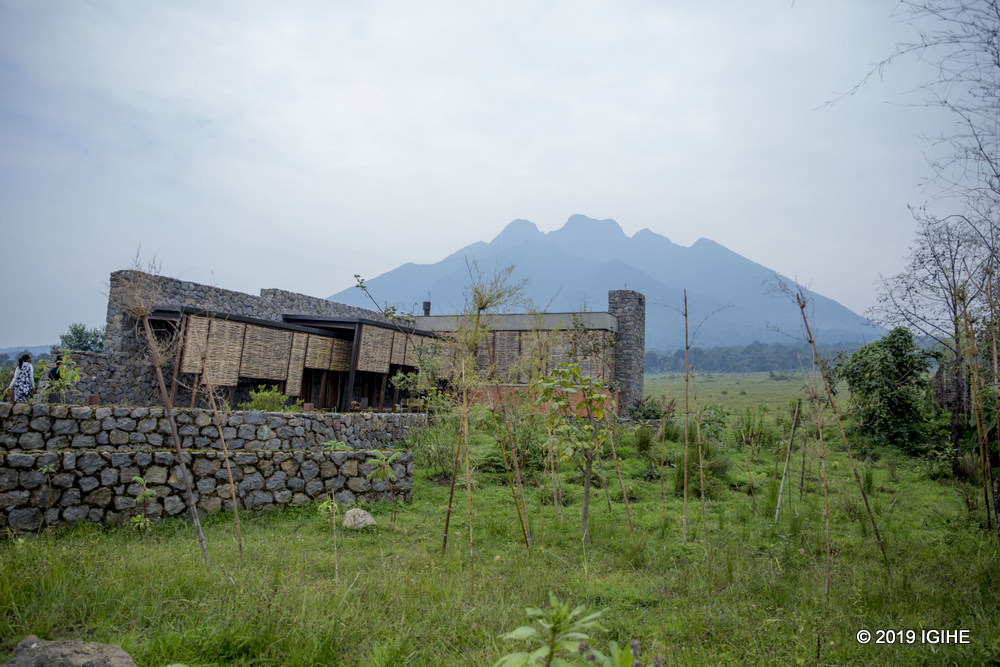
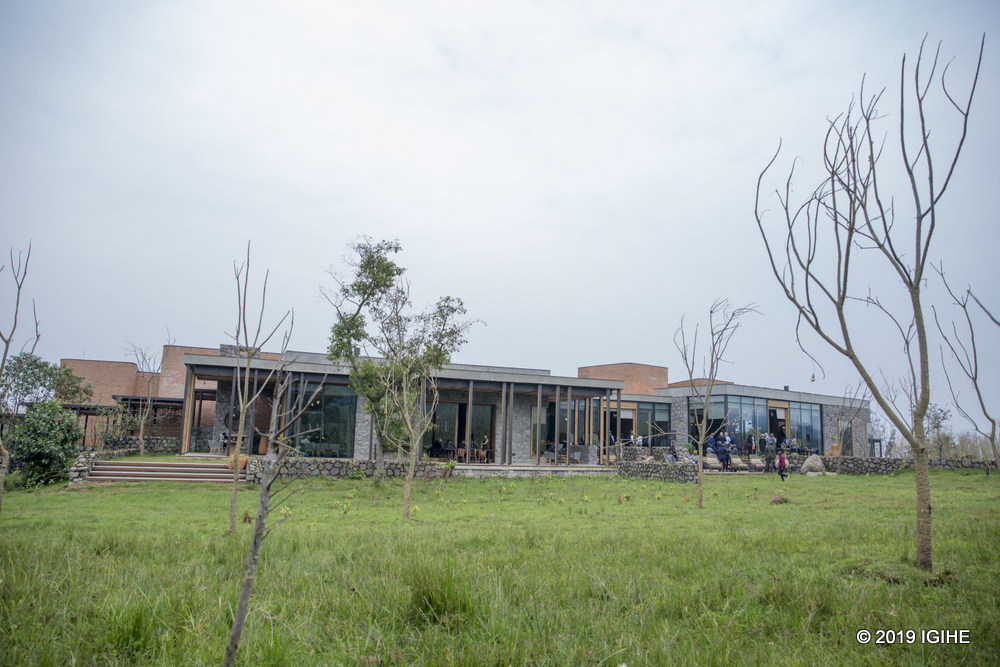
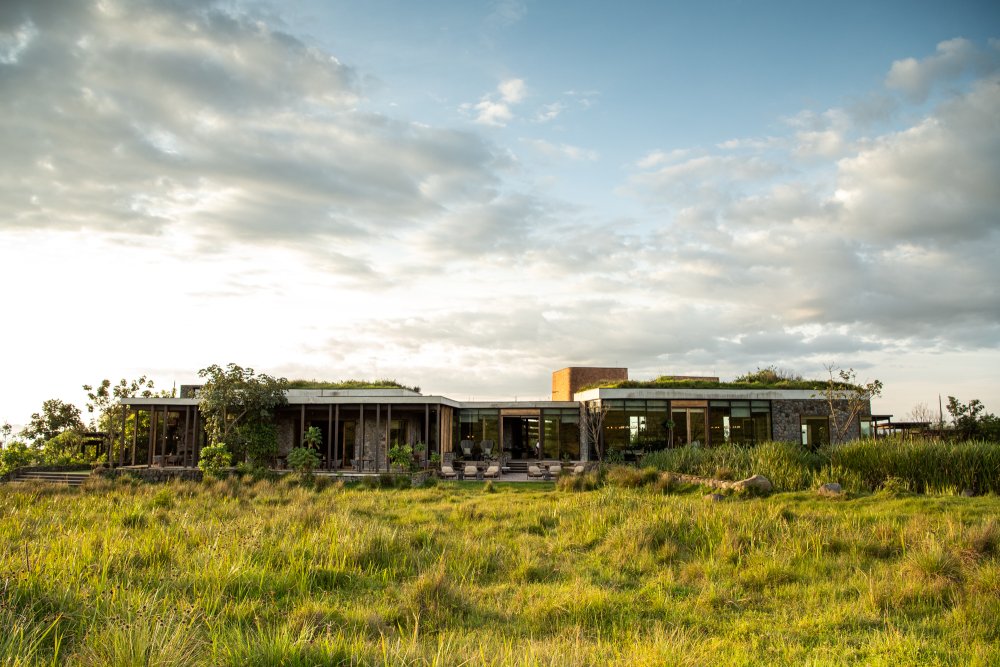
Rwanda’s Singita Kwitonda Lodge has been ranked the second-best luxury hotel in the world in the 2026 edition of Robb Report’s prestigious global index, “The 50 Greatest Luxury Hotels on Earth.”
The annual ranking by the US luxury lifestyle publication evaluates premier hospitality properties across six continents. Singita Kwitonda earned its spot at the top of the list for its blend of high-end design, environmental sustainability, and proximity to Volcanoes National Park, where guests can embark on private mountain gorilla treks.
Robb Report compiled the 2026 edition using an evaluation panel of 24 international luxury travel specialists, known as Travel Masters. The panelists vetted properties based on service quality, architectural vision, location, and guest experience.
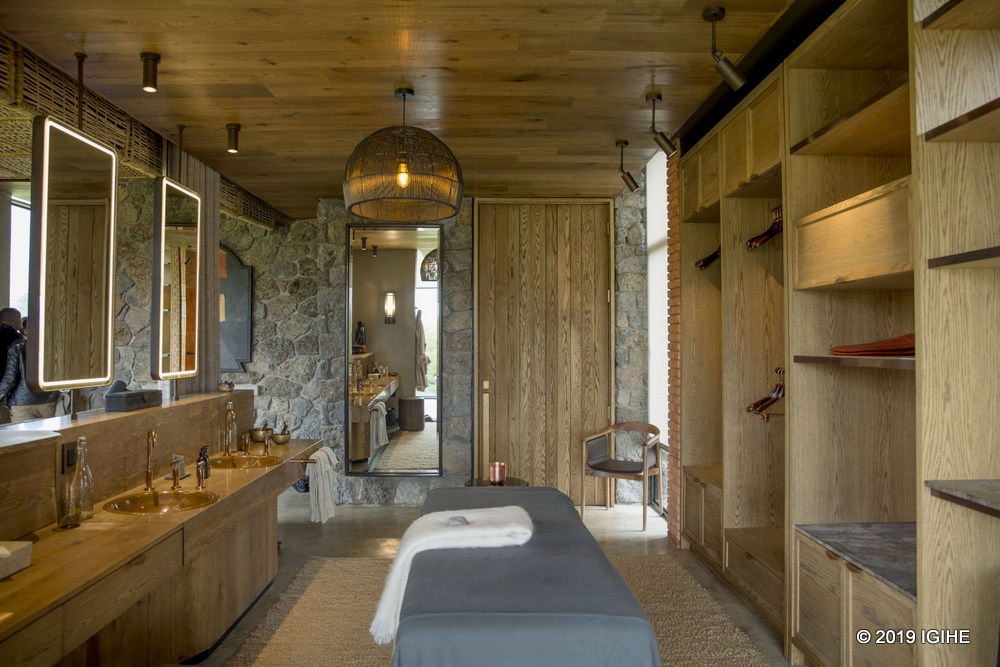
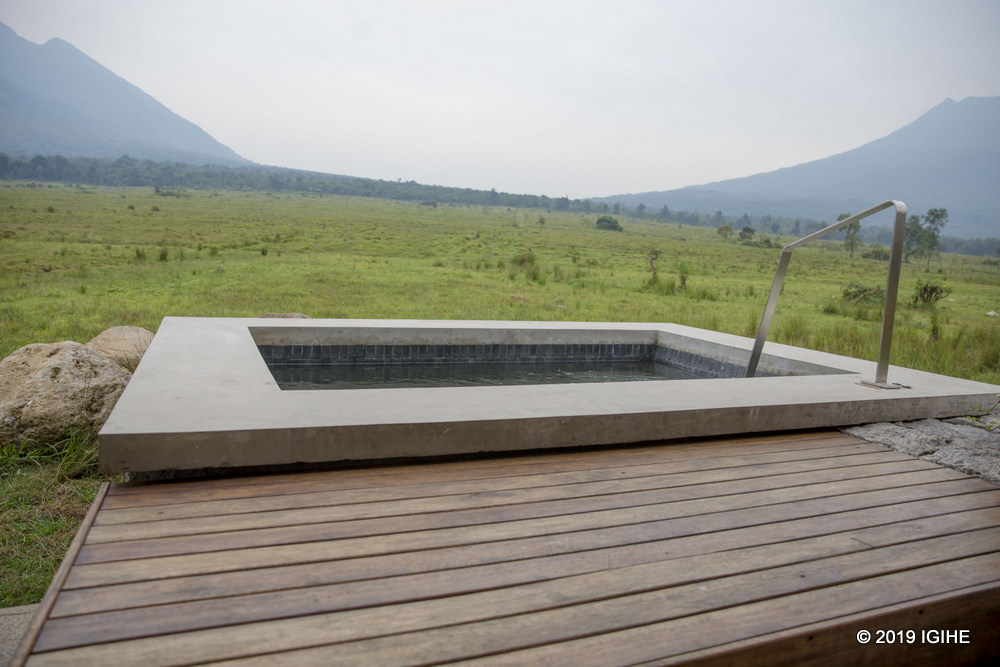
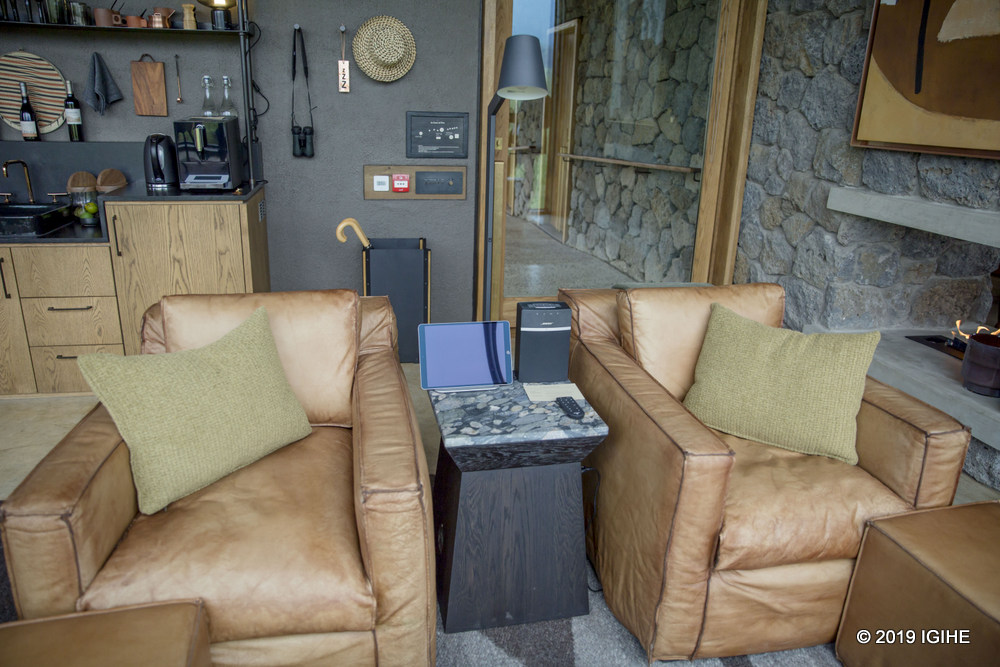
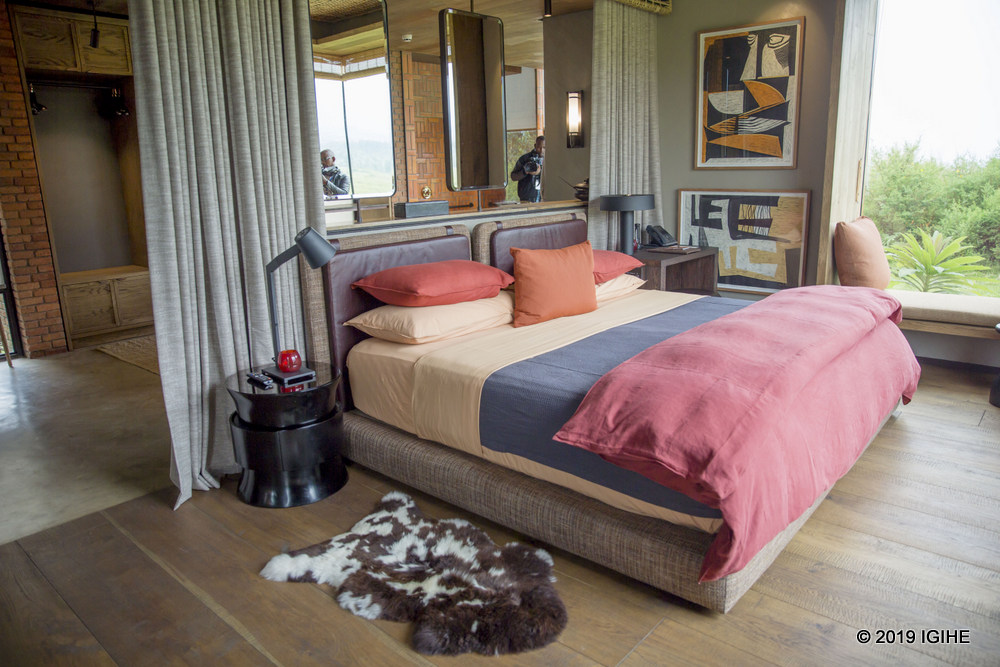
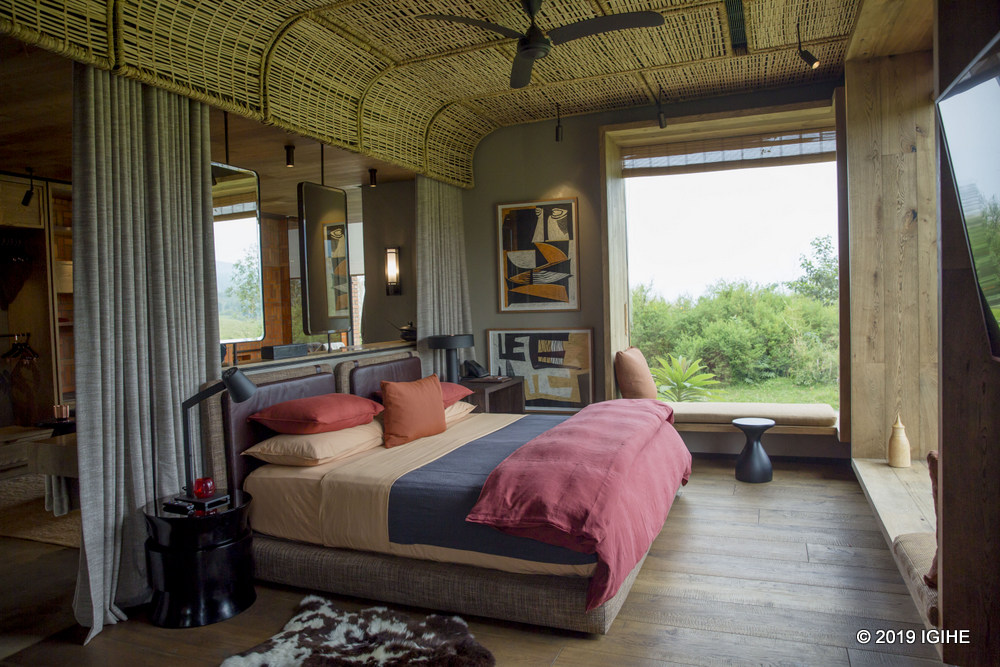
The lodge features indoor-outdoor fireplaces, heated plunge pools, and hand-fired brickwork constructed with the help of more than 500 local artisans. In addition to seven private suites, the property includes Kataza House, a four-bedroom villa designed to function as a self-contained safari lodge within the grounds.
Developed by luxury hospitality brand Singita, the lodge represents a $20 million investment in Rwanda’s high-end ecotourism sector. It was named in honor of Kwitonda, a silverback gorilla who led a prominent group in Volcanoes National Park before passing away in 2012.
A stay at Singita Kwitonda Lodge in Volcanoes National Park ranges from $2,720 to $3,780 per adult per night sharing a double suite, depending on the season.
In the 2026 rankings, Singita Kwitonda Lodge sat just behind Nepal’s Shinta Mani Mustang, outranking luxury properties across Europe, Asia, and the Americas.
Robb Report’s Top 10 Luxury Hotels in the World (2026)
Shinta Mani Mustang – Kali Gandaki River Valley, Nepal
Singita Kwitonda – Volcanoes National Park, Rwanda
Hope Lodge – Sutherland, Scotland
Park Hyatt Tokyo – Japan
Shakti Prana – Kumaon, India
Collegio alla Querce – Florence, Italy
Claridge’s – London, U.K.
Le Bristol Paris – France
Islas Secas – Gulf of Chiriqui, Panama
Casa Bonavita – Attard, Malta
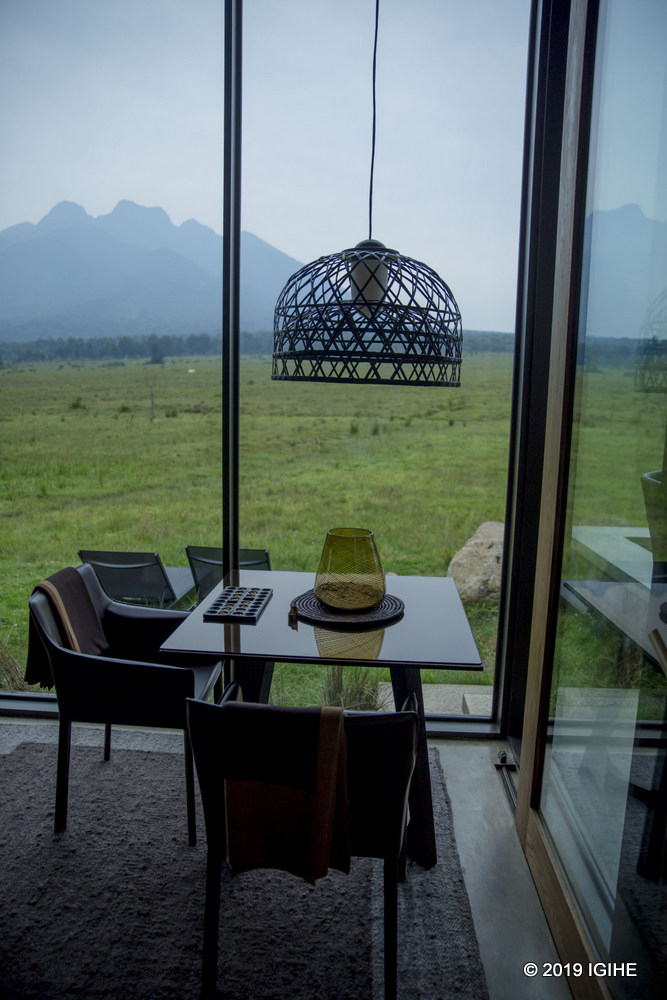
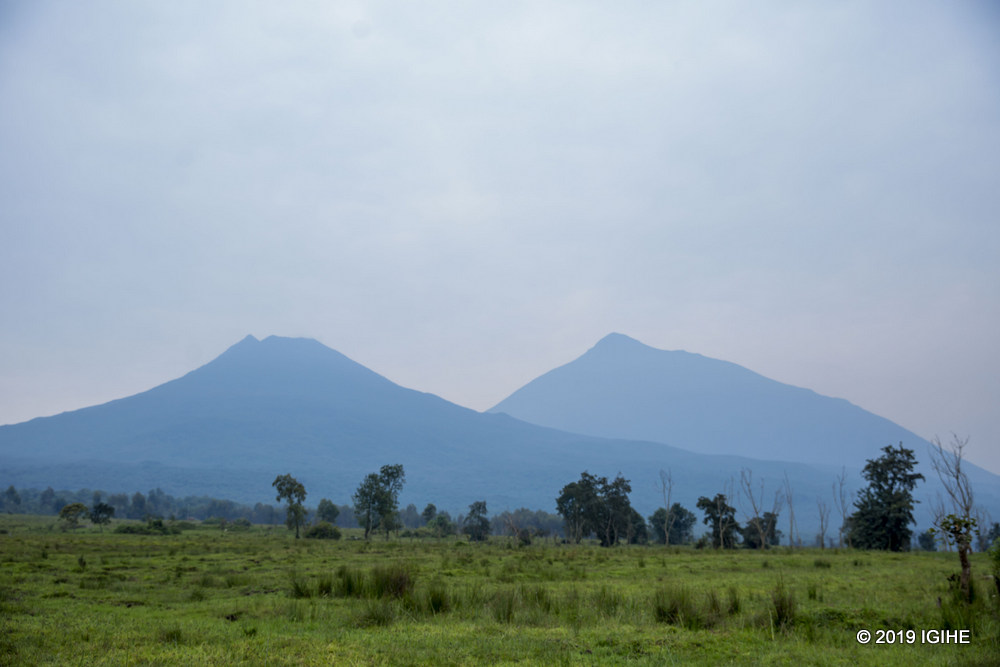
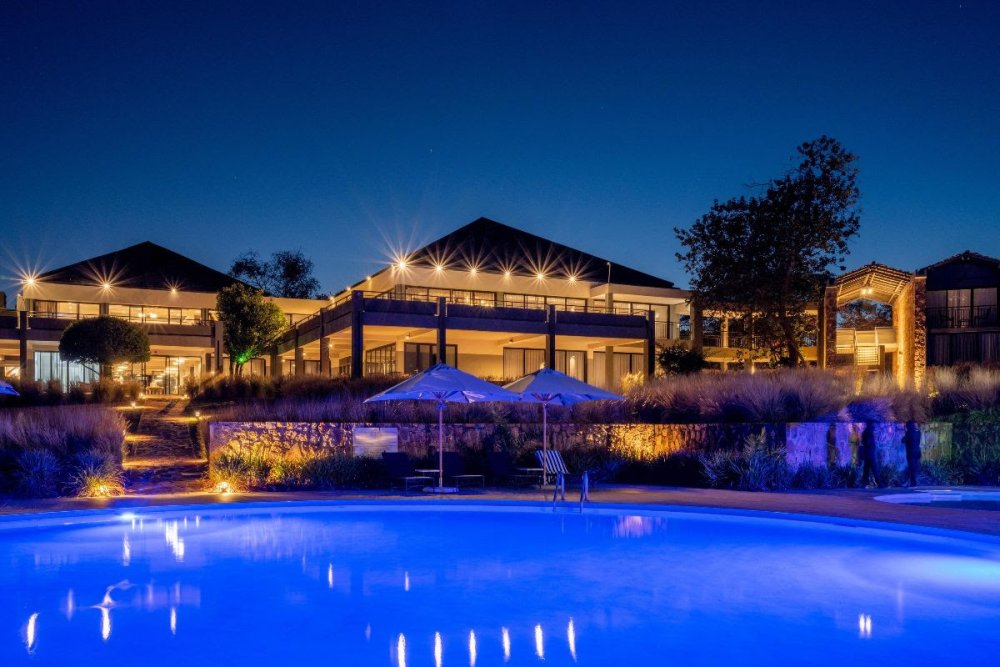
Signs showing directions to the rooms at Singita Kwitonda Lodge and Kataza House.Located in Musanze near Mount Sabyinyo, Singita Kwitonda Lodge and Kataza House features modern structures with breathtaking views of the Gahinga and Muhabura volcanoes.
The Guest Suites are elegantly designed. The property provides guests with spaces where they can enjoy a swim or bask in the sun.A stay at Singita Kwitonda Lodge in Volcanoes National Park ranges from $2,720 to $3,780 per adult per night sharing a double suite, depending on the season.Perched near the Virunga Mountains, Singita Kwitonda Lodge offers guests breathtaking views of Mount Gahinga and Mount Muhabura.
The park recorded 8,919 paying visitors during the quarter, with average visitor spending reaching US$108 per person.
Revenue was driven by tourism and hospitality activities, including park entry fees, guiding services, accommodation-related income, concession fees and fisheries.
The improved financial performance contributed to progress towards self-sustainability, with Akagera’s sustainability ratio rising from 76 per cent in April to 104 per cent in June, strengthening the park’s ability to fund conservation activities and community programmes.
The quarter also saw the official opening of SALT of Akagera, a new eco-luxury lodge operated by The Lux Collective.
The 60-room facility, overlooking Lake Ihema, replaced Akagera Game Lodge, which had been managed by Mantis Collection since 2017. The launch marked The Lux Collective’s entry into Rwanda and forms part of its wider tourism expansion plans in the country.
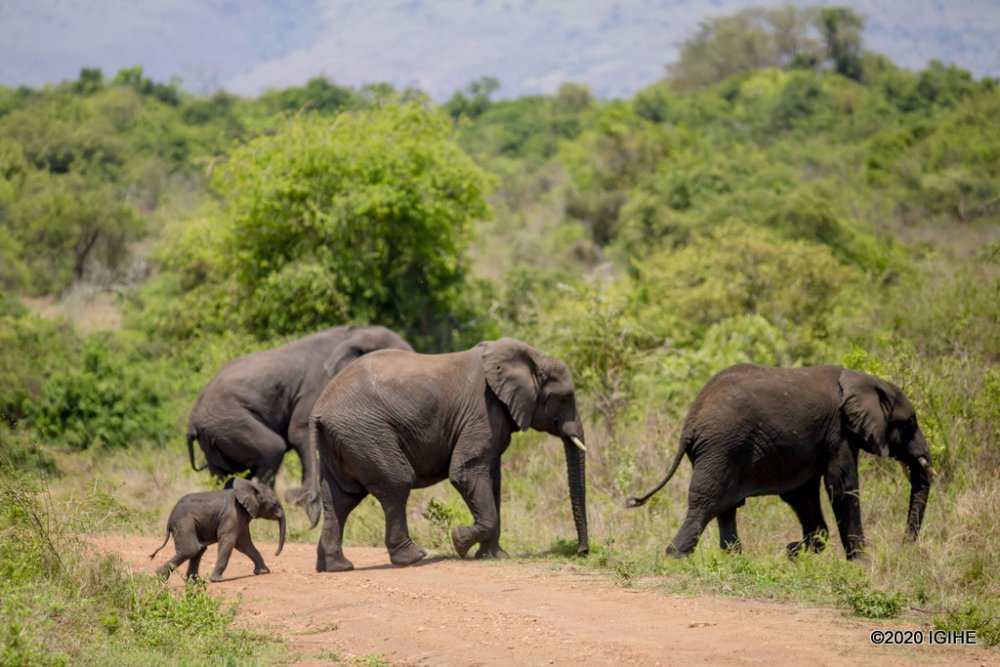
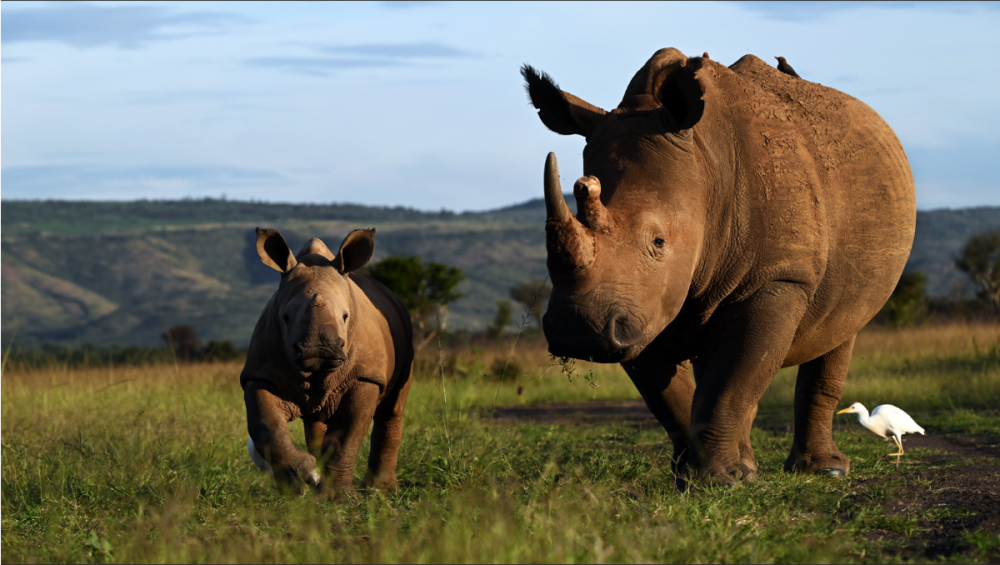
Wildlife conservation recorded notable achievements during the period, including the birth of three rhino calves; one black rhino and two white rhinos. The park said the births indicate that its rhino population continues to adapt well and reproduce successfully.
Rhino monitoring teams recorded more than 2,600 white rhino sightings and over 400 black rhino sightings through daily foot and aerial patrols.
At the same time, law enforcement teams conducted nearly 1,600 patrols covering about 35,000 kilometres, with no animals lost to poaching during the quarter. Rangers also removed 12 snares and arrested five illegal fishermen.
Akagera continued investing in neighbouring communities, with local cooperatives generating US$226,263 in income through activities such as fishing, beekeeping, guiding, community centre operations and construction work.
An additional US$229,374 entered surrounding communities through local procurement, bringing the total economic benefit to approximately US$455,637.
Community development initiatives included training for teachers, cooperative members, beekeepers, fishers and vocational learners.
More than 31,000 people were reached through environmental education and outreach activities, while the Akagera Lion Cup tournament brought together communities bordering the park, attracting more than 24,000 spectators across 13 matches.
As the dry season began, the park intensified fire management efforts, clearing more than 52 kilometres of firebreaks along the fence line and around key infrastructure to reduce wildfire risks and support vegetation regeneration.
The park also expanded its conservation research efforts. A June elephant survey identified six new individuals, bringing the elephant database to 115 known elephants, while 85 camera traps across 57 locations were deployed to monitor large carnivores, including lions, leopards and hyenas.
Staff capacity building remained a priority, with ranger refresher training, GIS training involving teams from Akagera, Nyungwe and Gambella National Parks, and knowledge exchanges focused on strengthening conservation skills.
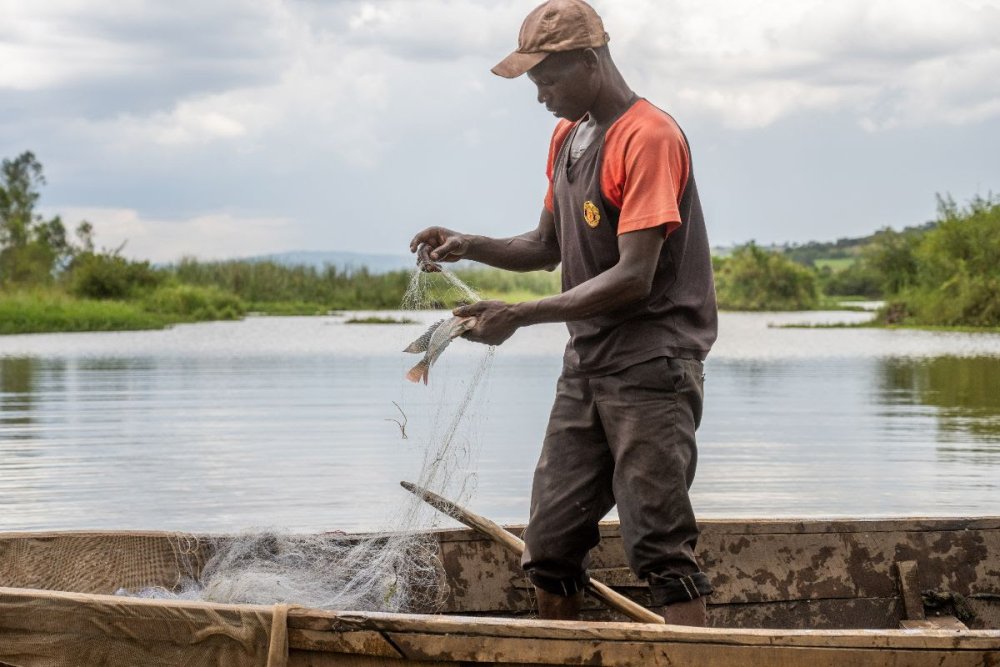
Visitors explore Akagera National Park, which welcomed 8,919 paying guests between April and June 2026.Professional fishing has become a source of livelihood for many communities living around Akagera National Park.Beekeeping cooperatives are among the beneficiaries of efforts to conserve Akagera National Park.SALT of Akagera opened its doors overlooking Lake Ihema as part of Rwanda’s growing luxury tourism sector.Wildlife conservation recorded notable achievements during the period, including the birth of three rhino calves.A June elephant survey identified six new individuals, bringing the elephant database to 115 known elephants .
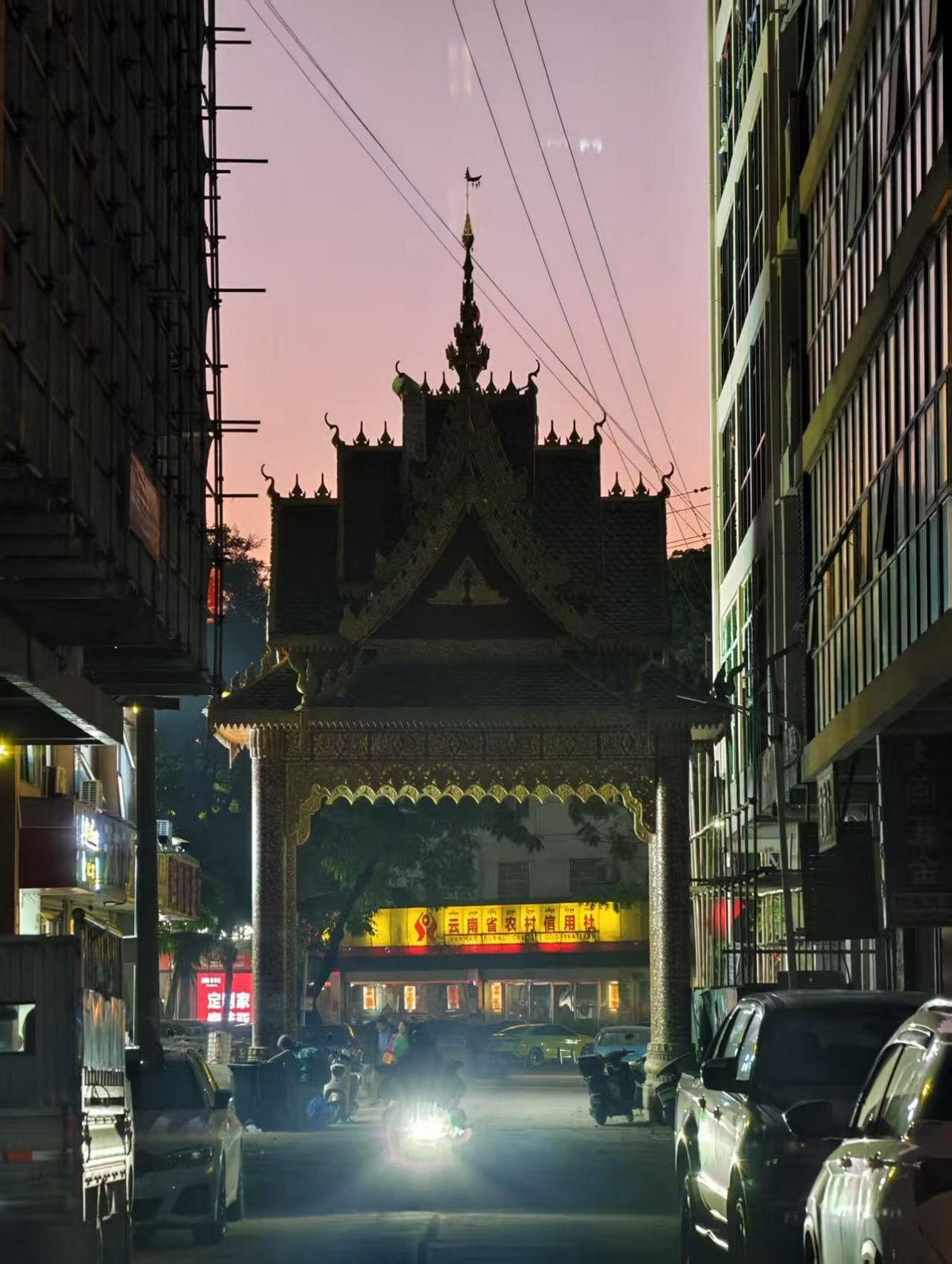
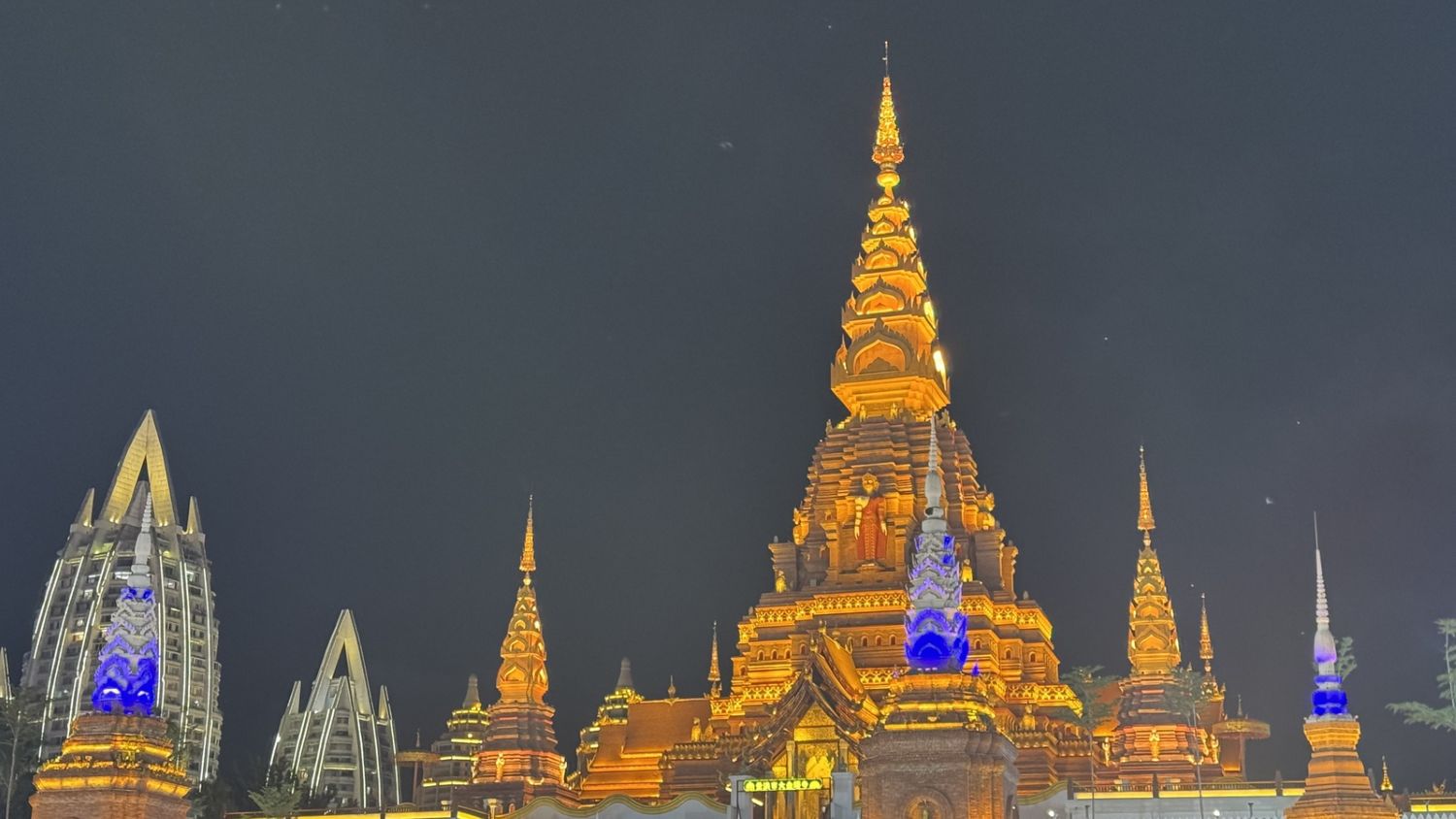
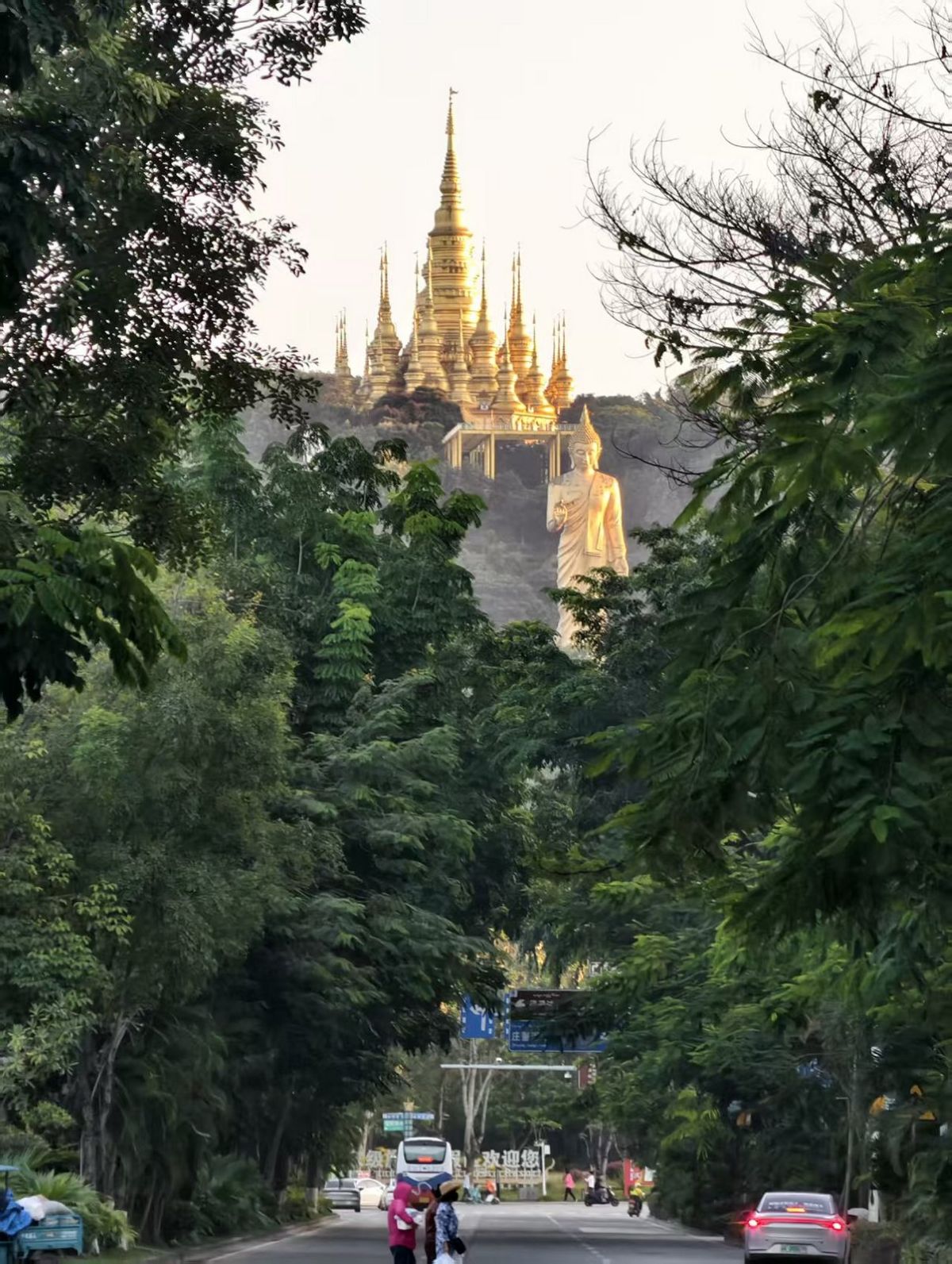
This is Xishuangbanna, a tropical oasis in southern Yunnan that is a totally different world to the rest of the country. I flew from Beijing at the start of summer, expecting the usual hot and humid weather. Instead, I found a frontier where the neon lights of modern China seamlessly merge with ancient, misty rainforests that stretch on for miles.
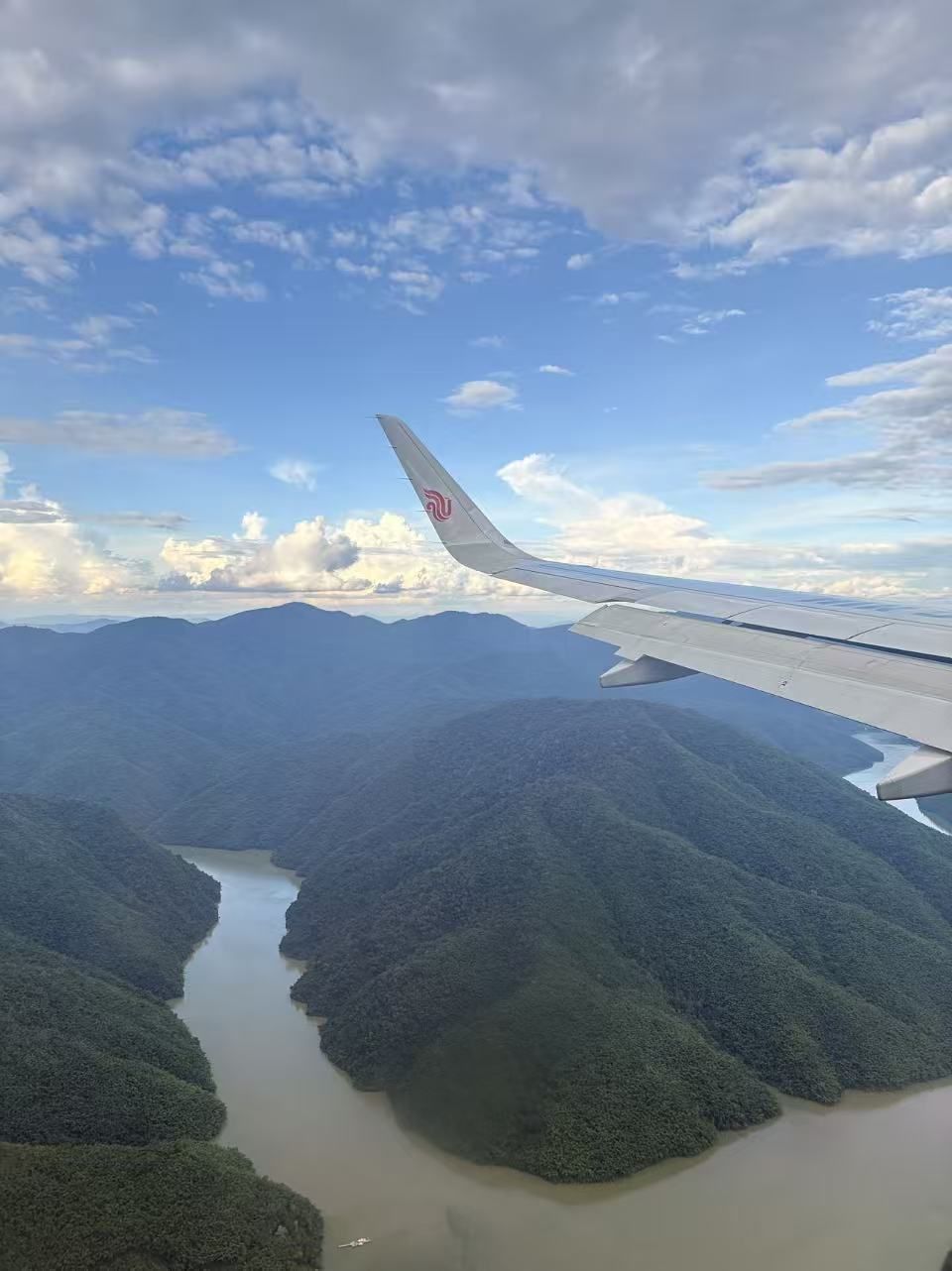
The view from the plane as it descended into the airport showed a lot of tropical-looking mountains rolling with lush green in every direction. From up high, it looked familiar, and I could have sworn we were heading back to the Virunga Mountains in Rwanda, my motherland.
Lush tropical mountains that instantly bring the Virunga Mountains of Rwanda to mind.
As I left the plane, I was relieved to find that the weather was cool and fresh – the exact opposite of the sweltering summer weather that I had left behind in Beijing.
To truly understand this borderline paradise, you have to look at the staggering geographical realities that isolate and define it. The straight-line aerial distance from Beijing to Jinghong, the capital of Xishuangbanna, is approximately 2,200 kilometers.
If you were to take the newly opened China-Laos high-speed railway, that journey stretches to roughly 2,600 kilometers from Beijing South Station, and driving via the highways pushes it past 2,700 kilometers.
According to the 2020 Seventh National Census, the permanent resident population of the prefecture sits at 1,301,407 people, with the urban center of Jinghong housing about 642,000 of them.
The indigenous Dai ethnic group numbers approximately 330,000, making up about a quarter of the total population, sharing the region with Han, Hani, Yi, and Lahu communities.
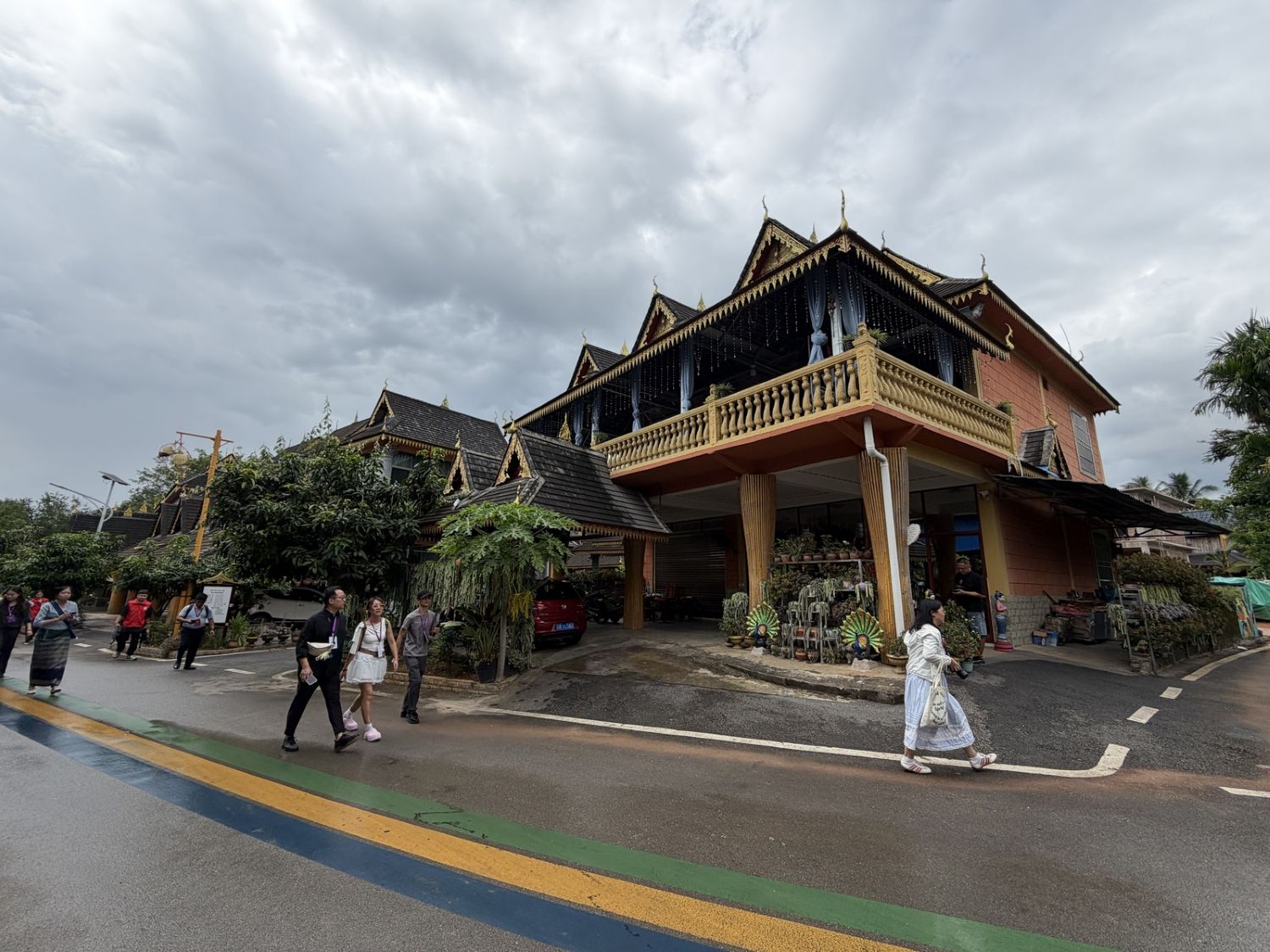
The indigenous Dai people have inhabited these Mekong watersheds for over 2,000 years.
What truly shapes this land, however, is its severe vertical altitude gradient and its geopolitical edges. The prefecture shares 966 kilometers of international boundaries.
There is a 288-kilometer southwest border with Myanmar’s Shan State, featuring crossings like the Daluo-Muse port. To the southeast, a 677-kilometer border meets Laos through Luang Namtha and Oudomxay provinces.
The terrain itself plunges to just 477 meters above sea level in the Lancang River valley near Laos, and spikes to 2,429 meters at the summit of Mount Huazhu.
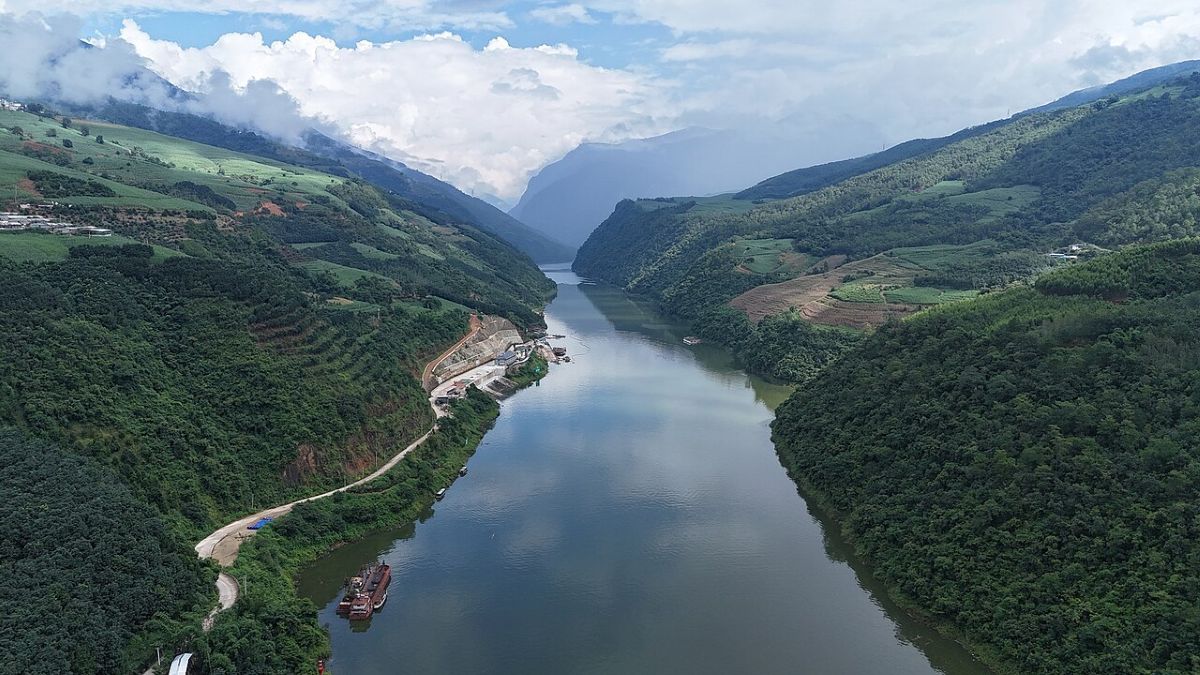
The Lancang River winds through the valley before flowing into Southeast Asia.
Because Xishuangbanna sits at a tropical latitude, altitude entirely overrides latitude in dictating the seasons. At low altitudes under 800 meters, there is a tropical monsoon climate with an annual average of 21.9 degrees Celsius.
There is no winter here, only a wet season from May to October that dumps up to 1,600 millimeters of rain, and a dry, cooler season from November to April. Conversely, high altitudes over 1,500 meters experience a subtropical highland climate with annual averages dropping to 17 degrees.
During the sweltering wet season, these highlands serve as a natural refuge, dropping temperatures by several degrees and triggering vertical migrations for wildlife.
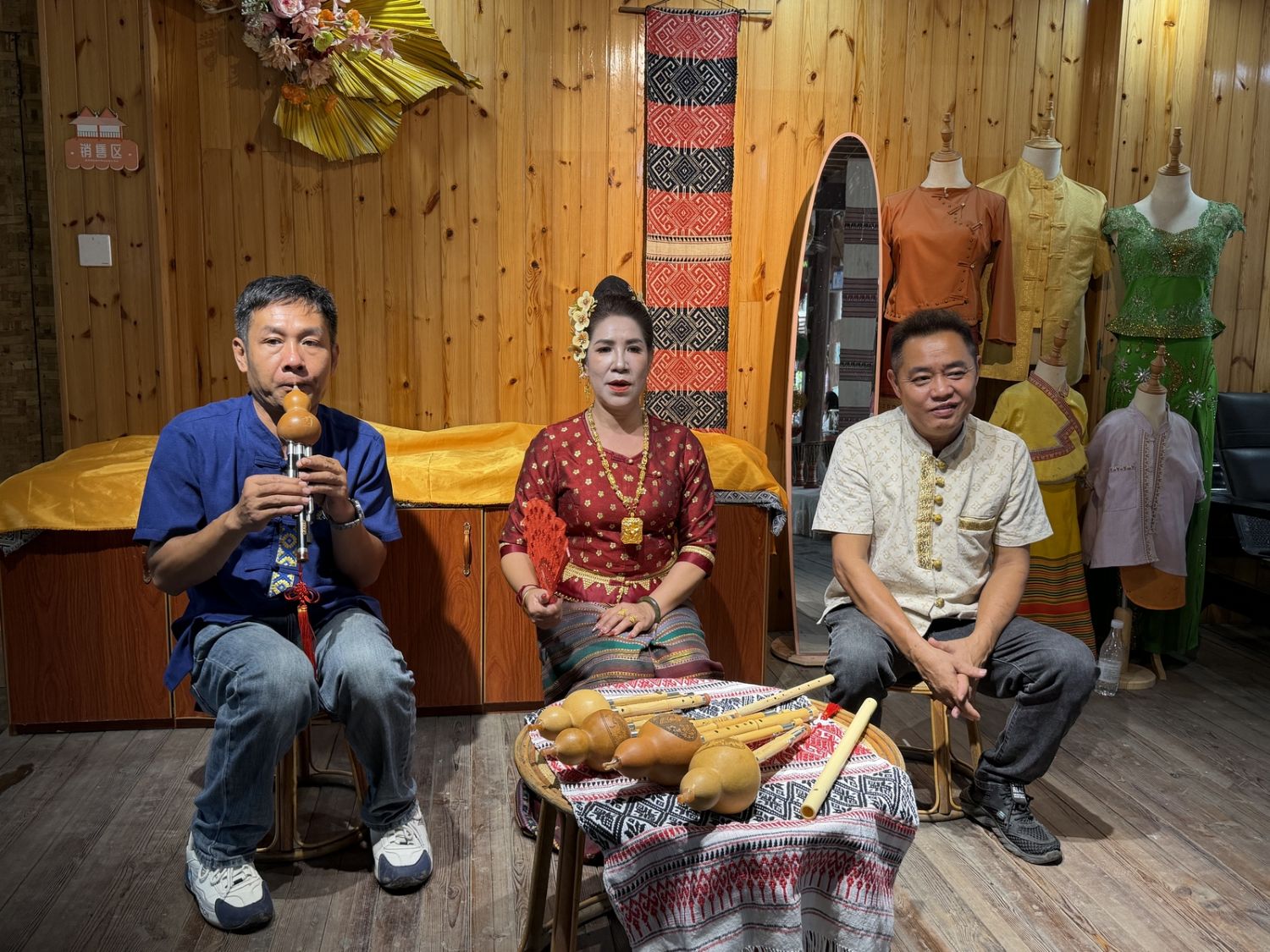
The soul of this region belongs to the Dai people, whose ancestors migrated from the upper Yangtze basin southward into the Mekong watersheds over 2,000 years ago.
By the eighth century, they established the independent kingdom of Mengle, pledging tributary allegiance to Chinese empires while maintaining autonomy until the Ming and Qing dynasties integrated them as a native chieftain domain. Their language, Tai Lue, belongs to the Southwestern Tai branch of the Kra-Dai language family.
It is a linguistic bridge to Southeast Asia, sharing 75 to 80 percent lexical similarity with Lao, and is closely related to Northern Thai Lanna. It also shares up to 65 percent cognate vocabulary with Central Thai and 60 percent with Shan.
The written script, derived from Old Mon-Burmese through Theravada Buddhism, features a distinct, rounded calligraphy utilizing six tones compared to standard Thai’s five.
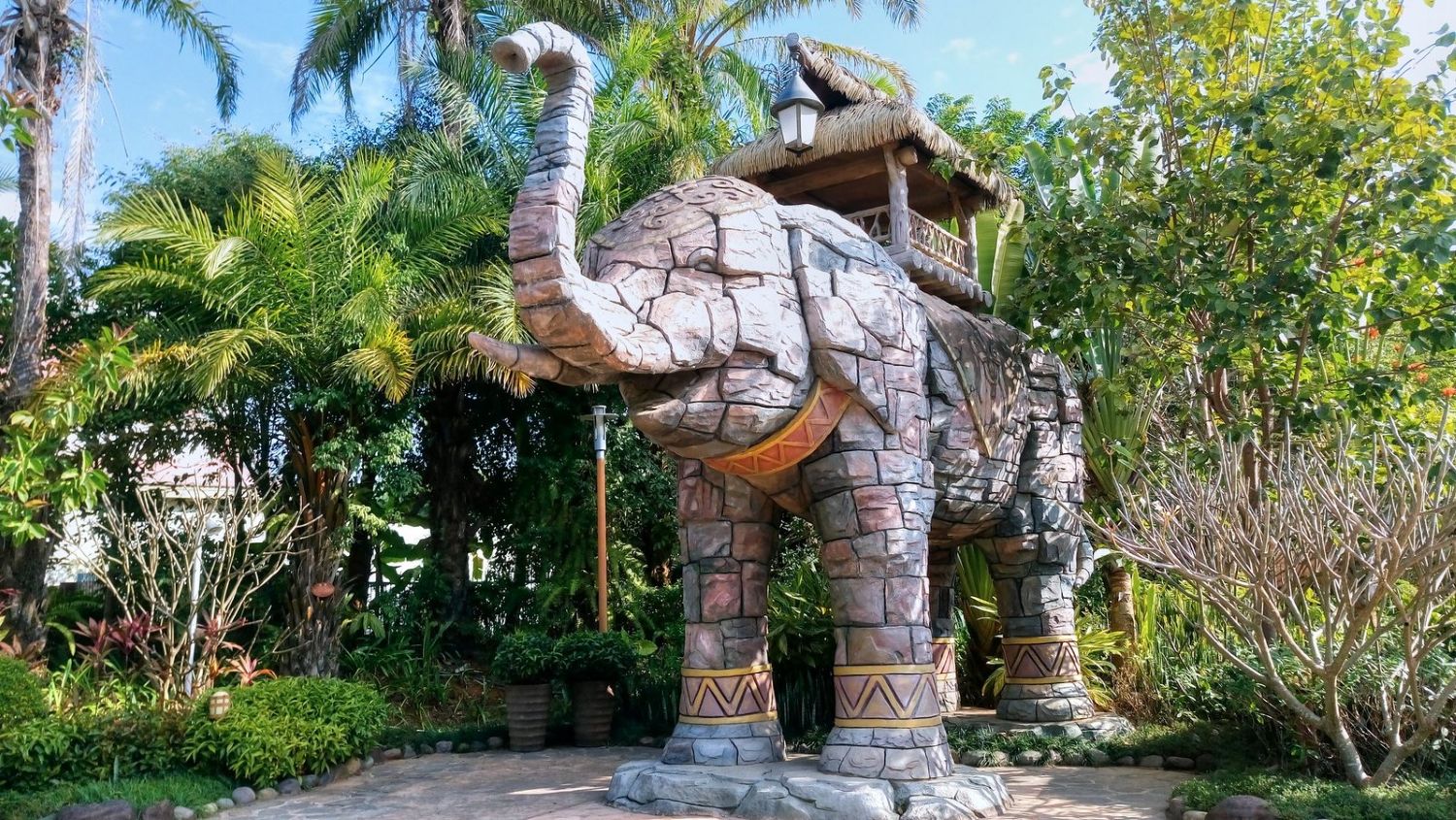
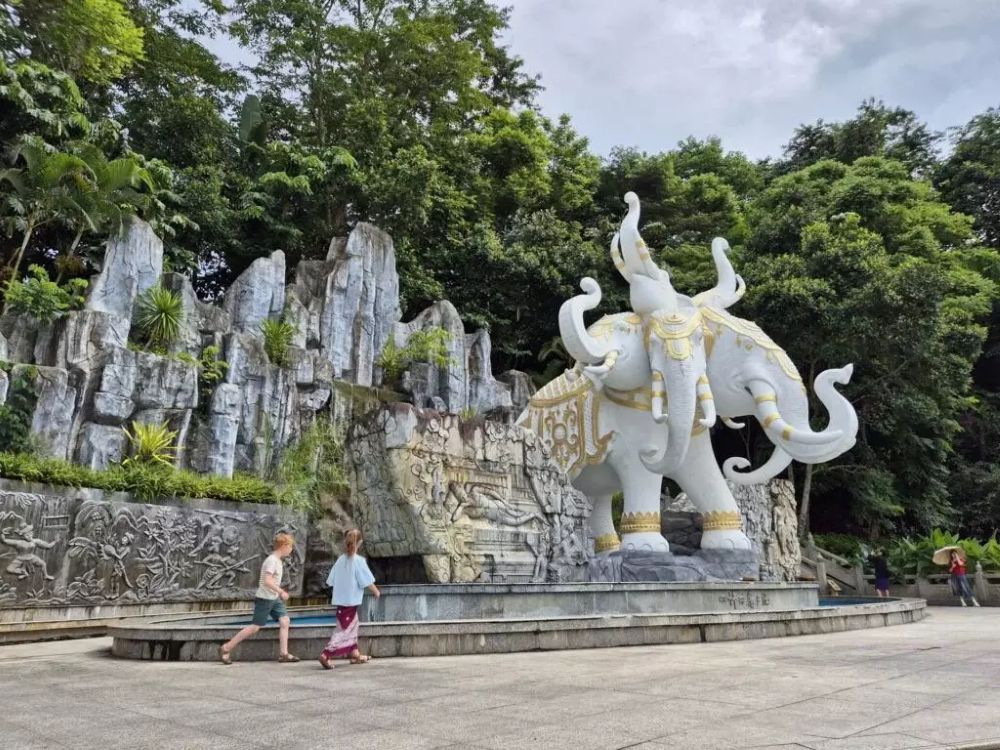
After collecting my bags at the airport, the drive to the hotel took around 30 minutes, during which I saw a lot of elephant sculptures. It was then that I really understood what an Elephant city I was in and that the history of Elephants in this place was even greater than what I had read on my travels so far.
Historically, Wild Asian elephants roamed in massive herds of thousands of individuals throughout the region of what is now the elephant city. The Dai people believed the elephants were the royalty of their gods. They were captured and used in wars against the Burmese and later the Khmer from neighboring countries. For centuries, the strongest elephants were used to pull the largest teak logs, some weighing up to 1.5 metric tons, until the late 1980s.
Others were used in annual ritual performances held in the middle of April as part of the city’s famous Water-Splashing Festival.
The Dai traditional laws in respect of elephants were, for the Dai, no different than those for the taking of human life. Payment for taking an elephant was made in the same way as for a human, in the form of a silver ingot of equivalent weight to that of the animal killed. This was paid to the village headman. Such were the views of the Dai towards elephants for at least centuries prior to the 1940s, when this was written down by the anthropologist.
The decline of the population of wild Asian elephants in Yunnan was triggered by habitat fragmentation due to large-scale development of rubber plantations. The area of rubber plantations increased dramatically to over 250,000 ha by 2005, while the elephant population crashed to a low of 150 animals in the 1990s.
A new census of Asian elephants in the wild has been conducted in the area by conservationists, and it has revealed that there are between 283 and 300 elephants roaming the province of Yunnan.
Binding this entire ecosystem together is the Lancang River, known globally as the Mekong. It flows through Xishuangbanna for 188 kilometers, acting as the only river that exits China through this prefecture and draining its entire territory.
This massive waterway geologically and culturally connects the valleys to Laos, Myanmar, Thailand, Cambodia, and Vietnam.
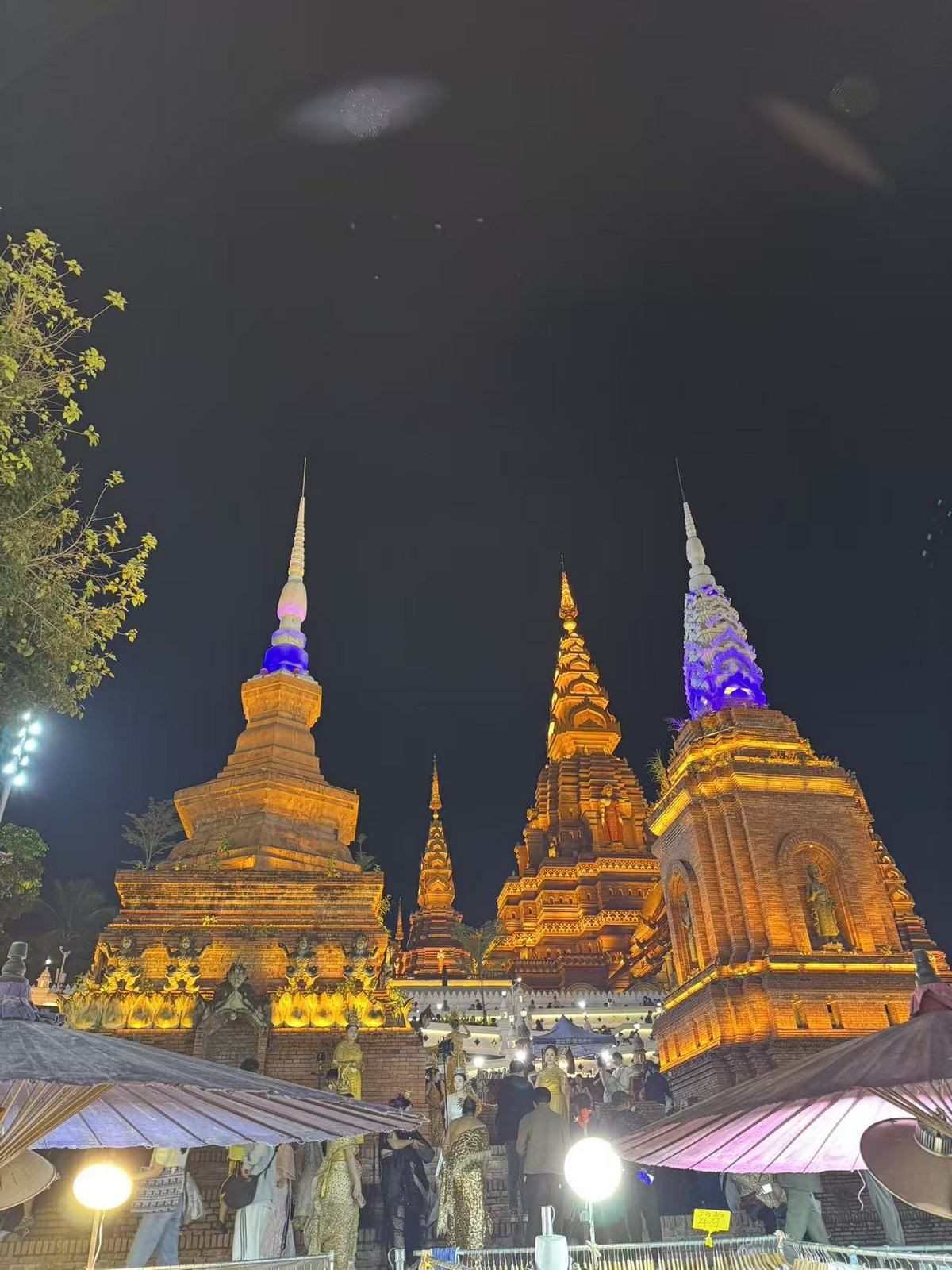
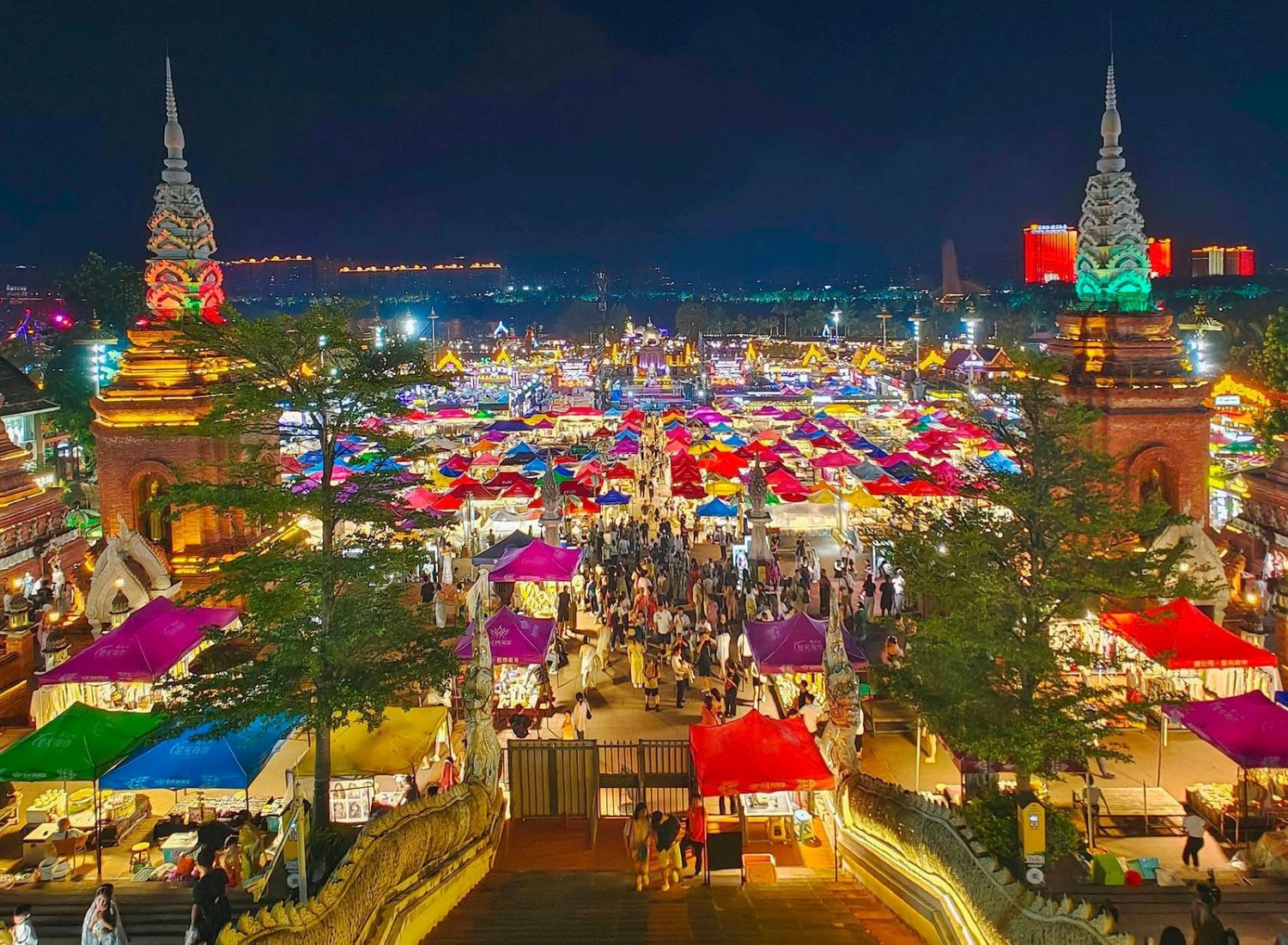
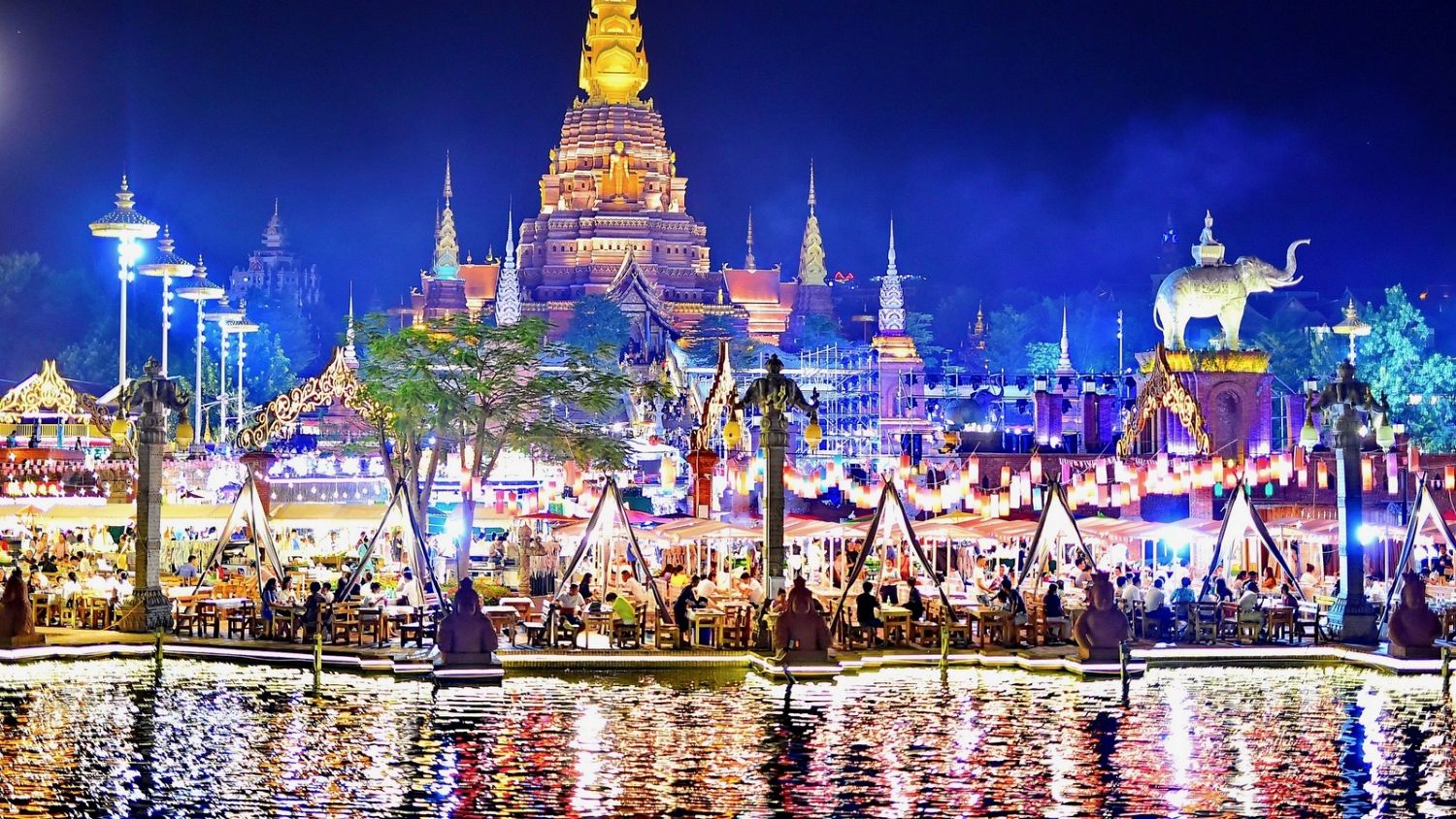
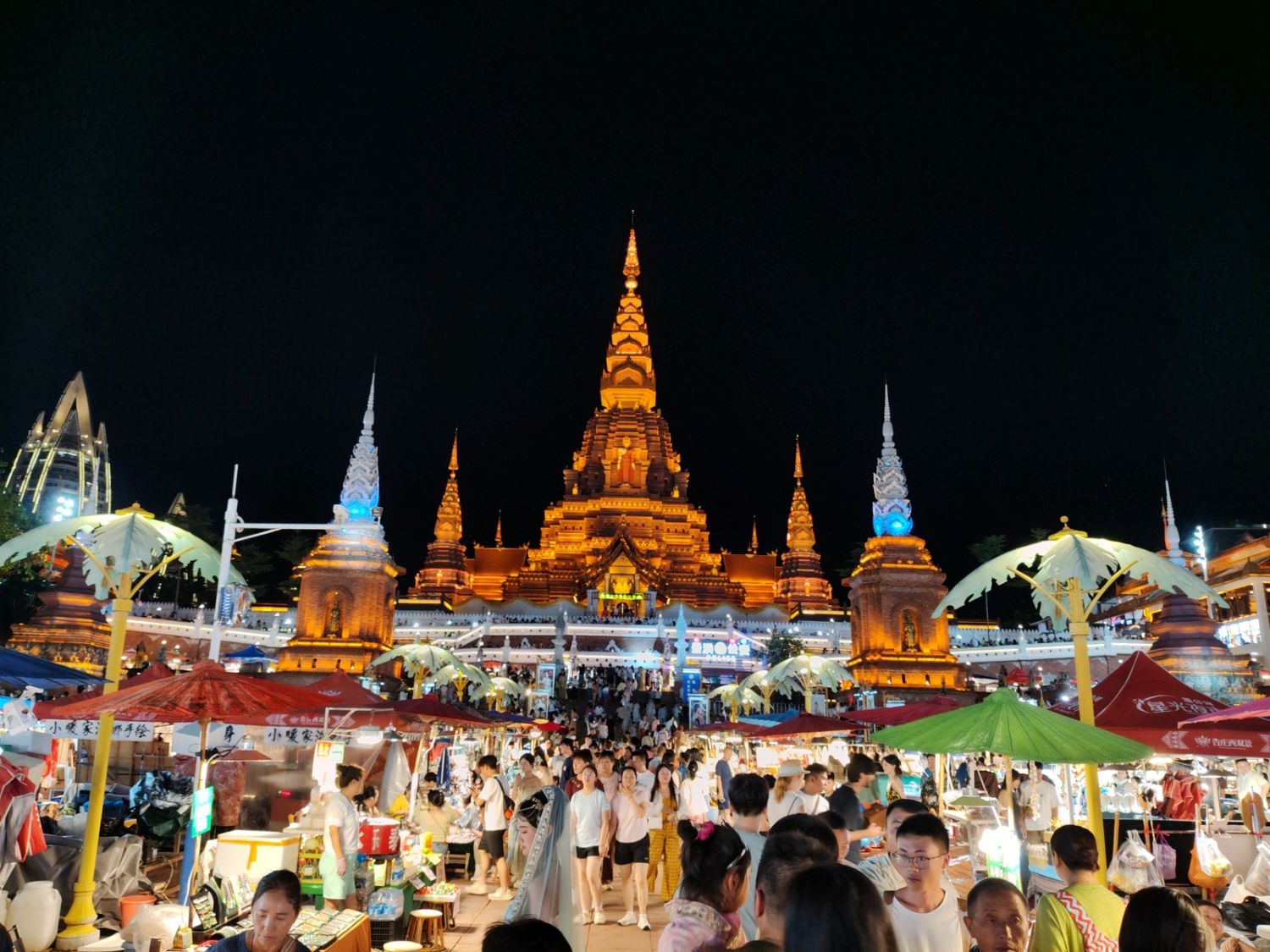
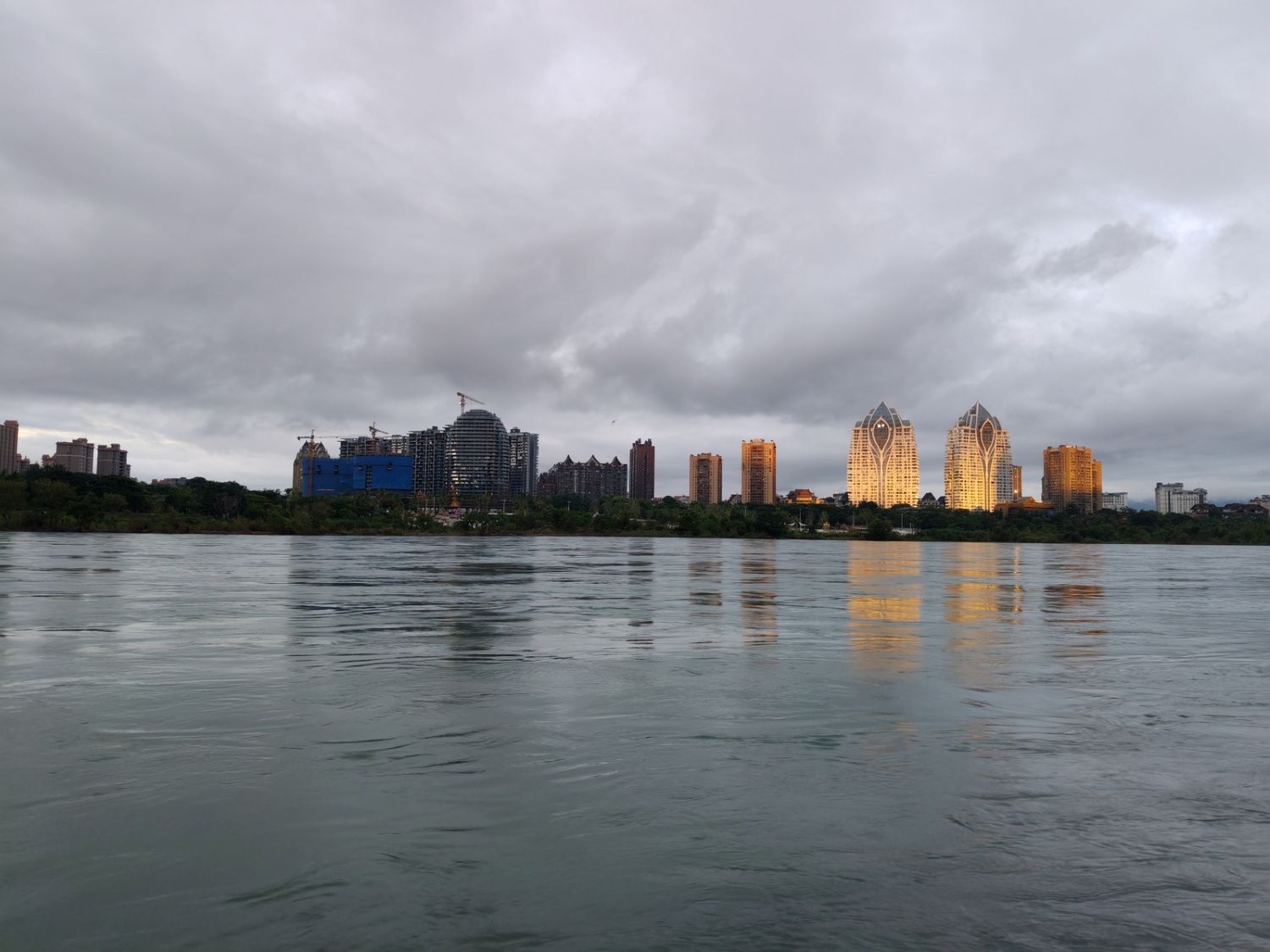
That evening, I experienced the ultimate fusion of this ancient river heritage and modern vibrancy at Gaozhuang Xishuangjing, the famous Starlight Night Market. Located right along the Lancang River in Jinghong, I had never seen anything like it in my entire life.
It felt exactly like stepping into the bustling, ancient marketplaces seen in that old Jesus movie we have all watched, except this was exploding with thousands of colorful conical parasol lights. The sheer scale was breathtaking.
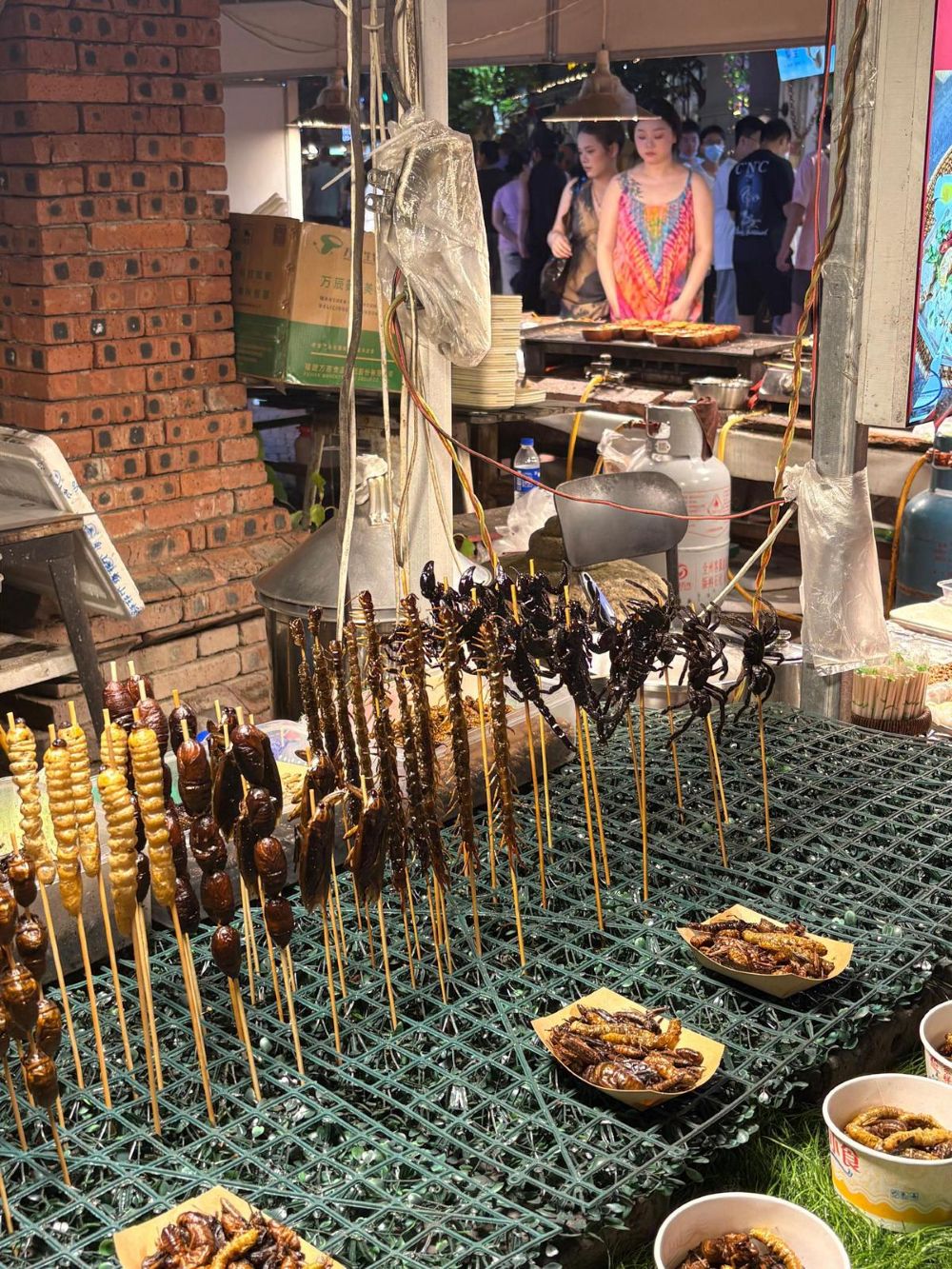
Everywhere I looked, content creators were recording the electric atmosphere, weaving between stalls selling intricate Dai silverware, silk, and souvenirs. The real star was the street food. I found myself surrounded by the aromas of grilled luosifen snails, bamboo-wrapped sticky rice, and exotic insects sizzling on open grills.
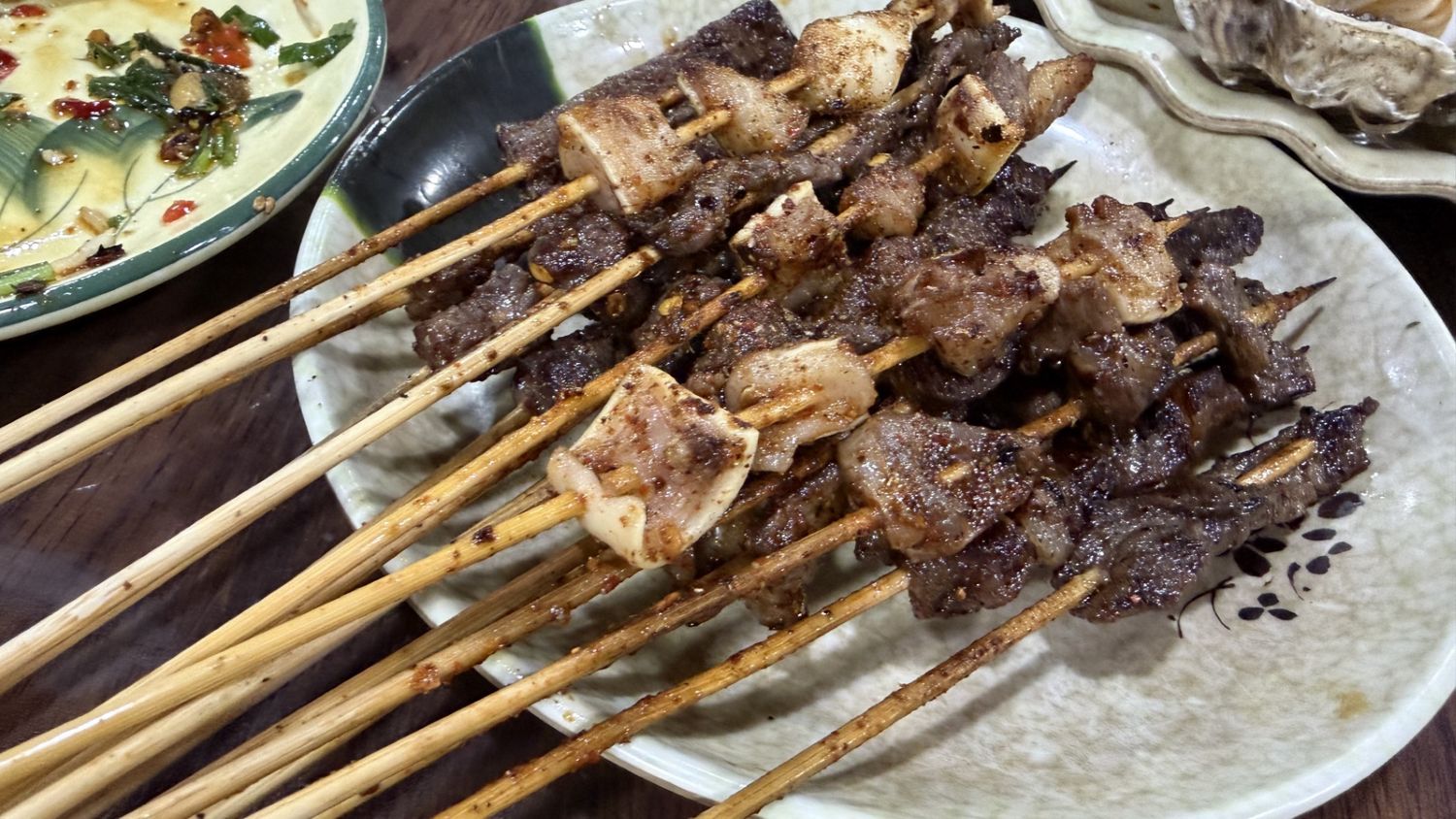
Adventurous street food stalls offering a perfectly crispy variety of exotic local meat.
With a musical fountain show playing in the background and the river bridge lighting up the night sky, it was an intoxicating blend of ancient tradition linked up to future technology. You simply would not ever wish to leave this place.
The next day, I ventured into the high altitudes to visit Nannuo Mountain, an absolute pilgrimage site for tea lovers. This is one of the oldest and most famous mountains for growing Pu’er tea, home to ancient tea trees that have stood for over 800 years.
Misty tea terraces cover Nannuo Mountain, an ancient pilgrimage site for tea lovers.
My day involved hiking through misty tea terraces and visiting the traditional Hani ethnic minority villages, who are the traditional tea growers of the region. Sitting in a local tea farmer’s wooden hut, sampling raw, earthy Pu’er right at the source, was a grounding experience.
Yet, what completely shocked me was looking out and seeing modern flats built right into the mountain landscape. You would never imagine such urban prosperity existing in harmony with ancient high-mountain farming. The people here are so prosperous and genuinely amazing.
Xishuangbanna demands multiple visits to see everything it holds. You absolutely must visit the Menglun Tropical Botanical Garden, the crown jewel run by the Chinese Academy of Sciences.
Spanning over 1,100 hectares, it is divided into a public West Garden filled with ornamental aquatic plants and dancing grass, and a reserved East Garden featuring a pristine tropical rainforest canopy where you can easily spend half a day marveling at over 13,000 plant species.
Then there is Wild Elephant Valley, the only place in China to reliably observe wild Asian elephants. Walking along its 1.3-kilometer elevated skywalk through the rainforest canopy allows you to watch them bathe and forage, alongside educational performance shows featuring a semi-domesticated herd of 16 retired elephants.
Elephant sculptures line the streets, serving as a reminder of the ancient kingdom.
For ultimate adventurers, the Wangtianshu Sky Tree Scenic Area in Mengla County features a rare tropical tree soaring 80 meters high. The Corridor of the Sky, a dizzying suspension bridge and spiral staircase, lets you climb right into the treetops for a bird-eye view of the ocean-like rainforest.
If you are ready to pack your bags and write your own story, timing your visit is crucial. Because the rainy season from May to October is heavily humid and wet, the absolute perfect time to visit is from November to April when the weather is cooler and much drier.
When you do go, make sure to pack bright-colored clothes, as the lush, endless greenery makes for the most amazing photographs. And above all else, in this wild, beautiful frontier, always remember to carry strong insect repellent.
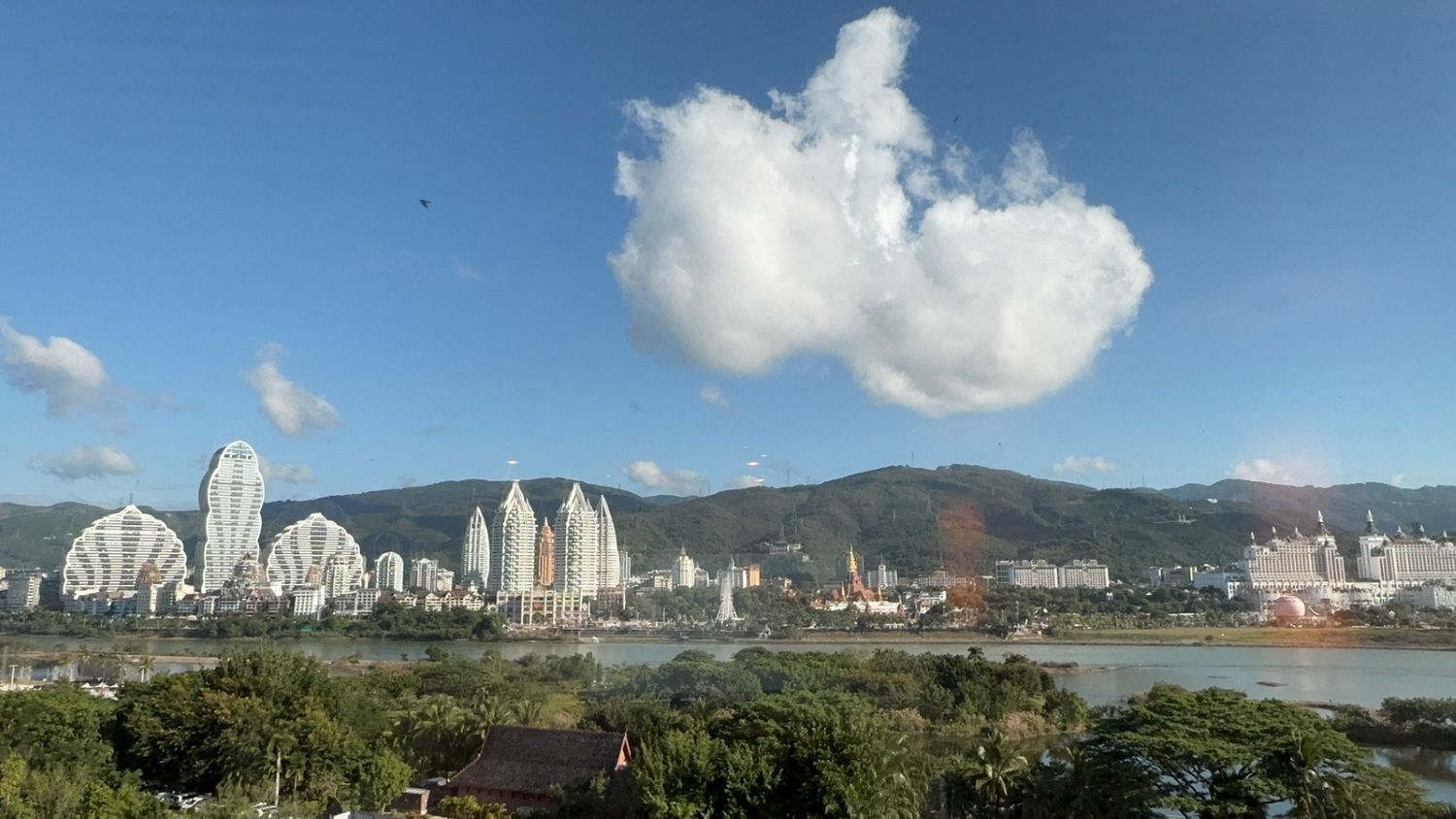
Where towering skyscrapers and ancient mountains coexist in absolute perfect harmony.Thousands of colorful conical parasols light up the Gaozhuang Xishuangjing night market.The illuminated river bridge and musical fountain create a magical nighttime backdrop.Jinghong pulses with an electric energy you simply will not find anywhere else.Jinghong city center, home to a large portion of the prefecture’s permanent residents.Content creators film the electric atmosphere of the bustling Lancang riverfront bazaar.An awe-inspiring cityscape that completely redefines what a Chinese frontier looks like.A vibrant array of street food includes grilled luosifen and bamboo-wrapped sticky rice.
The update brings the total number of individually identified elephants in Akagera to 115, including 65 females and 50 males. These identified individuals represent approximately 80% of the park’s estimated elephant population, providing valuable insight into the composition, movements, and dynamics of Akagera’s herds.
Individual elephant identification is an important part of Akagera’s long-term conservation efforts, enabling monitoring teams to track individual animals, understand population trends, and support informed conservation and management decisions. Each new identification adds to the growing body of knowledge that helps protect and manage one of Africa’s most iconic species.
Established in 1934, Akagera National Park covers 1,120 square kilometres and is renowned for its diverse wildlife, including the Big Five — lions, leopards, elephants, and buffalo — alongside many other species that contribute to the park’s unique biodiversity.
The park’s remarkable wildlife recovery story has been highlighted by the growth of its lion population, which was revealed in August last year to have increased from just seven individuals to 62 over the past decade. This significant recovery demonstrates the impact of sustained conservation efforts, including improved protection, monitoring, and habitat management.
Additionally, in June last year, Akagera welcomed 70 southern white rhinos translocated from South Africa in a historic cross-continental conservation effort. The arrival significantly strengthened the park’s rhino population and built on the successful reintroduction of 30 white rhinos in 2021.
Together, these milestones reflect the continued success of conservation initiatives at Akagera, where careful monitoring, species reintroductions, and dedicated management are helping restore and safeguard some of Africa’s most iconic wildlife populations.
INDIVIDUAL ELEPHANT IDENTIFICATION UPDATE: The bi-monthly elephant survey was completed, resulting in the addition of six new individuals to the database. Akagera now has 115 individually identified elephants, comprising 65 females and 50 males, representing approximately 80% of… pic.twitter.com/kUCIOVQ1v9
— Akagera National Park (@AkageraPark) July 14, 2026
The meeting, held on Saturday evening, was led by RDB Chief Tourism Officer Irène Murerwa and focused on the trio’s activities and opportunities to amplify the country’s unique tourism experiences through their combined social media reach.
The discussions come as Ashton Hall, Kagarara and Yogendra Kushwah conclude a multi-country tour across Africa, with Rwanda serving as the final stop of Hall’s journey on the continent.
According to RDB, the meeting explored “opportunities to showcase the country’s unique tourism experiences to global audiences.”
During the discussions, Murerwa welcomed the visitors and thanked them for choosing Rwanda, noting that their content has the potential to inspire young people and introduce millions around the world to the country.
Hall, whose online audience runs into millions, spoke enthusiastically about his experience in Rwanda, describing Kigali as cleaner than he had expected.
“I saw so many nice places, clean. They don’t know. This is cleaner than my city, Miami. Kigali is cleaner than Miami, and I never expected that,” he said, echoing Kigali’s reputation as one of Africa’s cleanest cities.
He explained that one of his goals during the African tour is to challenge common misconceptions about the continent.
“When I was headed here, I wanted to show all of Africa because, in America, we kind of see one side, but we don’t see all the sides,” Hall remarked. “I wanted to show all of the things that I feel like I never knew about Africa, and Rwanda as well.”
Hall also reflected on his visit to the Kigali Genocide Memorial, describing it as one of the most meaningful experiences of his trip.
“I feel like a lot of people, if you come to Rwanda, you have to go there for sure,” he said, adding that the memorial gave him a deeper appreciation of the country’s history and the resilience of its people.
The meeting also touched on the visitors’ upcoming tourism experiences, including gorilla trekking in Volcanoes National Park, one of Rwanda’s flagship tourism attractions. Hall, who described gorillas as his favourite animals, expressed excitement about the experience.
Having already experienced aspects of Rwanda’s culture by wearing traditional attire and visiting local communities, Hall said he had been impressed by everything he had seen so far.
“You guys have too much to offer. The gorillas, the cows, the safari… I felt like I’ve seen a lot already.”
Despite initially planning to leave Rwanda earlier, Hall said travel changes extended his stay, something he now sees as a blessing.
“I was really sad to leave. I didn’t want to leave… I just see it as a sign. God wanted me to stay.”
Before departing, Hall described Rwanda as a place he intends to return to.
“We’re coming back. This is our second home,” he said.
Ashton Hall’s global influence, coupled with the growing audiences of Indian Ashton and Rwanda’s Kagarara, presents the country with an opportunity to reach millions of potential travellers across different regions. Kagarara has built a large following by inspiring people through his story of overcoming disability, while Indian Ashton has attracted a significant audience in India through his content.
Rwanda has continued to expand its international tourism marketing through the Visit Rwanda campaign, partnering with leading football clubs including Arsenal, Paris Saint-Germain, Bayern Munich and Atlético Madrid, as well as NBA franchise the LA Clippers, to raise the country’s profile and attract more tourists and investors.
The meeting, held on Saturday evening, was led by RDB Chief Tourism Officer Irène Murerwa and focused on the trio’s activities and opportunities to amplify the country’s unique tourism experiences through their combined social media reach.
With a history stretching back more than 2,400 to 3,000 years, Chengdu has long been known as one of China’s most culturally rich and creatively dynamic cities.
Often described as one of China’s most livable cities, Chengdu is famous for its leisurely lifestyle, teahouse culture, and vibrant street life.
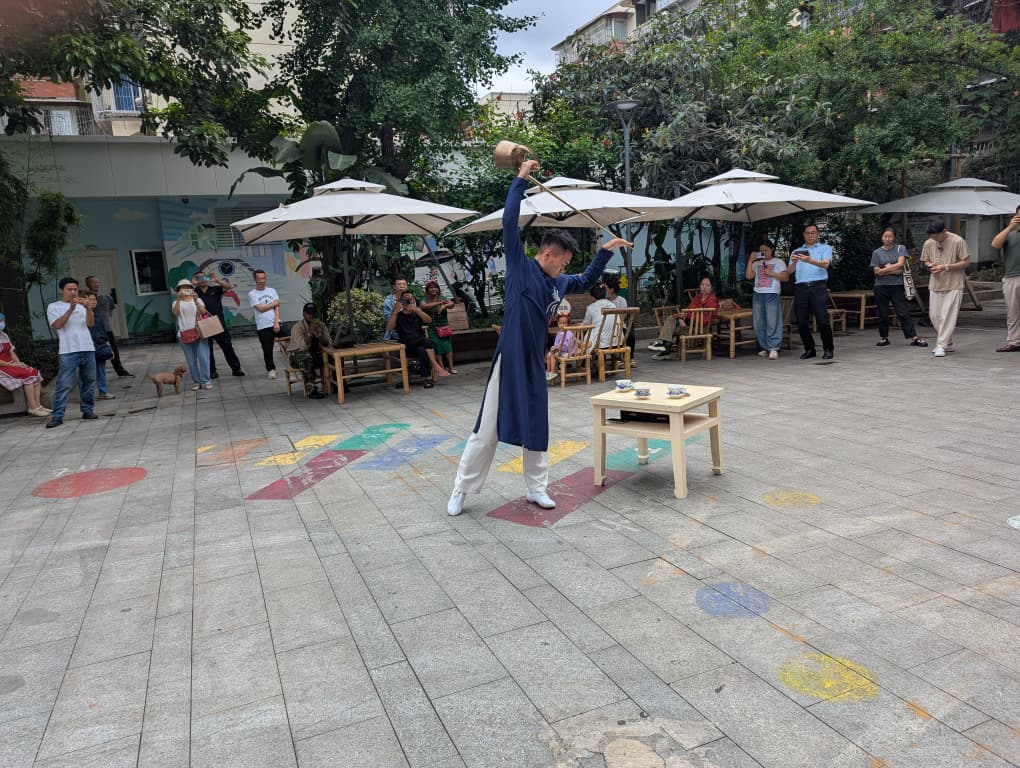
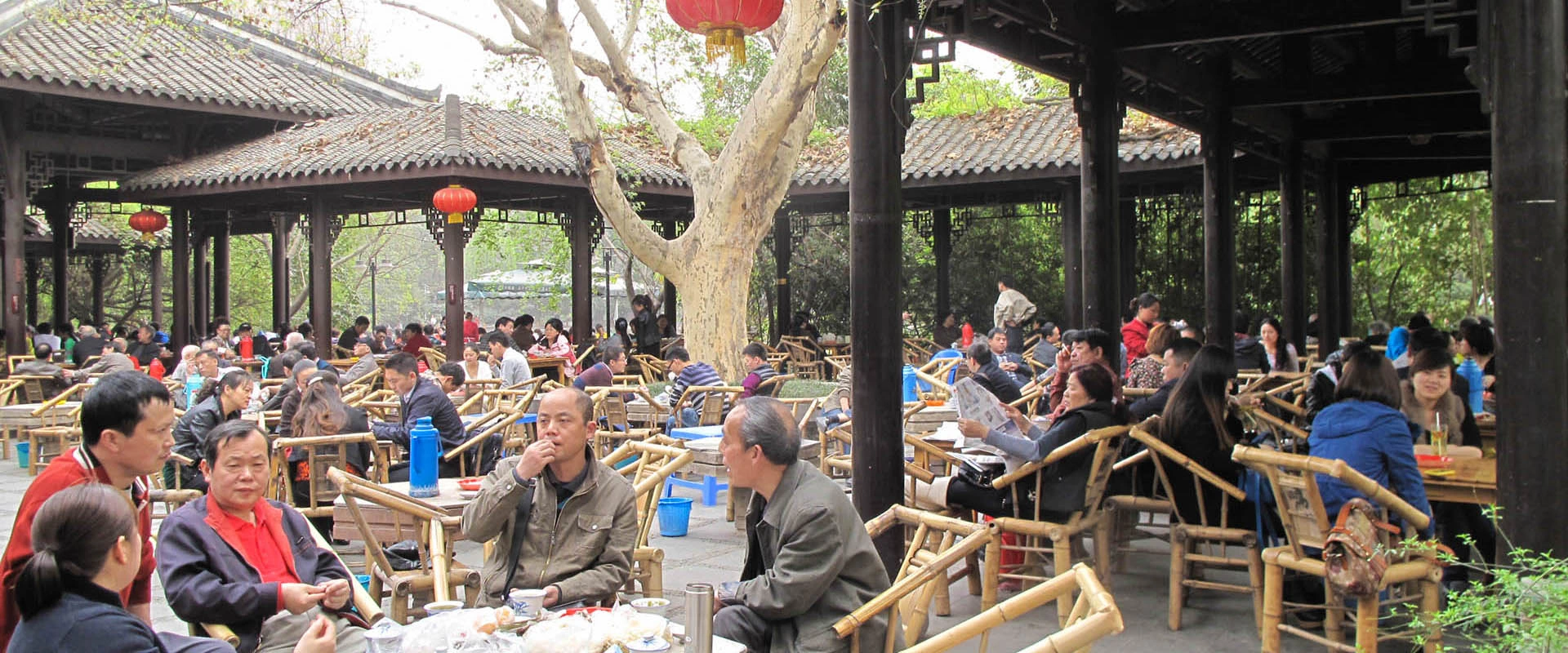
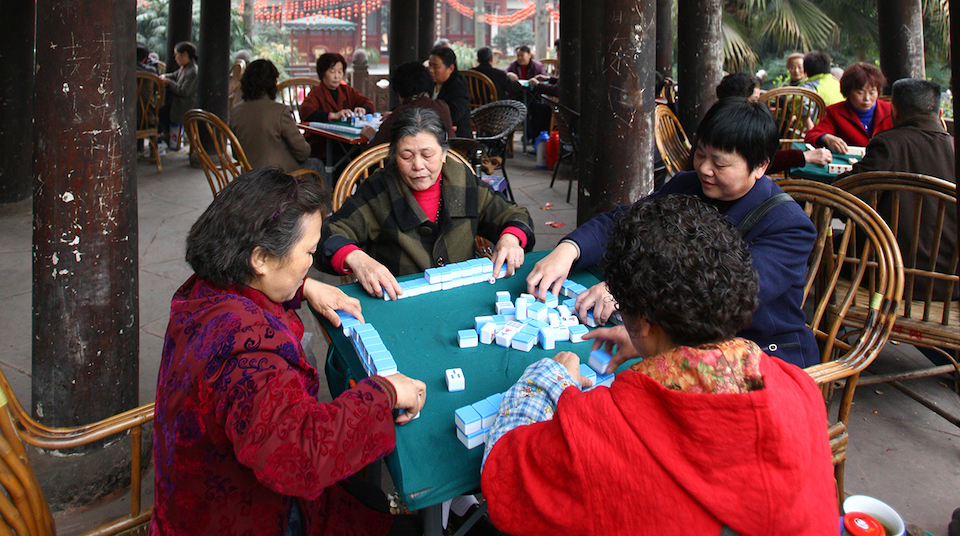
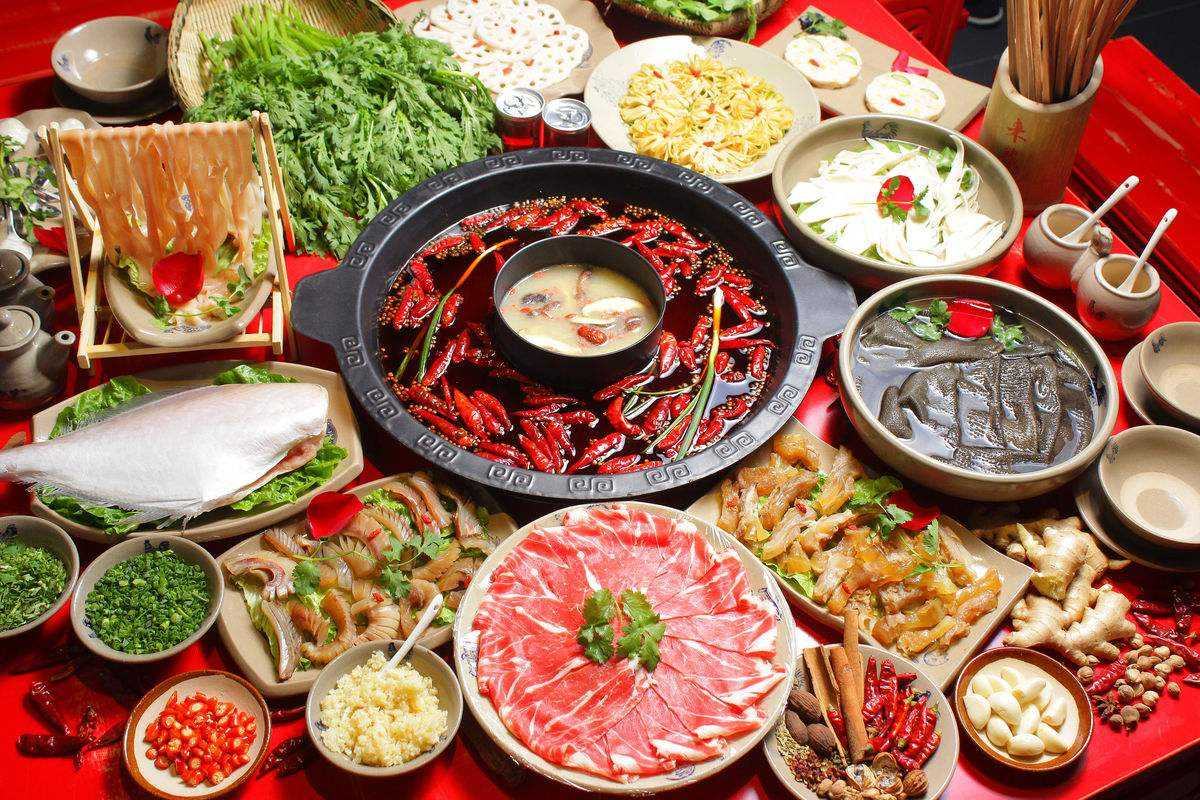
A typical day for many locals begins in a traditional teahouse, where friends gather over a pot of tea, chatting and playing mahjong in a slow rhythm that reflects the city’s identity. By afternoon, life often shifts to hotpot restaurants, followed by lively evening gatherings that stretch late into the night.
But beyond this relaxed image, Chengdu is also a rapidly growing economic and creative hub. Today, it is one of the most important cities in western China and ranks among the country’s top urban economies, with a population exceeding 20 million people.
Over the past decade, the city has experienced remarkable growth, driven by infrastructure development, technology, transport expansion, and a rising creative and digital economy.
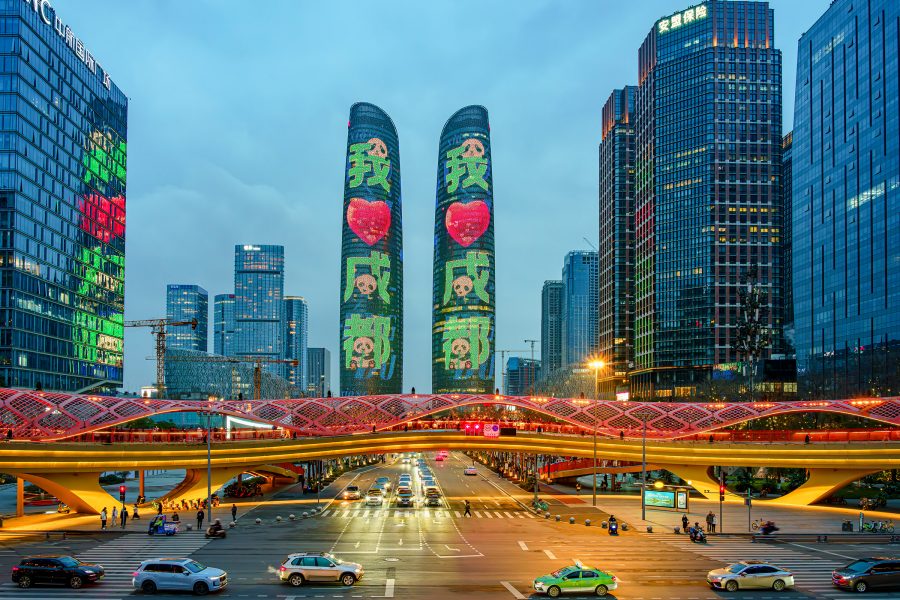
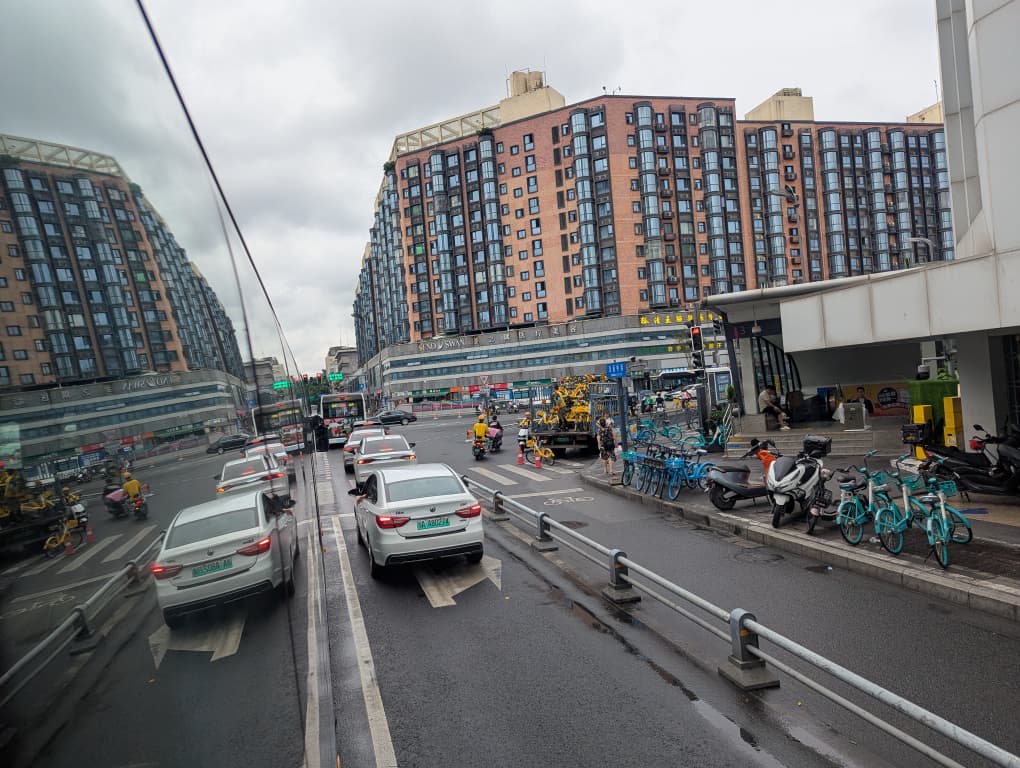
Its modern skyline, metro systems, shopping districts, and business centres reflect a city that is constantly evolving while preserving its cultural roots.
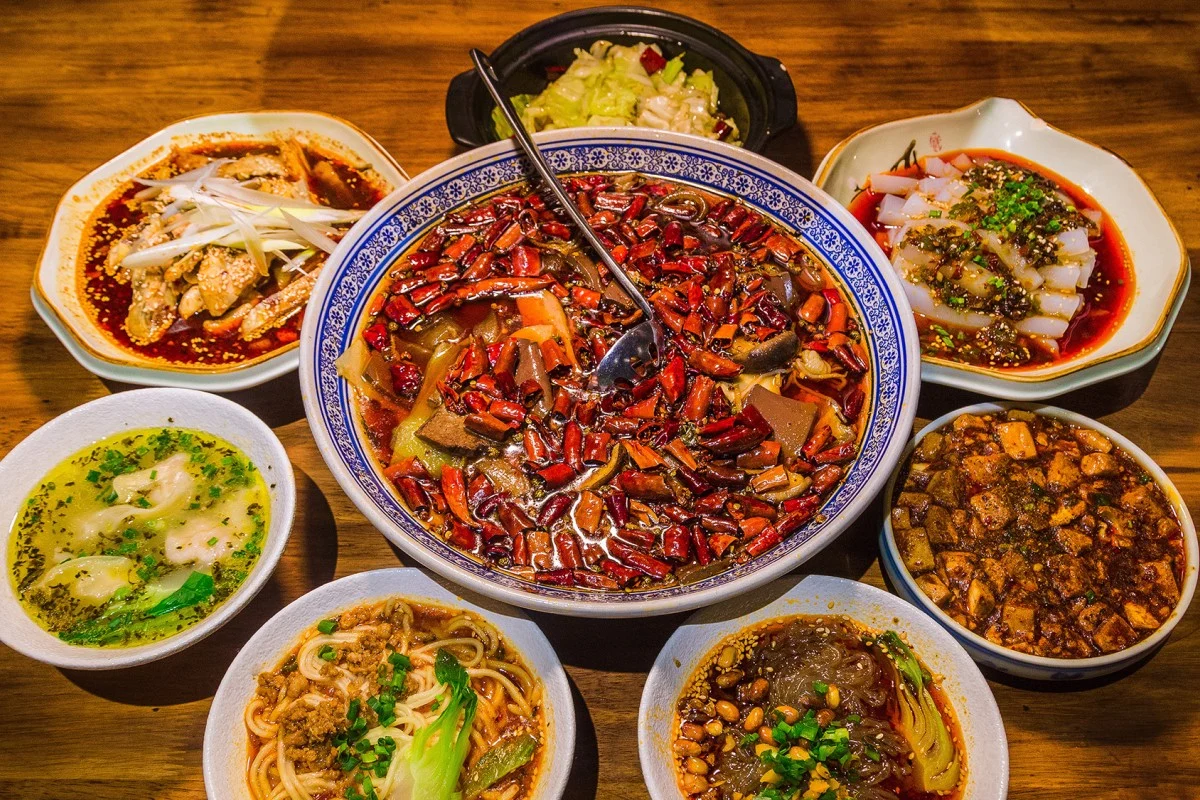
At the heart of Chengdu’s global reputation is its status as a UNESCO “City of Gastronomy,” the first in Asia to receive this honour. Sichuan cuisine, one of China’s four major culinary traditions, originated here and is celebrated worldwide for its bold, spicy, and complex flavours.
A local saying captures this perfectly: “The best cuisine is from China, while the richest flavour is from Chengdu.”
Chengdu food culture is built on balance and harmony, blending sweet, sour, bitter, spicy, and salty tastes into one experience.
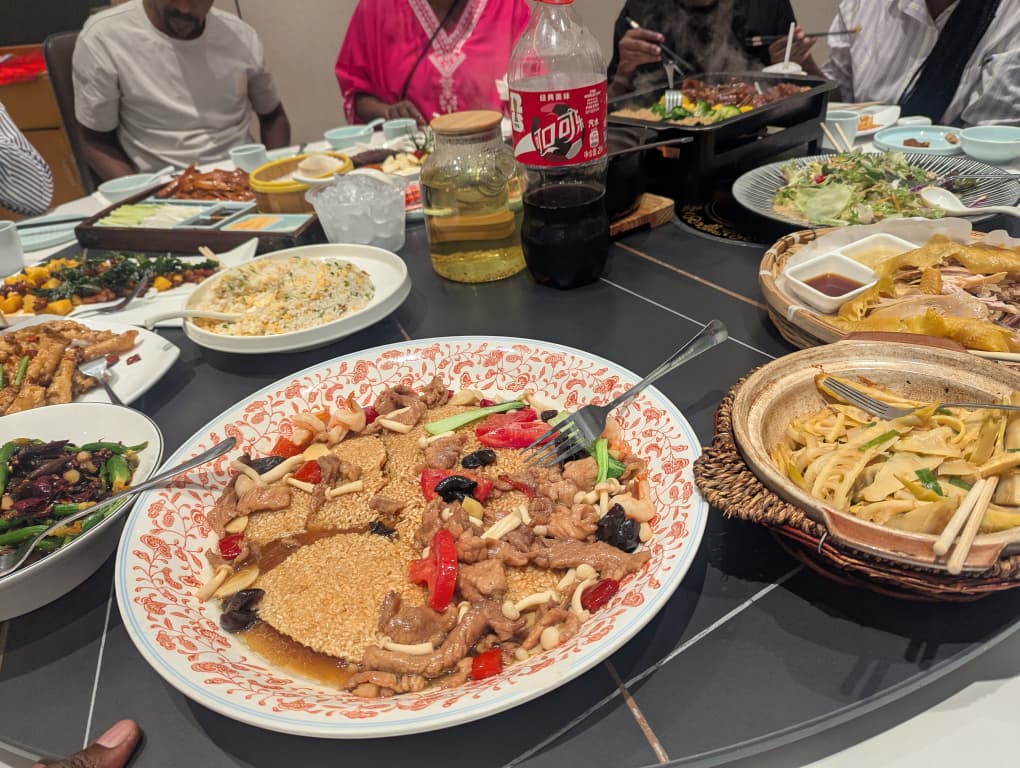
Signature dishes such as hotpot, Mapo Tofu, and delicacies made with Doubanjiang (fermented bean paste) define the city’s culinary identity.
With over 60,000 restaurants, thousands of chefs, and a thriving food industry employing hundreds of thousands of people, Chengdu is truly a paradise for food lovers. The city also hosts annual food festivals that bring together chefs, tourists, and food enthusiasts from around the world.
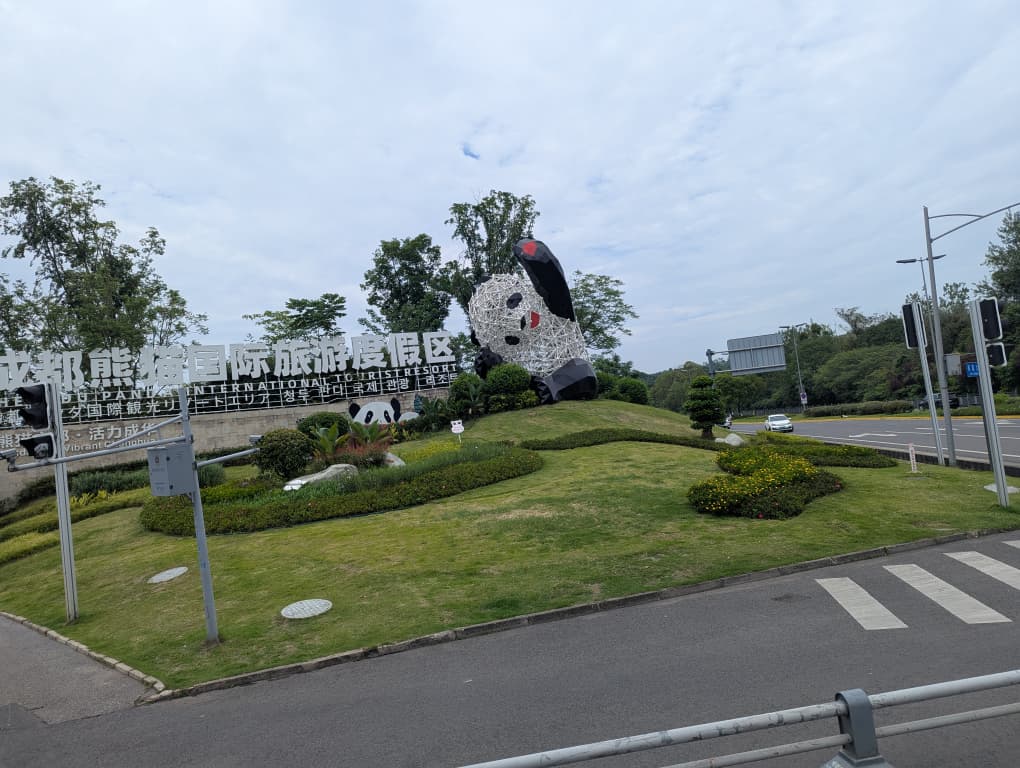
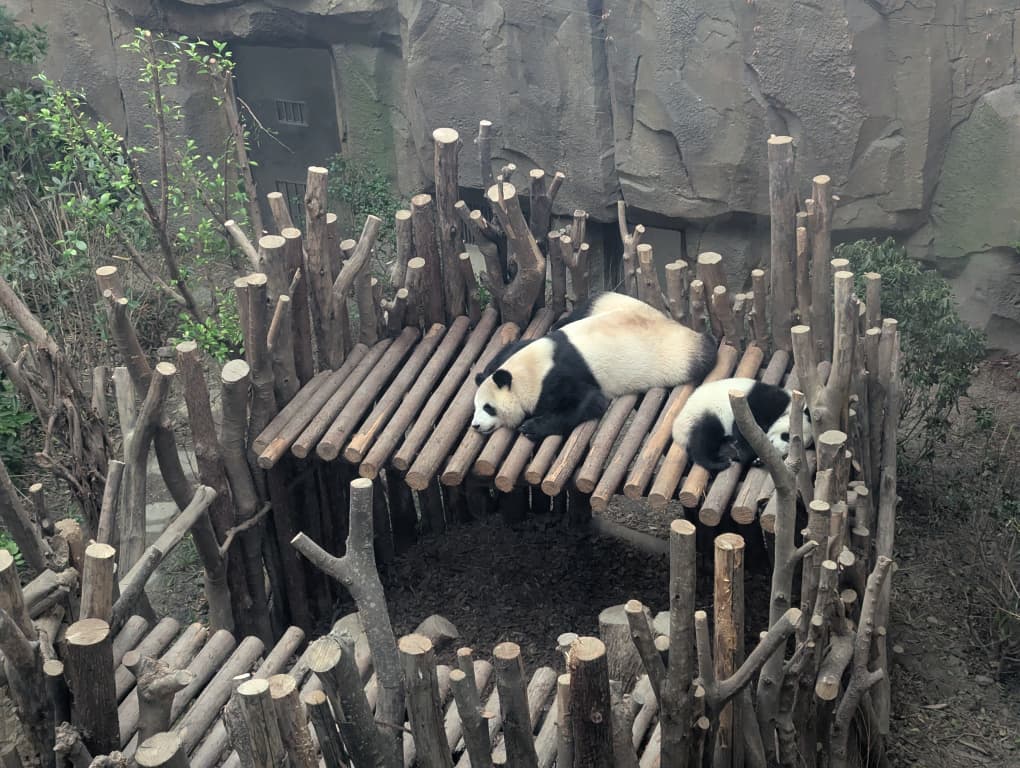
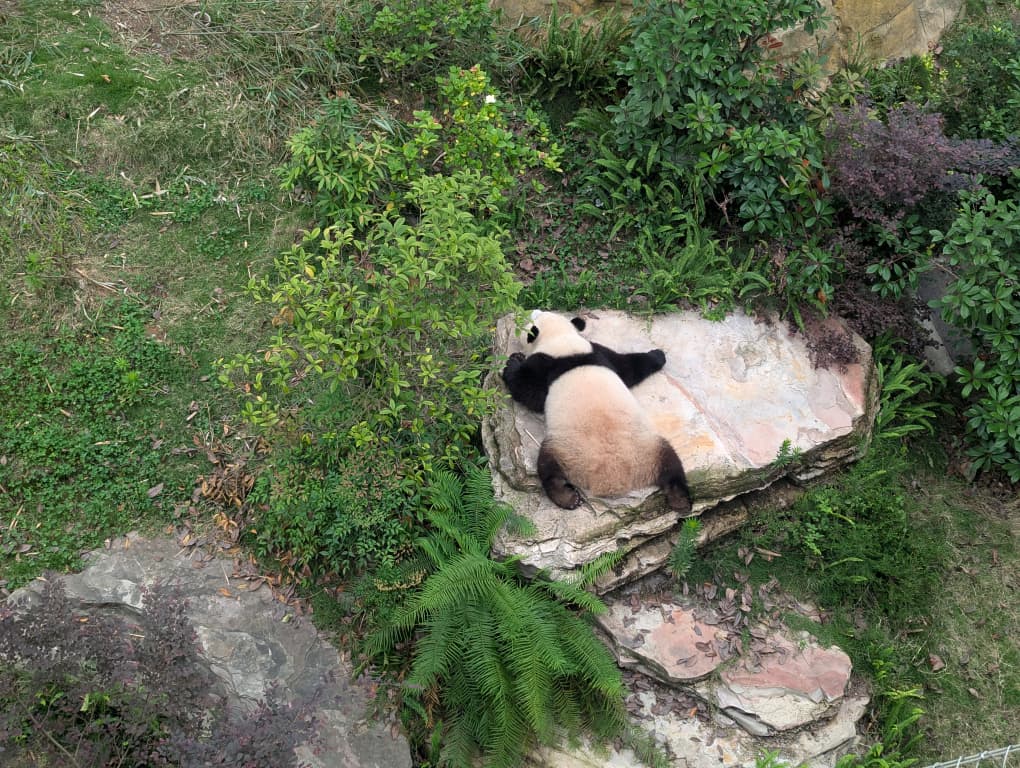
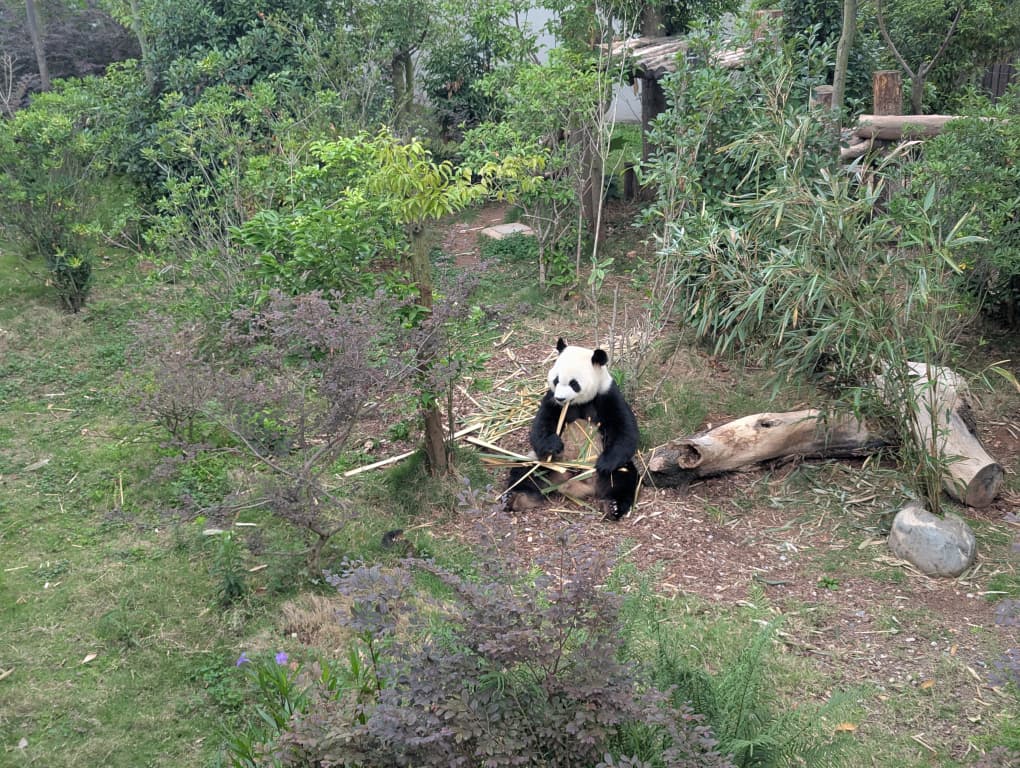
Yet Chengdu is not only about food—it is also the proud home of China’s national treasure, the giant panda. The Chengdu Research Base of Giant Panda Breeding is one of the world’s most important conservation centres for pandas.
Located just a short distance from the city centre, it allows visitors to observe these rare animals in a natural, carefully protected environment.
One of the most unique traditions here is that all baby pandas are given names in a ceremonial way, just as Rwanda names baby mountain gorillas every year, a symbolic gesture that reflects global conservation culture and respect for wildlife heritage.
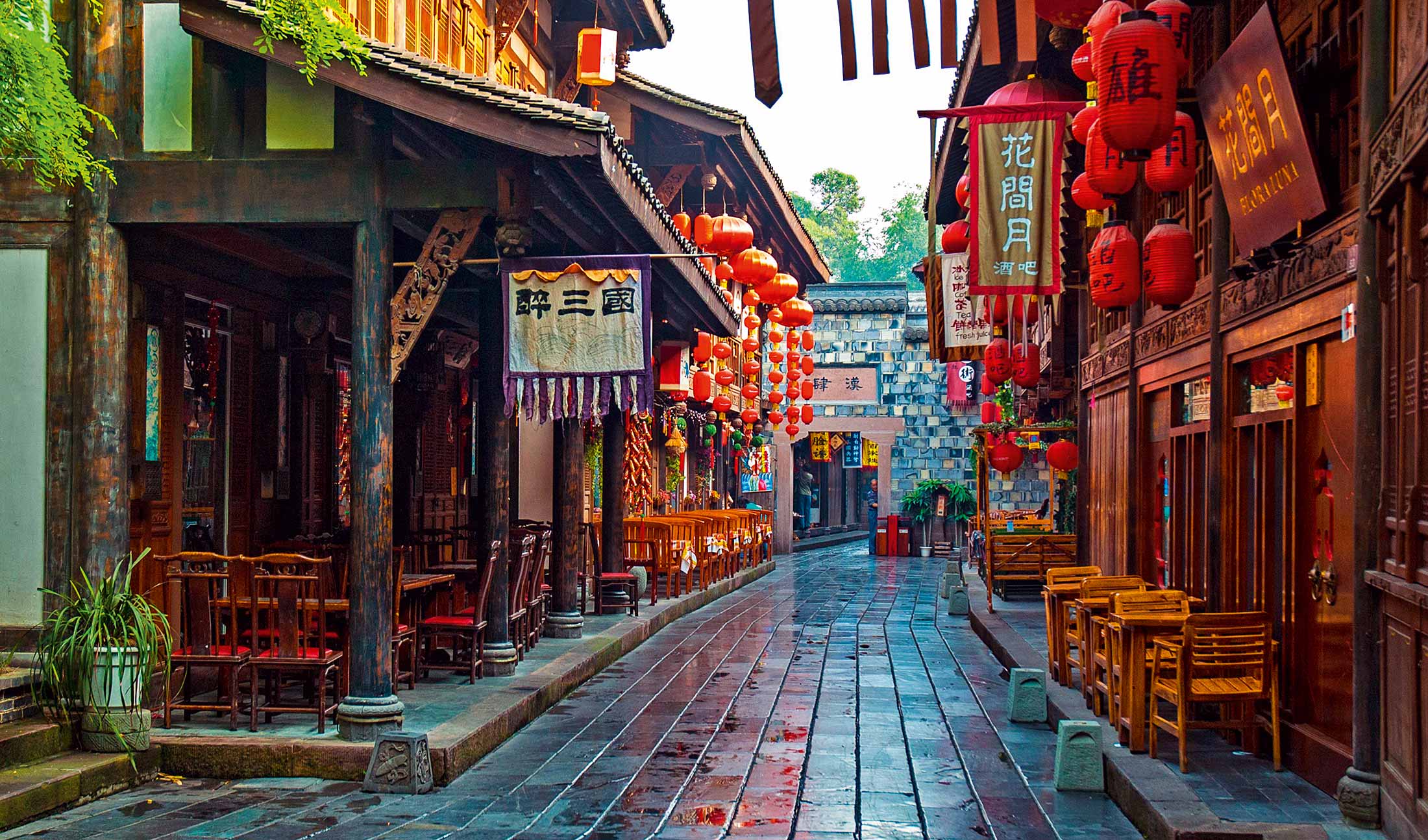
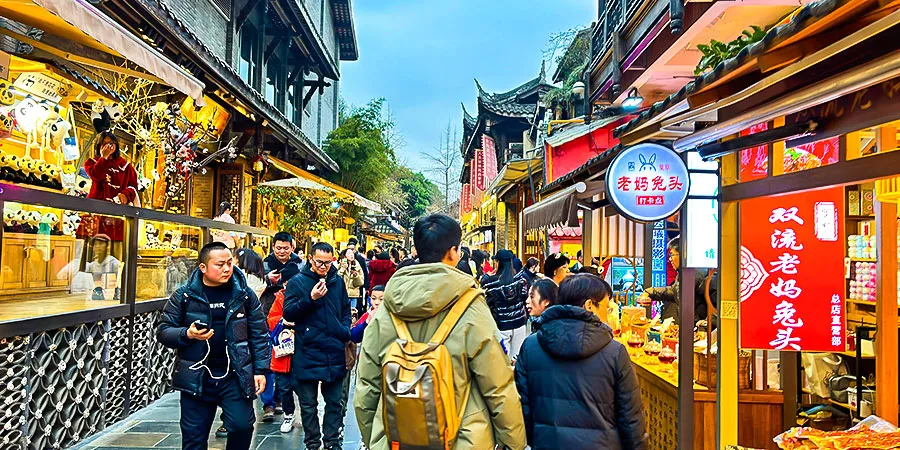
The city is also rich in historical and cultural attractions. Kuanzhai Alley (Wide and Narrow Alleys) offers visitors a glimpse into traditional Chengdu life, with ancient-style streets, teahouses, artisan shops, spas, and local snacks. It is a place where history and modern tourism meet in a lively cultural atmosphere.
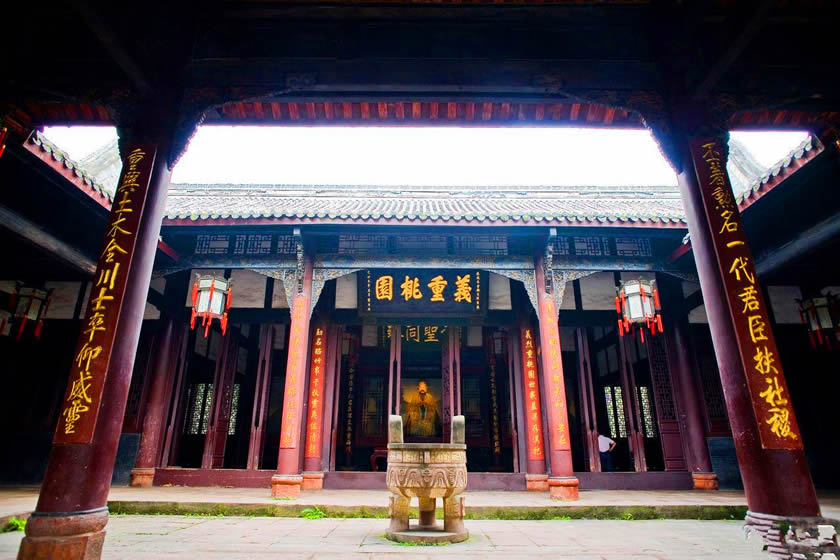
Another important site is the Temple of Marquis Wu, built in honour of Zhuge Liang, a legendary strategist of the ancient Shu Kingdom. The temple preserves centuries of history through sculptures, relics, and ancient inscriptions that continue to attract visitors and history lovers.
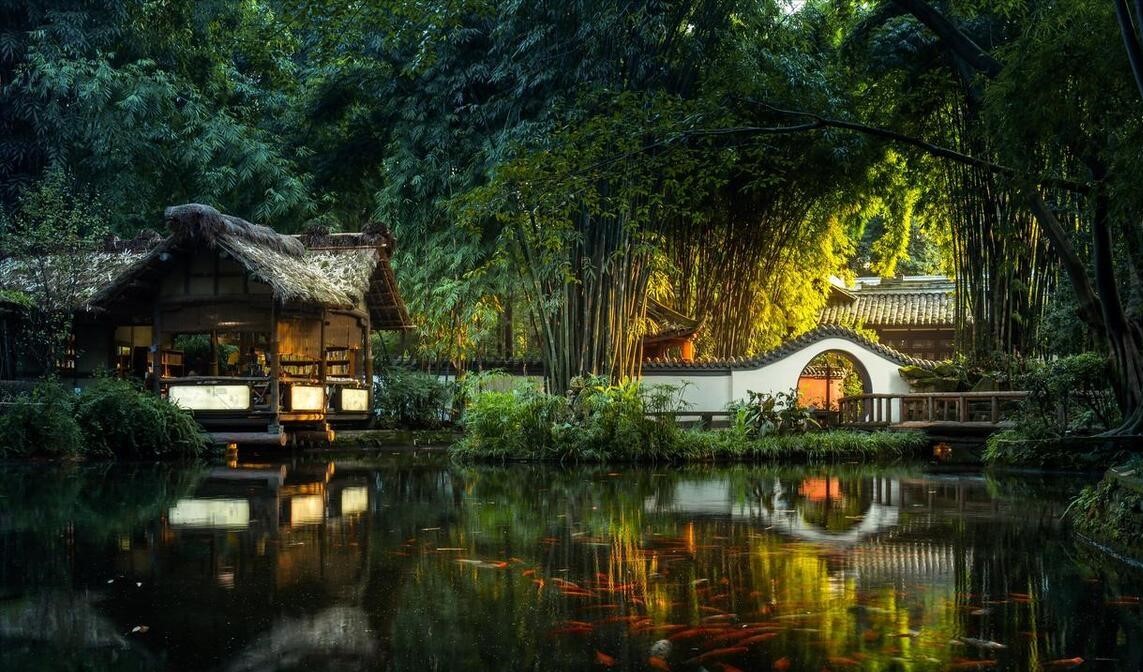
Not far away lies Du Fu Thatched Cottage, the former residence of one of China’s greatest poets. Here, Du Fu wrote many of his most famous works during a peaceful period of his life, making the site a symbol of Chinese literary heritage and reflection.
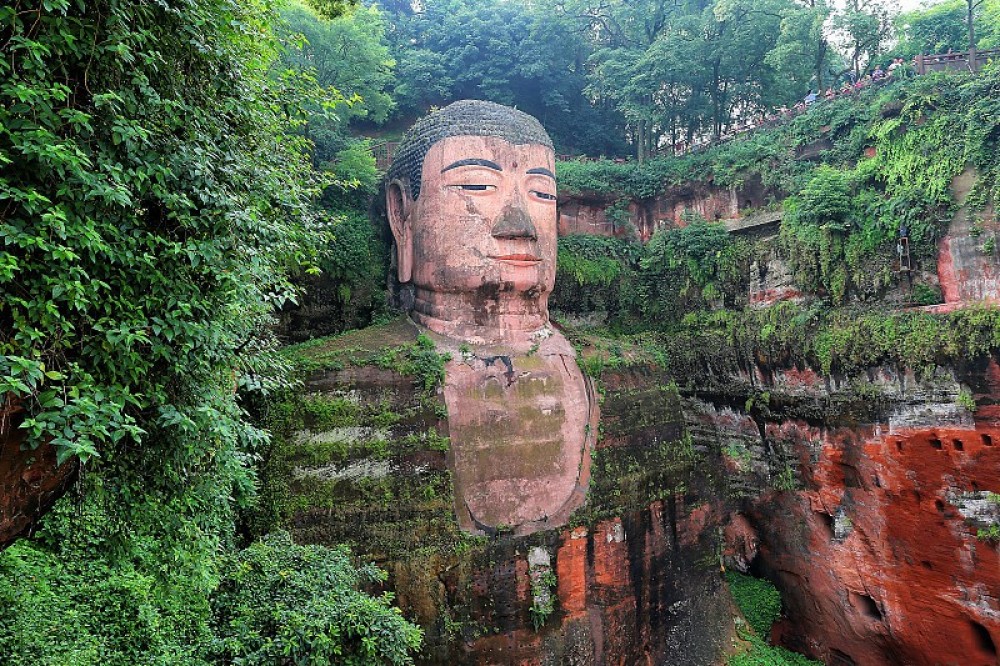
For those seeking natural and engineering wonders, Chengdu offers access to extraordinary sites such as the Leshan Giant Buddha, a monumental stone carving carved into a cliff face that stands as one of the largest Buddha statues in the world.
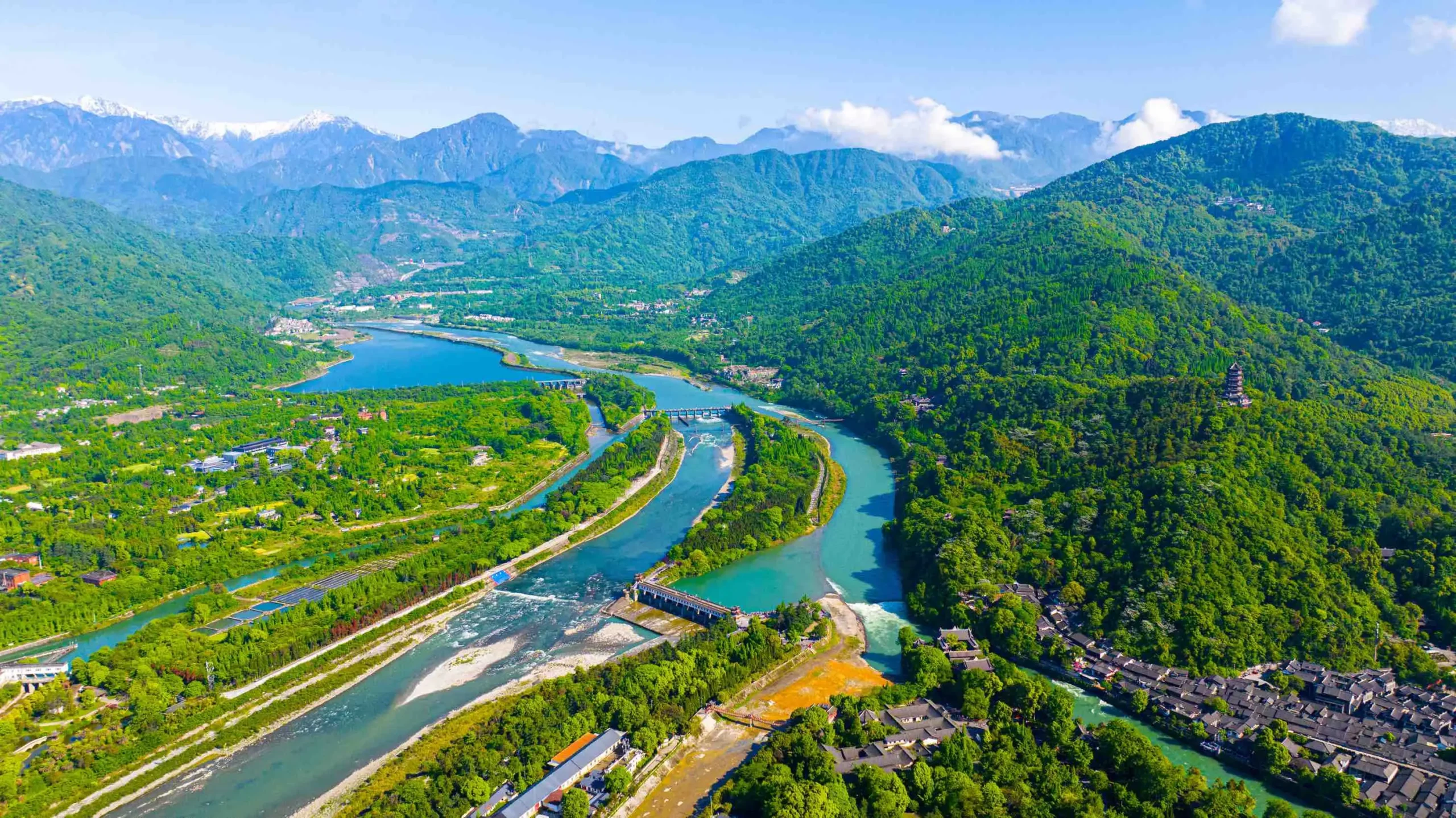
Nearby, the Dujiangyan Irrigation System, built over 2,000 years ago, remains a functioning masterpiece of ancient engineering and water management, still benefiting millions of people today.
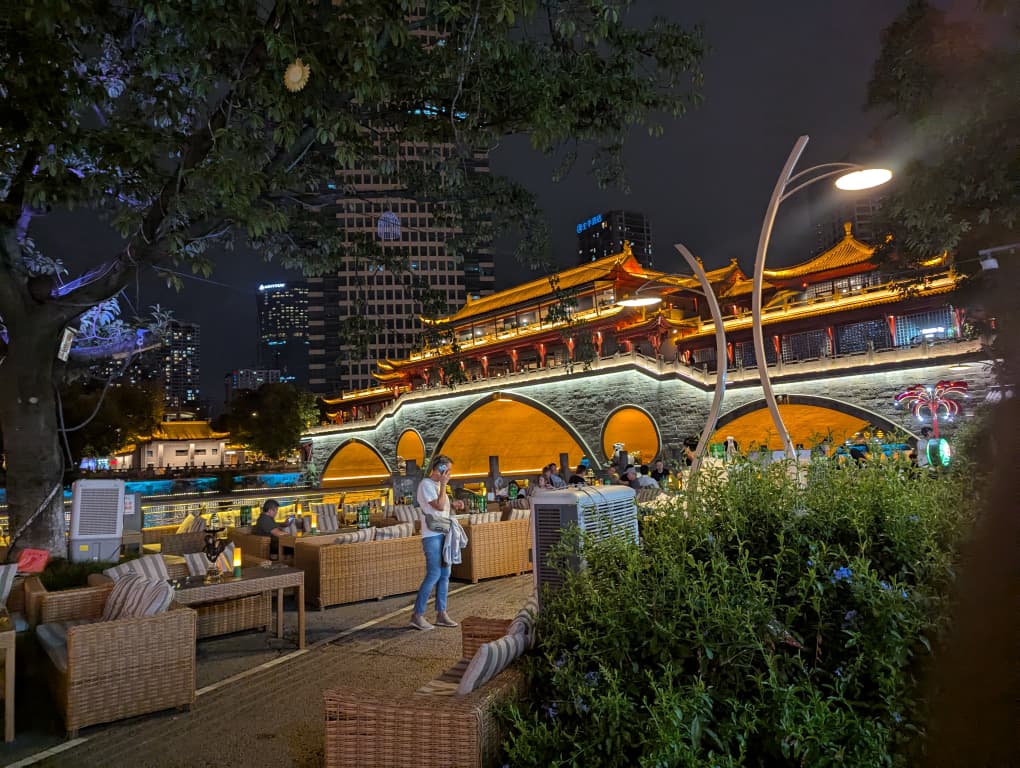
Chengdu’s charm also lies in its modern lifestyle districts such as Chunxi Road and Taikoo Li, where luxury brands, shopping malls, street food, and entertainment spaces coexist. Visitors can enjoy everything from international fashion to local crafts, all within a vibrant urban atmosphere.
The city’s appeal can be summed up in five powerful reasons: it is romantic, scenic, delicious, relaxed, and home to giant pandas.
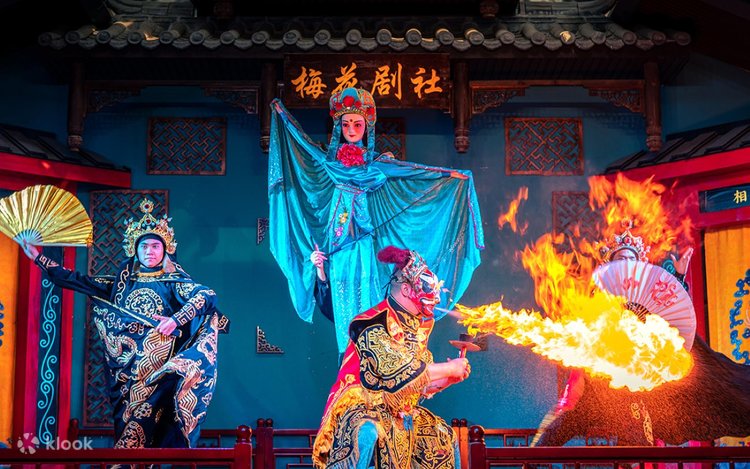
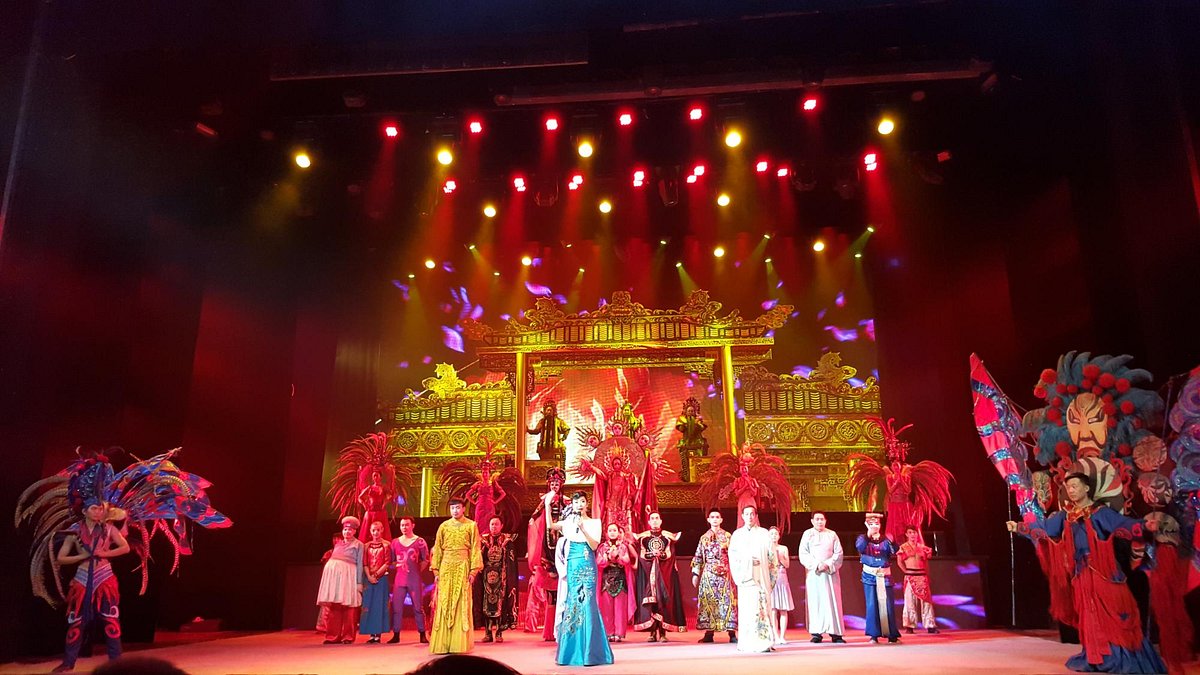
Whether exploring the historic lanes, tasting spicy Sichuan cuisine, watching a Sichuan opera performance, Chengdu offers a lifestyle that feels both peaceful and deeply enriching.
It invites visitors not only to explore its landmarks, but to experience a way of life where comfort, culture, and creativity exist in perfect harmony.
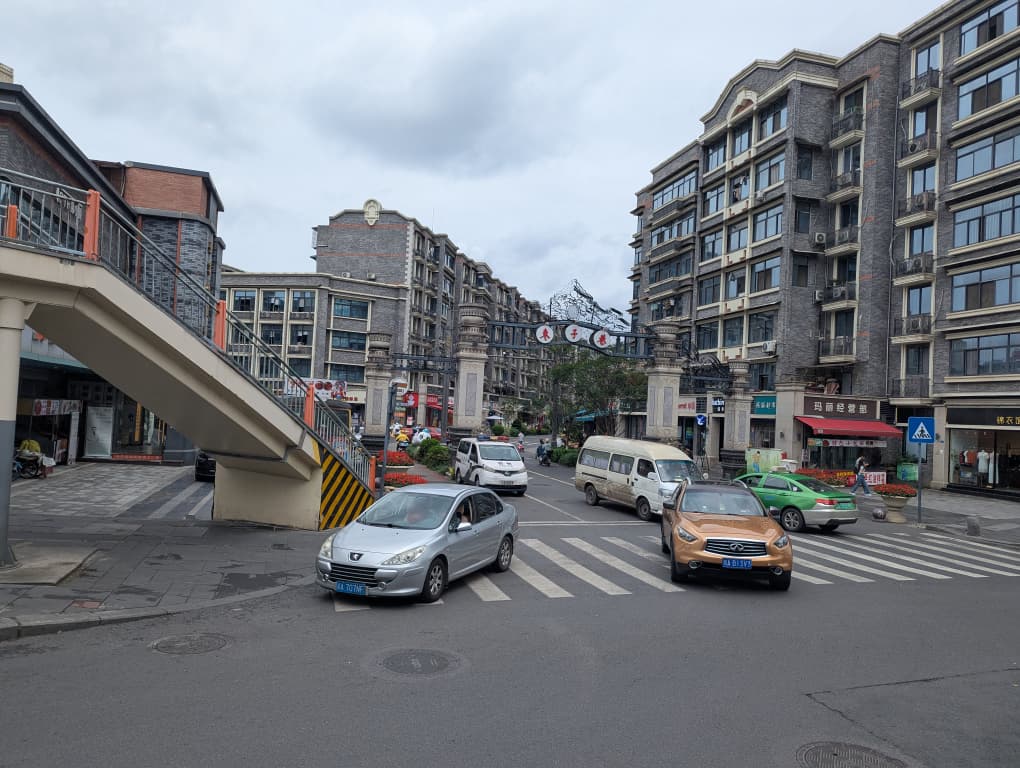
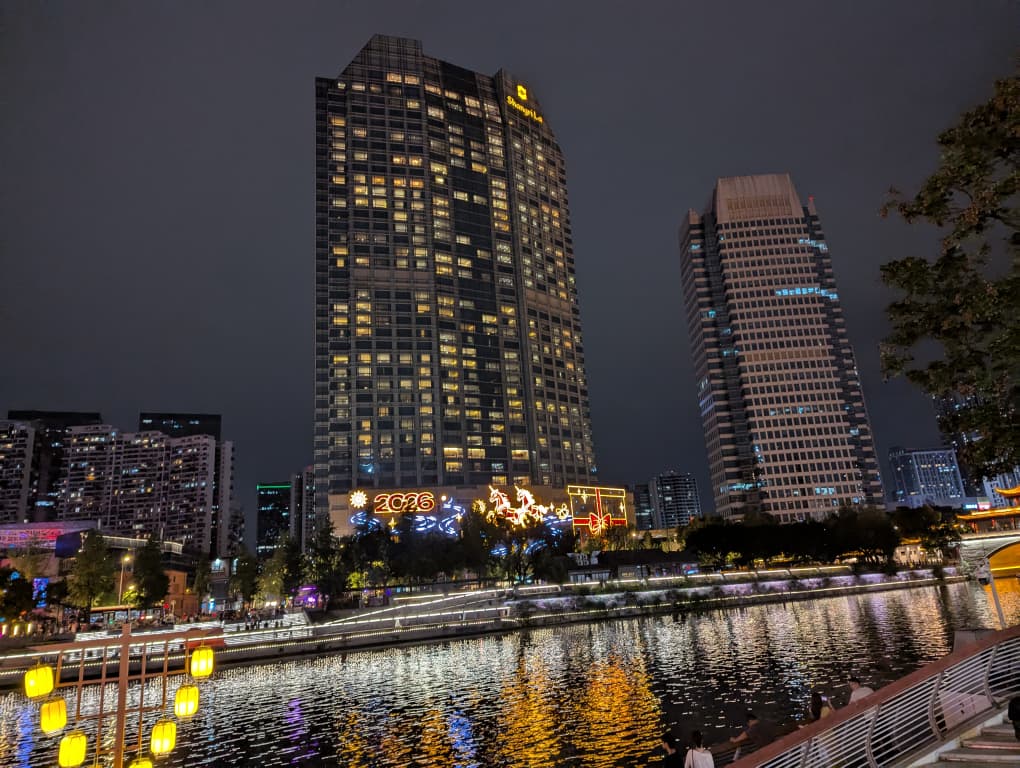
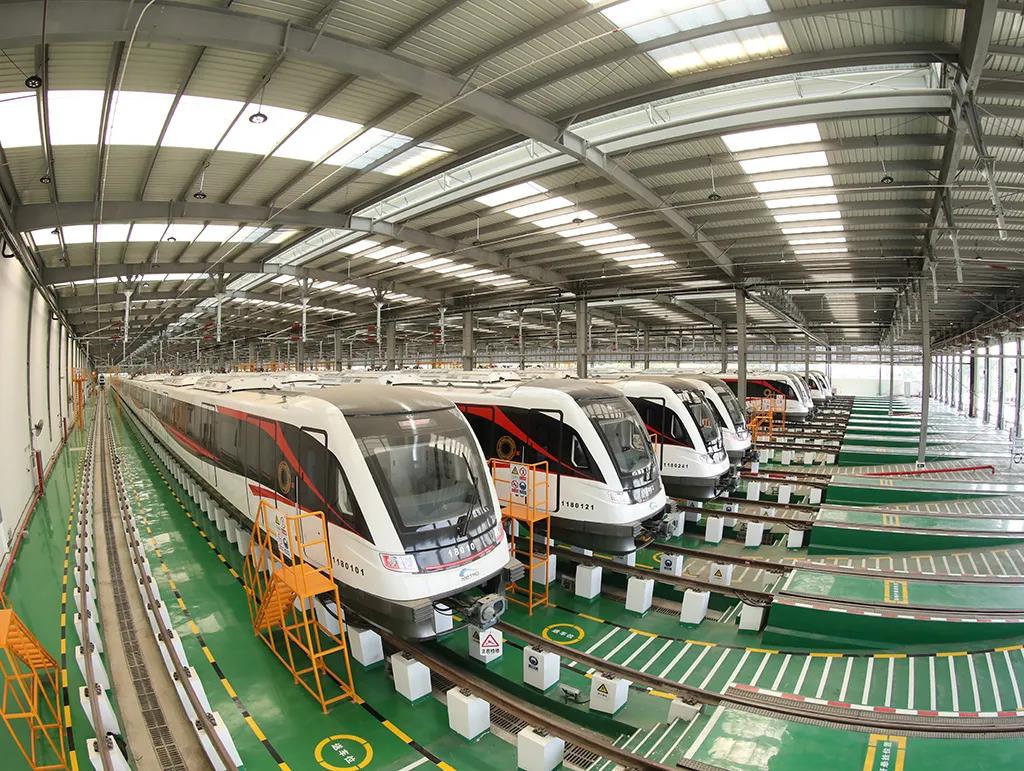
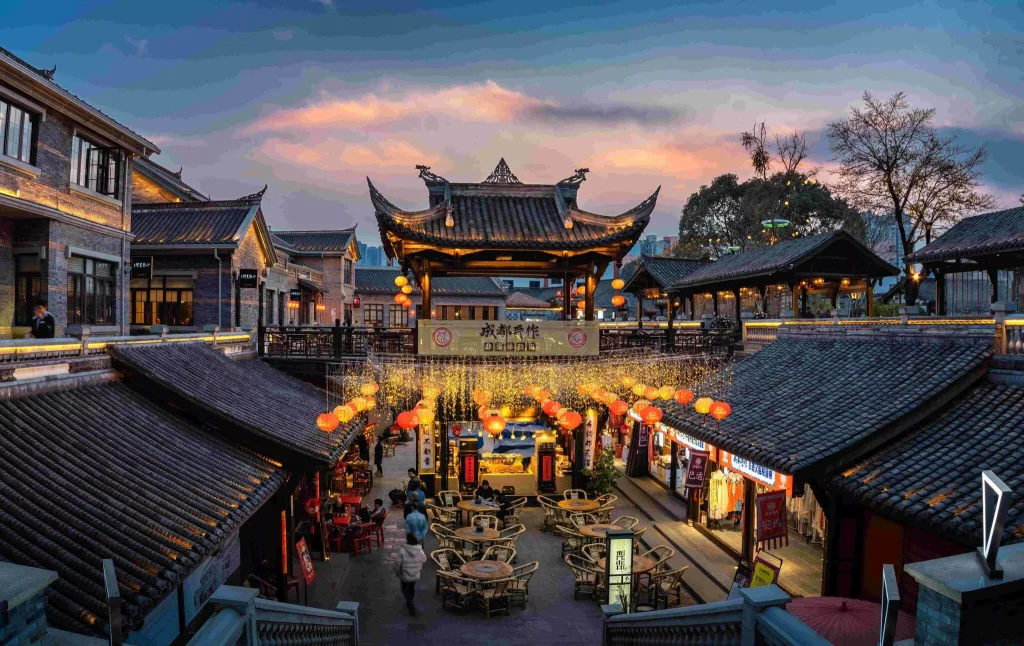
Chengdu’s skyline reflects the city’s rapid growth while preserving its cultural identity.Du Fu Thatched Cottage honours the legacy of one of China’s greatest poets.Chengdu’s vibrant streets showcase the city’s unique blend of history, culture, and modern energy.The Temple of Marquis Wu preserves the history of Zhuge Liang and the ancient Shu Kingdom.Chengdu is renowned as the home of giant panda. The Chengdu Research Base of Giant Panda Breeding supports conservation efforts for China’s national treasure.A giant panda rests at the Chengdu Research Base, one of the world’s leading panda conservation centres.Chengdu’s modern infrastructure highlights its transformation into one of western China’s leading urban centres.Visitors stand chance to observe giant pandas in a protected environment at the Chengdu Research Base of Giant Panda Breeding.Chengdu’s modern infrastructure highlights its transformation into one of western China’s leading urban centres.Residents gather in a Chengdu teahouse, enjoying tea and conversations in a long-standing local tradition.A Sichuan opera performance preserves one of Chengdu’s most distinctive cultural traditions.Sichuan cuisine showcases the bold flavours and culinary traditions that define Chengdu’s identity.People play mahjong in a traditional Chengdu setting, reflecting the city’s leisurely way of life.A Chengdu hotpot meal represents one of the city’s most famous and celebrated food experiences.The Dujiangyan Irrigation System remains a remarkable example of ancient Chinese engineering.Kuanzhai Alley offers visitors a glimpse into Chengdu’s traditional architecture and cultural heritage.The Leshan Giant Buddha stands as one of the world’s largest and most impressive stone Buddha statues.The Chengdu metro system supports movement across a city experiencing rapid economic and urban development.Mapo tofu is among the signature Sichuan dishes that contribute to Chengdu’s global food reputation.
Today, this evolution is most vividly reflected in its cities, and few capture that story better than Shanghai.
Set along China’s eastern coastline, Shanghai rises as a symbol of the nation’s modern ambition and global connectivity. It is a city where history is not left behind, but rather built into the foundations of progress, where ancient waterways, colonial-era streets, and futuristic skylines converge into one living landscape of change.
Shanghai stands today as one of China’s most influential and dynamic cities, defined by transformation, ambition, and international reach. Located at the mouth of the Yangtze River, it spans 6,340.5 square kilometres and is home to nearly 25 million people. Positioned at the heart of the Yangtze River Delta and facing the Pacific Ocean, the city serves as a vital gateway linking China’s vast interior with global markets.
Often referred to as the “Dragon Head” of the Yangtze River, Shanghai plays a leading role in the development of the Yangtze Economic Belt. Its strategic position and economic weight have earned it designation as an international centre for economy, finance, trade, shipping, and technological innovation, collectively known as the “Five Centers.”
By 2019, Shanghai’s GDP had reached approximately 524.02 billion US dollars, with a per capita income of about 20,398 US dollars.
During the same period, more than 720 multinational companies had established headquarters in the city, alongside over 460 research and development institutions, reinforcing its position as a global hub for business and innovation.
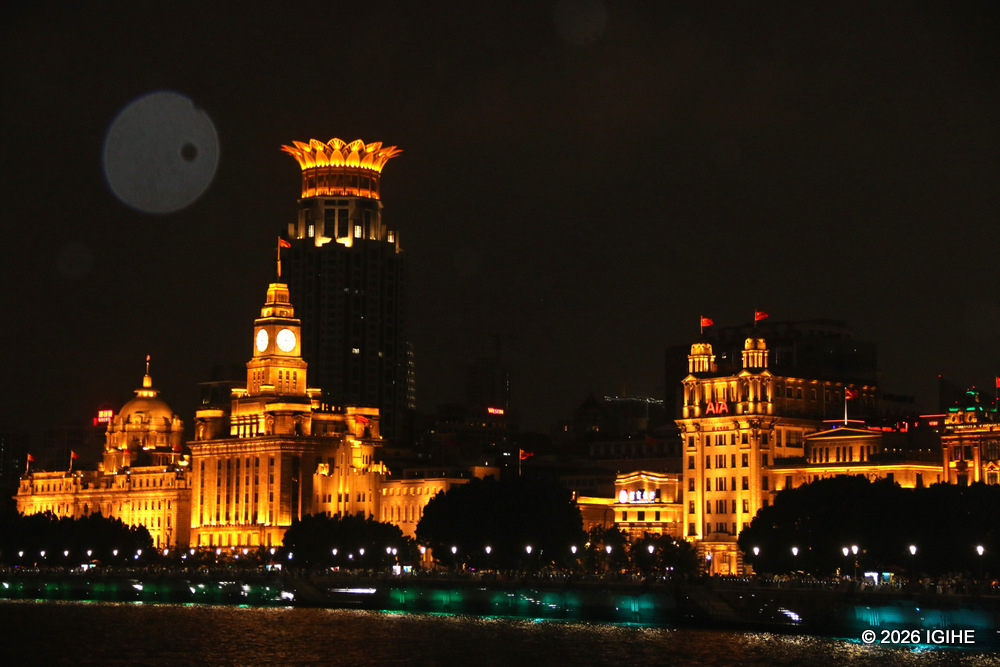
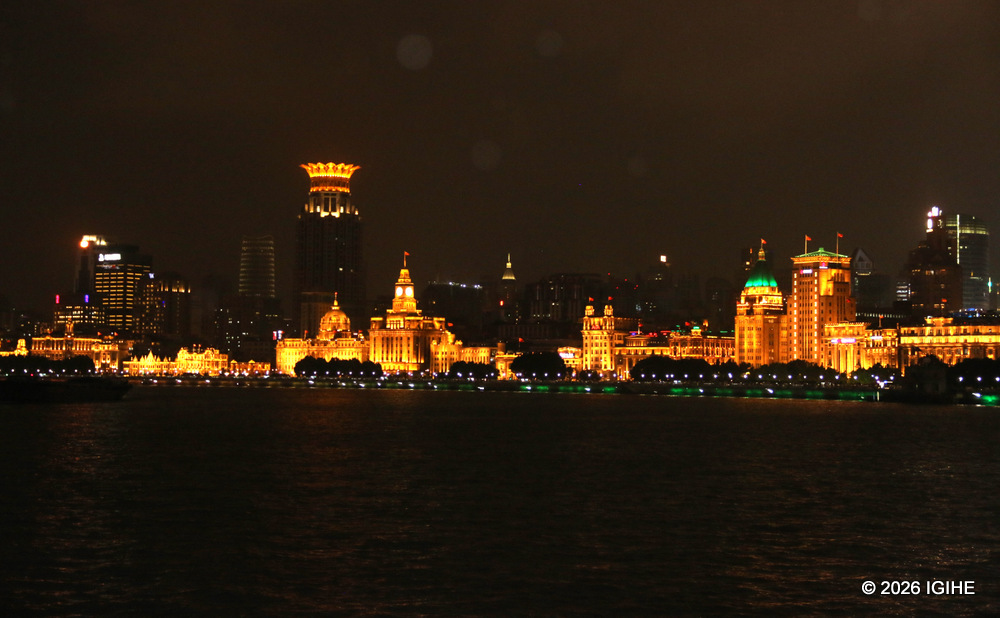
The historic buildings along the Bund showcase Shanghai’s architectural heritage and the city’s evolution as a global port.
A defining chapter in Shanghai’s modern story is the Pudong New Area. In 1990, when China launched its development and opening-up policies there, Pudong was largely composed of farmland and low-rise industrial buildings.
In just over three decades, it has been transformed into one of the world’s most recognizable urban skylines.
By 2025, Pudong’s GDP had reached 1.88 trillion yuan (approximately 276.9 billion US dollars), accounting for about one-third of Shanghai’s total economy.
It now hosts around 60 percent of the city’s licensed financial institutions and nearly half of the regional headquarters of multinational corporations.
Its foreign trade volume reached 2.76 trillion yuan (approximately $406.5 billion USD) , while key industries such as integrated circuits, biomedicine, and artificial intelligence expanded to a combined scale of about 970 billion yuan (about $142.87 billion USD).
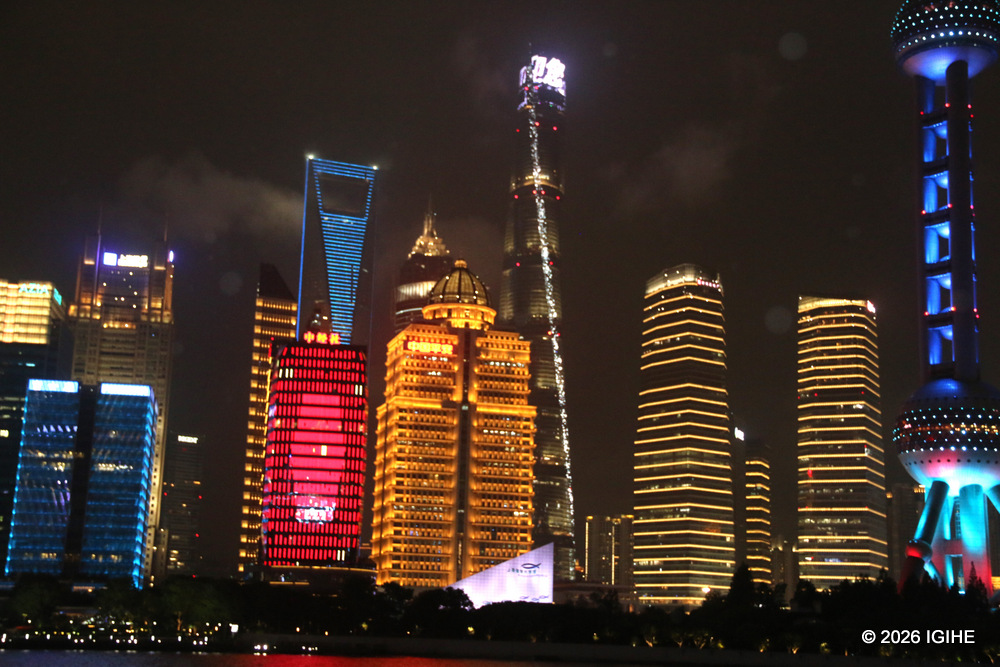
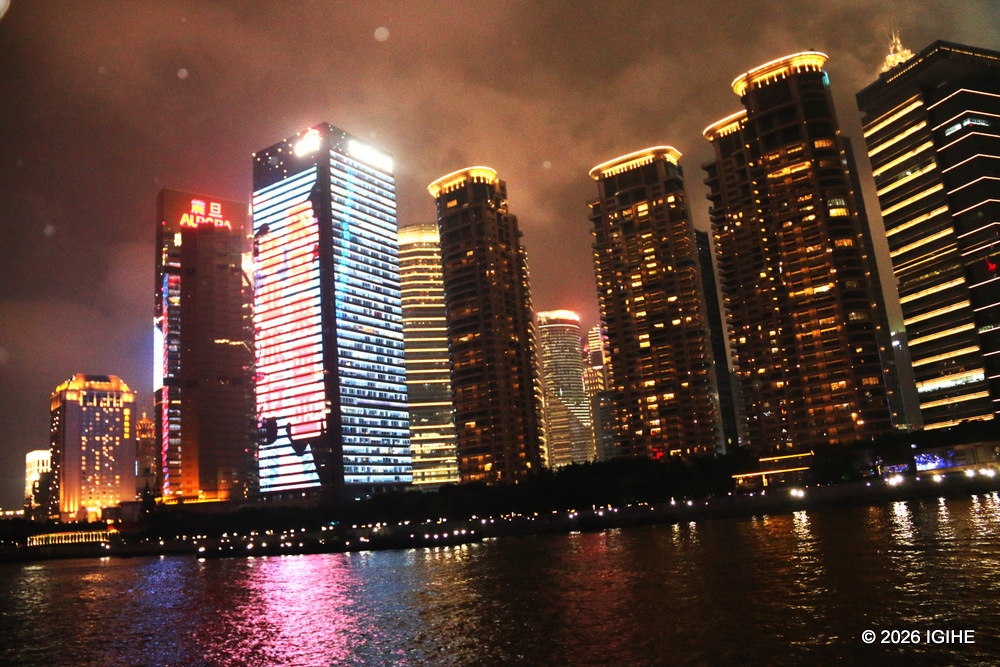
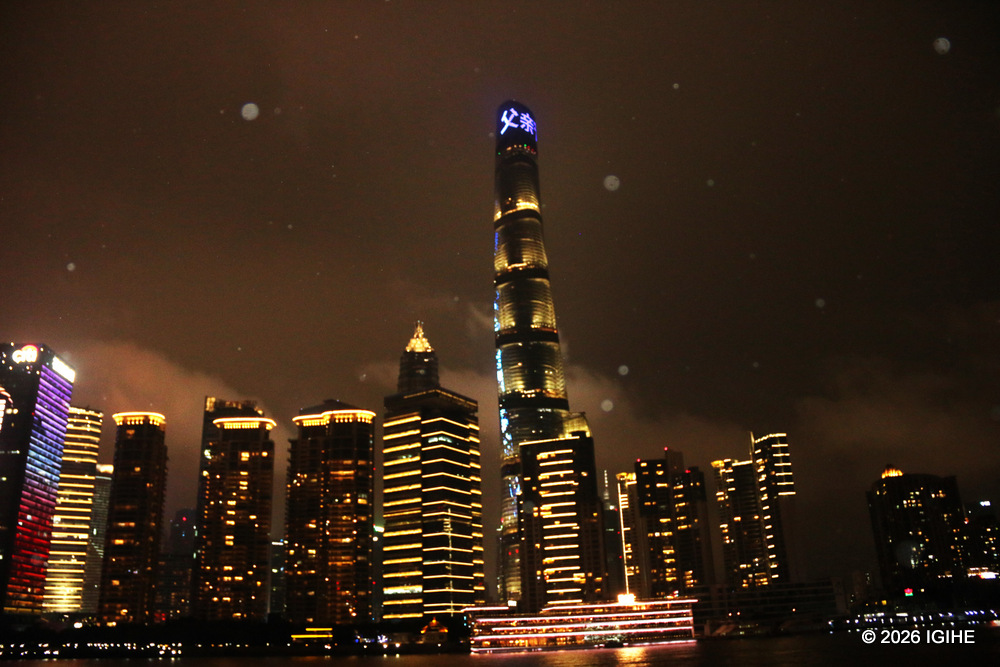
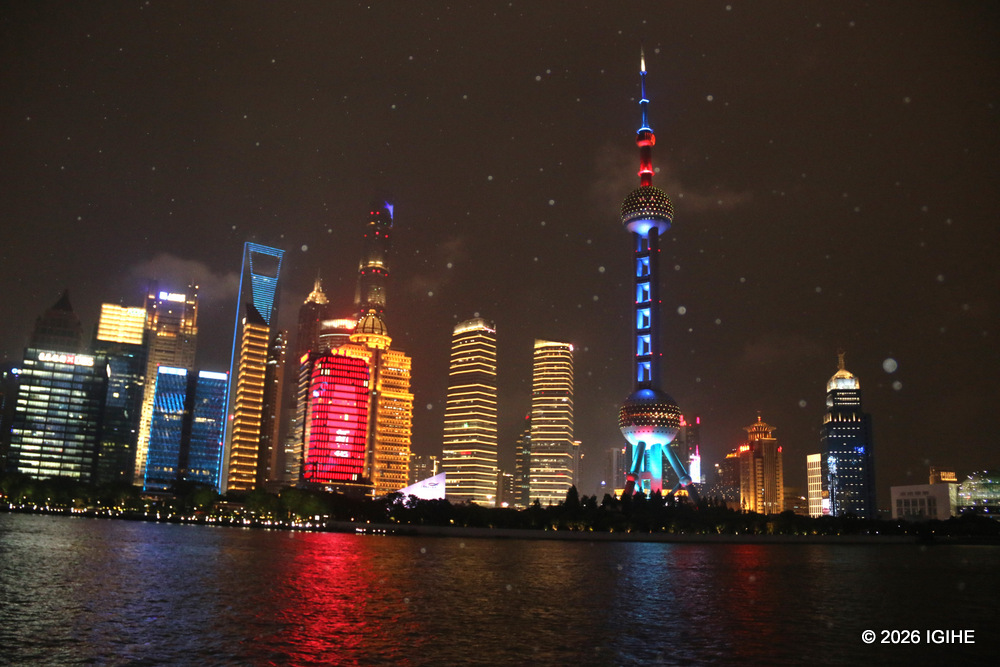
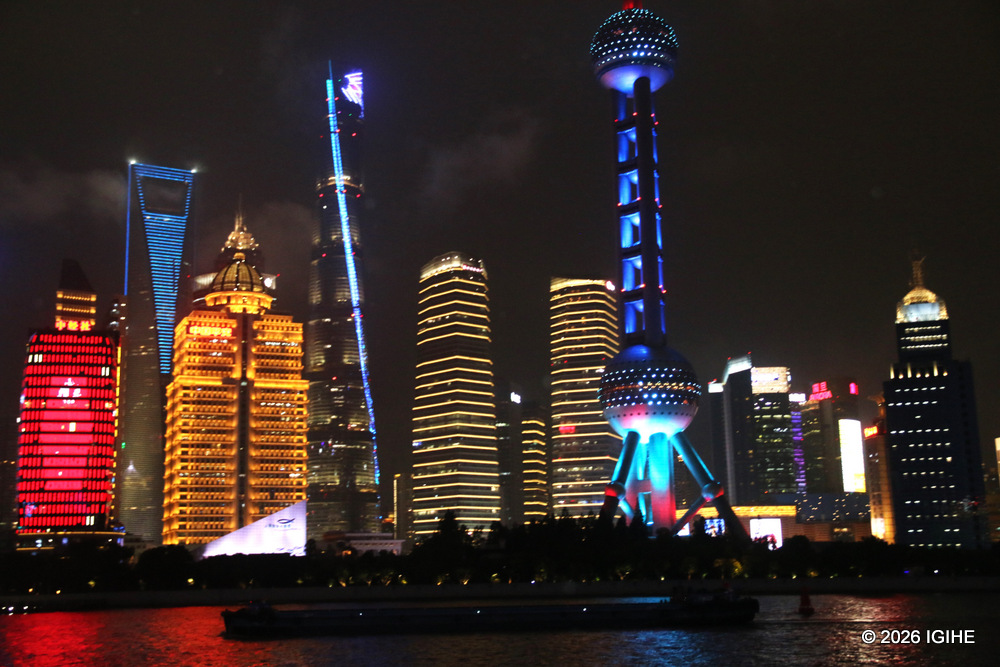
At the heart of this transformation lies the Lujiazui Financial District, home to Shanghai’s iconic skyline and its famous trio of skyscrapers known as the “Three-Piece Set.” These buildings represent not just architectural achievement, but the story of a city evolving across decades.
The Jin Mao Tower, completed in 1999 and rising 420.5 metres, reflects the early phase of modern development in Pudong. Inspired by traditional Chinese pagoda design, it blends cultural heritage with modern engineering.
Nearby stands the Shanghai World Financial Centre, completed in 2008 and reaching 492 metres. Its distinctive trapezoidal opening near the top, resembling a bottle opener, symbolizes openness and Shanghai’s growing role in global finance.
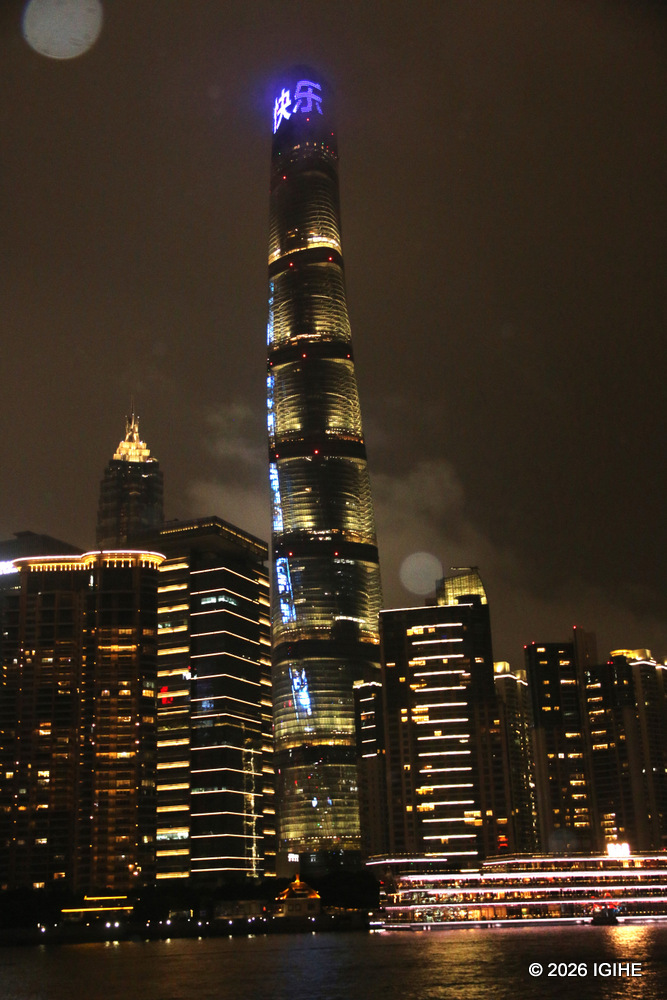
Towering above them is the Shanghai Tower, completed in 2016. At 632 metres, it is the tallest building in China and the third tallest in the world. Its spiralling glass façade reduces wind pressure while symbolizing innovation and sustainability.
Inside, it functions as a vertical city, combining offices, hotels, retail spaces, and observation decks. High-speed elevators carry visitors to the “Top of Shanghai” observatory on the 118th floor in just 55 seconds.
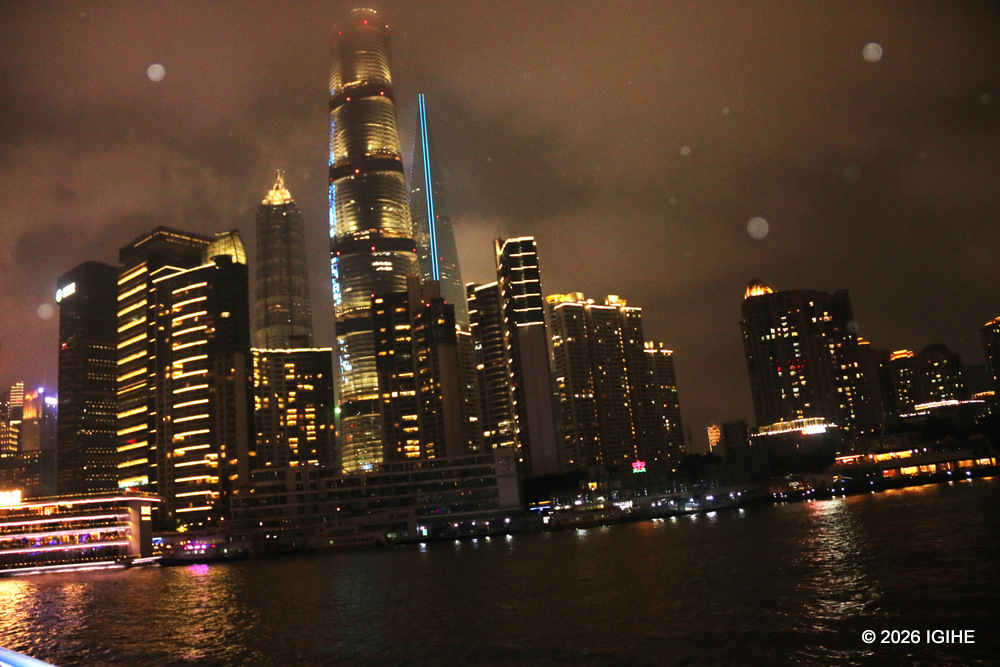
Yet Shanghai’s identity is not defined by skyscrapers alone. The city is shaped by its waterways, including the Yangtze River, Huangpu River, and Suzhou Creek. The Huangpu River divides Shanghai into two contrasting yet connected worlds: Puxi in the west and Pudong in the east.
On the Puxi side, the historic Bund preserves a skyline of colonial-era buildings that reflect Shanghai’s trading past and early international influence. Across the river, Pudong rises as a symbol of modern China; bold, futuristic, and ever-evolving.
Historical influences from the 19th-century Opium War era, including British and French concessions, left a lasting architectural imprint on the city.
European-style buildings still stand in parts of Shanghai today, blending into its wider urban identity and offering a reminder of its complex historical journey.
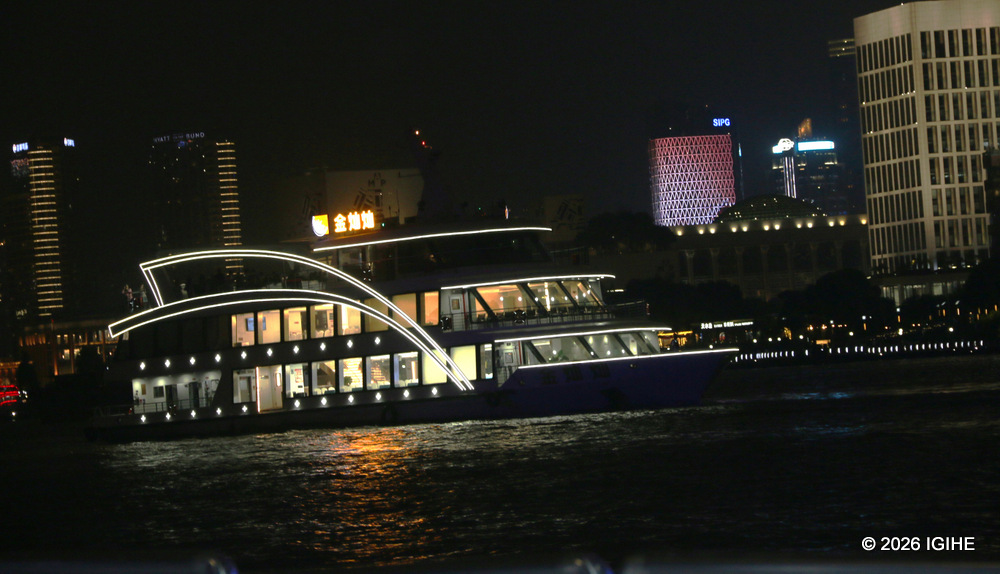
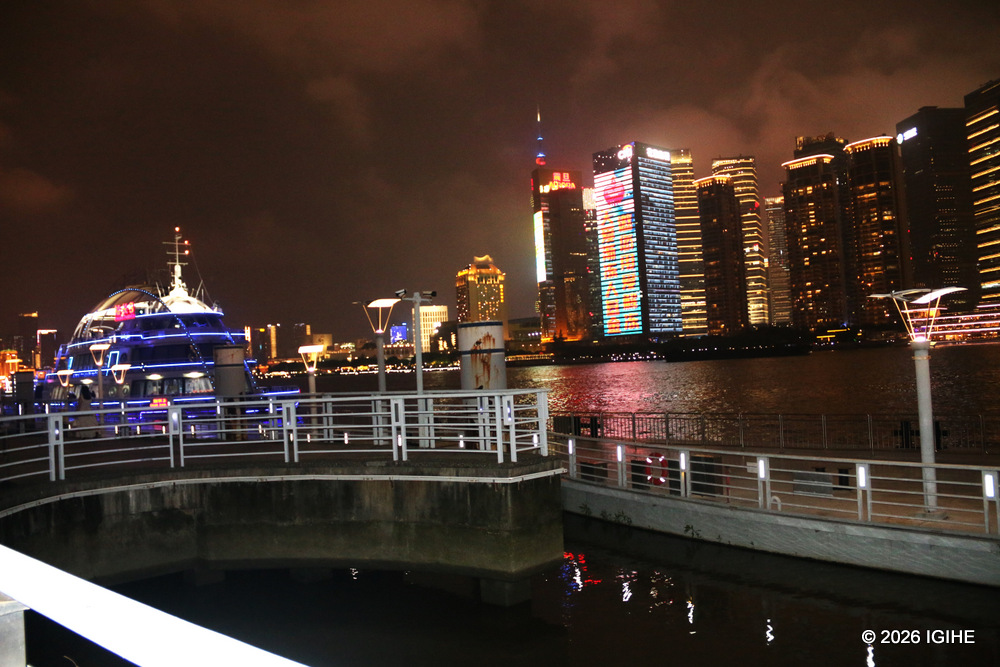
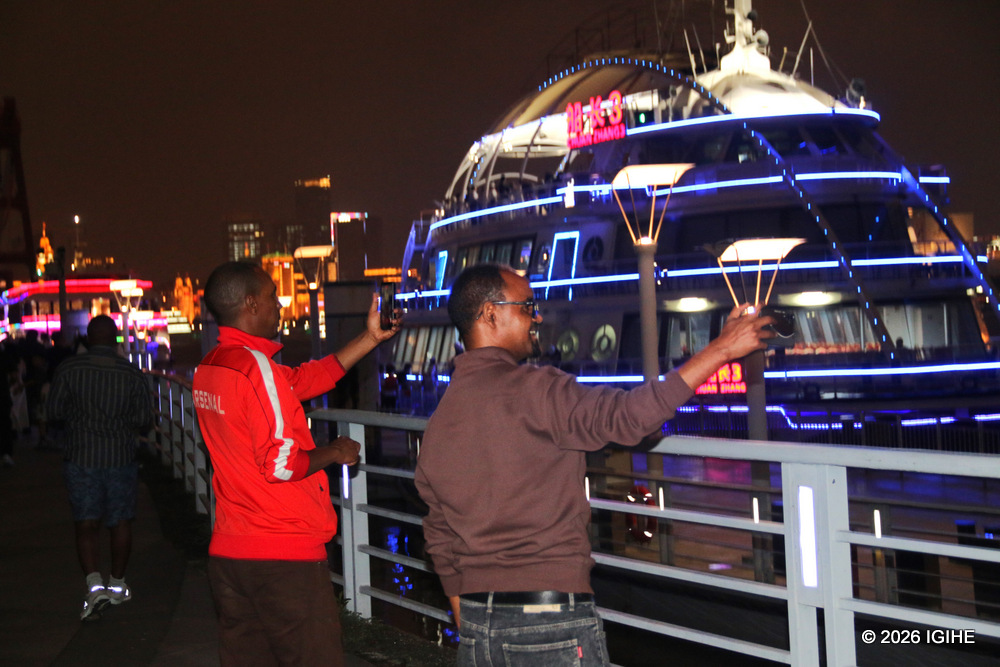
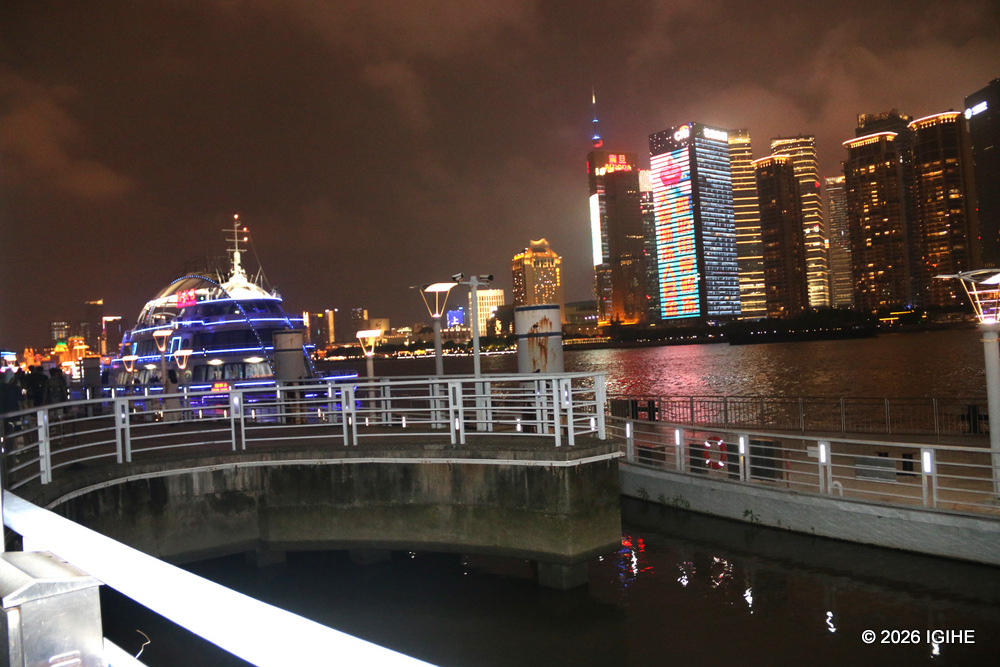
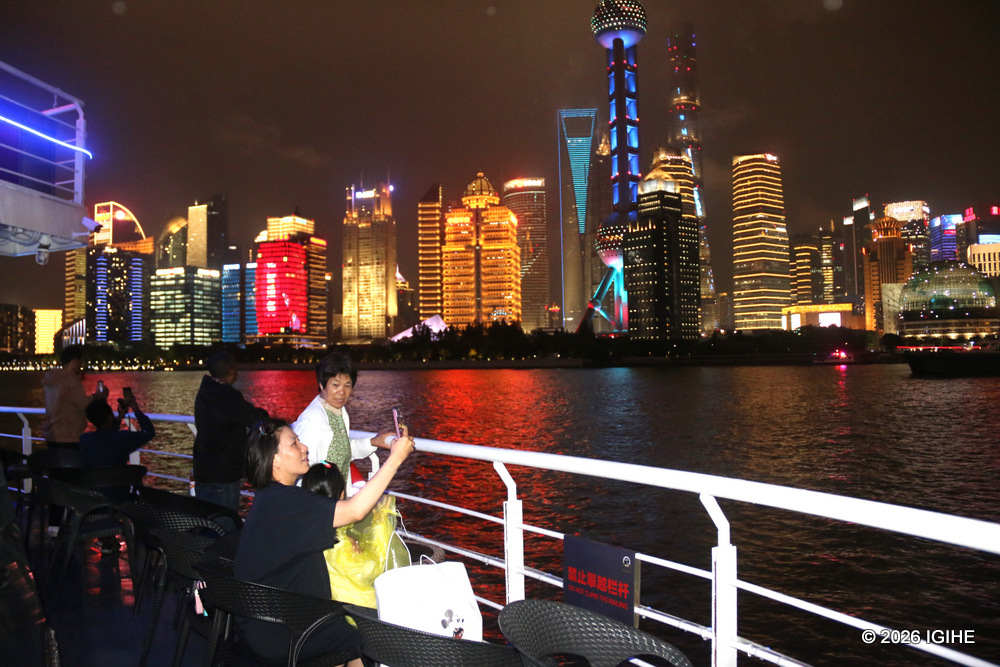
One of the most powerful ways to experience Shanghai is along the Huangpu waterfront, where sweeping views capture both the Bund’s historic architecture and the towering skyline of Lujiazui in a single frame. It is a rare visual dialogue between centuries, where heritage and innovation exist side by side.
Beyond the modern metropolis lies Zhujiajiao, a beautifully preserved water town that offers a quieter reflection of Shanghai’s past. Known for its ancient stone bridges, narrow canals, traditional houses, and artisan shops, it preserves the atmosphere of Jiangnan culture. At night, lantern-lit reflections shimmer across the water, while visitors explore tea culture, handmade crafts, and local traditions passed down through generations.
Today, Shanghai stands as a global metropolis defined by openness, resilience, and continuous reinvention. From its ancient river towns and historic waterfronts to its soaring modern skyline, the city tells a powerful story of transformation—one where tradition is not replaced by progress, but carried forward as part of it.
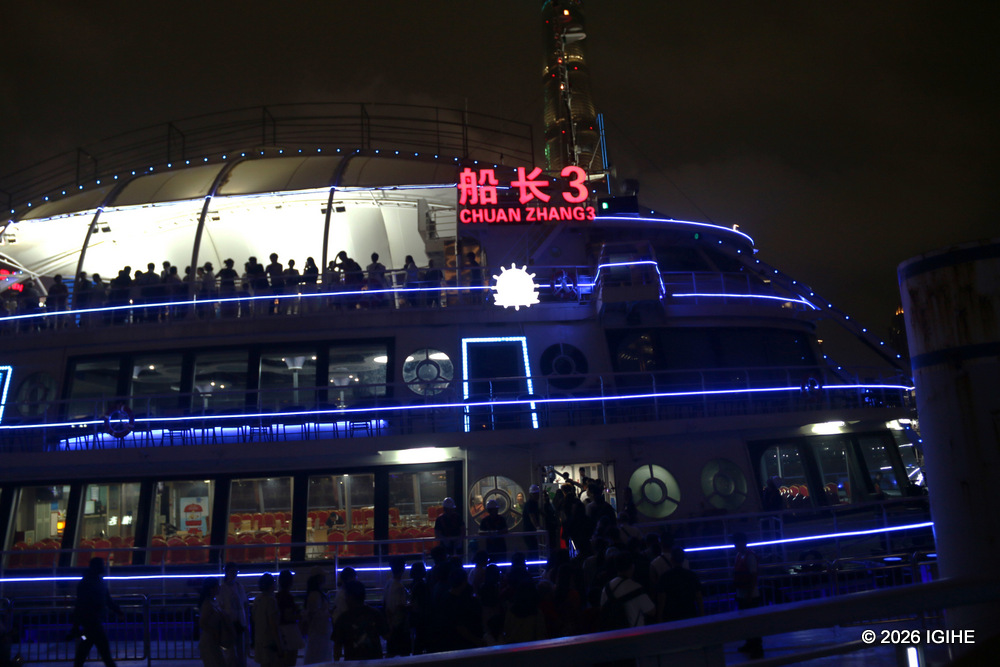
Traditional buildings in Shanghai preserve the city’s rich architectural heritage, offering a glimpse into its historical journey and cultural identity.Historic structures across Shanghai showcase the city’s traditional architecture, where past generations’ craftsmanship continues to stand alongside modern developments.The Huangpu River divides Shanghai into two connected worlds: historic Puxi and futuristic Pudong. Shanghai’s towering skyscrapers define the city’s modern identity while reflecting decades of economic growth and urban development.Tourists enjoy a Huangpu River cruise, one of the most popular ways to experience Shanghai’s blend of history, culture, and modern development.The Huangpu River provides a unique viewpoint where Shanghai’s historic Bund and modern Pudong skyline meet in a single landscape. Visitors gather along the Huangpu waterfront to admire views of Shanghai’s famous skyline and historic riverfront buildings.Shanghai’s iconic skyline rises along the Huangpu River, showcasing the city’s transformation into one of the world’s leading financial and economic centres.A nighttime view from the Huangpu River captures the contrast between Shanghai’s historic buildings and its futuristic skyscrapers.A cruise along the Huangpu River offers visitors a panoramic view of Shanghai’s futuristic skyline and the architectural landmarks of Pudong.The three landmark skyscrapers of Lujiazui Financial District — Jin Mao Tower, Shanghai World Financial Centre, and Shanghai Tower — stand as symbols of Shanghai’s rapid modernization. Shanghai continues to present a powerful story of reinvention, where ancient heritage and modern ambition exist side by side. A cruise along the Huangpu River offers a panoramic view of Shanghai’s futuristic skyline and the architectural landmarks of Pudong.The historic buildings along the Bund showcase Shanghai’s architectural heritage and the city’s evolution as a global port.The Bund’s historic architecture stands across from Pudong’s towering skyline, illustrating Shanghai’s connection between heritage and progress.Visitors often gather along the Huangpu waterfront to admire views of Shanghai’s famous skyline and historic riverfront buildings.The Shanghai Tower, China’s tallest building, dominates the city skyline with its spiralling design that represents innovation and sustainable architecture.Pudong’s modern skyline rises across the Huangpu River, representing Shanghai’s ambition, openness, and economic transformation.
Yet behind this calm landscape lies one of China’s most remarkable development transformations, often described as a living model of ecological civilisation.
Yucun is a small village of just over 1,000 residents, covering 4.86 square kilometres, located in Zhejiang Province, one of China’s most dynamic coastal regions.
Zhejiang itself is an economic powerhouse of the Yangtze River Delta, with a 2025 GDP of about 9.45 trillion yuan ( approximately 1.4 trillion USD), and has become a national leader in “high-quality development,” where growth is measured not only in economic output but also in environmental sustainability and social wellbeing.
Walking through Yucun today, it is difficult to imagine that this landscape was once shaped by heavy limestone mining and cement production. In the late 1990s, the village’s economy was strong by rural standards, but the environment was under severe strain; dust-filled air, scarred hillsides, and degraded ecosystems.
The turning point came in the early 2000s, when local leaders and residents made a decisive choice: to close polluting industries and restore the land. It was a moment that reshaped not only the village’s economy, but its identity.
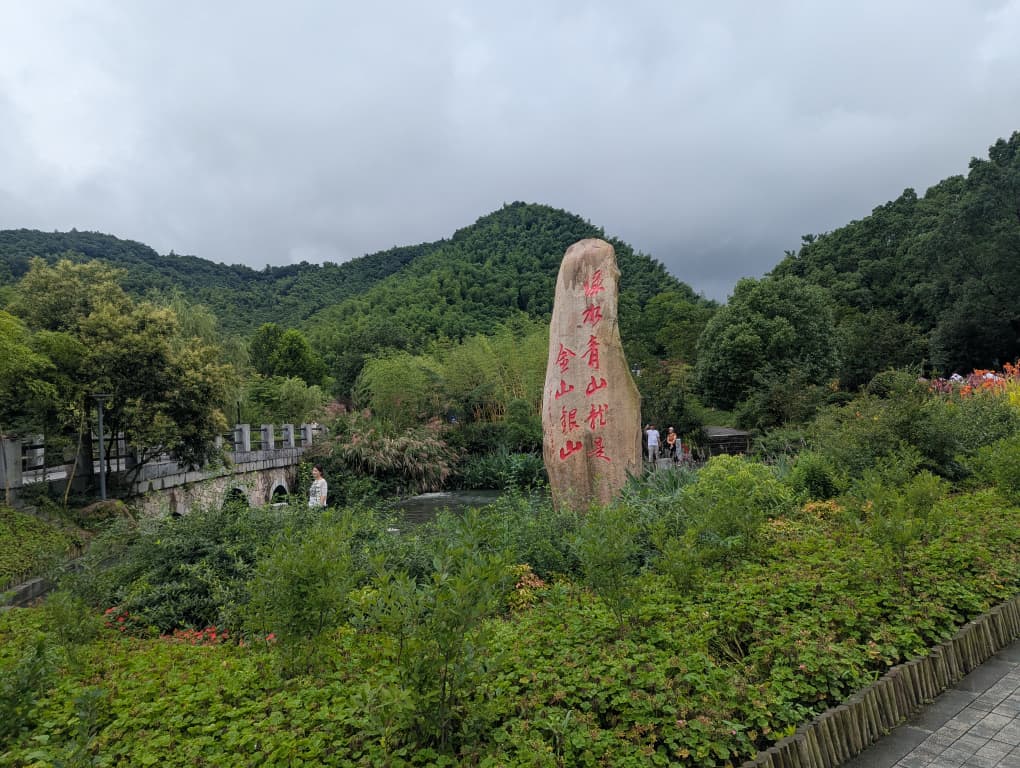
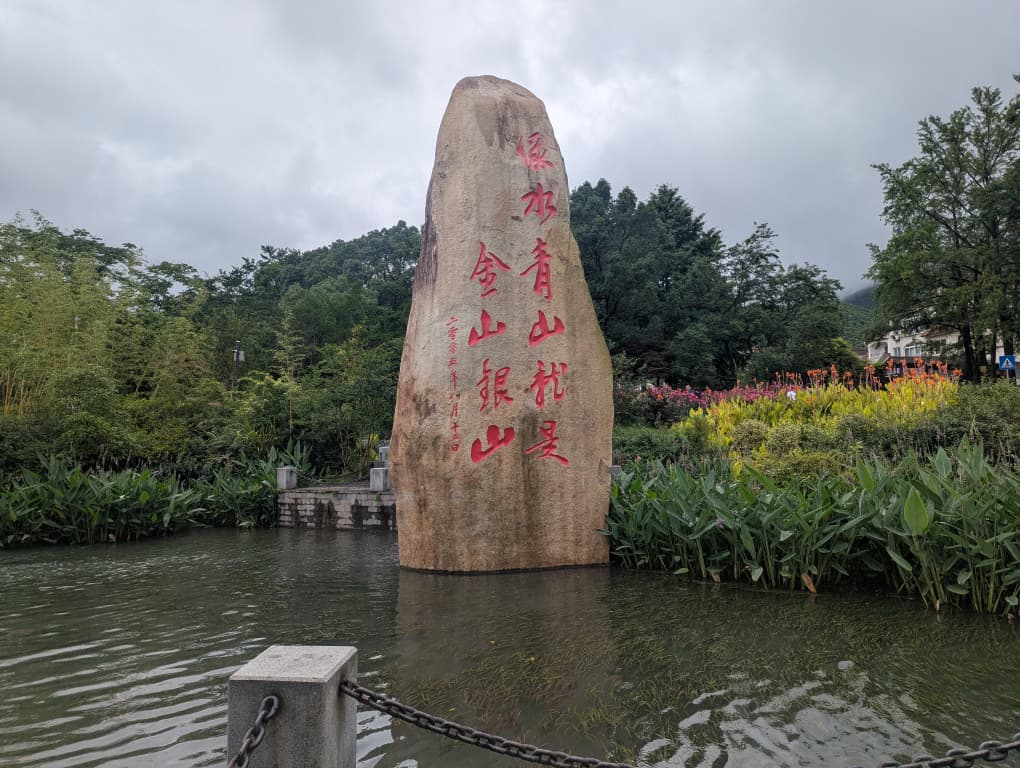
A defining milestone followed on August 15, 2005, when President Xi Jinping, then Secretary of the Zhejiang Provincial Committee of the Communist Party of China, visited Yucun and for the first time and articulated a phrase that would later gain national significance: “lucid waters and lush mountains are invaluable assets.”
This idea evolved into the “Two Mountains” philosophy, now widely recognised as a foundation of China’s ecological civilisation framework under the Communist Party of China (CPC).
In Yucun, it is not an abstract theory, it is visible in every restored hillside, every green pathway, and every redesigned public space.
As the village stepped away from mining, a new journey began. Abandoned industrial sites were rehabilitated, forests were replanted, and traditional rural landscapes were carefully preserved.
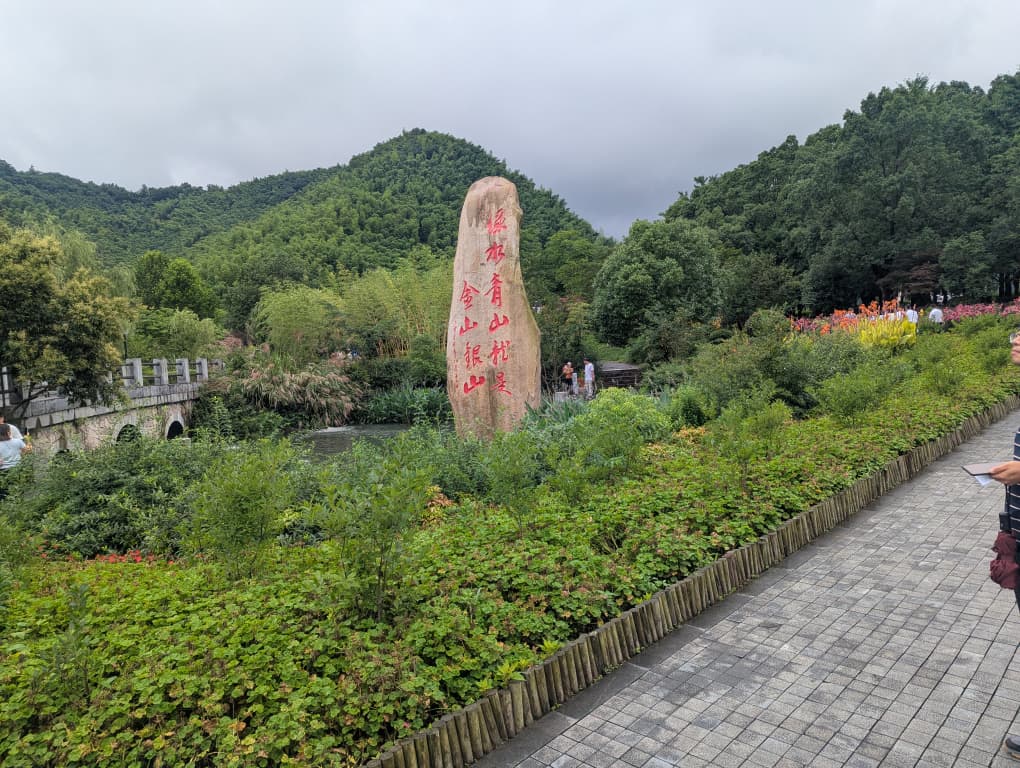
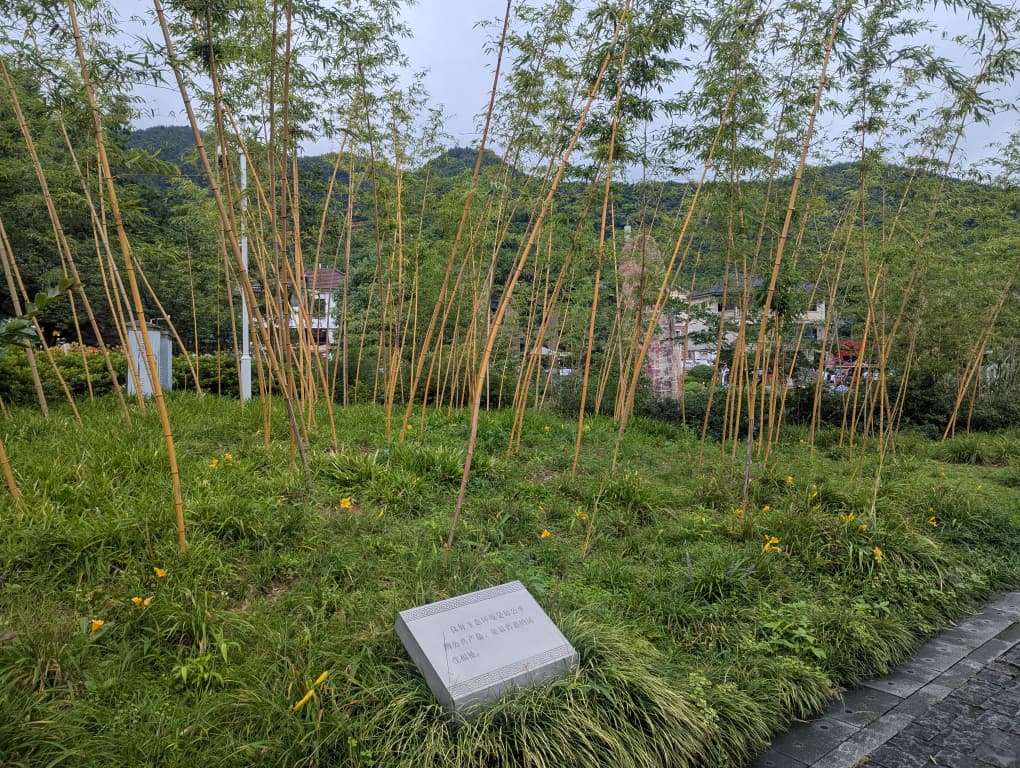
The “two mountains” theory monument is seen at Yucun village
Today, Yucun attracts over one million visitors annually, drawn by bamboo sea landscapes, ecological trails, and cultural experiences rooted in Jiangnan traditions.
One of its most striking landmarks is the transformation of a former cement factory into “Yucun Impression,” a zero-carbon cultural complex powered by renewable energy and designed as a symbol of industrial rebirth.
The ecological recovery is striking. Forest coverage now exceeds 85 percent, the climate remains humid and subtropical, and the village integrates natural terrain with carefully designed infrastructure.
Ancient ginkgo trees, some believed to be over 1,300 years old, stand alongside modern eco-friendly buildings, an unusual but seamless coexistence of heritage and innovation.
Over time, Yucun’s economy has shifted from extraction to experience. Agritainment businesses, eco-tourism services, and cultural industries now drive local income.
Collective village earnings have risen steadily into the tens of millions of yuan, while per capita income has surpassed 60,000 yuan (about 8,837.69 USD).
In 2024, villagers received direct dividend distributions, reinforcing a model of shared prosperity where development outcomes are visibly returned to the community.
This transformation has earned Yucun multiple national and international recognitions. It has been designated a National Civilised Village, a National Forest Village, a National Rural Tourism Key Village, and a National Rural Governance Demonstration Village.
It has also been listed among the United Nations World Tourism Organisation’s Best Tourism Villages, underscoring its global relevance as a rural development model.
Eco-friendly pathways wind through Yucun Village, connecting restored hillsides and natural green spaces.
Beyond its scenic and economic appeal, Yucun is increasingly viewed as a policy reference point. It demonstrates how environmental restoration can become a driver of economic growth rather than a constraint, and how rural governance can align local participation with broader provincial and national strategies.
Within Zhejiang’s development framework, the village is often cited as a successful case of integrating ecological protection with rural revitalisation.
Zhejiang Province itself extends this philosophy into global engagement. As a key hub of China-Africa cooperation, the province recorded trade with Africa of 53.9 billion US dollars in 2023, expanding into manufacturing, digital economy, vocational training, and healthcare exchanges.
Thousands of African professionals have been trained in Zhejiang, while medical teams have supported healthcare services across multiple African countries. These partnerships reflect a broader emphasis on mutual learning and long-term cooperation.
Seen through this broader lens, Yucun becomes more than a rural destination; it becomes a starting point for understanding a development philosophy that suggests prosperity should not be built against nature, but alongside it.
Yucun Village showcases a harmonious coexistence between ancient natural heritage and modern sustainable development.Yucun Village sits quietly at the northern foothills of the Tianmu Mountains, surrounded by bamboo forests and winding green valleys.Streams flow gently through Yucun Village, reflecting its transformation into a model of ecological civilisation.The scenic bamboo forests surrounding Yucun Village highlight its reputation as a restored natural landscape in Zhejiang Province.Tourists regularly explore ecological trails in Yucun Village, which now attracts over one million visitors annually.
July 1 also holds special significance for Rwanda, as it is celebrated as Independence Day. While the two countries have different histories, both have travelled remarkable paths of resilience, recovery, and development.
Over the decades, China and Rwanda have each overcome immense challenges to build and develop their nations, a shared spirit that continues to underpin the growing friendship and mutual trust between the two countries.
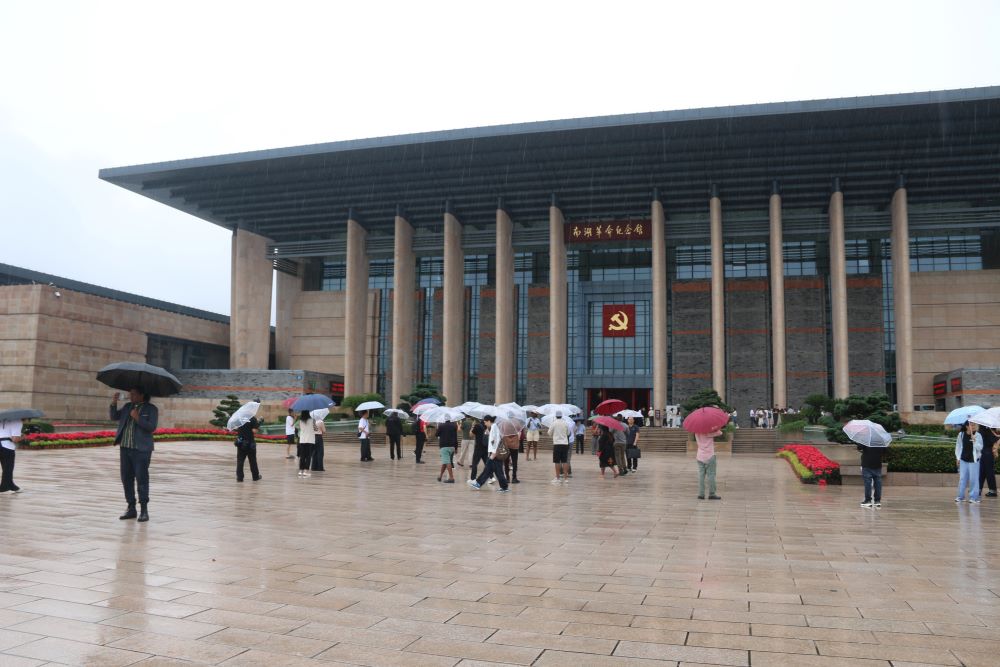
It is against this backdrop that Nanhu Lake takes on a deeper meaning. Widely known for its calm waters, cultural beauty, and rich heritage, the lake is also home to one of the most important sites in modern Chinese history—the Nanhu Revolutionary Memorial Hall, where visitors can retrace the origins of a movement that would go on to shape the course of a nation.
The memorial hall stands as a key site for understanding the early history of the Communist Party of China, especially its founding period in 1921. It is here, beside Nanhu Lake, that history is preserved and retold in a way that connects past political ideas with present national identity. For many visitors, the site is not just a museum, but a place where the origins of CPC philosophy and political thought are remembered and reflected upon.
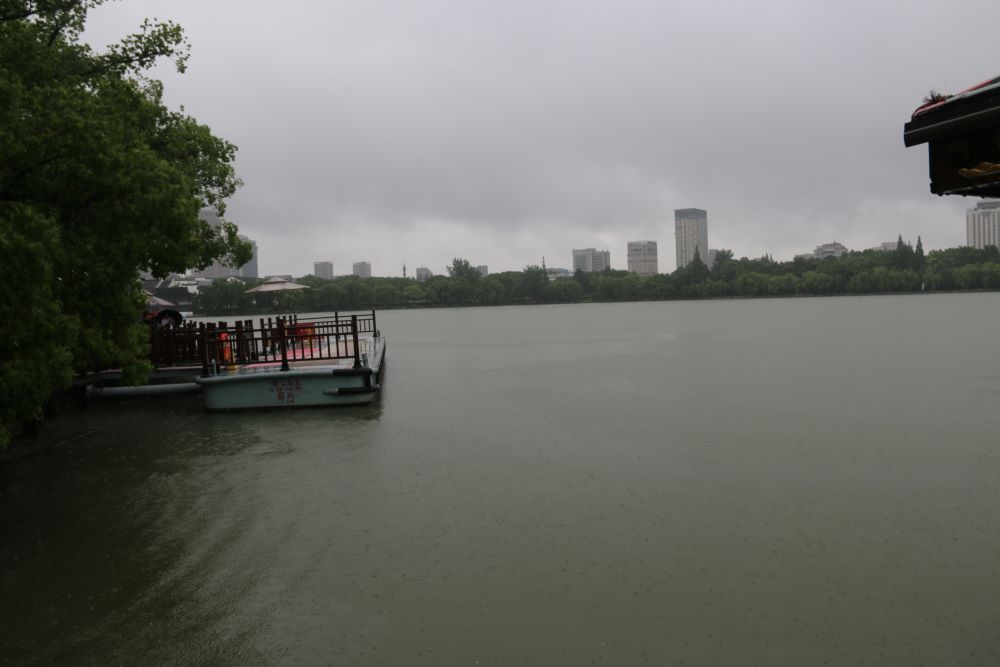
Nanhu Lake itself is among the most well-known lakes in eastern China. Alongside West Lake in Hangzhou and Xuanwu Lake in Nanjing, it forms part of the cultural and historical landscape of the Yangtze River region. Its natural beauty, shaped over centuries, has long attracted attention, but its modern significance is closely tied to the revolutionary events that unfolded in Jiaxing more than a century ago.
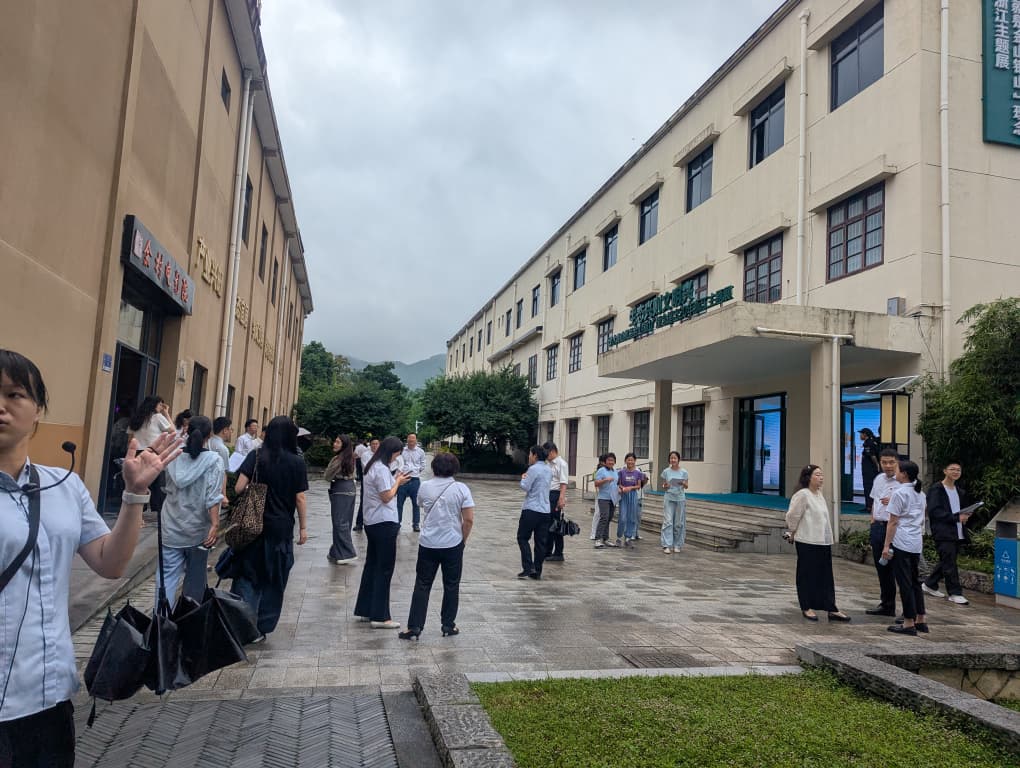
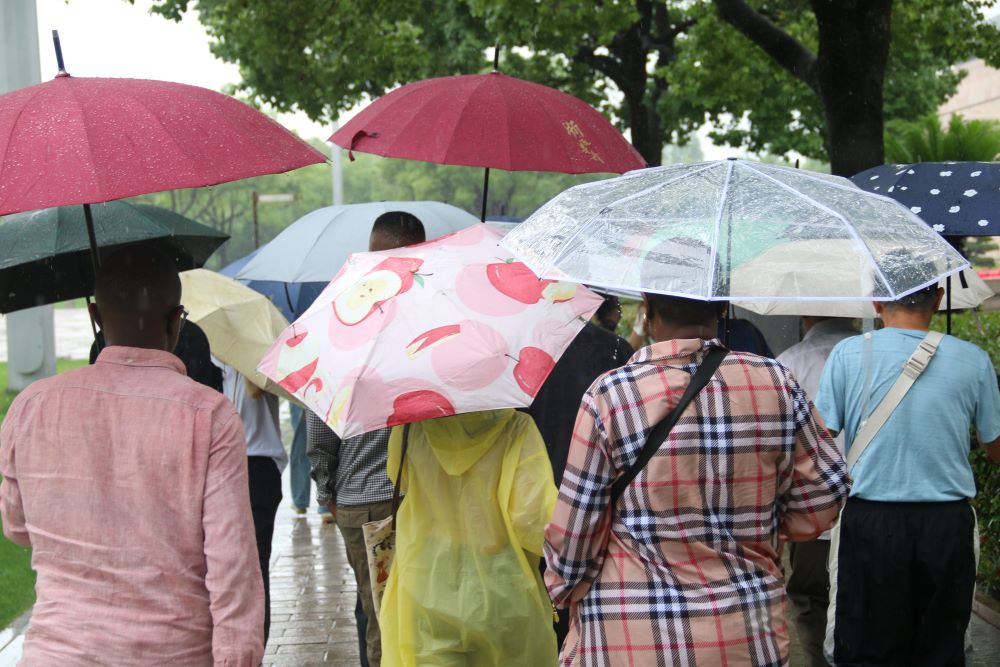
Visitors are seen carrying umbrellas while touring the Nanhu Revolutionary Memorial Hall, where the story of the Communist Party of China’s founding continues to attract people from across the country and abroad.
The Nanhu Revolutionary Memorial Hall was established in 1959 and later expanded in 2011 to preserve and present this history in greater depth. Today, it spans more than 19,000 square meters and contains over 10,000 historical artifacts, including documents, photographs, artworks, and rare revolutionary materials connected to the early development of the CPC.
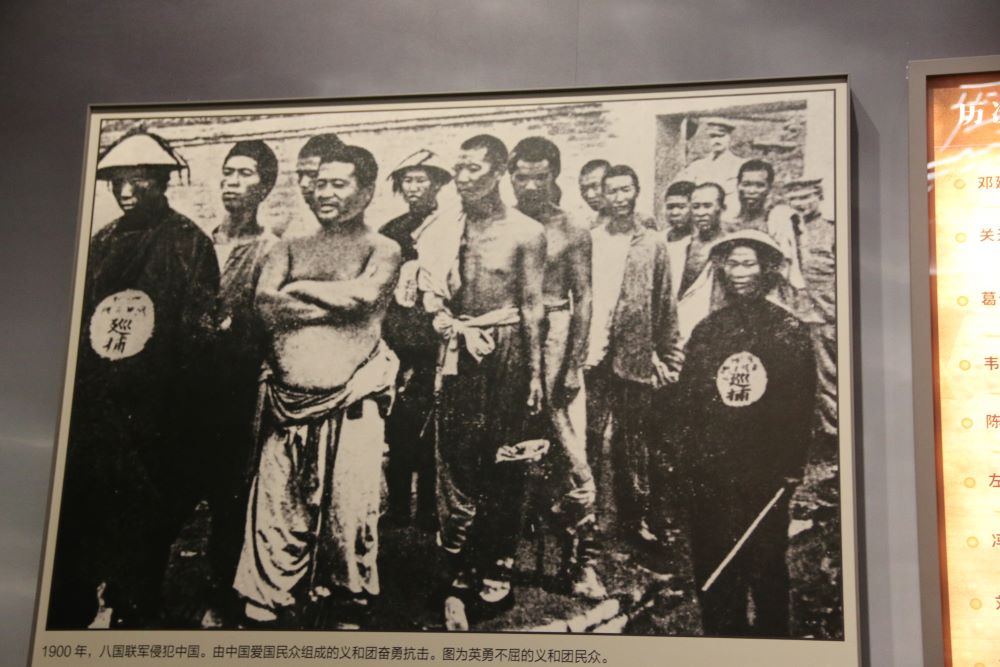
The exhibitions inside the hall trace the formation of the Communist Party of China from its early beginnings under difficult social and political conditions to its gradual development into a major political organization. The displays are arranged to guide visitors through different historical stages, combining physical relics with modern storytelling techniques such as visual projections and immersive presentations.
At the heart of the memorial’s historical narrative is the idea that Nanhu played a symbolic role in the shaping of early CPC ideology.
While the Party was officially founded during its First National Congress in 1921, Nanhu Lake in Jiaxing became the place where the meeting concluded after being relocated from Shanghai due to external disruptions. This moment is widely remembered as a defining chapter in the Party’s early history.
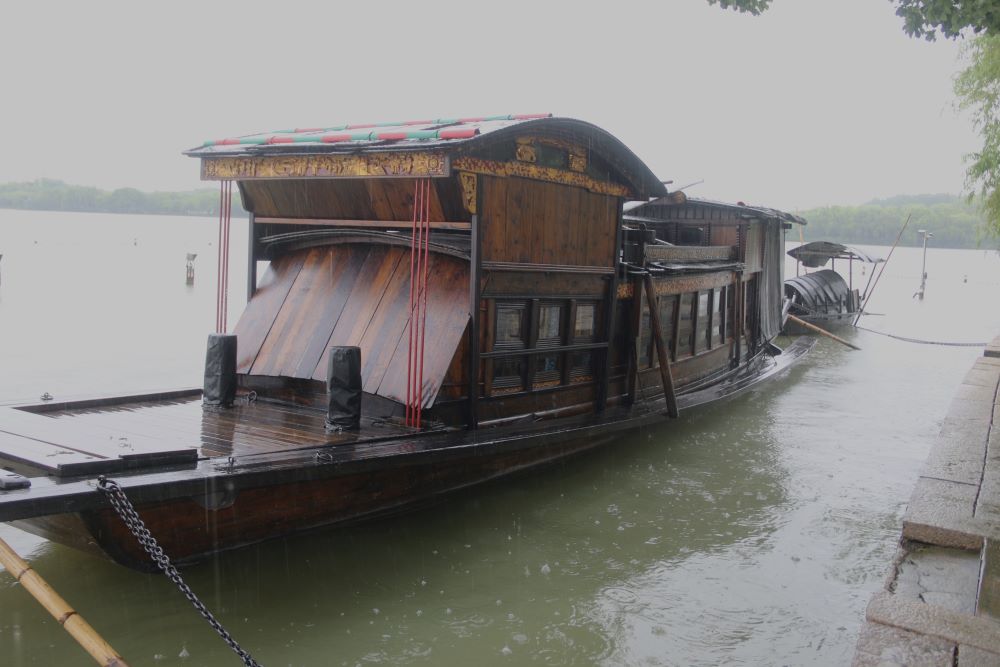
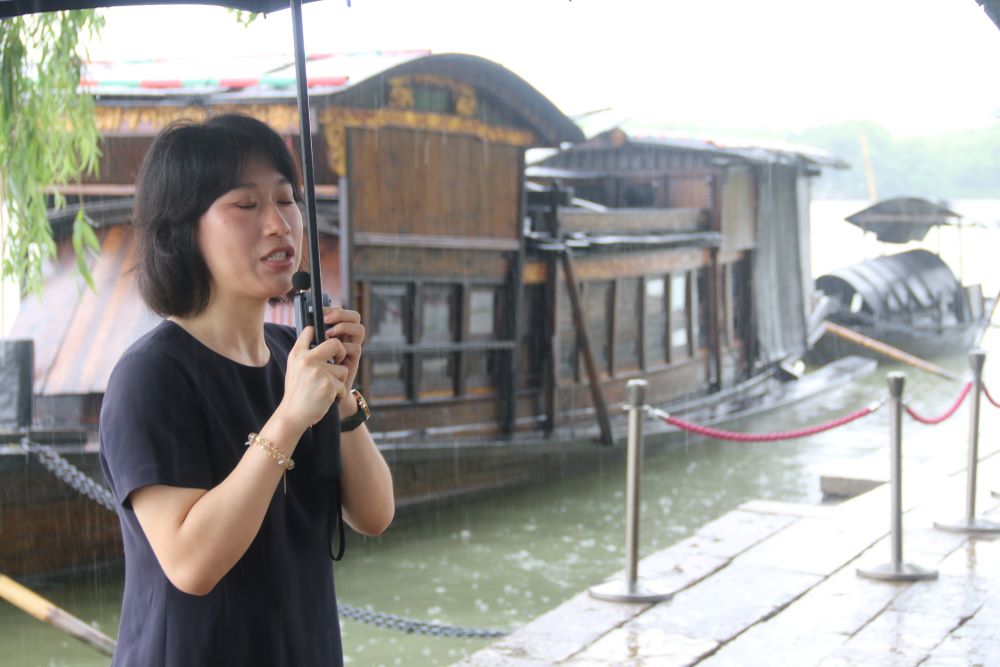
Boats line the shores of Nanhu Lake, offering visitors a closer view of the historic waters linked to the Red Boat and the founding history of the Communist Party of China.
A short walk from the exhibition area leads to the lakeside, where the famous Red Boat is anchored near Yanyu Tower. The boat is a carefully preserved replica built in 1959, modeled after the vessel that became central to the concluding moments of the First National Congress of the Communist Party of China in 1921.
Historical accounts show that the First National Congress was initially held in Shanghai, but it was interrupted by French police during the final stages of the meeting. In response to the disruption, the meeting was relocated to Jiaxing, a move made possible through the assistance of Wang Huiwu, who helped arrange the transfer of delegates and ensured the continuation of the congress. The final discussions were completed on a boat on Nanhu Lake, an event that later became one of the most symbolic moments in CPC history.
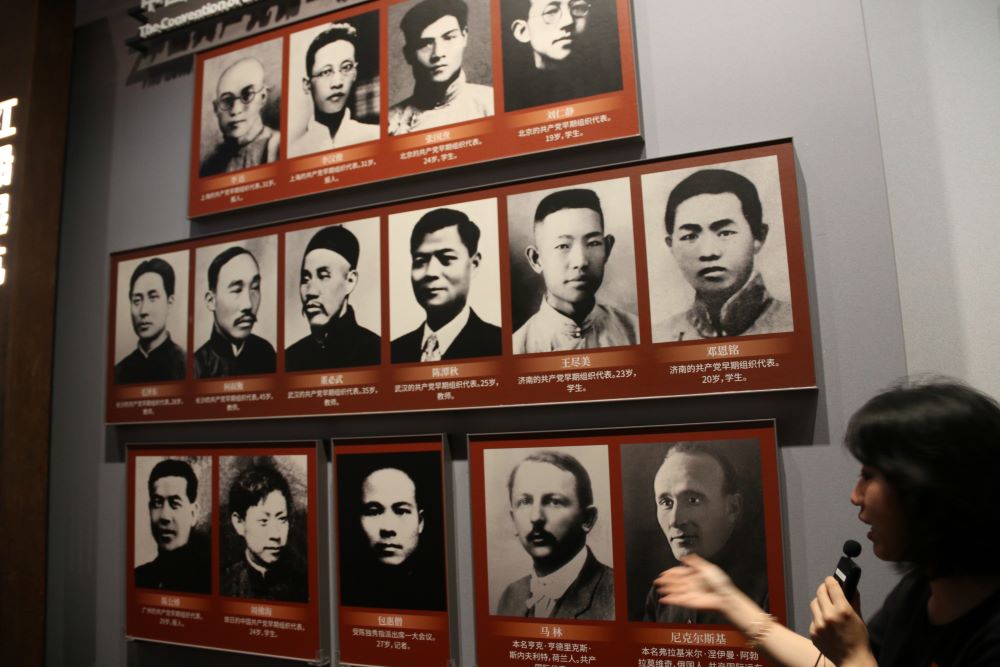
Among the delegates involved was Dong Biwu, one of the 13 representatives who attended the founding congress. His accounts, along with historical records, helped verify and preserve the memory of how the meeting concluded on the Red Boat.
Today, the replica Red Boat is carefully maintained using traditional methods and remains one of the most visited landmarks in the memorial area, symbolizing the birthplace of the CPC’s concluding declaration.
This section of the exhibition highlights some of the key figures who contributed to the founding of the Communist Party of China during its First National Congress in 1921.
The Nanhu Revolutionary Memorial Hall now welcomes more than one million visitors each year. During peak holidays, visitor numbers rise significantly, with families and young people forming a large share of those who come to explore the site. Many visit not only for tourism but also to understand the historical roots of the CPC and its development over time.
Curators at the memorial emphasize that the purpose of the site is educational as much as it is historical. Over the years, the museum has expanded its exhibitions and introduced modern display techniques to make history more accessible. This includes interactive visuals and structured storytelling designed to engage younger generations while preserving the authenticity of historical materials.
Beyond being a museum, Nanhu blends natural scenery with political history, reflecting both Jiaxing’s beauty and the enduring memory of the early days of the Communist Party of China.
As I leave the lakeside on this special date, China’s Party anniversary and my own country’s Independence Day, I carry with me a subtle lesson: that nations, like boats, are steered by the resolve of those who board them in times of uncertainty. And that memory, whether preserved in a museum or carried in people’s heart, is the anchor of every lasting journey.
Historical displays at the Nanhu Revolutionary Memorial Hall showcase prominent individuals whose contributions helped shape the early history of the Communist Party of China.Tour boats navigate the calm waters of Nanhu Lake, taking visitors around the area where the iconic Red Boat remains a symbol of a defining moment in modern Chinese history.Nanhu Lake in Jiaxing, Zhejiang Province, is known for its scenic beauty and historical significance, attracting visitors interested in both culture and history.Guides at the Nanhu Revolutionary Memorial Hall lead visitors through the story of the Communist Party of China’s founding, helping bring more than a century of history to life.Rain doesn’t stop visitors from exploring the Nanhu Revolutionary Memorial Hall, with many carrying umbrellas as they continue their journey through one of China’s most significant historical sites.