The visit follows that of Tanzania’s Minister of Foreign Affairs and East African Cooperation, Mahamoud Thabit Kombo, who visited Rwanda at the end of March 2026, with the aim of advancing cooperation between the two nations.
Upon arrival at Dar es Salaam International Airport, President Kagame was received by Minister Kombo and other senior officials.
He is expected to hold talks with his counterpart, President Dr. Samia Suluhu Hassan, focused on deepening bilateral cooperation and strengthening existing partnerships, which will be followed by a joint press conference.
Rwanda has consistently highlighted the strong and long-standing relations with Tanzania, particularly appreciating access to the Port of Dar es Salaam on the Indian Ocean, through which about 70% of its imports are routed.
Citizens of both countries have also established two friendship associations aimed at fostering closer ties: RWATAFA (Rwanda–Tanzania Friendship Association) and TARAFA (Tanzania–Rwanda Friendship Association).
The two countries have signed multiple cooperation agreements in key sectors, including trade, agriculture, security, technology, transport, and industrial development, concluded over different periods.
In July 2025, Rwanda and Tanzania agreed to establish a Tanzania Ports Authority (TPA) office in Kigali, a move expected to enhance and accelerate trade facilitation between the two countries.
As members of the East African Community (EAC), Rwanda and Tanzania also continue to collaborate on major regional infrastructure projects, including the planned railway line linking Isaka and Kigali, aimed at improving the movement of goods and boosting regional integration.
President Paul Kagame arrived in Tanzania on May 3, 2026, for a one-day working visit.The visit follows that of Tanzania’s Minister of Foreign Affairs and East African Cooperation, Mahamoud Thabit Kombo.President Kagame and his host, President Samia Suluhu Hassan of the United Republic of Tanzania, are scheduled to hold a tête-à-tête meeting, which will be followed by a joint press conference.The talks will be focused on deepening bilateral cooperation and strengthening existing partnerships.
“The U.S. president escalates his threats of military aggression against Cuba to a dangerous and unprecedented scale,” Cuban President Miguel Diaz-Canel wrote on X.
Diaz-Canel called on the international community and the American people to decide whether they would allow “such a drastic criminal act” to serve the interests of a small but wealthy and influential group seeking revenge and domination.
He said that no aggressor, “no matter how powerful,” would find surrender in Cuba, but rather “a people determined to defend sovereignty and independence.”
Cuban Foreign Minister Bruno Rodriguez also said on X the same day that Trump’s “clear and direct” threat of a military attack had raised aggression against Cuba to dangerous levels.
Rodriguez said popular support for the Cuban Revolution was demonstrated “massively” during May Day celebrations on Friday.
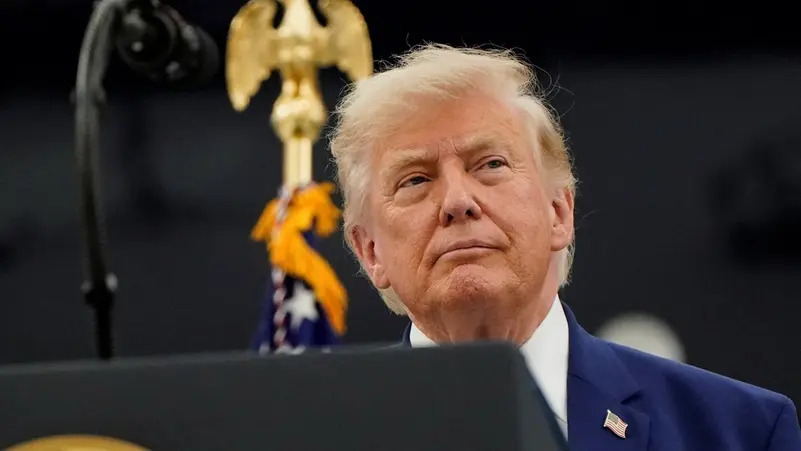
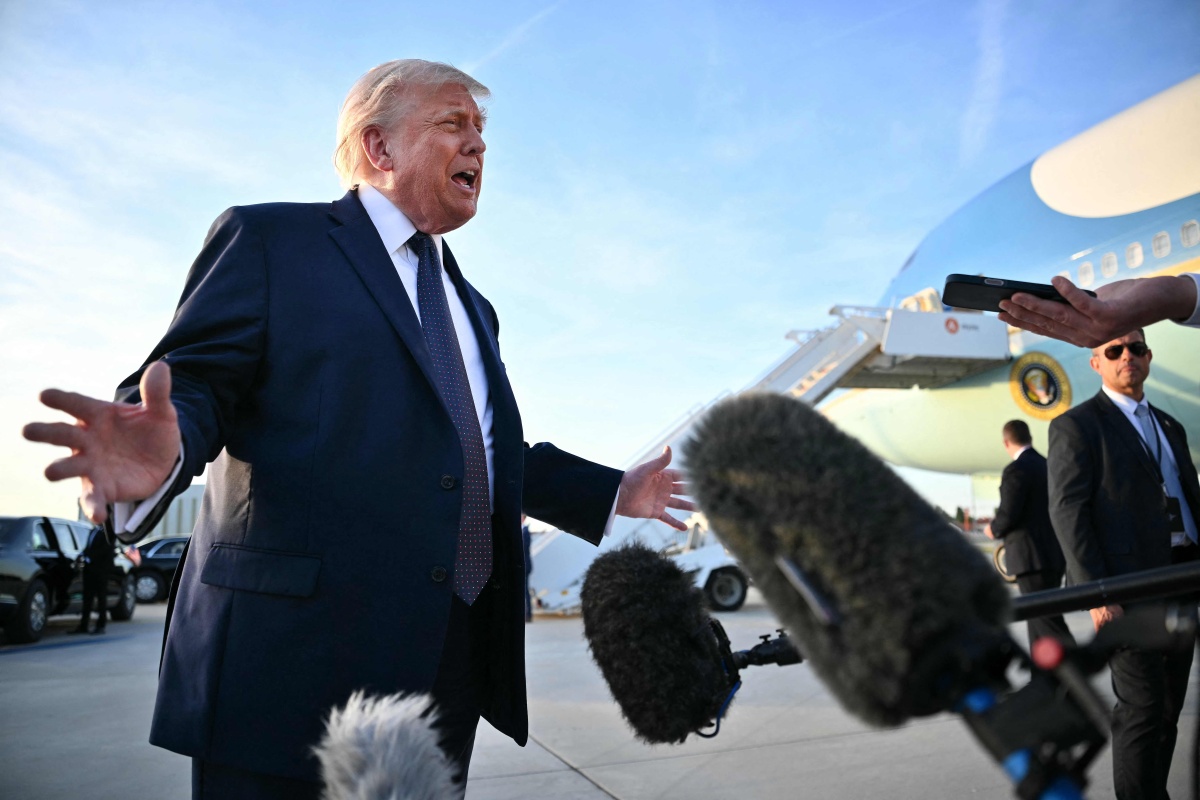
Speaking at an event in Palm Beach, Florida, Trump said the United States would take control of Cuba “almost immediately” after “finishing a job,” referring to the conflict with Iran in the Middle East.
He added that he “could” send the aircraft carrier USS Abraham Lincoln to the Caribbean and have it stop about 100 yards off Cuba’s coast “on the way back from Iran.”
Cuban President Miguel Diaz-Canel on Saturday denounced the escalation of Washington’s military threats against the country by US President Donald Trump.
In an exclusive interview with IGIHE, Niyonzima explained that the FDLR was built on a deep-rooted ideology that viewed Tutsis as enemies everywhere, insisting that no country should be governed by a Tutsi.
“What we were mainly taught was the evil nature of the Tutsi, just as we had been taught while still in Rwanda,” he said.
In 2000, he underwent training in intelligence work, a field he later led within the FDLR leadership structure prior to his return to Rwanda.
He described the FDLR leadership system as being organized into commissions similar to ministries, each with its own leadership and operational staff.
His responsibilities included gathering intelligence related to the group, assessing operational risks, recruiting new fighters, and managing relations with other armed groups such as Nyatura, FARDC and Congolese communities more broadly.
Deep-rooted ideology and ethnic targeting
Niyonzima revealed that due to genocidal ideology and anti-Tutsi hatred, anyone perceived to resemble a Tutsi could be targeted, accused of collaboration, or even placed on the front lines.
He emphasized that the FDLR ideology was built on the belief that Tutsis were enemies everywhere.
“We considered every Tutsi an enemy, whether in Uganda, Burundi, Congo, or Rwanda,” he said.
He further noted that the group opposed any possibility of a Tutsi leading a country, viewing them as perpetual adversaries.
False prophecies and ideological indoctrination
As a pastor within the group, Niyonzima said he used the Bible alongside what he described as false prophecies claiming divine support for their cause, including the belief that they would eventually conquer Rwanda.
He explained that each commander had a group of so-called prayer leaders who played a role in mobilization and decision-making, including leadership changes.
“When they wanted to replace a leader, they would use a so-called prophet who would fall down and ‘prophesy’ while covered. This was used to justify decisions,” he said.
Niyonzima also revealed that the group gradually shifted toward promoting ethnic identity over language, deciding to emphasize “Hutu” identity instead of Kinyarwanda.
“We said we should no longer speak Kinyarwanda but Hutu language. We were told we were Hutu and our enemy was the Tutsi,” he said.
He added that the group justified its actions by linking their narrative to grievances about regional conflicts involving Hutus in neighboring countries.
He further stated that intelligence structures within the FDLR monitored individuals planning to leave the group or communicating with people in Rwanda. Such individuals could be targeted and killed under suspicion of betrayal.
“When you believe you are fighting an enemy, everything you do feels justified. We would say: if this person leaves, they will one day become a threat. So we eliminate them early.”
Recruitment of youth and Congolese civilians
Niyonzima rejected claims that the FDLR is composed only of elderly fighters, explaining that the group actively recruited children, including those as young as 14, as well as young Congolese civilians.
He said the recruits were indoctrinated with hatred narratives, teaching them that the Tutsi was their enemy.
He also revealed that recruitment networks existed in neighboring countries, including Burundi and Uganda, and within Congolese communities.
Regret and reflection
Looking back, Niyonzima expressed deep regret for the years he spent in the Congolese forests, saying he lost valuable time that could have been used for personal development.
“My biggest regret is the time I wasted living in fear of nothing. I was afraid to return, but when I eventually did, I found people I left behind doing well. I have nothing to show for those years,” he said.
Niyonzima also expressed remorse for having spread extremist ideology. “What pains me most is that I taught people false ideas that Tutsis are evil, enemies, and cruel. But when I returned, I saw how people live together peacefully. I ask for forgiveness because I acted in ignorance,” he added.
Niyonzima called on former comrades still in eastern Congo forests to return home, urging them not to continue wasting their lives.
He also encouraged cooperation between regional actors, including the Congolese leadership, stressing that confrontation with Rwanda is not a viable path forward.
Niyonzima explained that the FDLR was built on a deep-rooted ideology that viewed Tutsis as enemies everywhere
Officials said the decision comes amid a diplomatic rift between U.S. President Donald Trump and European leaders over the ongoing war with Iran and the perceived level of allied support for American military operations.
Germany, home to roughly 35,000 U.S. troops, has been a central base for operational training and logistical support for U.S. forces in Europe.
The planned withdrawal will reduce the American footprint in Germany to levels seen before 2022, prior to an expansion of forces following Russia’s invasion of Ukraine.
A senior Pentagon official speaking on condition of anonymity described recent comments by German Chancellor Friedrich Merz as “inappropriate and unhelpful,” saying they contributed to Washington’s decision to pull back forces.
The official added that the U.S. expects Europe to play a more decisive role in its own security and regional defence policy.
The announcement highlighted cracks in the once‑steady transatlantic alliance, as leaders in Washington and Berlin spar over strategy and burden‑sharing.
Chancellor Merz has been publicly critical of aspects of U.S. policy, suggesting that Europe was not consulted before American and allied strikes began in the Persian Gulf region earlier this year.
This exchange has further strained relations with NATO’s most influential European partner.
While the troop withdrawal does not represent a full exit by the United States from Germany or NATO, it sends a strong message about shifting priorities.
U.S. officials say the move is part of a broader defence posture review and reflects changing military needs on the ground. However, analysts warn that it could deepen divisions between the United States and Europe, potentially encouraging European countries to accelerate efforts to build up their own defence capabilities independent of U.S. leadership.
Critics of the decision within the United States argue that reducing troop numbers amid rising geopolitical challenges including Russia’s continued aggression in Eastern Europe could weaken NATO’s deterrence posture.
Supporters of the pullback, however, claim it will allow the United States to realign its defence focus toward other global priorities and encourage NATO members to assume greater responsibility for their collective security.
The planned drawdown also affects specific units of the U.S. Army in Germany, including a brigade combat team and a long‑range artillery battalion, with planned deployments canceled as part of the reorganization.
As the withdrawal moves forward, U.S. and European officials are expected to engage in further discussions about defence cooperation and the future role of NATO in ensuring regional stability.
U.S. to withdraw 5,000 troops from Germany amid rising rift with European allies.
The British Royal Navy, citing monitoring results from the UK Maritime Trade Operations (UKMTO) it leads, said that since the United States and Israel launched military operations against Iran on Feb. 28, reports of incidents in the Strait of Hormuz and surrounding waters have gone “through the roof,” in the strait especially.
Between March 1 and April 27, a total of 41 security incidents were recorded.
The UKMTO said that around 850 to 870 large merchant vessels, including oil tankers, liquefied natural gas carriers and container ships, are currently stranded in the Gulf waters.
Meanwhile, about 20,000 seafarers are trapped in the region. Crew changes have been severely disrupted.
Although supplies continue to reach ships, they have been reduced, and prolonged stranding could affect the mental health of seafarers.
The agency noted that as international attention focuses on the Strait of Hormuz, there is a warning of resurgent piracy off the coast of Somalia.
The photo released on July 21, 2019 shows the British oil tanker “Stena Impero” surrounded by Iranian Revolutionary Guard near the Strait of Hormuz, Iran.
The soldiers were at a security checkpoint in Big Babanki in the Tubah subdivision when they were attacked, a military official in the region confirmed.
“The separatist terrorists took them by surprise. The sad incident occurred by midday this Friday. We have deployed additional forces to pursue the terrorists and capture them,” the official, who spoke on condition of anonymity, told Xinhua.
Local media reported an increase in attacks on civilians and security forces in the region in recent weeks.
Cameroon has been experiencing an armed separatist conflict in its English-speaking regions of Northwest and Southwest since 2017, as separatists seek to create a new nation in the regions.
Two Cameroonian soldiers were killed on Friday in an ambush by separatist fighters in the country’s English-speaking Northwest region, security sources said.
He made the remarks on April 30, 2026, at the Kanombe training centre in Rutshuru Territory during the closing of the second phase of training for local administrative leaders operating in areas under AFC/M23 control.
Maj. Gen. Makenga said the DRC has long suffered from mismanagement, blaming successive governments in Kinshasa for what he described as governance failures, corruption, and divisions that have displaced communities.
“Our country has been destroyed for a long time by the government in Kinshasa and politicians who put their own interests first, driven by divisionism, and who have ruined our country. You fled because of these people in Kinshasa,” he said.
He added that the situation necessitates continued resistance, insisting that AFC/M23 will not withdraw from its objectives.
“The journey to liberate our country will not go backwards. As leaders of this movement, we assure you that we will not retreat; we will continue moving forward,” he said. “You, local leaders, should go and tell the population to remain calm, to farm, to raise livestock, to trade, and not to worry.”
Makenga also called on those collaborating with the Democratic Forces for the Liberation of Rwanda (FDLR) to abandon the group, saying they should instead reconcile and return to their communities.
“Those Interahamwe should go back home. Congolese should return home and work with others to build the country. They are brothers, they are your children, they are your companions. Go and tell them to come back. Those who want to join the army should be trained and integrated; those who want to return home should do so,” he said.
He further stated that President Félix Tshisekedi’s government relies on force rather than dialogue, saying AFC/M23 will continue its armed struggle until it achieves its stated objectives in the DRC.
Maj. Gen. Makenga said the DRC has long suffered from mismanagement, blaming successive governments in Kinshasa for what he described as governance failures, corruption, and divisions that have displaced communities.
In a statement released on April 30, the U.S. Department of the Treasury announced that Kabila was designated for allegedly supporting the March 23 Movement and its political-military coalition, the Congo River Alliance (AFC).
Treasury Secretary Scott Bessent said the move reflects the administration’s commitment to enforcing accountability as part of broader peace efforts.
The sanctions freeze any assets Kabila may hold under U.S. jurisdiction and prohibit American entities from engaging in transactions with him.
According to U.S. officials, Kabila has played a role in backing AFC/M23 activities, including providing financial support and encouraging defections from the Congolese army to rebel ranks. The statement further alleges he sought to influence political developments in eastern Congo and reassert power through opposition figures.
Kabila, who ruled the DRC from 2001 to 2019, has rejected such claims. He has previously stated that his return to the country from exile in South Africa, specifically to the eastern city of Goma, was motivated by a desire to engage with national challenges and contribute to solutions.
The former Head of State, who was sentenced to death in absentia in September 2025 by a military court in Kinshasa over similar allegations of supporting rebel groups, maintains that his presence there does not imply collaboration with armed groups.
Broader regional context
The sanctions come amid fragile diplomatic efforts to stabilise the Great Lakes region. The U.S. has positioned itself as a key mediator, backing peace initiatives between the DRC and Rwanda, including agreements signed in 2025 aimed at ending hostilities and dismantling armed groups such as the FDLR.
However, implementation of these agreements has stalled. While Washington has criticised Rwanda’s security posture along the border, critics argue that it has been less vocal about the DRC government’s continued collaboration with the FDLR genocidal militia, which seeks to destabilise Rwanda.
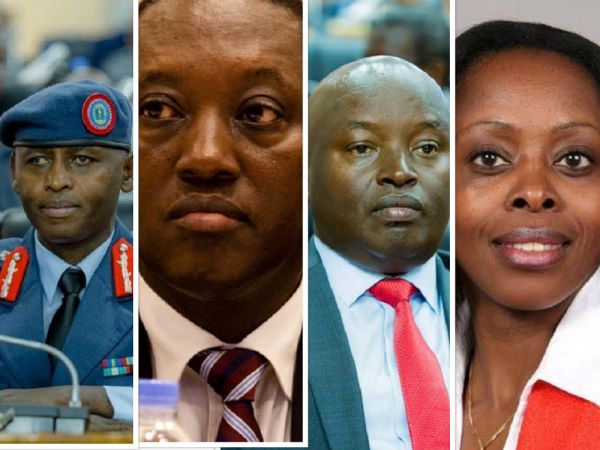
In March 2026, the U.S. also sanctioned members of the Rwanda Defence Force and the RDF as a unit, a move that further complicated perceptions of neutrality in the conflict.
Despite backing peace talks, including negotiations in Doha between Kinshasa and AFC/M23, analysts note that U.S. policy appears to lean toward the Congolese government, particularly given strategic interests such as access to critical mineral supply chains.
These dynamics have fueled criticism from various actors, including AFC/M23, which accuses the international community of selectively condemning violence while overlooking ceasefire violations by government forces and continued hostilities against Kinyarwanda-speaking communities in the eastern DRC.
The United States has imposed sanctions on former Democratic Republic of the Congo (DRC) President Joseph Kabila, intensifying tensions around Washington’s role in the ongoing conflict in eastern Congo and drawing renewed scrutiny over its regional strategy.
In a press encounter, Guterres offered three scenarios. In the worst-case scenario where the strait remained closed until the end of the year, global inflation would skyrocket past 6 percent, and growth would plummet to 2 percent.
“Immense suffering takes hold, especially among the world’s most vulnerable populations. And we confront the specter of a global recession, with dramatic impacts on people, on the economy, and on political and social stability,” he warned.
Guterres said these consequences are not cumulative but exponential. The longer this vital artery is choked, the harder it will be to reverse the damage and the higher the cost to humanity.
Even in the best-case scenario, “where restrictions are lifted today,” supply chains will take months to recover, prolonging lower economic output and higher prices, he warned.
According to the UN chief, in that scenario, this year’s global economic growth would still drop from 3.4 to 3.1 percent. Global inflation, which had been declining, would climb from 3.8 to 4.4 percent. Global merchandise trade growth would shrink from 4.7 percent last year to roughly 2 percent, with some meaningful supply chain interruptions.
In a second scenario, where disruption drags on through midyear, global economic growth would fall to 2.5 percent. Inflation would rise to 5.4 percent. Some 32 million more people would be pushed into poverty and 45 million more people would face extreme hunger, he said.
As the Middle East crisis is lumbering into its third month, the consequences grow dramatically worse with each passing hour despite a fragile ceasefire between the United States and Iran, he said.
Guterres called for the reopening of the Strait of Hormuz.
“My message to all parties is clear: Navigational rights and freedoms must be restored immediately, in line with the Security Council Resolution 2817. Open the Strait. Let all ships pass. Let the global economy breathe again,” he said.
“That requires more than physical reopening,” Guterres said. “It requires shipping to be safe, predictable and insurable.”
At the same time, the UN chief urged all parties to refrain from actions that could undermine the current ceasefire.
“Now is the time for dialogue, for solutions that pull us back from the brink, and for measures that can open a pathway to peace,” Guterres said. “The world is waiting.”
UN Secretary-General Antonio Guterres (1st L) speaks at a press encounter at the UN headquarters in New York, April 30, 2026. Guterres on Thursday warned of devastating consequences of prolonged disruptions in the Strait of Hormuz.
The message was delivered during a meeting at the Ministry of Foreign Affairs headquarters in Riyadh between Saudi Minister of Foreign Affairs Prince Faisal bin Farhan bin Abdullah and Rwanda’s Minister of Foreign Affairs and International Cooperation, Olivier Nduhungirehe.
In his message, President Kagame expressed Rwanda’s solidarity with Saudi Arabia amid evolving regional circumstances, according to the Saudi Foreign Ministry.
The Middle East region has, in recent months, been experiencing heightened geopolitical tensions and security challenges, marked by escalating regional frictions involving Iran, Israel, and the United States.
These developments have unfolded alongside the ongoing Israel–Palestine conflict and the war in Gaza, rising instability in the Red Sea affecting maritime security, and broader tensions involving Iran and several Gulf states.
Collectively, these dynamics have continued to strain regional stability, disrupt key shipping routes, and impact international trade and energy flows.
Meanwhile, during the recent meeting, the two ministers also discussed bilateral relations between Rwanda and Saudi Arabia and reviewed a number of issues of common interest aimed at further strengthening cooperation between the two countries.
The meeting was attended by Vice Minister of Foreign Affairs Waleed Elkhereiji, Deputy Minister for Political Affairs Ambassador Dr. Saud Al-Sati, and Director General of the General Administration for African Affairs Saqr Al-Qurashi.
Rwanda and Saudi Arabia continue to cooperate on major infrastructure projects, including healthcare facilities, energy systems, and road development.
Saudi Arabia previously extended a $42 million loan to Rwanda for the construction of road projects covering a total of 150 kilometres, including the Nyagatare–Base–Rukomo and Huye–Kitabi roads, which were officially inaugurated last year.
Bilateral trade between the two countries has also grown steadily in recent years. Between 2022 and 2025, Saudi Arabia ranked among the leading destinations for Rwandan exports.
Data from the National Institute of Statistics of Rwanda (NISR) indicates that Rwandan exports to Saudi Arabia reached $1.2 billion between the first and third quarters of 2025.
In February 2025, Saudi Arabia’s Foreign Trade Authority (FSC) and Rwanda’s Private Sector Federation (PSF) established a joint commission aimed at strengthening trade cooperation between the two countries.
The commission is expected to support the expansion of trade and investment flows, as well as enhance cultural cooperation between the two sides, according to officials.
The message was delivered during a meeting at the Ministry of Foreign Affairs headquarters in Riyadh between Saudi Minister of Foreign Affairs Prince Faisal bin Farhan bin Abdullah and Rwanda’s Minister of Foreign Affairs and International Cooperation, Olivier Nduhungirehe.The most recent publicly reported engagement between President Kagame and Mohammed bin Salman took place in October 2025.