The iPhone Duo, which starts at 1,999 U.S. dollars in the United States, features a 5.4-inch (13.7-centimeter) outer display that opens to reveal a 7.6-inch (19.3-centimeter) inner display, the largest ever on an iPhone, according to Apple.
When closed, the device is roughly the size of a passport, the company said. When unfolded, it is Apple’s thinnest iPhone to date.
The iPhone Duo is made of Grade 5 titanium and features a precision hinge. Its inner and outer Super Retina XDR displays have the same aspect ratio, allowing content to scale proportionally as users switch between the two screens.
The device is powered by Apple’s new A20 Pro chip, the same processor used in the iPhone 18 Pro models. Built on a 2-nanometer process, the chip features a six-core CPU, a seven-core GPU and dual 16-core Neural Engine designed to support on-device artificial intelligence (AI) workloads, Apple said.
The foldable phone also features a dual-battery architecture and a custom vapor chamber for thermal management. It offers up to 31 hours of video playback on the inner display and 44 hours on the outer display, according to Apple.
Apple has redesigned parts of its iOS 27 operating system to accomodate the foldable form factor. A new Split View feature allows users to run two apps side by side on an iPhone for the first time, while also enabling them to open two windows of the same app.
The iPhone Duo comes with Apple Intelligence and Siri AI. Apple said Siri AI will begin rolling out as a beta with iOS 27 on Sept. 14 for supported devices set to English, with several additional languages to follow in October.
The iPhone Duo will be available in star white and night sky, with storage options of 256GB, 512GB, 1TB and 2TB. Pre-orders will begin on Oct. 16 in more than 70 countries and regions, with availability beginning Oct. 23. The phone will launch in an additional 28 countries and regions on Oct. 30.
Apple also unveiled the iPhone 18 Pro and iPhone 18 Pro Max, starting at 1,199 dollars and 1,299 dollars, respectively. Both models are powered by the A20 Pro chip and feature a new 48-megapixel Fusion Main camera with variable aperture, along with improvements in battery life and sustained performance.
The iPhone 18 Pro models will be available with 256GB, 512GB, 1TB and 2TB of storage. Pre-orders will begin Sept. 12, with availability starting Sept. 18 in more than 65 countries and regions.
Apple also introduced Apple Watch Series 12 and Apple Watch Ultra 4, featuring a new Health Sensing System and the S11 chip. The company said the system enables more frequent measurements of heart rate and heart-rate variability, as well as a new readiness score. The Apple Watch Series 12 starts at 399 dollars, while the Apple Watch Ultra 4 starts at 799 dollars.
AirPods 5 were also unveiled at the event, bringing Active Noise Cancellation to Apple’s entry-level AirPods lineup. The new model starts at 129 dollars, while a version with a wireless charging case and additional controls costs 149 dollars.
The event marked the first major Apple product launch led by John Ternus since he took over as the company’s CEO. The introduction of the iPhone Duo marks Apple’s entry into the foldable smartphone market.
People take photos of Apple’s first foldable smartphone, iPhone Duo, at Apple Park in Cupertino, California, the United States, Sept. 9, 2026. U.S. tech giant Apple on Wednesday unveiled its first foldable smartphone, iPhone Duo, along with the iPhone 18 Pro lineup, new Apple Watch models and AirPods at a product launch event held at Apple Park, its headquarters in Cupertino, California. (Xinhua/Wu Xiaoling)
Photo taken on Sept. 9, 2026 shows iPhone Duo on screen during a launch event at Apple Park in Cupertino, California, the United States. U.S. tech giant Apple on Wednesday unveiled its first foldable smartphone, iPhone Duo, along with the iPhone 18 Pro lineup, new Apple Watch models and AirPods at a product launch event held at Apple Park, its headquarters in Cupertino, California. (Xinhua/Wu Xiaoling)
The revenues were recorded between August 31 and September 4, 2026, during which Rwanda exported 9,145 tonnes of agricultural and livestock products to international markets.
Coffee was the country’s top export earner during the week, generating $6.67 million from the export of 961 tonnes.
Tea ranked second, generating $1.28 million after Rwanda exported 419 tonnes.
Vegetable exports generated $991,055, with 270 tonnes shipped to international markets during the week.
Rwanda also exported 364 tonnes of fruits, earning $454,980. The fruits were mainly sold to markets in the United Arab Emirates, the Netherlands and other African countries.
Flower exports, meanwhile, generated $50,898 from 10 tonnes shipped to markets in the Netherlands and the United Kingdom.
Livestock products generated $425,294 after Rwanda exported 295 tonnes, with most of the products destined for African markets.
Rwanda’s agricultural exports generated over Rwf22 billion in one week
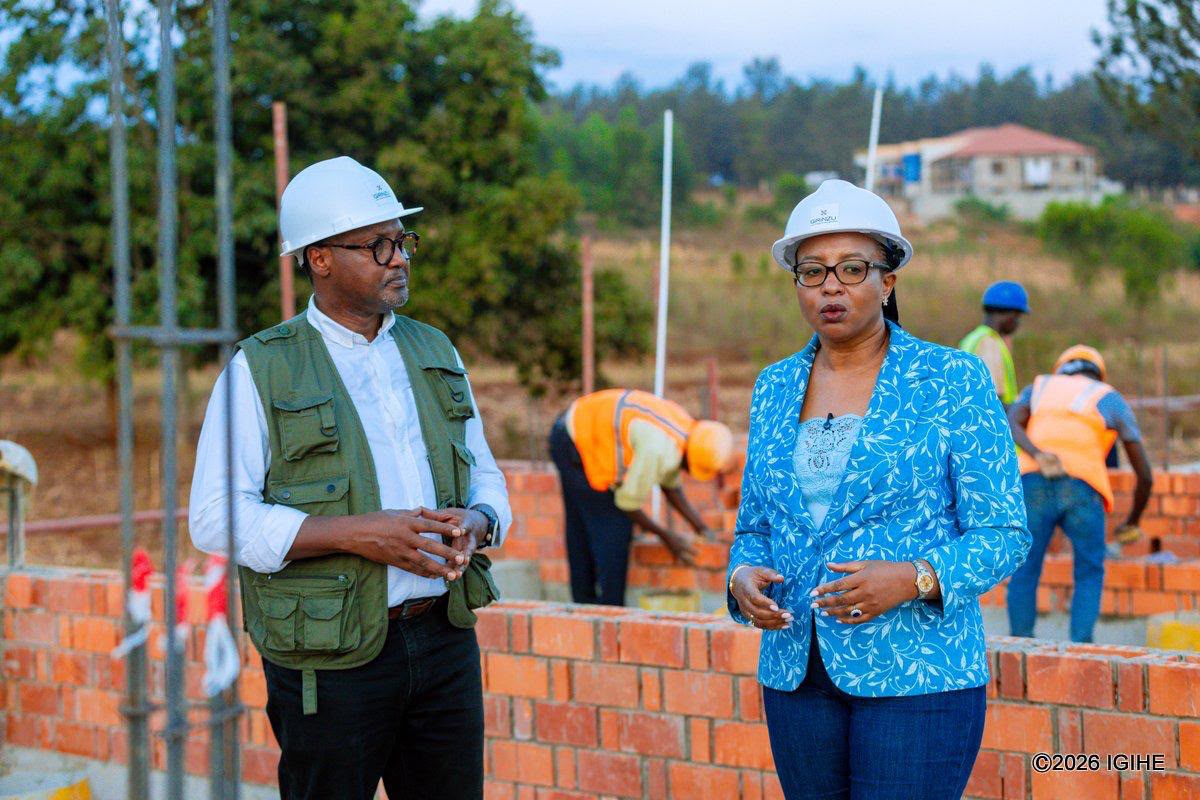
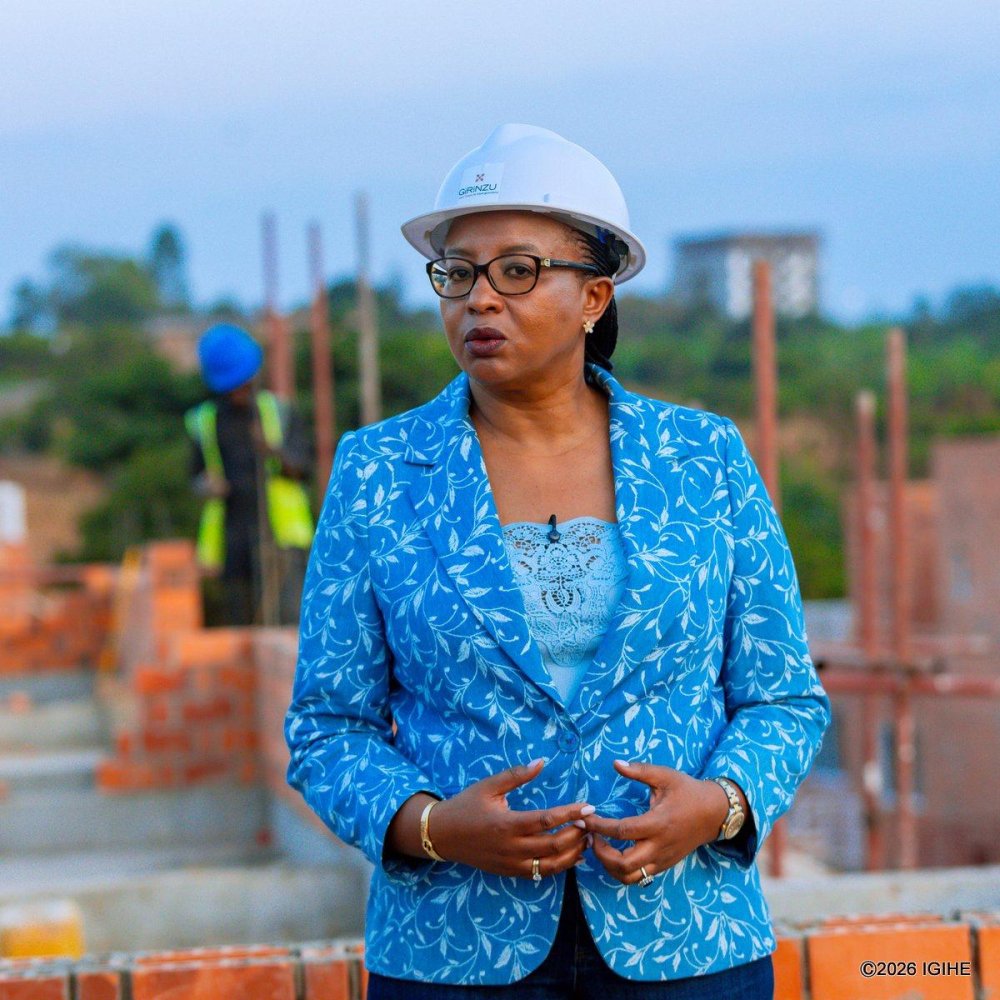
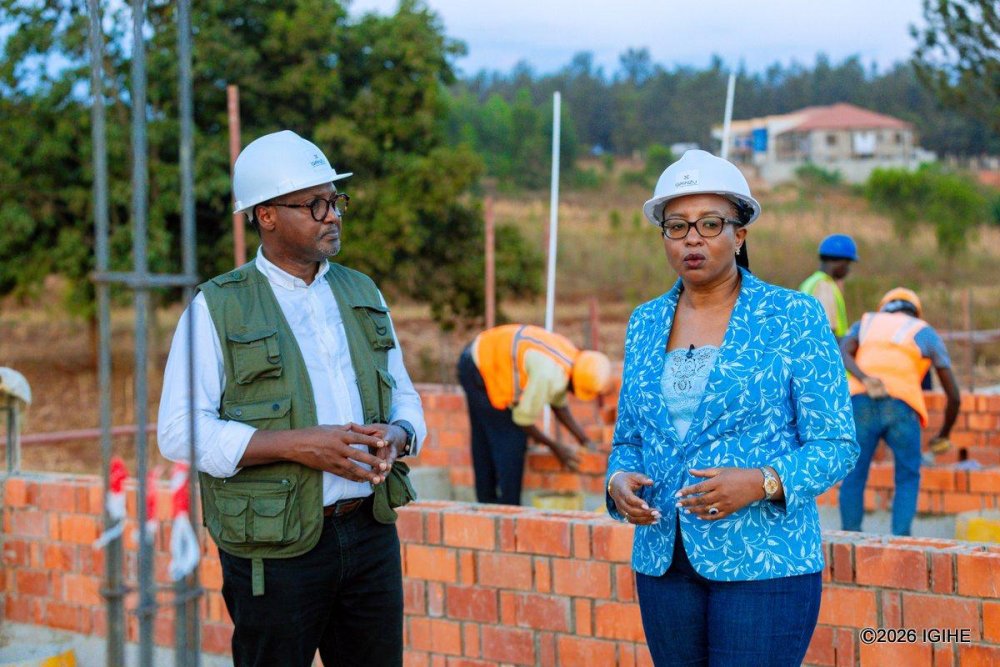
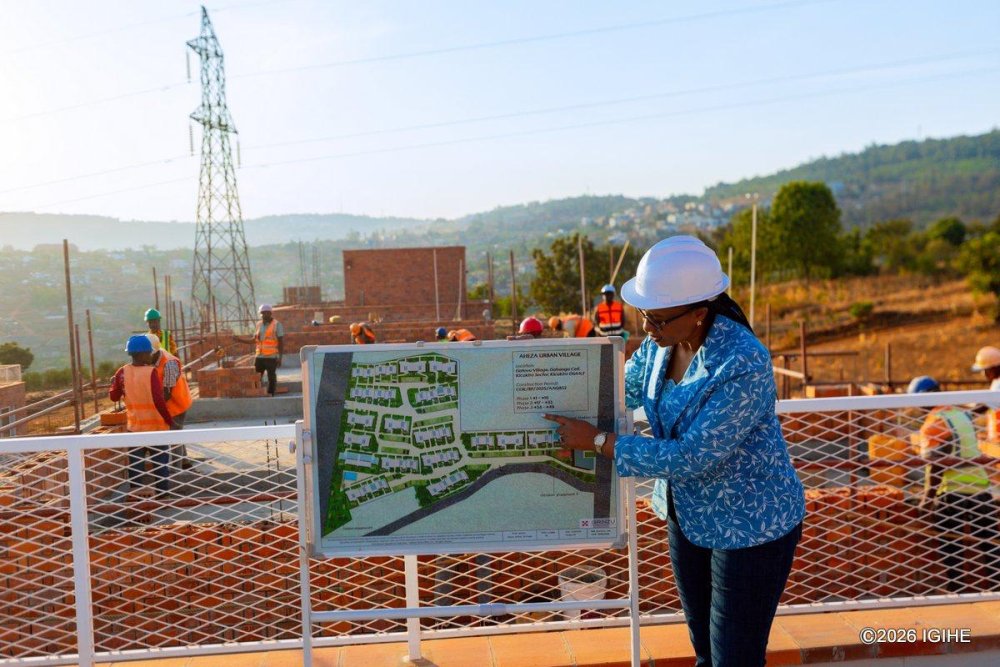
The company’s founder and Chief Executive Officer, Jackeline Wibabara, said the first project, located in Gahanga Sector, Kicukiro District, was successfully completed, with all 90 homes sold and occupied.
GIRINZU is a five-year-old real estate company involved in construction and helping people living in Rwanda and abroad access quality housing.
Wibabara said the successful completion and sale of all homes in Umutuzo had encouraged the company to begin a second project, known as Aheza.
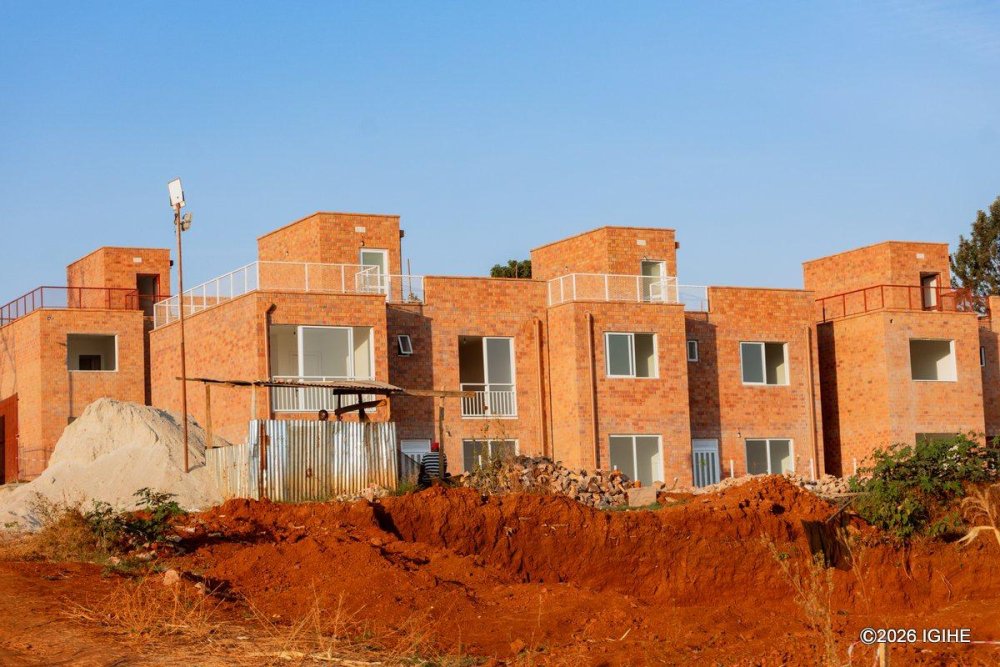
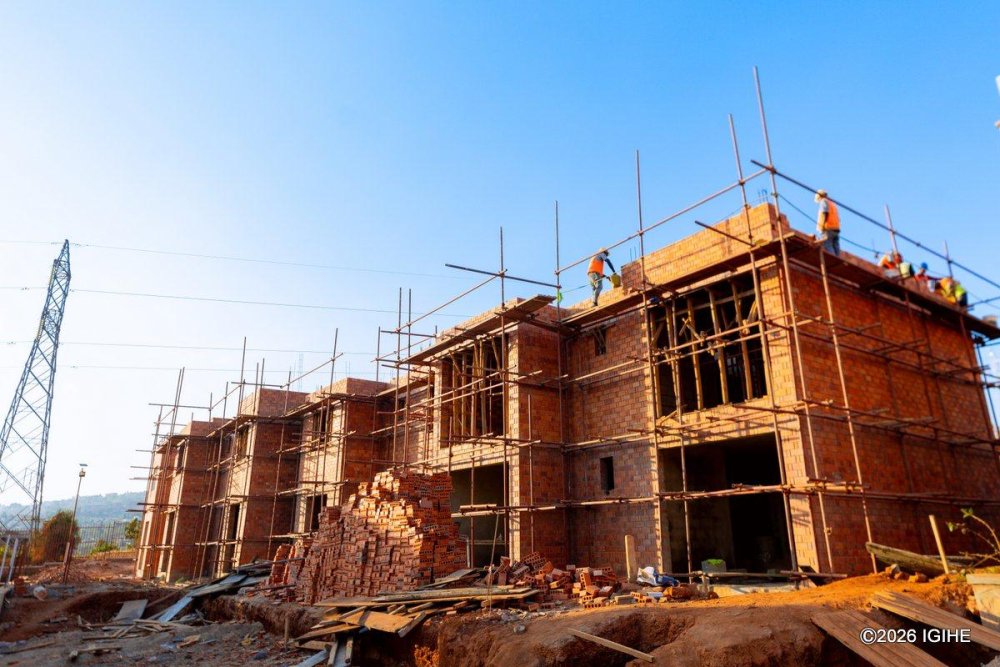
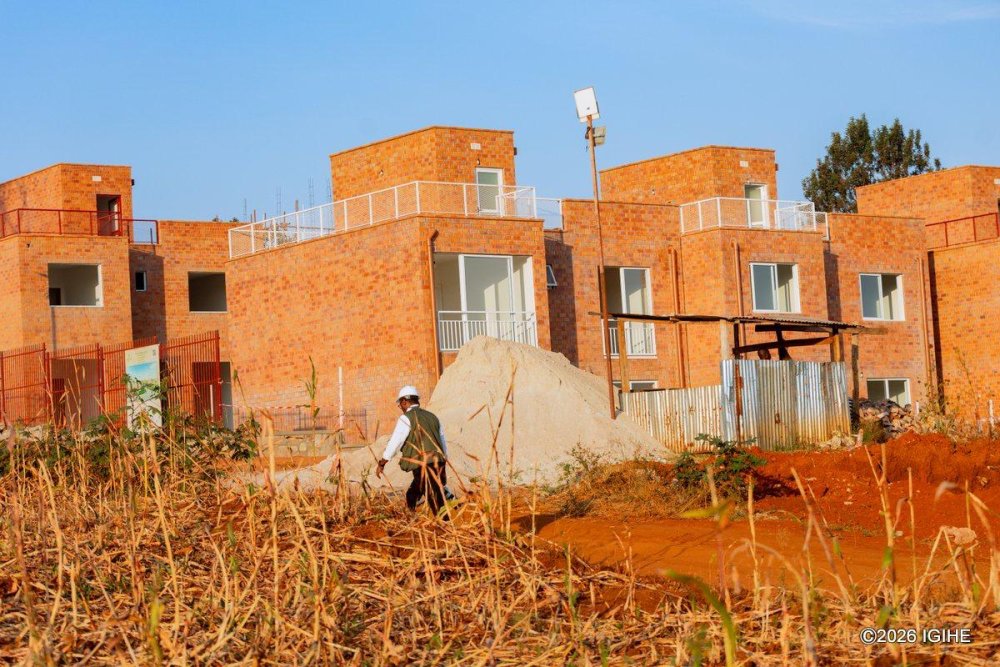
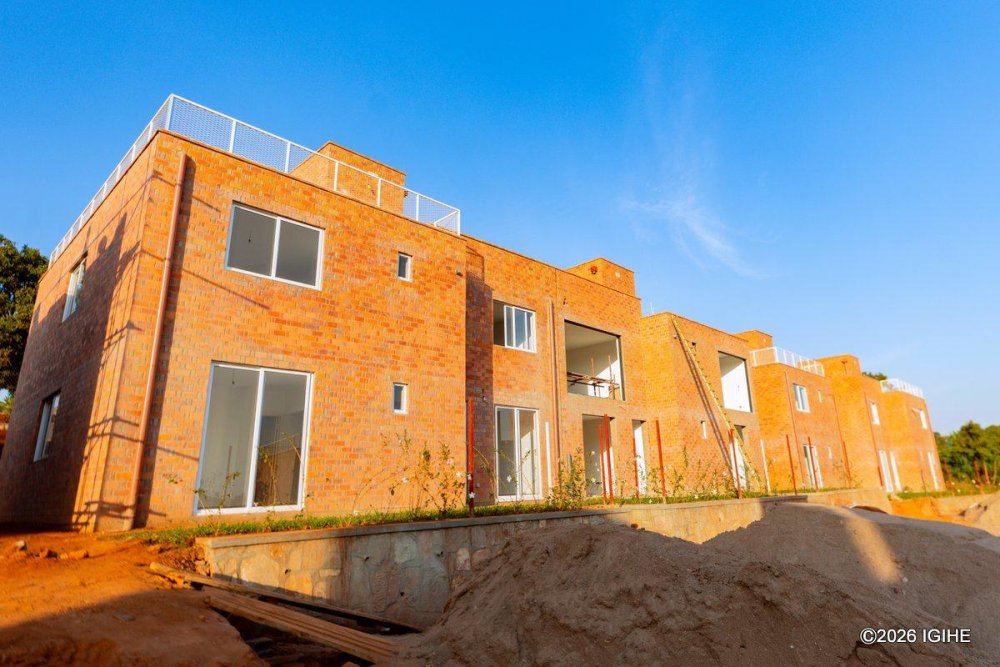
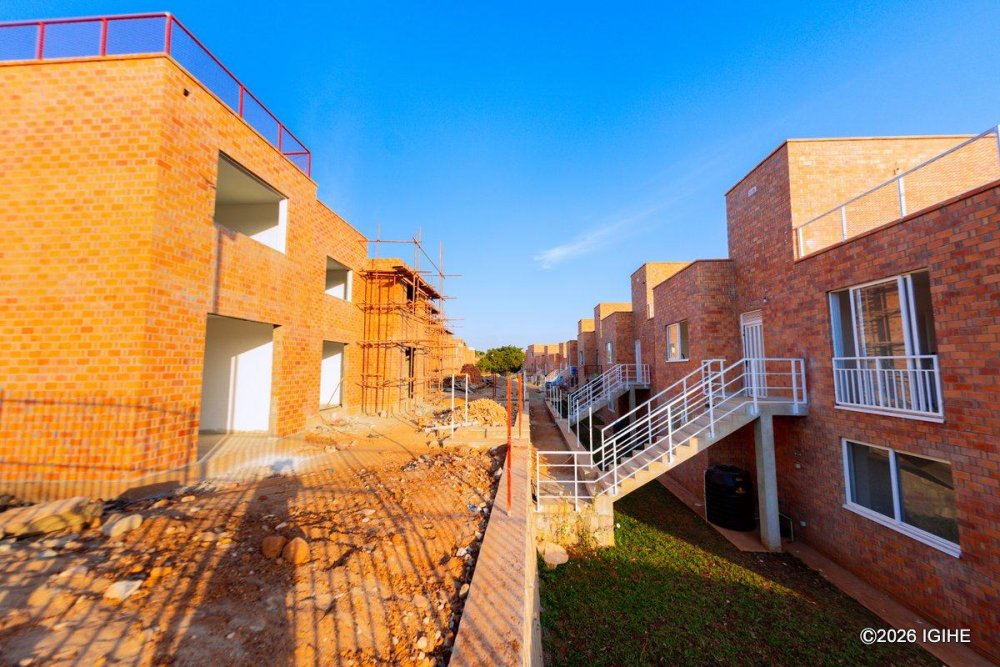
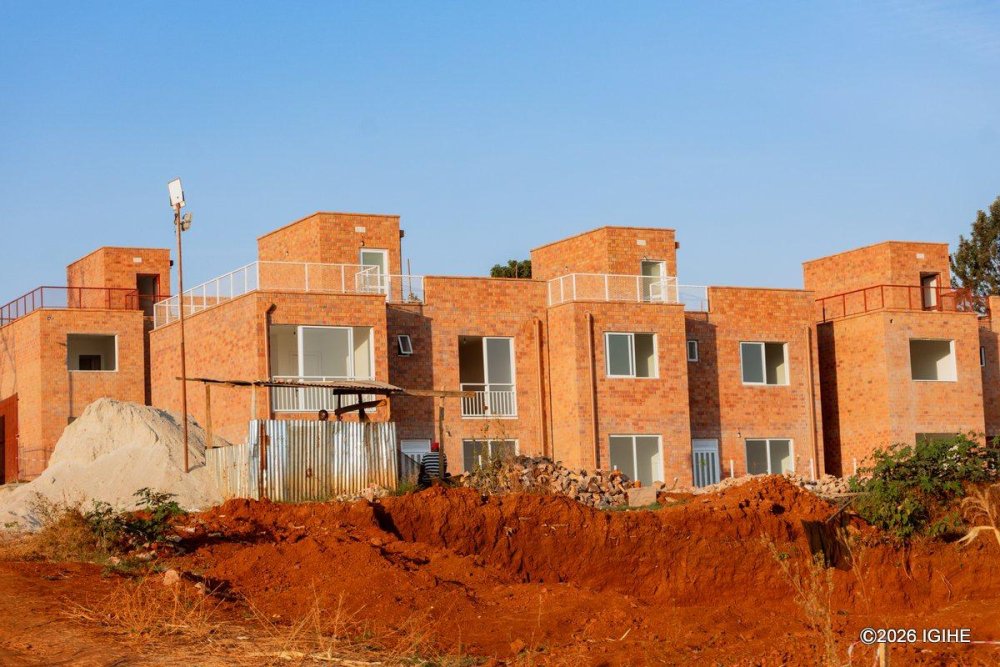
“At GIRINZU, as usual, we first conducted an in-depth feasibility study for the Gahanga 2 project, just as we did for the first project. In that study, we pay particular attention to how water flows through the land and the terrain before beginning construction. In Gahanga 2, which we call Aheza, we have already built 33 houses. So far, 85% of the homes have been sold, and the project is planned to have 114 houses,” she said.
She explained that the homes attract buyers even before construction is completed because early buyers can benefit from lower prices.
“The earlier people buy, the greater the opportunity to buy at lower prices. You can see how the international market is performing; transportation has been affected by the war in Iran, causing prices to rise. Although we use many locally produced construction materials, some materials are sourced from abroad,” Wibabara said.
She added that property investment can generate significant returns over time.
“Someone recently sold their house and made a 40% profit. No bank would give you an interest return of that level. Therefore, someone who buys a house early is effectively saving for themselves. For example, in this new Aheza Village that we are building in Gatovu, a 400-square-metre plot used to cost Rwf 15 million, but it now costs at least Rwf 42 million, with some going for Rwf 45 million, without anything else built on them,” she said.
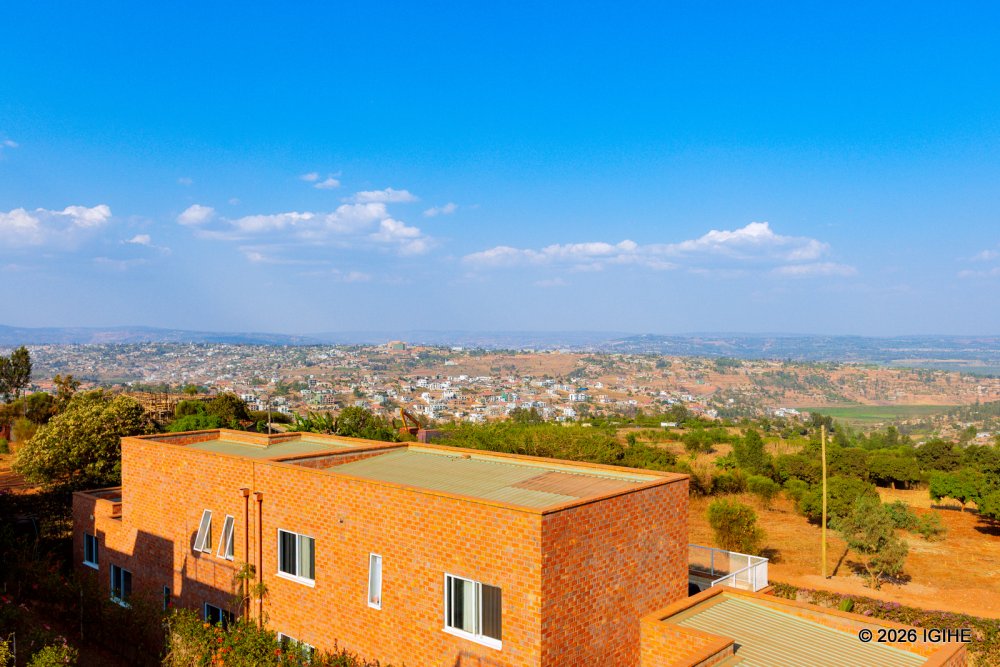
Wibabara said Aheza Village would, like the first Gahanga development, provide adequate parking for residents and their visitors, electric vehicle charging facilities and recreational spaces for children, including different playgrounds.
Aheza will comprise homes with between two and four bedrooms. All houses will have kitchens, indoor toilets and bathrooms, as well as outdoor gardens. Prices start at Rwf 86.8 million.
“When we build estates, we divide them into phases so that a completed phase is not disrupted by other phases that are still under construction. We want people to get their homes as early as possible. In Aheza too, the first phase has been completed and someone has already moved in,” Wibabara said.
Buyers from Rwanda and abroad
Alice Durand Gahunga, who lives in France, is among the people who bought a home early in Umutuzo Village. She said she chose GIRINZU because she wanted to have a home in Rwanda.
“My husband and I wanted to have a place we could call home in this country. But when you live far away, in Europe, building a house is not easy. After learning about the GIRINZU project, we took time to gather enough information and conduct thorough due diligence before buying. We are now living there,” she said.
Gahunga said she was happy to once again live in a community where she could interact with neighbours, hear children playing and enjoy a safe environment, particularly in Rwanda, her home country.
She added that she was also pleased to invest her money in a secure country. According to her, many Rwandans who have lived abroad for years want to own homes in Rwanda, either to live in when they return home or to rent out and generate income.
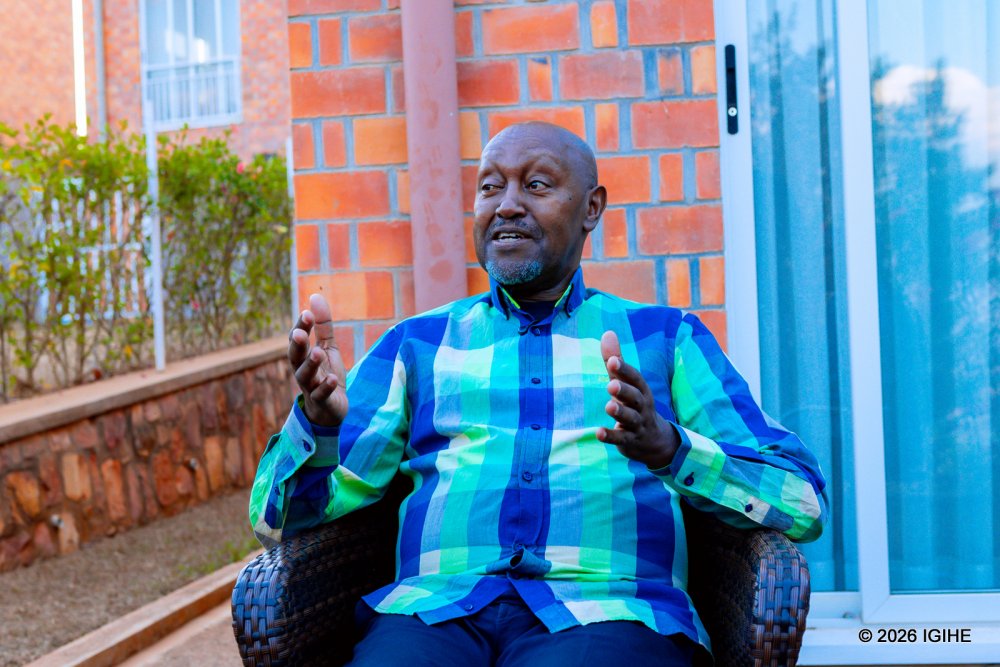
Mukunzi Rupia Jean, another resident of Umutuzo Village, shared his experience with IGIHE.
He said he had lived in different places and countries but had never found a community quite like Umutuzo because of the many advantages it offers.
“I am getting older, and I wanted a place where I could have neighbours, and I found them here. GIRINZU has brought us together; many of us participate in different activities that we organise. We also share many common values, even though we come from different parts of the world,” he said.
“The challenge we currently have is the road coming from the upper side, but the main tarmac road will also reach here before long.”
Different housing options
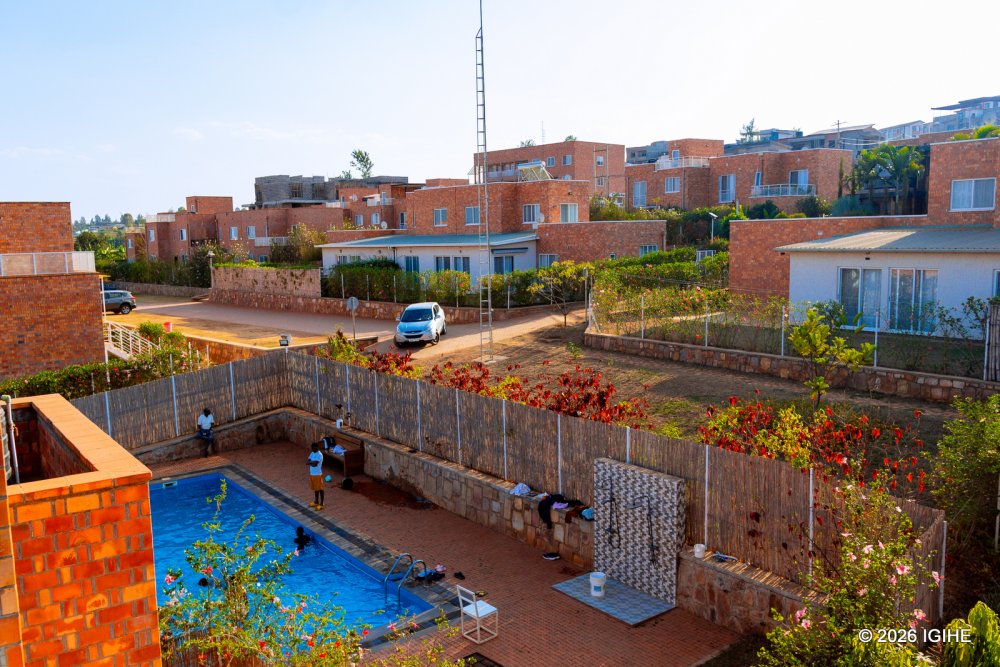
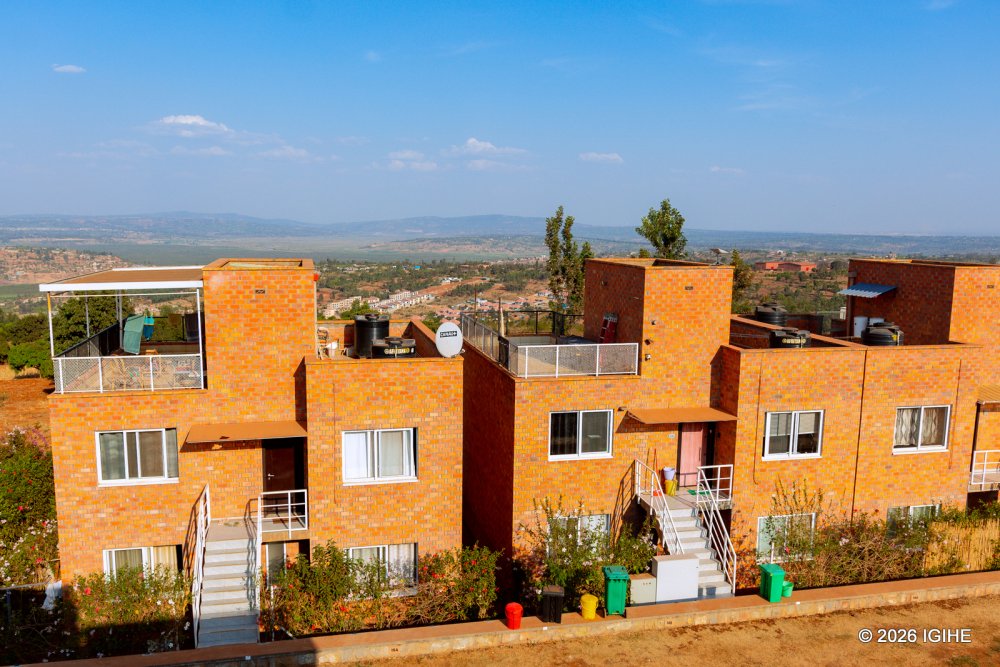
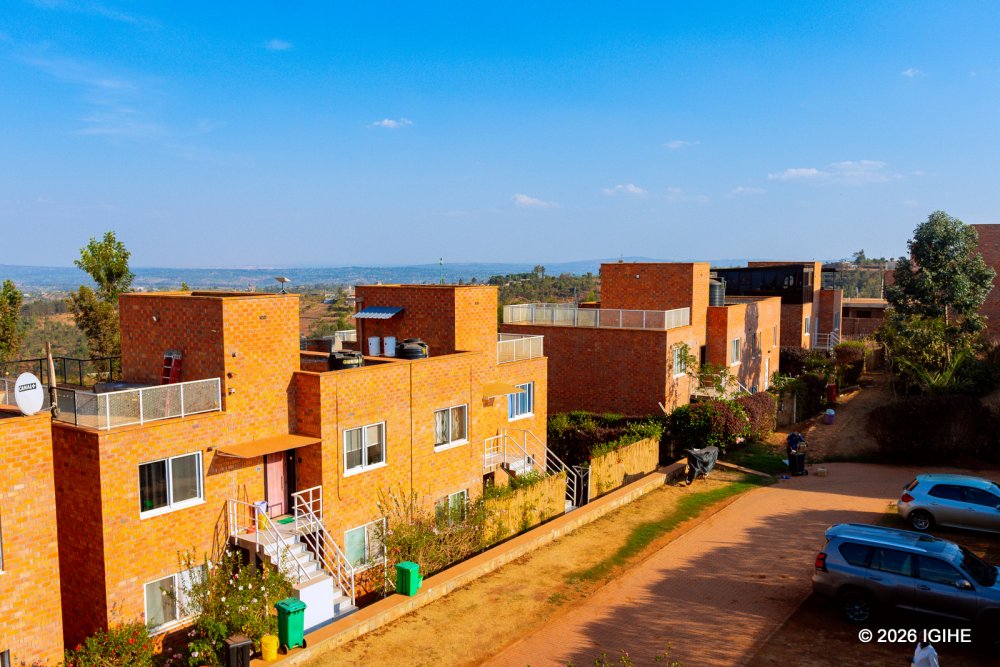
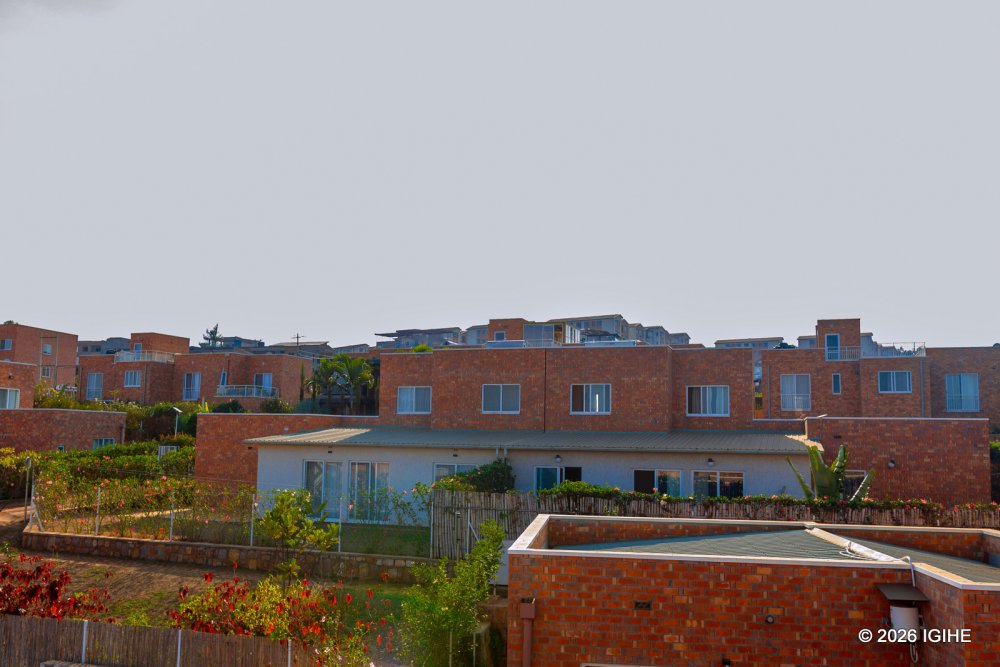
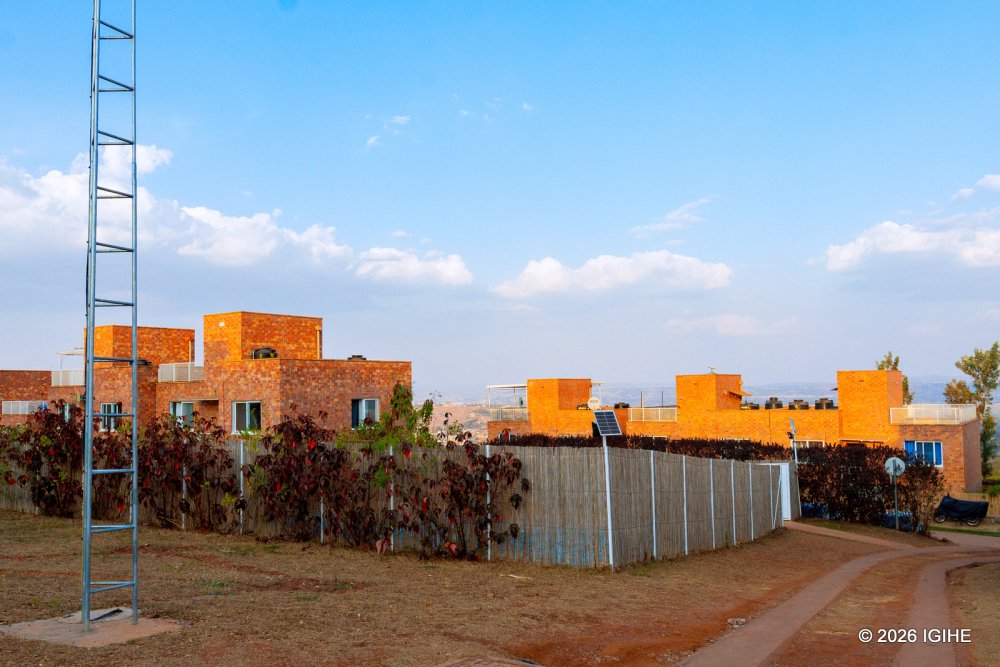
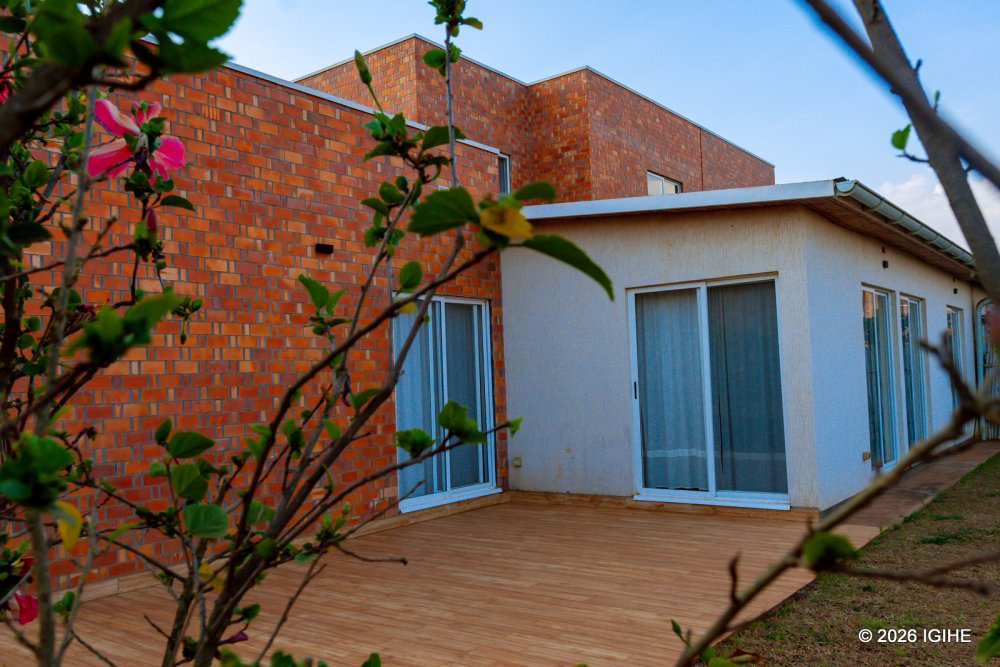
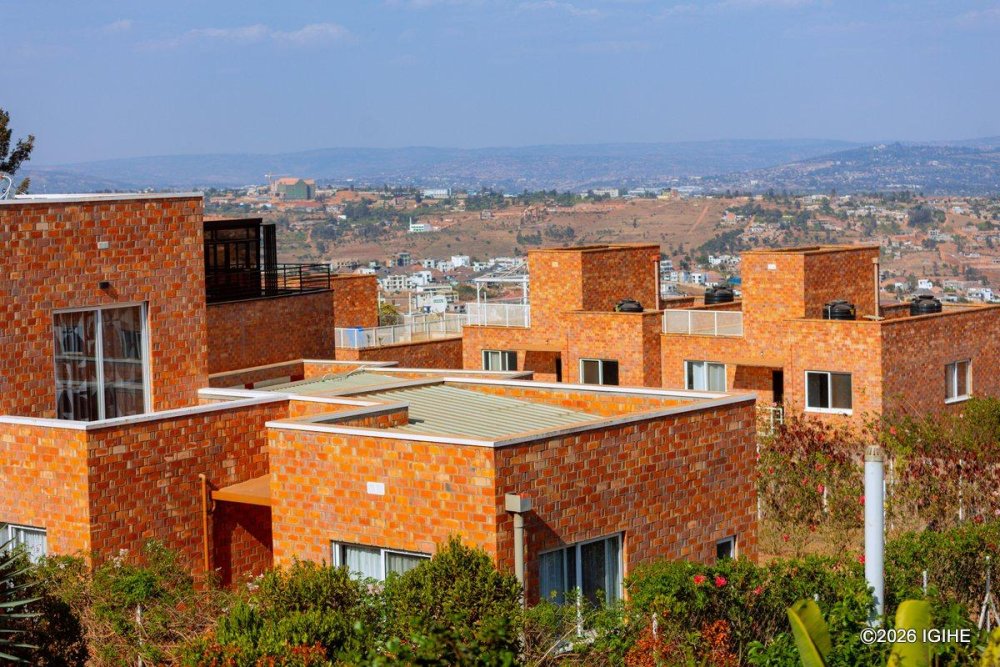
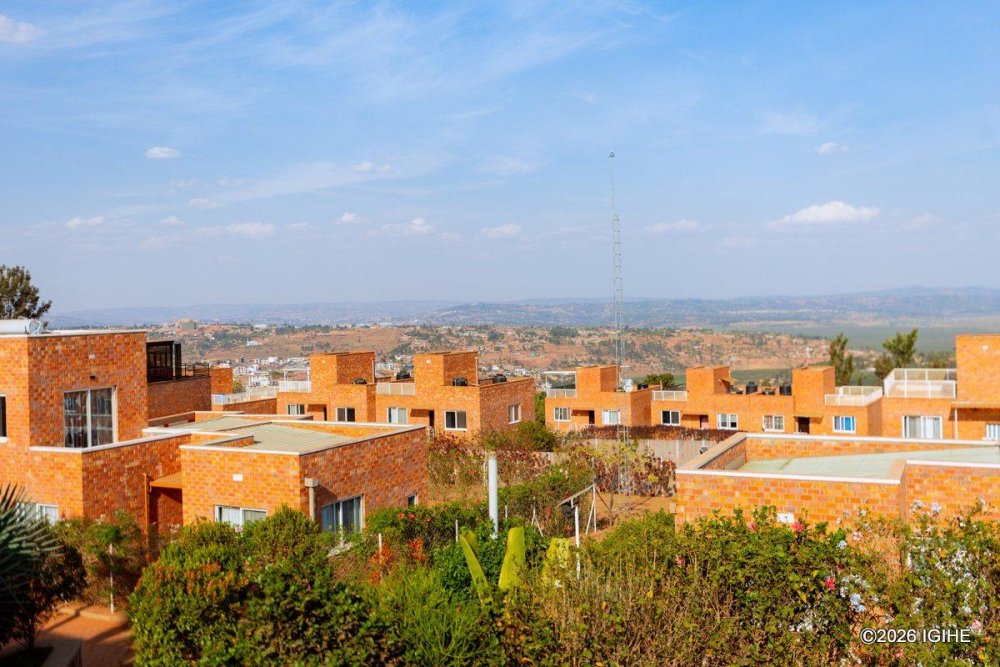
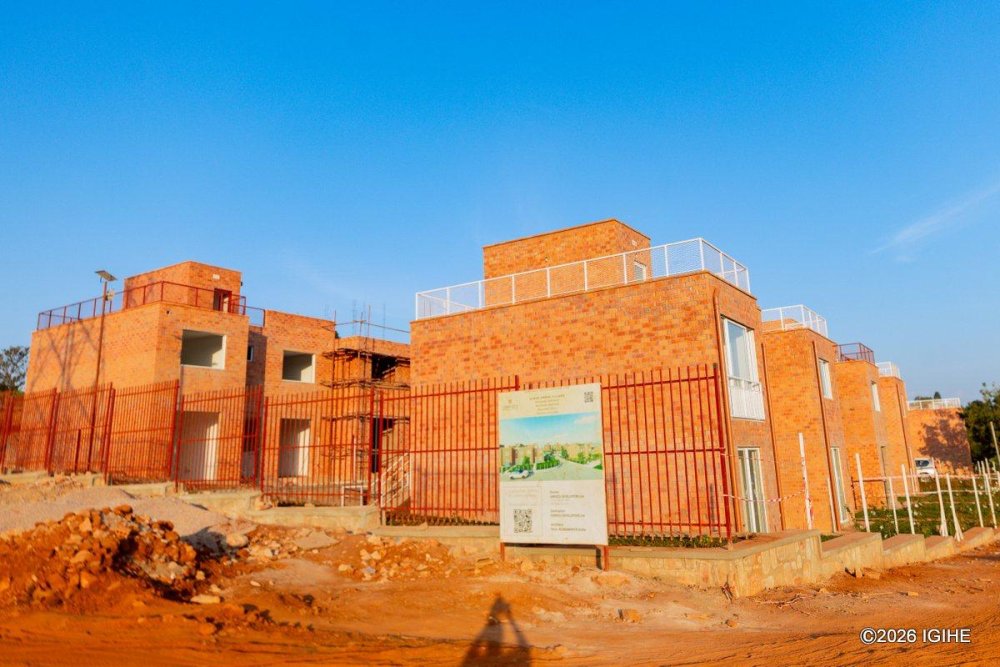
Umutuzo Village occupies two hectares and consists of three categories of homes designed to give buyers options based on their needs and financial capacity.
The first category comprises two-bedroom homes with a living room, one modern bathroom, a kitchen and a landscaped garden.
The second category consists of two-storey homes, each with three bedrooms, a living room, a bathroom and a landscaped garden.
The third category comprises four-bedroom homes with a living room, two bathrooms, a modern kitchen and a spacious garden.
At Aheza Estate, most homes in the first phase have already been sold, while registration for buyers interested in the second phase has started. Buyers are required to make an initial payment of 10% of the home’s value.
The project offers different housing options, ranging from two-bedroom homes starting at $59,800 to four- or five-bedroom villas priced at $175,000.
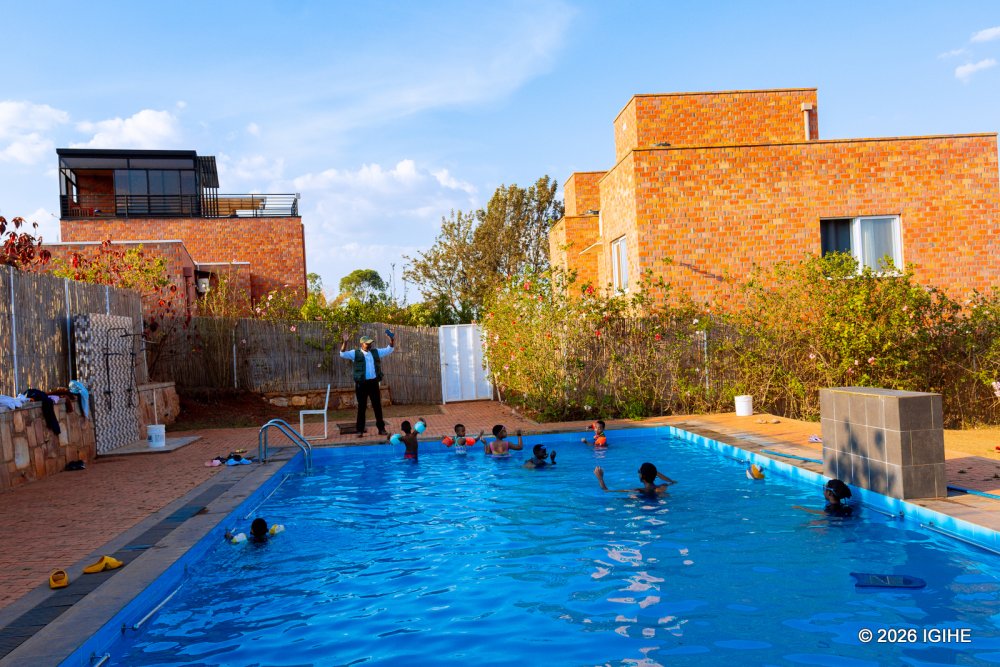
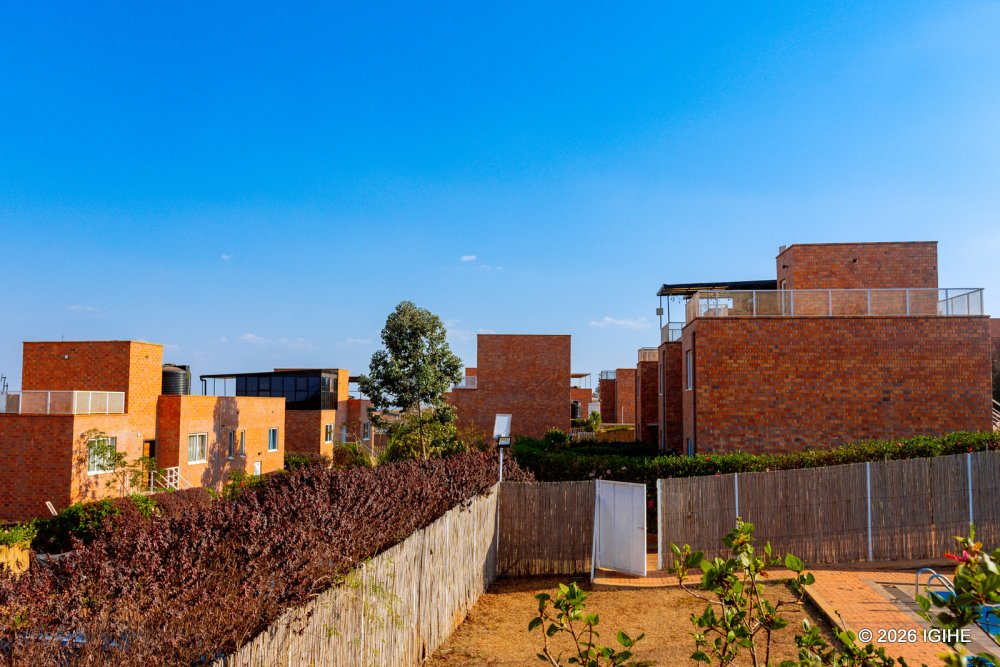
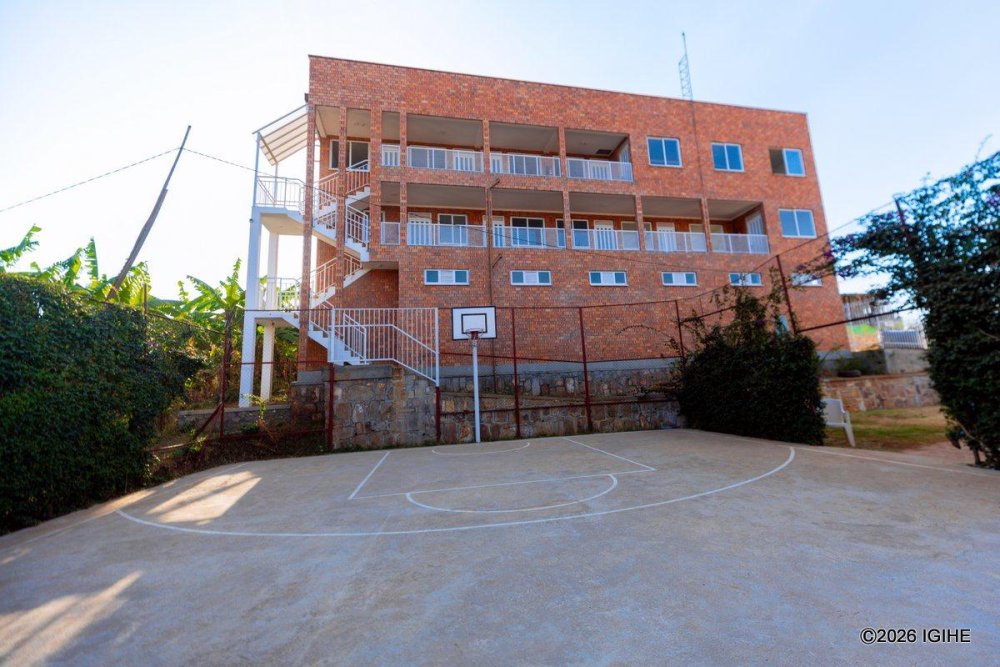
Aheza Estate has been designed as a modern and environmentally conscious residential community. It will include a swimming pool, basketball court, outdoor gym, children’s playground, shops, pedestrian and cycling paths, a car wash and electric vehicle charging facilities.
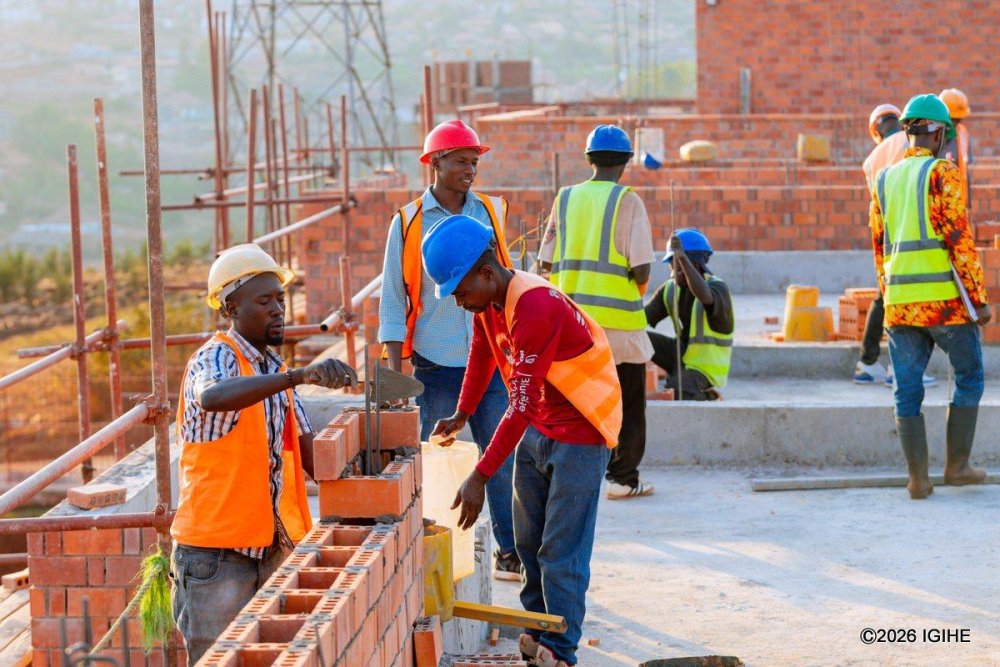
The estate will also have 24-hour security and two access gates. GIRINZU offers flexible payment arrangements while homes are under construction. Construction of an individual house takes between seven and eight months.
The company also has partnerships with Rwandan banks, including Bank of Kigali and I&M Bank, to help buyers access housing loans at preferential interest rates.
To make it easier for buyers, particularly Rwandans living abroad, GIRINZU offers virtual home viewing and allows contracts to be signed electronically. Plots and houses are allocated based on the order in which buyers make their requests.
The company also offers discounts to buyers who pay at least 75% of the home’s value upfront when signing the purchase agreement, as well as buyers who purchase an entire building comprising two homes.
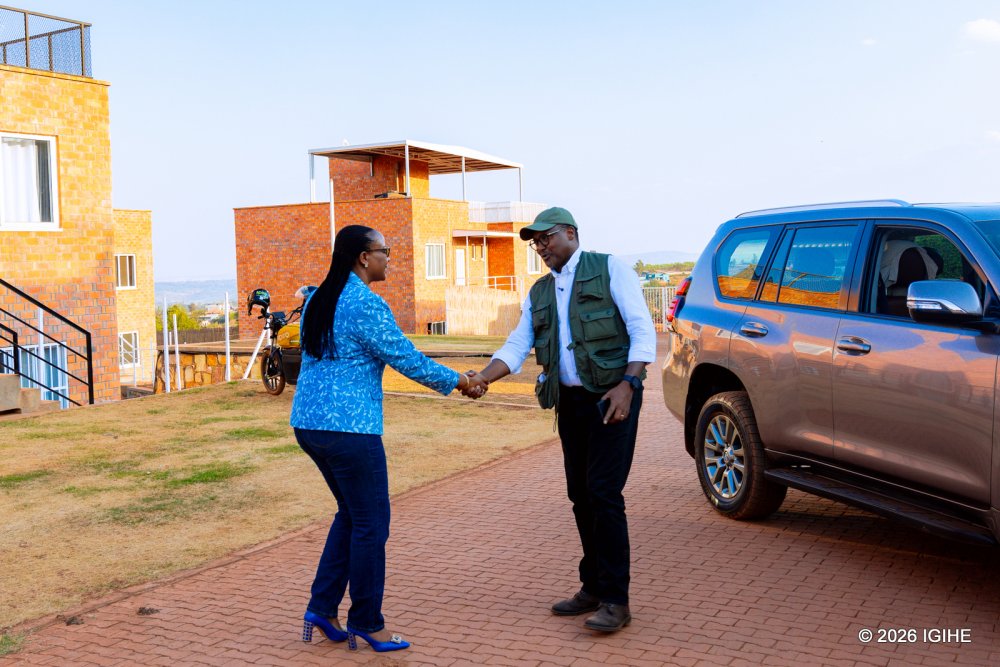
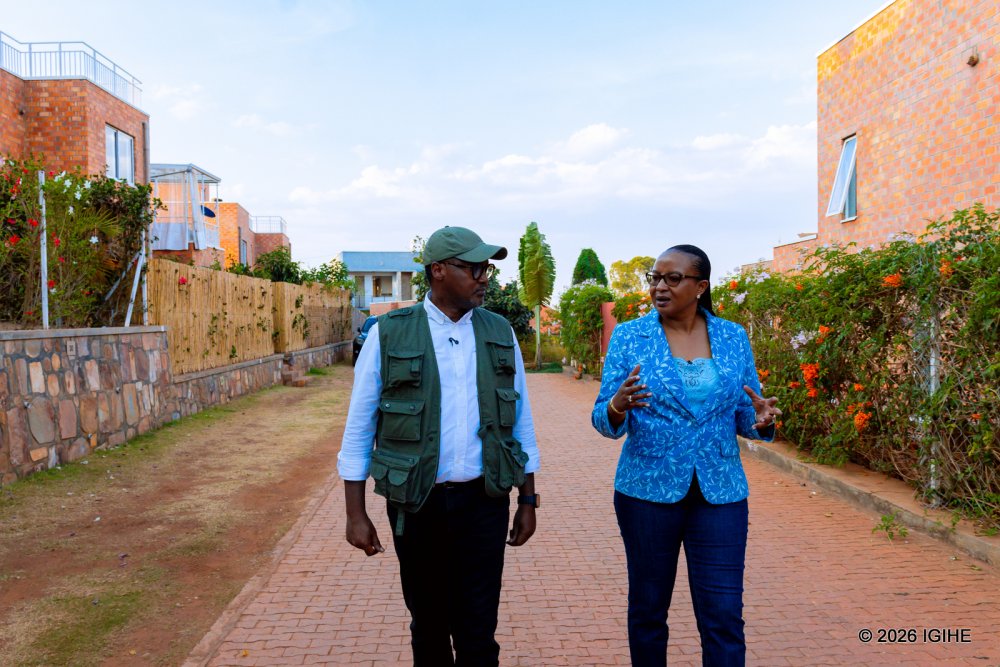
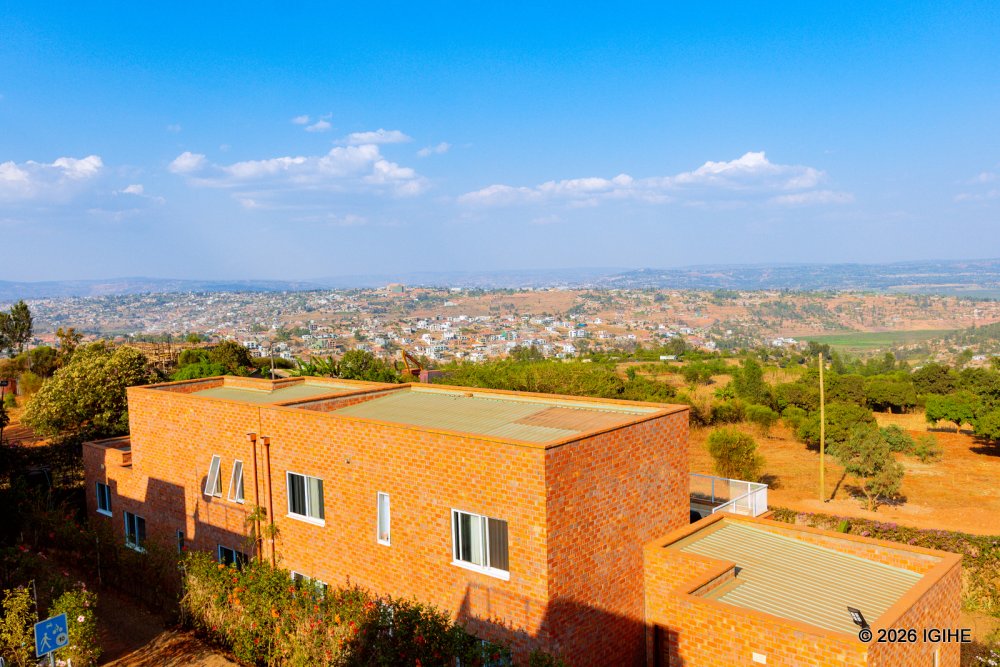
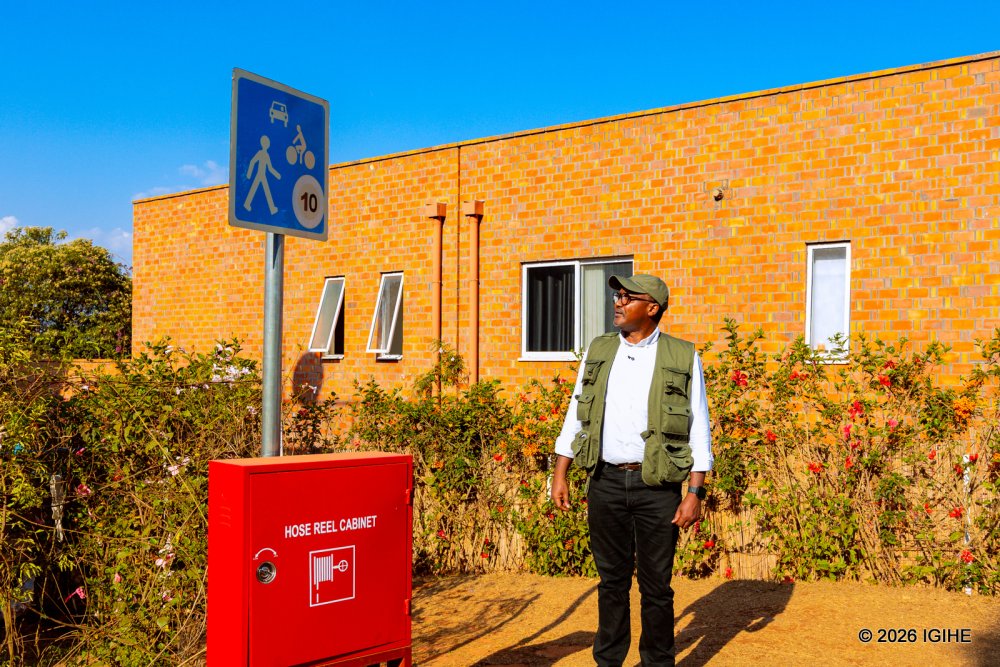
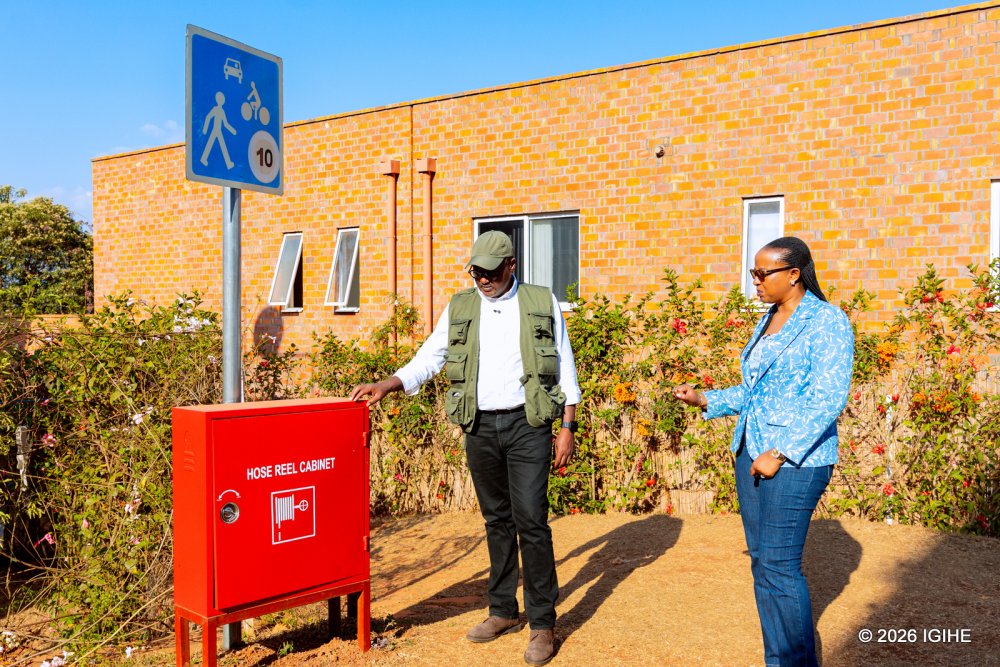
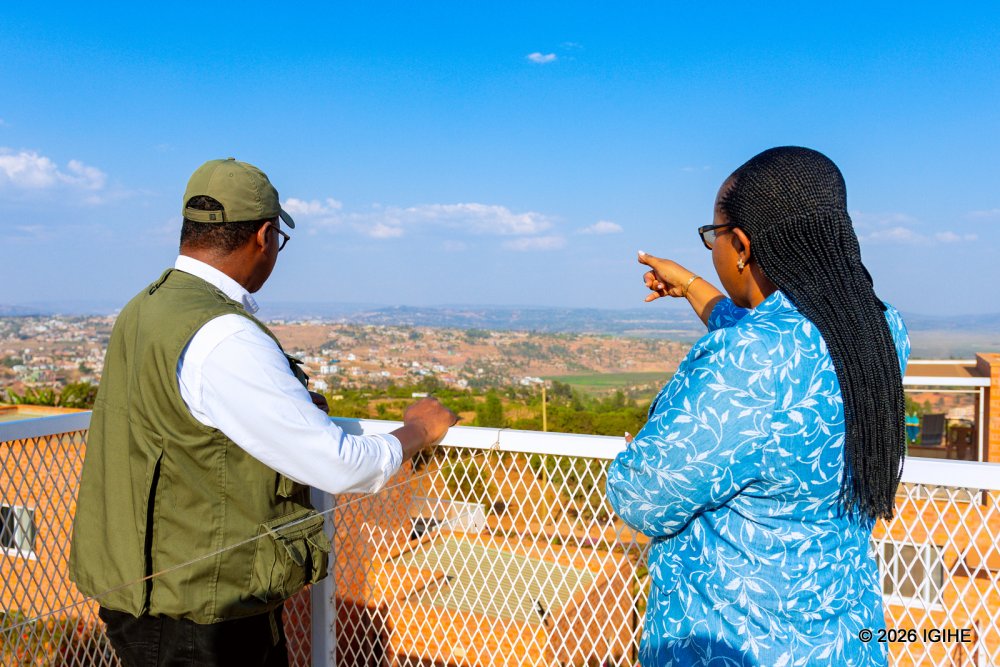
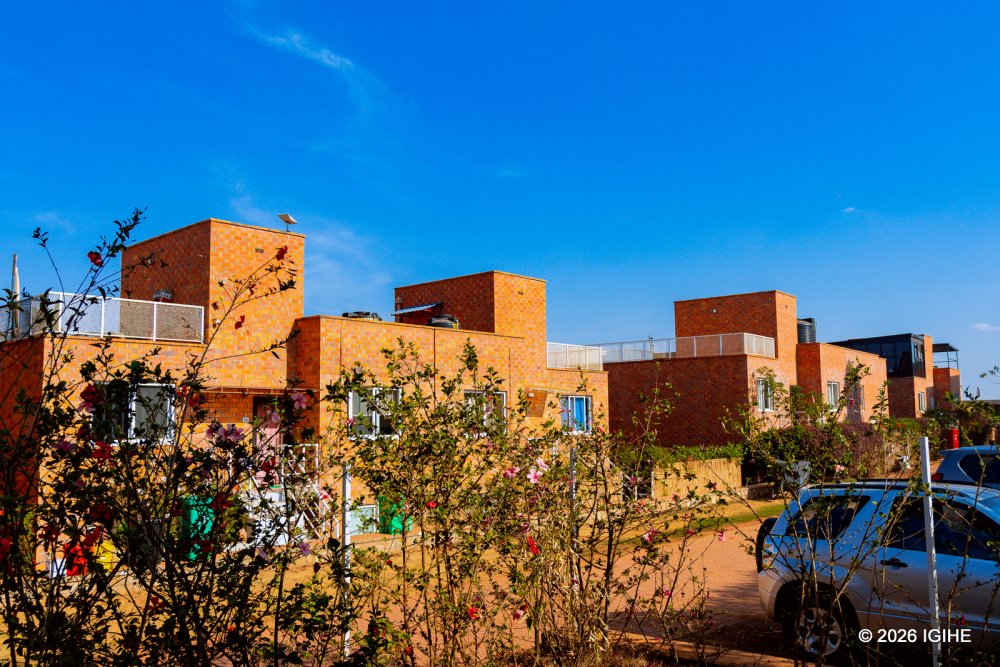
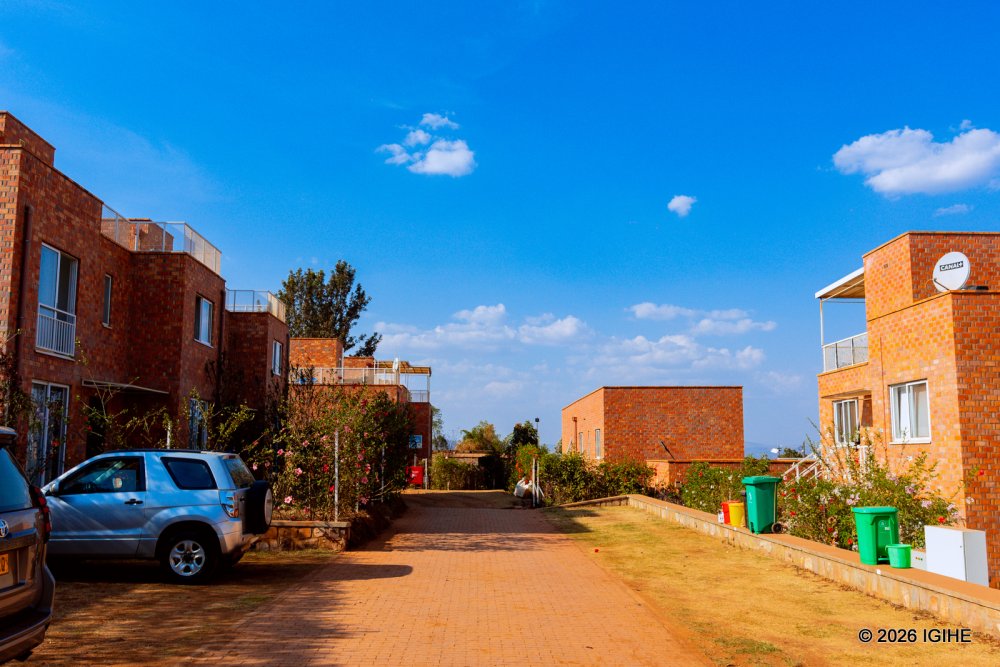
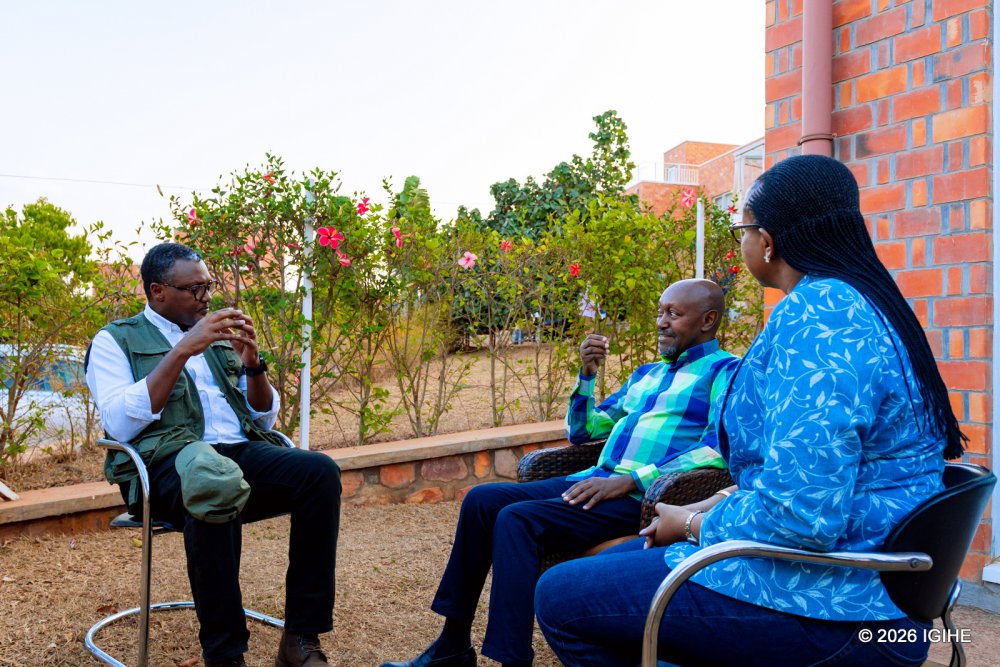
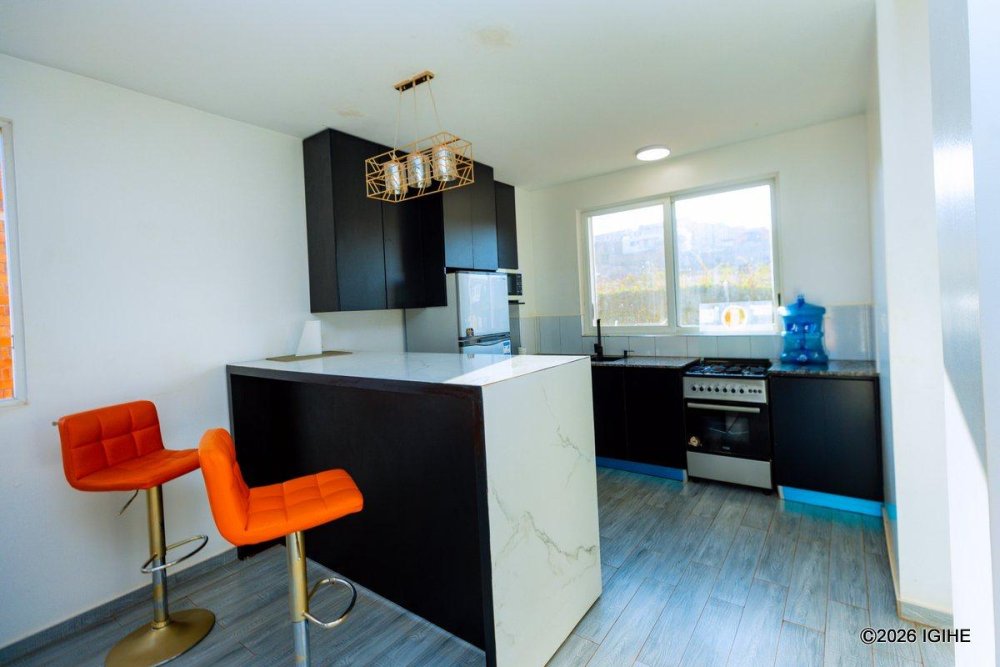
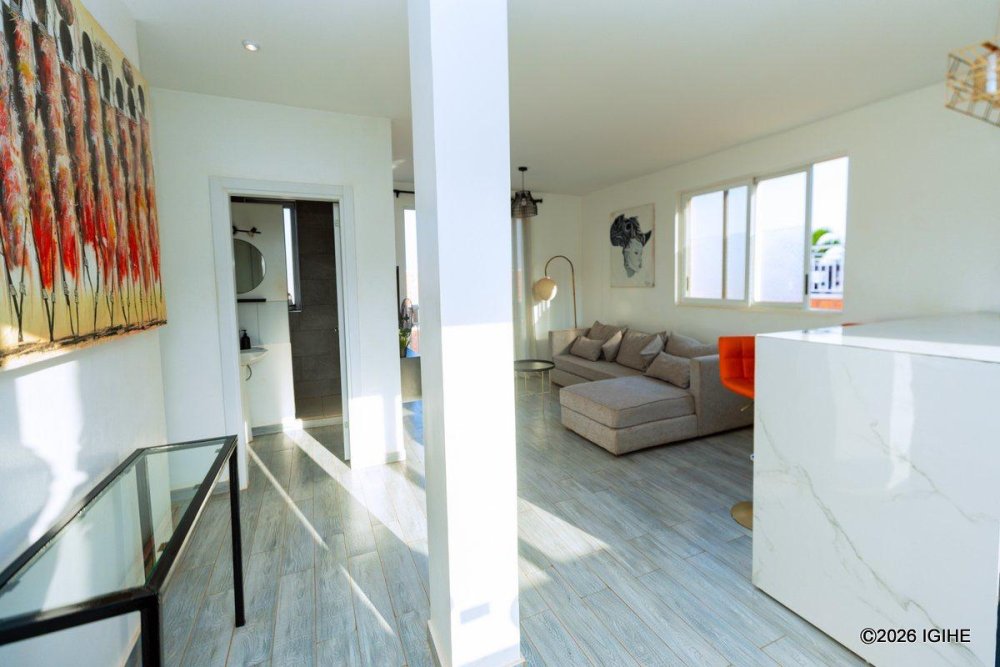
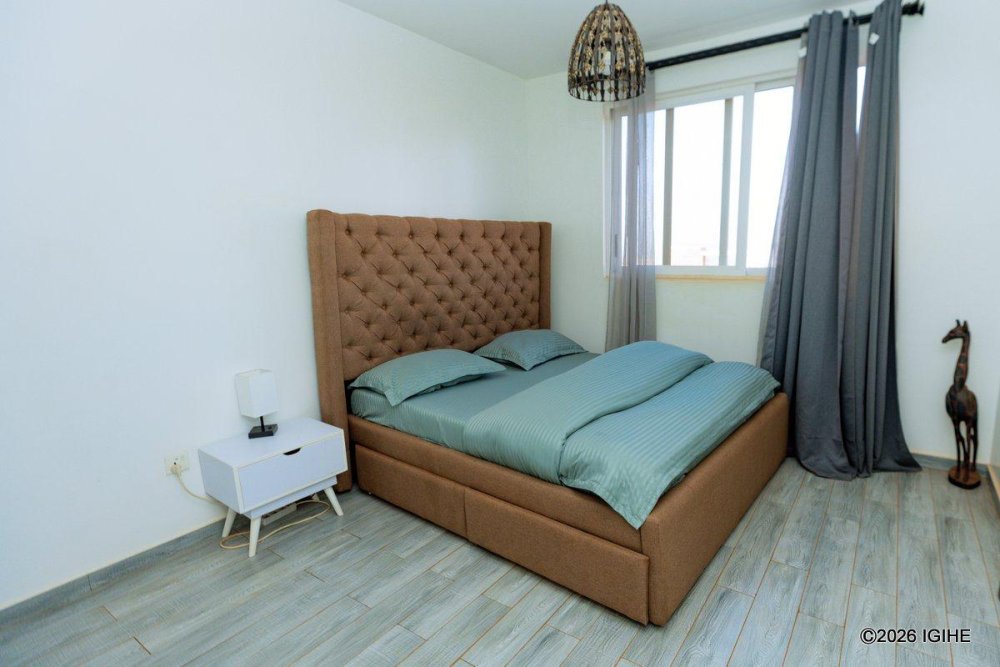
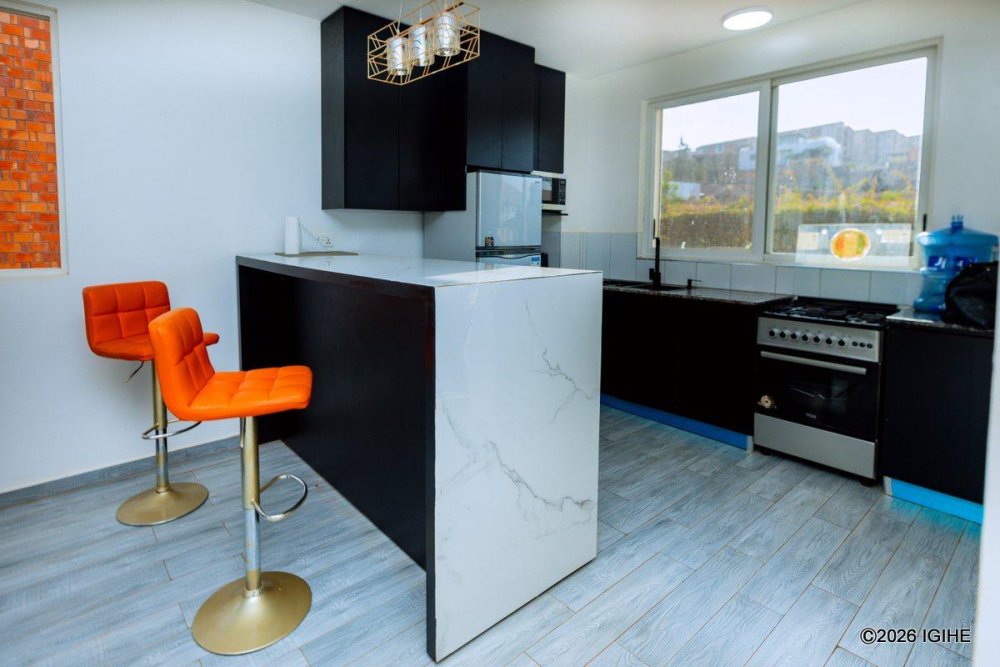
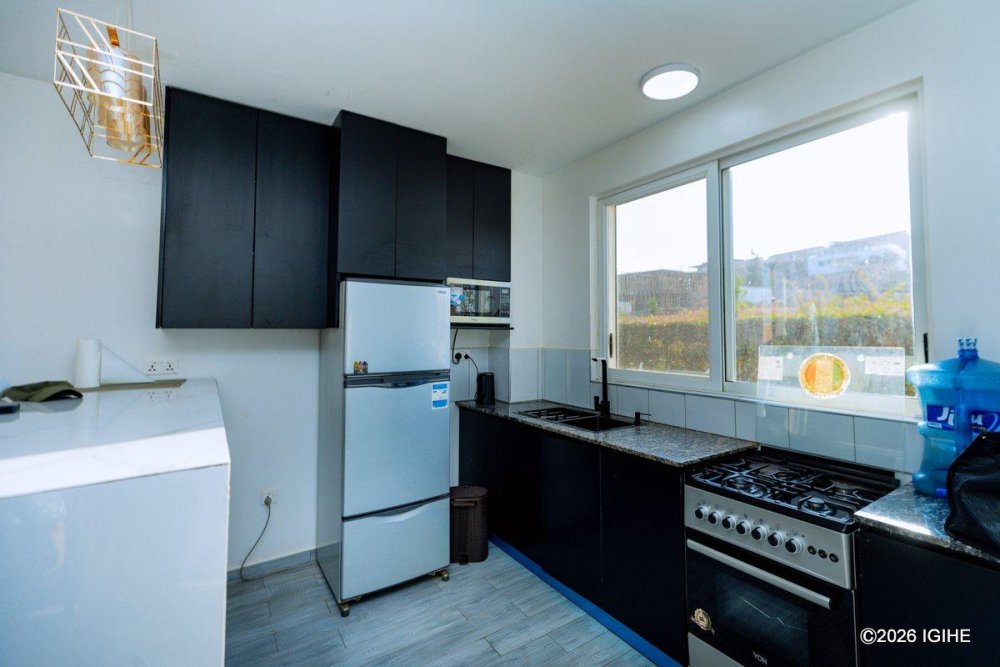
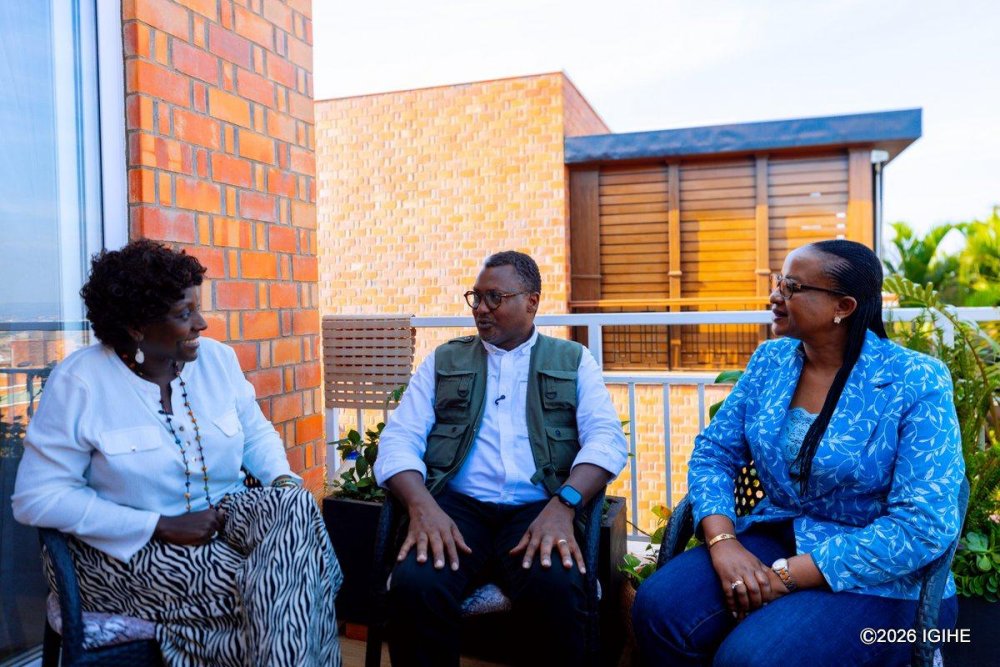
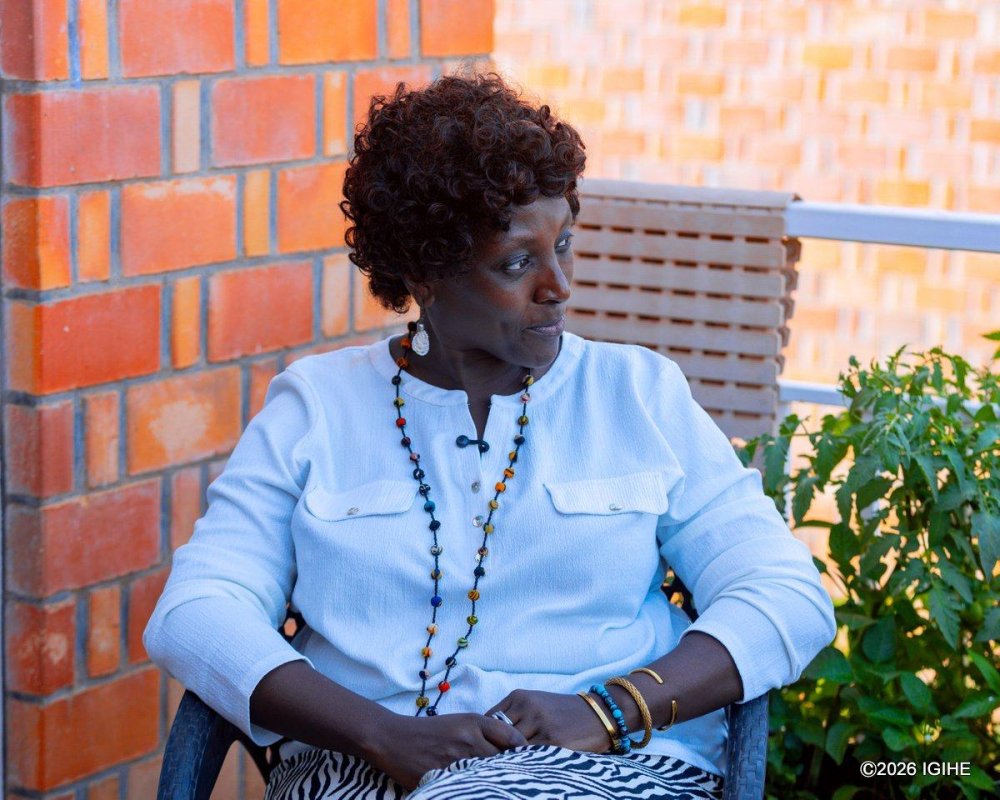
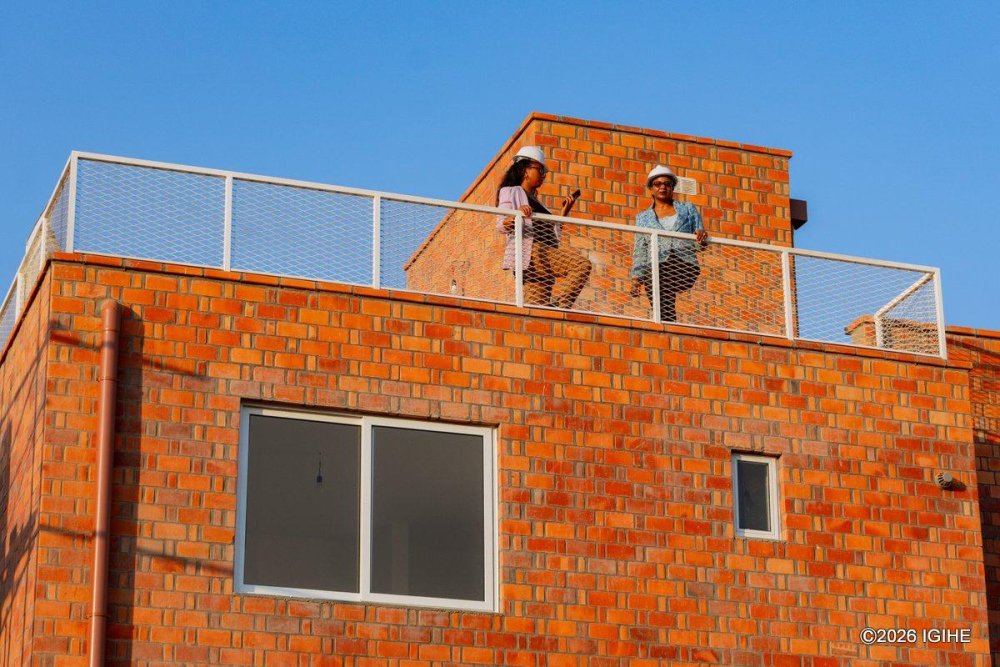
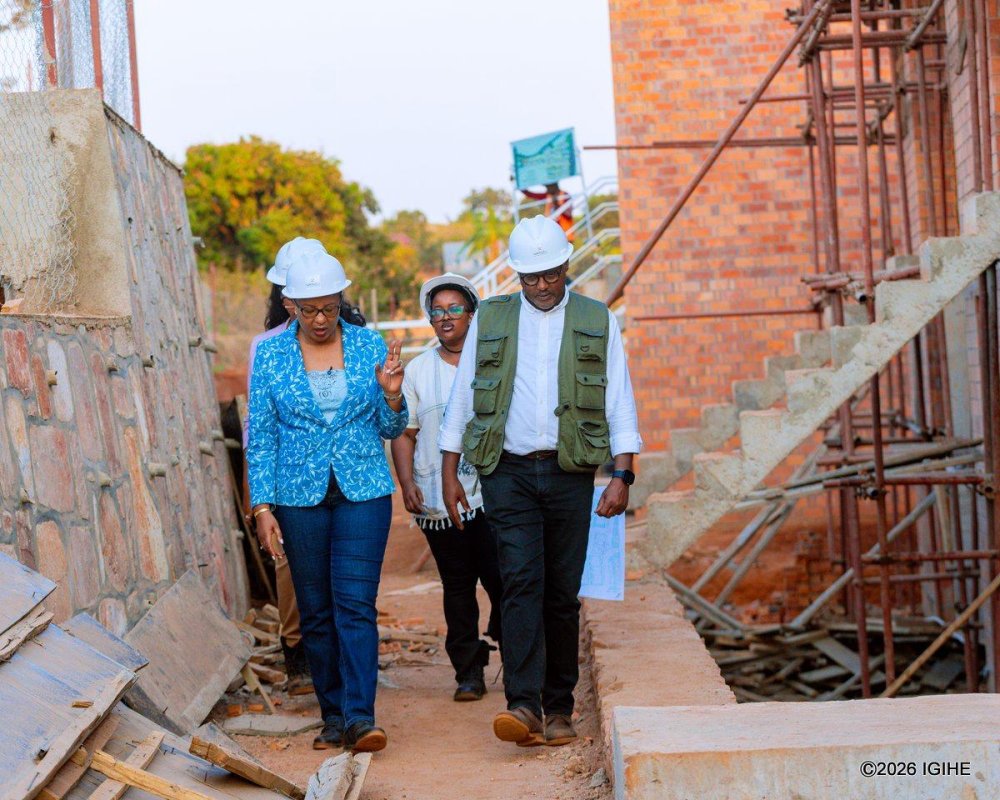
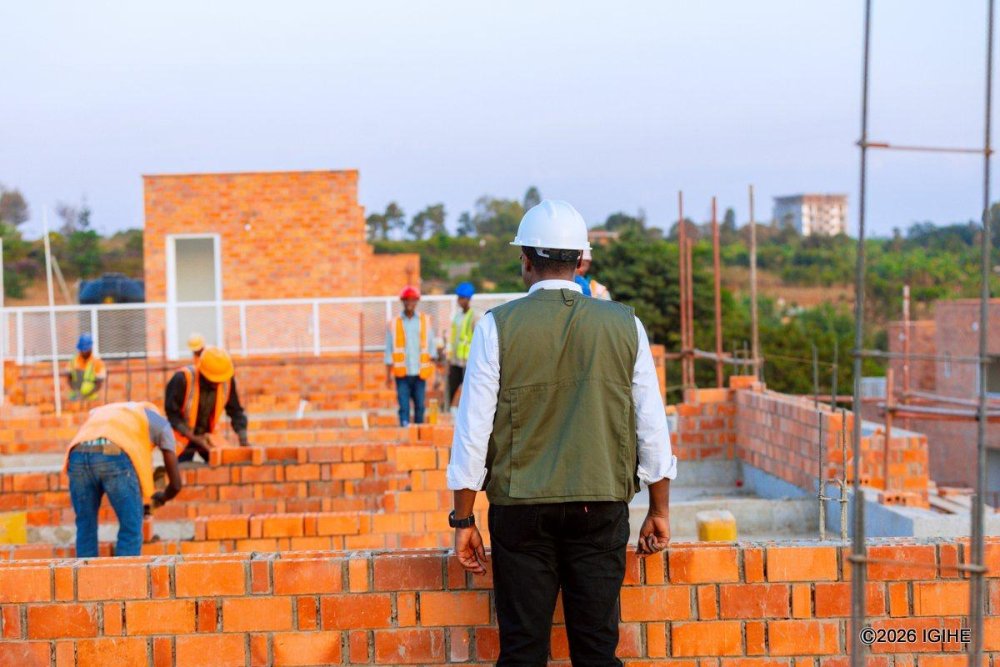
GIRINZU founder and CEO Me Jackeline Wibabara welcomes IGIHE journalist on siteChildren and adults can be seen enjoying the swimming pool and other shared facilities at the village.Residents of GIRINZU homes can enjoy views of different parts of Kicukiro District, Bugesera District and beyond.GIRINZU places the safety and security of residents and their property among its priorities.Mukunzi Rupia Jean, head of residents’ association at Umutuzo Village, speaks to IGIHE.The interior of one of the homes purchased at Umutuzo Village.Alice Durand Gahunga, a resident of Umutuzo Village, is pleased with her home in the GIRINZU community. She lives in France.Alice Durand Gahunga, who lives in France, was among the early buyers at Umutuzo Village. GIRINZU CEO Me Jackeline Wibabara explains the Gahanga 2 development to IGIHE journalist.
The vehicle was officially unveiled on September 3, 2026, at Zaria Court in Kigali.
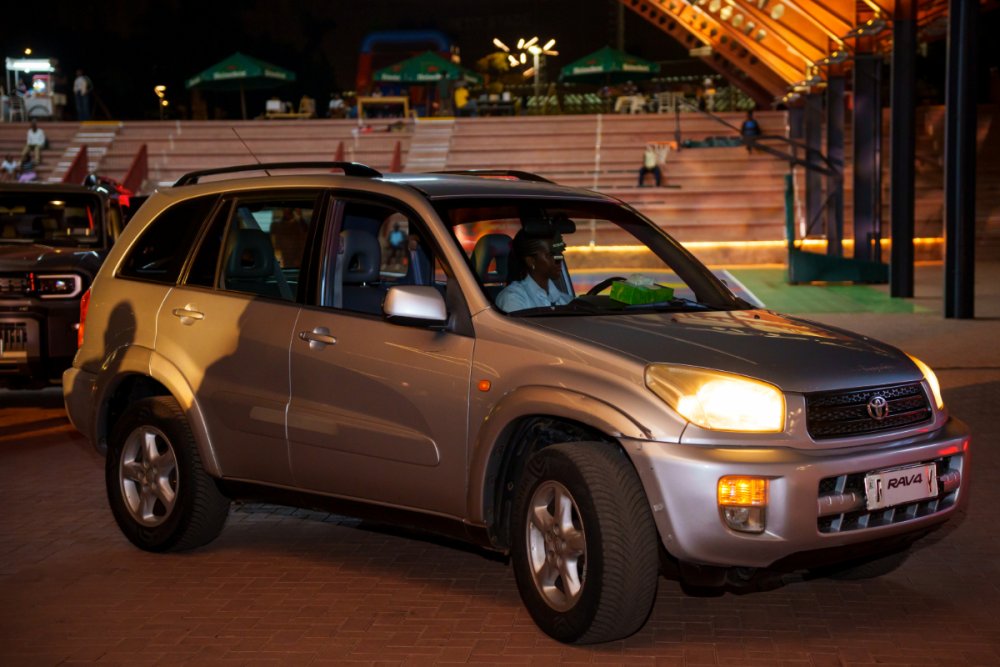
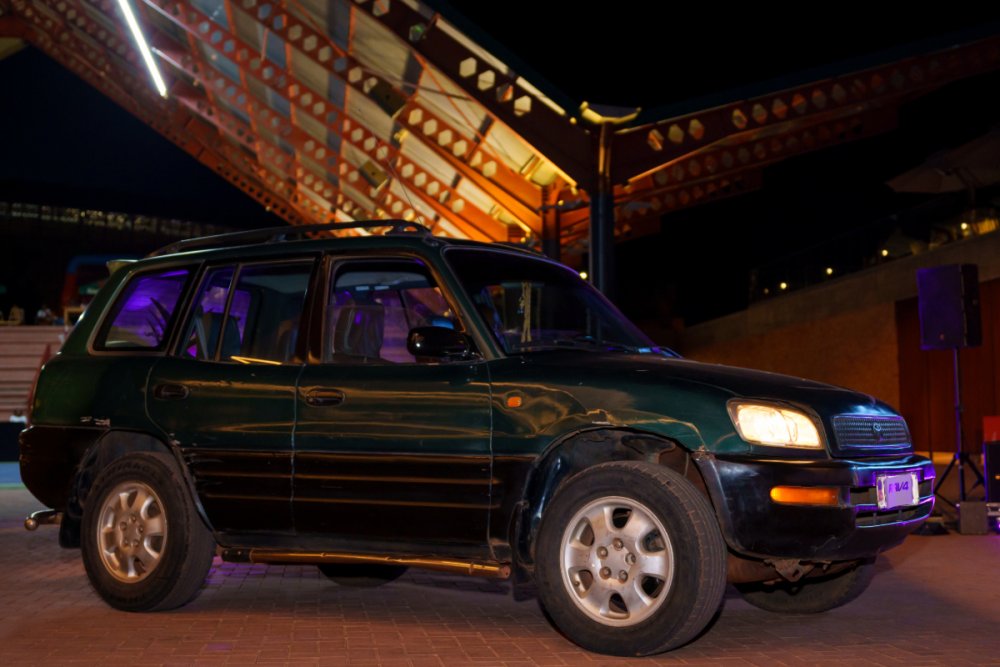
The 2026 model is the sixth generation of the RAV4, a vehicle that has been in production for more than 30 years. During the launch event, guests were also taken through the previous five generations, with an overview of when each was introduced and the features that distinguished them.
Toyota Rwanda Managing Director Nenad Predrevac said the company chose to showcase the sixth-generation RAV4 alongside earlier models to demonstrate how the vehicle has evolved and remained popular globally and in Rwanda over the years.
He noted that Toyota has sold more than 15 million RAV4 vehicles worldwide since 1994.
“Over the past five years, the RAV4 has been Toyota’s best-selling vehicle. Not only that, in 2024 and 2025, the Toyota RAV4 was recognised as the best-selling vehicle in the world,” Predrevac said.
What the Toyota RAV4 2026 offers
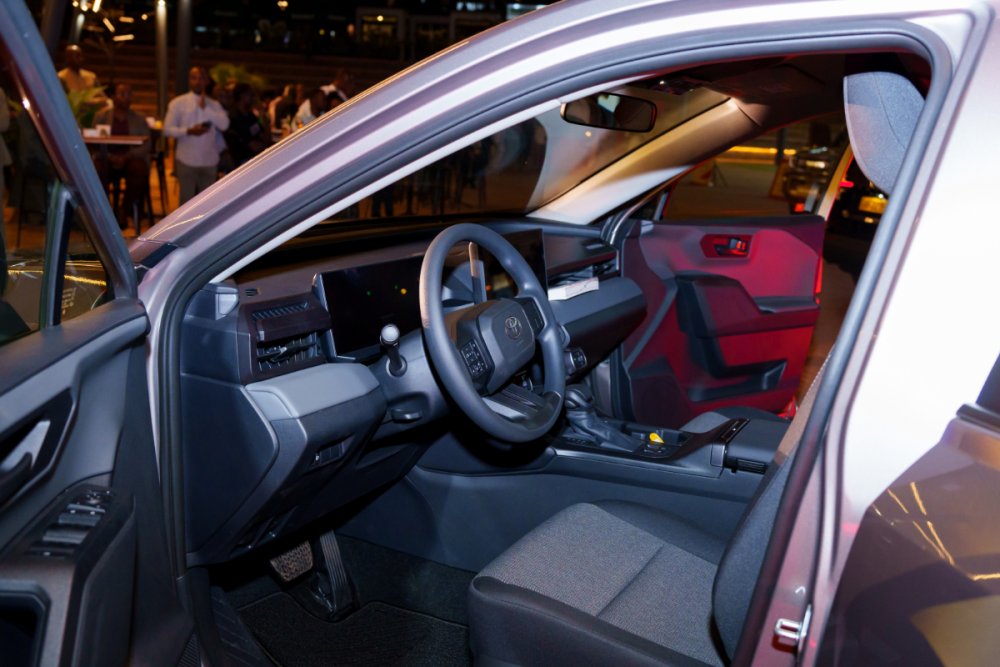
The 2026 Toyota RAV4 comes with a 2.0-litre petrol engine producing 172 horsepower and 203 lb-ft of torque.
The engine sends power to the front wheels, while the vehicle’s drivetrain is designed to provide smooth performance on paved roads while also handling rougher terrain.
The RAV4 measures 1.855 metres in width, 1.68 metres in height and 4.60 metres in length. It has a wheelbase of 2.52 metres, while its kerb weight ranges from 1,735 to 1,785 kilogrammes, depending on the configuration.
The new RAV4 comes with 235/60R18 tyres, commonly used on SUVs. The tyres are designed to provide stability and handling across different road conditions.
Due to fluctuations in the exchange rate of the US dollar, prices may change. At the time of the launch, the RAV4 was priced between Rwf 79.5 million and Rwf 108 million, depending on the model and specifications.
Customers who want to experience the vehicle before purchasing can request a test drive through Toyota Rwanda website or by calling 0788 188 500.
The 2026 Toyota RAV4 is 1.855 metres wide, 1.68 metres high and 4.60 metres long.The Toyota RAV4 is a sport utility vehicle (SUV) designed for both urban and off-road driving.The vehicle is powered by a 2.0-litre petrol engine.The vehicle features a stylish and spacious interior that is among the features attracting potential buyers.Participants at the event were given an opportunity to test-drive the vehicles on display.The second-generation RAV4, produced between 2000 and 2005, remains one of the models widely used by Rwandans.The first-generation Toyota RAV4, introduced in 1994, was also showcased during the event.
The latest Index of Industrial Production (IIP) report shows that industrial output also increased by 3.6 percent compared with June 2026, while the annual average growth rate stood at about 6.4 percent.
Manufacturing was the strongest contributor to the July performance, recording a reported 49.2 percent year-on-year increase. The sector accounts for 68.1 percent of the industrial production index, making it the largest component of Rwanda’s formal industrial activity.
NISR attributed developments within manufacturing to increases in several subsectors, including food processing, non-metallic mineral products, and metal products, machinery and equipment. Food processing increased by 6.1 percent, while non-metallic mineral products rose by 8.9 percent and metal products, machinery and equipment increased by 3.5 percent.
Other manufacturing activities also recorded mixed results. Furniture and other manufacturing increased by 8.2 percent, while wood, paper and printing grew by 1.5 percent and chemicals, rubber and plastic products rose by 1.2 percent.
However, some subsectors experienced declines. Manufacturing of beverages and tobacco decreased by 1.9 percent, while textiles, clothing and leather goods declined by 0.5 percent.
Electricity and utilities record strong growth
Electricity production was another major source of industrial growth, increasing by 18.5 percent year-on-year in July. The sector also grew by 6.4 percent compared with June, with an annual average growth rate of 13.9 percent.
Water and waste management recorded 12.6 percent year-on-year growth and increased by 5.2 percent compared with June 2026. Its annual average growth rate stood at 7.6 percent.
Mining and quarrying, which represents 15.8 percent of the industrial production index, recorded more moderate annual growth of 4.7 percent. However, mining output increased sharply by 22.8 percent compared with June 2026, indicating a strong monthly improvement.
Overall, the industrial production index reached 114.2 in July 2026, up from 107.0 in July 2025, based on the 2024=100 index series.
Industrial economy expands over the longer term
Beyond the July figures, the NISR report highlights the significant expansion of Rwanda’s industrial economy in recent years.
The report’s 2024 rebasing exercise shows that total industrial Gross Value Added (GVA) increased from Rwf 442.1 billion in 2017 to Rwf 1.14 trillion in 2024, representing a 158.4 percent increase.
Several sectors recorded particularly large increases over the period. Water and waste management grew by 508.1 percent, chemicals, rubber and plastic products by 359.2 percent, and wood, paper and printing by 328.7 percent.
Mining and quarrying increased by 213.9 percent, while manufacturing of non-metallic mineral products rose by 204 percent and beverages and tobacco by 203.5 percent.
The figures indicate a substantial expansion and changing composition of Rwanda’s industrial economy, with manufacturing remaining the dominant component of industrial activity.
Manufacturing was the strongest contributor to the July performance, recording a reported 49.2 percent year-on-year increase. The sector accounts for 68.1 percent of the industrial production index, making it the largest component of Rwanda’s formal industrial activity.
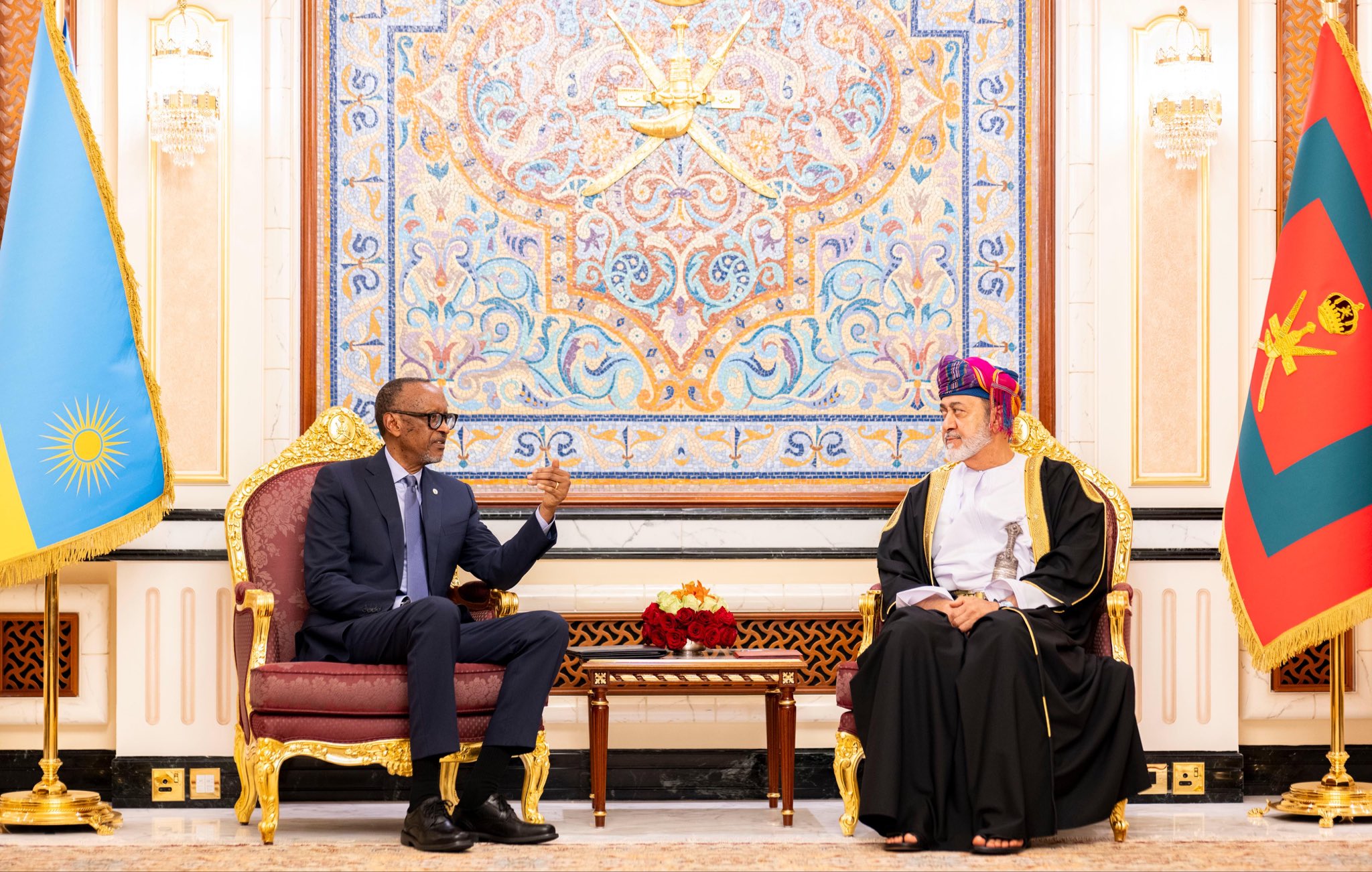
The discussions were held on Monday evening in Salalah as President Kagame began his two-day official visit to Oman, the first such visit by a Rwandan head of state.
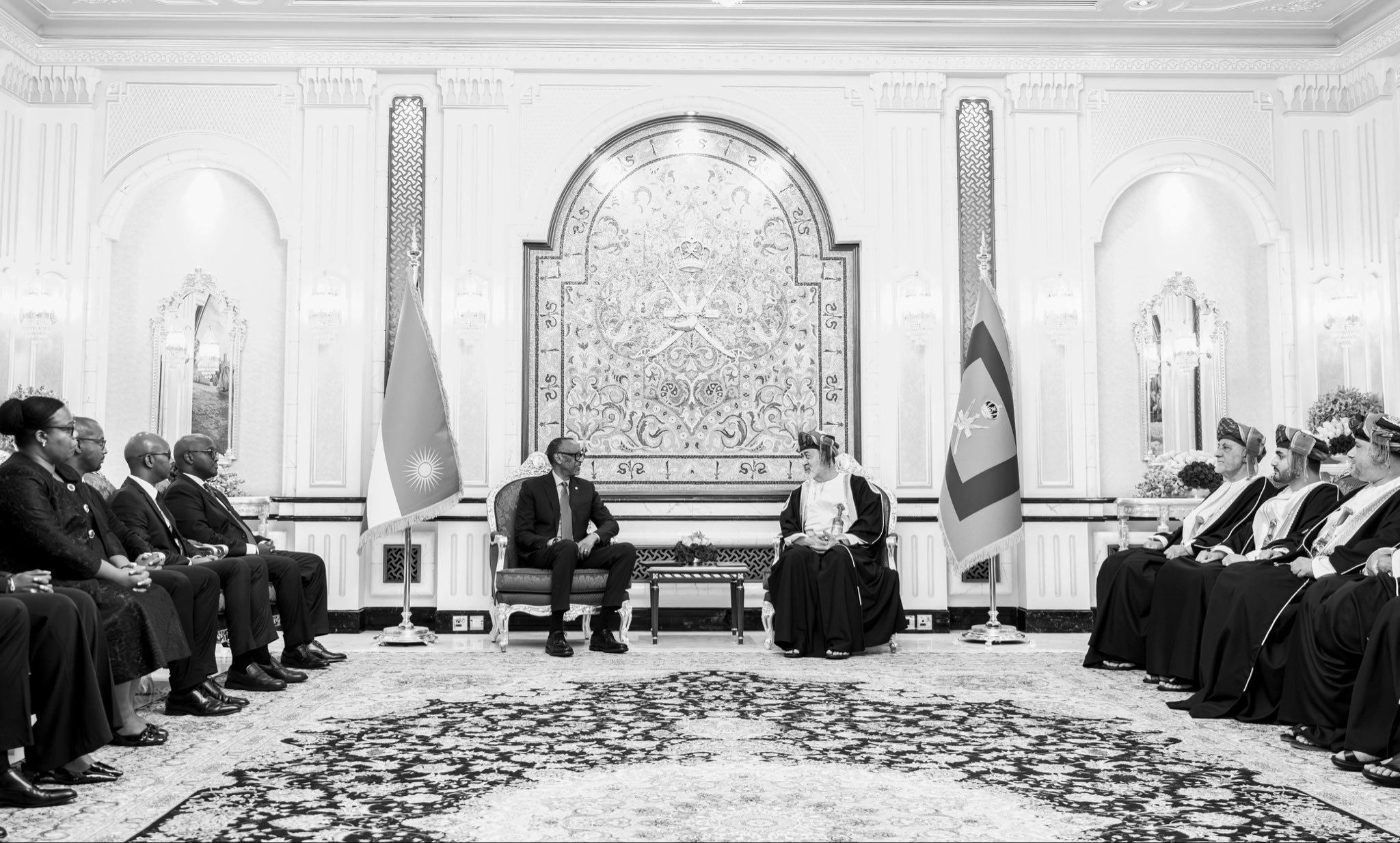
According to the Office of the President, Kagame and Sultan Haitham began the visit with talks involving delegations from both countries.
“Both leaders highlighted the historical ties between Rwanda and Oman, and the opportunity this visit offers to build on that strong foundation, including through closer collaboration in multiple sectors including energy, logistics, and food security,” the Office of the President said in a post on X.
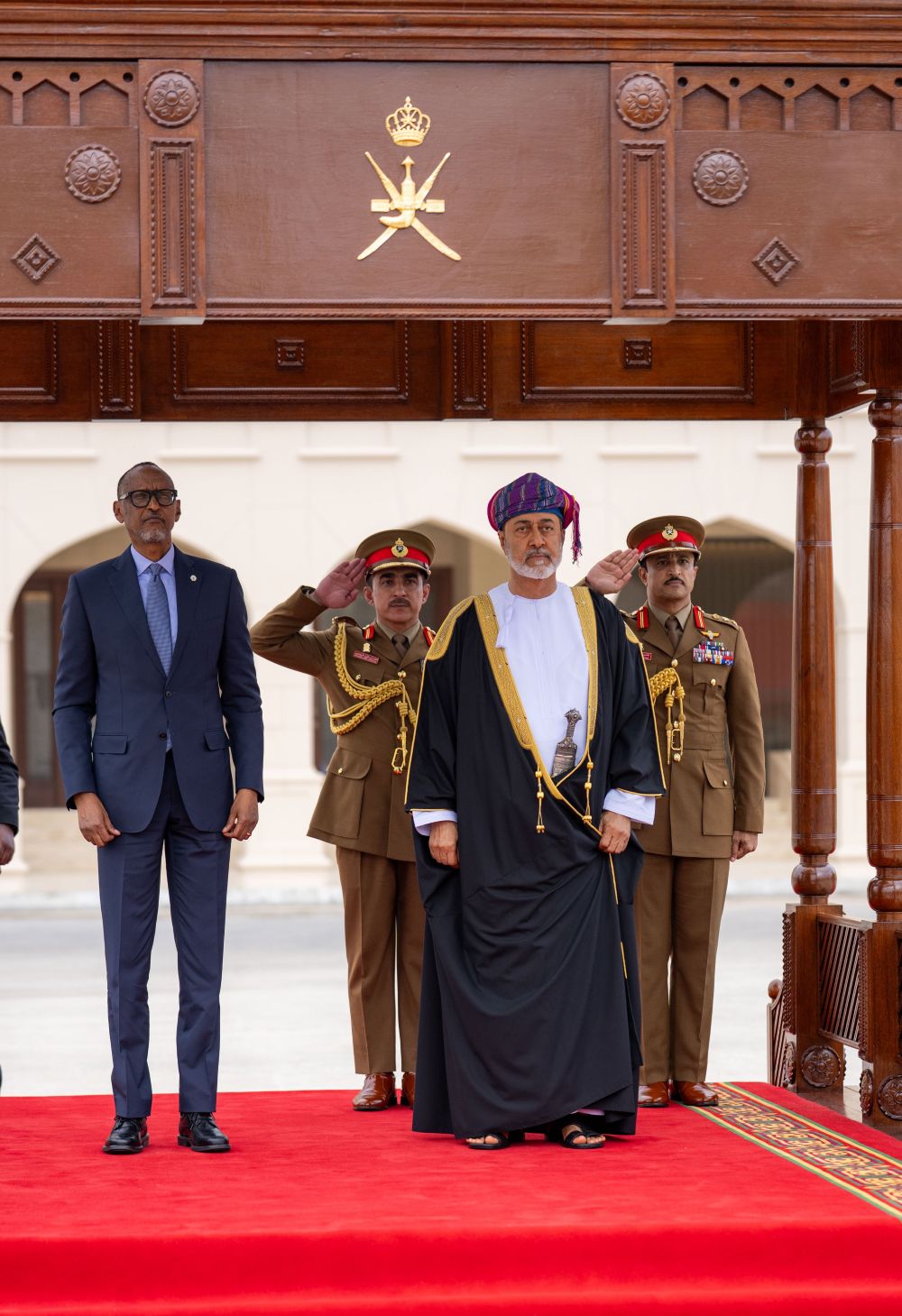
President Kagame arrived in Salalah on Monday, where he was received by Sultan Haitham at Al Husn Palace.
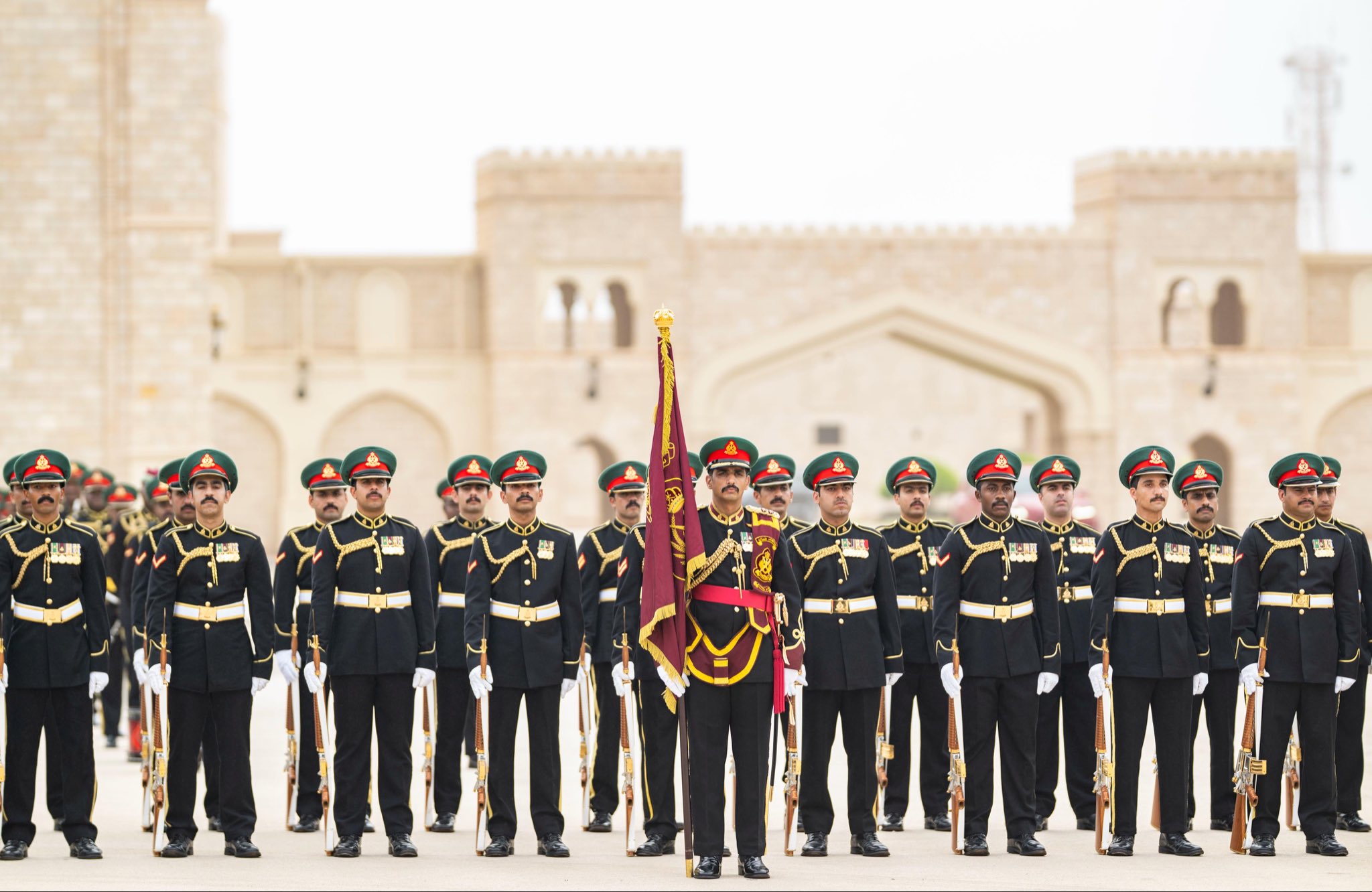
His visit began with an official welcoming ceremony before the two leaders held discussions, later joined by their respective delegations, on advancing cooperation in areas of mutual interest.
The visit comes as Rwanda and Oman look to broaden their bilateral relationship and explore new opportunities for economic and sectoral cooperation.
During the visit, the two countries are also expected to sign agreements and memoranda of understanding in various sectors as part of efforts to deepen ties.
On the second day of his visit, President Kagame is scheduled to tour the Museum of the Frankincense Land, located within the Al Baleed Archaeological Park, a UNESCO World Heritage Site.
The museum documents the history and heritage of the Dhofar region, including the role of the frankincense trade in shaping its social and economic development, as well as Oman’s long history of seafaring and maritime trade.
President Kagame will also visit Razat Royal Farm, one of the major agricultural establishments in Dhofar Governorate. The more than 404-hectare facility is also used for agri-tourism and educational activities.
The trip marks a new milestone in relations between Rwanda and Oman, with both countries seeking to build on their longstanding ties through closer cooperation in sectors considered important to their economic development and future growth.
The discussions were held on Monday evening in Salalah as President Kagame began his two-day official visit to Oman, the first such visit by a Rwandan head of state.According to the Office of the President, Kagame and Sultan Haitham began the visit with talks involving delegations from both countries.
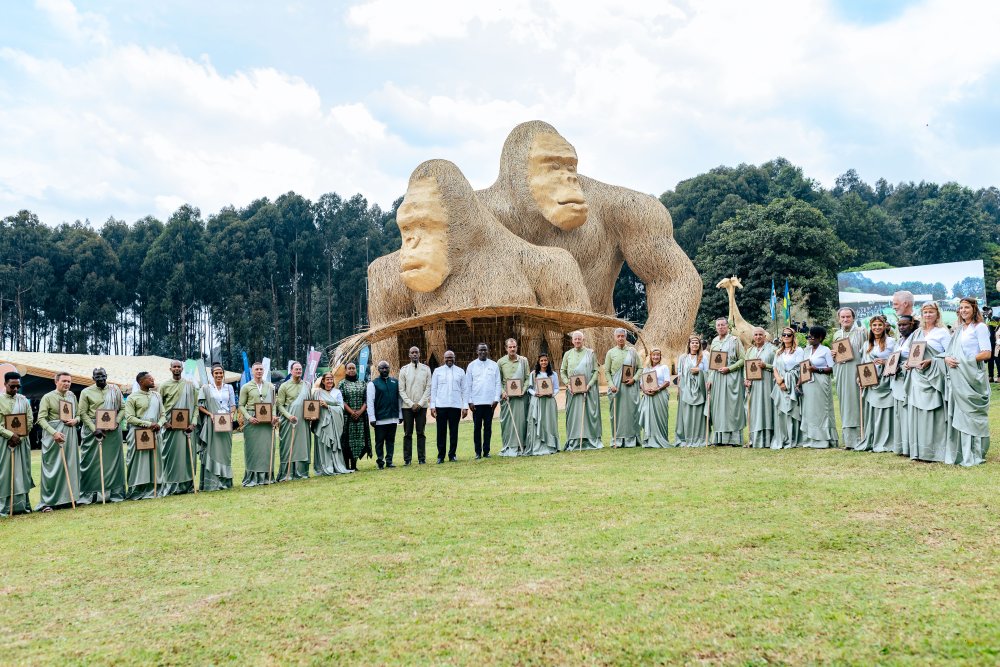
The company was among the sponsors of the 21st edition of Kwita Izina, the annual gorilla naming ceremony held on Friday, September 5, 2026, in Kinigi, Musanze District, where 22 baby mountain gorillas were given names.
Speaking to IGIHE, Spiro Rwanda’s Head of Commercial Department, Shanton Ngabire said the company participated in the event because environmental protection is central to its activities.
“The first thing we prioritise as Spiro is environmental conservation, so that we can have a better Rwanda. Every living thing deserves to be protected so that it can live in a clean environment,” she said.
“That is why we came to join everyone else in ensuring that gorillas have a good environment where they can also breathe clean air.”
Ngabire said Spiro is also expanding the availability of electric motorcycles in districts surrounding Volcanoes National Park as part of efforts to reduce pollution from conventional motorcycles.
“In addition to supporting conservation around the Volcanoes, we are working hard to help people switch from fuel powered motorcycles that pollute the environment to electric motorcycles, bringing cleaner transportation closer to them,” she said.
Spiro has expanded its operations in Musanze and other areas near the park. Ngabire said the company currently has 24 battery-swapping stations in Musanze and is continuing to expand towards Rubavu.
“All districts around Volcanoes National Park have branches where Spiro motorcycles are available,” she said.
The company currently has more than 25,000 electric motorcycles operating in Rwanda and more than 350 battery-swapping stations across the country. It plans to continue expanding both its motorcycle fleet and charging infrastructure.
Beyond environmental benefits, Spiro has also become a source of employment in Rwanda. The company currently has 1,650 employees working in various areas of its operations, in addition to the motorcycle riders who use its electric motorcycles.
Spiro was among the sponsors of the 21st Kwita Izina ceremony.Twenty-two prominent figures named baby gorillas born over the past year. Spiro showcased its activities in Musanze during Kwita Izina
The visit follows a series of high-level exchanges and agreements that have expanded cooperation beyond diplomacy into aviation, logistics, technology, infrastructure, trade and investment.
For Rwanda, the relationship offers an opportunity to deepen access to the Gulf and attract investment from Omani businesses. For Oman, Rwanda provides a foothold in a fast-growing East African market and a potential gateway into the wider region.
The two countries established diplomatic relations in 1982 and have maintained ties through non-resident diplomatic missions. Oman is currently represented in Rwanda through its embassy in Nairobi, while Rwanda handles its diplomatic representation to Oman through its embassy in Cairo.
But the relationship has gained fresh momentum in recent years.
From diplomacy to economic cooperation
A major step came in January 2026, when Rwanda’s Foreign Affairs Minister Olivier Nduhungirehe led a high-level delegation to Muscat.
The visit produced agreements covering aviation, logistics, dry ports, supply chains, digital infrastructure, data centres, cloud computing and artificial intelligence.
One of the agreements brought together the Rwanda Development Board and Oman Airports Management Company, with the two sides agreeing to cooperate on airport development and management, exchange expertise and explore investment opportunities in aviation infrastructure.
Another cooperation programme focuses on logistics services, including the development and operation of dry ports and supply-chain services.
For Rwanda, which is landlocked and relies heavily on regional transport corridors to move imports and exports, logistics is a particularly important area of cooperation.
The two countries had already signed a memorandum of understanding on telecommunications, information technology and digital-economy development in April 2025, during Oman’s participation in the Global Summit on Artificial Intelligence in Africa in Kigali.
A new air bridge
Perhaps the most visible sign of the growing relationship is now in the sky.
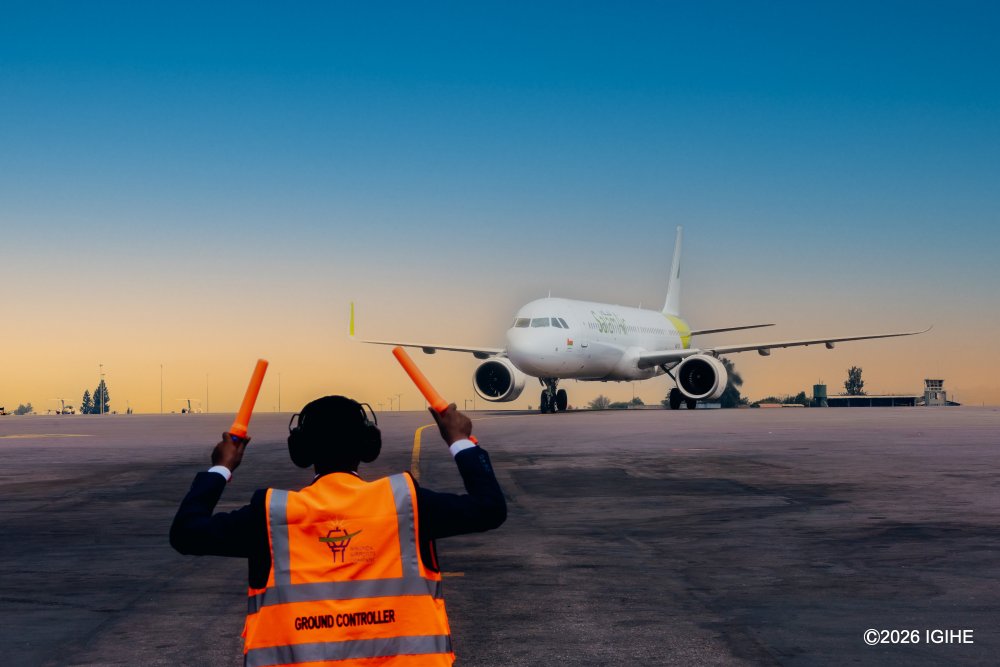
SalamAir launched direct flights between Muscat and Kigali on July 21, 2026, creating a direct connection between Rwanda and Oman.
SalamAir launched direct Muscat-Kigali flights on July 21, 2026.
The airline operates the route twice a week, with a flight time of about five hours. The connection is expected to facilitate tourism, trade, investment and business exchanges between Rwanda, Oman and the wider Gulf region.
The new route followed an Air Services Agreement signed by the two countries in 2023 that entered into force in January 2026. Oman Air had also announced plans earlier this year to introduce direct Muscat-Kigali flights.
Beyond making travel easier, the route could become an important piece of economic infrastructure.
Direct flights reduce the time and complexity involved in moving businesspeople, tourists and investors between the two markets. They can also make it easier for companies to explore opportunities before committing capital.
For Kigali, the connection strengthens its ambition to position itself as a regional aviation and business hub. For Muscat, it creates another link to East Africa and a market with growing tourism and investment activity.
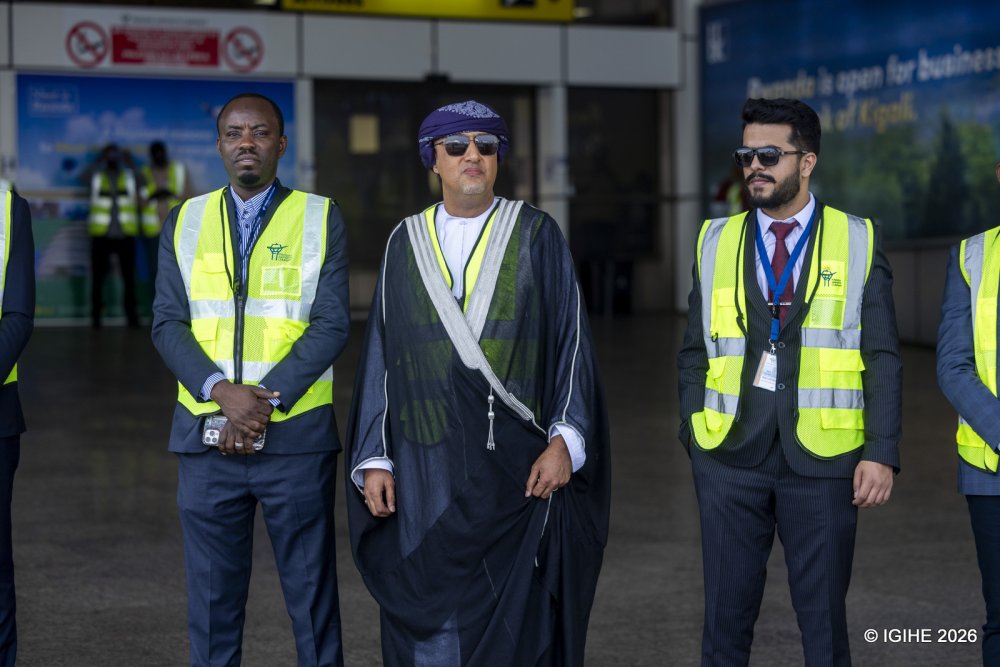
Oman and Rwanda officials during the launch of SalamAir’s direct Muscat-Kigali flights on July 21, 2026.
Where the investment opportunities lie
The two countries have identified a wide range of sectors in which they could deepen cooperation.
These include energy, renewable energy, mining, logistics, aviation, hospitality, healthcare, education and technology.
Rwanda is seeking investment that can support its transformation from an economy traditionally dependent on agriculture towards one increasingly driven by services, technology, tourism, finance and industry.
The country is also positioning itself as a regional centre for conferences, investment and business services.
Oman, meanwhile, is seeking to diversify its economy beyond oil and gas while expanding its international economic partnerships.
That creates potential areas of complementarity.
Omani companies have already shown interest in the Rwandan market.
In March 2020, more than 80 Omani companies participated in the Omani Products Exhibition, or OPEX, in Kigali. The companies showcased products including food, plastics and construction materials as they explored opportunities in the Rwandan market.
The exhibition also resulted in commercial agreements involving Omani industrial and pharmaceutical companies.
The latest push could take the relationship beyond individual commercial deals towards larger cooperation in infrastructure, logistics, technology and investment.
Why Oman matters to Rwanda
Oman occupies a strategically important position on the Arabian Peninsula, overlooking the Gulf of Oman and the Strait of Hormuz, through which around 20% of the world’s oil supplies pass.
Its location gives it connections to markets in the Gulf, Asia and beyond.
For Rwanda, the relationship offers additional access to Gulf markets and international destinations connected through Muscat. For Oman, Rwanda provides an entry point into an East African economy that is positioning itself as a regional business and investment hub.
The two countries therefore have potentially complementary economic interests.
From trade to logistics
The January agreements specifically included cooperation on dry ports and supply-chain services, with the two countries seeking to exchange expertise and improve logistical integration.
This is particularly relevant to Rwanda because of its position at the heart of the Great Lakes region.
As a landlocked country, Rwanda depends on transport corridors linking it to ports in neighbouring countries. Improving logistics can reduce the cost and time involved in moving goods, making the country more competitive as a regional distribution and investment hub.
Oman’s experience as a maritime and logistics centre could therefore provide opportunities for knowledge exchange and commercial partnerships.
The cooperation also comes as Rwanda continues to invest in infrastructure intended to strengthen its role in regional trade.
Technology adds another dimension
The relationship is also moving into areas that are less visible than trade but potentially more transformative.
Data centres, cloud computing and artificial intelligence are now part of the bilateral cooperation agenda.
The January agreement envisages collaboration in infrastructure, skills development, knowledge exchange and policy development in these fields.
This fits Rwanda’s broader ambition to build a knowledge-based and innovation-driven economy under Vision 2050.
For Oman, partnerships in Africa’s emerging digital markets can support its own economic diversification ambitions.
The result is a relationship that is no longer defined only by conventional trade in goods. It increasingly encompasses the digital infrastructure needed to support modern economies.
A relationship built over decades
Despite the recent acceleration, Rwanda-Oman relations are not new.
Diplomatic ties date back to 1982, while the two countries have historical links connected to Oman’s long-standing commercial and cultural presence in East Africa.
Political contacts have continued alongside the growing economic relationship.
Oman’s Foreign Minister, Sayyid Badr bin Hamad Al Busaidi, met Nduhungirehe in New York in September 2025 on the sidelines of the United Nations General Assembly to discuss bilateral relations and issues of mutual interest.
Kagame’s visit therefore comes at a moment when Rwanda and Oman are seeking to turn decades of diplomatic relations into a more practical and commercially focused partnership. It remains to be seen what new agreements will be signed during the visit and what new opportunities and results it will bring for the two countries.
The discussions were held on Thursday during a meeting between Chea Vuthy, Secretary-General of the Cambodian Investment Committee of the Council for the Development of Cambodia (CDC), and Rwanda’s Ambassador to Cambodia, Bakuramutsa Nkubito Manzi, and his delegation.
According to Cambodian media, the meeting focused on ways to deepen economic and investment relations between the two countries, with Vuthy highlighting the importance of stronger cooperation to support sustainable economic growth, enhance resilience, and attract quality investment.
Vuthy also commended Rwanda’s progress in economic diversification and transformation, investment promotion and private-sector development.
He said the two countries could benefit from sharing experiences and best practices in these areas as they seek to expand economic cooperation.
A key proposal discussed during the meeting was the signing of a Memorandum of Understanding (MoU) between the Cambodian Investment Committee of the CDC and the Rwanda Development Board (RDB).
The proposed agreement would provide a framework for cooperation in investment promotion and business facilitation while helping establish stronger links between the private sectors of Cambodia and Rwanda.
The two sides expressed their commitment to strengthening economic cooperation and turning the proposed initiatives into concrete actions that could generate mutual benefits.
The discussions come as Rwanda continues to seek greater foreign investment and expand economic partnerships with countries beyond its traditional markets.
For Cambodia, closer engagement with Rwanda could provide an opportunity to strengthen its economic presence in Africa while opening avenues for businesses from both countries to explore new markets and partnerships.
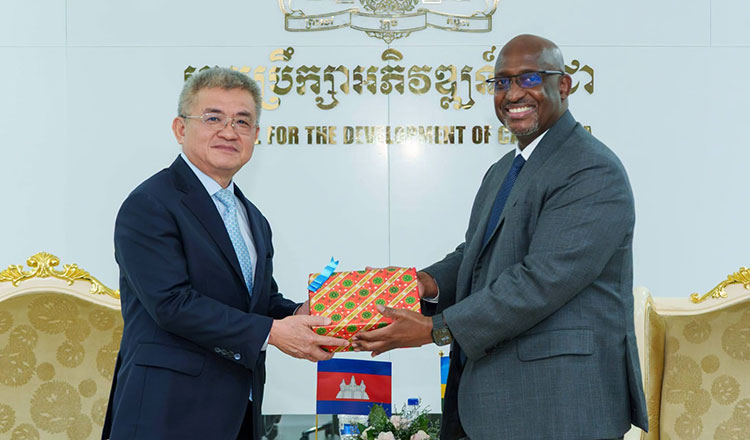
Secretary-General of the Cambodian Investment Committee of the Council for the Development of Cambodia Chea Vuthy (L) meets with Rwanda’s Ambassador to Cambodia, Bakuramutsa Nkubito Manzi at CDC on Thursday.
By the time the seller responds, the customer may already have moved on.
This is the fragmented reality of social commerce that Zimbabwean fintech ChatCash is trying to change by turning messaging conversations into complete digital storefronts.
The fintech allows small businesses to create online shops, showcase products, communicate with customers and receive payments without forcing buyers to leave the messaging platforms they already use.
Launched in 2023, ChatCash has developed APOMA, an artificial intelligence-powered conversational operating system that enables businesses to create fully automated digital storefronts within messaging applications such as WhatsApp.
Months after expanding into Rwanda and securing a fintech pilot licence, ChatCash is positioning Kigali as a base for its planned expansion into other African markets.
John Sakala, the company’s CEO, says the idea is built around a simple observation: much of Africa’s commerce is already happening through conversations.
“The future of commerce is conversational, and Africa is where it’s beginning,” Sakala told IGIHE in an exclusive interview.
He said businesses and customers increasingly begin transactions through platforms such as WhatsApp, Facebook and other messaging services, but the tools supporting those transactions remain fragmented.
A customer may ask about a product on WhatsApp, make a payment through mobile money or a bank account, and then send a screenshot to prove that the money has been transferred.
ChatCash wants to put those steps in one place.
Turning a chat into a shop
According to Sakala, a merchant can use ChatCash to build an online storefront in about six minutes.
The business owner creates a profile, uploads products and connects an AI-powered assistant to the store.
That assistant acts as a digital salesperson, responding to customers around the clock through messaging platforms.
The system can communicate in local languages, including Kinyarwanda, as well as French and English, according to Sakala.
Instead of directing customers to a separate website, the business can meet them where the conversation has already started.
“When a customer comes to the WhatsApp number linked to your storefront, they are responded to conversationally,” Sakala explained.
Once the customer decides to buy, the payment can also be completed within the conversation.
ChatCash connects different payment options, including mobile money and bank accounts, allowing the customer to complete the transaction without moving to another platform.
For Sakala, that is the difference between traditional e-commerce and what he calls conversational commerce.
An e-commerce platform such as Shopify gives a business a dedicated online store and expects customers to visit that platform.
ChatCash, on the other hand, brings the store to the customer.
“The dynamic in Africa is that your customers are already talking to you on WhatsApp,” he said.
“We’re not giving you a platform to trade on or dictating where you should trade. We’re helping you communicate in a more organized way, right where your customers already are.”
Sakala says the system can communicate in local languages, including Kinyarwanda, as well as French and English, according to Sakala.
Beyond chatbots
ChatCash’s technology goes beyond automated responses to frequently asked questions.
Sakala describes its AI-powered systems as autonomous agents that can make decisions within parameters defined by a business.
For example, an agent can respond to questions about products, manage a shopping cart, verify information, collect a delivery location and operate within price ranges set by the merchant.
That allows the AI assistant to function more like a salesperson than a conventional chatbot.
“The agent represents you when you’re not there,” Sakala said.
The company believes such technology could be particularly useful for micro and small businesses that cannot afford dedicated staff to manage online sales throughout the day.
From Zimbabwe to Rwanda
ChatCash began its journey in Zimbabwe, where Sakala says the company built its initial customer base.
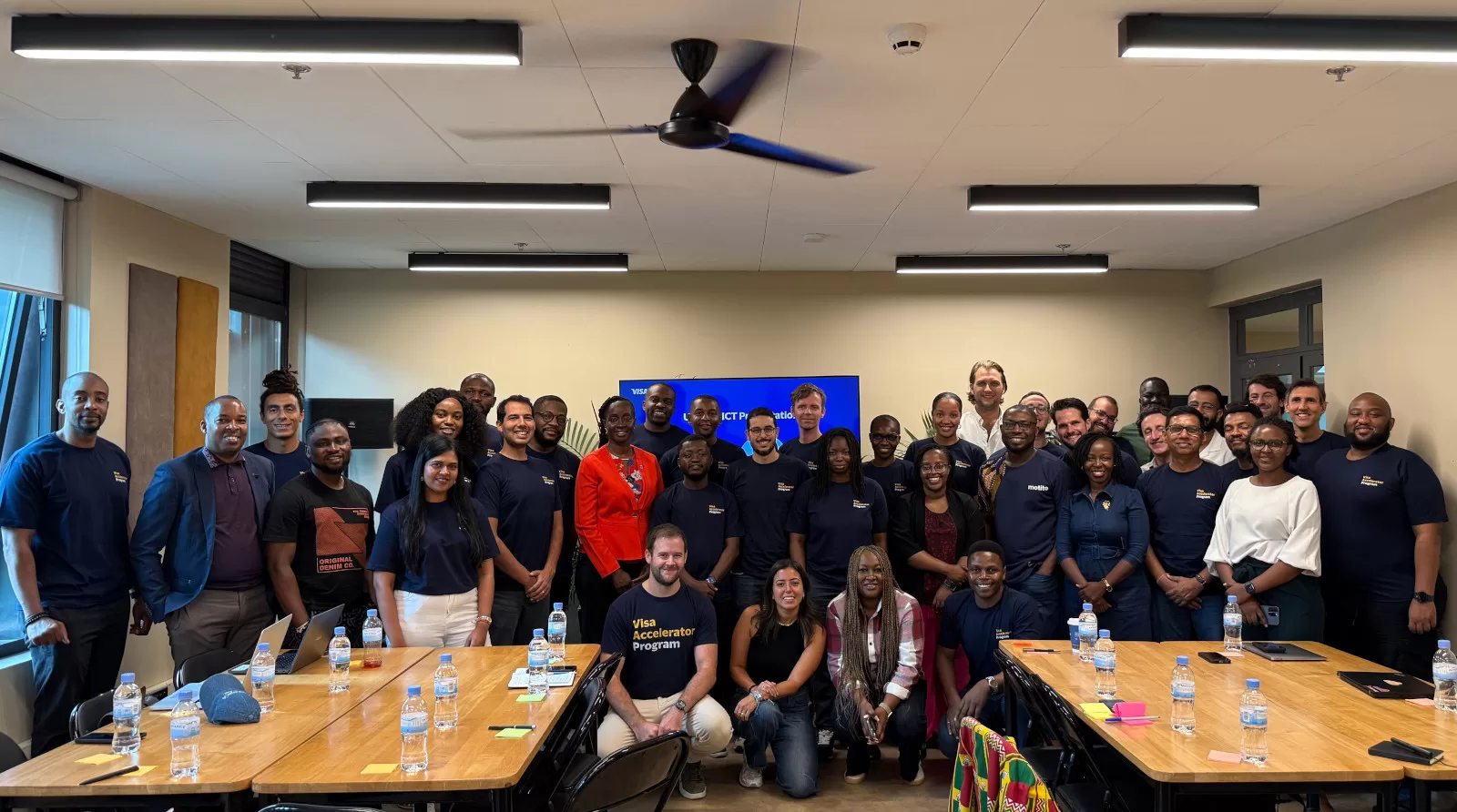
Its move into Rwanda followed Sakala’s participation in the Visa Accelerator Programme in September 2025.
The startup was previously selected for the Visa Africa Fintech Accelerator, gaining access to mentorship, product development support and Visa’s global investor network.
The programme brought him to Kigali and introduced him to Norrsken House Kigali, where he learned more about Rwanda’s business environment.
He returned to Rwanda in December and has since established ChatCash Rwanda as the company’s regional headquarters for East Africa.
Sakala says the country’s regulatory environment and multilingual market were among the factors that made Rwanda attractive.
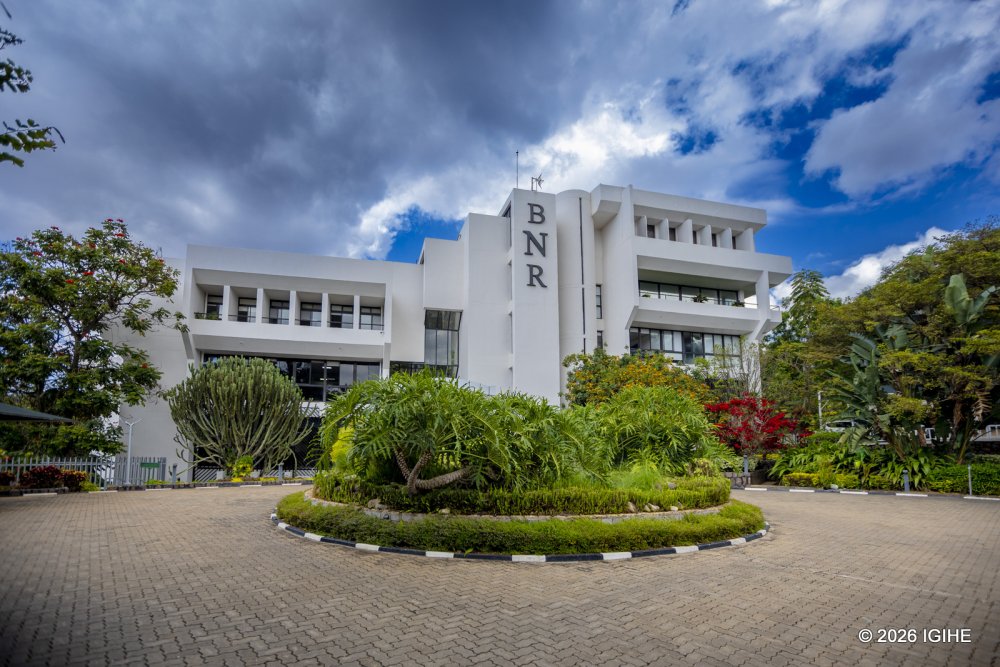
He also points to the ease of registering a business and the support provided by institutions including the Kigali International Financial Centre and the National Bank of Rwanda.
The fintech recently secured a pilot licence from the National Bank of Rwanda, the regulator.
For ChatCash, Rwanda is not simply another market. It is intended to serve as a launch pad for the company’s broader African expansion.
Sakala said the company is looking at Ghana and Nigeria as its next markets, while also targeting countries including Kenya and South Africa as part of its longer-term pan-African strategy.
“We believe this is a very good foundation for getting into other markets as well,” Sakala said.
He highlighted the possibility of licence passporting as another advantage of building the business in Rwanda, saying the framework can facilitate expansion into markets such as Ghana and Kenya with reduced onboarding requirements.
ChatCash enters Rwanda’s fintech sandbox
ChatCash recently secured a pilot licence to operate as a fintech in Rwanda.
The pilot will initially involve a limited number of businesses and will operate within parameters set by the regulator, including limits on the amount of money that can be held in wallets.
Sakala said the company expects to start with about 100 businesses, despite having a waiting list of nearly 4,000 merchants.
He described the pilot as a controlled environment where the company can test its technology and operations before moving toward a full licence.
Once the process is completed and the limits are lifted, ChatCash plans to serve more merchants, including businesses on its waiting list.
The company has already spoken to more than 3,900 businesses in Rwanda, according to Sakala, while another 1,215 businesses have shown interest in Zimbabwe.
He said merchants have particularly appreciated the ability to bring their existing WhatsApp conversations, products and payments into a single system.
Moving beyond screenshots
One of ChatCash’s key propositions is eliminating the reliance on screenshots as proof of payment.
Sakala said the platform creates a verifiable record for every transaction, allowing businesses to see the status of payments rather than relying on customers to send screenshots.
ChatCash has integrated with eKash, Rwanda’s interoperable payment system, as well as MTN MoMo and other payment infrastructure.
The company also works with regional players such as Onafriq and Modu Pay.
Sakala said eKash is particularly important because it connects bank accounts and mobile money wallets while reducing the cost of transactions.
He argues that such interoperability could make it easier for fintech companies to build services around Rwanda’s financial infrastructure.
From transactions to creditworthiness
ChatCash also sees another opportunity in the transaction records generated by small businesses.
Many micro-merchants operate across cash, mobile money and bank transfers, leaving them with limited formal records of their business activity.
Sakala believes that putting those transactions into a traceable digital system could eventually help merchants demonstrate their business performance to financial institutions.
“Every transaction counts,” he explained. “The cash is in the chat.”
The platform, he argues, can create a record showing that a merchant has been trading consistently, potentially strengthening their ability to seek financing.
For businesses that have traditionally struggled to demonstrate their income and transaction history, ChatCash hopes its platform can become more than a sales tool.
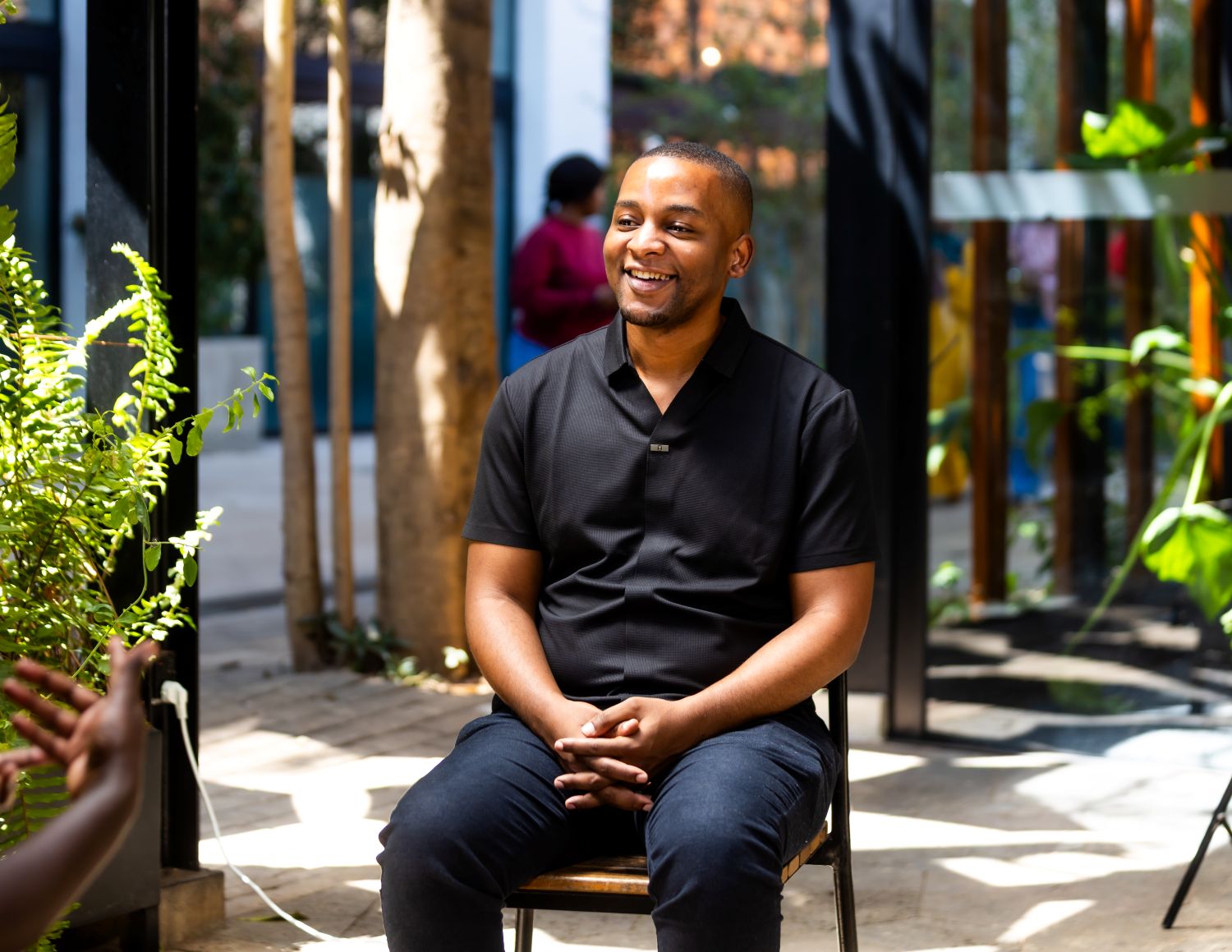
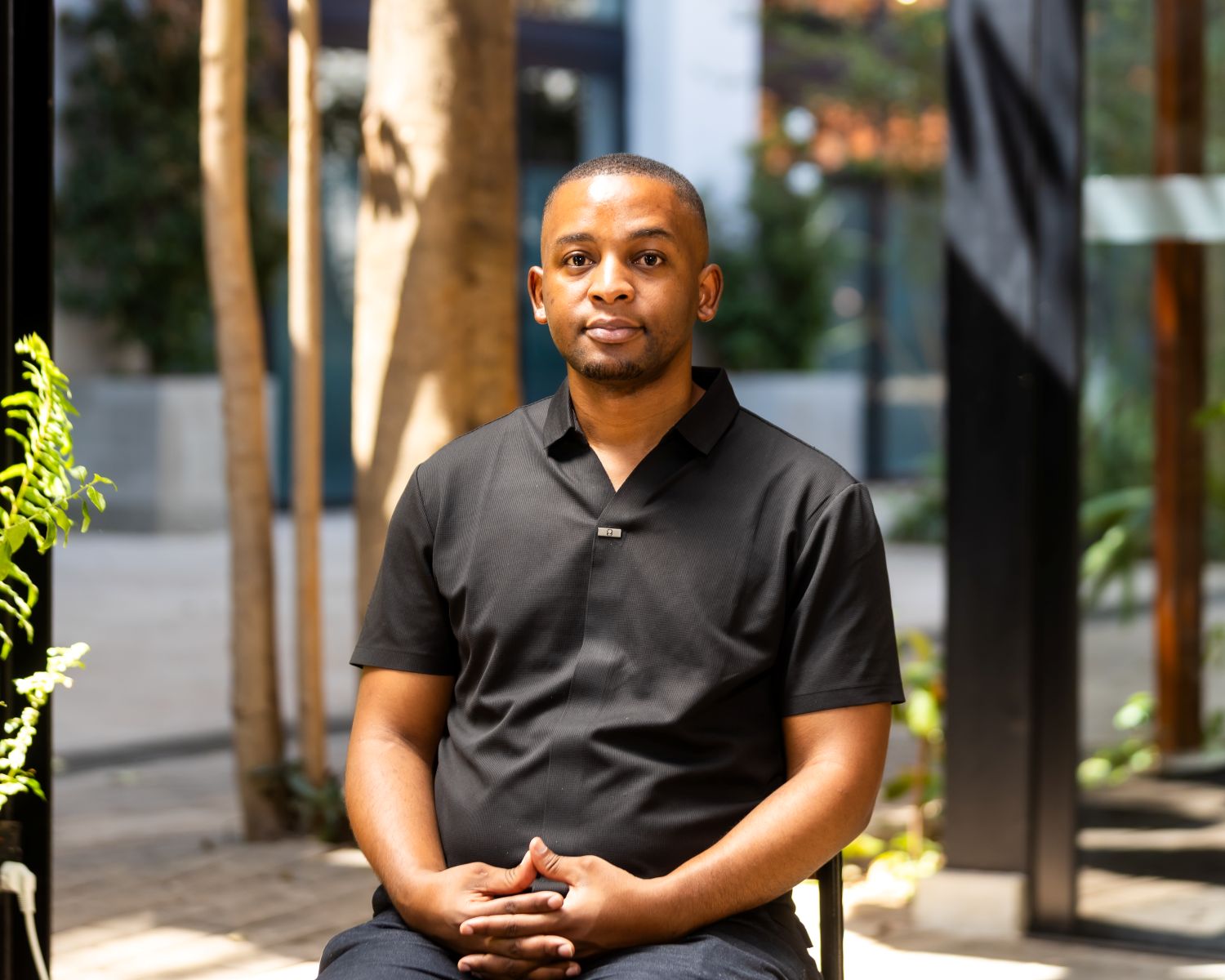
ChatCash CEO John Sakala says the platform can help merchants build transaction records that could strengthen their ability to access financing.
Expansion plans
The company is preparing to raise more capital to support its expansion.
Sakala said ChatCash plans to seek about $5 million in its upcoming fundraising efforts and has been selected as a finalist in a financial inclusion competition organised by FINCA Ventures.
The startup founder will travel to San Francisco and London in October to participate in the FINCA Ventures Final Celebrations and Pitch Event, where the company will compete alongside other leading African startups developing solutions to expand financial inclusion and pitch to investors.
Financing the merchants’ marketing
ChatCash’s ambitions extend beyond payments and online storefronts.
Sakala said the company is working with local banks on a product that would help merchants finance their digital advertising.
Instead of paying upfront to advertise on platforms such as Facebook or LinkedIn, eligible businesses could receive marketing financing and repay after generating sales.
He expects the product to launch within two months, although the exact timing will depend on the company’s rollout.