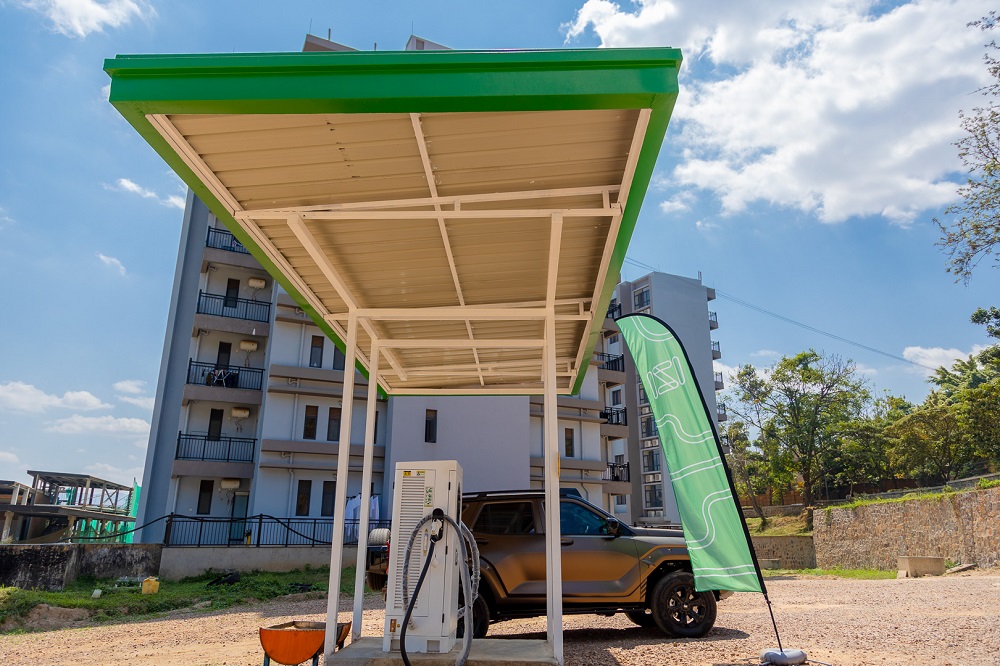
The move is intended to expand the charging network across the country and make it easier for electric vehicle owners to travel without worrying about where to recharge.
Rwanda is expected to have 218 electric vehicle charging stations by 2027.
Byiringiro Alfred, Chief Technical Advisor for Transport at MININFRA, said the government has already identified priority locations for charging infrastructure and will work with private investors to develop the sites.
He made the remarks at the Renewable Energy for Sustainable Growth (RE4SG) 2026 in Kigali.
“Some areas may not offer enough commercial returns to attract private investment in electric vehicle charging infrastructure. In such cases, the government needs to support private investors and may also invest directly to ensure the necessary facilities are built,” Byiringiro said.
He said a reliable charging network was essential to the wider adoption of electric vehicles.
“You cannot promote electric mobility without adequate charging infrastructure. It is essential to have that infrastructure in place,” he said.
The government has already supported the sector by helping investors access land for charging stations and providing tax incentives.
Since 2021, Rwanda has introduced a range of measures to encourage the adoption of electric vehicles, including reducing or removing some taxes on electric vehicles and related equipment.
MININFRA is also working on standards for electric vehicles and charging equipment to ensure that products entering the Rwandan market meet required quality and durability standards.
“We need appropriate standards for both vehicles and charging infrastructure to ensure that people who buy electric vehicles can use them for many years rather than having them last only one or two years,” Byiringiro said.
More than 7,000 electric vehicles had been registered in Rwanda by the end of 2024, following their introduction to the country in 2020.
Rwanda plans to fund EV charging stations in areas with limited private investment.
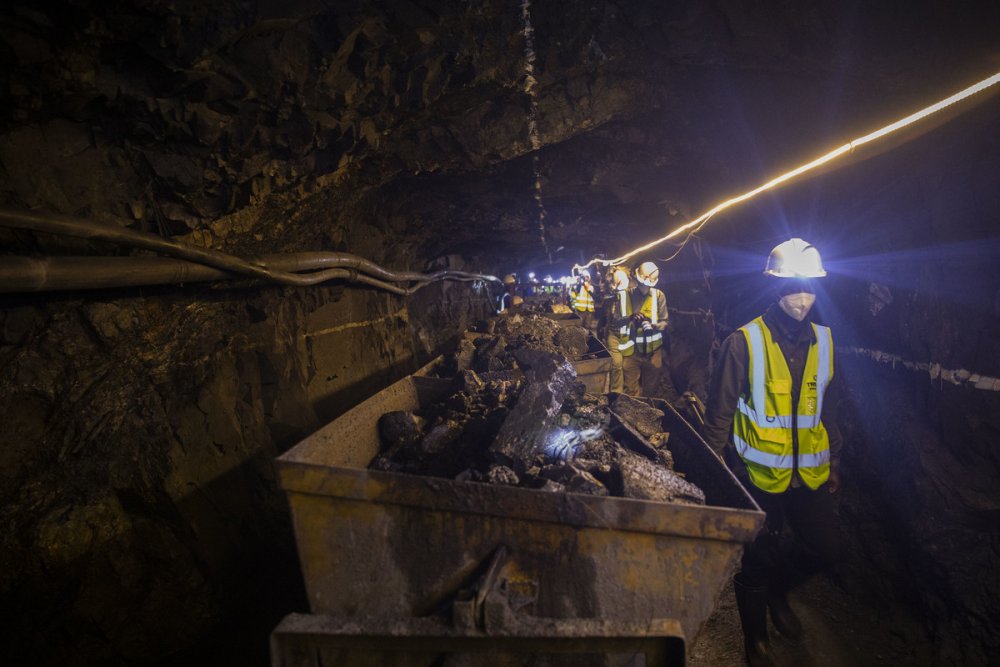
Under the agreement, the government will receive a 25% stake in Almonty Rwanda Pty Ltd in exchange for contributing the Shyorongi tungsten exploration concession and a mineral processing licence, while Almonty will hold the remaining 75%.
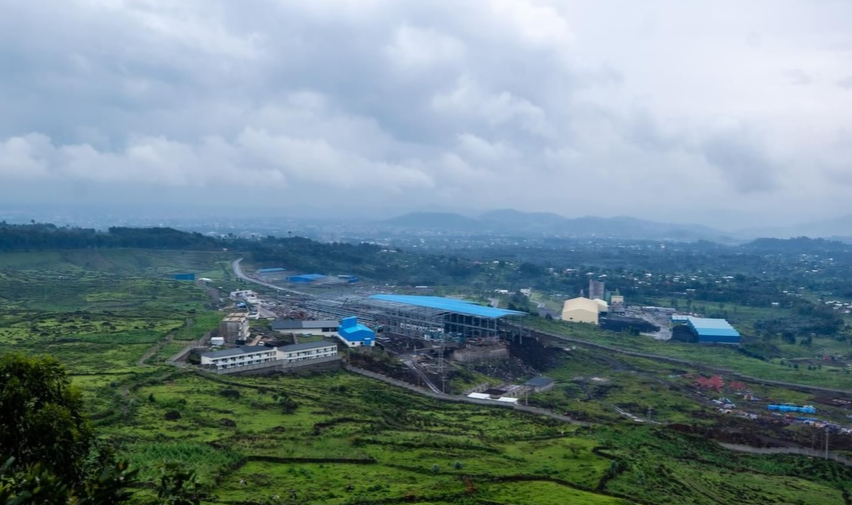
The Shyorongi exploration block covers approximately 32 square kilometres in Rulindo District, Northern Province.
The partnership will initially allow Almonty Rwanda to acquire ore, pre-concentrate and panning tailings from Rwandan mining licence holders, including small-scale operators, for upgrading and sale. The company also plans to use a mobile processing unit near existing tailings dams before establishing a collection and processing plant in Rwanda.
Almonty Chairman, President and CEO Lewis Black said the arrangement would allow the company to work with material already being produced in Rwanda.
“The most immediate opportunity here is the material that is already being produced. Rwanda’s small-scale license holders are producing ore, pre-concentrate and panning tailings today, and this agreement allows us to collect, upgrade and export that material while we build out the collection and processing plant,” he said.
Black said the company would combine Rwanda’s existing production with modern processing, traceability and exploration.
Rwanda Mining Board CEO Alice Uwase said the partnership would contribute to the transformation of the country’s tungsten industry.
“Rwanda is pleased to welcome Almonty as a strategic partner in the development of our tungsten industry. This investment will help to transform our mining sector by introducing world-class processing infrastructure, international standards for environmental and social governance, and a comprehensive training program to develop Rwandan talent,” she said.
Almonty Industries is an international company focused on the mining, processing and trading of tungsten. It is particularly known for taking over underperforming mines or mining projects and upgrading them to improve their operations. The company has projects in South Korea, Portugal and Spain.
Almonty was previously headquartered in Toronto, Canada, but relocated its headquarters to Dillon, United States, in April 2026.
The company is also listed on the Nasdaq stock exchange, one of the world’s major financial markets.
Tungsten is a mineral used to produce hard metals for applications in construction, aircraft, tanks, spacecraft, firearms and ammunition.
The Rwanda Mines, Petroleum and Gas Board (RMB) indicates that Rwanda exports at least 24 tonnes of tungsten every week.
Tungsten is one of the minerals found in significant quantities in Rwanda. The country has a geological zone known as the Tungsten Belt, which stretches from Mageragere in Kigali City through Rulindo and continues to Gifurwe and Bugarama in Burera District.
Rwanda has joined Almonty in new tungsten exploration venture.
In a tender notice seen by IGIHE, the Ministry of Trade and Industry (MINICOM) said the planned facility will exclusively serve industries operating within Musanze Industrial Park, providing storage, customs clearance and warehousing services.
The government is offering a lease over 12,635.96 square metres of land within the industrial park to a qualified private investor who will be responsible for financing, developing, constructing, operating and maintaining the facility.
The investor will also be expected to provide plans for expanding and further developing the facility as demand grows.
According to MINICOM, industries operating in Musanze Industrial Park imported approximately 6,680 tonnes of raw materials between January and June 2026.
“The volume of imported raw materials demonstrates the need for a Customs Bonded Warehouse to facilitate efficient storage, customs clearance, and warehousing within the Industrial Park supply chain management system,” the ministry said.
A customs bonded warehouse allows imported goods to be stored under customs control before duties and taxes are paid, subject to applicable regulations. The facility is expected to support industries by improving access to raw materials and streamlining their logistics operations.
MINICOM said the selection of the private investor will be conducted through a competitive bidding process in line with Rwandan law and international best practices.
Interested investors are required to demonstrate the technical and financial capacity to develop and operate the facility.
The ministry is also seeking investors capable of supporting the future expansion of the facility, with bidders required to provide details of their proposed development plans.
A mandatory field visit has been scheduled for September 25, 2026, at 11am. Interested investors will depart from the Musanze District One Stop Centre.
The deadline for submitting bids is October 28, 2026, at 5pm local time.
MINICOM said bidding documents and Terms of Reference will be made available through its website, while inquiries can be directed to the ministry.
The Ministry of Trade and Industry (MINICOM) said the planned facility will exclusively serve industries operating within Musanze Industrial Park, providing storage, customs clearance and warehousing services.
The assessment, released on September 11, highlights continued confidence in the country’s economic fundamentals and policy framework despite a challenging global and regional environment.
Fitch expects Rwanda’s economy to grow by 7.8% in 2026, down from 9.4% in 2025 but still well above the 4.5% median for countries rated ‘B’. Growth is expected to be supported by continued expansion in agriculture, services and construction, including infrastructure projects such as the Bugesera airport.
The agency expects inflation to average 11.7% in 2026, above the National Bank of Rwanda’s 2%-8% target. It noted that the central bank has raised its policy rate by a cumulative 150 basis points to 8.75% since February 2026.
Fitch forecasts Rwanda’s current account deficit to widen to nearly 15% of GDP in 2026, driven by resilient domestic growth, higher imports linked to the Bugesera airport project, and increased fuel and fertilizer costs. The deficit is largely financed through foreign direct investment and official borrowing.
The agency estimates Rwanda’s net external debt will reach 63% of GDP in 2026, compared with a 48% median for ‘B’-rated countries. However, it noted that 87% of Rwanda’s external debt is highly concessional, helping to mitigate the risks associated with the country’s external financing position.
On public finances, Fitch expects the fiscal deficit to remain broadly stable at 4.5% of GDP in the fiscal year ending June 2027, compared with 4.4% in FY2026.
The agency said tax reforms implemented since FY2025 helped tax receipts exceed the government’s target by 0.6 percentage points of GDP in FY2026. Further gains are expected, although revenue growth could moderate in FY2027 due to the impact of the Iran war, lower grants and weaker non-tax revenues.
Fitch projects general government debt to decline in FY2027-FY2028, averaging about 65% of GDP, after peaking at around 74% in FY2025. The decline is expected to be driven mainly by strong nominal GDP growth and, to a lesser extent, spending consolidation.
The agency also expects Rwanda to rely more heavily on external borrowing to finance its fiscal deficit, with external financing remaining largely concessional. Multilateral and bilateral partners are projected to account for about 82% of total external financing in FY2027-FY2028.
Fitch expects regional security risks to remain elevated, with the conflict in eastern DRC continuing to pose risks to Rwanda’s external financing position. However, the agency does not anticipate a sharp escalation in the near term.
The Ministry of Finance and Economic Planning welcomed the reaffirmation, saying it reflects continued confidence in Rwanda’s economic fundamentals and policy framework.
“The reaffirmation reflects continued progress in strengthening Rwanda’s macroeconomic foundations while maintaining a focus on sustainable growth, investment, resilience and fiscal sustainability,” the ministry affirmed.
The latest assessment comes six months after Fitch revised Rwanda’s sovereign outlook to Stable from Negative while retaining the ‘B+’ rating. At the time, the agency cited improved access to external financing and reduced uncertainty over Rwanda’s funding position.
Fitch Ratings is an American-British credit rating agency and one of the “Big Three” global rating agencies alongside Moody’s and S&P Global Ratings.
The strategic partnership combines Yadea’s global manufacturing and R&D capabilities with Spiro’s operational network and battery-swapping ecosystem across seven countries.
Together, the companies aim to build a scalable, commercially sustainable EV framework serving millions of commercial fleet operators, delivery services, logistics providers, and daily commuters in Africa’s fastest-growing mobility markets.
Under the agreement, Yadea will supply electric two-wheelers and related EV products tailored to Spiro’s expanding regional markets, while Spiro will integrate the vehicles into its proprietary battery-swapping and energy infrastructure.
The companies will also co-develop customized two-wheeler platforms engineered specifically for local road conditions and commercial utility across Africa.
This partnership deepens the China-Africa connection, pairing Yadea’s manufacturing scale with Spiro’s battery-swapping network and unique knowledge of African market dynamics to accelerate the continent’s transition to affordable electric transport.
“When we launched Spiro, our mission was to lay the energy and mobility foundation for Africa’s green transition. Our strategic partnership with Yadea is a major endorsement of our execution to date and opens fantastic opportunities to jointly pioneer the next era of electric mobility in emerging markets”, stated Gagan Gupta, Founder of Spiro and Chairman of Equitane.
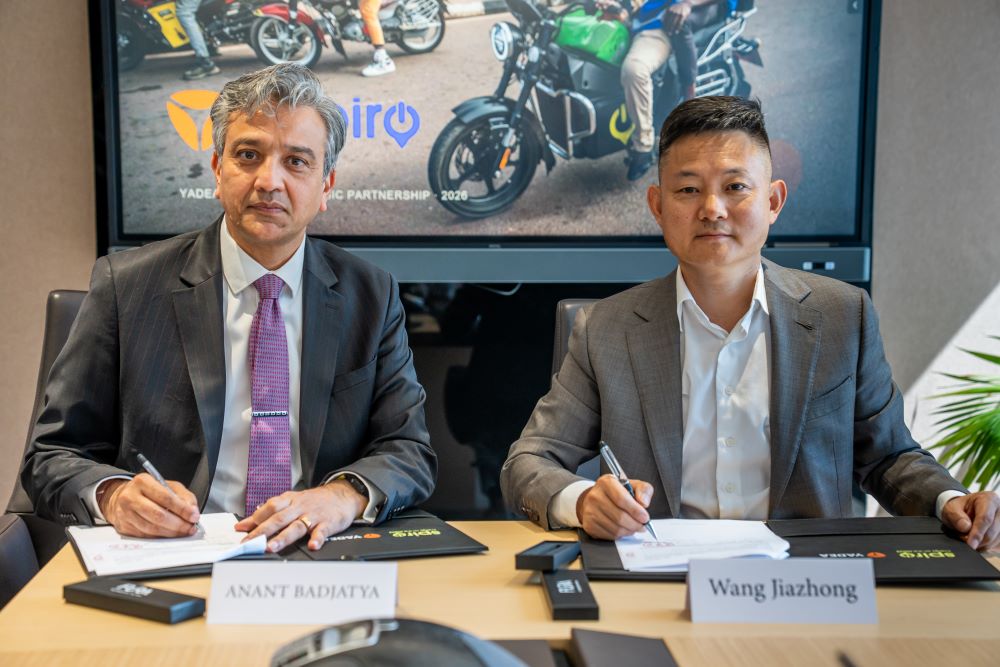
Commenting on the development, Anant Badjatya, CEO of Spiro, said: “Africa’s shift to electric mobility is accelerating and this partnership helps us meet that demand at scale. By bringing together Yadea’s manufacturing strength with Spiro’s electric mobility ecosystem and operating experience across Africa, we are compressing the timeline to clean transport, helping thousands more riders switch to affordable EVs faster and multiplying our climate impact across the continent.”
Wang Jiazhong, Senior Vice President of Yadea Technology Group, said Africa represents a major opportunity for zero-emission transport and that the company’s mission to reduce carbon emissions had reached a significant milestone through its partnership with Spiro.
“Together, we are combining global innovation with local infrastructure to deliver scalable and sustainable mobility solutions that serve millions of riders and transform Africa’s urban transit,” he noted.
Founded in China, Yadea is the world’s leading manufacturer of electric two-wheelers, with more than 100 million vehicles sold worldwide in over 100 countries and 10 exclusive production facilities globally.
A strong innovator with more than 2,000 patents registered in electric vehicle technology, Yadea covers a comprehensive range of urban micro-mobility solutions.
Meanwhile, Spiro is Africa’s largest electric mobility company present in seven countries, operating the continent’s most extensive and fastest-growing network of battery-swapping for electric two-wheel vehicles.
The partnership comes as Spiro accelerates its next phase of growth and expansion across Africa following its latest $270 million funding round, which included investment from NewTrails Capital, a Chinese fund.
The company is building an integrated electric mobility ecosystem combining electric motorcycles with an extensive battery-swapping network, enabling riders to exchange depleted batteries for fully charged ones in minutes.
With more than 130,000 electric motorcycles, over 2,500 battery swapping stations and more than 50 million battery swaps to date, Spiro has achieved over two billion kilometres of low-carbon travel, transforming mobility and economies by replacing expensive imported fossil fuel-based transportation with affordable, accessible and sustainable solutions.
The company also has an expanding regional production network, with operational assembly facilities in Uganda, Kenya, Nigeria and Rwanda.
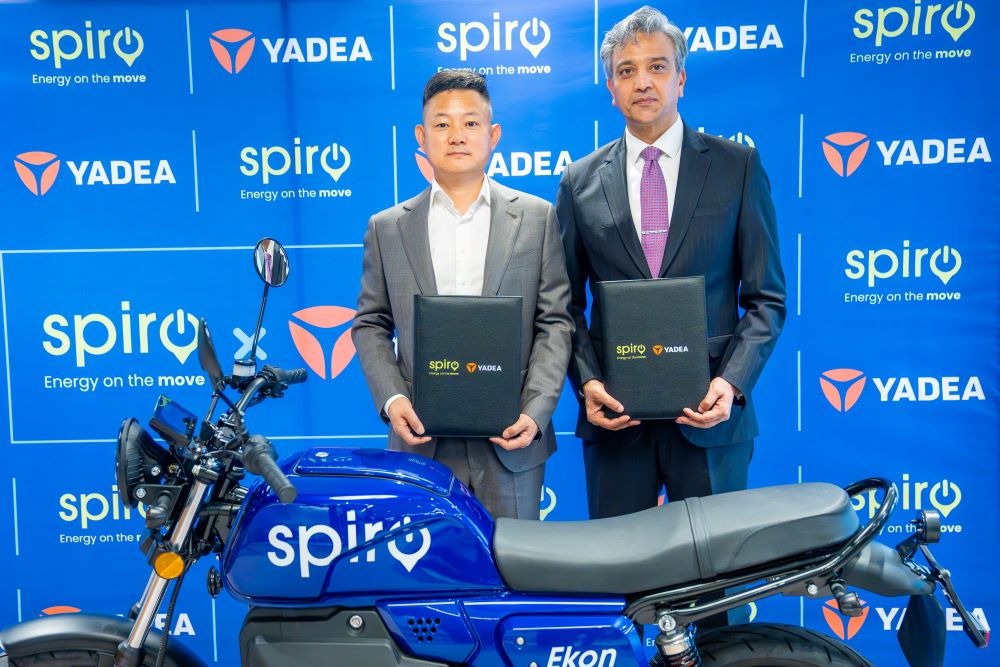
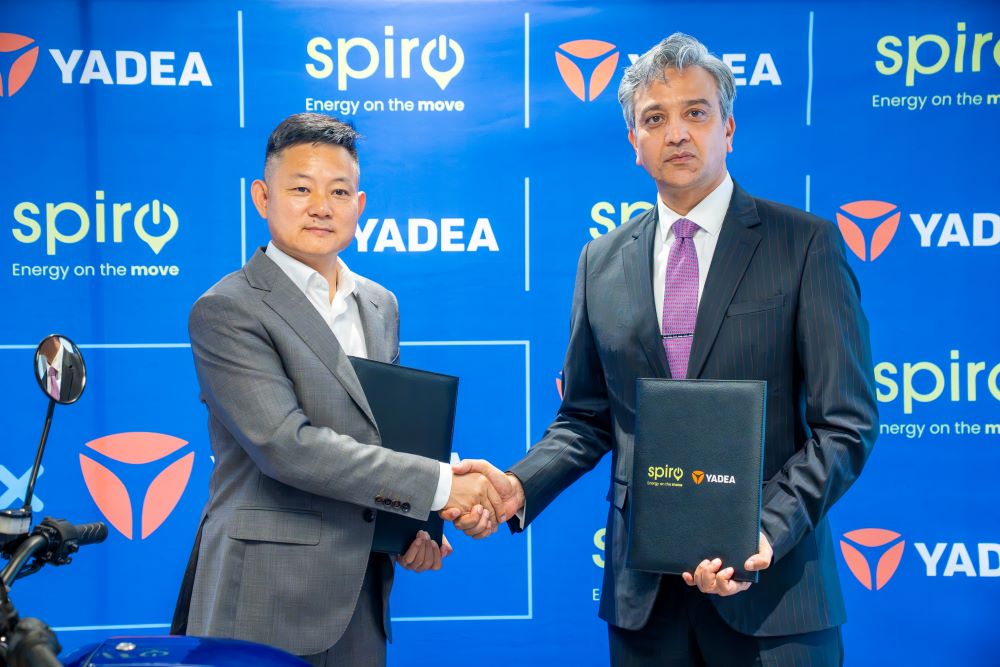
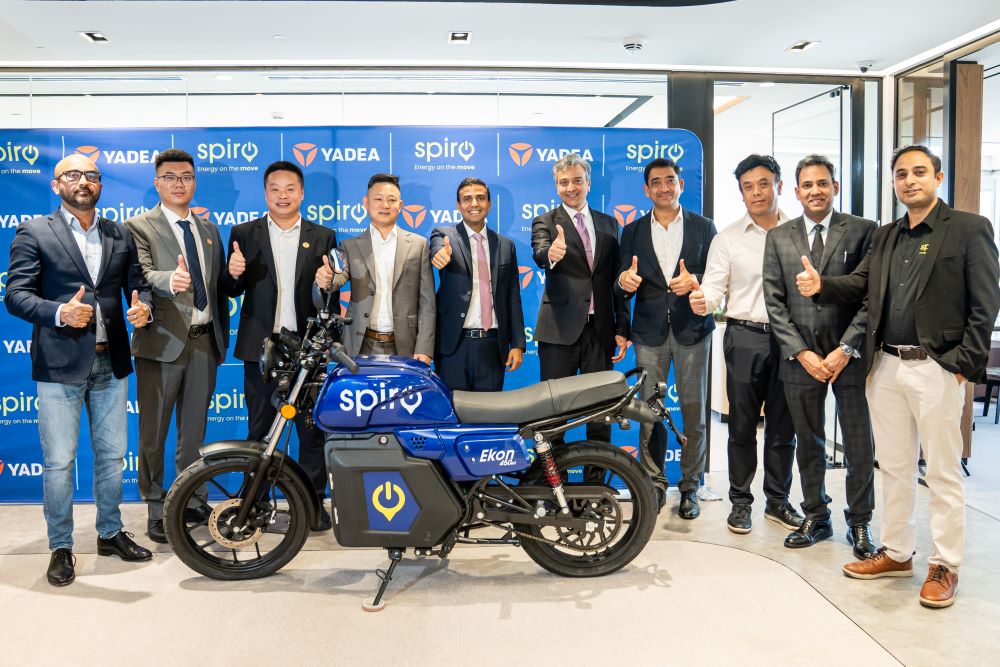
Yadea and Spiro representatives exchange documents after signing an agreement focused on accelerating the adoption of electric two-wheelers across Africa.Yadea and Spiro have partnered to expand electric mobility solutions across Africa, combining Yadea’s manufacturing capabilities with Spiro’s battery-swapping network.The Yadea and Spiro partnership will combine Yadea’s electric two-wheeler manufacturing capabilities with Spiro’s battery-swapping network and operational experience in Africa.Representatives of Yadea and Spiro pose after signing a partnership agreement aimed at expanding affordable and sustainable electric mobility across Africa.
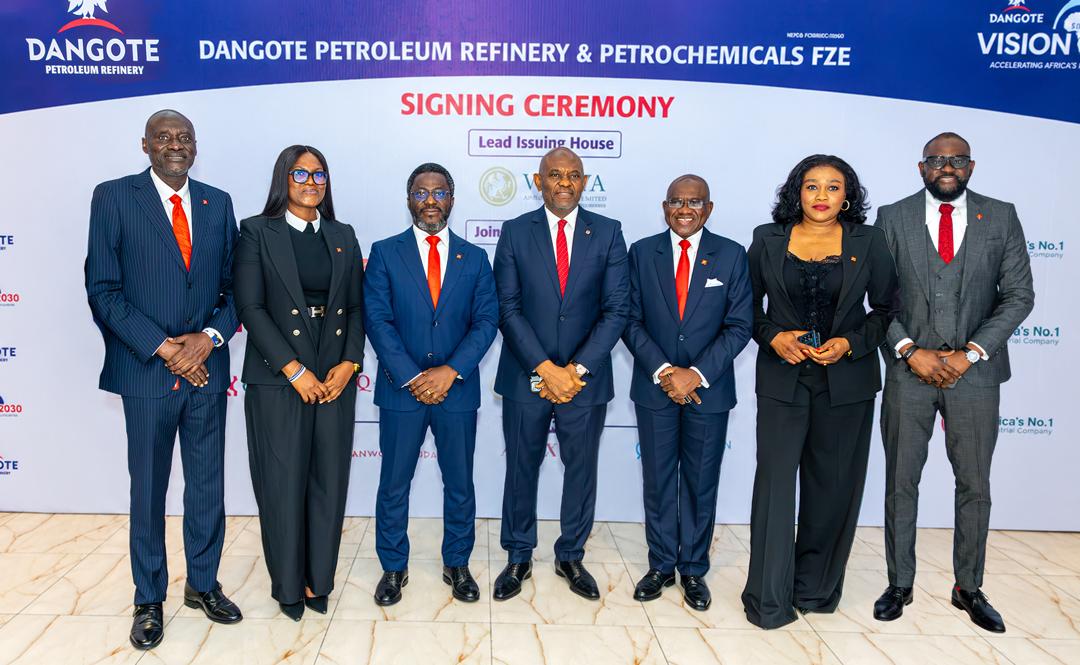
United Capital Group, which is serving as a Joint Issuing House and one of the official stockbrokers for the Dangote Petroleum Refinery IPO, said it is providing access to the offering for both institutional and retail investors in Rwanda.
An Initial Public Offering is the process by which a privately-owned corporation offers its shares to the general public for the first time, transforming into a publicly traded company on stock exchanges.
The company described the IPO, valued at about $1.63 billion (Rwf2.4 trillion), as the largest in African capital markets history.
The IPO is due to open on September 14 and close on October 13, with shares expected to list on the Nigerian Exchange in November.
Peter Ashade, Group Chief Executive Officer of United Capital Plc, said the transaction demonstrates the company’s growing role in connecting African investors with major assets on the continent.
“Our pivotal role in Africa’s largest IPO underscores our six-decade legacy of trust, capital market execution, and financial excellence,” Ashade said.
He highlighted United Capital’s presence in Rwanda as a key advantage for investors seeking to participate in the offering.
“As the only official transaction partner with a direct, licensed presence in Rwanda through United Capital Trustees Rwanda Limited and United Capital Financial Services Rwanda Limited, we are uniquely positioned to connect Rwandan investors to this historic asset,” he said.
Ashade said the transaction also reflects the group’s broader approach to regional investment and its efforts to connect capital with major infrastructure and business opportunities across Africa.
“This milestone demonstrates our ‘One Group, Endless Possibilities’ philosophy in action, linking regional capital with transformative infrastructure projects across the continent,” he said.
Ejikeme Okoli, United Capital’s Director for Africa, said the offering provides Rwandan investors with a direct opportunity to take part in the ownership of a major African energy asset.
“This landmark offering enables both individual and institutional investors in Rwanda to own a direct stake in a world-scale African energy asset,” Okoli said.
He said United Capital’s local presence is intended to make participation more accessible to investors in Rwanda.
“Because United Capital is the sole transaction broker with an established local presence in Rwanda, we provide a seamless, secure, and direct gateway for regional investors looking to participate in this continental listing,” Okoli said.
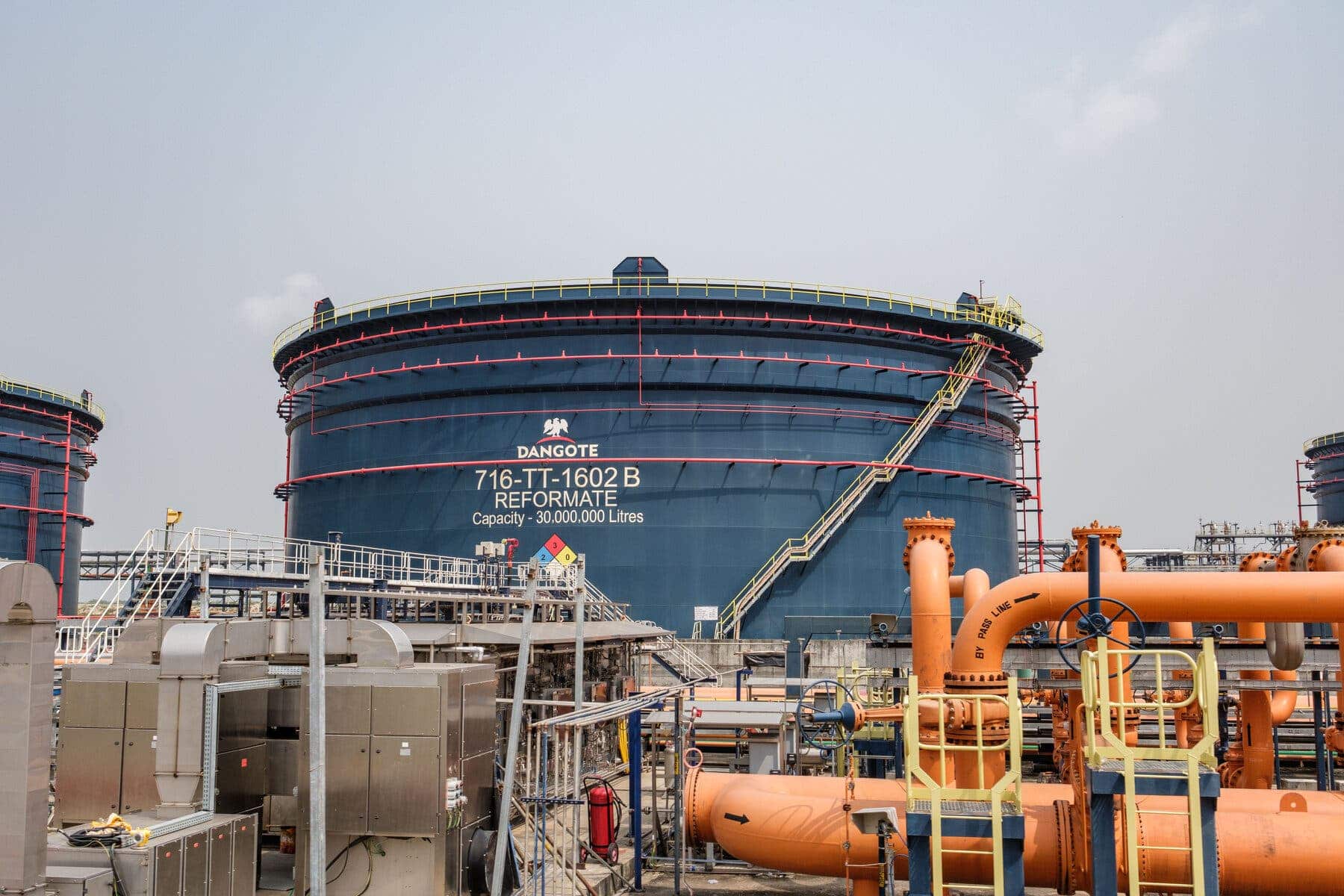
The Dangote Petroleum Refinery in Lagos has a processing capacity of 650,000 barrels of crude oil per day and produces refined petroleum products as well as petrochemicals including polypropylene.
The IPO offers shares at Rwf589 ($0.40), with minimum subscriptions starting at 10 shares, according to United Capital.
The development comes as Rwanda also explores a potential investment in another major Dangote-backed refinery project in Kenya.
Speaking to the press recently on August 24, President Paul Kagame confirmed that discussions were ongoing over Rwanda potentially taking a stake in the planned refinery, which is expected to be built in Lamu on Kenya’s northern coast.
Asked about reports that Rwanda could invest in the project, Kagame said the discussions were still at an early stage.
“In a way, there has been. But it is too early to talk about the details, because I think it is a work in progress. Things are still being thought out,” Kagame said.
He added: “But what I can say is that Rwanda would be very happy to be part of that kind of investment.”
The proposed Kenyan refinery is expected to have a processing capacity of up to 700,000 barrels per day, with reports indicating that Dangote has been seeking regional partners for the project.
United Capital Group is facilitating investor participation in the Dangote Petroleum Refinery and Petrochemicals IPO across African markets.
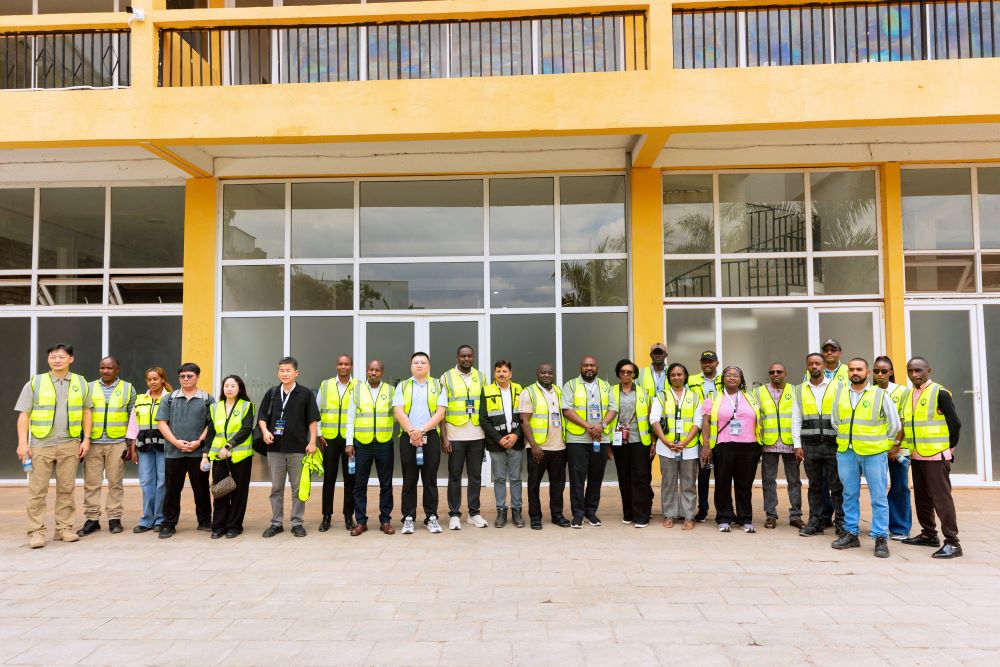
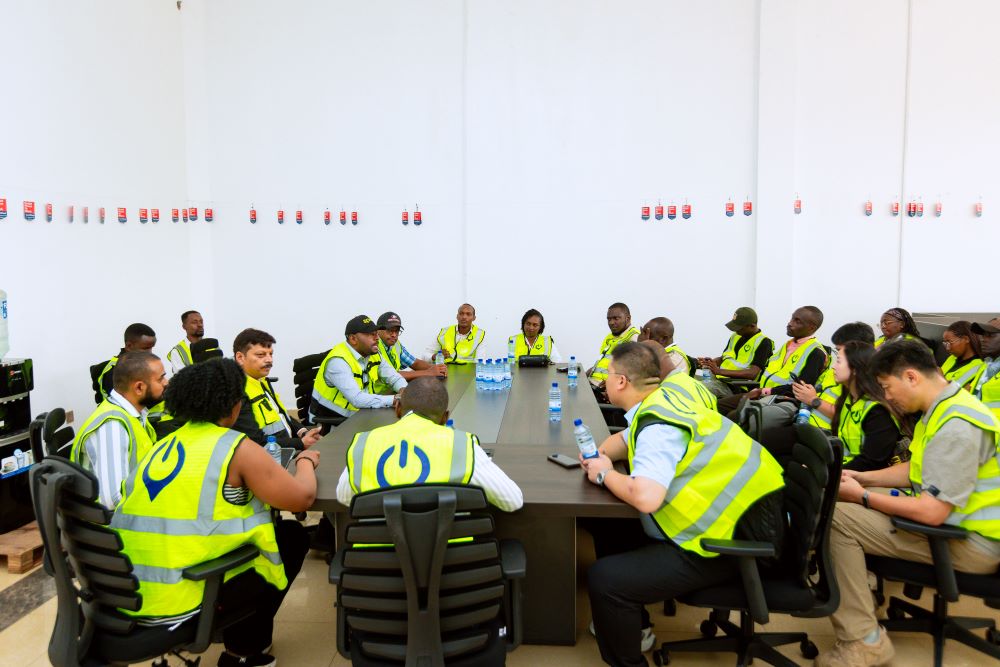
The visit was part of the conference organised by Energy Private Developers (EPD), an association that brings together private-sector stakeholders operating in Rwanda’s energy industry.
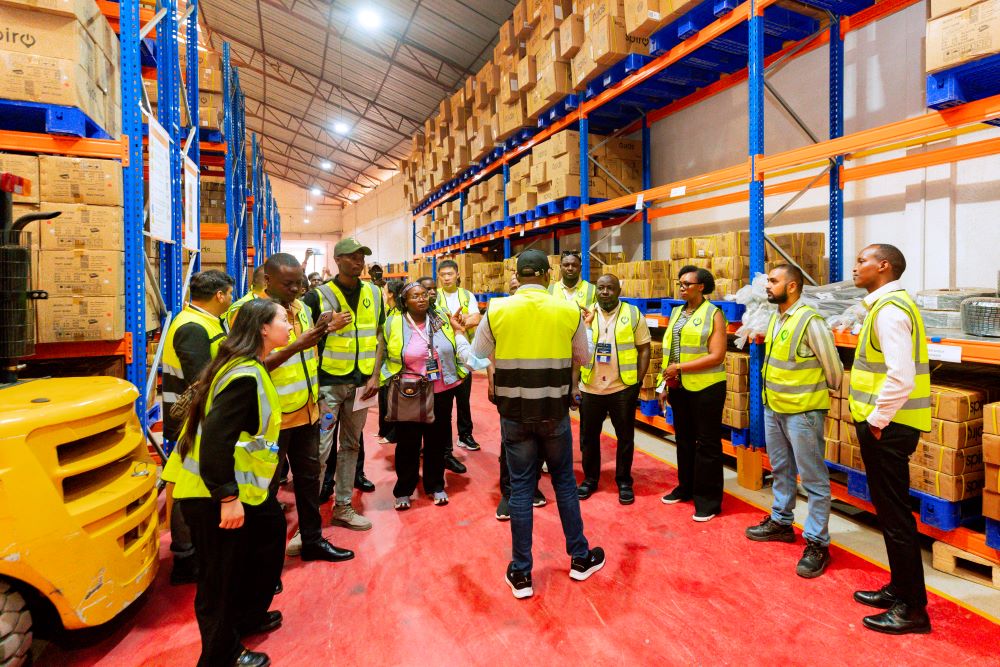
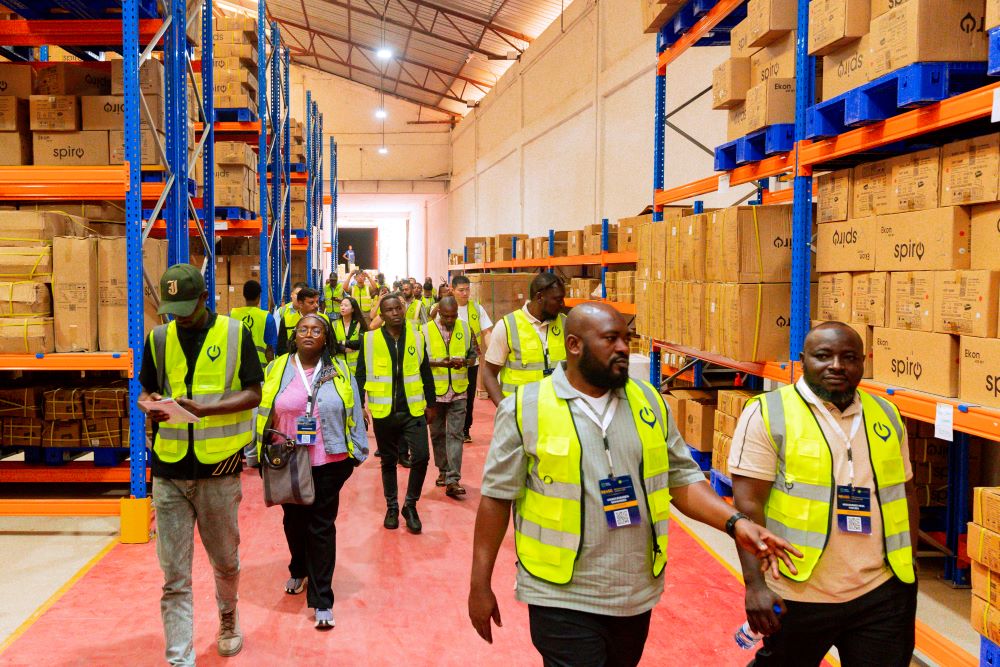
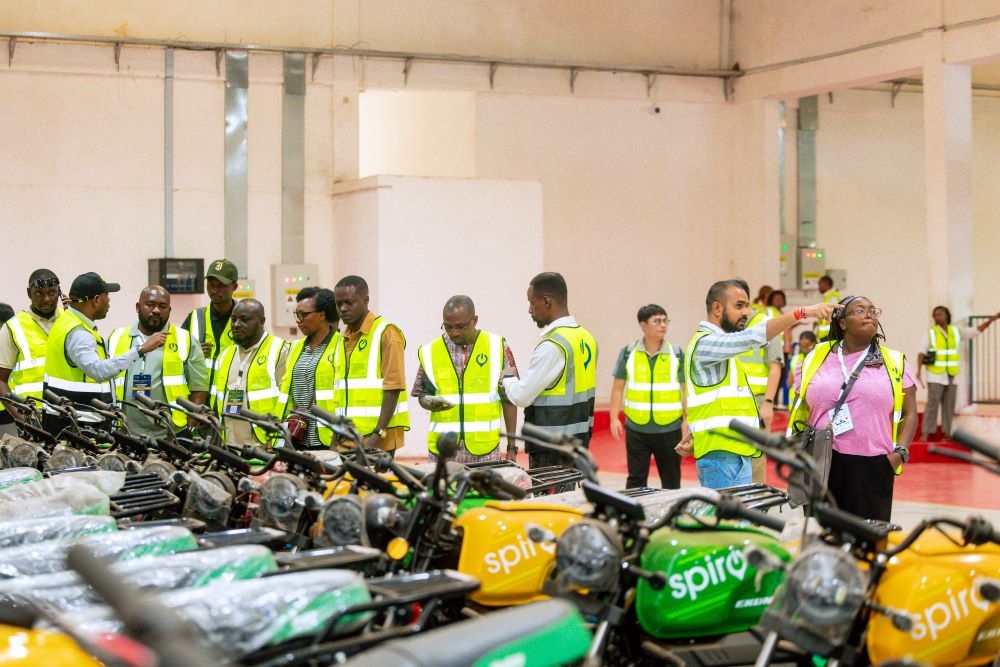
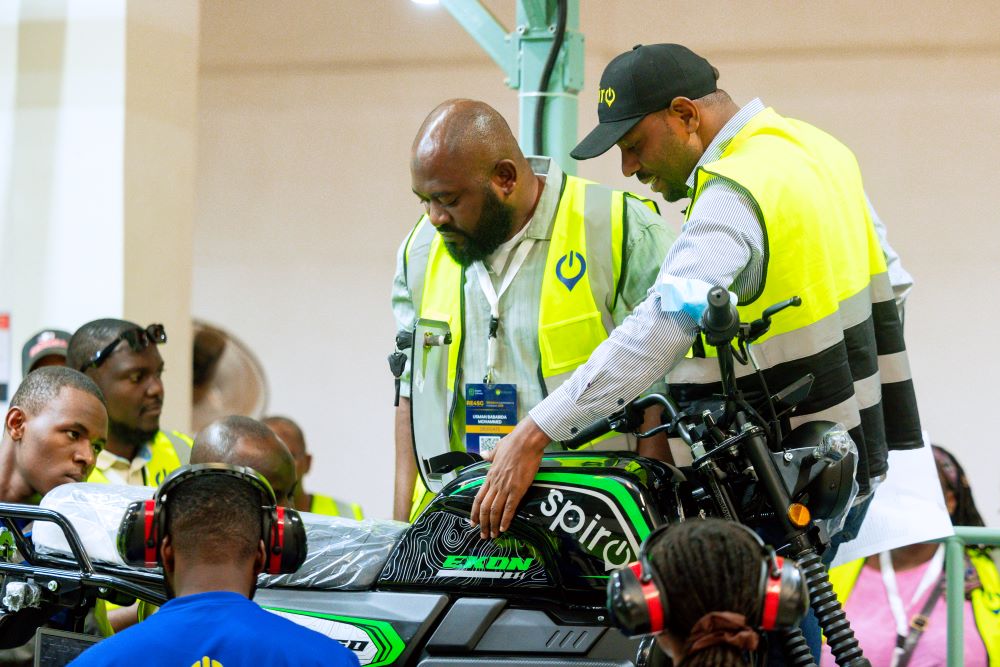
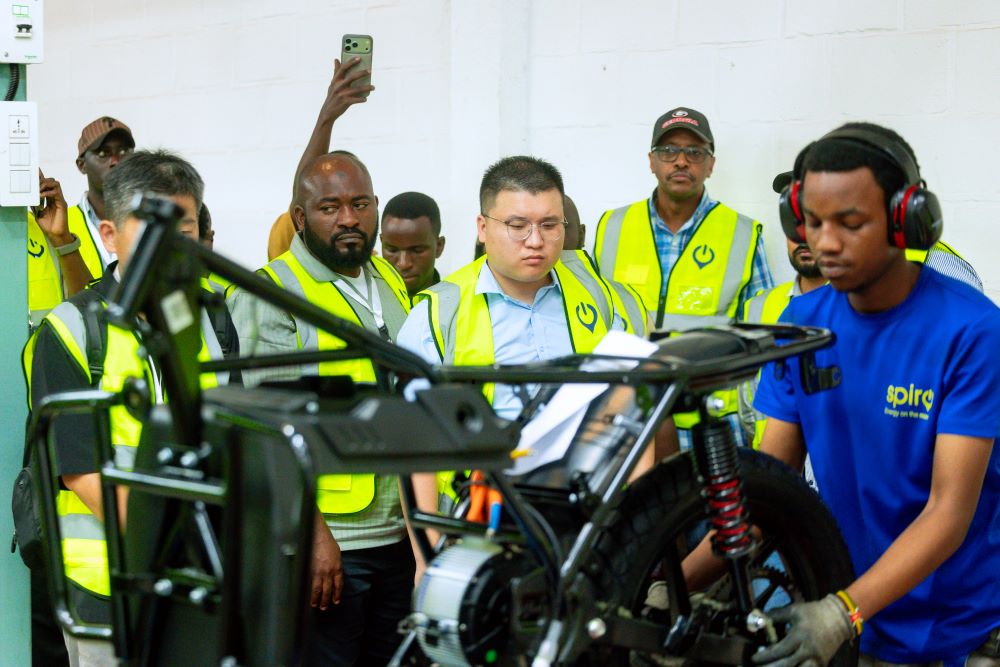
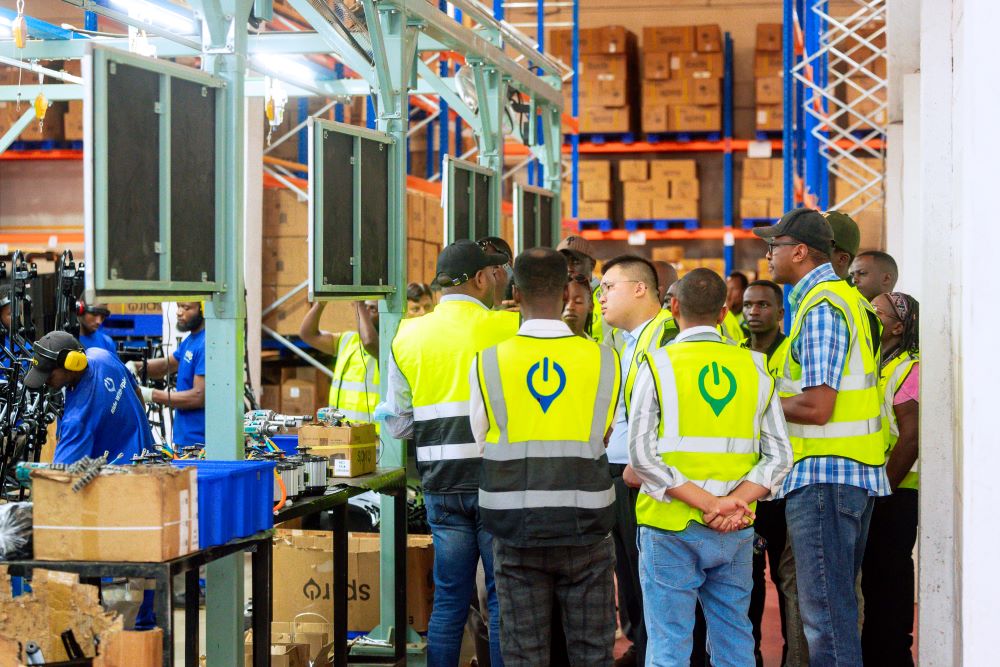
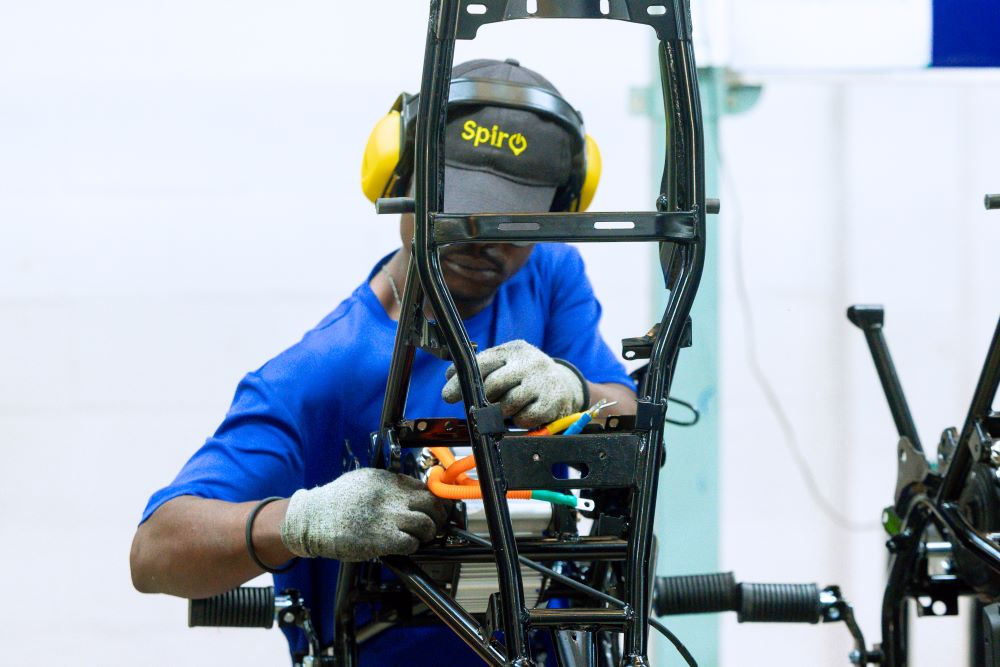
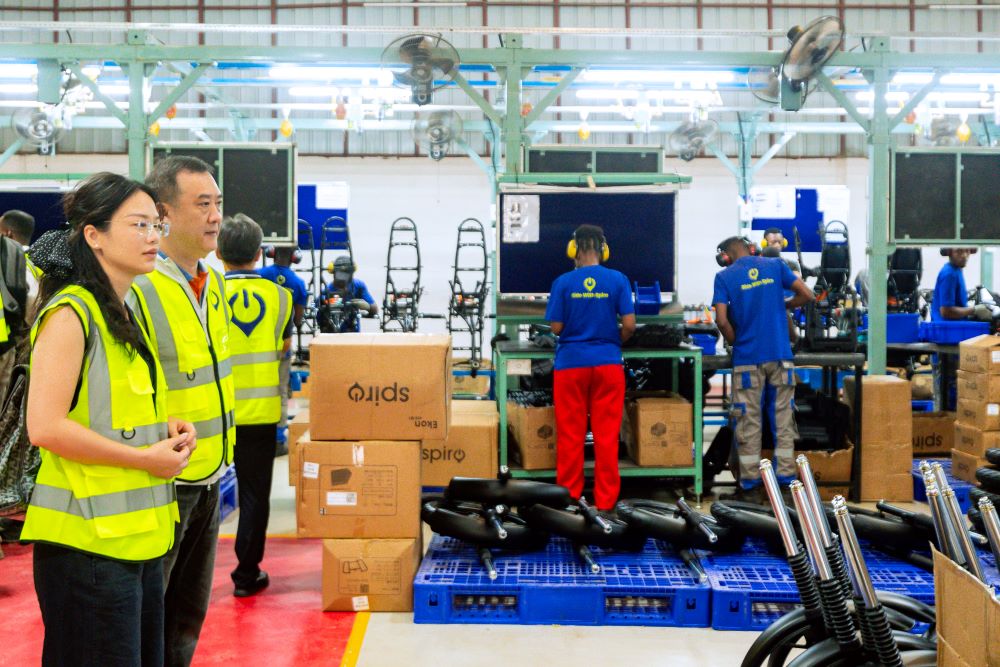
The delegation included participants from several countries, including China, Burkina Faso and Nigeria. Their visit began at Spiro’s motorcycle assembly plant in Masoro, where they were introduced to the company’s electric motorcycle assembly process and broader operations.
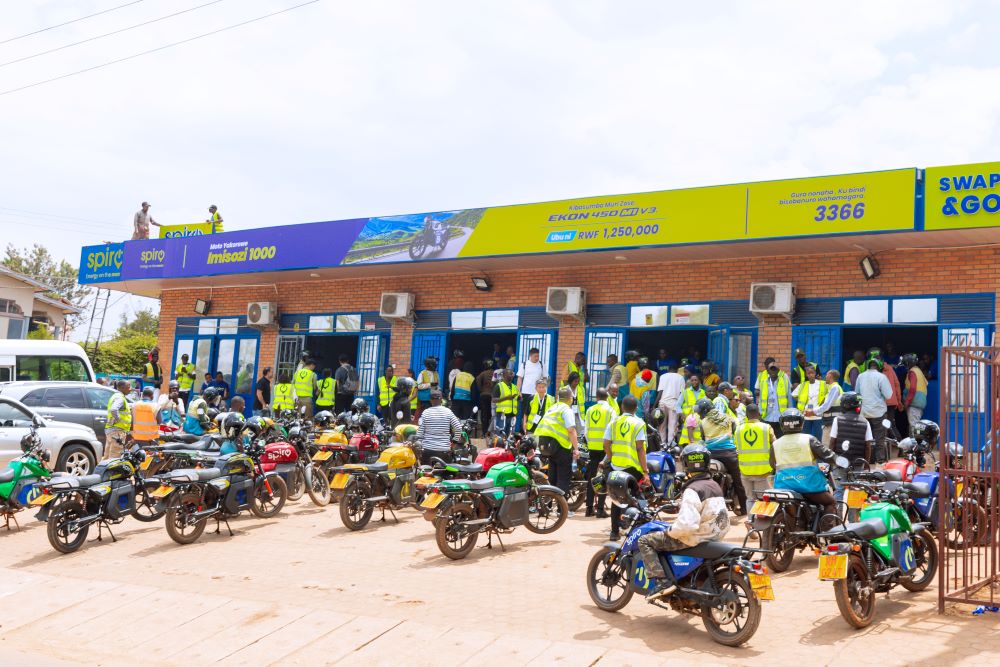
The delegates later visited Spiro’s Mega Station at Kimironko–Makita, where they learned about the technology used to facilitate battery swapping and monitor battery performance and usage across the network.
The visit gave participants a closer look at Spiro’s integrated electric mobility ecosystem, which brings together motorcycle assembly, battery-swapping infrastructure, equipment maintenance and technology-driven operations management.
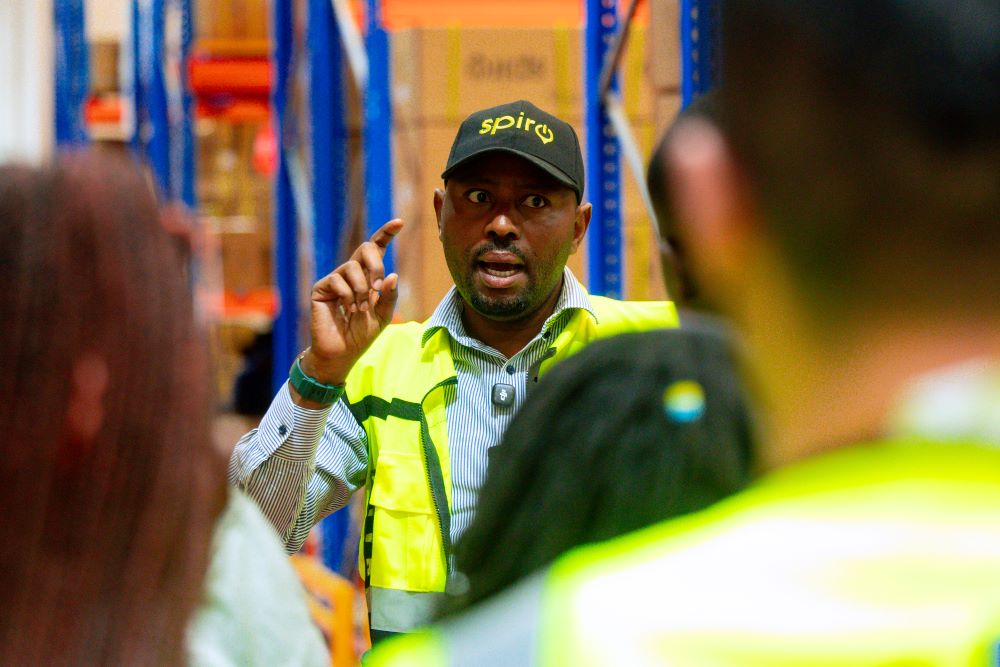
Fredy Shema, Spiro’s Operations Manager, said the visit by international delegates reflected growing confidence in the company’s work and its contribution to the development of Rwanda’s electric mobility sector.
“Hosting this delegation shows that our work is gaining greater recognition and trust. When we look at where we started and how far we have come, it motivates us to continue improving our operations and increasing productivity,” he said.
The delegates also had an opportunity to engage with Spiro employees, ask questions and exchange views on electric motorcycle technology, battery performance and the role of sustainable transport in reducing emissions.
Spiro has so far deployed more than 36,461 electric motorcycles and continues to expand its battery-swapping network, making its services more accessible and convenient for riders.
The company has also contributed significantly to job creation, employing more than 2,342 people. Women currently represent 38% of its workforce, and Spiro aims to increase this figure to 45%.
The visit gave RE4SG delegates a closer look at Spiro Rwanda’s electric mobility ecosystem, from motorcycle assembly to battery swapping.Delegates also visited Spiro’s Mega Station in Kimironko–Makaka to learn about battery-swapping technology.A group photo was taken after touring the facility International energy stakeholders explored Spiro Rwanda’s technology-driven approach to electric mobility during the RE4SG Conference.Delegates from China, Burkina Faso and Nigeria visited Spiro Rwanda as part of the RE4SG Conference & Exhibition 2026.At Spiro Rwanda’s Masoro plant, RE4SG delegates explored the assembly process behind the company’s electric motorcycles.International delegates attending the RE4SG Conference & Exhibition 2026 toured Spiro Rwanda to learn about electric mobility solutions.Electric motorcycles are playing an increasing role in Rwanda’s shift toward cleaner and more sustainable urban transport.Delegates toured Spiro’s motorcycle assembly plant in Masoro to learn about electric motorcycle production.RE4SG Conference delegates visited Spiro Rwanda to explore the company’s electric motorcycle assembly and battery-swapping operations.Delegates learned how Spiro’s battery-swapping technology helps electric motorcycle riders quickly replace batteries and stay on the road.
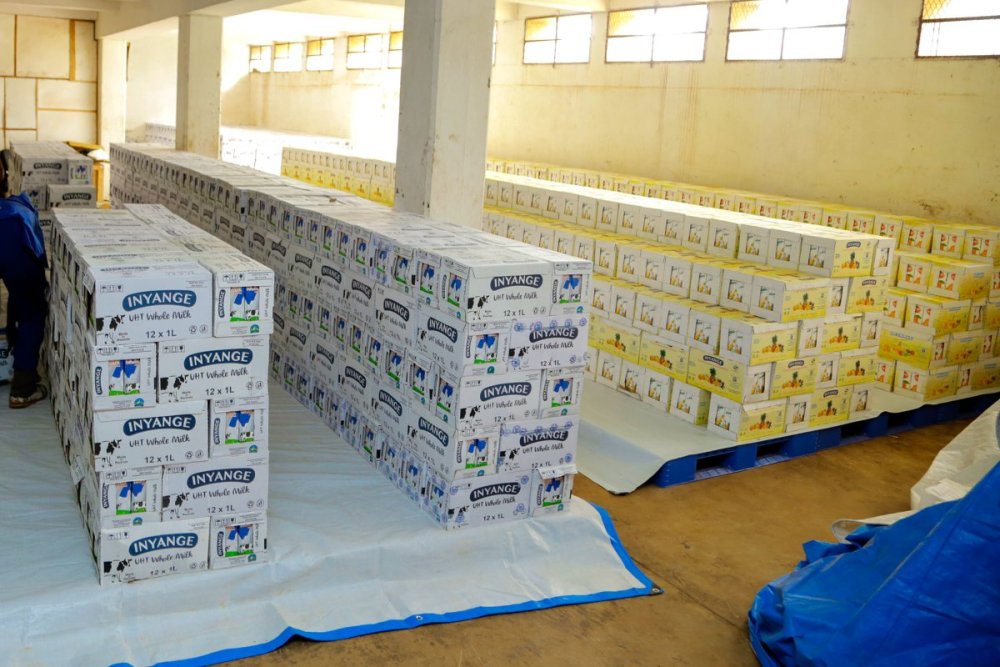
The company issued the clarification in a public statement on September 11, 2026, after some traders were reported to be selling a carton containing 12 packs of 500ml Inyange milk for as much as Rwf20,000.
Concerns over the rising prices and availability of Inyange milk have also been raised on social media, with some consumers questioning the reasons behind the increase and reporting difficulties finding the product in some areas.
IGIHE visited Nyabugogo, where the price of a carton of Inyange milk had reached Rwf19,000 in some shops. Traders attributed the increase to higher prices from their suppliers.
One trader, who requested anonymity, said they previously sold the carton for Rwf8,500 but had increased the price because of the higher amount they were paying suppliers.
In its public statement, Inyange Industries said a prolonged dry season this year had “drastically affected” its milk production volumes.
However, the company said its prices to distributors had not changed since March 2026.
According to the statement signed by Managing Director James Biseruka, a carton of 12 packs of 500ml whole milk is sold at Rwf8,000 to distributors and Rwf8,500 at Milk Zones.
Inyange also said pasteurised whole milk sold at all Milk Zones is priced at Rwf800 per litre.
The company said any future changes to its prices would be announced publicly and in advance through its official communication channels.
“We hope that milk production will soon normalise,” Biseruka said.
Meanwhile, a survey of different markets in Kigali found that Inyange milk was being sold at varying prices in ordinary shops, while some supermarkets were still selling a carton for Rwf8,500.
Inyange Industries is one of Rwanda’s major dairy-processing companies. It also produces other products, including juices and drinking water.
Inyange has reacted to milk price and supply concerns. The company is one of Rwanda’s major dairy-processing companies.
According to data from Chinese Customs, Rwanda’s exports to China increased from USD 28.7 million in 2021 to a record 227 million in 2025, representing an approximately 691 percent increase within five years.
The rapid growth has positioned China among Rwanda’s top three export markets, reflecting increasing demand for Rwandan products and expanding opportunities for local businesses seeking access to one of the world’s largest consumer markets.
China has also become one of Rwanda’s largest trading partners and remains the country’s leading source of Foreign Direct Investment (FDI), with Chinese companies increasingly exploring opportunities in sectors including manufacturing, infrastructure, energy, agriculture, technology, transport and services.
At the same time, Rwandan businesses have continued to explore the Chinese market, particularly for agricultural and high-value products such as coffee, tea, chili, macadamia nuts and locally produced handicrafts.
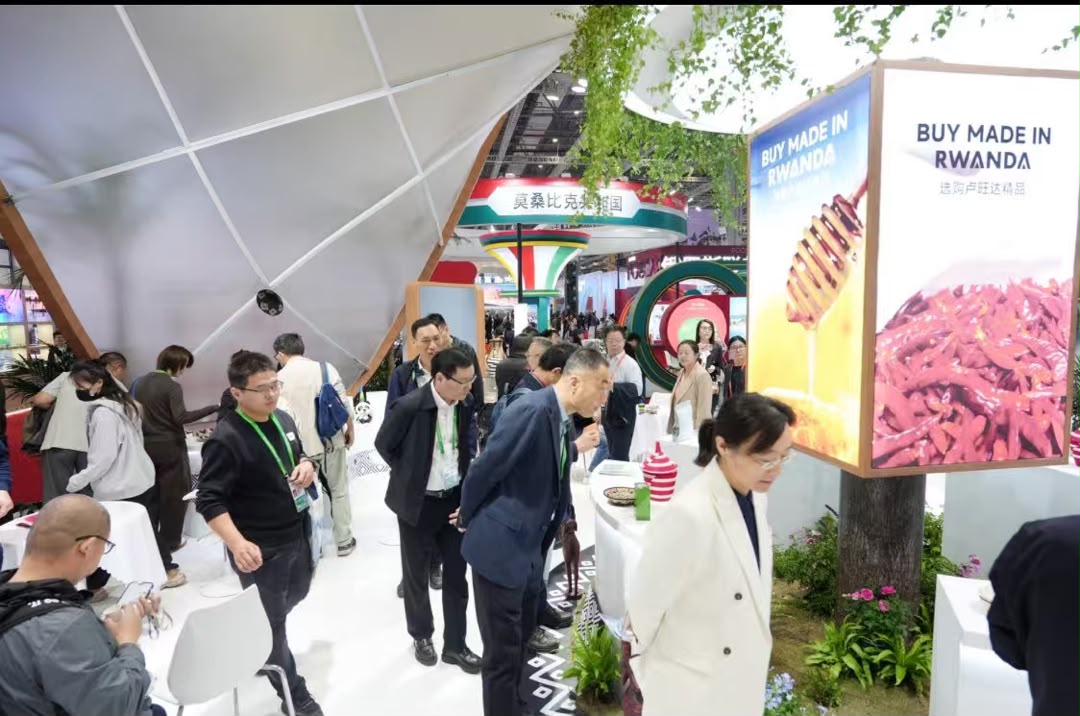
As part of efforts to deepen economic cooperation with China, Rwanda is participating in the 2026 China International Fair for Trade in Services (CIFTIS), taking place from September 9 to 13, 2026 at Shougang Park in Beijing.
The international exhibition, hosted by the Ministry of Commerce of the People’s Republic of China and the People’s Government of Beijing Municipality, brings together countries, international organisations, companies and institutions to explore cooperation in services trade, technology, investment and emerging sectors of the global economy.
Held under the theme “Global Services, Shared Prosperity,” CIFTIS has developed into one of the world’s largest comprehensive exhibitions focused on trade in services since its establishment in 2012.
The 2026 edition is attracting participation from approximately 90 countries and international organisations, with more than 1,800 companies exhibiting, including 456 Fortune Global 500 companies and industry leaders.
More than 90 companies and institutions are expected to present new products, technologies and services, with several innovations making their global debut or first presentation in China.
The exhibition covers key service sectors including telecommunications, computer and information services, financial services, cultural and tourism services, healthcare, education, sports, engineering consulting, construction services, supply chains and business services.
Rwanda’s participation comes at a time when CIFTIS is placing greater emphasis on digital transformation, artificial intelligence, green development and cross-border cooperation.
Rwanda’s Ambassador to China, Lt Gen (Rtd) Emmanuel Karenzi Karake, said China represents a market with significant potential for Rwanda and that continued participation in major exhibitions is helping connect Rwandan businesses with Chinese consumers and investors.
“Our continued participation in major exhibitions across China is helping to increase the visibility of Rwandan products, tourism and other investment opportunities, while connecting our businesses directly with Chinese consumers and investors,” the Ambassador said.
The 2026 exhibition focuses on three major priorities: expanding opening-up, deepening cooperation and driving innovation.
Key areas of discussion include artificial intelligence and intelligent technologies, digital trade, green services, sustainable finance, healthcare, tourism, education and the integration of services with manufacturing.
Nearly 40 percent of innovation cases presented in the “China Services” exhibition zone involve artificial intelligence, large language models or intelligent agents, highlighting the growing role of technology in reshaping global services.
For Rwanda, the platform provides an opportunity to showcase its growing digital ecosystem, investment climate and ambition to become a regional hub connecting African markets with global businesses.
Rwanda’s participation at CIFTIS follows its recent presence at Café Show China, where premium Rwandan coffee brands were presented to Chinese consumers, buyers and industry stakeholders.
Beyond coffee, Rwanda continues to promote other export products including tea, chili, minerals, agricultural commodities and handcrafted products.
The country is also using these platforms to highlight its tourism potential, including mountain gorilla trekking, wildlife experiences, cultural attractions and Rwanda’s natural landscapes.
Coffee is among Rwanda’s key exports to China, with the country seeking to expand its presence in the growing Chinese market.
Rwanda to participate in China International Import Expo
Rwanda is also scheduled to participate in the ninth China International Import Expo (CIIE), which will take place in Shanghai from November 5 to 10, 2026.
Rwanda will organise an investment promotion programme bringing together Chinese business leaders, investors and institutions to explore opportunities in priority sectors.
The CIIE will provide another platform for Rwanda to promote its export products while strengthening awareness of investment opportunities available in areas such as agriculture, tourism, technology, manufacturing and infrastructure.
Amb Lt Gen (Rtd) Karake confirmed that the growing demand for Rwandan specialty coffee and other high-quality products, alongside increasing interest from Chinese companies investing in Rwanda, demonstrates the expanding opportunities created by the partnership between the two countries.
The Ambassador noted that Chinese investors in Rwanda benefit from the country’s strategic location, which provides access to the wider East African market and the African continent through the African Continental Free Trade Area (AfCFTA).
Rwanda’s engagement with China is supported by broader frameworks aimed at increasing market access, encouraging investment and strengthening commercial partnerships.
With exports to China reaching record levels and growing interest from businesses on both sides, Rwanda continues to position its relationship with China as a pathway for expanding trade, investment and economic cooperation.
The CIFTIS exhibition provides Rwanda with a platform to showcase its products, services and investment opportunities to a global audience.Rwanda is highlighting opportunities in agriculture, tourism, technology and manufacturing as it seeks to attract more Chinese investment at the fair.Rwanda’s participation in CIFTIS comes as exports to China reached a record USD 227 million in 2025.Rwandan businesses are exploring new opportunities in China as demand for the country’s specialty and high-value products continues to grow.Robots and advanced technologies are among the innovations showcased at CIFTIS, highlighting the growing role of automation and artificial intelligence in global services.
“So far, despite six months of war in the Middle East, the global economy has been resilient. It has weathered the shocks, the energy shocks in particular, better than feared,” IMF spokesperson Julie Kozack said at a news briefing.
“But uncertainty, as we’ve been saying for quite some time, continues to remain high,” said Kozack.
She noted that the global economy is being pulled in two directions: a negative supply shock from higher energy and commodity prices, and a positive demand shock from the AI-driven technology cycle.
She added that there are “significant differences” in how these forces are impacting individual economies.
Kozack also noted that several risks to the global economic outlook remain high, including a persistent energy shock, mounting public debt, and a stalled disinflation process.
The 2026 Annual Meetings of the IMF and the World Bank Group are scheduled to take place in Bangkok, Thailand, from October 12 to 18. IMF Managing Director Kristalina Georgieva said in late August that resilience and dynamism are the two main topics.
IMF spokesperson Julie Kozack said Thursday that the global economy has been resilient despite six months of war between the United States and Iran, but uncertainty remains high.