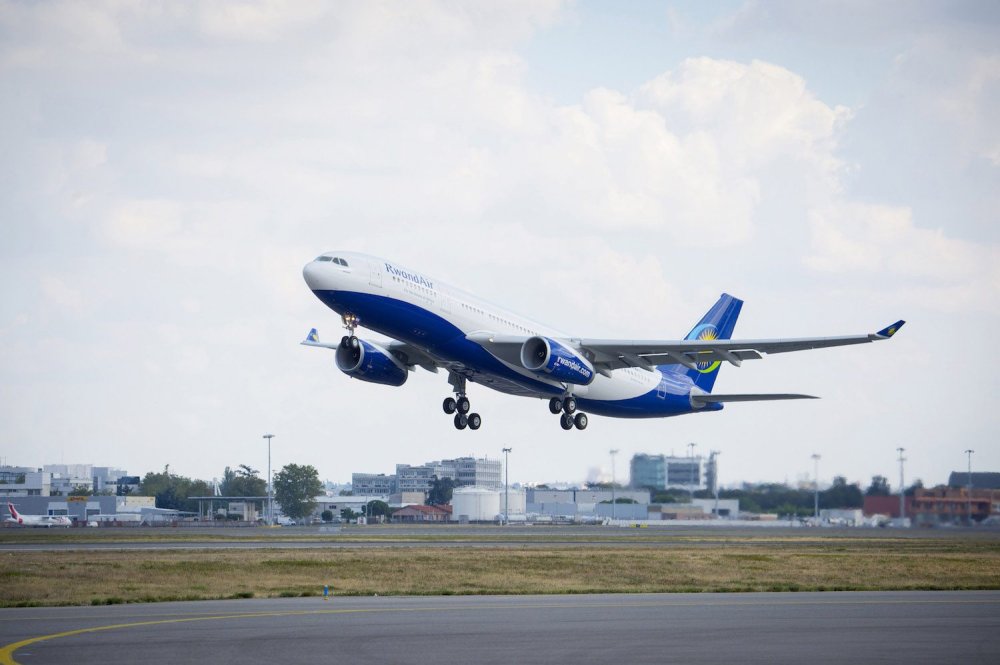
The plan forms part of RwandAir’s broader strategy to expand long-haul operations, particularly to Europe and Asia, while strengthening Kigali’s role as a hub connecting African cities with international markets.
RwandAir’s Acting Chief Commercial Officer, Reuben Mbonye, told Aviation Week that Europe and East Asia are among the key regions the airline is considering for expansion, although it has not yet officially announced where the new services will begin.
As part of the plan, Frankfurt is being considered as a new destination in Germany, while Mumbai and Guangzhou are among cities where RwandAir could resume services that were previously suspended.
RwandAir currently operates long-haul services to destinations including London, Paris, Brussels, Dubai and Doha, alongside a network covering Eastern, Central, Western and Southern Africa.
Five Airbus A330s to support expansion
A key part of the expansion will be the addition of five Airbus A330-200 aircraft to RwandAir’s fleet.
The first of the five aircraft was received in August 2026, with the remaining four expected to enter service gradually. All five aircraft will be operated under lease agreements.
Depending on their configuration, the aircraft can accommodate between 220 and 270 passengers.
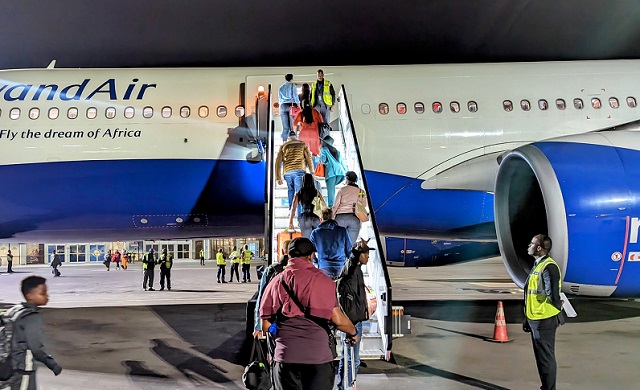
The first aircraft has already entered commercial service with 226 seats and is being used to increase RwandAir’s capacity on European routes, including additional frequencies to Paris and Brussels.
The addition of more A330s is significant because the aircraft are designed for long-haul operations and can carry relatively large numbers of passengers. This gives RwandAir room to increase frequencies on existing routes while also supporting the launch of new services.
A larger fleet could also give the airline greater flexibility in adjusting its network and strengthening connections through Kigali for passengers travelling from different African countries to Europe, Asia and other international destinations.
RwandAir’s expansion plans extend beyond the five Airbus A330s. Mbonye said the airline aims to nearly double its fleet over the next five years.
The expansion is also expected to be accompanied by a significant increase in passenger numbers.
In the 2023/24 financial year, RwandAir carried slightly more than one million passengers. Its target is to carry more than 2.1 million passengers annually by 2028/29, more than doubling the number within a few years.
The figures indicate that RwandAir is seeking not only to expand its network but also to significantly increase its passenger capacity and strengthen its position in Africa’s aviation market.
RwandAir aims to nearly double its fleet over the next five years as it targets more than 2.1 million passengers annually by 2028/29.
Expansion aligned with Bugesera airport
RwandAir’s expansion comes alongside Rwanda’s wider plans to develop the new Bugesera International Airport.
The airport, whose development is valued at about $2 billion, is being built in partnership with Qatar Airways, which holds a 60% stake.
The first phase is expected to be completed in 2028 and will have the capacity to handle seven million passengers annually.
A subsequent phase, expected around 2032, would double the airport’s capacity to 14 million passengers a year.
The new airport is expected to provide Rwanda with significantly greater capacity to expand international air services compared with the existing Kigali International Airport.
However, RwandAir’s expansion plans come at a time when African airlines are facing rising operating costs.
Mbonye said higher fuel prices have increased RwandAir’s operating costs, prompting the airline to review its fares.
More broadly, airlines across Africa continue to face challenges including high fuel prices, taxes, airport charges and difficulties accessing some markets, all of which contribute to the relatively high cost of air travel on the continent.
RwandAir is considering Frankfurt, Mumbai and Guangzhou as it plans to expand its international network and strengthen long-haul operations.
After years of working internationally across design, product management, digital transformation and venture building, he had become more interested in a much bigger question: What does it take to build the people, businesses and systems behind successful technology?
His career had taken him across industries including healthcare, education, telecommunications and technology, working with both large institutions and early-stage ventures. He began professionally in design before expanding into product management, innovation and digital transformation.
Eventually, his interest shifted from simply building products to understanding the ecosystems that make those products possible.
That thinking brought him to Kigali.
“I chose Kigali as a gateway back to Africa because of its digital readiness and willingness to align with the world’s technology advancement,” Akinrinmade said.
“I didn’t come here simply to build another technology company. I came here to build, learn, collaborate, and contribute.”
For Akinrinmade, Rwanda offered something important to entrepreneurs and technology professionals looking at Africa: a country that has made technology a deliberate part of its development strategy.
Over the past two decades, Rwanda has steadily invested in digital infrastructure, public digital services, innovation, skills development and a policy environment intended to encourage technology companies and entrepreneurs.
Today, Kigali is home to a growing network of technology companies, startups, universities, innovation programmes, investors and institutions.
The country has also continued to invest in initiatives including Kigali Innovation City, digital public infrastructure, broadband expansion and programmes designed to support startups and emerging technology businesses.
For Akinrinmade, however, what stood out was not simply the infrastructure.
It was the intention behind it.
“Professionally, what attracted me was the opportunity to build in an environment that is very intentional about technology, innovation and development,” he said.
Having spent a significant part of his career working internationally, he had seen what strong institutions, good systems, technology and access to experienced talent could make possible.
Rwanda offered an opportunity to bring some of that experience into an African environment while also learning from the ecosystem already developing here.
“I’m not coming here believing that I have all the answers,” he said. “I’m coming with experience, but also with a willingness to learn and collaborate.”
“For me, Kigali is a place where experience, talent, ideas and opportunity can meet.”
Building more than software
That philosophy is now taking shape through AsteriskRD Tech, the Kigali-based technology, innovation and capacity-building organisation Akinrinmade is developing.
The idea behind AsteriskRD has been evolving for several years.
In its earliest form, Akinrinmade envisioned something closer to a conventional technology and software development company. But his experiences building products and working with different ventures gradually changed his thinking.
He began asking questions that went beyond software development.
Where does a good product idea come from? Who understands the customer well enough to know what needs to be built? Who knows how to transform an idea into a sustainable business? Who develops the people capable of building those businesses? And what kind of environment allows experimentation to happen?
Those questions ultimately expanded the vision for AsteriskRD.
Today, Akinrinmade describes the organisation as being concerned not only with software development, but with research, innovation, product development, venture building and the development of the people and capabilities required to make all of those things possible.
“At its simplest, AsteriskRD is a technology, innovation and capacity building organisation,” he said. “But I don’t want it to be just another company that builds software for clients.”
The organisation intends to identify problems, research opportunities, develop technologies and products, and help promising ideas develop into viable ventures.
An equally important part of that model is developing talent.
AsteriskRD is creating programmes aimed at students, graduates, founders and early-stage innovators, particularly around product thinking, innovation, venture building and the process of moving an idea towards a minimum viable product.
“Ultimately, I want AsteriskRD to become an ecosystem where people can learn, experiment, build, collaborate and create,” Akinrinmade said.
“The technology is important, but the bigger ambition is to build the capability around the technology.”
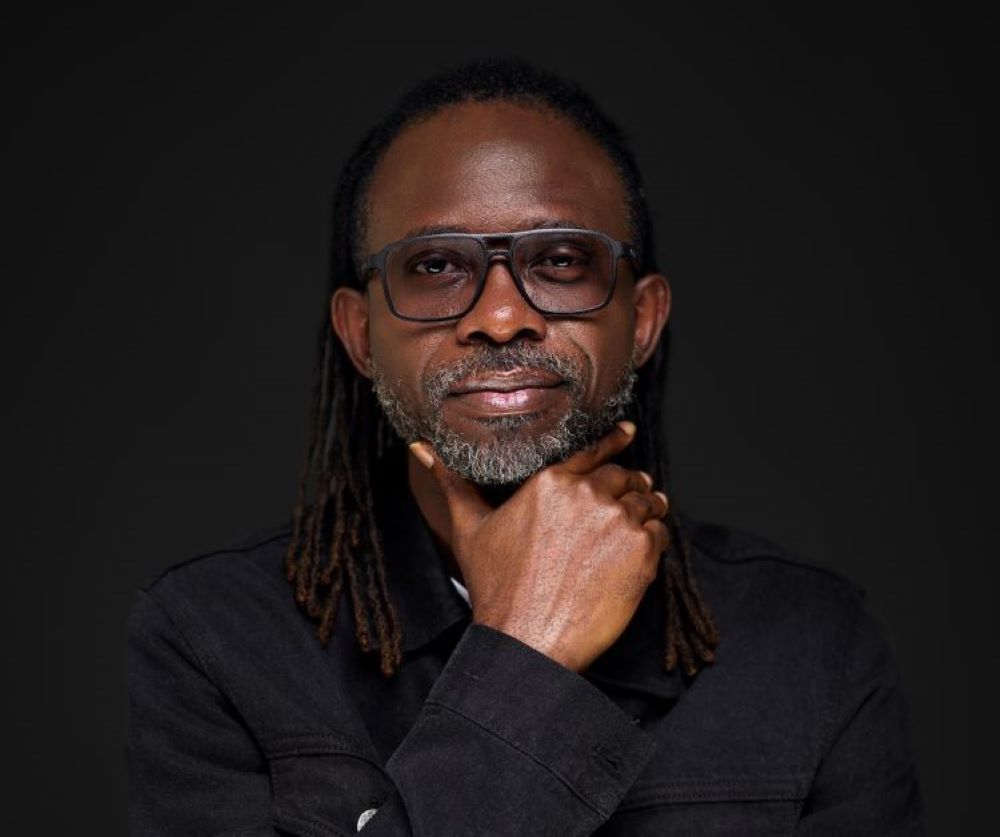
Akin Akinrinmade, founder of AsteriskRD Tech, is developing a Kigali-based technology and capacity-building organisation focused on innovation, venture building and talent development.
Rwanda’s next technology opportunity
This emphasis on capability comes at an important time for Rwanda.
The country has already made significant progress in laying the foundations for a digital economy. Rwanda has built extensive telecommunications infrastructure, digitised numerous government services and created policies intended to encourage innovation and technology entrepreneurship.
The country has also increasingly positioned itself as a place where African and international companies can develop, test and scale new solutions.
That progress means the conversation is gradually moving beyond whether the infrastructure exists.
The next challenge is ensuring that Rwanda and the continent develop enough people who know how to turn that infrastructure into companies, products, services and jobs.
It is a challenge that Akinrinmade believes extends beyond Rwanda to much of Africa.
For years, technology skills programmes across the continent have successfully encouraged more young Africans to learn coding, design, entrepreneurship and other digital skills.
But Akinrinmade believes there is still an important gap between knowing something theoretically and being able to apply it to a real problem.
“One of the biggest gaps is the difference between learning about something and actually being able to do it,” he said.
Someone may graduate understanding the theory of technology, business or design, he explained, but still struggle when required to identify a real problem, understand the people experiencing it, develop a solution, test that solution and determine whether people actually want it.
A second challenge is the way disciplines are often taught separately.
“The developer learns development. The designer learns design. The business student learns business, but building a real product requires all of those things to come together.” Akinrinmade said.
This is one area in which Rwanda’s evolving technology ecosystem could have an impact beyond its borders.
As Rwanda attracts technology companies, innovators, researchers and entrepreneurs, Kigali is increasingly able to serve not only as a market for technology, but as a place where ideas can be developed and tested.
Akinrinmade believes that the environment provides an opportunity to experiment with new approaches to developing African technology talent.
Learning how to solve problems
Central to AsteriskRD’s approach is what Akinrinmade calls product thinking.
It sounds like a technology industry term, but he describes it more simply: learning how to understand a problem before rushing to build a solution.
A company may have a good idea, sophisticated technology and even access to investment, he argues, and still produce something people do not need.
Product thinking forces a builder to ask more fundamental questions.
Who is the user? What problem is being solved? Why does the problem matter? What business model makes sense? What should be built first? How should it be tested? What is being learned from the process?
And perhaps most importantly: Should this product be built at all?
“It’s not just about becoming a product manager,” Akinrinmade said. “It’s a way of thinking that can make a developer, designer, entrepreneur, executive or student better at solving problems.”
That distinction is important for an African technology sector increasingly focused on building commercially sustainable businesses rather than simply producing more startups.
A product must solve a real problem. Someone must be willing to use it. In many cases, someone must ultimately be willing to pay for it.
For Akinrinmade, practical experience is therefore more valuable than another certificate.
When people complete an AsteriskRD programme, he wants them to be able to say that they identified a genuine problem, spoke with the people experiencing it, developed an idea, tested their assumptions and understood what would be required to build the solution.
The final outcome might be a prototype, an MVP concept or a business model.
Sometimes the most valuable result might even be discovering that an idea should not be pursued.
That, Akinrinmade says, is also successful product thinking.
“I want them to leave with confidence,” he said. “Not confidence because they received a certificate, but confidence because they actually did something.”
“Ultimately, I want people to leave with a way of thinking and the ability to turn that thinking into action.” Why start in Kigali?
For Akinrinmade, Rwanda offers a practical environment in which to test that philosophy.
Kigali has developed a growing technology community alongside universities, innovation institutions, government programmes and a young population increasingly interested in entrepreneurship and technology.
But Akinrinmade is equally interested in the collaborative culture surrounding that ecosystem.
“There’s a strong appetite for innovation, there’s a growing technology community, there are young people who want to learn and build, and there’s an environment where different organisations can collaborate,” he said.
Rather than arriving in Rwanda with a model developed elsewhere and assuming that it can simply be transplanted, he wants AsteriskRD to develop gradually.
The organisation intends to work with people in the ecosystem, test its programmes and learn from what succeeds and what does not.
“We’re not trying to arrive with a finished model and say, ‘This is what everyone should do,’” he said.
“We’re starting with people, listening, experimenting, and learning what works.”
His intention is that lessons developed in Kigali can eventually be adapted for other African markets.
“If we can build something useful here, learn from it, improve it, and then take those lessons elsewhere, that’s a much more meaningful way to grow,” he said.
It is an ambition that reflects Rwanda’s wider role in Africa’s technology development.
Because of its size, relatively organised institutional environment and willingness to experiment with technology, Rwanda has increasingly become a place where new digital approaches can be tested before being considered for larger markets.
What develops in Kigali therefore does not necessarily have to remain in Kigali.
Ideas, companies, systems and increasingly talent developed within Rwanda can contribute to the broader African technology ecosystem.
Connecting African talent
Akinrinmade’s longer-term vision for AsteriskRD is similarly continental.
But he does not imagine expansion simply as opening offices in one African country after another.
“I see it growing as a connected ecosystem rather than simply opening offices in different countries,” he said.
Technology itself makes that possible.
A programme developed in Kigali can connect participants with mentors elsewhere on the continent. Founders can collaborate across borders.
Researchers, product leaders, entrepreneurs and organisations can exchange knowledge without all being physically located in the same city.
“There is enormous talent across the continent, but talent doesn’t always have access to the same opportunities, networks, mentorship or resources,” Akinrinmade said.
“I want AsteriskRD to help create those connections.”
He is also conscious of another imbalance within global technology development: the assumption that expertise must always move in one direction.
Africa is often positioned as the recipient of technology knowledge, investment and expertise developed elsewhere.
Akinrinmade believes that should change.
“I don’t want it to be a one-way relationship where knowledge simply comes from outside,” he said.
“There is a lot of knowledge and innovation being developed locally that deserves to travel in the other direction as well.”
His long-term ambition is therefore to create an ecosystem in which talent, technology, ideas and opportunities can move more freely across borders.
Rwanda’s growing technology sector provides an interesting foundation for that ambition.
The country has already demonstrated that an African nation does not need to be the continent’s largest economy or most populous market to influence conversations about digital transformation.
Its next contribution may increasingly come from what is built on top of that foundation: the founders trained here, the products developed here, the companies created here and the ideas that leave Kigali and find applications elsewhere on the continent.
Akin Akinrinmade, founder of AsteriskRD Tech, is developing a Kigali-based technology and capacity-building organisation focused on innovation, venture building and talent development.
Measuring success differently
Akinrinmade is cautious about measuring success simply by how large AsteriskRD becomes.
“I’d consider AsteriskRD successful if I can look back and see people who came through the ecosystem and say, ‘AsteriskRD helped me build something I wouldn’t have been able to build before,’” he said.
That philosophy also speaks to the next stage of Rwanda’s technology journey.
The country’s investment in connectivity, digital government, innovation infrastructure and technology-friendly policies has created foundations that were difficult to imagine a generation ago.
But infrastructure alone does not build a technology economy. People do.
They identify problems, build products, establish companies, train others and create the networks through which knowledge moves.
For Rwanda, the opportunity now is not simply to participate in Africa’s technology growth, but to become one of the places helping to shape the people and ideas driving it.
And for Akinrinmade, Kigali is where that work begins.
The figure combines outbound travel spending recorded in the first and second quarters of the year: $98.1 million in Q1 and $99.7 million in Q2, marking a steady rise in what Rwandans are spending on trips outside the country.
The survey is conducted jointly by NISR, the National Bank of Rwanda (NBR), the Rwanda Development Board (RDB), and the Directorate General of Immigration and Emigration (DGIE), drawing on interviews with returning residents at 11 border points, including Kigali International Airport.
“The results of this survey are instrumental in addressing a diverse range of tourist interests and in enhancing overall travel experiences,” the report notes.
Business travel leads the spend
Business was the dominant driver of outbound spending in Q2, accounting for 49.1% ($49.0 million) of that quarter’s total import bill. Visiting friends and relatives (VFR) followed at 20.6% ($20.5 million), with education-related travel contributing 19.0% ($18.9 million). Holiday and health-related travel made up the smallest shares.
Air travel accounted for the largest portion of spending, at $76.2 million in Q2 alone, compared to $23.5 million spent by residents travelling through land borders.
By region, Europe recorded the highest spending among air travellers in Q2, at $26.0 million, followed by Asia at $17.3 million and the East African Community (EAC) at $13.1 million. Among residents travelling by land, the EAC accounted for nearly all spending, at $23.5 million, reflecting the region’s proximity and frequent cross-border movement for business and family visits.
Outbound spending on a steady climb
NISR’s data shows that Rwandans’ spending abroad has risen consistently over recent quarters, climbing from $83.7 million in the first quarter of 2025 to $99.7 million by the second quarter of 2026, an upward trend even as global and regional travel patterns fluctuate.
Despite the rising outbound bill, Rwanda’s earnings from foreign visitors continue to outpace what residents spend abroad. In Q2 alone, the country earned $161.8 million from non-resident travellers, leaving a net travel services surplus of $62.1 million for the quarter.
The estimates are derived by combining survey findings on average length of stay and average daily expenditure abroad with official traveller volumes recorded by the DGIE.
Rwandan residents spent an estimated $197.8 million (about Rwf291 billion) on travel abroad in the first half of 2026, according to the latest National Institute of Statistics of Rwanda’s (NISR) biannual Travel Expenditure Survey (TES) released in mid-September.
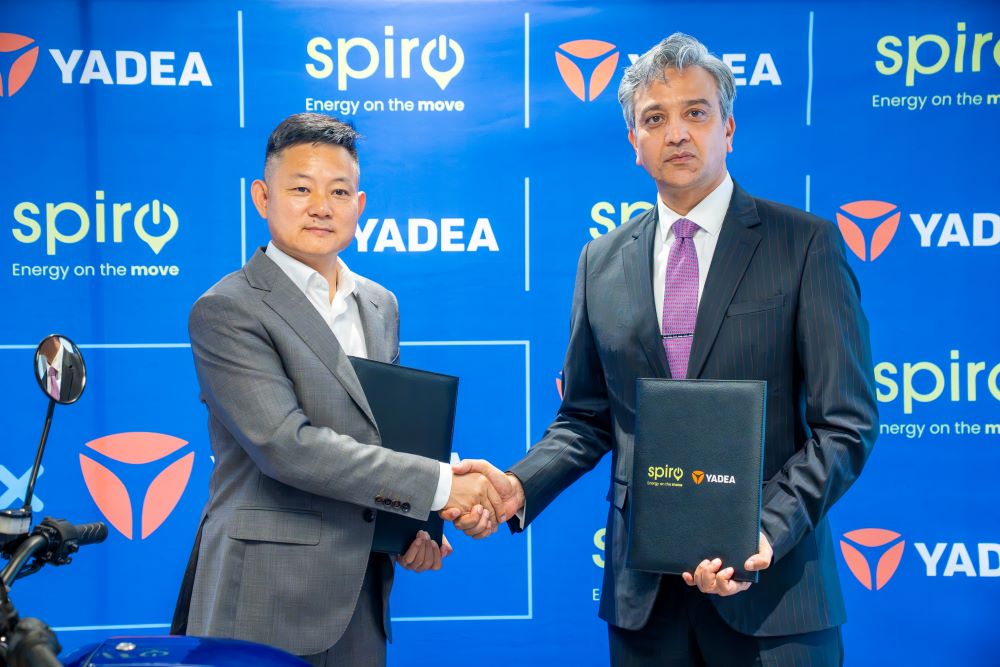
Now, that transformation is getting closer to Rwanda after Yadea Technology Group, one of the world’s leading electric two-wheeler manufacturers, signed a strategic partnership with Spiro, Africa’s electric mobility company, to expand accessible and sustainable transport solutions.
The agreement connects Yadea’s global manufacturing strength and research capabilities with Spiro’s operations and battery-swapping network in countries where it operates, including Rwanda.
Under the partnership, Yadea will supply electric two-wheelers and related products adapted to Spiro’s markets, while both companies develop motorcycles designed for local road conditions and commercial use.
Founded in 2001, Yadea has grown from an electric vehicle manufacturer into a global mobility company combining research and development, intelligent manufacturing, sales networks and after-sales services.
Today, Yadea products are used in more than 100 countries, with more than 100 million electric vehicles sold worldwide.
Its portfolio includes electric motorcycles, electric bicycles, electric three-wheelers, electric scooters, folding bikes, graphene lead-acid batteries, sodium-ion batteries and related spare parts.
A major milestone came in May 2016, when Yadea became the first electric vehicle company in China’s industry to be listed on the Hong Kong Stock Exchange.
Headquartered in Wuxi, Yadea has developed a global manufacturing and innovation network with 10 production and research bases located in Jiangsu, Tianjin, Zhejiang, Guangdong, Chongqing and Anhui in China, as well as Vietnam, Indonesia, Thailand and Mexico.
The company operates more than 40,000 retail stores worldwide, holds more than 2,000 patents, operates three national-level CNAS laboratories, six technology research and development centres and one national-level industrial design centre.
Through these facilities, Yadea has developed technologies in batteries, motors, electronic controllers and intelligent vehicle systems.
Its achievements have also received recognition in China. In 2021, Yadea was accredited as one of the “5th Batch of National Industrial Design Centers (2022–2025)”. In 2022, it was recognised as a “National Intellectual Property Advantage Enterprise”, while in 2024 it ranked 249th among China’s Top 500 Private Enterprises.
Rwanda, a thousand opportunities
In Rwanda, motorcycles play a major role in daily transport, connecting workers, students, businesses and communities.
Rising fuel costs, maintenance expenses, environmental concerns and road safety challenges have increased interest in electric mobility.
In 2025, Rwanda stopped registering petrol-powered motorcycles for passenger transport as part of efforts to accelerate cleaner transport solutions.
Since electric motorcycles entered the Rwandan market, their number has increased by 686%, creating a growing opportunity for companies such as Yadea.
Spiro has already established a strong presence in Rwanda. In an interview with IGIHE in June 2026, Spiro Rwanda Managing Director Amit Chawla said the company had approximately 25,000 electric motorcycles operating on Rwanda’s roads and around 350 battery-swapping stations.
Over the next five years, Spiro plans to expand its Rwanda operations to between 75,000 and 80,000 electric motorcycles, nearly 3,000 employees, around 1,000 battery-swapping stations and between 65,000 and 70,000 batteries.
The company previously secured $215 million to accelerate expansion before announcing a larger growth phase following a $270 million funding round that included investment from NewTrails Capital, a Chinese fund.
The recently signed agreement connects Yadea’s global manufacturing strength and research capabilities with Spiro’s operations and battery-swapping network in countries where it operates, including Rwanda.
Smart technology for future transport
During a visit to Yadea’s facilities in Wuxi, the company’s Head of Overseas Branding, Sam Yuan, told IGIHE that Yadea adapts its products to meet different market needs.
“Our purpose of cooperating with Spiro is to bring Yadea’s manufacturing and technology advantages to riders through Spiro’s local network and battery exchange channels,” he said.
The company is developing smart motorcycles equipped with technologies such as intelligent identification systems, facial recognition, Traction Control System (TCS), anti-slip technology, Hill Descent Control (HDC) and power-cut systems when motorcycles stop.
Products designed specifically for African markets are expected to be introduced in 2027.
The company also focuses on battery sustainability, saying 98% of materials used in its lithium batteries can be recycled, while the remaining 2% does not create harmful environmental impact.
Yadea’s industrial scale supports its global expansion.
Its Tianjin base has 24 complete-vehicle assembly lines and targets annual production and sales capacity of 10 million units, with an output value of nearly RMB 30 billion.
Its Chongqing base, built with an investment of around RMB 1 billion (220 billion Rwandan francs), covers 22 hectares, has a construction area of 221,000 square metres and is designed to produce five million units annually.
The facility is expected to generate output exceeding 10 billion yuan (more than Rwf2.2 trillion) and create more than 5,000 jobs.
Internationally, Yadea’s Vietnam, Indonesia, Thailand and Mexico bases have a combined planned annual production capacity of 750,000 units.
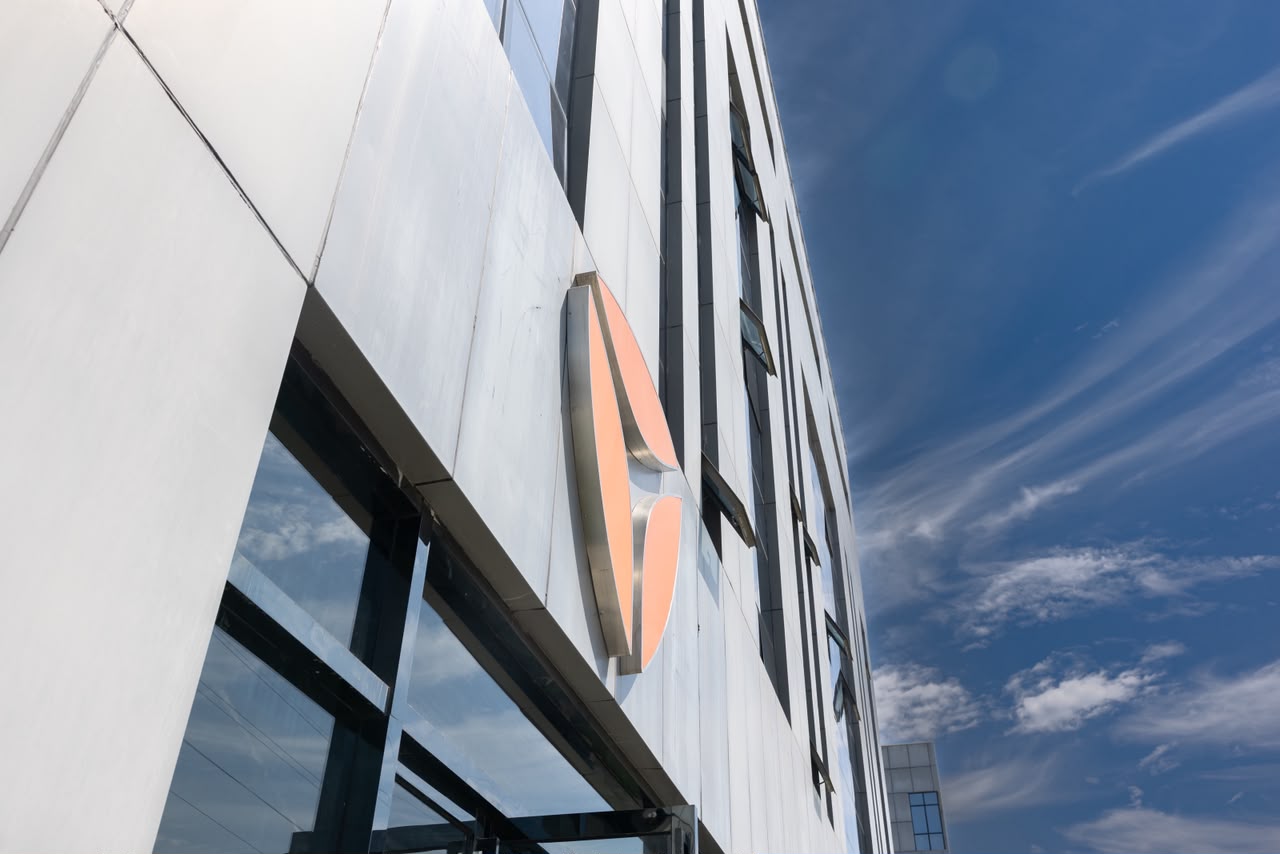
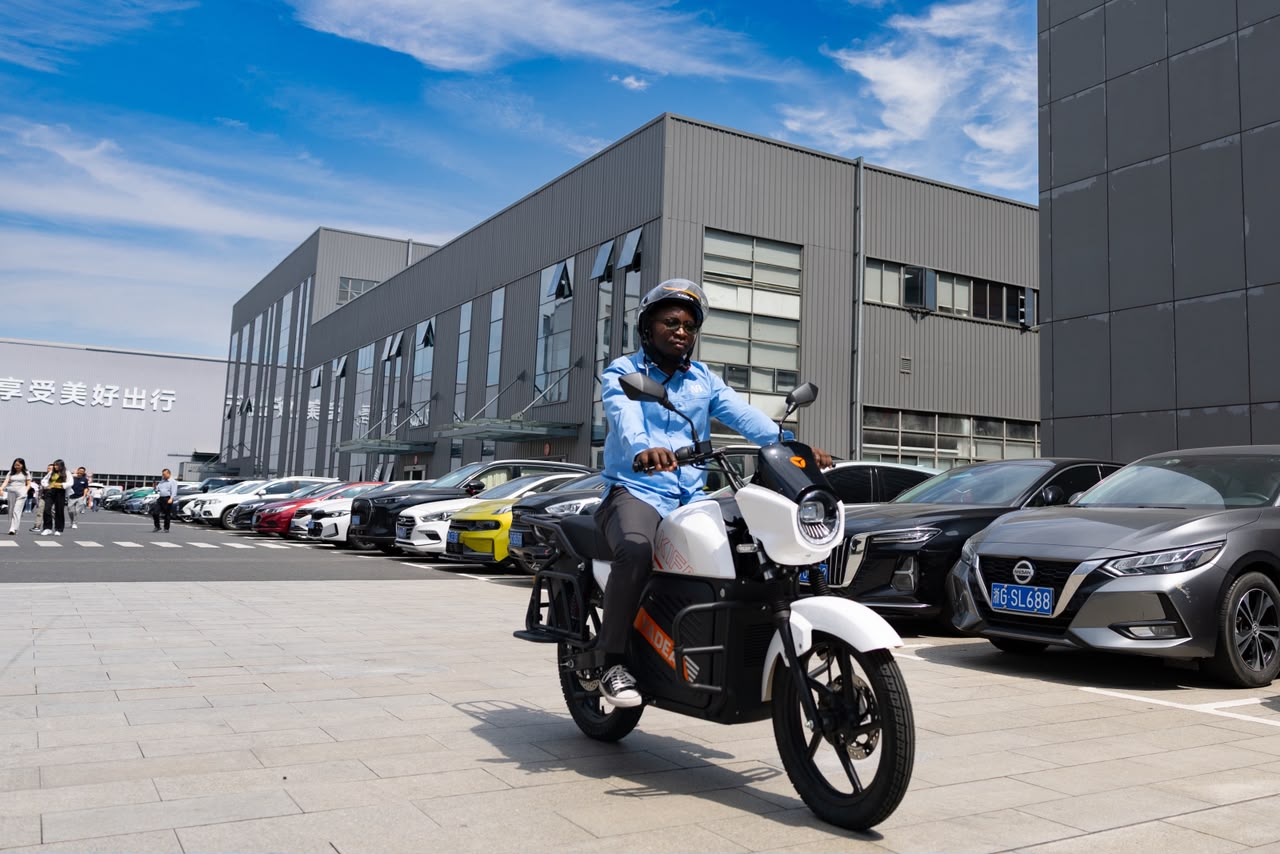
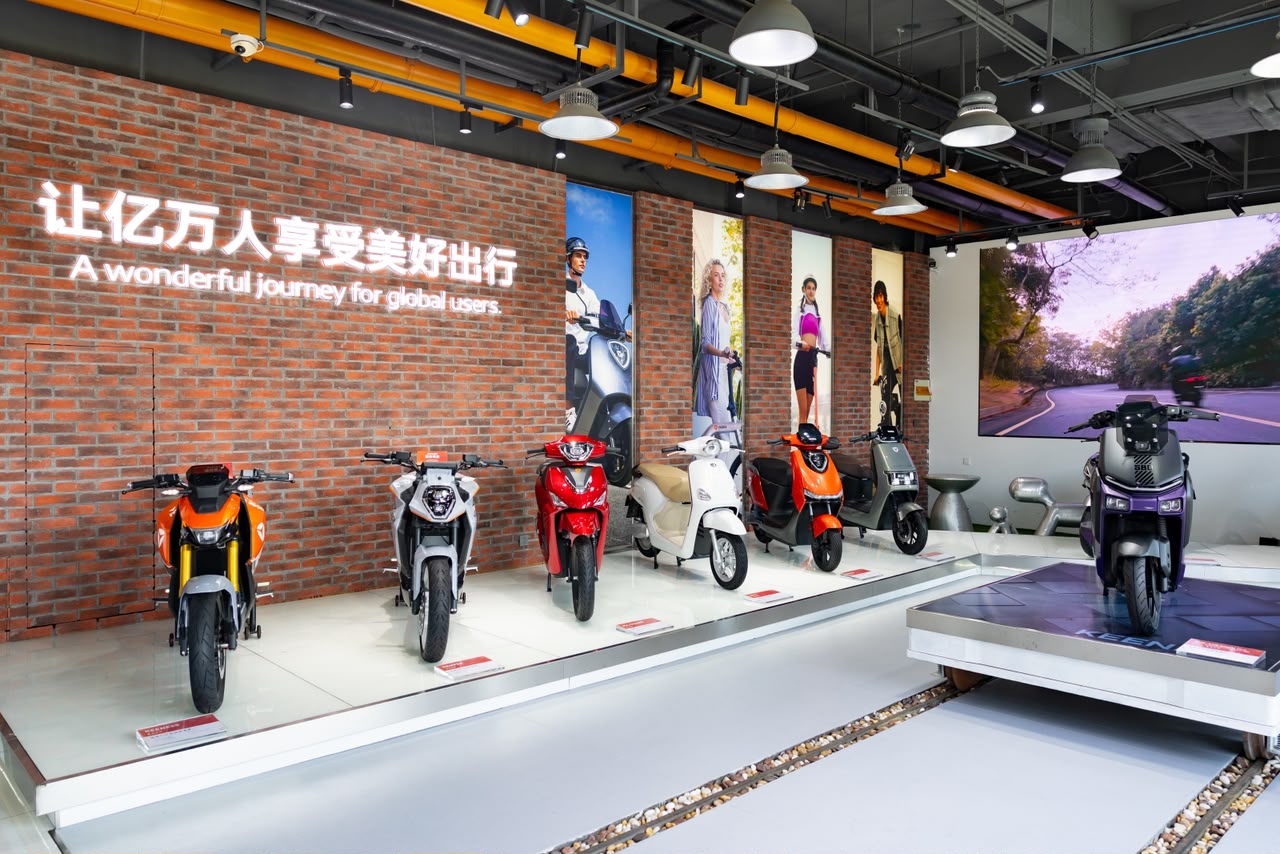
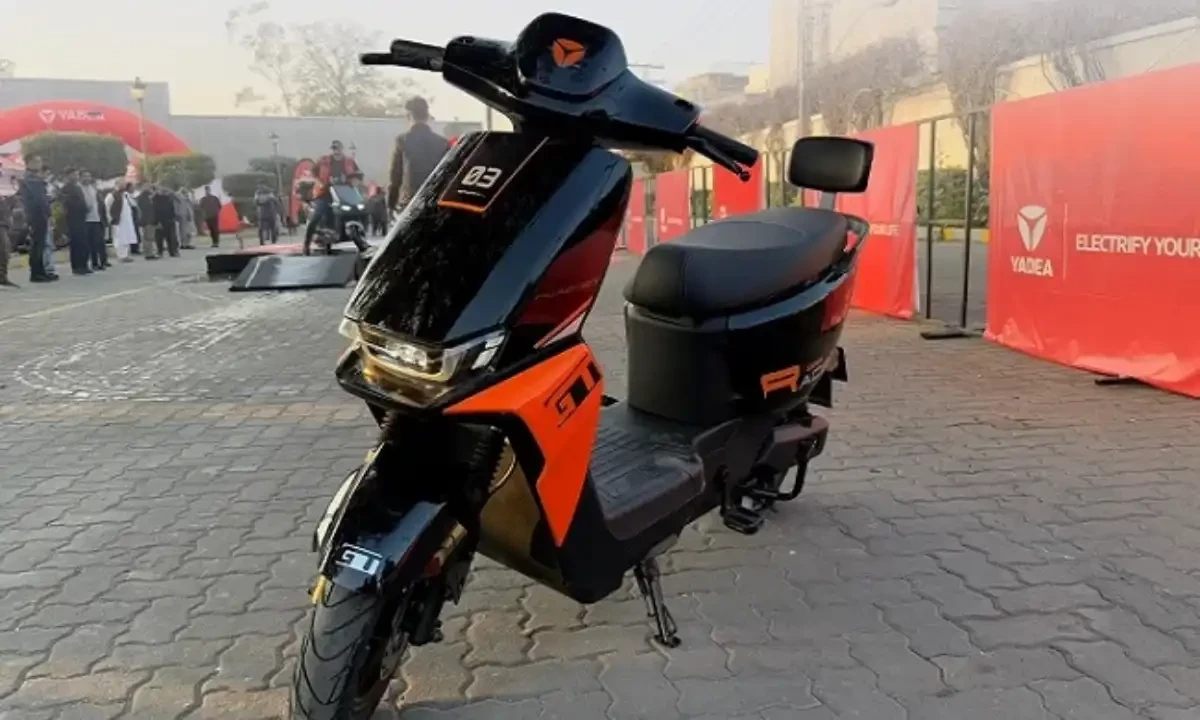
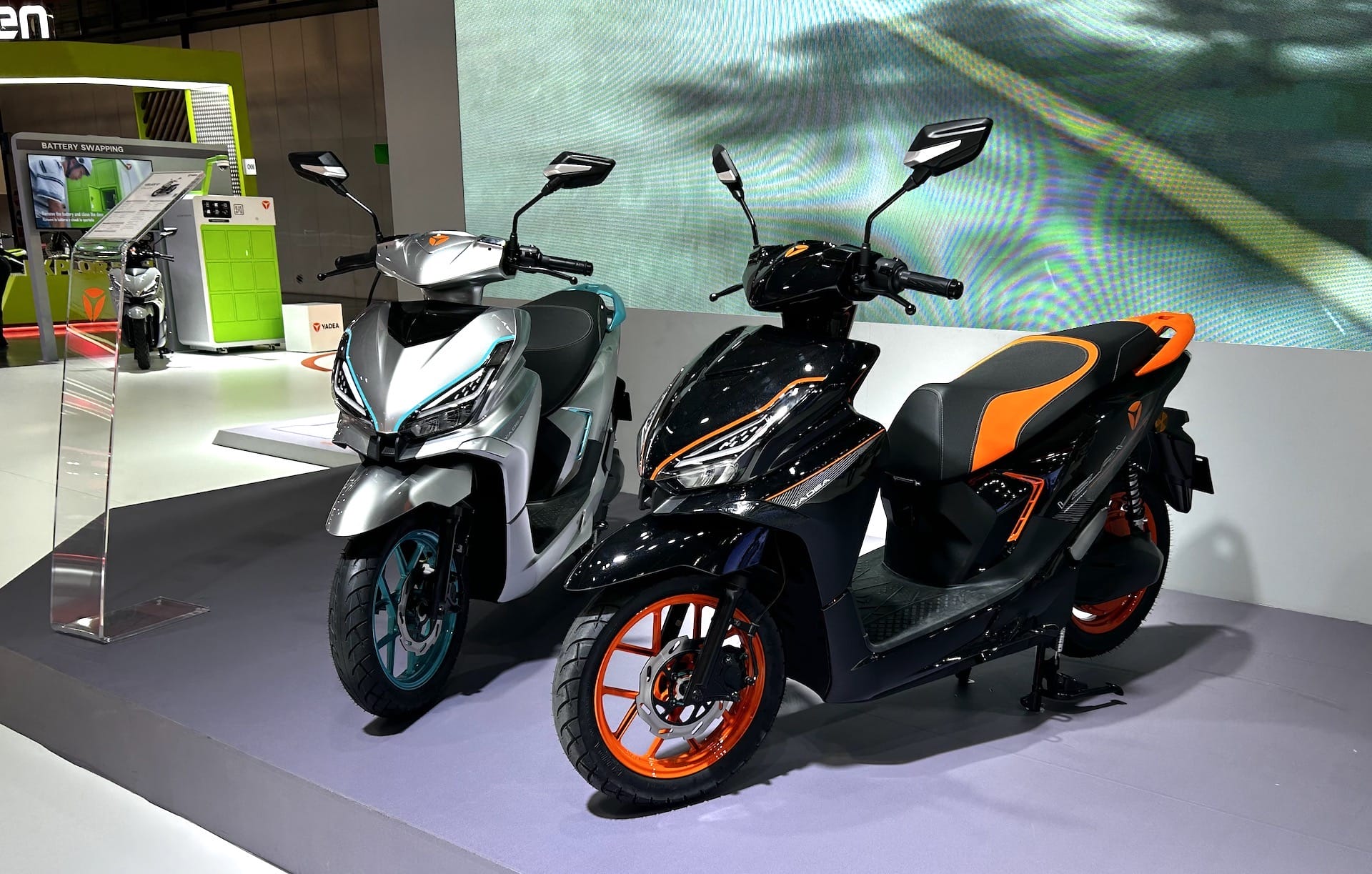
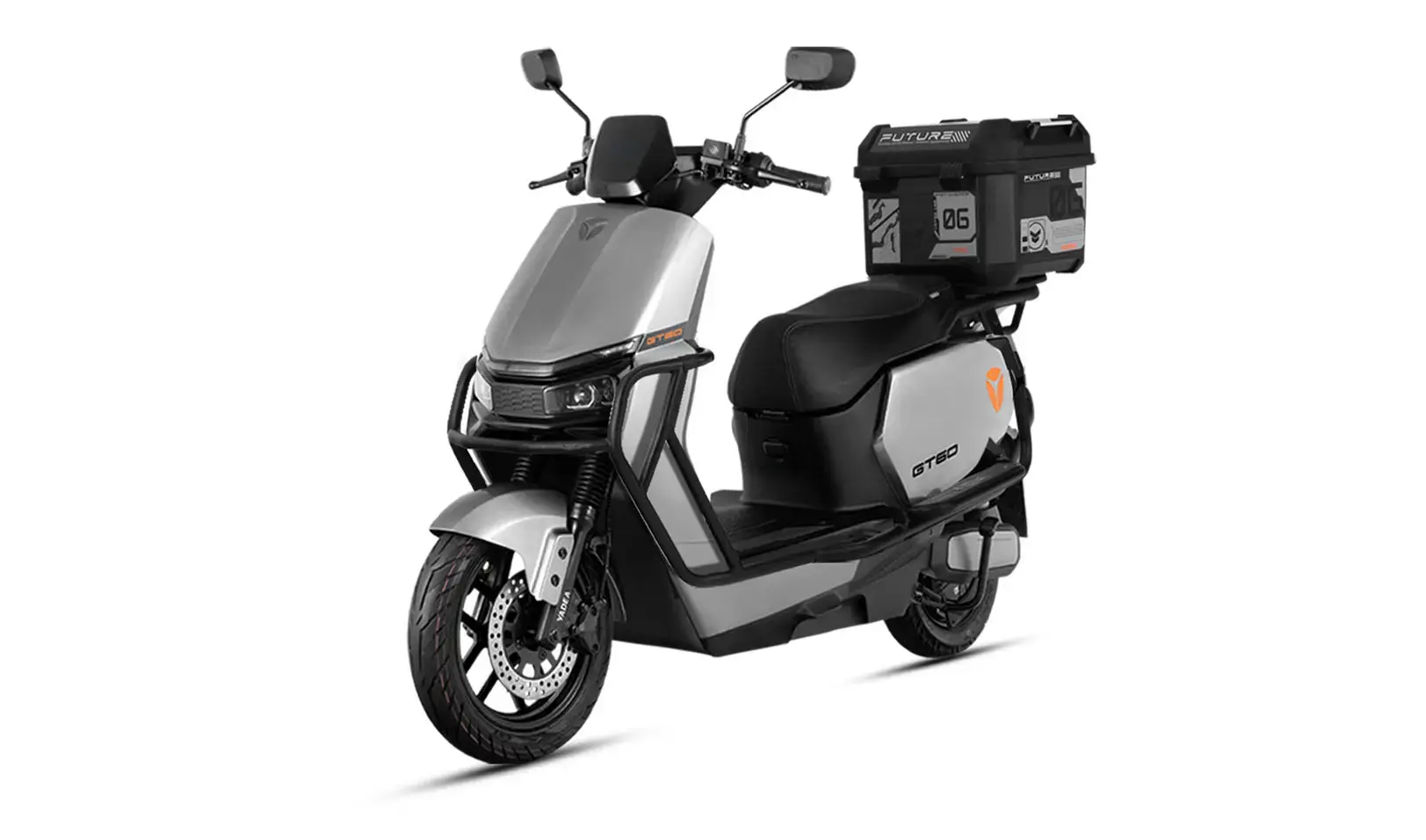
One of Yadea’s electric motorcycle models equipped with advanced technologies aimed at improving efficiency, safety and rider experienceYadea integrates intelligent systems into its electric motorcycles, including technologies that support safer and more efficient ridingThe headquarters of Yadea Technology Group in Wuxi, Jiangsu Province, China, where the global electric mobility company develops and manufactures smart electric two-wheelersA visitor tests a Yadea electric motorcycle during a demonstration at the company’s facility in Wuxi, experiencing the performance of smart electric mobilityVisitors experience Yadea’s electric vehicles, which combine battery technology, intelligent systems and comfortable design for everyday transportYadea’s electric motorcycles represent the company’s vision of cleaner, smarter and more accessible mobility solutions for markets around the world, including RwandaA range of Yadea electric motorcycles displayed at the company’s facility in Wuxi, showcase different models designed for urban mobility needsCES 2023 saw the US debut of the all-new high-speed straddle electric motorcycle series Yadea Keeness VFD
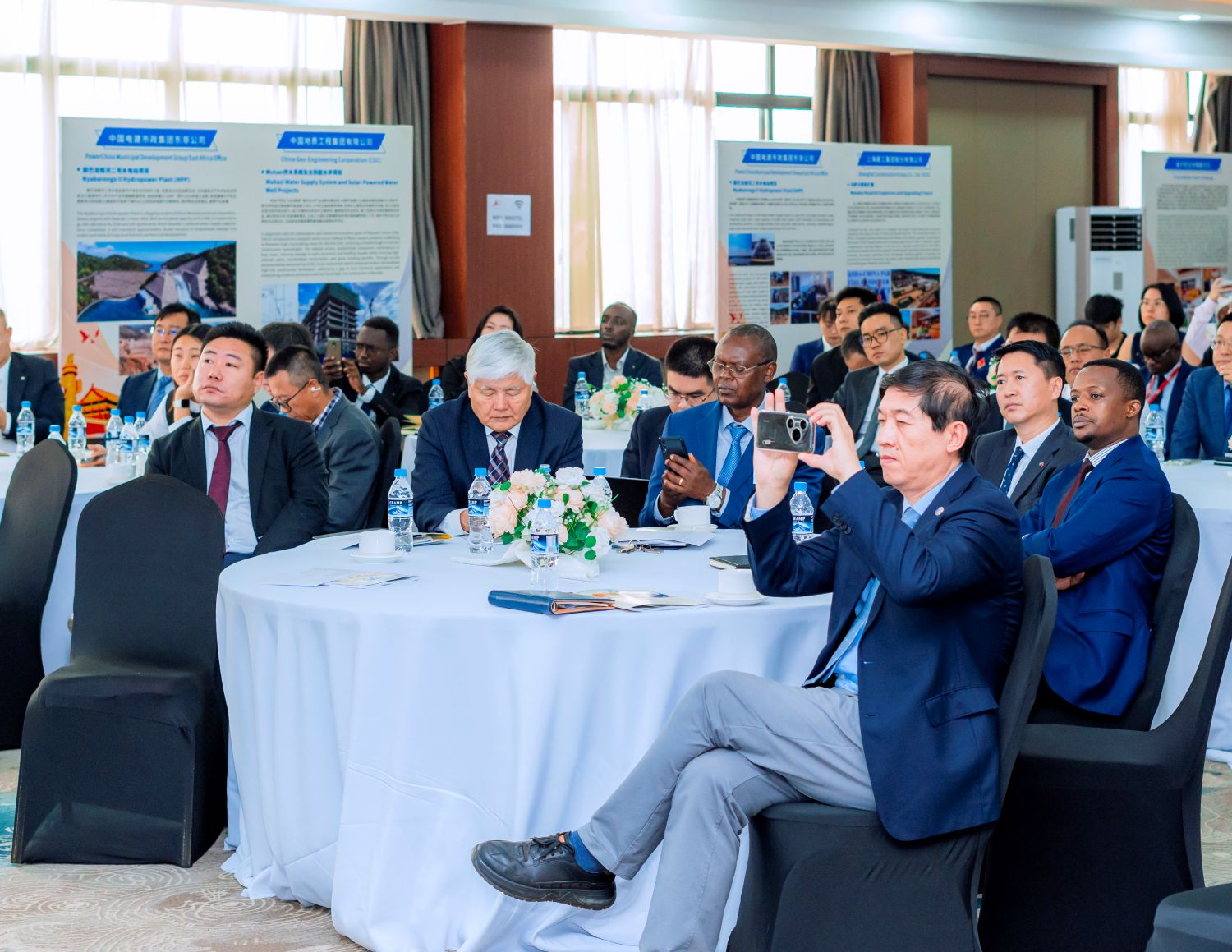
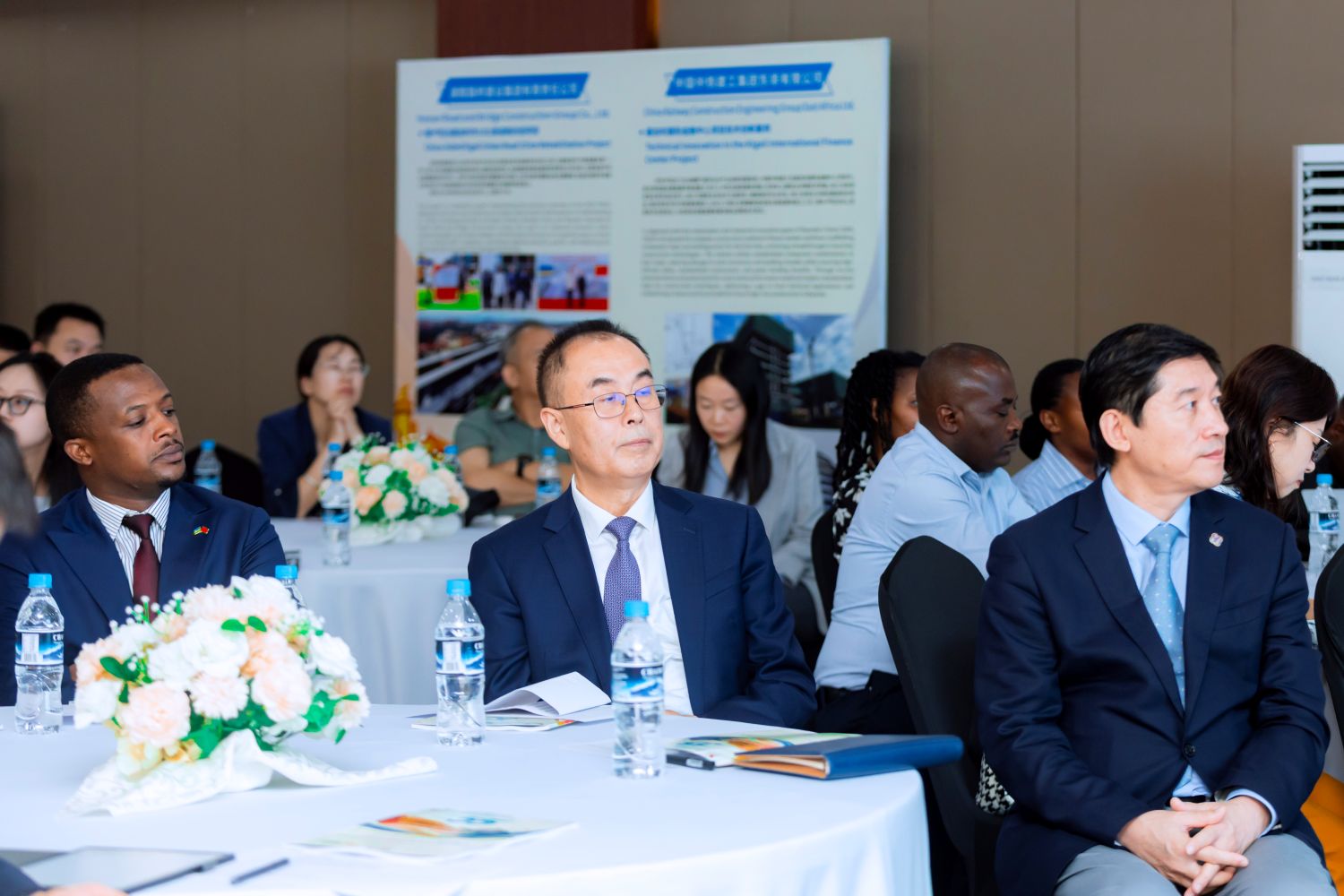
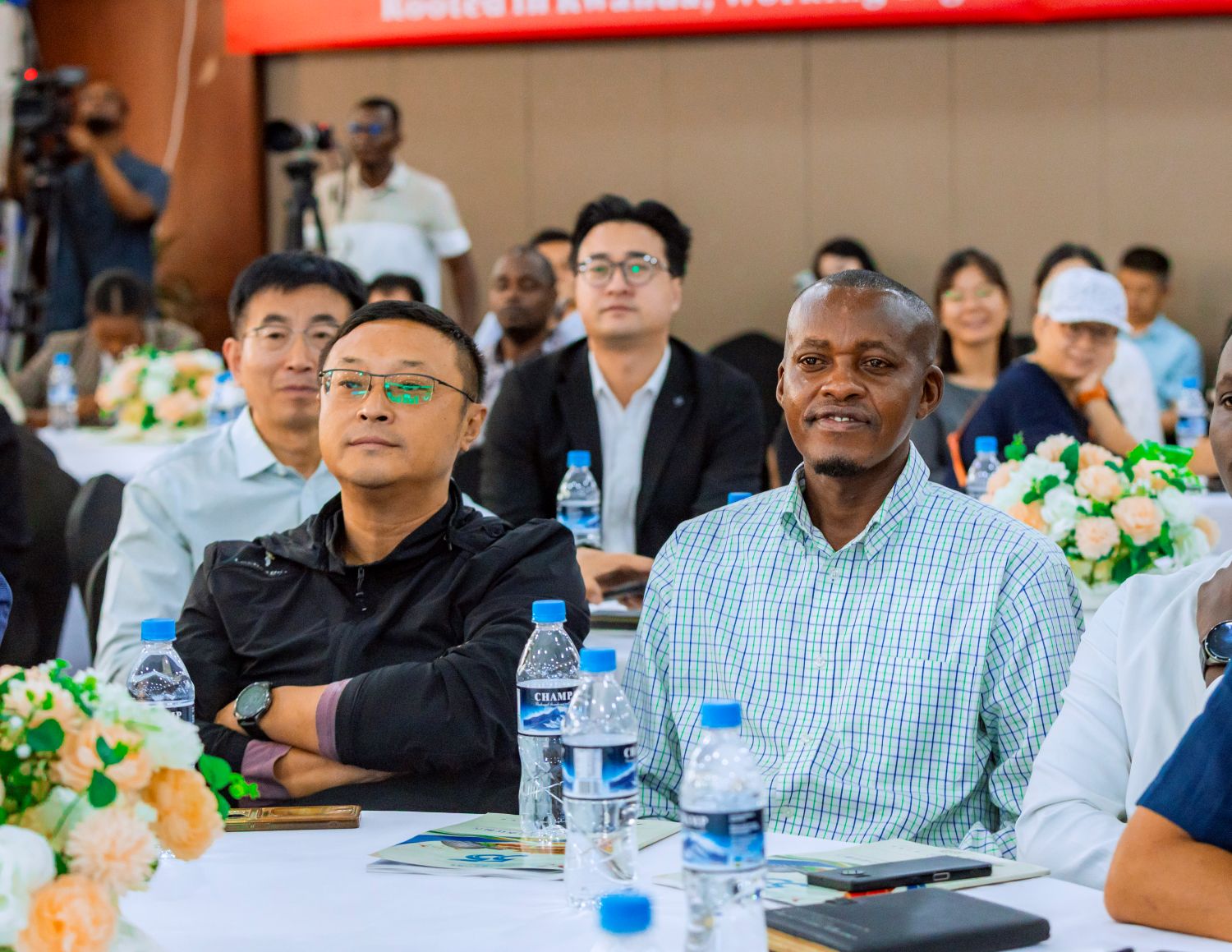
The commitment was made on Thursday, September 17, 2026, during a ceremony at M Hotel in Kigali that also marked the launch of the first Corporate Social Responsibility (CSR) Report of Chinese Enterprises in Rwanda and the inaugural artificial intelligence lecture under the Luban Classroom programme.
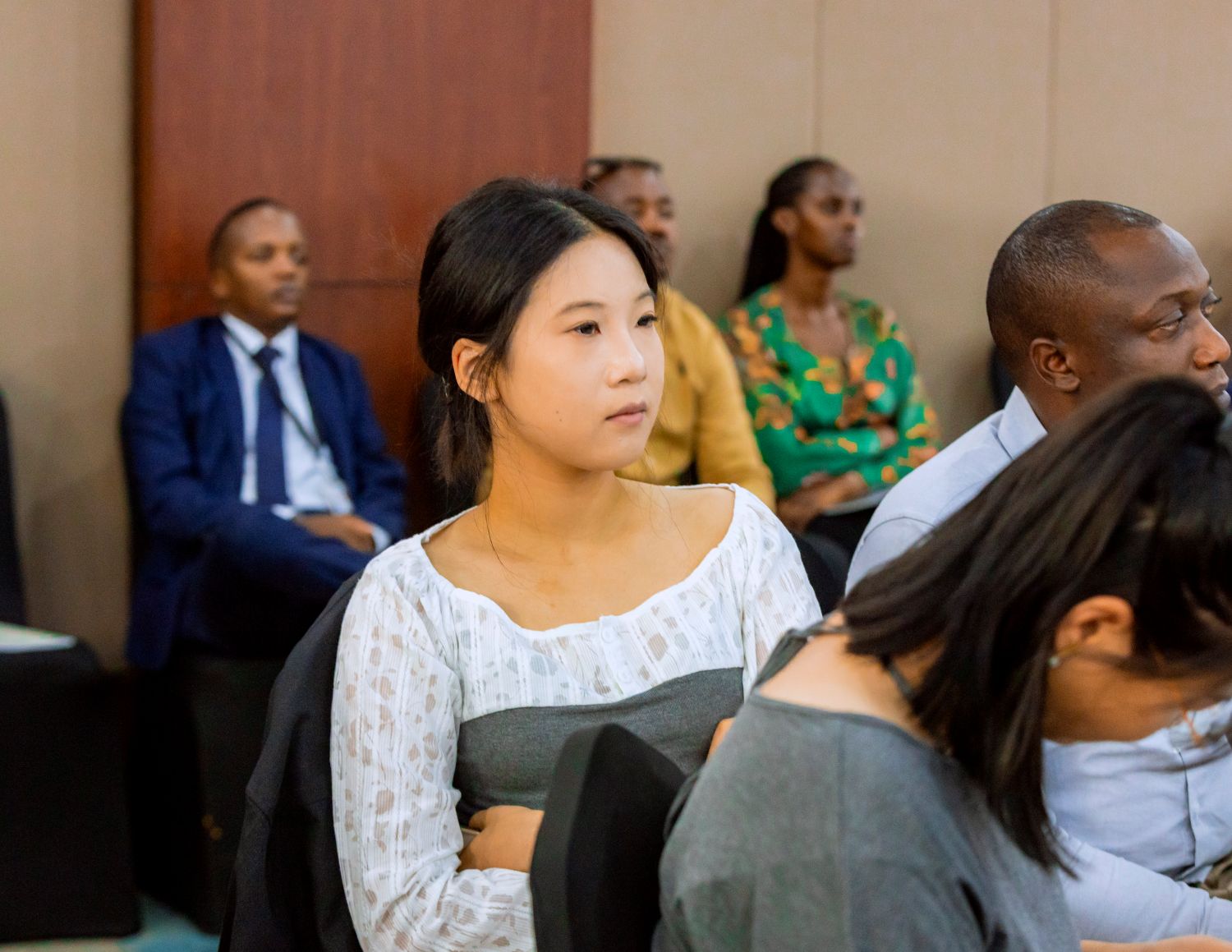
The event brought together representatives of Chinese and Rwandan businesses, government institutions and other stakeholders to discuss responsible investment, sustainable mining, corporate social responsibility, skills development and technology.
Speaking at the ceremony, Chinese Ambassador to Rwanda Gao Wenqi said responsible business practices are essential to building lasting cooperation between Chinese companies and their host communities.
“As a responsible major developing country, the Chinese government is committed to guiding Chinese enterprises to comply with the laws and regulations of China and host countries, to regulate business conduct, maintain sound market order, promote industry self-discipline and continuously improve social and environmental performance,” Gao said.
He said responsible business conduct should not be viewed solely as a government requirement but also as a foundation for trust, quality and long-term partnerships.
“This is not only a policy requirement, but also a foundation of trust, quality and long-term cooperation,” he added.
Gao highlighted the contribution of Chinese enterprises to Rwanda’s economic and social development through job creation, skills transfer and investment across different sectors.
“In Rwanda, Chinese enterprises have been working hard, creating jobs, transferring skills, contributing to economic and social development,” he said.
Report highlights contribution of Chinese firms
The 2026 Social Responsibility Report of Chinese Enterprises in Rwanda, published as Rwanda and China mark 55 years of diplomatic relations, documents the contribution of Chinese companies to infrastructure, employment, education, healthcare, community welfare and environmental protection.
The report details that China Road and Bridge Corporation (CRBC), which has operated in Rwanda for 52 years, has completed more than 90 projects and constructed about 1,500 kilometres of roads. The report says CRBC has created more than 500,000 jobs for Rwandans over its 52 years of operations in the country.
The Kivu Belt Road project alone employed 1,500 local workers, while PowerChina’s Nyabarongo II hydropower project provided 1,064 local jobs.
In manufacturing, C&D Garment employs more than 6,000 local workers, with women accounting for 80% of its workforce. Average wages at the company are reported to be more than 20% above Rwanda’s statutory minimum wage.
The report also points to investments in healthcare. The expanded Masaka Hospital, constructed by Shanghai Construction Group, has 837 beds and is reported to serve more than 300,000 residents.
Meanwhile, a traditional Chinese medicine programme run by the China Medical Team at Masaka and Kibagabaga hospitals recorded 14,913 patient visits as of July.
Education and skills development are also highlighted. Huawei’s DigiTruck programme trained 1,836 people over the past 12 months, while Forever TVET has trained more than 2,500 graduates.
The Confucius Institute at the University of Rwanda is reported to have reached nearly 30,000 learners through 14 teaching sites over 17 years.
The report also documents community support and emergency response by Chinese enterprises. CRBC says it cleared 48 kilometres of disaster relief roads within 30 hours during the 2025 floods in Rwanda’s Western Province.
Environmental initiatives highlighted in the report include 1,500 hectares of planted bamboo forests out of a 2,129-hectare concession, as well as a 44.28 kWp solar photovoltaic energy-storage system at Forever TVET.
The report presents corporate social responsibility as part of Chinese enterprises’ broader operations in Rwanda, with future priorities including infrastructure, education and culture, healthcare, employment, community welfare and green development.
Mining initiative
The mineral resources initiative signed during Thursday’s ceremony outlines principles aimed at promoting responsible business conduct in Rwanda’s mining sector.
They include compliance with laws and national policies, business ethics and fair competition, engagement with local communities, protection of workers’ rights, responsible procurement, environmental protection and transparent communication.
Gao encouraged Chinese enterprises to strengthen engagement with local communities and Rwandan partners.
“We encourage Chinese enterprises to listen to local communities, work with Rwandan partners and turn responsibility into concrete action,” he said.
The Acting CEO of the Rwanda Private Sector Federation (PSF), Callixte Kanamugire, said Rwanda’s mining sector has significant potential but must be developed responsibly to create lasting value for the country.
“The private sector must ensure that mineral development creates lasting value for Rwanda through local processing, employment creation, skills development and stronger participation of Rwandan businesses in the supply chain,” he said.
He welcomed the commitment by participating companies to comply with laws and regulations, protect the environment, safeguard occupational health and safety, respect local communities, and promote transparency and sustainable mining practices.
Rwanda is the first country outside China where Chinese mining enterprises have collectively responded to the initiative, following its launch at the China Mining Conference and Exhibition in Tianjin on September 10, 2026.
Kanamugire called for deeper cooperation in responsible investment, stronger partnerships between Chinese and Rwandan businesses through local procurement, subcontracting and technology transfer, and greater investment in professional training and technical education.
He said responsible business should go beyond charitable donations to include decent employment, workers’ rights, workplace safety, environmental protection, local sourcing and knowledge transfer.
AI skills development
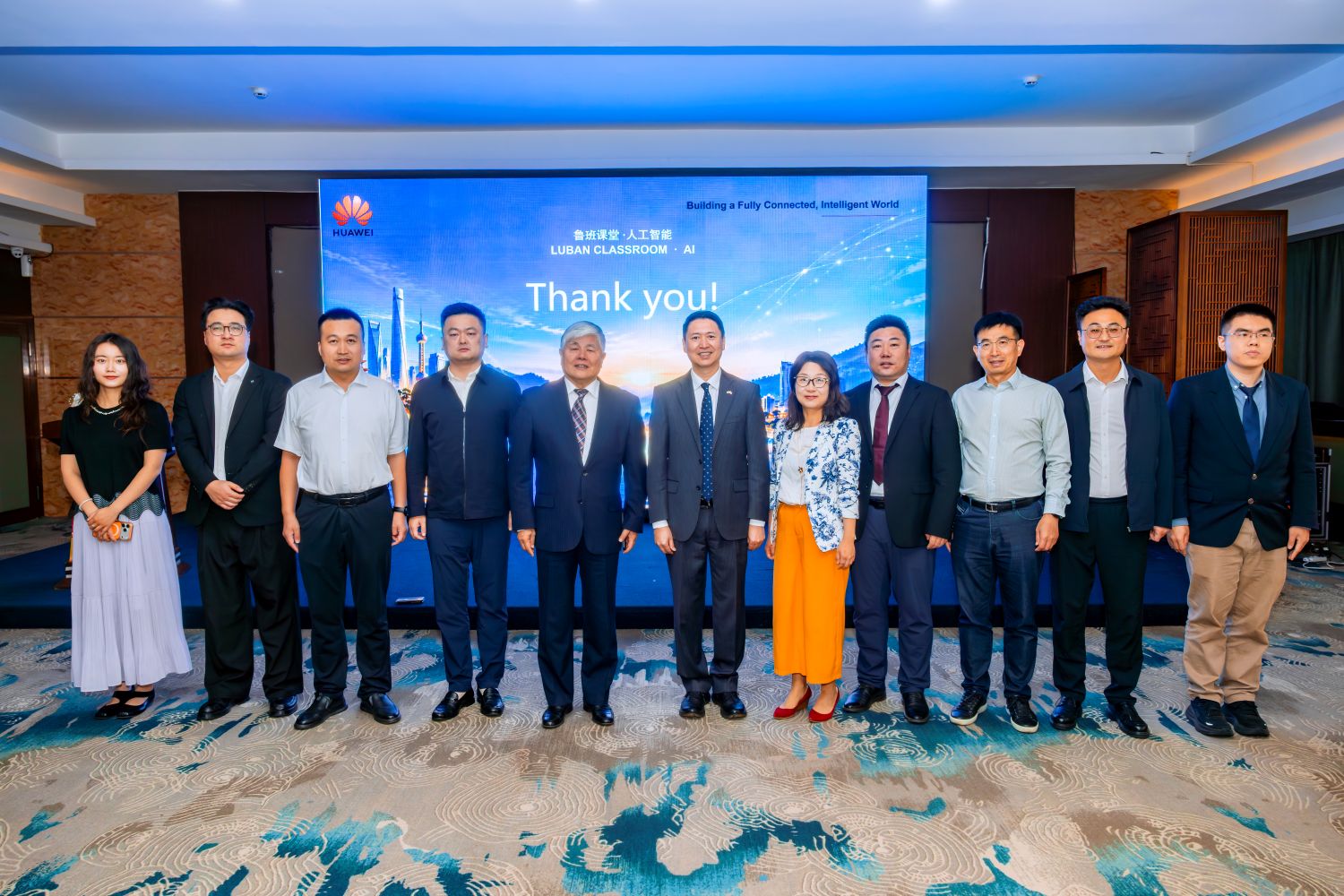
The ceremony also featured the inaugural artificial intelligence lecture of the Luban Classroom programme, which focuses on knowledge sharing, skills development and practical cooperation between China and Rwanda.
Kanamugire said AI and digital technology are transforming the global economy, making cooperation in education and skills development increasingly important.
He said Rwanda has placed innovation, technology and human capital at the centre of its development agenda, and encouraged institutions and companies involved in the Luban Classroom to ensure its training remains connected to labour-market needs.
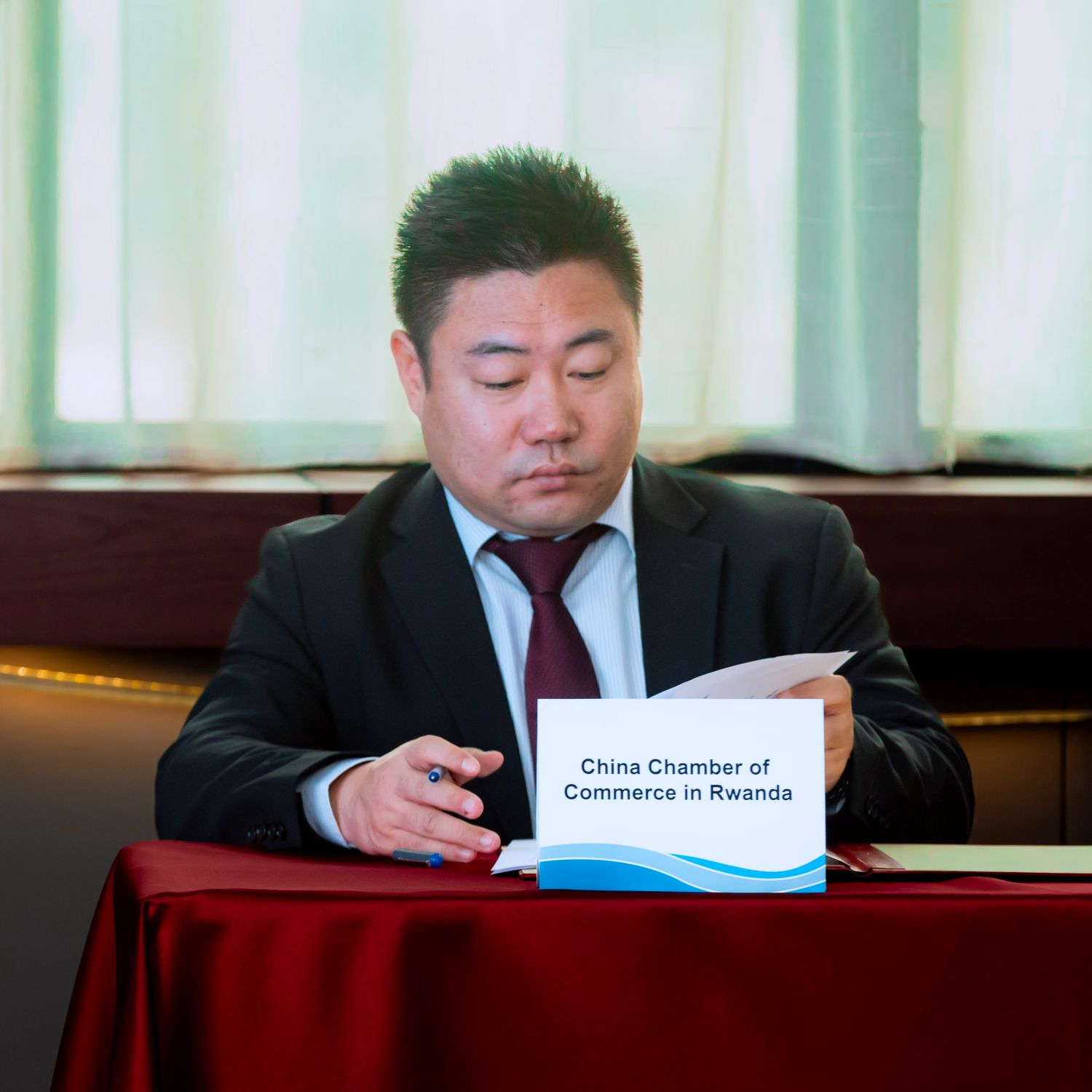
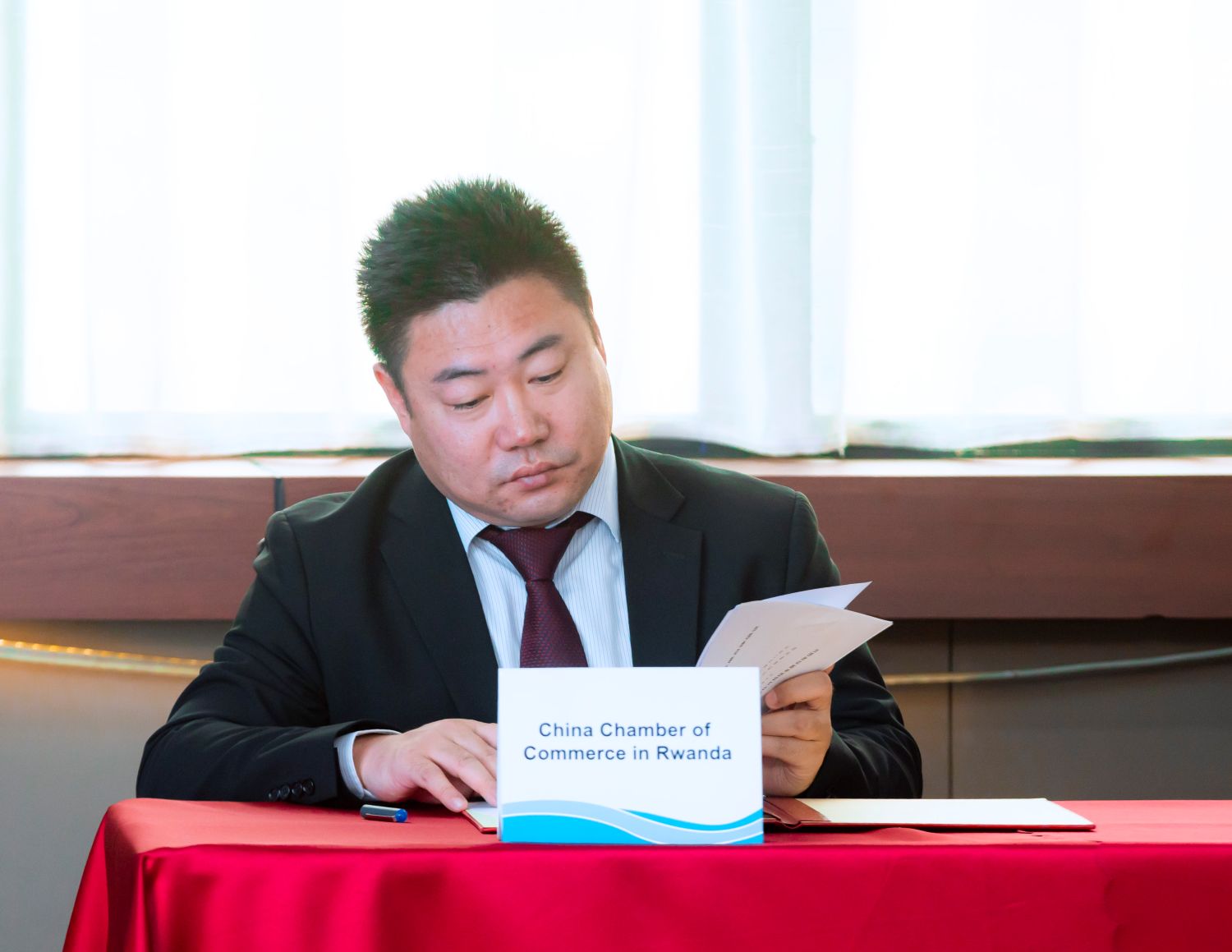
The Luban Classroom was initiated by the Chinese Embassy in Rwanda and is organised and implemented by the China Chamber of Commerce in Rwanda.
55 years of diplomatic ties
The event formed part of activities marking the 55th anniversary of diplomatic relations between Rwanda and China.
Gao said China remains committed to supporting Rwanda’s development ambitions through continued cooperation.
“This year marks the 55th anniversary of our diplomatic relations, so I have every reason to believe that our bilateral relations have entered the best period in history. Rwanda and China are good friends and we are comprehensive strategic partners,” he said.
He added that China is ready to work with Rwanda to implement outcomes of the Forum on China-Africa Cooperation, promote high-quality Belt and Road cooperation and support Rwanda’s development goals.
A delegation representing 15 Chinese enterprises is visiting Rwanda from September 15 to 20 as part of the activities. The delegation includes Diao Chunhe, Executive Chairman of the Alliance of Chinese Business in Africa for Social Responsibilities, and Xin Xiuming, Vice President of the China International Contractors Association.
The ceremony concluded with renewed commitments to responsible mineral-resource cooperation, stronger corporate social responsibility, environmental protection, skills development and technology partnerships between Rwanda and China.
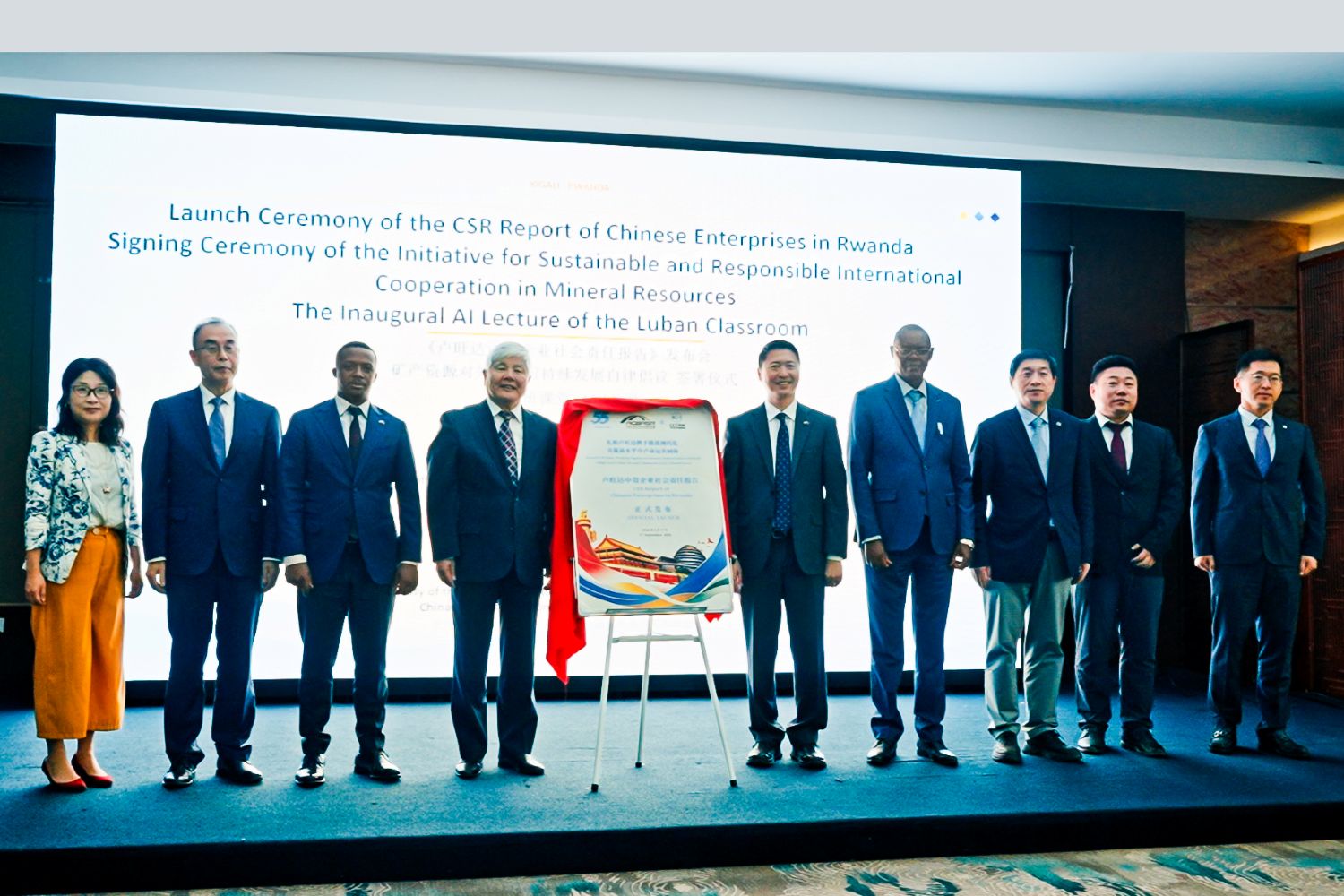
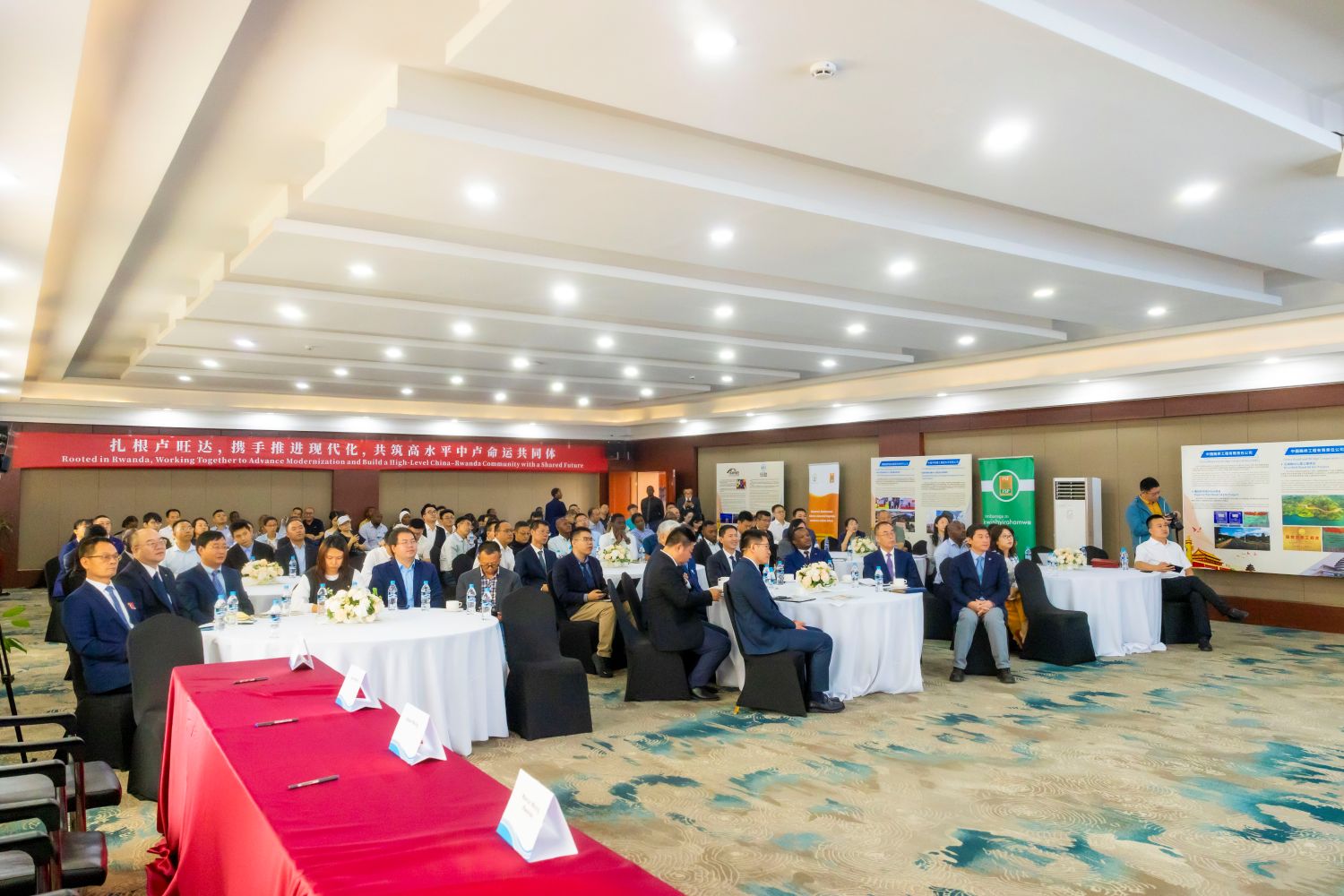
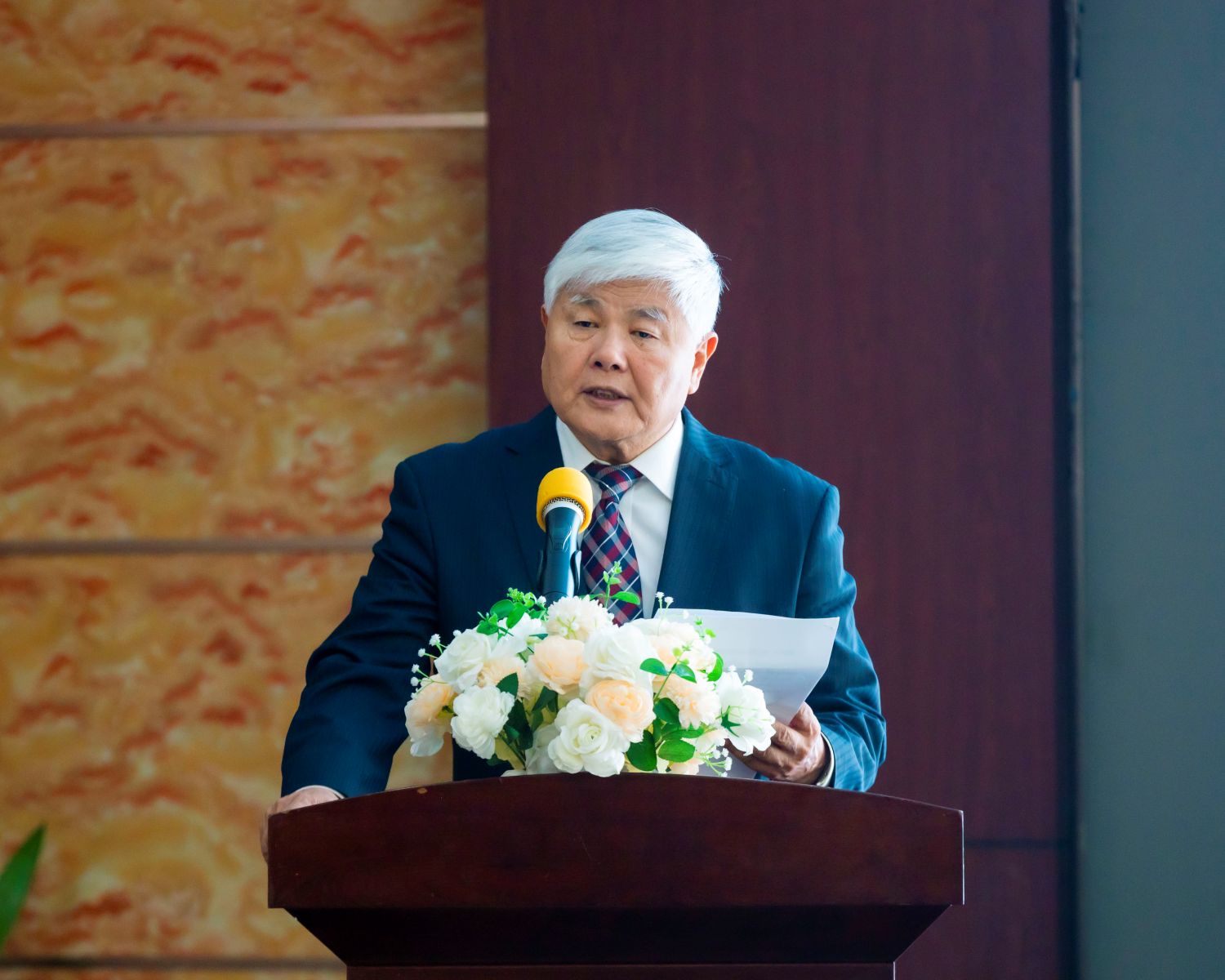
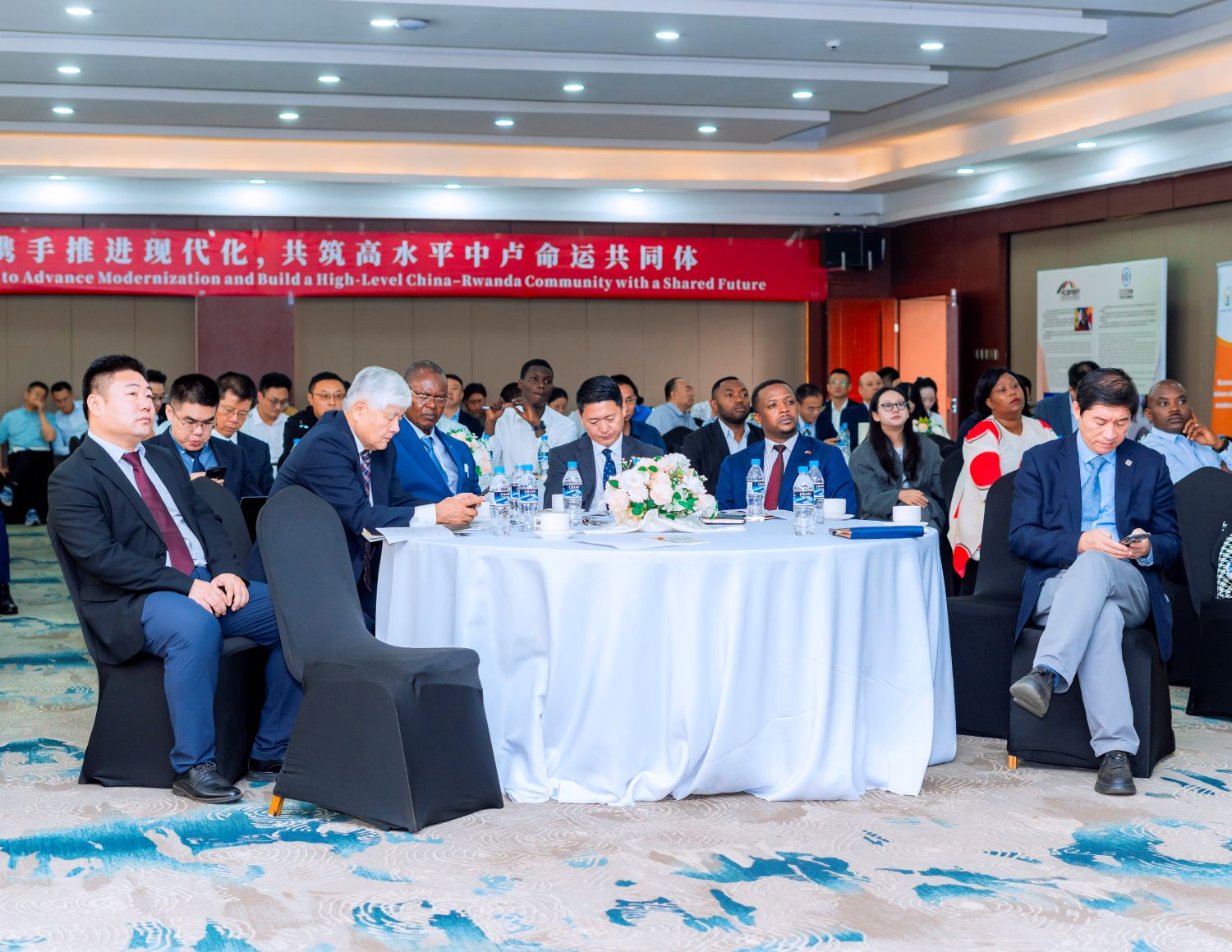
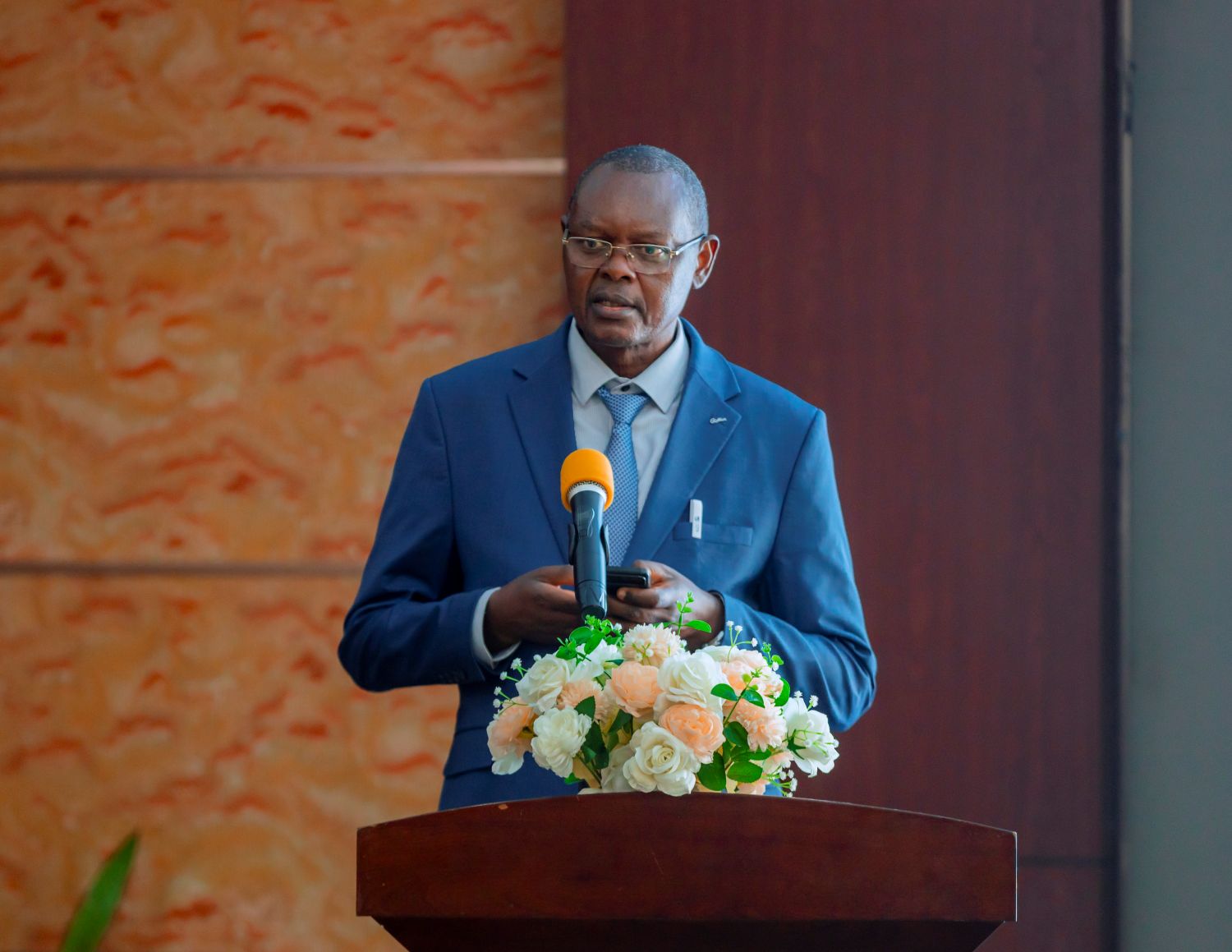
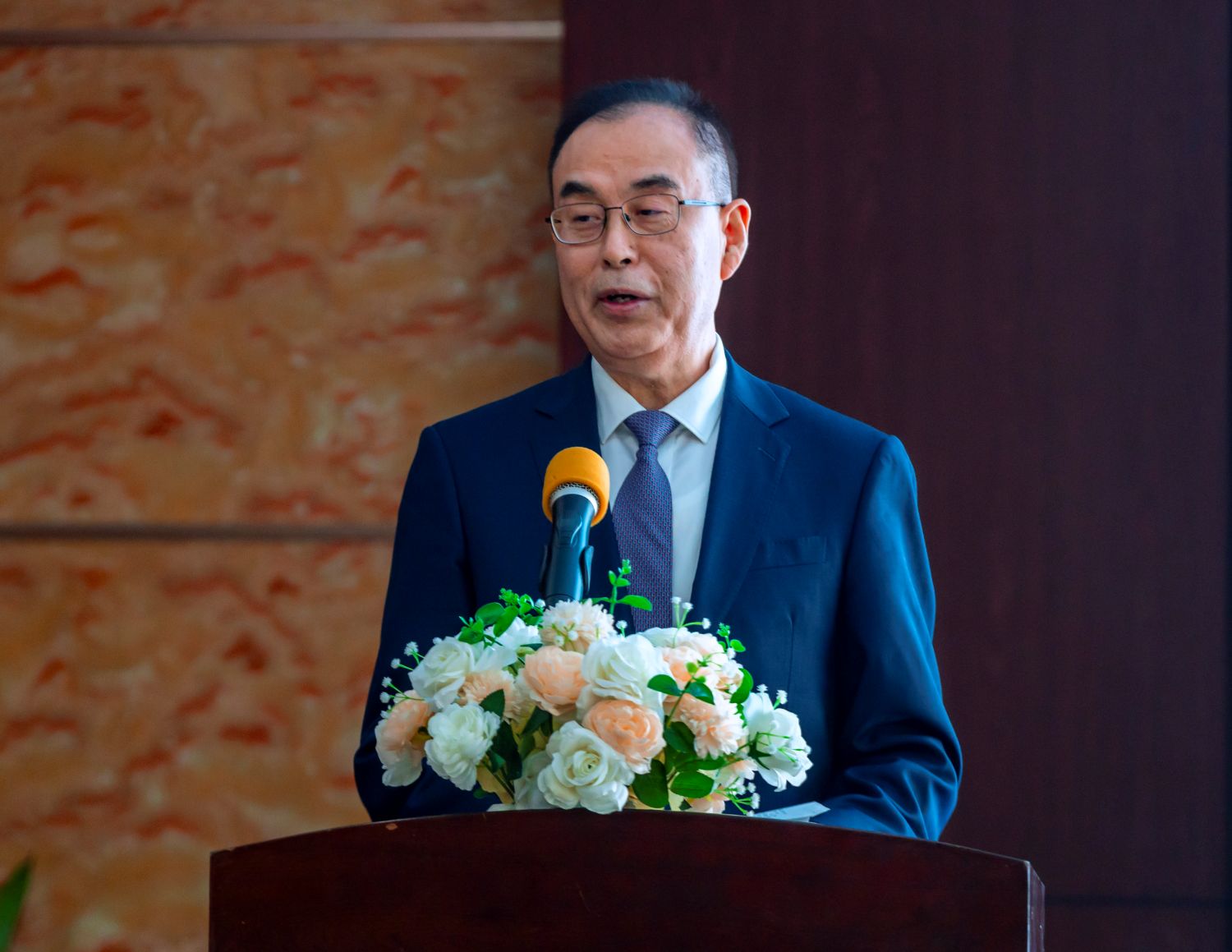
The ceremony marked the launch of the first Corporate Social Responsibility (CSR) Report of Chinese Enterprises in Rwanda and the inaugural artificial intelligence lecture under the Luban Classroom programme.The event brought together representatives of Chinese and Rwandan businesses, government institutions and other stakeholders to discuss responsible investment, sustainable mining, corporate social responsibility, skills development and technology.The report also documents community support and emergency response by Chinese enterprises. The Acting CEO of the Rwanda Private Sector Federation (PSF), Callixte Kanamugire, said Rwanda’s mining sector has significant potential but must be developed responsibly to create lasting value for the country.Chinese Ambassador to Rwanda Gao Wenqi (center) said responsible business practices are essential to building lasting cooperation between Chinese companies and their host communities.
GCC 2026 is a space for purposeful, action-oriented dialogue on the most significant opportunities and challenges shaping the future of the coffee sector. It brings together women-led cooperatives, policymakers, researchers, development partners, and sector stakeholders from Africa, Latin America, and beyond, not to mark what has been achieved, but to commit to what must come next.
Over three days, more than 250 delegates will convene in Kigali to forge lasting partnerships, exchange practical knowledge, and advance a more resilient and connected coffee sector. The programme will feature plenary discussions, thematic roundtables, peer learning exchanges, B2B sessions, and field visits to Sustainable Growers Rwanda cooperative partners.
Sessions will address women’s economic leadership, market access, climate resilience, sustainable finance, agricultural research, policy dialogue, and the growing role of artificial intelligence and digital tools in transforming how smallholder farmers produce, trade, and compete.
“The strongest coffee economies are not built by one actor. They are built by all of us, together,” said Christine Condo, Chief Executive Officer, Sustainable Growers Rwanda.
With the long-standing support of Bloomberg Philanthropies and in alignment with Rwanda’s economic development priorities, GCC 2026 reaffirms Sustainable Growers Rwanda’s commitment to unlocking the power of women coffee producers, ensuring they are recognised, supported, and positioned to lead the sector’s future.
About Sustainable Growers
Sustainable Growers Rwanda is a non-governmental organisation that works alongside smallholder women coffee farmers to improve productivity, strengthen market access, and build sustainable livelihoods through training, trade, and strategic partnerships. With the long-standing support of founding partner Bloomberg Philanthropies and in collaboration with the governments of Rwanda, the Democratic Republic of Congo, and Tanzania, the organisation has directly supported over 77,000 women coffee farmers, creating a positive impact for over 341,000 family members across the region.
Sustainable Growers believes that when women coffee producers have greater opportunities to lead stronger businesses, communities, and coffee economies are built.
For partnership enquiries and conference registration:
GDP at current market prices reached Rwf7.17 trillion in the quarter, up from Rwf5.8 trillion in the second quarter of 2025, NISR said in its latest GDP report released on September 15. Services accounted for 51% of GDP, followed by industry at 23% and agriculture at 21%, while indirect taxes contributed 5%.
Industry was the fastest-growing sector, expanding by 18% year-on-year. Construction activities grew by 24%, while mining and quarrying increased by 26% and manufacturing rose by 10%.
NISR attributed the strong industrial performance to increased construction activity, which boosted demand for locally manufactured construction materials.
Manufacturing growth was driven by a 51% increase in the production of metal products, machinery and equipment. Manufacturing of non-metallic mineral products grew by 22%, while textiles, clothing and leather products increased by 13%.
Services grew by 7% in the second quarter. Wholesale and retail trade increased by 18%, while transport services grew by 7%.
Information and communication services recorded particularly strong growth of 29%, while administration and support services and professional services each grew by 9%. Hotels and restaurants expanded by 5%, while financial services grew by 4%.
Agriculture grew by 4% in the quarter.
Food crop production increased by 5%, but export crop production fell by 20%, mainly due to a 33% decline in coffee production. The decline was partly offset by an 18% increase in tea production.
The latest GDP figures come as Rwanda’s economy continues to face external pressures, with NISR noting that economic performance in the second quarter remained resilient despite spillovers from geopolitical tensions in the Middle East.
GDP at current market prices reached Rwf7.17 trillion in the quarter, up from Rwf5.8 trillion in the second quarter of 2025, NISR said in its latest GDP report released on September 15.
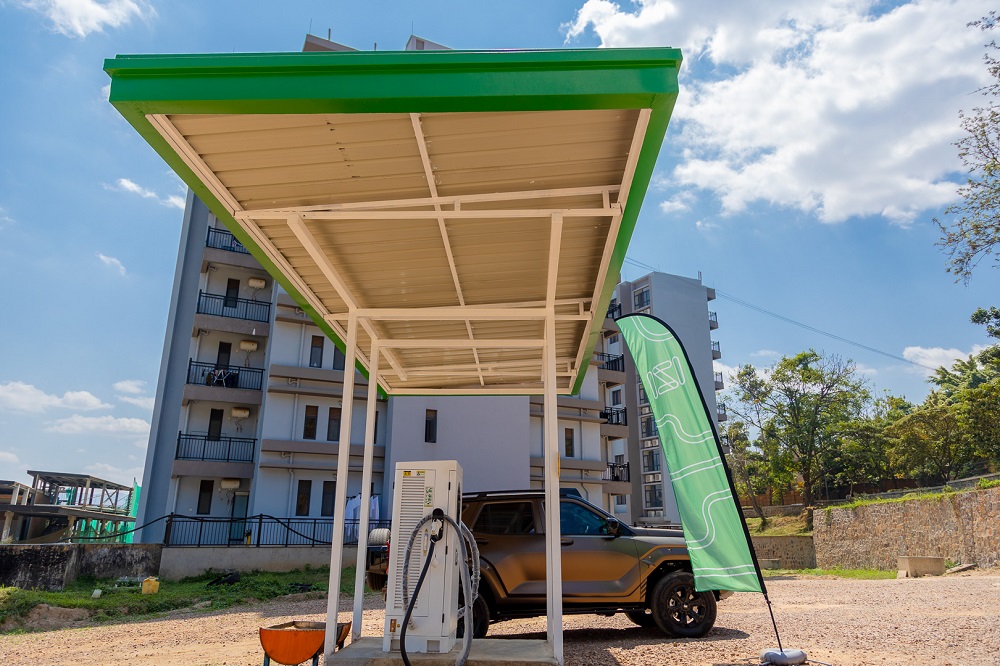
The move is intended to expand the charging network across the country and make it easier for electric vehicle owners to travel without worrying about where to recharge.
Rwanda is expected to have 218 electric vehicle charging stations by 2027.
Byiringiro Alfred, Chief Technical Advisor for Transport at MININFRA, said the government has already identified priority locations for charging infrastructure and will work with private investors to develop the sites.
He made the remarks at the Renewable Energy for Sustainable Growth (RE4SG) 2026 in Kigali.
“Some areas may not offer enough commercial returns to attract private investment in electric vehicle charging infrastructure. In such cases, the government needs to support private investors and may also invest directly to ensure the necessary facilities are built,” Byiringiro said.
He said a reliable charging network was essential to the wider adoption of electric vehicles.
“You cannot promote electric mobility without adequate charging infrastructure. It is essential to have that infrastructure in place,” he said.
The government has already supported the sector by helping investors access land for charging stations and providing tax incentives.
Since 2021, Rwanda has introduced a range of measures to encourage the adoption of electric vehicles, including reducing or removing some taxes on electric vehicles and related equipment.
MININFRA is also working on standards for electric vehicles and charging equipment to ensure that products entering the Rwandan market meet required quality and durability standards.
“We need appropriate standards for both vehicles and charging infrastructure to ensure that people who buy electric vehicles can use them for many years rather than having them last only one or two years,” Byiringiro said.
More than 7,000 electric vehicles had been registered in Rwanda by the end of 2024, following their introduction to the country in 2020.
Rwanda plans to fund EV charging stations in areas with limited private investment.
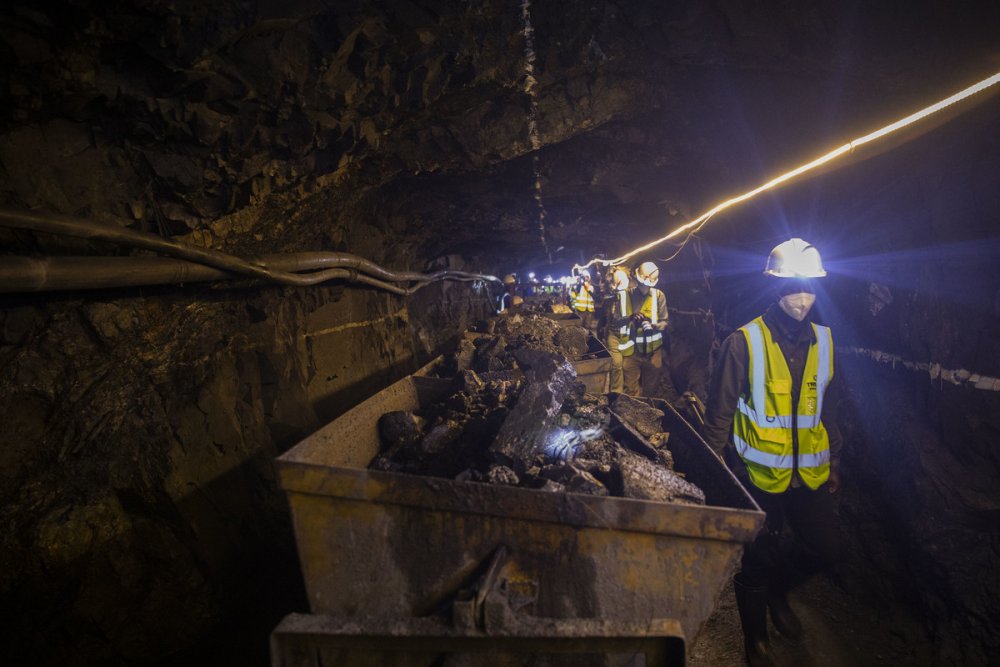
Under the agreement, the government will receive a 25% stake in Almonty Rwanda Pty Ltd in exchange for contributing the Shyorongi tungsten exploration concession and a mineral processing licence, while Almonty will hold the remaining 75%.
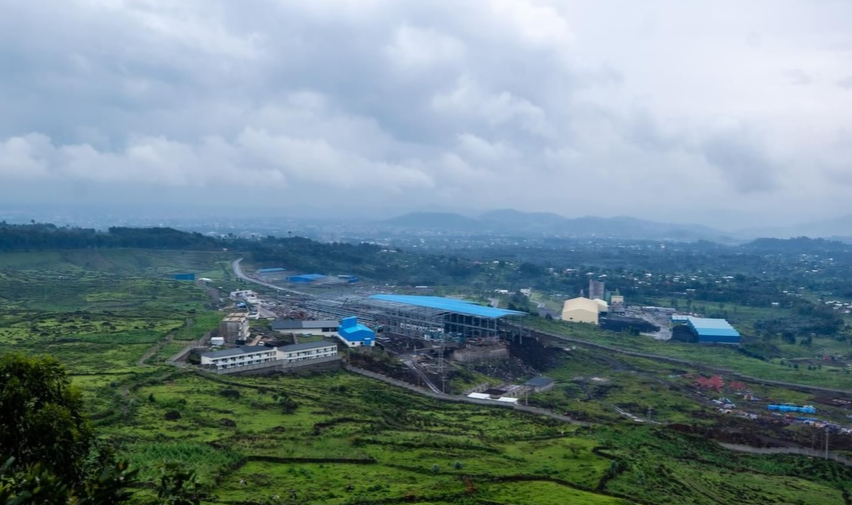
The Shyorongi exploration block covers approximately 32 square kilometres in Rulindo District, Northern Province.
The partnership will initially allow Almonty Rwanda to acquire ore, pre-concentrate and panning tailings from Rwandan mining licence holders, including small-scale operators, for upgrading and sale. The company also plans to use a mobile processing unit near existing tailings dams before establishing a collection and processing plant in Rwanda.
Almonty Chairman, President and CEO Lewis Black said the arrangement would allow the company to work with material already being produced in Rwanda.
“The most immediate opportunity here is the material that is already being produced. Rwanda’s small-scale license holders are producing ore, pre-concentrate and panning tailings today, and this agreement allows us to collect, upgrade and export that material while we build out the collection and processing plant,” he said.
Black said the company would combine Rwanda’s existing production with modern processing, traceability and exploration.
Rwanda Mining Board CEO Alice Uwase said the partnership would contribute to the transformation of the country’s tungsten industry.
“Rwanda is pleased to welcome Almonty as a strategic partner in the development of our tungsten industry. This investment will help to transform our mining sector by introducing world-class processing infrastructure, international standards for environmental and social governance, and a comprehensive training program to develop Rwandan talent,” she said.
Almonty Industries is an international company focused on the mining, processing and trading of tungsten. It is particularly known for taking over underperforming mines or mining projects and upgrading them to improve their operations. The company has projects in South Korea, Portugal and Spain.
Almonty was previously headquartered in Toronto, Canada, but relocated its headquarters to Dillon, United States, in April 2026.
The company is also listed on the Nasdaq stock exchange, one of the world’s major financial markets.
Tungsten is a mineral used to produce hard metals for applications in construction, aircraft, tanks, spacecraft, firearms and ammunition.
The Rwanda Mines, Petroleum and Gas Board (RMB) indicates that Rwanda exports at least 24 tonnes of tungsten every week.
Tungsten is one of the minerals found in significant quantities in Rwanda. The country has a geological zone known as the Tungsten Belt, which stretches from Mageragere in Kigali City through Rulindo and continues to Gifurwe and Bugarama in Burera District.
Rwanda has joined Almonty in new tungsten exploration venture.
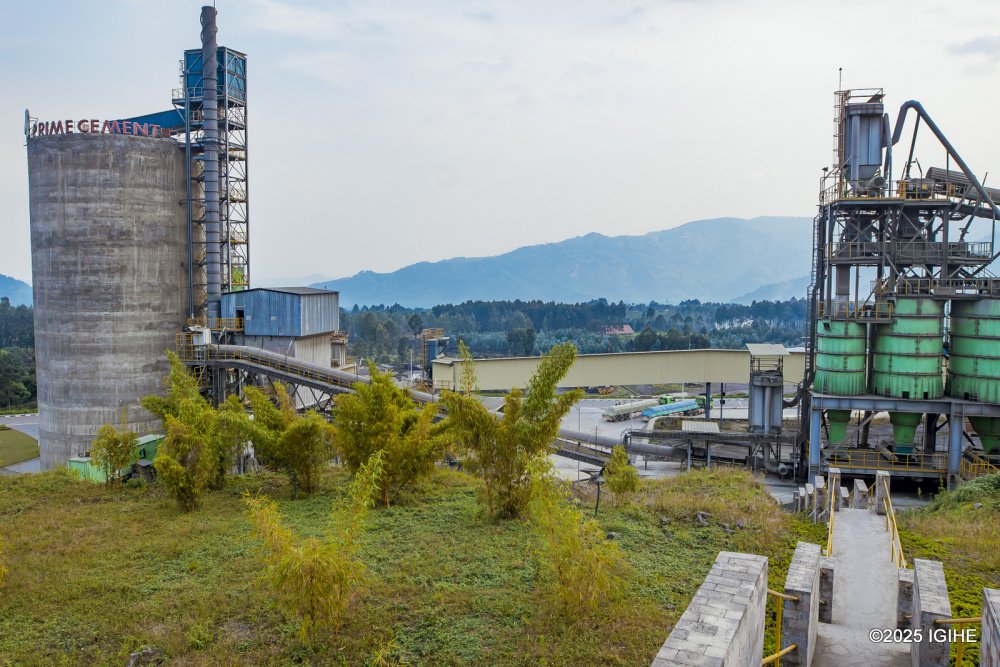
In a tender notice seen by IGIHE, the Ministry of Trade and Industry (MINICOM) said the planned facility will exclusively serve industries operating within Musanze Industrial Park, providing storage, customs clearance and warehousing services.
The government is offering a lease over 12,635.96 square metres of land within the industrial park to a qualified private investor who will be responsible for financing, developing, constructing, operating and maintaining the facility.
The investor will also be expected to provide plans for expanding and further developing the facility as demand grows.
According to MINICOM, industries operating in Musanze Industrial Park imported approximately 6,680 tonnes of raw materials between January and June 2026.
“The volume of imported raw materials demonstrates the need for a Customs Bonded Warehouse to facilitate efficient storage, customs clearance, and warehousing within the Industrial Park supply chain management system,” the ministry said.
A customs bonded warehouse allows imported goods to be stored under customs control before duties and taxes are paid, subject to applicable regulations. The facility is expected to support industries by improving access to raw materials and streamlining their logistics operations.
MINICOM said the selection of the private investor will be conducted through a competitive bidding process in line with Rwandan law and international best practices.
Interested investors are required to demonstrate the technical and financial capacity to develop and operate the facility.
The ministry is also seeking investors capable of supporting the future expansion of the facility, with bidders required to provide details of their proposed development plans.
A mandatory field visit has been scheduled for September 25, 2026, at 11am. Interested investors will depart from the Musanze District One Stop Centre.
The deadline for submitting bids is October 28, 2026, at 5pm local time.
MINICOM said bidding documents and Terms of Reference will be made available through its website, while inquiries can be directed to the ministry.
The Ministry of Trade and Industry (MINICOM) said the planned facility will exclusively serve industries operating within Musanze Industrial Park, providing storage, customs clearance and warehousing services.