The announcement was made by Hamas spokesperson Hazem Qassem in a video posted on Facebook.
According to Palestinian sources, hundreds of Palestinians attended al-Haddad’s funeral on Saturday, with the procession starting from the Al-Aqsa Martyrs Mosque in central Gaza City. Participants carried the bodies of al-Haddad, his wife and daughter through the streets, and chanted slogans denouncing the Israeli airstrike.
Earlier on Saturday, the Israeli military and the domestic security agency Shin Bet confirmed in a joint statement that al-Haddad was killed in the Israeli airstrike on Gaza City on Friday.
They said al-Haddad was one of the planners of the Hamas attack on southern Israel on October 7, 2023.
In a separate statement, Israeli military chief Eyal Zamir said the military will continue to “hold accountable everyone who took part” in the 2023 Hamas attack. “We will not relent until we reach them all,” he said.
On Friday, Palestinian medical sources reported that at least 10 people were killed and at least 50 others injured in an Israeli airstrike on an apartment building and a vehicle in Gaza City.
Al-Haddad, known by the nickname “Ghost of al-Qassam,” was considered by Israel to be one of the most wanted figures. He had survived several previous assassination attempts, according to Israeli media.
Gaza-based Palestinian political analyst Ahed Ferwana told Xinhua that al-Haddad’s death could have an operational impact on the group’s field command.
Meanwhile, Ferwana suggested that the timing of the Israeli airstrike could be linked to domestic political considerations in Israel, as Israeli Prime Minister Benjamin Netanyahu “is attempting to bolster his standing” before a possible Knesset dissolution and in upcoming parliamentary elections.
Palestinians place their hands on the body of Izz al-Din al-Haddad, commander-in-chief of Hamas’ armed wing the al-Qassam Brigades, during his funeral in Gaza City, May 16, 2026.
Addressing investors, business leaders, and policymakers on Thursday, the CEO of the Rwanda Development Board (RDB), Jean Guy Afrika, said the changing global economy was pushing investors to prioritise countries capable of delivering stability, speed, and execution.
“We meet at a time when the global economy is changing rapidly,” the RDB CEO said. “Capital is more selective, financing is more expensive, supply chains are being reorganised, and technology is transforming every sector.”
The remarks framed Rwanda’s investment strategy around reliability rather than market size, with the country presenting itself as a platform for companies seeking to expand across East and Central Africa.
The session was part of the annual forum, which gathered more than 2800 delegates.
Afrika said Rwanda’s economic model had been shaped by its geography and history. Being landlocked and located roughly 1,400 kilometres from the nearest seaport pushed the country to invest heavily in logistics, aviation, connectivity, and services.
Meanwhile, the need to rebuild trust and institutions after the 1994 Genocide against the Tutsi turned institutional credibility into what officials describe as one of Rwanda’s strongest competitive advantages.
“For investors, Rwanda should therefore be seen not only as a domestic market alone, but as a base from which companies can serve the East African Community, COMESA, the Great Lakes region, and the broader African market being shaped by the African Continental Free Trade Area,” the CEO said.
A key message throughout the session was that “governance is infrastructure,” with the RDB arguing that predictable institutions and coordinated government systems are essential to turning investment commitments into operational projects.
RDB highlighted its One Stop Centre, which brings together 24 agencies and offers more than 400 services to investors through a centralised platform aimed at reducing bureaucracy and improving efficiency.
The agency also pointed to recent economic indicators to demonstrate Rwanda’s growth momentum. Rwanda’s economy expanded by 9.4 percent in 2025, while foreign private capital inflows reached $1.1 billion in 2024, marking a 23.9 percent increase year-on-year. Investment commitments reached $2.62 billion in 2025 across sectors including manufacturing, agro-processing, mining, and real estate.
The CEO said Rwanda is now entering what he described as a new phase of growth under Vision 2050 and the second National Strategy for Transformation (NST2), with enterprise, exports, innovation, productivity, and private capital placed at the centre of the country’s economic agenda.
The RDB CEO Jean Guy Afrika said Rwanda’s economic model had been shaped by its geography and history.
He outlined several priority sectors where Rwanda is actively seeking strategic investors capable of building supply chains, creating jobs, transferring skills, and expanding regional exports.
In agro-industry, Rwanda is prioritising processing and value addition to move beyond raw commodity exports. Opportunities highlighted included cold-chain infrastructure, food packaging, agro-processing plants, and export-ready supply chains designed to connect Rwandan products to regional and international markets.
In health and life sciences, Afrika said Rwanda is building a stronger pharmaceutical and medical manufacturing ecosystem. He referenced the achievement of WHO Maturity Level 3 certification by the Rwanda Food and Drugs Authority, which strengthens the country’s regulatory credibility in health manufacturing and pharmaceuticals.
He also pointed to BioNTech’s first commercial-scale mRNA vaccine initiative in Africa as evidence of Rwanda’s ambition to position itself as a regional hub for biotechnology and advanced medical manufacturing.
Logistics and aviation featured prominently in the presentation, with Rwanda describing itself as an emerging gateway into East and Central Africa.
The RDB boss highlighted the development of the new Kigali International Airport project, as one of the country’s flagship infrastructure investments. Once completed, the airport is expected to increase Rwanda’s passenger handling capacity eightfold, from the current one million passengers annually to eight million.
Officials say the airport will play a critical role in strengthening cargo transport, trade connectivity, tourism, and Rwanda’s ambition to become a regional aviation and logistics hub linking African markets with global supply chains.
The mining sector was also presented as a strategic growth area. Rwanda recorded $869.7 million in mineral exports in 2025, while the sector supported more than 92,000 jobs.
Afrika said Rwanda is now focusing on increasing value addition in mining through local mineral processing, traceability systems, and downstream industrial development rather than relying solely on raw mineral exports.
Tourism and MICE, Meetings, Incentives, Conferences and Exhibitions, were highlighted as another pillar of Rwanda’s services-led economy.
According to figures presented during the session, tourism revenues reached $685 million, supported by Rwanda’s continued investment in conference infrastructure, aviation connectivity, hospitality, and high-end tourism experiences.
During the session, Rwanda also signed a series of strategic investment agreements aimed at strengthening industrial development, energy infrastructure, logistics, and tourism.
One of the major agreements involved Egypt’s Elsewedy Electric, which signed a comprehensive Memorandum of Understanding with Rwanda to establish a manufacturing facility producing smart electricity and water meters, electric vehicle chargers, and power transformers.
The partnership will also include the development of a technical university or college focused on industrial and energy skills development, participation in the development and management of Phases I and II of the Kigali Special Economic Zone, and the establishment of a logistics hub intended to reinforce Rwanda’s role as a regional trade and industrial gateway.
In tourism, Rwanda signed another Memorandum of Understanding with Sunrise Resorts & Cruises to develop a new luxury hospitality resort in the country.
The agreement includes sustainability-focused infrastructure such as a solar photovoltaic power plant with battery storage and a dedicated water treatment facility to support the resort’s operations.
The event also marked a strategic restructuring of Amicable Guest Houses Ltd (AGL), a subsidiary of the Rwanda Social Security Board.
Agreements signed between RSSB, Cleo Capital Group Ltd, and The Lux Collective are expected to introduce international hospitality management standards to Rwanda’s hotel sector.
Beyond sector-specific investments, Rwanda also expanded regional cooperation by signing a Memorandum of Understanding with APIEX Benin to strengthen bilateral investment promotion and trade facilitation.
A separate strategic collaboration framework was signed with Busara Advisors to support investment promotion and strategic development initiatives.
Throughout the session, the RDB CEO repeatedly stressed that Rwanda’s value proposition lies not in being Africa’s largest market, but in offering investors stability, institutional coordination, reform-oriented governance, and reliable execution.
“We are not only looking for capital,” Afrika stated. “We are looking for partners who bring technology, operating experience, market access, and long-term commitment.”
The session, part of the annual forum which gathered more than 2,800 delegates, concluded with a direct message to investors seeking stable operating environments in Africa: “Invest in Rwanda, grow from Rwanda, and build with Rwanda.
Mmaputhi Rankapole, Chief Marketing Officer of Brand South Africa, told delegates that South Africa is not positioning itself in competition with other African hubs, including Rwanda’s Kigali.
“We’re not trying to outbid Kigali for investment,” she said. “We’re offering ourselves as a platform, the gateway to an economy that connects Africa to the world.”
Mmaputhi Rankapole, Chief Marketing Officer of Brand South Africa, told delegates that South Africa is not positioning itself in competition with other African hubs, including Rwanda’s Kigali.
Through the AfCFTA, South Africa provides access to a combined market of 1.2 billion people and $3.4 trillion in GDP. Rwandan businesses could potentially use South African ports, rail networks, and financial services to reach SADC countries and global markets more efficiently.
South Africa has eight seaports, 144 airports, extensive road and rail infrastructure, and the Johannesburg Stock Exchange, Africa’s largest by market capitalisation. These assets can support companies in raising capital and managing regional supply chains.
Luna Nevhutalu, Head of Institutional Sales for Global Markets at Rand Merchant Bank, noted growing long-term investor interest.
“Investors are really looking to invest on the continent, or in the continent, for the long-term,” she said, citing recent Eurobond issuances involving Azule Energy, Liquid Telecoms, and Sibanye Stillwater.
Luna Nevhutalu, Head of Institutional Sales for Global Markets at Rand Merchant Bank, noted growing long-term investor interest.
In January 2025, Azule Energy (the independent Angolan oil and gas joint venture backed by BP and Eni) priced a massive $1.2 billion international bond (8.125% senior unsecured notes due 2030), proving that deep-pocketed institutional investors remain eager to fund large-scale African infrastructure and energy players with strong balance sheets.
Following this momentum, in April 2026, pan-African digital infrastructure operator Liquid Telecoms closed a comprehensive $660 million debt refinancing round, anchored by a new $300 million Eurobond listed on Euronext Dublin that drew immense international interest and was 2.5 times oversubscribed.
Rounding out this wave of capital, South African precious metals giant Sibanye-Stillwater successfully priced a $500 million senior unsecured notes offering in May 2026. Driven by an upgraded stable outlook from Moody’s, their bookbuild was a resounding success, coming in at over five times oversubscribed by global asset managers as the company optimises its balance sheet for long-term operational growth.
On the logistics side, Mohammed Akoojee, CEO and Managing Director for Africa at DP World, highlighted operational realities. His company’s acquisition of Imperial Logistics handles one million kilometres of road transport daily in South Africa.
He pointed to efficiency gains, noting that at one platform, truck turnaround times had dropped “from anything up to two weeks to about three days.”
On the logistics side, Mohammed Akoojee, CEO and Managing Director for Africa at DP World, highlighted operational realities.
Willem van der Spuy from the South African Department of Trade, Industry and Competition spoke about the country’s Butterfly Strategy, which focuses on diversifying trade.
“If you look at our exports to the continent, about 60 percent of those are value-added,” he said.
This creates potential demand for processed goods and components that manufacturers in Rwanda and other countries could supply.
In energy, Loyiso Tyabashe, Group CEO of Necsa, emphasised the importance of reliable power.
“Energy is a fundamental bedrock for any development, and for any industrialisation,” he said, adding that nuclear technology offers stable baseload power with near-zero carbon emissions and has proven affordable in South Africa. He invited collaboration with countries like Rwanda that are exploring nuclear options.
Loyiso Tyabashe, Group CEO of Necsa, emphasised the importance of reliable power.
The session showed that many businesses already operate across multiple African hubs. With over 400 South African companies active across the continent, combining operations in different markets has become a common approach.
For Rwandan businesses, the discussion at the Kigali forum highlighted practical options to expand reach by leveraging South Africa’s infrastructure and financial systems while building on Rwanda’s strengths in technology, services, and regional connectivity. As AfCFTA implementation progresses, such complementary strategies could support broader growth for companies in both countries.
Luna Nevhutalu, Head of Institutional Sales for Global Markets at Rand Merchant Bank, noted growing long-term investor interest.
Held during the Forum’s Gala Dinner in partnership with Forvis Mazars, the awards honoured organisations and executives whose leadership, innovation and impact are helping reshape Africa’s economic landscape.
Spiro received the “Local Impact Champion” award for its rapid expansion in Africa’s electric mobility sector and its contribution to sustainable transportation solutions across the continent.
The company, regarded as Africa’s leading electric mobility firm, raised a record USD 150 million between late 2025 and early 2026.
Spiro currently operates more than 80,000 electric motorbikes and over 2,500 battery swapping stations, while surpassing 30 million battery swaps to date.
Its operations span several African countries, with assembly plants in Rwanda, Uganda, Kenya and Nigeria, supporting its ambition to manufacture electric bikes in Africa for African and global markets.
Spiro was recognised alongside other major continental players across different sectors.
Cassava Technologies won the “Pan-African Champion” award for its role in advancing digital transformation through an integrated ecosystem that includes artificial intelligence, cloud services, cybersecurity, fintech and data centres operating across 94 countries.
Ecobank received the “Gender Leader” award for its efforts to advance women’s inclusion across its workforce and through its Ellevate programme, which has facilitated USD 780 million in financing for women-led businesses.
The “Family Business” award went to East African Holding, one of Ethiopia’s oldest industrial groups, recognised for its multi-billion-dollar industrial expansion projects, including the Lemi Industrial Park.
Meanwhile, Cauridor earned the “Disrupter of the Year” award for building a cross-border payments platform operating in 36 African countries and surpassing USD 1 billion in annual transaction volume in 2025.
The “CEO of the Year” award was presented to Abdul Samad Rabiu, founder of BUA Group and one of Nigeria’s leading industrialists. His businesses, including BUA Foods and BUA Cement, recorded significant growth in 2025 while his ASR Africa foundation continues to support development initiatives across the continent.
Speaking during the awards ceremony, Abdou Diop, Country Leader of Forvis Mazars in Morocco and Member of the Group Governing Board, said the awards celebrate African enterprises that continue to demonstrate resilience and innovation despite global economic challenges.
“Forvis Mazars is proud to support the trailblazers shaping Africa’s future. Through these awards, we celebrate high-performing African enterprises distinguished by their excellence, resilience, and ability to transform complexity into opportunity,” he said.
Founded in 2012, the Africa CEO Forum has become one of the continent’s leading platforms bringing together business executives, investors, policymakers and heads of state to discuss Africa’s economic future and private sector growth.
Held during the Forum’s Gala Dinner in partnership with Forvis Mazars, the awards honoured organisations and executives whose leadership, innovation and impact are helping reshape Africa’s economic landscape.
The agreement, signed on the sidelines of the Africa CEO Forum, aims to catalyse job creation for youth and unlock a new asset class within Africa’s rapidly growing creative economy. Through this partnership, the IFC and Zaria Group, co-founded by NBA Champion Masai Ujiri, will establish a “platform approach” to building commercially sustainable venues that serve as anchors for local industries.
While this new “Zaria District Platform” looks toward continental expansion, its foundation is built directly on the success of Rwanda’s sports-led development model.
The agreement, signed on the sidelines of the Africa CEO Forum, aims to catalyse job creation for youth and unlock a new asset class within Africa’s rapidly growing creative economy.
The Kigali blueprint
The new continental agreement comes less than a year after the grand inauguration of the flagship Zaria Court Kigali in July 2025. Officially launched by President Paul Kagame and Masai Ujiri, the $25 million state-of-the-art multi-purpose complex in Remera has quickly become the heart of the Kigali Sports City ecosystem, working alongside the BK Arena and Amahoro Stadium.
The impact of the Kigali facility provided the exact “proof of concept” the IFC, a member of the World Bank Group, needed to back the broader African rollout:
The construction phase employed over 700 workers (with 30% being women) and injected approximately 1 billion Rwandan Francs directly into the local workforce. Today, the operational hub provides permanent employment for nearly 500 people, primarily targeting women and youth.
The facility features an 80-room urban lifestyle hotel (now operating under the Tapestry Collection by Hilton), a 2,000-seat event space capable of hosting festivals for up to 5,000 people, standard-setting basketball and five-a-side football pitches, a podcast production studio, and retail incubation programs dedicated to women-owned small and medium enterprises (SMEs).
By leveraging Rwanda’s position as a regional hub for innovation and infrastructure, Zaria Court Kigali proved that underutilised urban assets can be successfully transformed into vibrant economic engines.
Officials pose for a group photo following the signing ceremony between IFC and Zaria Group on the sidelines of the Africa CEO Forum in Kigali on Friday, May 15.
Continental expansion and economic impact
With the Kigali model fully validated, initial focus areas for the new IFC-backed platform rollout include further developments in Kigali and a major expansion into Nairobi, with long-term ambitions to scale to other major African hubs like Lagos and Accra.
The economic footprint of this next phase is substantial. In Kenya, the development of the Nairobi project alone is projected to create 3,500 construction jobs during its development phase, followed by 1,500 permanent positions once operational. Additionally, the district is expected to generate approximately 25,000 event-based roles, significantly boosting seasonal employment and supporting urban development priorities under Kenya’s Vision 2030.
The IFC will play a pivotal role across these new sites by mobilising financing packages and providing upstream advisory engagement to de-risk these emerging infrastructure projects for private institutional investors.
Masai Ujiri emphasised that while the passion for sports in Africa is undeniable, physical infrastructure must step up to meet the demand.
“We’re incredibly proud to partner with IFC to deliver exactly that. When you build the right foundation with the right partners, extraordinary things happen. These districts will generate thousands of jobs, empower local businesses, and become hubs where African culture and talent thrive,” Ujiri said.
Ujiri added that the ultimate goal is to build sustainable models that “keep wealth on the continent and create opportunity at scale.”
IFC Managing Director Makhtar Diop highlighted the social importance of the deal, noting that creative industries are essential engines for inclusion and formalised growth.
“Sectors such as sports and entertainment already employ millions worldwide and provide accessible entry points into the formal economy, especially for young people and women,” Diop noted.
By leveraging Zaria Group’s proven execution in Kigali and the IFC’s financial reach, the partnership aims to turn Africa’s creative potential into a tangible economic reality for the next generation of talent across the continent.
The initiative seeks to create a more inclusive and sustainable mobility ecosystem by enabling women to access electric motorbikes, entrepreneurship opportunities, and business support, while contributing to Rwanda’s green transport ambitions.
Speaking during the signing ceremony on the sidelines of the Africa CEO Forum in Kigali on Thursday, May 14, Spiro Chief Executive Officer Kaushik Burman described the partnership as a major step toward building a more inclusive e-mobility industry across Africa.
“This is a landmark milestone for us because women in the family are not just the caregivers. They are the actual doers,” Burman said.
“If we can empower women in the family to be mobile and go ahead and create, become successful entrepreneurs, it is going to create a massive flywheel of more women entrepreneurs.”
Burman said the initiative is about more than simply providing electric motorbikes, noting that Spiro envisions women participating across the entire value chain, including energy networks, sales, distribution, and manufacturing.
“It’s not just about the motorbikes. I think in future we can expand this partnership to inviting women entrepreneurs to become sales and distribution partners. They can run the energy network and create more jobs,” he said.
He added that women already make up around 40% of workers in Spiro’s assembly and manufacturing operations, including engineers, diploma holders, and blue-collar workers.
“The way I view this is not just about bike entrepreneurs, but entrepreneurship across the value chain and massive social impact,” Burman added.
ESP Co-Founder and Chief Executive Officer Eric Kacou said the partnership combines Spiro’s electric mobility infrastructure with ESP’s expertise in entrepreneurship development and business support.
“The purpose of the MoU is to make sure that we can have a more equitable e-mobility industry in Africa by enabling young women to have the same opportunities as young men when it comes to having access to an electric bicycle,” Kacou said.
“Beyond the livelihoods, it is also an opportunity for these women to mature into entrepreneurs and to support the next generations of Africans.”
Kacou explained that ESP will help structure and implement the program through targeted recruitment, training, and financial support mechanisms aimed at helping women succeed in the sector.
According to him, the initiative will focus on three critical pillars: mindset, access to assets, and entrepreneurial skills.
“What makes the difference between a successful entrepreneur and one who struggles is what they know about financial education and what they know about growing their businesses,” he said.
ESP plans to roll out the initiative in phases, selecting participants through an application process before providing training in business management, financial literacy, and motorbike operations.
Kacou noted that Rwanda offers a strong environment for piloting innovative solutions that can later be expanded across Africa.
Burman said Spiro is already committed to investing in batteries and battery-swapping infrastructure to support deployment as the initiative scales.
“This is not a sprint, this is a marathon. This is a journey,” he said.
ESP is a Pan-African consulting and investment firm focused on supporting entrepreneurs through technical expertise, incubation, and financing support.
The organisation has previously managed programs supporting women- and youth-led businesses across sectors, including tourism, construction, and agribusiness.
The Women in E-Mobility initiative is expected to create new pathways for women to become riders, entrepreneurs, and technicians within Africa’s growing clean mobility ecosystem while supporting Rwanda’s broader climate and economic inclusion goals.
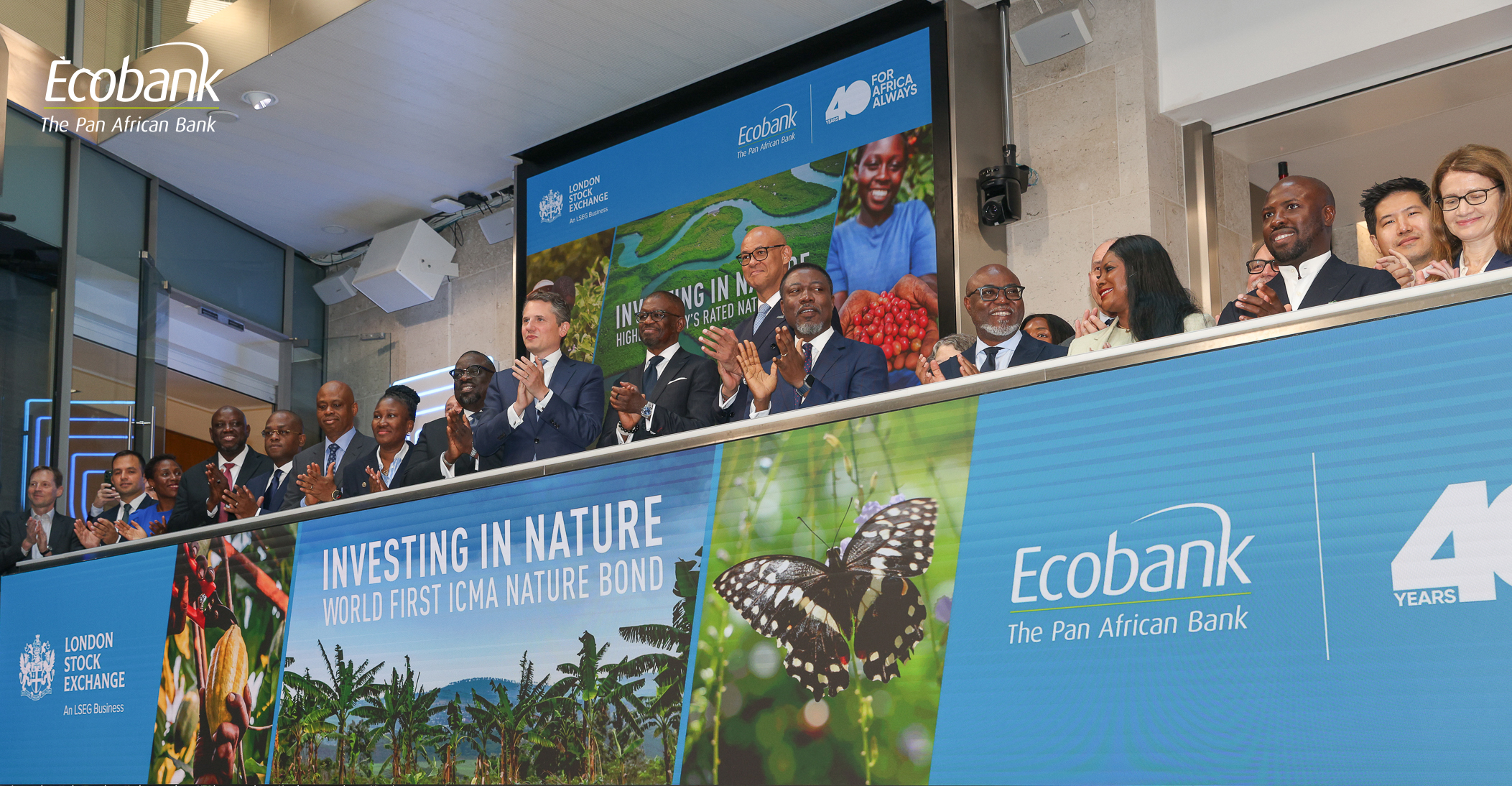
Spiro, Africa’s largest electric motorbike maker, and Entrepreneurial Solutions Partners (ESP) have signed a Memorandum of Understanding (MoU) to launch the Women in E-Mobility initiative in Rwanda, a program aimed at expanding women’s participation in Africa’s fast-growing electric mobility sector.The initiative seeks to create a more inclusive and sustainable mobility ecosystem by enabling women to access electric motorbikes, entrepreneurship opportunities, and business support, while contributing to Rwanda’s green transport ambitions.The MoU was signed on the sidelines of the Africa CEO Forum in Kigali on Thursday, May 14, 2026. Spiro Chief Executive Officer Kaushik Burman described the partnership as a major step toward building a more inclusive e-mobility industry across Africa.ESP Co-Founder and Chief Executive Officer Eric Kacou said the partnership combines Spiro’s electric mobility infrastructure with ESP’s expertise in entrepreneurship development and business support.
The agreements, signed during the “Invest in Rwanda” session at the Africa CEO Forum, bring together manufacturing, energy, logistics, tourism, and institutional investment partnerships under a coordinated push to deepen Rwanda’s private-sector-led growth strategy.
Elsewedy Electric to anchor industrial and energy expansion
At the centre of the agreements is a comprehensive Memorandum of Understanding with Elsewedy Electric, under which the Egyptian conglomerate will establish a manufacturing facility in Rwanda producing smart water and electricity meters, electric vehicle (EV) chargers, and power transformers.
The partnership also includes the development of a technical university or college to strengthen skills in energy and industrial systems, as well as participation in the development and management of Phases I and II of the Kigali Special Economic Zone. A new logistics hub is also planned, positioning Rwanda as a regional industrial and trade gateway.
In the tourism sector, Rwanda signed a Memorandum of Understanding with Sunrise Resorts & Cruises to develop a new luxury hospitality resort.
The agreement includes two Heads of Terms focused on sustainability infrastructure, including a solar photovoltaic power plant with battery storage and a dedicated water treatment facility to support the resort’s operations.
Though the total value of the projects has not yet been disclosed, they are expected to reinforce Rwanda’s positioning in high-value tourism and the MICE sector, which continues to anchor the country’s services-led growth strategy.
The event also saw a strategic shift for Amicable Guest Houses Ltd (AGL), a subsidiary of the Rwanda Social Security Board (RSSB). A Share Purchase Agreement (SPA) and Shareholders Agreement (SHA) were signed between RSSB and Cleo Capital Group Ltd, alongside a management agreement with The Lux Collective. This move is expected to bring world-class management standards to Rwanda’s hotel assets.
Expanding regional and advisory partnerships
Rwanda also signed a Memorandum of Understanding with Benin’s investment promotion agency, APIEX Benin, to strengthen bilateral investment cooperation and trade facilitation.
In addition, a non-binding strategic collaboration framework was signed with Busara Advisors, led by Amb. Reuben E. Brigety II, to provide advisory support on investment promotion and strategic development initiatives.
Speaking at the same session, RDB Chief Executive Officer Jean-Guy Afrika said the agreements reflect Rwanda’s broader strategy of building a predictable and execution-focused investment environment.
“Governance is infrastructure. Predictability, speed, and trust in institutions determine whether projects move from intention to implementation,” he said.
Afrika noted that Rwanda’s development approach has been shaped by structural constraints that have been converted into strategic advantages.
“Because we are landlocked, we focused on connectivity, logistics, aviation and services where reliability and speed matter,” he said, adding that Rwanda is positioned as “a platform for regional growth, not only a domestic market.”
He stressed that Rwanda is prioritising partnerships that go beyond capital inflows. “We are not only looking for capital. We are looking for partners who bring technology, operating experience, market access and long-term commitment.”
Afrika also highlighted Rwanda’s recent investment performance, citing $1.1 billion in foreign private capital inflows in 2024, representing a 23.9 percent year-on-year increase.
For 2025, he said Rwanda recorded $2.62 billion in investment commitments across priority sectors, including real estate, manufacturing, agro-processing, mining, and other strategic areas aligned with national development priorities.
He framed these figures as evidence of sustained investor confidence in Rwanda’s reform agenda and institutional stability.
Afrika said Rwanda’s investment model is designed to reduce friction and accelerate implementation through coordinated institutions such as the One Stop Centre.
“Investors are looking for places where projects can move, institutions can coordinate, and capital can become productive growth,” he said.
The agreements are expected to advance Rwanda’s long-term development agenda under Vision 2050 and the Second National Strategy for Transformation (NST2), which prioritise industrialisation, export growth, skills development and private-sector-led expansion.
The agreements, signed during the “Invest in Rwanda” session at the Africa CEO Forum, bring together manufacturing, energy, logistics, tourism, and institutional investment partnerships under a coordinated push to deepen Rwanda’s private-sector-led growth strategy.The event also saw a strategic shift for Amicable Guest Houses Ltd (AGL), a subsidiary of the Rwanda Social Security Board (RSSB). A Share Purchase Agreement (SPA) and Shareholders Agreement (SHA) were signed between RSSB and Cleo Capital Group Ltd, alongside a management agreement with The Lux Collective. This move is expected to bring world-class management standards to Rwanda’s hotel assets.
The licence, issued by the Capital Market Authority (CMA) of Rwanda, allows the group headquarteredin Nigeria to deliver a full-spectrum suite of investment banking and capital markets services, including corporate finance and capital mobilisation, project and infrastructure finance structuring, trade and supply chain finance solutions, structured finance and asset-backed instruments, as well as trusteeship, capital markets advisory, and institutional capacity development.
The move brings one of Africa’s prominent investment banking groups into Rwanda’s growing financial sector and reflects increasing investor confidence in the country’s regulatory environment and long-term economic outlook.
Speaking on the development, CMA Chief Executive Officer Romeo Ngarambe described United Capital’s decision to choose Kigali for its East and Central African operations as a strong endorsement of Rwanda’s financial market credibility.
“When a pan-African institution of United Capital’s calibre and track record makes a deliberate choice to anchor its East and Central African operations in Kigali, it sends a signal that no ranking or report can replicate,” Ngarambe said.
“It tells the world that Rwanda’s market is serious, our institutions are trusted, and our ambition is matched by execution. This is the kind of conviction that changes the trajectory of capital markets, and we intend to honour it by continuing to build a platform worthy of the best institutions Africa has to offer.”
United Capital PLC has operated for more than six decades and currently runs businesses spanning investment banking, asset management, wealth management, securities trading, trusteeship, consumer finance and digital banking across Africa.
Group CEO Peter Ashade said the company’s expansion into Rwanda aligns with its broader pan-African growth strategy built around providing African-led financial solutions across the continent.
“We set out with one intention clear, that Africans are the solution to African challenges,” Ashade said, adding that Rwanda’s governance, policy direction and investment climate made it a natural choice for the group’s next phase of expansion.
He praised Rwanda’s leadership and reform agenda under President Paul Kagame, noting that the country’s transformation across key economic indicators created confidence for long-term investment.
United Capital said it plans to roll out three major business lines in Rwanda initially: investment banking, asset management and trust services. Ashade disclosed that the group expects to deploy at least $120 million (approximately Rwf 175 billion) into its Rwandan operations and related investments during the initial phase.
According to the company, Rwanda’s stable governance framework, legal infrastructure, ease of doing business and strategic geographic location at the crossroads of East and Central Africa were among the key factors behind the decision.
The entry of United Capital is expected to deepen Rwanda’s capital markets by introducing new financial products and expanding access to long-term financing solutions for businesses and infrastructure projects.
Ashade highlighted Real Estate Investment Trusts (REITs) and infrastructure funds among the products the group intends to explore in Rwanda, citing growing demand for real estate financing and infrastructure development across the region.
“Infrastructure is critical for Africa’s development and we believe Rwanda presents significant opportunities for innovative financing solutions,” he said.
United Capital also plans to leverage experience from operations across 10 African countries to tailor products to Rwanda’s market needs, particularly for SMEs and mid-sized businesses.
The company says it currently offers more than 30 financial products across its markets and intends to introduce solutions adapted to local market conditions.
The licensing of United Capital comes as Rwanda continues efforts to attract international financial institutions and strengthen Kigali’s position as a competitive international financial centre capable of mobilising capital for infrastructure, innovation and industrial growth across the region.
For Rwanda, the approval represents another milestone in its strategy to build a sophisticated, regionally connected financial ecosystem that can serve as a gateway for investment into East and Central Africa.
United Capital PLC Group CEO Peter Ashade disclosed that the group expects to deploy at least $120 million (approximately Rwf 175 billion) into its Rwandan operations and related investments during the initial phase.
The two sides will meet in a Matchday 33 fixture of the BK Pro League at Kigali Pelé Stadium at 3:00 PM. This match marks a poignant moment for the “Blue Wave,” who have spent the season playing as guests in the Rwandan league due to the devastating civil war in Sudan.
A season in exile
Since the conflict broke out in April 2023 between the Sudanese Armed Forces (SAF) and the Rapid Support Forces (RSF), professional football in Sudan has been at a total standstill. With stadiums damaged and safety impossible to guarantee in Khartoum, Al-Hilal and their rivals, Al-Merrikh, sought refuge in the Rwandan top flight to maintain match fitness and provide a sense of continuity for their displaced supporters.
The match against Gasogi United was rescheduled because the Sudanese club is expected to return to neutral territory or safe zones within Sudan to attempt a restart of their domestic campaign.
Honorary trophy
In an announcement released on Wednesday, the Rwanda Premier League stated that if Al-Hilal SC win or draw the match, the club will officially be awarded their Honorary trophy and medals for the 2025/2026 season.
Al-Hilal currently lead the table with 70 points, which is 12 ahead of fellow Sudanese exiles Al-Merrikh SC, while both teams still have four matches remaining. Second-placed APR FC follows with 59 points and three games left.
Defining the dual champions
Because Al-Hilal and Al-Merrikh are guest participants, the Rwanda Premier League created a unique format to honor their dominance without displacing local clubs from continental qualification. The Honorary Trophy is awarded to
Al-Hilal SC as the overall points leader in recognition of their sporting excellence while in exile.
Meanwhile, the BK Pro League National Champions 2025/26 title will go to the highest-ranked Rwandan club, expected to be APR FC, who will represent Rwanda in the CAF Champions League.
Al-Hilal SC could be awarded the honorary trophy this Wednesday.In the first-leg matches, Gasogi United lost 2–0 to Al-Hilal SC.
The appeal was lodged with the Nyarugenge High Court, challenging the court’s verdict and sentence.
DJ Toxxyk had been prosecuted on charges of involuntary manslaughter, unlawful involvement with narcotic drugs or psychotropic substances, fleeing the scene after causing or being involved in a road accident, and refusing to take a breathalyser test.
The case stemmed from a road accident that occurred in the early hours of December 20, 2025, which resulted in the death of a police officer. During the investigation, drugs were also reportedly found at his residence.
On May 4, the Kicukiro Primary Court delivered its verdict, finding DJ Toxxyk guilty on all charges. The court sentenced him to three months of community service, suspended for six months, and imposed a fine of 1,050,000 Rwandan francs.
Following the judgment, DJ Toxxyk, who had been held in pre-trial detention at Mageragere Prison in Nyarugenge, was released.
During the trial proceedings, the Prosecutor’s Office had requested a two-year prison sentence and a fine of 1 million Rwandan francs. DJ Toxxyk admitted to involuntary manslaughter and fleeing the scene of the accident, but denied the drug-related charges. He also stated that he had apologised to the family of the deceased officer, who he said had forgiven him.
The Prosecutor’s Office has filed an appeal against the ruling issued by the Nyarugenge Primary Court in the recently concluded case involving Shema Arnaurd De Bosscher, commonly known as DJ Toxxyk.