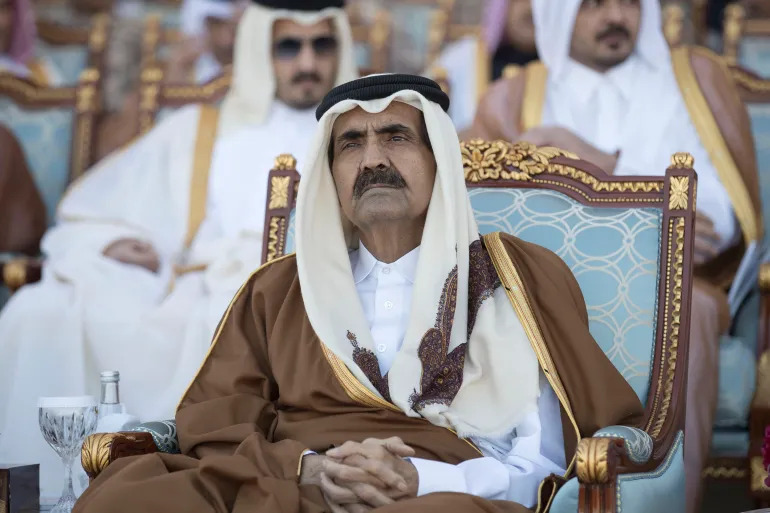
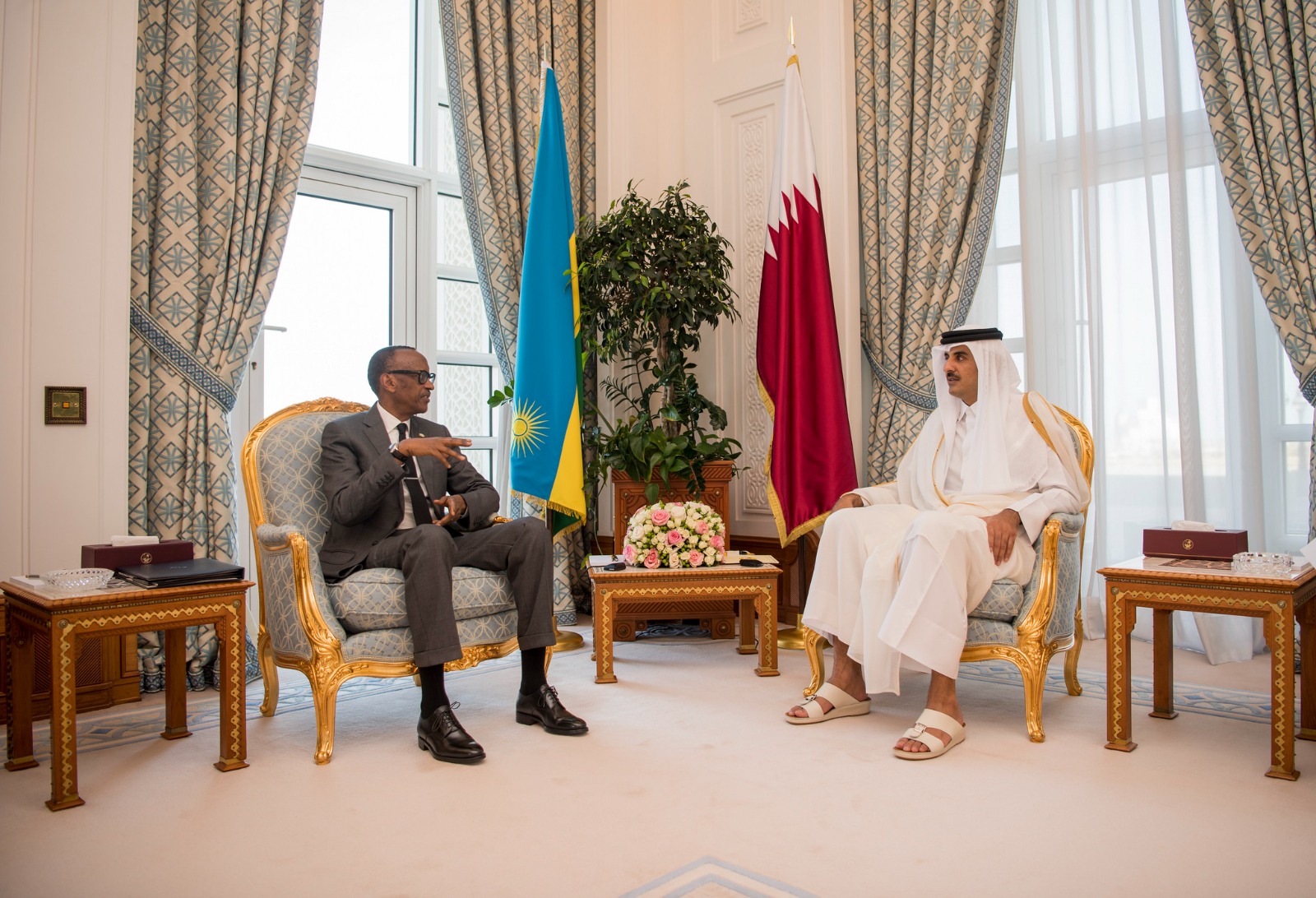
In a message shared on Sunday following the announcement of Sheikh Hamad’s passing, President Kagame conveyed his sympathies to Qatar’s current Emir, Sheikh Tamim bin Hamad Al Thani, his family, and the people of Qatar.
“My deepest condolences to my brother, His Highness Sheikh Tamim bin Hamad Al Thani, his family and the people of Qatar on the passing of His Highness the Father Amir Sheikh Hamad bin Khalifa Al Thani,” Kagame wrote.
President Kagame praised Sheikh Hamad’s contribution to Qatar’s development, saying he would be remembered for his leadership and efforts to strengthen cooperation among nations.
“His Highness Sheikh Hamad bin Khalifa Al Thani will be remembered as a visionary leader who transformed Qatar into the remarkable nation it is today. His legacy of service to his people and commitment to friendship and cooperation among nations will endure for generations,” Kagame said.
He added that Rwanda stands in solidarity with Qatar during the period of mourning.
“At this difficult time, the people of Rwanda and I stand with His Highness Sheikh Tamim bin Hamad and our Qatari brothers and sisters,” Kagame said.
Sheikh Hamad bin Khalifa Al Thani, who died at the age of 74, ruled Qatar from 1995 until he handed power to his son, Sheikh Tamim bin Hamad Al Thani, in 2013.
He is widely credited with shaping modern Qatar through a period of rapid economic growth, global expansion and major investments that elevated the country’s international influence.
During his reign, Qatar emerged as a major player in global energy, diplomacy, and investment, while securing the rights to host major international events, including the 2022 FIFA World Cup.
Leaders from across the world have paid tribute to the former Emir, praising his role in Qatar’s transformation. Indian Prime Minister Narendra Modi also described Sheikh Hamad as a “visionary leader who guided Qatar to great levels of development and prosperity,” while leaders from the Arab world expressed condolences to Qatar’s leadership and people.
The Qatari government announced Sheikh Hamad’s death through the Amiri Diwan, saying the nation had suffered a “great loss” with the passing of the former Emir.
In a message shared on Sunday following the announcement of Sheikh Hamad’s passing, President Kagame conveyed his sympathies to Qatar’s current Emir, Sheikh Tamim bin Hamad Al Thani, his family, and the people of Qatar.
Graham’s office confirmed his death on Sunday, saying he passed away following a “brief and sudden illness.”
In the region, Graham was among U.S. politicians who argued that lasting peace in eastern DRC required political dialogue and addressing the underlying causes of the conflict, rather than relying solely on punitive measures.
He drew attention in Rwanda for opposing proposals for U.S. sanctions targeting the country over the conflict in eastern DRC.
A report by The Wall Street Journal said that as Washington considered sanctions against Rwanda, Graham played a role in efforts to block the measures. According to the report, Graham told U.S. officials that Rwanda was an important security partner and warned that sanctions could undermine diplomatic efforts aimed at resolving the conflict.
He argued that punishing Rwanda would not provide a solution and could complicate efforts to bring parties involved in the conflict to the negotiating table. The proposed sanctions were later shelved.
Graham’s role in Great Lakes diplomacy
Graham’s engagement with Great Lakes issues stretched back more than a decade.
In 2013, he was part of a bipartisan delegation of six U.S. senators that visited the region to assess the conflict and humanitarian crisis linked to the M23 rebellion in eastern DRC.
During the visit, Graham said the region’s challenges could not be solved through military intervention or the deployment of international forces alone. He argued that a political solution involving the Congolese government, neighbouring countries and communities in the region was necessary.
During the visit, Graham said that lasting peace in eastern DRC would require addressing the underlying causes of the conflict and the concerns of affected communities.
Graham said the United Nations could play an important role in supporting stability, but that a lasting solution had to come through dialogue among regional stakeholders.
In his later years, Graham continued following developments in eastern DRC, particularly the conflict between government forces and the AFC/M23 coalition.
In December 2025, he welcomed AFC/M23’s decision to withdraw from Uvira, a strategic town in South Kivu, describing the move as a confidence-building step under the Doha peace process.
However, he expressed concern over reports that AFC/M23 forces were being attacked during the withdrawal.
“I am pleased to see reports of M23 troops withdrawing from Uvira in the Democratic Republic of the Congo. However, I am disheartened to hear these withdrawing troops are being attacked,” Graham said in a post on X at the time.
He called for continued diplomatic efforts to bring the opposing sides back to negotiations, arguing that dialogue was essential for achieving lasting peace and economic development in the Great Lakes region.
Graham also welcomed the Rwanda-DRC peace agreement signed in Washington last year, describing it as a significant achievement after years of conflict.
“What an amazing day and experience at the White House, with President Trump, Vice President JD Vance, U.S. Secretary of State Marco Rubio and President Trump’s Africa adviser Massad Boulos, along with the presidents of Rwanda and the Democratic Republic of Congo, solidifying what has been an elusive peace deal between the two countries,” he wrote on December 4, 2025.
He added that reaching the agreement with President Paul Kagame and President Félix Tshisekedi was something he would remember given the region’s long history of conflict.
“Watching President Trump close this deal with President Kagame and President Tshisekedi was an experience I’ll remember for the rest of my life. For those who have been following this region and conflict, today seemed almost impossible to dream of but now it is a reality,” he added.
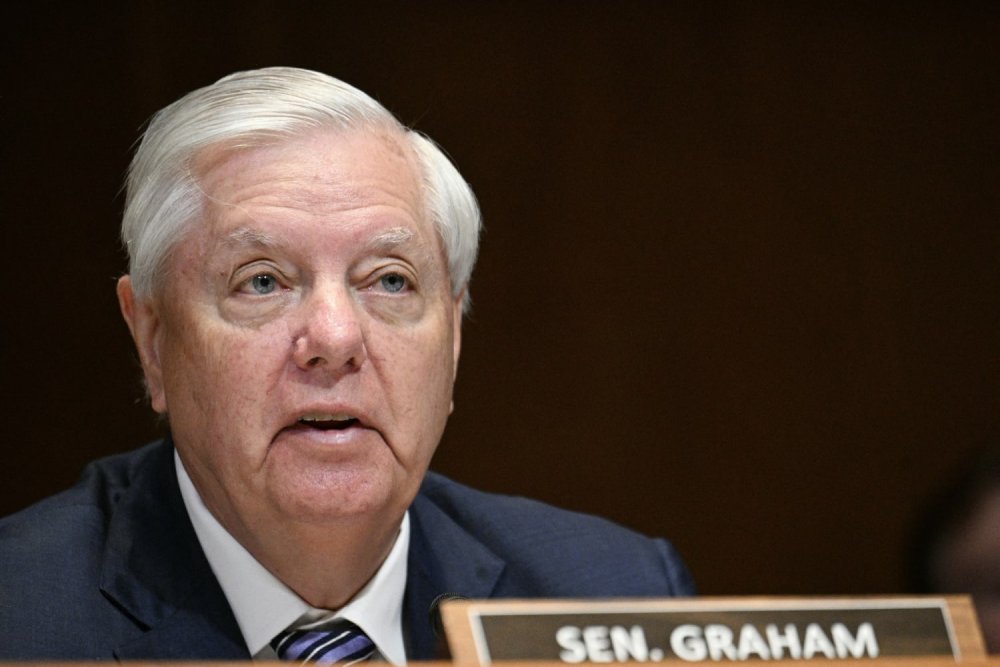
U.S. Senator Lindsey Graham died on Saturday at the age of 71.
Rwanda-U.S. relations
Beyond his comments on the DRC conflict, Graham maintained engagement with Rwanda, which he described as an important partner for the United States in East Africa.
In December 2025, during Kagame’s visit to Washington for activities related to the Rwanda-DRC peace agreement, Graham and Kagame discussed strengthening Rwanda-U.S. cooperation in strategic areas, including conservation, security and economic partnerships.
In April 2019, Graham was part of a high-level U.S. congressional delegation hosted by President Kagame and First Lady Jeannette Kagame. The discussions focused on issues of mutual interest between Rwanda and the United States.
A veteran U.S. politician
Graham’s political career spanned more than three decades. Before joining the Senate, he served in the U.S. House of Representatives from 1995 to 2003 and previously served in the U.S. Air Force, Air Force Reserve and South Carolina Air National Guard, retiring as a colonel in 2015.
Over more than three decades in Congress, he became one of America’s most influential voices on defense, national security and foreign policy. He chaired key Senate committees, including the Senate Judiciary Committee and the Senate Budget Committee, and was a major figure in Republican foreign policy debates.
Graham was also a close political ally of President Donald Trump. Although he initially criticized Trump during the 2016 Republican presidential primary, the two later developed a close working relationship, with Graham becoming one of Trump’s most prominent supporters in Congress.
Shortly before his death, Graham traveled to Kyiv, Ukraine, where he met President Volodymyr Zelenskyy amid the ongoing war between Ukraine and Russia.
His death marks the loss of a major figure in U.S. politics and a politician who had become a familiar voice in discussions around global security, defense strategy, and international alliances.
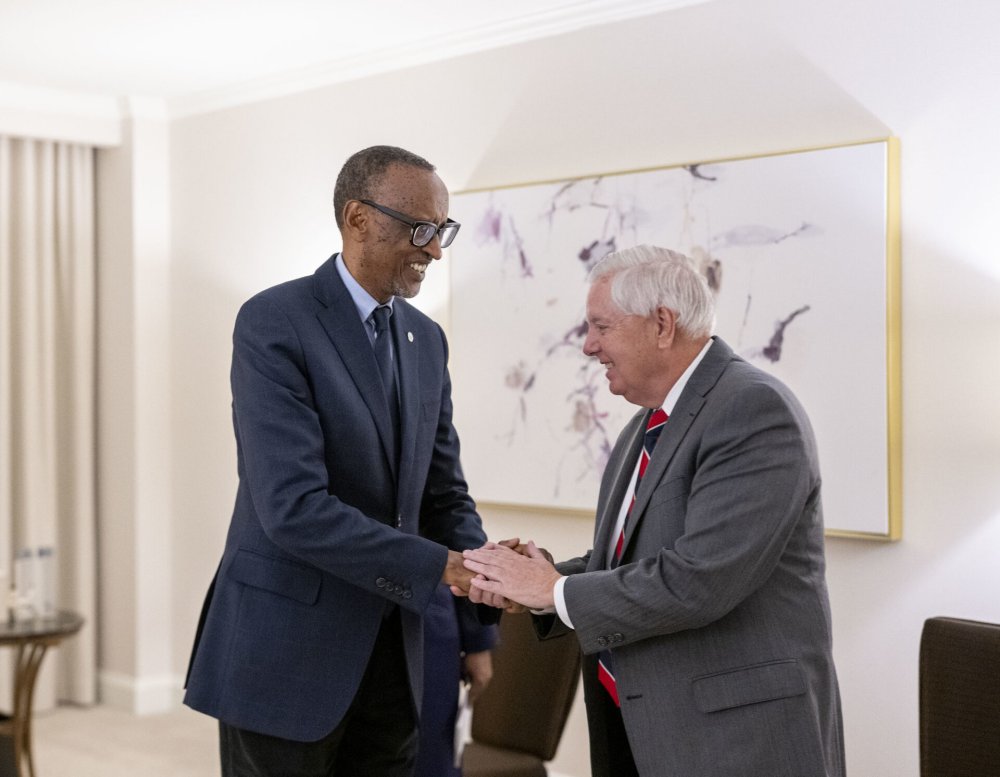
Senator Graham, pictured here with President Paul Kagame, was widely regarded as one of Rwanda’s strongest supporters in the U.S. Congress, consistently advocating for closer Rwanda-U.S. relations.
Graham’s office confirmed his death early Sunday, saying the senator died Saturday night “from a brief and sudden illness.”
“Senator Graham’s family appreciates prayers at this time and asks for privacy during this incredibly difficult period,” his office said in a statement.
President Donald Trump led tributes to Graham, describing him as “one of the greatest people and Senators I have ever known” and a “true American Patriot.”
Graham, who represented South Carolina in the U.S. Senate since 2003, was one of the most recognised figures in the chamber and served as chairman of the Senate Budget Committee. He was also a leading Republican voice on defence and international affairs, particularly issues involving Ukraine, Iran and America’s role in global security.
In Africa’s Great Lakes region, Graham became known for his public comments on the conflict in eastern DR Congo, where he argued that lasting peace required political engagement, dialogue between the opposing sides, and addressing the root causes of the conflict.
In December 2025, he welcomed AFC/M23’s decision to withdraw from the strategic town of Uvira in South Kivu, as part of a confidence-building step toward advancing the Doha peace process and achieving a lasting solution to the conflict.
However, he expressed concern over reports that AFC/M23 forces were being attacked as they withdrew from the city.
“I am pleased to see reports of M23 troops withdrawing from Uvira in the Democratic Republic of the Congo. However, I am disheartened to hear these withdrawing troops are being attacked,” Graham said in a post on X at the time.
He argued that negotiations between the opposing sides were essential and aligned with President Donald Trump’s vision of bringing lasting peace and economic development to the Great Lakes region.
Graham had engaged with regional security issues for more than a decade. In 2013, he was part of a bipartisan delegation of six U.S. senators that visited the Great Lakes region to assess the conflict between M23 rebels and government forces in eastern DR Congo.
During the visit, Graham said the presence of United Nations forces was important but stressed that the region’s challenges could not ultimately be solved by the UN alone.
On December 3, 2025, Graham also met with President Paul Kagame, with their discussions centred on strengthening Rwanda-U.S. cooperation in strategic areas including conservation, security and economic partnerships.
Beyond his engagement with the Great Lakes region, Graham was fresh off a trip to Kyiv, Ukraine, where he met President Volodymyr Zelenskyy on Friday to discuss Ukraine’s urgent air defence needs and efforts to increase pressure on Russia.
Israeli Prime Minister Benjamin Netanyahu also paid tribute to Graham, saying he understood that “the security of Israel and America are inseparable,” while Senate Majority Leader John Thune described him as a strong advocate for the United States and freedom around the world.
Graham’s political career spanned more than three decades. Before joining the Senate, he served in the U.S. House of Representatives from 1995 to 2003 and previously served in the U.S. Air Force, Air Force Reserve and South Carolina Air National Guard, retiring as a colonel in 2015.
He first won his Senate seat in 2002, succeeding longtime South Carolina senator Strom Thurmond, and went on to become one of the Republican Party’s most influential voices on foreign policy.
South Carolina Governor Henry McMaster is expected to appoint a replacement to serve until a special election is held to fill Graham’s seat.
Graham’s office confirmed his death early Sunday, saying the senator died Saturday night “from a brief and sudden illness.”On December 3, 2025, Graham met with President Paul Kagame, with their discussions centred on strengthening Rwanda-U.S. cooperation in strategic areas including conservation, security and economic partnerships.
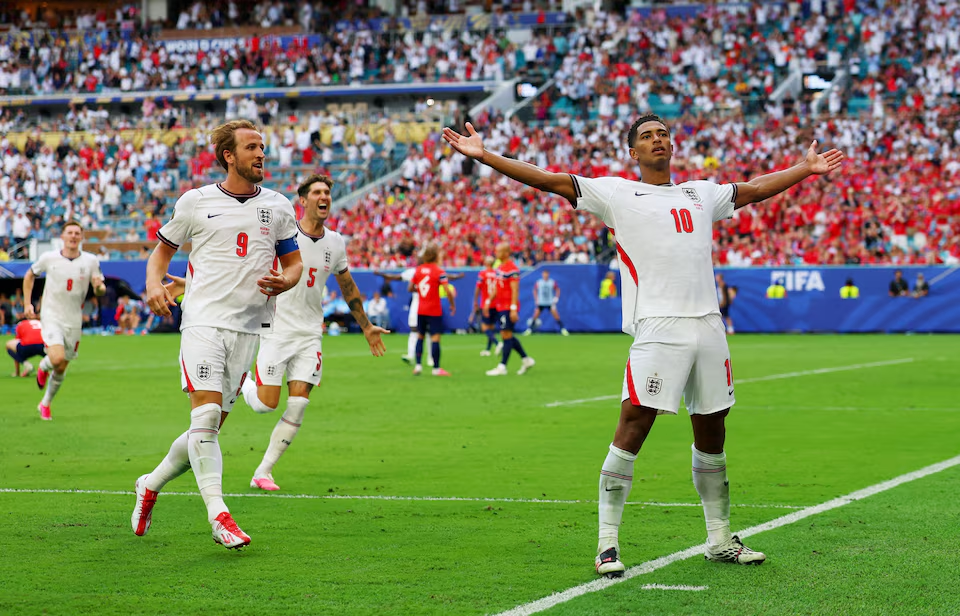
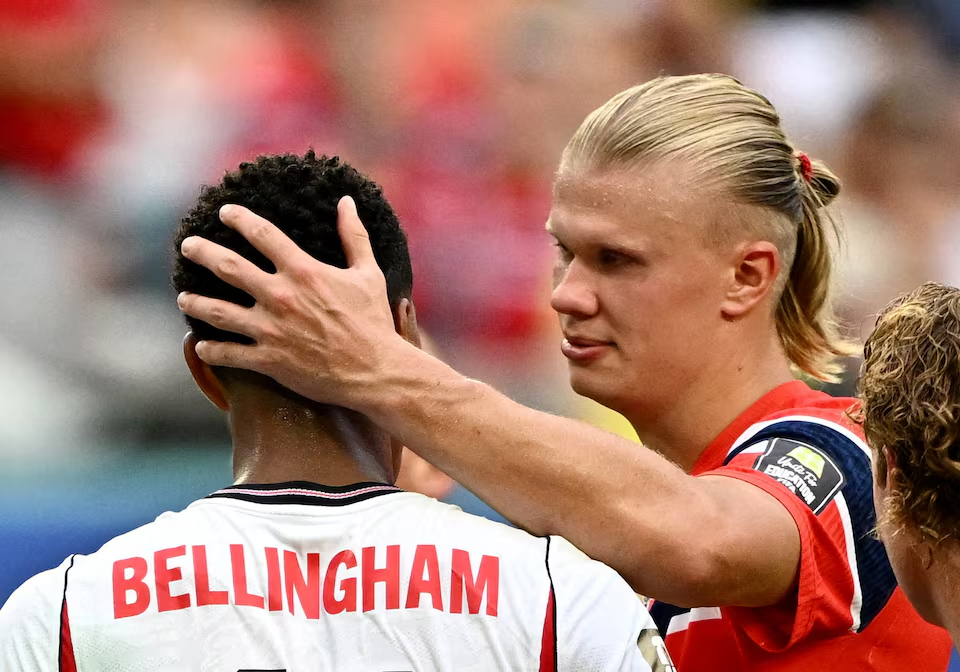
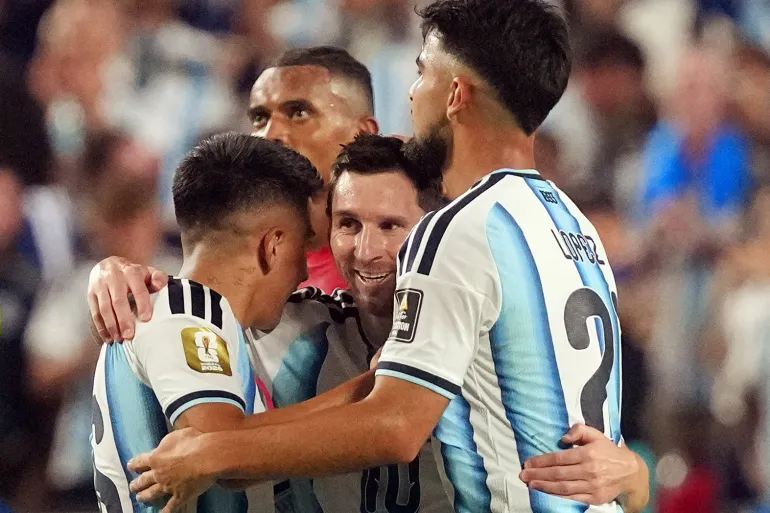
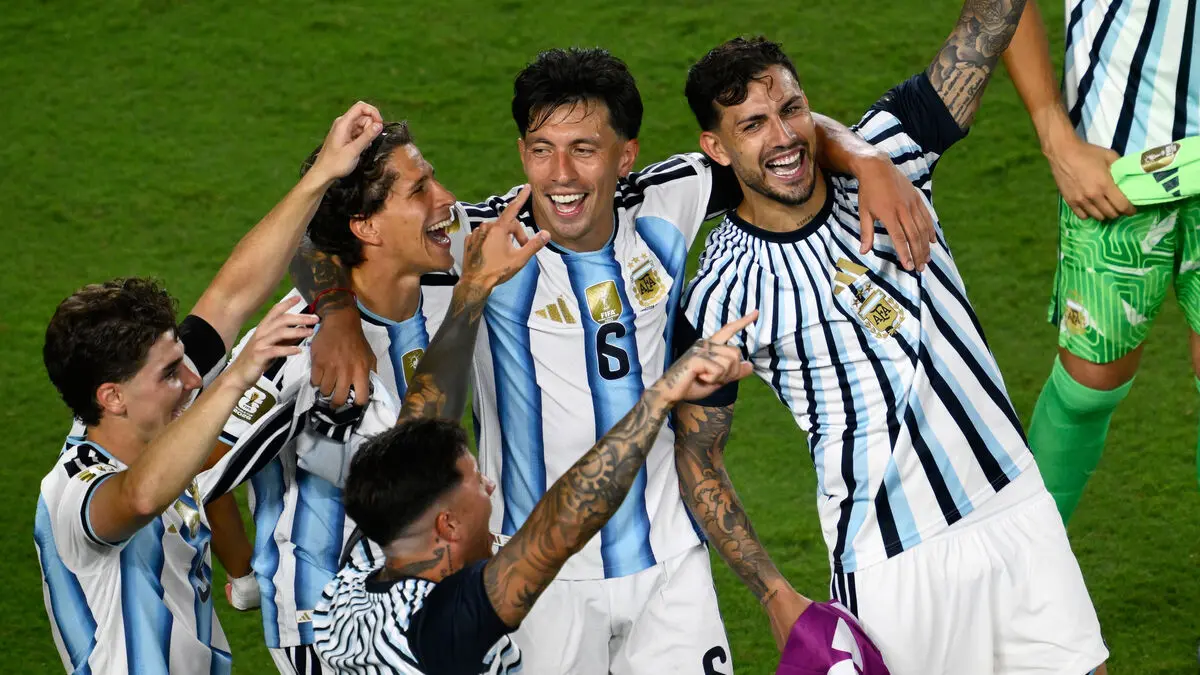
England needed a late intervention from Jude Bellingham to overcome a resilient Norway 2-1, while Argentina defeated 10-man Switzerland 3-1 after extra time to keep their hopes of lifting the trophy alive.
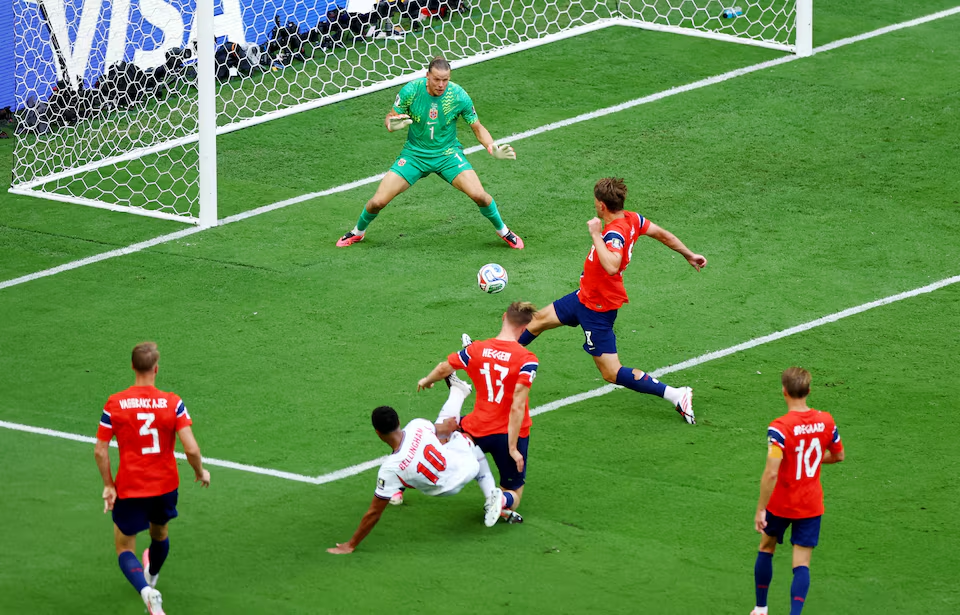
Bellingham once again proved England’s hero, scoring the decisive goal just three minutes into the first half of extra time after the teams had been locked at 1-1 following regulation.
Norway had taken the lead in the 36th minute through Andreas Schjelderup, who fired a powerful left-footed effort beyond England goalkeeper Jordan Pickford after Erling Haaland had earlier threatened with a header.
Norway were left to rue a costly missed opportunity just before half-time when Alexander Sørloth opted to shoot instead of squaring the ball to an unmarked Erling Haaland during a two-on-one counter-attack.
With Haaland visibly calling for the pass, Sørloth delayed his decision, allowing John Stones to track back and execute a crucial block on the eventual shot. The decision quickly became one of the game’s defining moments, with many viewing it as the opportunity that allowed England to stay in the contest before Bellingham’s equaliser.
England had a breakthrough before the break when Bellingham produced a superb finish to restore parity, although the goal sparked debate after the ball appeared to strike the stadium’s Skycam wire during the build-up. FIFA later said there was no evidence from the ball’s electronic tracking system that its trajectory had been affected.
Norway thought they had regained the lead early in the second half when Torbjørn Heggem found the net following a corner, but the goal was disallowed after a VAR review ruled Haaland had fouled an England defender in the build-up.
With neither side able to find another breakthrough in normal time, the contest went into extra time, where Bellingham reacted quickest after Norway goalkeeper Ørjan Nyland parried a long-range effort, sliding home the rebound for his sixth goal of the tournament.
The victory keeps alive England’s bid to reach their first men’s World Cup final since lifting the trophy in 1966.
Argentina, meanwhile, had to overcome determined resistance from Switzerland before eventually sealing a 3-1 victory in Kansas City.
The South Americans made a bright start, with Alexis Mac Allister heading home Lionel Messi’s corner to give the reigning Copa América champions an early advantage.
Switzerland equalised midway through the second half when Dan Ndoye finished clinically after sustained pressure, having earlier seen chances denied by Argentina goalkeeper Emiliano Martínez.
The match turned in Argentina’s favour in the 72nd minute when Swiss striker Breel Embolo was sent off after receiving a second yellow card for simulation, leaving Switzerland to play the remainder of the match with 10 men.
Despite their numerical advantage, Argentina could not find a winner in regulation time. Messi came close with a curling effort that drifted narrowly wide, while Thiago Almada struck the outside of the post early in extra time.
The breakthrough finally arrived courtesy of Julián Álvarez, who curled a superb strike into the net before Lautaro Martínez added a third to put the result beyond doubt.
The victories complete the semi-final line-up, with England set to face Argentina on Wednesday in Atlanta, while France and Spain will contest the other semi-final on Tuesday. The winners will advance to next Sunday’s World Cup final, while the losing teams will meet in the third-place playoff.
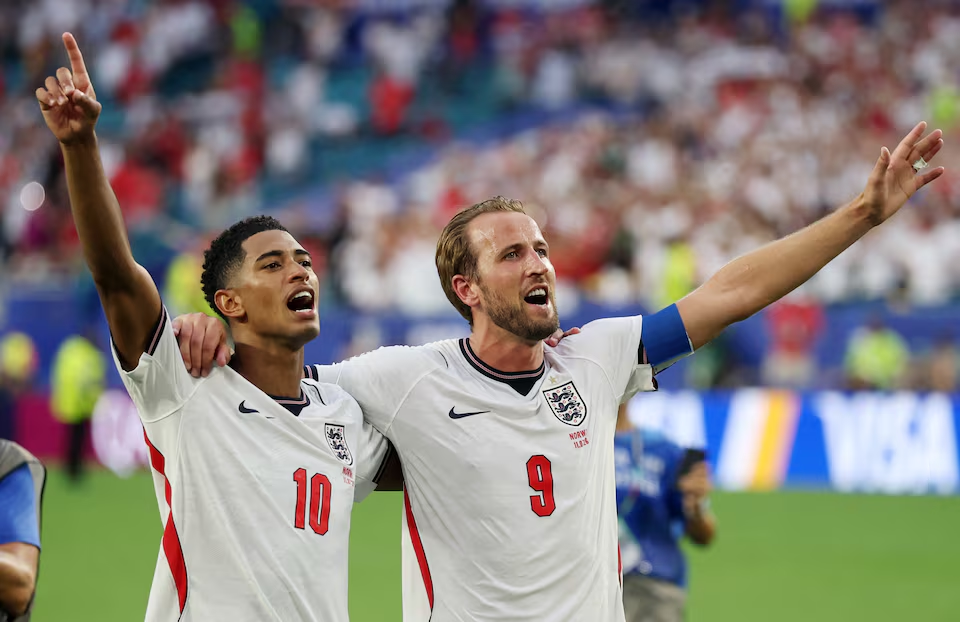
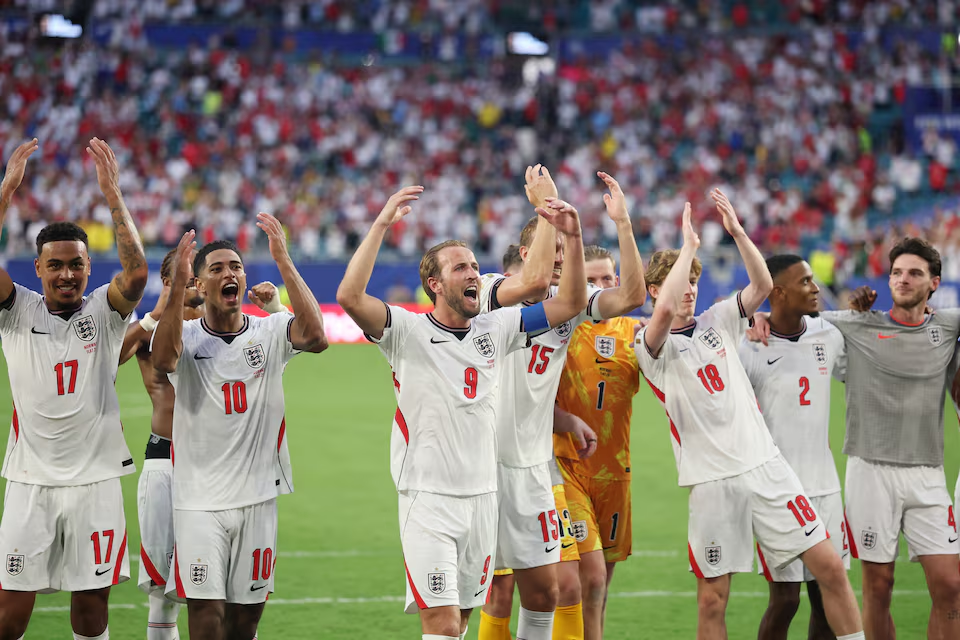
Bellingham once again proved England’s hero, scoring the decisive goal just three minutes into the first half of extra time after the teams had been locked at 1-1 following regulation. England’s Jude Bellingham celebrates scoring their second goal with England’s Harry Kane and John Stones. England’s Jude Bellingham and Harry Kane celebrate after the match as England qualify for the semi finals of the World Cup. England’s Morgan Rogers, Jude Bellingham, Harry Kane, Dan Burn, Jordan Pickford and Anthony Gordon celebrate after the match as England qualify for the semi finals of the World Cup.Norway’s Erling Haaland reacts with England’s Jude Bellingham.Lionel Messi, centre. celebrates with his teammates after Argentina beat Switzerland.
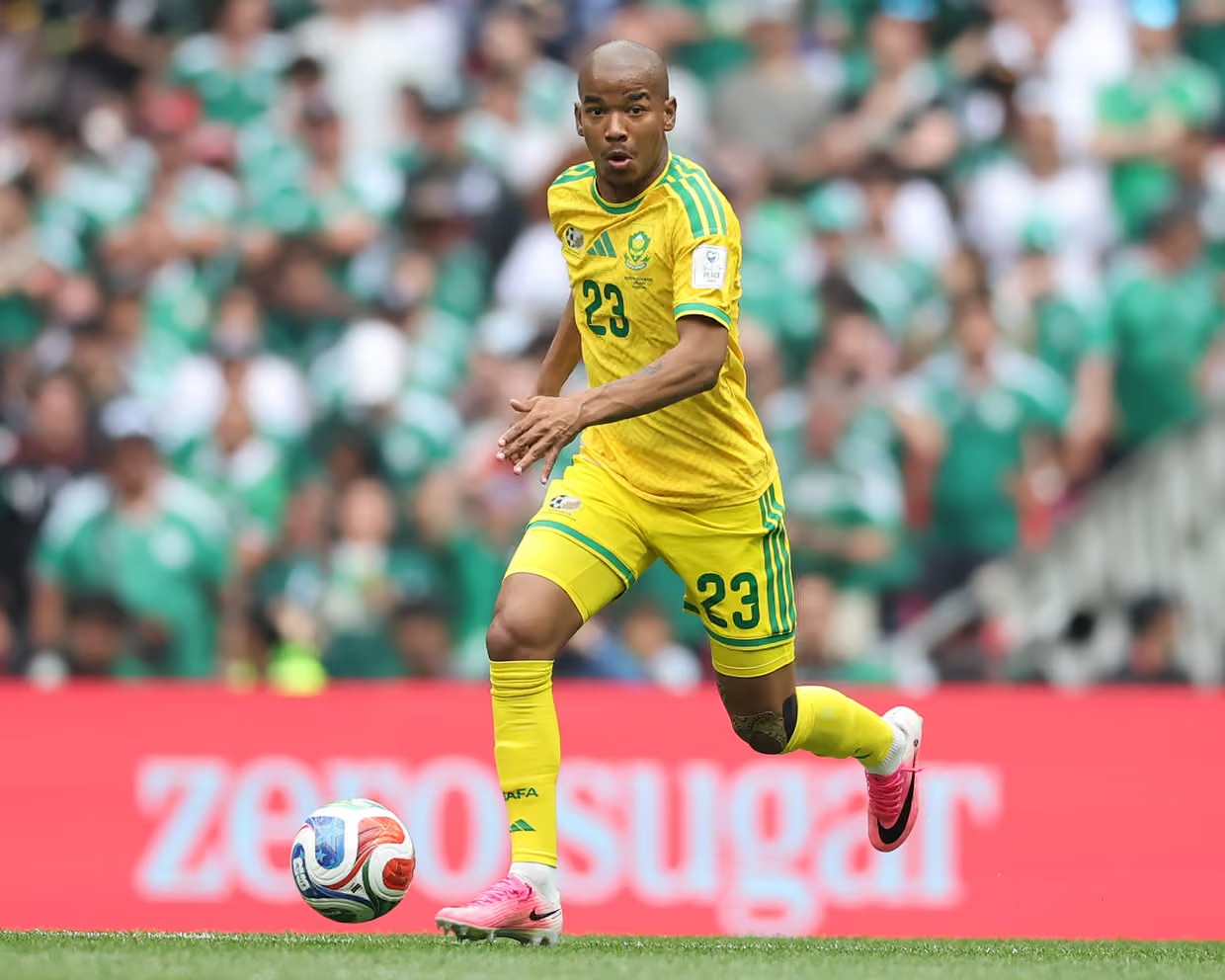
The reason for the death of the 25-year-old who played for Mamelodi Sundown is still unclear.
Police said they had opened an investigation after the body of a 25-year-old man was found at a house in Schotschekloof, a suburb in central Cape Town, on Saturday morning.
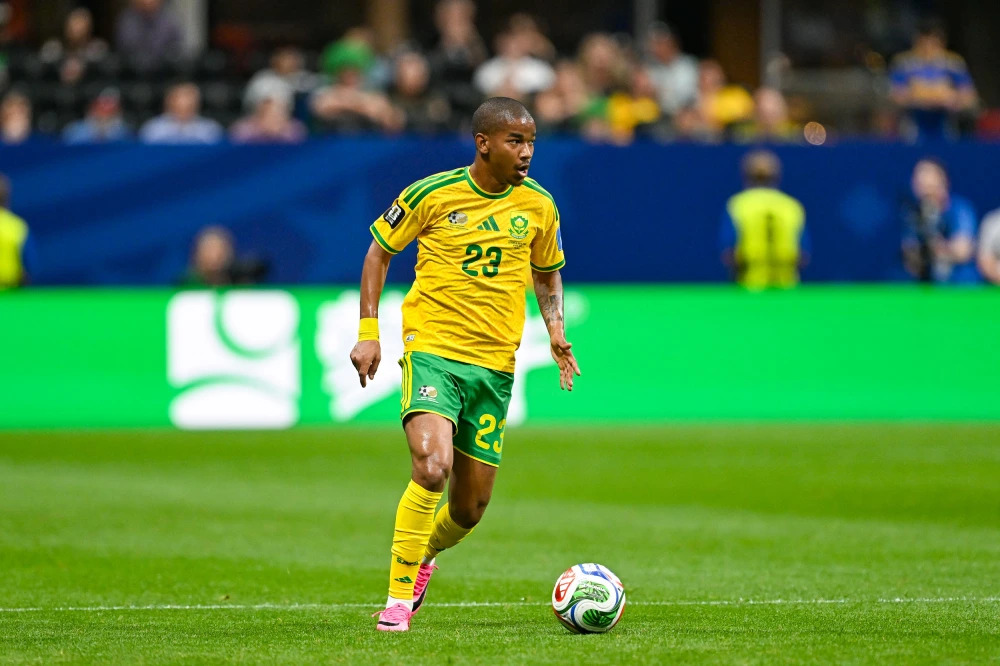
Adams started South Africa’s first two games in the tournament, a 2-0 defeat to Mexico and the 1-1 draw with Czechia, and he was a substitute in the 1-0 win over South Korea, before missing out in the 1-0 last-32 defeat by Canada.
The SAFPU confirmed his passing in a statement which read, “the SAFPU is devastated by the untimely passing of Mamelodi Sundown and Bafana Bafana midfielder Jayden Adams.”
“Jayden had only recently represented South Africa at the 2026 FIFA World Cup, carrying the hopes of the nation with pride, courage, and distinction.
“His passing is an immeasurable loss to his family, teammates, clubs, the football fraternity and country at large.
“We extend our deepest condolences to the Adams family, Mamelodi Sundowns, Stellenbosch FC, Bafana Bafana and all those whose lives he touched.
“South African football has lost a gifted player, a proud servant of the game and a young life that still had so much to offer,” concluded the statement.
Jayden Adams in action for South Africa against Mexico in the opening game of the World Cup.
The recall, notified by BMW South Africa, affects a total of 10,961 vehicles, including BMW 3 Series, 4 Series, 5 Series, 7 Series, X3 and X4 models, sold in South Africa since 2016.
According to a statement issued Thursday by the NCC, the supplier identified a production-related problem affecting vehicles equipped with the Pinion Starter, in which increased wear of the solenoid switch may occur after a high number of start operations.
“As a result, the engine’s starting capability deteriorates. Under certain circumstances, the engine may no longer be able to start. In addition, a short circuit in the solenoid switch cannot be ruled out, which may lead to local overheating at the starter,” the NCC quoted the supplier as saying.
The NCC urged owners of the affected vehicles not to use the “Remote Engine Start” function via the My BMW App or the remote-control key until the repair has been completed.
The commission also advised consumers to visit their nearest authorized BMW dealership to arrange an inspection and repair, adding that all corrective work related to the recall would be carried out free of charge.
South Africa’s National Consumer Commission (NCC) has announced a recall of more than 10,000 BMW vehicles over a potential defect affecting the starter system that could prevent the engine from starting or cause overheating.
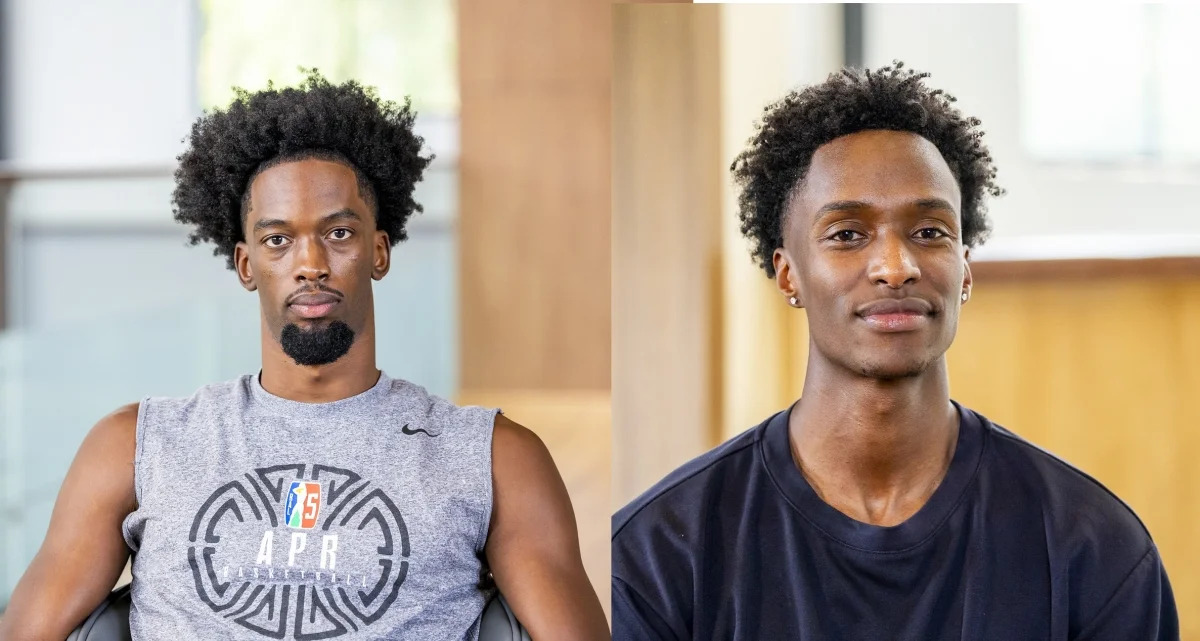
In a statement issued on Friday, FERWABA said the decision followed the receipt and consideration of letters of apology submitted by APR Basketball Club, Habimana and Mpoyo, as well as a meeting held between the federation and the club on July 8.
“The Rwanda Basketball Federation (FERWABA) wishes to inform the public that… it has resolved to accept the apologies and lift, with immediate effect, the disciplinary suspension previously imposed on Mr. Ntore Habimana and Mr. Mpoyo Axel Olenga,” the statement reads.
The federation said it also took into account the corrective measures implemented by APR Basketball Club and the players’ renewed commitment to honour national team call-ups and faithfully discharge their duties whenever selected.
FERWABA reiterated that representing Rwanda is a privilege that requires patriotism, discipline and an unwavering commitment to putting national interests first.
The suspension was imposed on June 22 after the federation accused the two players of failing to honour a national team call-up ahead of the 2027 FIBA Basketball World Cup African Qualifiers in Luanda, Angola.
At the time, FERWABA said APR had confirmed the players would report to the national team camp, but they did not participate as expected, leading to disciplinary action under resolutions adopted during the federation’s November 2025 General Assembly. The resolutions stipulate that players selected for national duty who fail to honour official call-ups face a one-year suspension from all basketball activities.
The decision sparked a dispute between the federation and APR Basketball Club.
Habimana and Mpoyo maintained that they had reported to the national team camp but were unable to immediately take part in training because they were recovering from injuries sustained during the Basketball Africa League (BAL) season. APR also defended the players, arguing that the club had submitted medical reports and that the matter resulted from a misunderstanding that could have been resolved through dialogue.
The club later appealed the sanctions and submitted letters of apology, while FERWABA convened a meeting with APR on July 8 to discuss the matter.
With the suspension now lifted, Habimana and Mpoyo are immediately eligible to return to competitive basketball, including representing both APR Basketball Club and the Rwanda national team when called upon.
National Basketball team players Axel Mpoyo and Ntore Habimana who were sanctioned by the federation last month.
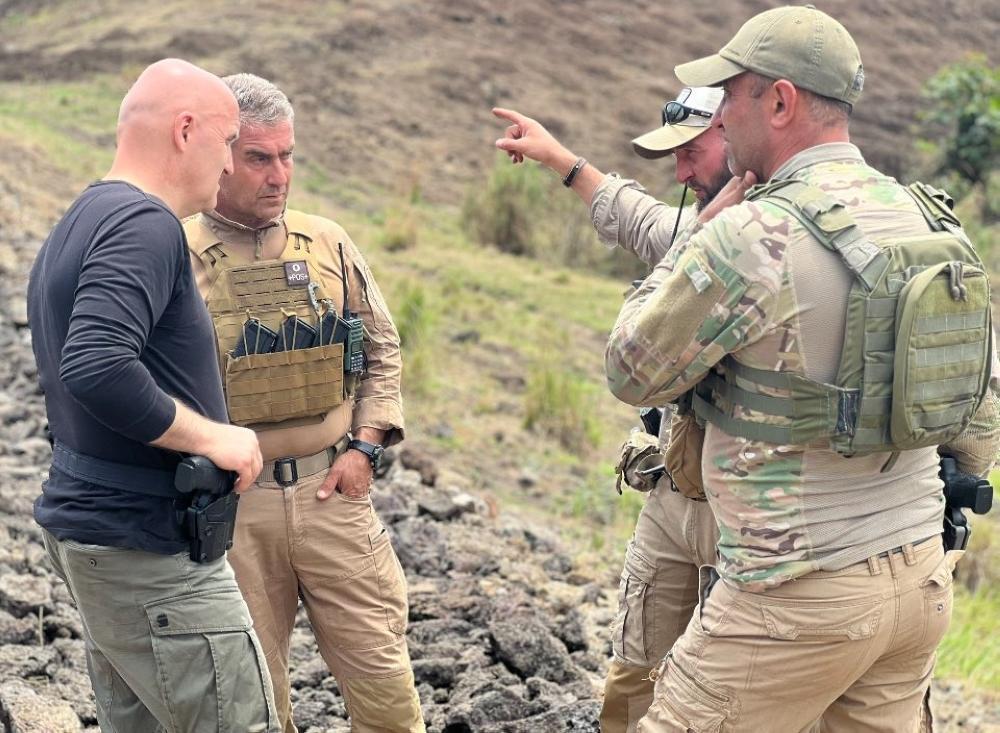
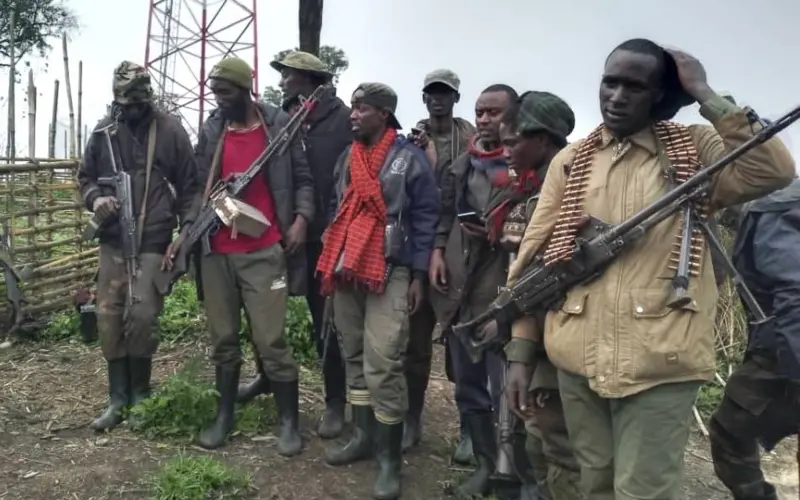
According to the report presented to the UN Security Council Sanctions Committee on June 5, 2026, mercenary groups provide battlefield support, maintain military assets including combat aircraft, and train members of the Armed Forces of the Democratic Republic of the Congo (FARDC) in advanced drone operations, radar systems, jungle warfare, intelligence gathering, operational planning, secure communications and target identification.
Despite the longstanding cooperation, the UN experts say coordination between FARDC and the various mercenary groups has been undermined by weak command structures, resulting in confusion over lines of authority and responsibility.
Advanced training and cooperation with Wazalendo
The report says foreign mercenaries maintain operational bases in Kisangani, Kinshasa, Walikale, Kalemie in Tanganyika Province and Kindu in Maniema Province. Testimonies and other evidence gathered by the UN indicate they continue to play an active role in military operations across North and South Kivu.
In Walikale, North Kivu, and the town of Baraka in South Kivu, foreign mercenaries reportedly provided advanced military training to members of the Wazalendo militias. The programme covered reconnaissance techniques, including identifying enemy positions and operating surveillance drones.
According to testimonies cited in the report, participants were selected based on their level of education. Upon completing the training, many were deployed alongside FARDC troops, with some reportedly issued sniper rifles for operations against the AFC/M23 coalition.
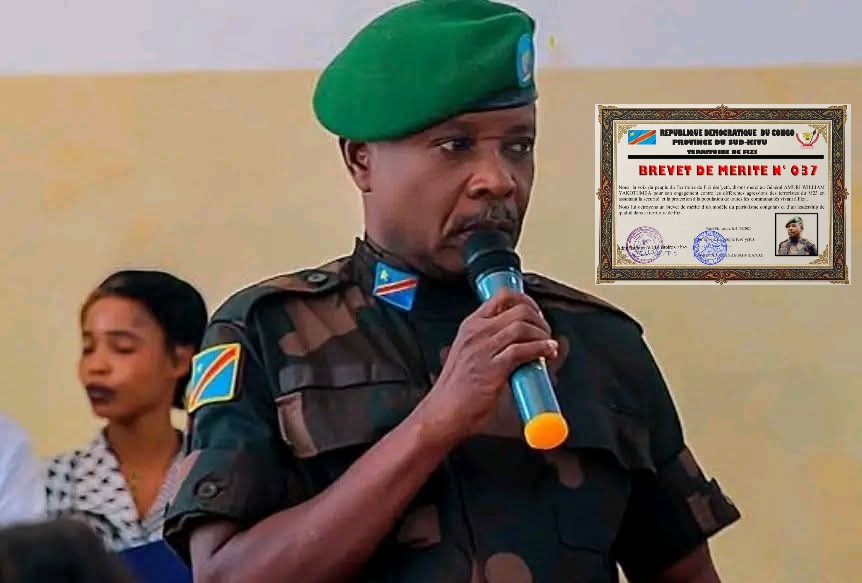
Among those who benefited from the training were fighters under commanders sanctioned by the United Nations, including Guidon Shimiray, leader of the NDC-R armed group operating in Walikale, and members of the CNPSC led by William Yakutumba.
Foreign mercenaries trained fighters under William Yakutumba.
Operations in South Kivu
Between January and March 2026, mercenaries fought alongside FARDC during heavy fighting in South Kivu, participating in coordinated drone and ground operations in several areas, including Minembwe Commune and its surrounding areas.
During the same period, Wazalendo fighters were ordered to withdraw from the highlands of South Kivu and were replaced by a FARDC special forces unit known as “Hiboux” together with foreign mercenary contingents.
The report says the mercenaries were not deployed across all operational areas. Instead, they were assigned to specialised missions, including coordinating heavy artillery fire, drone strikes and intelligence support. They were also deployed to the city of Uvira in January 2026.
On February 1, 2026, multiple drone strikes involving foreign mercenaries targeted positions held by the MRDP-Twirwaneho armed group in Minembwe.
Foreign mercenaries participated in major offensives against MRDP-Twirwaneho.
Between February 2 and 8, mercenary units reportedly assisted the Hiboux special forces in recapturing the strategic Point-Zéro junction, a key crossroads linking the roads to Uvira, Baraka and Minembwe.
Secret agreement with Erik Prince
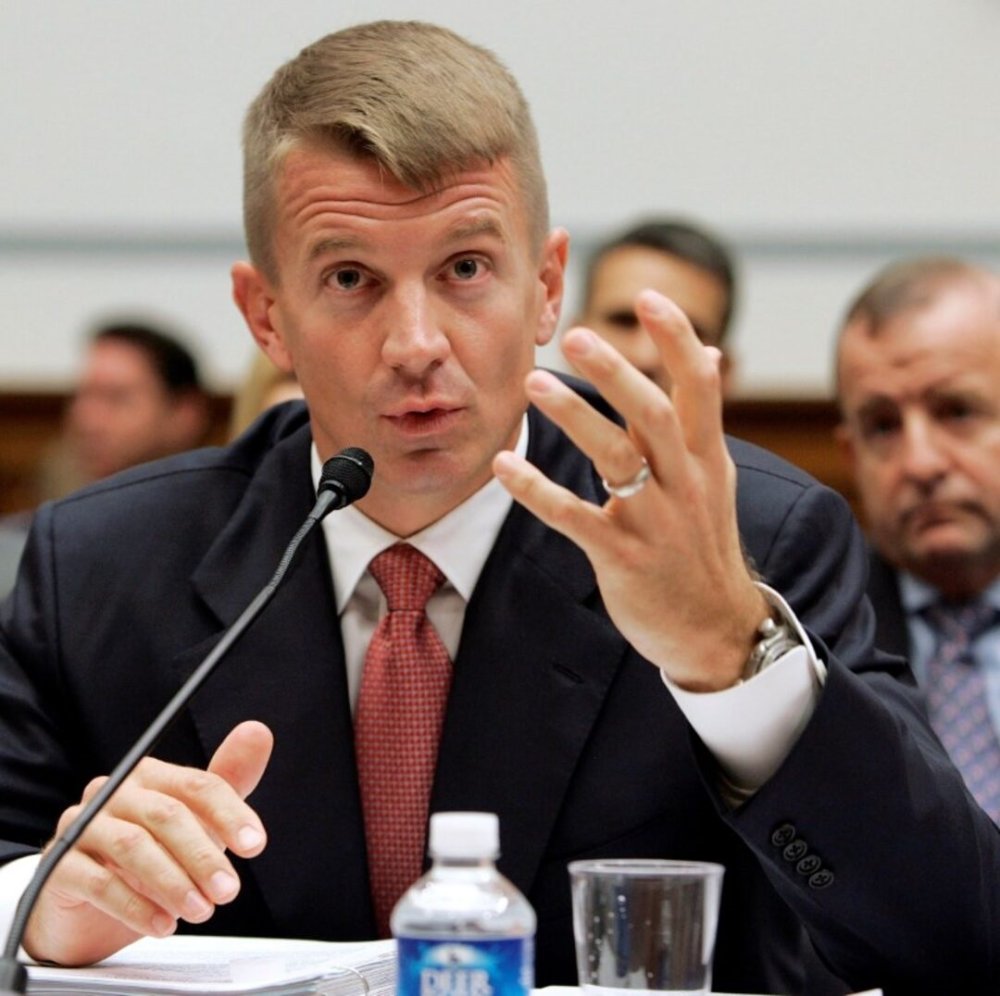
The report also details a confidential five-year cooperation agreement signed between the DRC government and American security contractor Erik Prince in December 2024. Prince is best known as the founder of the private military company Blackwater.
Under the agreement, Prince committed to providing military assistance to FARDC and overseeing security at mining sites across the country through contractors working under his companies.
Prince is best known as the founder of the private military company Blackwater.
In June 2025, Prince’s United Arab Emirates-based company, Quantum Global Consulting, registered a subsidiary in the DRC known as Quantum Global Consulting Africa.
The company also established another entity, Vectus Global, headed by Christophe Sirot, a dual French-American national.
According to the report, Vectus Global signed a contract with the DRC Ministry of Finance to help increase state revenues from mining, combat cross-border smuggling, tackle corruption and reduce tax evasion.
At the end of April 2026, the Ministry of Finance announced the creation of a special unit tasked with securing mining sites, replacing soldiers and police officers previously assigned to those duties. The UN experts say the unit appears to be linked to Vectus Global.
The report further states that the agreement contained confidential military provisions assigning Vectus Global responsibility for strengthening border security, particularly in areas near Rwanda and Zambia.
The contract also authorised the company to advise FARDC on the acquisition and operation of combat aircraft and to recruit former foreign military personnel to support the Congolese armed forces.
According to the UN experts, the broader objective was to strengthen FARDC’s military capabilities against Rwanda through advanced military technology, specialised training, strategic advice and the acquisition of modern weapons.
By late 2025, one Vectus employee told the UN investigators that the company’s priorities had shifted from securing mining operations to supporting military activities as the conflict intensified.
In February 2026, another employee reportedly told the experts that the DRC government had enlisted Vectus Global to help plan an operation to retake the city of Uvira after it fell to AFC/M23 fighters, with company personnel deployed to South Kivu to support the operation.
However, during an interview with the UN experts in March 2026, Sirot denied that Vectus Global had participated in combat operations, insisting that the company’s contract did not include any battlefield role.
The report nevertheless says multiple witnesses, including Vectus employees, identified Sirot as the individual responsible for coordinating the company’s military-related activities.
More than 300 recruits from El Salvador
Another major finding concerns the recruitment of former soldiers and police officers from El Salvador.
According to the report, former Salvadoran military personnel and police officers began arriving in the DRC from July 2025 to support the government’s coalition in its conflict against AFC/M23.
Initially assigned to maintain military equipment in Kisangani, Tshopo Province, many were later redeployed to Walikale, Baraka and Kalemie.
The UN experts found that a company known as Importaciones de Productos Americanos S.A. de C.V. coordinated the recruitment of more than 300 mercenaries in El Salvador for deployment to the DRC.
The company is registered in El Salvador and is owned by Juan Emilio Velasco Alfaro, a retired colonel in the Salvadoran military, and Rodrigo Antonio Tejada Alvarengar, a former lieutenant.
Most recruits signed one-year contracts that came into effect in July 2025, with each promised a monthly salary of US$4,225.
The report says some of the recruits returned to El Salvador before completing their contracts because of delays in salary payments by the DRC government or injuries and illnesses sustained during deployment.
The Government of El Salvador told the UN experts that it was unaware its citizens had travelled to fight in the DRC and had never authorised their deployment.
The transaction is the world’s first Nature Bond from a commercial bank to receive the International Capital Market Association (ICMA) Nature Bond secondary designation, and the first use-of-proceeds green bond from a commercial bank globally to carry the designation.
The bond is designed to support eligible lending across three categories: sustainable primary production, sustainable agri-processing, and water supply and sanitation. Financing will target projects across 24 markets within Ecobank’s operating footprint, with lending concentrated in countries where nature and biodiversity priorities are most significant.
The issuance reflects Ecobank’s broader role in mobilising African and international capital for sectors critical to the continent’s long-term resilience, including food systems, natural capital, supply chains, and water systems.
The bond attracted strong investor demand, with the final orderbook exceeding US$1.36 billion, representing 3.9 times oversubscription against the original target size of US$350 million. The strong demand enabled Ecobank to increase the transaction size by US$100 million to US$450 million and tighten pricing by 50 basis points from initial guidance, delivering a 50-basis-point greenium.
Moody’s assigned the transaction its highest Sustainability Quality Score, SQS1 (Excellent).
The bond attracted a diversified international investor base, with final allocations distributed approximately 55 per cent to the UK and Europe, 38 per cent to Africa, 3 per cent to the Middle East, 2 per cent to the United States, and 2 per cent to Asia. Participants included development finance institutions and sustainability-focused funds, with FMO, the Dutch entrepreneurial development bank, serving as the anchor investor.
The bond is structured as a Tier 2 capital instrument with a 10.25-year tenor and is callable after 5.25 years.
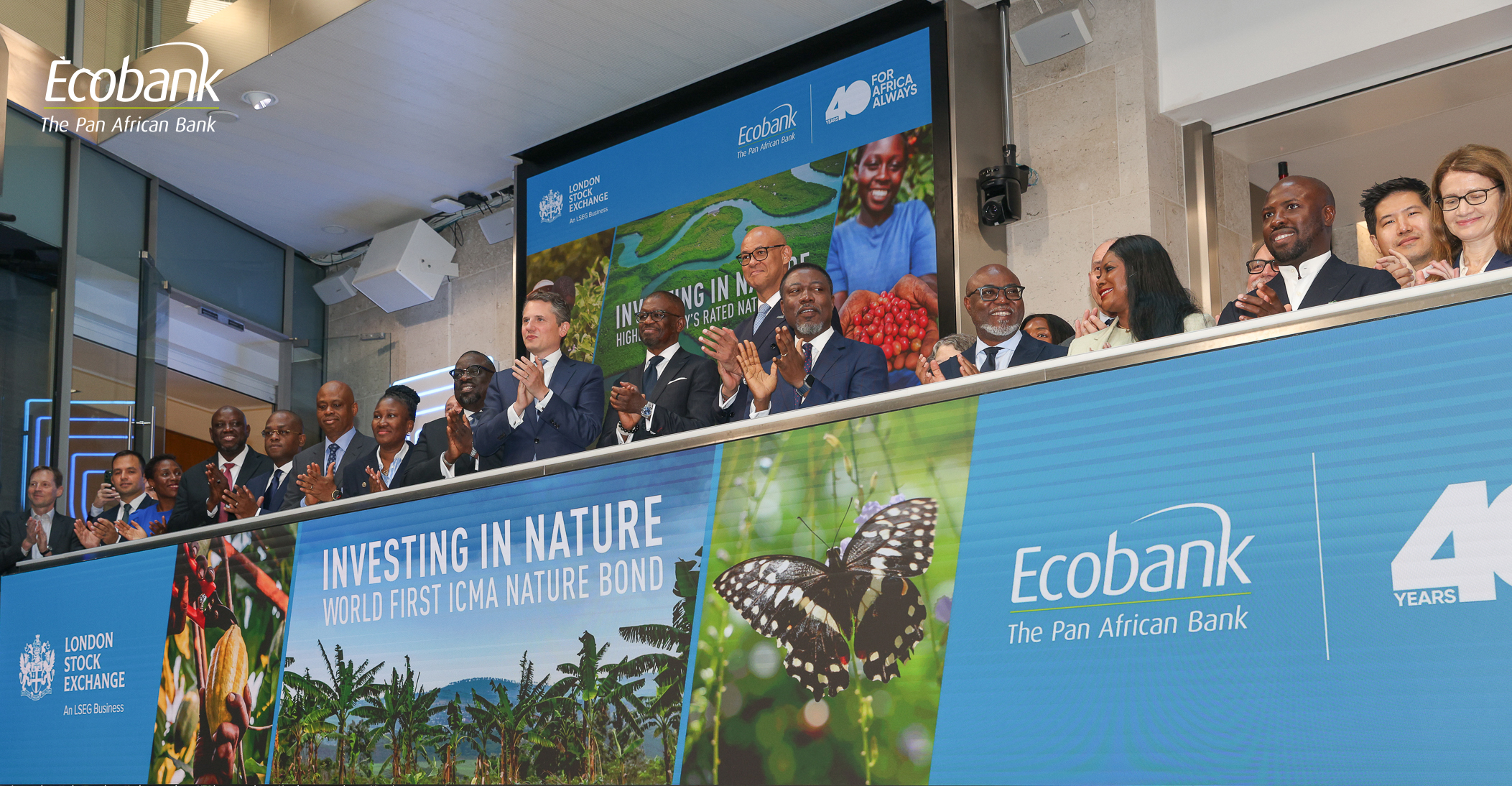
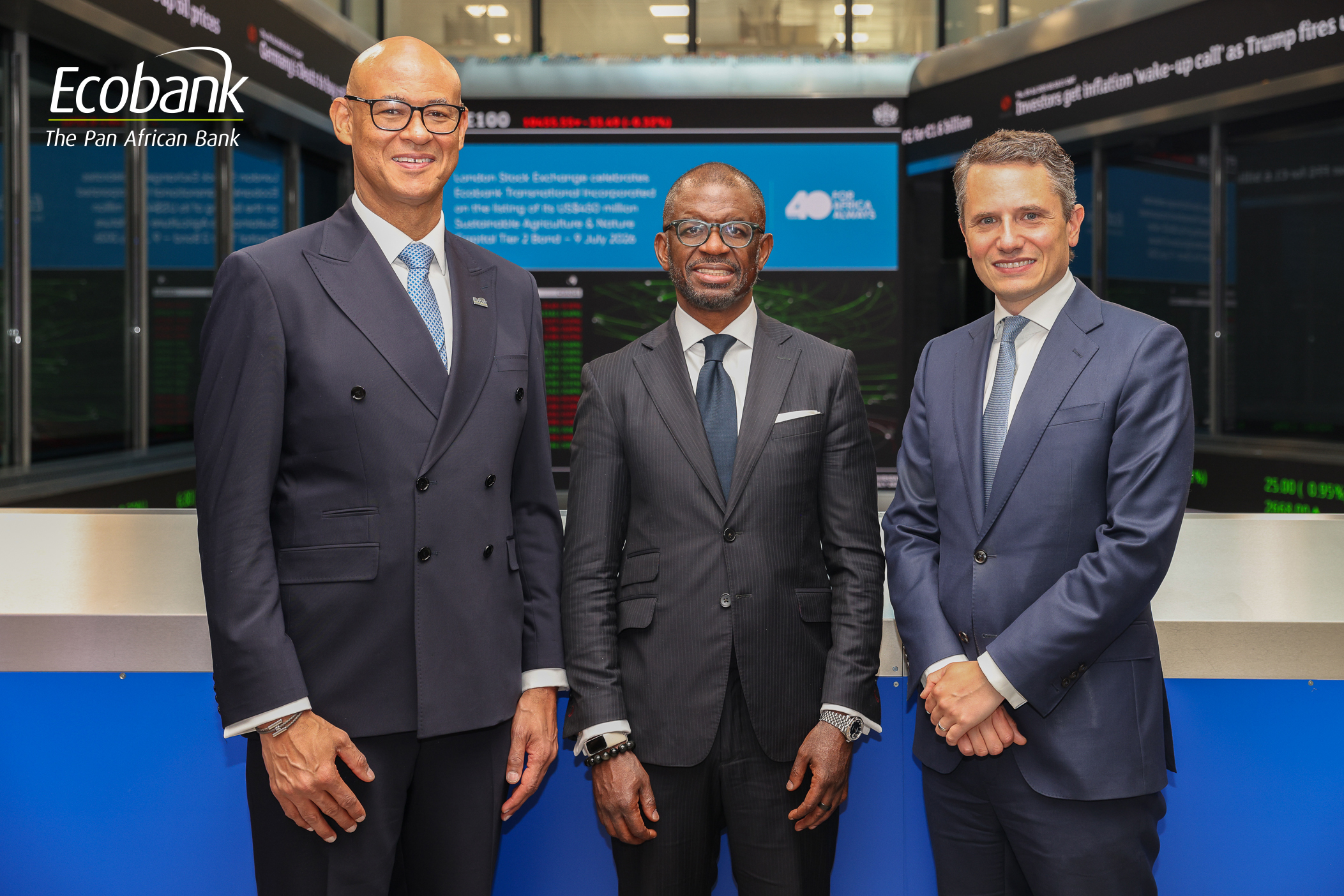
Senior Ecobank representatives attending the Market Open Ceremony included Papa Madiaw Ndiaye, Chairman of Ecobank Transnational Incorporated; Jeremy Awori, Group Chief Executive Officer; Ayo Adepoju, Group Executive Director and Chief Financial Officer; and Rachael A.O. Antwi, Group Head of Sustainability.
Ecobank Transnational Incorporated acted as the issuer, originator, and sole sustainability structuring adviser for the transaction. Standard Chartered Bank and Renaissance Capital Africa acted as joint lead managers and joint bookrunners.
The London Stock Exchange ceremony marked the transaction as a milestone for African sustainable finance and highlighted the growing role of African financial institutions in developing credible, market-based solutions for climate and nature-related investment.
Ecobank Group is a leading private pan-African banking group with operations in 34 sub-Saharan African countries, as well as France, the United Kingdom, the United Arab Emirates, and China. The Group employs more than 14,000 people and provides consumer, commercial, corporate, and investment banking products and services to over 30 million customers across multiple channels, including digital platforms.
The transaction is the world’s first Nature Bond from a commercial bank to receive the International Capital Market Association (ICMA) Nature Bond secondary designation, and the first use-of-proceeds green bond from a commercial bank globally to carry the designation.From left to right: Jeremy Awori, Chief Executive Officer of Ecobank Group; Papa Madiaw Ndiaye, Chairman of Ecobank Group; and Charlie Walker, Deputy CEO, London Stock Exchange.
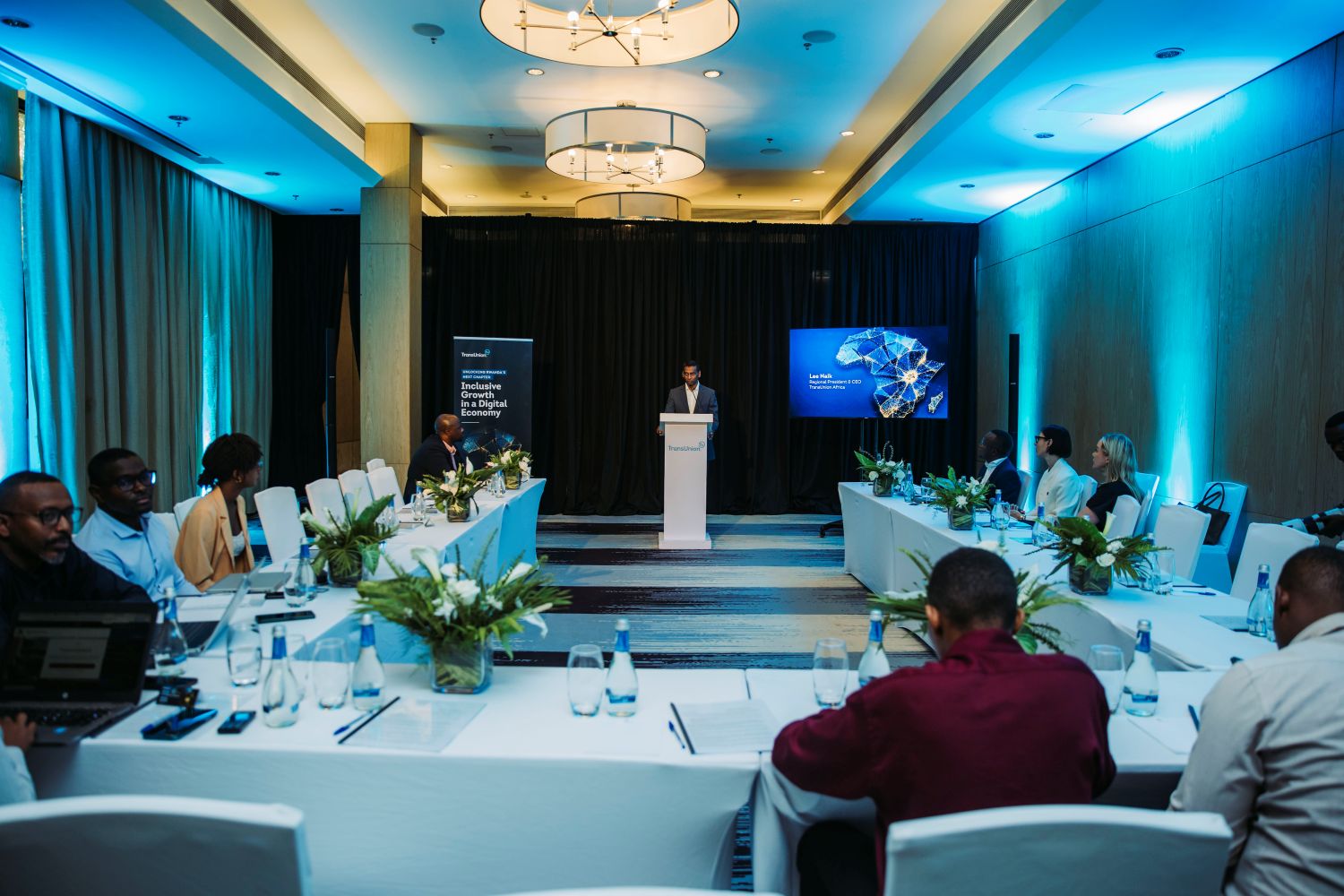
According to TransUnion Rwanda’s Q1 2026 Consumer Pulse Study, 98% of Rwandans consider access to credit and lending products important to achieving their financial goals. However, only 42% believe they have sufficient access to the credit products they need, exposing a significant gap between demand and availability.
The findings come as Rwanda continues to expand formal financial services and digital payments, with 96% of the population now having access to financial services, according to TransUnion Rwanda Chief Executive Officer Didier Mutambazi.
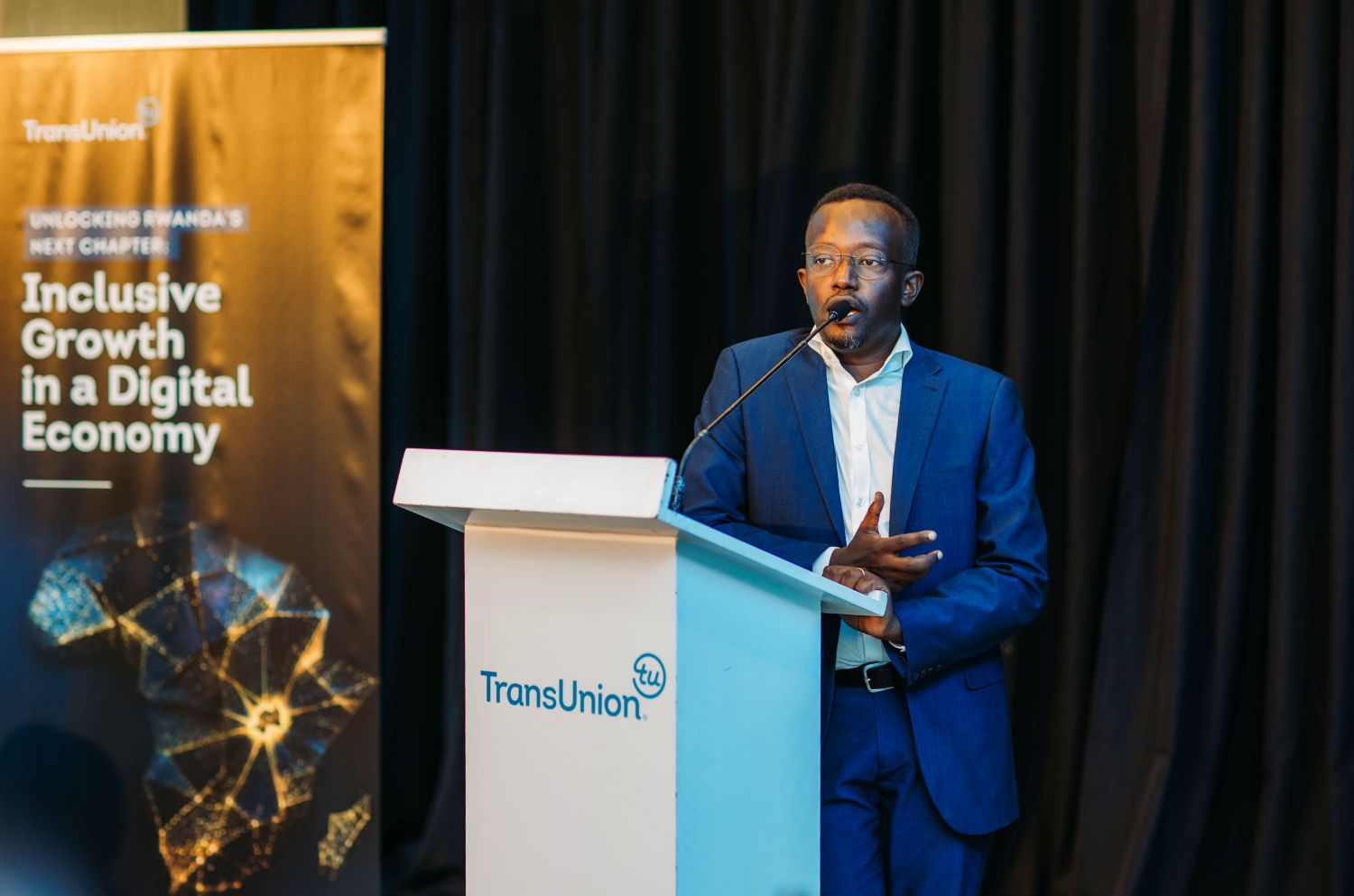
“As we look at the growth of our economy, 9.4% GDP growth is a good number. The conversation we want to have today is how we ensure that, as the country grows, we also see improvements in the lives of consumers and how, as a financial industry, we all come together to solve the real problems affecting them,” Mutambazi told journalists during the launch of the report at Kigali Marriott Hotel on Thursday, July 9, 2026.
Demand remains high
The survey, conducted between February 10 and March 9, 2026, among 259 adults, shows that 56% of consumers plan to apply for new credit or refinance existing loans within the next year, reflecting sustained appetite for borrowing. Personal loans emerged as the most sought-after product, with 47% of prospective borrowers intending to apply, followed by student loans (28%) and Buy Now, Pay Later (BNPL) services (22%).
Yet many consumers are unable to translate that demand into actual borrowing.
Nearly half (49%) of respondents who considered applying for credit ultimately abandoned their plans. The most common reasons included concerns over income or employment (33%), the high cost of credit (30%), and the belief that refinancing would not significantly improve their repayments (22%).
Mutambazi said the findings indicate that the challenge is no longer simply expanding financial access but enabling more people to actively participate in the credit market.
“Today, only about 40% of consumers in the market are credit visible, while around 60% are not yet visible. This is a challenge we must address if we are to expand participation and increase usage of credit,” he said.
To tackle this, TransUnion is working with lenders to incorporate alternative data, including mobile money transactions, into credit assessments to help consumers with limited borrowing histories build credit profiles.
Financial optimism persists
Despite the access challenges, the survey paints a relatively optimistic picture of household finances.
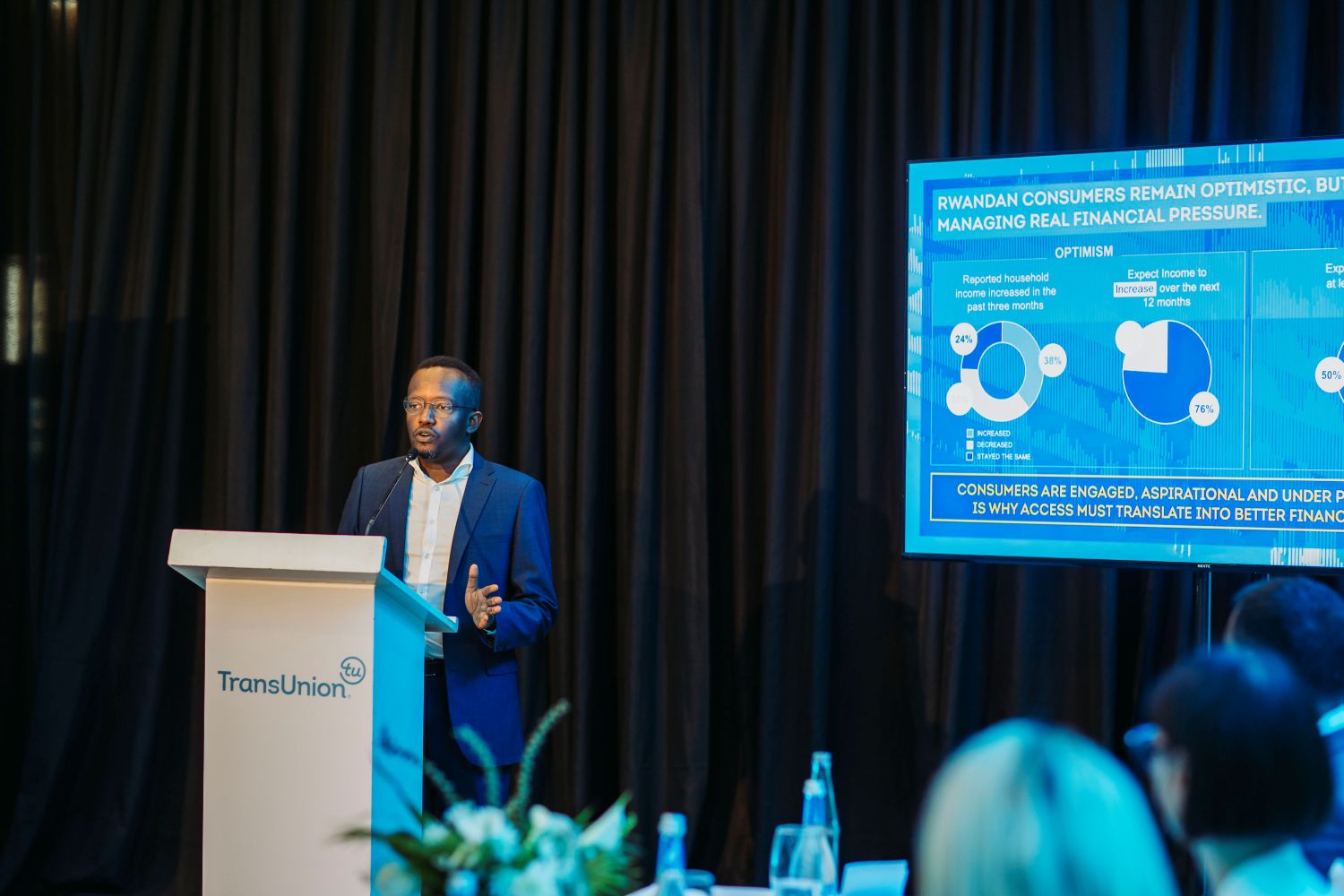
About 76% of respondents expect their household income to increase over the next 12 months, while another 16% expect it to remain stable. At the same time, 38% reported their incomes had increased over the previous three months, compared with 24% who experienced declines.
However, financial pressures remain evident.
Half of respondents said they expect to be unable to pay at least one current bill or loan in full. Among those anticipating difficulties, many plan to make partial payments, use savings or take on temporary work to meet their obligations.
The report notes that these coping mechanisms reflect resilience rather than declining confidence, as households continue adjusting to economic pressures while maintaining cautious optimism.
From financial inclusion to economic inclusion
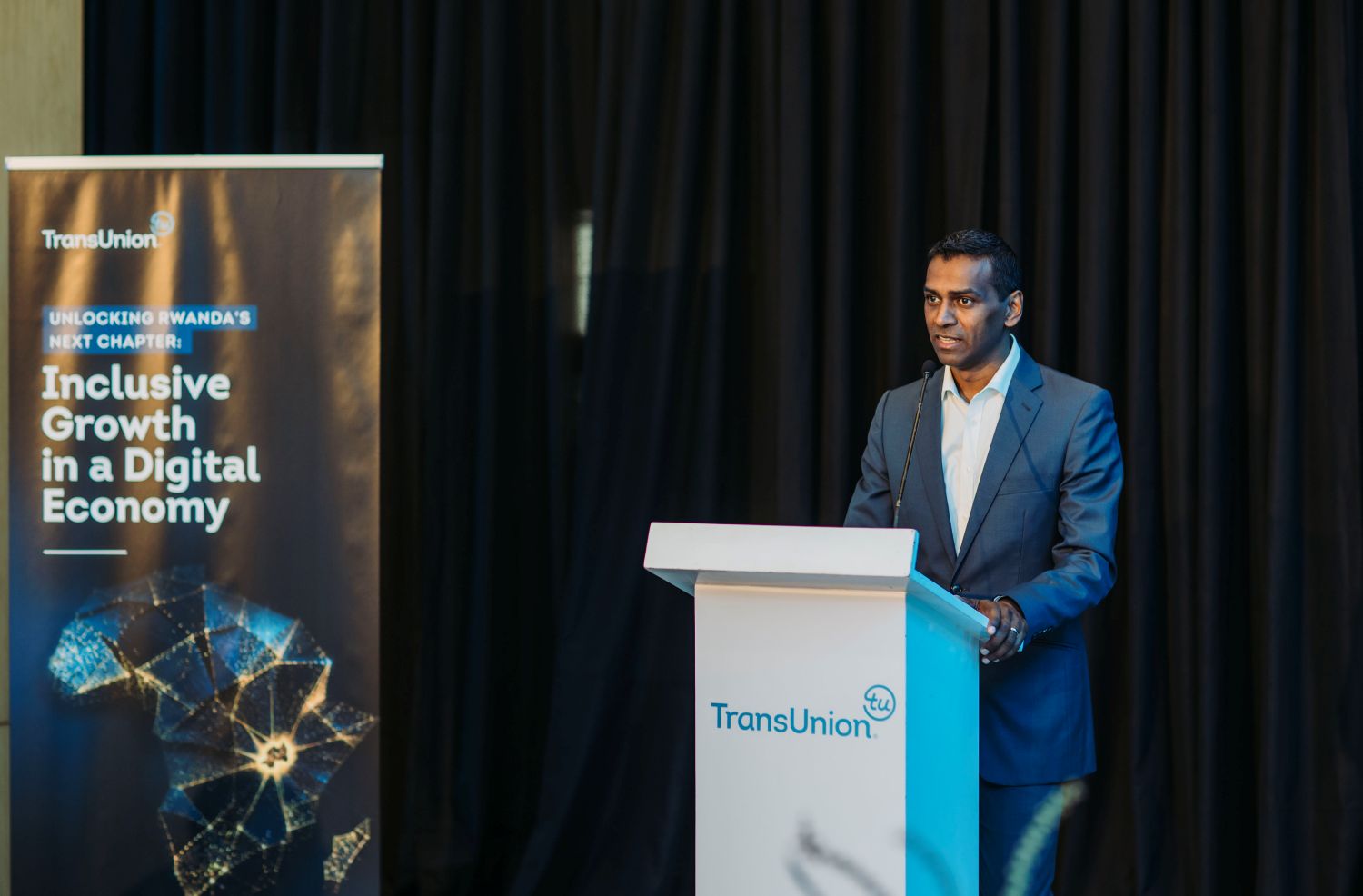
Speaking at the report’s launch, TransUnion Africa Regional President and CEO Lee Naik argued that Rwanda’s next challenge extends beyond simply expanding access to financial services.
“Financial inclusion is not just about accessing a way to pay bills or move money around. Financial inclusion is the ability to give people access to opportunity,” he said.
He noted that greater access to credit would enable more Rwandans to purchase homes and vehicles, finance education, and invest in small businesses, particularly given that micro, small and medium-sized enterprises account for more than 70% of employment across Africa.
Naik also described financial inclusion, digital trust, cross-border collaboration, agri-finance and renewable energy financing as key trends that will shape Africa’s economic future over the next five years.
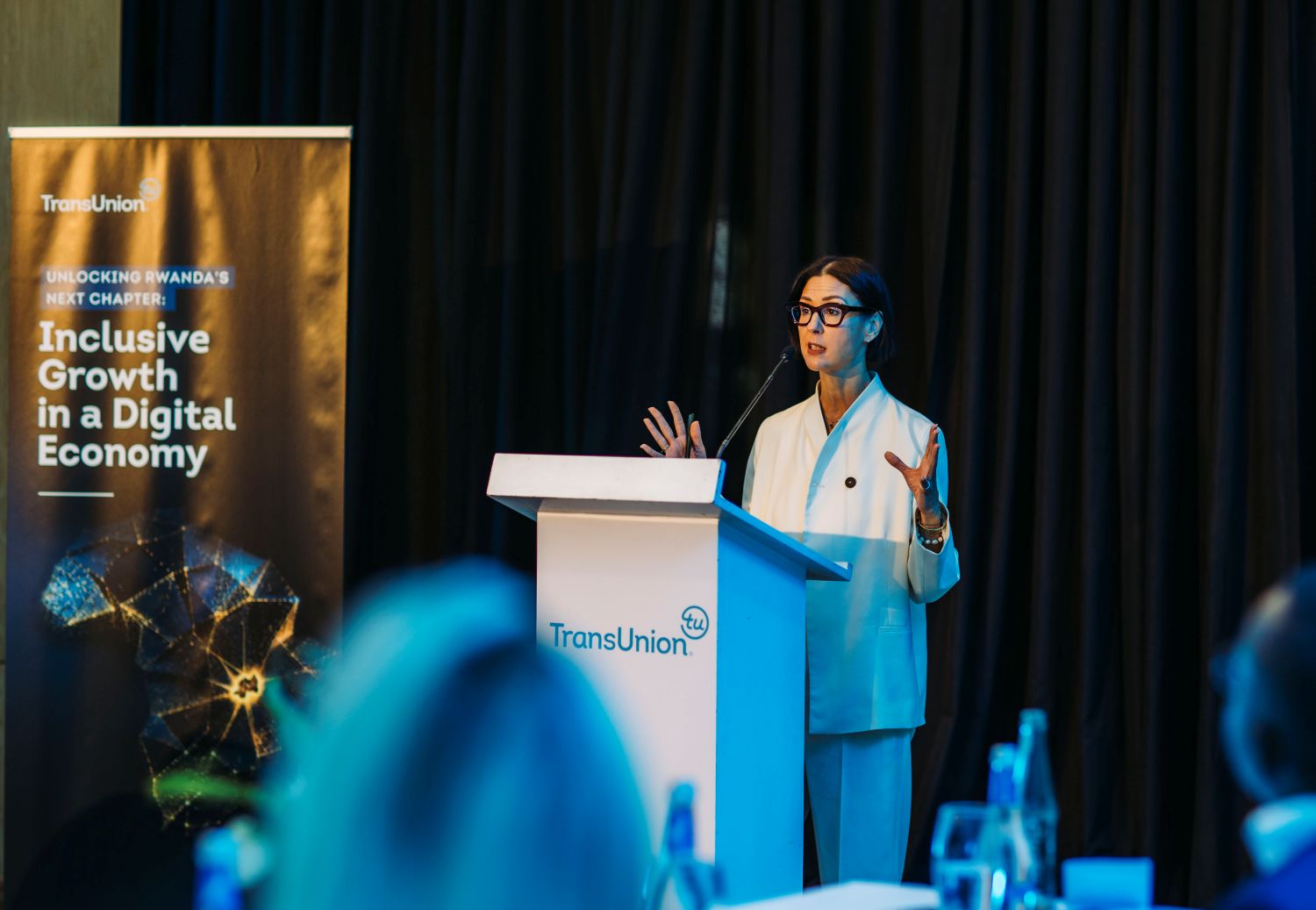
Building on that vision, Jeannine Naude, Vice President and Head of Africa Regions at TransUnion, said unlocking greater financial inclusion will require stronger collaboration across the financial ecosystem.
She said banks, fintechs, telecommunications companies and regulators must work together to build trusted digital infrastructure and develop financial products that reflect how consumers actually earn, save and transact. Such collaboration, she noted, will be key to expanding responsible lending and ensuring more people can participate meaningfully in Rwanda’s growing digital economy.
Credit awareness on the rise
The study also found that consumers are becoming increasingly engaged with managing their financial profiles.
Seventy percent of respondents said they monitor their credit reports at least once a month, while 96% believe keeping track of their credit information is important. Meanwhile, 57% believe their credit scores would improve if lenders incorporated alternative data, such as rental payments and other non-traditional financial information, into credit assessments.
Mutambazi said this openness presents an opportunity for financial institutions to broaden lending without increasing risk.
“The future is bright,” he said. “As an industry, we must work collaboratively on initiatives to meet this demand.”
Digital trust remains critical
As Rwanda’s digital economy expands, the survey also highlights the importance of strengthening trust in digital financial services.
Some 62% of respondents said they had been targeted by at least one form of digital fraud during the previous three months. However, only 9% said they actually became victims, suggesting that while fraud attempts are widespread, many consumers are successfully avoiding scams.
Naik said Rwanda compares favourably with several other African markets, where fraud victimisation rates are considerably higher, but stressed that continued investment in digital security and consumer education remains essential.
“Access creates participation, but trust sustains it,” Mutambazi said, adding that expanding financial inclusion will increasingly depend on building confidence in digital systems while ensuring more consumers can access affordable and suitable credit products.
TransUnion, the global credit reporting and information services company behind the survey, operates across more than 30 countries, including Rwanda and several African markets. The company provides credit data and analytical insights that help financial institutions assess risk, expand access to credit, and enable consumers to participate more confidently in the financial system.
Beyond its traditional credit reporting services, TransUnion has expanded into areas such as fraud prevention, marketing, and advanced analytics, using data to support more informed financial decisions for businesses and consumers.
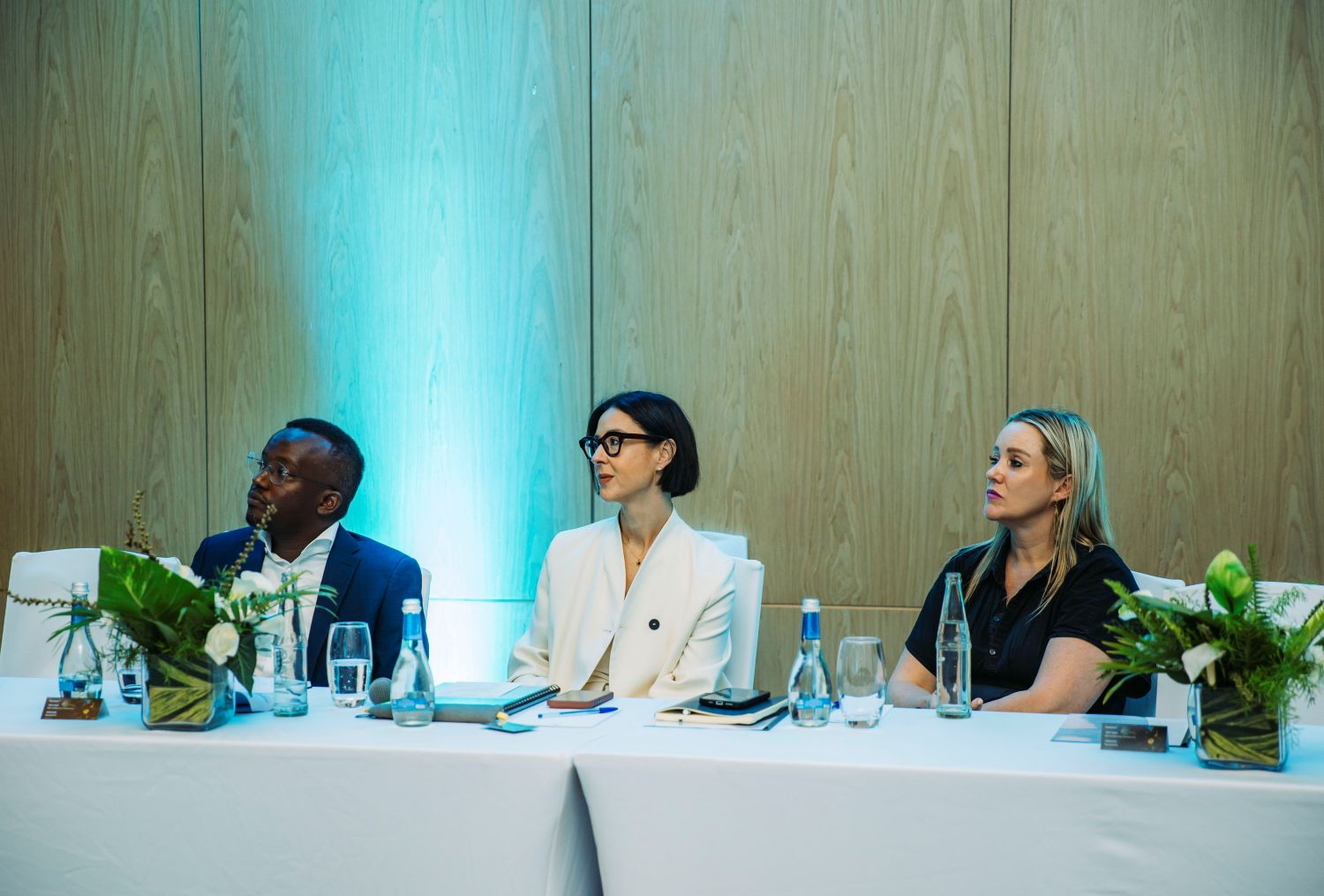
TransUnion Rwanda Chief Executive Officer Didier Mutambazi makes a presentation during the release of the survey on Thursday. Mutambazi said the findings indicate that the challenge is no longer simply expanding financial access but enabling more people to actively participate in the credit market.Speaking at the report’s launch, TransUnion Africa Regional President and CEO Lee Naik argued that Rwanda’s next challenge extends beyond simply expanding access to financial services.Jeannine Naude, Vice President and Head of Africa Regions at TransUnion, said unlocking greater financial inclusion will require stronger collaboration across the financial ecosystem.