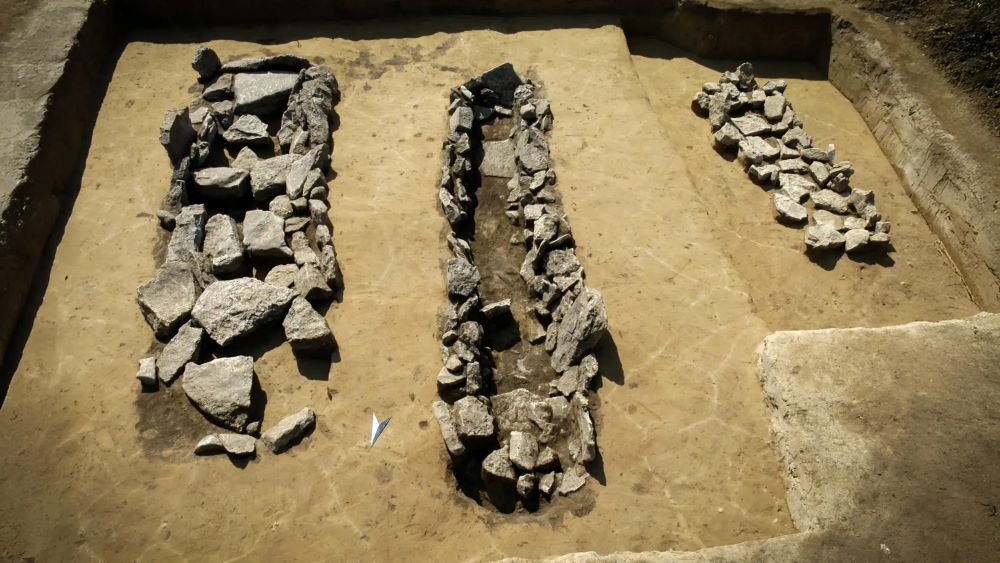
The discoveries come from a major study published in Nature Communications. Researchers studied rare ancient graves found in Germany, Czechia, and Poland to better understand life during the Late Bronze Age, between 1300 and 800 BCE.
At that time, many communities in Europe practiced cremation, meaning bodies were burned after death.
Because cremation destroys much of the human remains scientists usually study, this period has long been difficult to fully understand.
To solve this problem, researchers examined rare graves where bodies had not been cremated. They also studied cremated remains from other sites in Central Germany. Using ancient DNA, chemical analysis, and skeletal studies, scientists learned more about how these communities lived, ate, traveled, and buried their dead.
The study found that most people remained close to where they were born instead of moving far away.
Researchers say new ideas and traditions likely spread through trade and contact between communities rather than large migrations.
Scientists also discovered changes in diet. Many communities began eating broomcorn millet, a crop that originally came from northeast China. Later, people returned to more traditional foods like wheat and barley.
The skeletons showed signs of hard physical work, stress during childhood, and injuries, but researchers found little evidence of large disease outbreaks.
The findings also revealed that burial practices were very diverse. Some people were cremated, while others received traditional burials or more complex funeral rituals.
Researchers say the study shows that Bronze Age Europe was a connected and changing world where people mixed old traditions with new ideas.
Leave a Reply