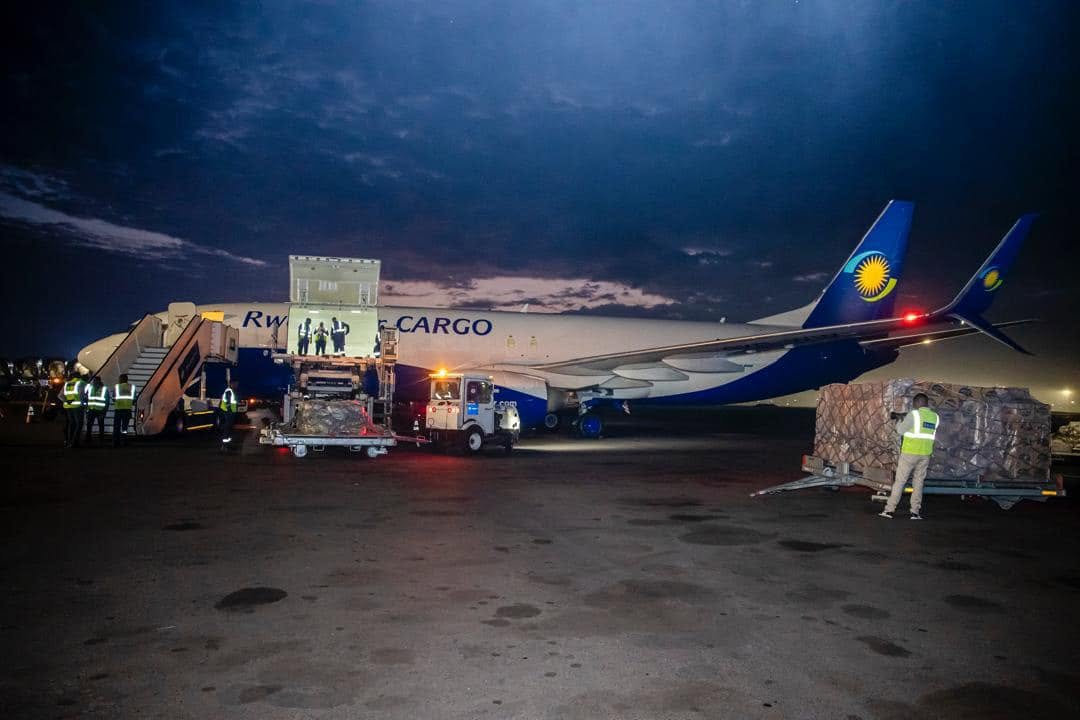
Amoth announced the arrival of the supplies during an interview with Citizen TV on Sunday evening, October 18, 2026, as he confirmed that the number of infections had risen from seven to eight.
Kenya recorded the latest case after a 49-year-old male patient attendant tested positive for the virus following the testing of 38 people.
“As I was coming to speak with you, the number had increased by one. Today, we tested 38 people, and one tested positive,” Amoth said.
He explained that the patient was not a direct healthcare worker but a patient attendant who had developed a fever, headache and muscle pain.
“He has now been isolated, and we are preparing to begin the compassionate treatment that we have administered to the other seven patients,” he noted.
Amoth said the seven previously confirmed patients had received monoclonal antibodies, a type of treatment that uses laboratory-produced antibodies to target a virus.
He added that a separate shipment of medicines from Rwanda had arrived shortly before 9 p.m. on Sunday and would be deployed as part of the country’s response.
“Today, a few minutes before 9 p.m., a shipment of another medicine arrived from Rwanda, which we are also going to deploy,” he said.
Rwanda, which shares a border with the Democratic Republic of Congo (DRC), where the latest Ebola outbreak began in May 2026, has not reported any cases but remains on high alert as authorities monitor the risk of the virus spreading across borders.
Encouraging progress
Amoth reported encouraging progress among patients who had received treatment, highlighting the recovery of a 65-year-old woman whose vomiting and diarrhoea had stopped.
“The older woman is doing very well. She is 65 years old, and she is up and about, feeding herself. The vomiting has stopped, and the diarrhoea has stopped,” he said.
He added that another male patient was also doing well, while three staff members at the Nairobi Hospital isolation centre had received their medication on Sunday afternoon and were all in stable condition.
“We are cautiously optimistic that everything will turn out well,” Amoth said, calling for cooperation to bring the outbreak to an end.
Medical treatment for the outbreak
The outbreak in Kenya is caused by the Bundibugyo virus, a species of Ebola virus distinct from the Zaire ebolavirus. Kenya confirmed its first case on October 6, 2026, after a Kenyan man who had been living in the DRC died at the Nairobi Hospital on October 5, 2026, after travelling to Kenya via Uganda.
The World Health Organization (WHO) recommends two monoclonal antibody treatments, ansuvimab and REGN-EB3, for Ebola virus disease caused by the Zaire ebolavirus species. However, there are no approved specific therapeutics for other Ebola virus diseases, including Bundibugyo virus disease.
Supportive care, including rehydration and treatment of symptoms, remains an important part of patient management.
Leave a Reply