Developing local industries, creating employment and expanding access to international markets are central to efforts to diversify African economies. China’s transformation into a major manufacturing power offers an experience to examine, particularly as African countries deepen economic cooperation with China and other international partners.
China, the world’s second-largest economy, recorded a GDP of approximately $19.5 trillion in 2025, with GDP per capita of $13,862 from approximately $ 770 in 1986. Its economy grew by 5% that year while its total foreign trade reached approximately $6.48 trillion, cementing its position as the world’s largest goods-trading nation.
Over the recent decades, China has expanded its industrial and agricultural output, developed extensive infrastructure and lifted hundreds of million out of poverty.
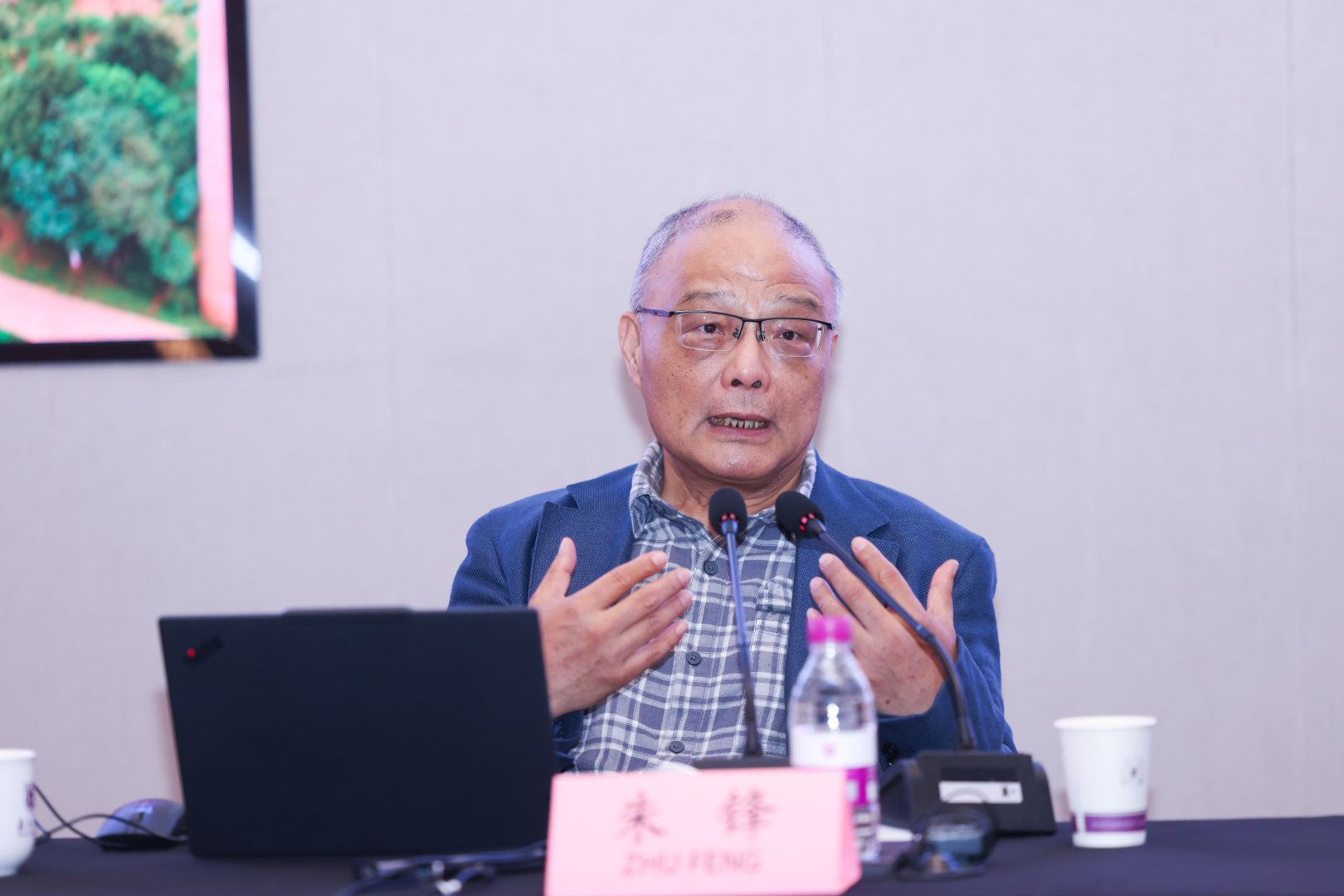
Speaking about China’s development and the Belt and Road Initiative (BRI) on October 18, Professor Zhu Feng, Executive Director of the Collaborative Innovation Center of South China Sea Studies and Professor at the School of International Studies at Nanjing University, discussed the importance of moving beyond infrastructure investment to strengthen production, participate in global supply chains and establish mutually beneficial economic relationships. He was addressing participants of the 2026 Global South Journalists Workshop in Nanjing.
From consumers to producers
Prof. Zhu began by emphasising that China–Africa relations should extend beyond infrastructure development to include a stronger focus on production.
He illustrated his point by recalling China’s dependence on imported products several decades ago. Around 30 years ago, when he wanted to buy his first car, he said Chinese consumers had limited choices beyond Japanese and American vehicles. Today, Chinese manufacturers account for a substantial share of car sales in their domestic market.
The transformation illustrates the changes in China’s manufacturing capacity over several decades. For African countries, Prof. Zhu argued, the challenge is to consider how their economies can evolve and how their economic relationships with China can support that process.
He acknowledged that manufacturing capabilities remain at an early stage in some African economies, while emphasising that countries’ circumstances differ.
Rather than assuming that every country should follow the same path, he said each needs to consider how its economy can adjust and develop. Opportunities may include processing agricultural products, adding value to minerals and establishing manufacturing activities suited to local resources, skills and markets.
Connecting to global markets
Zhu placed international connectivity at the centre of China’s development experience, describing the Belt and Road Initiative, launched by Chinese President Xi Jinping in 2013, as a way of extending economic cooperation beyond national borders.
“The most important task is how you can build the connectivities to the rest of the world,” he said.
He explained that participation in the global economy requires countries to connect their production systems with international markets and supply chains.
“You need to refit yourself into the supply chain and also production chain against the background of global competition,” he said.
For African countries, this means considering how infrastructure, trade agreements and international investment can support local businesses in producing goods and services for wider markets.
Roads, railways, ports and energy infrastructure can help reduce barriers to trade. However, their contribution to industrial development also depends on whether businesses have the capacity to produce competitively, obtain necessary inputs and reach customers.

China’s trade with Belt and Road partner countries reached RMB 23.6 trillion, equivalent to more than $3.5 trillion, in 2025, accounting for 51.9% of its total foreign trade.
Meanwhile, China–Africa trade reached a record $295.6 billion in 2024. The scale of this relationship offers opportunities for businesses on both sides, although the benefits for individual African economies depend on the composition of trade, the sectors receiving investment and the ability of local producers to access markets.
Chinese manufactured products, including vehicles, machinery and electronic goods, also reach markets across Africa, including Rwanda.
The challenge for African economies is to use these expanding commercial relationships to build local production, develop technical skills and increase the value of goods produced on the continent.
For African countries, the question is how stronger connectivity can support economic diversification, expand exports and increase local participation in production networks.
Making economic cooperation mutually beneficial
Zhu described the Belt and Road Initiative as an approach intended to connect economies through trade, access to markets and cooperation based on shared benefits.
“We should not just mutually reach out. We should also mutually complement each other. We should also accommodate each other,” he said.
He explained that China’s economic development has increased its need for resources and products from other countries, even as its manufacturing sector has expanded.
For African countries, this creates opportunities to develop trade relationships that go beyond exporting raw materials and importing finished goods.
Prof. Zhu cited China’s policy of providing tax-free access for African exports as an example of efforts to expand economic engagement. Such arrangements can create opportunities for eligible exporters, although taking advantage of them also requires competitive products, consistent quality and reliable supply chains.
Prof. Zhu also pointed to domestic conditions as an important part of China’s development experience, citing political stability and a development direction broadly shared by government officials and the public.
For African countries, the relevant considerations include maintaining effective institutions, sustaining development priorities and creating predictable conditions for long-term investment. These factors can influence the implementation of economic plans and the ability of businesses to expand production.
Prof. Zhu also cautioned that domestic instability can threaten the continuity of economic partnerships, particularly where investment depends on long-term infrastructure and commercial connections.
Development and the Global South’s voice
The discussion of economic development also connects with the representation of countries in international media and global debates.
At the opening of the Belt and Road Journalists Forum in Nanjing on October 17, 2026, He Ping, president of the Belt and Road Journalists Network, questioned the limited voice of Global South countries in international discourse.
“Who gets to draw the map of humanity and human history? And who gets the right to define it for us in the new media landscape?” he asked.
He called on journalists to document the changes taking place across Global South countries and give greater attention to their histories, development experiences and contributions.

Leave a Reply