The sanctions were announced on March 2, 2026, with the United States accusing Rwanda of supporting the M23 rebel group fighting the Congolese government, an allegation Kigali has consistently rejected.
Those sanctioned include the Chief of Defence Staff of the RDF, Gen Mubarakh Muganga; the Army Chief of Staff, Maj Gen Vincent Nyakarundi; the Commander of Special Forces, Brig Gen Stanislas Gashugi; and the Commander of the RDF 5th Division, Maj Gen Ruki Karusisi, as well as the RDF as an institution.
The measures are economic in nature. They restrict access to any assets held in the United States or under U.S. jurisdiction, as such property is frozen and placed under the control of the U.S. Office of Foreign Assets Control (OFAC).
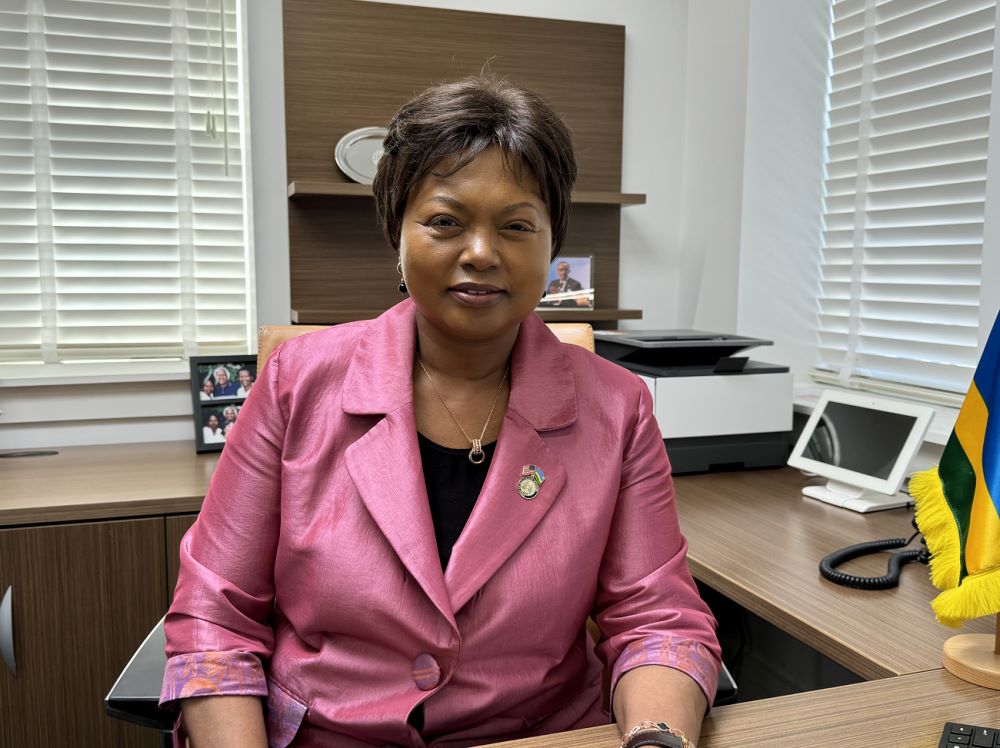
In an interview with journalist Ally Soudy, Ambassador Mukantabana said the crisis in eastern DRC is rooted in the presence of groups originating from Rwanda who played a role in the 1994 Genocide against the Tutsi and later fled into Congo, where she said they continue to spread genocidal ideology.
“Thirty-two years after the Genocide against the Tutsi in Rwanda, which was stopped by Rwandans themselves, the country is at peace. However, as I have explained before, the ideology of genocide did not disappear; it spread among some of our neighbouring communities.
“Those who left after killing victims, they continued to target other communities across the border in Congo. That is what we are still dealing with today. We have not abandoned this issue, and as you know, we are currently engaged in peace agreements with the DRC, including agreements supported by the United States.”
She added that addressing injustices faced by Congolese citizens who speak Kinyarwanda, particularly Tutsi communities allegedly targeted or neglected by the Congolese government, contributed to the emergence of the M23 movement, which says it is fighting for their rights.
The group is among those that some foreign governments accuse Rwanda of supporting—an accusation Rwanda has repeatedly denied, insisting that M23 is composed of Congolese citizens and that Kigali has no involvement in its activities.
Asked what Rwanda is doing to ensure the sanctions are lifted, Ambassador Mukantabana said the measures have not closed diplomatic channels between Rwanda and the United States, and that discussions are ongoing.
She said: “They have not closed doors. We are still following up, we are still engaging. They made their decision, but this is not something where you give up. Instead, it is something you stand firm on and continue addressing.”
She further noted that some Americans understand Rwanda’s position and believe the sanctions were not justified.
“The positive thing is that there are Americans who also do not agree with how those measures were taken. It is about continuing collaboration with such friends so that they can eventually be lifted. Above all, peace in that region must be achieved, because even if they are lifted now, other accusations will continue as long as the conflict persists,” she said.
Mukantabana added that the key solution lies in the full resolution of the conflict in eastern DRC, arguing that as long as instability continues, Rwanda will continue to be blamed.
She said: “That country has many problems, but whenever difficulties arise, Rwanda is often pointed at as a way of shifting responsibility. These are challenges we did not create, but we will continue to engage and we will not back down. We will prevail.”
Since the signing of peace agreement between Rwanda and DRC in June and December 2025, in the United States, DRC has continued to violate agreed commitments.
Rwanda has consistently stated that it remains committed to implementing the agreements and is ready to lift its defensive measures once the DRC fully neutralizes the FDLR terrorist group.
Leave a Reply