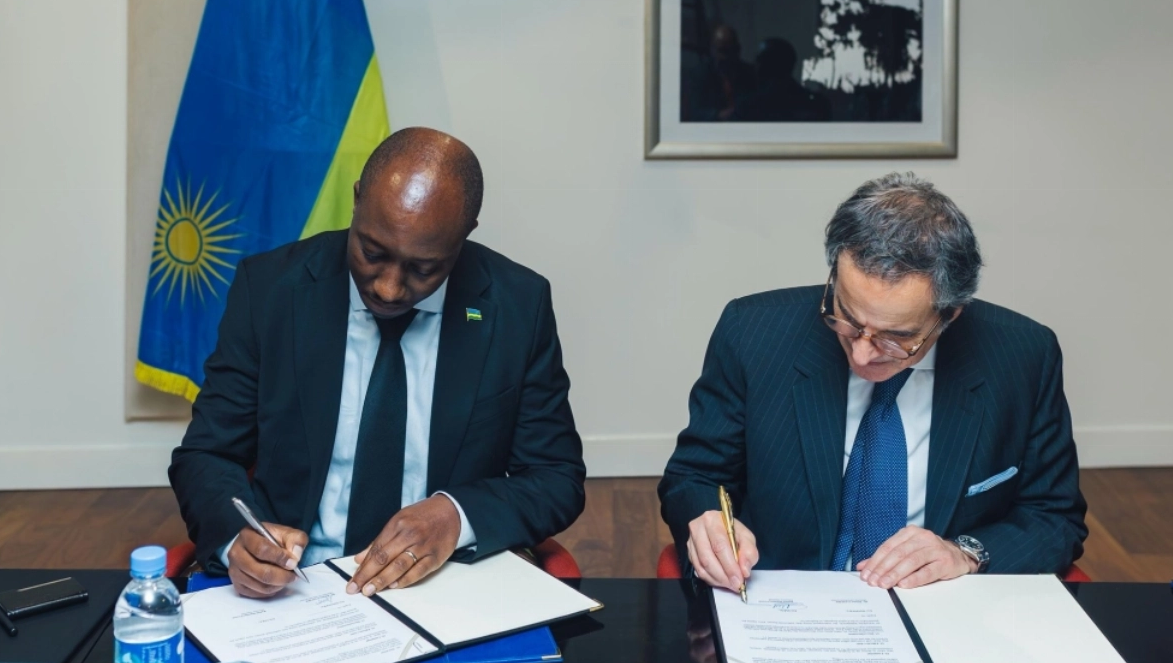
The agreement was signed by Rwanda’s Minister of Infrastructure, Jimmy Gasore, and IAEA Director General Rafael Mariano Grossi during the Nuclear Energy Innovation Summit for Africa (NEISA 2026) held in Kigali.
Under the partnership, Rwanda will receive technical and institutional support in key areas such as energy planning, infrastructure development, workforce training, stakeholder engagement, financing, and capacity building. The cooperation is intended to help the country prepare for potential nuclear power deployment in the coming years.
The signing came shortly after Rwanda received a report from the IAEA confirming its transition to Phase Two of its nuclear power programme. This stage focuses on preparatory activities ahead of a possible government decision to proceed with the contracting and construction of a nuclear power plant.
Phase Two also involves the establishment of key institutions, strengthening human resource capacity, and the development of legal and regulatory frameworks required to support nuclear energy implementation.
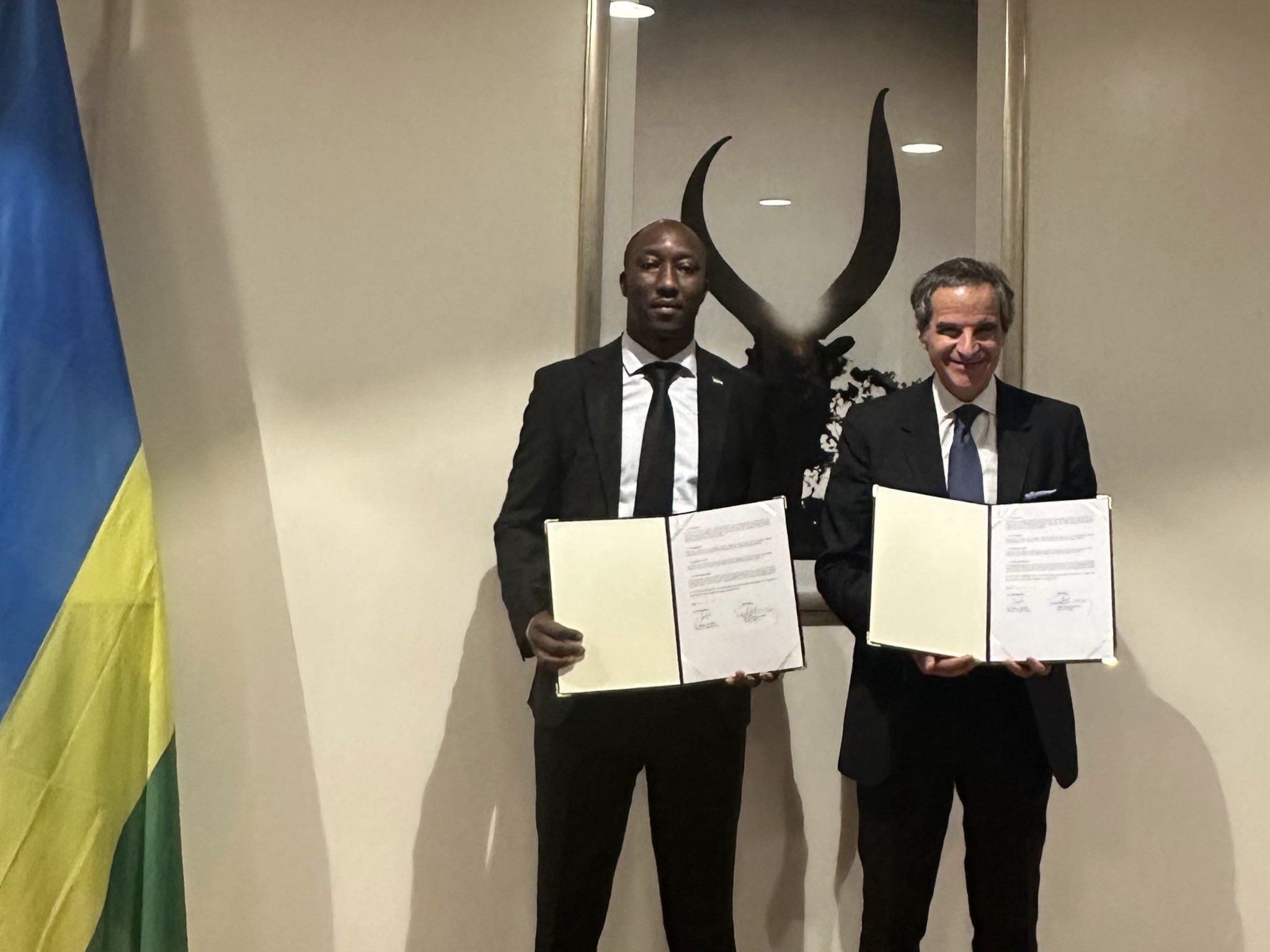
Rwanda completed Phase One of the programme in March following an Integrated Nuclear Infrastructure Review (INIR) mission conducted by the IAEA. The assessment evaluated the country’s readiness to begin a nuclear energy programme and identified areas that still require further development.
The INIR process is part of the IAEA Milestones Approach, which guides countries through structured phases of nuclear infrastructure development, from initial consideration through to construction and operation. Phase One focuses on early planning steps, including feasibility studies and defining a national position on nuclear energy.
Small Modular Reactors are being considered as a key option for Rwanda due to their flexibility, relatively lower upfront costs, and smaller land requirements compared to conventional nuclear power plants.
Rwanda’s leadership says nuclear energy is expected to play a central role in supporting industrial growth and strengthening long-term energy security.
President Paul Kagame emphasised the importance of the milestone, saying:
“Rwanda is pleased to have successfully completed the IAEA’s Phase 1 Integrated Nuclear Infrastructure Review (INIR). We intend to have nuclear energy operational by the early 2030s, and this assessment confirms that we are on track. For Africa, energy is not simply a development issue. It is the foundation of industrial growth and competitiveness.”
Rwanda aims to generate up to 1.5 gigawatts of electricity from nuclear power by 2050.
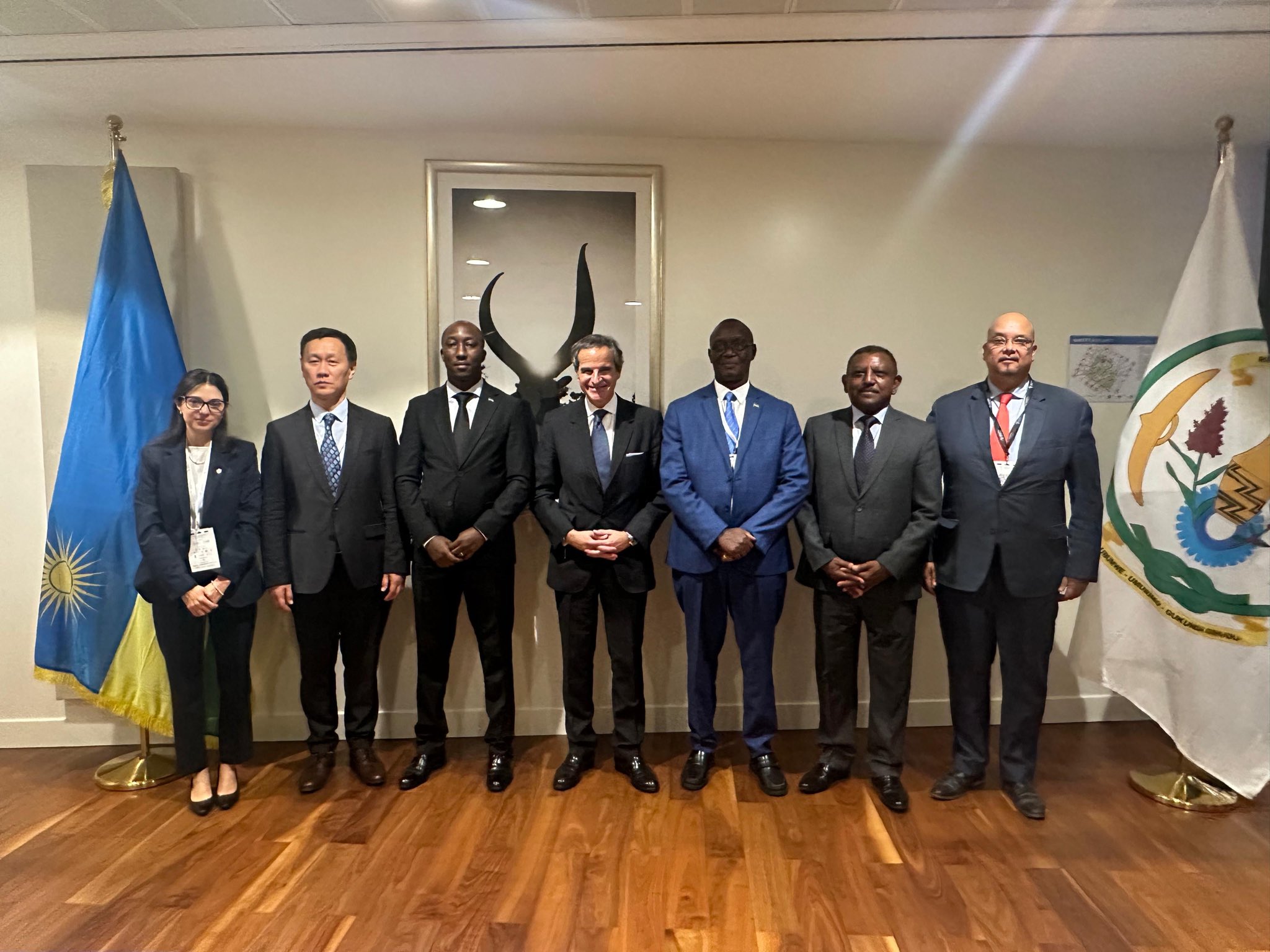
IAEA Director General Rafael Mariano Grossi highlighted the broader continental context of nuclear development, noting:
“Africa’s energy future will be built by Africans, and the IAEA is ready to continue supporting countries across the continent, from infrastructure development and capacity building to new technologies such as SMRs.”
With Phase Two now underway and the new agreement in place, Rwanda’s nuclear energy programme is entering a more advanced stage of preparation, marking a significant step toward potential future deployment.
Leave a Reply