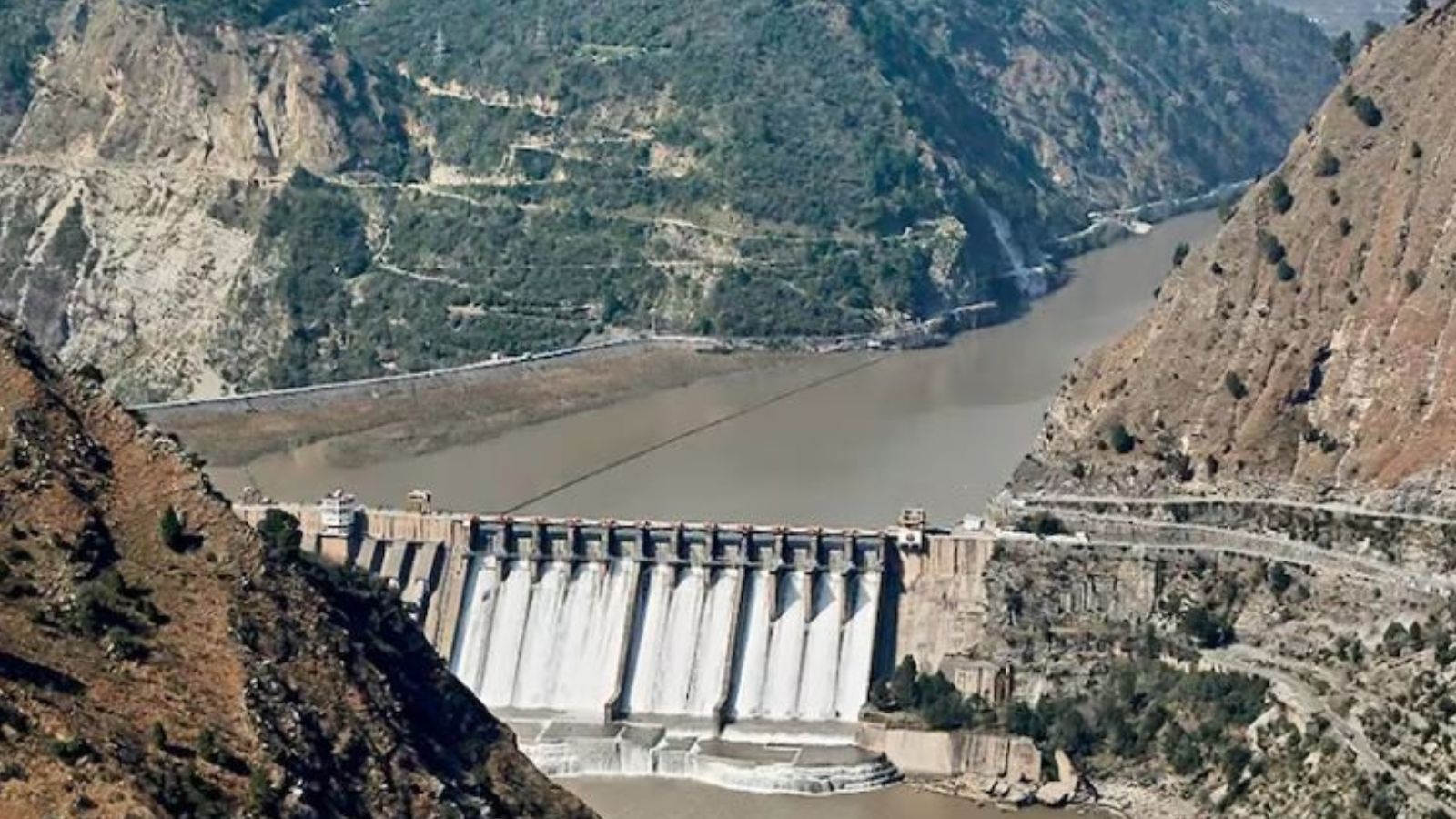
Signed in 1960 with the support of the World Bank, the treaty divided the six rivers of the Indus Basin between the two countries. While Pakistan received rights over the western rivers — the Indus, Jhelum, and Chenab — India retained control over the eastern rivers — Ravi, Beas, and Sutlej. India was also granted limited rights to develop hydropower projects on the western rivers under strict technical and operational conditions.
Over the years, however, several Indian projects on the western rivers have faced repeated objections from Pakistan. Hydropower developments such as Baglihar, Kishenganga, Pakal Dul, and the Tulbul navigation project have all been challenged through the treaty’s dispute-resolution mechanisms.
Critics in India argue that Pakistan has systematically used these legal and technical processes to delay projects rather than resolve genuine treaty concerns.
Reports suggest that even projects considered permissible under the treaty have faced prolonged scrutiny, arbitration requests, and objections from Islamabad.
Indian analysts also point to what they describe as Pakistan’s long-standing “water war” narrative, in which India is portrayed internationally as a potential threat to Pakistan’s water security despite India maintaining compliance with the treaty since its signing.
According to reports, India has not suspended water flows to Pakistan even during major military confrontations, including the wars of 1965 and 1971, as well as the 1999 Kargil conflict. Indian officials and commentators often cite this record as evidence that New Delhi has consistently honoured the agreement despite decades of political and security tensions between the two countries.
The treaty’s restrictions are also seen by critics as having broader developmental consequences for India, particularly in regions such as Jammu and Kashmir. The territory, through which several western rivers flow, possesses significant hydropower potential that remains only partially developed.
Reports indicate that treaty restrictions on storage, dam design, and water usage, combined with prolonged disputes over proposed projects, have slowed infrastructure development and limited the region’s ability to fully utilize its natural resources. Some local communities and political voices in the region have increasingly questioned whether the treaty disproportionately limits economic opportunities in areas directly connected to the river system.
Beyond regional concerns, energy experts in India argue that restrictions affecting hydropower development have implications for the country’s wider energy security goals. Hydropower is considered a key renewable energy source, and critics contend that constraints linked to the treaty have prevented India from maximizing clean energy generation from rivers flowing through its own territory.
Debates surrounding the treaty have also intensified amid broader tensions between India and Pakistan over cross-border militancy and security issues. Indian officials and commentators increasingly argue that long-term bilateral agreements should function within a broader framework of mutual trust and cooperation.
Some analysts in India contend that Pakistan’s alleged support for cross-border militancy has weakened the spirit of goodwill that originally underpinned the treaty.
They point to attacks such as the 2001 Indian Parliament attack, the 2008 Mumbai attacks, and the April 2025 attack in Pahalgam as events that have further strained bilateral relations.
Despite growing criticism, supporters of the treaty continue to view it as an important stabilizing mechanism between two nuclear-armed neighbours with a long history of conflict. Many international observers argue that the agreement has helped prevent water disputes from escalating into wider regional crises.
Still, discussions over the future of the treaty are becoming increasingly prominent in India, particularly as concerns over water security, regional stability, energy demand, and geopolitical tensions continue to evolve across South Asia.
Leave a Reply