In a televised address to the nation at 8 p.m. local time, Goita said the April 25 attacks, which he described as “complex, coordinated and simultaneous,” targeted Bamako, Kati, Mopti, Gao and Kidal.
He said the assailants had been dealt a heavy blow thanks to the prompt response and professionalism of the defense and security forces, adding that the attackers had sought to create a climate of generalized violence in the localities concerned.
The head of state added that the security deployment had been reinforced, the situation was under control, and sweeping, search, intelligence-gathering and security operations were continuing.
Goita also paid tribute to Mali’s Defense Minister Gen. Sadio Camara, saying his passing represented “an immense loss for the Malian nation.”
He expressed condolences to bereaved families and sympathy to the wounded, while instructing the government to take all necessary measures to strengthen assistance to victims, support affected families and care for the injured.
He said the attacks were part of “a vast destabilization plan” devised and carried out by terrorist armed groups and their internal and external backers.
Goita also called on Malians to remain vigilant, trust the defense and security forces, and not give in to rumors, panic messages or manipulation, warning that disinformation could become a weapon in the service of terrorists.
Assimi Goita, Mali’s transitional president, said Tuesday that operations would continue until all groups involved in the April 25 attacks are neutralized and lasting security is restored across the country.
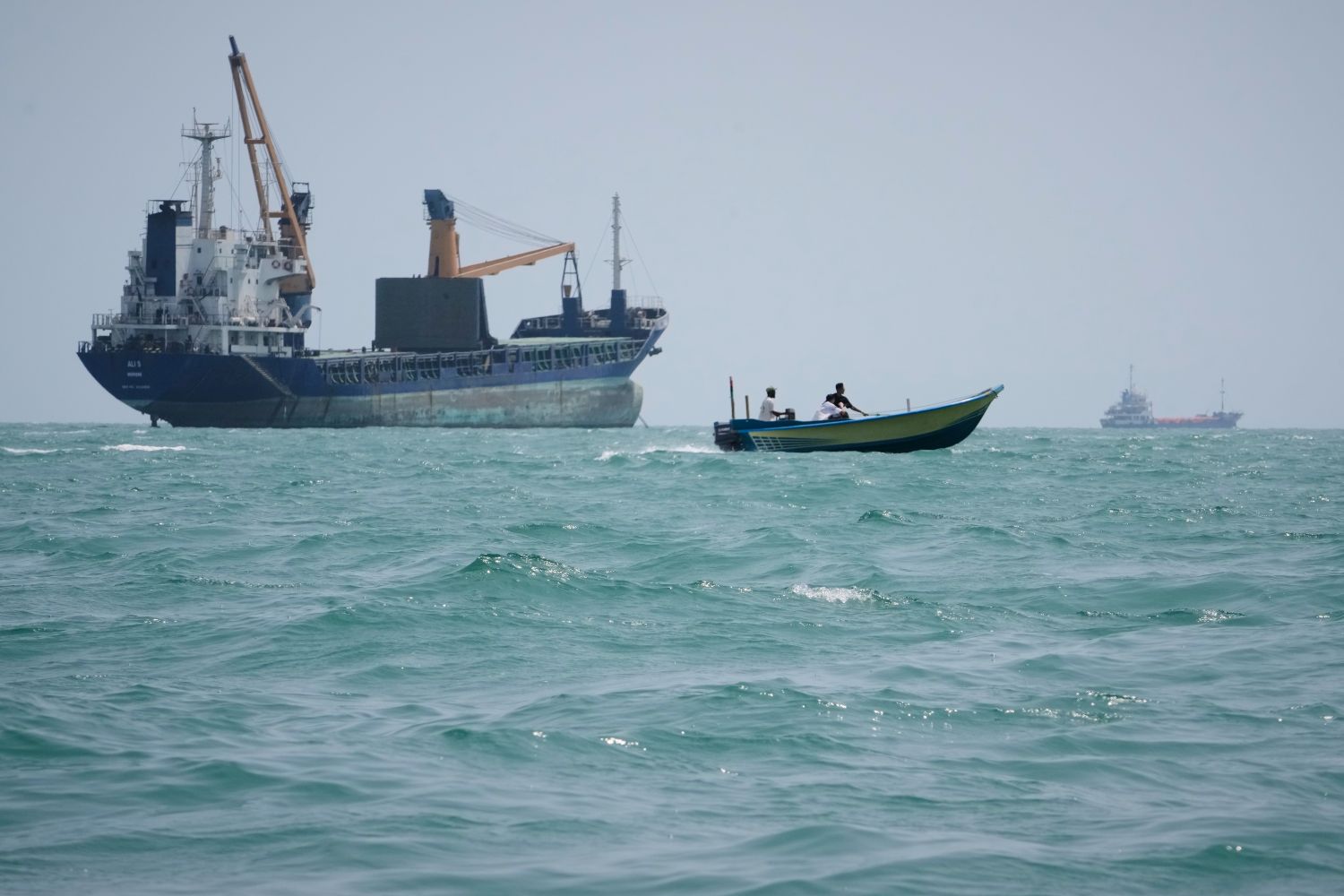
In recent meetings, including a Monday discussion with top security officials in the White House, Trump opted to continue squeezing Iran’s economy and oil exports by preventing shipping to and from its ports, said the report.
The president assessed that the blockade, “a high-risk bid” to compel Tehran’s nuclear capitulation, carries less risk than other options — resume bombing or walk away from the conflict, the officials were quoted as saying.
They told the newspaper that Trump isn’t currently willing to drop his demand that Iran, at a minimum, vows to suspend its nuclear enrichment for 20 years and accepts restrictions after that point.
Trump reportedly told aides that Iran’s three-step offer to reopen the Strait of Hormuz and leave nuclear talks for later negotiations proved Tehran wasn’t negotiating in good faith.
White House spokeswoman Anna Kelly said the United States has met its military objectives in the war with Iran and that “thanks to the successful blockade of Iranian ports, the United States has maximum leverage over the regime” during negotiations to prevent Tehran from acquiring a nuclear weapon.
Yet extending the blockade also prolongs a conflict that has driven up gas prices, hurt Trump’s poll numbers and further darkened Republicans’ prospects in the midterm elections, said the report. It has also caused the lowest number of transits through the Strait of Hormuz since the U.S. and Israel launched massive attacks on Iran on Feb. 28.
The lack of a clear, decisive pathway has led some U.S. officials to conclude that the eight-week conflict will likely end with neither a nuclear deal nor a resumption of the war, a sentiment first reported by U.S. online media outlet Axios.
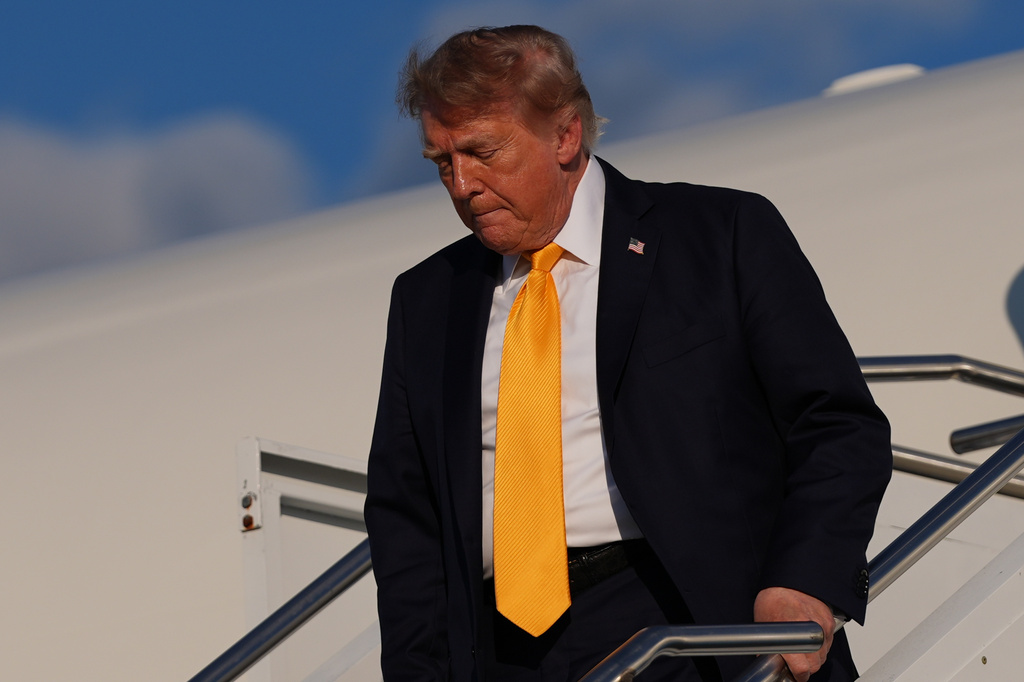
U.S. President Donald Trump has instructed his administration to prepare for an extended blockade of Iran as the ceasefire remains in place amid stalled talks.
The call was made during the opening of the 12th session of the Africa Regional Forum on Sustainable Development in Addis Ababa, the capital of Ethiopia, under the theme “Turning the Tide: Transformative and Coordinated Actions for the 2030 Agenda and Agenda 2063.”
Speaking at the event, Claver Gatete, executive secretary of the UN Economic Commission for Africa, said Africa’s progress toward the implementation of the SDGs, especially in water and sanitation, energy, and infrastructure, is slow and continues to worsen inequality across the continent.
“Despite progress in expanding water access systems, lack of safety, reliability, and quality continues to constrain health, productivity, and economic transformation across the continent. Gains in energy and infrastructure sectors also are not creating enough jobs and improving competitiveness,” Gatete said.
He said that domestic resource mobilization must be complemented by targeted efforts to attract private investment in Africa as the continent strives to address its infrastructure development gap through partnerships.
Selma Malika Haddadi, deputy chairperson of the AU Commission, said Africa has recorded notable progress in areas such as infrastructure development, regional integration, and digital transformation, particularly under flagship initiatives such as the African Continental Free Trade Area.
Haddadi, however, said the continent is facing several challenges, especially in financing sustainable development, job creation, climate resilience, and addressing inequalities within and between countries.
“With less than five years remaining to achieve the Sustainable Development Goals, we must shift from incremental progress to transformational change. This requires stronger policy coherence between continental, regional, and national frameworks; increased investment in critical sectors such as water, energy, infrastructure, and sustainable cities; enhanced partnerships across governments, the private sector, civil society, and development partners,” she said.
Lok Bahadur Thapa, president of the UN Economic and Social Council, said that around 600 million people in Africa, which is nearly 43 percent of the population in the region, lack access to electricity, while many countries continue to face gaps in access to safe drinking water and other essential services.
“Africa faces a substantial financial gap of between 670 billion and 848 billion U.S. dollars annually, driven largely by rising debt vulnerabilities, fluctuations in foreign direct investment, low domestic resource mobilization, and sharply falling official development assistance,” he said, adding that Africa must focus on domestic resource mobilization to address its huge financing gap and achieve UN sustainable development agendas.
Claver Gatete, executive secretary of the UN Economic Commission for Africa, said Africa’s progress toward the implementation of the SDGs, especially in water and sanitation, energy, and infrastructure, is slow and continues to worsen inequality across the continent.
The Secretary-General of the United Nations, António Guterres, has expressed deep concern over a rise in xenophobic violence in South Africa, warning that attacks against migrants threaten the country’s democratic values and social cohesion.
In a statement delivered by spokesperson Stéphane Dujarric to mark Freedom Day on Monday, April 27, the UN chief extended congratulations to South Africans while also condemning reports of harassment, intimidation and violence targeting foreign nationals.
The attacks, reported in provinces including KwaZulu-Natal and Eastern Cape, were described as criminal acts driven by individuals exploiting socio-economic tensions. The Secretary-General stressed that “violence, vigilantism and all forms of incitement to hatred have no place” in a democratic society governed by the rule of law.
While acknowledging the significance of Freedom Day, which commemorates the end of apartheid, the UN chief underscored that South Africa’s liberation struggle was built on solidarity across Africa and the wider international community. He noted that the country’s development has long depended on the contributions of both citizens and migrants.
The statement comes amid growing concern within the UN over what experts describe as a troubling escalation of xenophobia. Reports indicate that anti-migrant rhetoric has increasingly featured in political discourse, with some actors blaming foreign nationals for unemployment and poor public services.
UN officials have also warned that xenophobia in South Africa is becoming more entrenched. Beyond sporadic mob violence, there are signs of institutionalised discrimination, including inflammatory remarks by some public officials and the emergence of vigilante-style groups targeting migrant communities and businesses.
A key concern highlighted by the UN is the lack of accountability for such violence. Few perpetrators of past attacks have been successfully prosecuted, contributing to what observers describe as a culture of impunity. High-profile cases, including the killing of migrant workers in recent years, continue to underscore gaps in justice and enforcement.
The Secretary-General welcomed statements by South African authorities affirming that no individual or group has the right to enforce the law independently, and that those responsible for crimes will be investigated. He emphasised that such investigations must be “prompt, thorough, independent and impartial.”
Recognising the broader socio-economic challenges facing the country, the UN chief stressed that responses must remain lawful and non-discriminatory, while upholding human rights and dignity for all. He also welcomed government efforts to address systemic issues, including anti-corruption measures in immigration systems and the implementation of a national action plan against racism and xenophobia.
“The United Nations stands ready to continue engaging in efforts to de-escalate tensions, counter incitement, protect those at risk, and strengthen social cohesion,” the statement read in part, adding: “The Secretary-General underscores that sustained community engagement, respect for human rights, responsible leadership, and accountability are essential to prevent further violence and to preserve peace and stability.”
The Secretary-General of the United Nations, António Guterres, has expressed deep concern over a rise in xenophobic violence in South Africa, warning that attacks against migrants threaten the country’s democratic values and social cohesion.
Speaking at a press briefing, Maiga said Mali was plunged into mourning by simultaneous attacks in several localities, which killed Defense Minister Sadio Camara, along with other civilian and military victims, and left others wounded.
The attackers sought to spread fear and doubt, undermine national cohesion and weaken Mali’s determination, he said, noting that these objectives have failed.
Maiga said that under the leadership of the transitional president and supreme commander of the armed forces, Mali’s military has delivered a “forceful response,” neutralizing hundreds of terrorists across the country.
The asymmetric nature of terrorist threats requires Mali to continuously adapt its security arrangements, he said, adding that lessons must be drawn from the April 25 attacks, with effective measures reinforced and necessary adjustments made to enhance security.
Mali’s transitional government has declared a two-day national mourning period starting Monday in honor of Camara, who was killed on Saturday in the attacks.
A Malian soldier takes up a position during the attack on the Kati base. Pic: Reuters
They made the call during the eighth African Science, Technology and Innovation (STI) Forum, held by the United Nations Economic Commission for Africa (UNECA) from Sunday to Monday in the Ethiopian capital of Addis Ababa.
Ugandan Minister of Science, Technology and Innovation Monica Musenero Masanza stressed the need for concerted continental efforts on STI as a central pillar to Africa’s socio-economic transformation, industrialization, value addition, and job creation.
“There is no question that STI is an essential ingredient for our nations and continent to move forward,” said Masanza. “We need to work jointly to scale practical projects. Africa does not lack ideas and strategies. Africa lacks execution at scale.”
The forum brought together African ministers responsible for STI, representatives of the African Union and various United Nations agencies, as well as private sector leaders and academia.
Noting that Africa continues to face significant digital and innovation gaps despite the opportunities presented by emerging technologies, UNECA Executive Secretary Claver Gatete emphasized that Africa must act with “urgency, coordination and ambition” to harness STI as drivers of economic transformation, inclusion and sustainable development.
“For Africa, the margin for delay has disappeared. The cost of inaction is rising. The choices we make today will determine whether we catch the next wave of global transformation, or miss it entirely,” Gatete said.
Gatete outlined five strategic priorities for Africa to turn innovation into a broad-based transformation, which include aligning STI with Africa’s economic transformation agenda, accelerating investment in digital public infrastructure, building future-ready skills at scale, deepening regional and continental coordination, as well as securing reliable, affordable and sustainable energy to power Africa’s digital transformation.
The forum brought together African ministers responsible for STI, representatives of the African Union and various United Nations agencies, as well as private sector leaders and academia.
On Monday, Allen made his first court appearance at the U.S. District Court for the District of Columbia since the shooting.
He was charged with three criminal counts, namely, attempting to assassinate the president, interstate transportation of weapons, and discharge of a firearm during a violent crime.
The prosecutor said Allen had a 12-gauge pump-action shotgun and a .38 caliber pistol, and was also carrying with him three knives and other dangerous paraphernalia when he was arrested, CNBC reported.
According to law enforcement authorities, Allen, 31, traveled from California to Washington, D.C. by train and checked into the Washington Hilton hotel with weapons before the attack.
Allen reportedly sent an email to his relatives shortly before the shooting, in which he wrote that Trump administration officials were “targets, prioritized from highest-ranking to lowest.”
He also wrote: “I walk in with multiple weapons and not a single person there considers the possibility that I could be a threat.”
Live footage of the event showed that the suspect attempted to rush a security checkpoint and exchanged gunfire with law enforcement. A U.S. Secret Service officer was injured amid the shooting incident.
Trump, First Lady Melania Trump, Vice President JD Vance, and all Cabinet members were evacuated from the dinner after the shooting. Attendees were seen on the live broadcast ducking around their tables and taking cover.
Shortly after the security incident, U.S. Secret Service spokesperson Anthony Guglielmi wrote on X that the agency was investigating “a shooting incident near the main magnetometer screening area” at the dinner, in coordination with the Metropolitan Police Department.
Political violence has been frequent in the U.S. in recent years. Trump has been the target of multiple assassination attempts and death threats during his presidential campaign and as president. The most prominent example is the July 2024 assassination attempt in Butler, Pennsylvania, in which Trump narrowly survived while campaigning for president.
Media crews are positioned near the entrance to the U.S. District Court for the District of Columbia in Washington, D.C., the United States, April 27, 2026. A court security officer stands guard at the entrance to the U.S. District Court for the District of Columbia in Washington, D.C., the United States, April 27, 2026.Servicemen and a servicewoman enter the U.S. District Court for the District of Columbia in Washington, D.C., the United States, April 27, 2026. Media crews are positioned near the entrance to the U.S. District Court for the District of Columbia in Washington, D.C., the United States, April 27, 2026. Media crews are positioned near the entrance to the U.S. District Court for the District of Columbia in Washington, D.C., the United States, April 27, 2026.
The EU continues its attempts to pressure Russia by scaling up unilateral restrictive measures, the ministry said in a statement, adding that Brussels’ destructive actions grossly violate the norms of international law.
“We have also imposed restrictive measures against civil society activists and academics in European countries who hold hostile positions toward Russia, as well as members of national parliaments of EU member states and the European Parliament who voted in favor of anti-Russian resolutions and bills,” said the statement.
Russia has also barred entry to representatives of European institutions and EU member states involved in decisions on providing military aid to Ukraine, it added.
European Council President Antonio Costa said on Thursday that the EU has approved a 90-billion-euro (105 billion U.S. dollars) loan package for Ukraine, along with a 20th round of sanctions against Russia.
Moscow has largely expanded the blacklist of European Union (EU) officials banned from entering Russia in response to Brussels’ 20th sanctions package against Moscow, the Russian Foreign Ministry said on Monday.
In a statement, the government said Camara’s residence in Kati, a garrison town near the capital Bamako, was hit Saturday morning by a vehicle bomb driven by a suicide attacker.
Camara exchanged fire with the attackers and neutralized some of them, the statement said. He was wounded during intense fighting and later died of his injuries in hospital.
The collapse of his residence caused other casualties and destroyed a nearby mosque, killing some worshippers inside, according to the statement.
The government said the late general will be given a national funeral.
Several localities in Mali, including Bamako, Kati, Gao, Sevare and Kidal, were hit by coordinated attacks on Saturday. The government had earlier said the attacks left 16 civilians and military personnel wounded.
Mali’s defense minister Sadio Camara, left, with Russia’s foreign minister, Sergei Lavrov, in Moscow in February 2024. The government said Camara’s residence in Kati, a garrison town near the capital Bamako, was hit Saturday morning by a vehicle bomb driven by a suicide attacker
A U.S. Secret Service agent was shot in protective gear on Saturday at the White House Correspondents’ Dinner and has been hospitalized, U.S. media reported.
In a post on Truth Social, Trump shared a photo of the suspected gunman, who appears to have been subdued, with his hands bound behind his back and lying face down on the ground.
In a press conference at the White House late Saturday evening, Trump said that the alleged shooter lives in the state of California and law enforcement agents went to his apartment.
When asked by a reporter whether the shooter acted alone, Trump said that “they seem to think he was a lone wolf, and I feel that too.”
In response to a question about whether this shooting could have been linked to the war in Iran, Trump said, “I don’t think so. But you never know.”
“Quite an evening in D.C. Secret Service and Law Enforcement did a fantastic job. They acted quickly and bravely. The shooter has been apprehended,” Trump said in an earlier post on Truth Social shortly after the incident.
In another post later, Trump said that “law enforcement has requested that we leave the premises, consistent with protocol, which we will do, immediately,” noting that “The First Lady, plus the Vice President, and all Cabinet members, are in perfect condition.”
He added that the White House Correspondents’ Dinner will be rescheduled within 30 days.
The U.S. Secret Service said in a post on X that it is investigating “a shooting incident near the main magnetometer screening area” at the White House Correspondents’ Dinner, in coordination with the Metropolitan Police Department.
“The president and the first lady are safe along (with) all protectees,” the statement said. “One individual is in custody. The condition of those involved is not yet known, and law enforcement is actively assessing the situation.”
Trump has been evacuated from the Dinner after the shooting at the Washington Hilton Hotel. Attendees were seen on the live broadcast ducking around their tables and taking cover.
This would mark Trump’s first time attending the White House Correspondents’ Dinner.
In a joint press conference, Washington, D.C. Mayor Muriel Bowser said all guests at the dinner were safe, while U.S. Attorney for D.C. Jeanine Pirro said the suspect now faces charges including using a firearm during a crime of violence and assault on a federal officer with a dangerous weapon.
The suspect named Cole Allen by U.S. media, 31, of Torrance, California, was armed with a shotgun, a handgun and multiple knives, police said.
Political violence has been frequent in the U.S. in recent years. Trump has been the target of multiple assassination attempts and death threats during his presidential campaign and as the president.
The most prominent example is the July 2024 assassination attempt in Butler, Pennsylvania, which Trump narrowly survived while campaigning for president.
In a press conference at the White House late Saturday evening, Trump said that the alleged shooter lives in the state of California and law enforcement agents went to his apartment. When asked by a reporter whether the shooter acted alone, Trump said that “they seem to think he was a lone wolf, and I feel that too.” Police officers stand guard near the Washington Hilton Hotel, where the White House Correspondents’ Dinner was held, in Washington, D.C., the United States, April 25, 2026.