“Applying the rule in the 2026 elections would be arbitrary and capricious in violation of the Administrative Procedure Act because state and local election officials do not have sufficient time to reasonably implement the rule before the elections,” it said.
The decision allows the U.S. Postal Service (USPS) to continue delivering ballots as it normally does.
On March 31, Trump signed an executive order directing federal agencies to compile state-by-state lists of U.S. citizens eligible to vote and instructing the U.S. Postal Service to establish a system under which mail ballots would be delivered only to voters included on state-provided lists.
Days after the executive order was issued, numerous organizations and a group of states led by California sued in the District of Massachusetts. The District Court entered a series of injunctions blocking implementation of the order. With the latest ruling from the nation’s highest court, that injunction is kept in place.
Under the USPS plan, which remains blocked, states would have been required to provide voters’ names and addresses and use specific barcodes on ballot envelopes for USPS delivery.
Mail-in voting has already begun in states including Alabama, North Carolina and Wisconsin, according to a report by National Public Radio. More states will soon begin mail-in voting, including Hawaii, Oregon and Washington, where elections are conducted largely or entirely by mail.
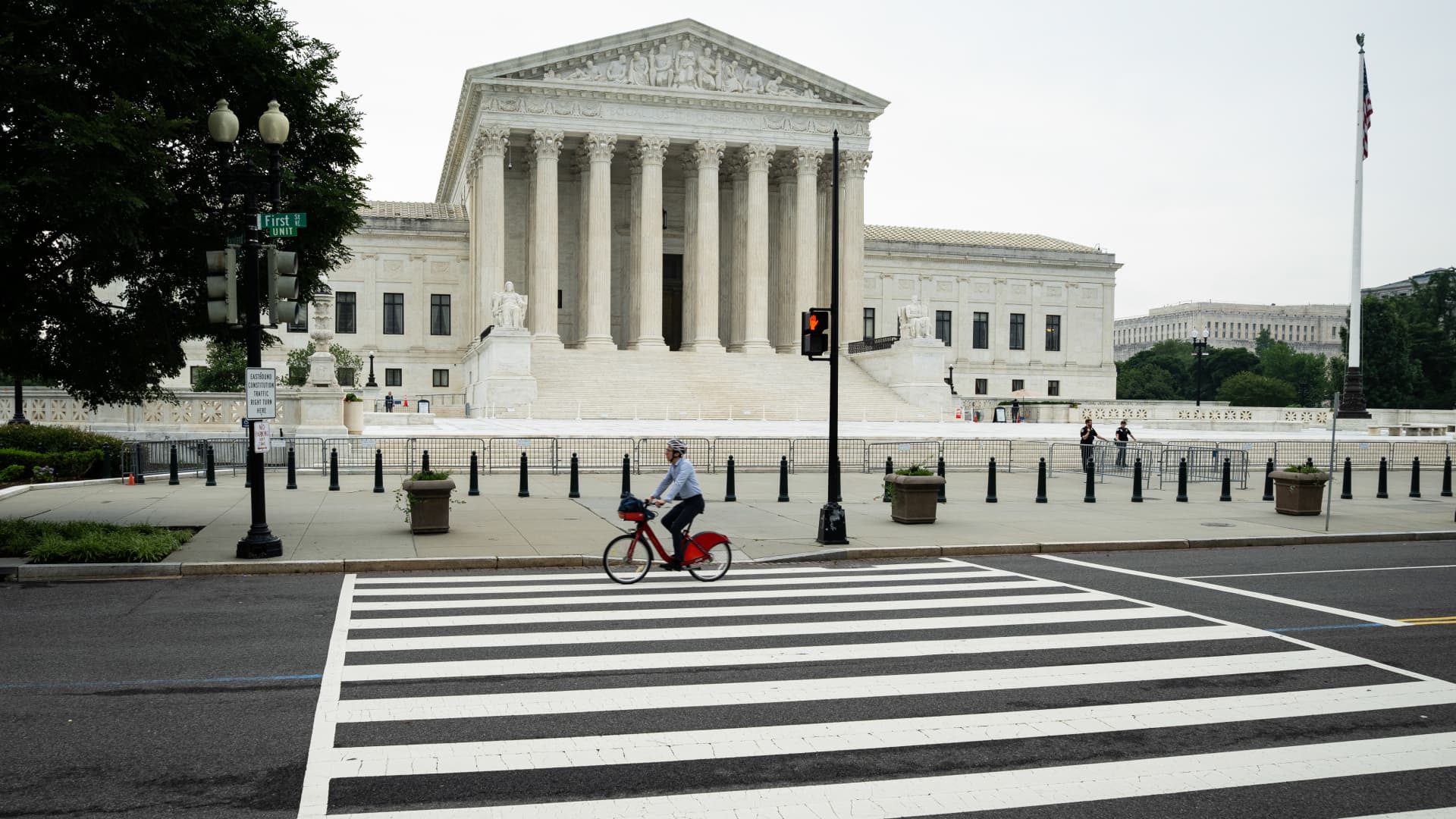
U.S. Supreme Court has rejected Trump’s mail voting restrictions for upcoming midterms
The Virgo Transport 8 was carrying 243 people when it lost contact early Sunday while travelling from Surabaya in East Java to Banjarmasin in South Kalimantan.
Authorities have rescued 108 people from the vessel, according to Indonesia’s National Search and Rescue Agency.
Rescue teams, including the coast guard and navy, have been working in difficult conditions as strong winds and high waves make it harder to reach the vessel and search for those still missing.
The rescue agency said it had deployed at least 622 personnel, 17 ships, five helicopters and aircraft as part of the operation.
However, turbulent seas have prevented specialist underwater rescue teams from beginning a full search around the partially submerged ship.
Mohammad Syafii, head of Indonesia’s national rescue agency, said the conditions remained challenging and that authorities were identifying additional personnel with specialist skills while waiting for the weather to improve.
The ship was reportedly struck by waves reaching about three metres during the incident.
Another rescue official said the vessel leaned heavily to one side after strong waves hit its starboard side.
The capsized ship is located about 80 nautical miles, or nearly 150 kilometres, from the rescue command centre at Trisakti Port in Banjarmasin.
Rough weather has also made it difficult for rescue vessels to dock near the stricken ship.
As of Monday afternoon, none of the 129 missing people had been found, according to officials quoted by Reuters.
The search was continuing despite the difficult conditions.
Transport Minister Dudy Purwagandhi said the vessel had a capacity of about 500 passengers, indicating that it was not overloaded.
The exact cause of the accident remains under investigation.
The incident has raised renewed concerns about maritime safety in Indonesia, an archipelago of more than 17,000 islands where ferries and passenger ships are an important and affordable means of transportation.
The Java Sea has previously been the scene of major maritime disasters. In 1981, the Tampomas II sank in the region, killing nearly 600 people according to some estimates.
For families waiting for news of their relatives, the search remains an anxious race against time as rescuers continue efforts to reach those who may still be alive.
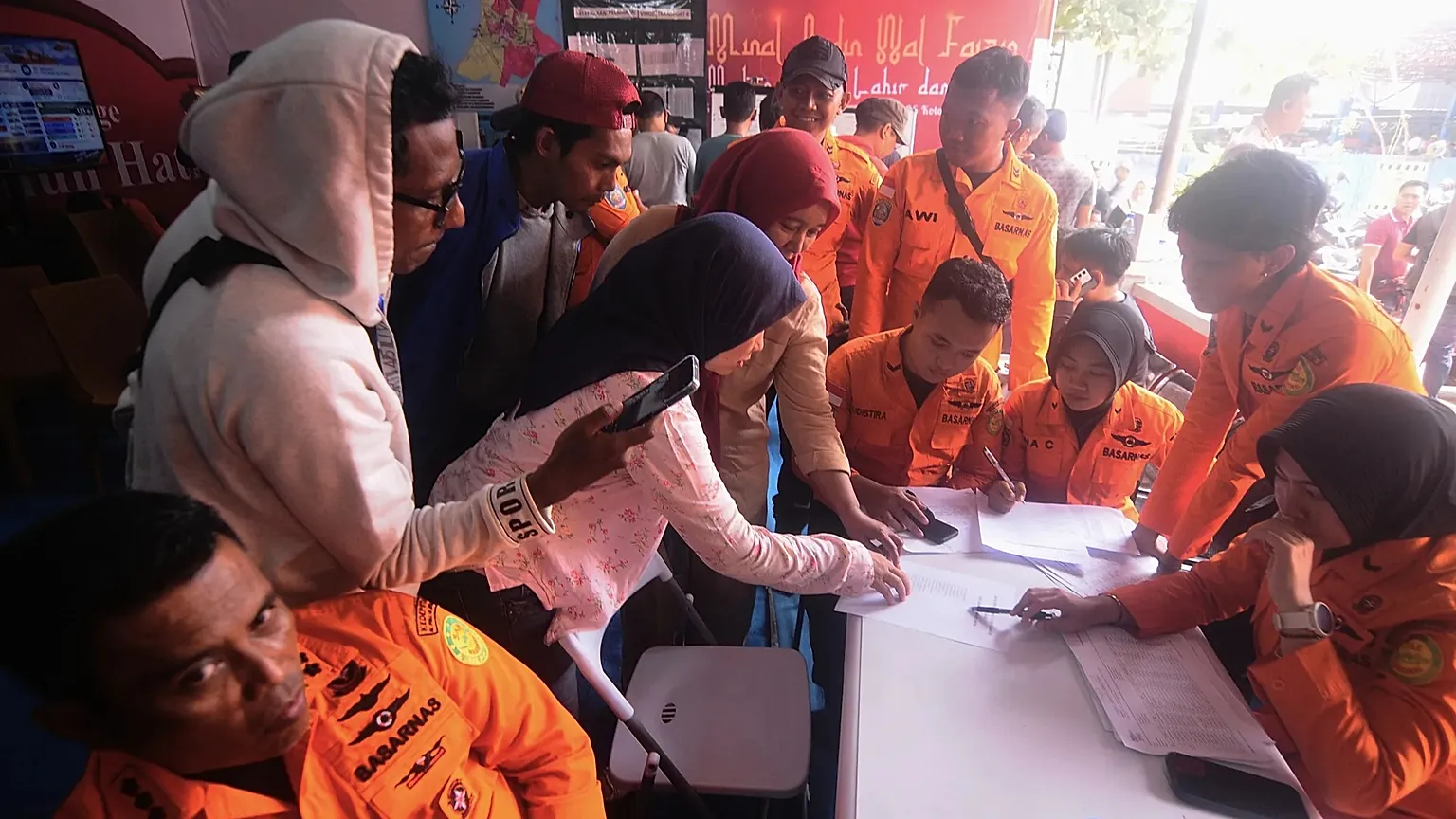
Indonesian rescuers search for survivors after the Virgo Transport 8 passenger ship capsized in the Java Sea
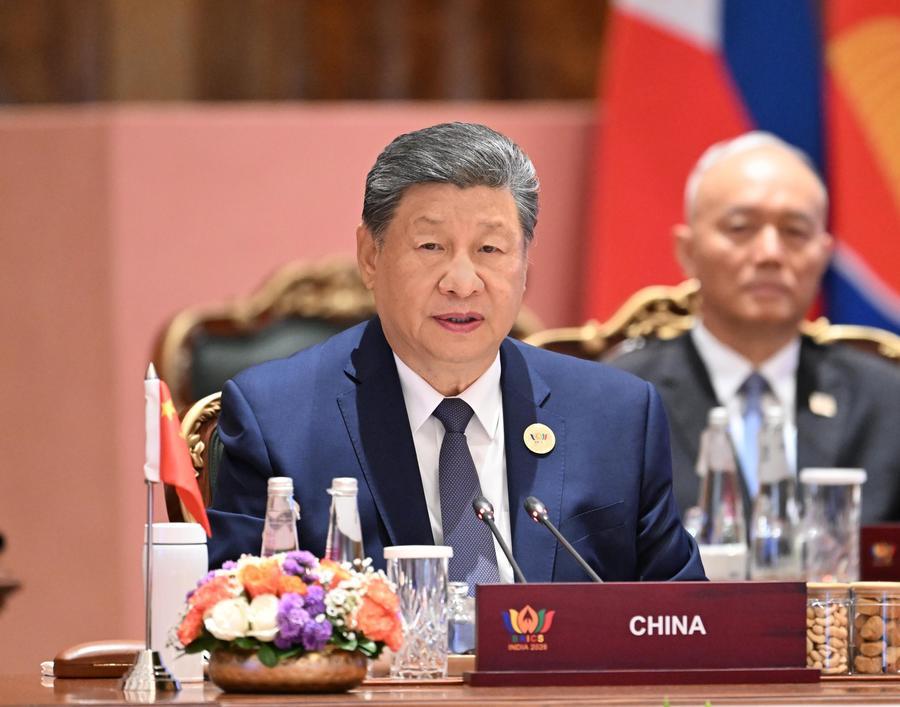
Xi made the appeal on September 13, 2026, while attending Session II of the 18th BRICS Summit in New Delhi. Chaired by Indian Prime Minister Narendra Modi, the session was titled “Cementing the Foundation for BRICS Cooperation and Bolstering the Strength of the Global South.”
“A world without rules is like a crossroads without traffic lights,” Xi said, warning that disorder is almost inevitable when countries do not share common standards.
He argued that international rules should be written by all countries, rather than imposed by a few powerful states.
He called on Global South nations to uphold sovereign equality, non-interference in internal affairs, peaceful settlement of disputes and the equal application of international law, without double standards.
Xi also connected the rules-based order to global institutions. He urged countries to uphold the authority of the United Nations, support reform of multilateral institutions, guide the World Trade Organization in the right direction and preserve principles such as most-favored-nation treatment.
Chinese President called for stronger support for the New Development Bank and a financial architecture giving developing countries greater representation and a stronger voice.
BRICS began as an idea before becoming a political cooperation forum. The acronym “BRIC” was coined in 2001 by Goldman Sachs economist Jim O’Neill in a paper that identified Brazil, Russia, India and China as fast-growing economies likely to reshape the global economy.
In 2006, the four countries created a formal cooperation framework, and their first leaders’ summit was held in Yekaterinburg, Russia, in 2009. South Africa joined in 2010 and became a full member in 2011, changing BRIC into BRICS. The original founding members were therefore Brazil, Russia, India and China.
The bloc now has 11 full members: Brazil, Russia, India, China, South Africa, Egypt, Ethiopia, Iran, the United Arab Emirates, Saudi Arabia and Indonesia. Egypt, Ethiopia, Iran, Saudi Arabia and the UAE joined in 2024, while Indonesia became the 11th member in 2025.
BRICS is not a military alliance or a conventional organisation with a binding treaty; it is a consensus-based platform for political, economic, financial and people-to-people cooperation.
Its economic weight explains why the bloc is seeking a larger role. India’s government says the 11 members represent 49.5% of the world’s population, 40% of global GDP and 26% of global trade.
Using IMF April 2026 projections measured at purchasing power parity, the members’ economies add up to about $91.3 trillion in international dollars. China accounts for about $44.3 trillion, India $18.9 trillion, Russia $7.5 trillion, Indonesia $5.4 trillion and Brazil $5.2 trillion. Saudi Arabia, Egypt, Iran, South Africa, the UAE and Ethiopia add roughly $9.9 trillion combined.
Xi cited figures to illustrate China’s development cooperation. He said that, since China launched the Global Development Initiative five years ago, it had implemented more than 2,000 projects with partners, trained over 200,000 professionals and benefited people in more than 120 countries.
He also said China had granted zero-tariff treatment to all 53 African countries that have diplomatic relations with Beijing.
To strengthen the bloc, Xi proposed five initiatives: an open-source and inclusive artificial-intelligence community; a BRICS special economic-zone partnership and a forum on trade in services; a digital ecosystem cloud platform; cooperation on smart factories and manufacturing standards; and an engineer-training alliance together with youth exchanges in science and technology.
Xi had attended Session I of the summit on September 12, where he said BRICS had spent two decades responding collectively to financial crises, the COVID-19 pandemic and climate change.
He urged the group to lead in innovation, peace, cultural exchange and global-governance reform.
The summit adopted the New Delhi Declaration and agreed that China will chair BRICS and host the 19th summit in 2027.
Chinese President Xi Jinping delivers a speech when attending the second day of the 18th BRICS Summit in New Delhi, India, Sept. 13, 2026. (Xinhua/Yan Yan)
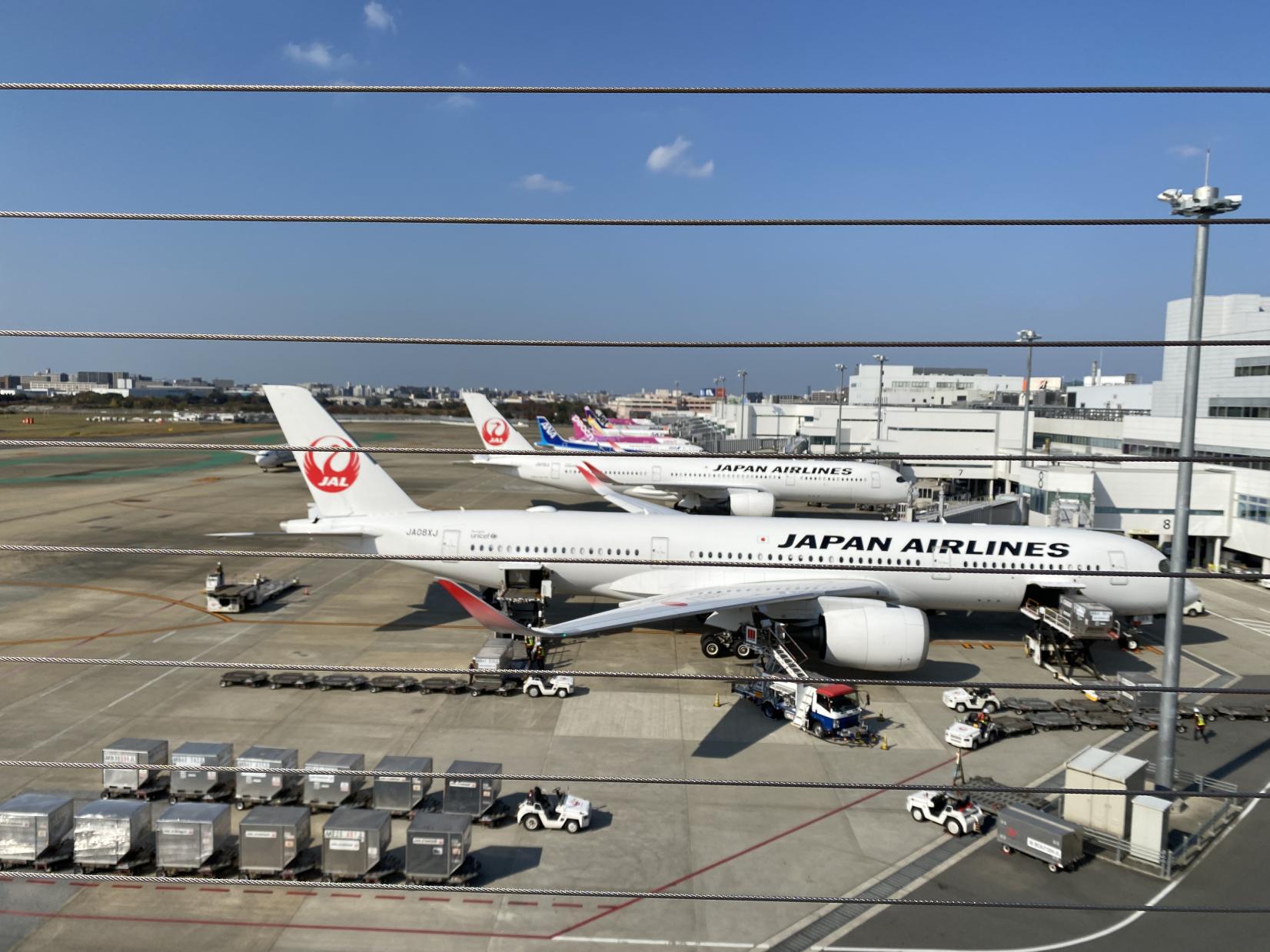
The incident occurred shortly after 10 a.m. local time when a vehicle equipped with boarding stairs collided with an All Nippon Airways (ANA) passenger jet parked at the airport, public broadcaster NHK reported, citing the airport’s operating company and ANA.
The vehicle was attempting to pass behind the aircraft when it came into contact with the plane near its tail. Passengers had already boarded the aircraft, which was preparing to depart for New Chitose Airport in Hokkaido, but the flight was canceled due to the incident, and arrangements were made to transfer the passengers to another flight, the report said.
According to the airport’s operating company, no other flights were affected.
Citing a source close to Iran’s negotiating team, the semi-official Tasnim news agency said that the understanding was reached after “intensive technical and diplomatic talks between Iran and Oman, which culminated in a final agreement in late August.”
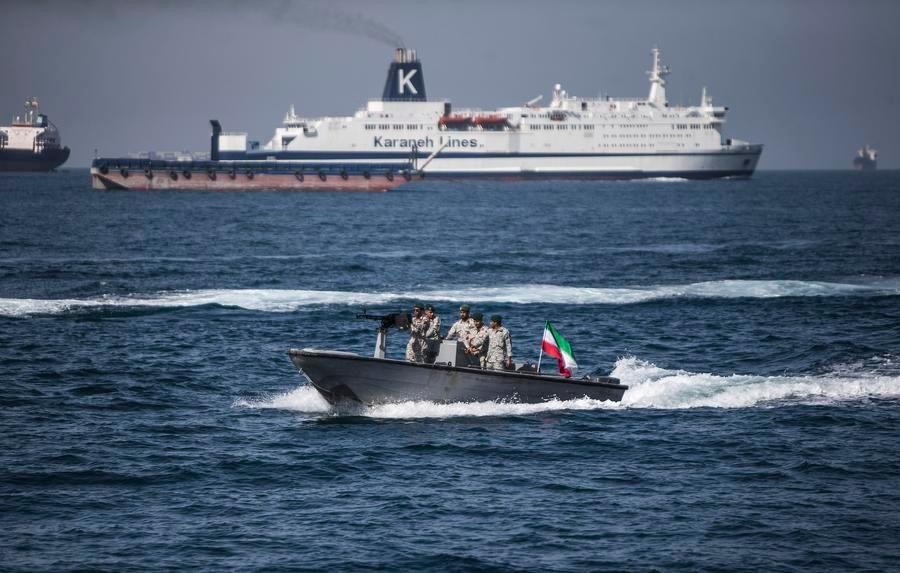
Under the understanding, the Gulf’s entry route “lies entirely within Iran’s territorial waters,” and a portion of the exit route also falls “within Iranian territorial waters,” the source said.
The source stressed that the route would operate under Iranian arrangements and the waterway’s southern route will be closed once the new system becomes operational, noting that the United States had insisted that the southern route must be opened.
“The understanding in no way means that the Strait of Hormuz will be opened,” the source said, adding that Iran has seven conditions for reopening the waterway and has conveyed them to the United States.
The source underlined that the waterway will remain closed unless those conditions are implemented, with reopening depending entirely on the U.S. behavior.
Iran’s Foreign Ministry spokesman Esmaeil Baghaei announced on Friday that Gulf littoral states’ foreign ministers are scheduled to meet in Oman on Monday to exchange views on regional issues, including the Iran-Oman talks on designating safe routes in the Strait of Hormuz.
Speaking to Al Jazeera on Saturday, Baghaei said the gathering would “hopefully” be attended by foreign ministers from Gulf states as well as Iran and Iraq.
“As part of the agenda, we are going to brief the delegations about the results of the Iran and Oman consultations regarding the safe passage of ships through the Strait of Hormuz,” he said, adding that the two countries had conducted the consultations as “the two coastal states of the Strait of Hormuz.”
Late last month, Iran and Oman said in a joint statement that they had exchanged views on a proposed phased framework that includes establishing a temporary joint shipping corridor in the strait.
Following U.S.-Israeli strikes on Iran on Feb. 28, Tehran restricted passage through the strategic waterway, while U.S. forces imposed a naval blockade targeting vessels traveling to or from Iranian ports.
The Strait of Hormuz, linking the Gulf with the Arabian Sea, is one of the world’s most important routes for oil and gas shipments. Oman and Iran sit on opposite sides of the strait and have maintained consultations over maritime security and navigation in the strategic waterway.
Iran and Oman have agreed on the details of new entry and exit routes for the Strait of Hormuz and will brief Gulf countries on the outcome of their consultations at a regional meeting in Muscat on Monday, Iranian officials said on Saturday.
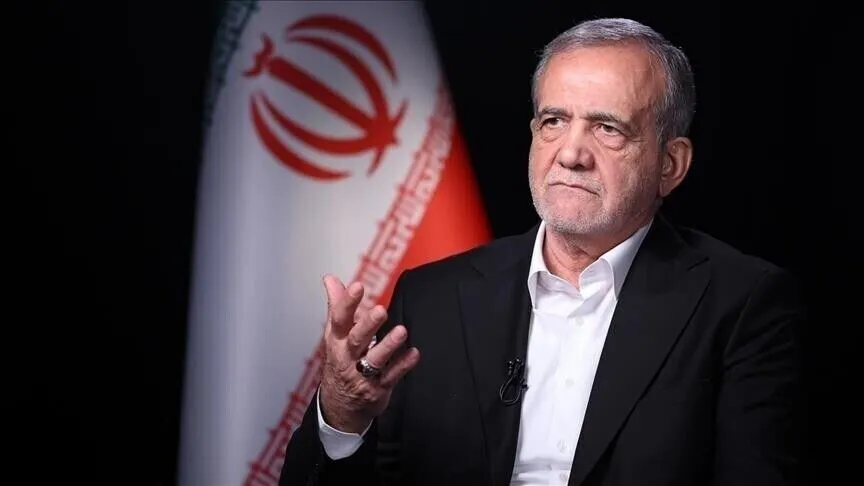
“Since the United States cannot force Iranians to surrender through bullying, it seeks to make them capitulate owing to livelihood problems and a lack of facilities. However, the Iranian people will not surrender,” Pezeshkian said at a meeting with Indian religious leaders, elites and businessmen in New Delhi, according to the official IRNA news agency.
He condemned the U.S. naval blockade and economic war against Iran, saying Washington does not want Iran to be an independent country, “but we will not bow to its bullying.”
Iran has been under a U.S.-imposed naval blockade for several months and has recently witnessed an unprecedented intensification of pressure on its economy by Washington.
Last month, U.S. President Donald Trump announced “the most crushing economic operation ever taken” against any country providing a lifeline to Iran, adding that “this will be economic warfare and isolation on an unprecedented scale.”
Iranian President Masoud Pezeshkian said on Friday that the Iranian people will not surrender to U.S. economic pressure.
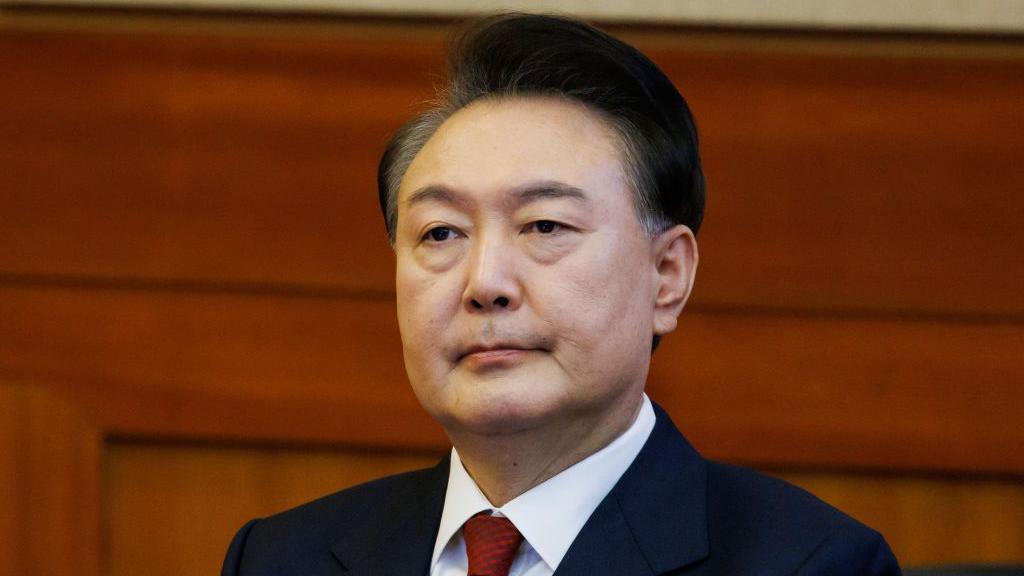
The Seoul Central District Court delivered the verdict, ruling that it cannot be definitively concluded that there was an intent to obstruct the investigations into a marine’s death.
The team of independent counsel Lee Myeong-hyeon, who led investigations into the marine’s death, sought a five-year prison term on charges of aiding the criminal suspect’s flight and abusing presidential power.
Yoon was accused of ordering the appointment of former Defense Minister Lee Jong-sup as ambassador to Australia to help him flee the country in November 2023, about four months after the marine’s death.
The special counsel team alleged that Yoon helped Lee, a primary suspect at the time, flee the country through the appointment to cover up the marine’s death.
The court handed down blanket acquittals for several former top-ranking officials involved in lifting Lee’s travel ban and fast-tracking his appointment.
Yoon was sentenced to life in prison in February for the insurrection stemming from his martial law declaration and 30 years in prison in June for the general treason relevant to the infiltration of drones into the Democratic People’s Republic of Korea.
The emergency martial law was declared by Yoon on the night of Dec. 3, 2024, but it was revoked hours later by the National Assembly.
He was indicted under detention in January 2025 as a suspected ringleader of the insurrection, becoming the first sitting president to be arrested and indicted.
South Korea’s ousted former President Yoon Suk Yeol arrives to attend his trial at the Seoul Central District Court in Seoul, South Korea, May 12, 2025. (AP Photo/Ahn Young-joon, Pool, File)
Tung died on September 8, 2026, according to a statement from his office. No cause of death was immediately given.
Born in Shanghai in 1937, Tung came from a prominent shipping family.
His father, Tung Chao-yung, founded the Orient Overseas Container Line, and Tung Chee-hwa later took over the family business.
Tung entered politics as Hong Kong approached the end of British colonial rule.
In December 1996, he was selected by a Beijing-aligned 400-member committee to become the territory’s first Chief Executive.
He took office on July 1, 1997, when Hong Kong was handed back to China after more than 150 years of British rule.
His administration operated under the “one country, two systems” framework, under which Hong Kong was promised a high degree of autonomy and the preservation of its way of life, legal system and economic freedoms.
However, Tung’s time in office was marked by a series of serious challenges.
The Asian financial crisis hit Hong Kong soon after he took office, while the territory also faced an outbreak of bird flu and the SARS epidemic in 2003.
His government also faced growing public dissatisfaction over economic conditions, housing and political reforms.
One of the most controversial moments came in 2003, when his administration attempted to introduce legislation under Article 23 of Hong Kong’s Basic Law.
The proposed legislation would have created offences related to national security, including treason and sedition, while giving authorities additional powers.
The proposal triggered a huge public demonstration, with about half a million people taking part.
Facing intense opposition, the government withdrew the legislation. The controversy further damaged Tung’s popularity and contributed to growing tensions between Hong Kong’s pro-democracy movement and Beijing.
Despite his declining popularity, Tung was re-elected unopposed in 2002. He resigned in March 2005, citing health reasons, midway through his second term.
After leaving office, Tung remained an influential figure in Chinese politics.
He became vice chairman of the Chinese People’s Political Consultative Conference and continued to support closer ties between Hong Kong and mainland China.
In later years, he established the Our Hong Kong Foundation, a think tank that promoted policy ideas on issues including housing, technology and economic development.
Tung’s political legacy remains contested. Supporters have credited him with helping guide Hong Kong through its historic transition to Chinese sovereignty and promoting closer economic integration with mainland China.
Critics, however, have pointed to his administration’s economic difficulties, unpopular policies and the political tensions that emerged during his leadership.
His death comes nearly three decades after he became the first leader of Hong Kong under Chinese sovereignty, making him a central figure in one of the territory’s most significant periods of modern history.
Tung Chee-hwa served as Hong Kong’s first Chief Executive from 1997 to 2005
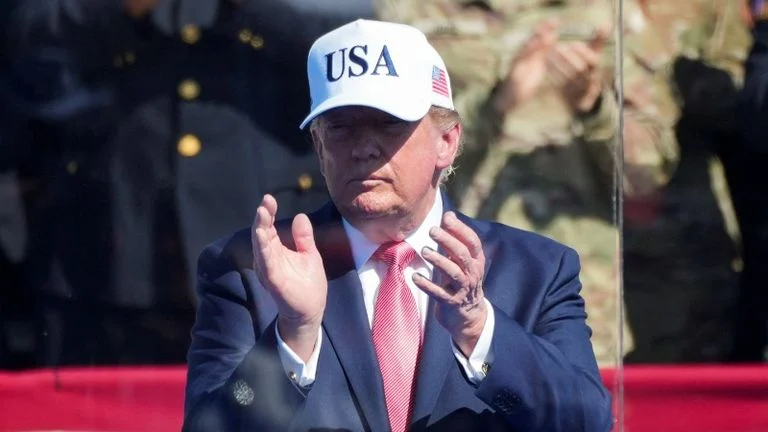
Trump campaigned for a second term as a president who would end foreign wars rather than start new ones.
However, his administration is now deeply involved in a conflict with Iran that analysts say risks becoming a new “forever war.”
The US launched “Operation Epic Fury” alongside Israel on February 28, targeting Iran’s military and nuclear capabilities.
The campaign has relied heavily on US air and naval power rather than a large-scale deployment of American ground troops.
Despite inflicting significant economic and military damage on Iran, the campaign has not achieved all of the objectives critics say Trump set out to accomplish, including dismantling Iran’s nuclear programme or triggering a change in the Iranian government.
The conflict has also created economic pressure beyond the battlefield. Iran’s disruption of oil shipments through the Strait of Hormuz has contributed to higher US gasoline prices and pushed global oil prices higher.
The economic impact has added to political pressure on Trump and strained relations with some US allies.
Analysts say the conflict reflects some of the problems that complicated the wars in Afghanistan and Iraq, including difficulties in defeating an entrenched opponent and establishing a clear path to ending military operations.
Sina Toossi of the Center for International Policy said Trump had broken a post-Iraq and Afghanistan reluctance in Washington to launch another major, potentially open-ended war in the Middle East.
The comparison comes as the United States approaches the 25th anniversary of the September 11 attacks, which killed nearly 3,000 people and led to the US invasion of Afghanistan, followed by the 2003 invasion of Iraq.
The Iraq war was launched partly on intelligence that Iraq possessed weapons of mass destruction, but those weapons were never found.
The conflicts in Afghanistan and Iraq became lengthy and costly, while contributing to instability across the Middle East.
Trump’s political rise was partly fueled by public frustration with the consequences of those wars.
During his 2024 campaign, he promised to avoid military adventurism and focus more heavily on Americans’ economic concerns.
Critics now argue that his Iran strategy risks repeating some of the mistakes of the post-9/11 era, including underestimating an adversary’s resilience and failing to establish a clear exit strategy.
The White House has defended the campaign. Spokeswoman Anna Kelly said Trump had the courage to confront Iran over its nuclear programme and argued that his administration had achieved its objectives, while sanctions and a US maritime blockade were putting further pressure on Iran’s economy.
For now, however, the conflict remains unresolved. With rising energy costs, political pressure at home and concerns over its wider regional consequences, the war is increasingly becoming a test of whether Washington can avoid repeating the experience of the post-9/11 “forever wars.”
US President Donald Trump faces growing scrutiny over the ongoing conflict with Iran.
The iPhone Duo, which starts at 1,999 U.S. dollars in the United States, features a 5.4-inch (13.7-centimeter) outer display that opens to reveal a 7.6-inch (19.3-centimeter) inner display, the largest ever on an iPhone, according to Apple.
When closed, the device is roughly the size of a passport, the company said. When unfolded, it is Apple’s thinnest iPhone to date.
The iPhone Duo is made of Grade 5 titanium and features a precision hinge. Its inner and outer Super Retina XDR displays have the same aspect ratio, allowing content to scale proportionally as users switch between the two screens.
The device is powered by Apple’s new A20 Pro chip, the same processor used in the iPhone 18 Pro models. Built on a 2-nanometer process, the chip features a six-core CPU, a seven-core GPU and dual 16-core Neural Engine designed to support on-device artificial intelligence (AI) workloads, Apple said.
The foldable phone also features a dual-battery architecture and a custom vapor chamber for thermal management. It offers up to 31 hours of video playback on the inner display and 44 hours on the outer display, according to Apple.
Apple has redesigned parts of its iOS 27 operating system to accomodate the foldable form factor. A new Split View feature allows users to run two apps side by side on an iPhone for the first time, while also enabling them to open two windows of the same app.
The iPhone Duo comes with Apple Intelligence and Siri AI. Apple said Siri AI will begin rolling out as a beta with iOS 27 on Sept. 14 for supported devices set to English, with several additional languages to follow in October.
The iPhone Duo will be available in star white and night sky, with storage options of 256GB, 512GB, 1TB and 2TB. Pre-orders will begin on Oct. 16 in more than 70 countries and regions, with availability beginning Oct. 23. The phone will launch in an additional 28 countries and regions on Oct. 30.
Apple also unveiled the iPhone 18 Pro and iPhone 18 Pro Max, starting at 1,199 dollars and 1,299 dollars, respectively. Both models are powered by the A20 Pro chip and feature a new 48-megapixel Fusion Main camera with variable aperture, along with improvements in battery life and sustained performance.
The iPhone 18 Pro models will be available with 256GB, 512GB, 1TB and 2TB of storage. Pre-orders will begin Sept. 12, with availability starting Sept. 18 in more than 65 countries and regions.
Apple also introduced Apple Watch Series 12 and Apple Watch Ultra 4, featuring a new Health Sensing System and the S11 chip. The company said the system enables more frequent measurements of heart rate and heart-rate variability, as well as a new readiness score. The Apple Watch Series 12 starts at 399 dollars, while the Apple Watch Ultra 4 starts at 799 dollars.
AirPods 5 were also unveiled at the event, bringing Active Noise Cancellation to Apple’s entry-level AirPods lineup. The new model starts at 129 dollars, while a version with a wireless charging case and additional controls costs 149 dollars.
The event marked the first major Apple product launch led by John Ternus since he took over as the company’s CEO. The introduction of the iPhone Duo marks Apple’s entry into the foldable smartphone market.
People take photos of Apple’s first foldable smartphone, iPhone Duo, at Apple Park in Cupertino, California, the United States, Sept. 9, 2026. U.S. tech giant Apple on Wednesday unveiled its first foldable smartphone, iPhone Duo, along with the iPhone 18 Pro lineup, new Apple Watch models and AirPods at a product launch event held at Apple Park, its headquarters in Cupertino, California. (Xinhua/Wu Xiaoling)
Photo taken on Sept. 9, 2026 shows iPhone Duo on screen during a launch event at Apple Park in Cupertino, California, the United States. U.S. tech giant Apple on Wednesday unveiled its first foldable smartphone, iPhone Duo, along with the iPhone 18 Pro lineup, new Apple Watch models and AirPods at a product launch event held at Apple Park, its headquarters in Cupertino, California. (Xinhua/Wu Xiaoling)