The remarks were made aboard Air Force One as Trump prepared for the high‑profile discussions, which come against a backdrop of rising tensions and intense diplomatic pressure.
“I’ll be involved in those talks, indirectly. And they’ll be very important,” Trump said, signaling Washington’s continued engagement in the effort to resolve long‑running disputes over Iran’s nuclear program.
The planned negotiations aim to address issues that have stalled diplomacy for years, especially Tehran’s uranium enrichment activities that Washington fears could pave the way for nuclear weapons development. Trump said he believed Iran wanted a deal, suggesting that Tehran may be motivated by a desire to avoid serious consequences if talks fail.
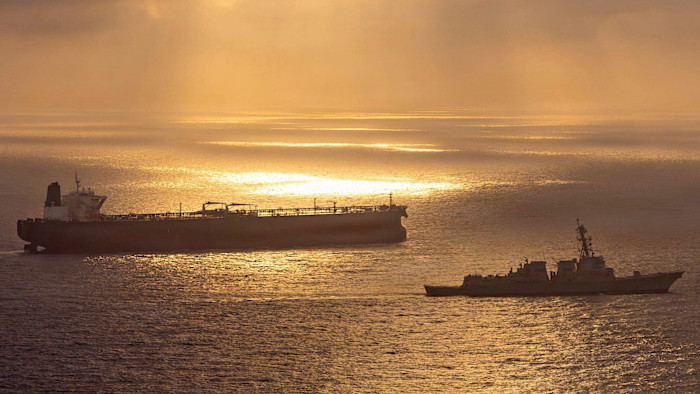
Tensions in the region remain high. The United States has deployed a second aircraft carrier strike group to the Middle East and U.S. military officials are preparing for the possibility of a sustained campaign if diplomacy does not succeed.
Last year, the U.S. and Israel conducted strikes on Iranian nuclear sites, actions Trump referenced as a factor that may now influence Iran’s willingness to negotiate.
Iran’s delegation led by Foreign Minister Abbas Araghchi, has emphasized that negotiations should focus on nuclear issues in exchange for sanctions relief, and that Tehran is committed to a “fair and equitable deal.” Araghchi has also called for respect and fairness in talks, rejecting any approach based on coercion.
Meanwhile, the International Atomic Energy Agency (IAEA) is pressing Iran to clarify what happened to its stockpile of enriched uranium and to allow full inspection access at sites damaged during the previous year’s strikes.
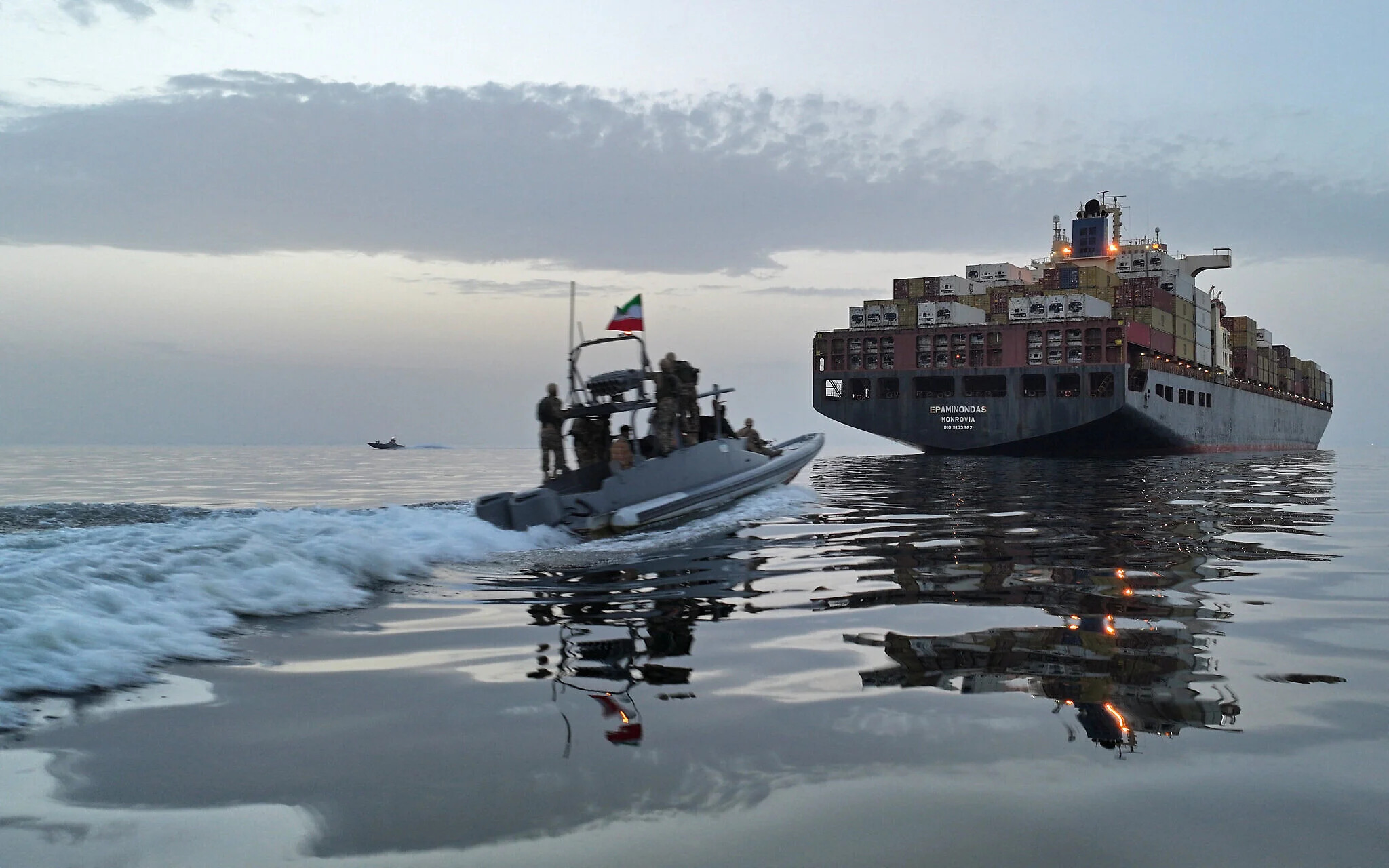
Iran also staged a military drill near the Strait of Hormuz, one of the world’s most important oil transit routes, underscoring the potential for escalation if negotiations break down.
U.S. Secretary of State Marco Rubio described the diplomatic path as challenging but said there was still an opportunity to reach a deal though success would depend on both sides’ willingness to compromise.
Xi, also Chinese president and chairman of the Central Military Commission, sent the greetings while attending an annual gathering with non-CPC personages at the Great Hall of the People in Beijing.
Addressing the gathering, Xi noted that 2025 was an extraordinary year. He said that facing profound and complicated changes at home and abroad, the CPC Central Committee united and led the entire Party and all Chinese people to overcome difficulties and work hard to achieve the year’s main economic and social development targets and tasks.
These hard-won achievements stemmed from the Party’s strong leadership and the joint efforts of all Chinese people, including those from non-CPC political parties, the ACFIC and personages without party affiliation, Xi said.
Noting that 2026 marks the beginning of the 15th Five-Year Plan period, Xi urged non-CPC political parties, the ACFIC and personages without party affiliation to actively fulfill their duties and responsibilities, contributing to the implementation of the CPC Central Committee’s decisions and plans.
He called on them to strengthen political guidance, forge unity, contribute to the country’s development in the 15th Five-Year Plan period, and strengthen their own development to show a fresh look as political parties and forces participating in state governance under socialism with Chinese characteristics.
Xi also urged them to rigorously improve their conduct and enforce discipline, with the aim of consolidating a sound political environment.
The gathering was also attended by Wang Huning, chairman of the National Committee of the Chinese People’s Political Consultative Conference, Cai Qi, director of the General Office of the CPC Central Committee, and Vice Premier Ding Xuexiang. Wang, Cai and Ding are also members of the Standing Committee of the Political Bureau of the CPC Central Committee.
Xi, also general secretary of the Communist Party of China Central Committee and chairman of the Central Military Commission, made the remarks in a recent instruction on work related to the National Natural Science Foundation of China (NSFC).
Noting the NSFC’s positive role in advancing basic research and nurturing innovators over the past four decades, Xi urged the foundation to seize the opportunities presented by the new round of scientific and technological revolution and industrial transformation, and deepen the reform of the science funding system to further refine the funding framework and enhance funding efficiency.
He called on the NSFC to help foster a sound research ecosystem and expand international collaboration, thereby empowering scientists and researchers to yield a greater output of original innovations, and to contribute more to achieving greater self-reliance and strength in science and technology.
The NSFC was established in February 1986 and has become a major channel for national funding of basic research.
Against this backdrop, the vision articulated by Chinese President Xi Jinping in multiple past speeches stands out, offering a clear and consistent compass for global economic governance, one that underscores openness and justice as fundamental anchors for stability and growth.
Translating that vision into concrete actions, China has stepped up development-oriented cooperation with other Global South countries, aligning with their shared concerns amid rising uncertainties and reinforcing calls for a more inclusive and predictable world economic order.
{{Unilateralism exacts heavy toll}}
Indeed, global economic growth faces significant headwinds as escalating unilateralism and protectionist measures dampen international trade and investment flows. Indermit Gill, the World Bank Group’s chief economist, warned that the world economy is set to grow more slowly in the coming years than it did even in the troubled 1990s.
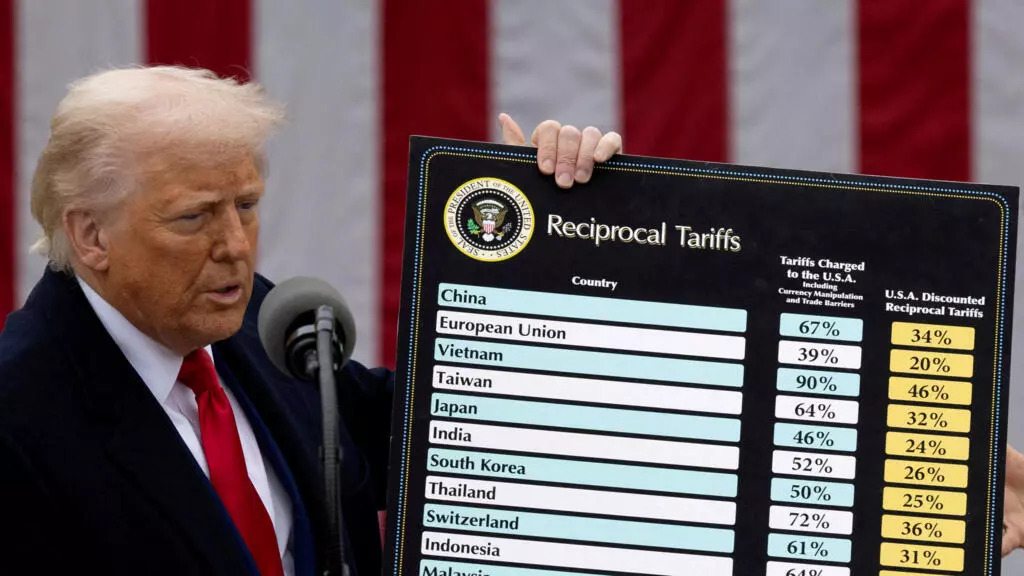
A significant factor behind this slowdown is a new round of tariffs and trade restrictions rolled out by Washington over the past year. As these measures accumulated, the average U.S. import tariff surged from 2.4 percent in early 2025 to nearly 18 percent — the highest level since the 1930s.
Such arbitrary tariffs are exacting a heavy toll. According to the United Nations Conference on Trade and Development (UNCTAD), U.S. growth is expected to slow to 1.8 percent in 2025 and 1.5 percent in 2026, down from an average of 2.5 percent between 2015 and 2019. In Europe, U.S. tariffs on steel, aluminum and automobiles have squeezed supply chains and weakened competitiveness, prompting firms to delay investment, with the UNCTAD forecasting EU growth at just 1.3 percent in 2025.
Furthermore, Washington has wielded tariffs as a tool of geopolitical coercion, not least by threatening to impose punitive tariffs on countries that do not support the U.S. plan to “obtain” Greenland.
The weaponization of U.S. financial tools and rising unilateralism have destabilized global markets, severely constraining the strategic autonomy of developing states, Herman Tiu Laurel, president of the Asian Century Philippines Strategic Studies Institute, a Manila-based think tank, told Xinhua.
World leaders have voiced opposition to such unilateral actions. Italian Prime Minister Giorgia Meloni has said, “Imposing new sanctions today would be a mistake,” while Malaysian Prime Minister Anwar Ibrahim has warned against global trade being weaponised against weaker countries.
In a world fracturing along economic faultlines, Xi offered a clear compass. “Countries cannot thrive without an international environment of open cooperation, and no country can afford to retreat into self-imposed isolation,” he reminded global audiences.
Addressing the 2025 Virtual BRICS Summit, he reinforced the point: “Economic globalization is an irresistible trend of history.”
{{China’s approach}}
China’s approach to the global economy, as Xi observed, has consistently emphasized openness, cooperation and a long-term perspective on economic globalization.
“Whether you like it or not, the global economy is the big ocean that you cannot escape from,” Xi said in his 2017 WEF speech, warning that attempts to cut off the flows of capital, technology and people would only run counter to economic reality.
In July 2025, he told a group of new ambassadors to China that China will steadfastly expand high-standard opening up and share the benefit of its supersized market, so that the country’s advancement will bring new opportunities for other countries and inject greater certainty into global economic growth.
“China’s emphasis on openness, inclusiveness, and fairness speaks directly to the core aspirations of developing countries, which have long sought a global economic system that enables growth rather than constrains it,” Lewis Ndichu, director of research at the Nairobi-based Centre for China Africa Policy, told Xinhua.
“For many in the Global South, openness is not about unfettered liberalization but about meaningful access to markets, technology and finance on equitable terms. China’s proposals resonate because they recognize this distinction and place development at the center of globalization,” he said.
Amid evolving global dynamics, China has been resolutely committed to reform and opening-up. The launch of the Hainan Free Trade Port (FTP) in December 2025 exemplifies China’s push for high-standard opening up, with expanded zero-tariff coverage and more market-oriented, business-friendly rules facilitating freer flows of goods.
During a trip to Hainan, Xi described the FTP as a landmark move reflecting China’s commitment to unwaveringly expand high-standard opening-up and promote an open world economy.
Hainan should play a leading role in advancing high-standard opening up through strengthening coordinated development with the neighboring Guangdong-Hong Kong-Macao Greater Bay Area and deeply integrating into the Belt and Road cooperation, he added.
Thanks to its strategic location, the Hainan FTP is expected to serve as a new platform for international engagements in various sectors — from tourism and modern services to high-tech industries and agriculture — benefiting ASEAN countries in particular, said Christine Susanna Tjhin, director of strategic communication and research at Indonesia’s Gentala Institute.
{{Fairer economic order}}
Amidst global economic storms, Global South countries bear the brunt of the economic squeeze, a fact crystallized in a recent World Bank finding: by the end of 2025, nearly all advanced economies had seen per capita incomes rise above their 2019 levels, while about one in four developing economies remained below pre-pandemic income levels.
“Rising uncertainty and geopolitical fragmentation, alongside slower growth, are currently the most worrying challenges for the global economy, especially for developing countries that depend on open trade and stable investment flows,” Deni Friawan, an economic researcher at the Jakarta-based Center for Strategic and International Studies, told Xinhua.
As a result, more developing countries are increasingly calling for fairer participation in economic globalization.
In December 2024, Xi held a meeting with the leaders of major international economic organizations, reaffirmed China’s commitment to collaborative global progress: “China is ready to work with the major international economic organizations to practice multilateralism, promote international cooperation and support the development of Global South countries, so as to advance an equal and orderly multipolar world and a universally beneficial and inclusive economic globalization, and build a just world of common development.”
“Global South economies require a balanced international environment that combines openness, stability, and access to affordable financing,” said Asif Javed, associate research fellow at Pakistan’s Sustainable Development Policy Institute. “Trade and investment should be fair and inclusive so that developing countries may integrate into global value chains.”
This growing chorus for partnership is now materializing in the economic realm. The expansion of trade and supply chain cooperation under the upgraded China-ASEAN Free Trade Area 3.0 framework and the steady implementation of the African Continental Free Trade Area both underscored a growing willingness among emerging economies to seek stability through more coordinated economic engagement.
“There is a clear convergence between President Xi’s emphasis on dialogue-based governance and the Global South’s aspiration for a more balanced and cooperative global economic order,” Alok Kumar Pathak, associate fellow at the BRICS Institute India, told Xinhua.
That convergence, observers noted, is increasingly reflected in projects under various initiatives. In Africa alone, China has helped build and upgrade over 10,000 km of railways, nearly 100,000 km of roads, while rolling out more than 200,000 km of fiber-optic cable, supporting industrialization and regional connectivity.
The Chinese-built Magufuli Bridge across Lake Victoria in Tanzania was inaugurated in June 2025, marking another landmark project under the Belt and Road Initiative. As the longest bridge in East and Central Africa, it not only improves local transportation but also enhances connectivity with neighboring countries. The bridge stands as a symbol of Tanzania’s self-reliance and a catalyst for regional development, Tanzanian President Samia Suluhu Hassan said at the inauguration ceremony.
On top of infrastructure, China’s growing role in technology transfer and digitalization is reshaping development possibilities, said Ndichu. “Its engagement increasingly emphasizes capacity building, skills development, and value-chain integration rather than simple resource extraction.”
“China functions as both a stabilizing anchor and a key driver of industrial upgrading across the Global South,” said Herman Tiu Laurel.
“By prioritizing infrastructure development and technological innovation, China offers developing countries the practical means to build sustainable growth and achieve genuine economic autonomy,” he said.
Ismael Buchanan, senior lecturer in the Department of Political Science at the University of Rwanda, said China’s emphasis on inclusiveness aligns with the desire to ensure that the benefits of globalization are shared more broadly, rather than concentrated in a few advanced economies.
“China has offered additional development options for Global South countries. This engagement complements existing international efforts and contributes to a more diversified and balanced global economic system,” he added.
It is Lee’s first visit to China since he took office, and the two heads of state have met twice and conducted reciprocal visits, reflecting the importance both sides attach to China-ROK relations.
ENHANCING STRATEGIC PARTNERSHIP
China has consistently placed relations with the ROK high on its regional diplomatic agenda and maintained continuity and stability in its policy toward the ROK, Xi said, adding that China is willing to work with the ROK to firmly uphold the direction of friendly cooperation, adhere to the principle of mutual benefit and win-win outcomes, promote bilateral strategic partnership along a healthy path, effectively enhance the well-being of both peoples, and contribute positively to regional and global peace and development.
Xi called on both sides to enhance mutual trust, respect each other’s development paths, accommodate each other’s core interests and major concerns, and resolve differences properly through dialogue and consultation.
Lee said the ROK side hopes to use the first head-of-state diplomatic meeting of the year as an opportunity to consolidate the momentum of the comprehensive recovery and development of bilateral relations, seek common ground while reserving differences, deepen the ROK-China strategic cooperative partnership, and open a new chapter of bilateral relations.
He emphasized that the ROK respects China’s core interests and major concerns, and adheres to the one-China principle.
Dong Xiangrong, senior fellow at the Chinese Academy of Social Sciences, said that head-of-state diplomacy has played a significant guiding role in China-ROK relations, sending a clear positive signal to foster better bilateral ties, and greatly contributing to deepening political mutual trust and promoting economic and trade cooperation.
In the future, both sides need to accommodate each other’s major concerns including the Taiwan question, and maintain a stable cooperative relationship as important trading partners, Dong said.
ACHIEVING MORE COOPERATION RESULTS
China and the ROK share close economic ties with industrial and supply chains deeply interwoven, and the bilateral cooperation is mutually beneficial, Xi said.
He said the two countries should further align their development strategies, strengthen policy coordination, expand the pie of common interests, and achieve more cooperation results in emerging fields such as artificial intelligence, green industries, and the silver economy.
Bilateral economic and trade cooperation has played a positive role in the economic and social development of both countries, Lee said, noting that the ROK looks forward to seizing the opportunities brought by China’s 15th Five-Year Plan to achieve more results in practical cooperation with China.
After their talks, Xi and Lee witnessed the signing of 15 cooperation documents in fields including scientific and technological innovation, ecological environment, transportation, and economic and trade cooperation.
Yang Xiyu, a researcher from the China Institute of International Studies, said that since the establishment of diplomatic relations between China and the ROK, bilateral economic and trade cooperation has always been the stabilizer and propeller of the development of bilateral relations.
He said China and the ROK should leverage their long-standing traditional advantages, and strengthen cooperation with a focus on economy, trade, and technology.
BEARING RESPONSIBILITIES IN PEACE, DEVELOPMENT
China and the ROK shoulder important responsibilities in maintaining regional peace and promoting global development, and share a wide range of common interests, Xi said, noting that the two countries should firmly stand on the right side of history and make the right strategic choices.
More than 80 years ago, the two peoples made tremendous national sacrifices and won the victory against Japanese militarism, he said, adding that the two countries should join hands to safeguard the fruits of the victory in World War II and protect peace and stability in Northeast Asia.
As beneficiaries of economic globalization, China and the ROK must work together to oppose protectionism and practice true multilateralism, contributing to the advancement of an equal, orderly multipolar world and a universally beneficial, inclusive economic globalization, Xi said.
Lee said the ROK is willing to strengthen its multilateral coordination with China and contribute to global prosperity and development, and wishes China every success in hosting this year’s Asia-Pacific Economic Cooperation Economic Leaders’ Meeting.
Dong said amid the recent resurgence of Japanese militarism, China and the ROK should share a common position to maintain regional peace, and the two sides need to jointly address protectionism and defend free trade.
Xi made the remarks when meeting with Taoiseach of Ireland Micheal Martin in Beijing. The Irish prime minister is on an official visit to China from Jan. 4 to 8.
Both China and Ireland cherish peace, embrace openness and inclusiveness, and strive for self-reliance and progress, Xi said, adding that the Chinese and Irish people won national independence and liberation through struggles and are advancing toward modernization through sustained efforts of successive generations.
Since the establishment of the China-Ireland strategic partnership for mutually beneficial cooperation in 2012, bilateral trade volume has quadrupled, with a balanced development in mutual investment, he noted.
Xi said the two countries should maintain friendly exchanges at multiple levels and across diverse fields, continuously enhance communication and mutual understanding, accommodate each other’s core interests and major concerns, consolidate political mutual trust, and solidify the political foundation of bilateral relations.
Over the next five years, China will continue to promote high-quality development and expand high-standard opening up. Xi said China is willing to strengthen economic and trade cooperation with Ireland, align development strategies in fields such as artificial intelligence, digital economy, and medicine and healthcare, promote two-way investment, leverage each other’s strengths, share opportunities and pursue common development.
The two sides should enhance cooperation in education, culture and tourism to foster greater people-to-people affinity, and China welcomes more Irish youth to come to China for study and exchanges, Xi said.
In a world beset with changes and chaos, unilateral and bullying acts are severely undermining the international order, Xi said. All countries should respect the development paths chosen by the peoples of other nations, and abide by international law as well as the purposes and principles of the UN Charter, he said, stressing that major countries should particularly take the lead in doing so.
As China and Ireland support multilateralism and advocate international fairness and justice, the two countries should strengthen coordination and cooperation in international affairs, and jointly maintain the authority of the United Nations and make the global governance system more just and equitable, he said.
Xi said China and the EU should bear the long-term picture in mind, uphold the positioning of partnership, and view and handle differences objectively and rationally to work for win-win cooperation.
As Ireland will hold the rotating EU presidency in the second half of this year, China hopes Ireland will play a constructive role in promoting the healthy and stable development of China-EU relations, the Chinese president said.
Highlighting a profound and long-lasting friendship between the two countries, the Irish prime minister said Xi’s successful visit to Ireland in 2012 had laid a solid foundation for the development of the Ireland-China strategic partnership for mutually beneficial cooperation in recent years.
Martin said Ireland firmly adheres to the one-China policy, and is committed to developing the strategic partnership for mutually beneficial cooperation.
Ireland is willing to deepen cooperation with China in trade, investment, science and technology, biomedicine, renewable energy, artificial intelligence, education and other fields, he said.
Martin commended China’s indispensable and important role in international affairs and its positive contributions to upholding the authority of the UN and promoting world peace.
He said that any international dispute should be settled in conformity with international law, and Ireland is willing to maintain close communication and coordination with China, safeguard international law, uphold free and open trade, and promote world prosperity and stability.
Noting that the stable development of EU-China relations is of great significance, Martin said the Irish side is willing to play a constructive role in promoting the healthy development of EU-China relations.
The U.S. attack on Venezuela and its so-called “management plan,” as analysts observed, is in essence a testament to its scheme to expand the “Donroe Doctrine,” a Trump-modified version of the Monroe Doctrine aimed at controlling the Western Hemisphere and plundering its resources.
“RUNNING” OR PLUNDERING VENEZUELA
Trump told a press conference on Saturday that the United States will set up a working group composed of diplomatic and military personnel to “run” Venezuela until “a safe, proper and judicious transition.”
He also threatened that the United States is “not afraid” to have military forces on the ground and will launch a larger second wave of strikes against Venezuela if necessary.
Although the specific plan remains unclear at present, the so-called “running” by the United States is essentially an attempt to conduct substantive intervention in Venezuela through political manipulation and resource control, experts have noted.
Allan Fajardo, a sociologist at the Honduran National Autonomous University, told Xinhua that there are two possibilities for the so-called “transitional management” by the United States.
One is to maintain the current government and institutional framework of Venezuela in form and continue to interfere in Venezuela’s internal affairs by exerting political and economic pressure.
The other possible method is to foster a pro-American regime directly, without even ruling out the possibility of larger-scale military intervention and occupation of Venezuelan territory in the future, he said.
Trump also mentioned at the press conference that large American oil companies will enter Venezuela to repair severely dilapidated oil infrastructure and start generating revenue.
Cao Ting, director of the Research Center for Latin American Studies at Fudan University, said that judging from the consistent style of the Trump administration, its strategic goal might be to control the oil lifeline within Venezuela by fostering U.S. proxies in the country without engaging in a long-term occupation.
This so-called “running” model is not focused on improving people’s livelihoods or rebuilding the country, but on seizing resources, said Jaime Tamayo, an international relations specialist and political scientist from the University of Guadalajara.
It will lead to the depletion of Venezuela’s governance capacity, the separation of administration and security, the deterioration of public security and the breeding of violence, scholars have said.
POST-MADURO VENEZUELA
According to the Venezuelan Constitution, if the president is “absolutely absent,” power will be transferred to the vice president and a general election will be held within 30 days.
However, Venezuela’s Supreme Court of Justice did not announce that Maduro is “absolutely absent,” although it has ordered Vice President Delcy Rodriguez to immediately take over as acting president after Maduro’s capture, which, according to media analyses, suggests that there might be no general election within 30 days.
Experts believe that Rodriguez and her brother are currently important representatives of the left-wing forces, with relatively moderate positions.
In a televised speech on Saturday, Rodriguez took a tough stance toward the United States, condemning its actions as unprecedented military aggression and saying that Venezuela will never become a colony of any country or a slave of any empire, despite Trump’s earlier claim that she has promised to do what the United States wanted.
Tamayo believes that the current left-wing political forces in Venezuela and their social foundation remain relatively stable, making it difficult for the United States to break the country’s existing political pattern in a short time. It may adopt a strategy of provoking division to win over some senior political or military figures in Venezuela.
LATIN AMERICA ON HIGH ALERT
“Today it’s Venezuela, tomorrow it could be anyone else,” Chilean President Gabriel Boric said on Saturday, raising alarm across Latin American countries over the hegemonic interference of the United States.
Latin American experts and media outlets believe that the U.S. action against Venezuela aims to create a “chilling effect” to deter the regional countries and is an upgraded version of the “Monroe Doctrine.”
Jose Ignacio Martinez, an international relations specialist from the National Autonomous University of Mexico, said that Washington is highlighting its overbearing logic to arbitrarily define who can become the president and which is a “legitimate country,” while casually labelling relevant countries and leaders as “terrorists,” “drug dealers,” or “dictators.”
Leaders of Brazil, Mexico, Cuba, Honduras and Chile, among others, have publicly condemned the United States and called on the international community to take urgent action.
Brazilian President Luiz Inacio Lula da Silva condemned the U.S. military’s actions as “unacceptable,” saying that they violated Venezuela’s sovereignty and set a dangerous precedent.
The U.S. actions strike at the core of national sovereignty and have raised concerns even among some opposition forces in Venezuela. Under mounting pressure, Latin American countries may seek greater unity and self-reliance to counter hegemony, according to analyses by Latin American media.
Venezuela’s Vice President Delcy Rodriguez, speaking on a state-run television station, said the whereabouts of Maduro and his wife are unknown, asking for proof they are alive.
The U.S. military action against the South American nation has drawn widespread international condemnation, with multiple countries calling for a coordinated global response.
WHAT HAPPENED?
A Xinhua correspondent based in Caracas reported early Saturday morning that low-flying aircraft were spotted, and clouds of smoke were seen following loud explosion sounds in the Venezuelan capital.
Photos and videos circulating on social media showed smoke rising from multiple locations in the capital, with residents seen fleeing in the streets.
Reports said brief power outages occurred in some areas, including a military base in Caracas.
According to media reports, the U.S. Federal Aviation Administration (FAA) had banned U.S. commercial flights from Venezuelan airspace due to “ongoing military activity” shortly before the explosions were reported.
Hours after the incident, CBS White House correspondent Jennifer Jacobs said that U.S. President Donald Trump had ordered the strikes, citing U.S. officials. FOX News also reported that U.S. officials had confirmed the military action.
Following the attacks, Venezuela condemned the incident as “military aggression” by the United States. The Venezuelan government said that the military strike targeted civilian and military sites in at least four states of the country, including Caracas, as well as the states of Miranda, Aragua and La Guaira, adding that the U.S. action blatantly violated the United Nations Charter.
Later in the day, Trump in a Truth Social post that Maduro and his wife had been captured and flown out of Venezuela.
“The United States of America has successfully carried out a large scale strike against Venezuela and its leader, President Nicolas Maduro, who has been, along with his wife, captured and flown out of the Country,” Trump said in the post.
For months, the United States has maintained a significant military presence in the Caribbean, much of it off Venezuela’s coast, purportedly to combat drug trafficking — a claim Venezuela has denounced as an attempt to bring about regime change in Caracas.
WIDESPREAD CONDEMNATION
Colombian President Gustavo Petro on Saturday called for an urgent meeting of the Organization of American States and the United Nations on the attack in Venezuela. “Caracas is currently being bombed … Venezuela has been attacked,” he wrote on social media platform X.
On the same day, Cuban President Miguel Diaz-Canel condemned what he described as the “criminal U.S. attack” against Venezuela, demanding an urgent response from the international community.
In a social media post, the president said that the Latin American region was being brutally assaulted, and “this is state terrorism against the brave Venezuelan people and against Our America.”
Meanwhile, the Russian Foreign Ministry said that the United States committed “an act of armed aggression” against Venezuela, which causes deep concern and condemnation.
Konstantin Kosachev, deputy speaker of Russia’s Federation Council, said the U.S. military operation against Venezuela has no legitimate basis as the South American country has posed no threat to the United States.
Kosachev stressed that the international order should be based on international law rather than on so-called rules imposed by individual countries. He said international law has clearly been violated, adding that “an order established in this manner must not prevail.”
Kosachev also said he believed that most countries would firmly distance themselves from the attack on Venezuela and condemn it.
Also on Saturday, Iran’s Foreign Ministry strongly condemned the U.S. military attack against Venezuela as a “flagrant violation” of the Latin American state’s national sovereignty and territorial integrity.
It said the U.S. military attack against Venezuela was an “act of aggression and in clear violation” of the fundamental principles of the UN Charter and international law, which bans the use of force against sovereign states.
It called on the United Nations as well as all governments caring about the rule of law and international peace and security to immediately and explicitly condemn the U.S. attack.
The Spanish Foreign Ministry on Saturday also said that Spain calls for a deescalation as well as moderation and respect for international law in Venezuela.
Wang Fengli, deputy director of the Office of the Free Trade Port Working Committee of the Communist Party of China Hainan Provincial Committee, made the remarks during the latest episode of China Economic Roundtable, an all-media talk show hosted by Xinhua News Agency.
Hainan will build a more flexible and efficient supervision system to facilitate the free, safe flow of goods. “On the one hand, the range of zero-tariff goods will be expanded to promote the trade of goods. On the other hand, the opening-up of services sectors such as tourism, education and health care will be accelerated in response to the development needs of trade in services,” Wang said.
Regarding investment, the Hainan FTP aims to create a market-oriented, law-based and internationalized business environment with greater transparency. Foreign investment access will be relaxed further, and reforms will be implemented to streamline approval processes, the official said.
The opening-up of the financial sector will be advanced steadily, with efforts to develop cross-border asset management and offshore yuan business, he said.
Restrictions on the free flow of people will also be relaxed, and entry and exit policies will be eased to attract talent and business visitors, according to Wang.
Hainan will adopt a more open shipping environment, optimize vessel inspection policies and establish an efficient, secure mechanism for the cross-border transfer of data, he added.
Huang, head of the Chinese Academy of Macroeconomic Research, made the remarks during the latest episode of China Economic Roundtable, an all-media talk show hosted by Xinhua News Agency.
The Thursday launch marks a major milestone in the opening-up drive of the world’s second-largest economy. This move sends a tangible message to the world: China has made a significant decision to open up further, Huang said.
It also aims to set a benchmark for higher-level opening-up, inject new momentum into upholding multilateralism and free trade, and foster inclusive and universally beneficial economic globalization, according to Huang.
“It is a strategic move to align with high-standard international economic and trade rules and steadily expand institutional opening-up,” Huang noted. “This provides an important platform for China to better adapt to and utilize international economic and trade rules while actively participating in their formulation.”
Huang believes that China’s economy has transitioned from rapid growth to high-quality development and is now at a critical stage of transforming growth model, optimizing economic structure, and shifting growth drivers.
As a key testing ground for reform in China, Hainan shoulders the important mission of paving new paths and accumulating fresh experience for building a high-standard socialist market economy, particularly in key areas such as trade and investment, fiscal and financial systems, and government regulation, Huang added.