Delivering the verdict on Thursday, Presiding Judge Ji Gwi-yeon said, “The declaration of martial law resulted in enormous social costs, and it is difficult to find any indication that the defendant has expressed remorse for that.”
“As to defendant Yoon Suk Yeol, the crime of insurrection leadership is established,” the judge said. “We sentence Yoon to life imprisonment.”
The ruling by the Seoul Central District Court concluded that Yoon led the events of December 3, 2024. Prosecutors had sought the death penalty for the impeached leader, who was removed from office after declaring martial law.
According to Yonhap News Agency, the court determined that a central element of the case was Yoon’s deployment of military forces to the National Assembly of South Korea in December 2024.
Judges found he intended to disrupt and paralyze parliamentary operations for a significant period, though they rejected claims that he sought to establish a long-term dictatorship.
Throughout the trial, Yoon, 65, denied wrongdoing, insisting he had constitutional authority to impose martial law and that the move was meant to counter obstruction by opposition parties.
Former South Korean President Yoon Suk Yeol speaking at a past event before his arrest.
“Following its annual review of restrictive measures in relation to Zimbabwe, the EU has lifted all provisions concerning individuals and entities while extending the arms embargo,” the delegation said in a statement.
According to the European Council, the embargo will remain in force until Feb. 20, 2027.
The bloc imposed sanctions on Zimbabwe in 2002, citing “serious concern” about the situation in the country.
Speaking at the country’s First National Conference on Digital Transformation in Maputo last week, President Daniel Francisco Chapo framed digitalisation as a governance reform rather than a purely technological upgrade.
“Countries are not transformed only with physical infrastructure. They are also transformed through digital infrastructure that connects citizens to the State and to opportunity,” he said.
At the heart of the initiative is the creation of a Multi-Sector Technical Commission on Digital Services, tasked with delivering a national roadmap for integrating public digital systems by mid-2026. The Commission will map existing platforms, promote interoperability, eliminate duplication, and define a strategy for a fully connected government.
President Chapo acknowledged that fragmentation across government institutions—such as separate databases and non-communicating systems—creates inefficiencies and administrative burdens.
“There must be no technological islands within the State,” he said.
The reform aims to enable citizens and businesses to access services such as identity documentation, licensing, tax payments, and business registration remotely through interoperable platforms and a central Citizen Portal.
Officials say digital integration could reduce bureaucratic delays, improve transparency, and strengthen Mozambique’s investment climate, a key priority as the country seeks to expand private-sector participation and align with regional digital trade frameworks under the African Continental Free Trade Area (AfCFTA).
Mozambique has already established a dedicated Ministry of Communications and Digital Transformation, consolidating institutional leadership of the digital agenda. The initiative comes amid recent floods affecting several provinces, with President Chapo noting that digital platforms are vital for disaster preparedness, early warning systems, and secure preservation of administrative records.
“Yesterday, independence was measured by control of territory. Today, it is also measured by the ability to govern the digital space,” President Chapo said, framing digital transformation as a pillar of national sovereignty.
The conference also saw the unveiling of a new electronic visa (e-Visa) platform, which allows remote applications and faster processing to streamline entry, boost tourism, and improve the ease of doing business.
Mozambique’s “one-click” ambition reflects a broader effort to learn from successful ICT integration models in Africa, including Rwanda’s Irembo platform and Kenya’s M-Pesa system, which Mozambique has recently adopted to expand access to mobile money.
Last August, President Chapo visited Rwanda, including the Kigali Special Economic Zone, where he explored the country’s industrial, manufacturing, and business infrastructure and held discussions with President Paul Kagame on economic and technological cooperation.
“We want to move at the same pace as those ahead, learning from those who have done it already, understanding the challenges they faced and how they overcame them to bring about the same level of services that can be found in those countries,” said Mozambique’s Américo Muchanga, Minister of Communications and Digital Transformation, adding that tech companies from the region can compete for tenders to help transform the country.
While the digital reform signals strong political commitment, implementation will depend on institutional coordination, infrastructure expansion, digital literacy, and sustained financing. Mozambique’s internet penetration, rural connectivity gaps, and cybersecurity capacity remain structural factors that will influence the pace of transformation.
President Daniel Francisco Chapo framed digitalisation as a governance reform rather than a purely technological upgrade.Mozambique’s First National Conference on Digital Transformation was held in Maputo last weekMozambique’s ICT Minister Américo Muchanga addresses the conference.
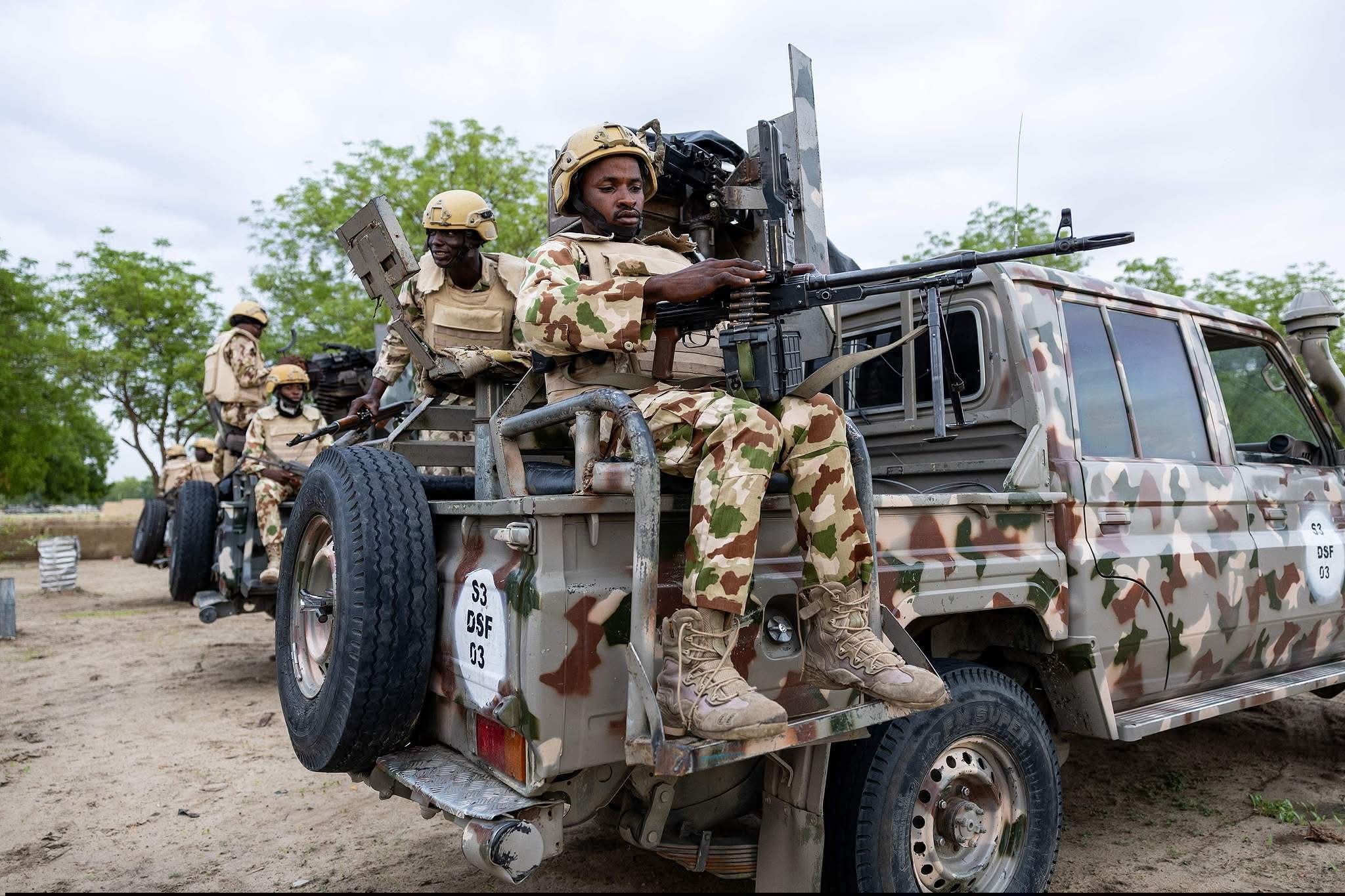
The operation was launched on the reported presence of militants in the area, during which an exchange of fire took place, resulting in the killing of eight terrorists, the CTD said in a statement.
During the confrontation, three CTD personnel were injured and shifted to a nearby hospital for treatment, the statement said.
Authorities said a large cache of weapons and ammunition was recovered from the scene.
Security forces cordoned off the area and carried out a search operation to ensure the situation was under control, the statement added.
Initial reports suggested that the slain militants were affiliated with a banned organization. However, investigations are ongoing to ascertain their identities and possible network, the CTD said.
The UN Office for the Coordination of Humanitarian Affairs (OCHA) cited government figures showing that at least 52 people were killed, over 800 others injured, and nine remain missing after Tropical Cyclone Gezani made landfall on Feb. 10 on Madagascar’s eastern coast.
Earlier, Tropical Cyclone Fytia made landfall on Jan. 31.
Preliminary reports indicate that over 470,000 people have been affected by Cyclone Gezani and more than 35,000 have been displaced, including 3,200 people sheltering in 19 temporary sites, OCHA said.
“The UN and its partners are providing lifesaving food, water and sanitation, health care, protection, nutrition and shelter, among other essential services,” OCHA said, adding that humanitarian partners estimate that 49 million U.S. dollars is urgently required to support 382,000 people over the next two and a half months.
The office said the target amount is part of the Malagasy government’s Feb. 14 appeal for 142 million dollars to address urgent humanitarian, recovery and reconstruction needs.
“In a positive forecast, Cyclone Gezani is expected to gradually weaken over the coming days,” the office added.
The UN Children’s Fund said at least 6,000 of the displaced by Gezani are children and nearly 29,000 are unable to attend school.
The fund said it is working with the government to restore services as quickly as possible to reduce further risks for children in the weeks ahead.
“Our officers just arrested a person with what appears to be a gun near the West Front of the U.S. Capitol Building. Please avoid the area,” U.S. Capitol Police said on social media platform X.
In a statement released later, it said officers surrounded and arrested a man who ran toward the U.S. Capitol with a “loaded shotgun” shortly after noon on Tuesday, on the Lower West Terrace.
The suspect also had “multiple rounds of ammunition” and a tactical style vest, it added.
The incident comes as threats against members of Congress have skyrocketed. Last year, the U.S. Capitol Police opened 14,938 cases into “concerning statements, behaviors, and communications” directed at congressional offices and family members in 2025, a nearly 60 percent increase from 2024, said a report by Axios.
Four people were killed on the first vessel in the eastern Pacific, four on the second vessel in the eastern Pacific, and three on the third vessel in the Caribbean, the command said on X.
“Intelligence confirmed the vessels were transiting along known narco-trafficking routes and were engaged in narco-trafficking operations,” the command claimed.
It added that no U.S. military forces were harmed.
The U.S. administration has not provided evidence supporting its allegations about the boats, cargo or the people killed.
Since early September, the U.S. forces have launched about 40 known strikes on alleged drug-smuggling boats in the Caribbean and the eastern Pacific, killing more than 130 people.
The Pentagon resumed strikes on boats in late January following a Jan. 3 U.S. military raid in which Venezuelan President Nicolas Maduro and his wife were forcibly seized.
The mission, carried out by the Hope Probe, was originally launched as a two-year project and entered Mars’ orbit in 2021. The extension seeks to maximize the scientific return on the UAE’s space investments and gain valuable operational experience for future deep-space missions.
Since its arrival at Mars, the Hope Probe has gathered around 10 terabytes of data, shared in 16 datasets with over 200 global research institutions. The mission has also supported pioneering discoveries, including new observations of Mars’ auroral activity and close fly-bys of Deimos, the smaller outer moon of Mars.
In October 2025, the probe expanded its scientific scope by capturing images of Comet 3I/ATLAS, the third known interstellar object that passes through our solar system, offering a rare opportunity to study material from beyond the solar system.
Officials said the decision demonstrates confidence in the probe’s technical readiness and national team capabilities, while supporting the rapid growth of the UAE’s space ecosystem through expanded research and aerospace education.
So far, the country has experienced sporadic and isolated outbreaks of water-borne diseases typically associated with the rainy season, Information, Publicity and Broadcasting Services Minister Zhemu Soda said during a post-cabinet media briefing.
He said that although no major outbreaks have been officially declared, risks remain elevated due to current wet conditions, population movements, and increased strain on water and sanitation infrastructure.
“In response, the government of Zimbabwe has intensified its preparedness efforts by conducting comprehensive risk and hazard mapping, enhancing alertness among response agencies, and expanding public health communication initiatives,” Soda said.
He said the measures aim to prevent isolated cases from developing into large-scale outbreaks, and to reduce undue pressure on the healthcare system.
Additionally, the Zimbabwean cabinet on Tuesday approved a contingency fund to support the country’s preparedness and early response activities for seasonal disease outbreaks, Soda said, adding that a multi-sectoral approach involving relevant ministries and agencies responsible for water and sanitation, local government, transportation, education, environment, and social services will be strengthened.
Zimbabwe’s rainfall season typically runs from October to March, with the wet conditions heightening the risk of water-borne disease outbreaks.
Women and children fetch water in the township of Luveve in Bulawayo. Photograph: Aaron Ufumeli/EPA
Jackson marched alongside Martin Luther King Jr. and led the Civil Rights Movement for decades after the latter’s assassination.
“He died peacefully on Tuesday morning, surrounded by his family,” the statement posted on Instagram said.
“His unwavering commitment to justice, equality, and human rights helped shape a global movement for freedom and dignity. A tireless change agent, he elevated the voices of the voiceless — from his presidential campaign in the 1980s to mobilizing millions to register to vote — leaving an indelible mark on history,” the statement said.
In 2017, Jackson revealed that he had been diagnosed with Parkinson’s disease, which affects the nervous system and slowly restricts movement and daily activities.
Jackson had built a very strong political influence both inside the United States and abroad, and he spent his life dedicated to pursuing civil rights for disenfranchised groups.
“Our father was a servant leader — not only to our family, but to the oppressed, the voiceless, and the overlooked around the world,” the statement said.
Jesse Jackson, the famed U.S. civil rights leader, has died at the age of 84.