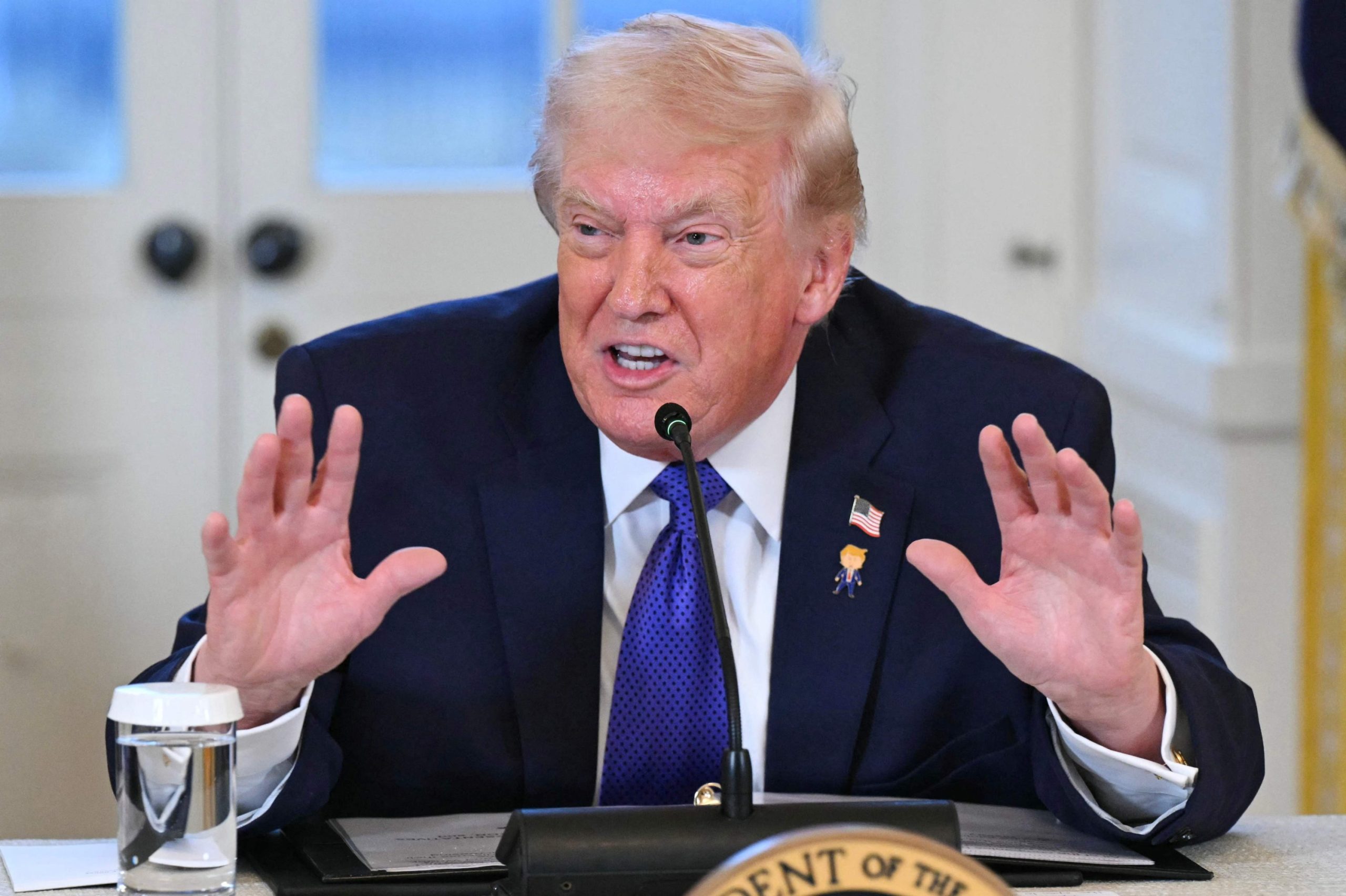
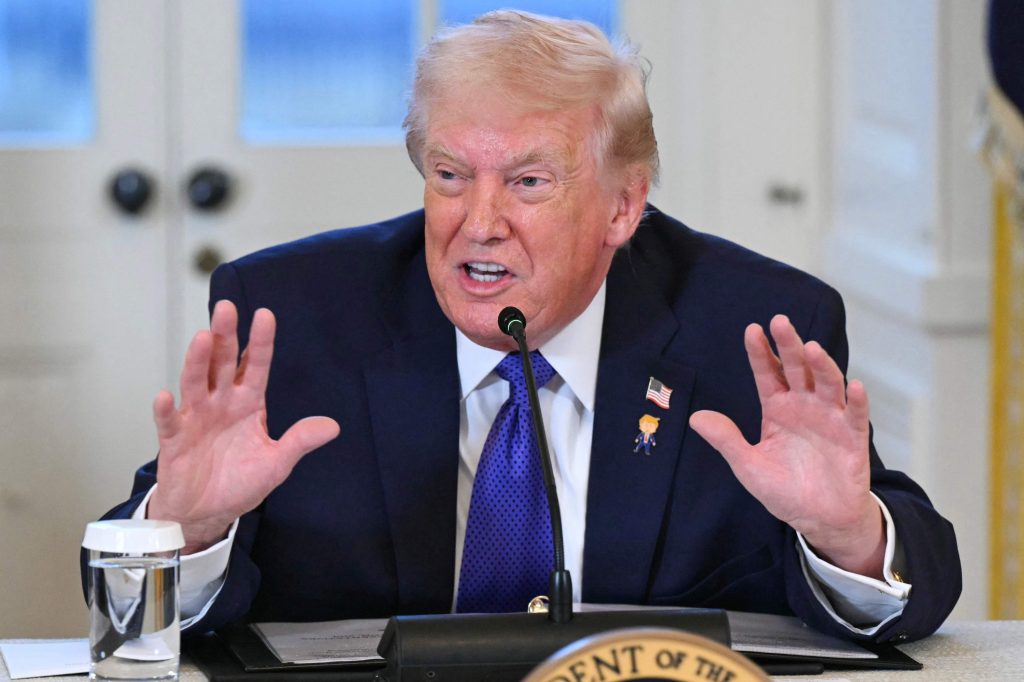
“Iran is all talk and no action,” Trump said on Truth Social. “They’ve taken too long to negotiate a deal that would have been great for them, now they will have to pay the price.”
Trump also suggested he may order new strikes on Iran’s power plants and bridges, Fox News reported on Wednesday, citing a phone interview.
“I may keep going,” Trump said during the interview. “They had a chance to sign a deal and survive.”
The president claimed Tehran has been “tapping the U.S. along” in peace talks that have ultimately made little progress.
The U.S. military reportedly hit about 20 targets in its strikes on Iran on Tuesday in response to the downing of a U.S. Army helicopter near the Strait of Hormuz.
The targets included Iranian air defenses, radar sites and ground control stations, U.S. Central Command said in a statement on Tuesday.
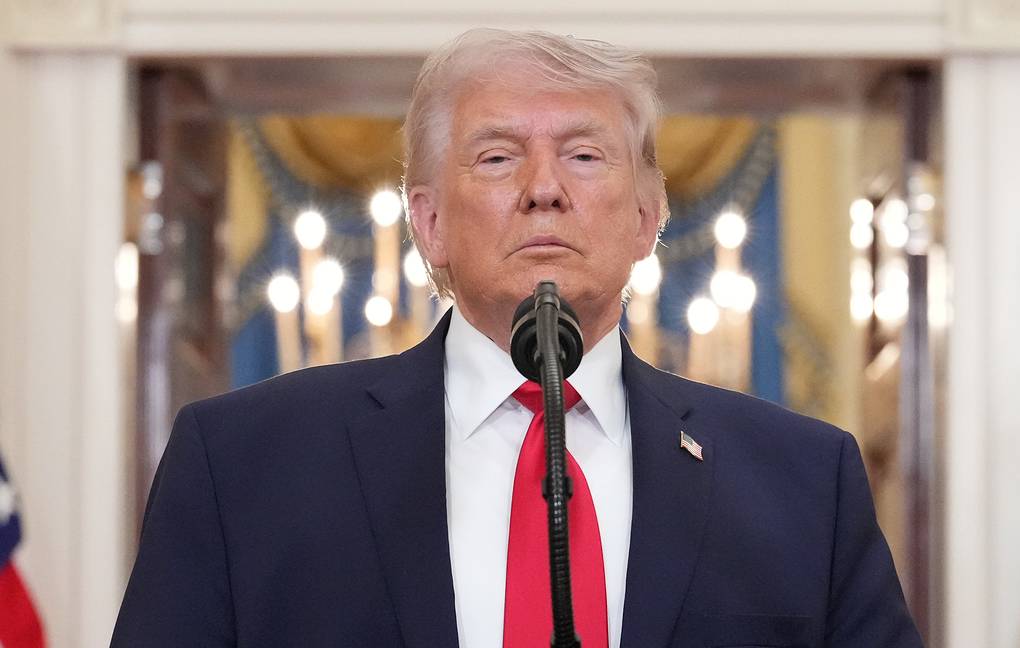
U.S. President Donald Trump said on Wednesday that Iran has “taken too long to negotiate a deal” over the Mideast conflict and will now “have to pay the price.”
The deal, announced by UNITE HERE Local 11 and confirmed by food-service operator Legends Global, covers about 2,000 bartenders, servers, cooks, dishwashers and concession workers. The workers, who had overwhelmingly authorized a strike last week, are scheduled to vote on the agreement Wednesday.
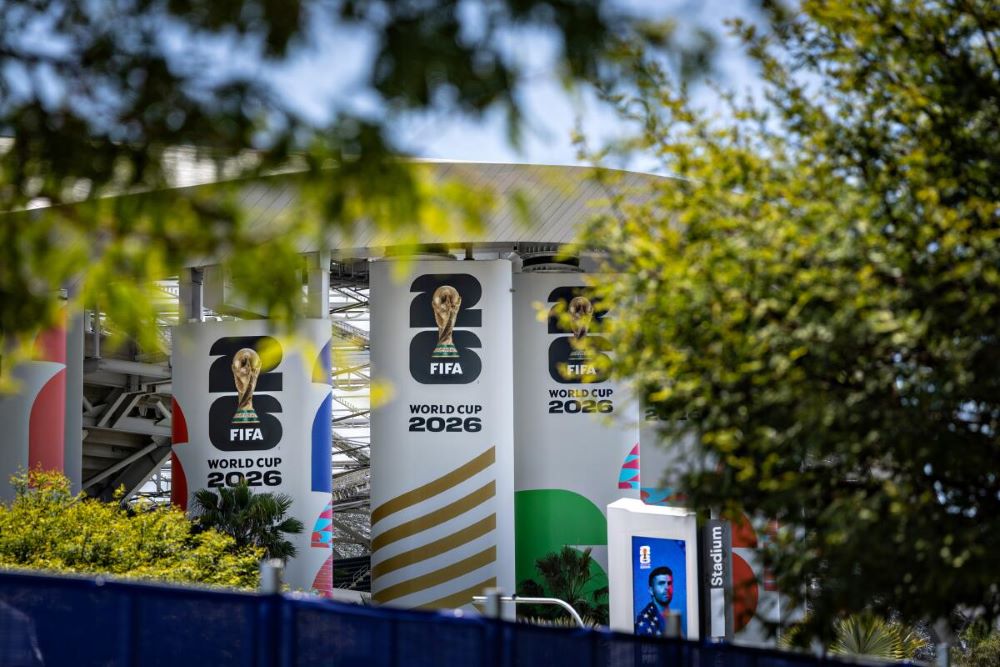
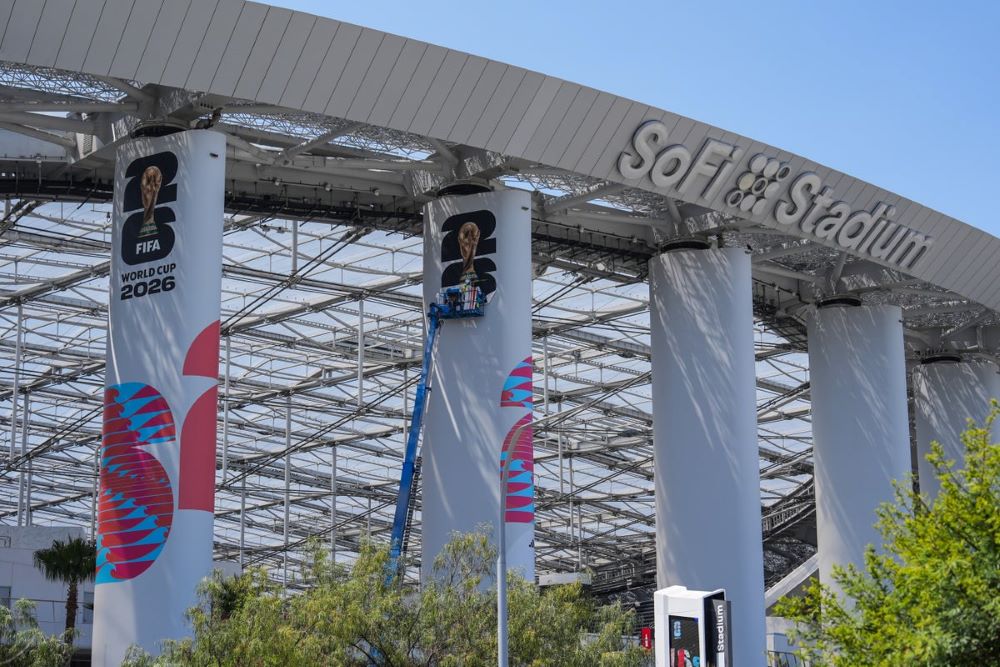
SoFi Stadium is set to host eight FIFA World Cup matches, including Friday’s game between the United States and Paraguay.
According to UNITE HERE Local 11, the agreement includes wage increases, protections against subcontracting and automation, and provisions allowing workers to stop work if federal immigration enforcement activities create what the union considers safety risks during tournament operations.
“We won every major issue that we brought to the table,” union co-president Kurt Petersen said at a news conference Tuesday.
Legends Global said it was pleased to have reached an agreement and looked forward to providing an outstanding hospitality experience for fans during the tournament.
Public details of the contract remain limited pending ratification. Union officials said the agreement could significantly raise wages over its duration, with some cooks eventually earning close to or more than 40 U.S. dollars per hour.
The contract is expected to remain in effect through April 2028, shortly before Los Angeles hosts the Olympic Games. The deal removes a key source of uncertainty at one of the World Cup’s major U.S. venues. It also highlights how large international sporting events can amplify local labor disputes over wages, job security and workplace protections.
Workers at SoFi Stadium in Inglewood, California, reached a tentative labor agreement Tuesday, averting a potential strike days before the venue hosts its first FIFA World Cup match.
According to a statement released by the Commission, the proposed measures include suspending the automatic adjustment mechanism of the oil price cap until next January, which would allow oil markets to stabilise while maintaining pressure on Russian revenues.
Thirty additional vessels would be added to the sanctions list, on top of the 632 already designated. For the first time, sanctions would also target vessels providing support services to the “shadow fleet,” including bunkering operations.
In addition, the proposal includes restrictions on ports, airports and refineries involved in trading or processing Russian oil. The sale of liquefied natural gas (LNG) tankers to Russia would also be restricted.
On financial and crypto-related measures, the Commission would expand transaction bans to 31 additional Russian banks, as well as to 20 banks, crypto firms, platforms and oil traders in third countries.
On trade, the proposed package introduces new export restrictions on goods and technologies used by Russia’s military-industrial sector, as well as drone-related equipment.
The Commission also proposed import bans on goods worth around 60 million euros (69.4 million U.S. dollars), including certain metals and automotive parts, as part of efforts to reduce dependence on Russian imports.
For the first time, the EU would also target Russia’s fisheries sector, proposing substantial restrictions on imports of certain fish products and a complete ban on others, including cod.
Von der Leyen also announced a new measure under the package to ban entry into the EU of individuals who have served in the Russian armed forces since the start of the Ukraine conflict.
The proposal still requires approval by all EU member states before it can enter into force.
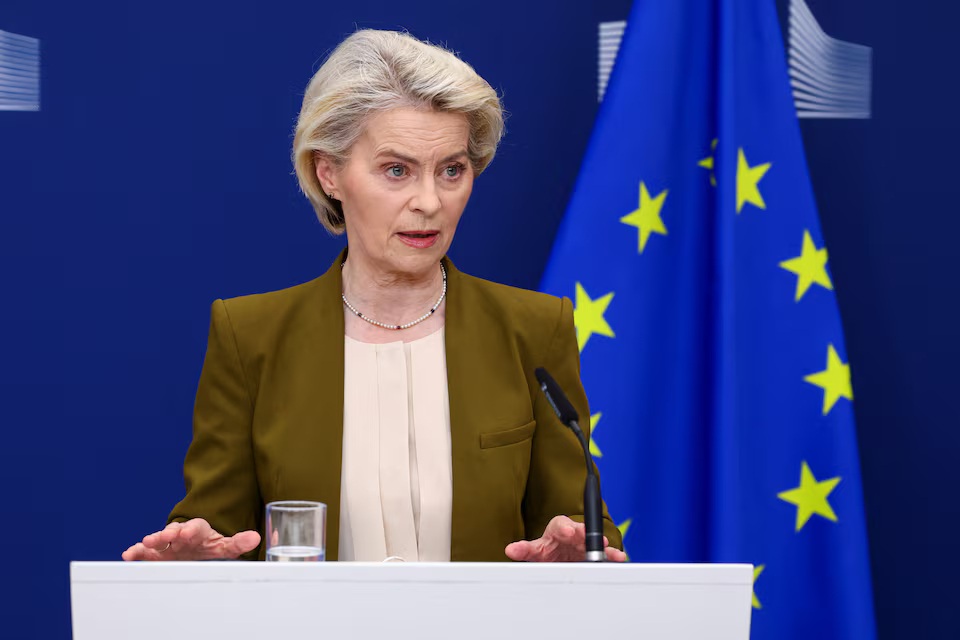
European Commission President Ursula von der Leyen talks to the press on the 21st sanctions package against Russia in Brussels, Belgium, June 9, 2026. The European Commission has proposed the 21st package of sanctions against Russia, targeting key sectors including energy, financial services and crypto, trade and, for the first time, fisheries, European Commission President Ursula von der Leyen said Tuesday.
The court’s governing body, the Bureau of the Assembly of States Parties, announced on Monday that Khan’s case will be referred to a special session of the ICC’s 125-member states, which will ultimately decide his future at the world’s top war crimes tribunal.
The suspension follows a vote by the bureau’s executive committee after reviewing findings from a United Nations investigation, advice from an ad hoc panel of judicial experts, and written submissions related to the case.
In its statement, the bureau emphasised that the suspension “is not an indication of the final outcome” of the proceedings. The decision and supporting documentation will remain confidential.
Khan, 56, has strongly denied the allegations and rejected the suspension. In a statement issued through his lawyers, he described the decision as “unlawful, procedurally unfair and unsupported by evidence.”
The allegations, first reported in 2024, were brought by a female ICC staff member who accused Khan of engaging in coercive and non-consensual sexual conduct between 2023 and 2024. The alleged incidents are said to have occurred during work trips, in Khan’s office in The Hague, and at his residence.
According to media reports, a UN investigation found a “factual basis” for the allegations. However, a three-judge panel tasked with reviewing the findings reportedly concluded that the evidence was not sufficiently conclusive to establish misconduct.
Khan’s legal team has argued that the judges unanimously determined that the investigation’s factual findings did not establish misconduct or a breach of duty. The prosecutor has also maintained that the allegations are part of a politically motivated campaign against him.
The case marks an unprecedented moment for the ICC. Khan is the first chief prosecutor to be formally suspended by the court’s oversight body. The referral of disciplinary proceedings to all member states could ultimately lead to a vote on whether he should be removed from office.
Only the Assembly of States Parties has the authority to dismiss the prosecutor. A majority vote in a secret ballot would be required, meaning at least 63 of the court’s 125 member states would need to support his removal.
Khan has already been on voluntary leave from the Office of the Prosecutor since May while the inquiry was underway. As a result, his suspension is not expected to significantly affect the court’s day-to-day operations.
A date for the special session of member states has not yet been announced.
Khan has served as ICC prosecutor since 2021 and gained international prominence for pursuing investigations and arrest warrants in several high-profile conflicts, including cases related to the war in Gaza and former Philippine President Rodrigo Duterte’s anti-drug campaign.
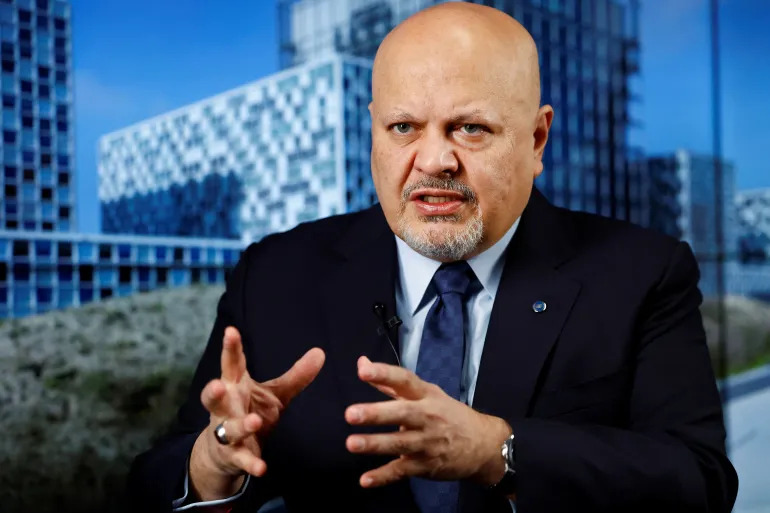
Karim Khan is the first ICC prosecutor to be formally suspended from his role by the court’s oversight body.
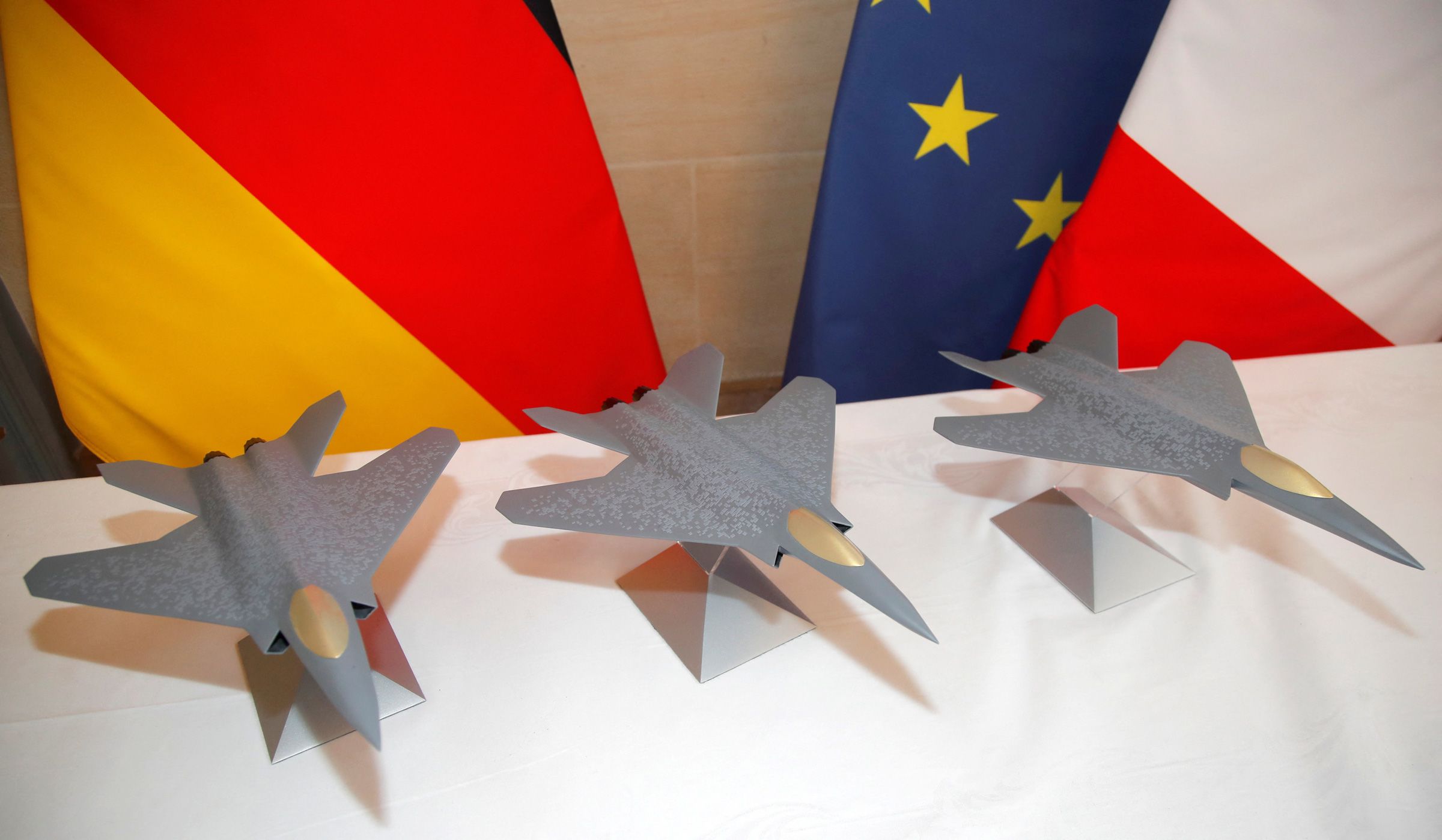
German Chancellor Friedrich Merz and French President Emmanuel Macron have come to the conclusion that aviation companies Airbus and Dassault cannot reach an agreement on jointly building the combat aircraft, said German public broadcaster ARD on its news website Tagesschau, quoting German government sources.
According to the report, Merz advised Macron not to pursue the construction of the fighter jet any further.
The two nations are expected to continue developing the “Combat Cloud,” a network intended to connect military platforms and weapons systems, the report said.
Launched in 2017 by Macron and former German Chancellor Angela Merkel, the FCAS is considered a flagship European defense project to develop a next-generation air combat system.
German Chancellor Friedrich Merz and French President Emmanuel Macron have come to the conclusion that aviation companies Airbus and Dassault cannot reach an agreement on jointly building the combat aircraft,
“At the moment, the fire is on hold because after we struck … it (Iran) stopped attacking us,” Netanyahu said in his first televised statement more than 20 hours after Iran first launched missiles at Israel on Sunday night.
If Iran “makes the mistake of attacking us again, we will respond with force,” he added.
Earlier, Israeli Defense Minister Israel Katz said that Israel would continue to carry out attacks against Hezbollah and would strike the Dahieh district, south of the Lebanese capital Beirut, in response to any attack on communities in northern Israel.
Following Netanyahu’s statement, Israel’s Home Front Command said it will lift most civil defense restrictions across the country on Tuesday morning, while restrictions will remain in place in several northern communities near the Lebanese border.
Later on Monday, Israeli ministries announced in statements that Israel’s hospitals have returned to full and normal operations on Monday, while schools are expected to reopen on Tuesday after Israel and Iran halted the exchange of strikes.
Earlier in the day, Iran’s main military command, Khatam al-Anbiya Central Headquarters, announced in a statement the cessation of strikes against Israel, but warned that any further Israeli “aggression and malicious acts,” including in southern Lebanon, would trigger a much more “severe and crushing” response from Tehran.
It said the Iranian armed forces’ actions were carried out in support of the Lebanese people following Israeli attacks in southern Lebanon and the Dahieh district. It also accused the United States of backing Israeli operations and said that Israel should have learned its lesson from Iran’s response.
Iran’s official news agency IRNA said that at least 15 people were wounded in Israeli attacks against Iran on Monday, with no death reported yet.
Following flight restrictions imposed earlier in the day on Iran’s airspace, the country’s Civil Aviation Authority said aviation operations are returning to normal, the semi-official Fars news agency reported.
Meanwhile, COGAT, the Israeli military agency overseeing aid coordination, said the Kerem Shalom crossing and the Rafah crossing into the Gaza Strip will gradually reopen for the entry of humanitarian aid starting Tuesday after being closed on Sunday due to Iranian attacks on northern Israel.
The latest escalation came after the Israeli military conducted airstrikes in the southern suburb of the Lebanese capital Beirut on Sunday, killing at least two people.
Following the Israeli operations, Iran’s Islamic Revolution Guard Corps (IRGC) announced late Sunday that it launched ballistic missiles at the Ramat David Air Base in northern Israel in response to Israel’s “widespread crimes” in southern Lebanon.
The Israeli military on Monday carried out airstrikes on several targets in Iran, including radar sites and a petrochemical company in the southwestern province of Khuzestan. In response, the IRGC launched strikes on the Nevatim and Tel Nof air bases as well as certain industries in Israel.
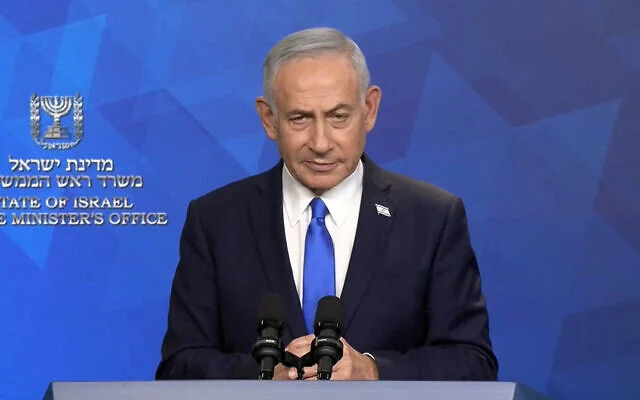
Prime Minister Benjamin Netanyahu speaks in a video message released on June 8, 2026. Israeli Prime Minister Benjamin Netanyahu said Monday that the fire against Iran is currently “on hold,” but warned that Israel will respond forcefully if Iran resumes its attacks.
“What I would suggest to Iran: You’ve shot your missiles, that’s enough,” Trump told Fox News. “Get back to the table and make a deal.”
Trump also claimed that Washington and Tehran had been close to reaching an agreement before Iran launched the missiles earlier in the day.
“We’re very close. I would say an agreement would be signed on Monday, Tuesday or Wednesday of this coming week. And now this takes place,” he said.
“It’s certainly not going to help negotiations,” Trump said.
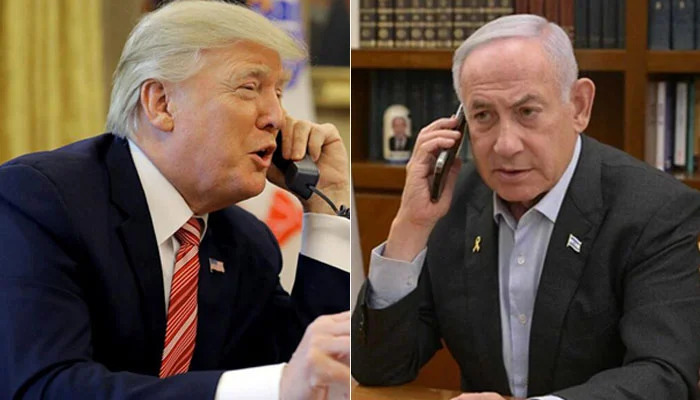
In another interview with U.S. media outlet Axios, Trump said he will call Israeli Prime Minister Benjamin Netanyahu and press him not to retaliate for Iran’s missile attack.
“I am going to call Bibi right now and tell him not to retaliate. Each of them had their fun. Israel had its strike, and Iran had its strike. We don’t need another one,” Trump said.
According to CNN, Iran fired at least 10 ballistic missiles toward Israel in at least three separate waves on Sunday. The Israeli military said all of the missiles were intercepted.
Two Israeli sources cited by CNN said Israel would deliver a “powerful” response to the attack, raising concerns about further escalation in the region.
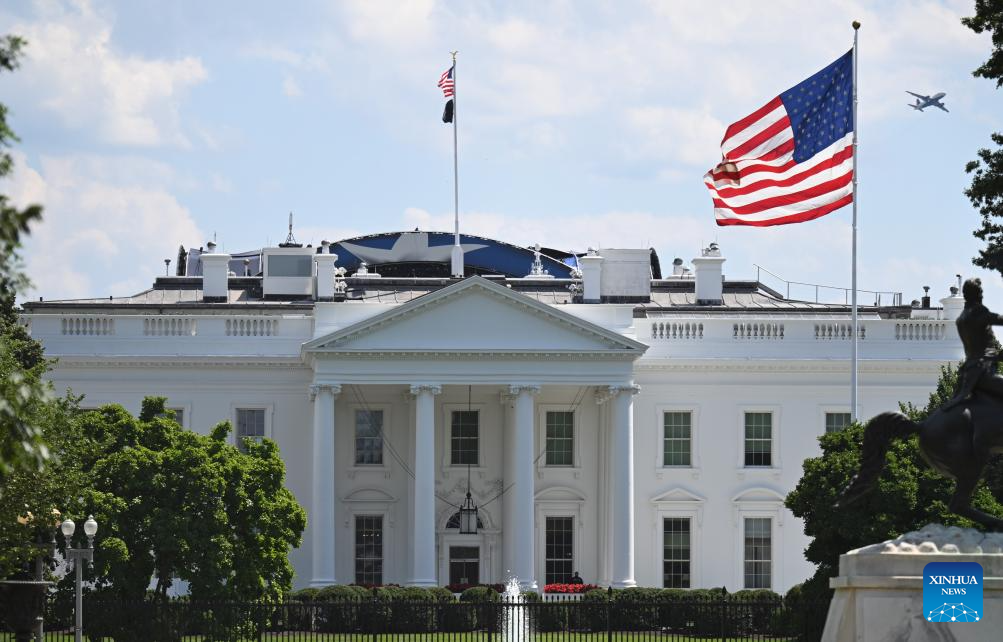
An airplane is pictured above the White House in Washington, D.C., the United States, on June 7, 2026. U.S. President Donald Trump on Sunday urged Iran to stop launching missiles at Israel and return to negotiations after Tehran fired a fresh barrage of ballistic missiles.
Washington, not Israel, would determine the outcome of negotiations with Tehran, Trump said during a telephone interview with the British daily shortly after Iran launched a salvo of ballistic missiles at Israel.
“He won’t have any choice,” Trump was quoted as saying. “I call the shots. I call all the shots. He doesn’t call the shots.”
Asked whether Iran’s missile strikes on Israel would affect Washington’s willingness to continue negotiations with Tehran, Trump said the attacks would have no impact on a potential agreement.
“I think the deal is going on. We’ll see what happens,” he said, adding that any agreement would succeed or fail on its own merits and that the strikes would not alter his calculations.
Trump also downplayed the attacks, saying they “did not kick at all,” and described the conflict between Iran and Israel as “one of those things that’s been going for 3,000 years, or 47 years, depending on how you count.”
When asked what would happen if negotiations ultimately failed, Trump outlined two possible options. One would involve military action to address what he described as unfinished objectives in Iran, and the other would be to maintain a blockade on the country.
“The blockade has been probably more powerful than any attack that was ever made on that country,” he said.
Trump’s remarks came after U.S. media outlet Axios reported details last week of a heated telephone conversation between Trump and Netanyahu.
According to a U.S. official cited in the report, Trump told the Israeli leader: “You’d be in prison if it weren’t for me. Everybody hates you now. Everybody hates Israel because of this.”
Trump confirmed to the Financial Times that the call had taken place and did not challenge the characterization of the exchange.
Despite several U.S.-brokered ceasefires between Israel and Lebanon, Washington has been unable to prevent Israel from carrying out near-daily strikes inside Lebanon. Israel on Sunday launched another strike on a Hezbollah stronghold in Beirut.
Iran said its latest missile attacks on Israel were carried out in retaliation for that strike.
U.S. President Donald Trump has said Israeli Prime Minister Benjamin Netanyahu would have “no choice” but to accept any agreement reached between the United States and Iran, the Financial Times reported late Sunday.
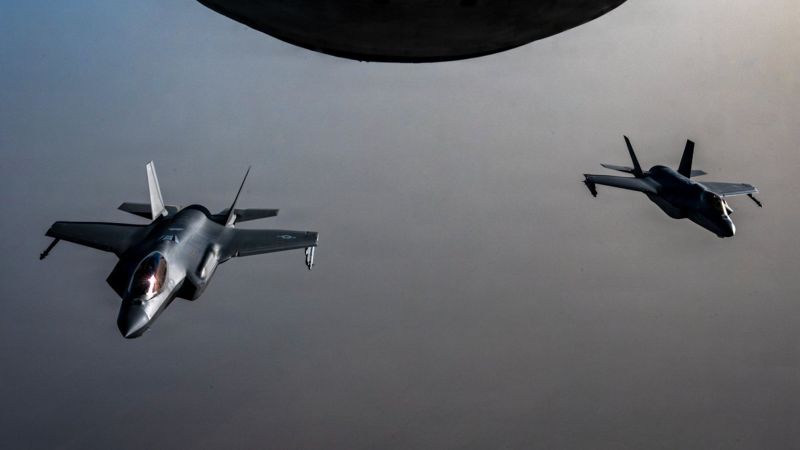
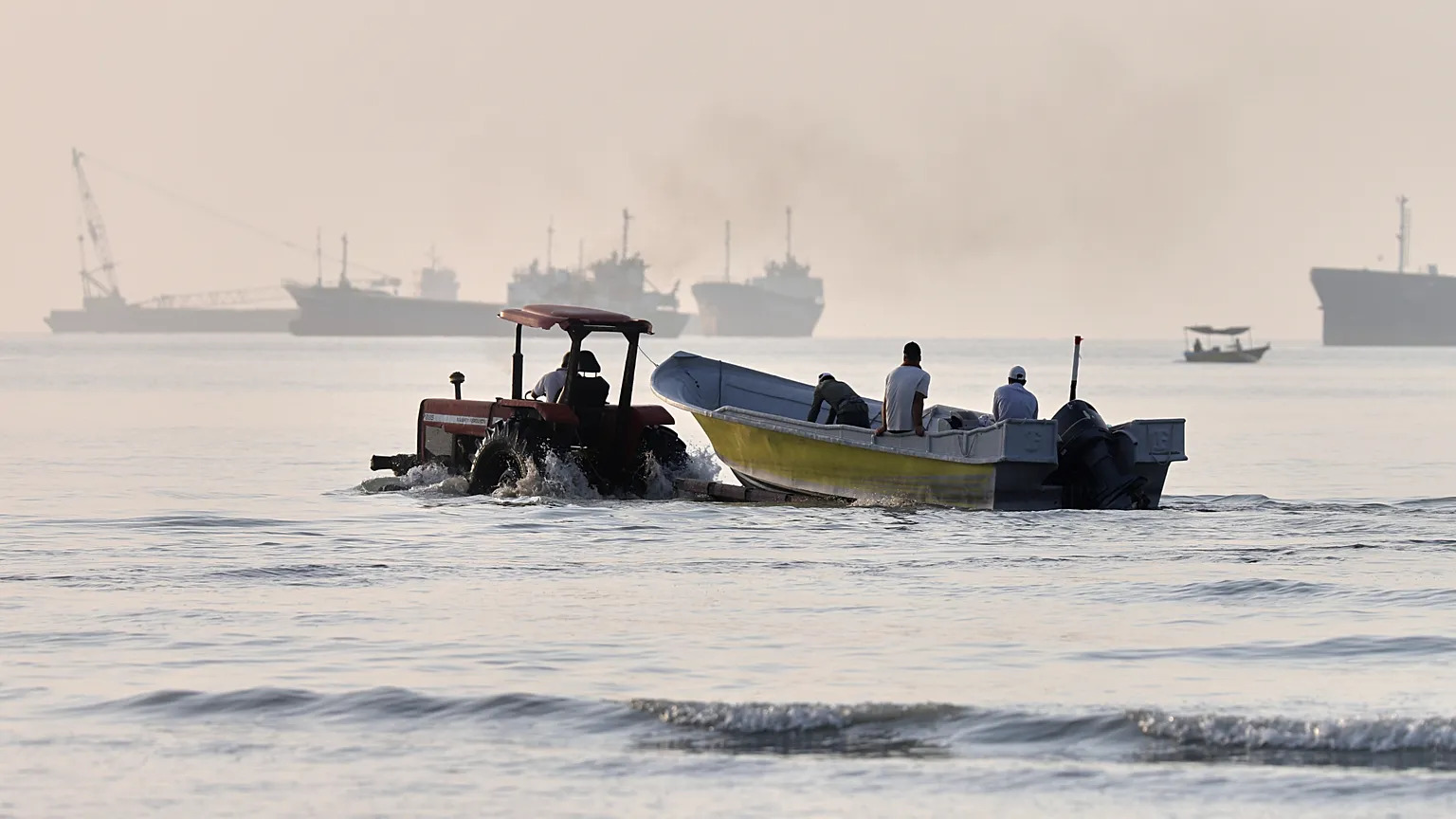
“Earlier today, U.S. forces in the Middle East shot down two Iranian one-way attack drones that threatened international maritime traffic in the Strait of Hormuz,” the U.S. Central Command (CENTCOM) said on X.
Shipping traffic through the Strait of Hormuz has been largely blocked by Iran since February 28 2026, when the United States and Israel launched air strikes against Iran. In retaliation, Iran launched missile and drone attacks on Israel, U.S. military bases in the region, and U.S.-allied Gulf states. The Iranian Revolutionary Guard Corps issued warnings forbidding passage through the strait, boarded and attacked merchant ships, and laid sea mines in the waterway.
The collapse in traffic has been swift and severe. As of March 10, the number of ships transiting the strait dropped from 129 per day to just 4, a fall of 97%. As of May, more than 1,550 commercial vessels were stranded and 22,500 mariners trapped in and around the strait. All major carriers, including Maersk, CMA CGM, MSC, and Hapag-Lloyd, have suspended transits. As of June 6, the strait remains effectively closed.
The war has produced the largest disruption to the global oil market in history, according to the IEA. Cumulative oil supply losses from Middle East producers now exceed one billion barrels, with more than 14 million barrels per day of oil production shut in. LNG supplies from Qatar and the UAE have been reduced by over 300 million cubic metres per day since March 1, and the Ras Laffan facility in Qatar, the largest liquefaction facility in the world, has been offline since it was attacked on March 2.
The cost to Rwanda
Rwanda is feeling the crisis directly. Diesel prices in Rwanda were revised upward by Rwf 722 on Friday to retail at Rwf 2,927 per litre in the latest review. Petrol remains unchanged at Rwf 2,938.
Prime Minister Justin Nsengiyumva told the media on Saturday that Rwanda is subsidising 18% of diesel costs to cushion consumers against global shocks. Without this support, pump prices would hit Rwf 3,581 instead of the Rwf 2,927 recently set by the Rwanda Utilities Regulatory Agency (RURA).
The pain extends beyond the fuel pump. One third of global seaborne trade in fertilisers passes through the Strait of Hormuz, and several African countries are heavily dependent on those imports. Energy-importing economies in Africa are feeling the strain from higher import bills on top of already limited fiscal space, and low-income countries are especially at risk of food insecurity.
The latest drone incident underlines how far the crisis is from resolution. The two countries have been engaged in indirect talks, but those negotiations have yet to halt military exchanges. While Saudi Arabia and the UAE have successfully redirected some exports to terminals outside the strait, mounting supply losses are depleting global oil inventories at a record pace.
Shipping traffic through the Strait of Hormuz has been largely blocked by Iran since February 28 2026, when the United States and Israel launched air strikes against Iran.
It appeared there were at least two people who were “probably shooting at each other,” Toledo Deputy Police Chief Joe Heffernan said, adding that police are still searching for the suspects and advise the public to avoid the surrounding areas.
Toledo Police Department officers responded to a report of a person shot in an area near the Old West End Festival at approximately 5:37 p.m. local time (2137 GMT) and discovered multiple shooting victims. The injured were taken to hospitals for treatment.
The Old West End Festival is a two-day event featuring live music, food markets, house tours and shopping.
At least 12 people were shot Saturday afternoon near a community festival in Toledo, U.S. state of Ohio, with two in critical condition.