“The Israeli Air Force… completed an additional wave of strikes on infrastructure across Iran belonging to the Iranian regime,” a military statement said.
According to the statement, the targets included “a rocket engine production facility and several long-range ballistic missiles launch sites” considered a threat to Israel.
The military also reported hitting internal security facilities in the central city of Isfahan, including a police headquarters and other sites used by the Revolutionary Guards and the paramilitary Basij force.
“The Internal Security and Basij forces… constitute a central arm in the repression of the Iranian civilian population and are responsible for the use of brutal and systematic violence against it,” the statement said.
It added that the latest strikes were part of “deepening the damage to the core arrays and foundations of the Iranian regime.”
The announcement came shortly after Tehran named Mojtaba Khamenei as the Islamic Republic’s supreme leader late on Sunday, marking the first wave of Israeli strikes reported since the appointment.
For many years, China’s foreign minister has honored a diplomatic tradition by kicking off the year with a visit to Africa. “This consistency reflects the spirit and commitment of China’s diplomacy,” Wang told a press conference on the sidelines of the fourth session of the 14th National People’s Congress.
“It’s no exaggeration to say that China-Africa friendship has been passed down from generation to generation — forged heart to heart, and built with sweat and blood,” Wang said.
Highlighting fresh steps in building a China-Africa community with a shared future, he said China will host multiple African leaders this year to strengthen mutual support as all-weather partners and to write a new chapter of a shared journey together.
Starting from May 1, China will fully implement zero-tariff access to 100 percent of chart of African imports, removing tariffs completely to boost trade, multiply benefits for the people, and help Africa access the enormous opportunities of the Chinese market, Wang said.
The China-Africa Year of People-to-People Exchanges has officially commenced, with nearly 600 activities planned throughout this year, he said, adding that China is ready to work with its African brothers to draw inspiration from their civilization heritage for a stronger bond between people and carry forward the friendship for many generations to come.
Chinese Foreign Minister Wang Yi has said that China-Africa friendship has withstood the test of changing international circumstances, demonstrating strong vitality.
At the ceremony, Secretary-General of Madagascar’s Ministry of Communication and Culture Miary Rasolofoarijaona expressed his deep gratitude for the organization of “this unprecedented festival,” held as part of activities celebrating the China-Africa Year of People-to-People Exchanges.
“The China Film Festival is a concrete illustration of the willingness to bring our hearts and minds closer together through the power of images and shared stories,” he said, adding that the festival will enable Malagasy audiences to discover the richness, modernity and depth of Chinese culture.
Chinese Ambassador to Madagascar Ji Ping said the continuous deepening of people-to-people and cultural exchanges between China and Africa carries paradigmatic significance that transcends the bilateral framework, especially in the current global context marked by divisions caused by geopolitical conflicts.
“Let us seize the opportunity of this film festival to make the cultures of our two countries shine on the global stage,” he said.
Zhang Xuxia, deputy director of the China Film Archive, said in a video address that the themes and styles of Chinese films have become increasingly diverse, while the unique charm of Malagasy films and other cultural works has been widely appreciated.
“We are convinced that Chinese and Malagasy filmmakers can inspire each other and generate new ideas, so that more works can be seen, understood and appreciated by audiences in both countries,” she said.
The 2026 China Film Festival, which runs until March 15 and features the screening of six Chinese films, is expected to strengthen mutual understanding between China and Madagascar, while promoting people-to-people and cultural exchanges between the two countries.
Students from Madagascar perform at a campus event in Ningbo, East China’s Zhejiang Province. File photo: VCG
In a statement, the assembly confirmed Mojtaba Khamenei’s election as the country’s third supreme leader, citing “the decisive vote of the respected representatives” of the assembly.
“In today’s extraordinary session, Ayatollah Seyyed Mojtaba Hosseini Khamenei … is appointed and introduced as the third leader of the sacred system of the Islamic Republic of Iran,” the statement said.
Mojtaba Khamenei, born in 1969, is the son of Iran’s late Supreme Leader Ali Khamenei, who was killed in the joint U.S.-Israeli strikes.
The United States and Israel launched surprise airstrikes on Tehran and other Iranian cities on Feb. 28, killing Ali Khamenei, along with some of the leader’s family members, Iran’s senior military commanders and civilians. Iran responded through several waves of missile and drone attacks targeting Israel and U.S. assets across the Middle East.
This undated file photo shows Mojtaba Khamenei, Iran’s new supreme leader. Mojtaba Khamenei, son of Ali Khamenei, was selected as Iran’s new supreme leader, Iran’s Assembly of Experts announced on Sunday.
China has set a target of 4.5 to 5 percent for gross domestic product growth this year, while pledging to strive for better results in practice, according to a government work report submitted Thursday to the country’s top legislature for deliberation.
Speaking at a press conference on the sidelines of the fourth session of the 14th National People’s Congress, Zheng Shanjie, head of the National Development and Reform Commission, noted that the country has the confidence to cope with risks and market volatility and achieve its development goals.
“More proactive and effective” macro policies will be implemented, he said, emphasizing a policy package that combines fiscal, monetary, investment, employment and consumption measures.
Stressing a strong fiscal support, Finance Minister Lan Fo’an told the press conference that China’s fiscal expenditure, new government bond issuance and central transfers to local authorities will all reach record highs this year.
Total investment in infrastructure, public services and other key areas, including power grids, computing power, education and health care, is expected to exceed 7 trillion yuan (about 1 trillion U.S. dollars) in 2026.
Expanding domestic demand remains a top priority this year, with particular focus on building a robust domestic market.
A total of 250 billion yuan in ultra-long special treasury bonds will be earmarked for consumer goods trade-in programs, with another 100 billion yuan for introducing a package of coordinated fiscal and financial policies to support private investment and consumer spending.
Meanwhile, Pan Gongsheng, governor of the People’s Bank of China, said the central bank will flexibly and effectively employ a range of policy instruments, including cuts to required reserve ratios and interest rates, to create a sound monetary environment for development.
Pan also said the country will respond firmly to external shocks amid a complex global environment, noting that authorities will closely monitor external shocks — from geopolitical tensions to financial market swings — and stand ready to contain any potential spillovers.
Balanced trade
China will promote balanced trade growth this year, stabilizing exports while sharing more opportunities in its domestic market, Minister of Commerce Wang Wentao told the press conference.
The country is already the world’s second-largest import market, and its growing middle-income group means demand still has considerable room to expand.
At a time when some countries treat markets as a bargaining chip, China is proactively opening its vast market and turning it into opportunities for cooperation, Wang said, pledging more imports of agricultural products, premium consumer goods, advanced equipment and key components.
China is currently the major trading partner for more than 160 countries and regions. Pan said China has no need or intention to seek competitive edges in foreign trade through the depreciation of its currency, adding that the yuan has strengthened against the U.S. dollar so far this year.
Senior officials at the press conference also highlighted measures to promote high-standard opening up this year.
China will expand access to its services market, including pilot programs in the telecom and biotechnology sectors, as well as in wholly foreign-owned hospitals, Wang said. Meanwhile, Wu Qing, chairman of the China Securities Regulatory Commission, said authorities will work to create a more transparent, stable and predictable market environment to better meet global investors’ demand for Chinese assets.
New engines of growth
Alongside demand-side support, China will step up efforts to shore up new industries and develop new quality productive forces this year.
Nearly 1.3 trillion yuan of fiscal funds will be allocated this year to support science and technology development, an increase of 7.1 percent from the previous year, Lan said.
Zheng said China will intensify its moves to modernize the industrial system, promoting deeper integration of technological and industrial innovation, and of advanced manufacturing and modern services, in an effort to accelerate upgrading old economic engines and fostering new drivers.
Artificial intelligence (AI) is expected to play a pivotal role as AI technology is rapidly spreading across various industries in China. The government will continue to advance its “AI Plus” initiative, Zheng said, forecasting that AI-related industries will be valued at more than 10 trillion yuan by the end of the 15th Five-Year Plan period (2026-2030).
China will also move to boost six emerging pillar industries this year, including integrated circuits, the low-altitude economy and intelligent robots. These sectors, approaching 6 trillion yuan in total value last year, are expected to surpass 10 trillion yuan in 2030, Zheng said.
High-tech manufacturing contributed 26 percent of China’s industrial growth last year, and more high-growth sectors are expected to emerge in the coming years, Zheng said, adding that several trillion-yuan-level markets are poised to take shape in the future to create new engines for high-quality development.
A press conference for the fourth session of the 14th National People’s Congress (NPC) on economy is held in Beijing, capital of China, March 6, 2026.
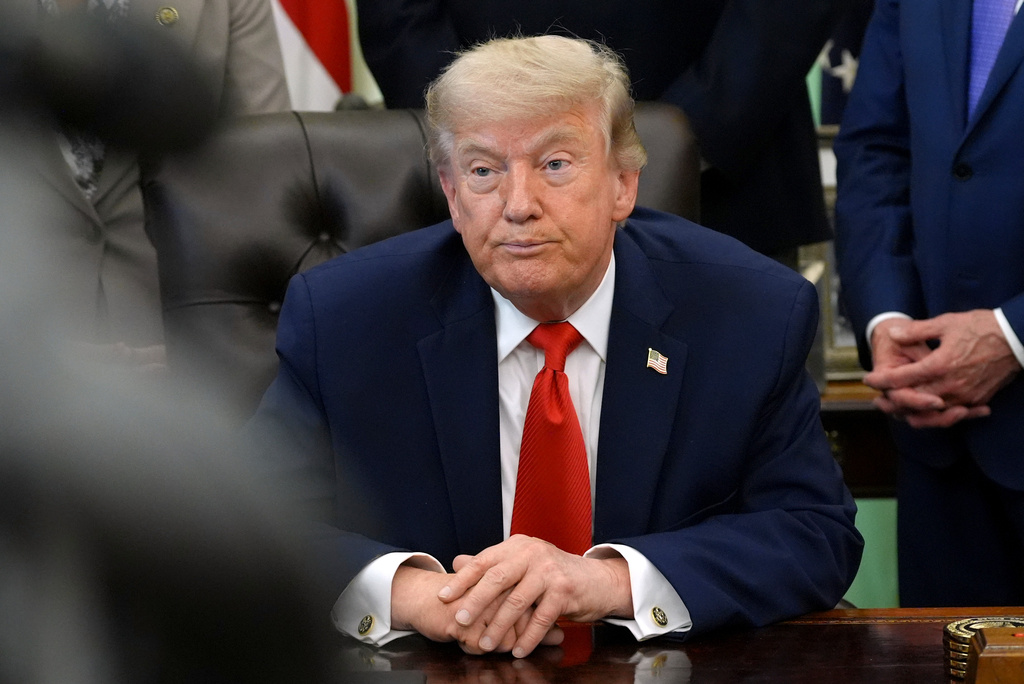
He made the claims while addressing leaders from 12 Western Hemisphere countries at the “Shield of the Americas Summit” in Doral, Florida.
“That was the end of the navy. We knocked out their air force, we knocked out their communications, and all telecommunications is gone,” Trump said.
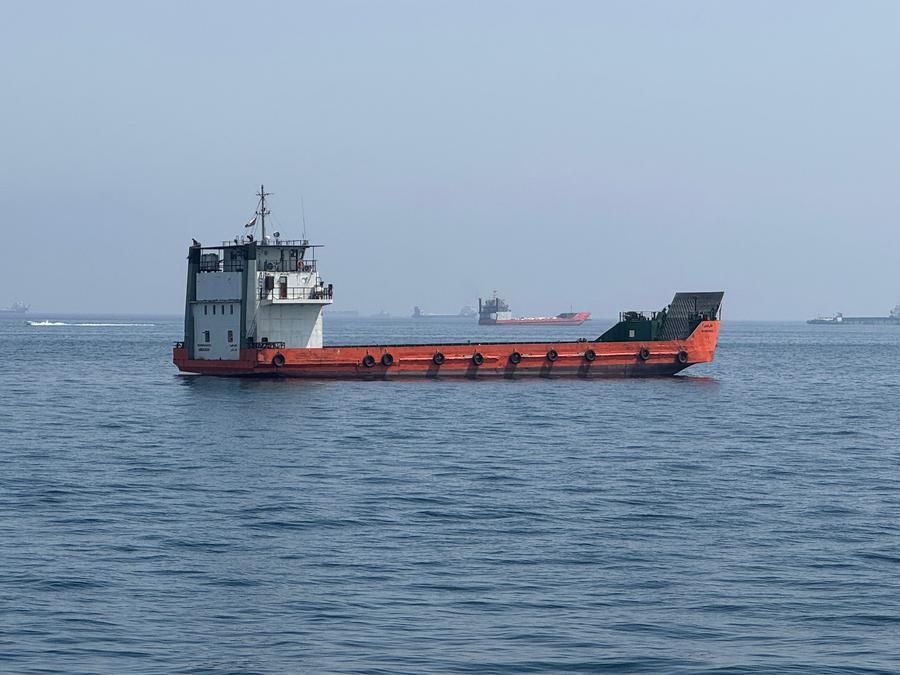
The United States and Israel, on February 28, launched what they described as “major combat operations” against Iran. Iran has since retaliated with a series of counterattacks against Israeli and U.S. targets across the region.
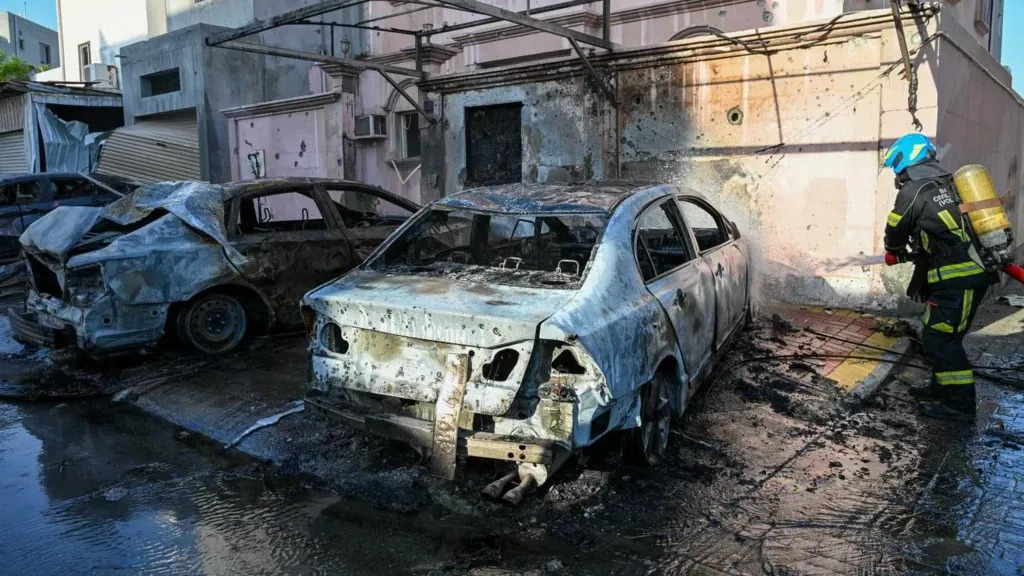
Over the past week, the Iranian military launched around 600 missiles, along with approximately 2,600 drone operations, hitting 200 U.S. and Israeli targets, the semi-official Tasnim news agency reported on Saturday.
In this US Navy released handout, Arleigh Burke-class guided-missile destroyer USS Thomas Hudner (DDG 116) fires a Tomahawk land attack missile in support of Operation Epic Fury, on March 1, 2026, at Sea.
I am here at the hospital visiting five of those who were injured in the recent events.
All five are civilians: two Emiratis, one Indian, one Sudanese, and one Iranian.
They are all our responsibility, and, God willing, they will make a full recovery.
The second thing I would like to say is that all is well in the UAE.
It is home to many devoted people – people we are honoured to stand alongside in this country.
I would like to thank our armed forces for the vital role they are playing and for their outstanding service during this war.
I also thank the other security institutions: The Ministry of Interior, the security services, Civil Defence, and my apologies to those I haven’t mentioned by name.
But all of them are performing a duty that honours the UAE and honours everyone who belongs to the UAE.
Another point I would like to mention is that the Emiratis who live in this country fulfilled their duty in a way that brings joy and pride, as was always expected of them. May God protect them.
As for the residents who live among us, our guests and our extended family they have truly honoured us with their stance.
We hope they will forgive us if we have fallen short in any way.
May God protect you and protect them.
We hope they will forgive us if we have fallen short in any way.
We are in a time of war, and I promise them that we will fulfil our duty, because it is our obligation to protect our people and our country.
Another message I would like to convey is directed at the enemies of the UAE:
The UAE is attractive; the UAE is beautiful.
The UAE is a model.
But I say to them: Do not be misled by the UAE’s appearance.
“The UAE has thick skin and bitter flesh – we are
no easy prey.”
We will carry out our duty towards our country,
our people, and our residents who are also part of our family.
May God protect the UAE, protect its people, and safeguard everyone who lives in it with dignity and security.
I promise everyone that we will emerge stronger than before.
Without doubt.
May God protect you all.
May God protect you, Your Highness.
The UAE community stands united behind this great pillar of confidence and strength under your leadership.
Thank you.
All thanks to you.”
Thank you.
His Highness engaged in cordial conversation with the injured and their families.The injured and their families expressed their appreciation for His Highness’ visit.
AUSSOM Force Commander Sam Kavuma, who spoke during a field visit to assess the combat readiness of frontline troops following the successful liberation of the strategic towns of Mubarak and Durasalaam in Somalia, said the allied forces are united in their efforts to flush out al-Shabaab terrorists in the country.
“Through sweat, struggle, and sacrifice, we stand united to eliminate al-Shabaab and secure a future for our brothers and sisters in Somalia,” Kavuma said in a statement on Friday evening after the field visit.
He called on the Ugandan contingent serving under AUSSOM and the Somali National Armed Forces to uphold the highest standards of professionalism, morale, and discipline in fulfilling the mission’s mandate.
“AUSSOM, in partnership with the Somali government and other stakeholders, will provide essential relief support to the liberated communities,” he added.
The joint operation conducted on Monday with international partners resulted in the full capture and securing of two strategic locations that had long served as strongholds and safe havens for al-Shabaab terrorists.
Owiny Akena, Battle Group 44 commander and operation commander, said Mubarak and Durasalaam remain under the full control of the joint forces.
AUSSOM Force Commander Sam Kavuma said the allied forces are united in their efforts to flush out al-Shabaab terrorists in the country.
“Only by going to the grassroots and staying close to the people can we understand their real needs, and every positive response from them makes all the effort worthwhile,” said Chen, who runs an agricultural company in Tianjin.
For her, fulfilling duties is not something that can be figured out sitting in a meeting room; what is needed is “walking into the hearts of the people”.
The 58-year-old has been serving as a national political adviser for two terms. A longtime advocate for people’s livelihoods, Chen has made the elderly and the children a major focus of her work over the past year.
During a visit to a nursing home last year, she found that the residents’ daily routines and meals were well taken care of.
Through conversations, she came to realize that what the elderly lacked most was not material support, but companionship. “What they want most is simply someone to sit with them and talk to them.”
The loneliness she witnessed prompted Chen to think about how to improve eldercare services. She began exploring a more integrated model that connects traditional services with social resources to offer companionship and explore AI applications in eldercare.
That same year, around Children’s Day, Chen took part in activities for children with special needs, including those with autism and physical disabilities. She was struck not only by the challenges those children face, but also by the pressures faced by their parents.
In a period of high-quality national development, special-needs children must not be left behind, and they need more attention and support from society, Chen said.
These experiences have reinforced her belief that fulfilling duties requires not just “physical presence”, but “genuine commitment”, truly keeping people’s urgent concerns and needs at heart, she said.
As a national political adviser from the Women’s Federation group and an agribusiness entrepreneur, women’s rights and development in rural areas, as well as rural vitalization, have long been her priorities.
Over the years, Chen has visited regions including the Xizang autonomous region and the Xinjiang Uygur autonomous region, and Gansu, Qinghai and Hubei provinces, establishing e-commerce platforms to help local women sell agricultural products, offering them technical training and support to engage in specialty industries such as ethnic handicraft production, and specialized planting and breeding.
With women now accounting for over 65 percent of the rural labor force, their contribution has become irreplaceable to rural vitalization, Chen said. “They are cultivators in the fields, creators of rural industries, and builders of harmonious and beautiful countryside.”
In the context of integrated agricultural, cultural, and tourism development, women are often the backbone running homestays, providing tourism services, and developing local industries. Their resilience, Chen said, makes them a key force in comprehensive rural vitalization.
To ensure sustainable development in rural areas, Chen also helped build service platforms and communication mechanisms between women entrepreneurs and agricultural science and technology experts and policymakers.
She also launched training programs, which helped create jobs for more than 200 women in villages surrounding Tianjin.
“As a CPPCC National Committee member and a woman entrepreneur, I want to convey the values of independence, resilience, and confidence,” Chen said. “When women grow stronger, they can fully demonstrate their capabilities across various sectors and contribute to national development.”
Speaking of this year’s two sessions, Chen said she will focus on using digital technology to empower rural women and improve eldercare services, as well as protecting the rights of women and children.
CPPCC National Committee members act as a bridge, bringing policies to the grassroots, and the voices from the grassroots back to the decision-making table, she said. “This is how we truly fulfill our duty to the country and our responsibility to the people.”
Chen Zhonghong (right) talks with a female farmer at a village in Tianjin.
The deal is worth about 151.8 million U.S. dollars, the department said in a statement.
Israel has requested to purchase 12,000 BLU-110A/B general purpose, 1,000-pound bomb bodies, it said.
“The Secretary of State (Marco Rubio) has determined and provided detailed justification that an emergency exists that requires the immediate sale to the Government of Israel of the above defense articles and defense services is in the national security interests of the United States, thereby waiving the Congressional review requirements under Section 36(b) of the Arms Export Control Act,” it said.
“The proposed sale will improve Israel’s capability to meet current and future threats, strengthen its homeland defense, and serve as a deterrent to regional threats,” it added.
The package also includes U.S. government and contractor engineering, logistics, technical support services, and other related elements of logistics and program support, said the statement.
The United States and Israel launched massive attacks on Iran on Feb. 28, killing Iran’s Supreme Leader Ali Khamenei, multiple senior military commanders and hundreds of civilians. Iran has responded with multiple waves of missile and drone attacks targeting Israel and U.S. assets across the region.