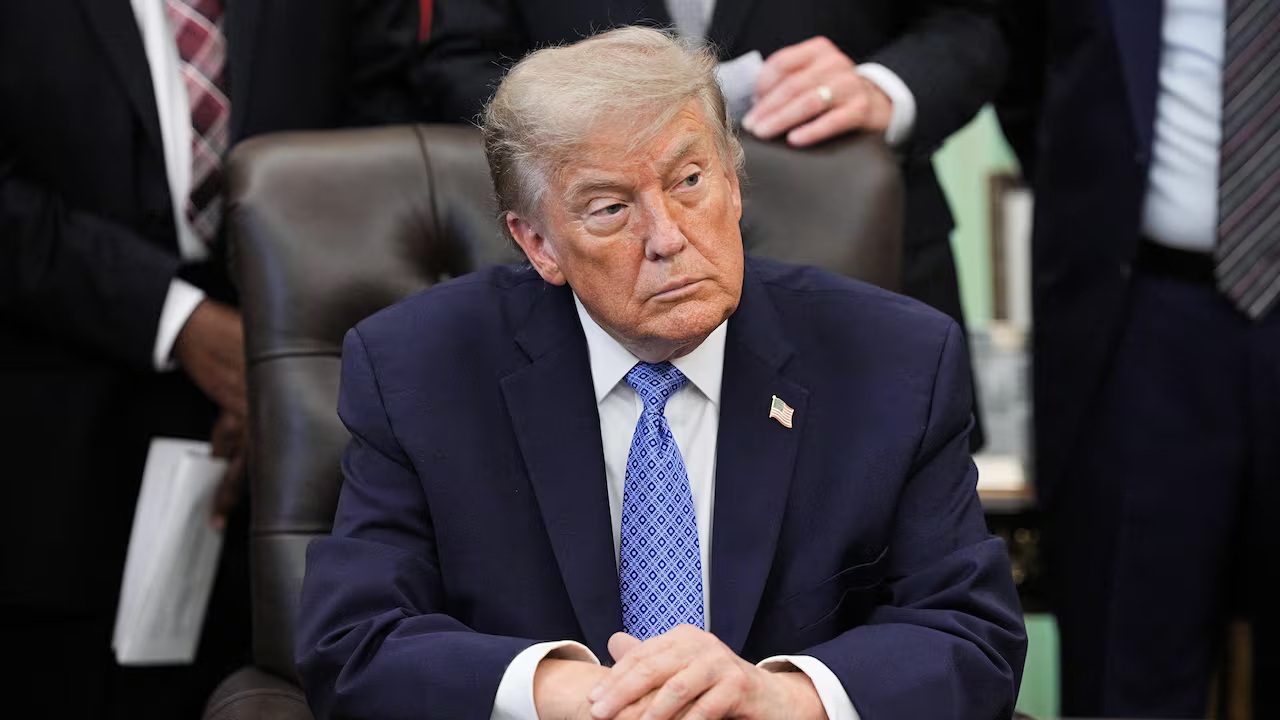
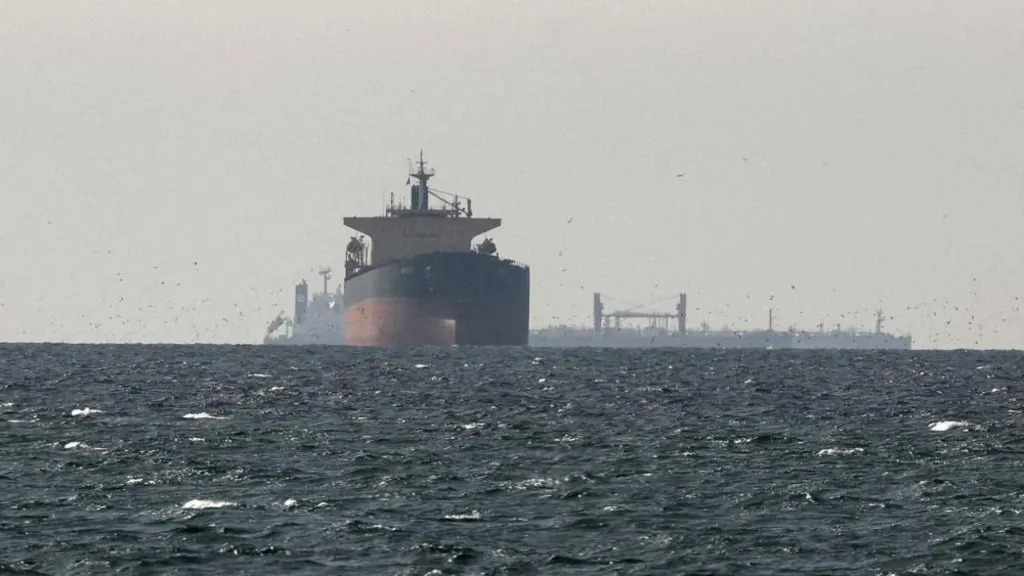
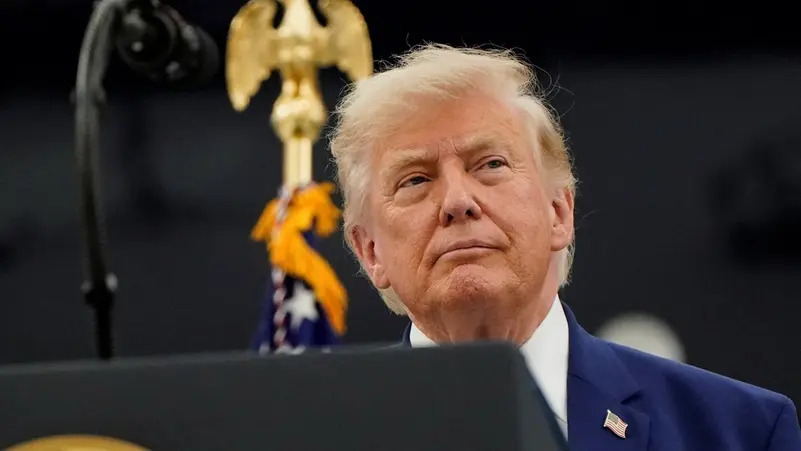
“One of the Drones solidly hit the upper deck of a large and very expensive cargo-carrying ship,” Trump wrote in a post on Truth Social.
“Damage was done, but the ship was able to proceed on its way,” he said. “We knocked down three other drones.”
Trump said the drone attack “obviously” violated the newly signed U.S.-Iran ceasefire agreement.
He did not name the ship or specify when the strike occurred. However, the British military said Thursday that a vessel had been hit by a projectile off the coast of Oman.
The International Maritime Organization, a UN agency, said Thursday in a statement that it had suspended efforts to evacuate ships stranded in the crucial global energy waterway in the wake of the drone attack.
On June 18, Iran and the United States signed the MoU to end the war in the region on all fronts, including Lebanon.
Under the MoU, the two countries agreed to 60 days of negotiations, which are already underway, toward a final agreement mainly on Iran’s nuclear program and the removal of sanctions against the country.
Trump said the drone attack “obviously” violated the newly signed U.S.-Iran ceasefire agreement.
The Seoul Central District Court delivered the ruling in a heavily watched, nationally televised session, capping off a tumultuous political scandal that has gripped the nation.
In addition to the prison term, the court ordered Kim to pay a heavy fine and forfeit the illicit gains.
The presiding judge delivered a scathing rebuke of Kim’s actions, stating that her conduct severely undermined public trust in the integrity of the presidential office.
“The defendant leveraged her status as First Lady to engage in systemic corruption, unhesitatingly accepting high-priced luxury goods and assets that are practically unattainable for ordinary citizens,” the court stated. “Her actions demonstrated a flagrant disregard for the law and ethics expected of public figures.”
The ruling closely aligned with the demands of the prosecution. An independent counsel team, led by special prosecutor Min Joong-ki, had previously sought a 7.5-year sentence, characterizing Kim’s actions as a structural “cash-for-posts” scheme.
The independent investigation revealed that Kim received roughly 300 million won (about $217,000 USD) worth of cash and valuables in exchange for political favors.
Among the illicit gifts was a luxury Van Cleef & Arpels necklace and earrings set from a construction chair, intended to secure a government chief of staff position for his son-in-law.
Kim was also convicted of accepting a gold turtle and a classic painting from a education official, alongside a Vacheron Constantin wristwatch from a robotics entrepreneur.
The sentencing marks a historic low point for the legacy of former President Yoon Suk-yeol, who was himself sentenced to life in prison in February for his December 2024 martial law declaration.
Legal representatives for Kim voiced strong objections to the verdict, asserting that the evidence was circumstantial, and confirmed they intend to file an immediate appeal.
Kim Keon-hee, the wife of South Korea’s former President Yoon Suk-yeol, was sentenced to seven years in prison on Friday after being found guilty of extensive corruption, including trading highly coveted government positions for luxury goods and financial favors.
The twin tremors occurred just after 6:00 p.m. local time on June 24. According to the U.S. Geological Survey (USGS), the disaster began at 6:04 p.m. with a magnitude 7.2 foreshock at a depth of 22 kilometers. Exactly 39 seconds later, a more violent magnitude 7.5 mainshock ripped through the same fault line at a shallower, more destructive depth of 10 kilometers.
Both epicenters were located in the Veroes municipality of Yaracuy State, roughly 100 miles west of the capital.
The powerful shaking sent frightened residents rushing into the streets as buildings swayed and emergency services began responding to reports of damage. More than 20 aftershocks were recorded within the first few hours, keeping traumatized residents on edge.
Authorities declared a state of emergency and launched rescue operations in the affected areas. In a late-night national address, Acting President Delcy Rodríguez confirmed that at least 32 people had been killed and over 700 injured.
She warned that the casualty toll is expected to increase sharply, noting that the initial numbers strictly exclude data from the coastal state of La Guaira, which has been designated a total disaster zone.
The earthquakes were felt across much of northern Venezuela, with some of the most significant impacts reported in and around Caracas and neighboring La Guaira.
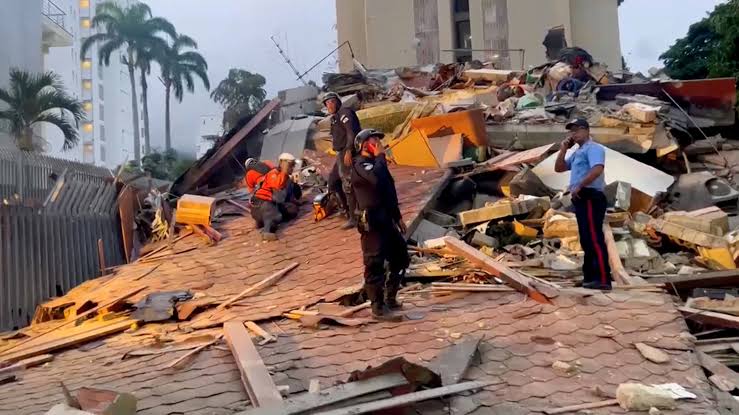
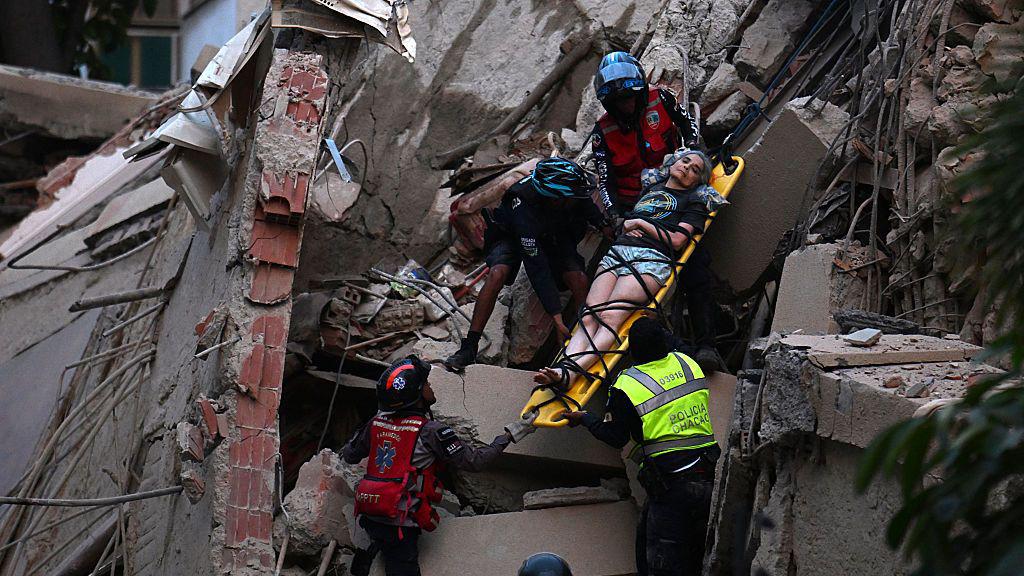
In the capital, the eastern municipalities of Chacao, Altamira, and Los Palos Grandes bore the brunt of the structural devastation. Interior Minister Diosdado Cabello reported that dozens of structures collapsed across Caracas, including a 22-story residential high-rise in Altamira that pancaked entirely.
Witnesses described scenes of panic as residents evacuated homes, offices, and businesses while emergency responders worked to reach those trapped beneath debris.
Government officials said rescue workers, medical personnel, and security forces had been deployed to support affected communities. Hospitals received large numbers of injured people, while authorities urged citizens to remain alert in case of further aftershocks.
The disaster struck during a national holiday commemorating the historic Battle of Carabobo, a day when many Venezuelans were gathered with family and friends. As a result, large numbers of people were at home when the earthquakes occurred, which local officials note heavily exposed residential apartment complexes to high casualty risks.
The tremors also disrupted transportation and public services across the country, knocking out power lines and cutting off telecommunications in major sectors of Caracas.
Crucially, the Simón Bolívar International Airport in Maiquetía sustained severe structural damage to its walls and columns, forcing authorities to suspend all inbound and outbound flights indefinitely while engineers assess the safety of the runways and terminals.
A tsunami advisory was briefly issued for parts of the Caribbean, including Puerto Rico and the Virgin Islands, following the marine-adjacent rupture, but it was later lifted after ocean experts determined there was no significant wave threat.
Seismologists noted that Venezuela lies in an active strike-slip fault zone straddling the Caribbean and South American plates, making the country highly vulnerable to seismic activity. While major tremors are relatively rare, the USGS issued a high-severity red alert for the region, estimating a 39% probability that final fatalities could eventually climb between 1,000 and 10,000 due to the scale of dense urban collapses.
As rescue and recovery efforts continue, Venezuelans are coming together to support those affected by the tragedy. Authorities have pledged to provide emergency assistance and continue search operations until all impacted areas have been thoroughly assessed.
Venezuela reels from powerful earthquakes as rescue operations continue.
The warning, delivered via Trump’s Truth Social platform, comes amid intense global scrutiny over the implementation of a fragile, 60-day interim ceasefire agreement brokered between Washington and Tehran.
Seeking to squash reports that Tehran plans to generate revenue from the newly reopened waterway, President Trump asserted that Iranian officials have explicitly promised Washington they will not impose transit penalties.
“Iran has informed the U.S. that, despite troublemaking Fake News reporting to the contrary, there are ‘NO TOLLS, NO INSURANCE COSTS, & NO OTHER CHARGES OF ANY KIND BEING SOUGHT OR RECEIVED BY IRAN ON SHIPS TRAVELING THE STRAIT OF HORMUZ,’” Trump wrote.
“If this is false information, negotiations would end, immediately!”
The friction stems from ambiguous language in the recently signed Memorandum of Understanding. While the initial framework states that Iran will use its best efforts to ensure the free, uncharged passage of commercial vessels for the 60-day negotiation window, statements from hardline factions in Tehran, including comments from Foreign Ministry spokespeople, hinted that Iran retained the right to collect fees in exchange for services provided to transiting ships.
The stakes for global energy markets could not be higher, as the Strait of Hormuz is widely considered the world’s most critical maritime chokepoint.
Roughly twenty percent of the world’s petroleum and a massive share of liquefied natural gas flow through the narrow passage daily. During earlier hostilities this year, disruptions to the strait sent global gas prices soaring and forced shipping conglomerates to reroute vessels around Africa, severely inflating global supply chain costs.
While the U.S. has conditionally lifted blockades on Iranian ports to allow restricted oil sales during the 60-day window, U.S. Central Command remains on high alert, emphasizing that international forces will continue monitoring traffic to ensure the waterway stays free and open.
Over the weekend, Trump further complicated the maritime dispute by floating a separate threat, warning that if a permanent peace deal isn’t reached within the 60 days, the United States might impose its own transit tolls on the region for services rendered as a security guardian to the countries of the Middle East.
In tandem with his maritime warnings, President Trump moved to quiet bipartisan domestic pushback over the financial parameters of the deal. Critics in Congress have expressed fierce concern that the initial sanctions relief represents a surrender that could inadvertently enrich a hostile state.
Trump explicitly denied rumors that cash or liquid capital had been wired directly to the Iranian government, stating that no money has been given to Iran, or released from their money to them, by the United States.
Instead, the administration is moving forward with a tightly controlled humanitarian escrow account system structured in coordination with international mediators in Switzerland and Qatar. Under this framework, billions in frozen Iranian foreign assets will remain entirely under U.S. oversight. Rather than transferring funds, the U.S. will tap into these reserves to buy agricultural commodities directly from American producers.
U.S. President Donald Trump issued a sharp ultimatum to Tehran on Wednesday, warning that high-stakes peace negotiations would end “immediately” if Iran attempts to levy transit fees, insurance costs, or any other financial charges on commercial vessels navigating the strategic Strait of Hormuz.
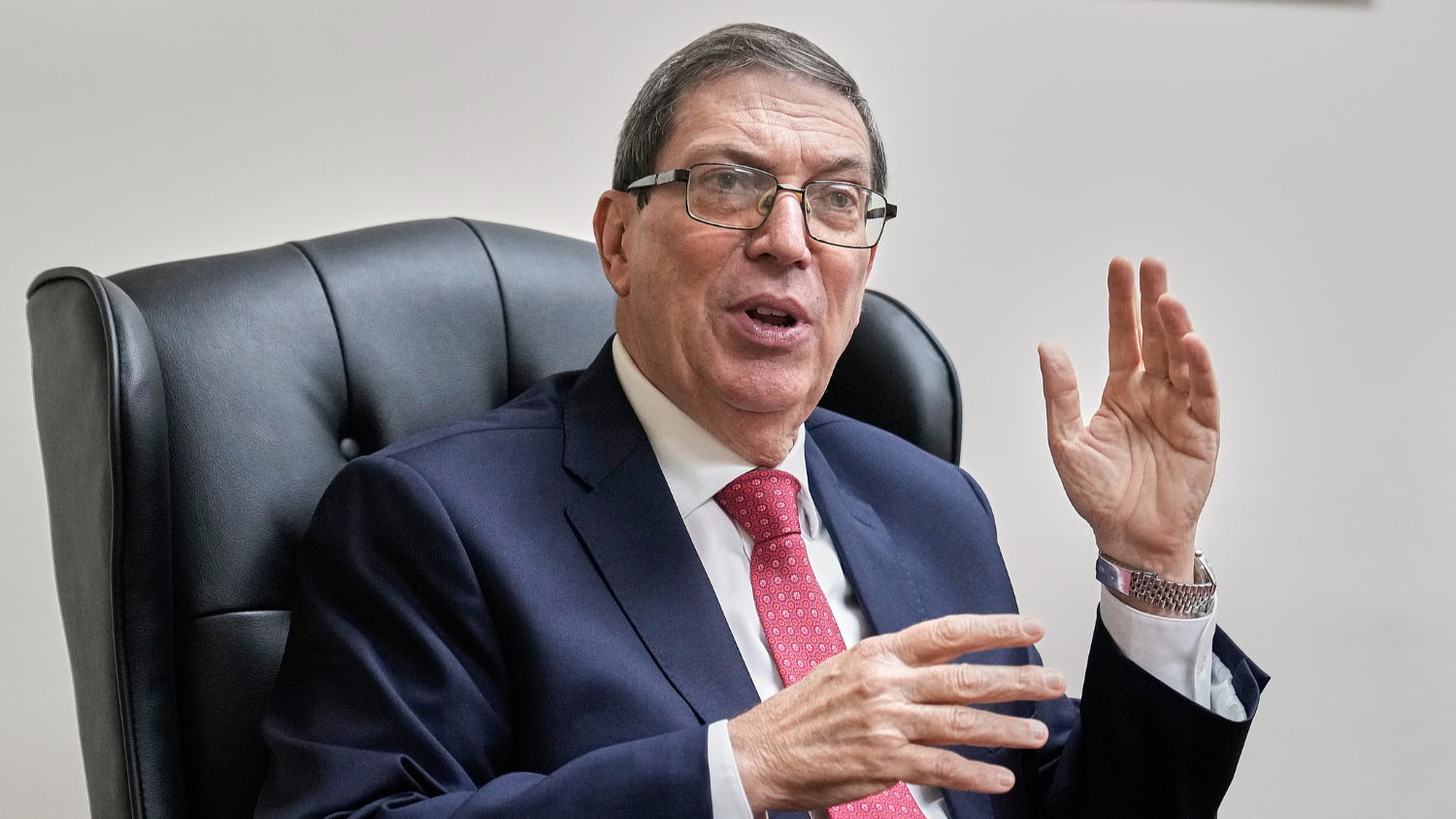
“The U.S. government, led by its dishonest and mendacious Secretary of State (Marco Rubio), continues to take steps to tighten the noose around Cuba’s economy,” Cuban Foreign Minister Bruno Rodriguez said on X, referring to the sanctions Washington announced earlier in the day.
These sanctions came as Cuba “has proven to be stronger, more capable, and more effective than he expected in the face of the ruthless aggression and collective punishment against the people and their living conditions,” said Rodriguez, adding that “what this individual is pushing for from the world’s greatest power is a crime.”
The sanctions target five Cuban state-owned entities, three of which are linked to the conglomerate Grupo de Administracion Empresarial S.A. and two are related to the mining and metallurgical sectors, according to a fact sheet published Tuesday by the U.S. Department of State.
Cuban Foreign Minister Bruno Rodriguez Cuba on Tuesday denounced the latest sanctions imposed by the United States on five Cuban state-owned entities and a member of the extended family of former Cuban President Raul Castro, arguing the measures aim to further harm the economy.
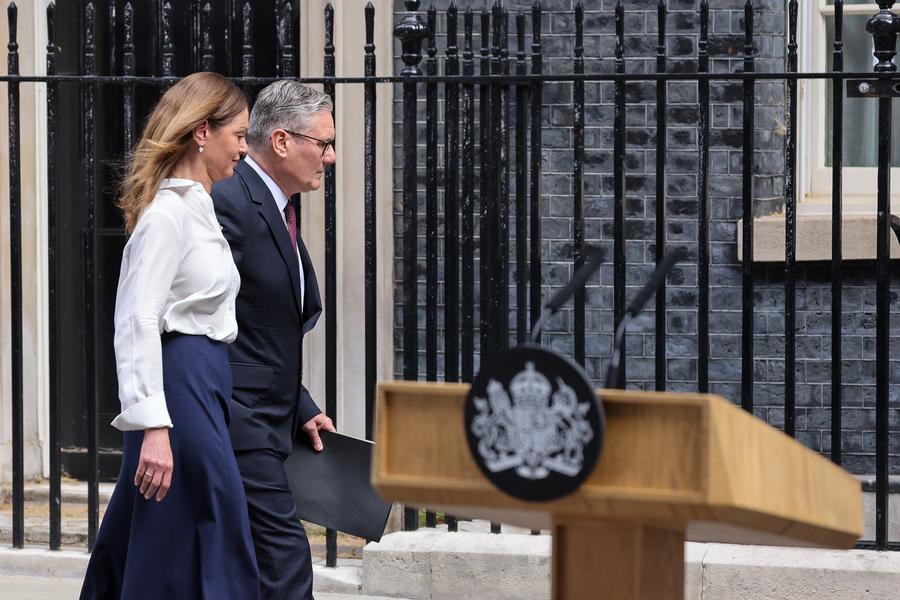
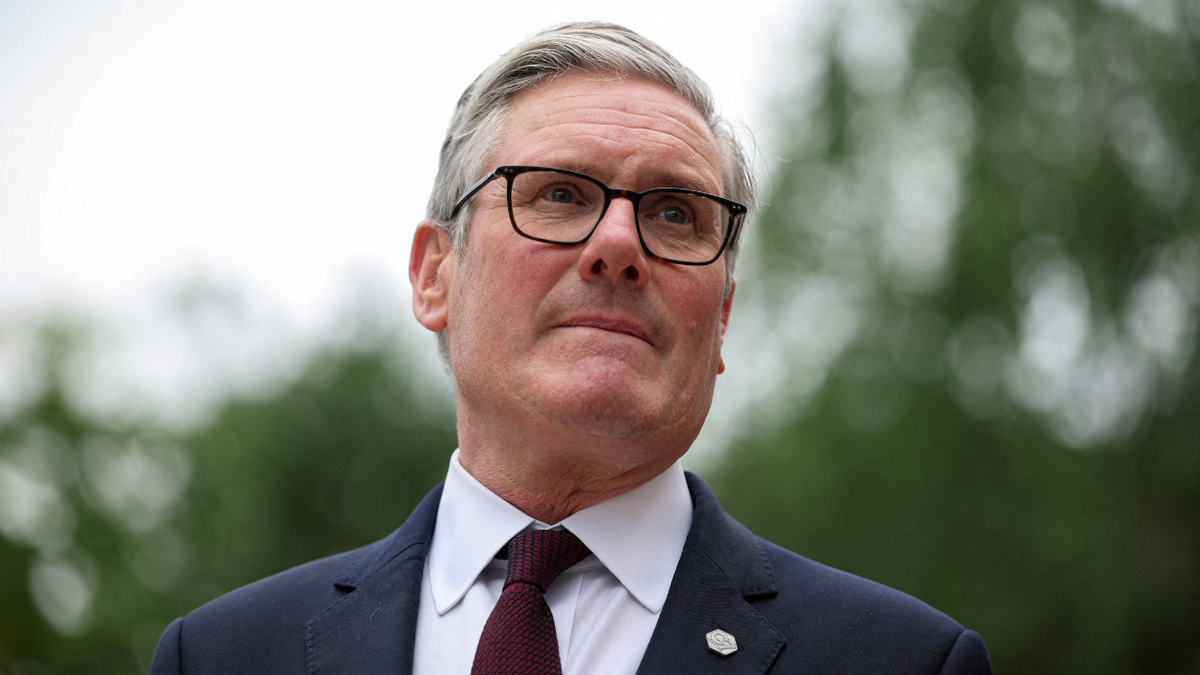
British Prime Minister Keir Starmer announced on Monday that he would resign as leader of the governing Labour Party and leave office once a successor is chosen.
Less than two years ago, Starmer led Labour to a landslide election victory that ended 14 years of Conservative rule. His early departure under mounting pressure from within Labour exposed the party’s governing difficulties and adds uncertainties to a prolonged political instability in Britain.
Analysts said the emphatic victory of Andy Burnham, then the mayor of Greater Manchester, in the recent Makerfield parliamentary by-election triggered Starmer’s resignation, but Britain’s deeper economic and political problems will confront whoever succeeds him.
From winner to loser
Starmer entered Downing Street in July 2024 promising “change,” faster economic growth, better public services and tighter control of illegal immigration. Yet his government soon became caught between efforts to limit public spending and demands from Labour lawmakers, trade unions and traditional supporters for greater social investment.
Moves to restrict winter fuel payments for pensioners and reform disability benefits provoked strong opposition. Subsequent concessions and policy reversals brought further criticism that the government lacked a clear direction.
The controversy surrounding former British Ambassador to the United States Peter Mandelson’s links with the late U.S. financier Jeffrey Epstein also raised questions about Starmer’s political judgment. The departure of senior Downing Street aides further weakened confidence in his administration.
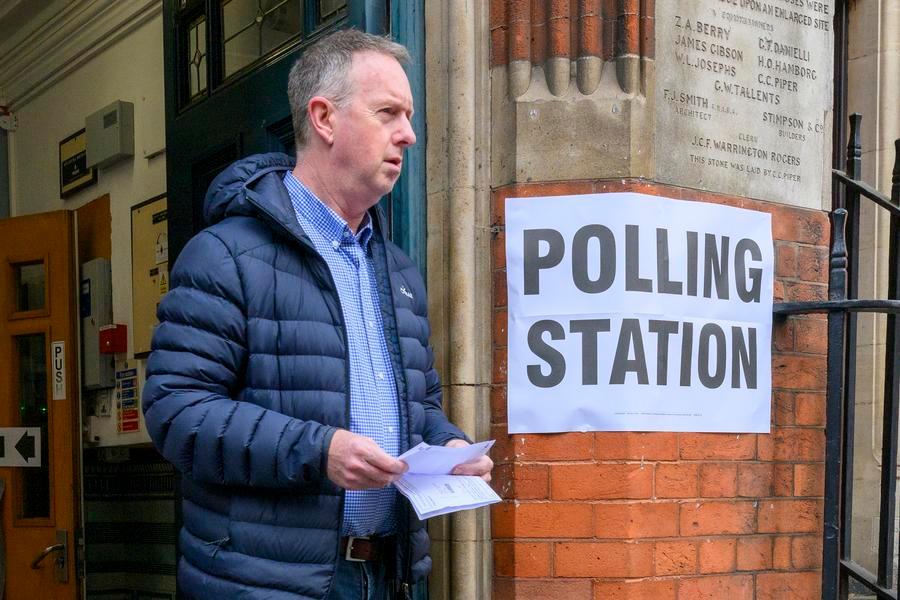
A man leaves a polling station after voting for local elections in London, Britain, May 7, 2026.
What dealt another critical blow to Starmer were Labour’s heavy losses in May’s local and regional elections as Reform UK challenged it from the right, particularly on immigration, while the Green Party attracted some disillusioned voters on the left.
Stuart Wilks-Heeg, a political expert at the University of Liverpool, told Xinhua that Starmer could no longer remain in office once large numbers of Labour lawmakers and senior cabinet members concluded that he had to go.
“If you don’t have the command of your parliamentary party, you really are in trouble as a prime minister,” he said.
Wilks-Heeg said Starmer had succeeded in transforming Labour from a party widely considered unelectable after its 2019 defeat into the 2024 general election winner. However, he was unable to transfer that success into governance, with repeated policy reversals and “unforced errors” steadily eroding his authority.
Burnham emerges as front-runner
Burnham is widely regarded as the front-runner to succeed Starmer. He previously served as culture secretary and health secretary under former Prime Minister Gordon Brown and twice ran for the Labour leadership.
Burnham has returned to the House of Commons after winning the Makerfield by-election on Friday. On Monday, he voiced willingness to be “part of this process,” referring to the selection of Starmer’s successor.
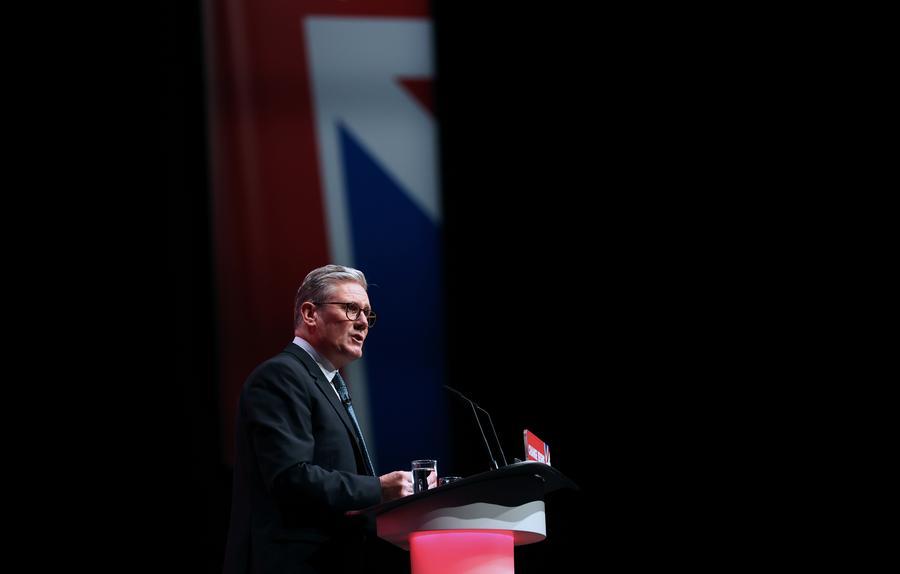
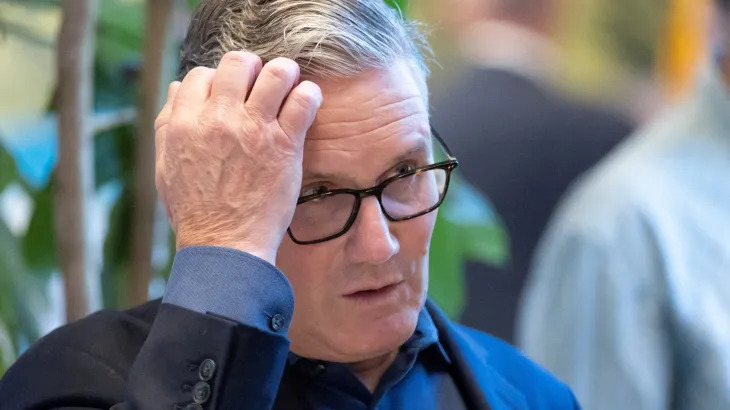
This file photo taken on September 24, 2024, shows Keir Starmer in Liverpool, Britain. British Prime Minister Keir Starmer announced in a speech outside No. 10 Downing Street on Monday that he would resign as leader of the governing Labour Party and set out a timetable for his departure from the government.
Former Health Secretary Wes Streeting, previously regarded as a potential contender, expressed support for Burnham and called on other Labour figures to back him.
Burnham’s victory in Makerfield, where he defeated the Reform UK candidate Nigel Farage by a wide margin, strengthened his claim that he could halt the adversary’s advance. “It was almost like a jolt of electricity back into the Labour Party,” said David Bailey, an economics professor at the University of Birmingham.
Ian Scott, a professor at the University of Manchester, said Burnham combines long political experience, strong regional popularity and a direct style that resonates with voters. However, moving from Greater Manchester to Downing Street would be a major test. “He’s got an awful lot to prove,” Scott said.
Burnham’s policy agenda may distinguish him from Starmer, but it also raises questions about how additional investment and public service reform would be financed.
“The new prime minister faces a lot of the same constraints that the previous one faced,” Steve Nolan, a senior lecturer in economics at Liverpool John Moores University, said, adding, “There is wiggle room to play with, but not much.”
Britain’s Office for Budget Responsibility forecast in March that the country’s economy would grow by just 1.1 percent in 2026. Official statistics also showed that output per worker fell by 0.1 percent year on year in the first quarter.
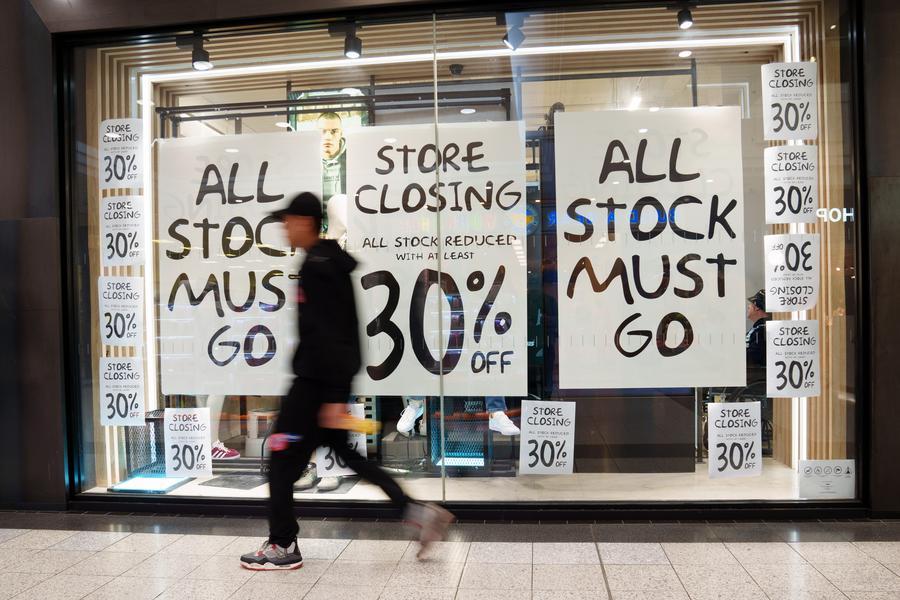
A man walks past a shop in Manchester, Britain, May 11, 2023.
Nolan also noted bond markets would pay particular attention to whether the next government remained committed to Britain’s fiscal rules. High public debt and elevated borrowing costs would make any attempt to loosen those rules a “serious constraint” for a new leadership.
Set for seventh PM in decade
Starmer’s stepping down means his successor will become the seventh prime minister to enter Downing Street in roughly a decade since the 2016 Brexit referendum, highlighting the instability at the top of British politics.
Nolan said such frequent changes “do not signal a stable political economy.” He argued that replacing the prime minister does not alter Britain’s underlying conditions, as any new leader will face the same constraints of weak growth and public services.
Yang Fang, a researcher at the China Institutes of Contemporary International Relations, said tensions between Britain’s political system and party culture and the needs of its modern economy and society have weakened governance and fueled public dissatisfaction.
“Both Labour and the Conservatives have responded to crises by changing leaders to preserve power, but this approach cannot resolve deeper structural problems and instead risks creating ‘a low-efficiency cycle of repetition,’” she said.
The breakthroughs came despite renewed friction surrounding the Strait of Hormuz and strong public warnings from U.S. President Donald Trump.
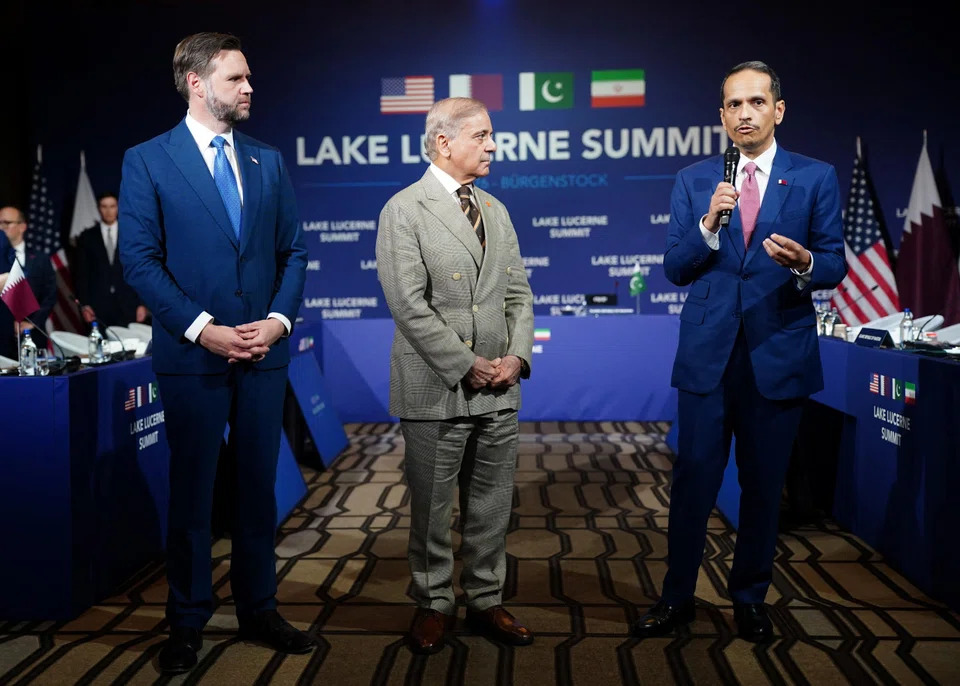
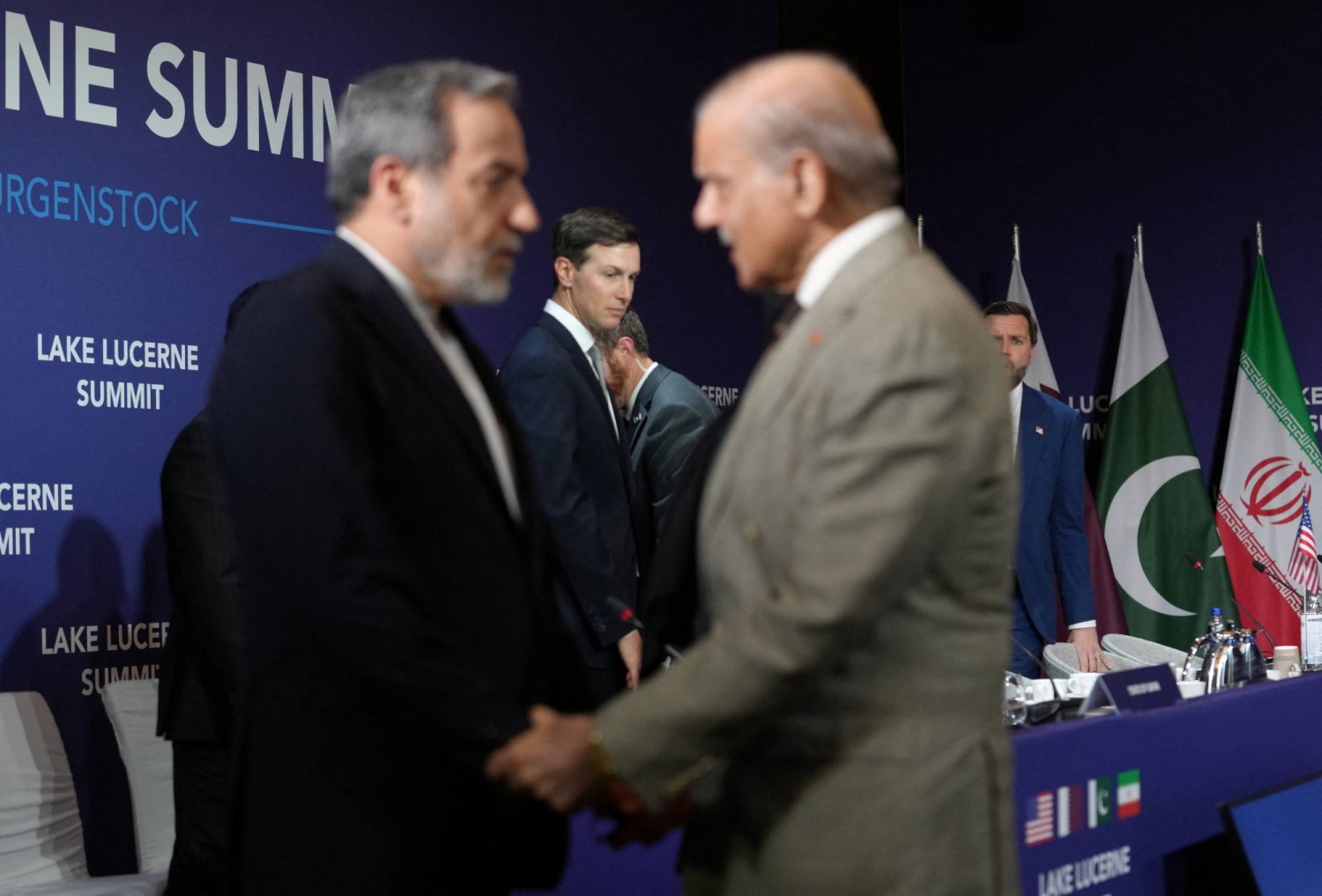
The discussions, facilitated by Pakistan and Qatar, brought together U.S. Vice President JD Vance and a senior Iranian delegation led by parliamentary speaker and chief negotiator Mohammad Bagher Ghalibaf alongside Foreign Minister Abbas Araghchi.
At the conclusion of the initial sessions, mediators issued a joint statement revealing that both sides had agreed to a structured roadmap to finalize a comprehensive agreement within the next 60 days, raising hopes for a lasting diplomatic breakthrough to resolve the recent four-month conflict.
Negotiations faced immediate challenges from the outset after Iran’s Islamic Revolutionary Guard Corps (IRGC) announced new restrictions on maritime traffic through the Strait of Hormuz, a vital conduit for global energy supplies.
Tehran defended the move by asserting that commitments related to regional ceasefire arrangements, specifically regarding Israeli military actions against Hezbollah in Lebanon, had not been fully implemented.
The situation was further complicated by President Trump issuing severe threats of military action from Washington if the strategic waterway remained blocked.
Speaking with Fox News and posting to social media, Trump conversionally warned Tehran’s leadership to “watch what he says,” threatening to hit Iran “very hard” and even floating a hypothetical U.S. takeover of the Strait of Hormuz to collect commercial transit tolls if a final deal is not reached within 60 days.
The formal negotiations faced an immediate crisis on Sunday as the Iranian delegation walked out of the quadrilateral meetings in direct protest of Trump’s public warnings, forcing a temporary suspension of the formal summit.
While Iranian state media declared the talks had entered a “difficult phase” following the publication of the messages, intense back-channel diplomacy by Qatari and Pakistani mediators quickly salvaged the summit.
Through rapid-fire, bilateral shuttle diplomacy conducted in the background, the mediators successfully brought both sides back to the table for intensive, late-night sessions.
The direct engagement covered an expansive range of critical subjects, including maritime security, regional conflict zones, the lifting of U.S. sanctions on Iranian oil exports, and mechanisms for releasing frozen Iranian assets abroad.
Vice President Vance expressed measured optimism about the dialogue, emphasizing a desire to “turn over a new leaf” and permanently shift geopolitical relations in the Middle East.
Iranian officials also characterized the late-night sessions as constructive, though they maintained that long-term progress on broader nuclear-related matters and international inspections remains contingent upon the structured fulfillment of existing economic commitments and technical sanctions waivers.
A primary tangible outcome of the Bürgenstock round was an explicit agreement to establish a direct “communication line” to prevent military miscalculations and ensure safe navigation through the Strait of Hormuz.
Additionally, the two nations agreed to set up a dedicated “de-confliction cell” tasked with stabilizing the fragile ceasefire in Lebanon, addressing the primary catalyst of recent regional hostilities.
The announcement of continued diplomatic progress was welcomed by financial markets, with global oil prices easing from their recent peaks as investors responded positively to signs of de-escalation.
Analysts noted that the willingness of Washington and Tehran to maintain sustained diplomatic contact has substantially reduced the immediate risk of a wider regional conflict that could disrupt global energy distribution.
Technical negotiations between lower-level officials are scheduled to continue in Switzerland over the coming days to build out the framework of the comprehensive agreement.
The breakthroughs came despite renewed friction surrounding the Strait of Hormuz and strong public warnings from U.S. President Donald Trump.
According to UK media reports, Starmer has come under increasing internal pressure following weeks of political uncertainty, with senior figures in the Labour Party urging him to make way for a new leader. Greater Manchester Mayor Andy Burnham has emerged as a leading contender to replace him, with supporters claiming he could command majority backing within the parliamentary party.
Speaking on Sunday, Business Secretary Peter Kyle acknowledged the growing political tension, saying the Prime Minister was “aware of the political realities” and would act in the national interest. However, he declined to confirm any final decision, describing the situation as fluid and uncertain.
The reported resignation plan would mark a dramatic turn in UK politics, just two years after Labour’s sweeping general election victory brought Starmer to power with a large parliamentary majority. Since then, his leadership has faced criticism over policy U-turns, declining poll numbers, and internal party divisions.
Starmer’s allies have insisted he would resist any leadership challenge, but pressure has intensified following Burnham’s strong political showing in recent contests, which has energised calls for a transition at the top of government.
If confirmed, Starmer’s departure would make him one of several UK prime ministers to leave office in rapid succession, reflecting ongoing instability in British politics and growing voter dissatisfaction with mainstream parties.
In Rwanda, his legacy is defined by scrapping the ‘Rwanda migration deal’ on his first day in office, as well as his failure to curb illegal Channel crossings and the resulting damage to voter confidence. The Rwanda scheme was first announced in April 2022 by the government of former Prime Minister Boris Johnson, following a deal with the Rwandan government.
Analysts say the potential leadership change could further reshape the Labour Party’s direction, particularly on immigration, public spending, and foreign policy, as it seeks to consolidate power ahead of the next general election.
Starmer has not yet made a formal public statement confirming his resignation, but government insiders suggest an announcement could come within days as pressure from within his party reaches a critical point.
UK Prime Minister Keir Starmer is expected to resign on Monday after weeks of mounting pressure from Labour MPs calling for a leadership overhaul.
In a social media post, Trump said the United States could impose tolls if a final agreement is not reached.
“There will be NO TOLLS in the Hormuz Strait for 60 days during the Cease Fire Period, and there will be NO TOLLS after the 60 day period has expired, unless they are imposed by and for the United States of America, should the deal not be completed, for services rendered as the Guardian Angel to the countries of the Middle East for purposes of both past, present, and future reimbursement of costs,” Trump wrote.
Iran’s main military command, Khatam al-Anbiya Central Headquarters, announced Saturday the closure of the Strait of Hormuz, citing U.S. breach of the newly signed peace memorandum of understanding and Israel’s ceasefire violations in southern Lebanon, Iran’s semi-official Mehr news agency reported.
United States President Donald Trump said the United States could impose tolls if a final agreement is not reached.
Iran’s Supreme National Security Council (SNSC) made the announcement in a statement carried by Iranian media hours after Iranian President Masoud Pezeshkian and his U.S. counterpart Donald Trump signed the MoU, electronically.
The SNSC said under the MoU, no fee will be charged for 60 days for passage by ships requesting to cross the Strait of Hormuz, and all the expenses will be covered by the Iranian government.
Vessels seeking to transit the waterway are required to send their requests to the Persian Gulf Strait Authority (PGSA), it said.
“Given the specific circumstances and existence of some safety hazards along the passage route, and due to the necessity to ensure safe traffic and prevent maritime accidents, it is necessary for ships to pass through along the announced route and at the announced time,” it said, giving the assurance that traffic in the waterway would gradually increase.
It said the executive arrangements and technical details for passage through the strait will be announced through the PGSA.
Iran, the United States and Pakistan early Monday announced the finalization of the MoU aiming to end conflict on all fronts, including Lebanon. Pezeshkian and Trump signed the MoU electronically early Thursday.
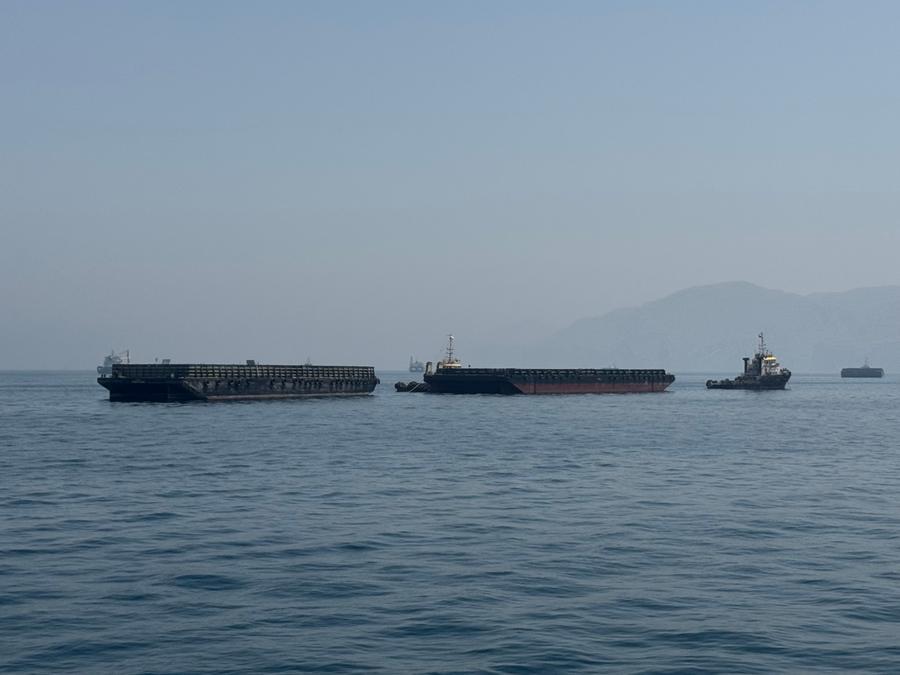
This photo taken with a mobile phone shows merchant vessels stranded in the waters of the Strait of Hormuz, near Khasab, a small town in northern Oman, May 29, 2026. (Xinhua/Wen Xinnian)