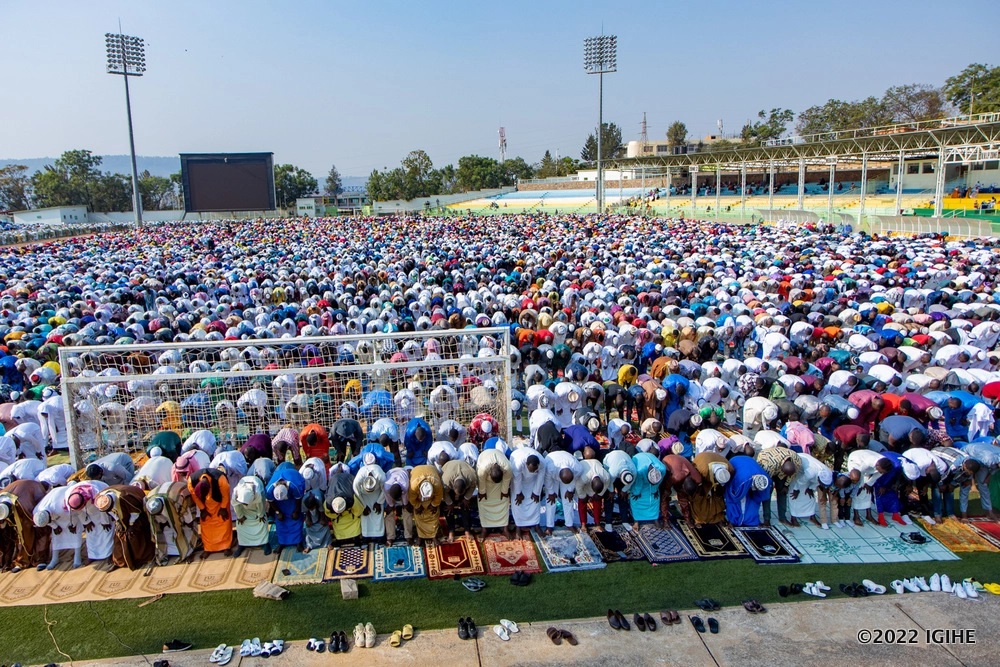
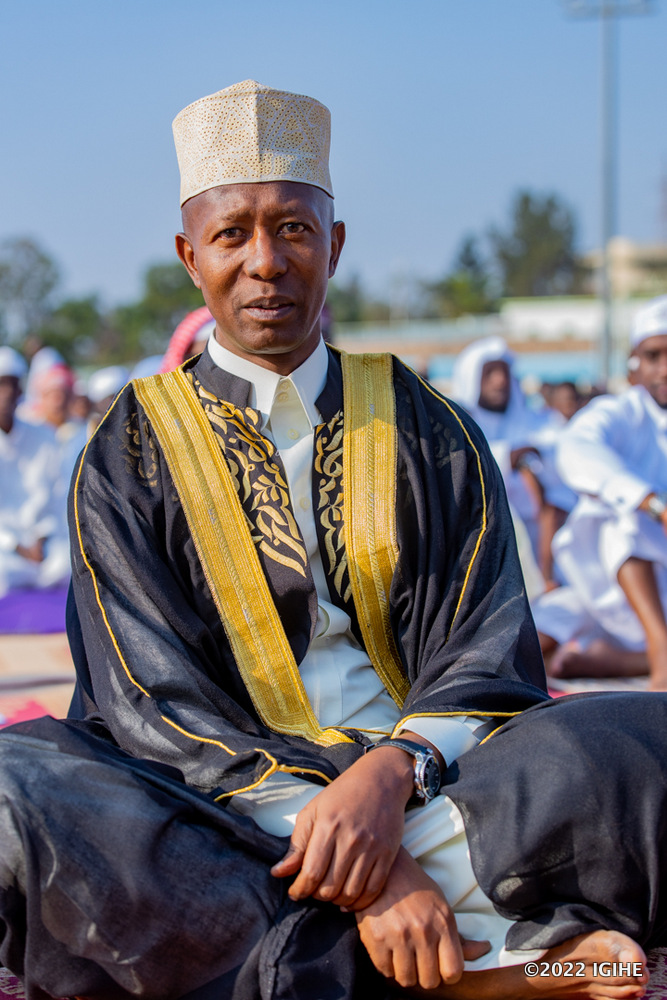
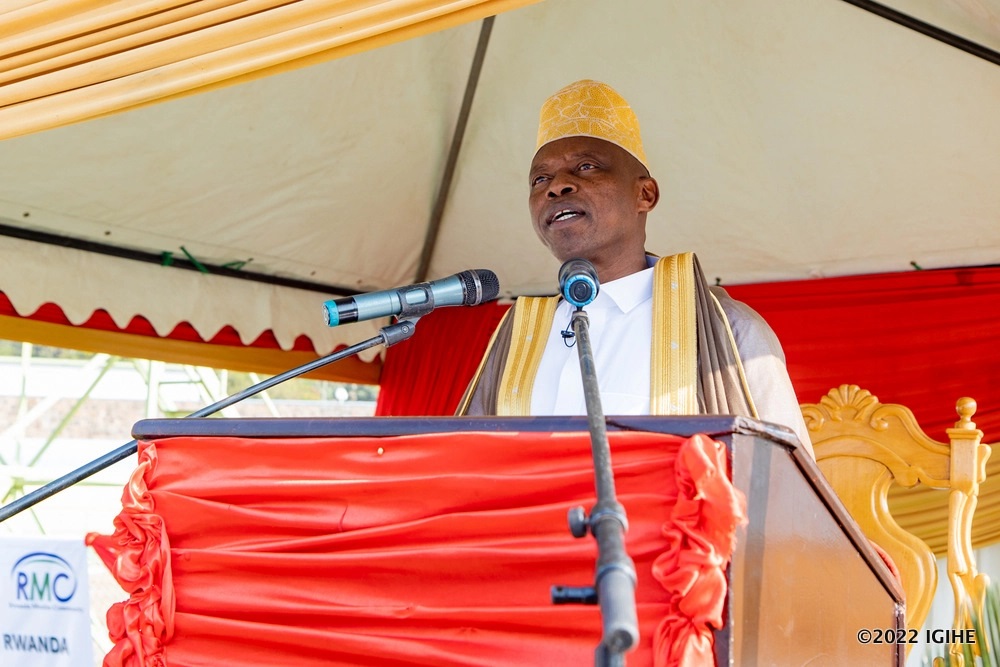
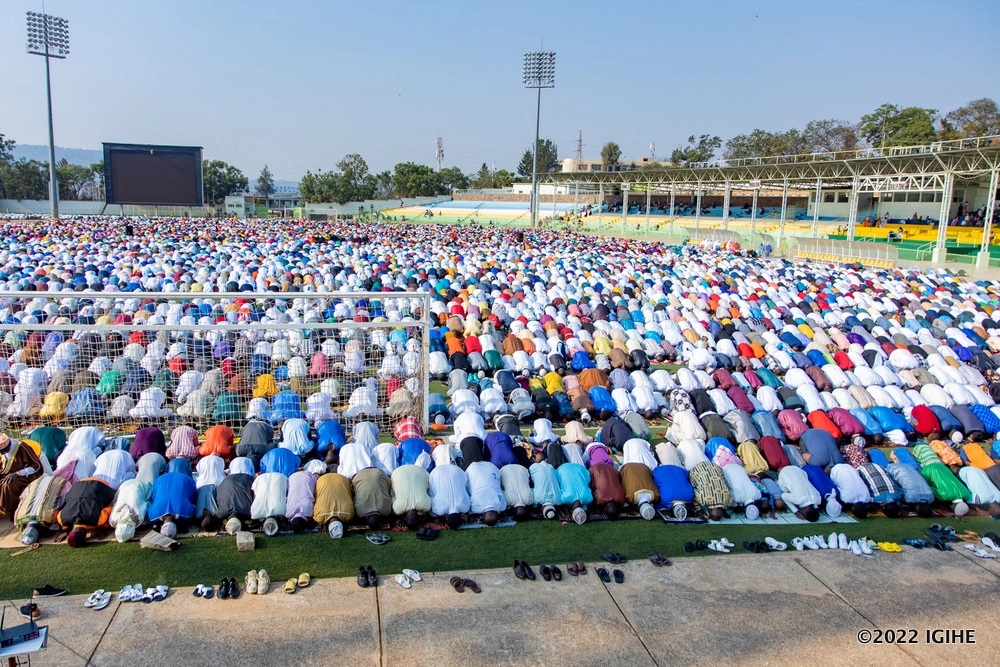
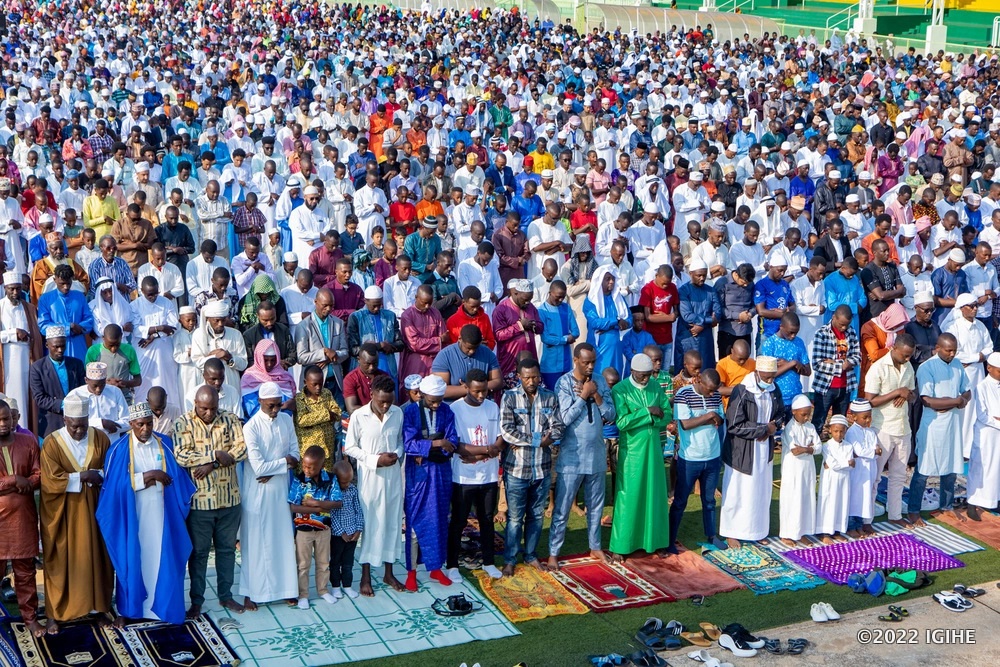
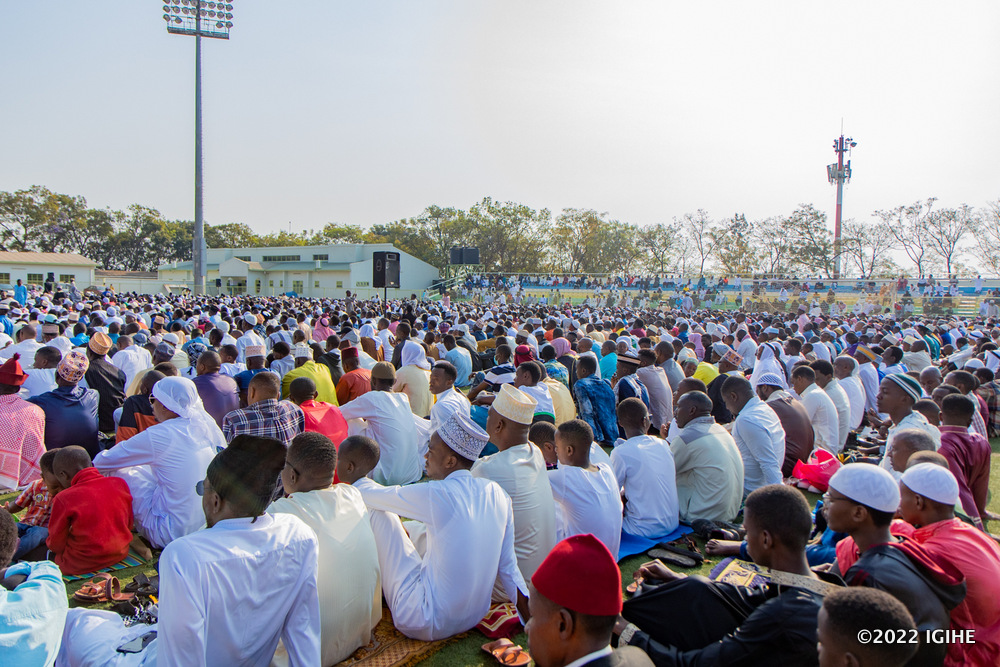
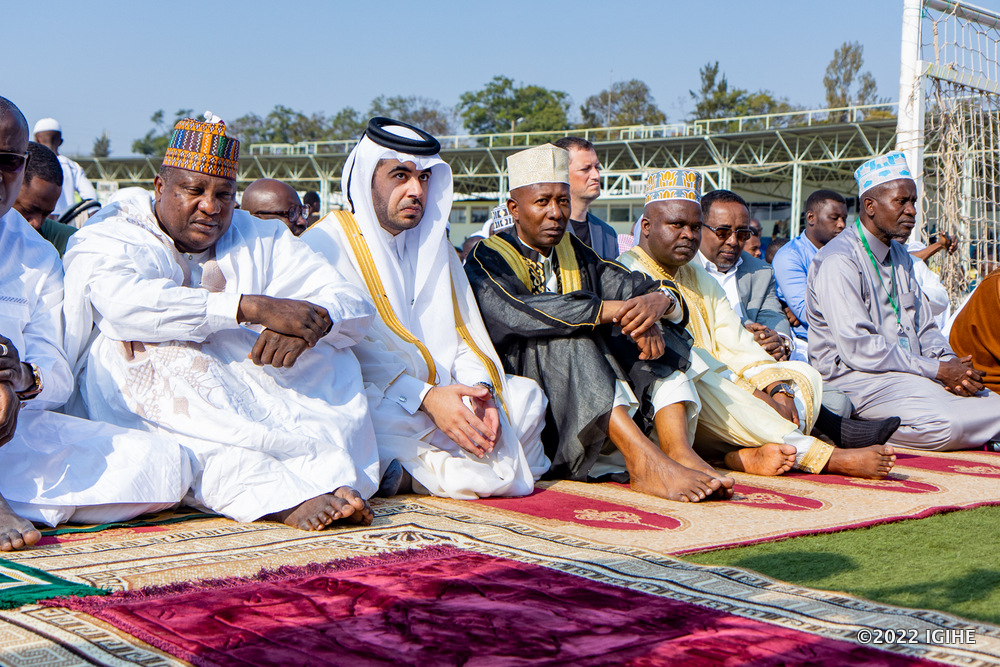
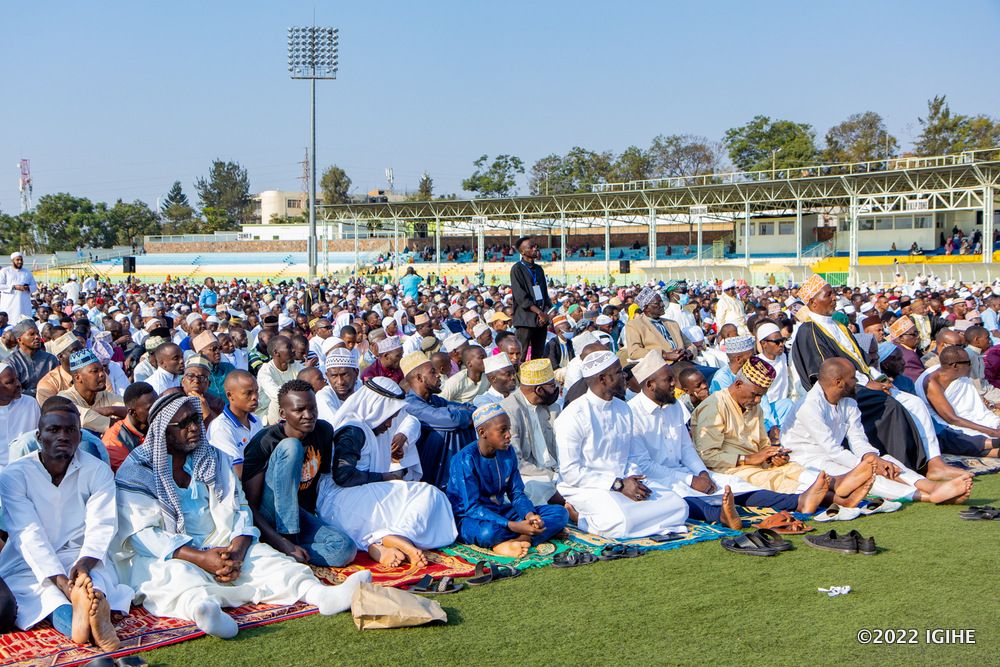
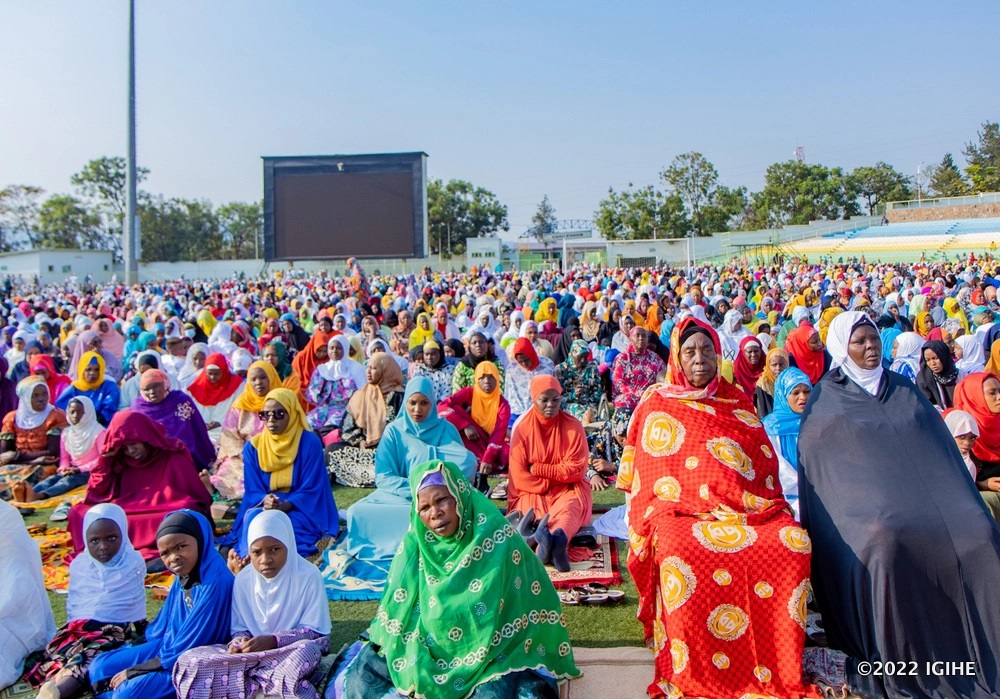
Those who turned up for prayers at the stadium were joined by 24 parliamentarians from different countries who are in Rwanda for Francophonie Parliamentary Assembly.
Eid al-Adha, which in Arabic literally means the “festival of the sacrifice”, commemorates the Koran tale of Prophet Abraham’s willingness to sacrifice his son Ishmael but God offered him a lamb to sacrifice, ruling that no human life should be sacrificed in the name of God.
The day is marked with the sacrifice of an animal; usually a goat, sheep, or cow, and the distribution of the meat among neighbours, family members and the poor.
The Mufti of Rwanda, Sheikh Hitimana Salim has said that Eid Al Adha is a feast of great significance which induces joy.
He added that the day should be an opportunity to spread love and adhere to commandments and Abraham obeyed God.
Sheikh Hitimana also requested Muslims to share foods with friends and vulnerable people.
Sheikh Musa Fazil Harerimana, the Vice Speaker of the Lower Chamber of Parliament also attended the prayers along with counterparts from Francophone countries.
“They came to attend Francophonie Parliamentary Assembly taking place in Rwanda an expressed interest in joining us during this prayer. So, we made arrangements for them to participate,” he noted.
Saley Sahadatou, a parliamentarian from Niger has expressed delight to have celebrated Eid Al Adha along with Rwandans.
Just days after three drug traffickers were foiled in Rubavu District with over 7,000 rolls of cannabis; another dealer identified as Vedaste Dusengimana, 30, was arrested Thursday, July 7, in Rulindo District, Mbogo Sector, Rurenge Cell in Ruhondo Village with 10kgs of cannabis.
Dusengimana was intercepted along Rulindo-Kigali highway. He was at the time en-route to Kigali from Kinihira, according to Superintendent of Police (SP) Alex Ndayisenga, the Political and Civic Education Officer (RPCEO) for the Northern region.
Dusengimana was transporting the narcotics on a motorcycle plate number RF 777V, which was also impounded.
“Information was provided by a member of the public that Dusengimana was transporting narcotics on a motorcycle to supply retailers in Kigali. He was using remote roads through Mukoto-Mbogo-Shyorongi but Police had all this information which made it easy to track him down,” SP Ndayisenga said.
Dusengimana had attempted to flee after seeing Police officers but residents pursued and apprehended him.
SP Ndayisenga recognized the role of the public in fighting criminality and narcotic drugs in particular.
Dusengimana was handed over to RIB at Bushoki station for further legal process.
Cannabis is listed as a very severe drug in Rwanda with a sentence ranging between 20 years and life imprisonment, and a fine of up to Rwf30 million.
Rwanda and DRC recently met at a tripartite summit in Angola on Wednesday 6th July 2022 which brought together the President of Rwanda, Paul Kagame; his counterpart of DRC, Félix Tshisekedi and Angolan President, João Lourenço who is the Chairperson of the International Conference on the Great Lakes Region (ICGLR) and mediator on tension between Rwanda and DRC.
The summit was held amidst growing tension between the two neighboring countries escalated following the resurgence of M23 rebel group in the recent months.
DRC accuses Rwanda of backing M23 in the fight with Congolese Army while Rwanda accuses it of collaboration with the Democratic Forces for the Liberation of Rwanda (FDLR), a terrorist outfit comprised of remnant masterminds of the 1994 Genocide against the Tutsi.
It also blames DRC for having shelled Rwandan territory at different times in collaboration with FDLR. The projectiles injured civilians and destroyed houses.
The tension continued to grow until a Congolese soldier stormed Rwanda and opened a rapid fire on Rwandan policemen standing guard before he was shot dead.
Speaking to the Financial Times ahead of the tripartite summit in Angola, President Tshisekedi warned of war with Rwanda.
However, Rwanda has repeatedly rejected DRC’s allegations and urged it to solve its internal problems without dragging it into the conflict.
Recent discussions between both countries on the mediation of Angola saw concerned parties setting a roadmap to accelerate efforts meant to achieve durable peace.
However, concerned countries have released contradictory statements following the summit held on Wednesday. DRC’s Presidency initially released resolutions with clauses in favour of its allegations.
Later on, Rwanda and Angola released resolutions of the roadmap detailing responsibilities of each country concerned with the issues of DRC to promote peace in the region and eastern DRC.
“The Luanda tripartite meeting outcome is a roadmap with clear objectives and activities to be implemented by various parties/partners. No agreement or ceasefire was signed. Misinformation/populism are undermining the overall objective of achieving peace in DRC and the region,” Minister Biruta has tweeted.
DRC announced that immediate ceasefire and withdrawal of M23 from all captured areas were among resolutions of the summit.
Meanwhile, the issues that Rwanda indicated at the summit have been clearly pointed out for over 20 years. These include assurance of security at its borders and fighting the Democratic Forces for the Liberation of Rwanda (FDLR), a terrorist group intending to threaten Rwanda.
Rwanda maintained that the terrorist group should not receive any form of support to attack Rwanda where DRC is urged not to allow FDLR to shell Rwandan territory.
The roadmap on activities to restore relations between Rwanda and DRC stresses the need to defeat FDLR and its splinter groups while more efforts have to be geared towards fighting hate speech and offensive language in the region by all parties.
The splinter groups include CNRD- FLN, RUD-Urunana, FPPH-Abajyarugamba believed to be at the origin of tensions between Rwanda and DRC and play a major role in the insecurity of the DRC.
Creating the necessary conditions for the return of refugees is among outlined priorities as per released roadmap. Rwanda, DRC, ICGLR and the United Nations High Commissioner for Refugees will be in charge of implementation.
On the issue of M23, the summit resolved that all activities on the rebel group must be based on Nairobi Process.
IGIHE has learnt that the summit might not be fruitful as expected because concerned parties did not reach consensus during discussions.
It was also resolved that an ad-hoc verification mechanism led by an Officer General of the Republic of Angola has to be created to verify the reciprocal accusations of the DRC and Rwanda concerning the support to M23 and the collaboration with the FDLR.
The team is to be supported by the Expanded Joint Verification Mechanism (EJVM) while ICGLR will seek MONUSCO’s support in security and logistical matters.
The EJVM is a mechanism of the International Conference of the Great Lakes Region (ICGLR) composed of military officers from the 12 member countries that is charged with monitoring and verification of border violations between DRC and neighbouring countries.
These products, SIP Trunk, Hosted PBX (Office lines) and Hosted Call Centre integrate all communication services easily and conveniently, allowing enterprises to increase flexibility and productivity.
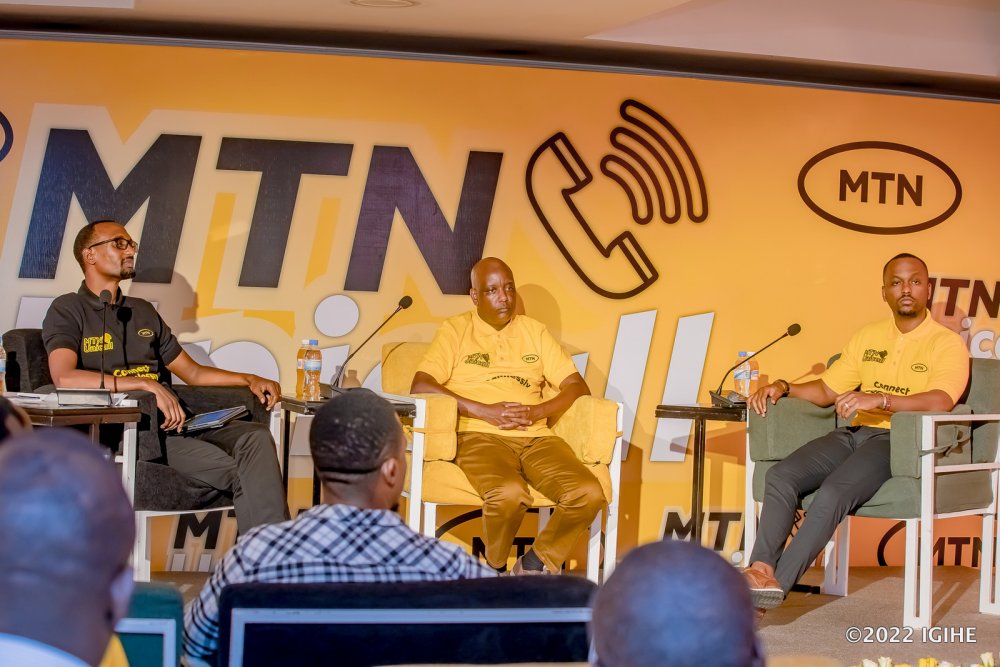
Commenting on the development; Didas Ndoli, MTN Rwanda General Manager, Enterprise Business Unit highlighted that ease and convenience play a vital role in the creation of the telecom’s business solution products and services.
“We are pleased to announce the launch of MTN Unicall, that will enable customers to transition from their fixed lines into an internet-powered phone system, keeping their business lines connected 24/7. Additionally, MTN Rwanda offers enterprises the option of having hosted call centers & PABX, eliminating the hassle and cost of setting up the required infrastructure. Furthermore, the Hosted PBX accelerates workflow, saving upfront costs with automated attendants and automatic updates at no extra charge,” he said.
MTN Rwanda Hosted PBX offers a range of capabilities such as enabling code-based dial-in on conferences (conference bridge), Hunt Group (call transferring), Cloud IVR, and mobile applications. This, coupled with SIP Trunking, allows the integration of the following communication services: instant messaging (chat), presence information, voice (including IP telephony), mobility features, audio, web & video conferencing, fixed-mobile convergence (FMC), desktop sharing, data sharing, with non-real-time communication services such as unified messaging.
These integrations provide the option for migrating businesses, those looking to move premises out of the local area but wish to keep their business-critical numbers, to do so without the cost of call forwarding.
“We are dedicated to offering digital solutions for the progress of Rwanda and with MTN Unicall, we would like to assure our enterprise customers that their business communication services will continue to operate seamlessly, while optimizing the business capabilities, everywhere they go,” concluded Ndoli.
{{About MTN Rwandacell }}
MTN Rwandacell Plc (MTN Rwanda) is the market leader in mobile telecommunications in Rwanda. Since 1998, It has continuously invested in expanding and modernising network and leading digital solutions for Rwanda’s progress.
The telecom offers various services to subscribers, including innovative propositions such as personalised voice and data offers for individuals and corporates with a clear vision to lead the delivery of a bold, new digital world to customers because it believes everyone deserves the benefits of a modern connected life.
The Rwandans arrived in the neighbouring country during the 1994 Genocide against the Tutsi and after.
They are from 36 families comprising 65 children, 15 men and 23 women who returned to Rwanda on Wednesday 6th July 2022.
Upon arrival, they were accommodated at Kijote Transit Centre located in Nyabihu District, Bigogwe Sector.
The ceremony to welcome the refugees took place on Thursday 8th July 2022. It was attended by Veneranda Ingabire, the Coordinator of the Single Project Unit at MINEMA and Francis Ezike Okagu, the Head of the United Nations High Commissioner for Refugees (UNHCR)’s Western Province office among other officials.
Ingabire has told IGIHE that the returnees will spend two weeks at the transit centre where they will provide information to have their database filled, get tested for COVID-19 and inoculated among others.
They will also receive return assistance including support funds, food items for three months, registration for national identity card and community-based health insurance for one year.
Each adult receives US$250 (Rwf250,000) while a child gets US$150.
“After making enough preparations, they receive assistance and get reintegrated into respective families in places of birth. We have welcomed and reminded them that doors are always opened. They just need to come and join others in building the nation,” said Ingabire.
Okagu has said that witnessing the repatriation of refugees who are welcomed and integrated into the society induces price to UNHCR.
More returnees are expected to arrive through Rusizi border on 8th July 2022. From 1994, over 3.5 million Rwandan refugees had returned home and reintegrated in the country (with the rest of the communities) successfully.
For the last five years, Rwanda received 15,643 returnees mainly from the DRC and both governments worked on the readiness to facilitate safe and dignified return in close collaboration with UNHCR offices in both countries even after the activation of the cessation clause for Rwandan refugees.
However, the decision to return is an individual decision and the Government of Rwanda commends the usual collaboration between regional countries in partnership with UNHCR.
Since 2009, Rwanda has successfully implemented the Comprehensive Solutions Strategy (CSS) for Rwandan refugee situation where the vast majority was in DRC.
From 2010, the then Ministry of Disaster Management and Refugee Affairs in collaboration with various partners have implemented the “Enhancing Socio-Economic Opportunities for Rwandan Returnees and other Vulnerable Groups” project.
Furthermore, the Sustainable Return and Reintegration of Rwandan Returnees” programme launched in partnership with the Government of Rwanda and UNHCR has been assisting Rwandan returnees to integrate into the society and has allowed them to enjoy all rights as well as available development programs just like any other Rwandan.
The Government of Rwanda has reaffirmed its commitment to ensure the safety and sustainable reintegration of all returnees.
It has also pledged to continue to work with various partners, including neighbouring countries and UN agencies in finding possible solutions to improving the wellbeing of all refugees living in Rwanda as well as finding long-term and durable solutions for them.
On behalf of the Government of Rwanda, the Rwanda Environment Management Authority (REMA) and the Rwanda Development Board (RDB) have signed an agreement with QA Venue Solutions to open and manage Nyandungu Eco-Park. The opening of Nyandungu Eco-Park represents the single largest addition to public green space in Kigali in the city’s history.
Speaking about the park, Juliet Kabera, Director General of the Rwanda Environment Management Authority, said that the Nyandungu wetland represents the value of restoring urban ecosystems, and will serve as a blueprint for other wetlands in Kigali and across the country.
“Urban wetlands play a critical role in preventing flooding, addressing pollution and are home to unique biodiversity. As we face the impacts of climate change, wetlands will be a key ally to protect lives and livelihoods. We look forward to working with our partners to replicate the success of restoring Nyandungu in other urban wetlands in Kigali and across the country,” she said.
The Nyandungu Eco-Park provides a space for residents and visitors to the city to explore and learn from nature, and is part of Rwanda’s efforts to harness eco-tourism to restore biodiversity and conserve urban wetland ecosystems.
The restoration of the wetland and creation of an eco-tourism park was funded by the Rwanda Green Fund (FONERWA) with support from the UK Government, the Italian Government through the Ministry for Ecological Transition and the UN Environment Programme.
The six-year initiative has restored the Nyandungu wetland ecosystem and promoted the sustainable management of natural resources. The initiative has also created approximately 4,000 green jobs.
The rapid growth of Kigali and the associated human activities have put significant pressure on the wetlands. Wetlands, including Nyandungu, have been degraded and this led to biodiversity loss. Encroachment has also resulted in downstream flooding as well as increased pollution due sewage outflows.
In 2016, the Government of Rwanda through the Rwanda Environment Management Authority developed the Nyandungu restoration project to respond to these challenges and demonstrate the potential of wetlands to abate pollution and reduce the risk of flooding in urban areas.
Since then, the Rwf4.5 billion project has restored critical habitats, including a native fig forest and the wetland itself, and rehabilitated streams and ponds to alleviate floods and reed-beds to reduce pollution.
The wetland now also features a 10km network of walking and cycling paths, viewing areas, picnic areas, an information centre, and a restaurant among other facilities.
“The restoration of Nyandungu wetland to an eco-tourism park serves as an example of Rwanda’s efforts and commitment towards environmental protection, particularly for the conservation of wetland ecosystems as well as eco-tourism. We look forward to welcoming domestic and international tourists to create fond memories in this new biodiversity hotspot in Kigali,” said Zephanie Niyonkuru, Deputy CEO of RDB.
“Investing in nature is the best investment we can make. By protecting and restoring our ecosystems, we create jobs, improve people’s well-being and build community resilience to climate change and extreme weather events. The Fund is grateful for the support provided by our partners in the rehabilitation of the Nyandungu wetland, and we look forward to the many environmental and health benefits it will bring for generations to come,” said Teddy Mugabo, CEO of the Rwanda Green Fund (FONERWA).
The Nyandungu Eco-Park is the first public recreational and touristic facility of its kind in Kigali. The park will be managed by QA Venue Solutions through a Memorandum of Understanding with the Government of Rwanda. QA Venue Solutions, which also operates BK Arena, will be responsible for the day-to-day management of the park and offer guided tours to visitors and its attractions.
“QA Venue Solutions is excited to take on the opportunity of managing Nyandungu Eco-Park in partnership with the Government of Rwanda, and believes in the agenda of protecting and restoring the wetlands. Our aim through this partnership is to work side by side with the government to achieve the objectives set out for the Nyandungu wetland, while preserving the space and allowing for the community to benefit from it through educational and recreational activities,” said Kyle Schofield, Managing Director, QA Venue Solutions.
The park will be open from 8 July 2022 and will welcome visitors seven days a week from 6am-6pm.
They were arrested on Tuesday 5th July, in two separate operations conducted by the Anti-Narcotics Unit (ANU).
“Police first arrested the duo of Claudette Nyiramariro and a taxi-moto operator identified as Mohamed Ingabire with 3,080 pellets of cannabis. They were intercepted in Nyamwishyura village, Bisiza cell, Nyakiriba sector,” Superintendent of Police (SP) Bonaventure Twizere Karekezi, the Police spokesperson for the Western, region said.
The motorcycle RG 893B, used in the crime was also impounded. The successful operations were facilitated by information provided by members of the public.
Meanwhile, Placide Dushimimana was also arrested with 1040 pellets of cannabis in Bushashu village, Kirerema cell, Kanzenze sector.
The narcotics were sneaked into Rwanda from the Democratic Republic of Congo (DRC) through porous border points, according to SP Karekezi.
The suspects were handed over to RIB at Gisenyi station for further investigations.
The Ministerial order No. 001/MoH/2019 of 04/03/2019 establishing the list of narcotic drugs and their categorization classifies cannabis in the category of “very severe narcotics.’’
Article 263 of law No 68/2018 of 30/08/2018 determining offenses and penalties in general states that any person, who unlawfully produces, transforms, transports, stores, gives to another or who sells narcotic drugs and psychotropic substances, commits an offence.
Upon conviction for “very severe narcotics,” the offender faces between 20 years and life imprisonment, and a fine of between Rwf20 million and Rwf30 million.
The Minister of Local Government, Jean Marie Vianney Gatabazi, while officially closing the two-day symposium in Musanze District, reiterated that governance is an important factor for peace and stability and that these concepts remain complementary, interrelated, interdependent and are mutually reinforcing imperatives for sustainable development in Africa and elsewhere in the world.
The ninth symposium for the 10th intake of the Police Senior Command and Staff Course (PSCSC) was held under the theme “fostering good governance for peace and security in Africa.”
“In different African countries, persistent conflicts are customarily associated with poor governance, which fails to address the basic human security needs, root causes of conflicts like marginalization, equal access to opportunities and resources, inclusiveness, equal protection by the laws,” Minister Gatabazi said.
In addition to the internal drivers of conflicts, he added, the failure for some countries to identify what they stand for in terms of value and national interests has led them to succumb to the pressure of external powers.
Regardless of the hindrances caused by the media to stability and social order amongst the citizens, Minister Gatabazi said that it also plays a significant role in shaping and strengthening good governance.
“In rethinking of a peaceful and secure Africa, there is always a compelling need to address governance-related root causes of conflict in order to effectively foster sustainable peace and security as a route to lasting development on the continent.
This requires enhancing human security centered governance; promoting and controlling professional media platforms; establishing capable and accountable public institutions including the security organs; and building strong and fair judicial systems that are responsive to the citizens,” the Minister emphasized.
{{Panelists’ insights}}
The Inspector General of Police (IGP) Dan Munyuza, while tackling the issue of “ensuring peace and stability in Africa: emerging regional and continental initiatives,” observed that for decades, African continent has been characterized by conflicts, shifting from interstate to intrastate in nature.
“Rwanda’s commitment to participating in peacekeeping operations is informed by its tragic history of the 1994 Genocide against the Tutsi. It is motivated by a strong national belief in the protection of civilians as espoused in the 2015 Kigali Principles that focus primarily on ensuring the effective protection of civilians,” IGP Munyuza said.
He added that after a long period of Africa being taken care of by other countries outside the continent, African states through African Union have started taking their destiny in their hand. The slogan “African solutions to African challenges” has started materializing.
“This is because Africa is now contributing up to 80% of UN peacekeeping missions in Africa. There is also a growing commitment of Regional Economic Communities (RECs) to engage more in resolving conflicts on the continent, which is commendable.
The regional ad hoc security initiatives are becoming more frequent, and may in the near future be seen as standard practice, rather than exceptions. The emerging bilateral initiatives are proving to produce results beyond even multilateral approaches. They will only require international support and much clarity from the UN Security Council in terms of their mandate, oversight, command and control, and reporting,” the Police Chief said.
Prof. Patrick Loch Otieno Lumumba, in his insight on “strengthening judicial system in Africa—an imperative for good governance, sustainable peace and security,” remarked that justice has been identified as the cornerstone of the rule of law, underpinning all efforts to achieve international peace and security.
“Critical to establishing peace and the necessary confidence between state and citizen is providing a sense of security, freedom from fear, and the protection of basic rights and entitlements,” Prof. Lumumba said.
He added that conflict can only be ‘managed’ peacefully if there exist capable institutions that can define and enforce rights and obligations. “Security and justice are therefore inseparable – security efforts should be aimed at securing just outcomes through just processes, justice efforts should see human security as a basic human right.”
Prof. Alfred R. Bizoza, Agricultural Economist and Policy Analyst at the University of Rwanda, said that the current discourse on human security has broadened from concerns with military-defense issues to issues of human health security, food security, economic security, and environmental security, among others
Prof. Neil Cooper, the director of the School of Peace and Conflict Studies (SPCS) at Kent State University in Ohio—USA, in his reaction to “good governance as a critical factor for peace and stability in Africa—the nexus,” said that the concepts of peace, security and governance are not fixed, unstable and are constantly shifting.
“Trends in peace and security are not fixed–and many global metrics of peace and security are going in the wrong direction… but politics and policy matters in terms of influencing trends in peace and security,” Prof. Cooper said.
Renowned journalist and author, Charles Onyango Obbo, while discussing on ‘social media and governance in Africa—a critical appraisal,’ said that it has provided another platform as a leader in bringing accountability especially in once inaccessible spaces, exposes brutality, a great environmental watch, best election observer and a tool against gender-based violence.
Beneficiaries were seriously affected by landslides in May 2021 which destroyed a large number of houses and other infrastructures, leaving them homeless.
Following the incident, the government in collaboration with partners provided the financial support worth Rwf250,000 for affected residents to rent houses.
Claudine Muhawenimana expressed delight for received decent shelter noting that it will relieve her of pressure from landlords.
She also thanked good Samaritans for having stayed with them during challenging times and the Ministry of Emergency Management (MINEMA) for funding the construction of decent shelters.
Muhawenimana plans to save monthly rental fees so that she can resume her business of selling ripe banana.
Jeannette Uzayisenga has welcomed the support from the government and appealed for more support to install new houses with electricity.
“They are houses built of bricks. When children wake up during night hours, they hit walls because we have no lights inside. Besides, children cannot revise courses overnight due to the lack of electricity,” she said.
The Minister of Emergency Management, Marie Solange Kayisire has requested beneficiaries to keep taking good care of these shelters and assured them that they will be connected to electricity in the near future.
“The governor has shed light on the issue of electricity. It is among infrastructures Rwandans deserve. The seven-year National Strategy for Transformation seeks to connect everyone to electricity. That is why he told you that President of the Republic has addressed the matter. As leaders, it is our responsibility to put it into implementation. You have received the promise, and need to be prepared to switch lights,” she said.
“That is why we expend much effort in disaster management and supporting affected people. We assure our commitment to continue building capacity, partnership with all relevant partners and provide assistance to disaster-hit residents,” added Kayisire.
In the last fiscal year, Nyamasheke District built houses for 160 families affected by disasters including 117 sheltered Bushekeli Sector.