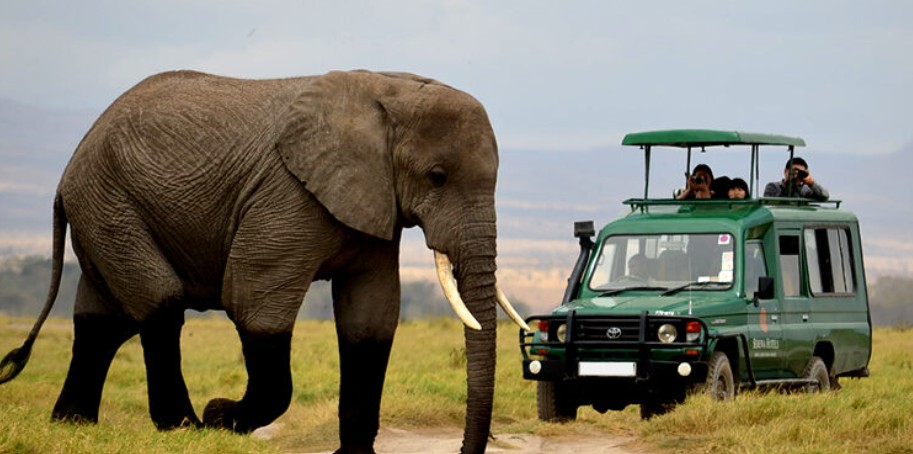
The update brings the total number of individually identified elephants in Akagera to 115, including 65 females and 50 males. These identified individuals represent approximately 80% of the park’s estimated elephant population, providing valuable insight into the composition, movements, and dynamics of Akagera’s herds.
Individual elephant identification is an important part of Akagera’s long-term conservation efforts, enabling monitoring teams to track individual animals, understand population trends, and support informed conservation and management decisions. Each new identification adds to the growing body of knowledge that helps protect and manage one of Africa’s most iconic species.
Established in 1934, Akagera National Park covers 1,120 square kilometres and is renowned for its diverse wildlife, including the Big Five — lions, leopards, elephants, and buffalo — alongside many other species that contribute to the park’s unique biodiversity.
The park’s remarkable wildlife recovery story has been highlighted by the growth of its lion population, which was revealed in August last year to have increased from just seven individuals to 62 over the past decade. This significant recovery demonstrates the impact of sustained conservation efforts, including improved protection, monitoring, and habitat management.
Additionally, in June last year, Akagera welcomed 70 southern white rhinos translocated from South Africa in a historic cross-continental conservation effort. The arrival significantly strengthened the park’s rhino population and built on the successful reintroduction of 30 white rhinos in 2021.
Together, these milestones reflect the continued success of conservation initiatives at Akagera, where careful monitoring, species reintroductions, and dedicated management are helping restore and safeguard some of Africa’s most iconic wildlife populations.
INDIVIDUAL ELEPHANT IDENTIFICATION UPDATE: The bi-monthly elephant survey was completed, resulting in the addition of six new individuals to the database. Akagera now has 115 individually identified elephants, comprising 65 females and 50 males, representing approximately 80% of… pic.twitter.com/kUCIOVQ1v9
— Akagera National Park (@AkageraPark) July 14, 2026
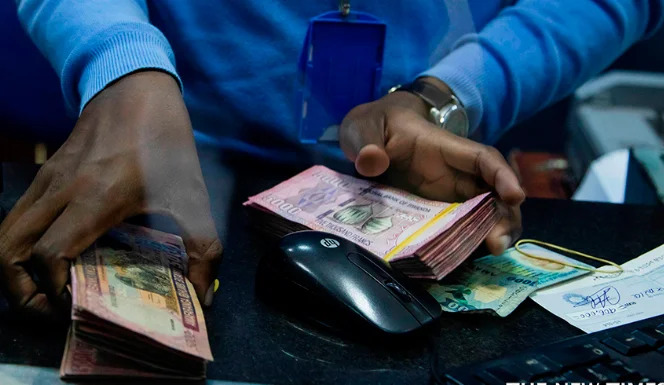
The budget comes as government institutions begin implementing their performance commitments for the 2026/27 financial year. To finance these national priorities, authorities are leaning heavily on domestic revenues. The Rwanda Revenue Authority, led by Commissioner General Ronald Niwenshuti, has set a target of collecting Rwf 4.6 trillion in domestic taxes, while local government taxes are expected to generate Rwf 165.9 billion.
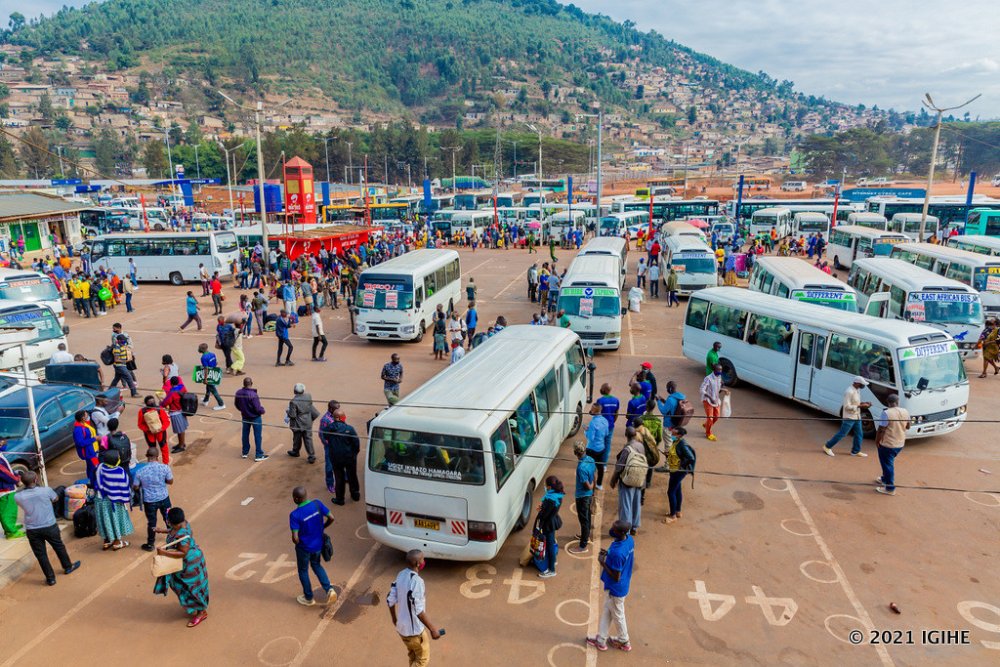
For ordinary Rwandans, the new fiscal year brings several notable changes to the prices of everyday goods and services due to shifting VAT rules, digital taxation measures, and tighter tax enforcement.
Here is a breakdown of how the new budget affects your wallet.
VAT exemption phase-outs on fuel, phones, and tech
For more than 15 years, petroleum products, mobile phones, and other ICT equipment enjoyed VAT exemptions in Rwanda. Under the government’s medium-term revenue strategy, these exemptions officially ended. Consequently, these products now attract the standard 18% Value Added Tax (VAT).
Because VAT is ultimately paid by the consumer, this tax is directly reflected in retail prices. For example, a smartphone or laptop that previously cost Rwf 250,000 may now cost upwards of Rwf 300,000 once VAT and distribution costs are factored in. While the tax on petroleum products feeds into overall transport and distribution costs, the government deployed a subsidy of Rwf 47.7 billion between March and June 2026 to help cushion retail fuel prices and prevent a sharper spike in transport fares.
Online purchases and digital services attract 18% VAT
Under Ministerial Order No. 004/26/10/TC, signed in April 2026, VAT is now officially charged on goods and services bought online, regardless of whether the seller is local or foreign. Foreign platforms selling to Rwandan consumers are legally required to register for VAT in Rwanda or appoint a local representative.
This new rule broadly affects online film and entertainment streaming subscriptions, software downloads, application purchases, cloud storage, and goods ordered from foreign online marketplaces. It also covers distance learning, virtual conferences, and online training programs, unless they are specifically exempt under existing educational laws. If foreign digital companies fail to comply with these rules, local financial institutions are mandated to withhold the 18% VAT during payment processing.
Foreign digital platforms pay a 1.5% digital services tax
On top of VAT, foreign digital companies operating in Rwanda will pay a 1.5% Digital Services Tax (DST) on the local revenues they generate. While this tax is charged directly to the multinational corporations, history shows that platforms frequently pass these operational tax costs down to the final consumer.
Gradual airtime tax increase continues
The excise duty on telecommunications, which includes airtime and mobile data bundles, continues its legislated, step-by-step climb toward 15% by 2027. This fiscal year brings another incremental step, meaning phone calls and data plans will cost slightly more.
Stricter VAT exemptions for local manufacturers
Until recently, industrial machinery and raw materials enjoyed automatic VAT exemptions. Under the April 2026 ministerial order, this tax break is no longer automatic. To qualify, manufacturing, assembling, or mining companies must be registered in Rwanda, demonstrate a direct link between the requested exemptions and their operations, maintain clean records, and prove that the value added to raw materials is at least 30%. If local factories face higher upfront costs, some of that pressure may trickle down to the retail prices of locally made goods.
Motorists: road maintenance levies and annual fees
Motorists face a structured series of levies to maintain the country’s road networks. First, petrol and diesel are subject to a 15% road maintenance levy based on the imported CIF (Cost, Insurance, and Freight) value. Additionally, the strategic fuel storage levy remains active, standing at Rwf 50 per litre, which is an increase from the historical Rwf 32.73.
Vehicle owners must also pay a fixed annual road use charge depending on the class of vehicle. Under this fee structure, passenger cars and Jeeps are charged Rwf 50,000 per year, while pick-ups, microbuses, minibuses, and buses pay Rwf 100,000. Larger transport vehicles face higher rates, with trucks and small trailers paying Rwf 120,000, and large trailers paying Rwf 150,000.
Retained 2025 excise and tourism taxes
Taxes introduced during the previous fiscal year remain in full force. This includes the 3% tourism accommodation levy on hotel and lodging stays, as well as the 0.2% environmental levy on imported goods packaged in plastic materials.
Imported hybrid cars continue to be taxed based on their age, with vehicles under 3 years old taxed at 5%, those aged 3 to 8 years taxed at 10%, and those older than 8 years taxed at 15%. Only hybrid vehicles fully assembled in Rwanda are exempt from this excise tax.
As a small relief, the highly discussed 15% tax on bank and mobile money transaction fees has been deferred and will not take effect until July 1, 2027. Additionally, fully electric vehicles (EVs) remain completely VAT-free until June 30, 2028.
Tighter EBM enforcement and consumer rewards
A major portion of the government’s revenue strategy relies on narrowing the tax gap through better collection rather than creating entirely new taxes. The RRA is heavily enforcing Electronic Billing Machine (EBM) compliance.
To incentivize tax compliance, the RRA continues its Tengamara na TVA program, which has registered over 1 million consumers. Under this initiative, shoppers who request an EBM receipt can receive a 10% cash reward linked to the VAT shown on their receipts. Furthermore, the government is planning reforms to the EBM system that will allow customers to initiate the receipt-generation process themselves, with the seller simply approving it.
Where your money goes
The Rwf 7.8 trillion budget, presented to Parliament by the Minister of Finance and Economic Planning, Yusuf Murangwa, is split into two major spending categories. Recurrent expenditure takes up Rwf 4.8 trillion, or 61.3% of the budget, which covers public sector salaries, administrative running costs, and public service operations. The remaining Rwf 3 trillion, representing 38.7% of the budget, is allocated to development expenditure to fund key infrastructure and development programs.
When looked at through strategic pillars, the economic transformation pillar receives the largest share of the budget at 62.9%, which is equivalent to Rwf 4.9 trillion. This funds agricultural inputs, fertilizer subsidies, electricity grid expansion, and key infrastructure, including Rwf 474.2 billion for the New Kigali International Airport in Bugesera. Meanwhile, the social welfare pillar receives 22%, or Rwf 1.8 trillion, to fund health services, education infrastructure, and community social protection safety nets. The remaining 15.1%, or Rwf 1.2 trillion, is allocated to the governance pillar to cover national security, public administration, and judicial services.
Ultimately, the 2026/27 budget is a delicate balancing act. While everyday digital services, fuel, and imports will cost slightly more, the government is betting that stronger tax compliance and robust domestic revenue collection will successfully fund major projects to drive Rwanda’s long-term economic growth.
For ordinary Rwandans, the new fiscal year brings several notable changes to the prices of everyday goods and services due to shifting VAT rules, digital taxation measures, and tighter tax enforcement.
The examinations will be conducted at 1,746 examination centres across the country, with candidates sitting for both Ordinary Level (O-Level) and Advanced Level (A-Level) assessments.
According to NESA, 149,533 candidates are registered for the O-Level examinations, while 108,722 candidates will sit for A-Level examinations.
The number of candidates has increased compared to the previous academic year, when 255,498 candidates were registered for the 2024/2025 Secondary National Examinations.
NESA also confirmed that 879 candidates with disabilities will participate in this year’s examinations.
“The candidates will receive the necessary accommodations and special support measures to ensure they can take part in the exams on an equal basis with other learners,” NESA said.
The Secondary School National Examinations are conducted annually to assess learners’ knowledge and competencies at the end of their secondary education cycles and determine progression to further education and training opportunities.
The examinations will be conducted at 1,746 examination centres across the country, with candidates sitting for both Ordinary Level (O-Level) and Advanced Level (A-Level) assessments.
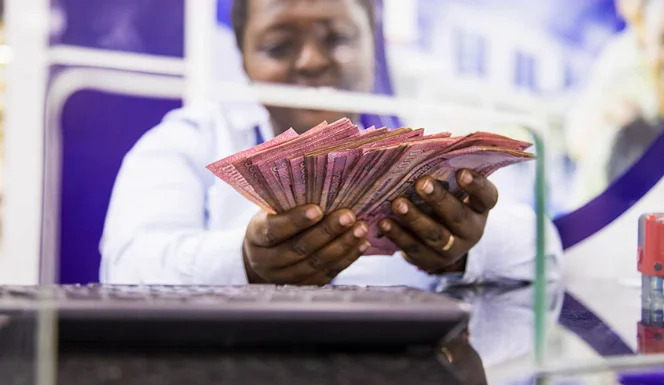
The new service will allow customers to send money from a bank account to a mobile wallet, from a mobile wallet to a bank account, and between accounts or wallets held with different providers through one interconnected platform.
The term Person-to-Person (P2P) interoperable transfers refers to the ability for individuals to send money directly to each other even when they use different banks or mobile money services.
NBR said the system will make digital payments faster, simpler and more affordable by reducing barriers between financial service providers.
In a public notice issued on July 13, the central bank described eKash as Rwanda’s national digital payment infrastructure that enables customers to “send, receive, and make payments across licensed financial institutions in a more accessible, reliable, affordable, and inclusive manner.”
From July 14, all P2P transfers between participating banks and electronic money issuers will be processed through eKash, creating a single connection point for licensed financial institutions.
According to the central bank, customers will continue using their existing bank accounts and mobile wallets, with no need to open new accounts or install additional applications.
The central bank has set a maximum transaction limit of Rwf10 million per transfer through eKash, while the highest fee that can be charged is Rwf20 per transaction. Financial institutions may apply lower fees, including zero charges, depending on their pricing policies.
“The maximum fee chargeable to customers for a Person-to-Person transfer through eKash is Rwf20 per transaction. Financial institutions may apply a lower fee, including zero fees, in line with their respective pricing decisions,” NBR said.
The central bank expects the initiative to improve financial inclusion by expanding access to digital financial services and strengthening Rwanda’s payment ecosystem.
NBR said it will continue supervising eKash operations, including system performance, service availability, customer protection and complaint handling.
The regulator also urged banks and electronic money issuers to educate customers about the service, including applicable fees, transaction limits and available support channels.
Customers needing assistance can contact their financial institution or reach NBR through the Intumwa Chatbot and its official communication platforms.
The introduction of eKash is expected to make digital transactions more accessible and affordable, with customers able to conduct bank-to-bank, wallet-to-wallet, bank-to-wallet and wallet-to-bank transfers instantly.
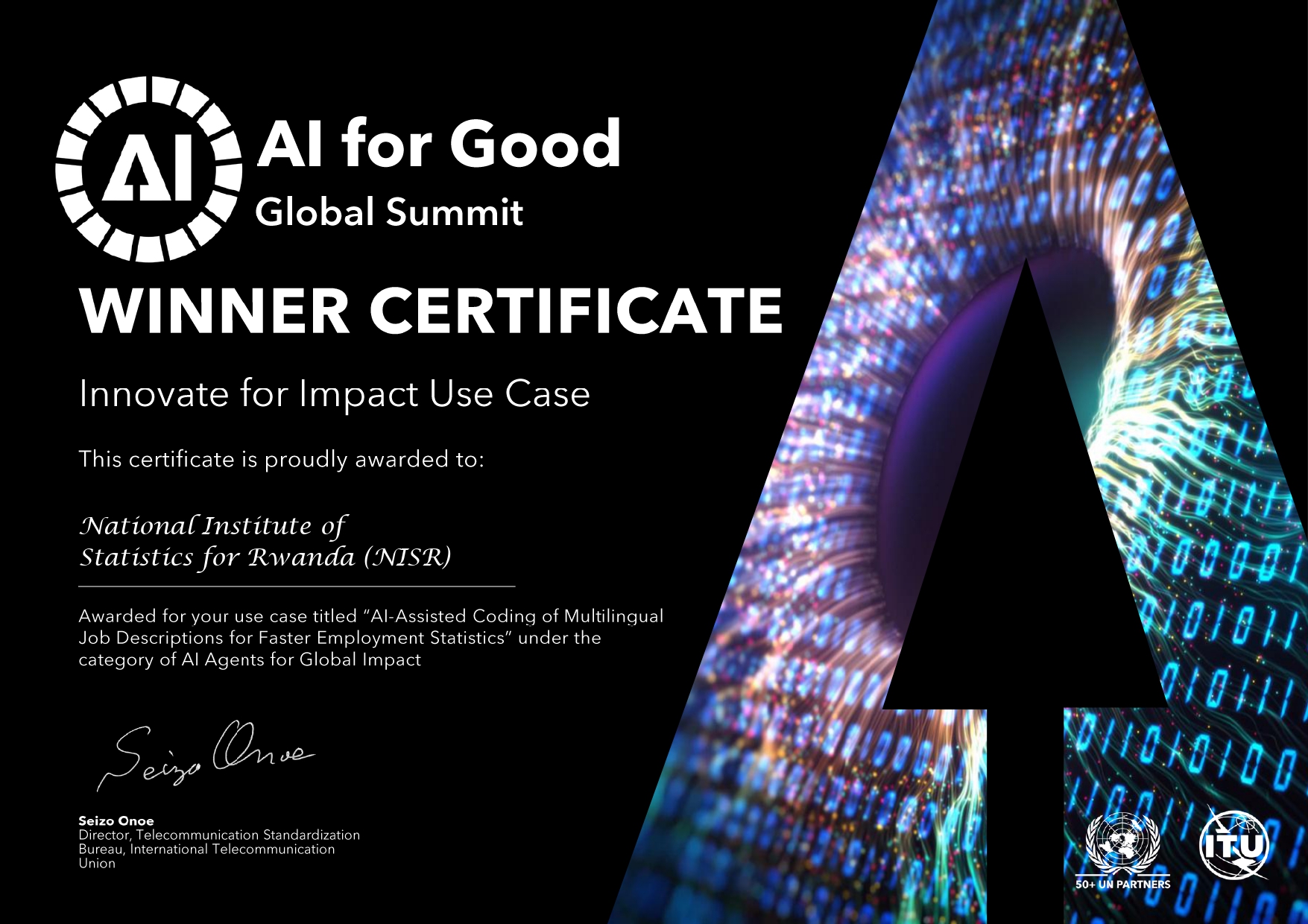
The National Institute of Statistics of Rwanda (NISR) received the Innovative Project for Impact Award for its AI-Assisted Coding of Multilingual Job Descriptions for Faster Employment Statistics project, which uses artificial intelligence to classify job and economic activity descriptions in Kinyarwanda, English and French.
The AI-powered tool is designed to accelerate the processing of Labour Force Survey data by automating the coding of job descriptions, a critical step in producing employment statistics. The innovation is expected to improve efficiency, reduce processing time and strengthen the production of timely official statistics for policy and planning.
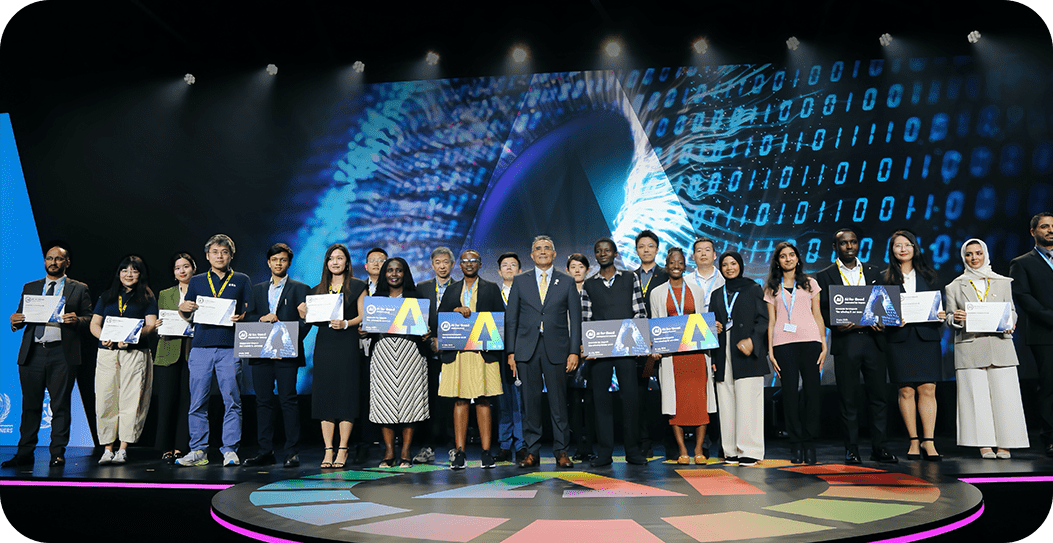
The award was announced during Innovate for Impact 2026, a programme under the AI for Good platform by the International Telecommunication Union (ITU) that identifies and supports AI solutions developed to address real-world challenges. The 2026 edition recognised 59 projects selected from nearly 400 global submissions.
The AI for Good Summit highlighted projects demonstrating how artificial intelligence can be applied to practical challenges, particularly in areas where scalable and resource-efficient solutions can deliver meaningful impact.
NISR’s project was among innovations recognised for its ability to address local needs while offering a model that can be adapted to other contexts. The use of multilingual AI is particularly significant in environments where language diversity can create challenges for data processing and digital services.
The project was developed under the first cohort of the Data Science Capacity Building Initiative (DSCBI) through collaboration with the Ministry of ICT and Innovation, the Rwanda Information Society Authority (RISA), the African Institute for Mathematical Sciences – Rwanda (AIMS Rwanda), Mastercard, and Cenfri. The initiative aimed to strengthen data science capacity and support the adoption of advanced technologies in addressing development challenges.
NISR said the recognition reflects the Government of Rwanda’s visionary leadership and commitment to leveraging artificial intelligence to strengthen the production of official statistics.
The award comes as Rwanda continues to expand its focus on responsible AI development and adoption. President Paul Kagame attended the AI for Good Global Summit 2026 in Geneva, Switzerland, in his capacity as Co-Chair of the newly launched AI for Good Global Commission.
Addressing heads of state, technology leaders, investors and development partners, President Kagame called for greater investment in infrastructure, skills development and accountable governance to ensure AI benefits communities worldwide.
“We must be intentional about designing, funding, and governing AI so that it can reach its full potential,” Kagame said last Wednesday.
He identified access to computing infrastructure, connectivity and reliable energy as key priorities, alongside the development of skills needed for an AI-driven economy and governance frameworks that promote trust and transparency.
President Kagame also highlighted Rwanda’s practical applications of AI, including the Health Intelligence Center, which uses real-time health data and artificial intelligence to support disease prediction and policy decisions.
In June 2026, Rwanda’s Cabinet approved the establishment of the National Artificial Intelligence Agency, which will coordinate AI development, innovation, investment, adoption and governance as part of the country’s digital transformation agenda.
The AI for Good Global Summit, organised by the International Telecommunication Union (ITU), continues to serve as a platform for showcasing AI solutions that advance inclusive development. Rwanda’s recognition at the summit demonstrates how locally developed technologies can contribute to global efforts to use artificial intelligence for social and economic progress.
The National Institute of Statistics of Rwanda (NISR) received the Innovative Project for Impact Award for its AI-Assisted Coding of Multilingual Job Descriptions for Faster Employment Statistics project.The award was announced during Innovate for Impact 2026, a programme under the AI for Good platform by the International Telecommunication Union (ITU) that identifies and supports AI solutions developed to address real-world challenges. The 2026 edition recognised 59 projects selected from nearly 400 global submissions.
The final day of the rally was held on Sunday, July 12, 2026, in Bugesera District, bringing to an end a competition that attracted more than 30 rally cars.
Five crews competing in the event were sponsored by BPR Bank Rwanda PLC through KCB Group.
Four of them finished among the top performers, while the only crew that failed to complete the rally was that of Queen Kalimpinya after her Subaru Impreza developed a mechanical problem.
Karan Patel and his co-driver, Tauseef Khan, both from Kenya, emerged as the overall winners after steering their Skoda Fabia R5 to victory. The triumph marked Patel’s fourth Rwanda Mountain Gorilla Rally title.
Another BPR Bank-sponsored crew, Nikhil Sachania and his co-driver, Patel Deep, driving a Ford Fiesta, finished sixth overall in the African Rally Championship standings for the event.
The bank also backed Tinashe Gatimu and his co-driver, Caroline Gatimu. Driving a Ford Fiesta, the pair successfully completed the rally in the National Rally Championship category.
Oscar Ntambi and his co-driver, Luggya Pius, driving a Subaru Impreza, secured second place in the African Rally Championship 2 (ARC2) category, finishing behind Christian Kanangire and Kevin Mujiji.
BPR Bank Rwanda PLC, in partnership with KCB Group, has reaffirmed its commitment to supporting the drivers as they prepare for the final round of the 2026 African Rally Championship, which is scheduled to take place in Tanzania in October.
The bank has already supported the crews during previous championship rounds held in Kenya and Uganda.
The rally also provided BPR Bank with an opportunity to engage with motorsport enthusiasts by showcasing its products and services.
Fans who attended the event received information about the bank’s financial solutions, while some were assisted in opening new bank accounts.
The impressive performances recorded by BPR Bank-sponsored crews highlighted the role of corporate sponsorship in promoting motorsport and nurturing rally talent in Rwanda and across the region.
Some of the drivers sponsored by BPR Bank Rwanda PLC posing for a photo.Ntambi Oscar is one of the drivers sponsored by BPR Bank Rwanda PLC.Despite living with a disability, Nikhil Sachania thrilled spectators with his performance during the rally.BPR Bank Rwanda PLC was the main sponsor of the competition.BPR Bank Rwanda PLC sponsored several drivers who competed in the rally.Drivers sponsored by BPR Bank Rwanda PLC delivered outstanding performances at the 2026 Rwanda Mountain Gorilla Rally.
The visit took place on the evening of July 12, 2026, when The Ben hosted Ashton Hall and his companions for a special dinner. The guests shared a meal, exchanged conversations and enjoyed an evening of celebration together.
Upon their arrival at The Ben’s residence, Ashton Hall and his team were welcomed by children from the Sherrie Silver Foundation, who entertained them with a series of performances featuring both traditional Rwandan dances and modern choreography.
Although no formal speeches had been planned, Ashton Hall asked for a brief moment to express his gratitude to The Ben and everyone who was present. He said Rwanda was the country that had touched his heart the most among all the places he had visited, adding that he hoped to return in the future.
“Among all the countries I have travelled to, I felt the strongest connection in Rwanda. I believe I will return because I have developed a special love for this country,” Ashton Hall said.
Ashton Small, popularly known as Kagarara, did not arrive at The Ben’s home with the rest of the group. He joined the gathering later but left shortly afterwards.
Explaining why he could not stay longer, Ashton Small revealed that he had lost his nephew, forcing him to leave early so he could support his family as they prepared for the funeral arrangements.
“This is not because I do not want to be here. I would have loved to stay, share this moment and enjoy time with everyone, but my sister lost her child. I have to leave early to see how the family arrangements are going,” he said.
The Ben had initially planned to host Ashton Hall on July 10, 2026, but the meeting was postponed after Ashton Hall arrived late at Kigali International Airport and missed his scheduled flight back home.
After missing the flight, Ashton returned to his hotel and continued with other activities that had been planned during his visit but had not yet been completed.
The delay made Rwanda the country where Ashton Hall spent the longest time during his African tour. Before arriving in Rwanda, he had visited several African countries, including Ghana, Nigeria, Cameroon and Benin.
During his stay, Ashton Hall’s visit attracted significant attention from fans and social media users, many of whom praised the cultural experiences and hospitality he received in Rwanda.
Upon arriving at The Ben’s home, Ashton Hall was welcomed by children from the Sherrie Silver Foundation.Ashton Hall was gifted traditional Rwandan attire.Children from the Sherrie Silver Foundation also entertained Ashton Hall with traditional Rwandan dances.The Ben introduces Ashton Hall to his friends who joined him in welcoming the guest.Ashton Hall was touched by the warm hospitality and kindness shown by The Ben.Kagarara, also known as Ashton Small, arrived at The Ben’s home but did not stay long after his sister lost her child.The Ben then welcomed Ashton Hall to the table, where they shared a meal together.
President Kagame was received on July 13, 2026, by Qatar’s Emir, Sheikh Tamim bin Hamad Al-Thani, at Lusail Palace, where he conveyed his condolences following the passing of the former Emir, who was Sheikh Tamim’s father.
The meeting was attended by Qatar’s Deputy Emir Sheikh Abdullah bin Hamad Al-Thani; Sheikh Khalid bin Hamad Al-Thani; Sheikh Jassim bin Hamad Al-Thani, the Personal Representative of the Emir; Sheikh Abdulaziz bin Khalifa Al-Thani; Sheikh Abdullah bin Khalifa Al-Thani; Sheikh Mohammed bin Khalifa Al-Thani and Sheikh Jassim bin Khalifa Al-Thani.
Also present were Prime Minister and Minister of Foreign Affairs Sheikh Mohammed bin Abdulrahman bin Jassim Al-Thani and Speaker of the Shura Council Hassan bin Abdullah Al Ghanim, alongside other senior officials.
Sheikh Hamad passed away on the morning of July 12, 2026. His family has not disclosed the cause of his death.
Following his passing, President Kagame extended his condolences to Sheikh Tamim bin Hamad Al-Thani and members of the Qatari royal family, describing Sheikh Hamad as a leader who left behind a legacy of public service and commitment to strengthening relations with other nations.
“His Highness Sheikh Hamad bin Khalifa Al Thani will be remembered as a visionary leader who transformed Qatar into the remarkable nation it is today. His legacy of service to his people and commitment to friendship and cooperation among nations will endure for generations.
“At this difficult time, the people of Rwanda and I stand with His Highness Sheikh Tamim Bin Hamad and our Qatari brothers and sisters,” President Kagame posted on X.
Sheikh Hamad played a significant role in transforming Qatar’s economic and political landscape, helping the country emerge as an influential player on the global stage.
During his rule, Qatar experienced major economic growth, social development and cultural advancement, increasing its international profile.
He was also instrumental in expanding Qatar’s capabilities, particularly by leveraging the country’s vast energy resources to drive development.
Under his leadership, Rwanda and Qatar strengthened bilateral relations based on shared priorities of promoting economic growth and improving citizens’ welfare.
These ties continued to deepen after Sheikh Hamad handed over power to his son, Sheikh Tamim bin Hamad Al-Thani, in 2013.
President Paul Kagame has travelled to Doha, Qatar, where he has joined the country’s leadership and citizens in mourning Sheikh Hamad bin Khalifa Al-Thani.
According to the latest Consumer Price Index (CPI) report released by the National Institute of Statistics of Rwanda (NISR), the Urban CPI, the country’s headline measure for monetary policy, increased by 0.4% on a monthly basis, while the annual average inflation rate for the 12 months to June stood at 9.3%.
Transport, which has been affected by rising fuel prices stemming from the Middle East crisis, remained one of the biggest drivers of inflation. Transport costs rose 26.0% compared with June last year and increased 1.2% over the previous month. Housing, water, electricity, gas and other fuels also continued to exert pressure on household budgets, recording a 20.5% annual increase and a 0.7% monthly rise.
Healthcare prices posted the sharpest annual increase among major consumer spending categories, soaring 71.2% year-on-year, while restaurants and hotels became 15.9% more expensive. Alcoholic beverages, tobacco and narcotics also recorded a 13.0% annual increase.
Food and non-alcoholic beverages, which account for the largest share of household spending, increased 7.5% annually despite declining 0.3% from May. Within the category, vegetable prices rose 13.1% year-on-year, matching the increase recorded for meat, while non-alcoholic beverages rose 9.4%.
The Energy Index remained elevated, increasing 44.8% annually, while the Local Goods Index rose 14.7%, outpacing the 10.5% increase recorded for imported goods. Fresh products increased 9.1% over the year.
Core inflation, which excludes fresh food and energy, stood at 12.3%, indicating that underlying price pressures remain strong across the economy. The annual average inflation rate over the past 12 months was 9.3%.
In rural areas, annual inflation reached 12.1%, with consumer prices increasing 0.4% over the previous month. Nationally, the Overall Rwanda Consumer Price Index rose 12.7% compared with June 2025 and also increased 0.4% on a monthly basis.
The NISR compiles the Consumer Price Index using prices collected for approximately 1,622 products across Rwanda. Every month, the institute gathers more than 29,482 price observations in urban areas and 10,744 in rural areas from markets, shops, schools, hospitals and other outlets.
The Urban CPI remains the principal inflation indicator used by the National Bank of Rwanda (BNR) to assess price stability and guide monetary policy decisions.
Transport, which has been affected by rising fuel prices stemming from the Middle East crisis, remained one of the biggest drivers of inflation. Transport costs rose 26.0% compared with June last year and increased 1.2% over the previous month.
During the 1994 Genocide against the Tutsi, Nyiramasuhuko lived at her home in Butare.
Witnesses have testified that she supervised roadblocks where Tutsi were intercepted, including one located near her residence.
Historical records indicate that after the killing of Jean Baptiste Habyalimana, the Tutsi prefect of Butare, Nyiramasuhuko called on Interahamwe militia, including those led by her son, Arsène-Shalom Ntahobali, to exterminate all Tutsi in the region.
Witnesses also testified that she ordered the Interahamwe to torture and kill Tutsi civilians, and instructed them to rape victims before murdering them.
In June 2011, the former International Criminal Tribunal for Rwanda (ICTR), based in Arusha, Tanzania, sentenced Nyiramasuhuko and her son to life imprisonment.
Both were convicted of conspiracy to commit genocide, genocide, direct and public incitement to commit genocide, and crimes against humanity, including rape and torture.
They appealed the verdict, and in December 2015 the ICTR Appeals Chamber reduced their sentences to 47 years in prison.
According to reports by the Collectif des Parties Civiles pour le Rwanda (CPCR), an organization that supports the prosecution of genocide suspects, Nyiramasuhuko’s name has repeatedly surfaced during Dr. Rwamucyo’s appeal hearings, which began on June 9, 2026.
On July 3, a witness who said he had known Dr. Rwamucyo since 1993 told the court he saw him at a roadblock in Butare alongside members of Maurice Ntahobali’s family, including Nyiramasuhuko, Shalom Ntahobali, and Chrysostome Nkezabahizi, the then head of the National Office of Population (ONAPO).
The witness testified that Dr. Rwamucyo and the others at the roadblock were wearing military uniforms and carrying firearms, adding that they appeared to be directing the Interahamwe militia responsible for killing Tutsi civilians.
CPCR further maintains that Dr. Rwamucyo had a long-standing relationship with Nyiramasuhuko and notes that his name appeared several times in her personal diary, which recorded meetings and appointments involving the two.
However, on July 7, Dr. Rwamucyo told the court that he did not know Nyiramasuhuko and had never spoken to or arranged meetings with her. He said the only time they crossed paths was briefly at ONAPO offices in Butare.
When questioned about his name appearing in Nyiramasuhuko’s diary, he denied that it referred to him, claiming it belonged instead to another “Eugène Rwamucyo from Butare.”
Two days later, on July 9, prosecutors pointed out that the telephone number listed next to the name in Nyiramasuhuko’s diary matched his own. Dr. Rwamucyo nevertheless repeated that the entry referred to another person with the same name.
As prosecutors continued pressing him about his relationship with the former minister, Dr. Rwamucyo changed his explanation. He argued that there was a reason why his name appeared at the end of the contact list and claimed the handwriting in the diary was inconsistent. “Why was I added to these diaries?” he asked the court.
Dr. Rwamucyo ultimately acknowledged that the “Eugène Rwamucyo” listed in Nyiramasuhuko’s diary was indeed him, but insisted that whoever entered his details into the diary had done so without informing him.
Dr. Eugène Rwamucyo, who was sentenced to 27 years in prison, told the court that he had no connection to Pauline Nyiramasuhuko.Pauline Nyiramasuhuko was convicted of genocide and crimes against humanity and sentenced to 47 years in prison.