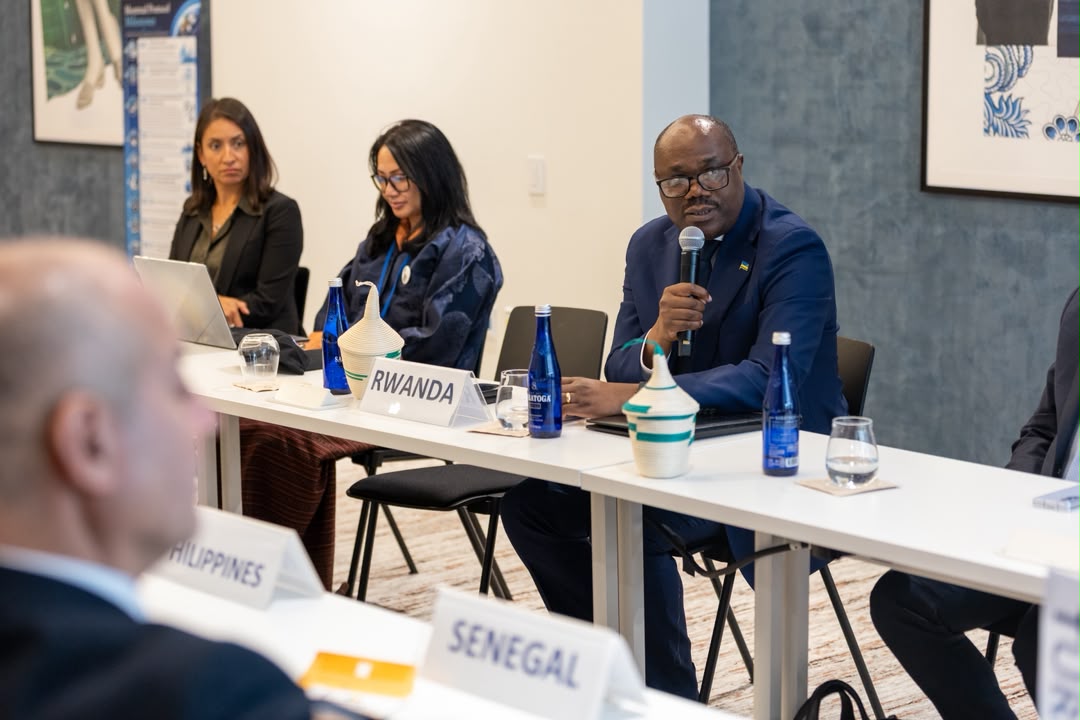
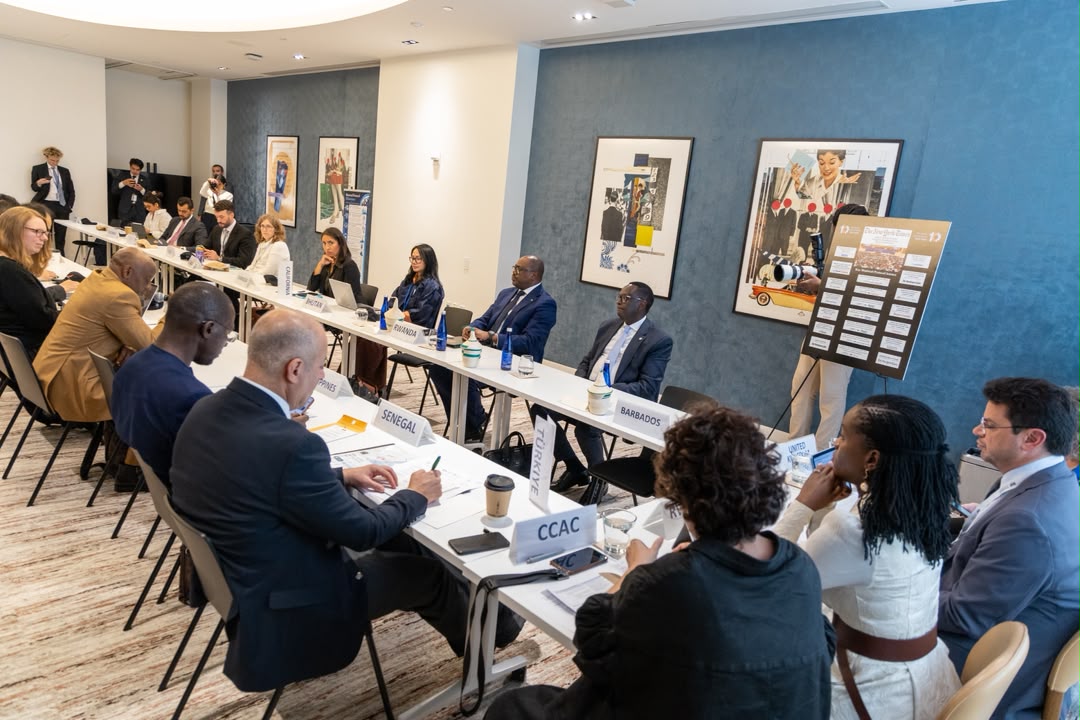
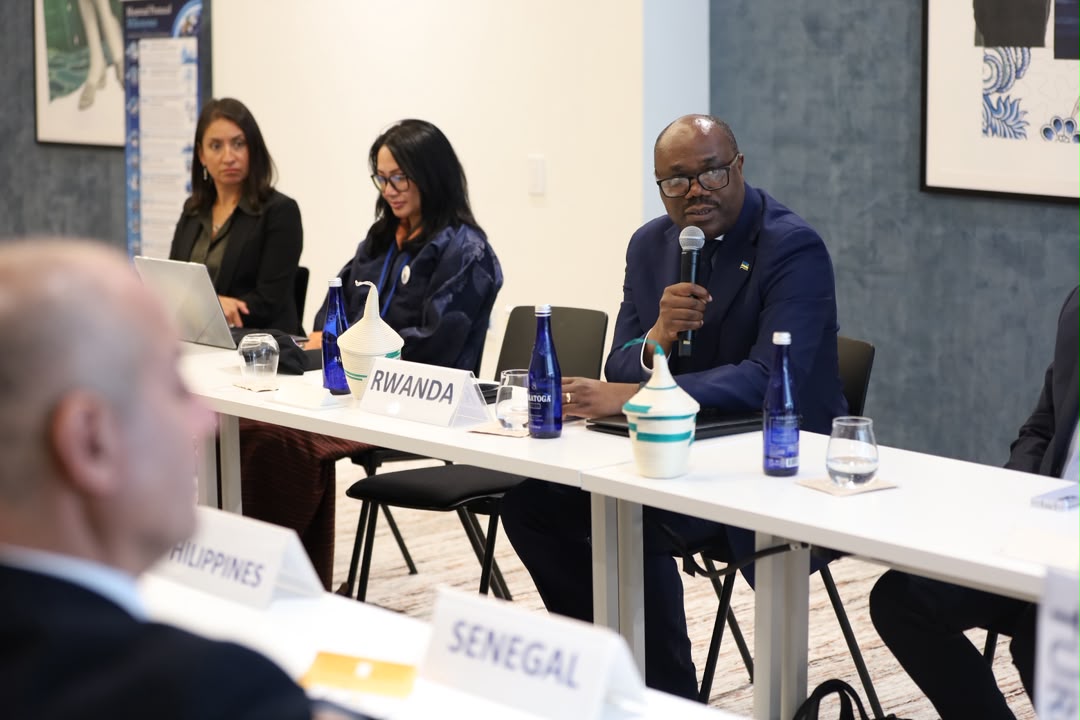
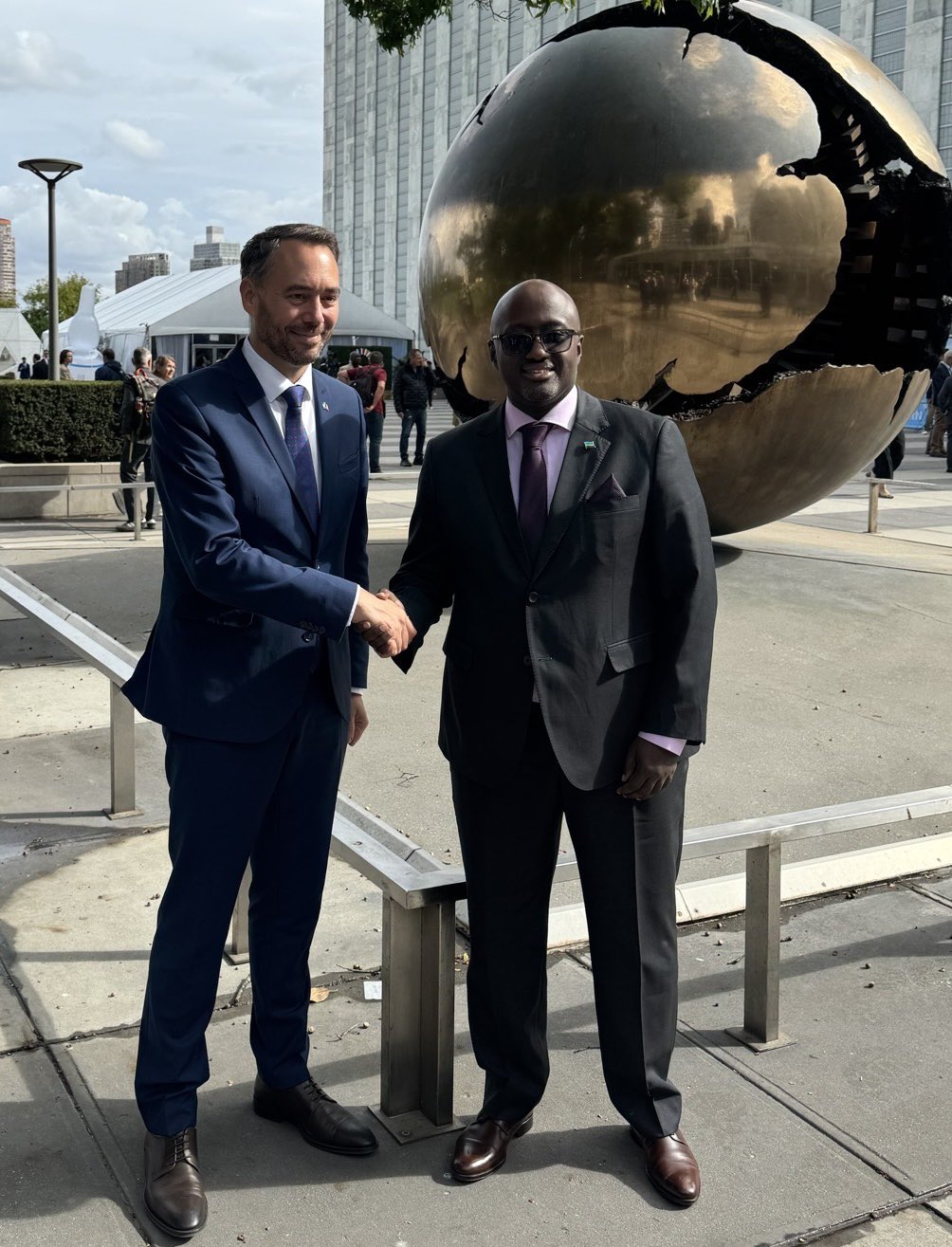
Dr. Nsengiyumva made the remarks on September 23, 2026, in New York, where he delivered closing remarks at an event marking the 10th anniversary of the Kigali Amendment and the renewal of the Friends of the Kigali Amendment.
“The Kigali Amendment has shown us what is possible when countries come together around a shared environmental challenge and turn ambition into collective action,” he said, while stressing that “adoption was only the beginning.”
He said the real test now is how quickly countries can translate their commitments into improvements in people’s daily lives.
The Prime Minister linked sustainable cooling to practical development needs, citing healthcare, agriculture and energy costs as areas where progress can have a direct impact.
He said reliable and sustainable cooling can determine whether hospitals are able to safely refrigerate vaccines and medicines, while cold-chain infrastructure can help farmers preserve their produce, reach markets on time and reduce losses.
“This is why sustainable cooling cannot be treated only as a climate priority. It is a development priority,” Dr. Nsengiyumva said.
The Kigali Amendment, adopted in Kigali in 2016, expanded the Montreal Protocol’s scope by requiring countries to gradually reduce the production and consumption of hydrofluorocarbons (HFCs), potent greenhouse gases widely used in refrigeration and air conditioning.
Ten years after its adoption, the Amendment has gained broad international participation. As of August 10, 2026, 174 countries had ratified it, according to the Ozone Secretariat.
The Ozone Secretariat says the Amendment has helped drive the transition towards more energy-efficient and sustainable cooling technologies. Its 2026 anniversary campaign describes the past decade as a period in which the agreement has linked climate action with development, industrial capacity and innovation.
Officially reported data also show that global HFC production and consumption peaked in 2023 before beginning to decline. By 2024, consumption was reported to be 30 percent below the collective baseline established under the Kigali Amendment.
Dr. Nsengiyumva said Rwanda is seeking to contribute to this transition through the African Centre of Excellence for Sustainable Cooling and Cold-chain, which brings together technology, skills, research and investment to address challenges in food systems and healthcare.
He said Rwanda’s experience should serve as a “proof of concept” that can eventually be scaled beyond the country.
The Prime Minister identified four priorities for the renewed Friends of the Kigali Amendment: bringing every country into the agreement, accelerating implementation, mobilising partnerships and resources, and ensuring industry contributes to making efficient, climate-friendly cooling technologies available at scale.
He also called for greater involvement from philanthropy, civil society, the private sector, financial institutions and organisations such as the Climate and Clean Air Coalition.
His remarks come ahead of the 38th Meeting of the Parties to the Montreal Protocol, which Rwanda will host in Kigali from November 2 to 6, 2026.
The meeting will take place in the same city where the Kigali Amendment was adopted a decade ago, giving Rwanda an opportunity to host countries as they assess progress and consider the next phase of implementation.
Dr. Nsengiyumva said Rwanda looks forward to welcoming participants back to Kigali, urging countries and partners to move “from commitment to implementation, from implementation to impact, and from ambition to results.”
The event was held in New York on September 23, 2026, bringing together government representatives and partners to mark the 10th anniversary of the Kigali Amendment and renew the Friends of the Kigali Amendment.Prime Minister Dr. Justin Nsengiyumva has urged countries to accelerate the implementation of the Kigali Amendment and ensure efficient, climate-friendly cooling technologies are available at scale.
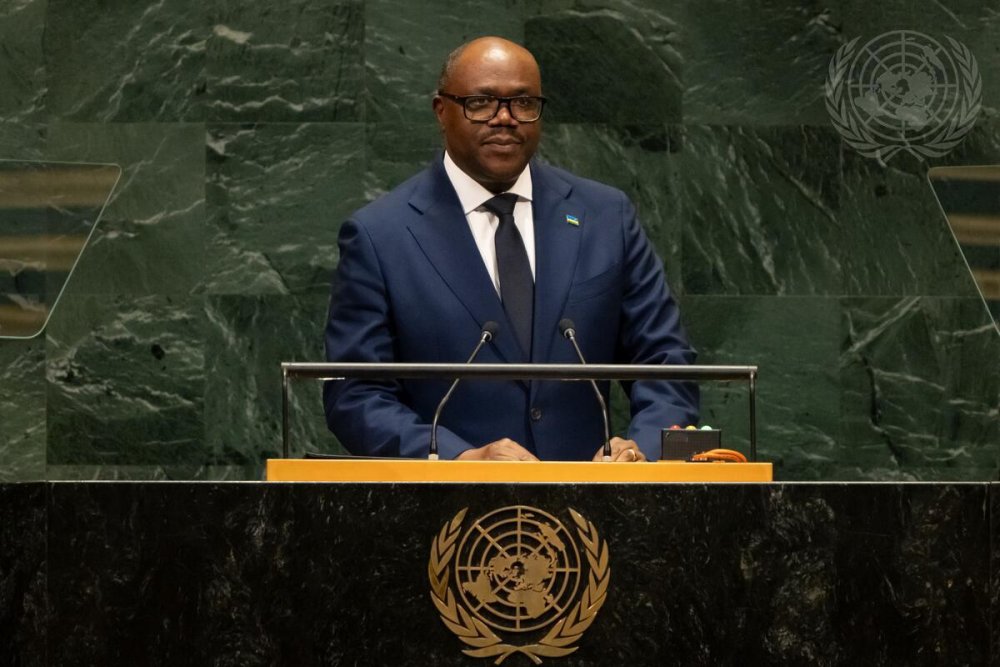
Nsengiyumva made the remarks while delivering Rwanda’s national statement at the 81st Session of the United Nations General Assembly in New York on Wednesday, September 23, 2026.
“There is no lasting peace without confronting the root causes of the conflict and addressing the legitimate concerns of all those affected,” he told the Assembly.
The Prime Minister said the roots of the conflict in Eastern DRC are political and linked to long-standing grievances, exclusion and failures of governance.
“The solution, too, must be political,” he said.
Nsengiyumva affirmed that Rwanda supports ongoing diplomatic efforts aimed at resolving the conflict, citing the Washington Accords between Rwanda and the DRC and the Doha Process between the DRC and AFC/M23 as steps in the right direction.
He also commended US President Donald Trump, Qatar’s Emir Sheikh Tamim bin Hamad Al Thani and the African Union mediator, Togo’s President Faure Gnassingbé, for their efforts to advance the peace processes.
Rwanda, he maintained, remains committed to a region where countries can coexist peacefully, trade and develop together.
“We call on all actors, including the Security Council, to support these same peace efforts fairly, and to encourage all parties to honour their commitments,” Nsengiyumva urged.
FDLR remains a concern
In his address, the Prime Minister also raised the threat posed by the Democratic Forces for the Liberation of Rwanda (FDLR), describing the militia group linked to the 1994 Genocide against the Tutsi as a longstanding security concern.
“For more than three decades, the FDLR has spread genocidal ideology, committed grave abuses in Eastern DRC, and directly threatened Rwanda’s security, including through cross-border attacks,” he stressed.
Nsengiyumva told the Assembly that the FDLR operates alongside Burundian troops and DRC-sponsored militias and mercenaries, saying this violated international and regional conventions on mercenaries.
The remarks come amid ongoing diplomatic efforts to address the conflict in Eastern DRC, where Rwanda and the DRC have been involved in negotiations under separate Washington and Doha processes.
Rwanda has consistently called for the threat posed by the FDLR to be addressed as part of efforts to resolve tensions with the Kinshasa administration and the broader conflict involving AFC/M23 in eastern DRC.
Call for UN reform
Nsengiyumva also used his address to call for reforms that would enable the UN to respond more effectively to global challenges.
He said the organisation had yet to demonstrate that it can sufficiently adapt to a changing and uncertain world, arguing that its legitimacy should be measured by what it delivers.
“Institutions earn legitimacy not by what they promise, but by what they deliver year after year,” he stated.
The Prime Minister said the UN had often been more effective at responding to crises than anticipating them, citing pandemics, climate shocks, technological disruption and conflict.
He argued that prevention should extend beyond armed conflicts to addressing conditions that leave countries vulnerable to poverty, economic shocks and exclusion from opportunities.
“An international system that gives all countries a fair opportunity to determine their own development pathways must be central to the UN80 reform process,” Nsengiyumva said.
He also emphasised that Rwanda welcomed the session’s focus on restoring trust through prevention, inclusion and reform and said Kigali was ready to work with other UN member states toward those goals.
PM Nsengiyumva is representing President Kagame at the 81st Session of the UN General Assembly.
The high-level General Debate brings together heads of state, heads of government and other senior representatives from the 193 UN member states.
The session is being held under the theme “Restoring trust, managing transformation: A United Nations that delivers for all.”
The agenda includes discussions on multilateral cooperation, peace and security, sustainable development, climate action, public health and human rights.
Beyond delivering Rwanda’s national statement, Nsengiyumva is scheduled to participate in high-level meetings, side events and bilateral engagements with international partners during his time in New York.
Rwanda’s Prime Minister Justin Nsengiyumva has challenged the United Nations to help address the root causes of the conflict in Eastern Democratic Republic of Congo, stressing that there can be no lasting peace without confronting them.
A hospital needs sophisticated equipment. A patient may require an advanced prosthetic device. A clinician depends on reliable imaging technology. Health systems increasingly rely on digital tools to manage information and deliver care.
Behind many of these needs is a profession that brings engineering into the world of healthcare: Biomedical Engineering.
For students in Rwanda who are drawn to both technology and health sciences, UMST is opening a new academic pathway. The university has received accreditation from Rwanda’s Higher Education Council for its Bachelor’s degree in Biomedical Engineering, becoming the first university in Rwanda to receive accreditation for an undergraduate program in the field.
The program comes at a time when healthcare is becoming increasingly dependent on technology and when countries need professionals capable of understanding, managing and developing that technology.
Where engineering meets healthcare
Biomedical Engineering combines engineering with medical and biological sciences to address practical healthcare challenges.
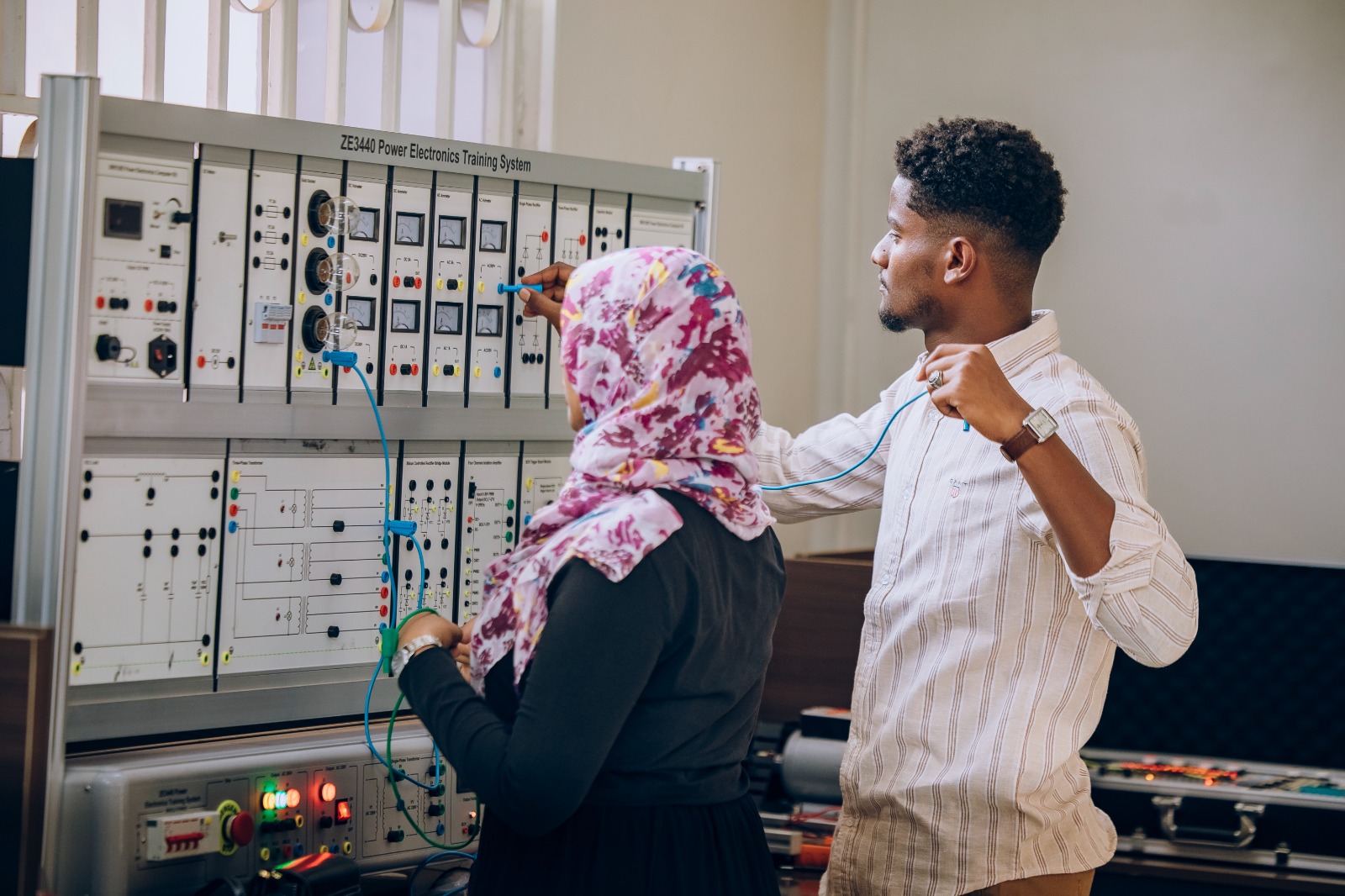
At UMST, students will be introduced to three specialized areas: Bioinstrumentation Technology, Medical Imaging and Medical Informatics.
The applications are wide range. Graduates can contribute to medical-device development and management, imaging technologies, rehabilitation, health information systems, research, innovation and other areas where technology intersects with patient care.
It is a field for students who want to ask not only what is the problem? but also how can we design a solution?
A program that demands strong science
Biomedical Engineering is not a shortcut to healthcare. It is a rigorous discipline requiring students to work across several areas of science and engineering.
At UMST, students can enter the program with PCB, MCB or PCM combinations. Their training will require a strong foundation in Mathematics and Physics alongside Biology, computing, engineering principles and practical problem-solving.
The interdisciplinary nature of the program is central to its appeal. A student may need to understand how the human body works, analyze a technical problem and then apply engineering principles to develop or improve a solution.
That combination requires curiosity, discipline and the willingness to learn beyond a single subject.
Learning from technology and experience
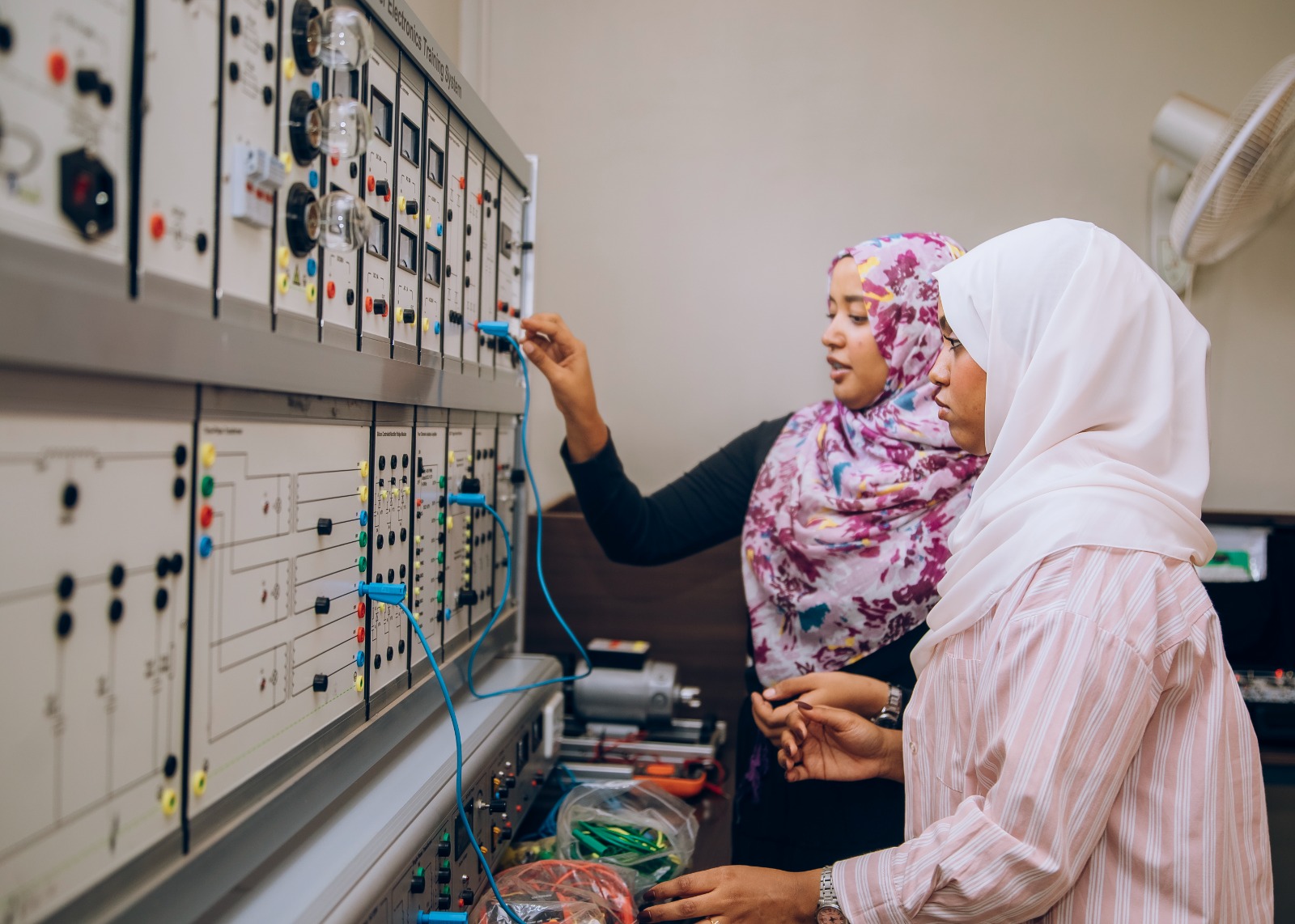
The program is supported by UMST’s state-of-the-art technology and modern teaching and learning resources, designed to connect theoretical knowledge with practical training.
Students will also benefit from the university’s combination of experienced professors and industry practitioners, bringing academic expertise and professional experience into the classroom.
For a discipline as practical as Biomedical Engineering, that connection matters. Understanding a device from a textbook is different from understanding how technology performs in a real healthcare environment.
Eng. Mushtaq Mahyoob, Dean, College of Biomedical Engineering said: “Biomedical Engineering requires students to think across disciplines. We want them to understand the healthcare problem, identify where technology can make a difference and develop the engineering skills needed to create safe and practical solutions. Accreditation is an important milestone, but our greater goal is to prepare engineers who can contribute meaningfully to healthcare innovation in Rwanda and beyond.”
Careers beyond the classroom
The career possibilities extend well beyond a traditional engineering workplace.
Biomedical engineers can work in hospitals, medical-device companies, research institutions, universities, technology companies, rehabilitation services and healthcare technology management. The field also provides a foundation for research, innovation and entrepreneurship.
For Rwanda, developing this expertise locally could help strengthen the country’s capacity to manage existing healthcare technologies while creating solutions suited to local needs.
The opportunity is not confined to Rwanda either. UMST’s graduates have built careers internationally, including in the United Arab Emirates, United Kingdom, Canada and Australia, among other destinations.
For prospective students, that international reach demonstrates the potential for a career that can move across healthcare systems and national borders.
Different professions, one healthcare mission
A new academic milestone for UMST
UMST has been recognized as a university since 1996, building its academic identity over nearly three decades.
The accreditation of the Biomedical Engineering degree UMST-Rwanda Campus adds a new chapter to that history. It also reflects the university’s stated commitment to specialized education that responds to the needs of the healthcare sector while keeping pace with developments in technology and medical innovation.
For students, the significance is clear.
They are not simply choosing another engineering degree. They are entering an emerging profession at the intersection of two rapidly evolving fields.
A student’s perspective
“I chose Biomedical Engineering because I wanted a career where I could use engineering and technology to solve real healthcare problems. The program is challenging because it brings different sciences together, but that is also what makes it exciting,” says Margany Esam Mahjon.
Frequently asked questions
Who should consider Biomedical Engineering?
Students with an interest in Mathematics, Physics, Biology, technology and practical problem-solving.
Which combinations are accepted?
UMST accepts PCB, MCB and PCM, subject to the university’s current admission requirements.
Is Biomedical Engineering the same as medicine?
No. It is an engineering discipline applied to healthcare. Biomedical engineers and doctors have different professional responsibilities and work as complementary members of the wider health system.
Where can graduates work?
Potential areas include hospitals, medical-device companies, research and innovation centres, technology companies, rehabilitation services, universities and healthcare technology management.
Can the degree lead to international careers?
Biomedical Engineering is an internationally relevant field, although professional requirements vary by country. UMST graduates already work in several international markets, including the UAE, UK, Canada and Australia.
The future needs people who can build
Healthcare’s future will depend not only on those who diagnose and treat disease, but also on those who develop the technologies that make better diagnosis, treatment and rehabilitation possible.
That is the opportunity Biomedical Engineering presents.
And at UMST, Rwanda’s first accredited undergraduate program in the field gives a new generation of students the opportunity to be part of that future.
For students who want to combine science, engineering and purpose, the next healthcare breakthrough could be theirs to build.
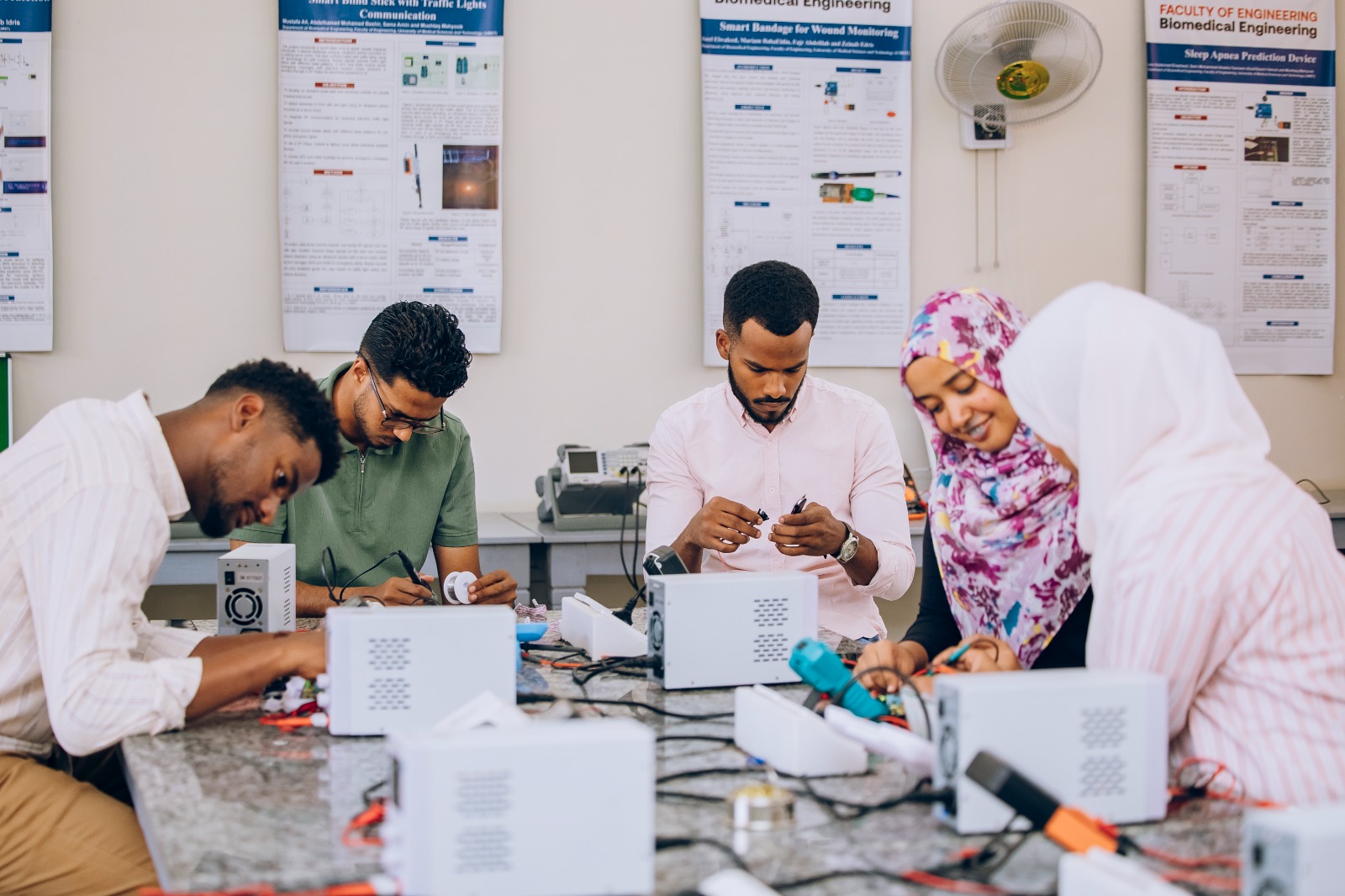
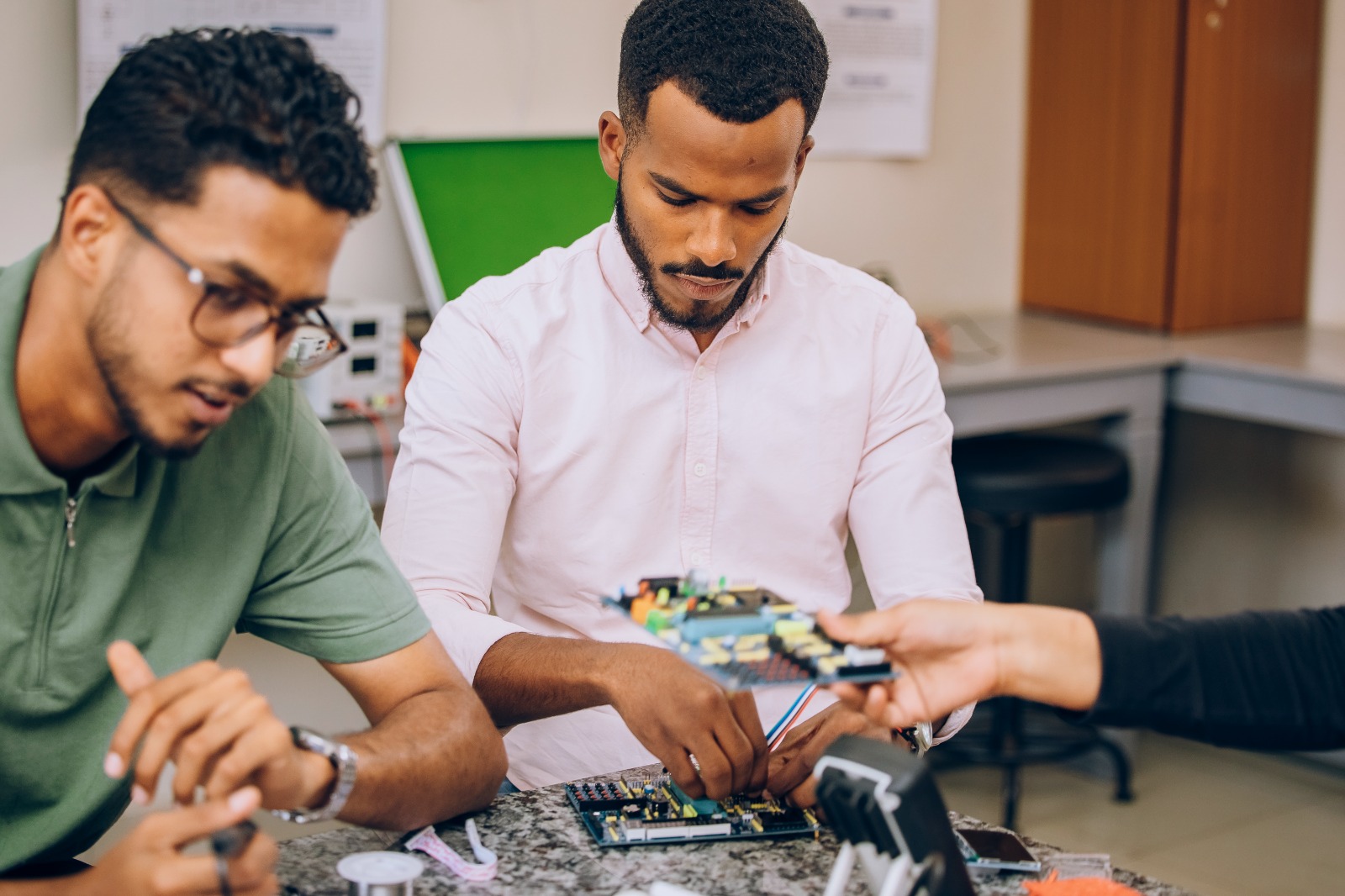
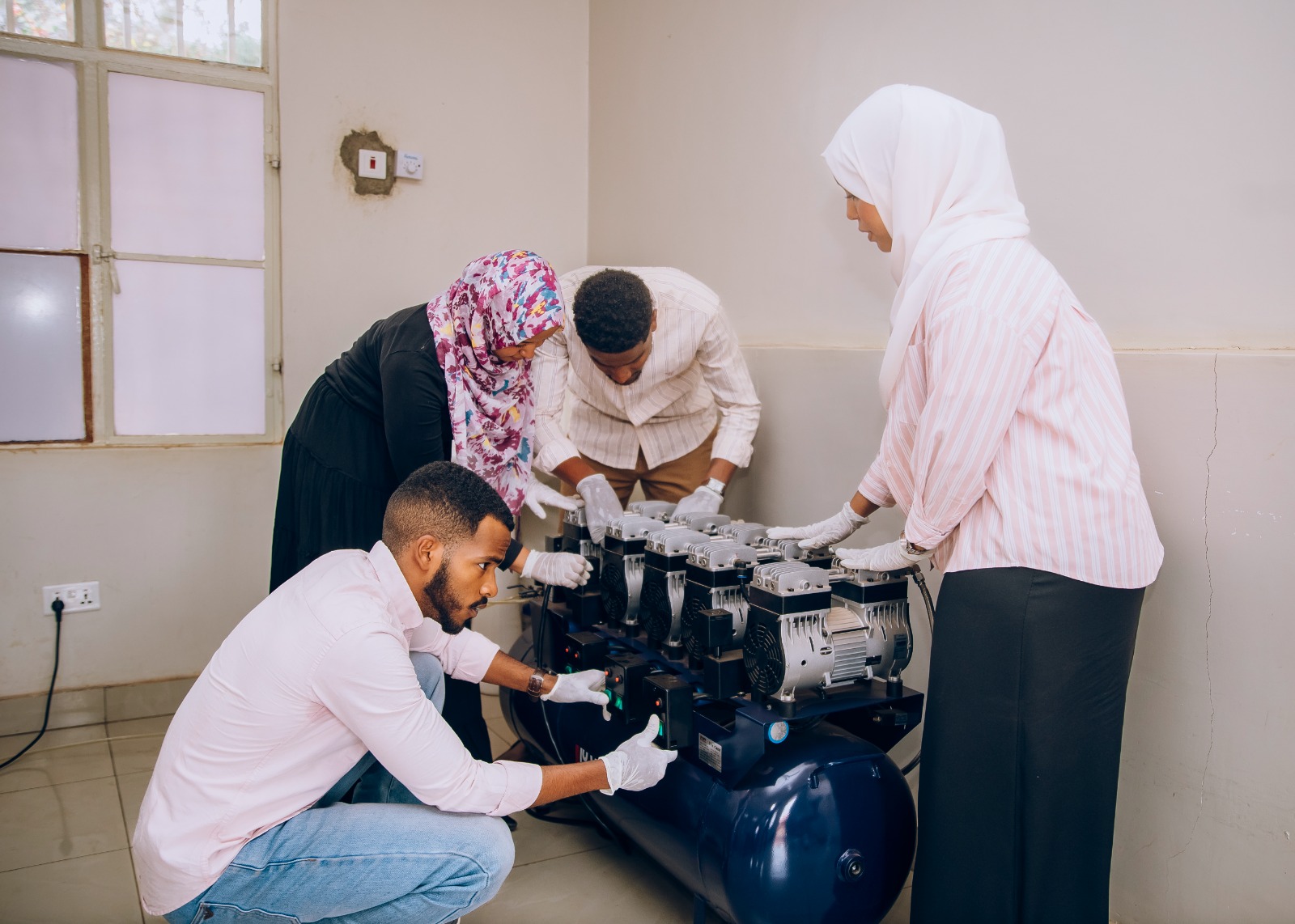
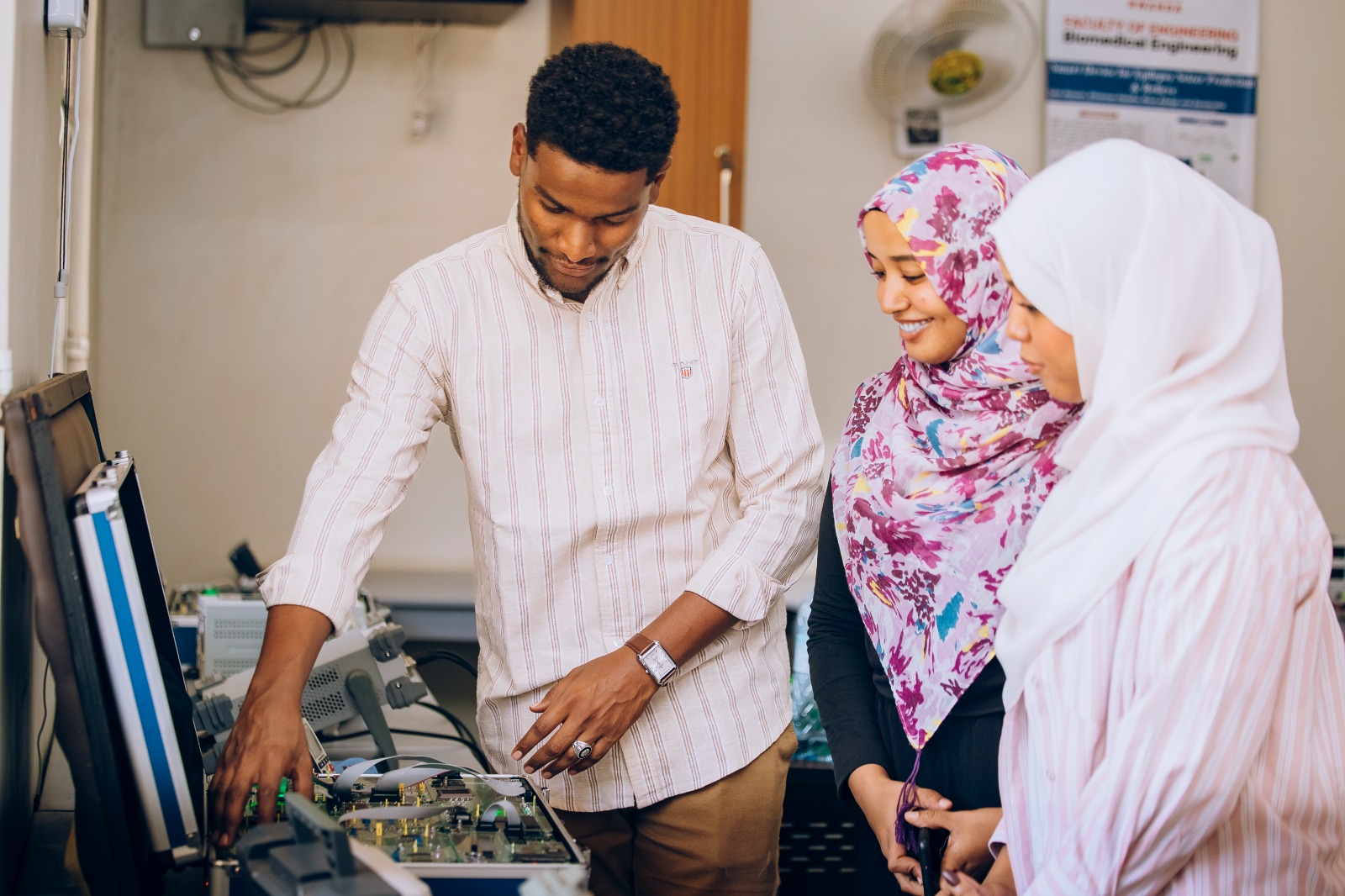
UMST has received accreditation from Rwanda’s Higher Education Council to offer an undergraduate degree in Biomedical Engineering, becoming the first institution in Rwanda to receive accreditation for the programme.Biomedical Engineering programme, combinines engineering, technology and healthcare training.UMST’s newly accredited Biomedical Engineering programme will train students in areas including medical imaging, bioinstrumentation and medical informatics.The new Biomedical Engineering programme at UMST is designed to prepare students to work with technologies used in diagnosis, treatment, rehabilitation and healthcare management.UMST’s accredited Biomedical Engineering programme offers prospective students a pathway that brings together engineering and health sciences to address practical challenges in healthcare.
Makinde, founder of Dellman Group, first came to Rwanda in 2020 on a business feasibility trip after visiting Kenya, Uganda and Tanzania. He later registered his business in Rwanda in 2021 and began investing in real estate.
He initially focused on affordable housing before moving into mid-income and luxury residential properties.
Today, much of his investment is concentrated in Rusororo, where he says he identified the area’s potential before many investors were willing to take the risk.
“When I started, a lot of people thought I was crazy. Why would you want to go build in that place?” Makinde recalled.
He recalled buying his first 600-square-metre plot in Rusororo for Rwf16 million. He said a similar plot in the area could now cost around Rwf120 million, while a 300-square-metre plot can sell for about Rwf50 million.
Makinde attributes the increase to the development of roads, hospitals, universities and other infrastructure around the area.
He pointed to projects and developments including the Masaka Teaching Hospital, African Leadership University (ALU), IRCAD Africa, DP World, and roads connecting Rusororo with other parts of Kigali and Bugesera.
“Real estate grows with development. Anywhere development is going, the value of properties in that place goes up,” he said.
For Makinde, that has shaped his investment strategy in Rwanda.
Rather than focusing exclusively on established neighbourhoods like Nyarutarama where property prices are already high, he looks for areas where infrastructure and other economic activity are still developing.
“You don’t want to go buy in premium neighbourhoods,” he said, advising investors to identify neighbourhoods with strong growth potential and planned infrastructure.
He also favours a mixed strategy of selling some units while keeping others for rental income, allowing investors to generate cash flow while waiting for property values to rise.
From affordable housing to luxury homes
Makinde’s business strategy has also evolved.
He said affordable housing has proved difficult for private developers because of the high cost of land and construction materials.
According to him, building materials such as cement, aluminium, sand and stone can make it difficult for private developers to deliver homes at prices that buyers consider affordable.
He argues that government-backed programmes are better positioned to deliver mass and social housing, while private developers can focus on other segments of the market.
Dellman Group has consequently moved towards high-end residential properties aimed at wealthy buyers and tenants.
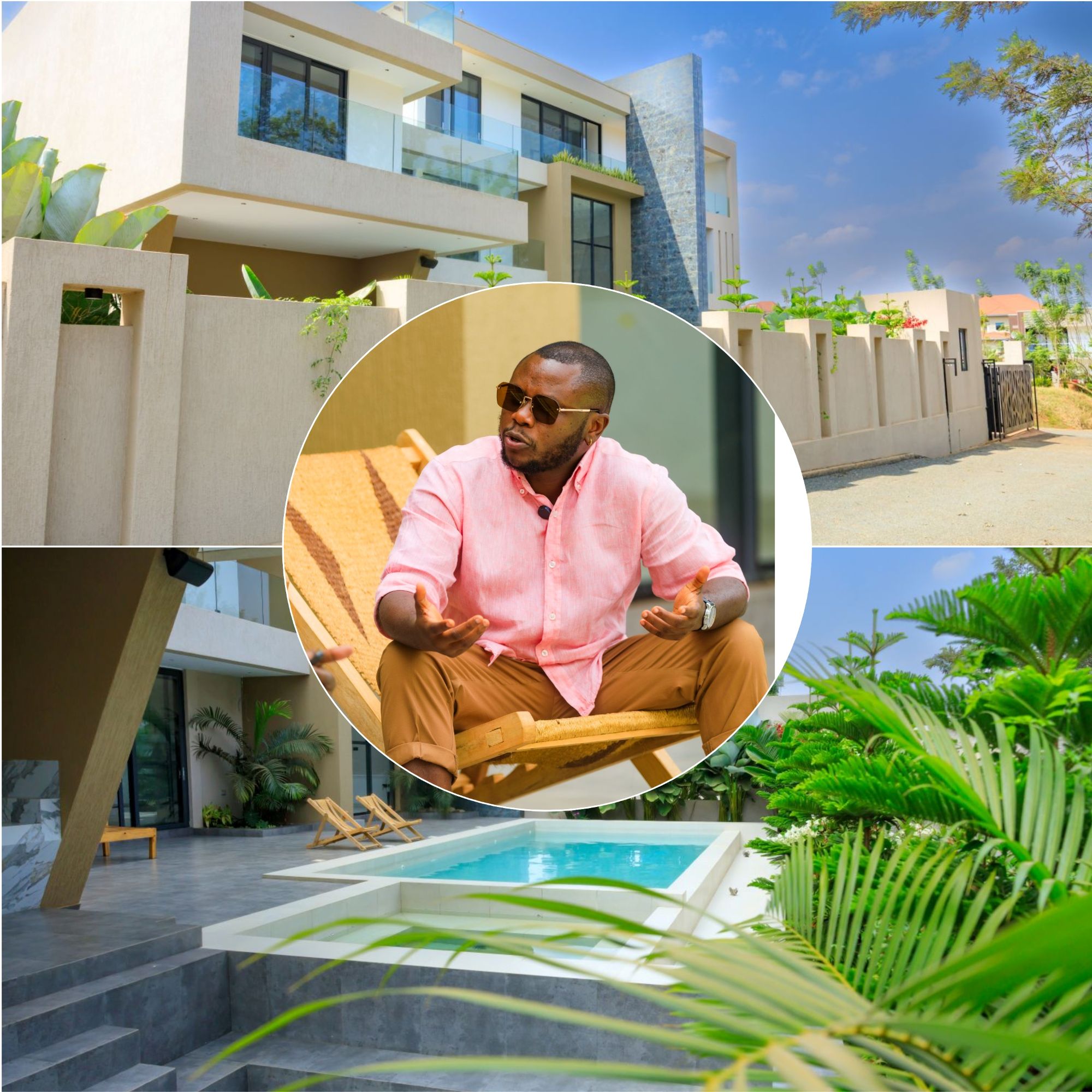
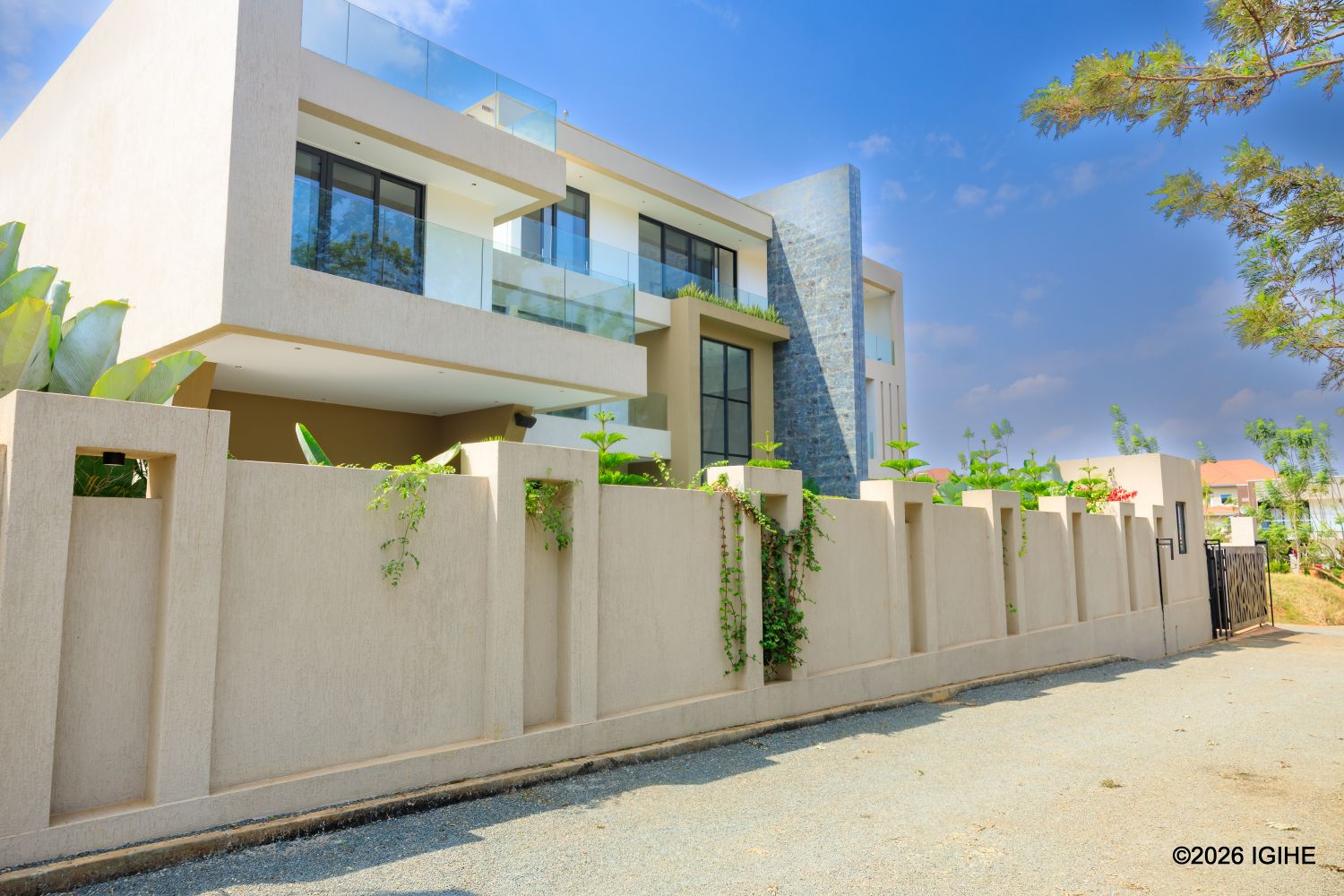
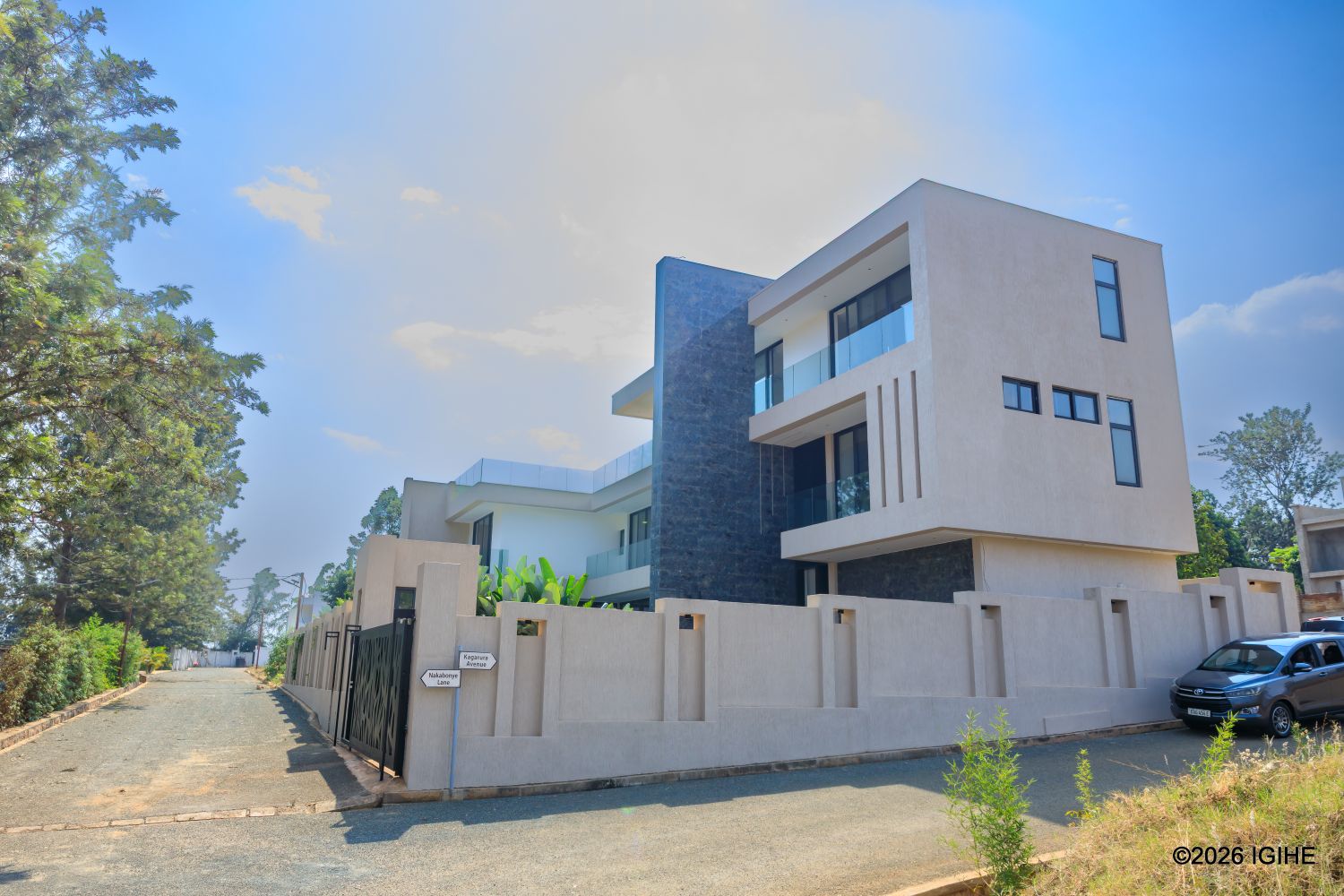
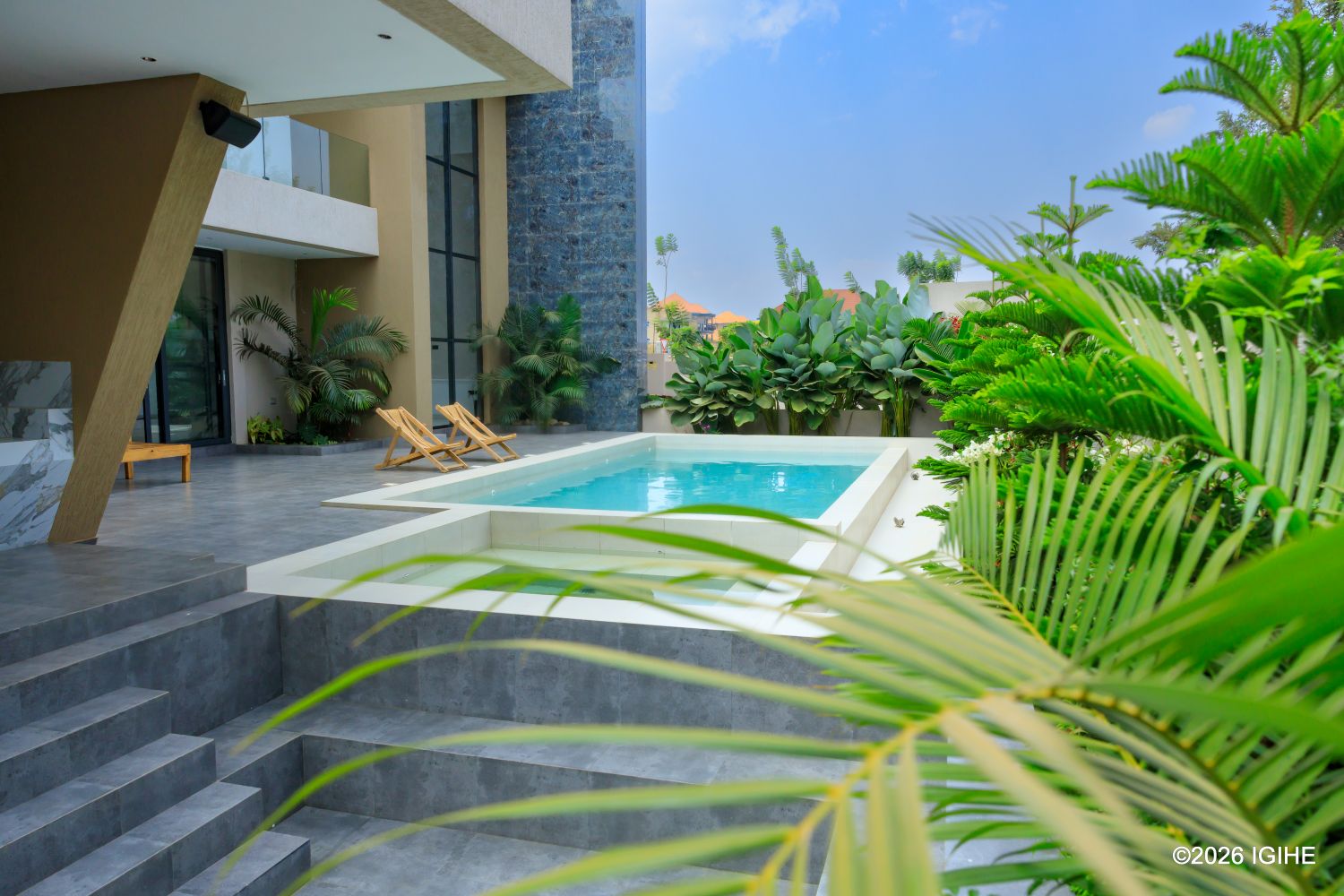
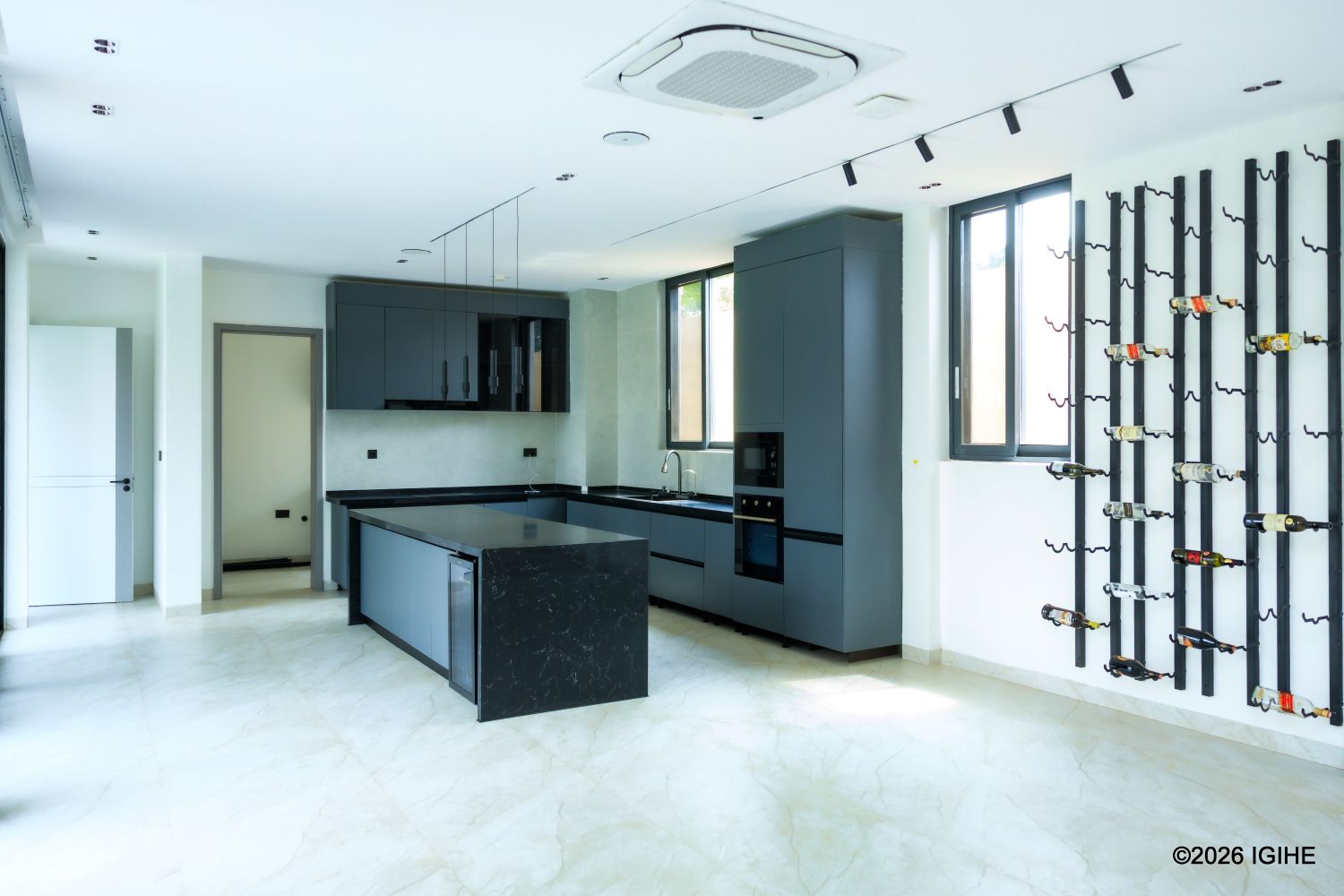
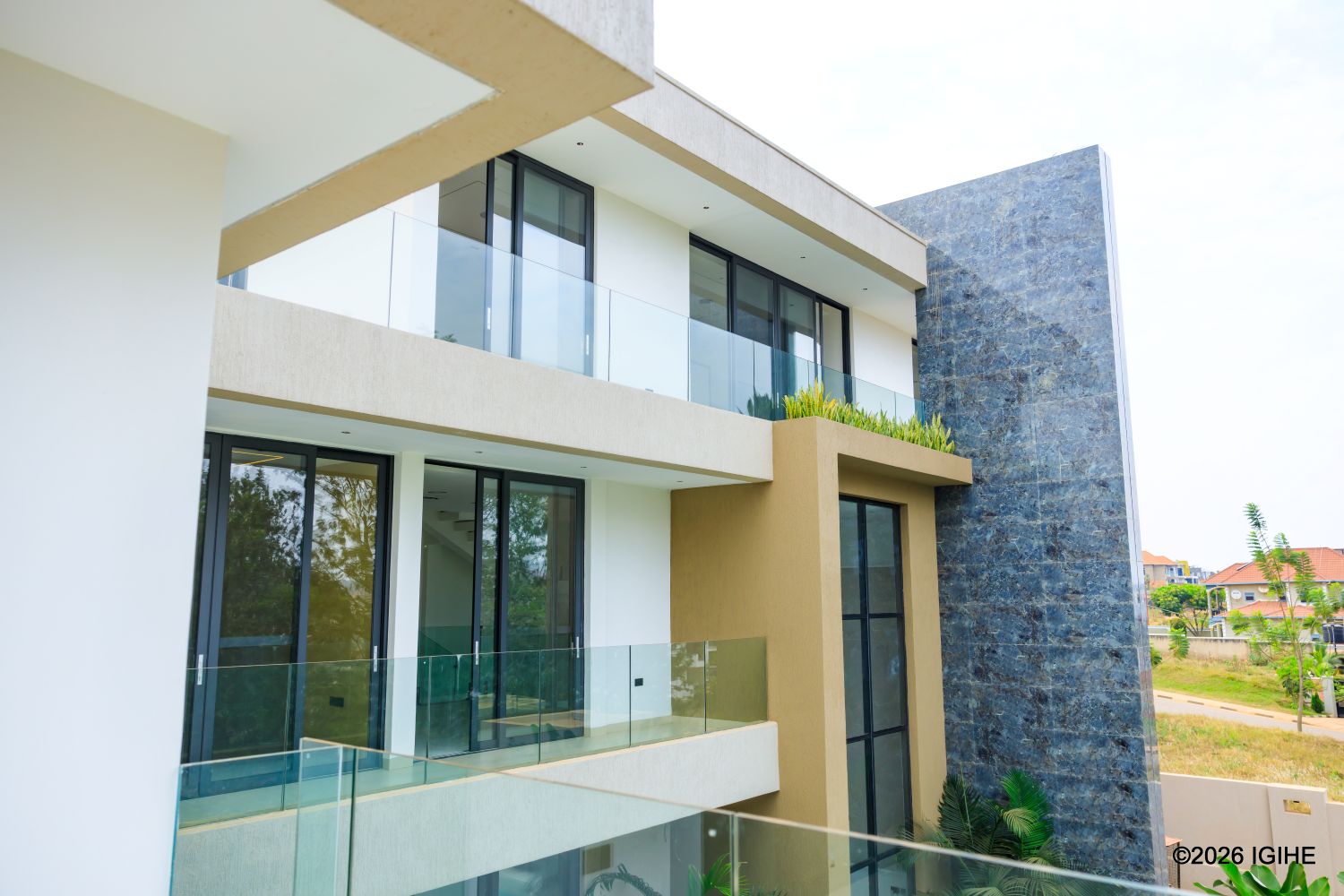
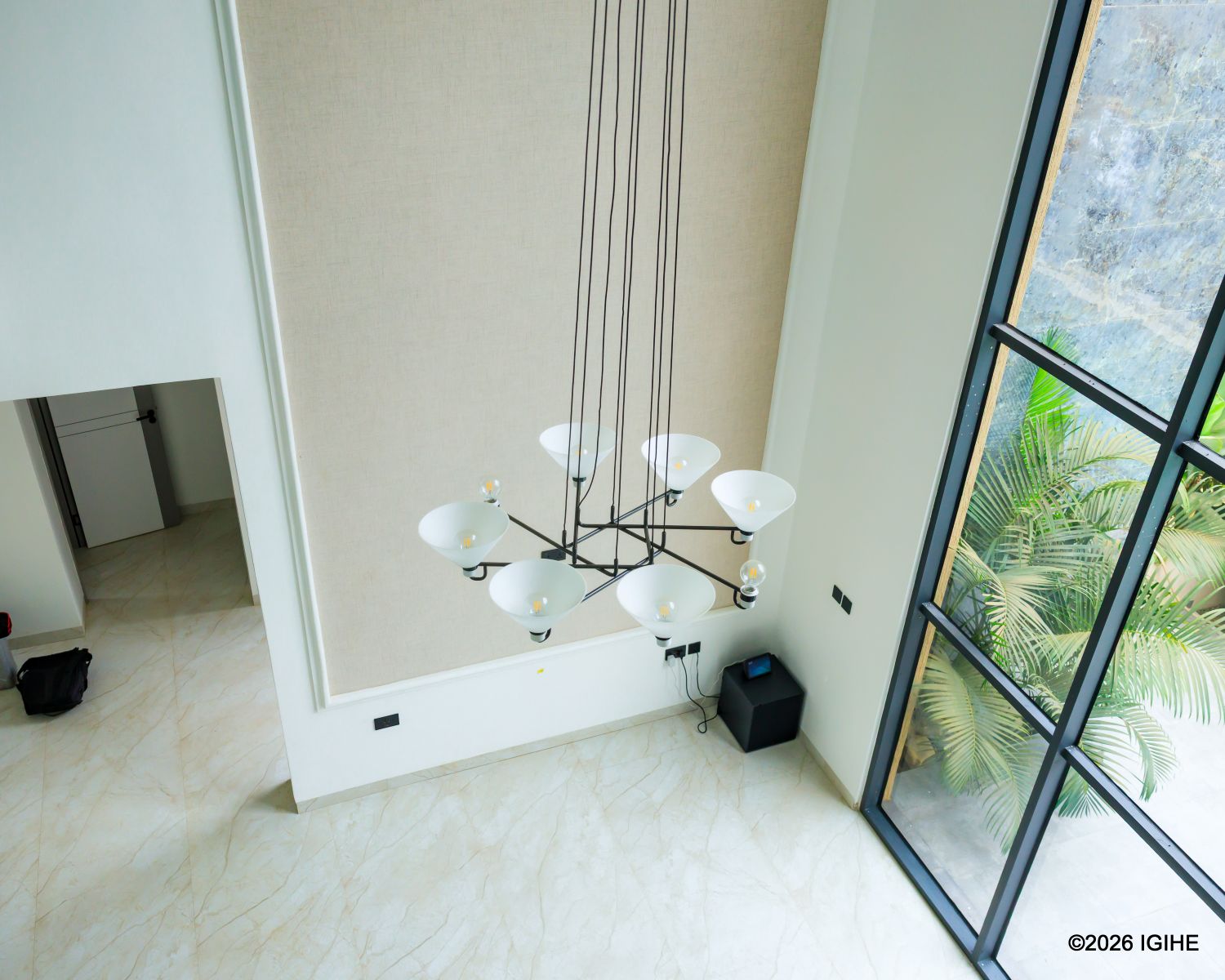
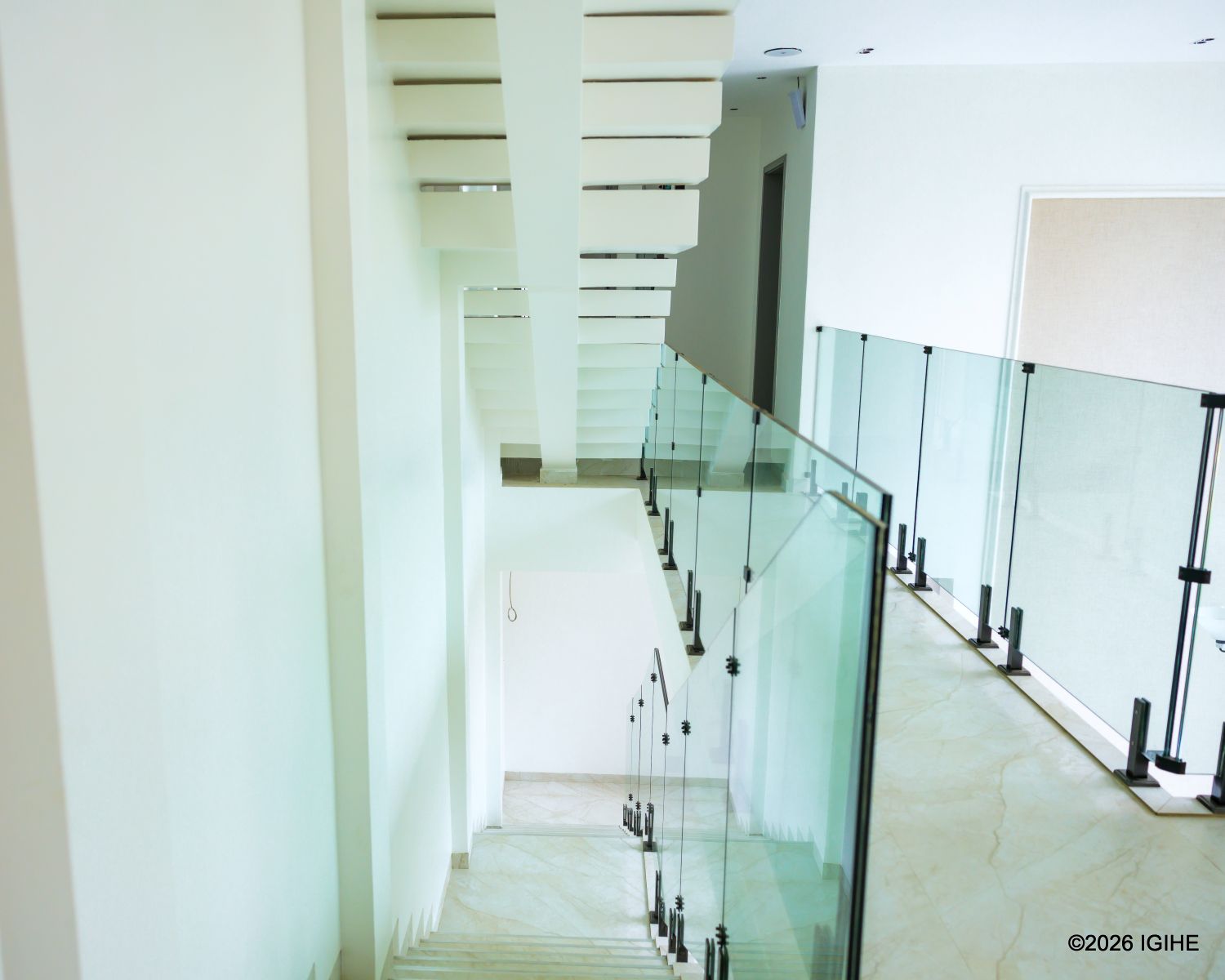
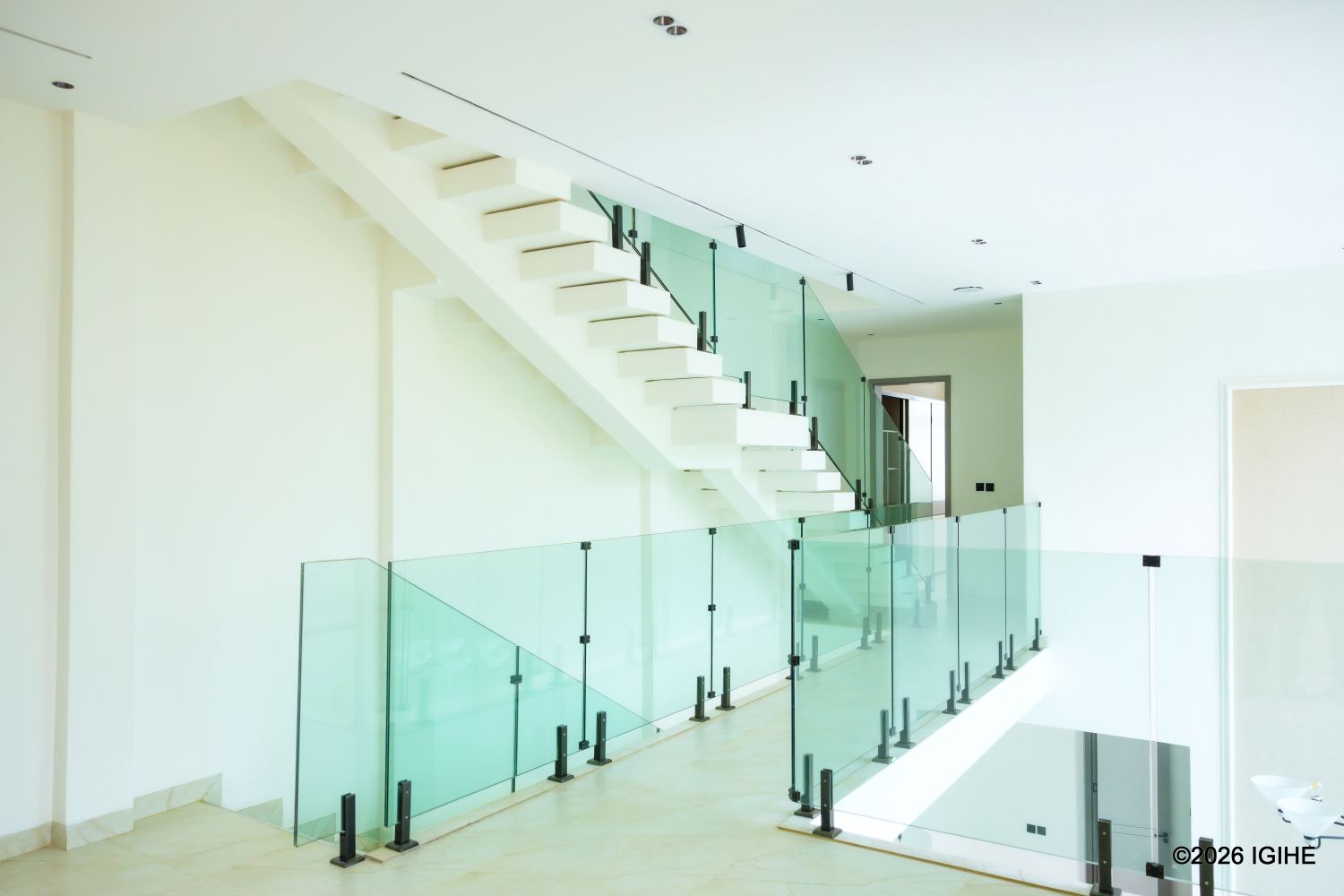
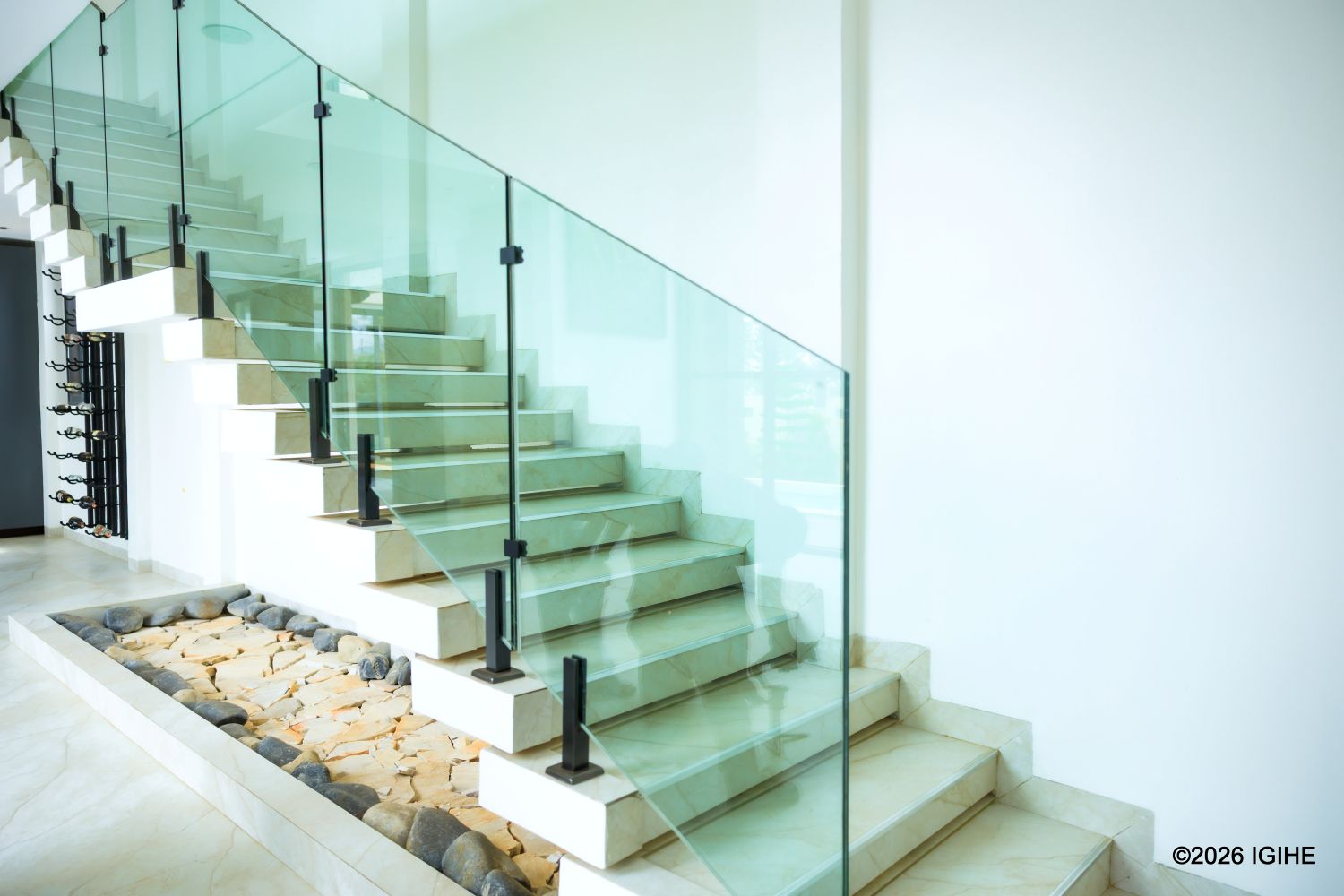
One example is Lujoso by Dellman, a four-bedroom luxury home in Rusororo equipped with a swimming pool, jacuzzi, cinema, gym, games room and home automation.
The property can be controlled through mobile devices, wall-mounted panels and voice commands.
Makinde said the home was designed to offer a different proposition from many properties currently available in Kigali.
“We wanted to do something totally different from what I’m seeing,” he said.
The house is currently on the market for $1.2 million, fully furnished, according to Makinde. He said similar properties could command between $7,000 and $10,000 a month in rent.
Lujoso by Dellman is a four-bedroom luxury home in Rusororo equipped with a swimming pool, jacuzzi, cinema, gym, games room and home automation.
A home for celebrities and high-net-worth clients
The concept for Lujoso was partly influenced by demand from high-profile visitors to Rwanda who want more privacy and space than hotels can provide.
Makinde recalled an experience involving Nigerian musician Davido, who had visited Rwanda and wanted a private space where he could stay with his team rather than remain in a hotel.
That experience helped shape his thinking about luxury accommodation for celebrities, athletes, diplomats and other high-net-worth individuals.
Makinde said such clients could use the property as a private residence while visiting Rwanda, with facilities that include entertainment and leisure spaces.
He said the property is designed for a niche market rather than the mass housing segment.
The villa has a heated A heated pool adds another layer of luxury to the villa..
Bringing UK experience to Rwanda
Makinde spent much of his professional career in the UK, where he worked as an IT consultant and business analyst.
The 39-year-old started his company in England at the age of 24 and worked with banks, asset managers, insurance companies and defence contractors.
He later moved into property investment in the UK, buying homes at auction, renovating them, selling some and renting or refinancing others.
He said the experience helped him build the capital and knowledge that eventually enabled him to invest in Rwanda.
Makinde said he chose Rwanda partly because its relatively small market allowed him to learn while expanding his business.
“Rwanda is not the place you would make the most money. But in terms of you starting up, building something, you being safe, you’ll be able to learn in the market because it’s a small market,” he said.
His investments have since expanded beyond Rwanda to Uganda, where he said his business operates on a larger scale.
Dellman told IGIHE affordable housing has proved difficult for private developers because of the high cost of land and construction materials.
Importing luxury
The development of high-end properties has also exposed gaps in Rwanda’s local supply chain for premium construction and interior products.
Makinde said much of the materials used in Lujoso were imported, including marble tiles, aluminium products, windows, doors, kitchen equipment, switches, sockets and air-conditioning systems.
He said some products were sourced from China, India, Turkey and Germany because he wanted specifications that he could not readily find in Rwanda.
However, he also sees an opportunity for Rwandan businesses to enter the market by supplying premium construction products.
The challenge, he said, is balancing quality with purchasing power because high-end imported products can be expensive to clear and may not have a large enough local market.
The concept for Lujoso was partly influenced by demand from high-profile visitors to Rwanda who want more privacy and space than hotels can provide.
Jobs and local skills
The development has also created employment and opportunities for skills transfer.
Makinde said Dellman Group construction projects rely heavily on freelance workers and contractors.
At the peak of construction of the Lujoso property, he said more than 50 people could be working on the site in a single day, with the weekly wage bill reaching about Rwf3.5 million at some stages.
He also highlighted skills transfer involving workers from Uganda and local Rwandan technicians, particularly in specialised areas such as tiling.
Makinde said his investments have also involved improving access roads around some of his properties.
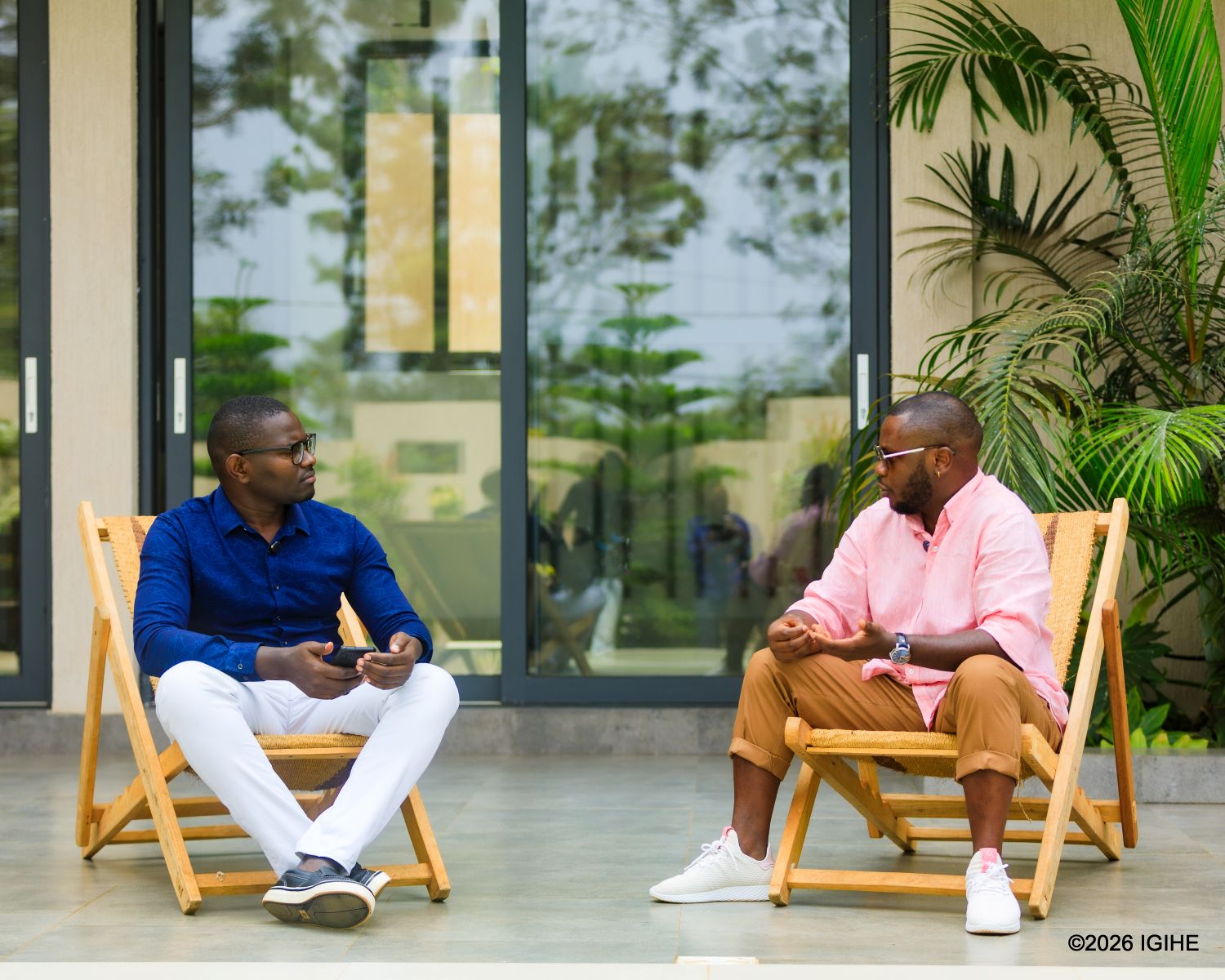
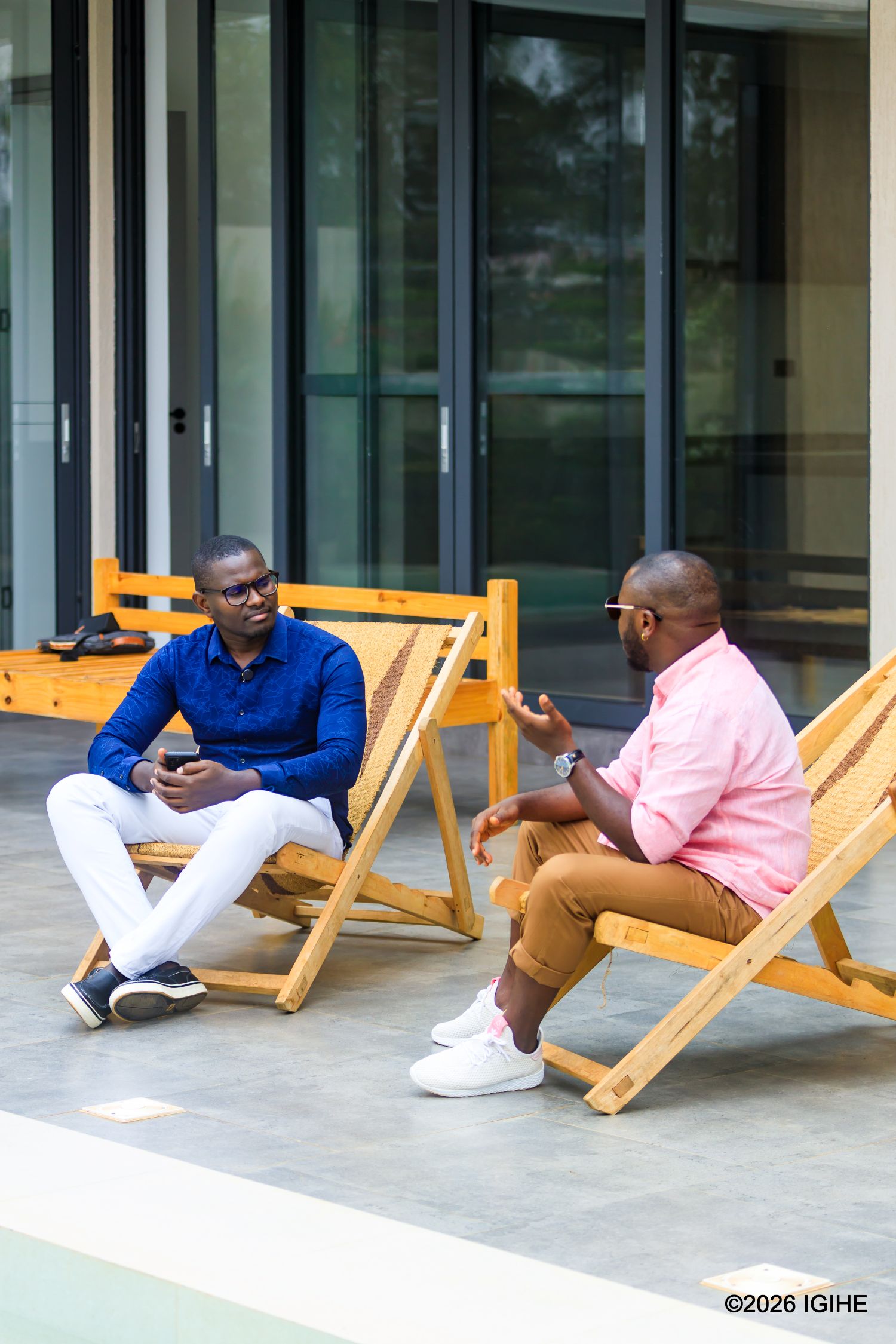
Watch the full IGIHE interview with Abraham Dellman Makinde below to hear more about his investment journey, why he chose Rusororo, the thinking behind his $1.2 million luxury home and his outlook for Rwanda’s property market.
Makinde said the home was designed to offer a different proposition from many properties currently available in Kigali.Makinde said much of the materials used in Lujoso were imported.
In a statement issued on September 23, 2026, Qatar’s Ministry of Foreign Affairs said the joint decision “reflects the two countries’ commitment to overcoming differences through dialogue and mutual understanding.”
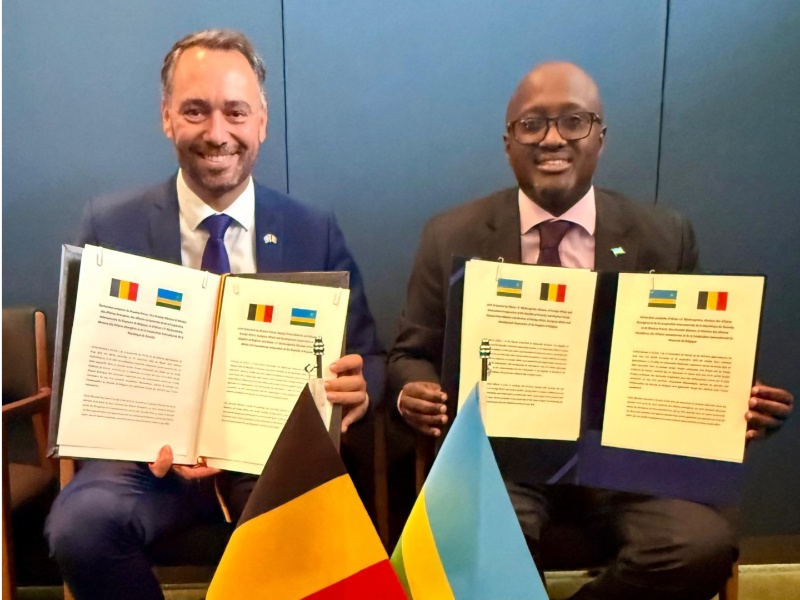
Rwanda and Belgium announced the restoration of diplomatic relations on September 22 in a joint statement issued on the sidelines of the 81st United Nations General Assembly in New York.
The two countries said their embassies would reopen in the “near future”, initially under chargé d’affaires ad interim, before the process of appointing ambassadors begins.
Qatar highlighted its role in bringing the two sides together, noting that Doha hosted the first meeting between Rwanda’s Minister of Foreign Affairs and International Cooperation Olivier J.P. Nduhungirehe and Belgium’s Deputy Prime Minister and Minister of Foreign Affairs, European Affairs and Development Cooperation Maxime Prévot in June 2025.
“The meeting opened the door to direct dialogue and paved the way for subsequent meetings and communications that led to the resumption of diplomatic relations,” the statement said.
The ministry also expressed appreciation to Rwanda and Belgium for recognising Qatar’s role in the process.
Qatar commended “the constructive spirit demonstrated by both sides in addressing differences and clearing up misunderstandings” and expressed hope that the restoration of diplomatic relations would “open new horizons for cooperation between the two countries.”
Rwanda severed diplomatic ties with Belgium on March 17, 2025, amid tensions linked to the conflict in eastern Democratic Republic of Congo. Kigali accused Brussels of taking sides in the conflict and mobilising against Rwanda in international forums.
The restoration of diplomatic relations reopens formal channels between Kigali and Brussels after more than a year of strained relations.
Qatar said the development could contribute to peace and stability at regional and international levels, while reiterating its “firm belief that direct dialogue and diplomatic means represent the optimal path for resolving differences between states.”
The ministry added that Qatar would continue supporting efforts aimed at bringing perspectives closer together and resolving disputes through peaceful means.
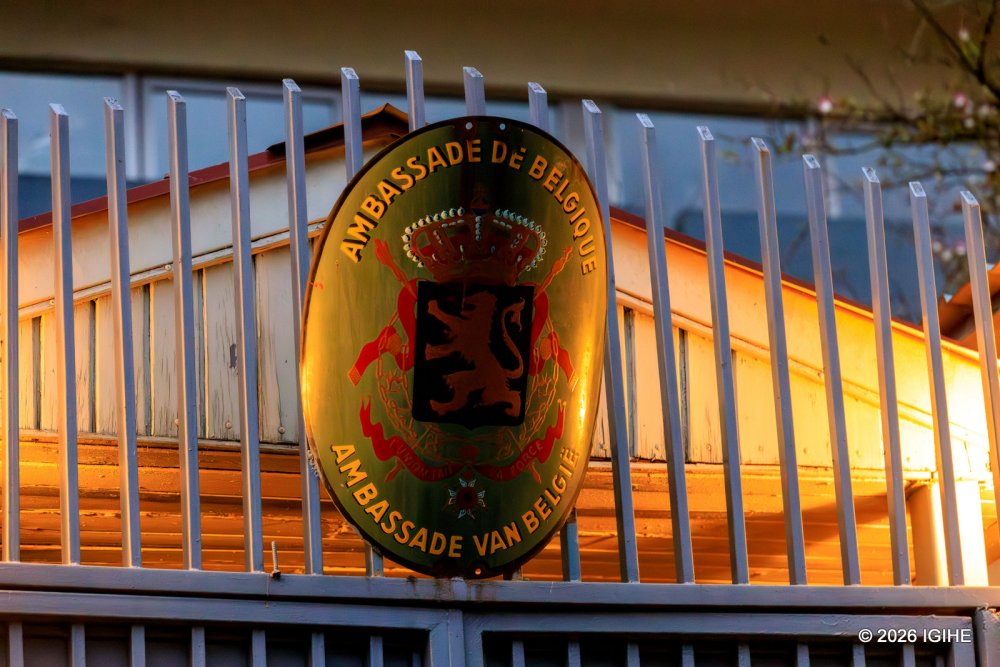
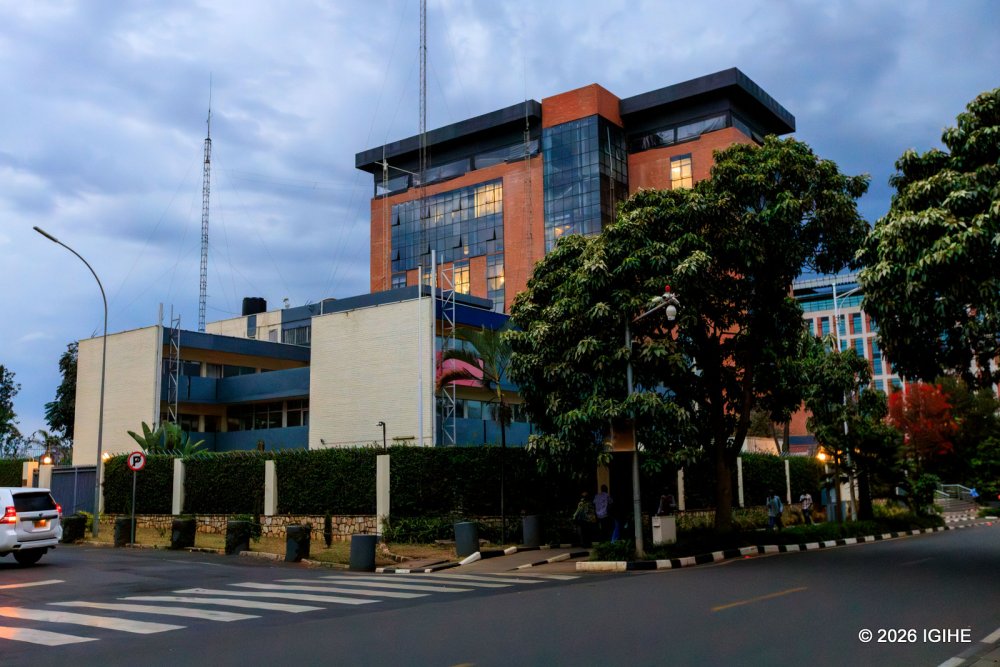
Qatar has welcomed the resumption of diplomatic relations between Rwanda and Belgium after more than a year of strained ties.The Belgian Embassy building in Kigali remained closed following Rwanda’s decision to sever diplomatic relations with Belgium in March 2025.
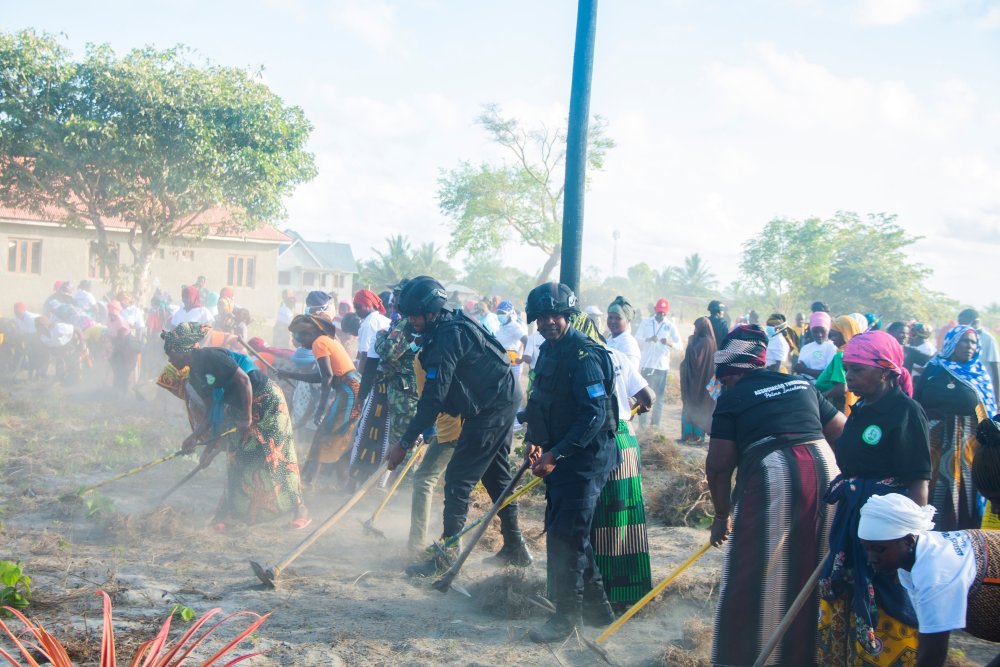
The activity aimed to promote environmental hygiene and strengthen cooperation among local stakeholders.
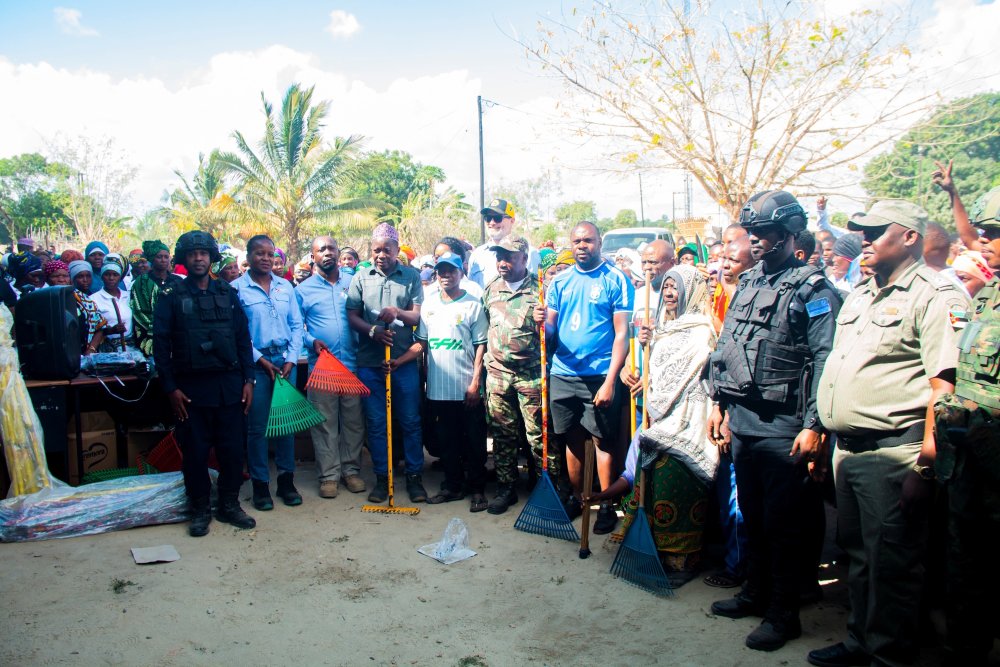
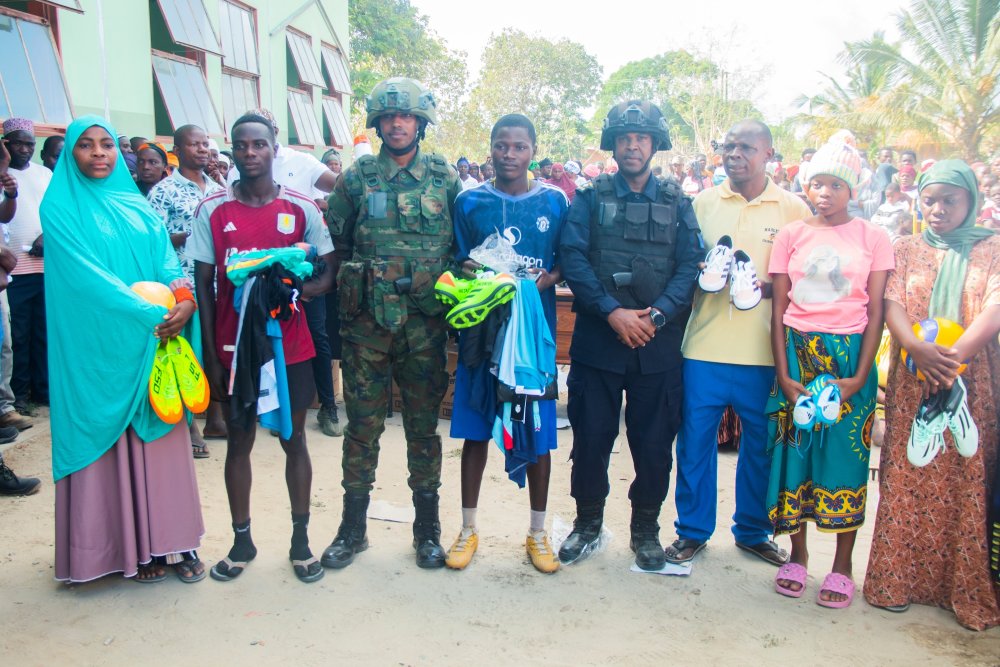
The event was held at Palma Secondary School as part of the World Annual Clean-Up Day celebrations. It brought together Palma residents, local authorities, stakeholders, and security organs.
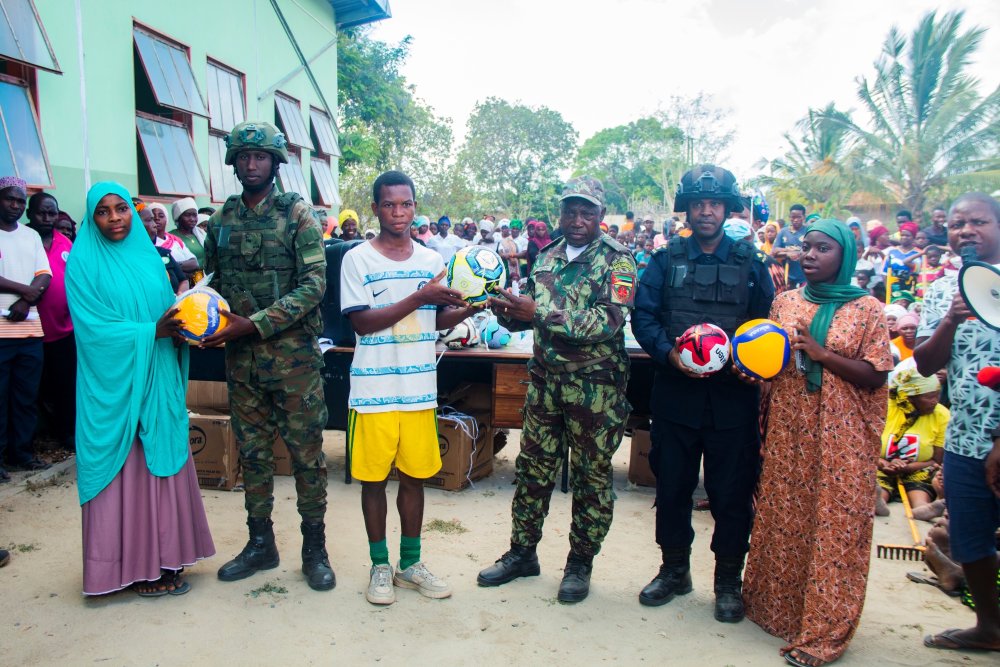
As part of the activity, RSF provided educational support to Palma Secondary School, including teaching books and sports kits to enhance students’ learning and participation in sports.
In his remarks, Palma District Administrator, Mr. João Agostinho Buchili, commended the initiative and emphasized the importance of maintaining proper sanitation to help prevent diseases.
He also acknowledged RSF’s continued support to the local community, alongside its efforts to contribute to the restoration of peace and security.
Rwanda first deployed a joint force of military and police personnel to Cabo Delgado in July 2021 at the request of the Mozambican government to help contain an Islamist insurgency that had destabilised the resource-rich province.
Since then, the force has played a key role in recapturing strategic towns, including Mocímboa da Praia, and improving security, enabling thousands of displaced residents to return to their homes.
Rwanda Security Forces personnel deployed in Cabo Delgado join Palma residents in an annual community clean-up activity.RSF personnel join local residents and authorities in promoting environmental hygiene in Palma, Cabo Delgado.Palma Secondary School students receive educational materials and sports kits from Rwanda Security Forces personnel.
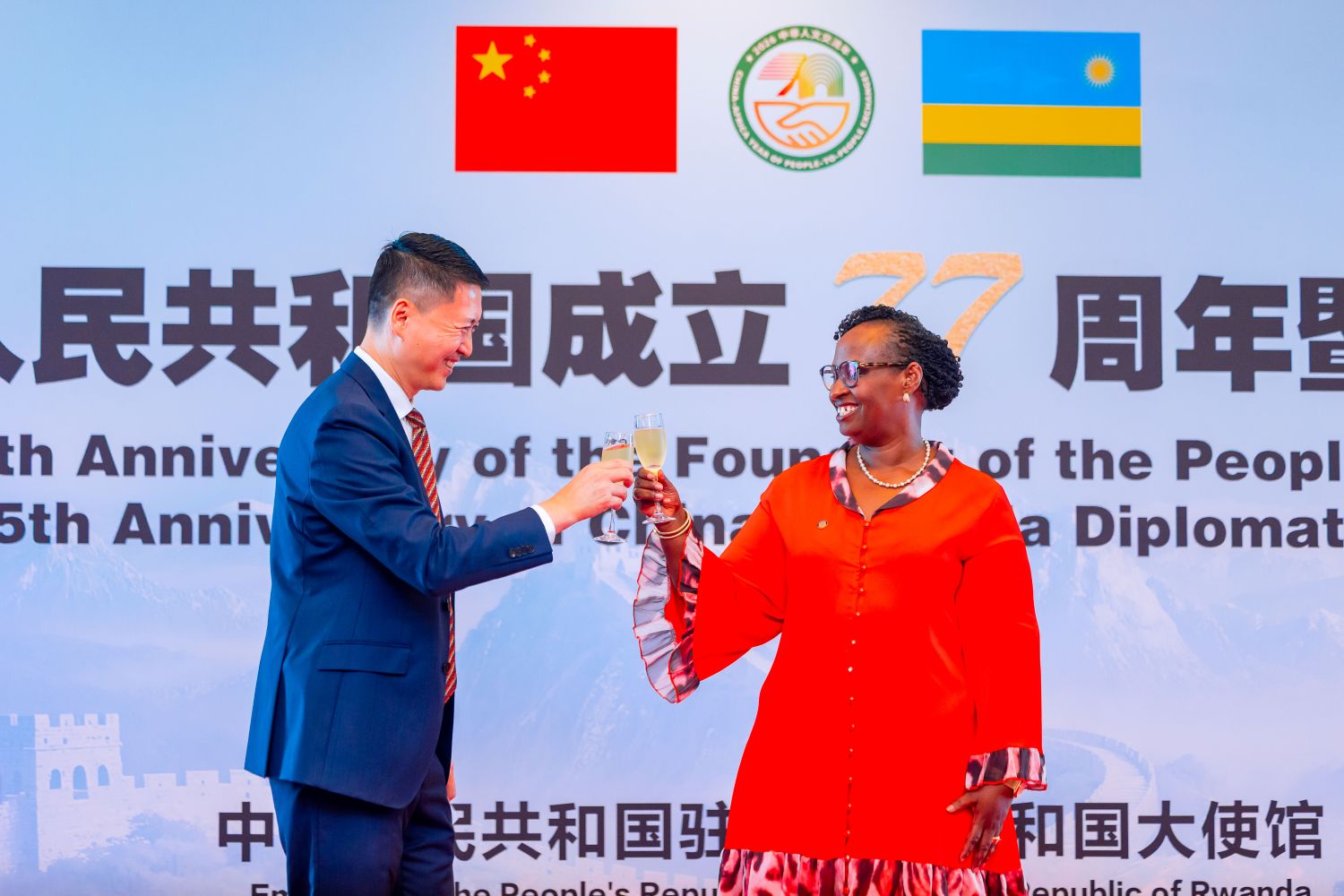
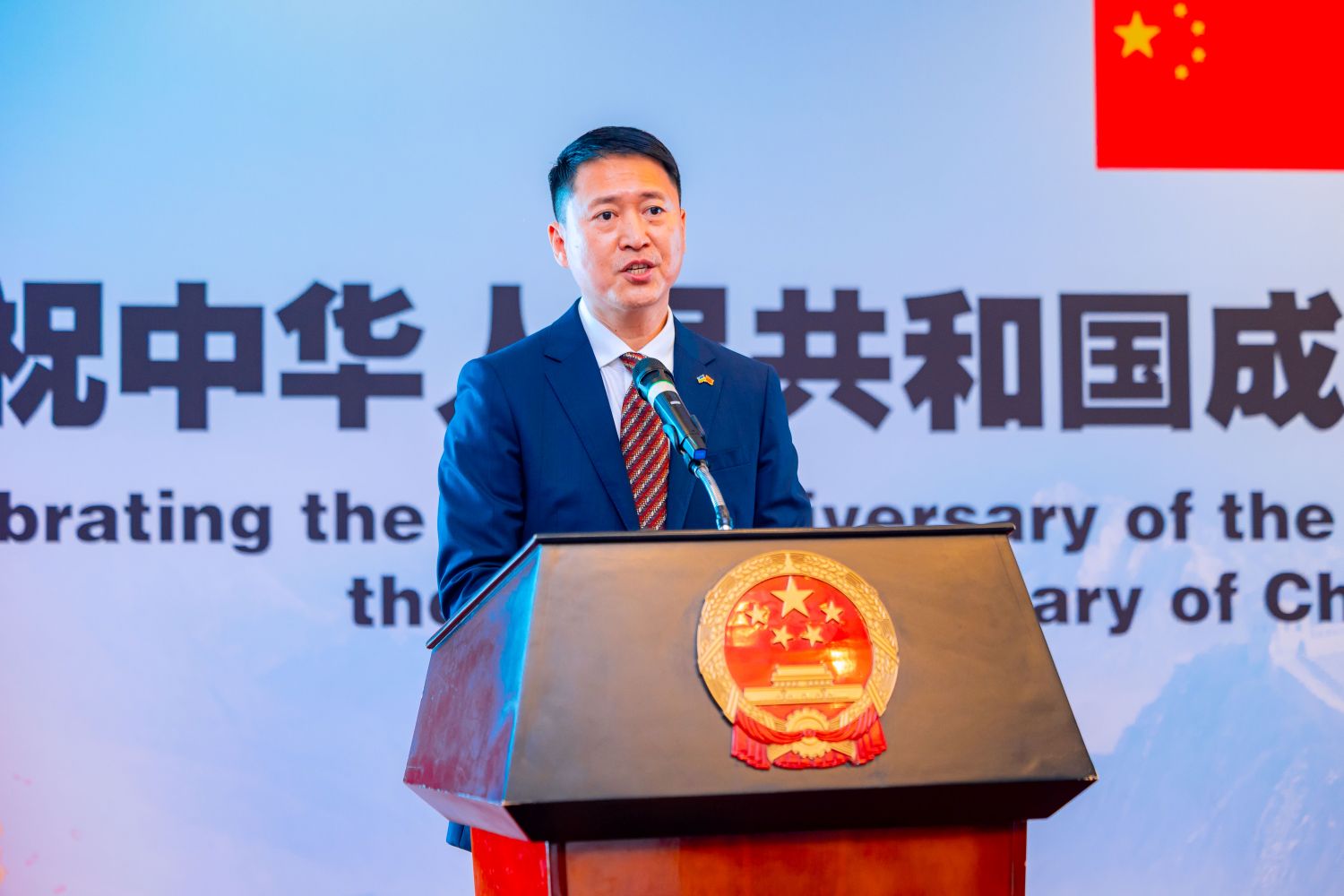
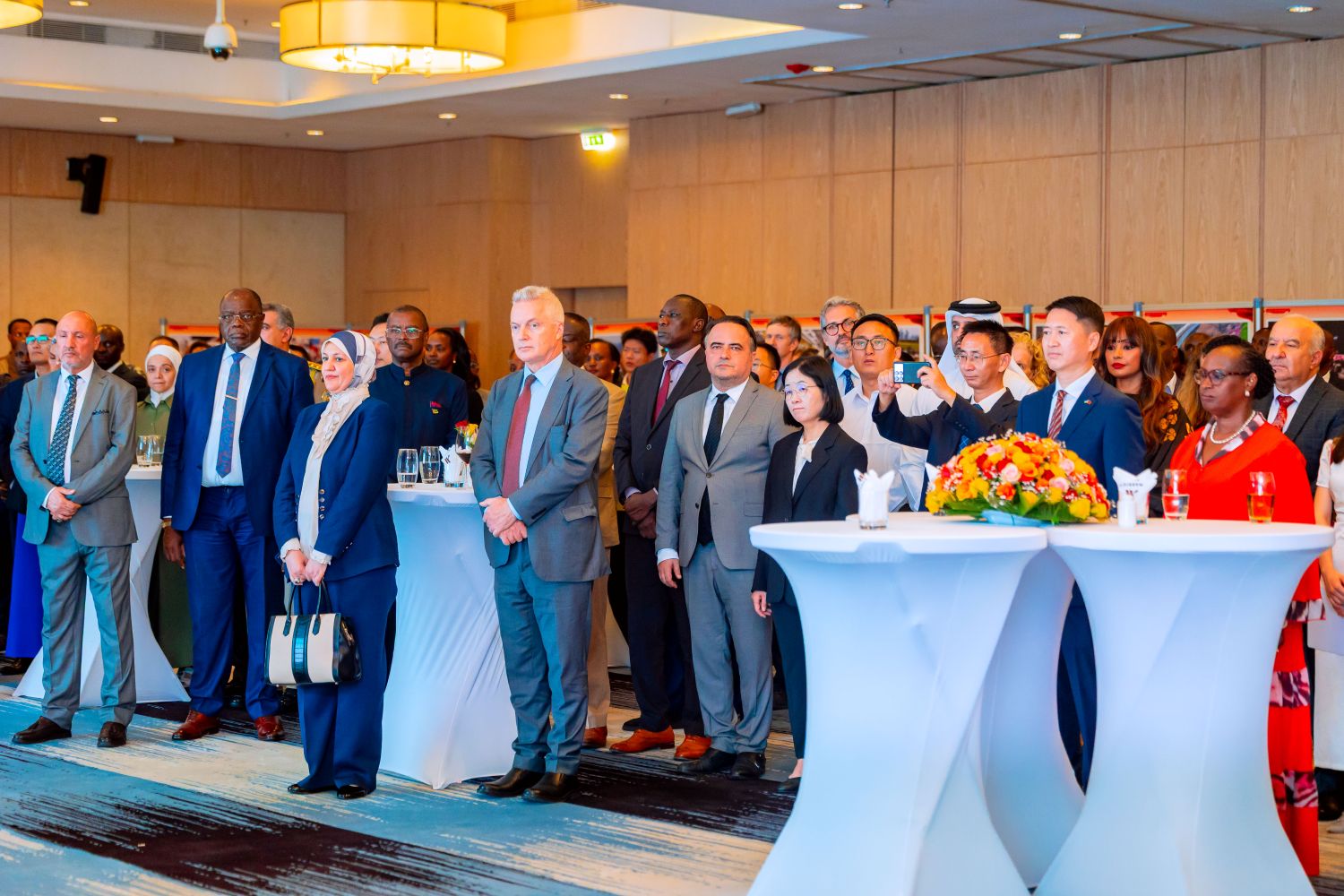
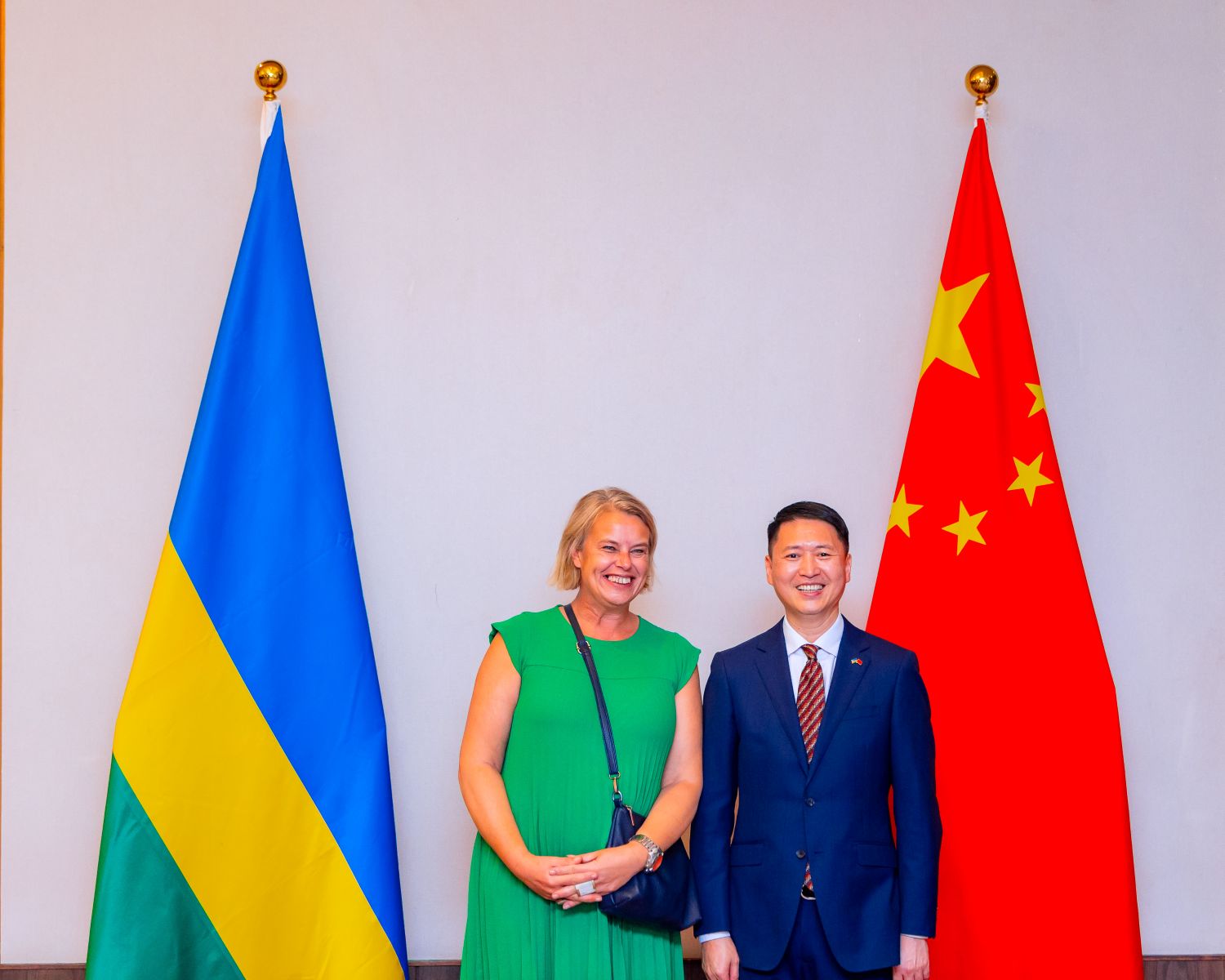
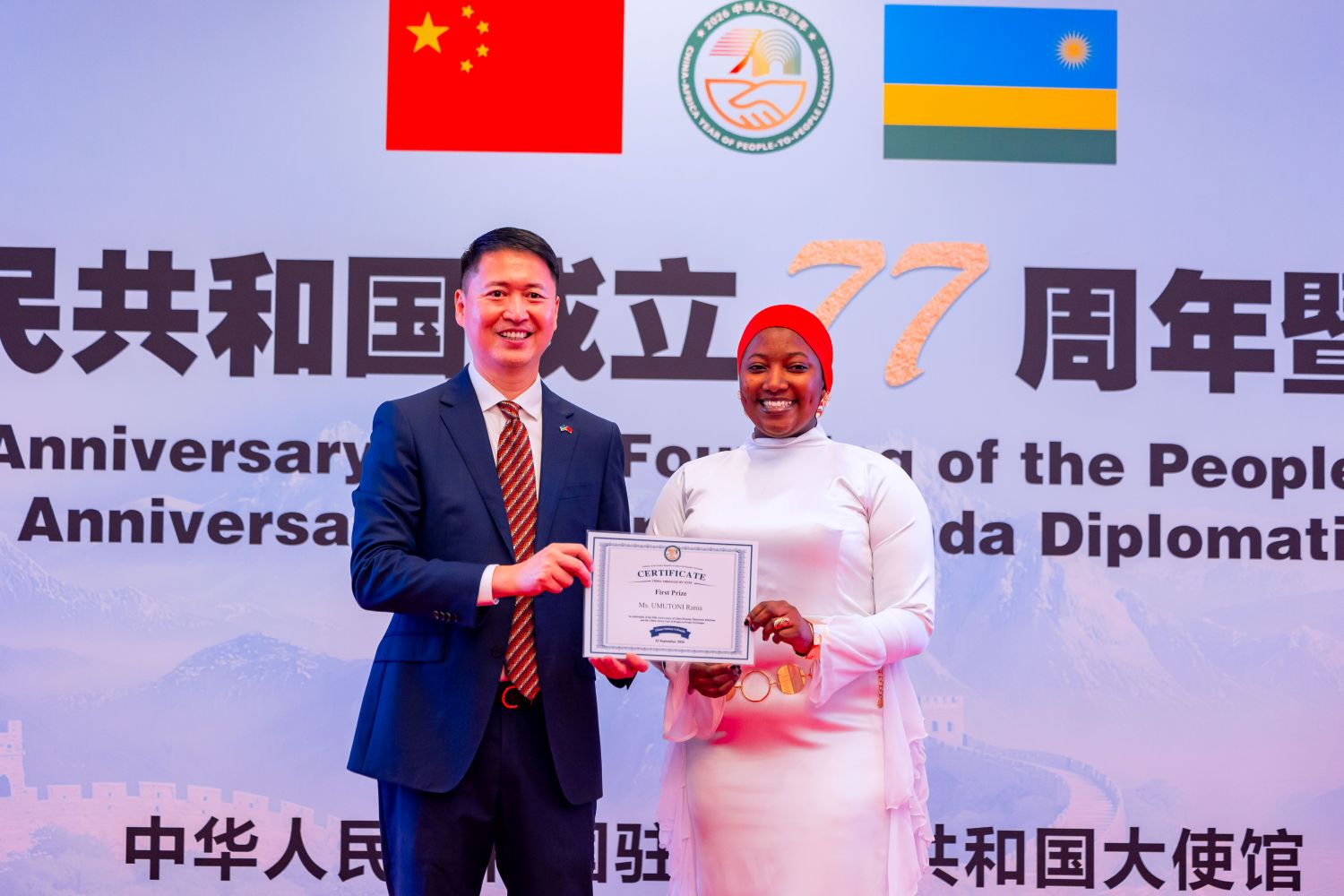
Amb. Gao made the remarks at a reception celebrating the anniversary of diplomatic relations between the two countries and the 77th anniversary of the founding of the People’s Republic of China.
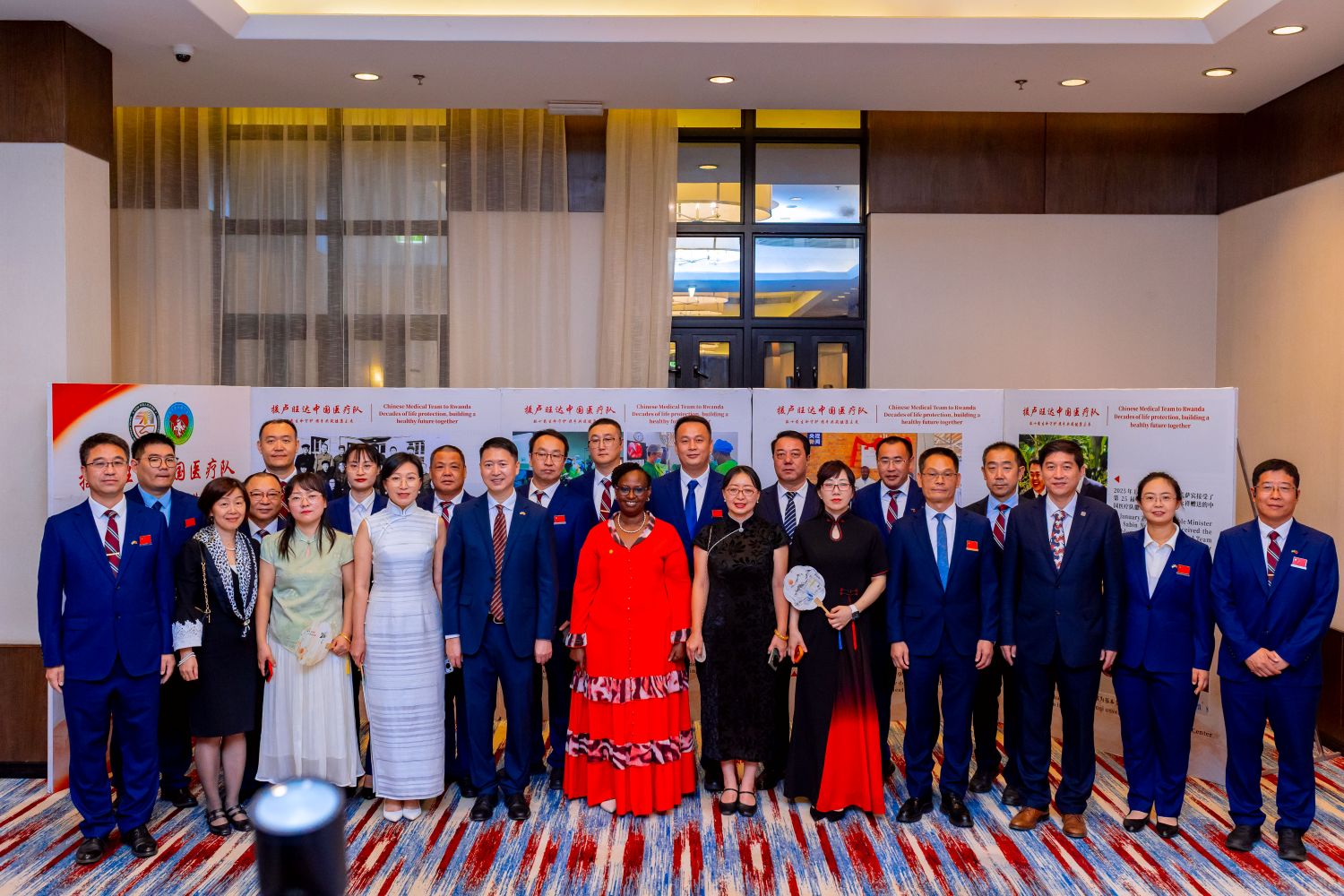
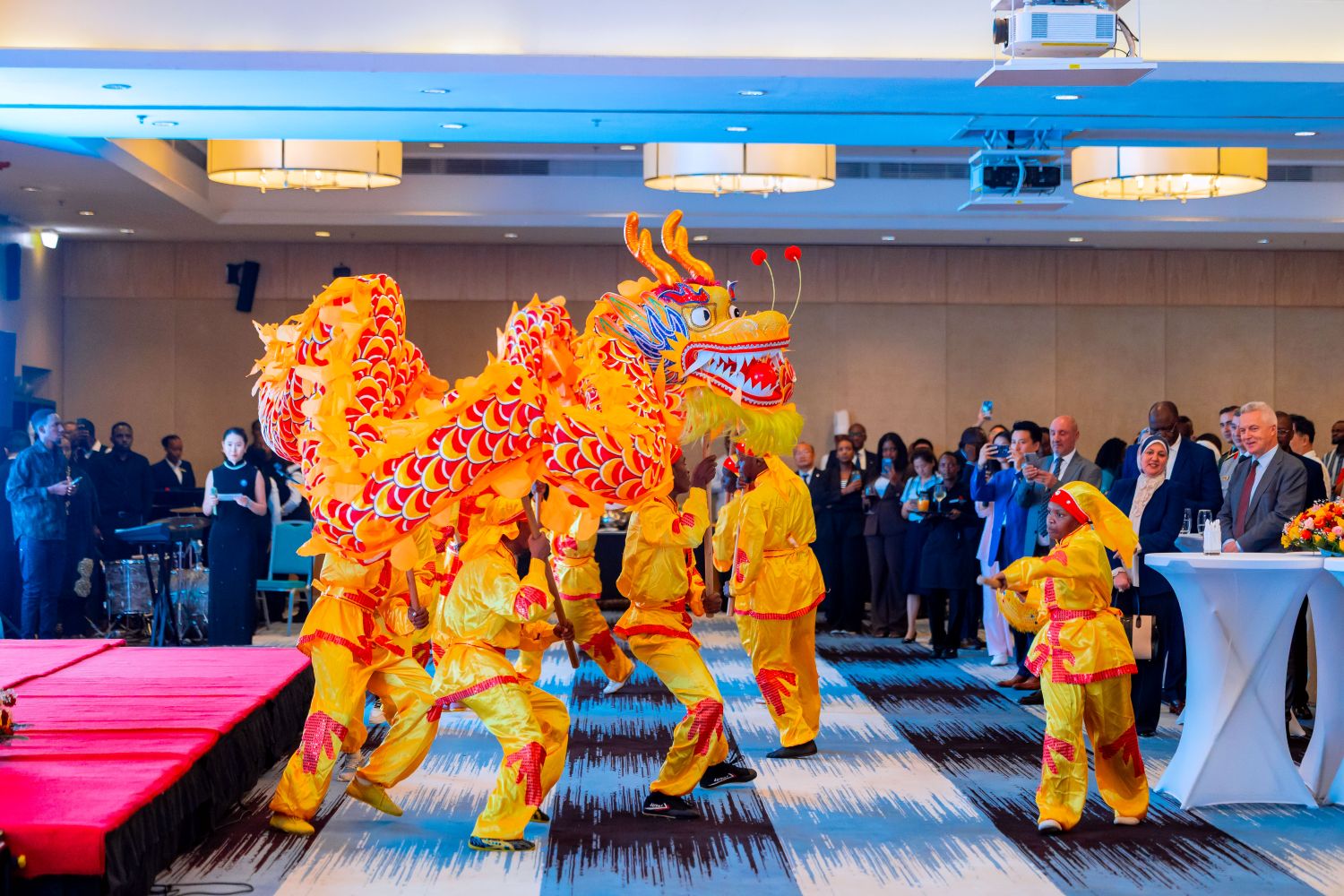
The ceremony, held at the Kigali Marriott Hotel, brought together government officials, diplomats, members of the Chinese community and other guests to celebrate the longstanding ties between Rwanda and China.
Amb. Gao pointed to the elevation of China-Rwanda relations to a comprehensive strategic partnership in 2024 as a major step that opened a new chapter in bilateral cooperation.
“China-Rwanda friendship has grown from strong to stronger,” Amb. Gao noted, adding that the two countries share mutual trust and support each other on issues concerning their respective core interests and major concerns.
“China-Rwanda relations are a choice, not a coincidence,” he affirmed.
The envoy also highlighted Rwanda’s adherence to the one-China principle, describing it as a position highly appreciated by the Chinese government and people.
Amb. Gao pointed to the elevation of China-Rwanda relations to a comprehensive strategic partnership in 2024 as a major step that opened a new chapter in bilateral cooperation.
Trade and investment
Economic ties have remained a key part of the relationship, which dates back to 1971, with bilateral trade reaching a record $849 million in 2025
Rwandan exports to China rose 42% year-on-year to $227 million during the same period, with products such as coffee gaining a larger share of the Chinese market.
Amb. Gao pointed to the zero-tariff policy as one factor supporting the growth in trade, while highlighting the upcoming ninth China International Import Expo, scheduled for November 5, as another opportunity for Rwandan products and businesses to expand their presence in China.
He also described China as Rwanda’s largest source of foreign direct investment, with Chinese companies investing in sectors ranging from garments, cement and agriculture to food processing and vehicle assembly.
These investments, he noted, are contributing to Rwanda’s “Made in Rwanda” ambitions by supporting local production.
Infrastructure and healthcare
Amb. Gao also highlighted major infrastructure and healthcare projects as examples of the practical cooperation between the two countries.
The newly renovated and expanded Masaka Hospital was officially handed over to Rwanda on August 28. Its floor space has expanded nearly tenfold, while its capacity has increased sixfold, the ambassador noted.
The hospital, which cost 580 million Chinese yuan, equivalent to more than Rwf124 billion, has 837 beds and 22 operating theatres. It is expected to become the new home of the University Teaching Hospital of Kigali (CHUK) by the end of 2026.
The Prince House-Giporoso-Masaka road project was also highlighted after officially breaking ground earlier this month.
The 10.3-kilometre project is being implemented through a partnership in which China is contributing about Rwf95 billion and Rwanda about Rwf35 billion.
Construction is expected to take about 30 months. The works include a flyover, underpasses, interchanges, bridges, drainage systems and street lighting, while the existing corridor will be upgraded into a dual four-lane carriageway, with some sections reaching eight lanes.
The upgraded road is expected to improve connectivity between Kigali, the Eastern Province, Bugesera International Airport and east-bound seaports.
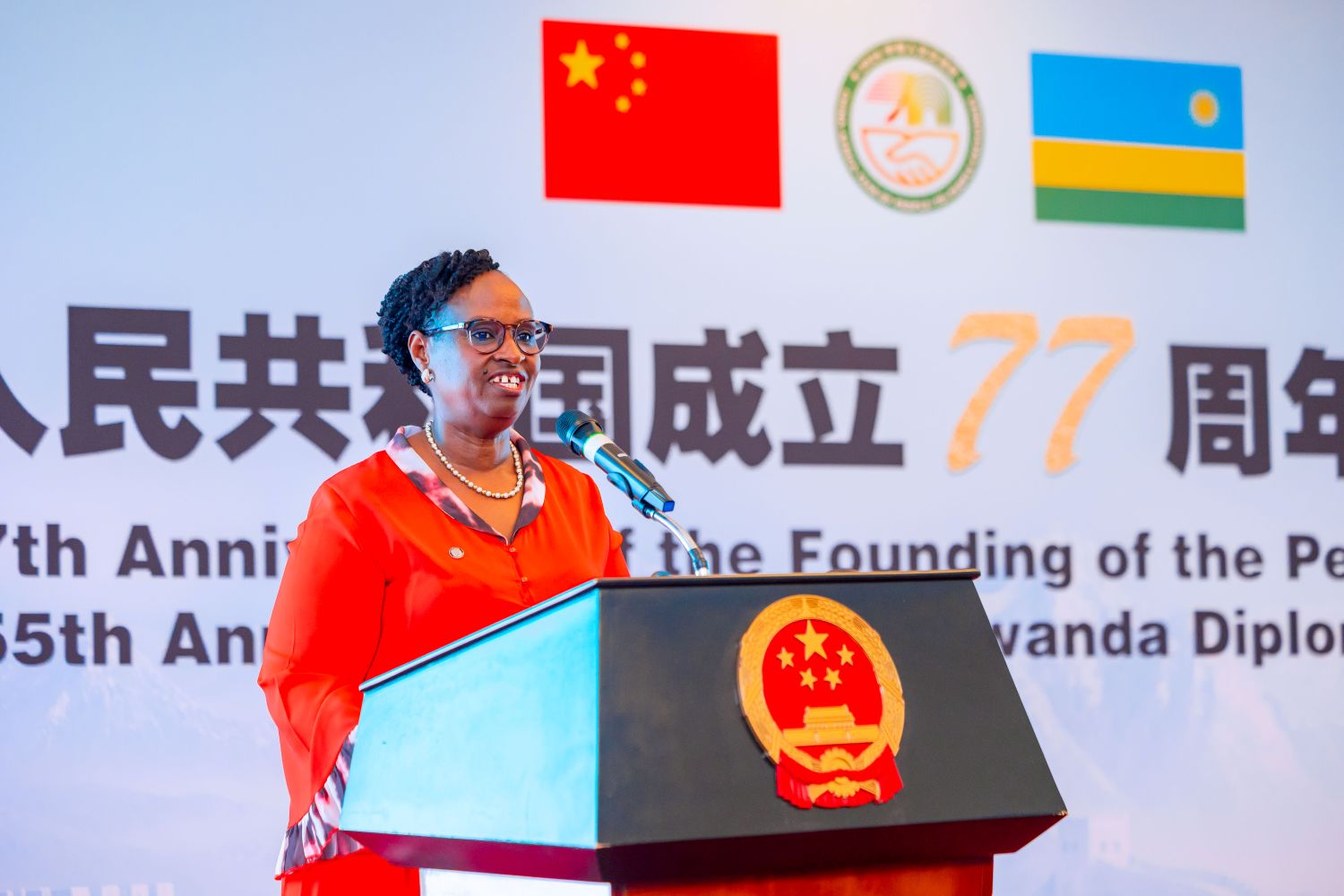
Minister of State for Foreign Affairs Dr. Usta Kaitesi also cited the Masaka Hospital, the Prince House-Giporoso-Masaka road and the Nyabarongo II hydropower project as examples of cooperation with a direct impact on Rwanda’s development.
“Our partnership continues to deepen and expand across infrastructure, agriculture, education, health, energy, trade, investments, capacity building, and many other areas,” Dr. Kaitesi noted.
Minister of State for Foreign Affairs Dr Usta Kaitesi lauded the strong and longstanding relations between Rwanda and China during the reception marking 55 years of diplomatic ties between the two countries.
Education, skills and people-to-people ties
Beyond infrastructure and trade, the two countries have expanded cooperation in education, technical training and people-to-people exchanges.
Amb. Gao revealed that around 150 Rwandan students had travelled to China on degree scholarships this year, while more than 300 Rwandan experts had participated in specialised training courses and workshops in China.
More than 35,000 Rwandan farmers have also received training and materials related to Juncao mushroom technology.
Amb. Gao further highlighted Rwanda’s performance in the Huawei ICT Competition, noting that three Rwandan teams reached the global final this year and brought home one first prize and one second prize.
The Chinese medical team, which has served in Rwanda for 44 years, was cited as another example of knowledge and skills transfer.
Amb. Gao explained that the focus of cooperation is increasingly on building Rwanda’s own capacity and supporting its development priorities under the National Strategy for Transformation (NST2) and Vision 2050.
“The philosophy today is teaching to fish, rather than giving fish,” he remarked.
Dr. Kaitesi, meanwhile, emphasised Rwanda’s appreciation of China’s contribution to addressing global challenges and advancing the priorities of the Global South.
He also highlighted the Forum on China-Africa Cooperation as an important platform for dialogue and practical cooperation between China and African countries.
The two officials also pointed to stronger people-to-people links, including tourism, as an area with room for further growth.
The ambassador noted a 20% increase in Chinese tourists visiting Rwanda and linked the trend to the broader push for people-to-people exchanges between China and Africa.
He also highlighted exchanges between the Communist Party of China and Rwanda’s Rwandan Patriotic Front as an example of the close relationship between the two countries.
Referring to President Paul Kagame’s description of China as a “long-term, reliable and trustworthy partner” of Rwanda, Amb. Gao maintained that the relationship had stood the test of time.
He expressed confidence that the friendship would continue to grow in the coming decades.
Dr. Kaitesi similarly expressed Rwanda’s commitment to strengthening the partnership in the years ahead.
“Rwanda greatly appreciates China’s continued partnership and looks forward to further strengthening our cooperation in the next 55 years ahead,” she stated.
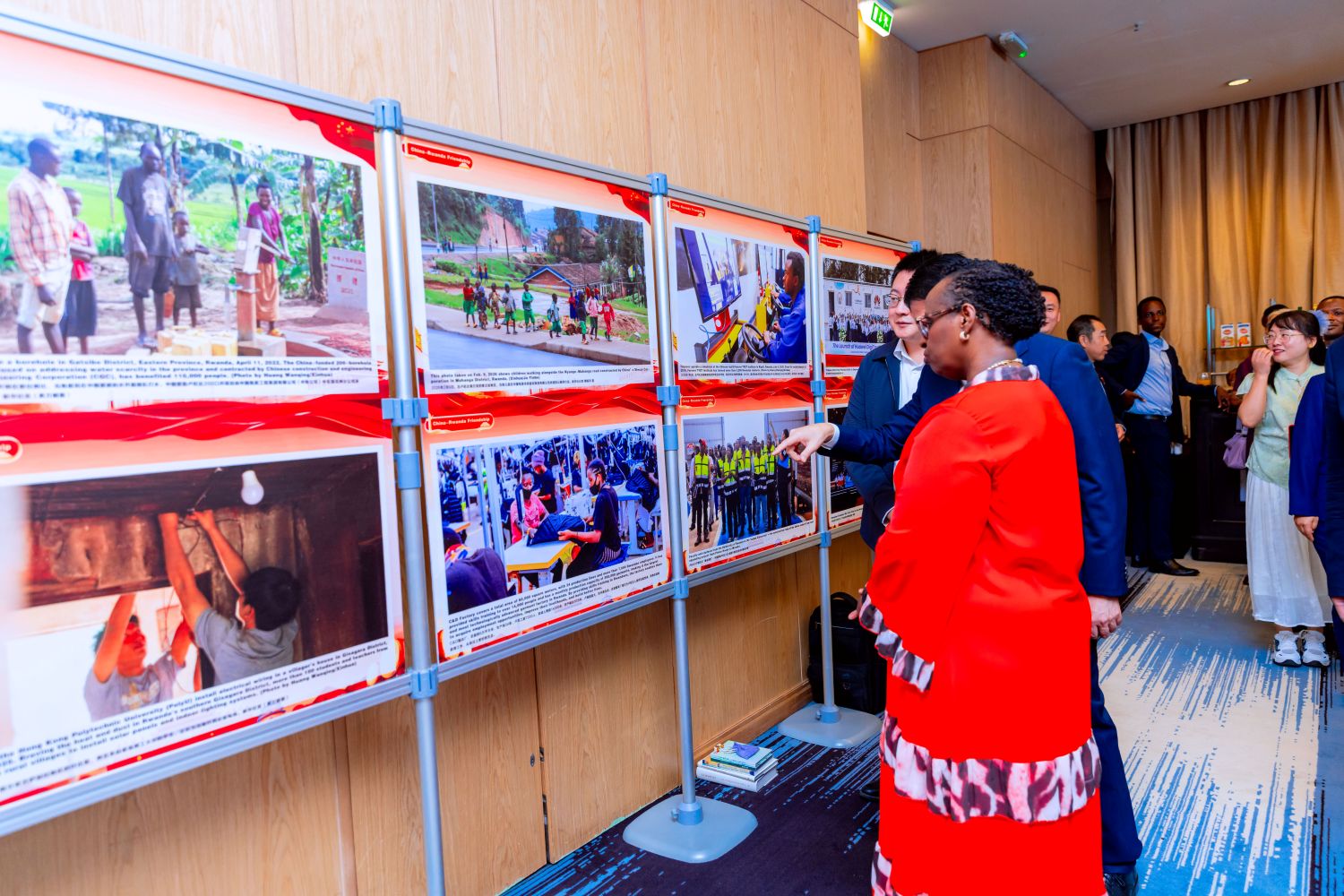
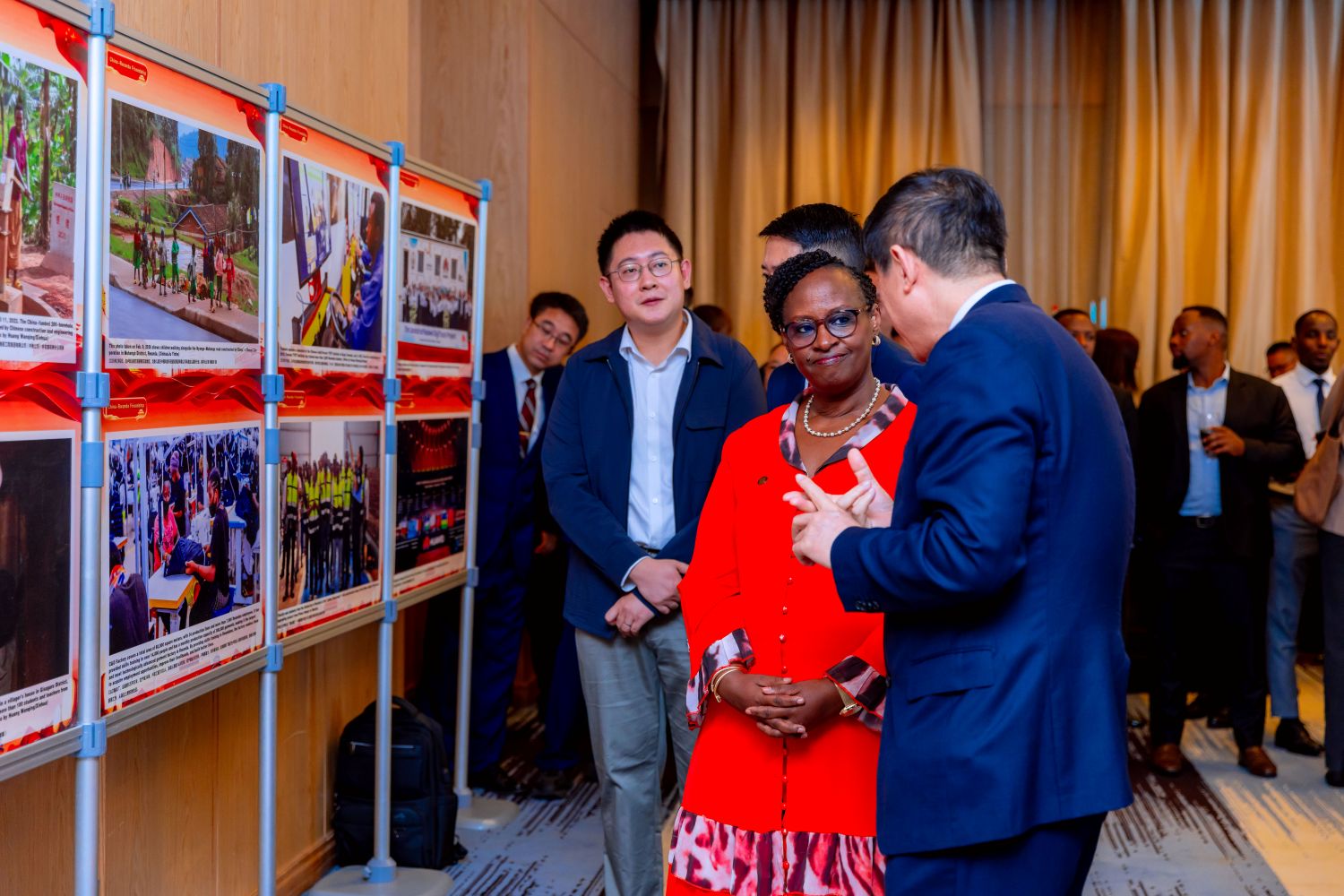
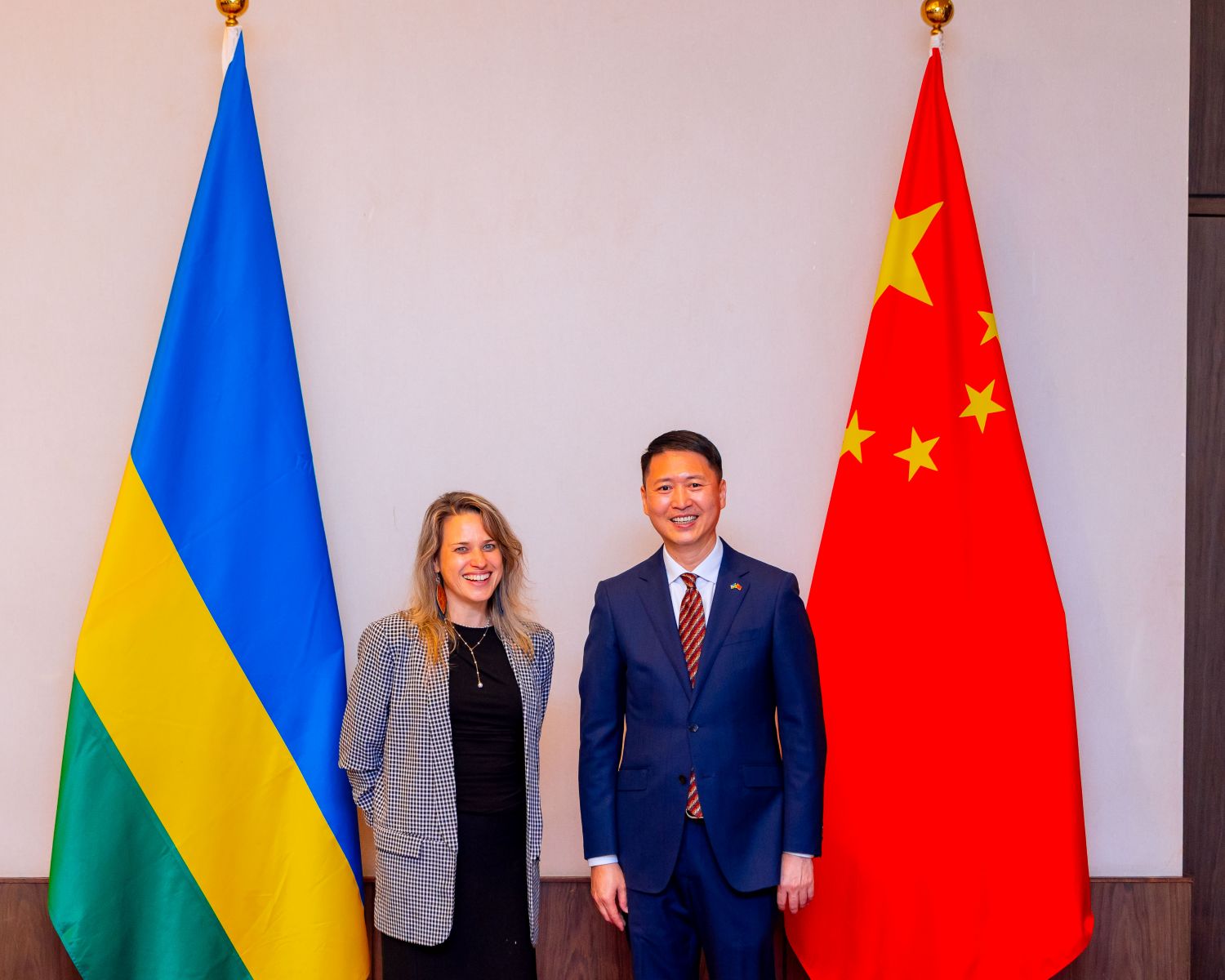
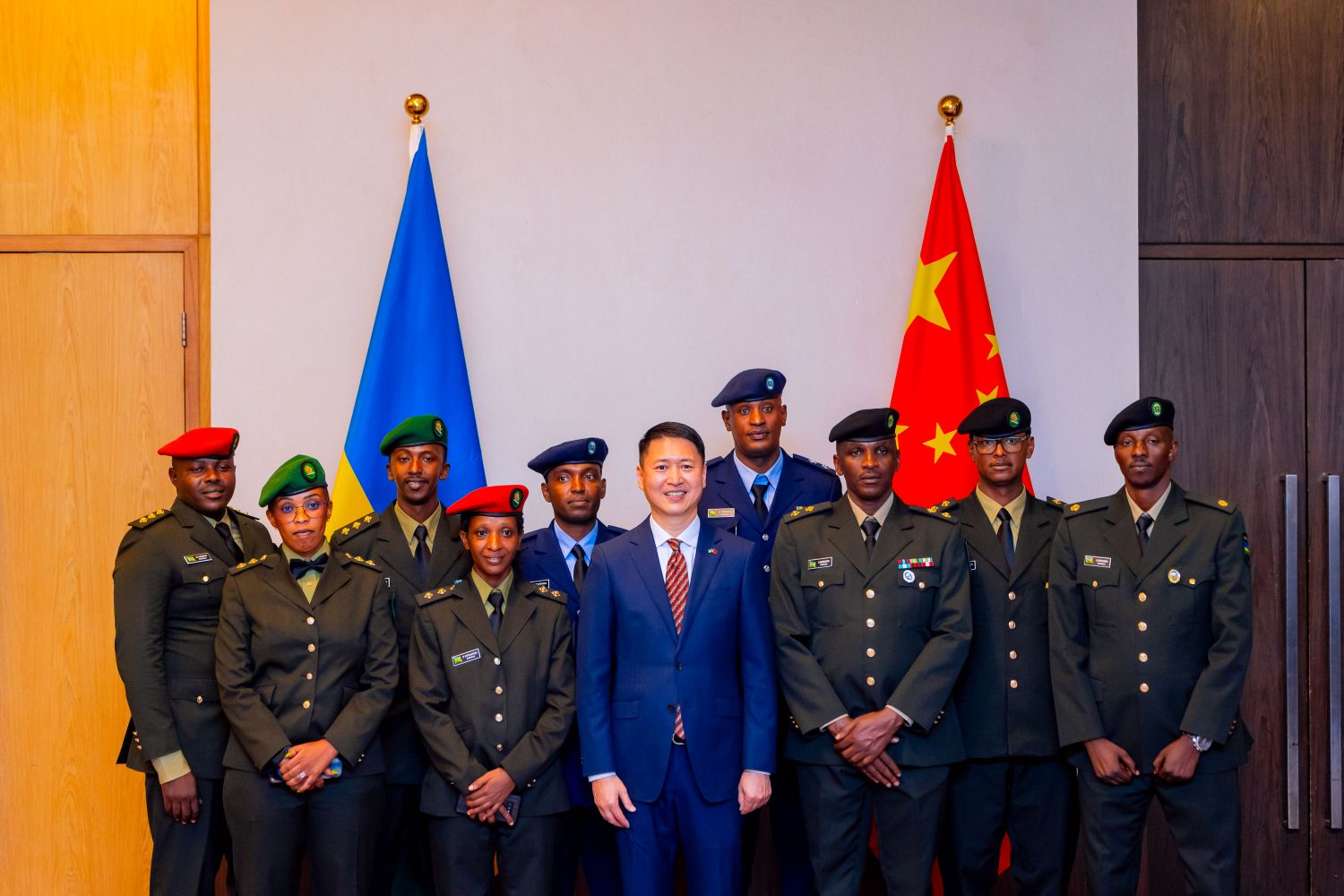
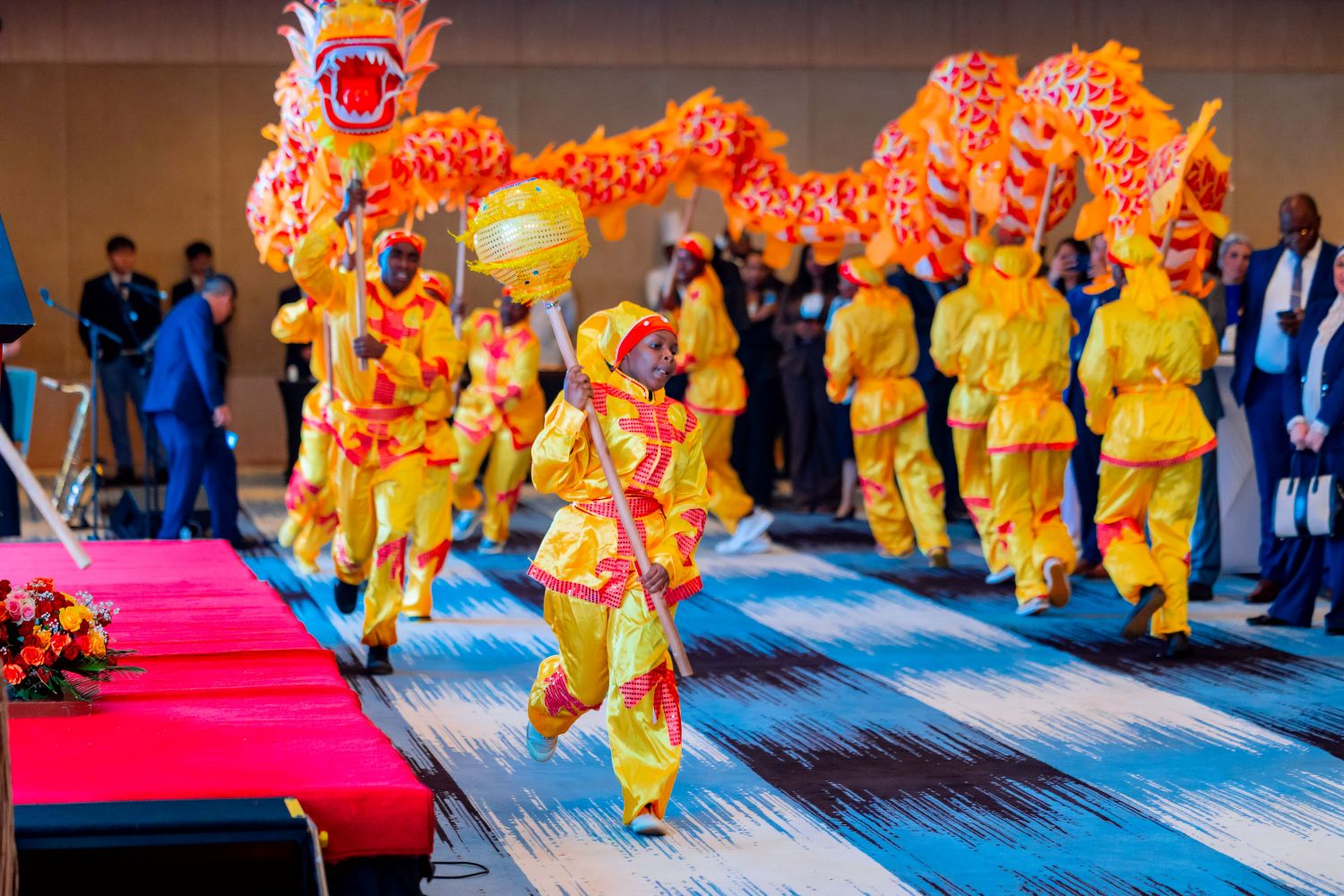
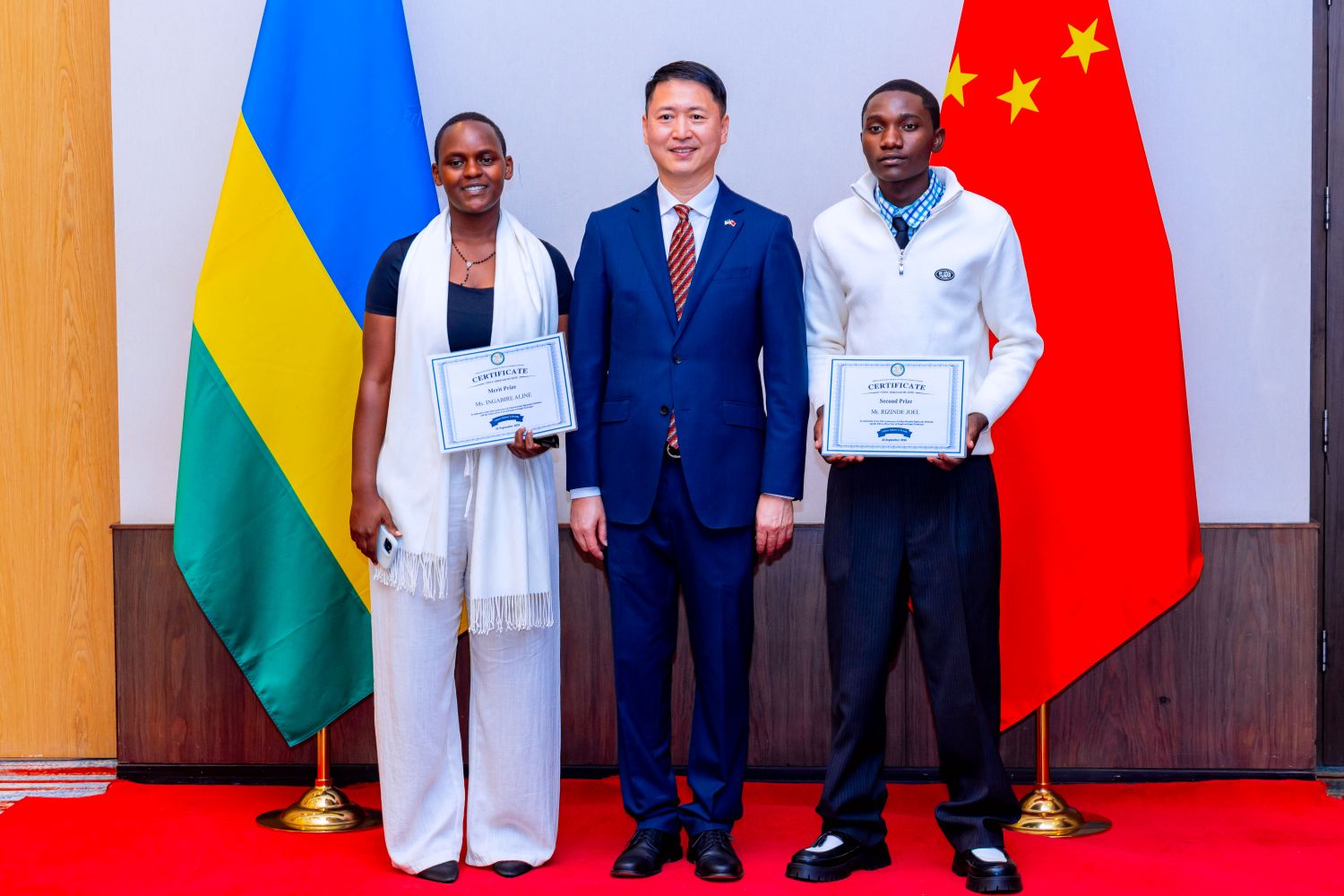
The ceremony, held at the Kigali Marriott Hotel, brought together government officials, diplomats, members of the Chinese community and other guests to celebrate the longstanding ties between Rwanda and China.Chinese Ambassador to Rwanda Gao Wenqi and members of the Chinese delegation take Minister of State for Foreign Affairs Dr Usta Kaitesi on a tour of an exhibition during the reception at the Kigali Marriott Hotel on September 22, 2026.Chinese Ambassador to Rwanda Gao Wenqi poses for a photo with Israeli Ambassador to Rwanda Einat Weiss during the reception at the Kigali Marriott Hotel on September 22, 2026.Chinese Ambassador to Rwanda Gao Wenqi poses for a photo with British High Commissioner to Rwanda Alison Thorpe during the reception at the Kigali Marriott Hotel on September 22, 2026.The ceremony marked the 77th anniversary of the founding of the People’s Republic of China and 55 years of diplomatic relations between China and Rwanda.Chinese Ambassador to Rwanda Gao Wenqi poses for a photo with representatives of security organs during the reception at the Kigali Marriott Hotel on September 22, 2026.The colorful ceremony featured various cultural performances, including a traditional Chinese dragon dance.IGIHE journalist Rania Umutoni was among the participants awarded during the National Day reception after winning first prize in the “China Through My Eyes” competition for her story showcasing her experience of China.Several participants were recognised at the ceremony.
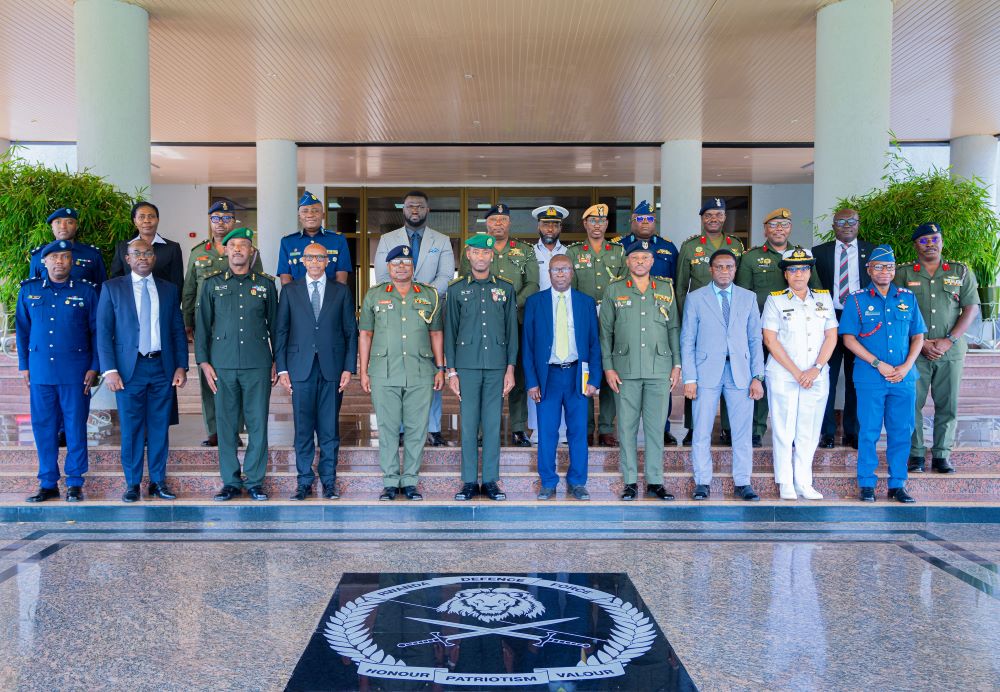
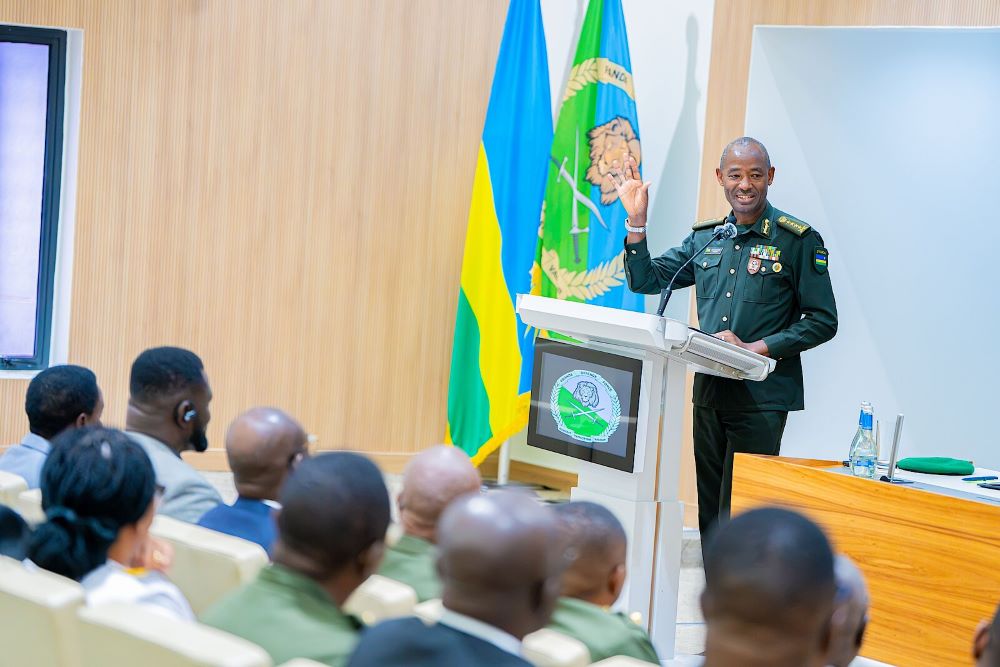
Welcoming the delegation, Gen MK Mubarakh, noted that the RDF and the Ghana Armed Forces have maintained a long-standing relationship and share strong commitments, particularly in the areas of military professional education and training exchanges.
He added that the current visit provides another opportunity to share experiences and further strengthen the existing relationship between the two defence institutions.
The Deputy Commandant, Brig Gen Eric Kodo Konadu, thanked the Rwanda Defence Force for the warm welcome and noted that Rwanda and Ghana share a strong and historic relationship, which was further strengthened by the positive role played by Ghanaian peacekeepers during the 1994 Genocide against the Tutsi.
He described the study tour as an opportunity to further strengthen the existing relationship and enable the visiting officers to gain a deeper understanding of Rwanda’s experience in national security, national cohesion and development.
During their visit to RDF Headquarters, the delegation also attended a briefing on the RDF’s transformation journey and its contribution to regional and international peace and security.
The session highlighted the RDF’s evolution from a liberation movement into a modern and professional military institution committed to national development, regional peace and international security.
As part of their itinerary, the delegation visited the Kigali Genocide Memorial to pay their respects to the victims of the 1994 Genocide against the Tutsi, followed by a tour of the Campaign against Genocide Museum.
The remainder of their programme will include visits to the RDF Command and Staff College, military welfare institutions such as Zigama CSS and Military Medical Insurance, as well as several government institutions.
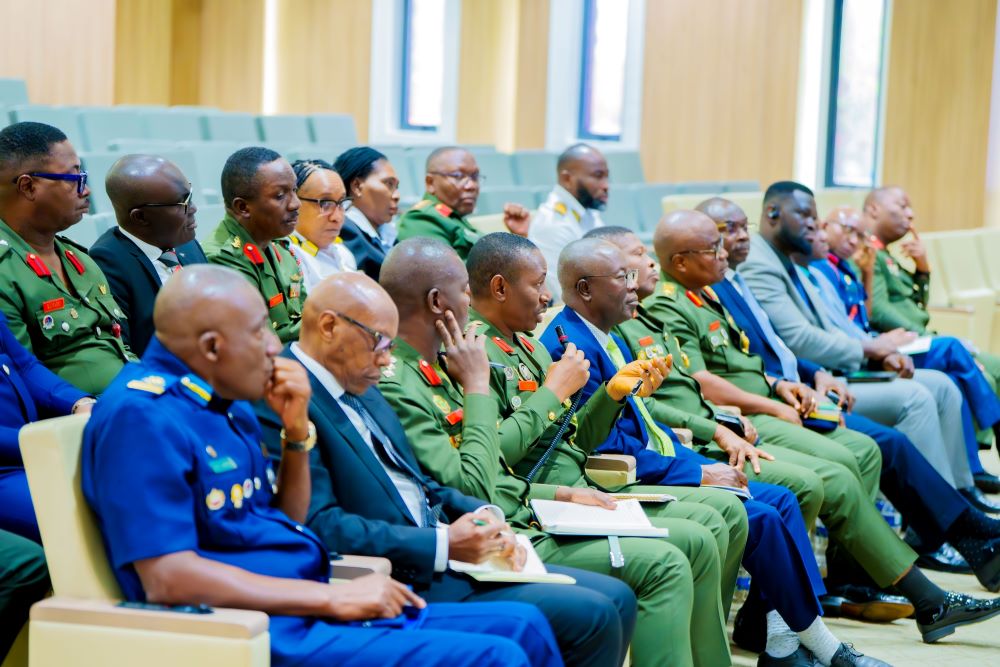
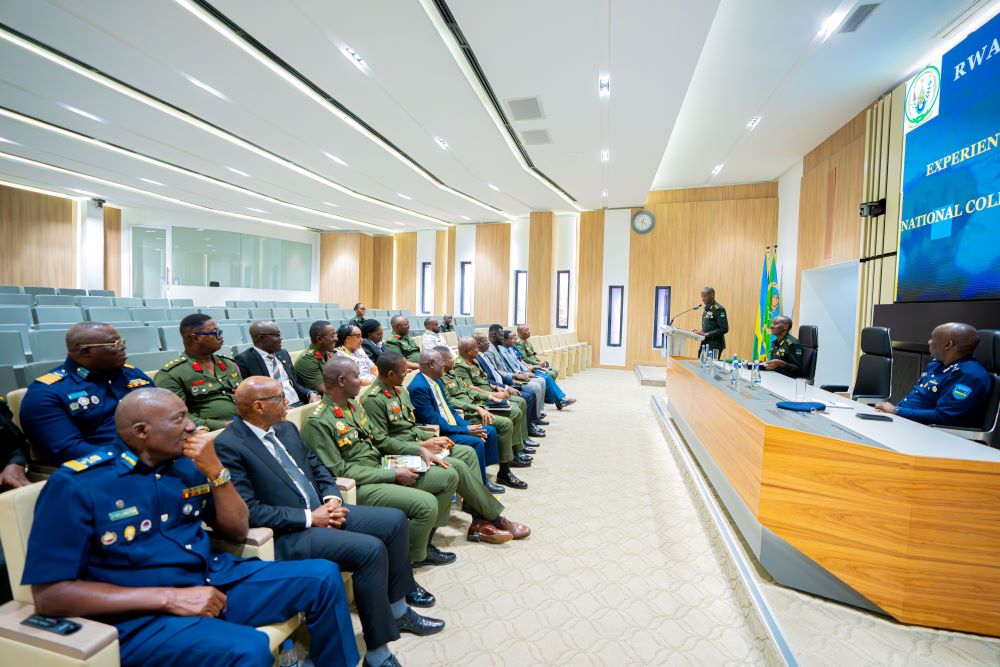
4. Gen MK Mubarakh says the Ghanaian delegation’s visit provides an opportunity to share experiences and further strengthen ties between the two defence institutions.1. The Ghana National Defence College delegation poses for a group photo with Rwanda Defence Force officials during its study visit to Rwanda.The Ghana National Defence College delegation is in Rwanda for a study visit focused on national security, cohesion and development.Ghanaian military officers learn about the Rwanda Defence Force’s transformation journey during a visit to RDF Headquarters.
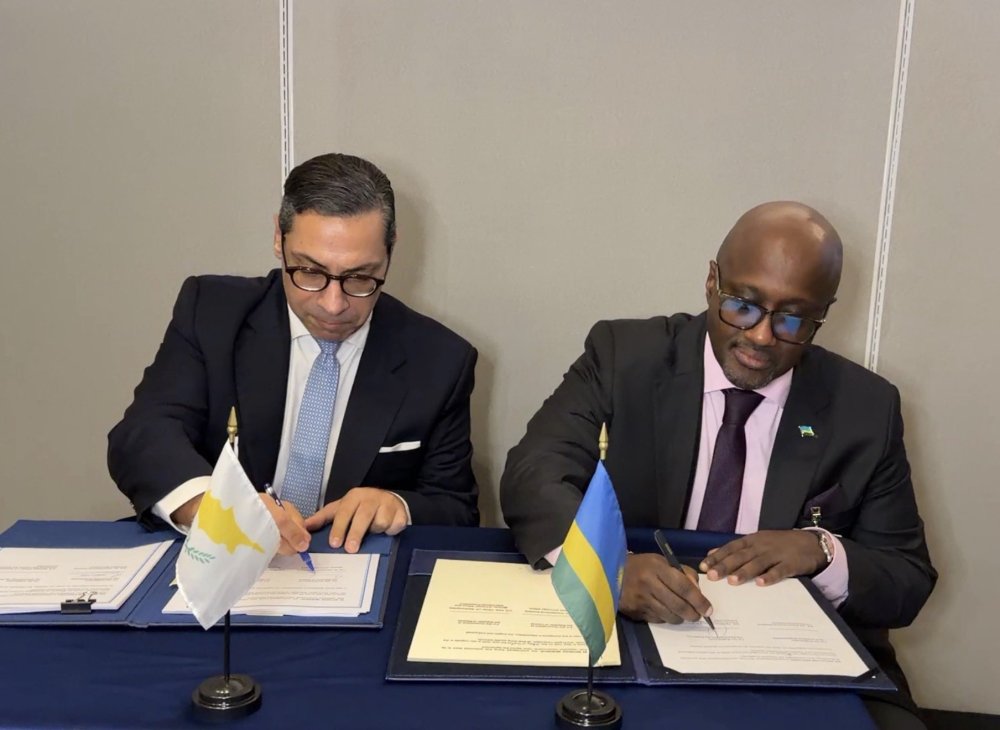
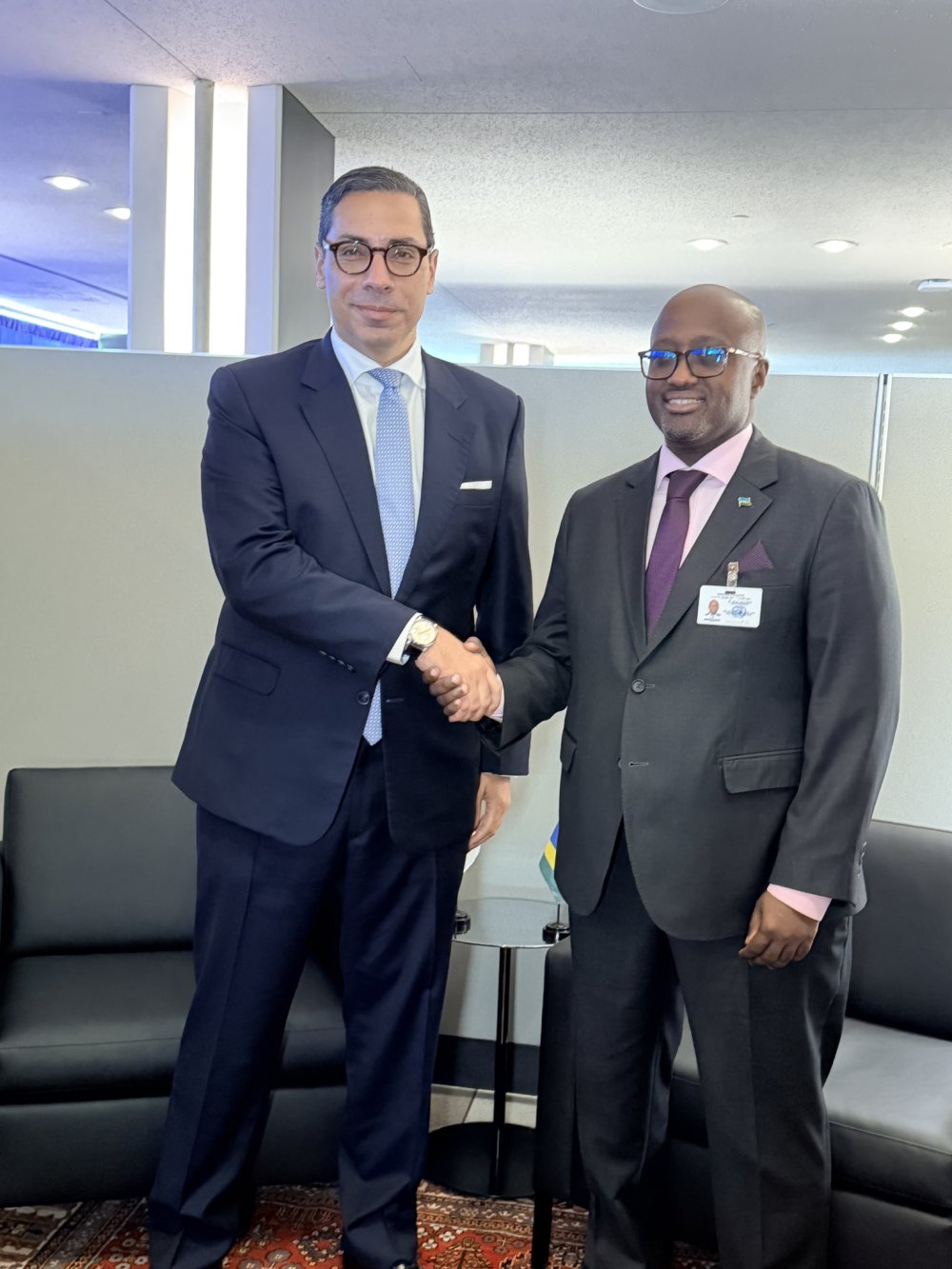
The agreement was signed on September 22, 2026, during talks between Rwanda’s Minister of Foreign Affairs, Amb. Olivier Nduhungirehe, and his Cypriot counterpart, Dr. Constantinos Kombos.
Kombos said his discussions with Nduhungirehe focused on ways to further strengthen relations between Rwanda and Cyprus across various areas of mutual interest, as well as regional issues.
In a post on X, Nduhungirehe thanked his Cypriot counterpart for “good discussion, which opened new opportunities for the bilateral relations and cooperation between Cyprus and Rwanda.”
The signing of the agreement marks another step in the development of relations between Rwanda and Cyprus.
Cyprus is an island country in the eastern Mediterranean Sea, with Nicosia as its capital. It is located south of Türkiye, with the rest of its borders surrounded by the Mediterranean Sea.
Rwanda, represented by Foreign Minister Olivier Nduhungirehe, and Cyprus, represented by Foreign Minister Constantinos Kombos, signed an Air Services Agreement on September 22, 2026.Rwanda and Cyprus have signed an Air Services Agreement to strengthen cooperation in aviation and deepen bilateral relations.
The decision was announced on Tuesday, September 22, in a joint statement issued by Rwanda’s Minister of Foreign Affairs and International Cooperation Olivier J.P. Nduhungirehe and Belgium’s Deputy Prime Minister and Minister of Foreign Affairs, European Affairs and Development Cooperation Maxime Prévot.
The ministers issued the statement on the sidelines of the ongoing 81st United Nations General Assembly in New York, United States.
The two sides said their embassies will reopen in the “near future”. As an initial step, each mission will be headed by a chargé d’affaires ad interim, supported by a diplomat or consular officer and a small technical support team.
The two countries will subsequently begin the process of appointing ambassadors. Rwanda’s ambassador to Belgium will also be accredited to the European Union, according to the statement.
The restoration follows a series of meetings and informal contacts between Nduhungirehe and Prévot in recent months, during which the two sides said they addressed a number of differences and misunderstandings in a constructive spirit.
The two ministers expressed their gratitude to Qatar for facilitating their first meeting in Doha in June 2025.
Rwanda and Belgium said they would maintain “an open, candid and transparent dialogue” as they work to address bilateral differences and divergent positions on international issues.
They also agreed on “non-interference, mutual respect, and constructive engagement” as principles that will guide their future bilateral relations.
The statement said the two countries recognise dialogue as “essential for addressing bilateral differences and discussing divergent positions and outstanding disagreements on international issues.”
Rwanda severed diplomatic ties with Belgium on March 17, 2025, accusing Brussels of taking sides in the conflict in eastern Democratic Republic of Congo and of systematically mobilising against Rwanda in international forums.
Rwanda also accused Belgium of seeking to undermine the country and the region in pitiful attempts to sustain its neocolonial delusions.
The dispute came amid tensions over the conflict in eastern DRC, where Rwanda has faced accusations of supporting the M23 rebel group. Kigali has consistently denied the allegations.
Rwanda has instead maintained that its main security concern is the collaboration between the Congolese government and the FDLR, an armed group composed of remnants of perpetrators of the 1994 Genocide against the Tutsi.
The restoration of diplomatic relations reopens formal channels between Kigali and Brussels after more than a year of strained relations.
The restoration follows a series of meetings and informal contacts between Rwanda’s Foreign Affairs Minister Olivier J.P. Nduhungirehe and Belgium’s Deputy Prime Minister and Minister of Foreign Affairs, Maxime Prévot, in recent months, during which the two sides said they addressed a number of differences and misunderstandings in a constructive spirit.