The message was delivered during the 2026 Capital Markets Youth Forum, a national campaign that attracted more than 1,100 contestants and reached over 6,000 students through roadshows across all provinces.
The forum was organised by the Capital Markets Authority, Rwanda National Investment Trust, Rwanda Stock Exchange and Luxembourg Development Cooperation Agency. It focused on helping young people understand savings, investment, shares, bonds and collective investment schemes.
The Chief Executive Officer of the Capital Markets Authority, Romeo Ngarambe said the capital market should not be viewed as a space reserved for large companies, wealthy individuals or financial institutions.
He noted that “Through this programme, we seek to build a stronger culture of saving and investment among youth. We want young people to understand that the capital market is not reserved for a few institutions or large investors.”
For young people, the capital market offers practical entry points. Through shares, they can own part of listed companies. Through bonds, they can lend to the government or companies and earn returns. Through collective investment schemes, they can pool modest amounts with other investors and benefit from professional fund management.
Alodie Iradukunda, a Member of the East African Legislative Assembly, urged young people to look beyond saving alone and put money into productive assets. She said that “Saving alone is no longer enough.”
The Capital Markets University Challenge held as part of the Capital Markets Youth Forum, concluded with 5 winners from 1,100 contestants.
The winners received prizes in shares, bonds and Collective Investment Schemes which provide practical exposure to capital market products & long-term investment.
Christian Ishimwe Senga took first place and received Rwf 1.5 million worth of shares, bonds and Collective Investment Schemes. Iza Key Hirwa came second with Rwf 1.2 million, while Protegene Maniragaba finished third with Rwf1 million. Jean Baptiste Byiringiro came fourth with Rwf800,000, while Marthe Nshimyimana came fifth with Rwf500,000.
The forum focused on helping young people understand savings, investment, shares, bonds and collective investment schemes.The youth forum was organized by the Rwanda Capital Markets Authority (CMA), RNIT Iterambere Fund, the Rwanda Stock Exchange, and Luxembourg’s development cooperation agency. Iza Key Hirwa came second with Frw 1.2 millionChristian Ishimwe Senga took first place and received Frw 1.5 million worth of shares, bonds and Collective Investment Schemes.Marthe Nshimyimana came fifth with Frw 500,000.Capital Markets Authority Chief Executive Officer, Romeo Ngarambe, said the capital market should not be seen as a space reserved only for large companies or financial institutions.Rwanda Stock Exchange Chief Executive Officer, Rwabukumba Pierre-Célestin.
The changes also affected the structure of government, including the number of ministries and state ministers. Following the restructuring, Rwanda now has 20 ministries led by 20 ministers, down from 21 previously. The number of State Ministers has also increased from 11 to 12.
The Ministry of Infrastructure has been reorganised and now includes a minister and two state ministers, making it one of only two ministries with more than one state minister, alongside the Ministry of Finance and Economic Planning.
The Minister in the Office of the President reviews all legislation before promulgation by the President of the Republic. The Minister is also charged with resolving the citizen complaints addressed to the President and supervises implementation of Presidential pledges; and serves as liaison between Cabinet and Parliament.
The dissolution will not affect the handling of citizens’ complaints, which will continue to be addressed.
The role had been held by Judith Uwizeye since 2017. Following the latest changes, she has been appointed Minister of Public Service and Labour, a post she had previously held between 2014 and 2017.
Before Uwizeye, the position was held by Venantie Tugireyezu, who served from 2011. He currently serves as a judge at the Court of Appeal.
These changes form part of ongoing adjustments within President Paul Kagame’s fourth-term. The most recent reshuffle prior to this took place in December 2025, when Dr Telesphore Ndabamenye was appointed Minister of Agriculture and Animal Resources and Dr Solange Uwituze was named State Minister.
In the same period, Dr Usta Kaitesi was appointed State Minister in the Ministry of Foreign Affairs, replacing Gen (Rtd) James Kabarebe.
Earlier, in September 2025, Yves Iradukunda joined the cabinet as State Minister in the Ministry of ICT and Innovation.
These remain the only changes recorded since July 2025, when Dr Justin Nsengiyumva was appointed Prime Minister.
Before that, a reshuffle in December 2024 affected the Ministry of Sports, where Nelly Mukazayire became Minister, Rwego Ngarambe was appointed State Minister, and Godfrey Kabera took up the role of State Minister in the Ministry of Finance and Economic Planning, responsible for Treasury.
The Ministry in the Office of the President has been dissolved.
Among the most notable appointments is that of Damien Murwanashyaka, who was named Minister of Infrastructure, a ministry that has recently been under scrutiny over delayed projects, including roads, dams, and buildings that have led to significant financial losses.
Murwanashyaka joins the government from the private sector, where he brings more than 15 years of experience in the construction industry. A Professional Civil Engineer and Associate Member of the Chartered Institute of Arbitrators, Murwanashyaka most recently served as the Managing Director of Preferred Contractors.
Before that, his senior leadership career included roles as the CEO of UDL, Chief Quantity Surveyor at Real Contractors Ltd, and Projects Manager at ROKO Construction Ltd. He also held consultant leadership roles at Century Engineering and Contractors Ltd and Gasabo 3D Design Ltd.
He graduated with a First Class Honors Degree in Civil Engineering and later earned an MBA from Oklahoma Christian University.
The Ministry of Infrastructure also welcomed Armand Zingiro as State Minister. Zingiro previously served as Chief Executive Officer of the Rwanda Energy Group (REG), a position he held since September 2023 after leading the Energy Utility Corporation Limited (EUCL) from 2020.
He was replaced at REG by Maximilien Byilingiro, who has been appointed the new Chief Executive Officer of the energy utility.
Another new entrant to the ministry is Col Claudien Bizimungu, who was appointed State Minister for Infrastructure. Since 2022, he has served as Deputy Commander of the Rwanda Defence Force’s Engineer Brigade. He was also part of a Rwandan military mission that assisted Jamaica in rebuilding infrastructure damaged by natural disasters.
In the Ministry of Trade and Industry, Marie Antoine Kajangwe was appointed Minister, replacing Prudence Sebahizi. Kajangwe is no stranger to the ministry, having served as Permanent Secretary since August 2024.
Prior to that, she was Director General in charge of Trade and Investment Promotion at the ministry.
Her former position as Permanent Secretary has been filled by Chantal Tuyishimire.
Meanwhile, Judith Uwizeye was appointed Minister of Public Service and Labour, replacing Ambassador Christine Nkulikiyinka. Uwizeye previously served as Minister in the Office of the President following the formation of a new Cabinet in July 2025.
This is not her first time leading the Public Service and Labour Ministry. She held the same portfolio between 2014 and 2017. A lawyer by training, Uwizeye graduated from the former National University of Rwanda in 2006 before earning a master’s degree in International Economic and Business Law from the University of Groningen in the Netherlands. She also taught in the university’s Faculty of Law.
The appointments also included several diplomatic and institutional changes. Lt Gen (Rtd) Karenzi Karake was appointed Rwanda’s Ambassador to China, while Emmanuel Bayingana was named Ambassador to Israel.
Jeannot Ruhunga was appointed Ambassador to Poland, and Christine Nkulikiyinka was named Ambassador to Spain.
Among others, Louise Kanyonga was appointed Chief Executive Officer of Zigama CSS, while Michelle Umurungi was named Deputy Chief Executive Officer in charge of Investments at RSSB at Rwanda Social Security Board.
The changes bring a mix of experienced public servants, private-sector professionals and security experts into leadership positions as the government seeks to strengthen service delivery across key sectors.
Murwanashyaka was appointed as Minister of Infrastructure, replacing Dr. GasoreKajangwe was named Minister of Trade and Industry, replacing SebahiziJudith Uwizeye was appointed Minister of Public Service and Labour, a position she previously held from 2014 to 2017Zingiro, former REG CEO, is now State Minister in MININFRA
The appointments were announced in a communiqué issued by Prime Minister Dr. Justin Nsengiyumva on June 10, pursuant to Articles 111, 112 and 116 of the Constitution of the Republic of Rwanda.
In the Ministry of Infrastructure, Damien Murwanashyaka was appointed Minister, replacing Dr. Jimmy Gasore, who had served in the position since September 2023.
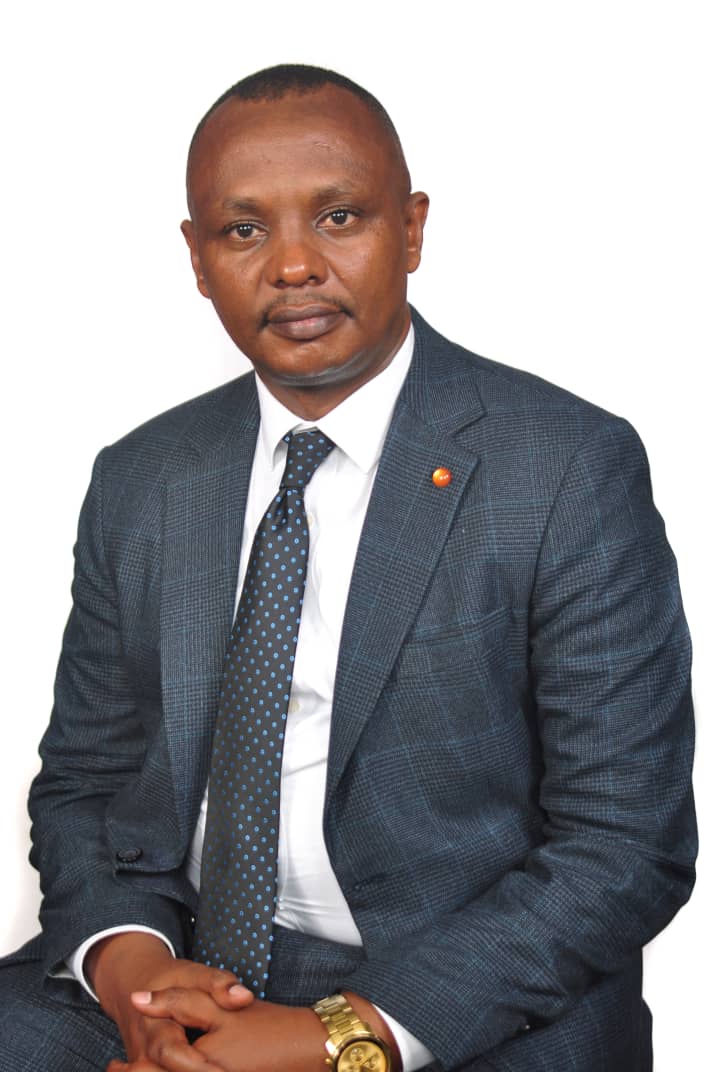
Damien Murwanashyaka is set to take over as the Minister of Infrastructure.
Murwanashyaka joins the government from the private sector, where he brings more than 15 years of experience in the construction industry. A Professional Civil Engineer and Associate Member of the Chartered Institute of Arbitrators, Murwanashyaka most recently served as the Managing Director of Preferred Contractors.
Before that, his senior leadership career included roles as the CEO of UDL, Chief Quantity Surveyor at Real Contractors Ltd, and Projects Manager at ROKO Construction Ltd. He also held consultant leadership roles at Century Engineering and Contractors Ltd and Gasabo 3D Design Ltd.
He graduated with a First Class Honors Degree in Civil Engineering and later earned an MBA from Oklahoma Christian University.
He will be assisted by two Ministers of State, Armand Zingiro and Col. Claudien Bizimungu. Zingiro moves from the Rwanda Energy Group (REG), where he served as Chief Executive Officer, while Bizimungu previously held senior command responsibilities within the Rwanda Defence Force’s engineering structures.
The new structure also reflects a shift in the ministry’s leadership arrangement, as Jean de Dieu Uwihanganye, who previously served as State Minister in charge of Infrastructure, is no longer in the lineup.
Judith Uwizeye has been appointed as the Minister of Public Service and Labour.
In the Ministry of Public Service and Labour, Judith Uwizeye returns to Cabinet as Minister, replacing Christine Nkulikiyinka, who has been nominated as Rwanda’s Ambassador to Spain. Uwizeye previously served as Minister in the Office of the President.
In the Ministry of Trade and Industry, Antoine-Marie Kajangwe has been promoted from Permanent Secretary to Minister, replacing Prudence Sebahizi, who had held the portfolio since August 2024. Kajangwe previously served in senior roles within the same ministry, including overseeing trade and investment functions.
Antoine-Marie Kajangwe has been appointed as the Minister of Trade and Industry, replacing Prudence Sebahizi.
The President also made a series of diplomatic appointments, nominating retired Lt Gen Karenzi Karake as Rwanda’s ambassador to China, Maj Gen Emmanuel Bayingana as ambassador to Israel, and retired Col Jeannot Ruhunga as ambassador to Poland, while Chantal Tuyishimire was appointed Permanent Secretary in the Ministry of Trade and Industry.
In state-owned institutions, Louise Kanyonga, who has been serving as Deputy Chief Executive Officer of the Rwanda Social Security Board (RSSB), was appointed Chief Executive Officer of Zigama CSS. Kanyonga previously held several senior positions at the Rwanda Development Board (RDB), including Chief Strategy and Compliance Officer and Registrar General.
Maximilien Byilingiro was appointed Chief Executive Officer of Rwanda Energy Group (REG), while Michelle Umurungi, who currently serves as Chief Investment Officer at the Rwanda Development Board, was named Deputy Chief Executive Officer in charge of Investments at RSSB.
The latest appointments come as the government continues efforts to strengthen leadership across strategic sectors including infrastructure, trade, energy, public service, and diplomacy.
The appointments were announced in a communiqué issued by Prime Minister Dr. Justin Nsengiyumva on June 10, pursuant to Articles 111, 112 and 116 of the Constitution of the Republic of Rwanda.
Researchers tested several AI models using a classic psychology exercise called the Stroop task. The test is designed to measure attention and self-control in humans.
In the task, people see color words like “red” or “blue” written in different ink colors and must name the ink color instead of reading the word. This becomes harder when the word and color do not match.
The AI systems performed well on short lists of words, but their accuracy dropped sharply as the lists became longer. Some models went from over 90 percent accuracy to below 20 percent in longer tests.
When matching and conflicting words were mixed together, performance dropped even more. Researchers say the systems often returned to simply reading the words instead of following the instruction.
The study suggests that unlike humans, who can usually control attention and ignore distractions, AI systems still struggle with this kind of mental control, especially in longer and more complex tasks.
The findings highlight that despite impressive abilities, AI still has limits when it comes to focus and resisting distraction.
A simple color-word test showed that today’s smartest AI models can unexpectedly lose focus and fall apart on longer tasks.Credit: Shutterstock
Speaking in an interview with B&B Kigali on June 10, 2026, Nduhungirehe said Rwanda remains willing to restore normal relations, but accused Burundi of repeatedly undermining efforts to stabilise bilateral ties.
Relations between the two neighbouring countries deteriorated significantly in 2015 following an attempted coup against then-President Pierre Nkurunziza. Several individuals involved in the attempt fled to Rwanda, after which Burundi closed its borders with Rwanda.
In 2022, both countries moved to normalise relations and reopened their borders. However, tensions resurfaced in late 2023 following an attack in the Gatumba area of Bujumbura Province by the armed group RED Tabara. Burundi subsequently closed its borders again in January 2024.
At the time, Burundi accused Rwanda of supporting RED Tabara, an allegation Kigali denied, insisting it does not cooperate with groups intent on destabilising neighbouring states.
Renewed tensions and diplomatic engagement
According to Nduhungirehe, further strain followed statements and developments in the region, including remarks made by regional leaders and renewed accusations exchanged between Kigali and Bujumbura.
He cited comments made in January 2024 in Kinshasa by Burundi’s President Évariste Ndayishimiye, who, during a visit to the Democratic Republic of the Congo, expressed support for efforts to mobilise Rwandan youth against the government.
The minister also referred to earlier remarks by the President of the Democratic Republic of the Congo, Félix Tshisekedi, who in late 2023 said his country’s forces would act against Rwanda, describing this as part of a broader regional climate of hostility.
He argued that such statements contributed to worsening relations, particularly given the regional context and ongoing insecurity in eastern DR Congo.
Nduhungirehe further noted that Burundian troops deployed to eastern DR Congo were cooperating with the FDLR militia group, alongside Congolese forces.
He stated that while the Burundian deployment was officially framed as part of operations against armed groups, including RED Tabara, their activities instead indicated coordination with the FDLR.
“They were not deployed against RED Tabara. They were deployed to assist the Congolese army and the FDLR in the plan that President Tshisekedi mentioned during his campaign, and the same plan President Ndayishimiye spoke about in Kinshasa in January 2024,” he said.
He added that Burundian forces had operated in areas closer to the Rwandan border in North Kivu, despite RED Tabara being mainly active in South Kivu, suggesting, in his view, a different operational focus.
Attempts at dialogue
The minister noted that following the capture of Goma and Bukavu by the AFC/M23 coalition in early 2025, Burundi requested dialogue with Rwanda in an effort to ease tensions.
He said intelligence and security officials from both countries met at the border on three separate occasions and reached a number of understandings aimed at de-escalation.
However, he revealed that progress was later undermined by renewed public accusations from the Burundian leadership.
“What happened after that? After that, President Ndayishimiye went on BBC and France 24… accusing Rwanda of planning to attack Burundi. We then asked our Burundian counterparts what had changed, given that we had reached agreements,” he said.
He added that further meetings were facilitated by the United States after AFC/M23 captured Uvira in early December 2025, during which security officials from both countries again met twice at the border and reached additional understandings.
Nduhungirehe said that despite these engagements, Burundian forces remain present in eastern DR Congo and continue, in Rwanda’s view, to cooperate with elements of the FDLR.
He reiterated Rwanda’s position that it seeks peaceful relations with Burundi through dialogue, but argued that Bujumbura has not demonstrated sufficient commitment to sustaining diplomatic progress.
“Rwanda wants good relations with Burundi, dialogue, and resolution of outstanding issues, but Burundi does not show the willingness,” he said, calling on Burundi to end any cooperation with the FDLR militia group, which was formed by the perpetrators of the 1994 Genocide against the Tutsi.
Rwandan and Burundian diplomats agreed to ease tensions, but President Ndayishimiye later worsened the situation.
Speaking in an interview with B&B Kigali on June 10, 2026, Nduhungirehe said Rwanda remains willing to restore normal relations, but accused Burundi of repeatedly undermining efforts to stabilise bilateral ties.
Many cancer treatments work by damaging the DNA of cancer cells. However, some tumors survive because they have powerful DNA repair systems that allow them to fix the damage and continue growing. This ability often makes cancers resistant to drugs over time.
A team of researchers has now found a way to disrupt those repair systems. Their study focused on a small molecule called UNI418, which reduces the levels of key proteins that cancer cells need to repair damaged DNA.
Without these proteins, cancer cells struggle to recover from DNA damage, making them more vulnerable to treatment.
The researchers found that UNI418 activates a natural process inside cells that removes specific proteins. As a result, important DNA repair proteins are broken down, effectively shutting down one of the cancer cell’s main defense mechanisms.
The discovery could be particularly important for improving the effectiveness of PARP inhibitors, a group of cancer drugs used to treat certain tumors. While these drugs can be highly effective, many cancers eventually become resistant to them.
In laboratory tests, UNI418 made cancer cells far more sensitive to PARP inhibitors. The effect was especially noticeable in cancer cells that had already stopped responding to treatment. In those cases, the molecule helped restore the drugs’ effectiveness.
The approach also showed encouraging results in animal studies, where tumor growth slowed significantly when UNI418 was combined with the PARP inhibitor Olaparib.
Researchers say the findings reveal a new way of fighting cancer—not by altering genes, but by dismantling the repair systems that help tumors survive treatment. While more research is needed before the approach can be tested in patients, the study offers fresh hope for developing treatments against drug-resistant cancers.
DNA repair proteins inside cells are constantly being produced and removed to maintain a healthy balance.
The Urban Consumer Price Index (CPI), which serves as the headline measure for monetary policy purposes, increased by 12.9 percent compared to May 2025 and by 0.5 percent compared to April 2026. The annual average inflation rate between May 2025 and May 2026 stood at 8.7 percent.
The report also showed that overall inflation across Rwanda reached 12.3 percent on an annual basis, while rural inflation stood at 11.8 percent.
The latest figures indicate that inflationary pressures remain elevated after a sharp acceleration in recent months. Urban inflation rose from 8.9 percent in January to 9.2 percent in February and March before surging to 13.0 percent in April and remaining high at 12.9 percent in May.
Transport, housing and health costs were among the biggest drivers of the increase in consumer prices.
Urban transport prices rose by 24.5 percent compared to May last year and increased by 1.1 percent on a monthly basis. Housing, water, electricity, gas and other fuels increased by 19.4 percent annually, although the category declined by 0.9 percent compared to April.
Health services recorded the steepest increase among major expenditure categories, rising by 71.6 percent over the past 12 months. Restaurants and hotels also registered a significant increase of 16.6 percent, while prices for alcoholic beverages, tobacco and narcotics rose by 16.1 percent.
Food and non-alcoholic beverages, which account for 27 percent of the urban consumer basket, increased by 6.2 percent annually and 0.9 percent monthly. Within the category, vegetable prices rose by 9.0 percent, meat prices increased by 12.9 percent and non-alcoholic beverages climbed by 11.0 percent compared to May 2025.
The report shows that transport and housing costs made the largest contributions to annual urban inflation, adding 3.2 and 3.1 percentage points respectively to the overall 12.9 percent inflation rate. Food and non-alcoholic beverages contributed a further 2.3 percentage points.
NISR also reported strong inflationary pressures in energy-related products. The urban energy index increased by 44.4 percent compared to May 2025, making it one of the fastest-rising components of household expenditure. However, the energy index declined by 0.5 percent compared to April 2026.
Meanwhile, the local goods index increased by 13.7 percent on an annual basis,
outpacing the imported goods index, which rose by 10.5 percent.
Underlying inflation, which excludes fresh food and energy prices and is considered a key indicator of broader price trends in the economy, rose by 12.0 percent year-on-year and 0.7 percent on a monthly basis. The annual average underlying inflation rate reached 9.2 percent.
The CPI is compiled using a basket of approximately 1,622 goods and services monitored across urban and rural areas of Rwanda. Each month, NISR collects more than 40,000 prices from markets, shops, schools, hospitals and other outlets to track changes in the cost of living.
Rwanda’s inflation rose to 12.9 percent in May 2026, driven by sharp increases in transport, housing, energy and health-related costs, according to the latest Consumer Price Index (CPI) report released by the National Institute of Statistics of Rwanda (NISR).
As Mushikiwabo explained to the media in February 2026, her decision to seek re-election followed consultations with the Rwandan government.
In November 2025, she had received requests from several member states encouraging her to run again, citing the achievements recorded during her two terms in office.
Although observers believe the election, scheduled for November 2026 in Phnom Penh, may favor Mushikiwabo due to the support she has received from many member states, she has emphasized that the race will be competitive. She noted that all candidates possess the qualifications required for the role, but none has given her reason to doubt her own prospects.
Winning the position of OIF Secretary-General requires broad support from member states, a factor often influenced by a candidate’s accomplishments both at home and on the international stage, as well as within the organization itself.
When Mushikiwabo assumed office in January 2019, she pledged to strengthen the OIF’s role in global affairs, positioning it as a platform for dialogue among nations and a promoter of human values.
She stressed that solidarity and cooperation remain the organization’s most important principles.
At the time, the OIF comprised 88 states and governments, including 54 full members and 34 associate or observer members.
French speakers worldwide numbered around 300 million, more than half of whom lived in Africa.
Mushikiwabo inherited an organization facing significant financial challenges and internal tensions linked to concerns over financial management during the tenure of former Secretary-General Michaëlle Jean.
The former Canadian leader had faced criticism over spending that reportedly included $500,000 on renovations to her official residence in Paris and $20,000 on a piano.
One of Mushikiwabo’s first priorities was to reform the institution internally and restore cohesion within the organization.
However, the COVID-19 pandemic, which disrupted the global economy and international cooperation, affected many of the OIF’s planned initiatives.
Countries became increasingly focused on addressing domestic challenges as travel restrictions and the suspension of international meetings hampered collaboration.
Like many international organizations, the OIF also struggled with delayed or insufficient contributions from member states.
While operational needs continued to grow, particularly in areas such as youth empowerment, women’s development, and education, available resources often failed to keep pace.
During her second term, member states agreed to increase their contributions to strengthen the organization’s capacity to fulfill its mandate.
Outstanding arrears were reduced, while countries including Rwanda, Egypt, Vietnam, and Djibouti decided to double their annual contributions.
The increase in member contributions paved the way for a larger organizational budget.
During a ministerial meeting held in Yaoundé, Cameroon, in November 2023, ministers approved a gradual increase in the OIF budget, allocating €45.7 million for 2024, €46.1 million for 2025, €46.5 million for 2026, and €46.9 million thereafter.
At the OIF Ministerial Conference held in Kigali in November 2025, member states approved a substantial increase in the 2026 budget to €71.7 million to support expanded programming across the organization.
Despite the increase, Mushikiwabo noted that available resources still fall short of meeting all the organization’s ambitions.
As a result, member states granted her exceptional authority during the Kigali meeting to seek external funding from major international partners and corporations, including companies such as TotalEnergies.
Leveraging this mandate, the OIF has planned partnerships with institutions such as the African Development Bank to support digital skills training initiatives, including the D-Clic programme. The objective is to increase the number of young people benefiting from digital training from 20,000 to 100,000 by 2026.
According to the OIF’s annual report, 1.7 million people benefited from the organization’s programmes in 2025. Around 90,000 women across member states received capacity-building support, while 300 women-led projects were funded. In 2024 alone, 50 projects received support worth €3.7 million.
The number of states and governments within the OIF reached 90 in 2025. Meanwhile, the French-speaking population continues to expand, reinforcing the organization’s global influence. Today, more than 396 million people speak French worldwide, while over 170 million are learning the language.
As Mushikiwabo prepares to seek another mandate, supporters point to the transformation of an organization once facing financial strain and internal divisions into one with stronger finances, broader membership, and expanding development programmes across the Francophone world.
The OIF has undergone significant reforms under the leadership of Louise Mushikiwabo.
The initiative, titled “Soil & Water: Kigali Crossings,” is being launched by the NIROX Foundation, an independent non-profit organisation dedicated to environmental and contemporary art, in partnership with QA Venue Solutions Rwanda, the company that manages the park alongside BK Arena and Amahoro Stadium.
Scheduled to run from August 2026 to March 2027, the long-term programme will merge art, ecology, and public engagement within the park’s boundaries.
The event will feature public exhibitions, artist residency programmes, performances, concerts, and research-driven creative installations. Participating creators will develop works responding directly to environmental challenges, utilizing both technology and sustainable materials.
According to Benji Liebmann, founder and director of the NIROX Foundation, the project builds on more than two decades of using art to connect people with nature and conservation. He believes that art speaks to people differently, emotionally and intuitively, creating a deeper connection with the earth that inspires humanity to fall in love with nature again so they can protect it.
This marks the first time the programme will be hosted in Rwanda. Having previously been held in Europe and South Africa, Rwanda becomes only the second African country to host the initiative.
Liebmann noted that discussions to bring the project to Kigali emerged through a connection with Nyandungu Eco-Park Manager Ildephonse Kambogo, who visited the NIROX Sculpture Park in South Africa, a landscape famous for integrating open-air sculptures made of natural and recycled materials into the environment.
Liebmann recalled visiting about four years ago to assess its feasibility and realizing that the concept was more than feasible, describing it as both necessary and desirable.
“It has taken this long to reach the first stage, which is a pilot exhibition project,” he said, adding, “Art speaks to people differently, emotionally and intuitively, and we believe that creates a deeper connection with the earth. Humanity needs to fall in love with nature again.”
The programme is expected to feature some of Africa’s leading contemporary artists, including Ibrahim Mahama and Serge Attukwei Clottey from Ghana, alongside Willem Boshoff from South Africa. They will be joined by additional participants from France, Spain, and Austria, while local Rwandan artists, including creators from the Inema Arts Center, will also take part in the initiative.
Nyandungu Eco-Park Manager Ildephonse Kambogo welcomed the partnership, stating that it will expand the park’s role by integrating cultural and artistic engagement into its core conservation mission.
He explained that the wetland’s primary role is to filter polluted water and improve its quality, and through art, they hope to find creative ways of showcasing this water purification process.
This will make the process easier for people to understand while supporting the wetland’s conservation mission.
Kambogo added that the residency will allow local Rwandan artists to collaborate with international practitioners, helping to further scale local creative talent.
“Visitors usually come to enjoy the natural beauty, but there has been something missing, art that connects them to the park, culture, and creativity. These artists will create works displayed across the park so that every visitor can enjoy them,” he said.
Nyandungu Eco-Park officially opened in 2022 following a massive ecological restoration of the local wetland. Since its opening, visitor attendance has experienced sharp exponential growth, rising from 48,813 in its inaugural year to 67,222 in 2023. This steady upward trajectory solidified in 2024 when the park recorded 76,754 visitors.
By late 2025, attendance experienced its strongest growth spike yet, surging past 100,000 visitors to register a growth rate of over 30% compared to the previous year. The incoming art installations will be distributed throughout the park’s 121 hectares, establishing a permanent creative layer for future visitors to experience.
Nyandungu Eco-Park officially opened in 2022 following a massive ecological restoration of the local wetland. Organisers of the upcoming event at Nyandungu Eco-Park.Nyandungu Eco-Park Manager Ildephonse Kambogo welcomed the partnership, stating that it will expand the park’s role by integrating cultural and artistic engagement into its core conservation mission.Benji Liebmann (left), founder and director of the NIROX Foundation visiting Nyandungu.