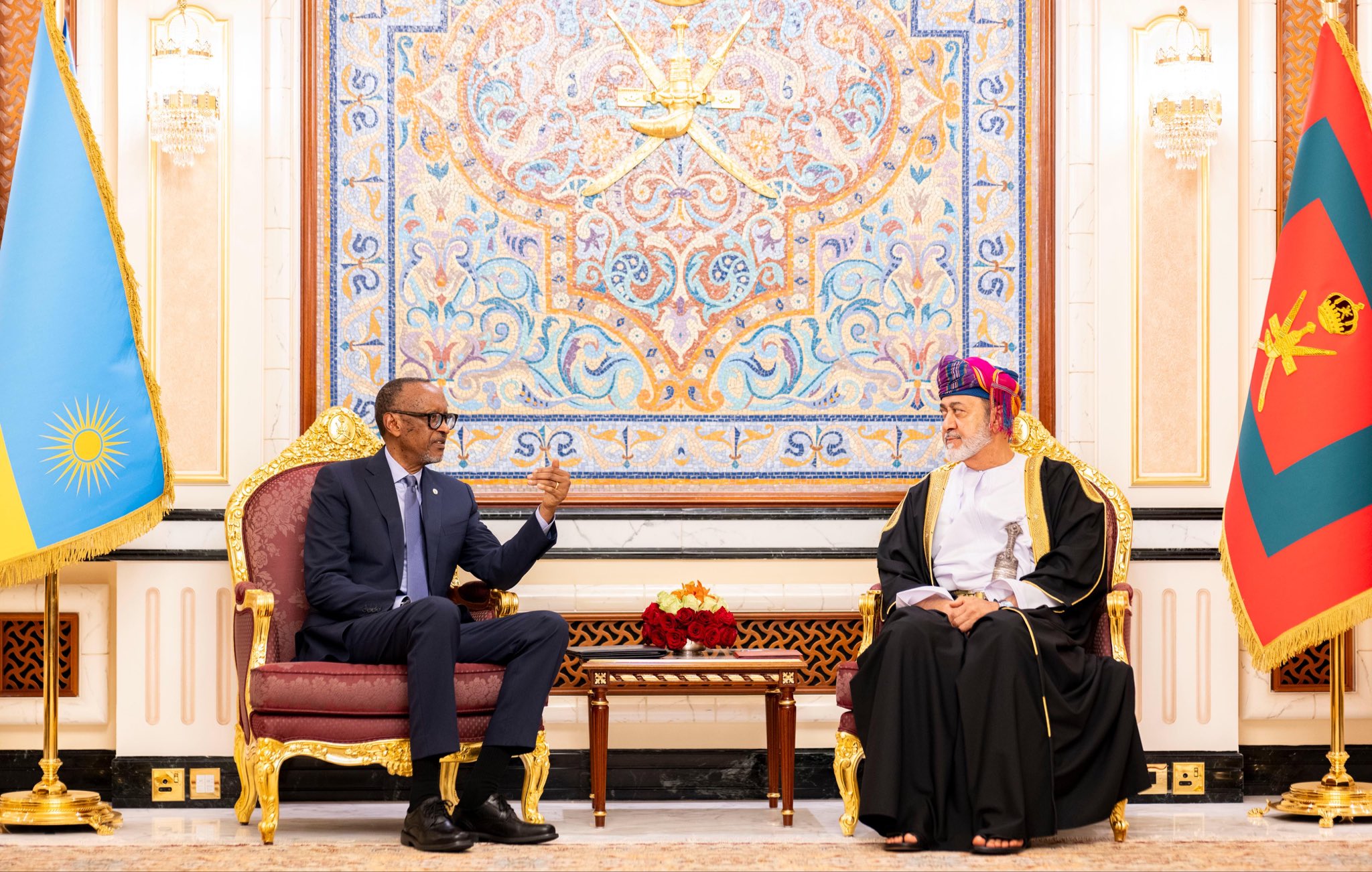
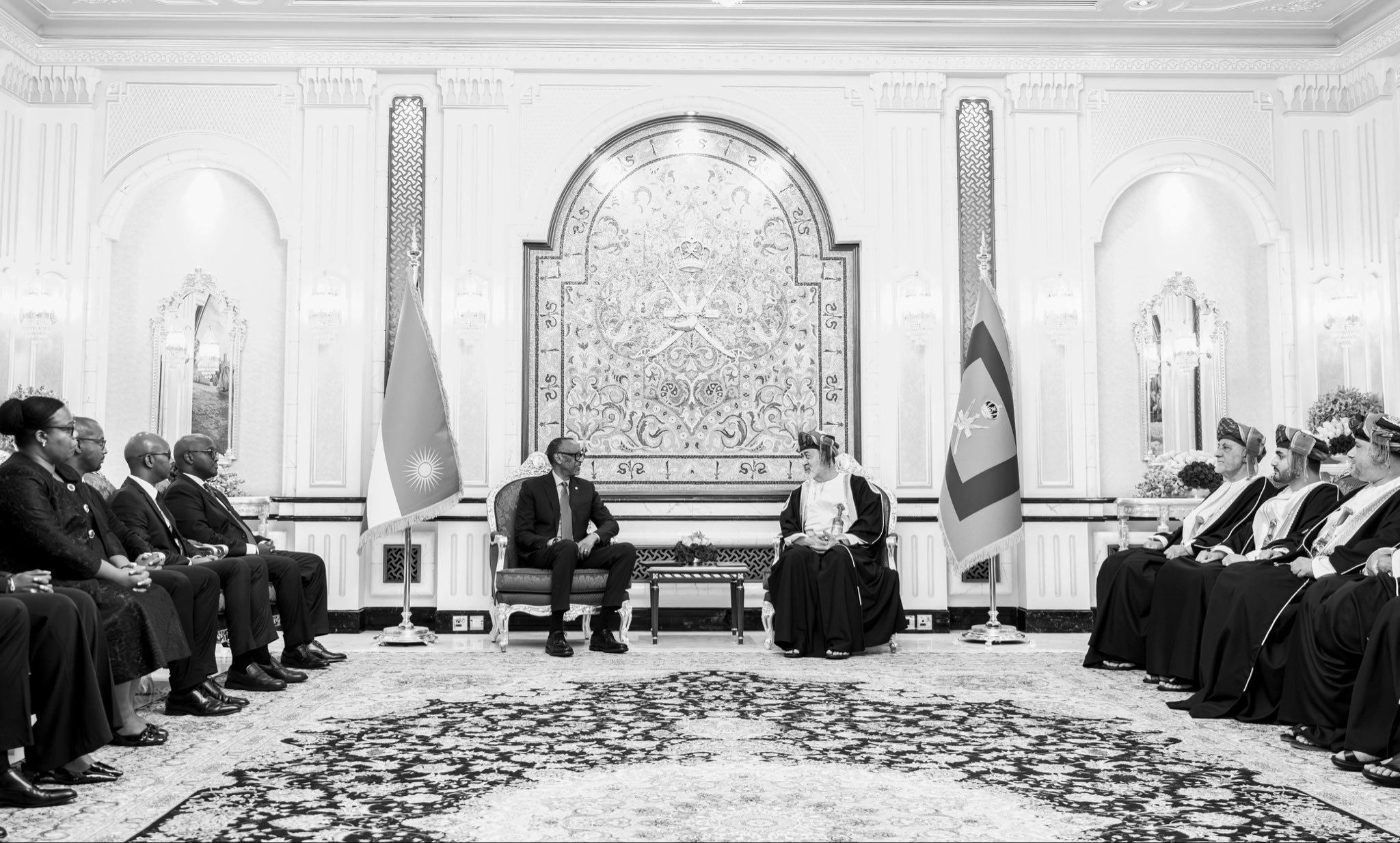
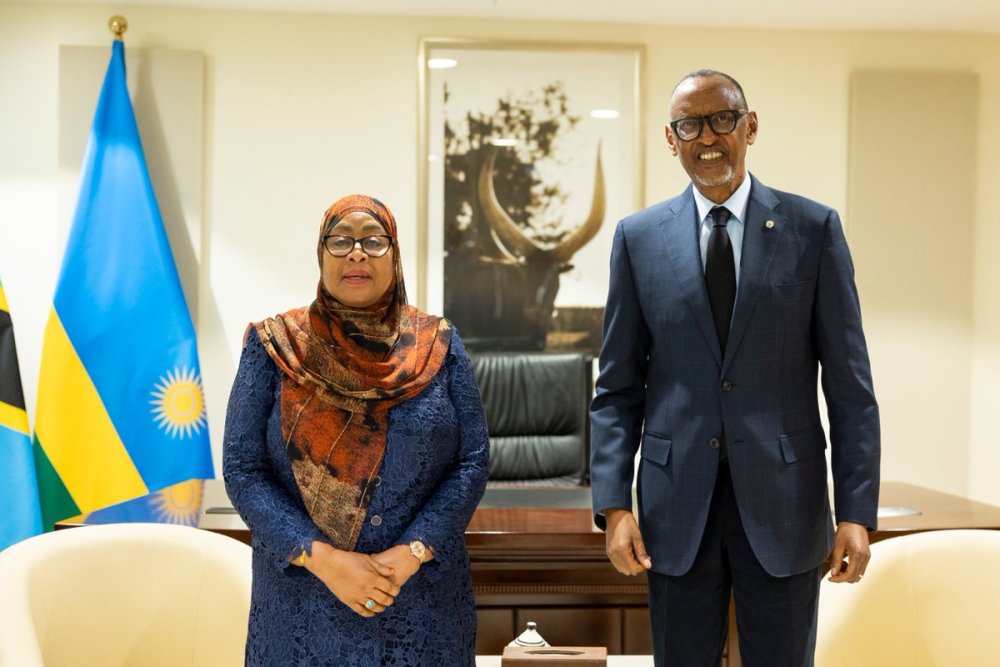
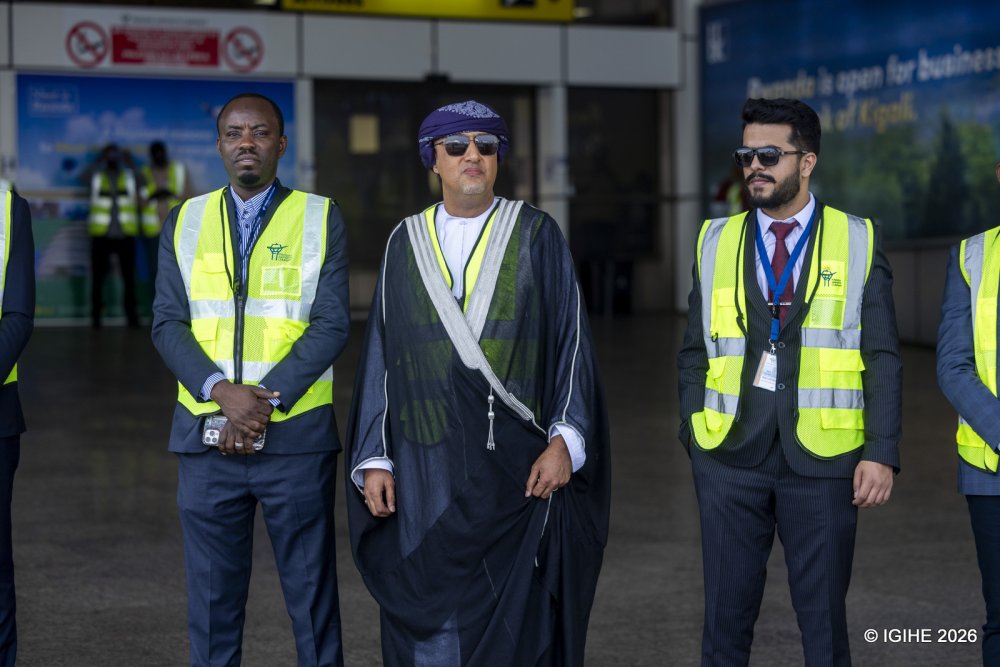
The discussions were held on Monday evening in Salalah as President Kagame began his two-day official visit to Oman, the first such visit by a Rwandan head of state.
According to the Office of the President, Kagame and Sultan Haitham began the visit with talks involving delegations from both countries.
“Both leaders highlighted the historical ties between Rwanda and Oman, and the opportunity this visit offers to build on that strong foundation, including through closer collaboration in multiple sectors including energy, logistics, and food security,” the Office of the President said in a post on X.
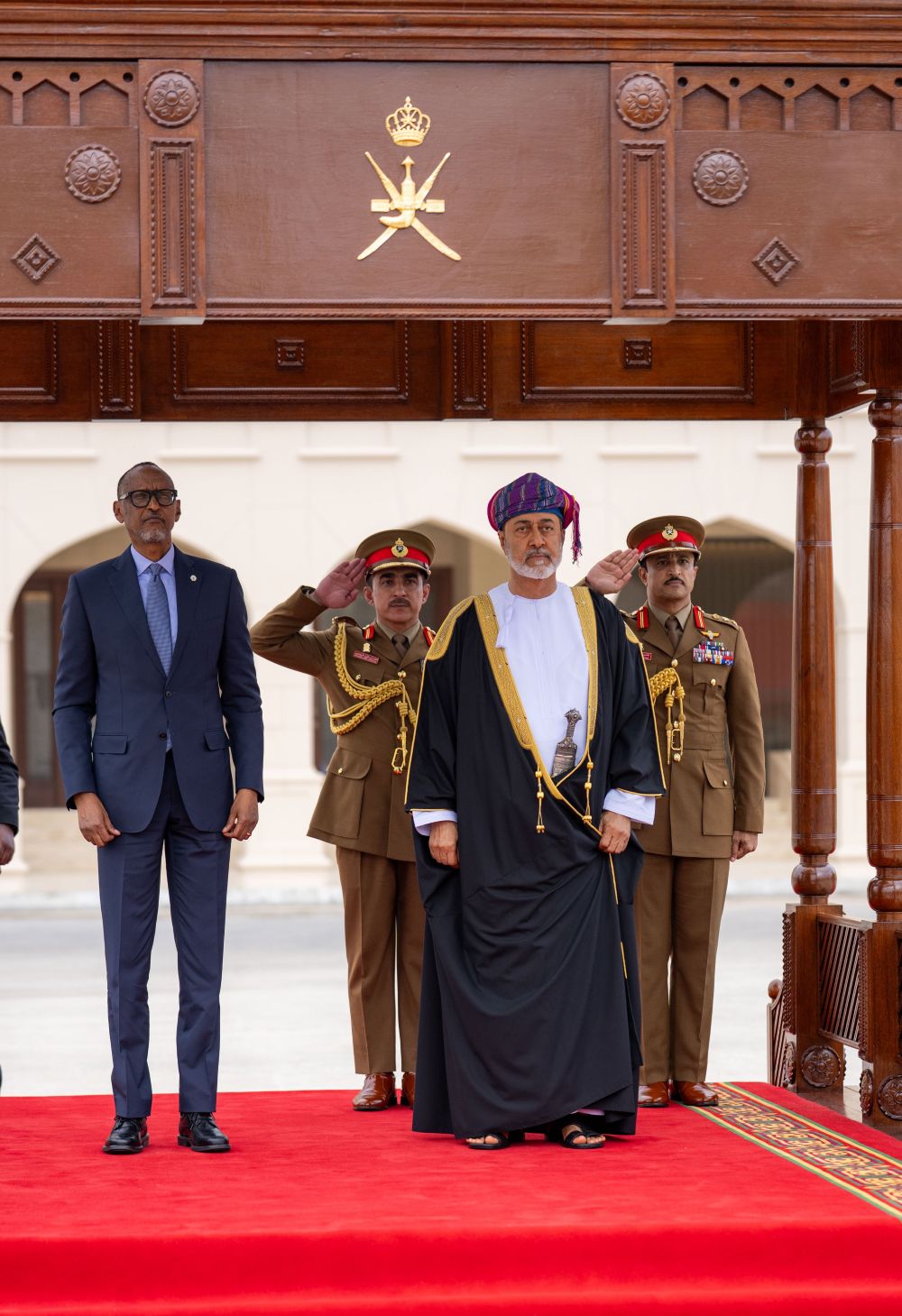
President Kagame arrived in Salalah on Monday, where he was received by Sultan Haitham at Al Husn Palace.
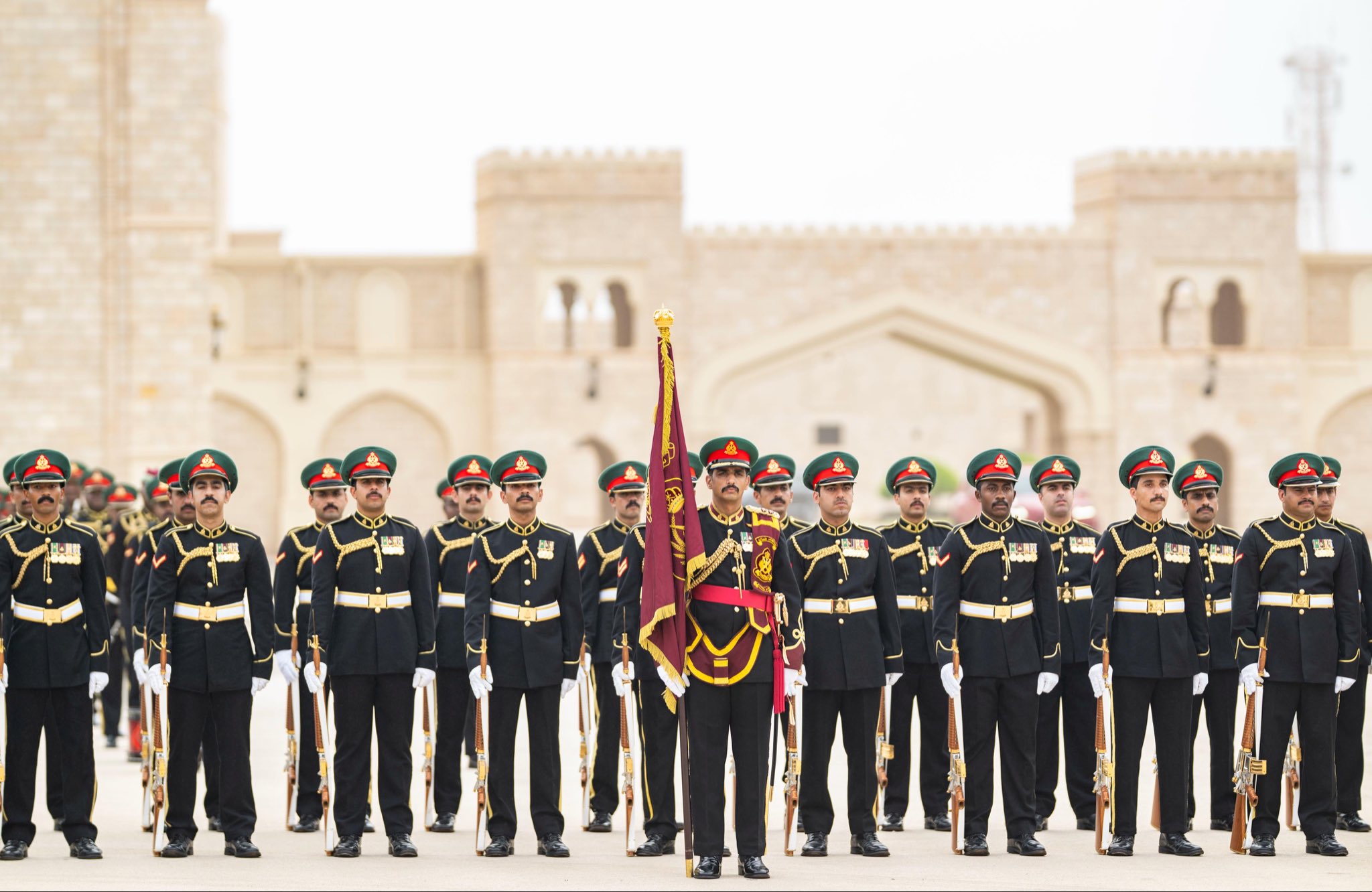
His visit began with an official welcoming ceremony before the two leaders held discussions, later joined by their respective delegations, on advancing cooperation in areas of mutual interest.
The visit comes as Rwanda and Oman look to broaden their bilateral relationship and explore new opportunities for economic and sectoral cooperation.
During the visit, the two countries are also expected to sign agreements and memoranda of understanding in various sectors as part of efforts to deepen ties.
On the second day of his visit, President Kagame is scheduled to tour the Museum of the Frankincense Land, located within the Al Baleed Archaeological Park, a UNESCO World Heritage Site.
The museum documents the history and heritage of the Dhofar region, including the role of the frankincense trade in shaping its social and economic development, as well as Oman’s long history of seafaring and maritime trade.
President Kagame will also visit Razat Royal Farm, one of the major agricultural establishments in Dhofar Governorate. The more than 404-hectare facility is also used for agri-tourism and educational activities.
The trip marks a new milestone in relations between Rwanda and Oman, with both countries seeking to build on their longstanding ties through closer cooperation in sectors considered important to their economic development and future growth.
The discussions were held on Monday evening in Salalah as President Kagame began his two-day official visit to Oman, the first such visit by a Rwandan head of state.According to the Office of the President, Kagame and Sultan Haitham began the visit with talks involving delegations from both countries.
The network is part of a wider plan by the Inter-University Council for East Africa (IUCEA) to establish a federated regional Centre of Excellence in Artificial Intelligence, linking universities across the East African Community through specialised institutional nodes.
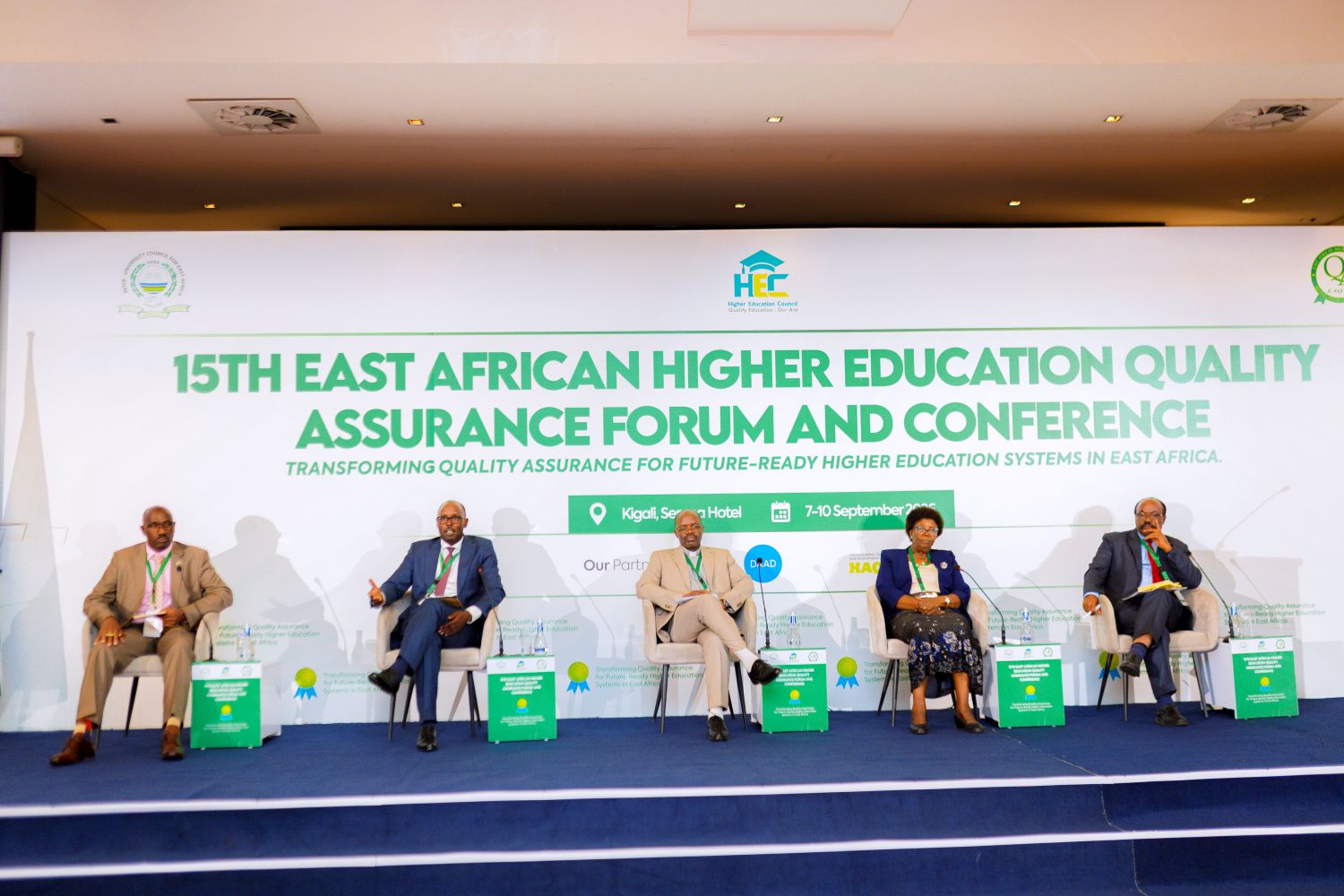
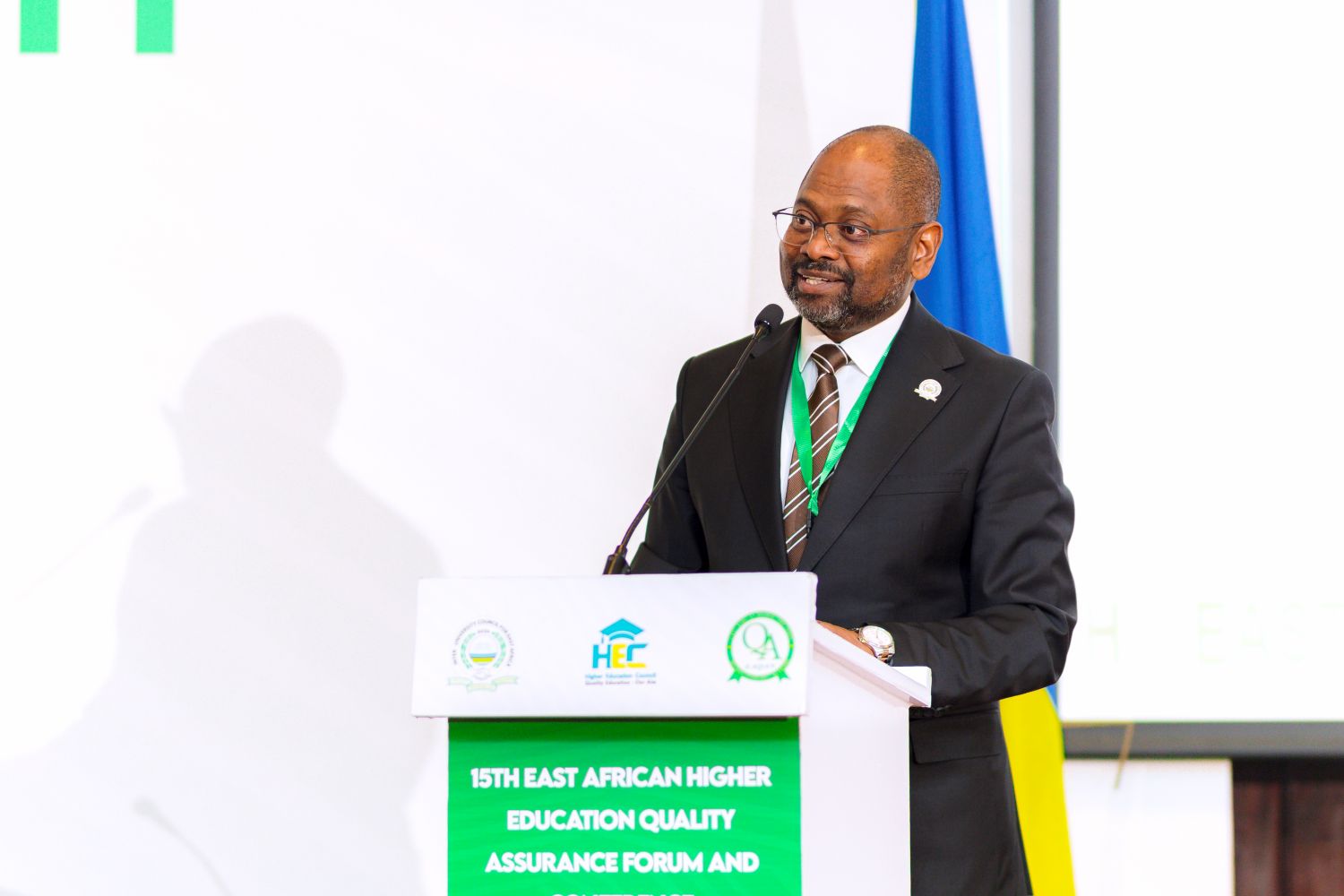
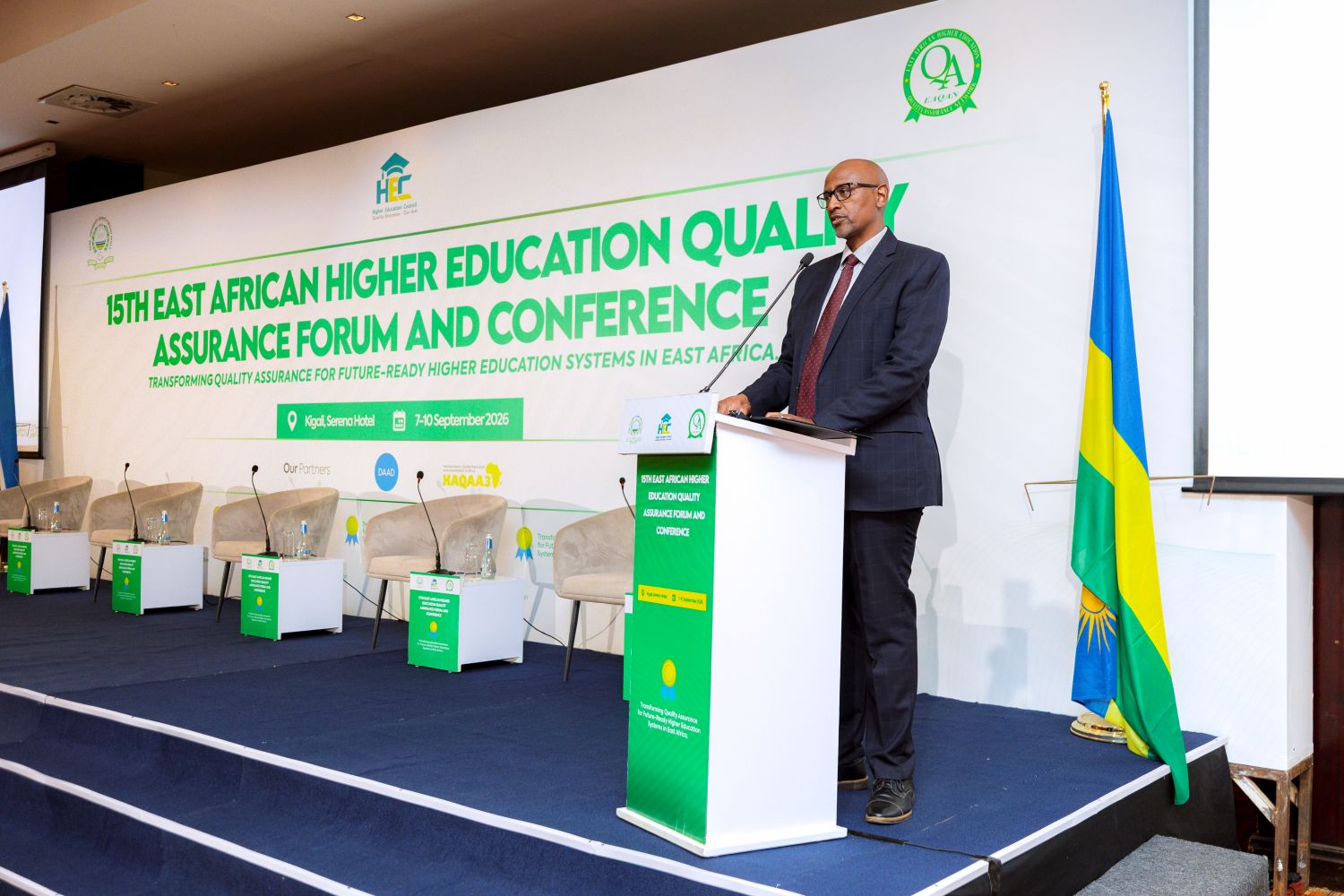
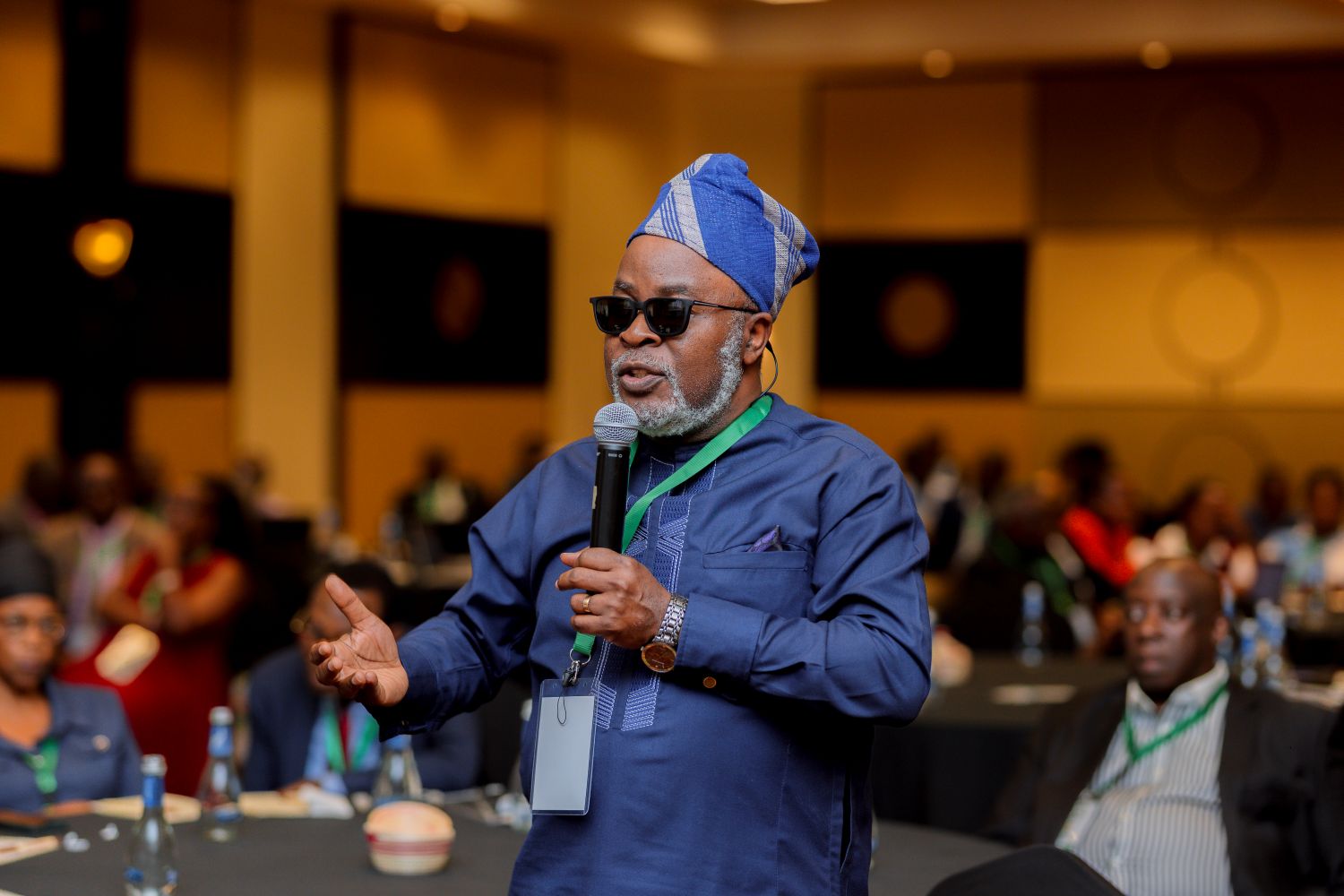
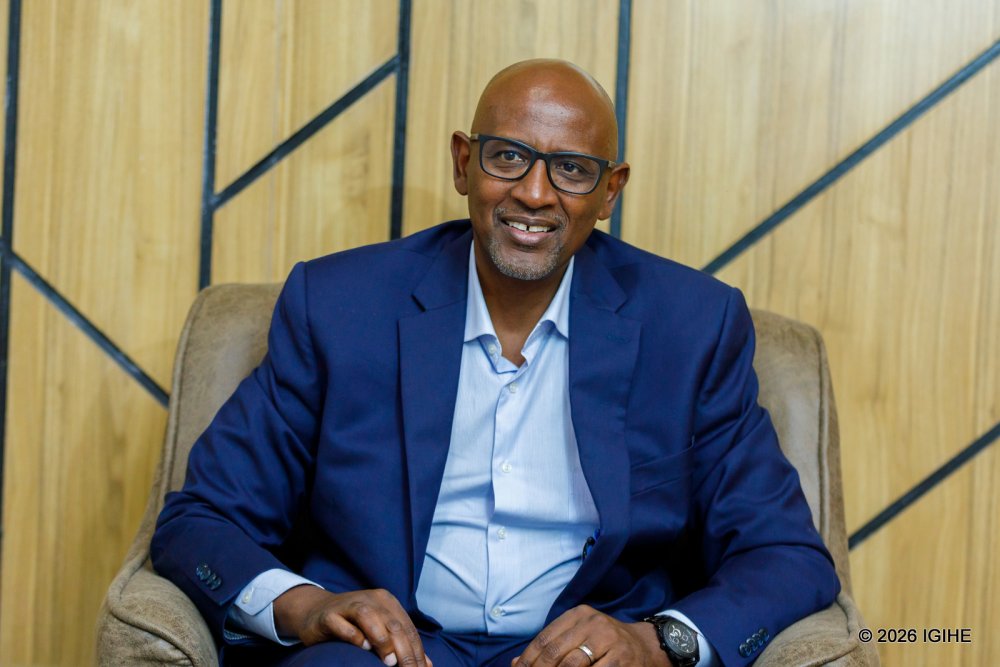
The Acting Executive Secretary of IUCEA, Prof. Idris Rai, highlighted the development on Monday, September 7, 2026, during the 15th East African Higher Education Quality Assurance Forum and Conference in Kigali.
The institutions named include the University of Rwanda, the University of Dodoma in Tanzania, Dedan Kimathi University in Kenya, SIMAD University in Somalia, the University of Burundi and Kabale University in Uganda.
The Acting Executive Secretary of IUCEA, Prof. Idris Rai, speaks on Monday, September 7, 2026, during the 15th East African Higher Education Quality Assurance Forum and Conference in Kigali.
Prof. Rai said discussions were still ongoing with two EAC partner states that are yet to identify representative institutions to join the collaborative network.
The regional network was officially launched in Nairobi in July and is expected to form the foundation for the future East African Centre of Excellence in AI Education and Research.
Prof. Rai said the initiative builds on discussions held during an IUCEA conference in Kigali in 2023, which focused on higher education in the age of artificial intelligence and data science.
The discussions identified the need for universities to build institutional capacity while developing a collaborative platform for teaching, research and innovation in AI.
“In 2024, our Executive Committee approved the establishment of a regional centre of excellence in AI — a federated regional centre of excellence, whereby each partner state will identify one node or university to take part in developing that regional collaborative framework on AI,” Prof. Rai said.
He revealed that the network will support the development of benchmarks and curricula in areas including data science, artificial intelligence and robotics, covering both undergraduate and postgraduate education.
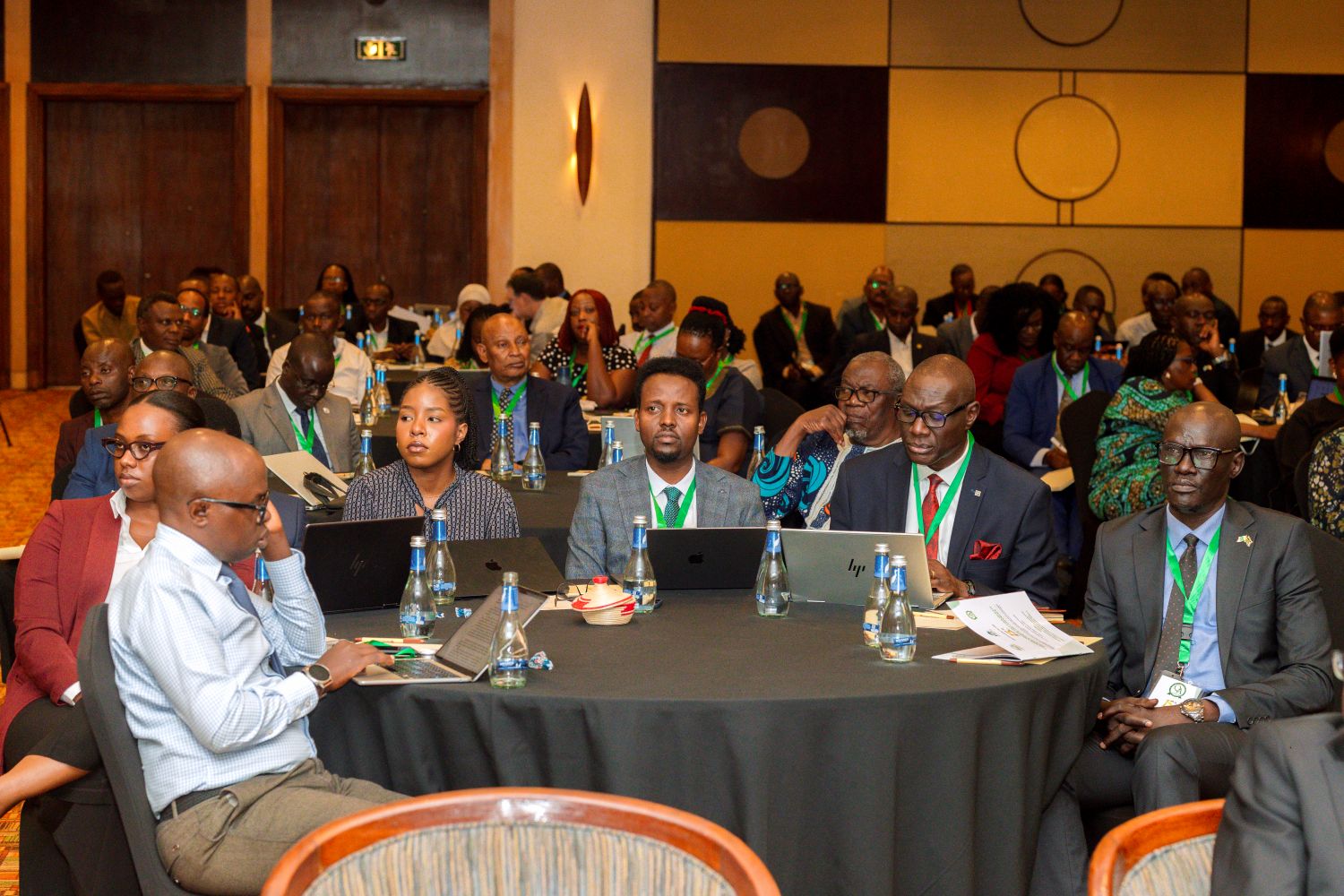
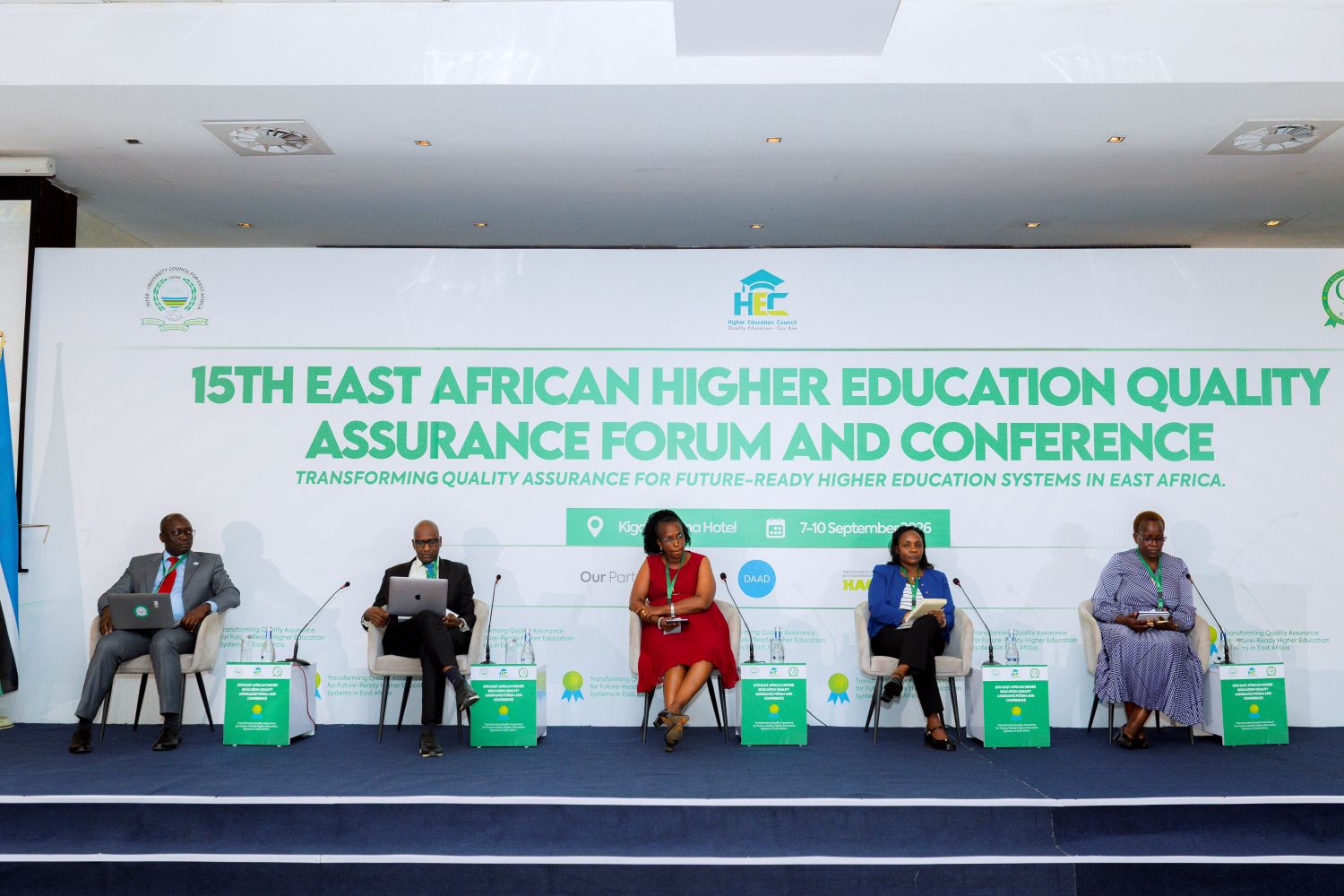
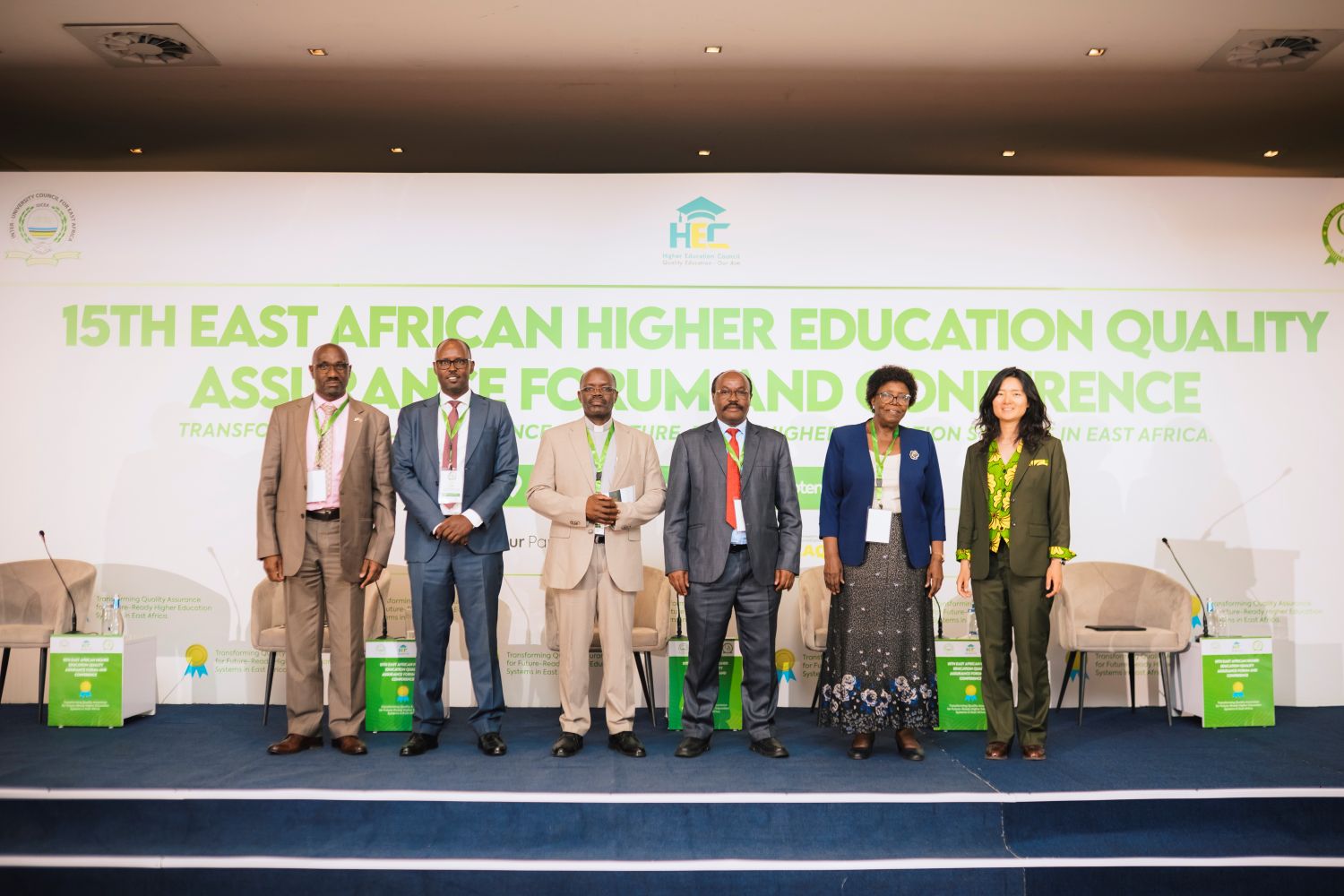
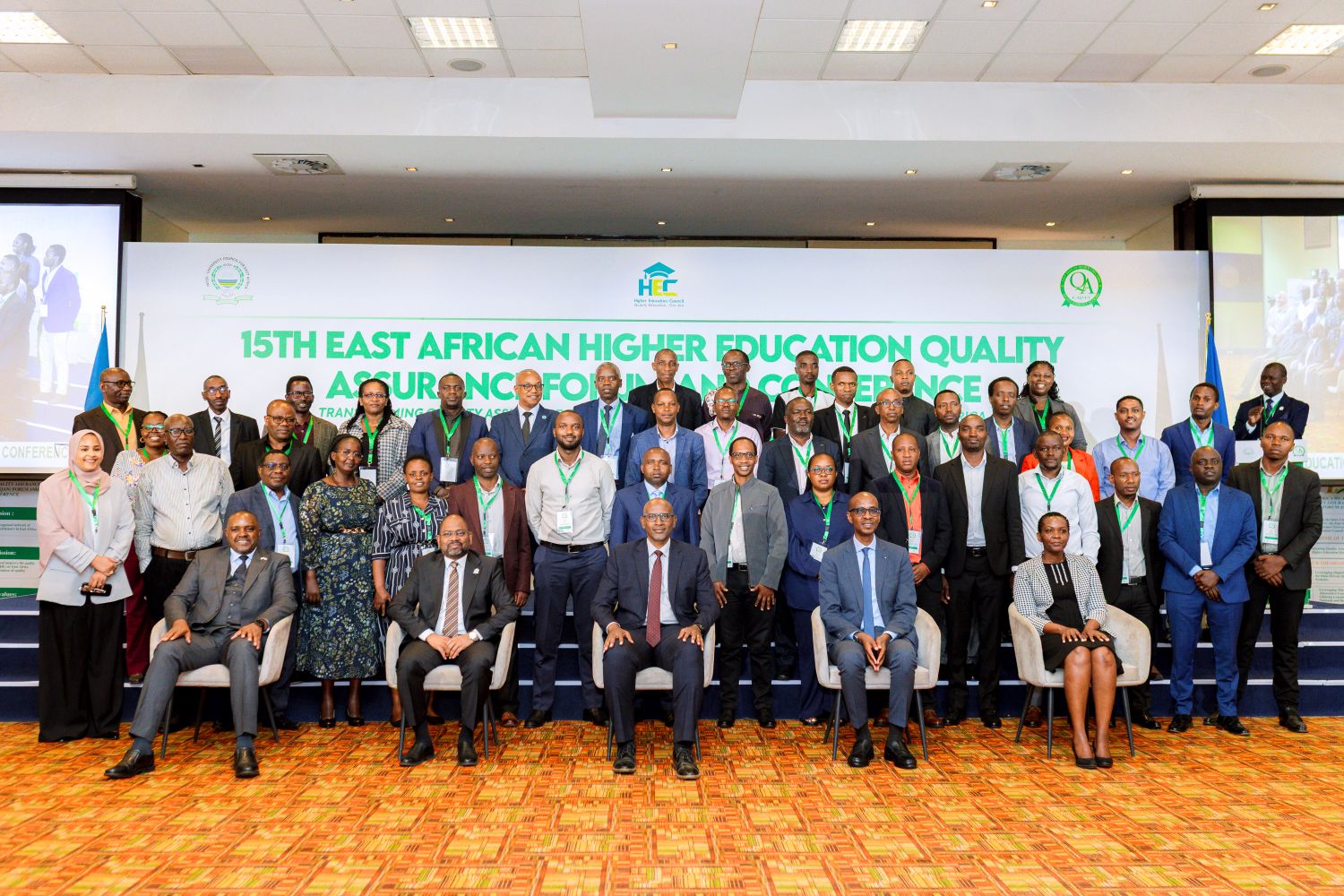
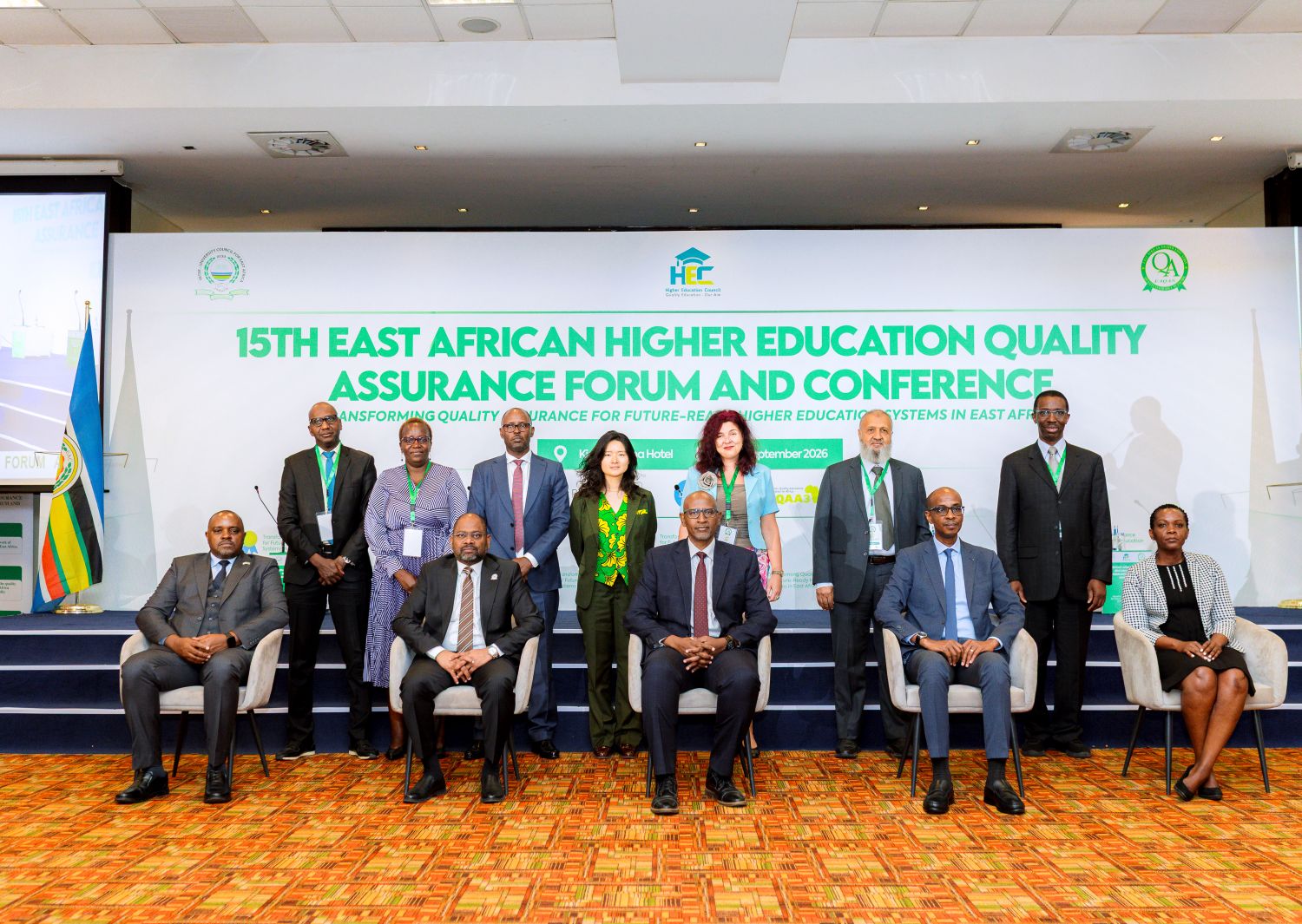
The forum has brought together university leaders, higher education regulators, academics and development partners.
AI literacy for university students
Among the major initiatives being developed is an AI foundational module that could introduce basic artificial intelligence literacy to university students across East Africa.
Prof. Rai said the module is in its final stages of development and could eventually become part of university education across the region.
“We are in the final stages of development of what we call an AI foundational module,” he said.
“Imagine you have a foundational module in AI whereby all students who go through our universities must take it, so that they know about AI, provide AI literacy.”
IUCEA is also developing learning pathways for lecturers who will teach the module and a policy framework to guide the use of AI in teaching, learning and other areas of higher education.
The network will further support collaborative and multidisciplinary research among participating universities.
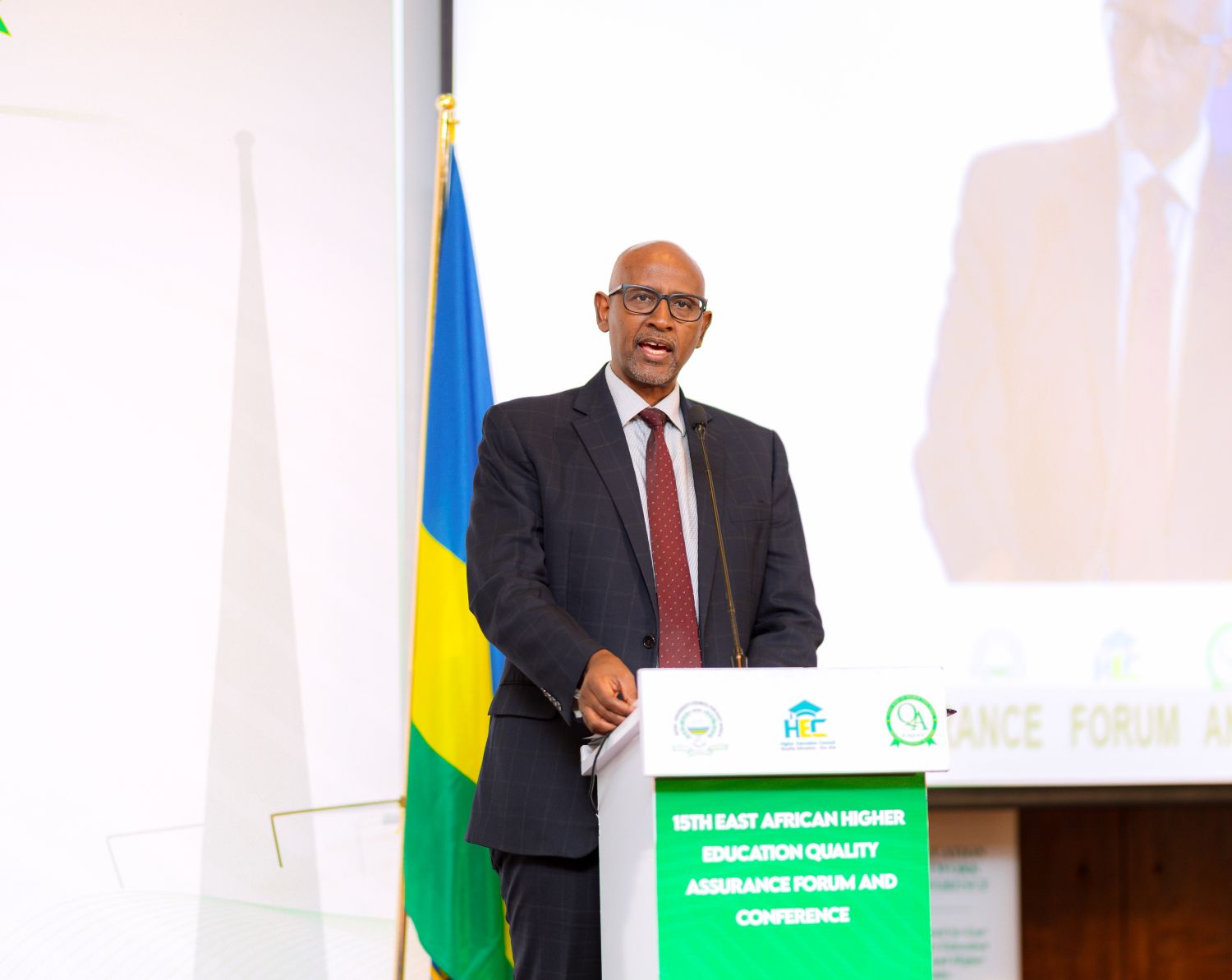
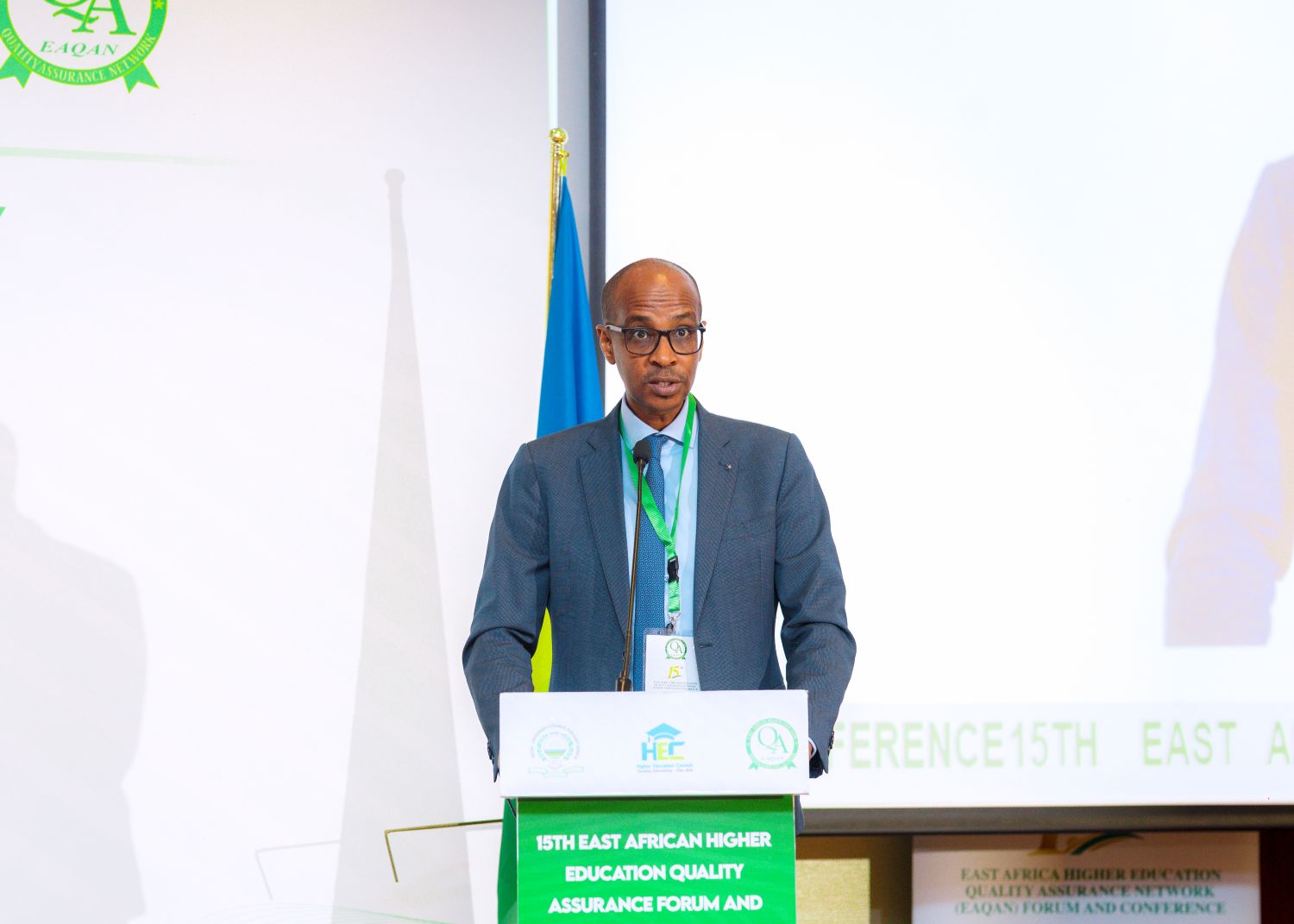
For Rwanda’s Minister of Education, Joseph Nsengimana, the rapid growth of AI is raising fundamental questions about whether universities are adequately preparing students for a changing world.
“The world for which our universities are preparing our graduates is changing rapidly. Artificial intelligence is transforming how knowledge is produced, taught and applied,” Nsengimana said.
Rwanda’s Minister of Education, Joseph Nsengimana, said the rapid growth of AI is raising fundamental questions about whether universities are adequately preparing students for a changing world.
He noted that the urgency was particularly significant for East Africa, where more than 60 percent of the population is under the age of 25, saying higher education will play a major role in determining whether the region’s young people are equipped to turn their talent into opportunities in a rapidly changing economy.
“Will the education we receive today prepare us for the world of tomorrow?” Nsengimana said, referring to what he described as an urgent question facing young people across the region.
“Our answer must be a resounding yes.”
He said digital transformation and artificial intelligence should be central to efforts to modernise higher education, while universities and regulators must ensure that technology is used responsibly.
“Technology alone is not enough,” he stated, stressing the need to equip academic staff and regulators with the capacity to use emerging technologies responsibly while protecting data, maintaining ethical standards and ensuring equitable access.
Future-ready universities
Dr. Edward Kadozi, the Director General of Rwanda’s Higher Education Council, said universities could no longer focus only on preparing students for the jobs that exist today.
“Higher education is no longer preparing students simply for the jobs of today. It must prepare them for jobs, technologies and challenges that are still emerging,” he remarked.
Kadozi said technological development, digitalisation and AI were changing how knowledge is created and delivered, while also reshaping the skills required by economies.
He warned that qualifications alone would not be enough if graduates leave universities without the practical skills, adaptability and critical thinking required in the workplace.
“If graduates leave our institutions with qualifications but without practical skills, adaptability and critical thinking required by the workplace, then we have not fully delivered on our responsibilities to them,” Kadozi said.
He added that quality assurance systems must also evolve alongside changes in higher education.
“We must modernise our evaluative tools. We must strengthen our technical capacities. We must embrace appropriate technologies. And we must continuously review our regulatory processes to ensure that they keep pace with the sector we oversee.”
Dr. Edward Kadozi, the Director General of Rwanda’s Higher Education Council, said universities could no longer focus only on preparing students for the jobs that exist today.
The regional push for AI-ready higher education has also attracted support from international partners.
A representative of the German Academic Exchange Service, DAAD, announced plans to establish a new African Centre of Excellence for Applied and Responsible Artificial Intelligence in Kenya, which is expected to serve the wider East African region.
Dr. Dorothee Weyler, Regional Director, DAAD, said the centre will focus on strengthening institutional capacity in applied and responsible AI research while integrating teaching, research, early-career development and knowledge transfer.
The development comes as Rwanda’s higher education sector increasingly positions itself within regional efforts to strengthen digital skills, research and innovation.
Through its role in the new network, the University of Rwanda is expected to contribute to the development of AI expertise and collaborative research while helping build the institutional capacity needed to support the responsible adoption of the technology across East Africa.
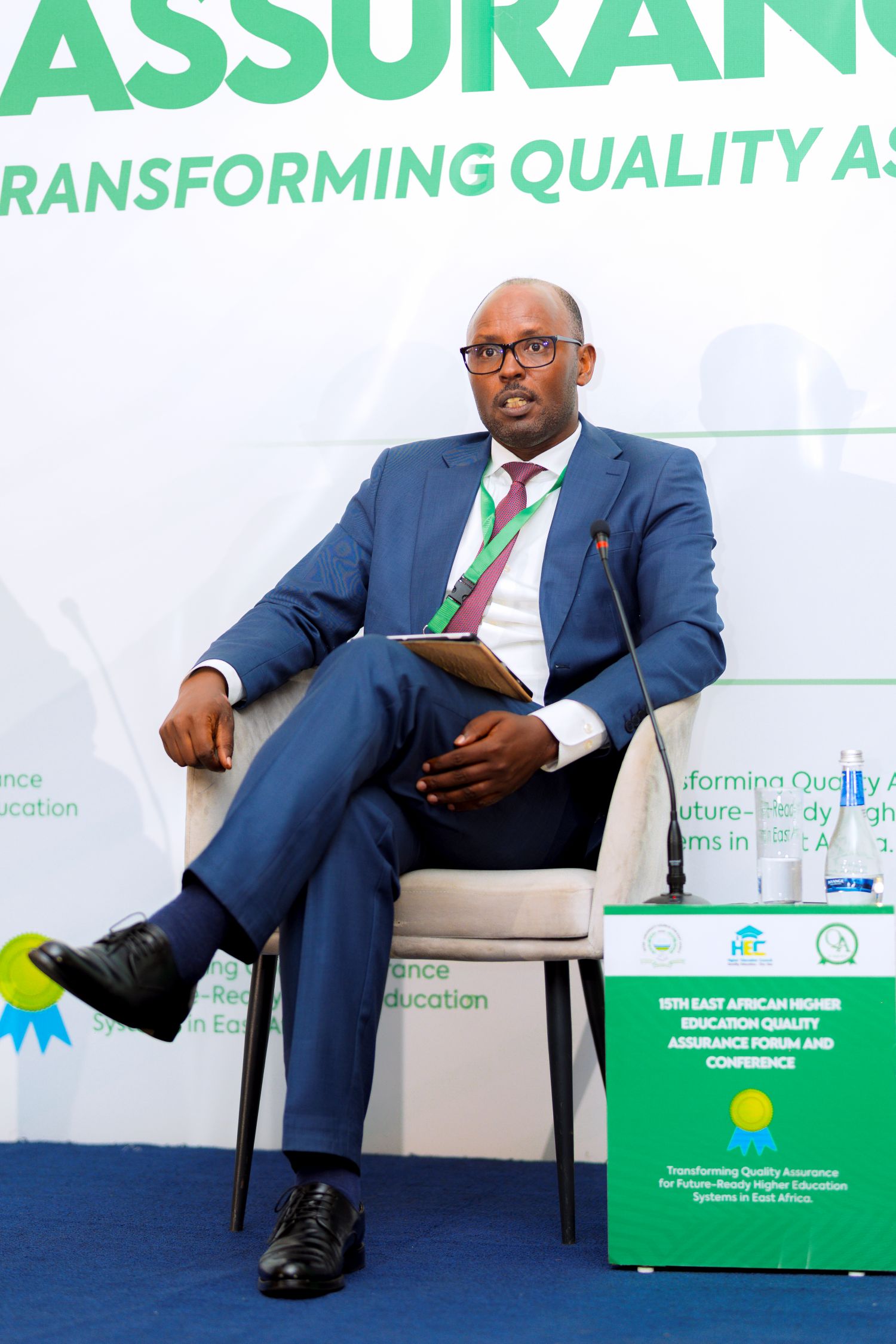
Prof. Didas Kayihura, Vice Chancellor of the University of Rwanda, said such regional collaboration has already proven valuable for staff and institutions engaging with partner universities across East Africa.
“That exposure itself changes the staff quite a lot,” he said, adding that lessons learned abroad are typically brought back and shared with colleagues at home.
Prof. Didas Kayihura, University of Rwanda Vice Chancellor, said regional university collaboration is already benefiting staff and institutions across East Africa.
The Regional AI Network follows a federated model in which participating universities contribute their individual strengths while collaborating on joint programmes, research and other regional initiatives.
Meanwhile, DAAD also announced plans to host a Master of Science in electrical power systems scholarship programme at the University of Rwanda for the next three years, with applications opening on September 24.
The 15th East African Higher Education Quality Assurance Forum and Conference is being held at the Kigali Serena Hotel under the theme, “Transforming Quality Assurance for Future-Ready Higher Education Systems in East Africa.”
The four-day forum has brought together university leaders, higher education regulators, academics and development partners to discuss how East Africa can prepare its universities and graduates for emerging technologies and the changing demands of the labour market.
The forum has brought together university leaders, higher education regulators, academics and development partnersThe stakeholders are discussing how East Africa can prepare its universities and graduates for emerging technologies and the changing demands of the labour market.
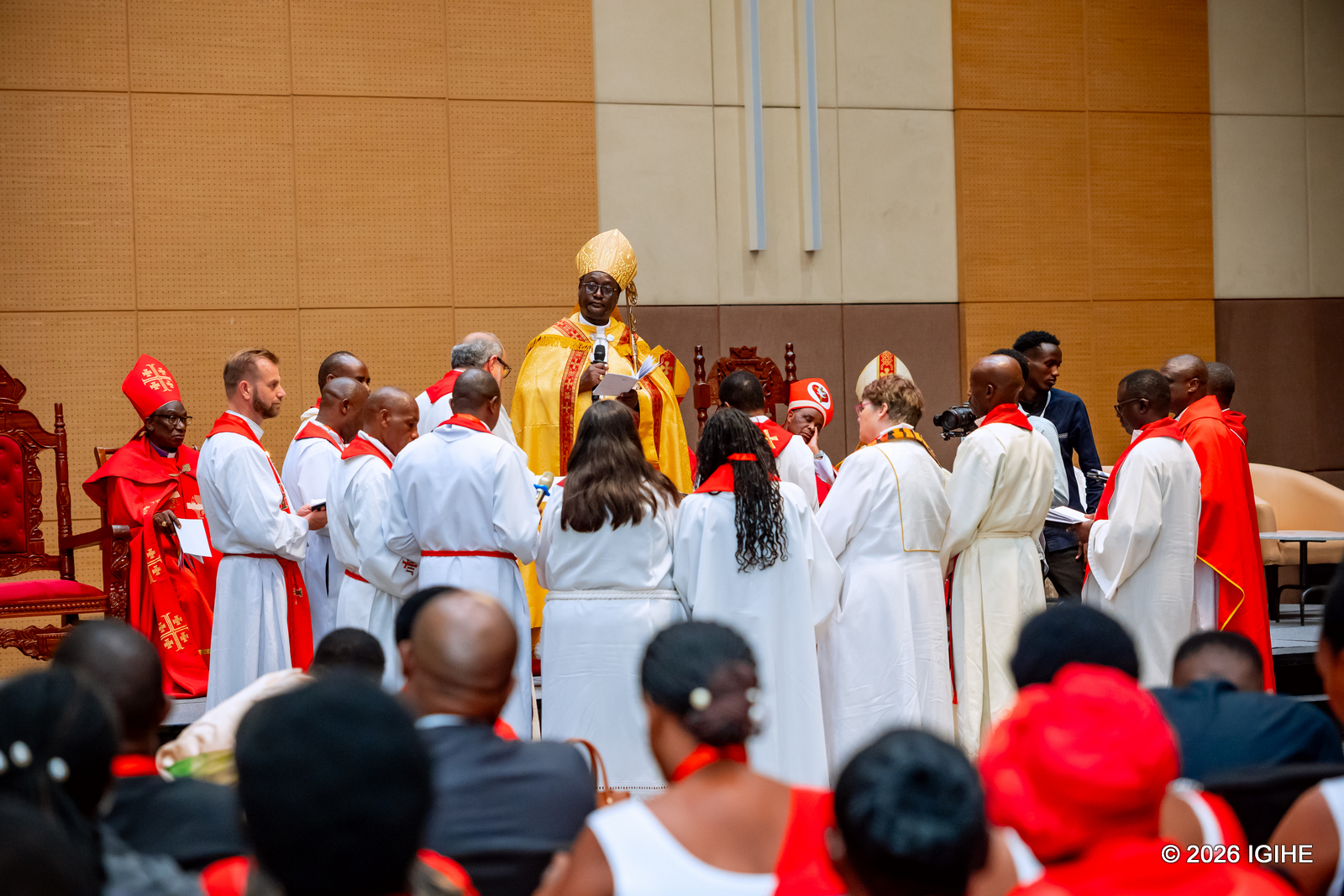
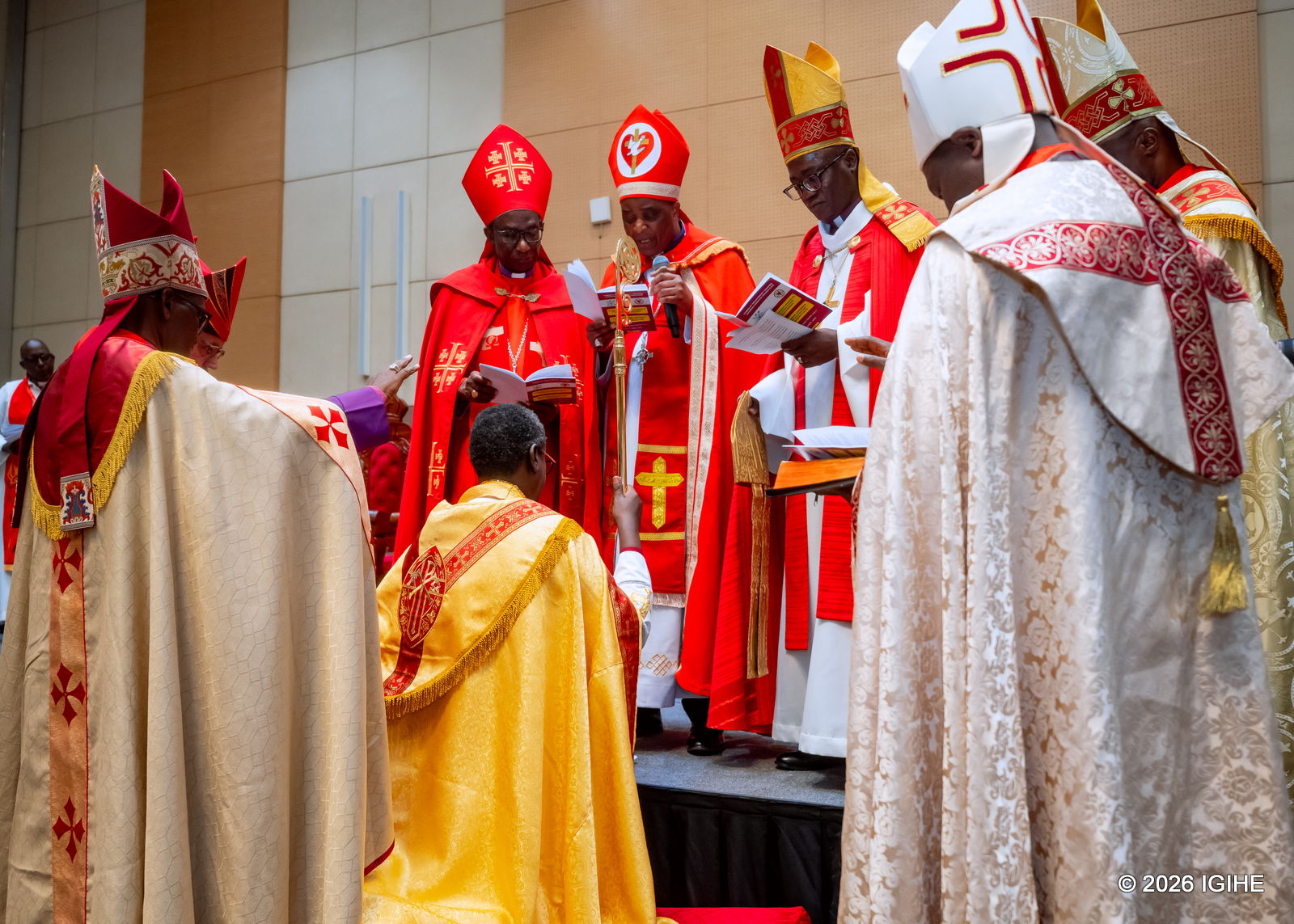
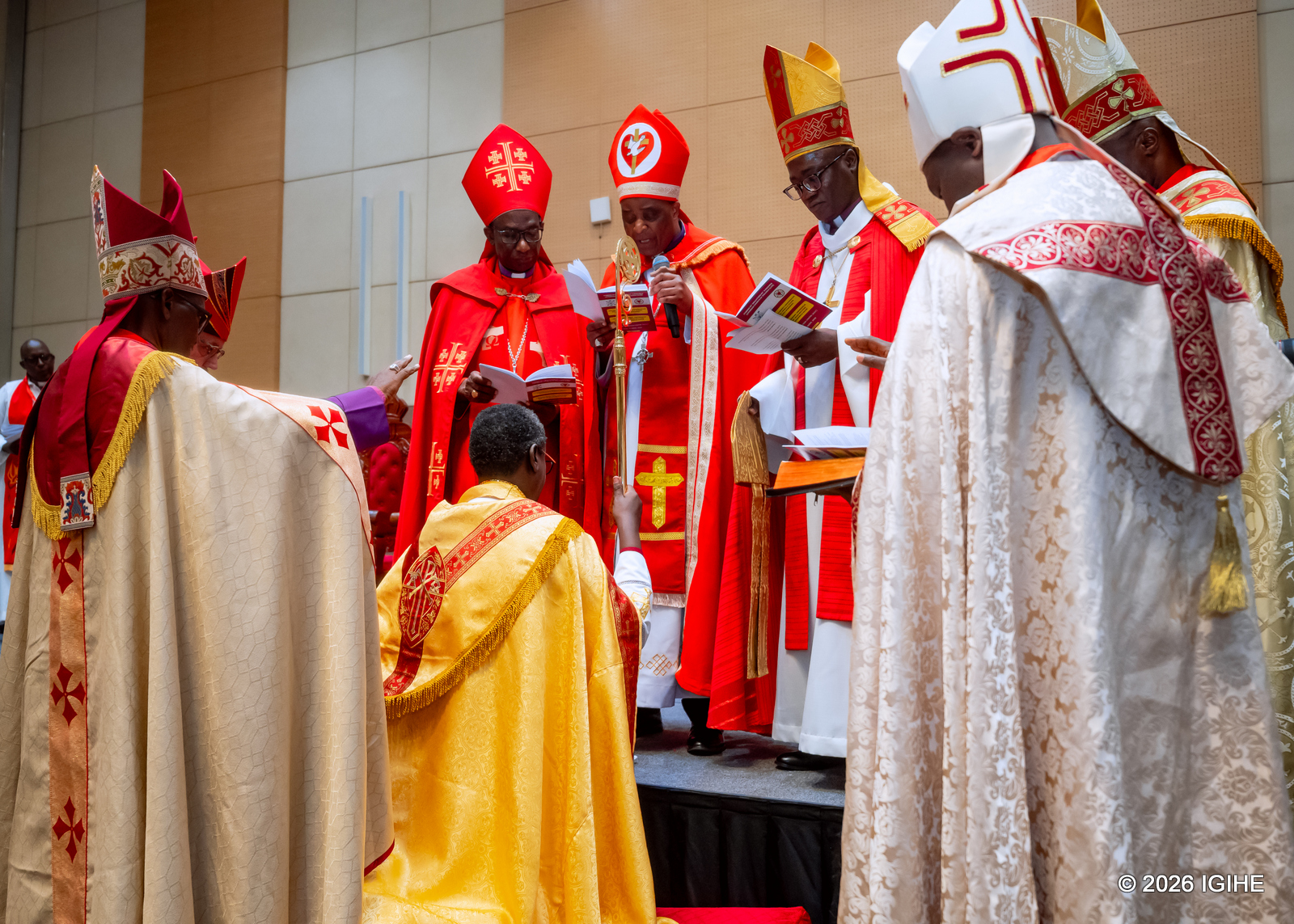
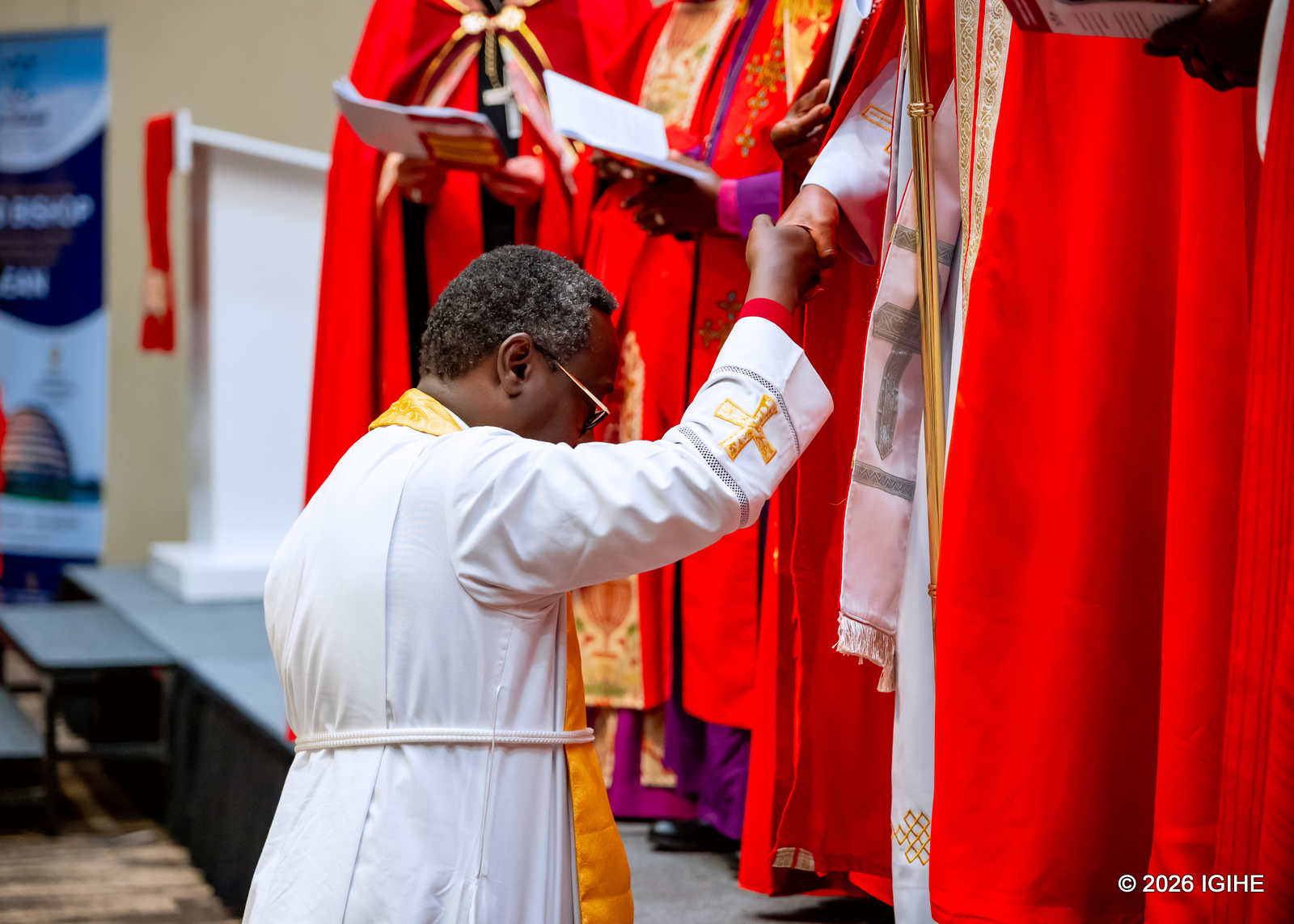
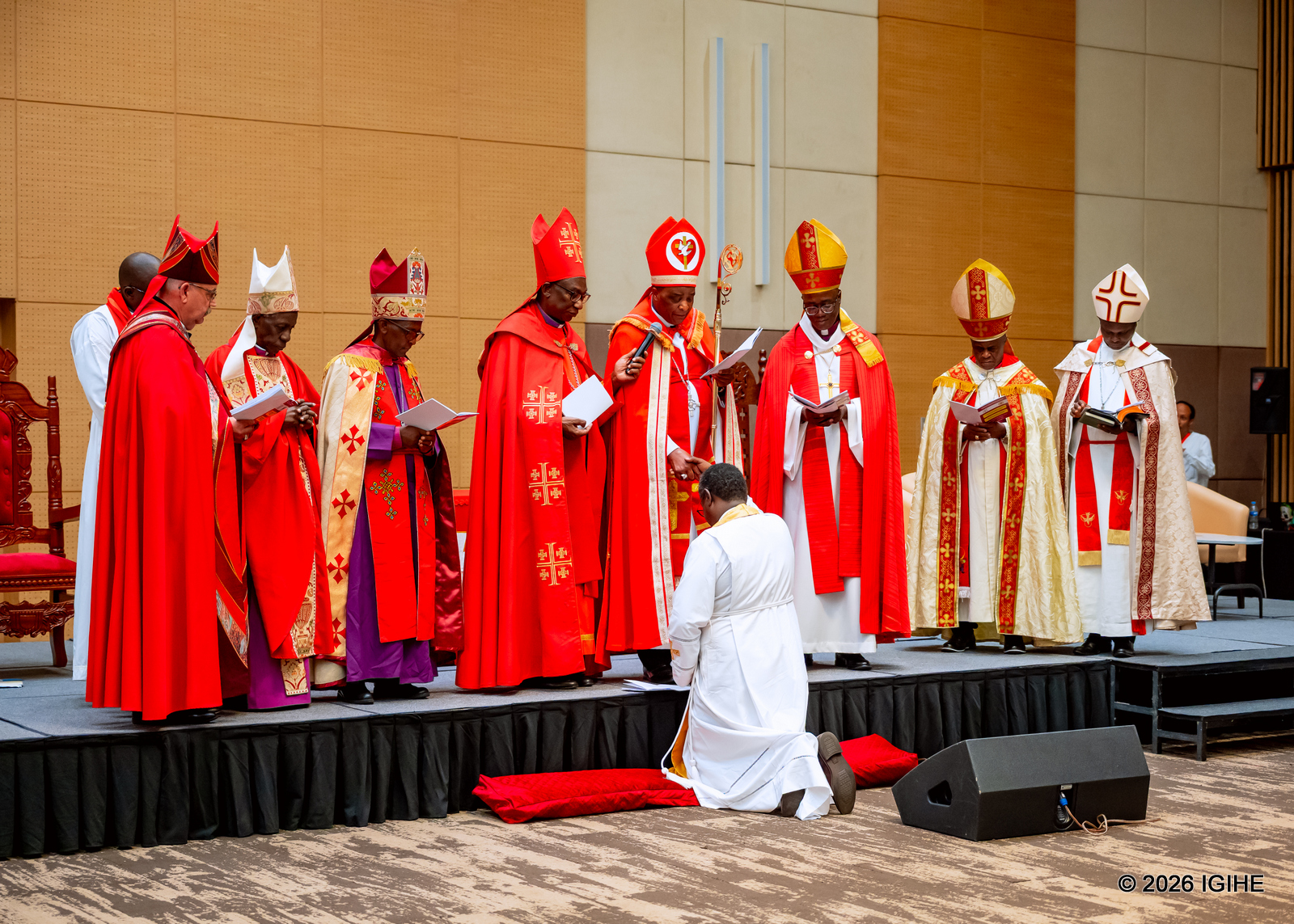
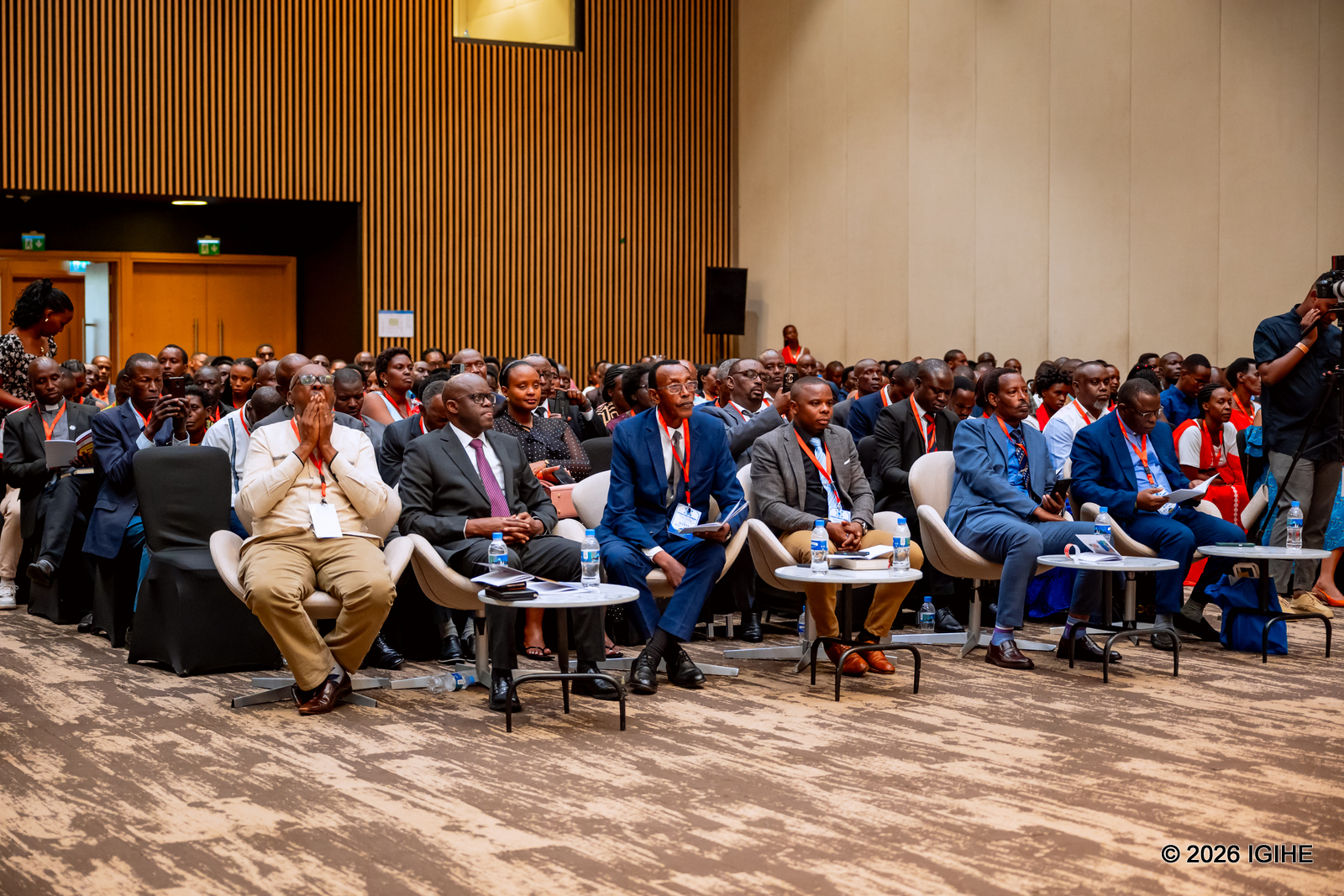
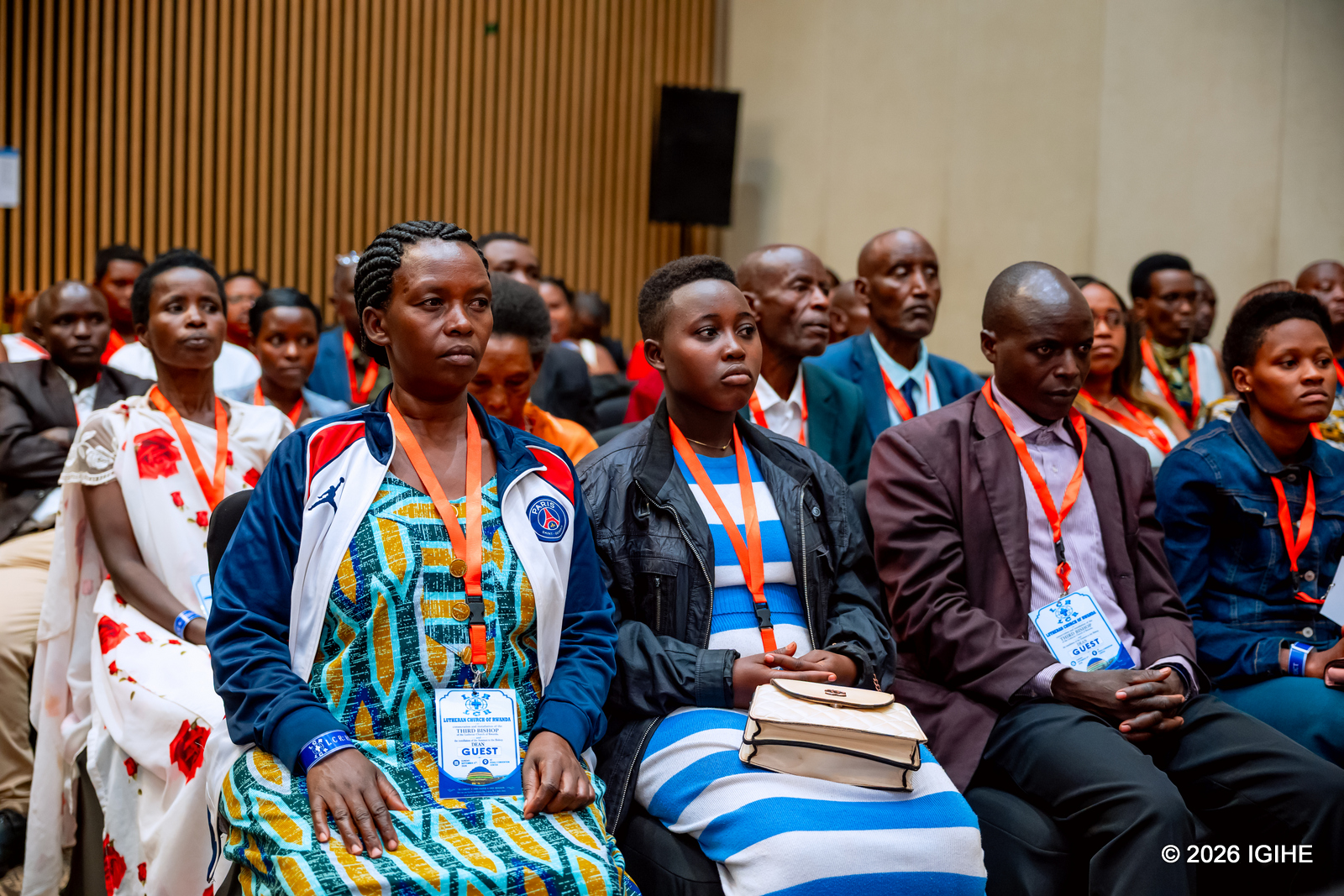
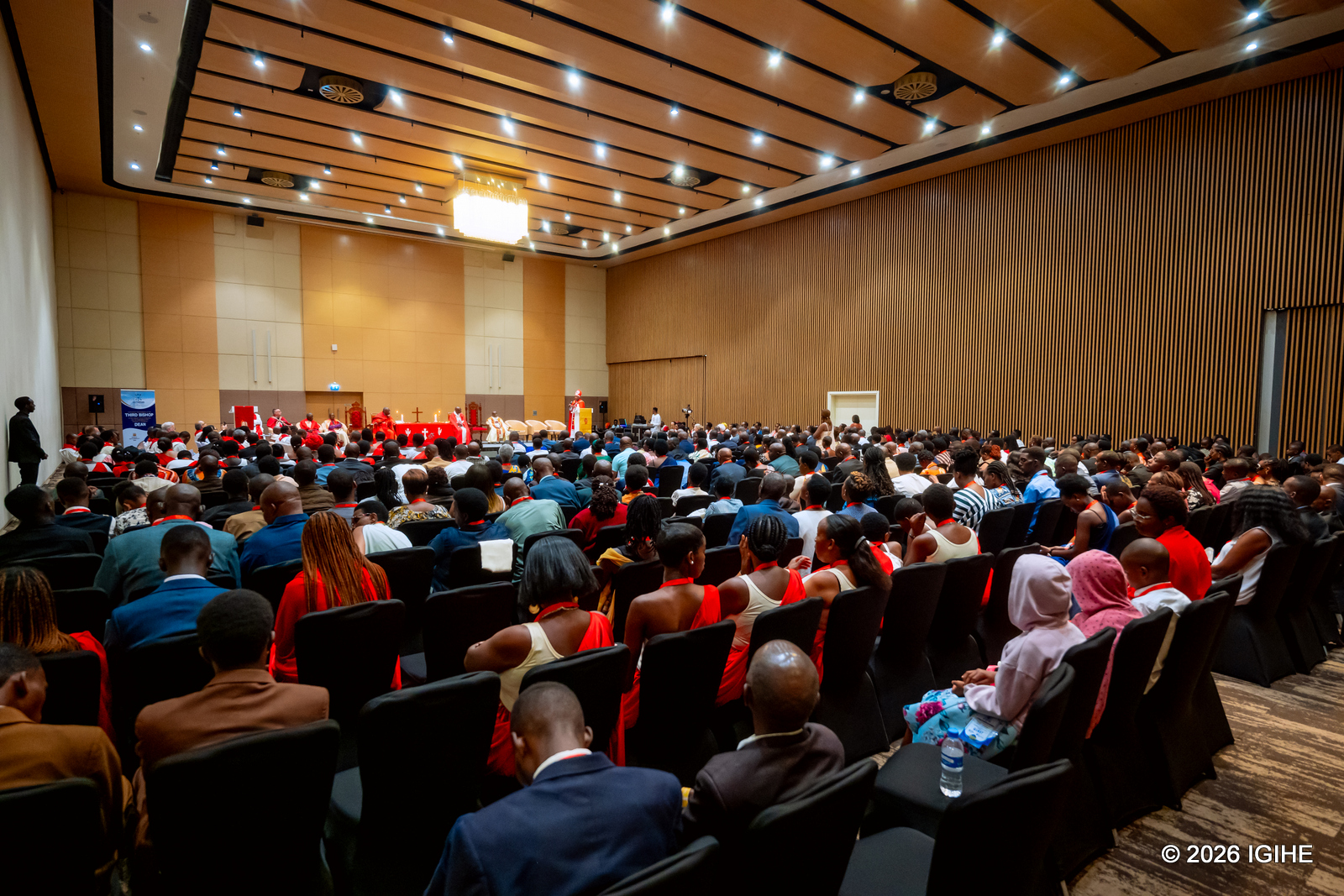
Bishop Kalisa was installed during a ceremony held at the Kigali Convention Centre (KCC), attended by Christians, church leaders and guests from Rwanda and other countries, including Tanzania, Burundi, the Democratic Republic of Congo and the United States.
The ceremony was marked by prayers, praise and worship as Christians gathered to celebrate the beginning of Bishop Kalisa’s leadership.
The installation was also attended by church leaders, including Dean Dr. Ntidendereza David.
Speaking to IGIHE after the ceremony, Bishop Kalisa said one of his key priorities will be building a church that can sustain itself rather than depending heavily on support from churches in Western countries.
“Our vision is to equip members with education and build infrastructure for the church. We want to be a self-sustaining church,” he said.
He noted that African churches have historically relied on financial and other forms of support from Western churches, but said his leadership would seek to change this approach by empowering church members to contribute to the development of their communities and the church.
Empowering members instead of creating dependency
Bishop Kalisa identified dependency among some church members as one of the major challenges facing churches today.
He explained that some Christians expect the church to provide them with direct financial or material assistance, a situation he believes can create long-term dependency.
“We want to teach them to support themselves,” he said, adding that assistance should focus on giving people the ability to become independent rather than simply providing temporary help.
He compared the approach to teaching people how to fish rather than continually giving them fish.
According to the bishop, the Lutheran Church in Rwanda will therefore seek to support its members in developing skills and opportunities that can help them become self-reliant.
Focus on young people and community development
Bishop Kalisa also highlighted the importance of young people in the future of the Lutheran Church in Rwanda.
He said the church is already implementing programmes that involve youth in areas including gender equality and justice, environmental protection and education.
The church also supports young people who want to pursue education in different fields beyond theology.
“We send young people for, not only for theology, but in different areas. That’s how we engage young people,” he said.
He added that young people have representation on the church’s executive council, allowing them to contribute their views to decisions affecting the church.
The bishop also said the church is open to young people expressing themselves through music, provided that their artistic choices remain consistent with the Christian faith.
As he began his new responsibility, Bishop Kalisa encouraged Christians and Rwandans to combine prayer with action.
He said faith should be accompanied by practical action and responsibility in addressing challenges facing individuals, communities and the country.
The bishop also expressed appreciation to President Paul Kagame for his leadership and for encouraging churches to improve their infrastructure and ensure that church buildings meet required standards.
He said the Lutheran Church in Rwanda has been renovating its churches to meet those standards, arguing that places of worship should be well maintained and provide an appropriate environment for Christians.
Bishop Kalisa also welcomed recent efforts to address the consumption of illicit alcohol among young people.
He said churches should have been among the first institutions to speak out on the issue, acknowledging that religious institutions had sometimes remained silent when they should have raised their voices.
He pledged that the Lutheran Church in Rwanda would seek to be more active in offering advice and contributing to solutions whenever issues affecting society arise.
The installation of Bishop Kalisa Atupenda Prince marks a new chapter for the Lutheran Church in Rwanda, with his leadership expected to focus on strengthening the church’s capacity, empowering members, engaging young people and increasing its contribution to community development.
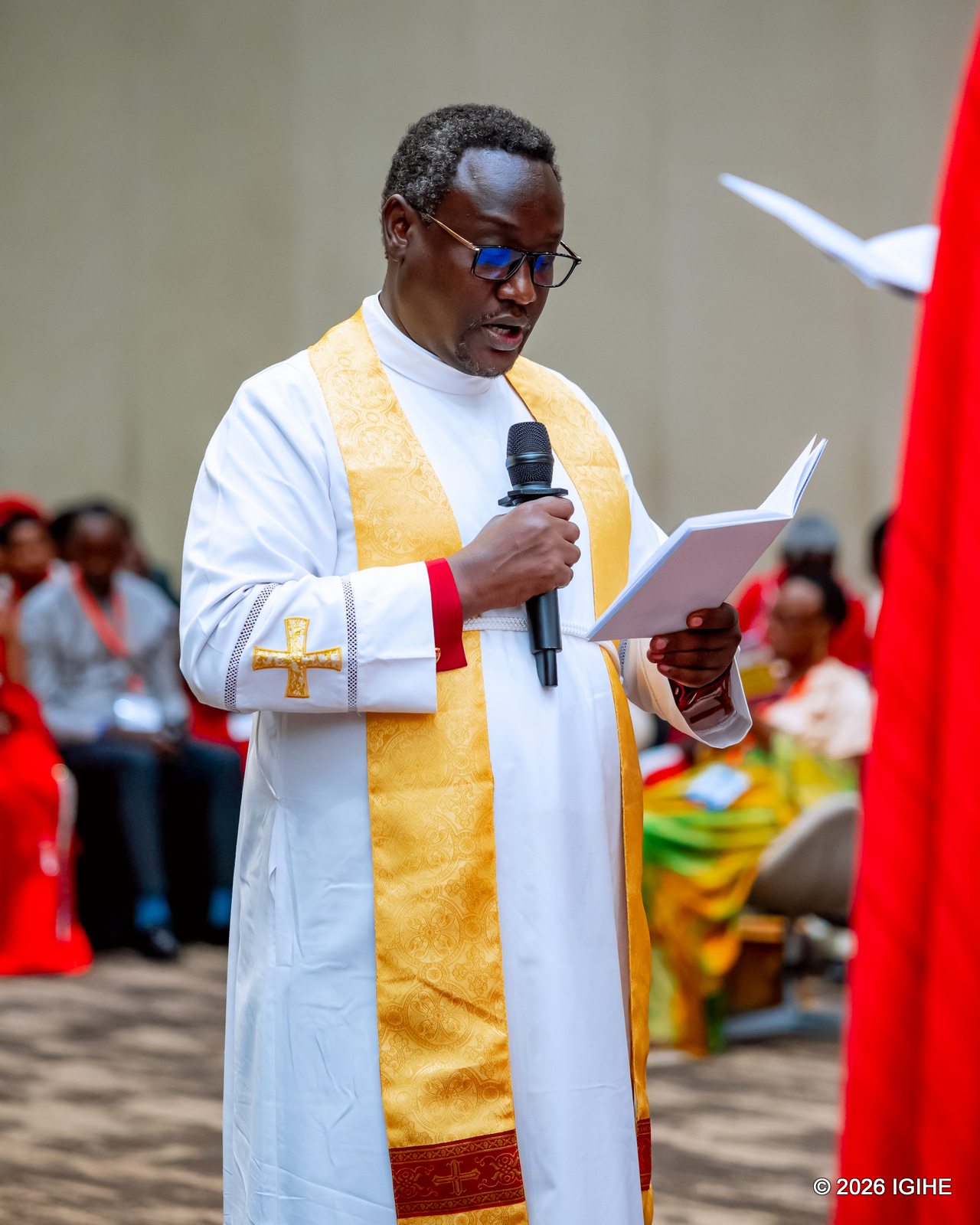
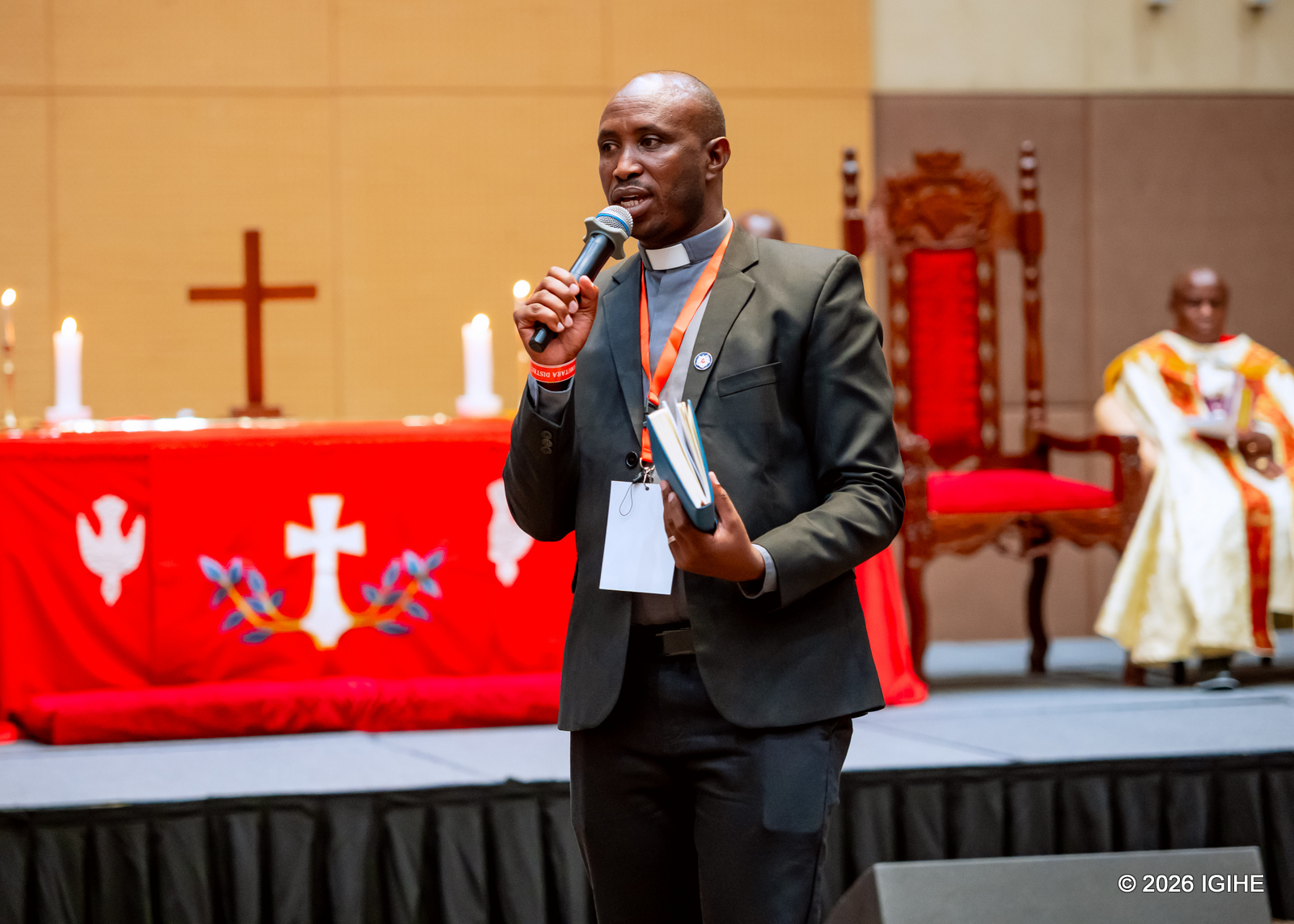
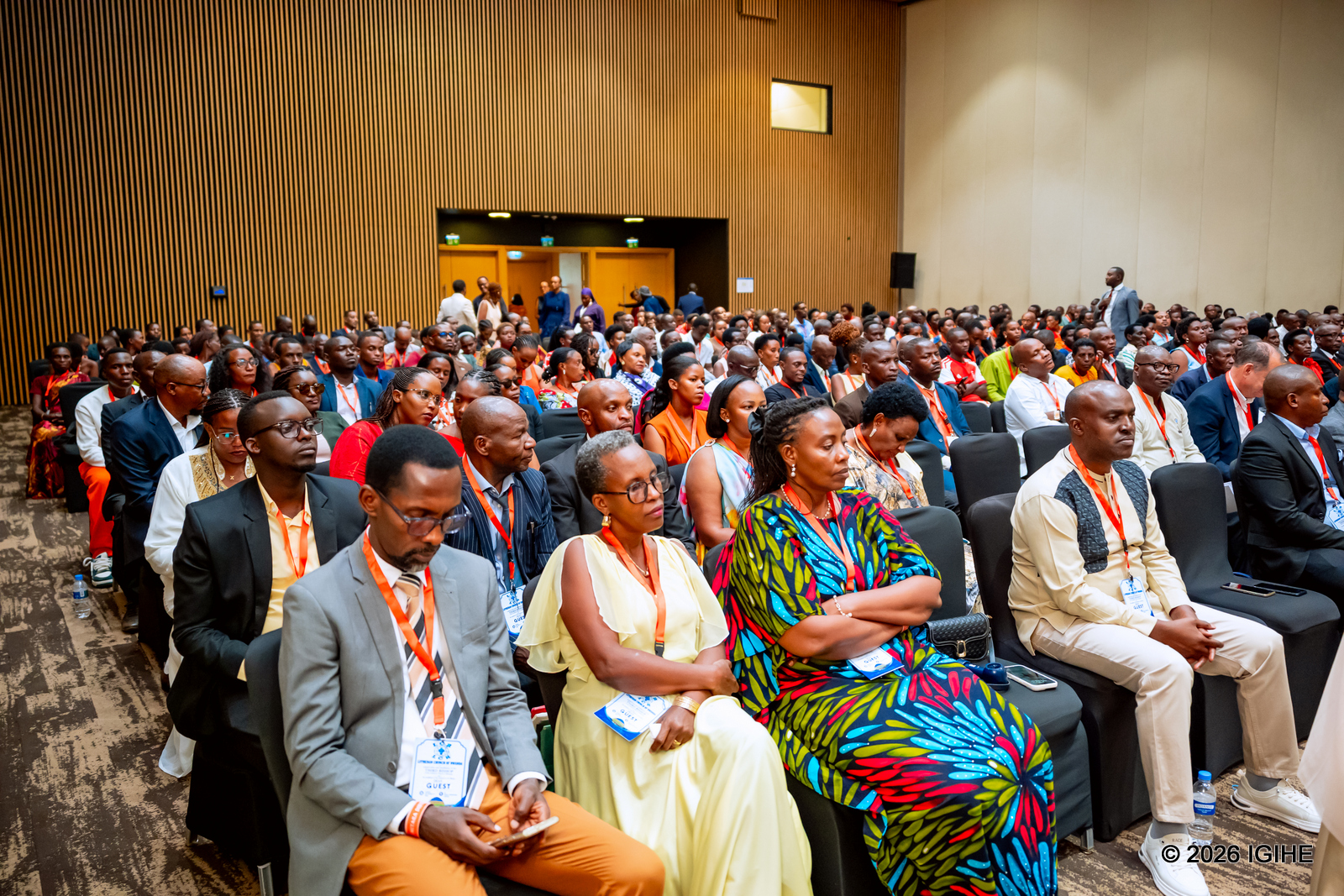
Bishop Kalisa Atupenda Prince was officially installed as a bishop of the Lutheran Church in Rwanda on September 6, 2026.Bishop Kalisa Atupenda Prince speaks to Christians during his installation ceremony at Kigali Convention Centre.Guests from Rwanda and abroad, including the United States, Tanzania, Burundi and the Democratic Republic of Congo, attended the ceremony.Bishop Kalisa Atupenda Prince says empowering church members is key to building a self-sustaining Lutheran Church in Rwanda.
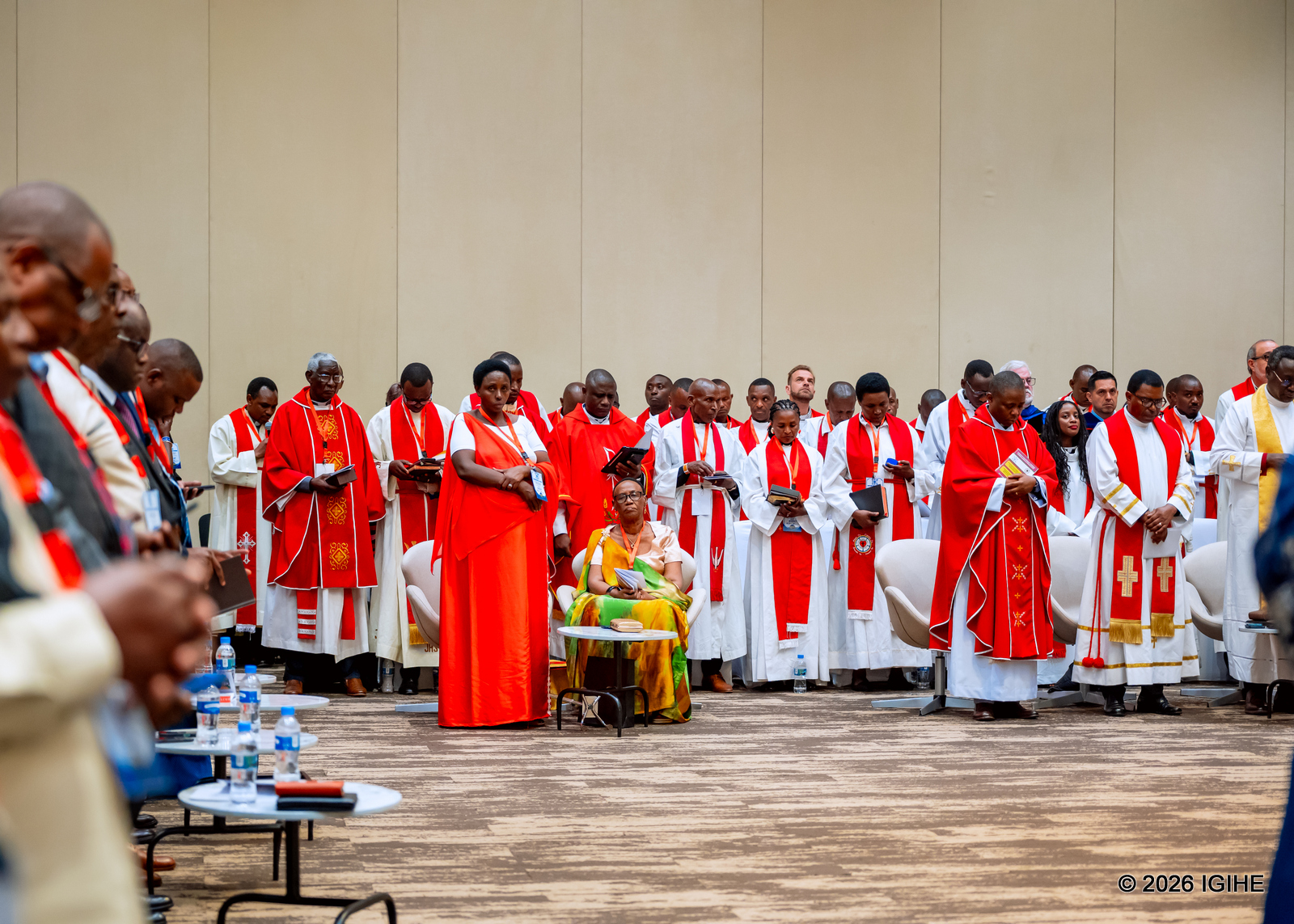
Church leaders and guests attend the installation ceremony of Bishop Kalisa Atupenda Prince.
In a message posted on X on Monday, Kagame extended his sympathy to President Samia, her family and the people of Tanzania.
“My sincere condolences to my sister, President Samia Suluhu, her family, and the people of Tanzania on the passing of H.E. Hafidh Ameir Hassan,” Kagame said.
“The Government and people of Rwanda stand in solidarity with President Samia Suluhu and our brothers and sisters in Tanzania as they honour the life and legacy of H.E. Hafidh Ameir Hassan,” he added.
Hafidh Ameir Hassan died on Monday, September 7, at the age of 76 while receiving treatment for a heart condition at Emilio Mzena Memorial Hospital in Zanzibar.
His death was announced by Tanzania’s Vice President Deogratius Ndejembi.
He said funeral arrangements were underway in Kizimkazi, Zanzibar, where the family was preparing to honour the late First Gentleman.
Hafidh became Tanzania’s First Gentleman in 2021 when Samia assumed the presidency following the death of President John Magufuli. He largely maintained a low public profile and was known as an agriculturalist.
He and President Samia married in 1978 and had four children; three sons and a daughter. Their daughter, Wanu Hafidh Ameir, is a politician who has served in the Zanzibar House of Representatives.
President Paul Kagame has expressed condolences to Tanzanian President Samia Suluhu Hassan following the death of her husband.
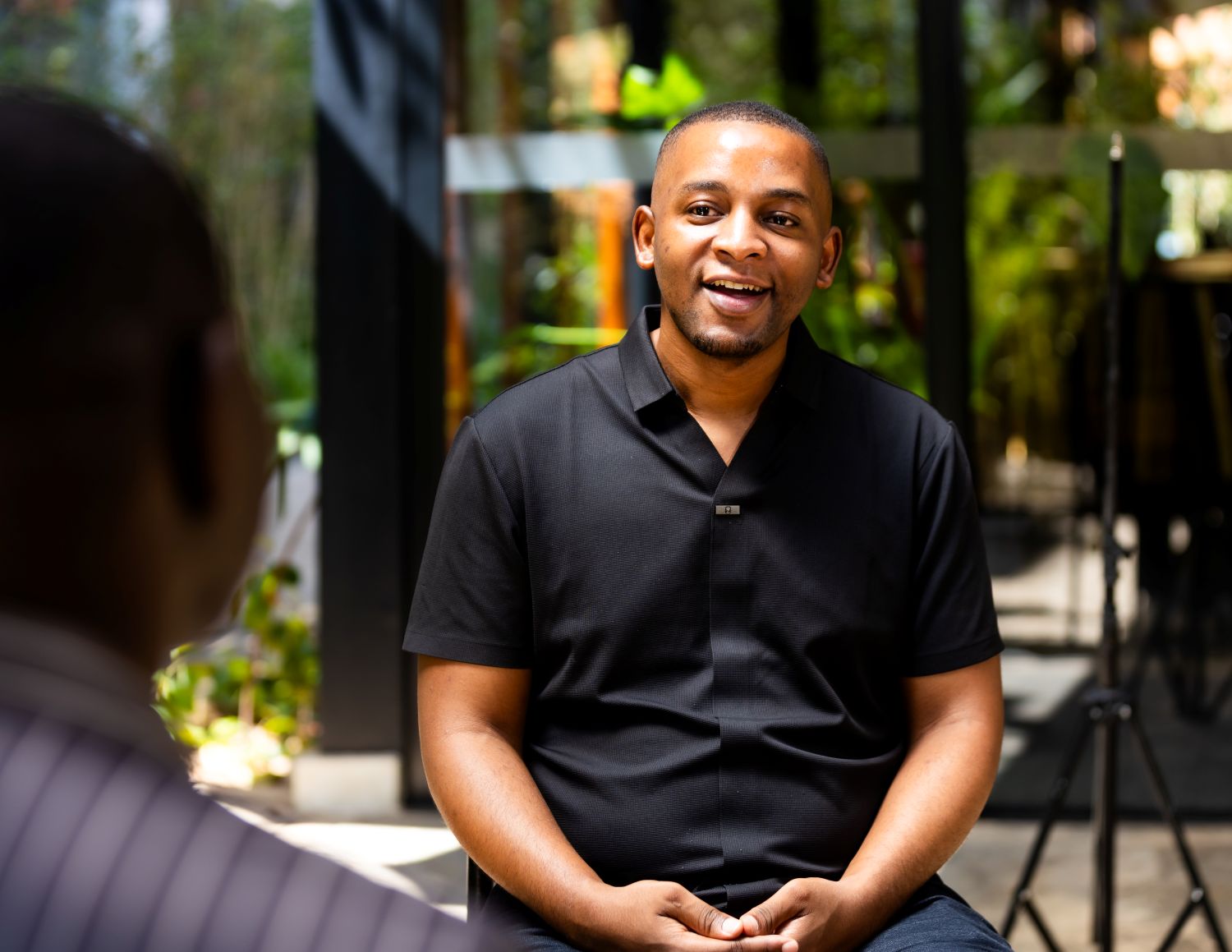
In an interview with IGIHE, Nsengimana said improving the quality of education remains his main priority after two years at the Ministry of Education, building on efforts that have expanded access to schooling.
“Improving the quality of education is the area in which I have committed myself to delivering results,” he said.
Among the changes introduced are adjustments to the curriculum in the first three years of primary school, new Learning Pathways in secondary education and efforts to improve how examination results are communicated.
The ministry is also working to reduce repetition. Nsengimana said the repetition rate among pupils in the first three years of primary school has fallen from about 30% to 20% following the introduction of a programme designed to improve learning outcomes.
Teachers given two years to improve English
English remains a major concern because it is the language of instruction in Rwanda’s schools. Nsengimana said teachers must improve their proficiency to ensure they can effectively teach the subjects assigned to them.
“We found that many teachers were not at the level they should be,” he said, explaining that a two-year programme was introduced last year to improve teachers’ English skills.
He warned that the requirement would have consequences for those who fail to improve.
“Within those two years, we hope that all of them will know English, but those who do not may lose their jobs,” Nsengimana said.
The ministry is also raising the academic qualifications of primary school teachers, with plans to move them progressively from secondary-school level to university-level qualifications.
No repeat cheating arrangement
The minister also defended the decision to allow 7,188 students whose national examinations were compromised by adults to retake the tests.
He said the students had been cheated by adults responsible for administering and protecting the examinations, rather than initiating the malpractice themselves.
“We found that these children were cheated by adults, and those adults are being prosecuted because they betrayed these children,” he said.
Nsengimana said punishing thousands of students by making them repeat an academic year would have been unfair, while allowing them another opportunity to sit the examination would enable them to continue with their education.
However, he stressed that the decision should not be interpreted as setting a precedent.
“This is the first and the last time this will be done,” he said. “Next time, if it happens, the regulations will be followed.”
More than 99% of the affected students reportedly sat the retake examination. Their results are expected on September 11, allowing them to join their colleagues by September 14.
Tackling overcrowding, mathematics and discipline
Nsengimana acknowledged that overcrowded classrooms remain a challenge to education quality. Between 2017 and 2024, the government built 27,500 classrooms, but the ministry continues to add more as resources become available.
“There is no other solution than building classrooms,” he said, adding that in some schools with more than 60 pupils in a classroom, two teachers have been assigned to work together.
He also pointed to improvement in mathematics results, which rose from 23% last year to 50% this year. However, he said the figure was still far from satisfactory.
“I don’t believe that mathematics is too difficult,” he said, arguing that greater attention should be paid to how it is taught and learned.
The new school year also brings stronger expectations on discipline. Students involved in fighting, alcohol, drugs and other prohibited behaviour will face disciplinary measures.
Nsengimana urged parents, teachers and school leaders to reinforce discipline, saying a small number of students should not undermine an entire school.
The ministry has also changed the structure of the school day, seeking to reduce prolonged classroom learning and increase practical activities.
“For example, if you are learning about Rwandan culture, you can go outside, dance and practise it,” he explained, arguing that students learn better when they actively engage with what they are studying.
Rwanda also participated in the Programme for International Student Assessment (PISA) for the first time in 2025, with more than 7,000 15-year-old students assessed on their ability to apply knowledge in real-life situations.
Nsengimana said such assessments will help Rwanda understand whether students are simply memorising information or genuinely understanding and applying what they learn.
“Our goal is to build a knowledge-based economy,” he said.
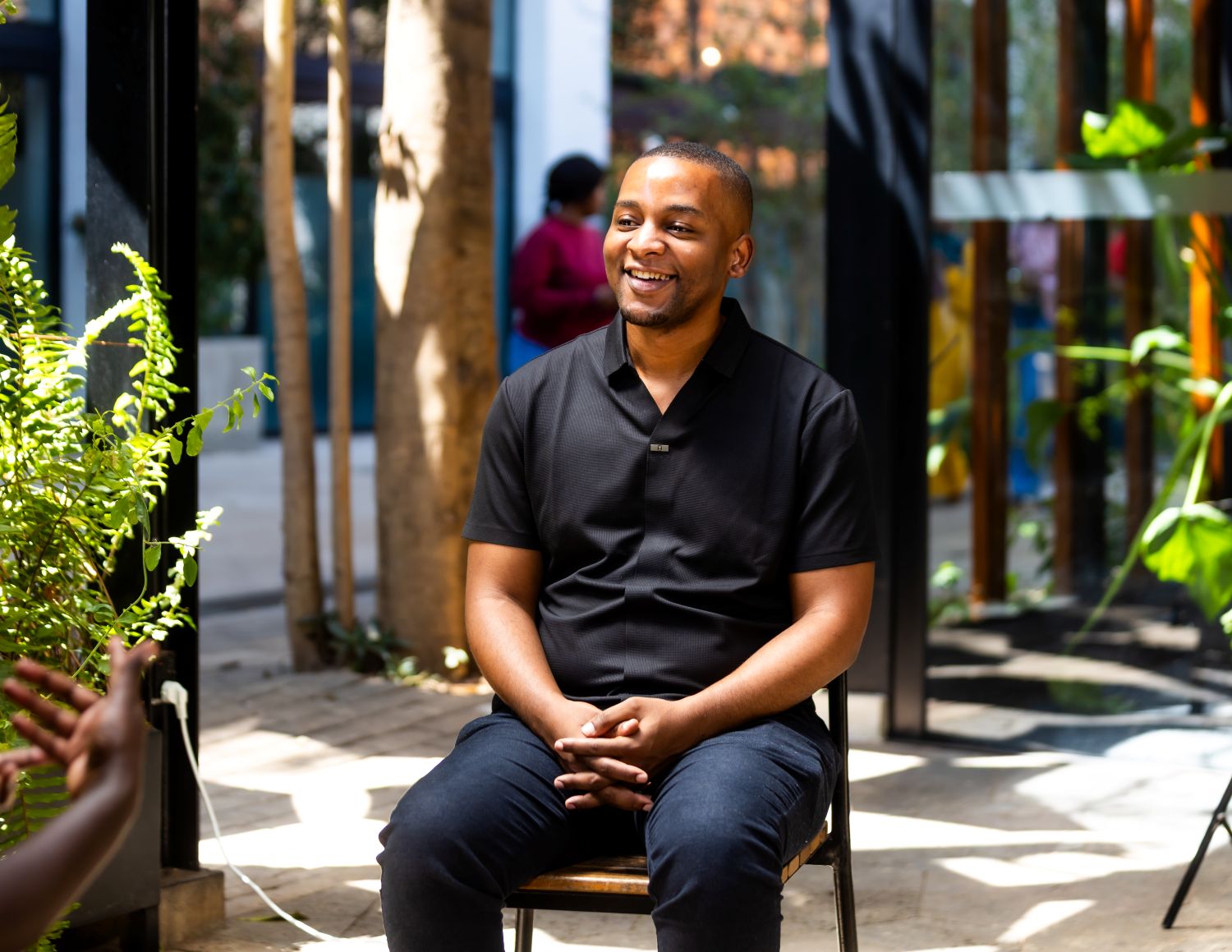
Minister Nsengimana has said improving the quality of education remains his main priority after two years at the Ministry of Education, building on efforts that have expanded access to schooling.
The visit follows a series of high-level exchanges and agreements that have expanded cooperation beyond diplomacy into aviation, logistics, technology, infrastructure, trade and investment.
For Rwanda, the relationship offers an opportunity to deepen access to the Gulf and attract investment from Omani businesses. For Oman, Rwanda provides a foothold in a fast-growing East African market and a potential gateway into the wider region.
The two countries established diplomatic relations in 1982 and have maintained ties through non-resident diplomatic missions. Oman is currently represented in Rwanda through its embassy in Nairobi, while Rwanda handles its diplomatic representation to Oman through its embassy in Cairo.
But the relationship has gained fresh momentum in recent years.
From diplomacy to economic cooperation
A major step came in January 2026, when Rwanda’s Foreign Affairs Minister Olivier Nduhungirehe led a high-level delegation to Muscat.
The visit produced agreements covering aviation, logistics, dry ports, supply chains, digital infrastructure, data centres, cloud computing and artificial intelligence.
One of the agreements brought together the Rwanda Development Board and Oman Airports Management Company, with the two sides agreeing to cooperate on airport development and management, exchange expertise and explore investment opportunities in aviation infrastructure.
Another cooperation programme focuses on logistics services, including the development and operation of dry ports and supply-chain services.
For Rwanda, which is landlocked and relies heavily on regional transport corridors to move imports and exports, logistics is a particularly important area of cooperation.
The two countries had already signed a memorandum of understanding on telecommunications, information technology and digital-economy development in April 2025, during Oman’s participation in the Global Summit on Artificial Intelligence in Africa in Kigali.
A new air bridge
Perhaps the most visible sign of the growing relationship is now in the sky.
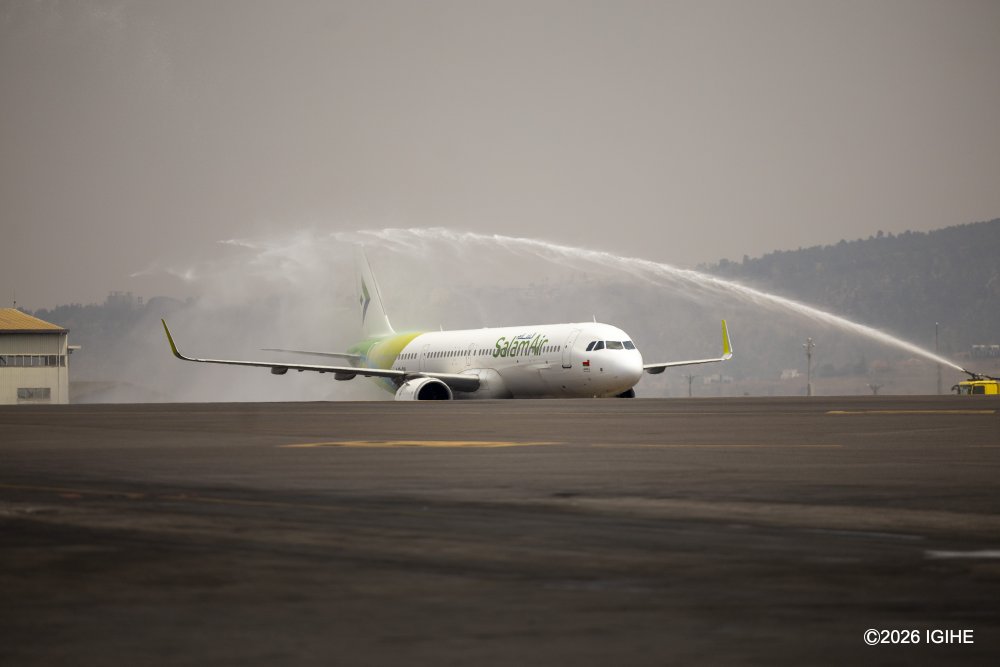
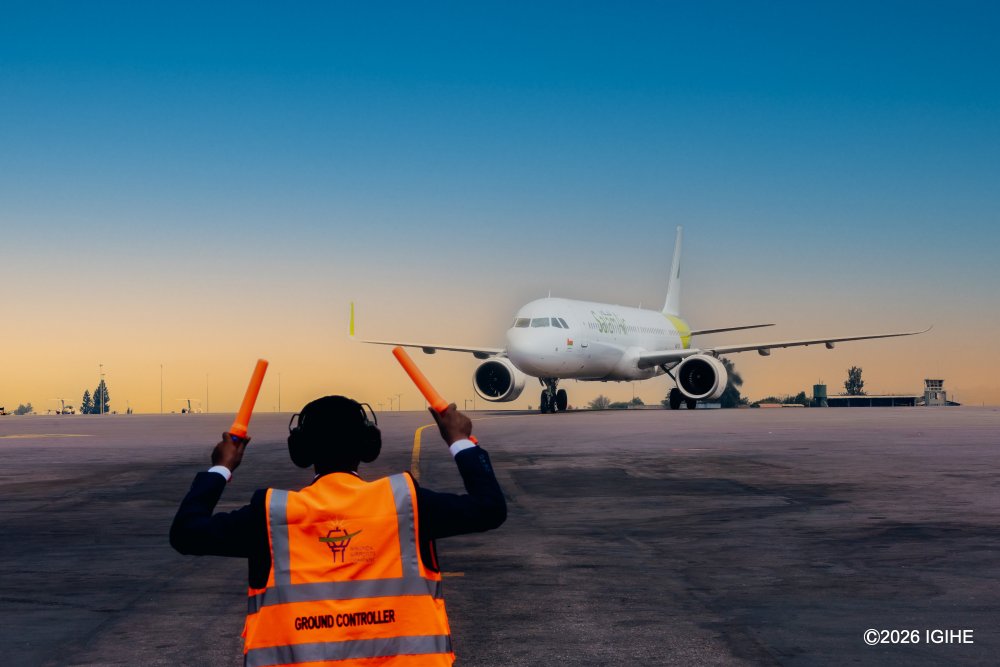
SalamAir launched direct flights between Muscat and Kigali on July 21, 2026, creating a direct connection between Rwanda and Oman.
SalamAir launched direct Muscat-Kigali flights on July 21, 2026.
The airline operates the route twice a week, with a flight time of about five hours. The connection is expected to facilitate tourism, trade, investment and business exchanges between Rwanda, Oman and the wider Gulf region.
The new route followed an Air Services Agreement signed by the two countries in 2023 that entered into force in January 2026. Oman Air had also announced plans earlier this year to introduce direct Muscat-Kigali flights.
Beyond making travel easier, the route could become an important piece of economic infrastructure.
Direct flights reduce the time and complexity involved in moving businesspeople, tourists and investors between the two markets. They can also make it easier for companies to explore opportunities before committing capital.
For Kigali, the connection strengthens its ambition to position itself as a regional aviation and business hub. For Muscat, it creates another link to East Africa and a market with growing tourism and investment activity.
Oman and Rwanda officials during the launch of SalamAir’s direct Muscat-Kigali flights on July 21, 2026.
Where the investment opportunities lie
The two countries have identified a wide range of sectors in which they could deepen cooperation.
These include energy, renewable energy, mining, logistics, aviation, hospitality, healthcare, education and technology.
Rwanda is seeking investment that can support its transformation from an economy traditionally dependent on agriculture towards one increasingly driven by services, technology, tourism, finance and industry.
The country is also positioning itself as a regional centre for conferences, investment and business services.
Oman, meanwhile, is seeking to diversify its economy beyond oil and gas while expanding its international economic partnerships.
That creates potential areas of complementarity.
Omani companies have already shown interest in the Rwandan market.
In March 2020, more than 80 Omani companies participated in the Omani Products Exhibition, or OPEX, in Kigali. The companies showcased products including food, plastics and construction materials as they explored opportunities in the Rwandan market.
The exhibition also resulted in commercial agreements involving Omani industrial and pharmaceutical companies.
The latest push could take the relationship beyond individual commercial deals towards larger cooperation in infrastructure, logistics, technology and investment.
Why Oman matters to Rwanda
Oman occupies a strategically important position on the Arabian Peninsula, overlooking the Gulf of Oman and the Strait of Hormuz, through which around 20% of the world’s oil supplies pass.
Its location gives it connections to markets in the Gulf, Asia and beyond.
For Rwanda, the relationship offers additional access to Gulf markets and international destinations connected through Muscat. For Oman, Rwanda provides an entry point into an East African economy that is positioning itself as a regional business and investment hub.
The two countries therefore have potentially complementary economic interests.
From trade to logistics
The January agreements specifically included cooperation on dry ports and supply-chain services, with the two countries seeking to exchange expertise and improve logistical integration.
This is particularly relevant to Rwanda because of its position at the heart of the Great Lakes region.
As a landlocked country, Rwanda depends on transport corridors linking it to ports in neighbouring countries. Improving logistics can reduce the cost and time involved in moving goods, making the country more competitive as a regional distribution and investment hub.
Oman’s experience as a maritime and logistics centre could therefore provide opportunities for knowledge exchange and commercial partnerships.
The cooperation also comes as Rwanda continues to invest in infrastructure intended to strengthen its role in regional trade.
Technology adds another dimension
The relationship is also moving into areas that are less visible than trade but potentially more transformative.
Data centres, cloud computing and artificial intelligence are now part of the bilateral cooperation agenda.
The January agreement envisages collaboration in infrastructure, skills development, knowledge exchange and policy development in these fields.
This fits Rwanda’s broader ambition to build a knowledge-based and innovation-driven economy under Vision 2050.
For Oman, partnerships in Africa’s emerging digital markets can support its own economic diversification ambitions.
The result is a relationship that is no longer defined only by conventional trade in goods. It increasingly encompasses the digital infrastructure needed to support modern economies.
A relationship built over decades
Despite the recent acceleration, Rwanda-Oman relations are not new.
Diplomatic ties date back to 1982, while the two countries have historical links connected to Oman’s long-standing commercial and cultural presence in East Africa.
Political contacts have continued alongside the growing economic relationship.
Oman’s Foreign Minister, Sayyid Badr bin Hamad Al Busaidi, met Nduhungirehe in New York in September 2025 on the sidelines of the United Nations General Assembly to discuss bilateral relations and issues of mutual interest.
Kagame’s visit therefore comes at a moment when Rwanda and Oman are seeking to turn decades of diplomatic relations into a more practical and commercially focused partnership. It remains to be seen what new agreements will be signed during the visit and what new opportunities and results it will bring for the two countries.
By the time the seller responds, the customer may already have moved on.
This is the fragmented reality of social commerce that Zimbabwean fintech ChatCash is trying to change by turning messaging conversations into complete digital storefronts.
The fintech allows small businesses to create online shops, showcase products, communicate with customers and receive payments without forcing buyers to leave the messaging platforms they already use.
Launched in 2023, ChatCash has developed APOMA, an artificial intelligence-powered conversational operating system that enables businesses to create fully automated digital storefronts within messaging applications such as WhatsApp.
Months after expanding into Rwanda and securing a fintech pilot licence, ChatCash is positioning Kigali as a base for its planned expansion into other African markets.
John Sakala, the company’s CEO, says the idea is built around a simple observation: much of Africa’s commerce is already happening through conversations.
“The future of commerce is conversational, and Africa is where it’s beginning,” Sakala told IGIHE in an exclusive interview.
He said businesses and customers increasingly begin transactions through platforms such as WhatsApp, Facebook and other messaging services, but the tools supporting those transactions remain fragmented.
A customer may ask about a product on WhatsApp, make a payment through mobile money or a bank account, and then send a screenshot to prove that the money has been transferred.
ChatCash wants to put those steps in one place.
Turning a chat into a shop
According to Sakala, a merchant can use ChatCash to build an online storefront in about six minutes.
The business owner creates a profile, uploads products and connects an AI-powered assistant to the store.
That assistant acts as a digital salesperson, responding to customers around the clock through messaging platforms.
The system can communicate in local languages, including Kinyarwanda, as well as French and English, according to Sakala.
Instead of directing customers to a separate website, the business can meet them where the conversation has already started.
“When a customer comes to the WhatsApp number linked to your storefront, they are responded to conversationally,” Sakala explained.
Once the customer decides to buy, the payment can also be completed within the conversation.
ChatCash connects different payment options, including mobile money and bank accounts, allowing the customer to complete the transaction without moving to another platform.
For Sakala, that is the difference between traditional e-commerce and what he calls conversational commerce.
An e-commerce platform such as Shopify gives a business a dedicated online store and expects customers to visit that platform.
ChatCash, on the other hand, brings the store to the customer.
“The dynamic in Africa is that your customers are already talking to you on WhatsApp,” he said.
“We’re not giving you a platform to trade on or dictating where you should trade. We’re helping you communicate in a more organized way, right where your customers already are.”
Sakala says the system can communicate in local languages, including Kinyarwanda, as well as French and English, according to Sakala.
Beyond chatbots
ChatCash’s technology goes beyond automated responses to frequently asked questions.
Sakala describes its AI-powered systems as autonomous agents that can make decisions within parameters defined by a business.
For example, an agent can respond to questions about products, manage a shopping cart, verify information, collect a delivery location and operate within price ranges set by the merchant.
That allows the AI assistant to function more like a salesperson than a conventional chatbot.
“The agent represents you when you’re not there,” Sakala said.
The company believes such technology could be particularly useful for micro and small businesses that cannot afford dedicated staff to manage online sales throughout the day.
From Zimbabwe to Rwanda
ChatCash began its journey in Zimbabwe, where Sakala says the company built its initial customer base.
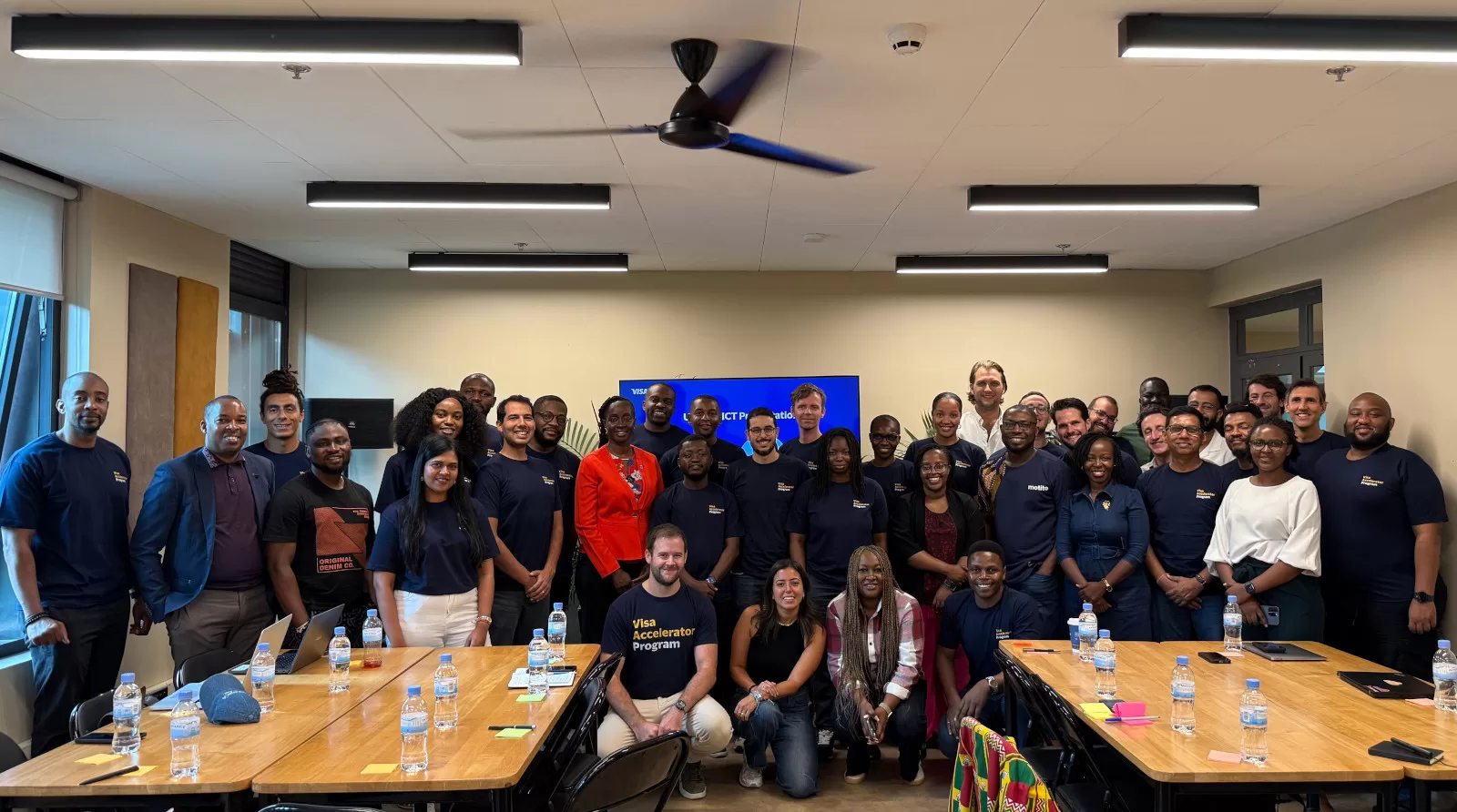
Its move into Rwanda followed Sakala’s participation in the Visa Accelerator Programme in September 2025.
The startup was previously selected for the Visa Africa Fintech Accelerator, gaining access to mentorship, product development support and Visa’s global investor network.
The programme brought him to Kigali and introduced him to Norrsken House Kigali, where he learned more about Rwanda’s business environment.
He returned to Rwanda in December and has since established ChatCash Rwanda as the company’s regional headquarters for East Africa.
Sakala says the country’s regulatory environment and multilingual market were among the factors that made Rwanda attractive.
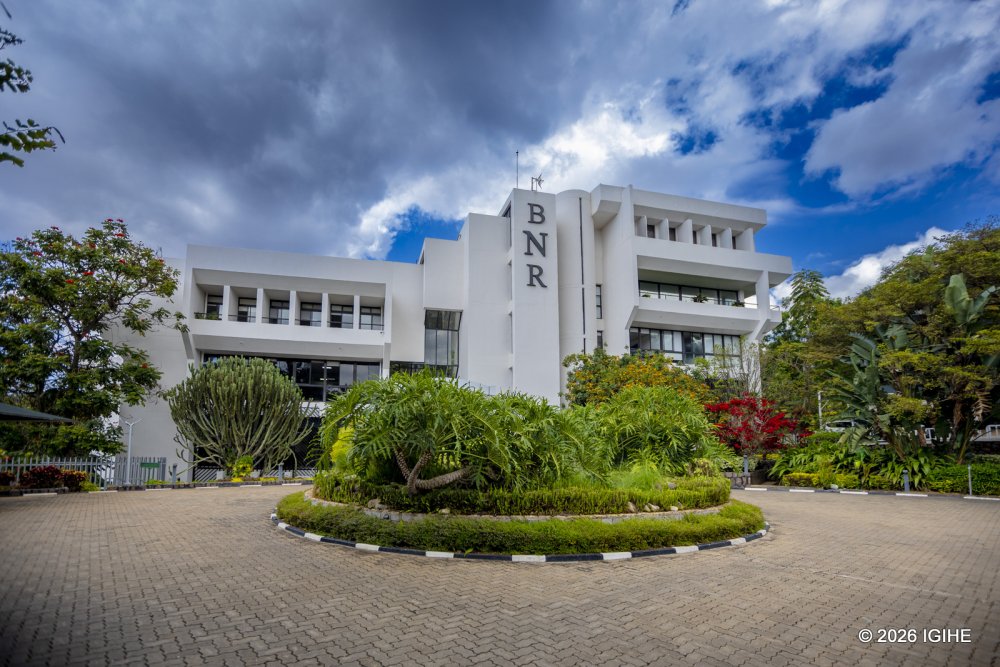
He also points to the ease of registering a business and the support provided by institutions including the Kigali International Financial Centre and the National Bank of Rwanda.
The fintech recently secured a pilot licence from the National Bank of Rwanda, the regulator.
For ChatCash, Rwanda is not simply another market. It is intended to serve as a launch pad for the company’s broader African expansion.
Sakala said the company is looking at Ghana and Nigeria as its next markets, while also targeting countries including Kenya and South Africa as part of its longer-term pan-African strategy.
“We believe this is a very good foundation for getting into other markets as well,” Sakala said.
He highlighted the possibility of licence passporting as another advantage of building the business in Rwanda, saying the framework can facilitate expansion into markets such as Ghana and Kenya with reduced onboarding requirements.
ChatCash enters Rwanda’s fintech sandbox
ChatCash recently secured a pilot licence to operate as a fintech in Rwanda.
The pilot will initially involve a limited number of businesses and will operate within parameters set by the regulator, including limits on the amount of money that can be held in wallets.
Sakala said the company expects to start with about 100 businesses, despite having a waiting list of nearly 4,000 merchants.
He described the pilot as a controlled environment where the company can test its technology and operations before moving toward a full licence.
Once the process is completed and the limits are lifted, ChatCash plans to serve more merchants, including businesses on its waiting list.
The company has already spoken to more than 3,900 businesses in Rwanda, according to Sakala, while another 1,215 businesses have shown interest in Zimbabwe.
He said merchants have particularly appreciated the ability to bring their existing WhatsApp conversations, products and payments into a single system.
Moving beyond screenshots
One of ChatCash’s key propositions is eliminating the reliance on screenshots as proof of payment.
Sakala said the platform creates a verifiable record for every transaction, allowing businesses to see the status of payments rather than relying on customers to send screenshots.
ChatCash has integrated with eKash, Rwanda’s interoperable payment system, as well as MTN MoMo and other payment infrastructure.
The company also works with regional players such as Onafriq and Modu Pay.
Sakala said eKash is particularly important because it connects bank accounts and mobile money wallets while reducing the cost of transactions.
He argues that such interoperability could make it easier for fintech companies to build services around Rwanda’s financial infrastructure.
From transactions to creditworthiness
ChatCash also sees another opportunity in the transaction records generated by small businesses.
Many micro-merchants operate across cash, mobile money and bank transfers, leaving them with limited formal records of their business activity.
Sakala believes that putting those transactions into a traceable digital system could eventually help merchants demonstrate their business performance to financial institutions.
“Every transaction counts,” he explained. “The cash is in the chat.”
The platform, he argues, can create a record showing that a merchant has been trading consistently, potentially strengthening their ability to seek financing.
For businesses that have traditionally struggled to demonstrate their income and transaction history, ChatCash hopes its platform can become more than a sales tool.
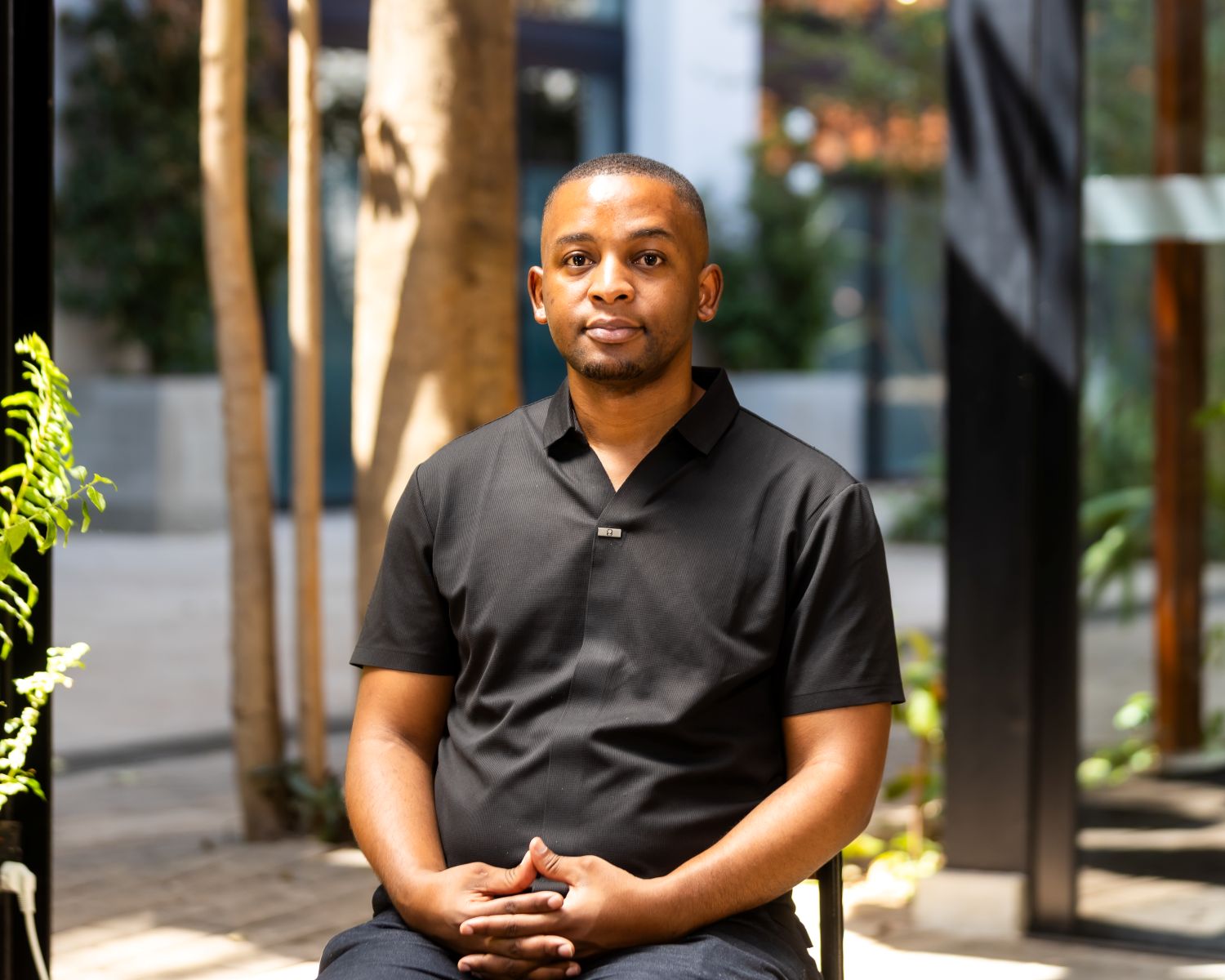
ChatCash CEO John Sakala says the platform can help merchants build transaction records that could strengthen their ability to access financing.
Expansion plans
The company is preparing to raise more capital to support its expansion.
Sakala said ChatCash plans to seek about $5 million in its upcoming fundraising efforts and has been selected as a finalist in a financial inclusion competition organised by FINCA Ventures.
The startup founder will travel to San Francisco and London in October to participate in the FINCA Ventures Final Celebrations and Pitch Event, where the company will compete alongside other leading African startups developing solutions to expand financial inclusion and pitch to investors.
Financing the merchants’ marketing
ChatCash’s ambitions extend beyond payments and online storefronts.
Sakala said the company is working with local banks on a product that would help merchants finance their digital advertising.
Instead of paying upfront to advertise on platforms such as Facebook or LinkedIn, eligible businesses could receive marketing financing and repay after generating sales.
He expects the product to launch within two months, although the exact timing will depend on the company’s rollout.
Most wild giant pandas live in Sichuan, Shaanxi and Gansu provinces, with Sichuan home to the largest share of the population. For visitors, however, seeing these elusive animals does not require venturing into the remote mountains.
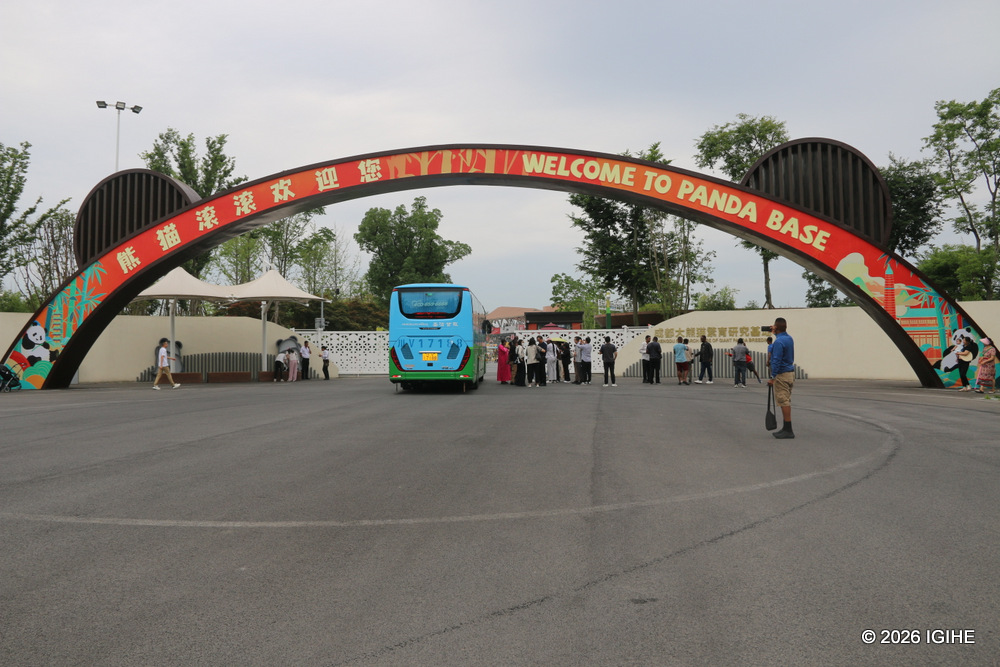
In Chengdu, the capital of Sichuan, pandas are woven into the city’s identity, appearing everywhere from signs and artwork to souvenirs and tourism attractions.
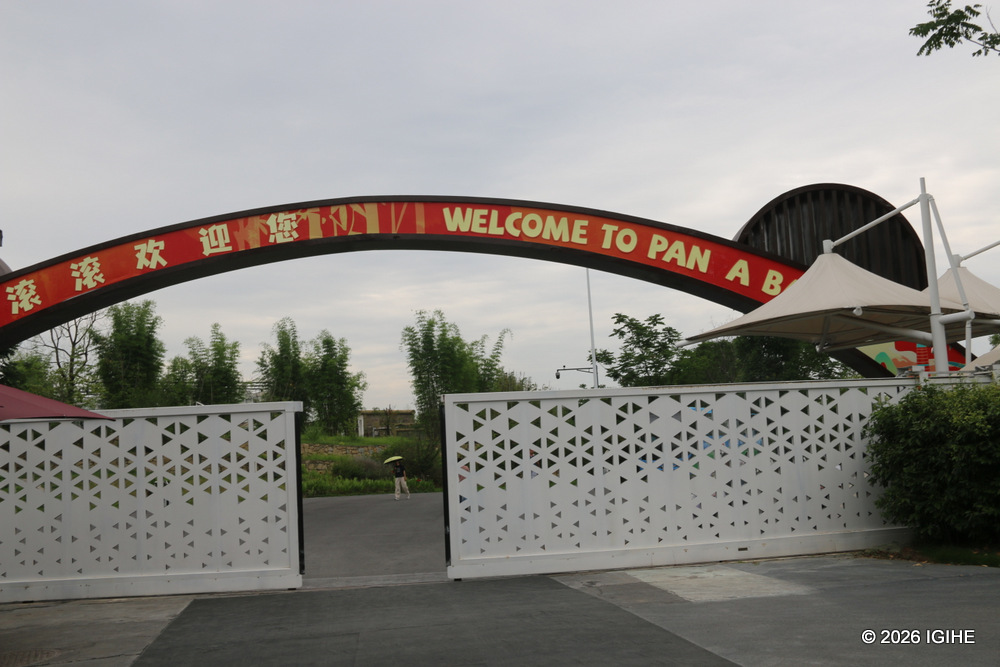
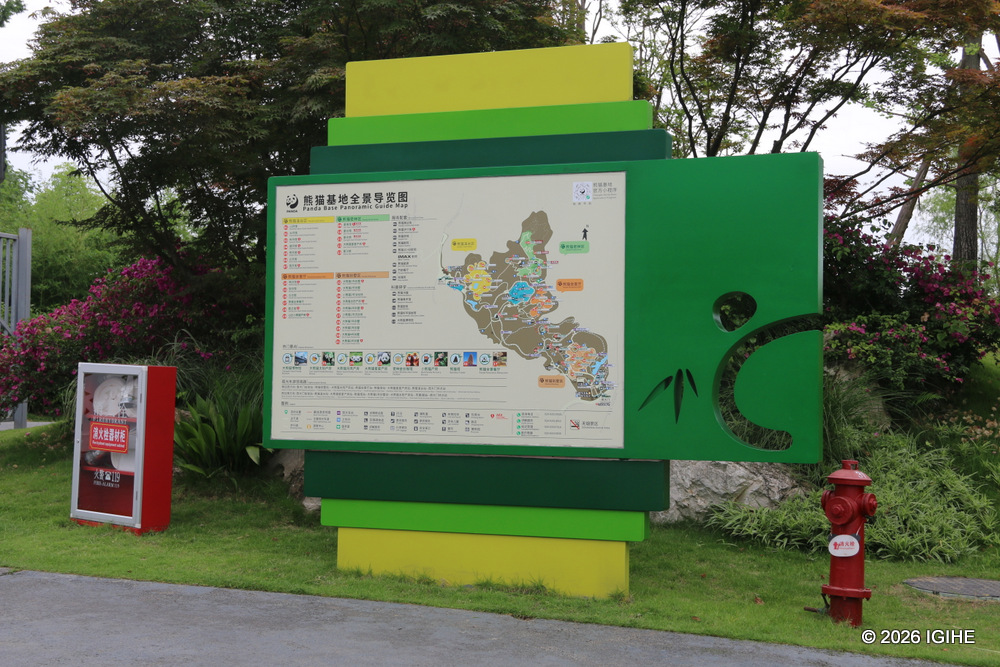
But beyond the images is the real experience. At the Chengdu Research Base of Giant Panda Breeding, widely known as the Panda Base, visitors can see the animals for themselves in an environment designed around their natural way of life.
About 10 kilometres from Tianfu Square, the city centre, the 238-hectare facility welcomes local and international visitors drawn by the chance to see giant pandas up close.
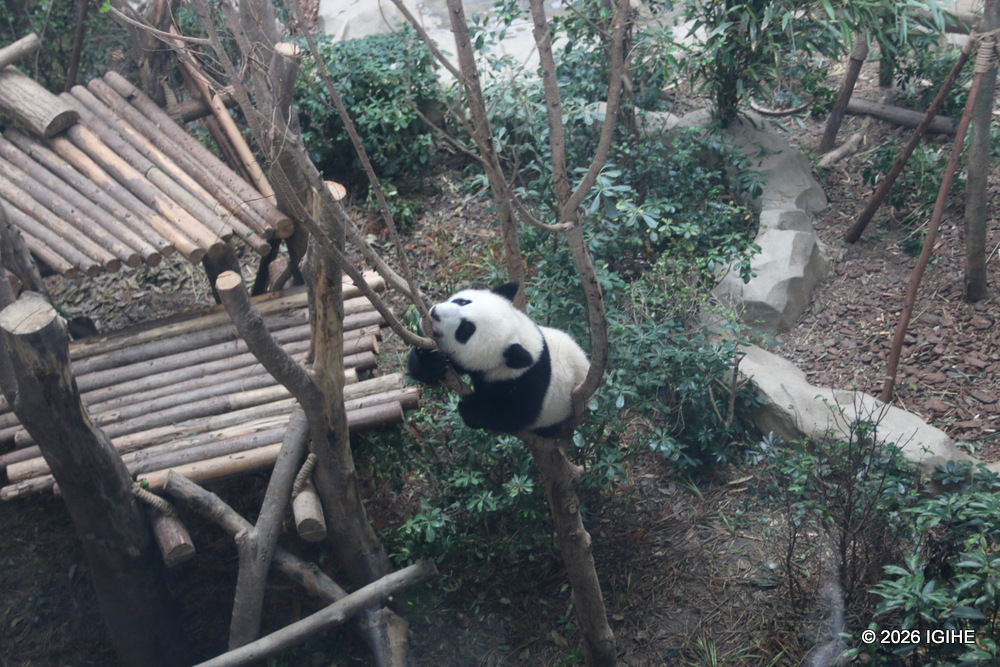
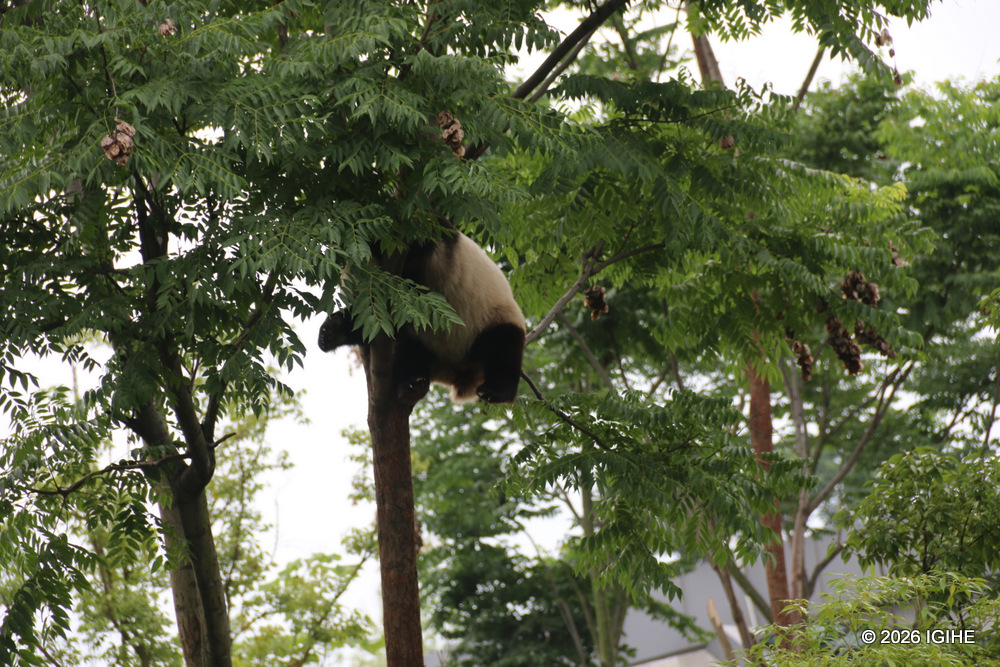
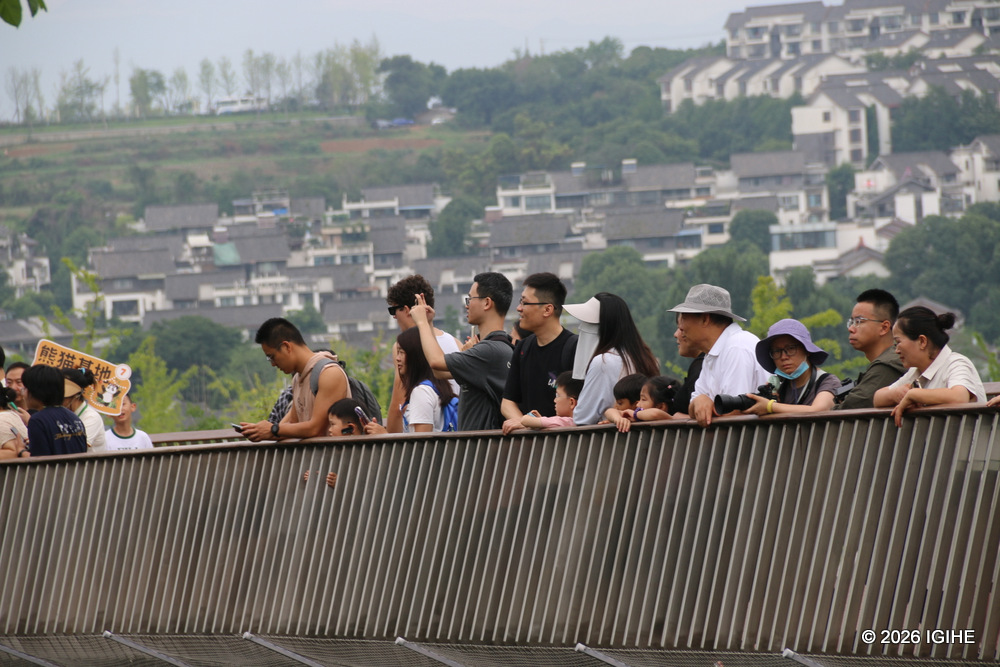
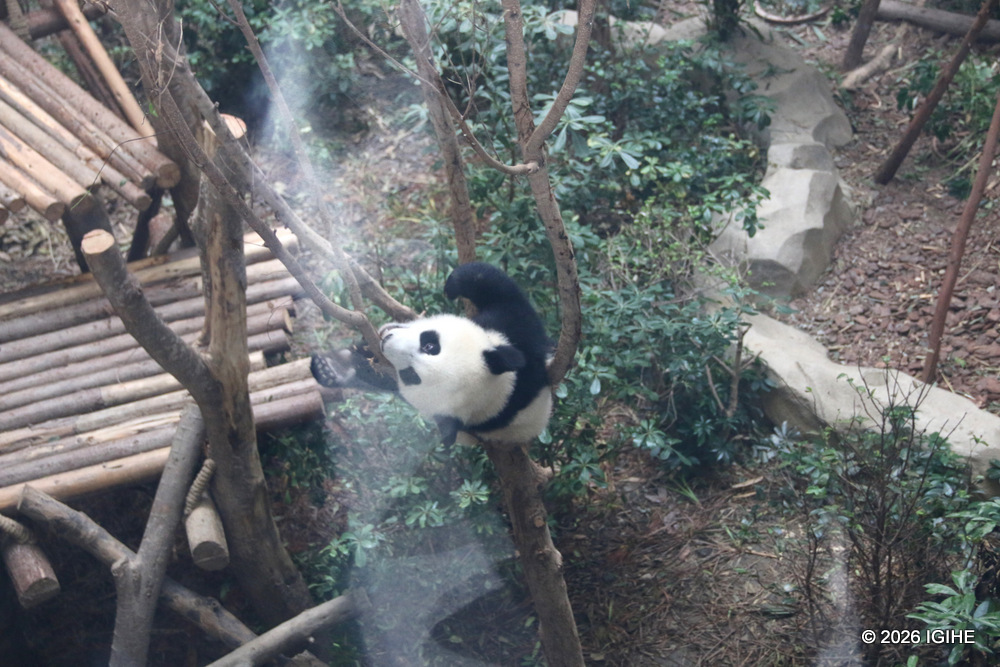
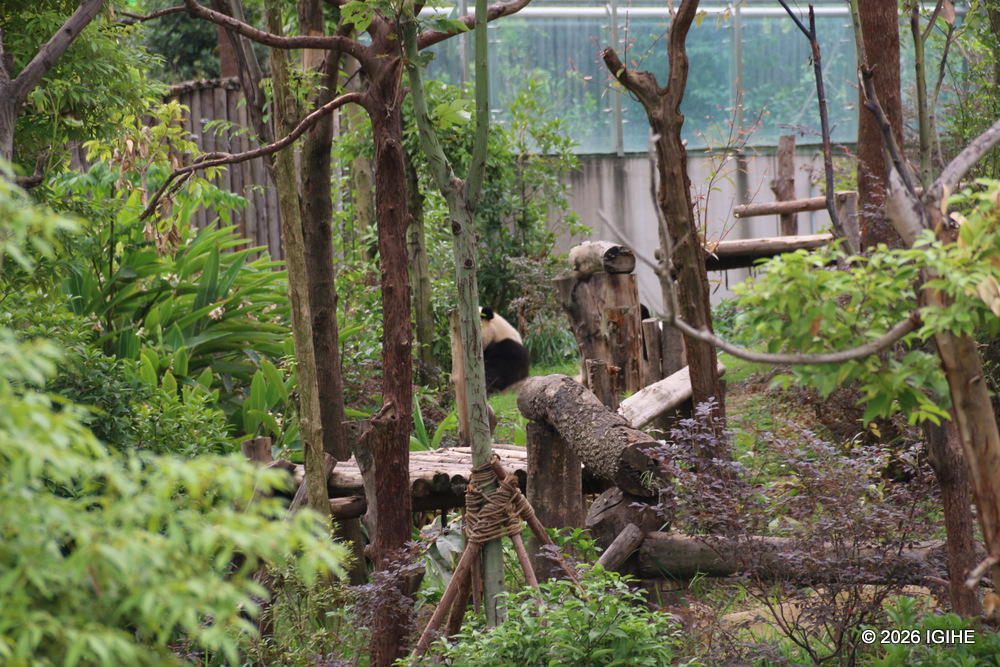
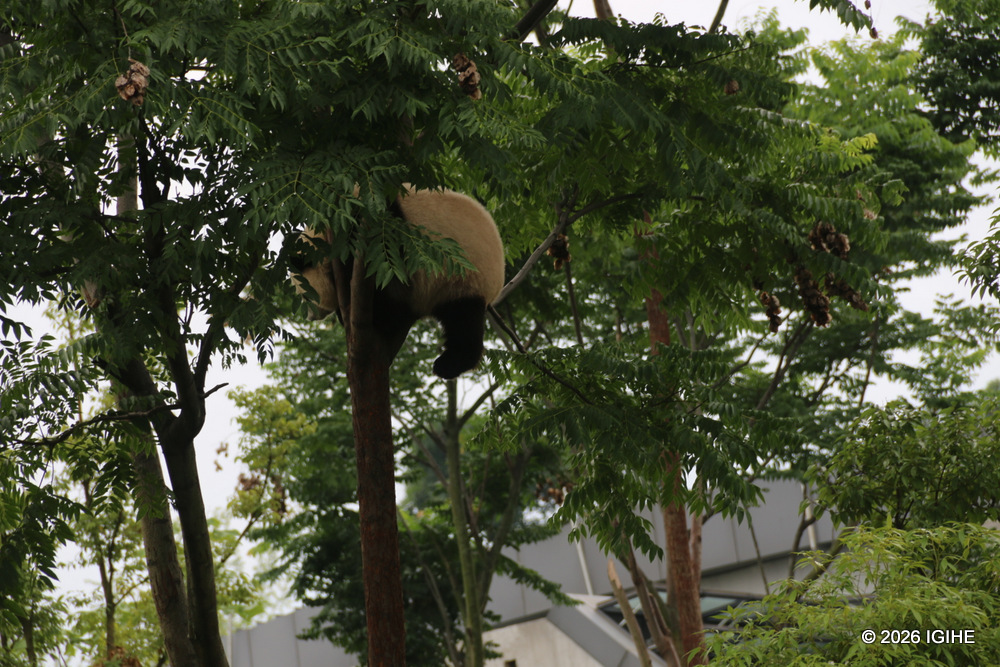
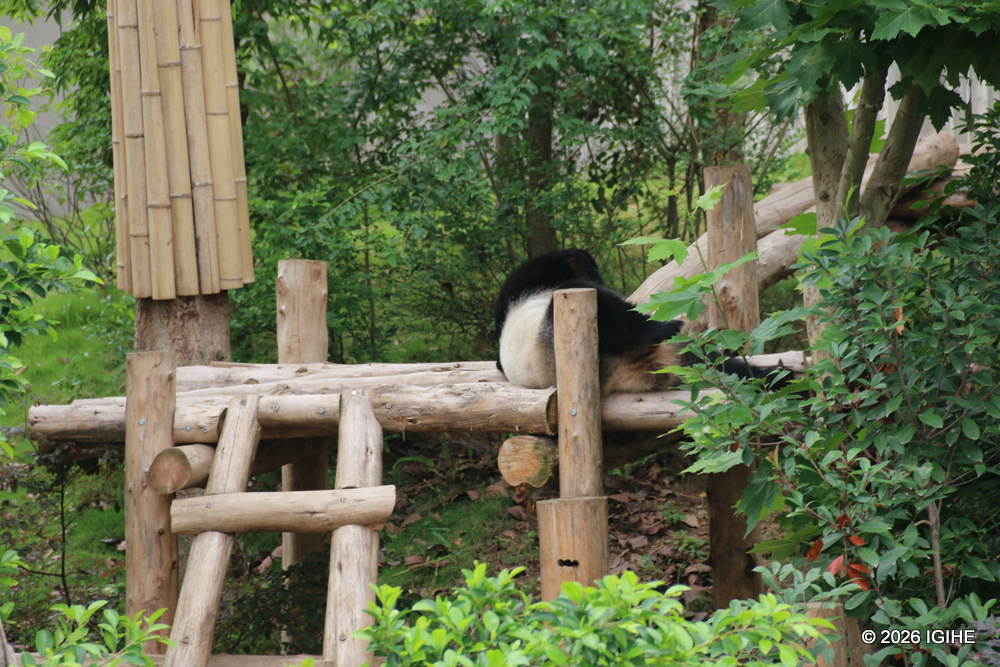
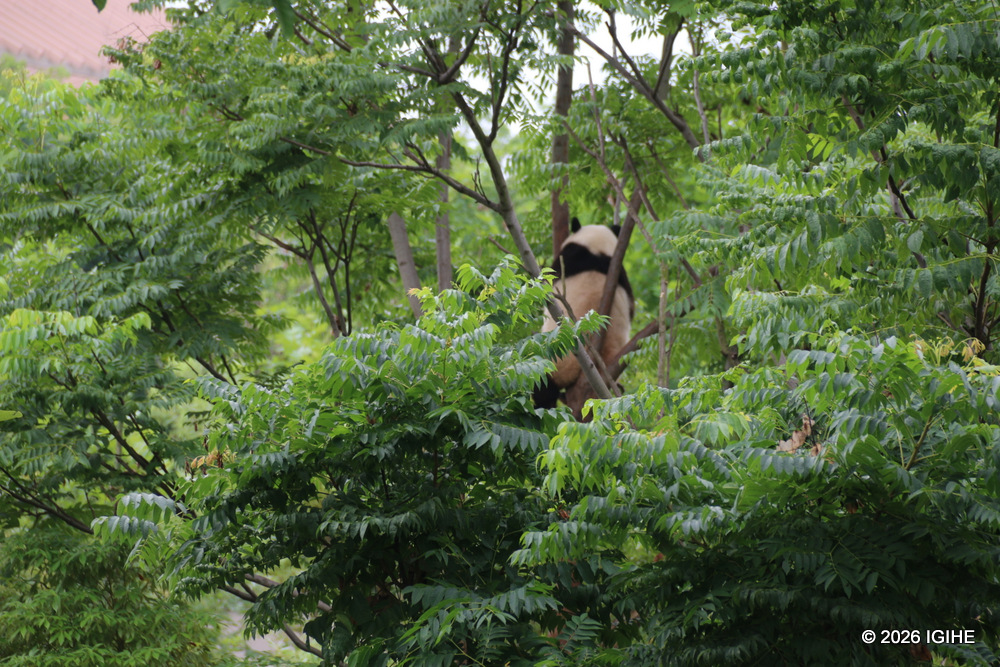
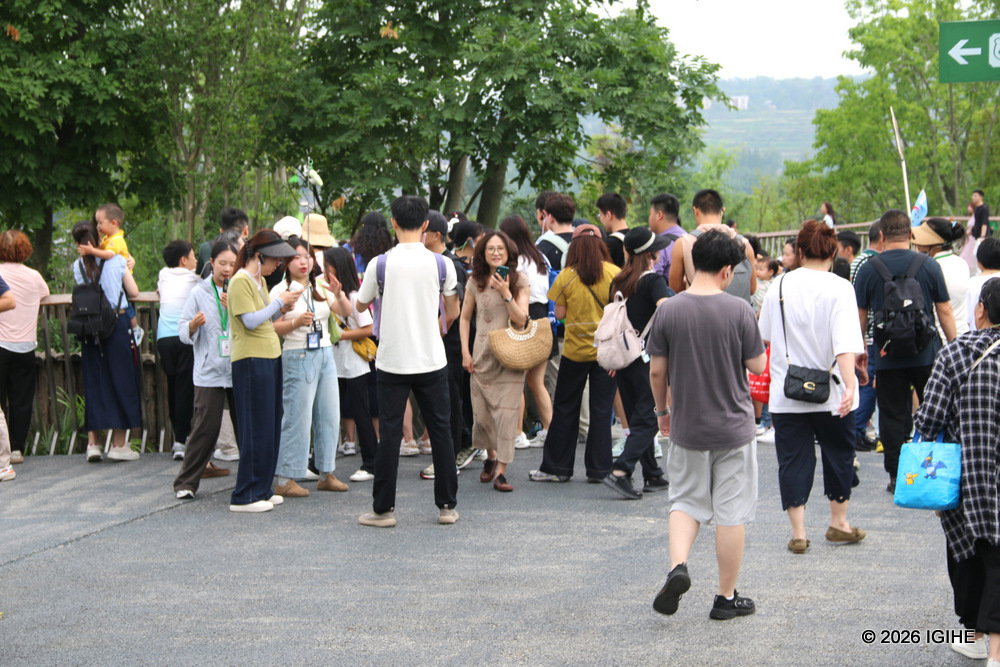
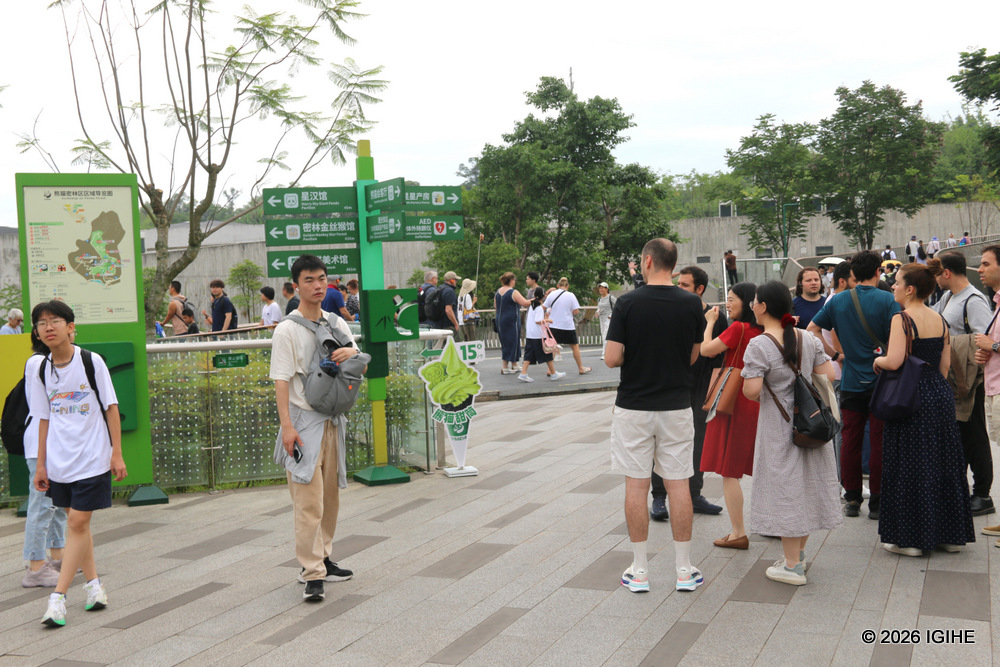
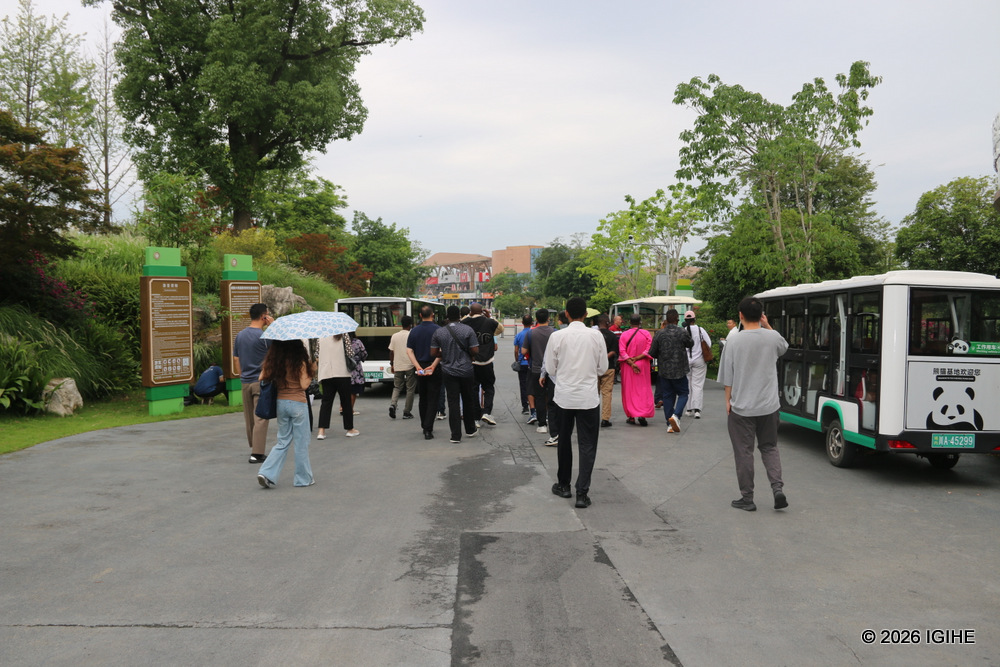
Upon arrival, visitors of different ages and from different countries can be seen making their way through the base, many with scenes that make the visit memorable.In one enclosure, a panda may sit quietly, climb into a tree or settle on a branch, while visitors gather nearby with the same curiosity: to see these gentle giants with their own eyes.
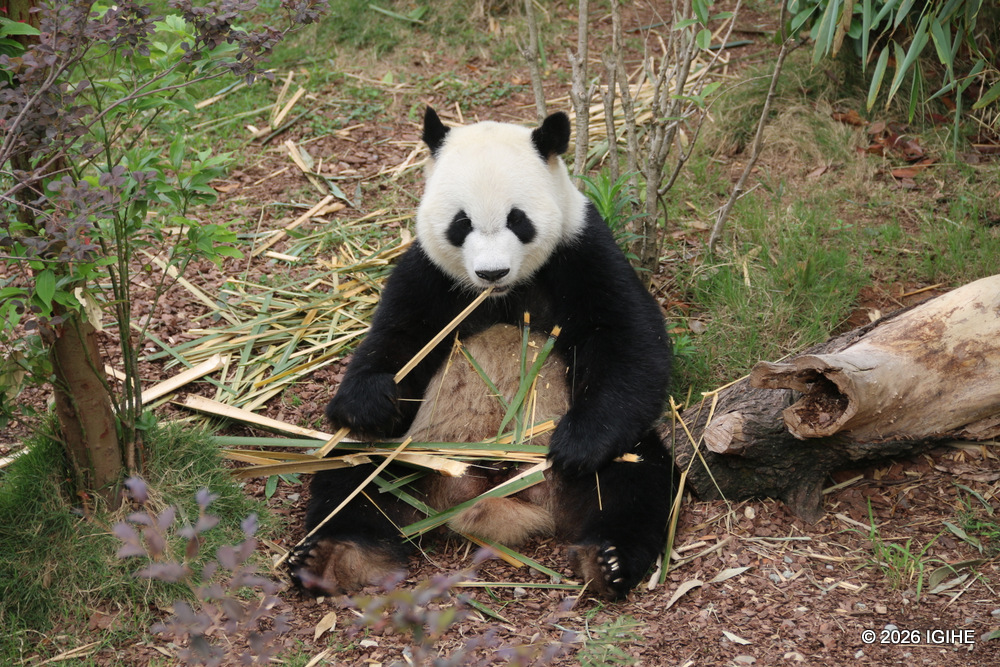
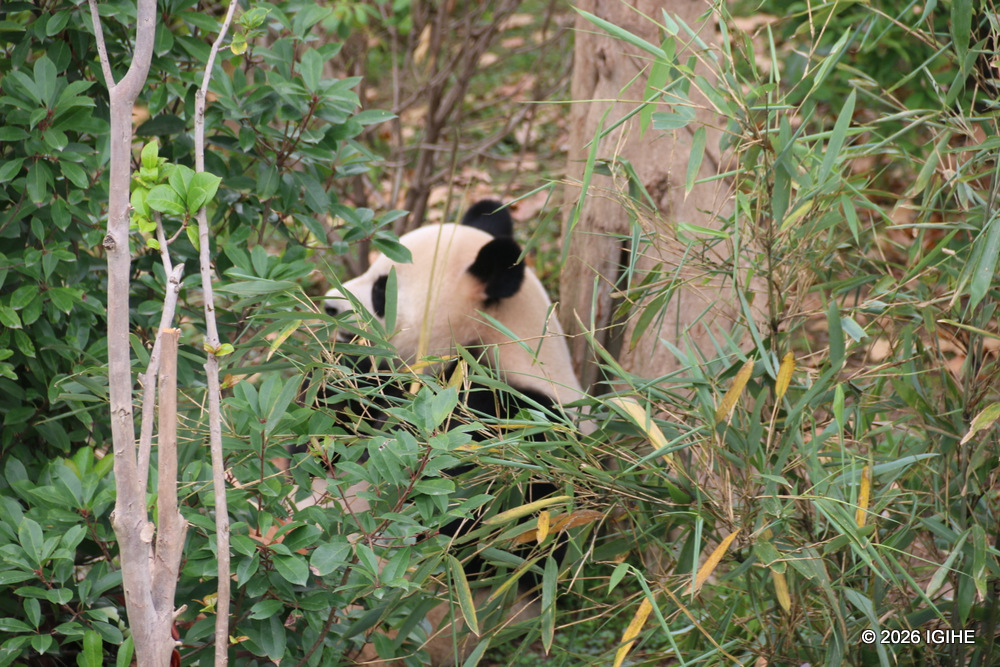
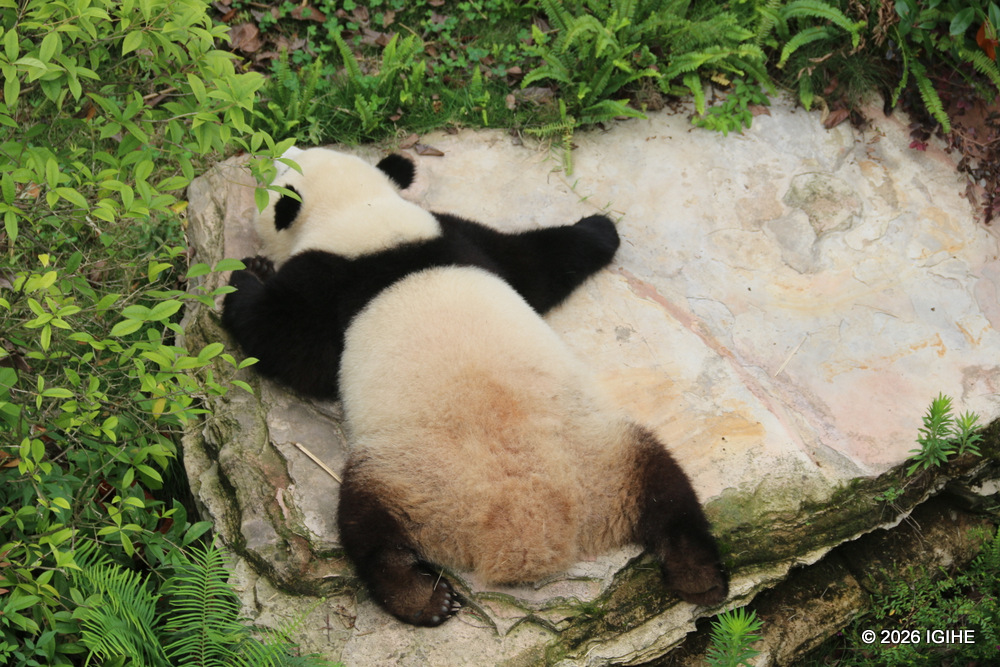
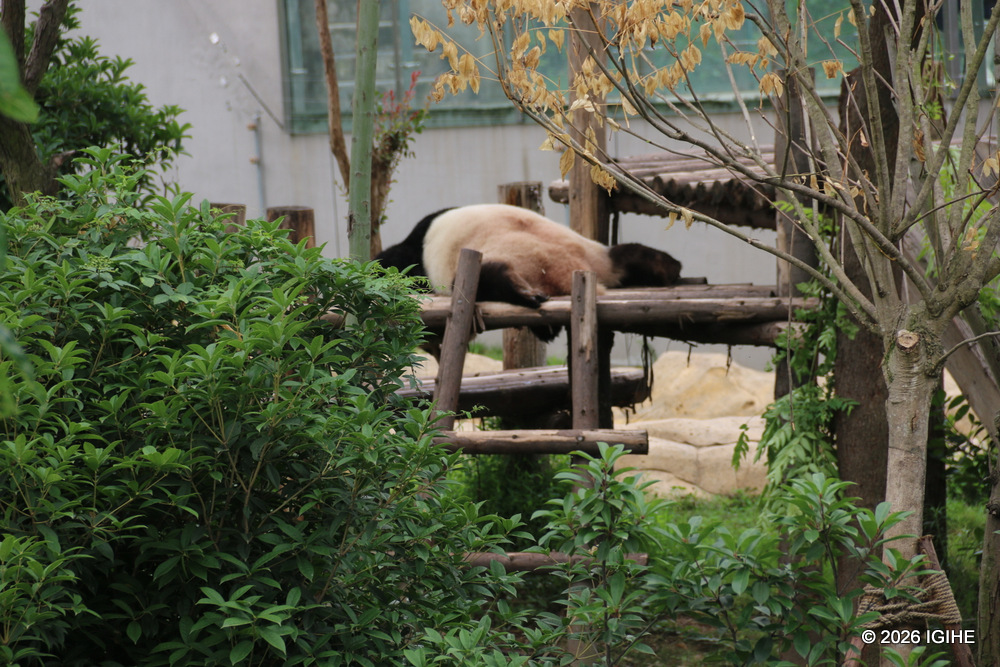
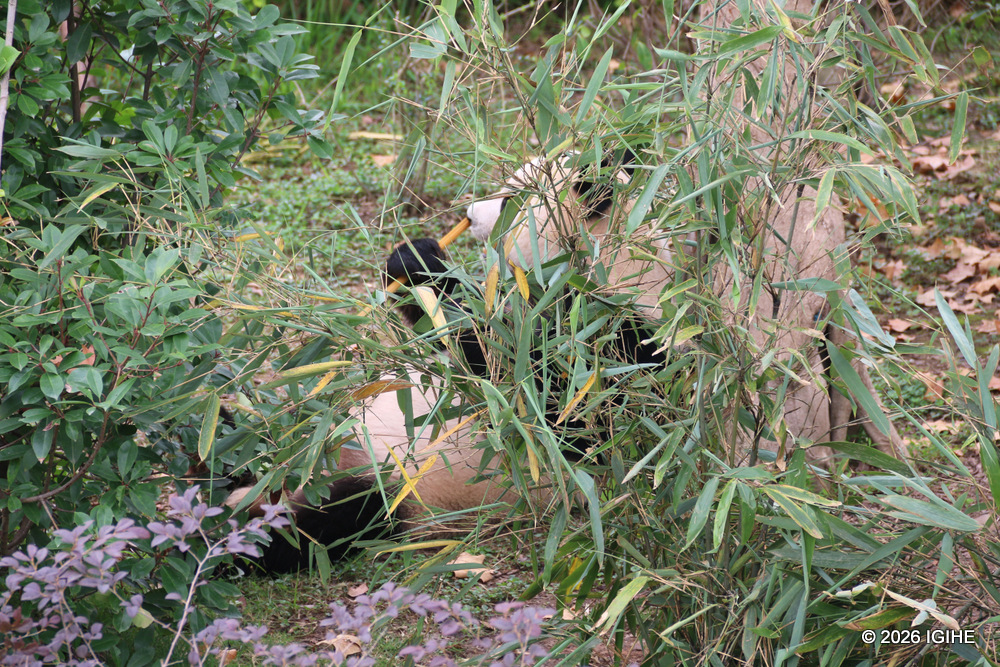
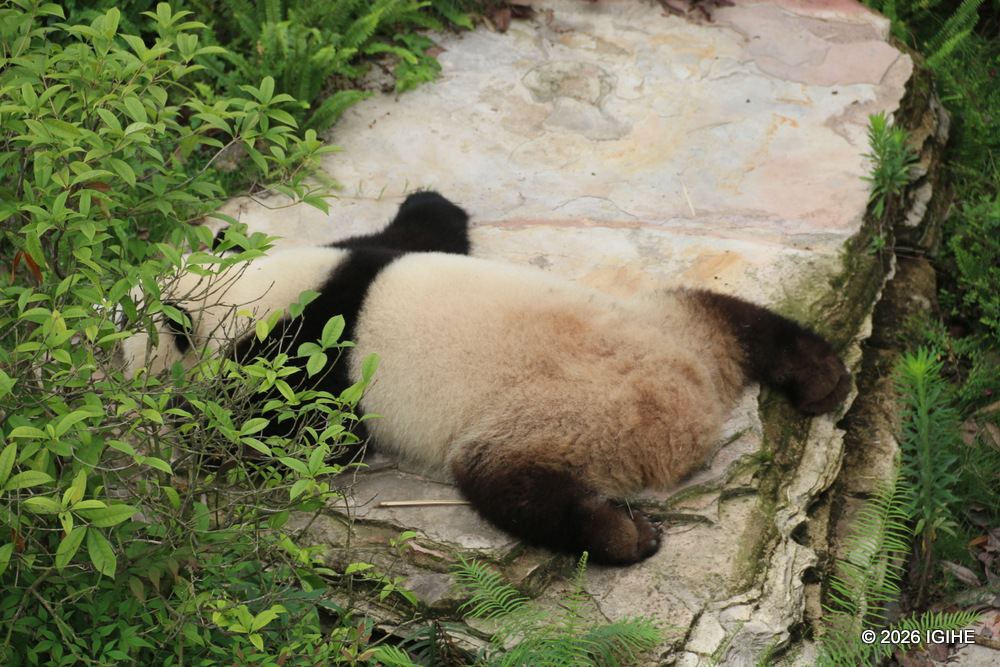
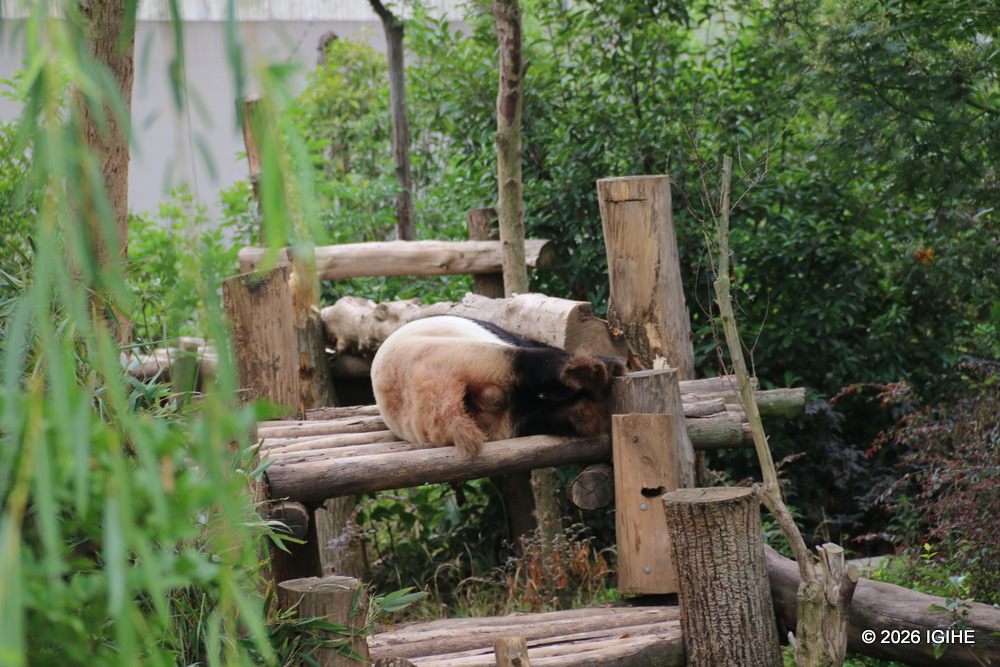
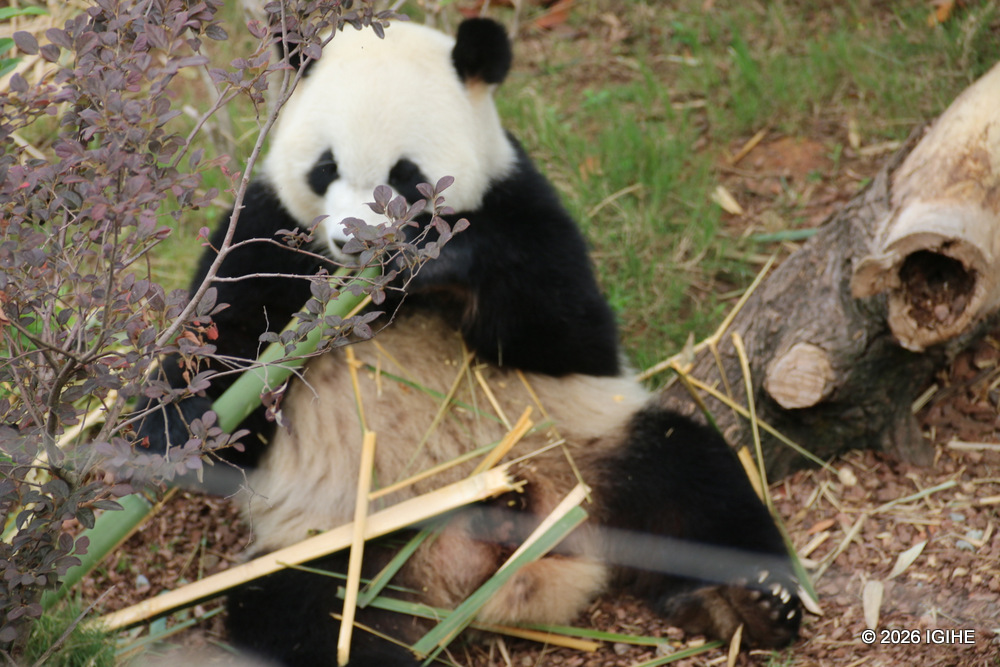
The wait is often rewarded with a panda resting beneath a tree, while another may be busy feeding on bamboo. Elsewhere, visitors can watch pandas climbing trees, moving between branches, descending to the ground or simply stretching out for a rest.
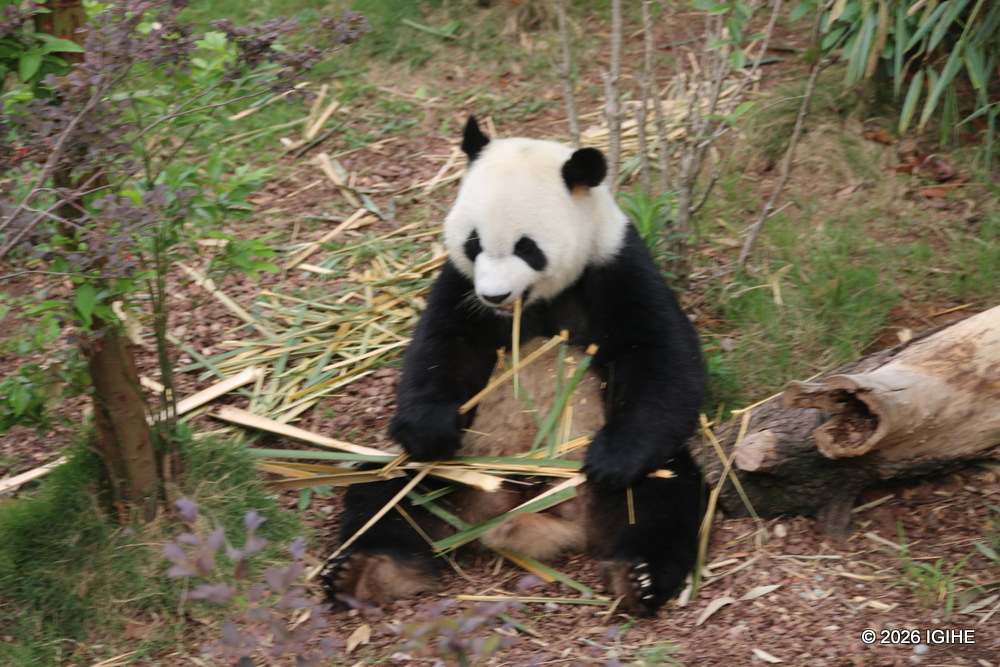
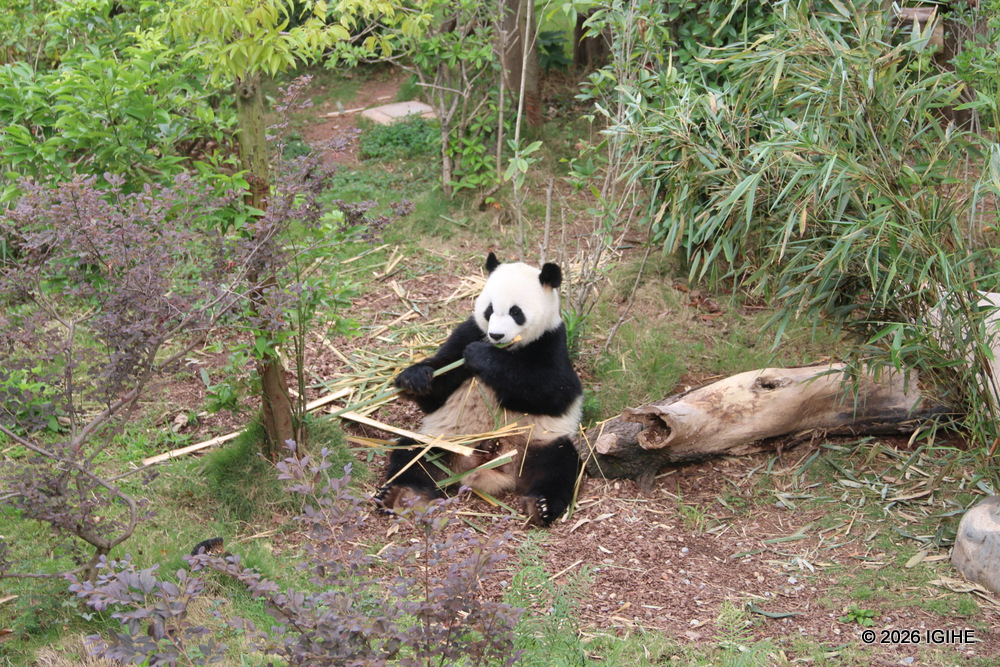
Their movements are unhurried, but fascinating. A panda can spend up to 14 hours a day eating, consuming large quantities of bamboo because it provides relatively little energy. Although pandas are biologically classified within the carnivore family, they have adapted to a diet made up almost entirely of bamboo.
A specialised wrist bone, commonly known as a “pseudo-thumb”, helps them grasp bamboo stalks and strip leaves from the stalks.
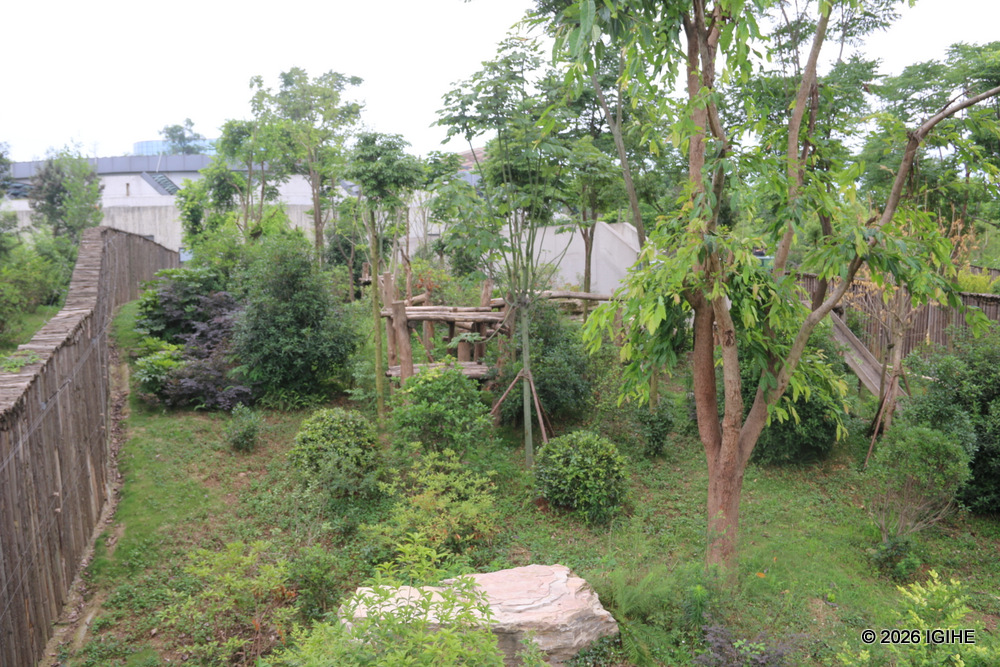
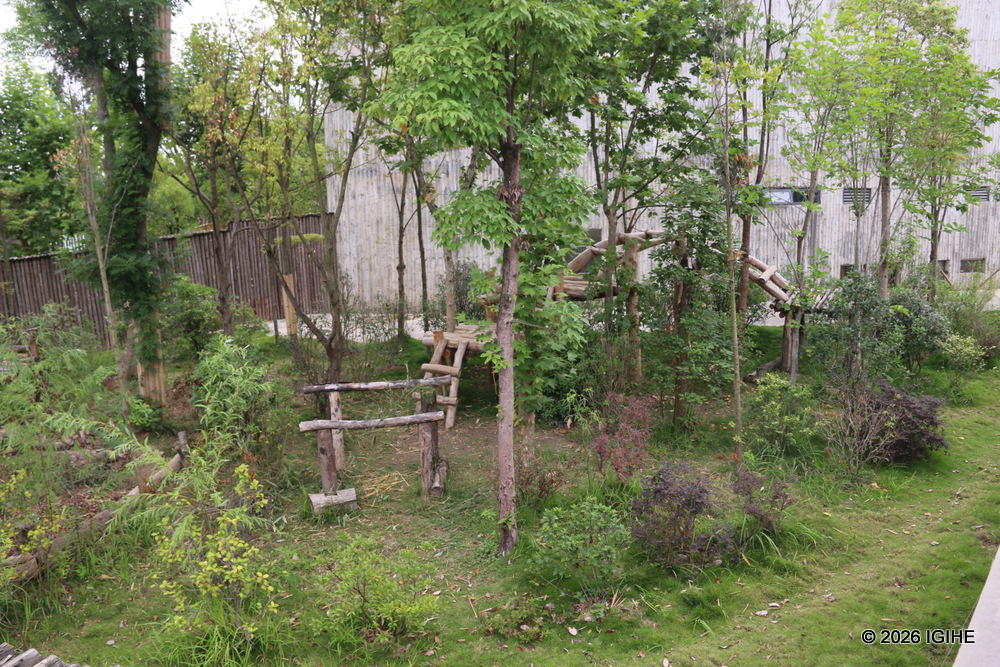
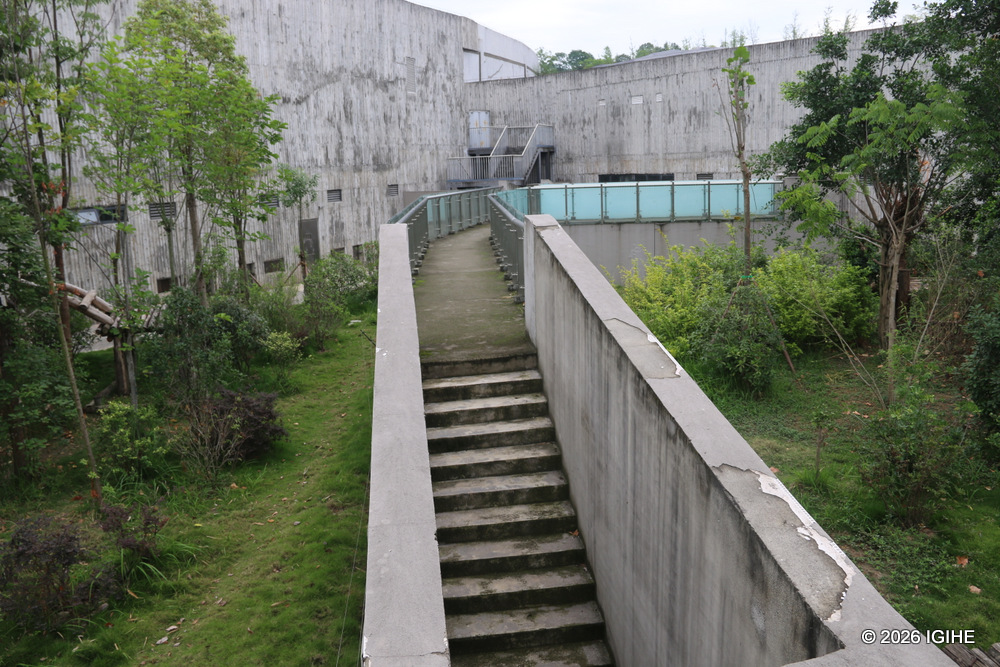
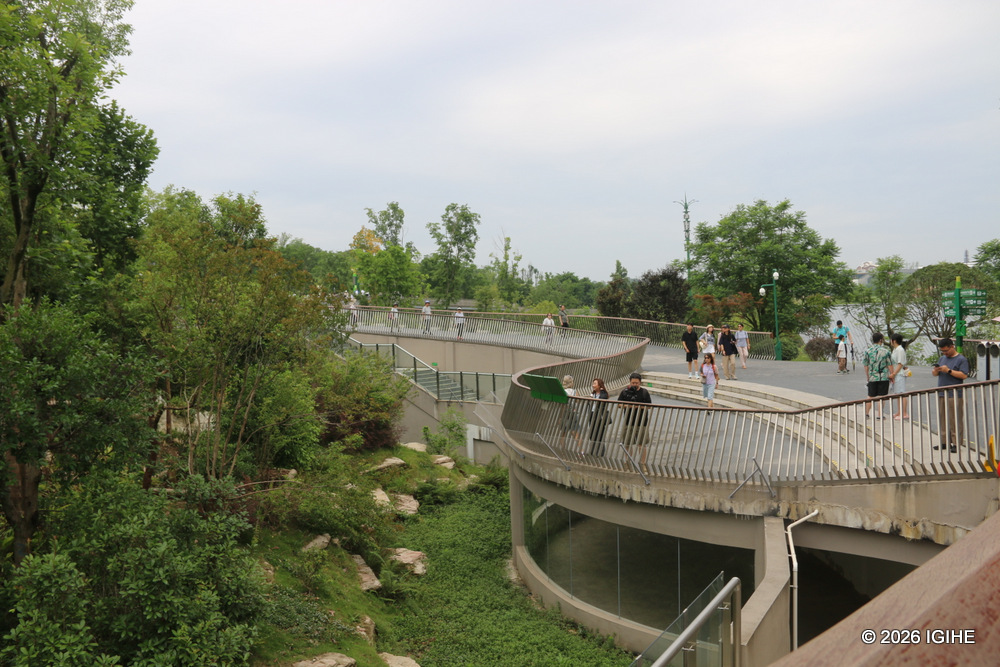
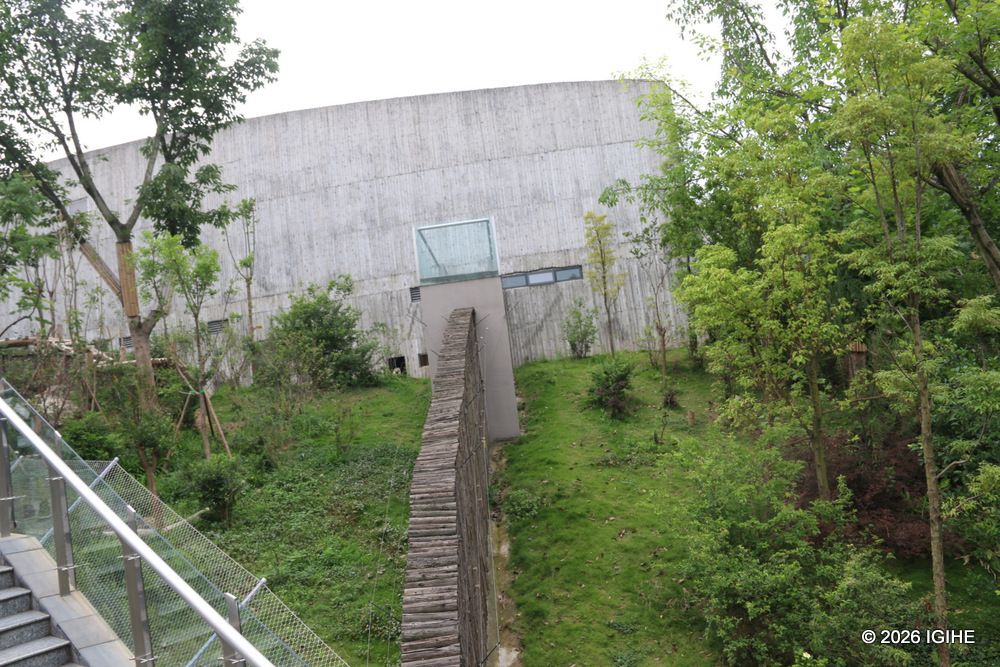
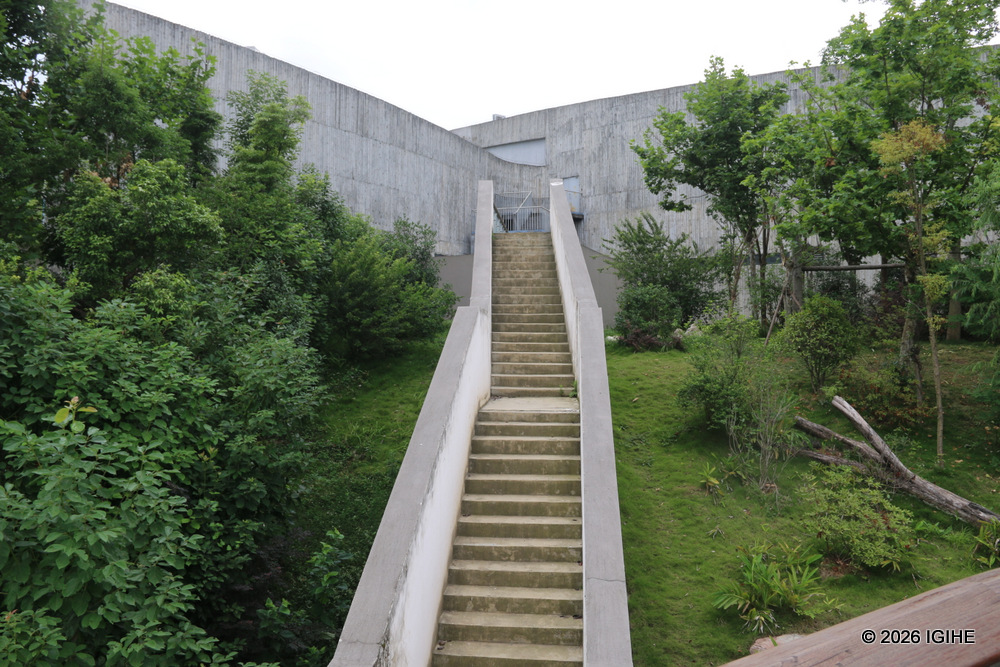
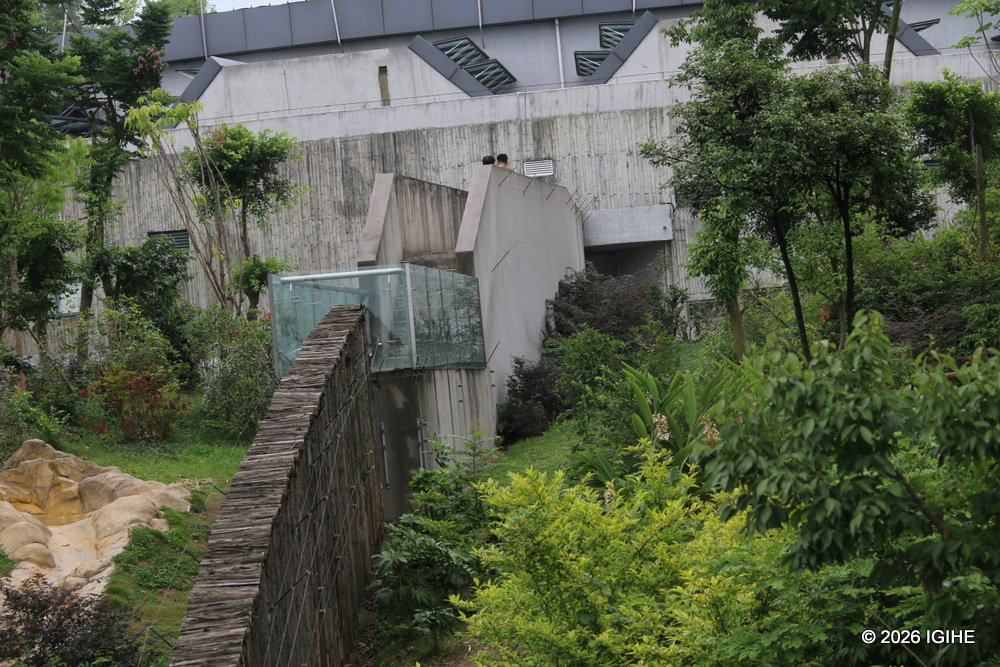
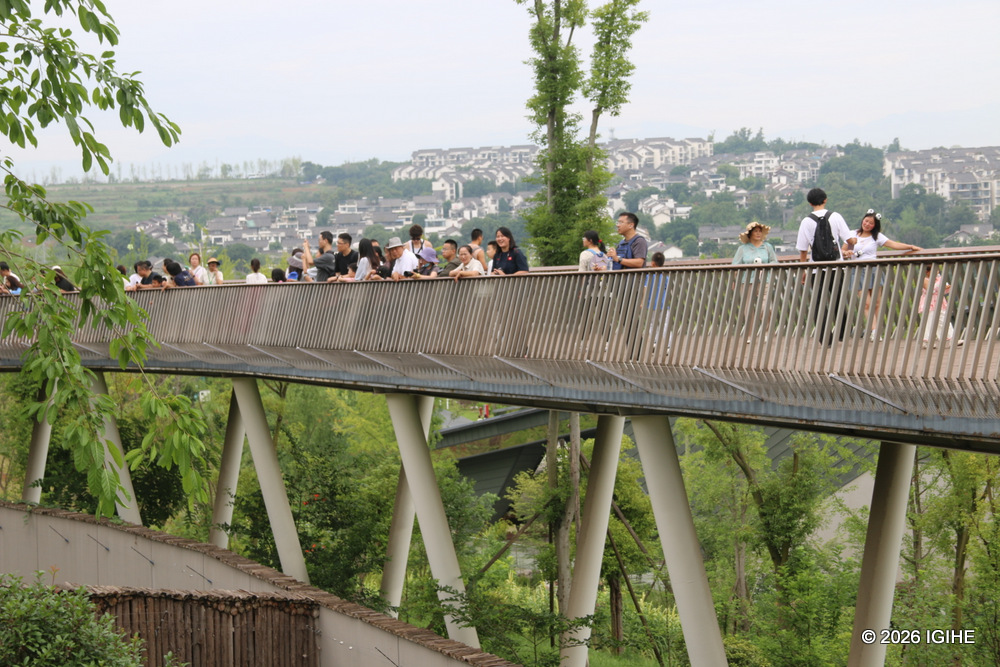
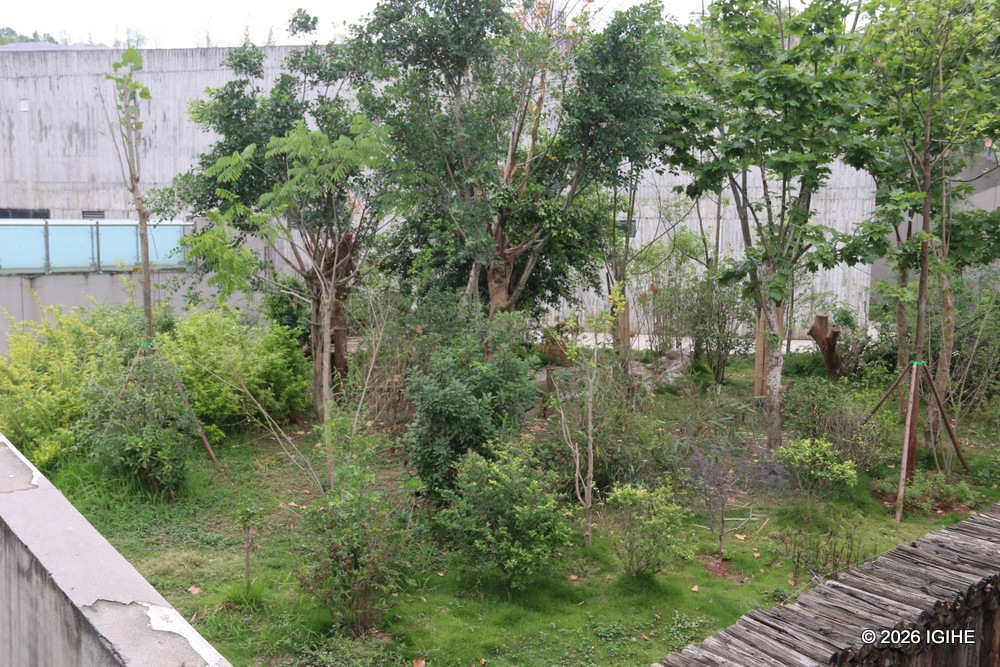
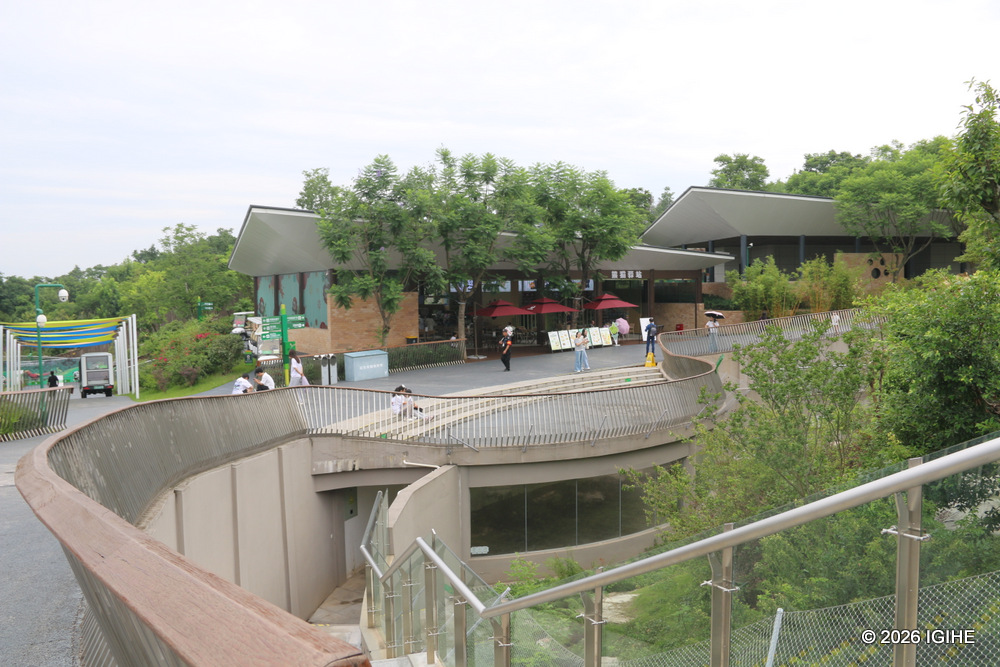
At the Panda Base, these behaviours can be observed as part of an environment designed to recreate aspects of the animals’ natural habitat. Mountains, forests and bamboo-filled landscapes surround panda enclosures, while paths connect different sheltered buildings and visitor areas.
Panda nurseries, husbandry zones, research laboratories and a panda hospital are also integrated into the site, with panda “villas” scattered among the greenery.
The experience extends to the panda nursery, where visitors can encounter younger pandas before they mature into adults. Watching the cubs move, climb and explore offers another glimpse into the early stages of a panda’s life, while the care provided around the nursery reflects the specialised work involved in raising them.
Giant pandas can spend up to 14 hours a day eating bamboo, reflecting the demands of their low-energy diet.
The Panda Base is divided into four themed areas: Panda Creek Valley, Panda Forest Area, Panda Reception Hall and Panda Villa Area.
It is not only a place to see pandas, but also a major centre for conservation and research. The facility has spent more than three decades working on captive husbandry and management, breeding and cub rearing, disease prevention and control, and population genetic management.
Its conservation work is presented alongside education. In 2021, the Panda Base opened the world’s first interactive themed museum dedicated to giant pandas. It now has eight major science education display scenes, including the Giant Panda Theme Museum and the Panda Scientific Discovery Center.
Its “Panda Chat” programme brings science education directly to the animal enclosures, allowing visitors to watch giant pandas and red pandas while learning about their biology, habitats and conservation.
Panda cubs can be seen moving and climbing in an enclosure at the Chengdu Research Base of Giant Panda Breeding.
Since 2025, the base has also offered customised educational activities, including an immersive practical course on the giant panda’s scientific diet, an experience exploring the ecological information contained in panda feces, and a giant panda enrichment designer programme.
The work at the Panda Base forms part of China’s wider effort to protect a species whose wild population once faced severe pressure from habitat loss and human expansion. Today, nearly 1,900 giant pandas are estimated to live in the wild, with their natural habitat concentrated in Sichuan, Shaanxi and Gansu provinces. Sichuan is the species’ main stronghold. The Panda Base itself is home to more than 200 giant pandas.
The species, once classified as Endangered, has been reclassified as Vulnerable following sustained conservation efforts, including habitat protection and the establishment of the Giant Panda National Park.
The Panda Base has also become an international centre for conservation cooperation, with research partnerships involving 46 research and conservation institutions across 17 countries and regions. It has hosted the Annual Conference of the Giant Panda Breeding Technical Committee for 29 consecutive years.
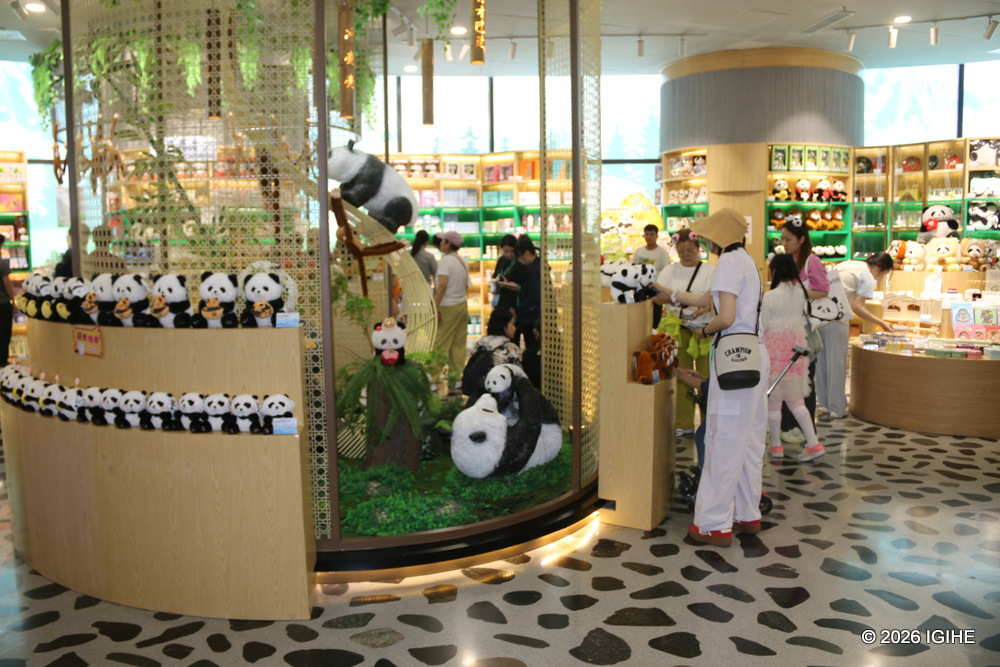
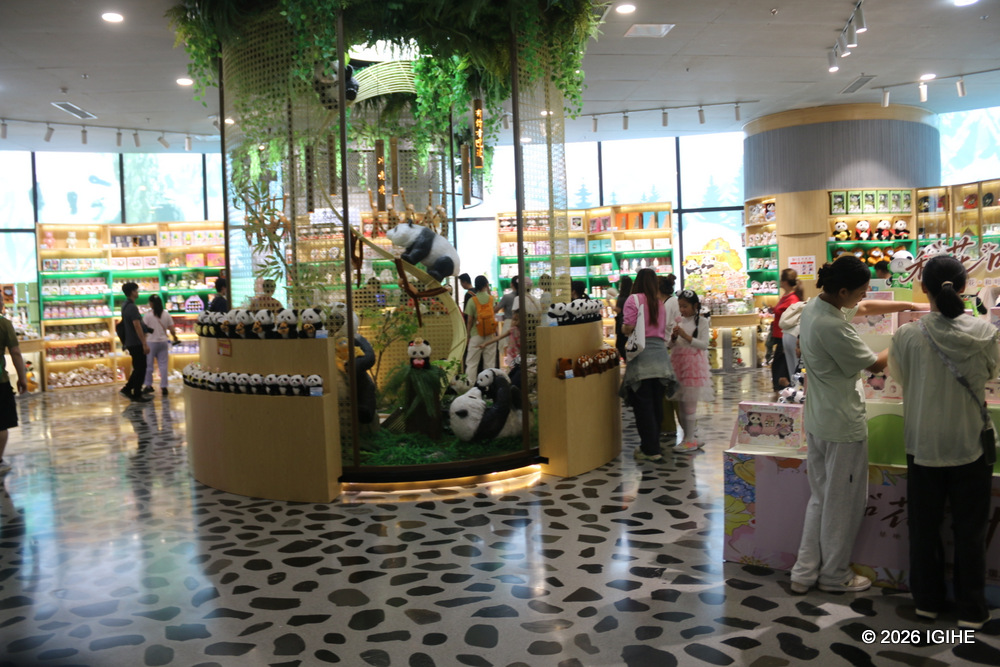
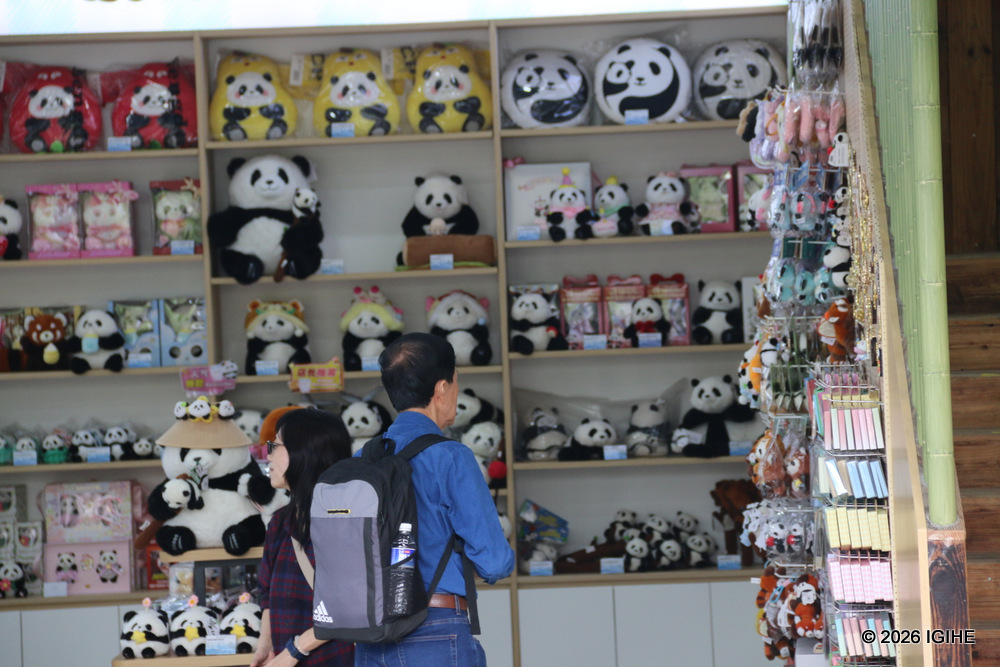
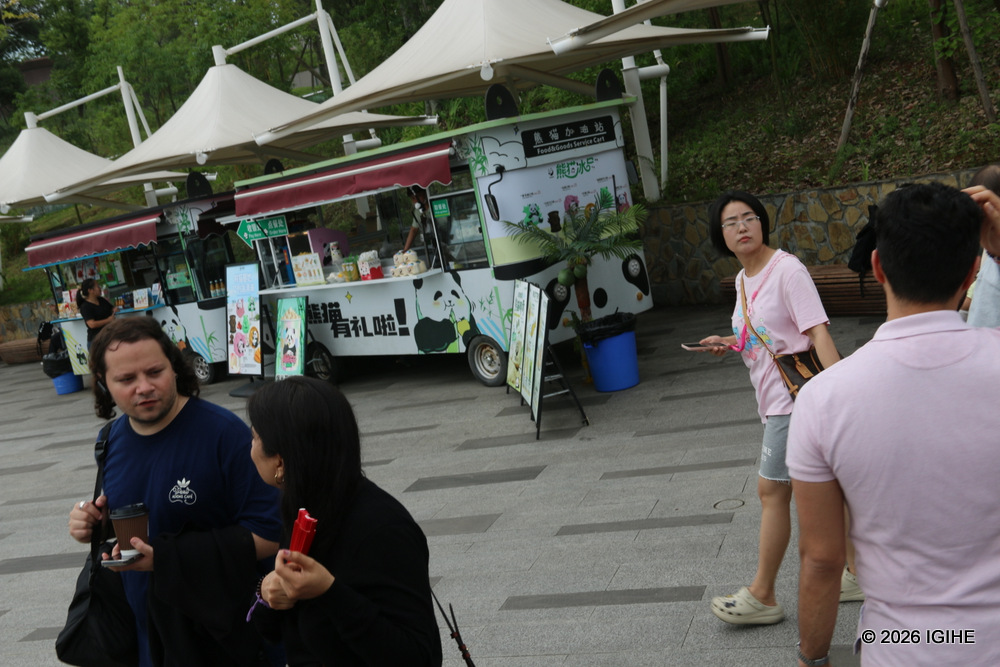
And the panda experience does not end at the enclosures. Along the visitor routes and rest areas, nearly 60 cultural and creative merchandise experience spots and specialty food and beverage outlets offer visitors the chance to take home panda-themed souvenirs.
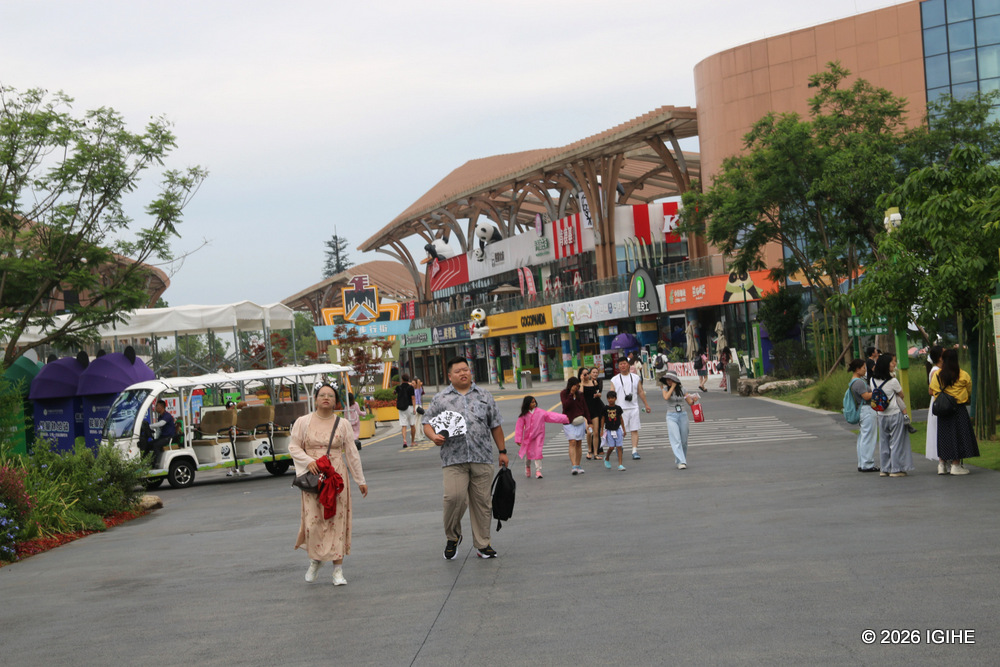
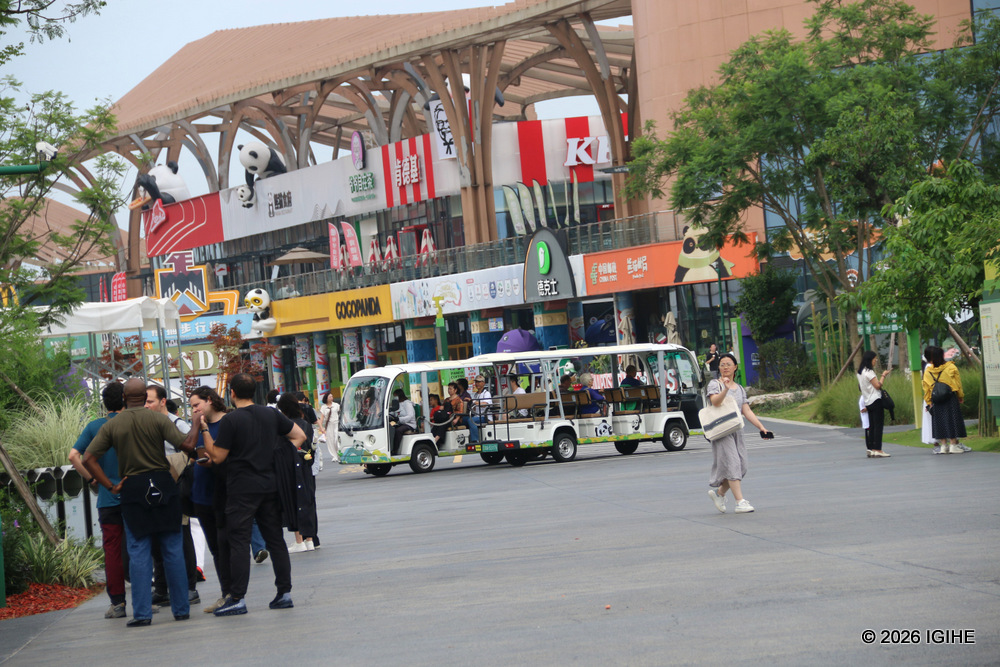
Giant pandas live in different enclosures at the baseA giant panda is seen quietly feeding on bamboo at the Chengdu Research Base of Giant Panda Breeding.Visitors gather around an enclosure, eager to catch a glimpse of giant pandas at close range.A giant panda stretches out for a rest after spending time feeding on bamboo.Giant pandas can spend up to 14 hours a day eating bamboo, reflecting the demands of their low-energy diet.Sheltered buildings and panda enclosures are connected by paths winding through the green surroundings of the Panda Base. A panda moves between branches as visitors watch from below at the Chengdu Panda Base.After feeding on bamboo, a male giant panda rests beneath a tree at the Panda Base.The Panda Base covers about 238 hectares, with forests and visitor paths spread across the facility.A giant panda rests in the shade as it feeds on bamboos, offering visitors a quieter moment during their tour of the Panda Base. The Panda Base recreates aspects of the giant panda’s natural habitat through its forestsA giant panda rests in the shade after feeding, offering visitors a quieter moment during their tour of the Panda Base.A giant panda climbs a tree, giving visitors a close view of one of the animal’s natural behaviours.A giant panda spends part of its day feeding on bamboo, with the species capable of eating large quantities to meet its energy needs.Panda-themed artwork and displays are part of the experience visitors encounter around Chengdu, a city closely associated with the giant panda.A giant panda sits among bamboo and greenery at the Chengdu Panda BaseVisitors make their way along the paths connecting panda enclosures and other facilities at the 238-hectare Panda Base.A panda holds a bamboo stalk with its paws as it settles down for a meal at the Panda Base. Visitors browse panda-themed merchandise as they look for souvenirs to take home from Chengdu.Panda villas are set among greenery at the Chengdu Research Base of Giant Panda Breeding.Visitors from different countries and walks of life observe giant pandas at the Chengdu Panda Base.The excitement of seeing giant pandas up close draws visitors of different ages to the Panda Base.Mobile shops and cultural outlets along the visitor routes offer panda-themed souvenirs and other items.Air transport is popular in Sichuan
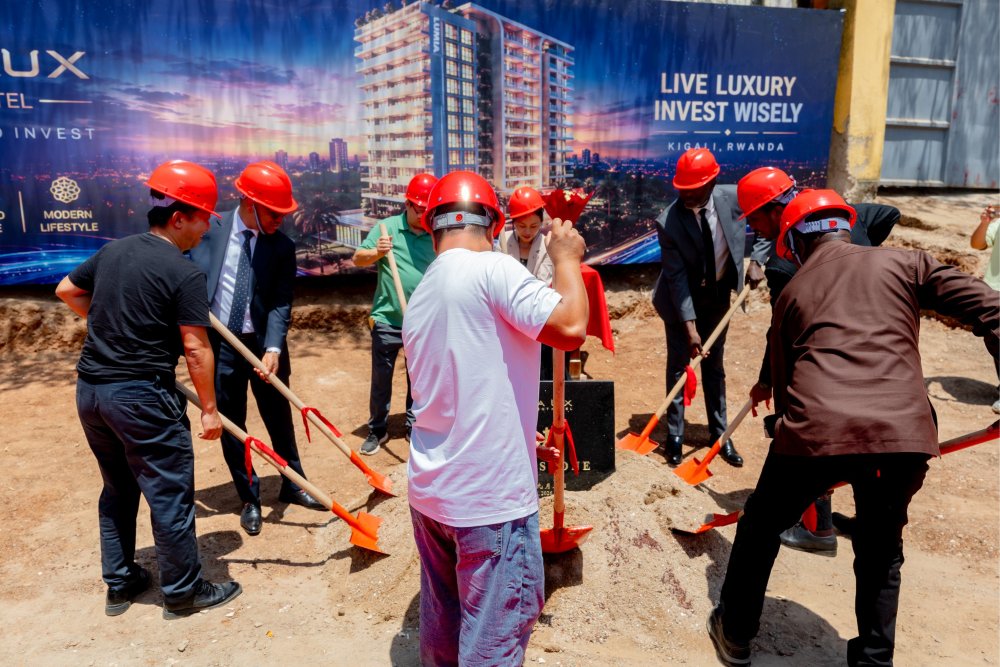
The project was officially launched on September 3, 2026, and is expected to be completed within 18 months.
Lumia Lux, a company established with the involvement of Rwandans living abroad, said the development will provide high-end accommodation, particularly for visitors who prefer staying in serviced apartments rather than traditional hotels.
The project is also expected to contribute to the redevelopment of Kiyovu and add modern buildings to Kigali’s skyline.
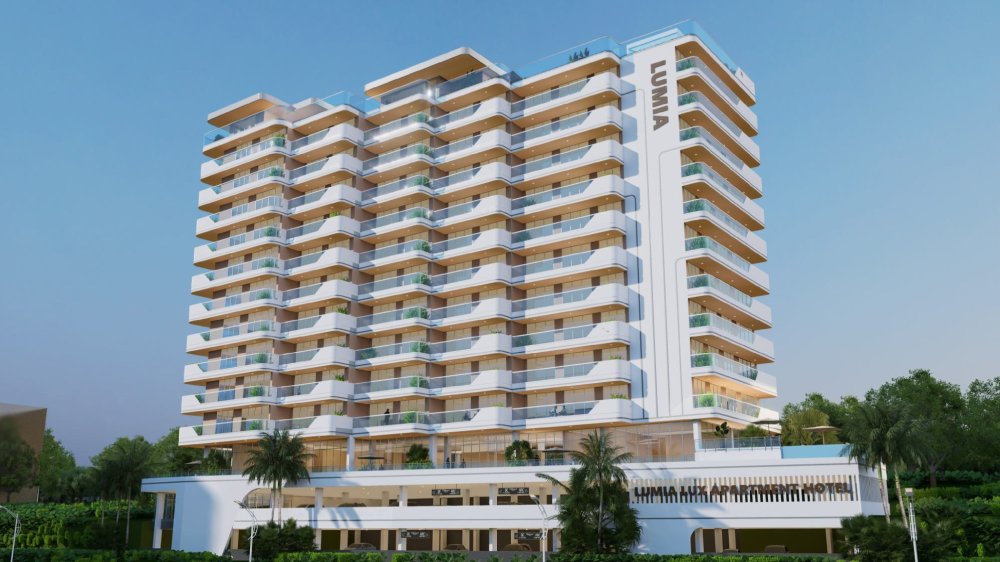
Lumia Lux Apartments Hotel will be built on a 2,800-square-metre plot and will have 14 floors, including two basement levels.
The development will feature studio, one-, two- and three-bedroom apartments, as well as penthouses. The apartments will be spacious and fully furnished for buyers.
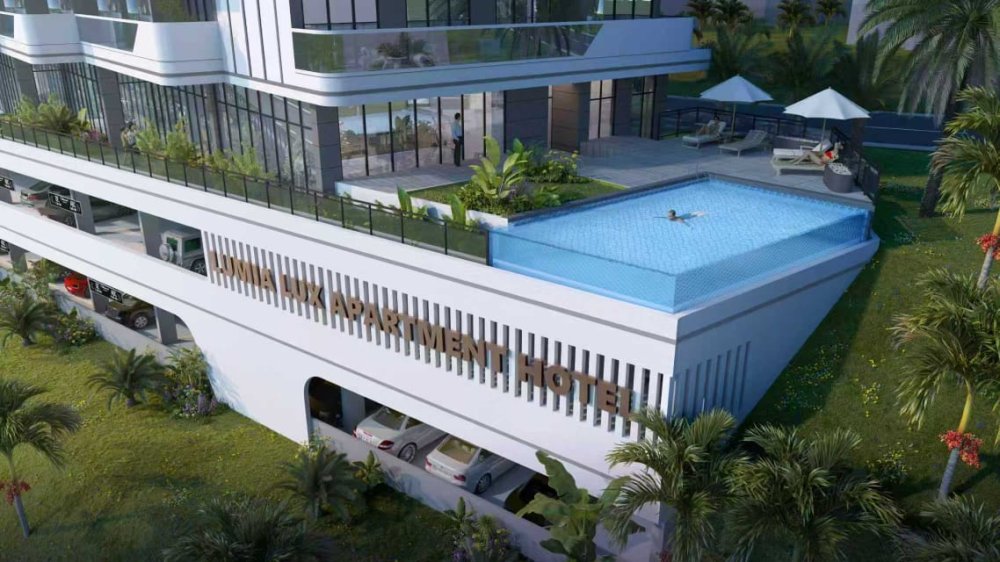
The building will also include a swimming pool, gym, restaurant, voice-controlled smart home systems, security systems in common areas and international-standard medical services. It will also make use of solar energy.
Some apartments will be available for short- and long-term rental, while others will be sold. The development will also include offices, a supermarket and other services.
The project has been designed with environmental considerations in mind, combining conventional electricity with solar power. It will also have a wastewater treatment system to allow used water to be recycled.
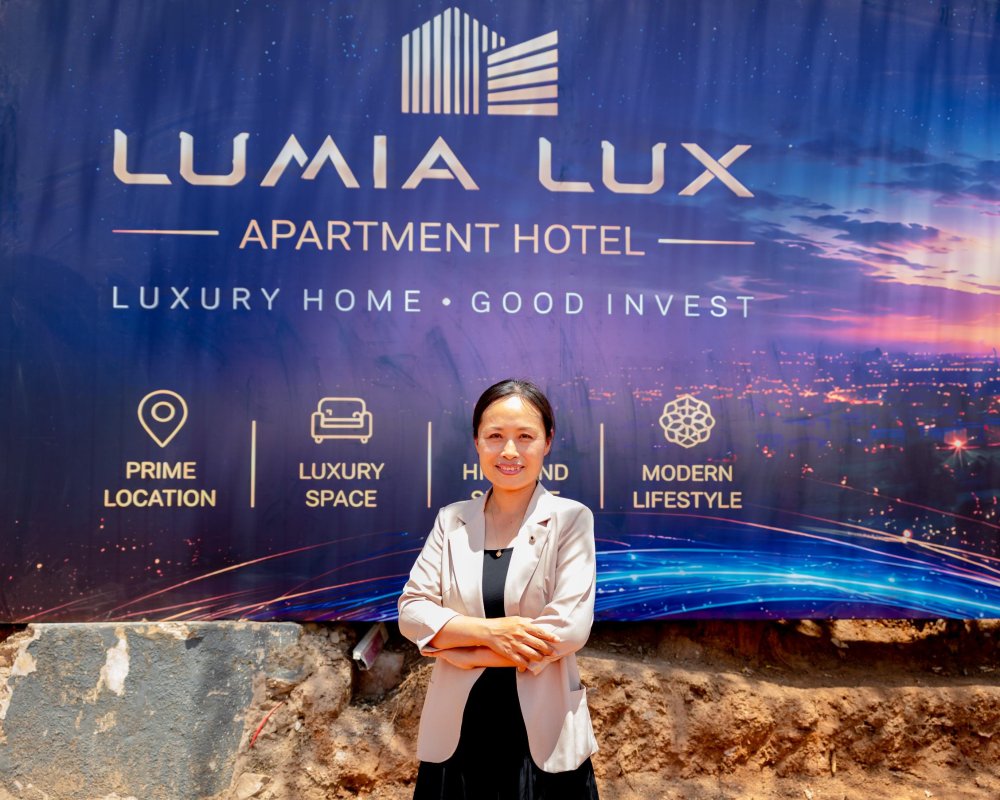
Lumia Lux CEO Linda Lai said one of the project’s key features is its focus on providing comfort and privacy for clients seeking high-end services.
She highlighted that Rwanda is increasingly hosting major events and other activities, making it an ideal place for such high-rise buildings.
Clients will have various options, including private spaces, dedicated elevators and private parking. This will allow those who choose such arrangements to stay in the building and access different services while enjoying a high level of privacy.
The development will also provide shared services for clients who opt for those arrangements.
Lai said Lumia Lux plans to continue investing in additional developments in Kiyovu after completing the current project, as part of efforts to modernise the area, which is regarded as one of Kigali’s prestigious neighbourhoods but still has several ageing buildings.
Several Rwandan banks attended the project’s launch ceremony, including BPR Bank Rwanda and Bank of Africa.
BPR Bank’s Head of Retail Banking, Jean Marc Gakwandi, said the bank is ready to provide loans to people interested in purchasing apartments in the development once construction is completed.
BPR Bank and Bank of Africa were among the financial institutions represented at the launch of the more than $20 million Lumia Lux apartment hotel project in Kiyovu.The Lumia Lux Apartments Hotel is being developed on a 2,800-square-metre site in Kiyovu and is expected to be completed within 18 months.The 14-storey Lumia Lux development will incorporate solar power and a wastewater treatment system as part of its environmentally conscious design.Lumia Lux CEO Linda Lai said the project is designed to meet growing demand for high-end serviced apartments among visitors to Rwanda.BPR Bank Head of Retail Banking Jean Marc Gakwandi said the bank is ready to provide financing to clients interested in purchasing apartments in the Lumia Lux development once construction is completed.Lumia Lux has launched construction of a 14-storey apartment hotel in Kiyovu, Kigali, backed by an investment of more than $20 million.Lumia Lux Apartments Hotel will offer residents and guests facilities including a swimming pool, gym, restaurant, offices, a supermarket and other services.
A vineyard estate is a property where wine grapes are cultivated and turned into wine, usually as part of one integrated operation. It may also combine wine production with tourism, hospitality and other visitor experiences.
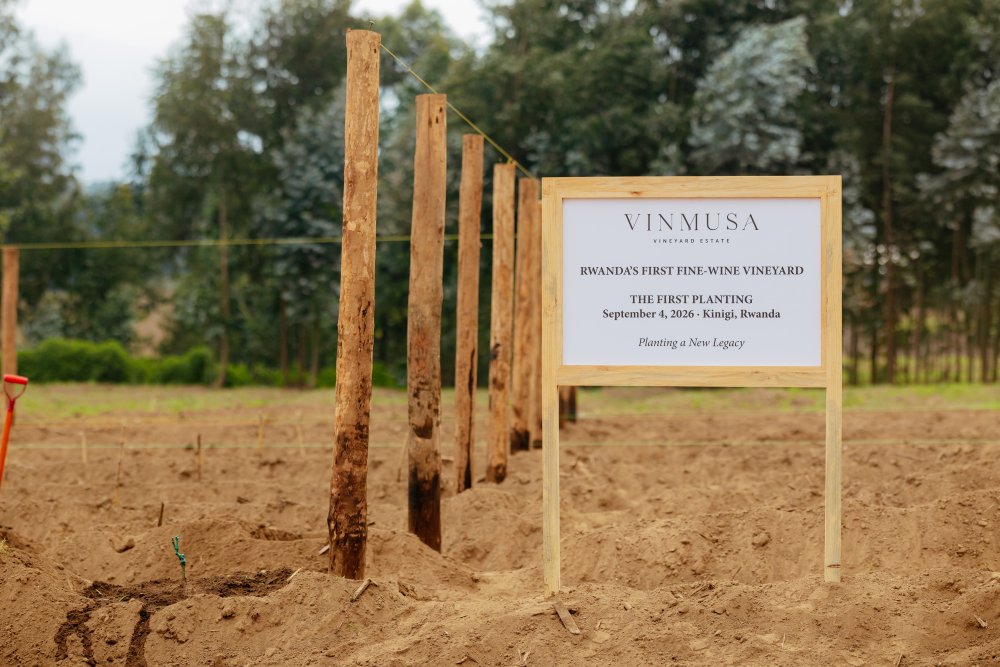
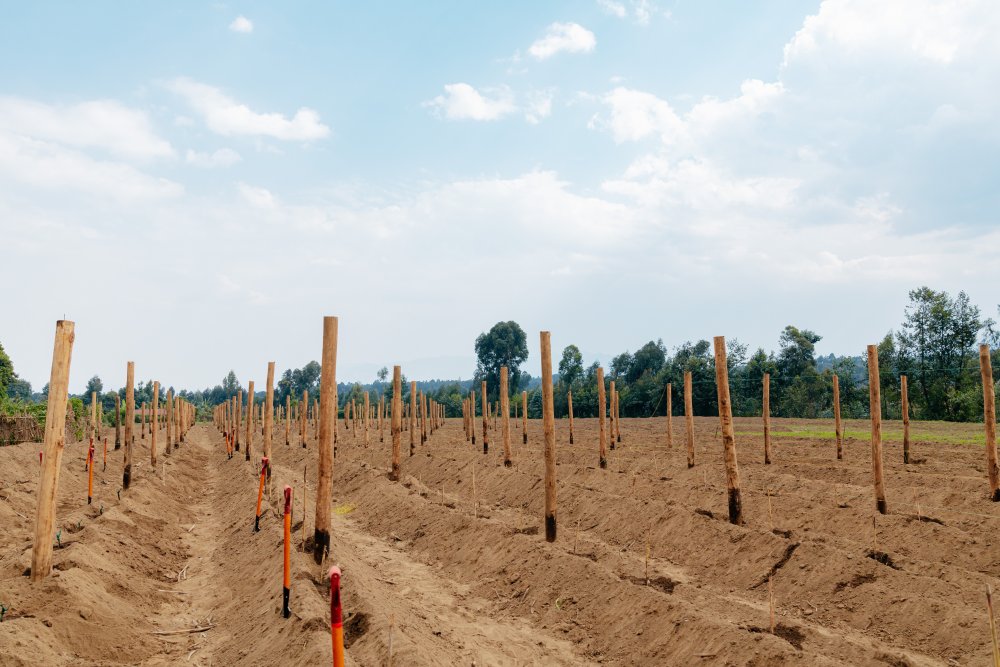
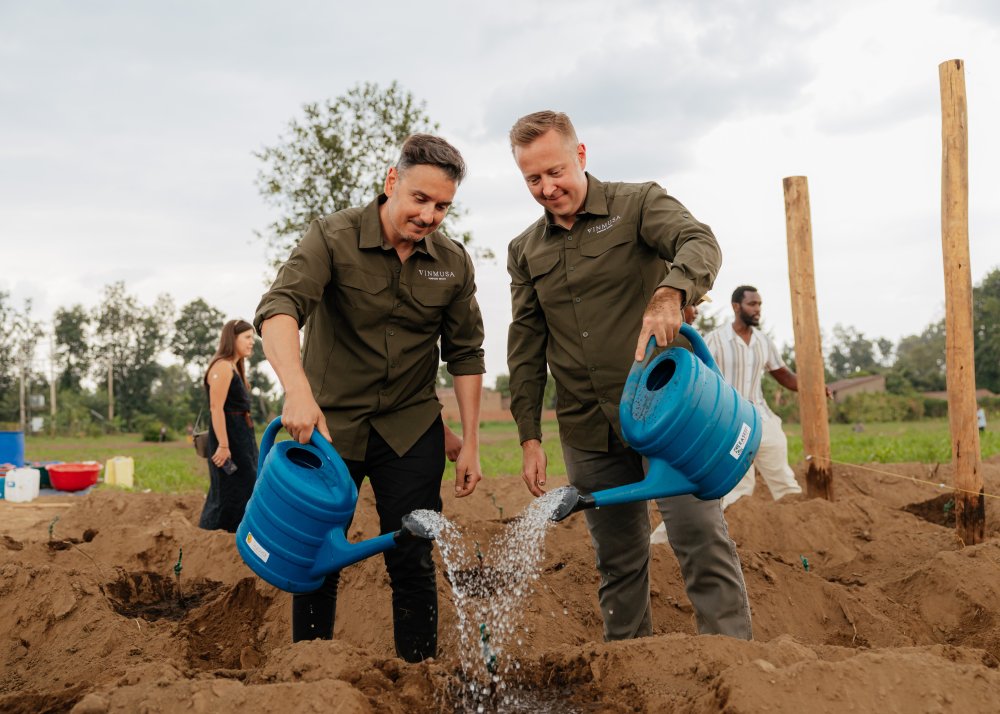
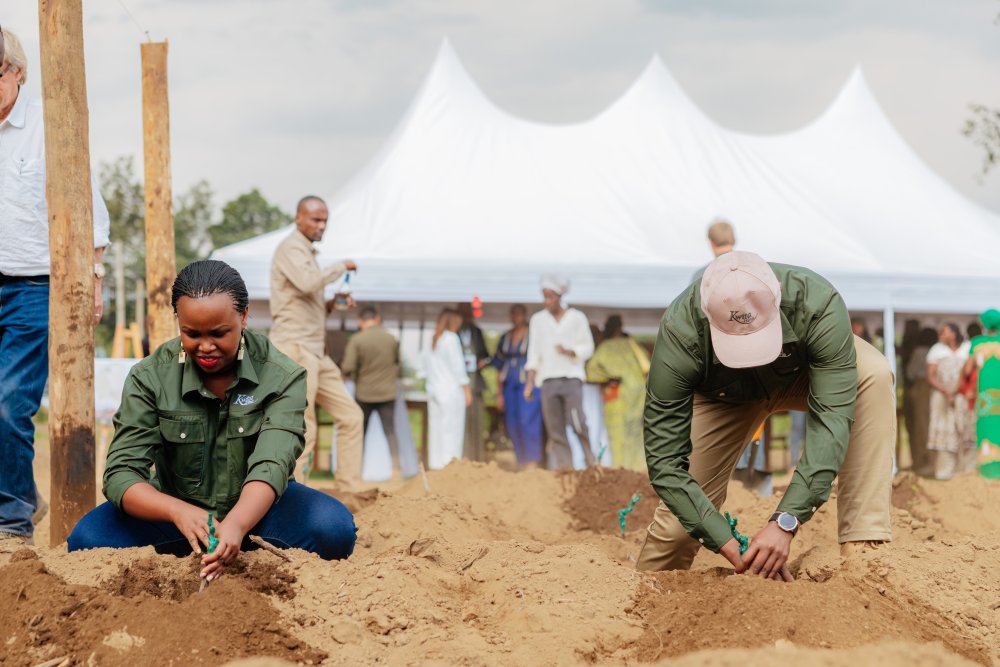
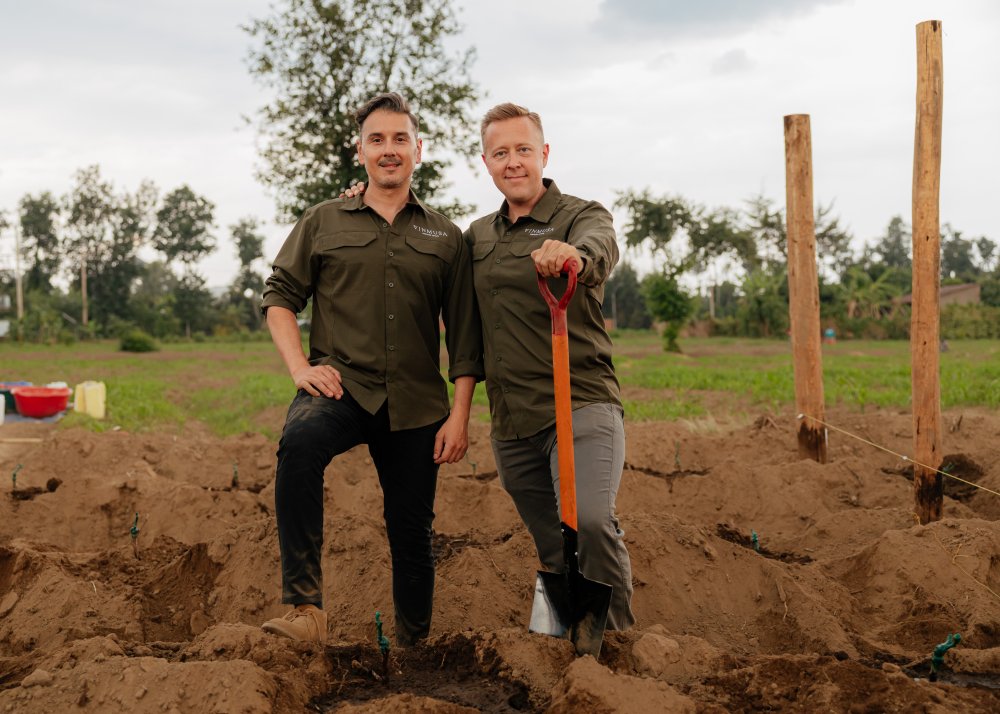
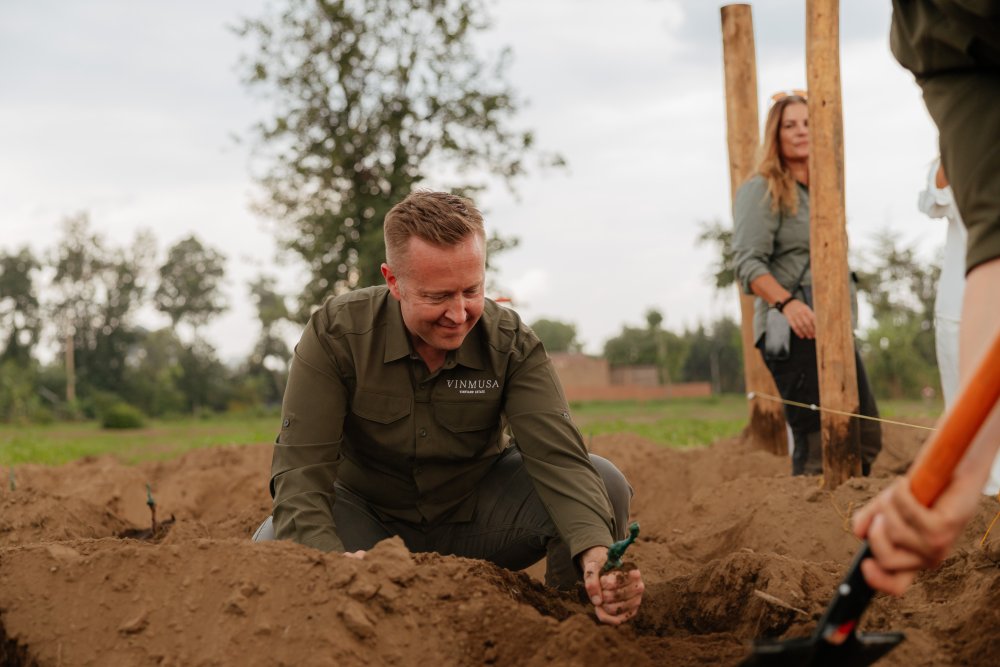
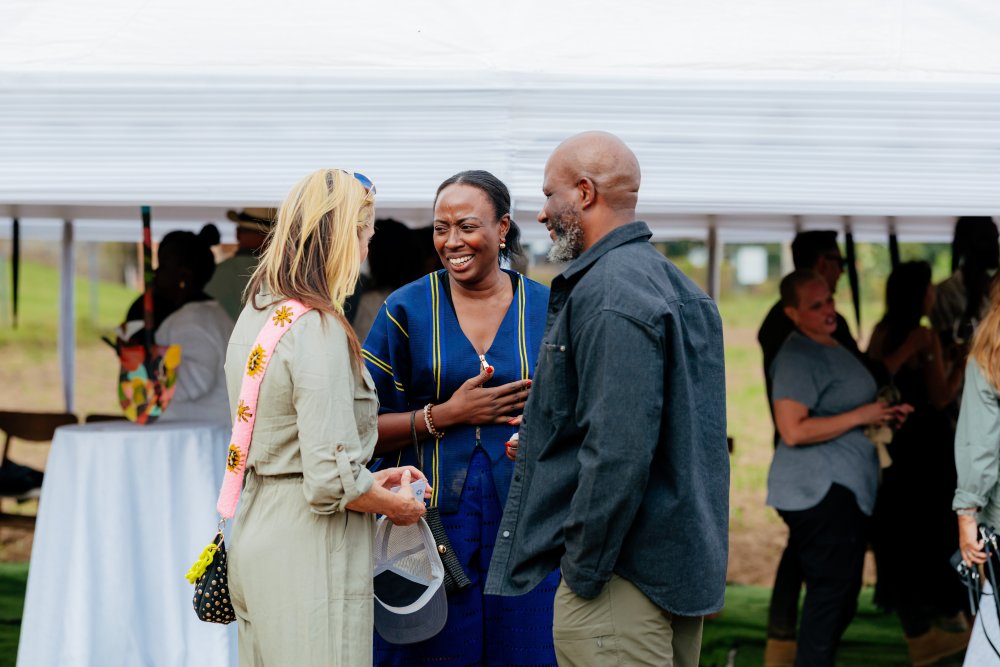
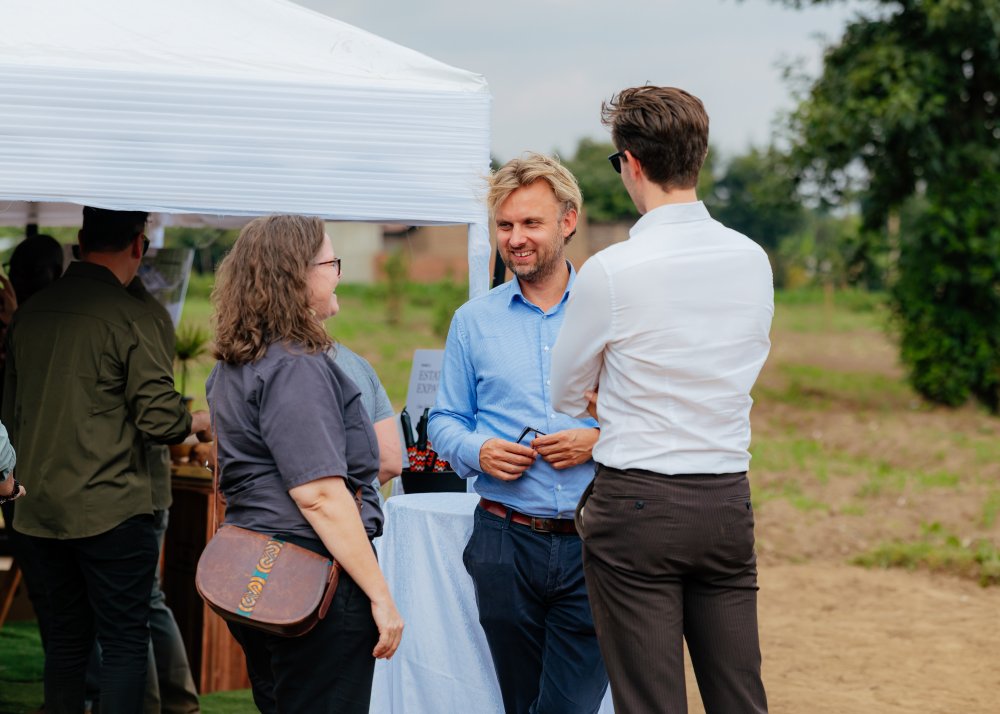
The first vines were planted in Kinigi, Musanze District, on September 4, 2026, coinciding with the 21st Kwita Izina gorilla naming ceremony.
The milestone brought together investors, partners, diplomats, government officials and members of surrounding communities.
The project will be developed across three sites in northwest Rwanda; Kinigi, Lake Burera and the slopes of Mount Karisimbi, with the latter expected to host Africa’s highest-elevation fine-wine vineyard at approximately 2,700 metres above sea level.
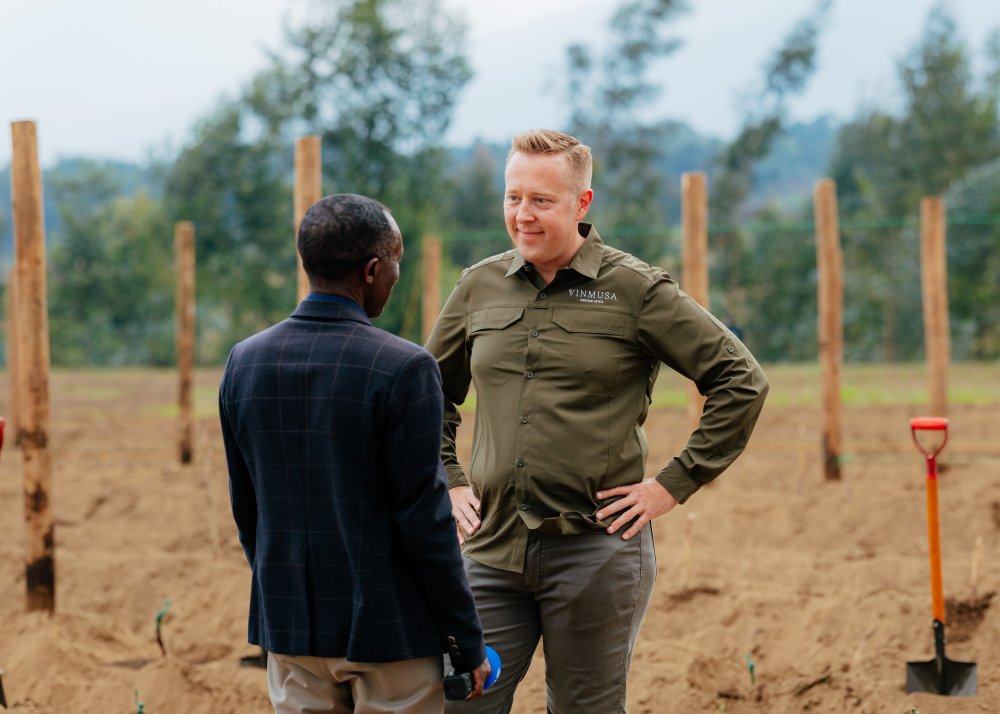
VINMUSA Founder, CEO and Creative Director Andres de la Roche told IGIHE that the estate is expected to require approximately $22 million from the first planting through to full development.
“We expect the full development of VINMUSA Vineyard Estate to represent an investment of approximately $22 million, from the first vines we planted this week through to completion of the estate,” de la Roche said.
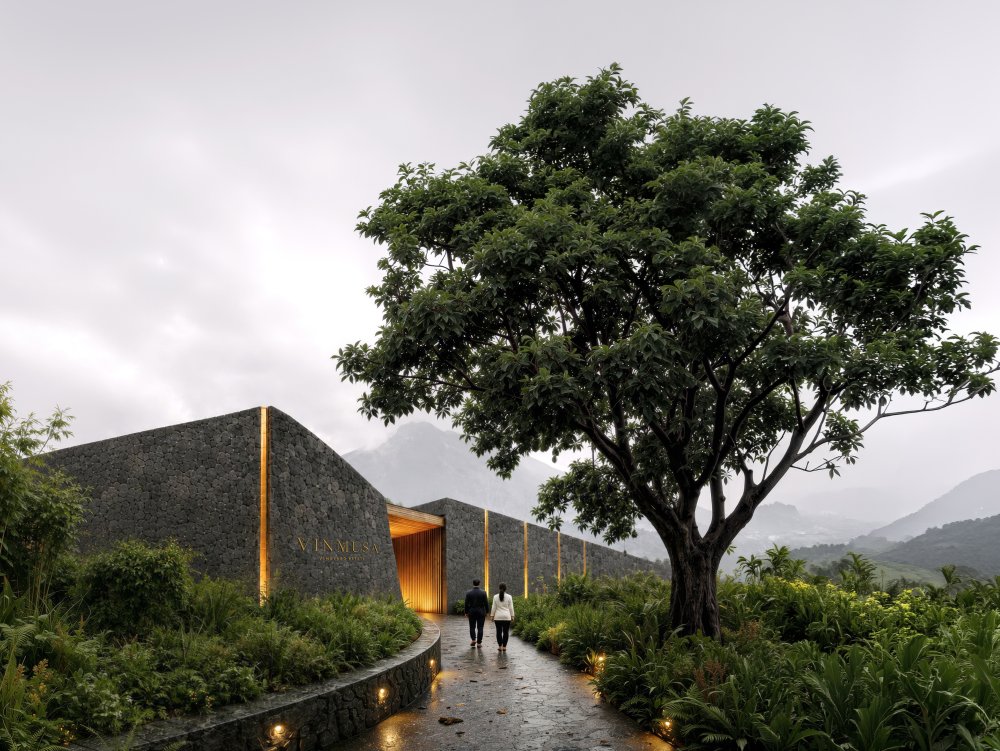
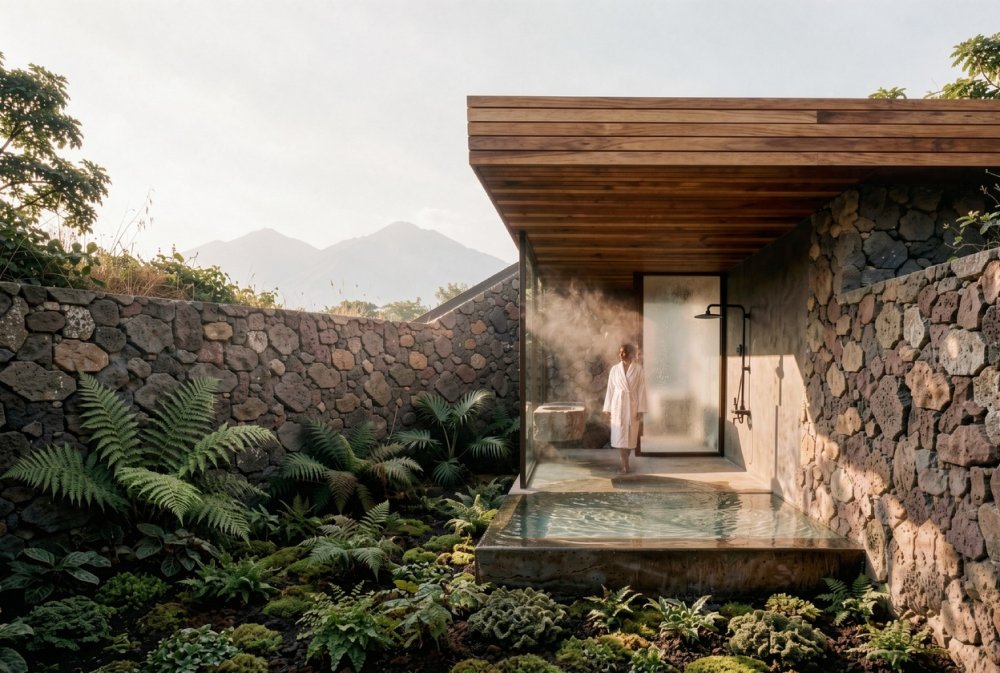
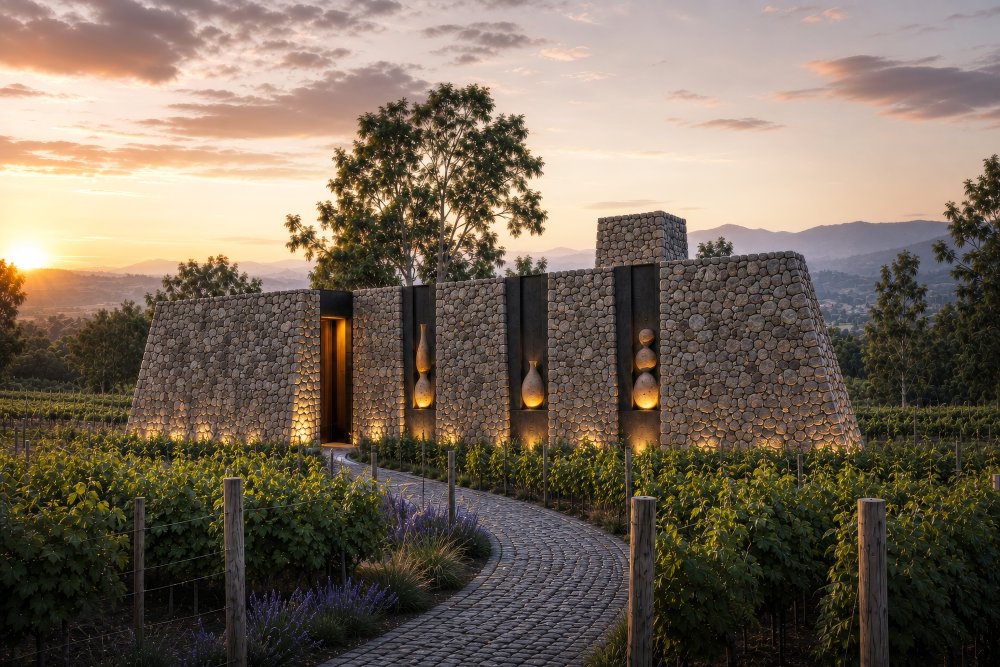
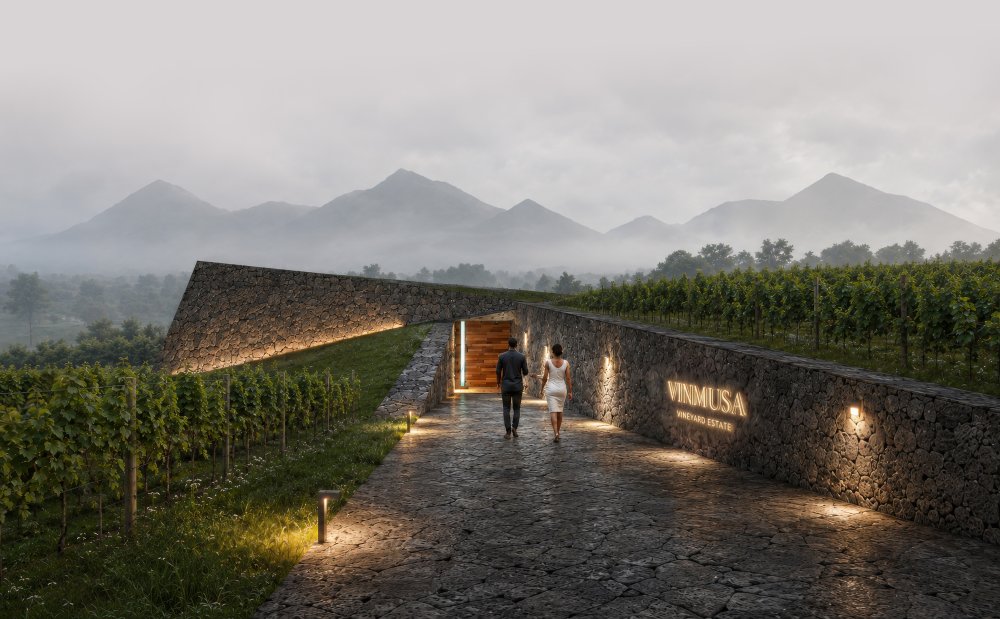
The investment will cover approximately 22 hectares of vineyards, a winery, nine luxury guest retreats and three suites, a Welcome Center and Tasting Gallery, an Experience Pavilion in Kinigi, as well as infrastructure, design and technical development.
The first phase alone is expected to cost approximately $9.8 million and will focus on Kinigi. It will include the first three guest retreats, the Welcome Center and Tasting Gallery, the Experience Pavilion and a winery that will eventually process VINMUSA’s first harvests.
More than $1.1 million had already been invested by the time of the inaugural planting, according to de la Roche. The expenditure includes land acquisition, vineyard preparation and planting, architecture and engineering, technical viticulture work and establishing the company’s initial team in Rwanda.
Building a new wine industry
VINMUSA is positioning itself not simply as a vineyard but as an integrated wine and hospitality destination intended to create a new premium wine industry in Rwanda.
The initial grape varieties include Chenin Blanc, Sauvignon Blanc and Pinotage, with certified disease-free planting material sourced from South Africa. The project is receiving technical guidance from Vinpro, South Africa’s wine industry organisation, while Vititec is supplying the certified vines.
De la Roche said the company chose Rwanda after assessing the country’s investment environment as well as its potential to support high-elevation viticulture.
“Rwanda is open for investment from really everyone. This is an innovation hub of Africa. This is a country that we want to be part of, the first wine production in the entire country,” he said.
He said the project’s appeal goes beyond producing wine, with the company seeking to establish skills and employment opportunities around an industry that is largely new to Rwanda.
“What’s especially important to us is the impact that this will bring for the country: training the first generation of Rwandan viticulturists, training the first generation of Rwandan winemakers, bringing jobs to rural communities, and really being women-forward and youth-led as well,” de la Roche said.
VINMUSA is working with Gold Youth Development Agency to create opportunities for young people, while partnerships with Bridge2Rwanda and the University of Rwanda’s Busogo campus are being explored to support viticulture training.
The company is also working with women’s agricultural cooperatives in preparing land in Kinigi, while young people and residents of Sunzu village in Lake Burera are involved in seasonal employment linked to the project.
Rwanda’s elevation as a competitive advantage
The estate’s three vineyard sites have been selected based on differences in elevation, volcanic soils and microclimates.
Kinigi, which will also serve as the future hospitality hub, has an initial vineyard covering about 0.9 hectares. The Lake Burera site is expected to cover approximately 1–1.1 hectares, while the Karisimbi vineyard will cover about 1.2 hectares in the initial planting.
The Karisimbi site is particularly significant because of its elevation.
“Our highest elevation vineyard will be 2,700 meters at the foothills of Mount Karisimbi. The high elevation allows for a cool climate,” de la Roche said.
He added that the company worked with South African viticulture specialists to conduct soil sampling and climate studies before selecting the sites and grape varieties.
“We also chose disease-resistant cultivars because of the high moisture. But the amazing volcanic soils, the minerality in the soils, will really produce something that is authentically Rwandan, that is very unique not only in Africa but really in the entire world,” he said.
The company’s stated ambition is therefore not to replicate established wine regions but to develop wines that reflect Rwanda’s own terroir.
First commercial wine expected in 2029
Although the first vines are now in the ground, consumers will have to wait several years before VINMUSA’s first commercial bottles reach the market.
De la Roche said grapevines generally require about three growing seasons before producing fruit of the quality and quantity required for commercial wine production.
VINMUSA expects its first harvest in 2029, with the inaugural vintage projected at approximately 9,000 bottles.
The first white wines could be released from late 2029 into 2030, while the red wines will require longer maturation and are expected to follow between 2030 and 2031.
By around 2032, the estate is targeting annual production of approximately 90,000 bottles.
The company does not yet provide projected revenue figures, saying its focus at this stage is on establishing the vineyards, developing the estate and building the skills required for a sustainable wine industry.
A self-sustaining estate
VINMUSA plans to develop the estate in phases, with subsequent expansion partly financed by revenues generated from its earlier operations.
“Our longer-term plan is for a significant portion of the estate’s subsequent development to be funded through the revenues generated by VINMUSA itself,” de la Roche said.
“The intention is that what Kinigi earns helps build Karisimbi, and what those operations generate helps us continue developing Lake Burera. We chose that approach deliberately: we want VINMUSA to become an estate capable of sustaining its own growth over time,” he added.
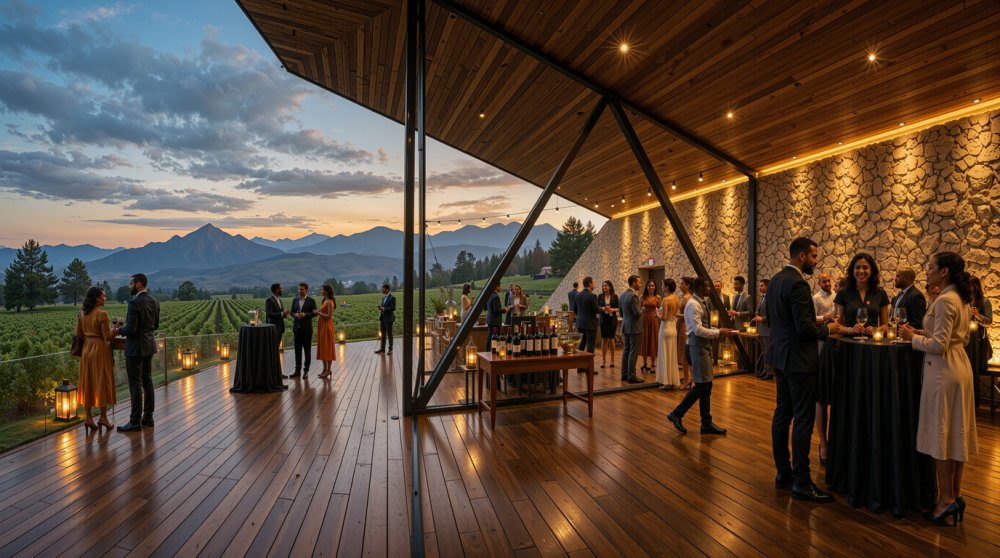
Beyond vineyards and wine production, the development will include luxury accommodation, public wine-tasting experiences, culinary programming, wellness facilities, artist-in-residence programmes, research and education initiatives and expanded community partnerships.
The hospitality programme is being developed in partnership with Virunga Mountain Spirits, with Kinigi Table serving as the estate’s culinary and food-and-beverage partner.
For de la Roche, the broader objective is to create a destination that links agriculture with Rwanda’s rapidly developing tourism and hospitality sectors.
“We want this to bring a new culture of fine wine in East Africa, and having the best be here from Rwanda,” he said.
VINMUSA’s development comes as Rwanda continues to diversify its tourism offering beyond traditional wildlife experiences, with the estate seeking to add premium wine, gastronomy, luxury accommodation and high-elevation agriculture to the country’s growing tourism economy.
VINMUSA’s first vines were planted in Kinigi on September 4, marking the beginning of Rwanda’s first fine-wine vineyard estate.The first planting at VINMUSA introduced selected grape varieties, including Chenin Blanc, Sauvignon Blanc and Pinotage, as the fine-wine estate began its phased development. Andres de la Roche and Liam T. Dall are the founders of the project.Guests and partners took part in planting the first vines at the VINMUSA estate in Kinigi.The future VINMUSA estate will feature a range of hospitality facilities designed around its vineyards and wine experience.The planned VINMUSA estate will feature nine luxury guest retreats and three suites alongside its vineyards and winery.The estate is planned to include spaces for wine tasting and other immersive experiences for visitors.VINMUSA’s planned estate will combine fine-wine production with luxury guest retreats, culinary experiences and wellness facilities.VINMUSA plans to develop a Welcome Center and Tasting Gallery as part of its wider vineyard estate.