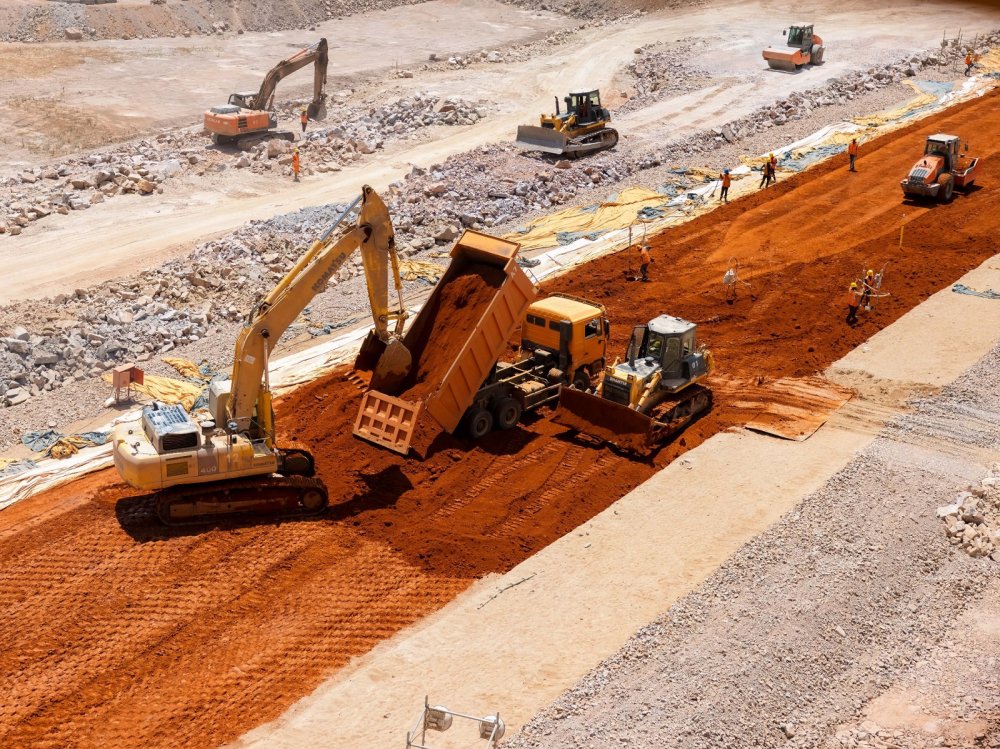
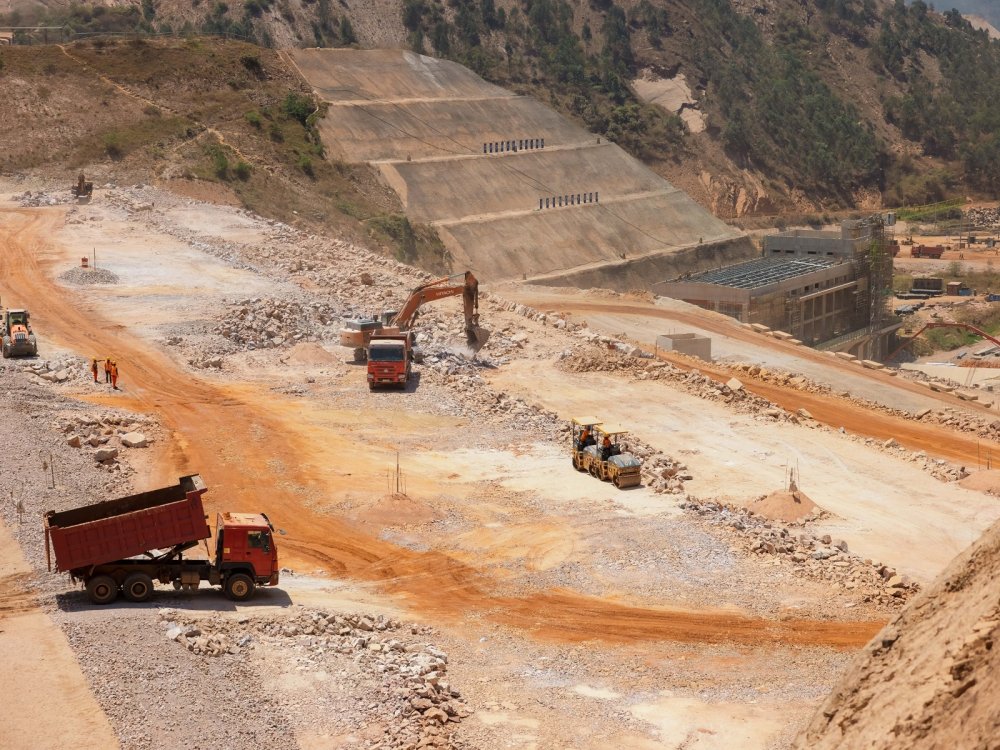
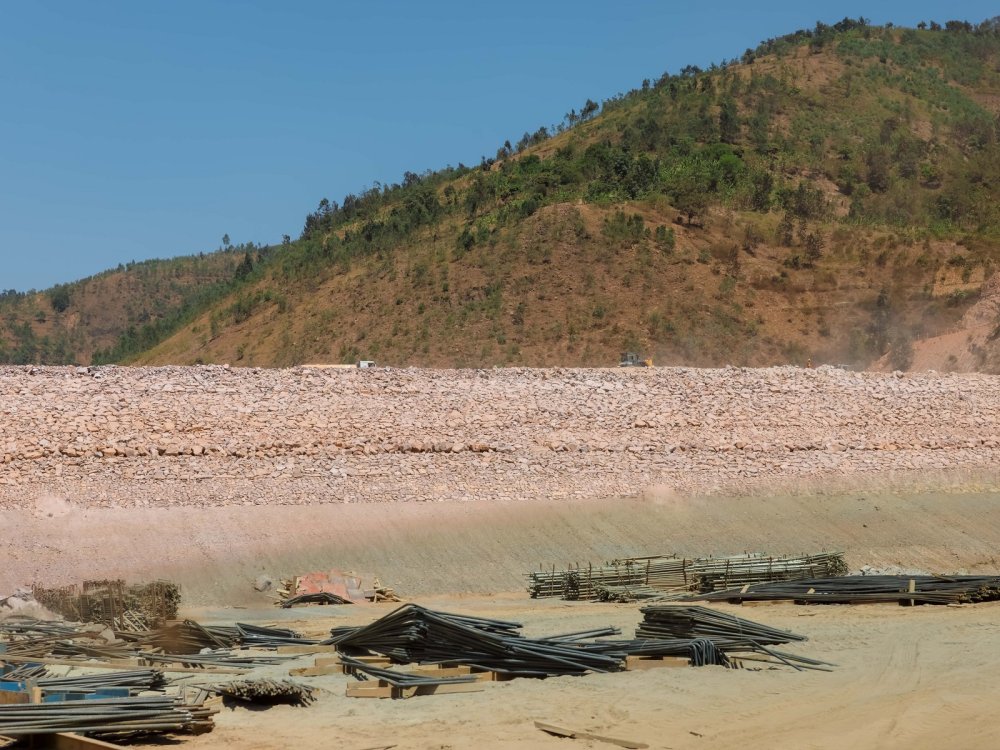
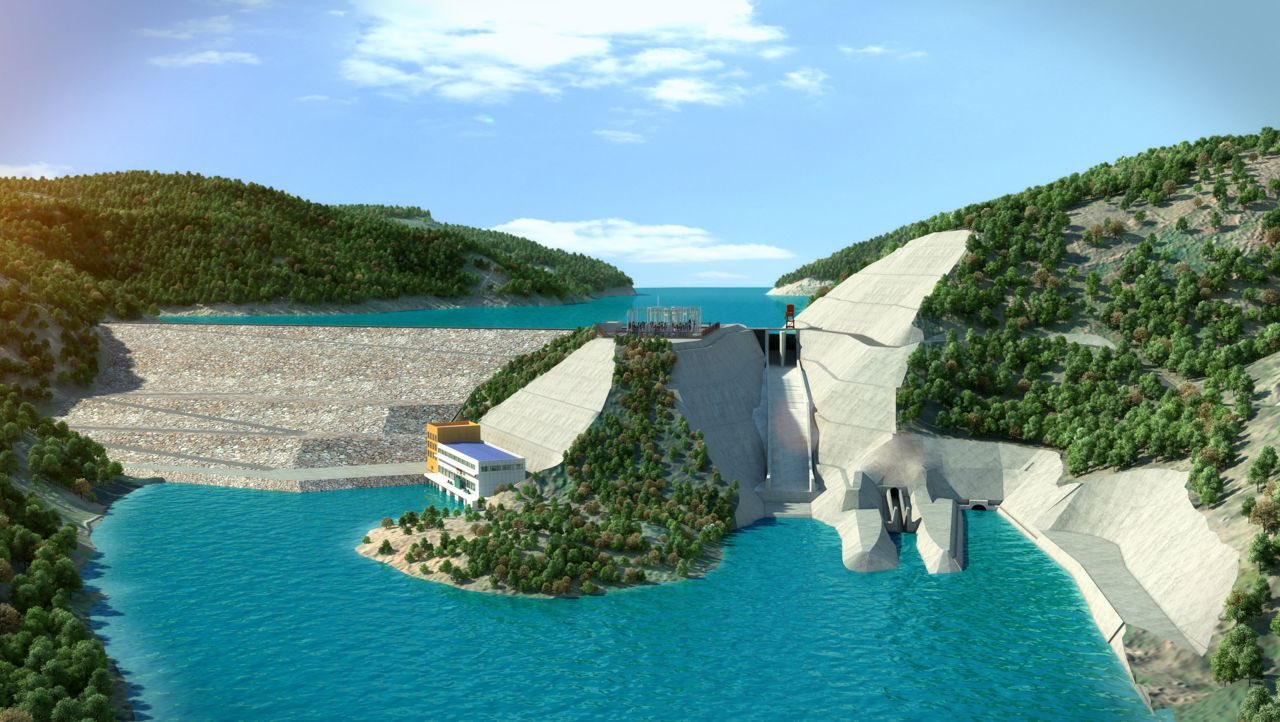
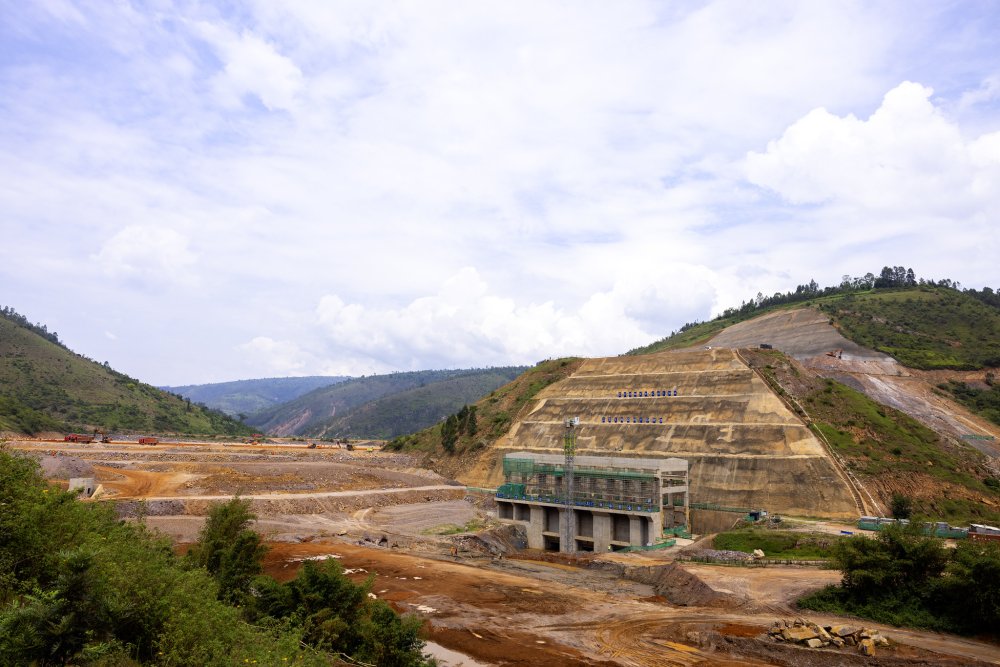
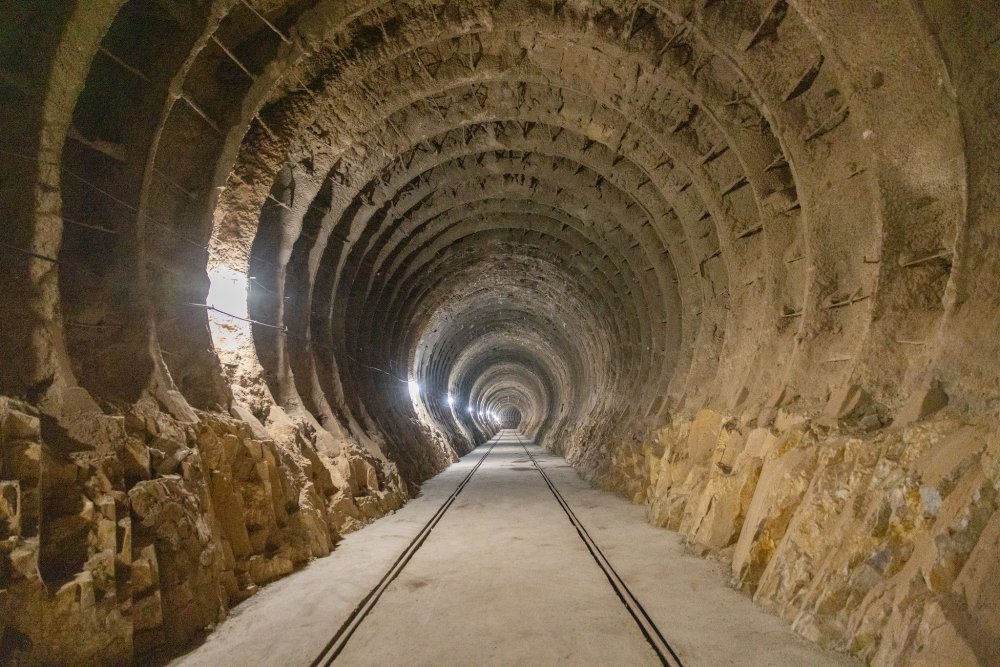
The Rwanda Energy Group (REG) said construction is progressing well, with work being accelerated to ensure the dam starts generating electricity as scheduled.
Once completed, Nyabarongo II will generate 43.5 megawatts (MW) of electricity, making it one of Rwanda’s major energy infrastructure projects.
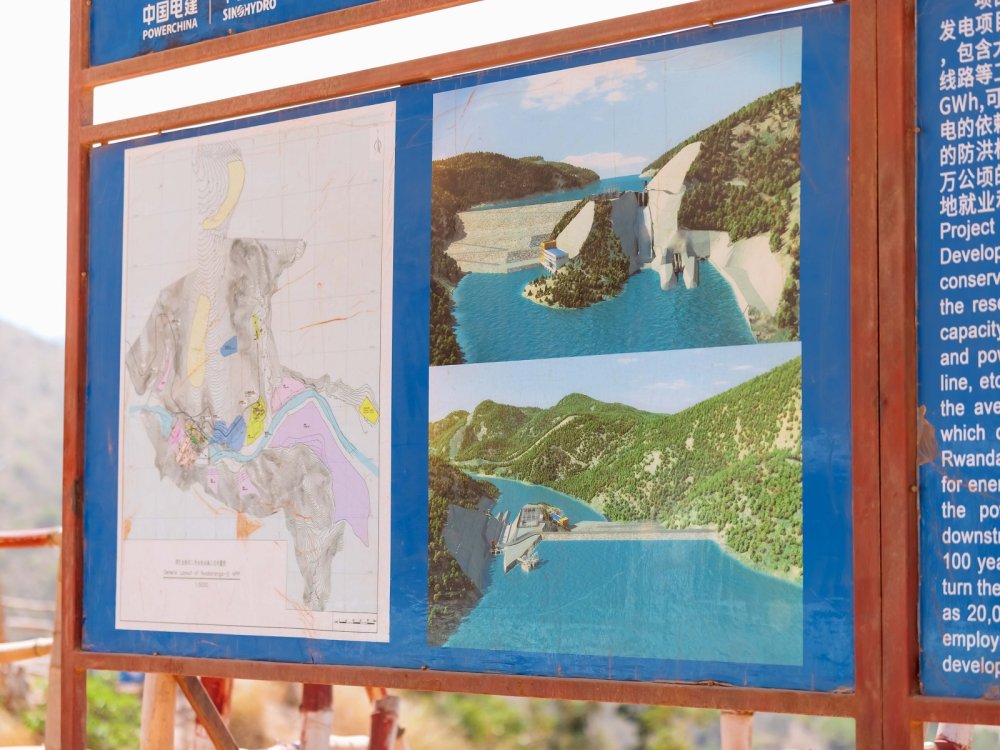
The project will also create a 68-kilometre-long artificial lake with a storage capacity of 800 million cubic metres of water.
Beyond power generation, the reservoir is expected to support irrigation, flood control, water supply and water transport linking Rwanda’s Northern Province with Kigali.
Water from the project will benefit five districts: Kamonyi, Muhanga, Gakenke, Nyabihu and Ngororero, where it is expected to support various development activities.
REG said tourism and other economic activities are also planned around the lake, creating additional opportunities for communities living in the surrounding areas.
Nyabarongo II is expected to boost Rwanda’s electricity generation capacity and support the country’s efforts to expand access to reliable energy for economic development.
The project has been allocated Rwf149.81 billion.
The Rwanda Energy Group (REG) said construction is progressing well, with work being accelerated to ensure the dam starts generating electricity as scheduled.The dam is expected to create a 68-square-kilometre artificial lake once it is fully filled.The project has a total budget of Rwf149.81 billion.
Helberg made the remarks while responding to a post by Trinity Metals on X featuring an interview with its Chairman Shawn McCormick, who discussed the company’s growing role in supplying tungsten to the United States and its allies.
“The U.S. Government is working with companies like Trinity Metals to help build supply chains free from non-market distortions,” Helberg wrote on August 26.
“Take tungsten. It powers the conductive films for modern semiconductors. Diversified, secure sourcing of inputs like this isn’t optional — it’s foundational to Pax Silica’s objectives to build secure, resilient, and innovation-driven supply chains for AI infrastructure and advanced manufacturing.”
The remarks place Trinity Metals within the broader U.S. strategy to diversify sources of critical minerals as Washington seeks to reduce vulnerabilities associated with concentrated global supply chains.
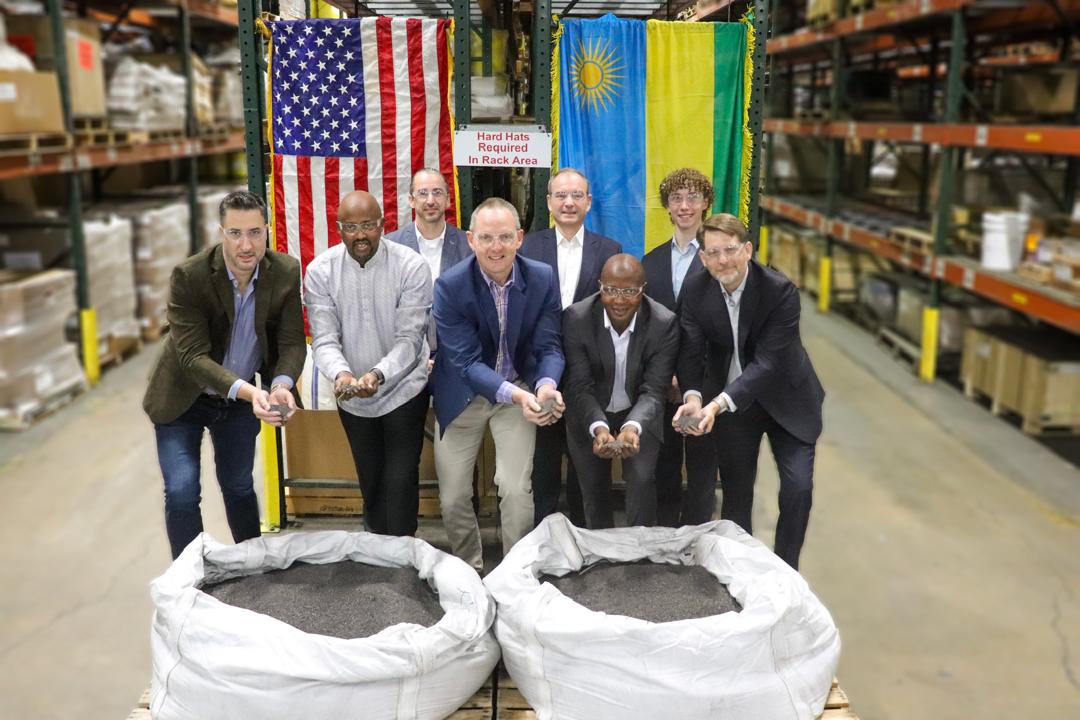
Trinity Metals operates three mines in Rwanda, including the Nyakabingo tungsten mine, and has become an increasingly important supplier to the U.S. market.
In an interview with National Security News, McCormick said the company currently accounts for about 20% of tungsten concentrate consumed in the United States.
“We currently represent about 20 percent of all tungsten concentrate consumed in America,” he said, noting that the United States currently produces no tungsten.
Trinity Metals began shipping tungsten concentrate from Rwanda to the United States in 2025 under an agreement involving Global Tungsten & Powders (GTP) and commodities trader Traxys.
More than 320 tonnes of high-grade tungsten concentrate have since been shipped from Rwanda to GTP’s processing facilities in Towanda, Pennsylvania, where the material is refined for use in industrial and defence applications.
McCormick said Trinity Metals deliberately sought to redirect some of its production toward the United States and its allies after examining where the company’s minerals were being sold.
“I wanted to personally make sure that the flow of the product was going to the US and its allies,” he noted.
He said Trinity Metals is currently the only tungsten producer in Africa sending its product to the United States.
Tungsten is considered strategically important because of its use in manufacturing, aerospace, electronics and defence systems. McCormick cited applications ranging from industrial drilling equipment to missile systems and other military technologies.
He also pointed to the concentration of global tungsten production in countries including China, Russia and North Korea as a reason for developing alternative sources.
“Over 90% of the tungsten produced in the world today comes from three countries, China, Russia, and North Korea, not great friends of the US and the West,” McCormick said.
China alone accounts for more than 80% of global tungsten supply, according to Trinity Metals.
The company has sought to position Rwanda as an alternative source by emphasising traceability and standards across its operations.
McCormick said Trinity Metals does not purchase minerals from outside its mine gates and uses Better Mining for monitoring and verification. He said the system provides continuous oversight of the company’s mining and processing activities.
“We are fully conflict-free and fully child labour free in our production,” he said.
Trinity Metals was formed in 2022 through the merger of Nyakabingo Tungsten Mine, Rutongo Tin Mine and Musha Tin and Tantalum Mine. The company employs more than 6,500 people, the overwhelming majority of them Rwandans.
The company has also received U.S. government support. In 2024, it secured $3.865 million in technical assistance funding from the U.S. International Development Finance Corporation (DFC), becoming the first operating mine in Africa to receive such funding.
McCormick said the DFC involvement helped signal that Trinity Metals operates according to international standards.
“What the DFC involvement gave us was the flag. You plant the flag on the company,” he said, referring to the U.S. government’s involvement.
Beyond tungsten, Trinity Metals is seeking to expand its role in U.S.-aligned critical mineral supply chains.
The company has signed an agreement with U.S. tin manufacturer Nathan Trotter, which is developing a new tin processing facility with support from the U.S. Department of Defence.
McCormick revealed that Trinity Metals intends to supply the U.S. market once the facility becomes operational and commercial terms are agreed.
The company is also exploring lithium after identifying a high-grade spodumene deposit at its Musha concession in Rwanda.
For Washington, the growing relationship with Trinity Metals fits into the objectives of Pax Silica, a U.S.-led initiative focused on building secure and resilient supply chains for artificial intelligence infrastructure and advanced manufacturing.
Trinity Metals‘ Nyakabingo mine supplies up to 20% of monthly primary tungsten demand in the United States.
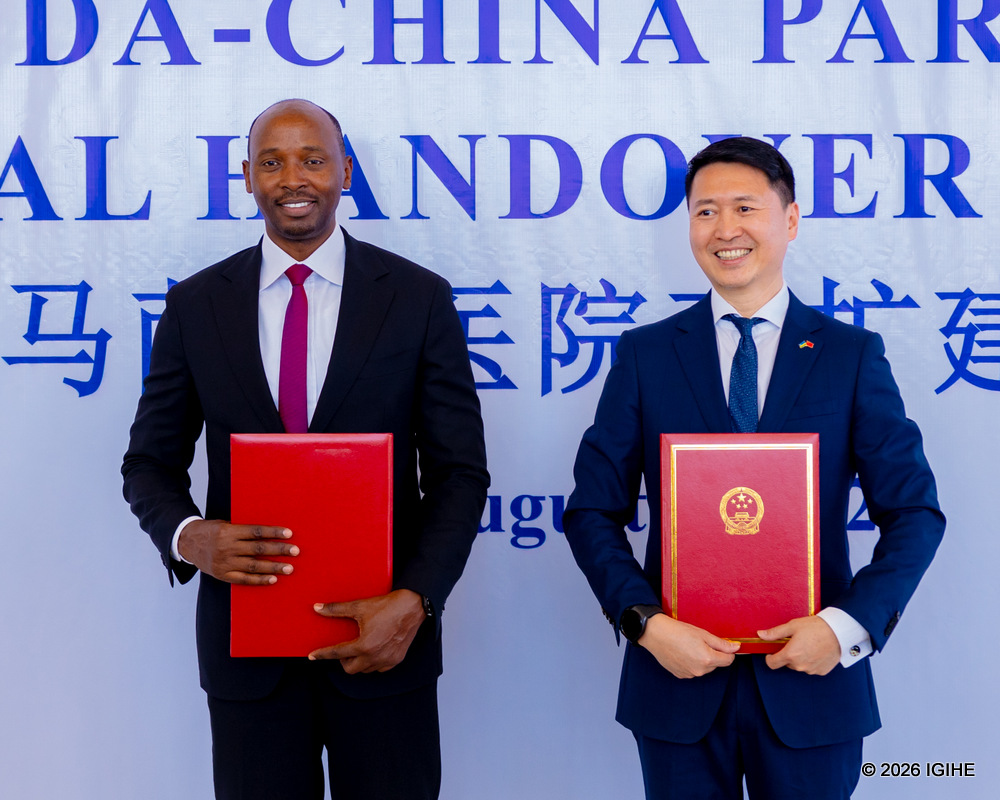
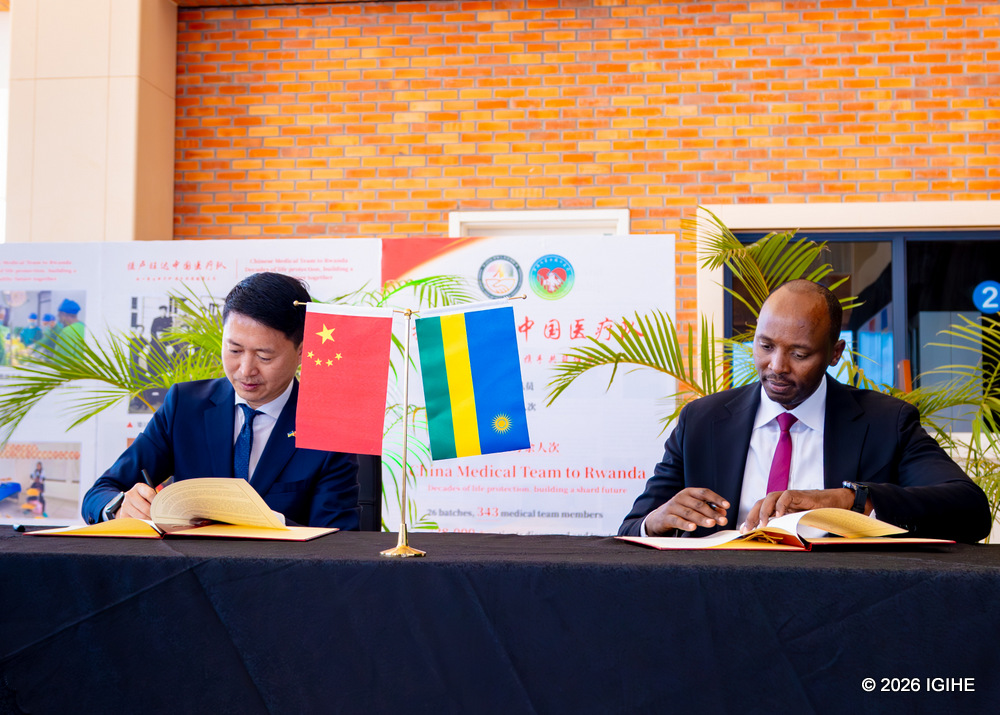
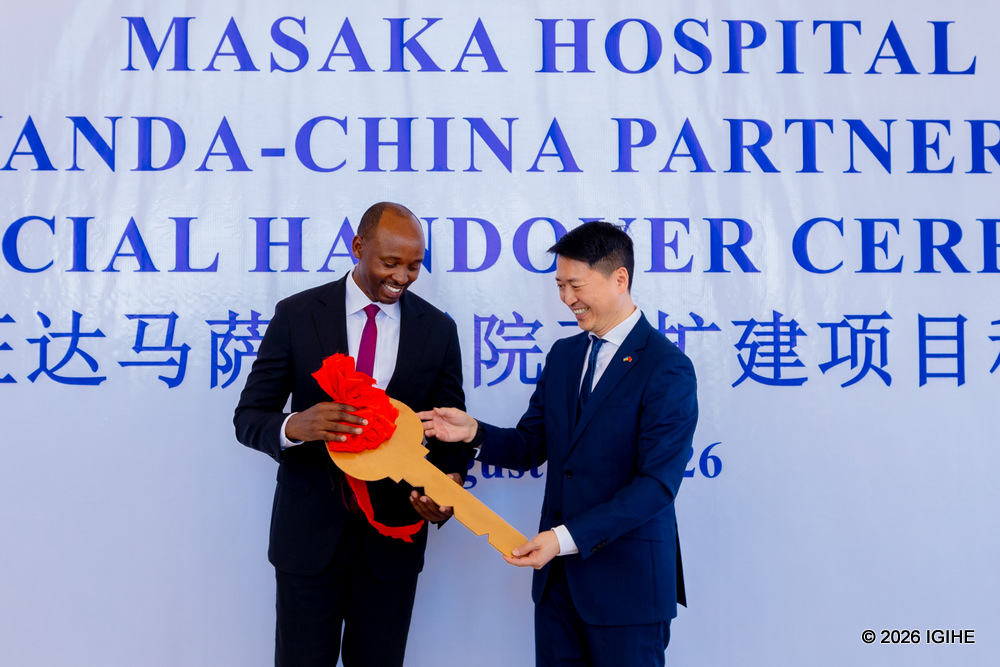
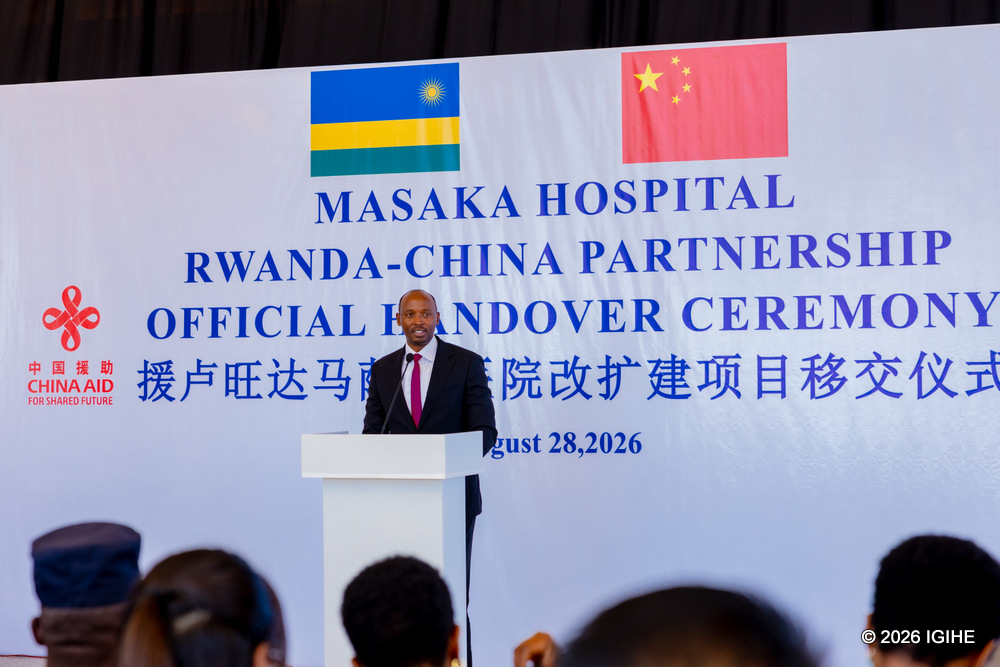
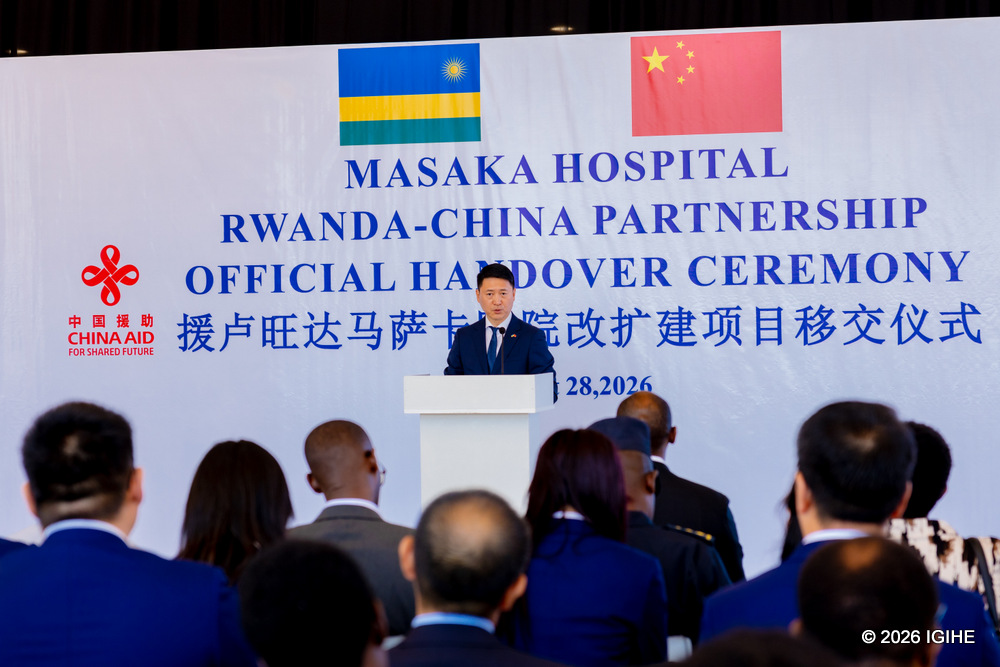
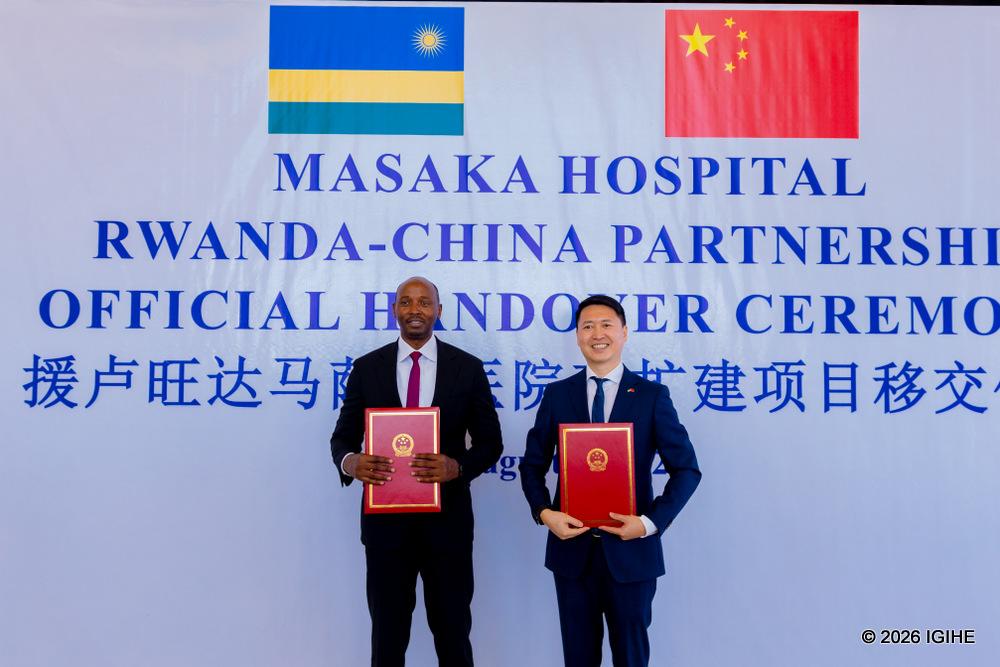
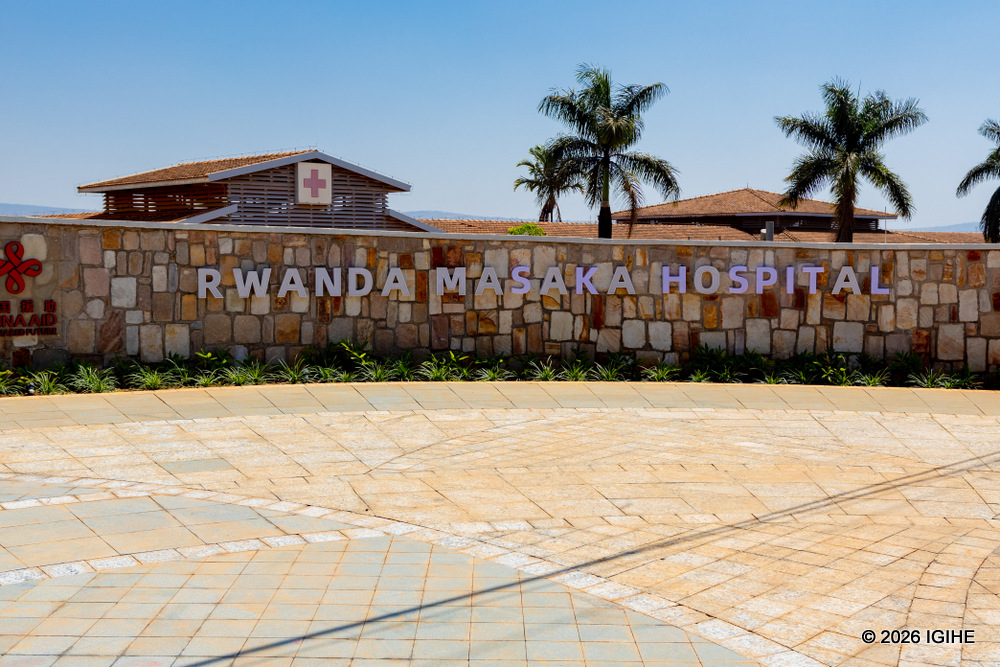
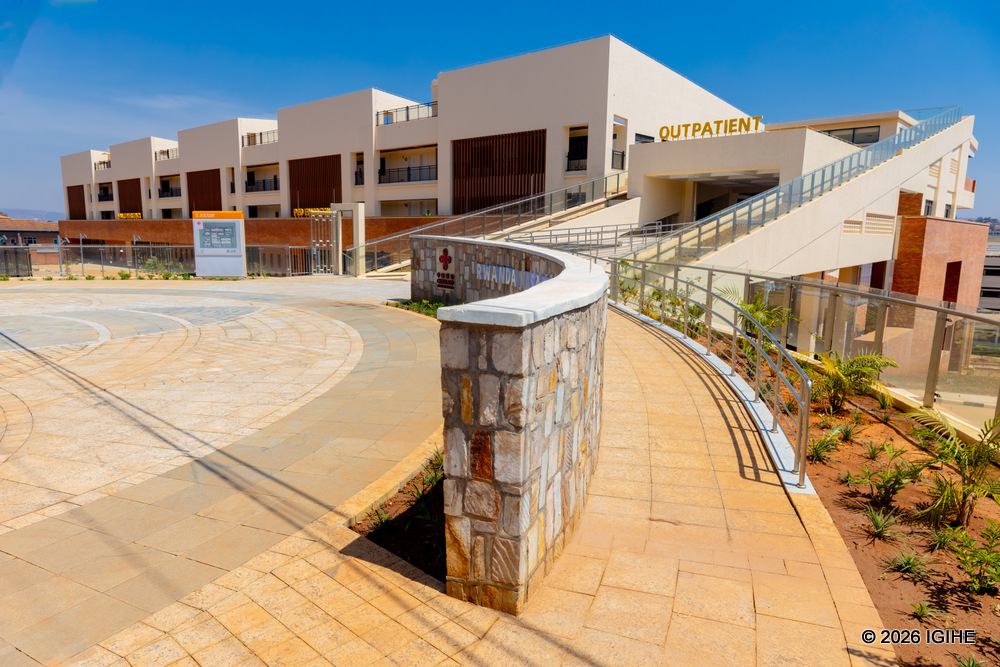
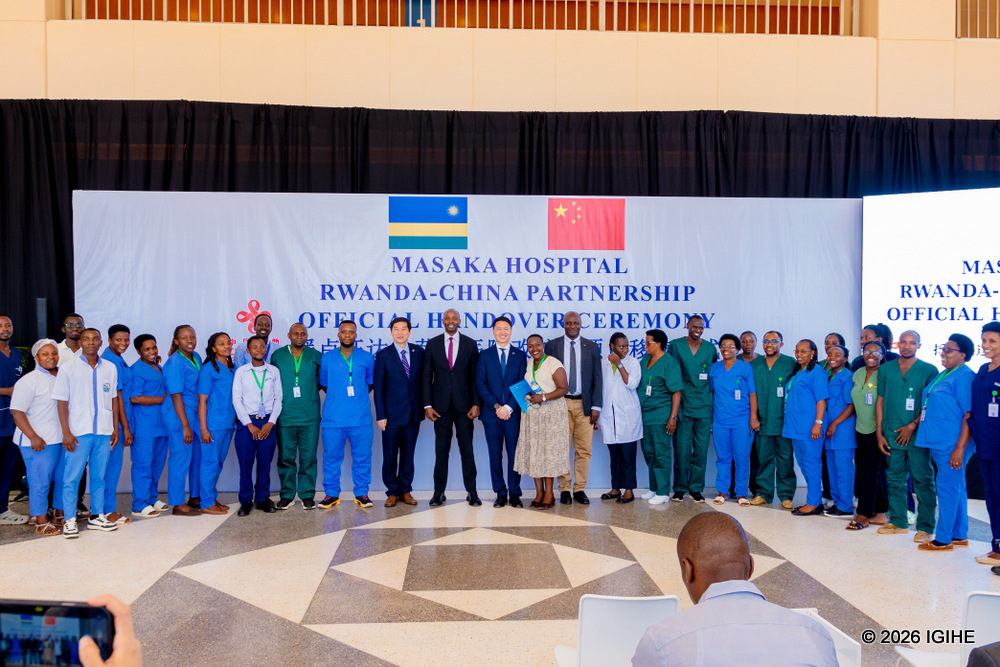
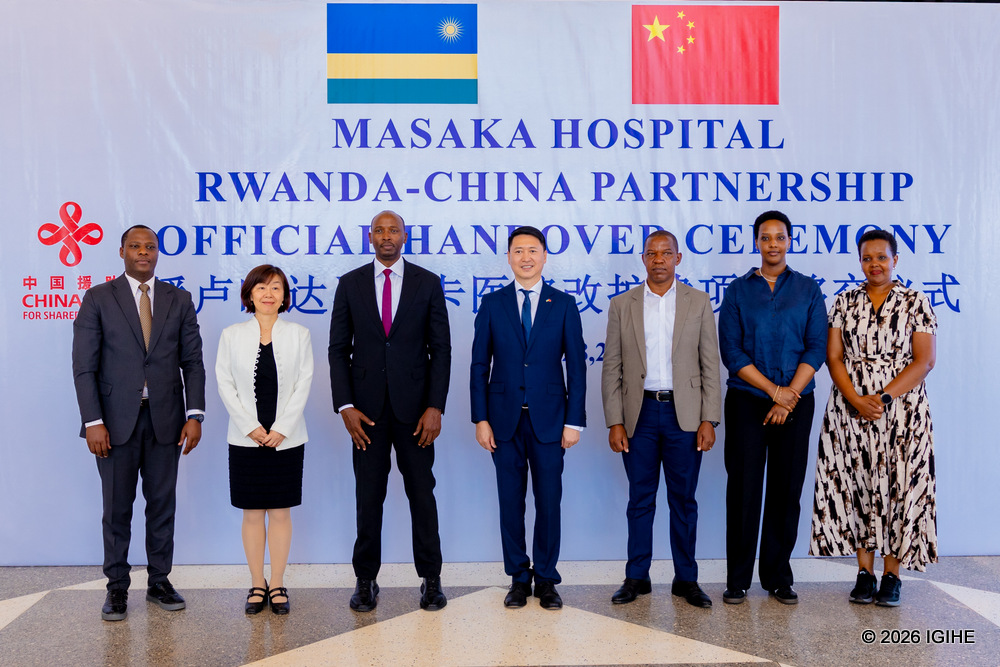
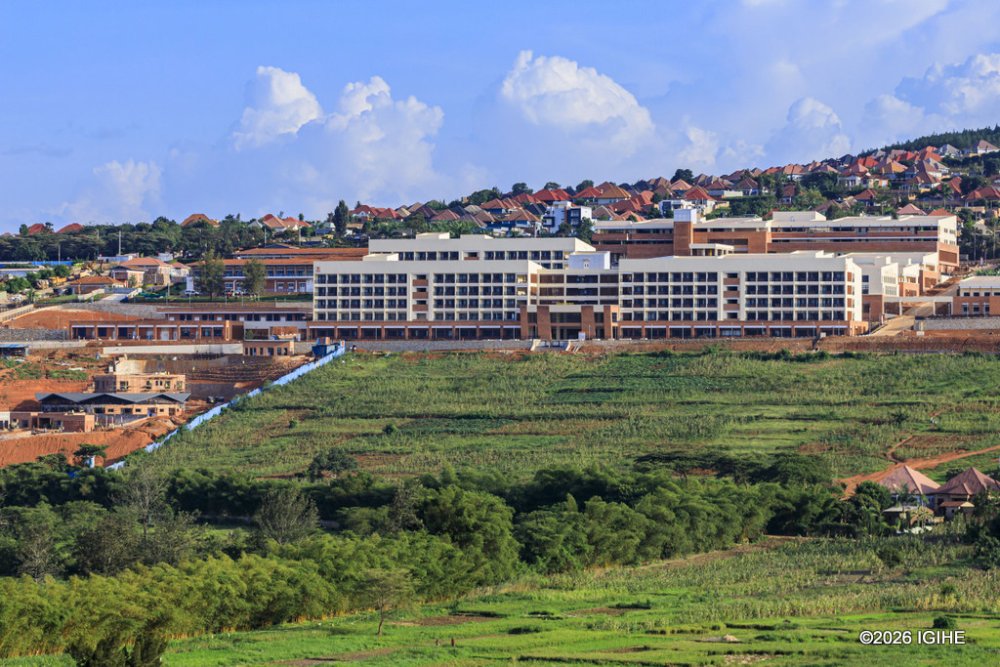
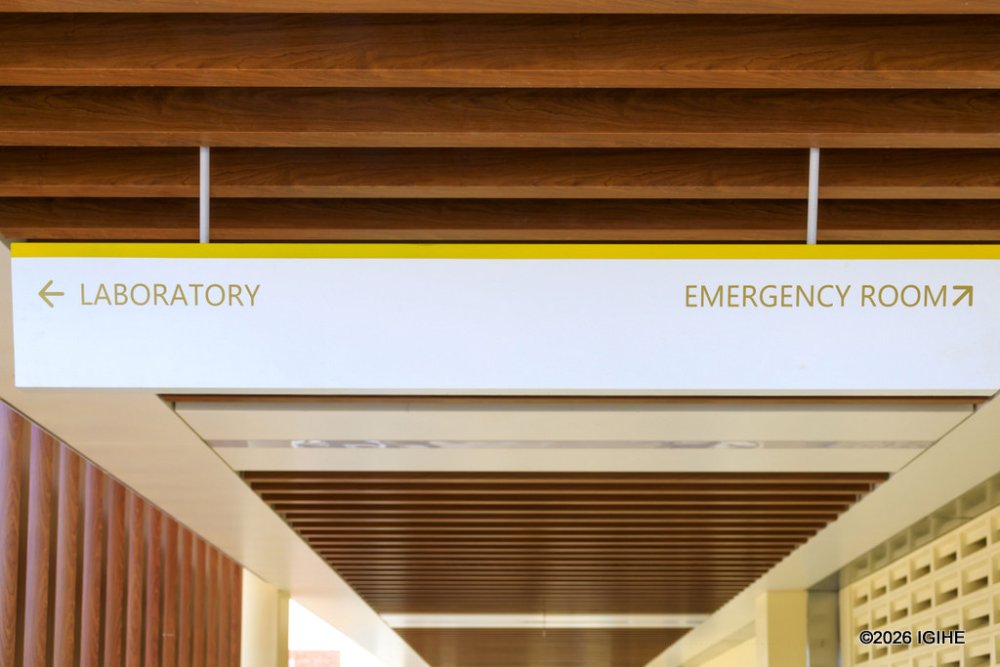
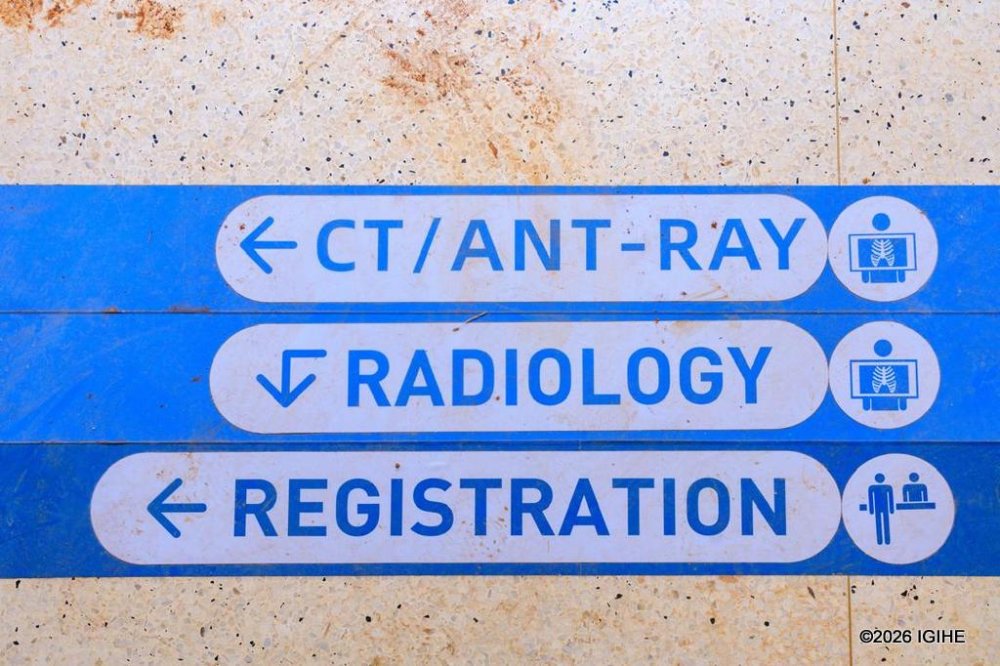
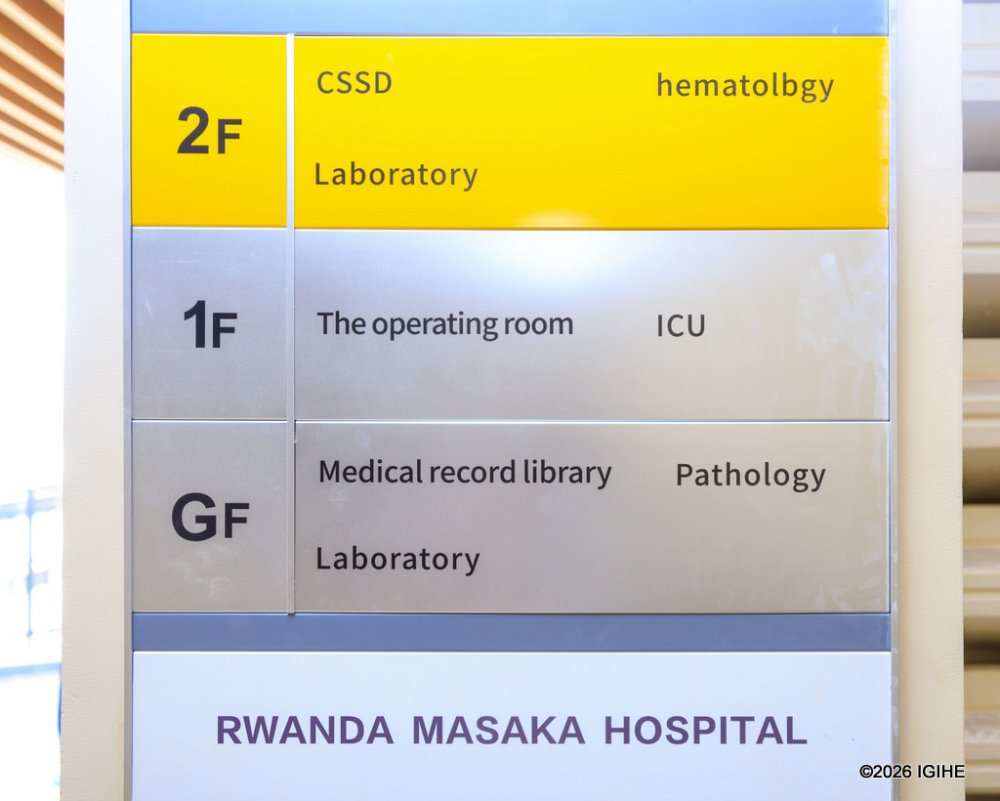
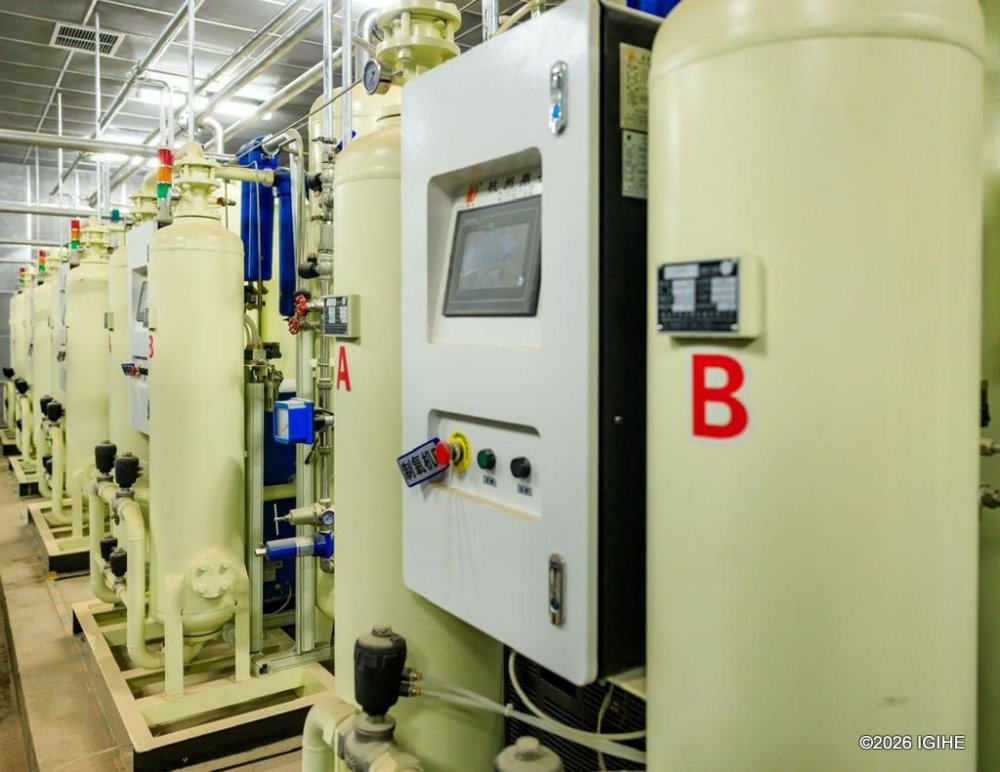
The handover ceremony held on August 28, 2026, followed the completion of the China-aided Masaka Hospital Renovation and Expansion Project, which has transformed the facility into one of the largest comprehensive teaching hospitals in Rwanda and the region.
The expanded hospital, located in Kicukiro District, will become the new home of the University Teaching Hospital of Kigali (CHUK), which is expected to relocate to Masaka by the end of 2026.
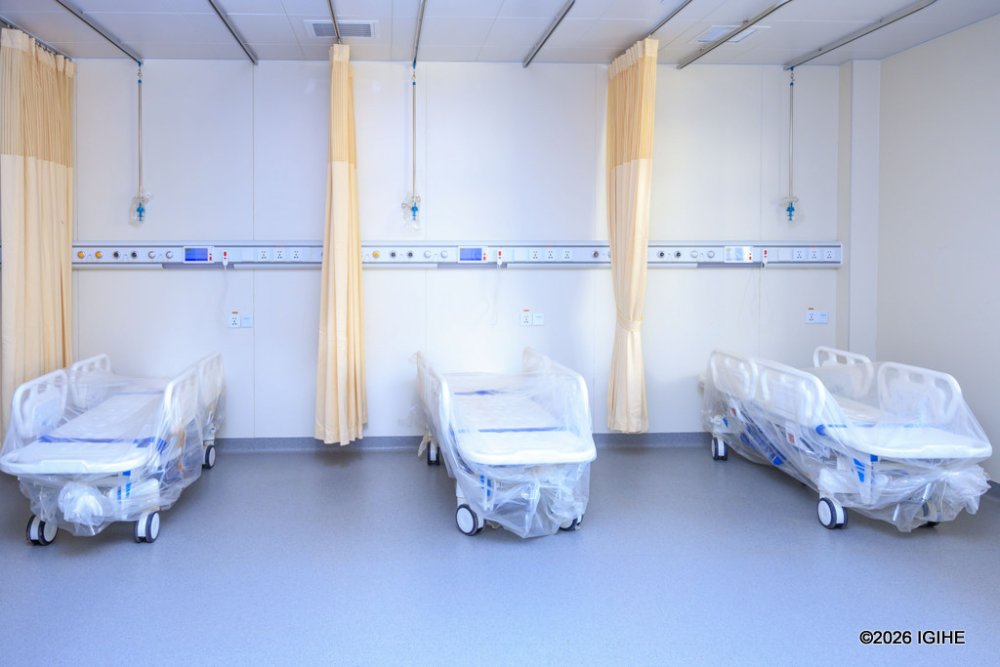
Rwanda’s Minister of Health, Dr. Sabin Nsanzimana, described the facility as the largest hospital in Rwanda in terms of capacity, saying the new building has more than 700 beds and, together with the existing Masaka District Hospital next door, brings the total capacity to more than 800 beds.
“This hospital is the largest in Rwanda. It’s the largest because the one we had in Rwanda with the highest number of bed capacity had 500,” Dr. Nsanzimana said during the handover ceremony.
He said the significance of the project goes beyond the size of the building, with the services planned for the facility expected to provide high-level medical care to patients from Rwanda and beyond.
“So if you look at the region, it’s also among the largest hospitals. And not only the building, but also the services that will be provided in this hospital plan to be at the high level for national, but also for international medical care,” he said.
The minister said Rwanda expects the new facility to develop into a medical hub serving Africa and beyond, building on the longstanding partnership between Rwanda and China.
“We expect this to be a hub for medicine in Africa and beyond, through the friendship and partnership in Rwanda and China,” Dr. Nsanzimana said.
From 127 to 837 beds
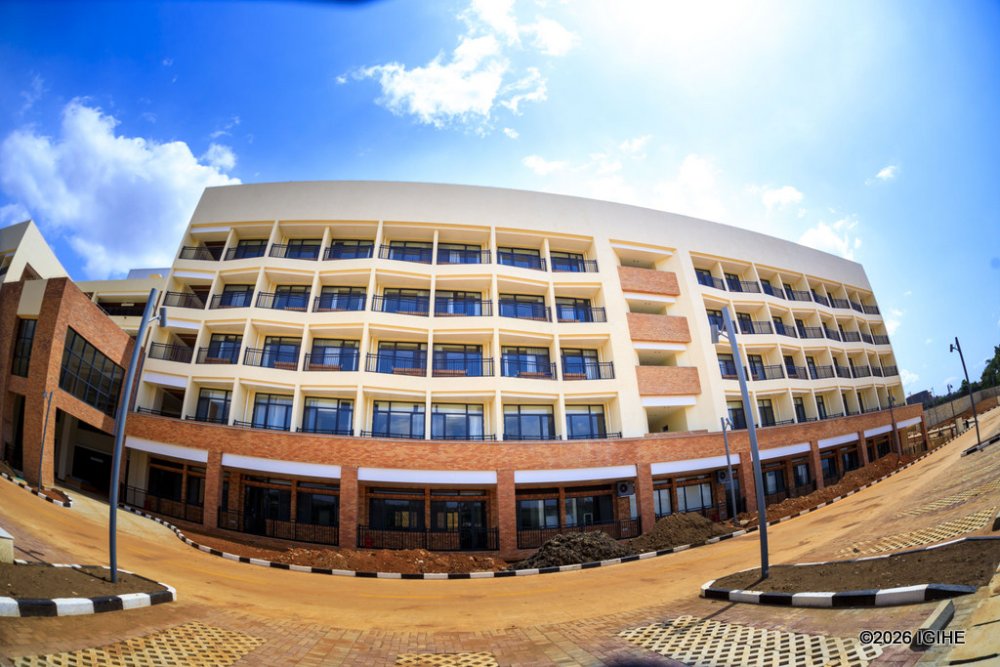
The scale of the transformation is reflected in the expansion of the hospital’s infrastructure. The hospital’s floor area has increased from about 6,389 square metres to 56,957 square metres, while the number of beds has risen from 127 to 837.
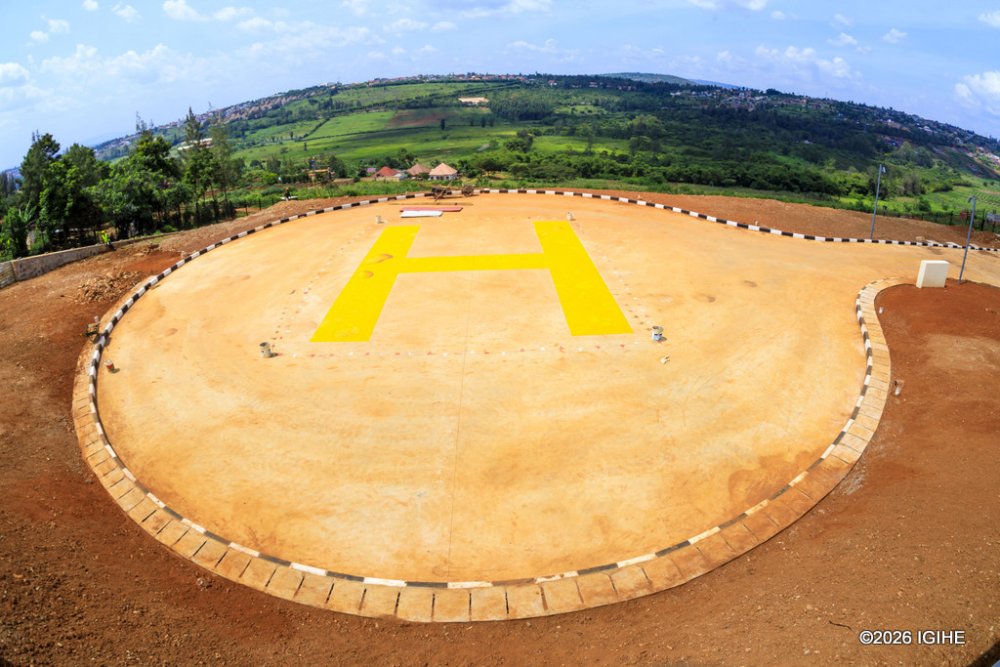
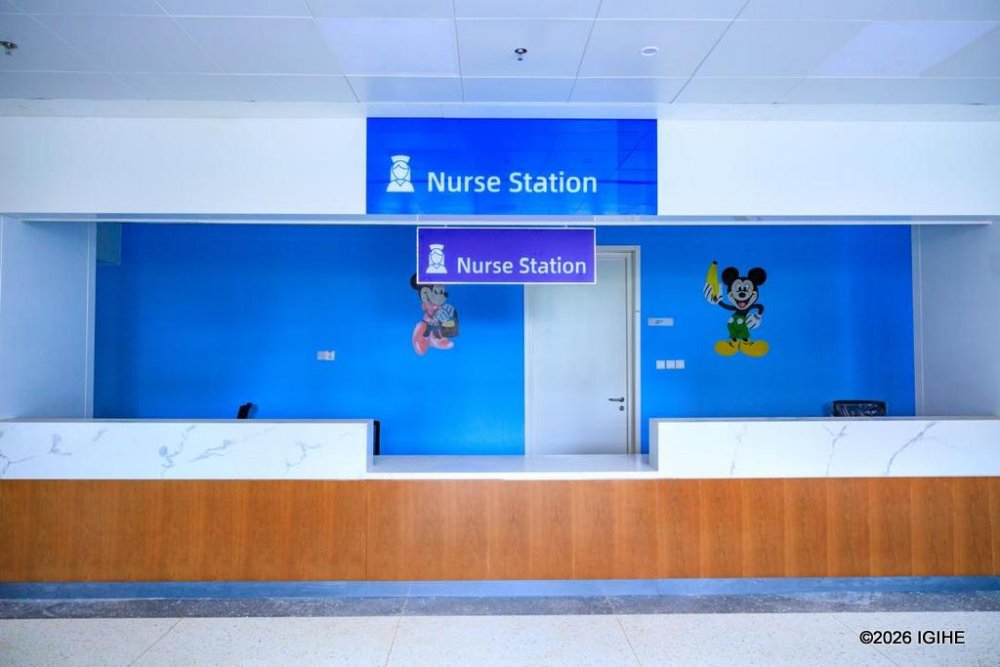
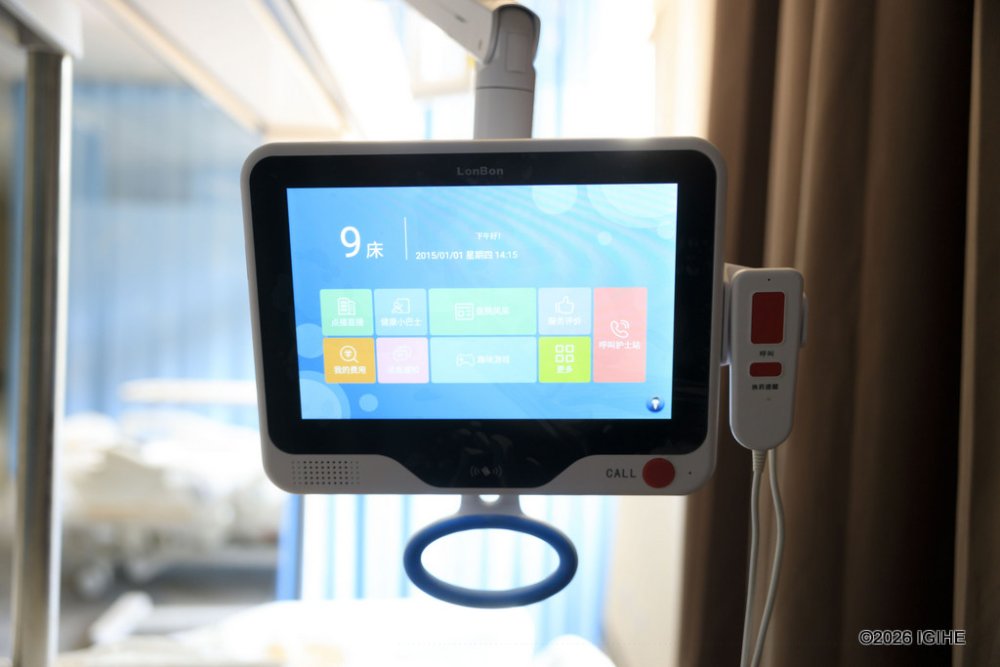
The facility has 22 operating theatres and a planned daily outpatient capacity of 2,000 visits. It comprises 13 buildings, including an outpatient and emergency building, a medical technology building, inpatient wards and an administrative building. The project also includes a helicopter pad.
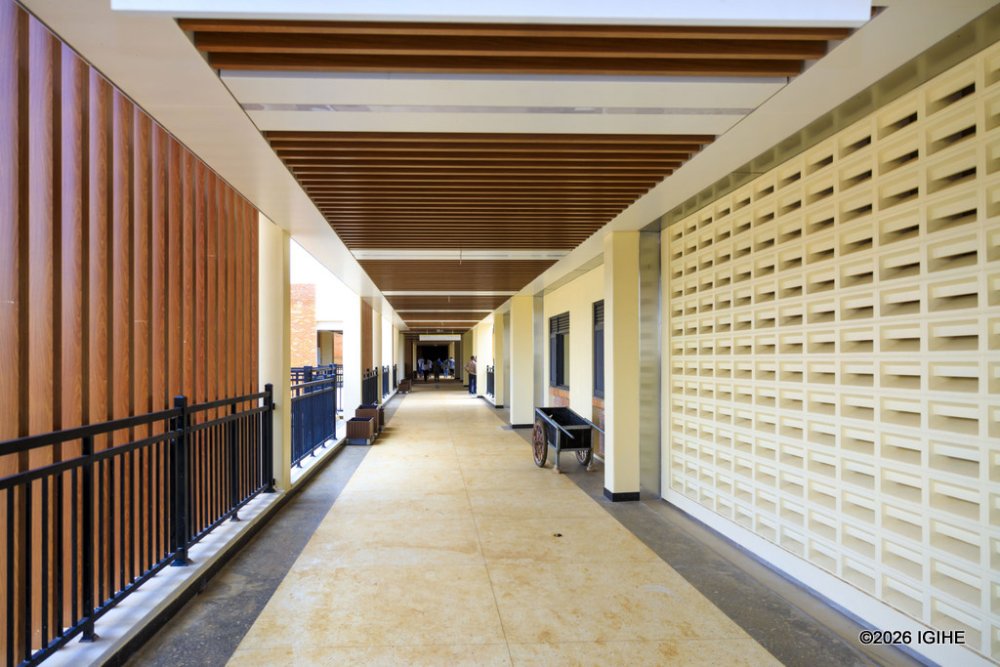
A connecting corridor system was designed to respond to the complex terrain around the hospital, where the height difference reaches up to 32 metres, making movement between different sections of the facility easier for patients and medical personnel.
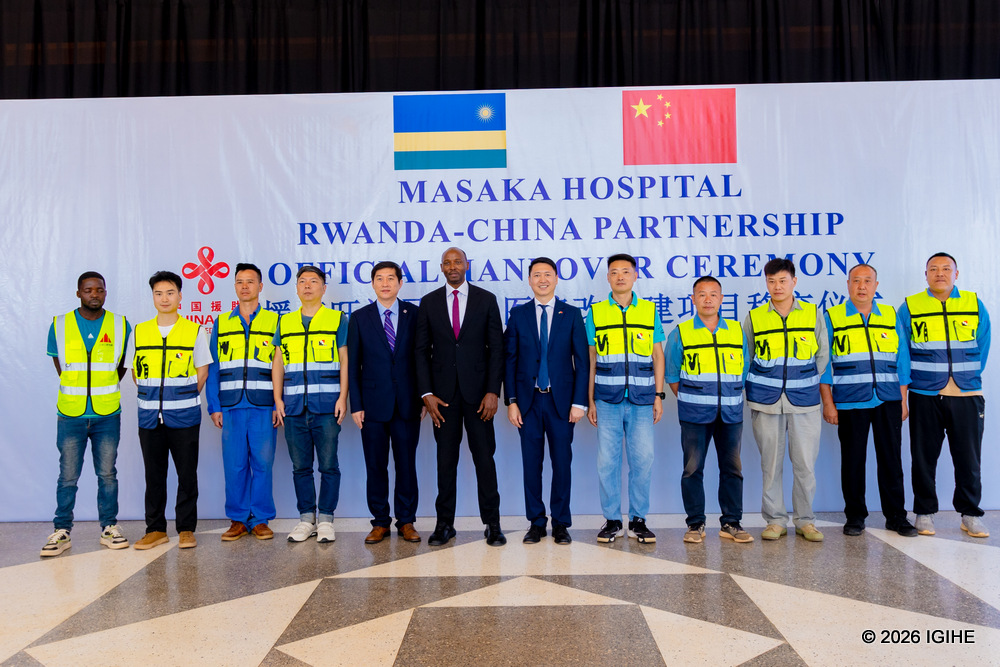
The project was designed by IPPR International Engineering and undertaken by Shanghai Construction Group Co. Ltd. Construction began in July 2022, with the project’s groundbreaking ceremony held on March 30, 2023.
The project cost 580 million Chinese yuan, equivalent to more than Rwf124 billion, and is the largest grant aid project undertaken by the Chinese government in Rwanda so far.
Chinese Ambassador to Rwanda Gao Wenqi said the transformation represented a historic development for a hospital that has been closely associated with the two countries’ relationship for more than a decade.
“Masaka Hospital stands as both a witness and participant to China-Rwanda friendship,” Amb. Gao said.
The original Masaka Hospital was built with support from the Chinese government and officially opened in 2011, with a floor area of 6,398 square metres and 127 beds, providing basic medical services to people in surrounding areas.
In 2018, during Chinese President Xi Jinping’s state visit to Rwanda, Xi and President Paul Kagame witnessed the exchange of notes on the expansion and renovation project.
Amb. Gao said the project therefore reflected the continued attention given to the partnership by the leadership of both countries.
“The successful completion of this renovation and expansion project marks a comprehensive and historical transformation of the hospital, ushering in a new era of development in both its facilities and service capabilities,” he said.
New home for CHUK
The expanded Masaka facility is expected to play a central role in the reorganisation of tertiary healthcare services in Kigali.
The Ministry of Health recently announced that CHUK would move to the new facility by the end of 2026. Its current premises in central Kigali will, however, continue providing critical emergency services.
Speaking at the handover, Dr. Nsanzimana said preparations were already underway to ensure a smooth transition and allow services to begin at the new facility as soon as possible.
“After the building is officially received today, there’s work being done to see the services starting as soon as possible with CHUK moving in here,” he said.
He said the government was working with CHUK leadership and other government teams to make the transition smooth.
“I can’t wait to see patients coming in, in a few weeks,” Dr. Dr. Nsanzimana said, noting that steps were already being taken to prepare the facility for use.
The minister also highlighted the potential for the hospital to become a centre for medical research and technology.
He said discussions with Ambassador Gao had included the possibility of doctors in Rwanda working remotely with specialists in China, including through technology that could allow medical professionals in different countries to participate in procedures.
“That is how you can connect people even remotely with technology. That is what we are working on,” he said.
Building on decades of medical cooperation
The handover also builds on a longstanding China-Rwanda partnership in healthcare following the establishment of diplomatic relations between Rwanda and China dating back to 1971.
So far, China has dispatched 26 batches of medical teams, comprising 343 medical personnel, to Rwanda. The teams have provided medical services at Masaka Hospital and Kibungo Hospital, cumulatively treating more than 720,000 patients and performing more than 40,000 surgeries.
In September 2023, the Rwanda Traditional Chinese Medicine Acupuncture and Moxibustion Center was established at Masaka Hospital, while a Traditional Chinese Medicine consultation room was set up at Kibungo Hospital in 2026.
The 26th Chinese medical team is currently working at both facilities. Amb. Gao said China intends to build on this cooperation by using the new Masaka Hospital as a platform for deeper collaboration in healthcare.
He outlined three areas of future cooperation: establishing a collaborative medical centre, strengthening medical talent development and expanding technology-driven cooperation, adding that the two countries would work to develop the hospital into a regional centre of medical excellence.
Amb. Gao also pledged continued support for training Rwandan medical and public health professionals through long-term expert support, training programmes and clinical mentorship.
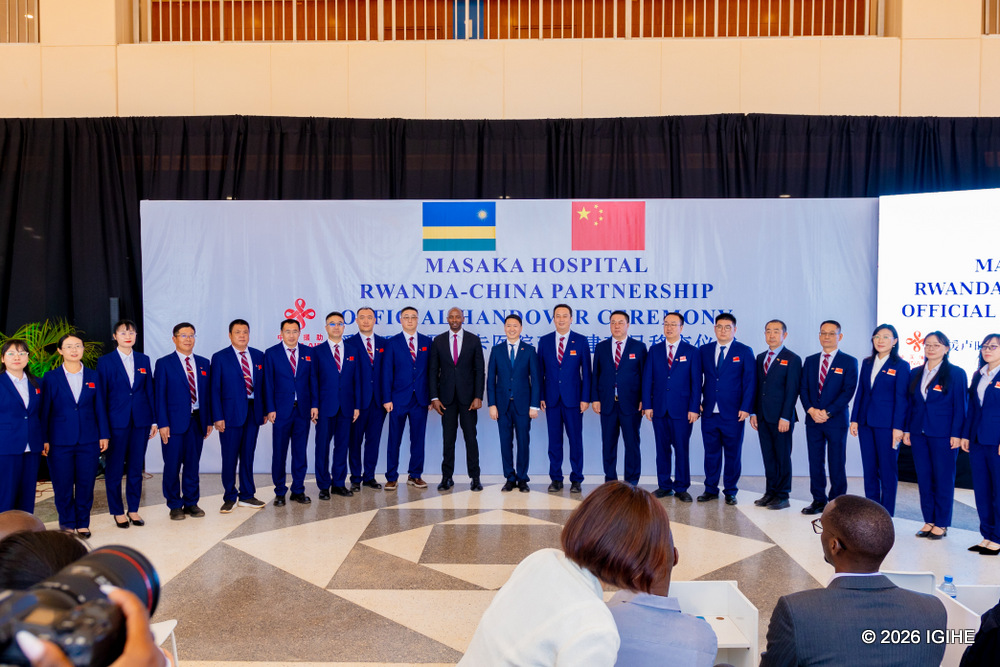
Chinese Ambassador to Rwanda Gao Wenqi and Rwanda’s Minister of Health Dr. Sabin Nsanzimana signing handover documents. Rwandan Minister of Health received the keys to the expanded Masaka Hospital during the official handover ceremony.Rwanda’s Minister of Health Dr. Sabin Nsanzimana addresses guests during the official handover of the expanded Masaka Hospital.Chinese Ambassador to Rwanda Gao Wenqi speaks during the handover ceremony of the China-aided Masaka Hospital expansion project.Rwanda’s Minister of Health Dr. Sabin Nsanzimana with Chinese Ambassador to Rwanda at the handover of the newly renovated and expanded Masaka Hospital.The expanded Masaka Hospital, which has grown from 127 to 837 beds, has been officially handed over to Rwanda.The project was undertaken by Shanghai Construction Group Co. Ltd.So far, China has dispatched 26 batches of medical teams, comprising 343 medical personnel, to Rwanda.Chinese and Rwandan officials pose for a group photo during the official handover of the expanded Masaka Hospital.The expanded Masaka Hospital comprises 13 buildings, including outpatient and emergency facilities, inpatient wards and medical technology facilities.The expanded Masaka Hospital includes a helicopter pad as part of its upgraded facilities.The new Masaka Hospital is equipped with 22 operating theatres and has a planned daily outpatient capacity of 2,000 visits.The expanded Masaka Hospital has a total floor area of 56,957 square metres, up from 6,389 square metres.The expanded Masaka Hospital has increased its bed capacity from 127 to 837 following the renovation and expansion project.The expanded Masaka Hospital is expected to strengthen Rwanda’s capacity to provide high-level medical care to patients from Rwanda and beyond.
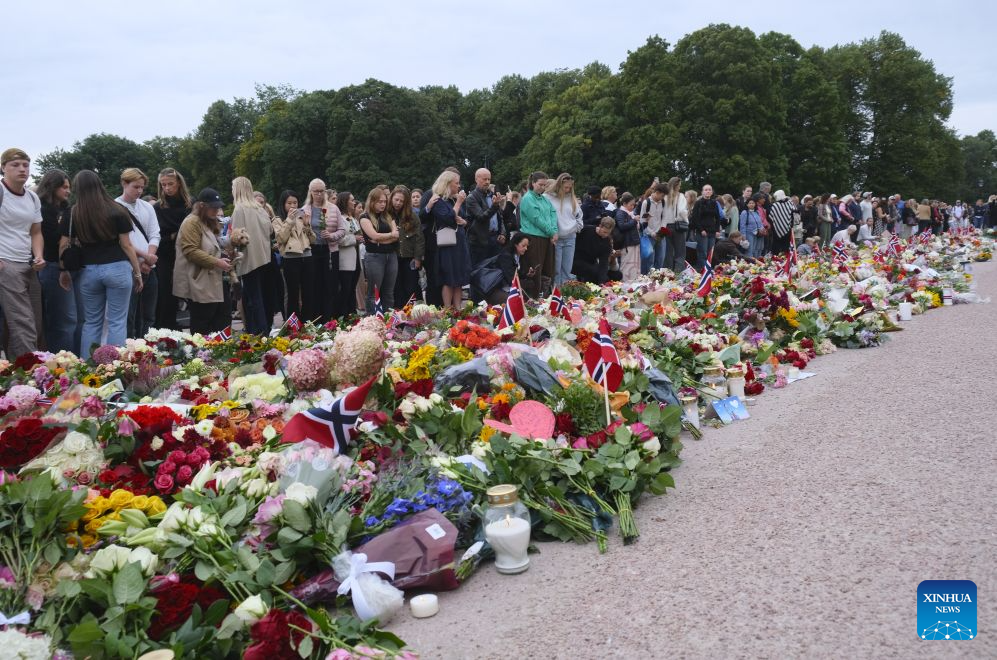
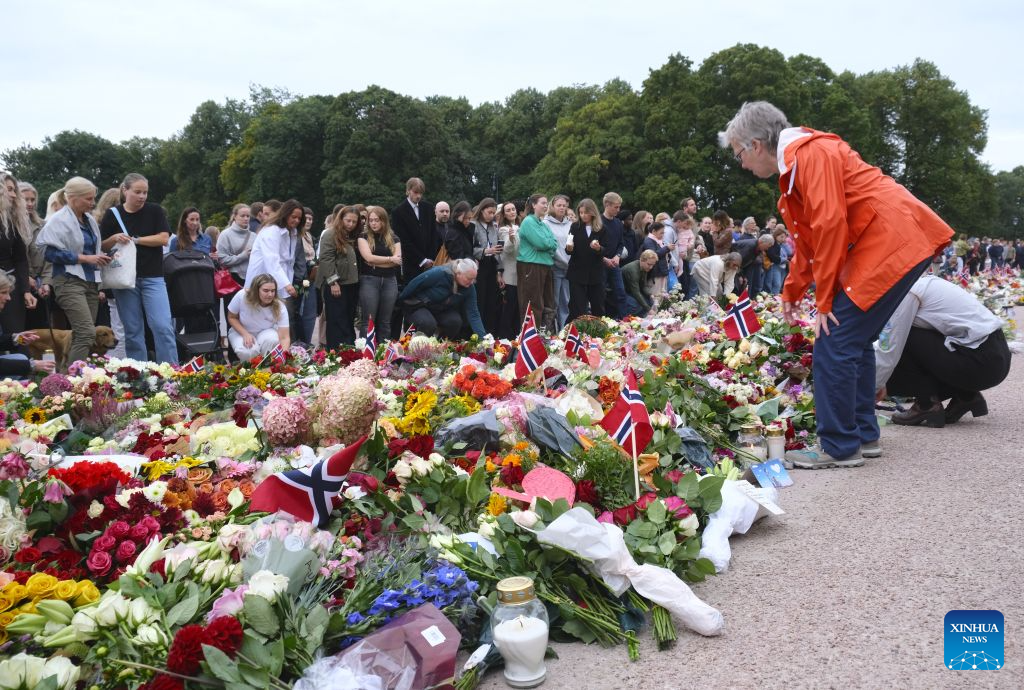
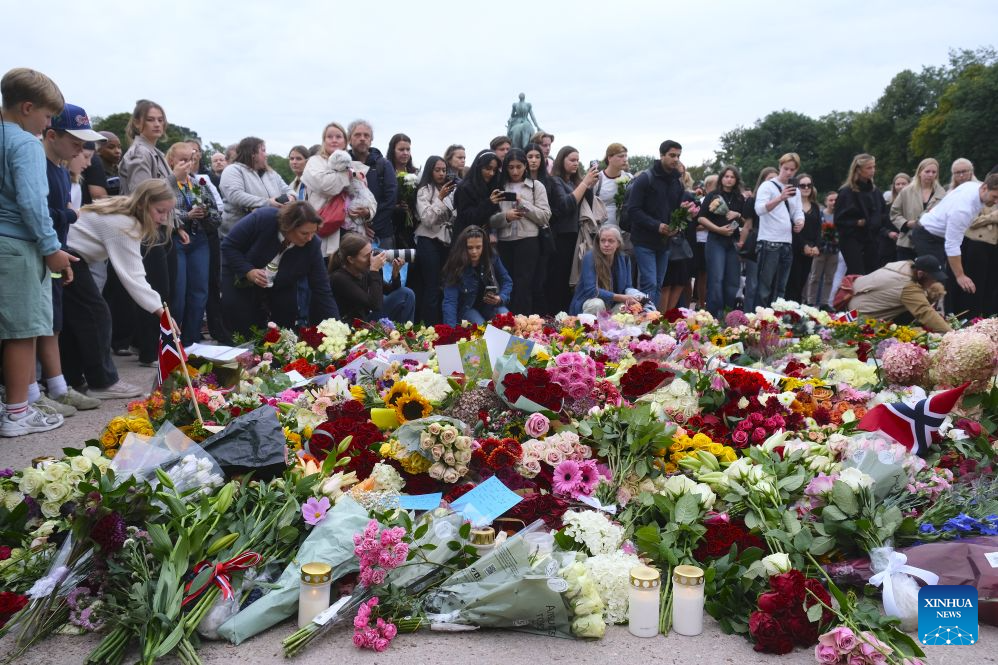
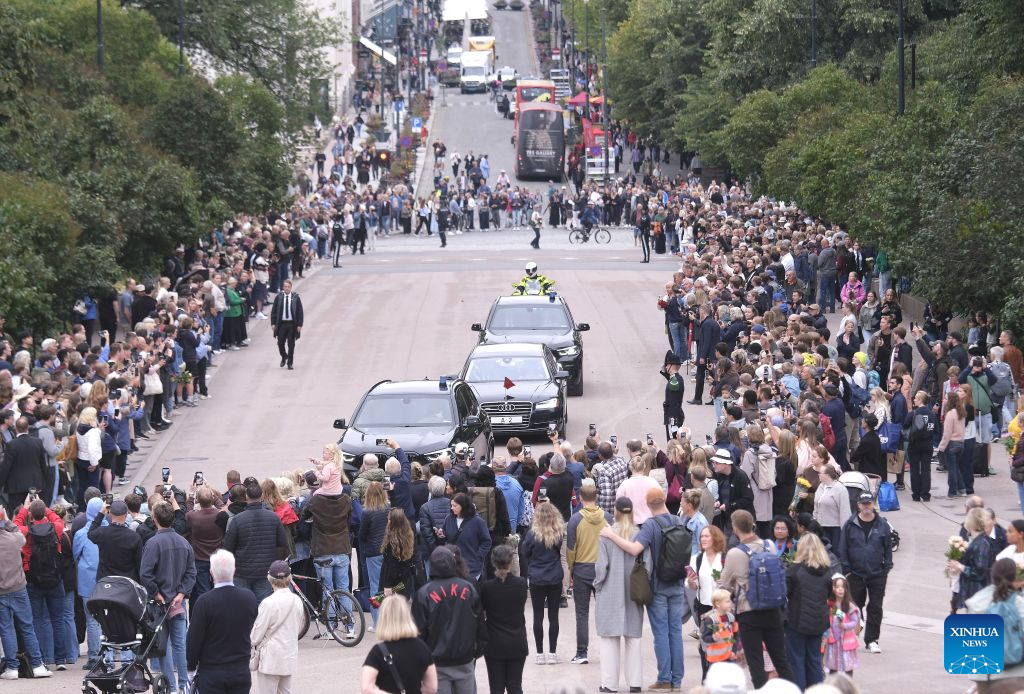
The king passed away peacefully at Oslo University Hospital Rikshospitalet at 6:35 a.m. local time (0435 GMT), according to a statement issued by the Royal House.
Under Norway’s rules of succession, 53-year-old Crown Prince Haakon immediately succeeded to the throne and became the country’s new king. His regnal name and motto have yet to be officially announced.
Harald was admitted to the hospital on Aug. 17. The Royal House previously said he had received cortisone treatment for hemolytic anemia in recent weeks, which caused fluid accumulation. During his hospitalization, he was also treated with antibiotics for a bacterial infection in his blood.
The Royal House said Thursday that Harald’s health had deteriorated and his condition was “very serious.”
Born on Feb. 21, 1937, Harald ascended to the throne on Jan. 17, 1991, following the death of his father, King Olav V. He had been hospitalized several times in recent years and received a permanent pacemaker in 2024.
Haakon was born on July 20, 1973. He had served as regent on multiple occasions when his father was ill or abroad. Haakon’s eldest child, Princess Ingrid Alexandra, is now Norway’s crown princess and the heir to the throne.
The king passed away peacefully at Oslo University Hospital Rikshospitalet at 6:35 a.m. local time (0435 GMT), according to a statement issued by the Royal House.The king passed away peacefully at Oslo University Hospital Rikshospitalet at 6:35 a.m. local time (0435 GMT), according to a statement issued by the Royal House.
In an address to the nation on August 27, Tshisekedi announced the launch of what he described as an inter-Congolese dialogue aimed at addressing longstanding political challenges, insecurity and divisions, while laying the groundwork for governance reforms.
The process will begin with consultations in the DRC’s 26 provinces before culminating in national-level talks in Kinshasa. Citizens, local authorities, political parties, civil society organisations, traditional and religious leaders and other stakeholders are expected to contribute.
Tshisekedi said the dialogue should produce a “National Pact for Peace, Unity and State Reform”, along with mechanisms to ensure that its resolutions are implemented, unlike previous initiatives that ended without meaningful follow-up.
AFC/M23 kept out
Despite presenting the initiative as a national process for addressing the country’s challenges, Tshisekedi made clear that it would not include the AFC/M23 coalition or other actors he accused of challenging the state through armed action.
He insisted that the national dialogue would not replace the Doha talks, which are focused on resolving the conflict in eastern DRC, arguing that issues related to armed groups, including a ceasefire and disarmament, should be dealt with through that separate process.
“No one can take part in the national dialogue while carrying weapons against the country. No weapon can give its holder greater rights than those granted to a citizen through elections. No military victory can be converted into political legitimacy,” Tshisekedi said.
He said those who have taken control of national territory by force, established what he described as illegal administrations or acted in the interests of foreign powers would be excluded from the talks.
While Tshisekedi said those who renounce violence and respect the law could be allowed to rejoin the national community, he maintained that peace should not mean impunity for those responsible for serious crimes.
Critics question inclusivity
The president’s approach has revived concerns among religious leaders, politicians and other observers who argue that a dialogue meant to address the country’s political and security crisis cannot afford to leave out actors with a direct stake in it.
The Catholic Church and other religious leaders have repeatedly called for an inclusive dialogue bringing together the country’s key political and armed actors, arguing that the DRC’s history has shown the limits of peace processes that exclude major parties.
The National Episcopal Conference of Congo (CENCO) has been among those pushing for broader talks, including the participation of representatives of AFC/M23, Thomas Lubanga’s CRP movement and former President Joseph Kabila.
The Kinshasa government has rejected those calls.
Critics argue that excluding such actors risks turning Tshisekedi’s dialogue into a forum for those already aligned with the political order rather than a genuine attempt to confront the forces driving the country’s crises.
They also warn that sidelining armed groups from one political process while fighting continues in the east may do little to address the realities on the ground, particularly as AFC/M23 controls significant parts of North and South Kivu.
Three months to find answers
The dialogue is expected to last no more than three months, starting with provincial consultations before moving to national-level discussions in Kinshasa.
Participants are expected to include representatives of young people, women, workers, farmers, researchers, the private sector and the Congolese diaspora. Tshisekedi has also called on religious leaders and churches to support the initiative.
But the process begins at a time when the country remains deeply divided, and the conflict in eastern DRC continues, raising questions about whether a dialogue that excludes some of the country’s most consequential actors can produce the unity and lasting peace it promises.
Democratic Republic of Congo (DRC) President Félix Tshisekedi has launched a three-month national dialogue billed as a path towards peace and unity, but his decision to exclude armed groups and other influential political figures has already drawn criticism from those who question whether the process can deliver a lasting solution to the country’s deep-rooted crisis.
According to a statement released by the Office of the President of Türkiye, the two leaders highlighted the positive development in trade and investment relations between Türkiye and Rwanda.
Erdoğan said Türkiye would continue strengthening cooperation with Rwanda in several areas, particularly the defense industry.
The Turkish president also welcomed efforts aimed at de-escalating tensions between Rwanda and the Democratic Republic of the Congo (DRC) and expressed Türkiye’s support for the ongoing process.
The conversation between President Kagame and Erdoğan comes at a time when Rwanda and Türkiye continue to strengthen relations across various areas, including trade, investment and security cooperation.
Rwanda-Türkiye relations cover areas such as trade, investment, education, culture, energy, research and security. The relationship gained further momentum after Rwanda opened its embassy in Ankara in 2013, followed by Türkiye opening its embassy in Kigali in 2014, helping to deepen cooperation between the two countries.
In the years that followed, cooperation between Rwanda and Türkiye expanded, particularly in trade and investment.
Trade between the two countries has grown from a value of about $1 million in the 2000s to nearly $500 million.
During President Kagame’s working visit to Türkiye in January 2025, Rwanda and Türkiye signed four cooperation agreements that cover media and communications, civil aircraft accident and serious incident investigation, radio and television, and military electronics and C4I (Command, Control, Communications, Computers, and Intelligence) technologies.
President Kagame said the agreements demonstrated the two countries’ commitment to continuing to explore opportunities for cooperation, while President Erdoğan described the visit as another new step towards strengthening relations between the two countries.
Turkish President Recep Tayyip Erdoğan and Rwandan President Paul Kagame have discussed bilateral relations and defence industry cooperation.
The funds will support projects in energy, roads, public transport, housing, health infrastructure and waste management, with the largest allocations going to two energy projects.
The Nyabarongo II power plant, which is expected to generate 43.5 megawatts, has the largest allocation at Rwf 149.81 billion, equivalent to about 24.5% of the total infrastructure budget.
Construction of the power plant is currently 73.82% complete and is expected to reach 75% in the first quarter, 80% in the second, 90% in the third and 95% by the end of the financial year.
The planned activities include completing and approving the remaining construction designs for the powerhouse, spillway, switchyard and transmission lines. The project will also involve monitoring construction works, completing the third phase of land acquisition and developing a plan for an early warning system to alert residents in case of a problem.
The second-largest allocation, Rwf 90.97 billion, will go towards connecting 199,487 new households to electricity. Baseline figures show that 2,348,087 households were already connected to the national grid.
The Energy Development Corporation Limited (EDCL) plans to connect 40,487 households in the first quarter, 45,000 in the second, 52,000 in the third and 62,000 in the fourth. The work will include preparing surveys and designs, procurement, construction of medium- and low-voltage electricity networks, compensation payments and connecting households.
Road maintenance in Kigali is the third-largest item, with Rwf 40 billion allocated to the project. The Rwanda Road Maintenance Fund (RMF) will review and approve contracts and invoices related to road maintenance works before payments are made.
The implementation target is to have 25% of the funds disbursed in the first quarter, 50% in the second, 75% in the third and 100% by the end of the financial year.
The rehabilitation and development of housing in Nyabisindu will receive Rwf 29.53 billion, making it the fourth-largest project by allocation. The project consists of 2,029 houses and is currently 23.36% complete, with the target of reaching full completion during the financial year.
The Rwanda Housing Authority (RHA) is responsible for overseeing implementation, while the Rwanda Social Security Board (RSSB) will provide financing. The City of Kigali will work with residents, pay temporary rent for people relocated by the project and determine the beneficiaries of the houses. The Ministry of Defence is responsible for construction works.
Another Rwf 22.26 billion has been allocated to the rehabilitation of the 10-kilometre Prince House–Giporoso–Masaka road. The works are expected to progress from 5% to 15% during the financial year.
The project will involve compensation payments, relocating utility networks and other infrastructure along the project route, as well as mobilising construction materials and workers. The Rwanda Transport Development Agency (RTDA), City of Kigali, Ministry of Infrastructure and Ministry of Finance and Economic Planning are involved in its implementation.
Public transport is also a major area of investment, with Rwf 21.45 billion allocated for the construction of 250 smart bus shelters. The facilities will include systems displaying bus arrival times, lighting, seating and infrastructure designed to make them accessible to people with disabilities.
The target is to complete 10% of the shelters in the first quarter, 40% in the second, 40% in the third and all 250 by the fourth quarter.
A further Rwf 21 billion has been allocated for 84 new electric buses. Fifty buses will be provided through the City of Kigali’s RUMI project, while 34 will come through RTDA’s KUTI project, alongside infrastructure for parking and charging the buses.
The programme also includes completing the legal and financial arrangements for the wider project involving 300 electric buses and approving the timeline for the first batch of 100 buses to be delivered to Rwanda.
The rehabilitation of Ruhengeri Referral Hospital has been allocated Rwf 12.5 billion. The project is expected to start from zero and reach 20% in the second quarter, 25% in the third and 30% by the end of the financial year.
The Ministry of Infrastructure and RHA will procure the contractor and supervising consultant and oversee implementation, while the Rwanda Biomedical Centre (RBC) and Musanze District will have responsibilities related to financing, supervision and implementation.
The first phase of the Kigali waste management project in Nduba will receive Rwf 12.03 billion. The project is currently 45% complete and is expected to reach 100% during the financial year.
The Water and Sanitation Corporation (WASAC) is responsible for construction and supervision, while the City of Kigali will support land acquisition and monitor the works.
The tenth project is the rehabilitation of the Masaka–Kabukuba–Riziyeri and Kabukuba–Nyamata/Gahembe–Kindama roads, which has been allocated Rwf 12 billion.
The works are currently at 5% and are expected to reach 20% in the first quarter, 30% in the second, 45% in the third and 60% by the fourth quarter. Activities will include compensation for people affected by the project, construction works and meeting requirements for the release of funding from development partners.
Together, the 10 projects account for Rwf 411.56 billion of the Rwf 610.84 billion infrastructure budget for the 2026/27 financial year, highlighting the concentration of spending on major energy, transport, housing and public infrastructure projects.
Nyabarongo Dam is one of the projects allocated the largest amount of funding in this financial year.The dam is expected to reach 95% completion by the end of this financial year.This photo shows the artistic impression of Nyabarongo dam
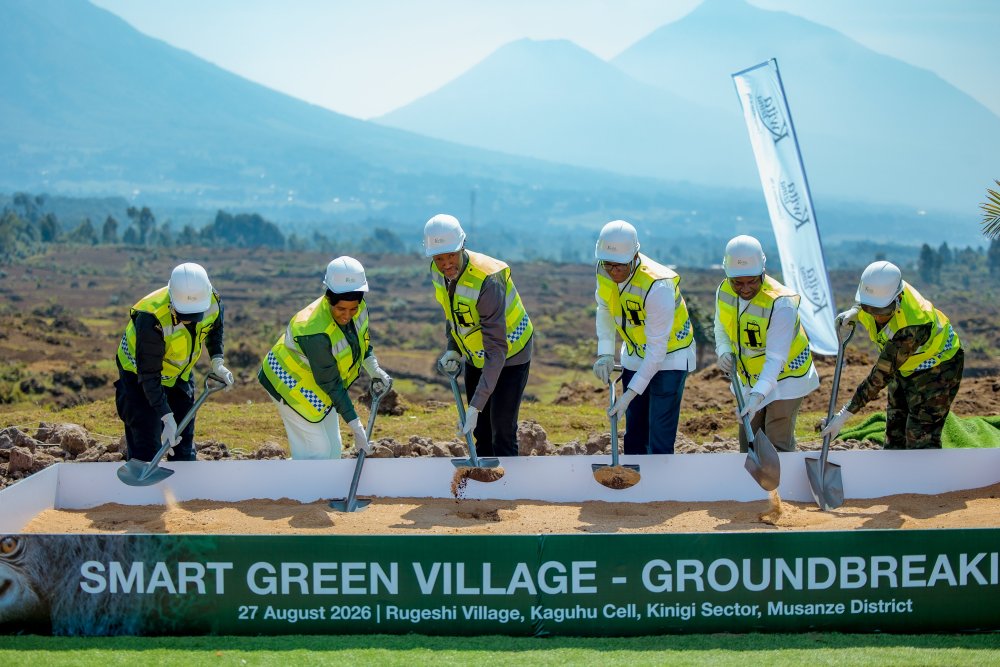
The project, valued at more than $49 million, is expected to provide 547 families with modern homes, basic services and opportunities to improve their livelihoods.
The Smart Green Village will combine climate-smart agriculture, renewable energy and tourism-related economic opportunities.
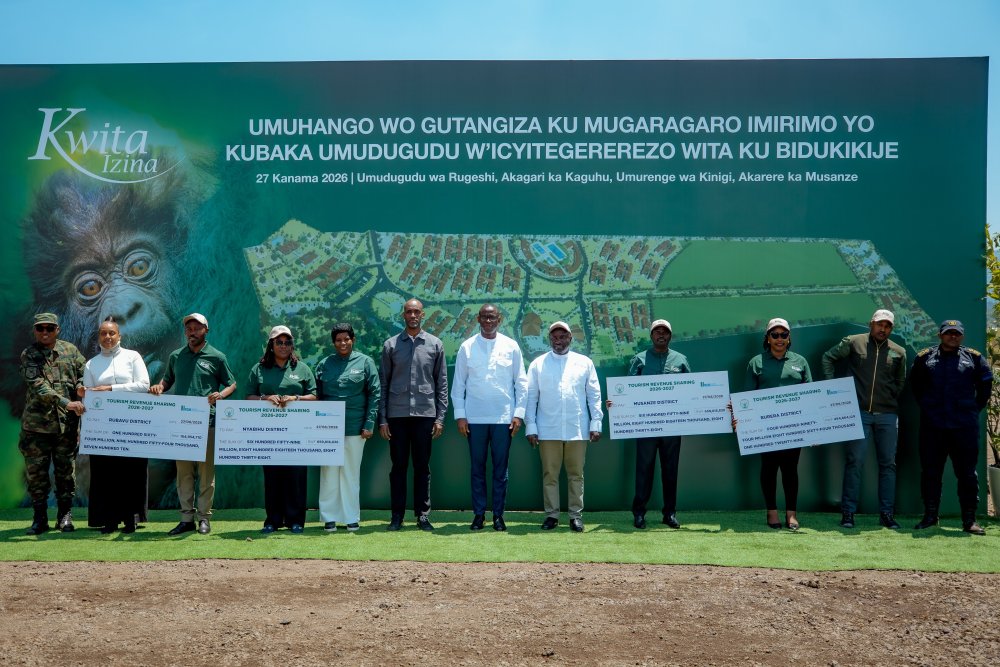
The launch of the construction works coincided with the announcement of funds to be distributed to districts surrounding Volcanoes National Park under Rwanda’s Tourism Revenue Sharing Programme.
The two initiatives highlight Rwanda’s approach of involving communities in environmental conservation and tourism development.
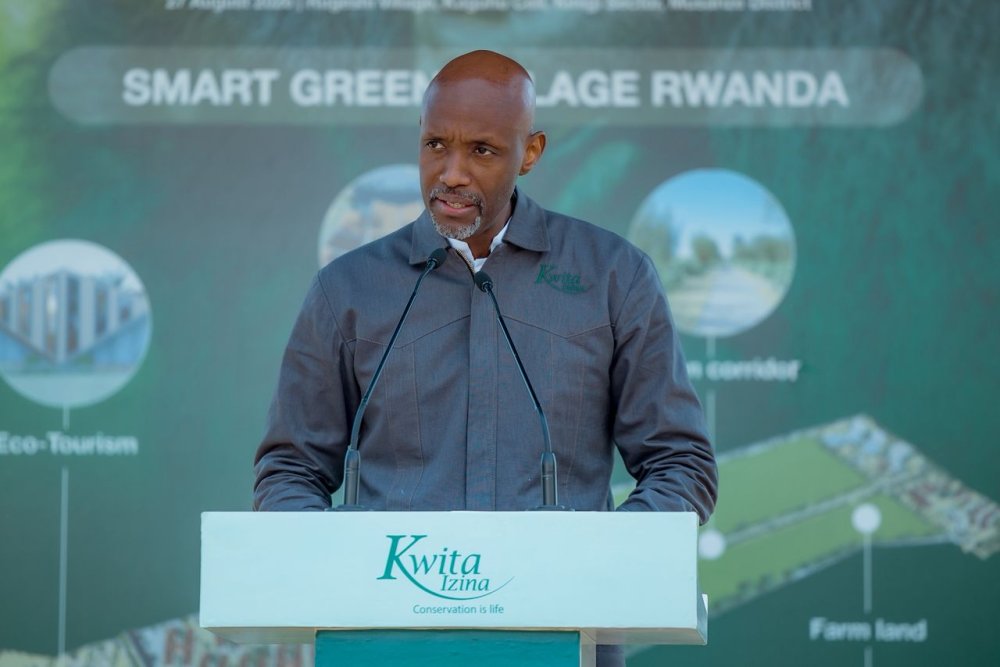
The activities are part of events leading up to the 21st edition of Kwita Izina, the annual gorilla naming ceremony scheduled for September 4, 2026, under the theme, “Conservation is Life: Sustaining the Future.”
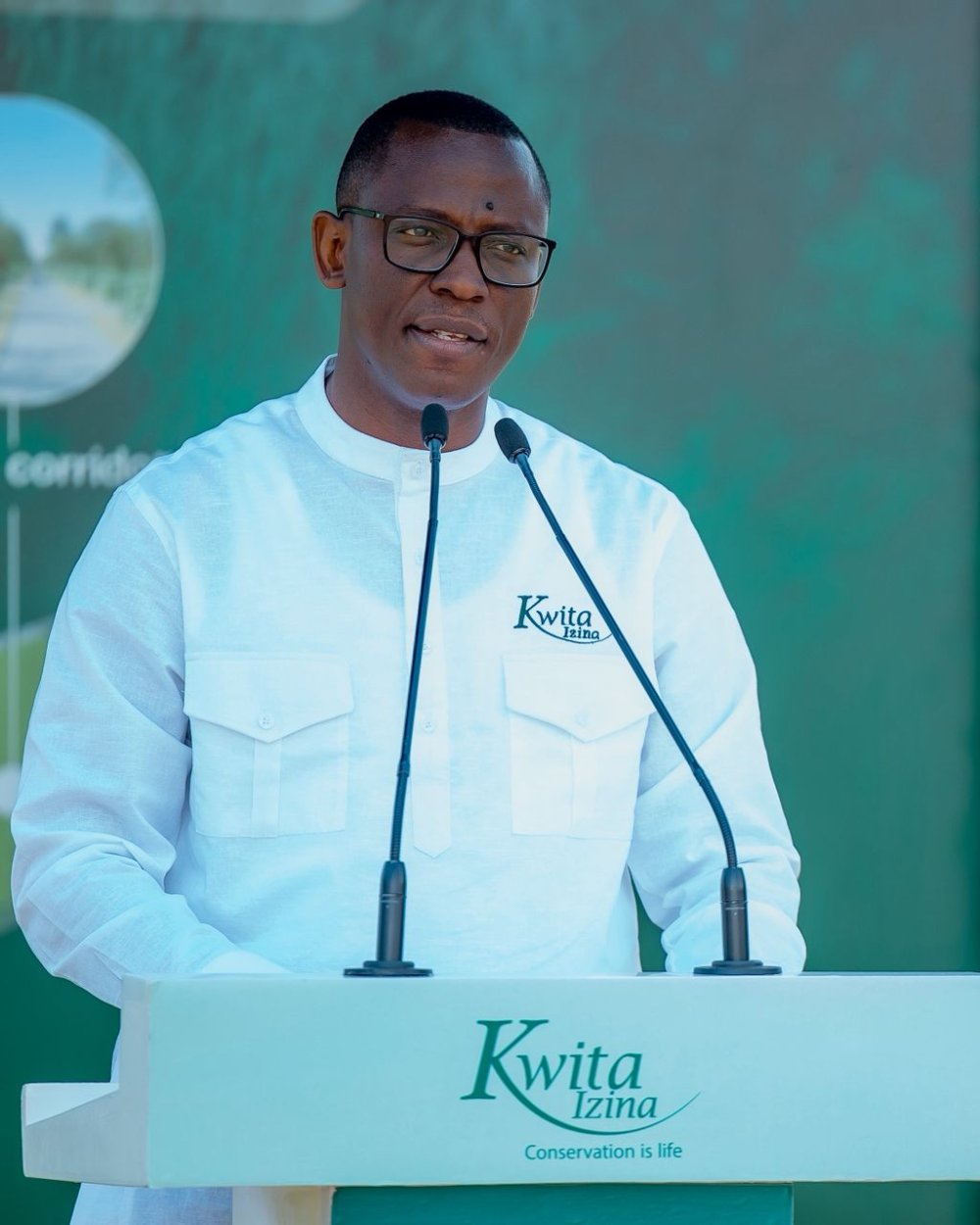
Minister of Local Government Dominique Habimana said community development should go hand in hand with environmental protection.
“This project demonstrates Rwanda’s commitment to putting citizens at the centre of development, while building communities with good infrastructure, services, welfare, cleanliness and security.
“The houses and infrastructure being built here belong to the people. I encourage residents to take ownership of them, participate in their development and protect them so that this village continues to be a clean, safe and sustainable place where families can prosper,” he noted.
Rwanda Development Board (RDB) Chief Executive Officer Jean-Guy Afrika said the village demonstrates that environmental conservation and community development should advance together.
“It will provide families with good houses, modern infrastructure, basic services and economic opportunities, while promoting sustainable agriculture, resilience to climate change and environmental protection.”
Project linked to Volcanoes National Park expansion
The Smart Green Village is part of plans to expand Volcanoes National Park by nearly 3,740 hectares and establish a 6,620-hectare buffer zone.
The wider programme is expected to improve the livelihoods of more than 17,000 people from nearly 3,400 families, increase wildlife habitat, conserve biodiversity, promote tourism and create new economic opportunities for communities living around the park.
The programme is estimated to cost nearly $300 million and will be implemented over 10 years.
The first phase covers nearly 450 hectares and will affect 547 families living in the area planned for the park expansion.
The Government of Rwanda acquired 50 hectares in Rurembo where the Smart Green Village is being built. Compensation for the land has already been paid, while compensation for families living in the area to be incorporated into the park is also being paid.
The families relocated to the new village are expected to benefit from improved access to basic services, safer living conditions and new opportunities for economic development.
Esther Mukamakuza, one of the future beneficiaries, said the project had given residents a sense that they could set goals and make decisions that contribute to the development of their families.
“We learned that this new village will bring positive changes to our lives. We will have schools, health centres, roads and clean cooking methods, which will make things easier for women and families. We are grateful to see a future where our needs are considered and where we can also contribute to the development of our families,” she said.
Four districts receive nearly Rwf2 billion
Every year, Rwanda shares part of tourism revenue with communities living around national parks that generate the revenue.
Under the Tourism Revenue Sharing Programme, 10% of tourism revenue generated from national parks is invested in development projects benefiting surrounding communities.
The four districts surrounding Volcanoes National Park have been allocated more than Rwf1.98 billion.
Burera District will receive Rwf495 million, Musanze Rwf659.8 million, Nyabihu Rwf659.8 million and Rubavu Rwf164.95 million.
RDB said the funds will support community development activities in the four districts, ensuring that tourism revenue continues to reach people living around the park.
Northern Province Governor Maurice Mugabowagahunde said benefits from Volcanoes National Park reach communities through employment, businesses and tourism revenue sharing.
“Since this programme started, 838 projects worth Rwf8.6 billion have been supported, demonstrating that the park belongs to the people and contributes to their development.
“The expansion of Volcanoes National Park and this project will help address the shortage of agricultural land while reducing conflicts between people and wildlife. They will provide people with more space to live and farm safely, while creating better ways of protecting the environment,” he noted.
Over the past 20 years, more than Rwf23 billion has been invested in communities through the tourism revenue sharing programme, supporting projects in education, healthcare, access to clean water and social welfare.
Kwita Izina is an annual ceremony that brings together Rwandans and friends of Rwanda to name newborn mountain gorillas, drawing from the longstanding Rwandan cultural tradition of naming children shortly after birth.
Since 2005, Kwita Izina has grown into an international platform celebrating Rwanda’s conservation efforts and recognising the role of communities and partners in protecting mountain gorillas and their habitat.
The 21st Kwita Izina ceremony, during which 22 baby gorillas will be named, will take place on September 4, 2026, in Kinigi, Musanze District.
Officials lay the foundation stone at the site where the Smart Green Village will be built.The four districts surrounding Volcanoes National Park have been allocated more than Rwf1.98 billion.Jean-Guy Afrika, RDB Chief Executive Officer, highlighted the importance of linking environmental conservation with community development.Dominique Habimana, Minister of Local Government, urged residents to take ownership of the infrastructure being developed in the Smart Green Village.
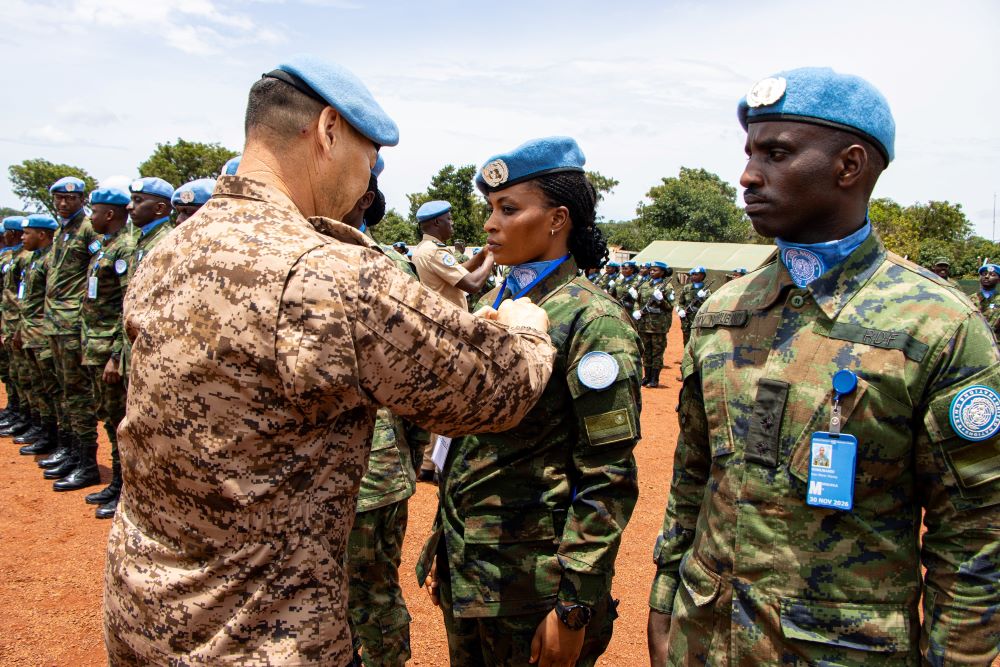
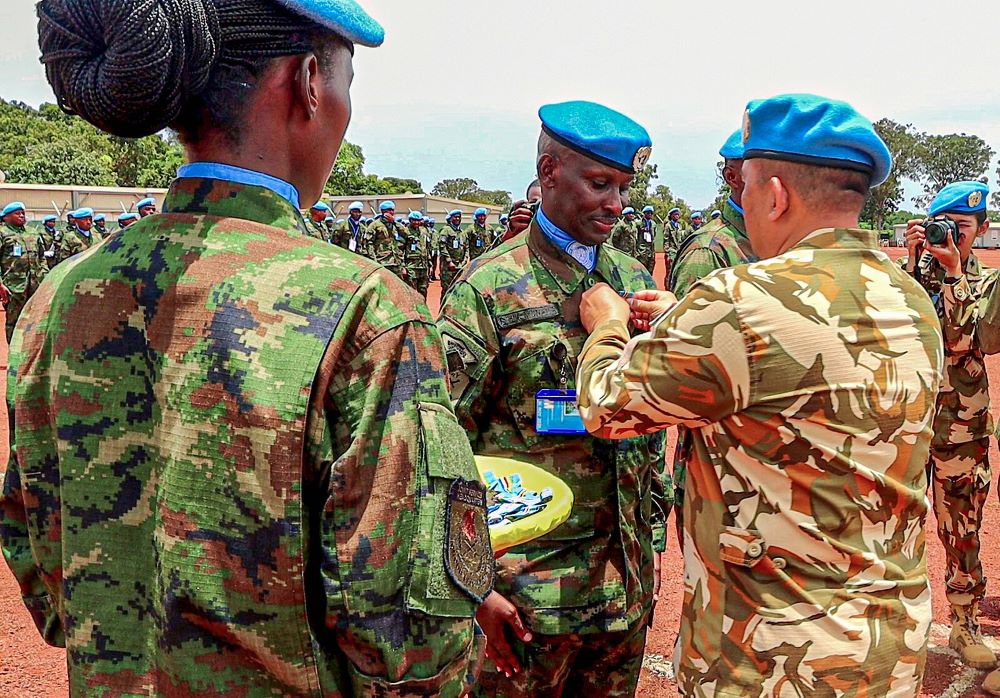
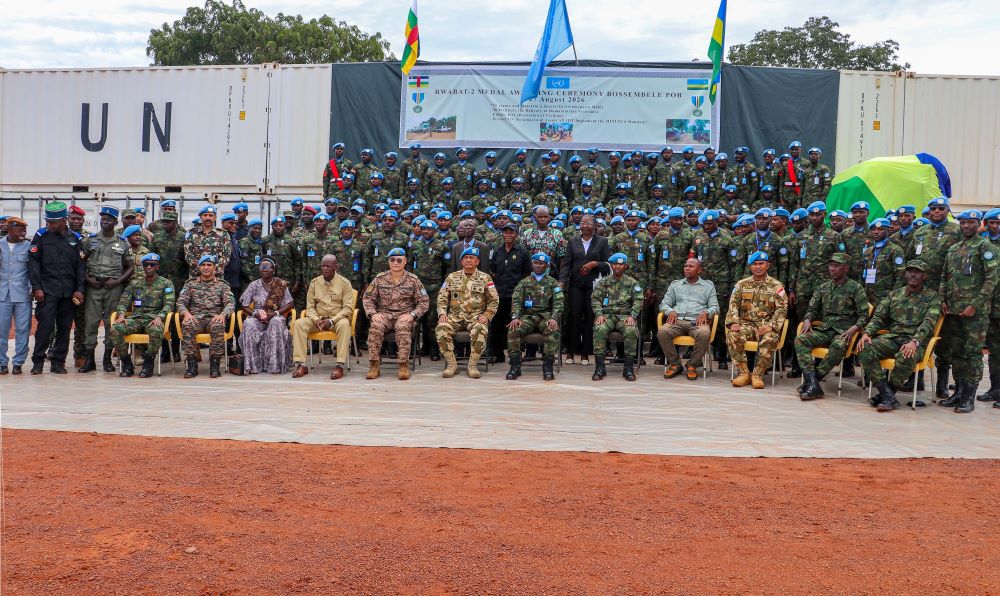
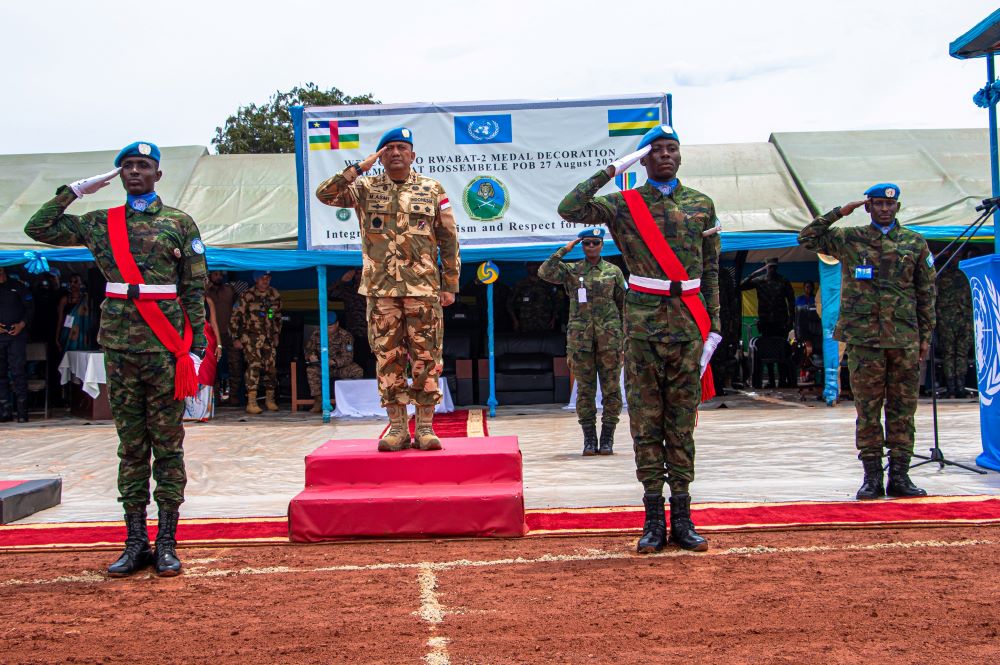
The medals were presented to members of RWANBATT-2 in recognition of their dedication, professionalism, and contribution to peace, security, and stability in the Central African Republic.
The ceremony held on August 27, 2026, was presided over by the MINUSCA Deputy Force Commander, Maj Gen Maychel Asmi. It was attended by the Governor of Ombella-M’Poko Region, Joseph Dokombo; MINUSCA Sector West Commander, Brig Gen Ganselem Lkhagvasuren; Commander of Joint Task Force Bangui, Brig Gen Franco Rutagengwa; Rwanda Defence Attaché to CAR, Col Alphonse Gahima; and members of the Rwandan community in CAR.
Addressing the peacekeepers, Maj Gen Asmi commended RWANBATT-2 for carrying out its duties with professionalism and determination in support of the MINUSCA mandate.
He emphasised that the UN medal represents both individual service and the international community’s commitment to peace and stability.
“Wear this medal with pride. It represents sacrifice, discipline, professionalism, and service to the people of the Central African Republic,” he stated.
Maj Gen Asmi also acknowledged RWANBATT-2’s role in contributing to the creation of a secure environment that has supported the return of internally displaced persons to their homes.
The RWANBATT-2 Contingent Commander, Col Laurent Kalisa Munana, said the peacekeepers remain committed to fully implementing the MINUSCA mandate and maintaining the reputation they have built through discipline, professionalism, and dedication.
“We remain determined to uphold the trust placed in us and to continue serving with the same commitment and professionalism until the completion of our mission,” Col Munana said.
Maj Gen Maychel Asmi commended RWANBATT-2 peacekeepers for their professionalism and determination in supporting the MINUSCA mandate.MINUSCA Deputy Force Commander Maj Gen Maychel Asmi presented United Nations Service Medals to members of RWANBATT-2 at Bossembele Camp.Members of RWANBATT-2 received UN medals for their service and contribution to creating a secure environment in the Central African Republic.Rwandan peacekeepers pose with their United Nations Service Medals following a ceremony recognising their dedication and professionalism in the Central African Republic.Rwandan peacekeepers serving with MINUSCA are recognised for their role in supporting peace, security and stability in the Central African Republic.
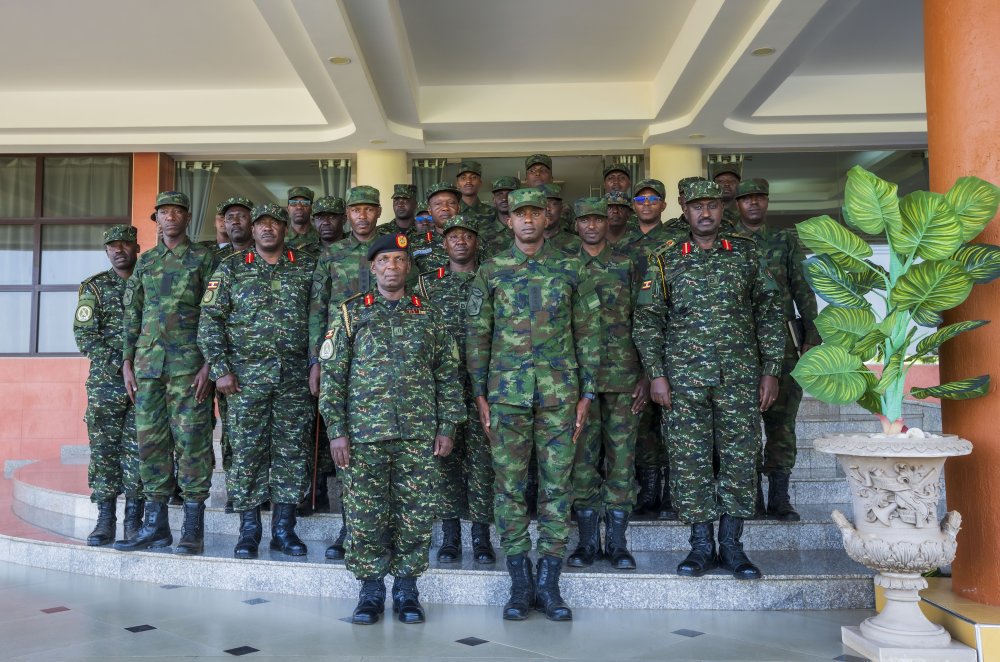
Upon arrival, the RDF delegation was received by the Uganda People’s Defence Forces (UPDF), 2 Infantry Division Commander, Maj Gen Paul Muhanguzi along with subordinate commanders and staff.
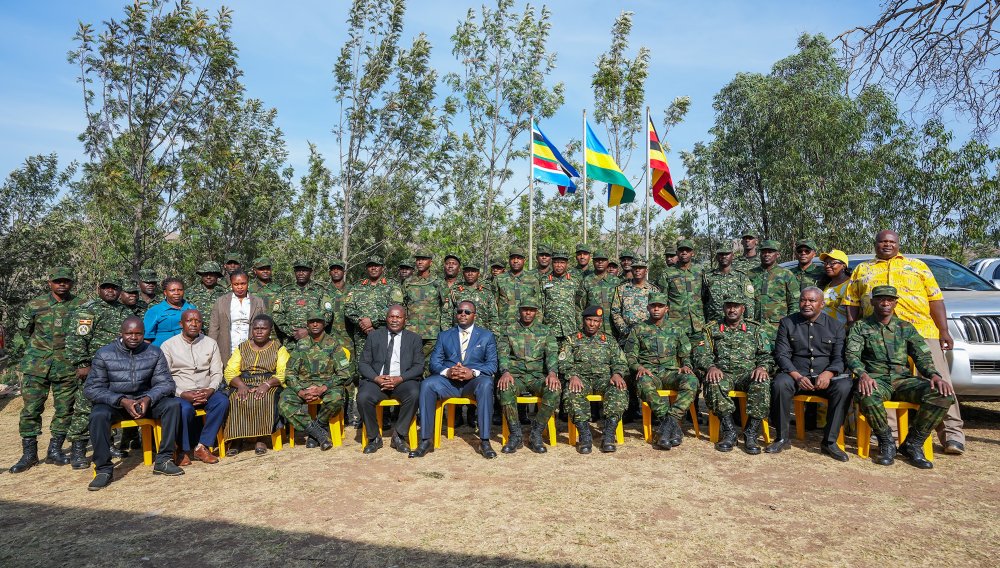
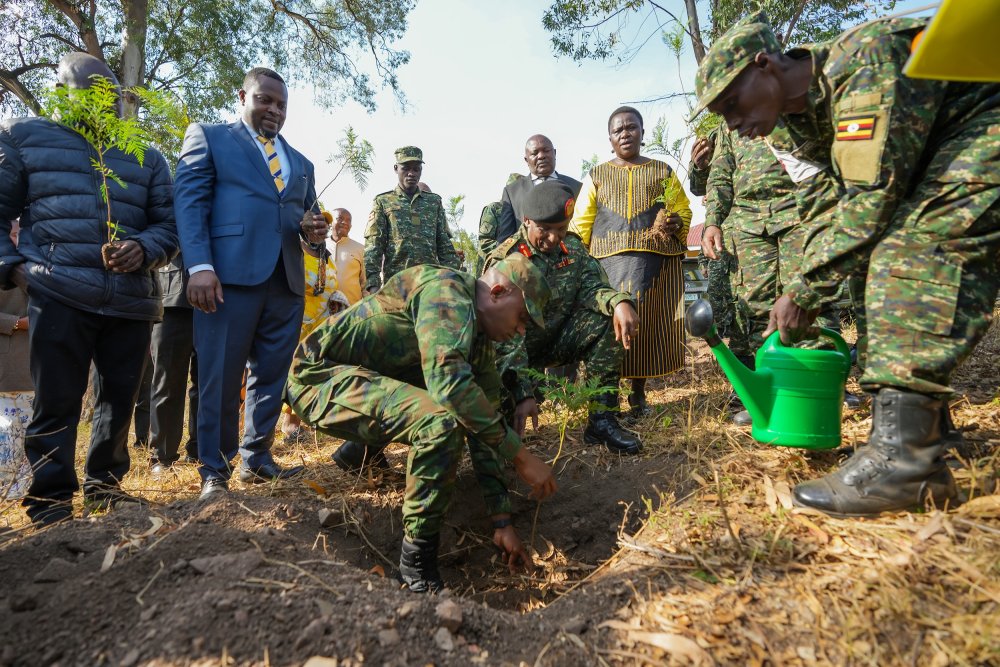
Prior to the meeting, the two delegations joined local leaders and community members in Kamwezi Sub-County, Rukiga District, for a joint tree-planting activity.
In his opening remarks, Maj Gen Paul Muhanguzi welcomed the RDF delegation and emphasized that Rwanda and Uganda share more than a physical border.
He stressed that peace in Rwanda contributes to peace in Uganda and vice versa, underscoring the importance of continued joint efforts to maintain security for communities on both sides of the border.
Maj Gen Muhanguzi concluded by expressing appreciation to the Commanders-in-Chief and Chiefs of Defence Staff of both countries for their visionary leadership and continued efforts to promote unity, cooperation, and good relations between Rwanda and Uganda.
His counterpart, Maj Gen Karusisi, thanked the hosts for the warm welcome. He emphasized that the common border should remain a space for peace, lawful movement, trade, and cooperation rather than a source of insecurity or misunderstanding.
He further noted that commanders have a responsibility to maintain open channels of communication, strengthen confidence between the two forces, and ensure that emerging issues are addressed through dialogue and appropriate coordination.
Maj Gen Karusisi highlighted that the strong relationship between Rwanda and Uganda provides a solid foundation for further cooperation at the military level.
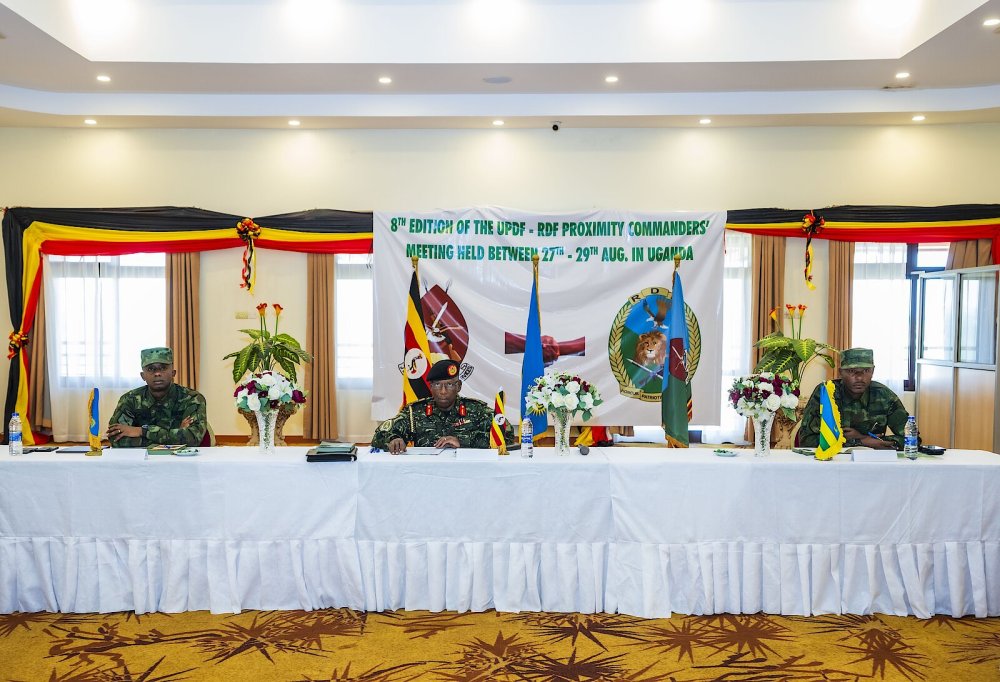
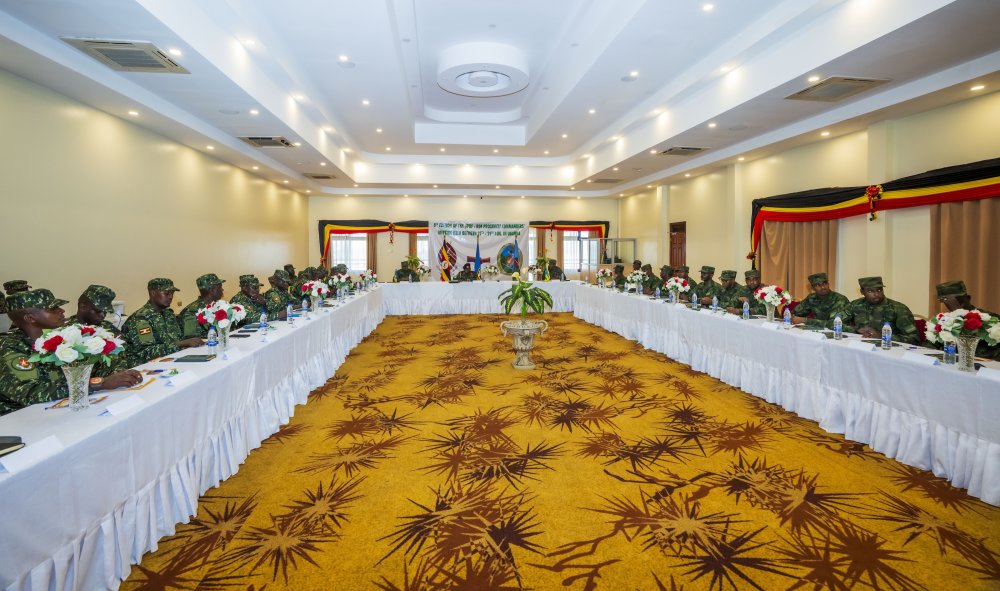
The meeting is part of a series of quarterly engagements that bring together RDF and UPDF commanders whose units are deployed along the Rwanda–Uganda border.
It aims to assess the security situation, address cross-border security challenges, strengthen coordination, and develop lasting solutions to issues affecting communities on both sides of the border.
Maj Gen Ruki Karusisi (left), Commander of the RDF 5 Infantry Division, led the Rwandan delegation at the 8th Proximity Commanders’ Meeting with the UPDF in Mbarara, Uganda.RDF and UPDF commanders joined local leaders and community members in Kamwezi Sub-County, Rukiga District, for a joint tree-planting activity ahead of their meeting.The 8th Proximity Commanders’ Meeting brought together RDF and UPDF commanders deployed along the Rwanda–Uganda border to strengthen communication, confidence and cooperation.RDF and UPDF commanders convened in Mbarara for their 8th Proximity Commanders’ Meeting to discuss security, cross-border challenges and coordination along the Rwanda–Uganda border.