The Israeli military said in a statement that air defense systems are working to intercept the missiles.
Sirens were heard in the northern cities of Metula and Haifa, the southern city of Ashkelon, as well as in Jerusalem and several settlements in the occupied West Bank.
Debris fell in the Umm Al Faham area in southern Israel, causing damage. There were no immediate reports of injuries, the country’s Magen David Adom rescue service said.
The development came as the deadly regional conflict entered its 11th day. On February 28, Israel and the United States launched joint attacks on Tehran and several other Iranian cities, killing Iran’s Supreme Leader Ali Khamenei, along with senior military commanders and civilians. Iran responded by launching waves of missile and drone strikes targeting Israeli and U.S. assets in the Middle East.
Earlier on Tuesday, the Israeli military said it had begun a new series of airstrikes against Iranian government targets in Tehran, whereas Iran’s Foreign Minister Seyed Abbas Araghchi said Iran is well-prepared to continue missile attacks against Israel and U.S. bases in the West Asia region for as long as needed.
The designation, historically applied only to foreign adversaries, bars defence contractors from using Anthropic’s AI in Pentagon-related work and could cost the company billions in projected 2026 revenue.
The lawsuits were filed in the U.S. District Court for the Northern District of California and the U.S. Court of Appeals in Washington, D.C., and argue that the Pentagon’s blacklisting is unlawful and violates Anthropic’s free speech and due process rights.
The company is seeking to have the designation overturned and to block federal agencies from enforcing the restrictions.
Anthropic executives warned the consequences could extend beyond defence contracts. Chief Financial Officer Krishna Rao said the government’s actions could reduce 2026 revenue by “multiple billions of dollars” and cause damage that would be “almost impossible to reverse.”
Head of Public Sector Thiyagu Ramasamy added that the blacklist is already harming commercial relationships and could wipe out projected public sector revenue exceeding $500 million.
Chief Commercial Officer Paul Smith noted that a partner shifted from Claude to a rival AI model for a Food and Drug Administration project, eliminating an expected $100 million revenue pipeline, while negotiations with financial institutions totaling around $180 million were disrupted.
The dispute stems from Anthropic’s refusal to grant unrestricted government access to Claude, citing ethical limits on autonomous weapons and mass domestic surveillance.
Defence Secretary Pete Hegseth criticised these restrictions, prompting President Donald Trump to order federal agencies to cease using Claude, while allowing the Pentagon six months to comply due to Claude’s integration into classified systems.
Anthropic maintains it remains committed to national security work. “Seeking judicial review does not change our longstanding commitment to harnessing AI to protect our national security, but this is a necessary step to protect our business, our customers, and our partners,” a company spokesperson said.
A group of 37 engineers from Google and OpenAI filed an amicus brief supporting Anthropic, warning that the government’s actions could stifle innovation and debate over AI’s risks and applications.
The lawsuits mark the first time an American AI company has faced a formal supply-chain risk designation, setting a potential precedent for the tech industry’s relationship with the U.S. government.
Anthropic, the U.S.-based artificial intelligence company behind Claude, filed two federal lawsuits on Monday challenging the Pentagon’s decision to label it a “supply chain risk.”
Speaking at the Nuclear Energy Summit in Paris, France, on Tuesday, President Kagame said Rwanda’s long-term ambition to become a high-income country by 2050 requires a reliable and abundant electricity supply. He noted that nuclear energy will play a central role in diversifying the country’s energy mix and providing the stability needed for sustained economic transformation.
According to the Head of State, nuclear power offers Rwanda a dependable source of electricity that can support industrial expansion while helping reduce carbon emissions.
“We have decided to make nuclear central to our strategy,” Kagame said. “It will diversify our energy mix while providing the stability required for industrial growth and long-term transformation.”
The president highlighted the importance of building strong institutions, regulatory systems and a skilled workforce to support Rwanda’s nuclear ambitions. He praised the support provided by the International Atomic Energy Agency (IAEA), led by Director General Rafael Grossi, in helping strengthen the country’s nuclear governance framework.
Rwanda has already made progress in developing human capital for the sector. Kagame noted that hundreds of Rwandans have been trained in nuclear science and engineering through partnerships with leading international institutions. The University of Rwanda has also introduced a new academic programme in nuclear science to build local expertise.
Recently, the IAEA conducted an Integrated Nuclear Infrastructure Review in Rwanda and confirmed progress across key pillars required to establish a nuclear energy programme.
“Our country is prepared to proceed through the agency’s milestone approach to the next stage,” he revealed.
Notably, Rwanda plans to establish a nuclear research centre in collaboration with Russia. The centre will focus on producing radioactive materials for cancer diagnosis and treatment, improving agriculture through radiation technologies, and advancing industrial testing methods.
Additionally, Rwanda is preparing to host Africa’s first demonstration of a Dual Fluid nuclear reactor and is exploring small modular reactor (SMR) technology to meet the country’s growing energy demands sustainably.
In his remarks, President Kagame emphasised the growing potential of emerging nuclear technologies for Africa. In particular, he said SMRs are well-suited to countries with smaller electricity grids and could allow African nations to become early adopters of advanced nuclear systems.
“I’m confident that Africa will emerge as one of the most important global markets for SMRs in the years ahead,” he said.
The president called for stronger international cooperation in three key areas: financing, technology partnerships and clear regulatory frameworks. He noted that nuclear energy projects often require specialised financing models that development banks are still unfamiliar with.
Kagame welcomed recent shifts in international policy, including the World Bank’s decision to lift its long-standing ban on financing nuclear power projects. He also referenced commitments made during COP28, encouraging international financial institutions to include nuclear energy in their portfolios.
“Now is the time to work together to make this shift a reality in Africa,” he said.
Looking ahead, Rwanda is preparing to host the 2026 Nuclear Energy Innovation Summit for Africa (NESA) in Kigali this May. Kagame said the summit will bring together leaders from governments, financial institutions and the nuclear industry to advance discussions on Africa’s nuclear future.
He extended an invitation to global partners to attend the event and support Rwanda’s efforts to harness nuclear energy for development.
“Rwanda is determined to do what it takes to power our development with nuclear energy,” Kagame said. “We look forward to you being part of this journey.”
President Kagame said Rwanda’s long-term ambition to become a high-income country by 2050 requires a reliable and abundant electricity supply. President Paul Kagame joined Emmanuel Macron, Director General of the International Atomic Energy Agency (IAEA) Rafael Mariano Grossi, and other leaders for the opening of the 2nd Nuclear Energy Summit.
Immigration Minister Tony Burke confirmed the players, Fatemeh Pasandideh, Zahra Ghanbari, Zahra Sarbali, Atefeh Ramazanzadeh, and Mona Hamoudi, were “moved to a safe location” by Australian police.
He added that other team members had been told they were welcome to remain in the country.
“They want to be clear they are not political activists. They are athletes who want to be safe,” Burke said, noting that discussions with the players had been ongoing for several days.
The decision came amid concerns for the women’s safety after facing heavy criticism in Iran, where some commentators labelled them “wartime traitors.”
Australian police escorted the players during their stay, ensuring they could not be approached unaccompanied.
Burke emphasised Australia’s open offer to the rest of the team, saying, “Australia has taken the Iranian women’s soccer team into our hearts. These women are tremendously popular in Australia.”
The situation also drew attention from US President Donald Trump, who called on Australia to provide asylum and later confirmed the five had been “taken care of.”
During the tournament, the players sang the anthem in subsequent matches against Australia and the Philippines, reportedly under the watch of government officials.
Many supporters in Australia, including members of the Iranian diaspora, expressed solidarity with the team, waving pre-revolution Lion and Sun flags and booing the current Iranian anthem.
Human rights advocates highlighted the difficult position faced by the players, noting some may feel unable to stay due to concern for their families back home.
Craig Foster, former captain of the Australian men’s team, said, “Some may have concerns… even if offered the right to remain in Australia, if they feel unsafe, many may not accept that opportunity.”
The five players are now under Australia’s humanitarian visa program, which allows them to live, work, and study safely in the country.
Iran players react during their national anthem ahead of the Women’s Asian Cup soccer match between Iran and the Philippines in Robina, Australia, Sunday, March 8, 2026.
The high-level meeting brought together heads of state and government, leaders of international organizations, financial institutions, nuclear industry representatives and energy experts to discuss the future of civil nuclear energy.
Currently, nuclear energy generates about 10 percent of the world’s electricity. Many countries consider it a sustainable solution for increasing energy supply while reducing carbon emissions.
At the United Nations Climate Change Conference held in Belém, Brazil, in November 2025, Rwanda joined 32 other countries in committing to triple nuclear energy capacity worldwide by 2050.
President Kagame’s participation in the summit comes shortly after experts from the International Atomic Energy Agency (IAEA) visited Rwanda from March 2 to 9 to assess the country’s readiness to develop nuclear energy infrastructure.
The Chief Executive Officer of RAEB, Fidele Ndahayo, said Rwanda has been expanding the peaceful use of nuclear technology, particularly in sectors such as healthcare. He also noted that a university program dedicated to nuclear science has been introduced.
Last week, Dr. Ndahayo explained that Rwanda had completed a preliminary assessment identifying potential sites where small nuclear reactors could be built. According to the plan, the country hopes to have its first nuclear power plant operational in the early 2030s.
He added that studies have also been conducted to determine whether the existing electricity transmission network can accommodate power generated by future small modular reactors.
Rwanda aims to increase its electricity generation capacity to more than 3,000 megawatts, up from the current 447 megawatts. Authorities believe small nuclear reactors could play a key role because they require less land, produce low carbon emissions and generate significant power.
Feasibility studies estimate that building a nuclear power plant in Rwanda could cost between $5 billion and $6 billion. RAEB says the project would likely require a partnership between the government and private investors.
Currently, South Africa is the only African country operating a nuclear power plant. However, interest in nuclear energy is growing across the continent. Kigali is set to host the Nuclear Energy Innovation Summit on Africa from May 18 to 21, 2026.
President Kagame was received by his French counterpart Emmanuel MacronPresident Kagame is among heads of state who attended the summit. Participants of the summit in a group photo.
Gen Muganga made the remarks on March 9, 2026, in Ngarama Sector of Gatsibo District, during the launch of three-month Defence and Security Citizen Outreach Programme 2026.
He explained that the core mission of the Rwanda Defence Force is to protect the country and its people, even if it means paying the ultimate price.
“Normally, it may not make sense mathematically, but to show how valuable Rwanda’s citizens are, we would accept sending even 1,000 soldiers into battle and have them fall there to protect one Rwandan citizen,” he said.
Gen Muganga’s statement comes at a time when some countries have been pressuring Rwanda to remove defensive measures deployed along its border. Rwanda says these measures are intended to prevent attacks from the FDLR terrorist group and allied forces.
Rwanda established the defensive measures following a series of attacks in Musanze District in March, May and June 2022, which Rwanda says involved the FDLR and allied forces from the Democratic Republic of Congo.
Authorities say the measures have helped reduce security threats. In January 2025, Rwanda intercepted several rockets fired toward Rubavu town, although the provocations left ten civilians dead.
Speaking to diplomats accredited in Rwanda on March 7, President Paul Kagame defended the country’s position, saying the defensive posture remains necessary because the government of the Democratic Republic of the Congo has not dismantled the FDLR genocidal group.
A 2025 governance scorecard by the Rwanda Governance Board (RGB) showed strong public confidence in security and stability in the country, with the security pillar scoring 90.02 percent.
Gen Muganga has reaassured Rwandan citizens on their safety noting that soldiers are ready to pay ‘ultimate price’.
The ceremony was attended by local administrative authorities from Macomia District, community members, teachers, students from this school, security forces, as well as members of the Rwanda Security Force.
On behalf of the Rwanda Security Forces leadership, Lt Col Frank Rwabugande, RSF Head Civil and Military Cooperation, highlighted that the support was provided as part of an effort to help promote education for students and to strengthen the collaboration between the Rwanda Security Force and local communities in Mozambique.
“This school is more than a building; rather a symbol of unity and cooperation that presents the enduring brotherhood and solidarity between the people of Rwanda and Mozambique. It presents shared commitment to peace, security and stability through unity, development and education,” remarked Lt Col Rwabugande.
He underscored that lasting peace goes beyond military operations and therefore requires empowering communities through the rebuilding of infrastructure, such as schools and markets, to secure a better future for all Mozambican people.
Tomás Badae, the Administrator of Macomia District, commended the rehabilitation of the school, noting that in previous years the school had not been in use because it had been damaged by terrorist activities. He therefore expressed appreciation to the Rwanda Security Forces for helping to restore confidence among the population.
He urged teachers, parents and students to take good care of the rehabilitated school.
The ceremony was attended by local administrative authorities from Macomia District, community members, teachers, students from this school, security forces, as well as members of the Rwanda Security Force.The school was handed over on March 9, 2026.The facilities were completed within three months and accommodate 150 pupils.Mozambican officials with representatives of RSF at the official inauguration.
The report shows that prices increased 0.9 percent in February compared with January 2026, indicating continued pressure on the cost of living as households face higher spending on key goods and services. On average, inflation stood at 7.4 percent over the past 12 months, reflecting a steady rise in consumer prices across the economy.
Several sectors recorded notable price increases over the past year. Housing, water, electricity, gas and other fuels, which constitute a large share of the consumer basket, rose by 12.3 percent, while restaurants and hotels registered a sharp 19.9 percent increase. Prices for alcoholic beverages and tobacco also climbed significantly, increasing by 18.3 percent, while transport costs rose by 8.6 percent.
Food prices, which account for a large share of household spending, increased more moderately compared with other sectors. The category of food and non-alcoholic beverages rose by 4.6 percent annually, with bread and cereals increasing by 11.7 percent and meat by 9 percent, while vegetable prices recorded a smaller annual rise of 3.4 percent.
The report also points to sharp increases in the health sector, where prices surged by 71.1 percent over the past year, though the category represents a relatively small share of the consumer basket.
Meanwhile, core inflation, which excludes volatile items such as fresh food and energy, rose by 9.6 percent year-on-year, suggesting that underlying price pressures remain. On a monthly basis, core inflation increased by 0.9 percent in February.
Energy prices also played a role in the rise in consumer costs, increasing by 20 percent annually and 2.6 percent compared with January, reflecting higher fuel and electricity expenses.
The CPI measures the average change over time in prices paid by households for a basket of goods and services. The index is calculated using data from more than 1,600 products collected monthly from markets, shops, hospitals and other service providers across the country.
Economists closely watch inflation trends as they influence purchasing power, household spending and policy decisions. In the month under review, the National Bank of Rwanda (NBR) raised its key interest rate by 50 basis points to 7.25 percent in a move aimed at curbing rising inflation.
Inflation in Rwanda increased to 8.9 percent in January 2026, up from 8.0 percent in December 2025, exceeding the Central Bank’s target range of 2–8 percent.
The rise, Central Bank Governor Soraya Hakuziyaremye said, was driven largely by higher energy costs, electricity tariffs, fuel prices, and supply constraints on fresh food, particularly vegetables affected by below-normal rainfall.
“The Monetary Policy Committee has decided to increase the Central Bank Rate to 7.25 percent to limit second-round effects of recent price increases and support a timely return of inflation to the target range,” she stated.
The latest report from the National Institute of Statistics of Rwanda (NISR) shows that prices increased 0.9 percent in February compared with January 2026, indicating continued pressure on the cost of living as households face higher spending on key goods and services.
The chairperson said in a statement that he is closely following developments in the region, which are marked by “concerning incidents that are escalating tensions and undermining regional stability.”
He expressed deep concern over recent attacks on critical infrastructure, including energy and transport facilities, which further heightened tensions and is threatening regional and global economic stability.
Highlighting that such actions are disrupting vital supply chains and have far-reaching implications for international trade and energy markets, he condemned any violation of international law, including infringements on the sovereignty and territorial integrity of states.
He called on all related parties to exercise maximum restraint, prioritize dialogue and diplomacy, and work toward a swift de-escalation of the situation, in accordance with the principles and purposes of the Charter of the United Nations.
“Rising oil prices and disruptions in trade routes are already affecting markets, including the export of perishables from Africa, while disruptions to airspace are impacting African airlines and travel connectivity,” Youssouf said.
He reiterated the 55-member continental organization’s commitment to international law, the peaceful resolution of disputes, and the preservation of international peace and security.
African Union Commission Chairperson Mahmoud Ali Youssouf has warned that military escalation in the Persian Gulf threatens regional and global economic stability.
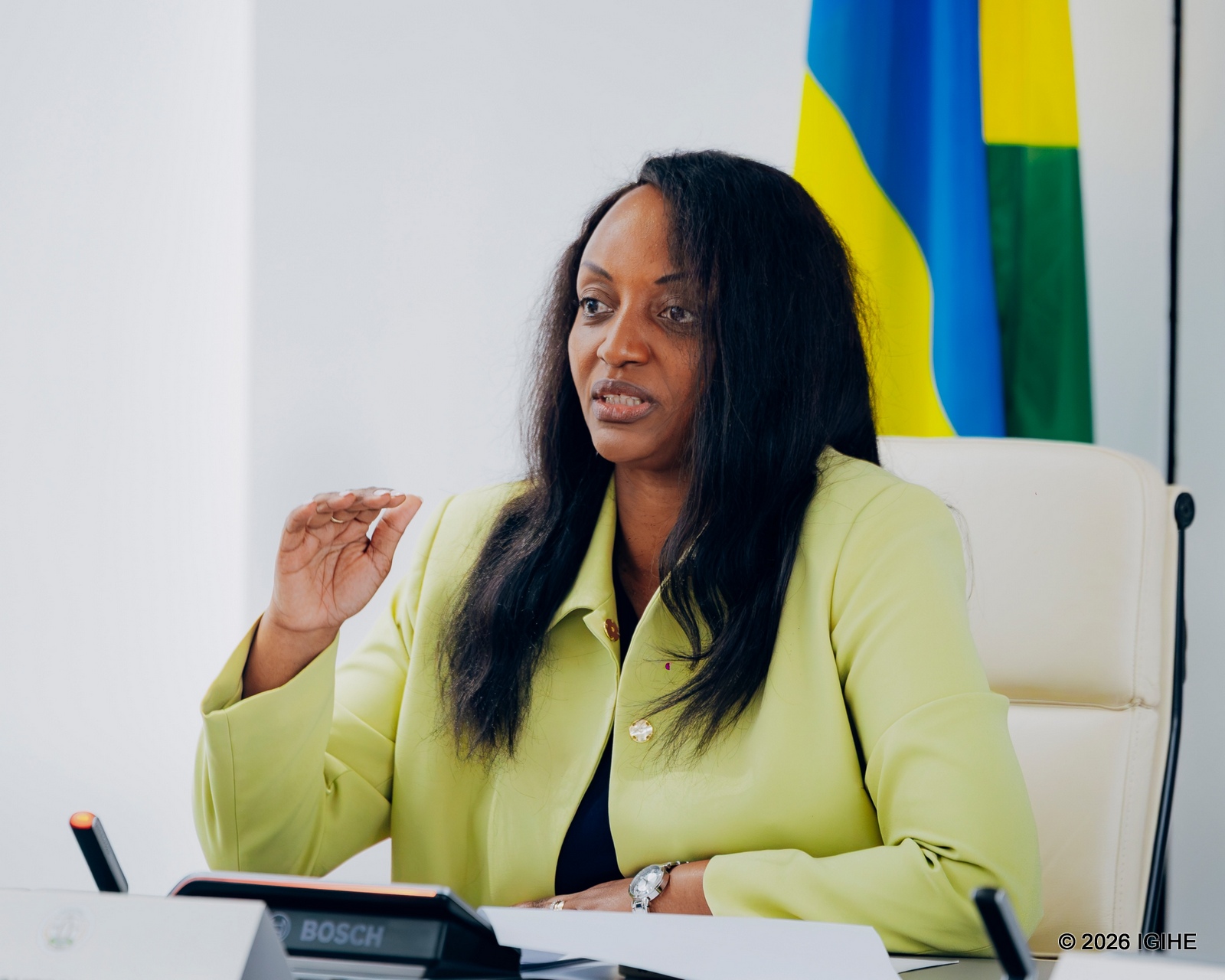
Delivering Rwanda’s national statement on March 9, the Minister of Gender and Family Promotion, Consolée Uwimana, said the country remains committed to strengthening women’s rights through inclusive policies, access to justice, and increased participation in governance.
Uwimana noted that access to justice plays a critical role in achieving gender equality and addressing structural barriers that affect women’s rights and dignity.
“In Rwanda, access to justice is understood not only as having access to courts, but more importantly, benefitting from policies and legal frameworks that are responsive to women’s realities,” she said.
The minister highlighted several initiatives Rwanda has implemented to promote the welfare and protection of women and girls. Among them are the Isange One Stop Centres, which provide comprehensive services to survivors of gender-based violence and human trafficking.
The centres offer free and integrated support, including medical care, psychosocial assistance, legal aid, investigations, referrals to prosecution services, temporary shelter, and reintegration support for survivors.
Minister Uwimana also pointed to Rwanda’s strong record in women’s representation in leadership and governance.
Women currently hold 64 percent of seats in the Chamber of Deputies, 46 percent in the Senate, and 55 percent in the judiciary, making Rwanda one of the countries with the highest levels of women’s political representation globally.
Uwimana added that women are also increasingly visible in emerging sectors such as biotechnology, space science, and climate governance.
Beyond national borders, Rwanda has extended its efforts to support women and girls affected by conflict. The minister cited the relocation of a girls’ school from Afghanistan to Rwanda in 2021, which enabled the students to continue their education in a safe environment.
Concluding her remarks, Uwimana quoted Paul Kagame, who in his International Women’s Day message emphasised the role of women in Rwanda’s transformation.
“We celebrate the foundational role women continue to play in Rwanda’s transformation. Your ingenuity and leadership continue to affirm a simple truth: a nation can only truly progress when inclusion and equality are upheld in every sphere,” Kagame said.
The annual CSW session brings together government leaders, policymakers, and civil society representatives from around the world to review progress and accelerate action toward gender equality and women’s empowerment.
The Minister of Gender and Family Promotion, Consolée Uwimana, said Rwanda remains committed to strengthening women’s rights through inclusive policies, access to justice, and increased participation in governance.