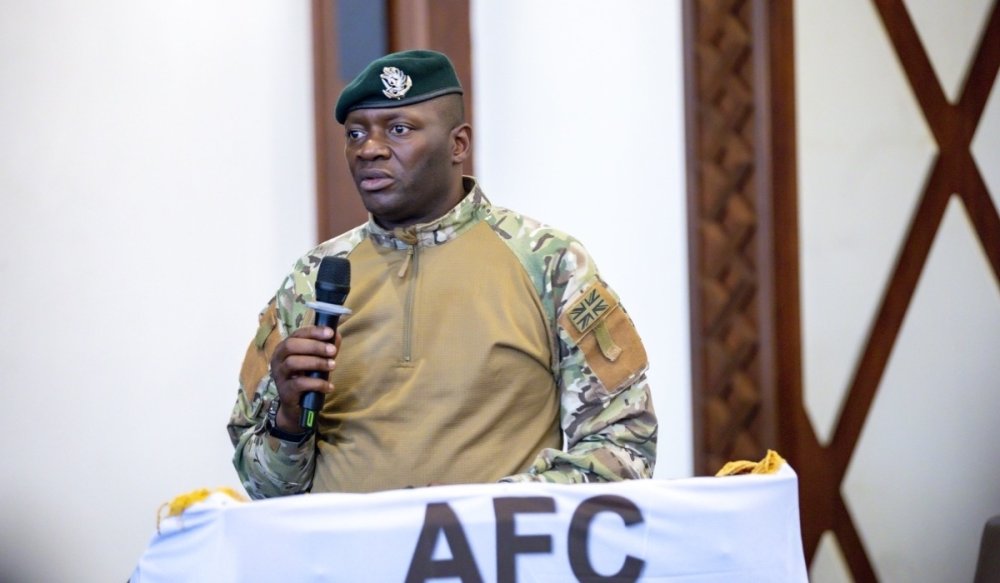
AFC/M23 spokesperson Lawrence Kanyuka explained that the attack targeted densely populated areas in the Masisi territory of North Kivu province, resulting in numerous civilian casualties and the destruction of homes.
“At 5:15 a.m., the Kinshasa government forces fired multiple indiscriminate shells at heavily populated areas in Mushaki and its surroundings. These attacks were blind and showed no regard for human life, killing many innocent civilians and destroying numerous houses,” Kanyuka said.
AFC/M23 seized control of Mushaki in early December 2023, expelling DRC, Burundian, and allied forces. Mushaki is a strategically important area in Masisi territory, located approximately 30 kilometers from the city of Goma.
Kanyuka further stated that this morning, DRC forces also carried out a significant attack in the densely populated Gakenke area in Minembwe commune, actions he described as part of a plan to target the Banyamulenge population.
These attacks follow a drone strike carried out by DRC forces on March 6 in the Kibanda Mangobo area of Walungu territory, South Kivu province.
AFC/M23 reported that eight people were killed and 12 others injured in this latest attack, reiterating its commitment to protecting civilians who continue to be affected by ongoing hostilities.
The agreement ensures that products from Rwanda certified as meeting quality standards will no longer require retesting upon arrival in these countries and can move directly to their markets.
The same applies to products originating from Zimbabwe and Congo Brazzaville exported to Rwanda. The agreement was signed in Kigali at the Ministry of Foreign Affairs and Cooperation on March 6, 2026, and is based on collaboration between Rwanda Standards Board (RSB) and the equivalent institutions in Zimbabwe and Congo Brazzaville.
Key provisions include recognizing that laboratories in the three countries meet internationally trusted quality standards. Products tested in Rwanda will not need to be retested in Zimbabwe or Congo Brazzaville, speeding up trade and reducing the costs associated with repeated testing.
The signing followed a three-day meeting of the African Organisation for Standardisation (ARSO) held in Kigali, which focused on establishing 25 continental quality standards for unstitched fabrics, textile products, and related goods.
Following the agreement, 32 Rwandan factories received certificates confirming that their products meet trade-quality standards across Africa. This will prevent delays at customs and the need for additional testing in other countries.
The head of Uniworks Transporters and Logistics, which also operates a maize-processing factory in Rwanda, said the certificates will ensure their products are internationally trusted.
He stated, “When we started, it was challenging. We even began operations in Uganda before coming here, and it was not easy. Opening doors to other African markets is very important for our business. Previously, the challenge was proving the quality of our products; retesting in other countries caused delays and extra costs.”
Rwanda’s Minister of Trade and Industry, Sebahizi Prudence, said that Africa has long been criticized for signing agreements without implementing them. He emphasized that such agreements now help accelerate trade among the signatory countries.
ARSO Secretary-General Dr. Hermogene Nsengimana said the agreement benefits all parties and will open opportunities for Rwanda to expand trade with Southern African Development Community (SADC) countries, where Zimbabwe is a member.
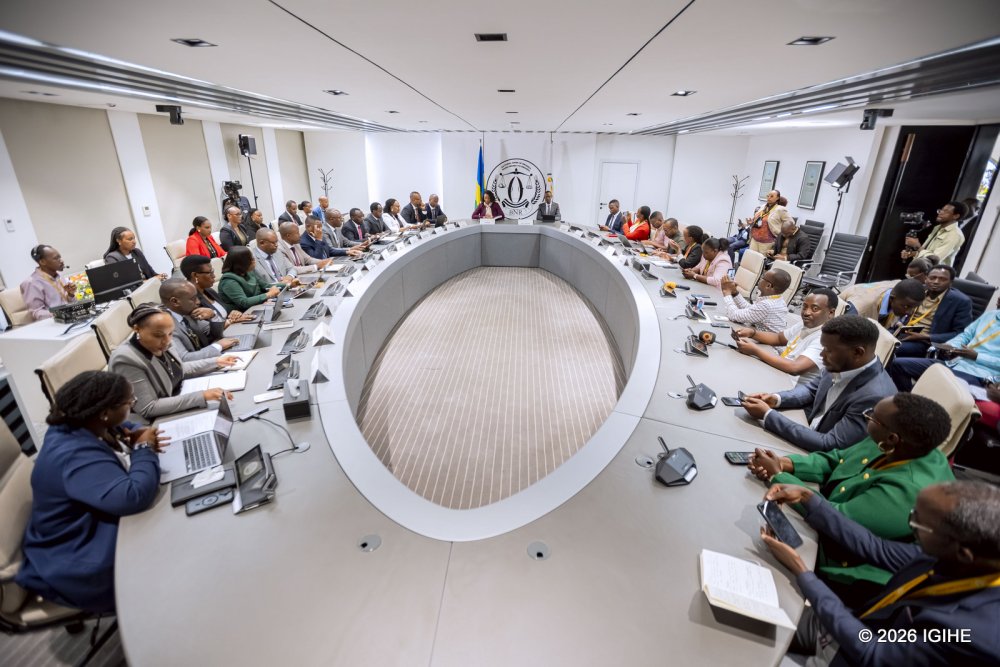
Rwanda and Zimbabwean representatives signing the agreement in Kigali. Officials who participated in the meeting in a group photo. The agreement was signed on Friday, March 6, 2026. The signing followed a three-day meeting of the African Organisation for Standardisation (ARSO) held in Kigali.
In an interview with IGIHE, Batamuriza Ange, one of the event organizers, explained that the initiative aims to strengthen ties within the diaspora while introducing the richness of Rwandan culture to a wider audience in the United Kingdom.
The event scheduled on March 21, 2026, in Coventry, West Midlands, was organized by the West Midland (Coventry) RCA. Activities will run from 3:00 PM to 10:00 PM.
Wibabara noted that “Rwanda Cultural Day” will feature a variety of activities highlighting the country’s cultural identity. The program will include traditional music and dance performances, opportunities for community interaction, and a chance to discover authentic Rwandan cuisine.
“Rwanda Cultural Day brings together the Rwandan community and friends of Rwanda to celebrate shared heritage, traditions, and values,” she said.
Beyond the festivities, the event will also serve as a platform for dialogue and connection, allowing members of the diaspora to strengthen community bonds and pass on Rwandan cultural values to younger generations growing up in the United Kingdom.
The Rwandan community warmly invites everyone interested to attend “Rwanda Cultural Day” and experience a day filled with culture, unity, and the celebration of Rwanda’s heritage.
Interested individuals can register using the link below for Rwanda Cultural Day
The graduation ceremony was presided over by the RDF Army Chief of Staff, Maj Gen Vincent Nyakarundi, on behalf of the Chief of Defence Staff, and was attended by RDF Generals and officers.
The course was designed to strengthen the operational readiness of RDF Special Operations personnel by equipping them with advanced tactical knowledge and practical skills needed to address emerging security threats. It also aimed to enhance their ability to effectively respond to terrorist incidents and conduct rescue operations for victims held by terrorist groups.
In his remarks, Maj Gen Nyakarundi commended the trainers for their dedication and professionalism in delivering high-quality instruction that strengthens the capabilities of RDF personnel. He further congratulated the graduates for their discipline and successfully completing the demanding training and acquiring valuable skills essential for future missions.
Maj Gen Nyakarundi commended the trainers for their dedication and professionalism in delivering high-quality instruction. Best performers were awarded at the ceremony.RDF officials followed final drills as trainees showcased acquired practical skills.
Speaking in an interview with Firstpost, Amb. Nduhungirehe said the roots of Rwanda’s security concerns date back to the aftermath of the genocide, when forces responsible for the killings crossed into the eastern part of the Democratic Republic of the Congo.
“In 1994 in Rwanda, we had a genocide against the Tutsi. Over one million people were killed over three months,” he said, noting that the perpetrators later fled across the border. “Those who committed that genocide crossed the border. They were never disarmed by the UN or other forces that were on the ground.”
He said the group that later became the Democratic Forces for the Liberation of Rwanda has continued to operate from eastern Congo and has launched attacks on Rwanda over the past three decades.
“From DRC, they have been attacking Rwanda over the past 30 years on countless occasions,” Amb. Nduhungirehe said, adding that Rwanda has therefore deployed defensive measures along its border to prevent further attacks.
The minister also warned that genocide ideology remains a concern in the region. “When we hear the same words that were used before the genocide… we take it very seriously,” he said, stressing that what happened in 1994 should never happen again.
He further argued that ongoing hostilities on the ground, including increased air strikes and drone attacks in eastern Congo, risk undermining ceasefire commitments linked to ongoing peace initiatives.
Despite these challenges, Amb. Nduhungirehe said Rwanda remains engaged in diplomatic efforts aimed at resolving the conflict while ensuring the country’s security and preventing a repeat of the dark moments of 1994.
Rwanda’s Foreign Affairs Minister, Amb. Olivier Nduhungirehe has shed light on reasons why Rwanda’s defensive measures remain in place.
Speaking during a diplomatic dinner with ambassadors, high commissioners and representatives of international organisations in Kigali on Friday, Kagame said Rwanda faces what he described as an “impossible choice” between tolerating threats near its borders or defending itself and facing condemnation.
His remarks come days after the United States imposed sanctions on the Rwanda Defence Force (RDF) over the conflict in eastern Democratic Republic of the Congo (DRC).
The Head of State said Rwanda’s defensive measures are driven solely by security concerns, particularly the continued presence of the Democratic Forces for the Liberation of Rwanda (FDLR), a militia group formed by perpetrators of the 1994 Genocide against the Tutsi, in the eastern DRC.
“Rwanda faces an impossible choice: to either tolerate the continued presence of the FDLR and its growing network of militias and allow them to grow closer to our border or to defend ourselves and be condemned for it,” Kagame said.
“Any condemnation that comes, by the way, is a badge of honour for our security forces,” he added.
Security concerns
The president told diplomats that Rwanda’s security concerns stem from the continued presence and activities of the FDLR in eastern DR Congo, accusing the Congolese government of providing political cover and support to the group.
According to Kagame, the militia continues to spread an ideology rooted in genocide and has formed alliances with other armed groups in the region.
“One thing that has not changed is the right and duty of every nation to ensure the safety of its borders and people. Rwanda is no exception,” Paul Kagame said, adding that the country’s defensive measures are intended to address security threats and nothing else.
He argued that Rwanda has repeatedly raised these concerns in regional and international forums, but claims that the root causes of the conflict are often ignored in favour of short-term political interests.
Kagame also questioned the implementation of the Washington Accords, saying the agreement was intended to address security concerns for all parties involved.
He noted that the accords involve three parties, Rwanda, DR Congo and the United States, but said expectations often appear to place the burden of compliance primarily on Rwanda.
“A signed peace agreement should bind all parties equally,” Kagame said, adding that selective pressure risks emboldening armed groups and prolonging instability.
Call for lasting peace
Despite the tensions, Kagame emphasised that Rwanda remains committed to peace in the region.
He said Rwanda would be ready to lift its defensive measures if DR Congo fulfils its obligations under the Washington Accords, including addressing the threat posed by the FDLR and other armed groups operating near Rwanda’s borders.
“Rwanda wants peace,” Kagame said. “But we want a genuine and lasting peace on which we can build our future prospects.”
The president also warned that Rwanda would never compromise on the security gains it has built over the past three decades.
“We have made a promise to ourselves never to go back to the dark days,” he told the diplomats. “That is not something we will waver from.”
President Kagame said Rwanda’s defensive measures are driven solely by security concerns, particularly the continued presence of the FDLR genocidal force in the DRC.
The office, located at the Zein Building in Nyarutarama, Kigali, will host the group’s subsidiaries CPF Capital & Advisory, Rukisha Solutions, and CPF Financial Services, positioning the institution as a partner in capital markets development, structured finance, and technology-driven financial services in Rwanda.
Speaking during the launch on Friday, Hosea Kili, Group Managing Director and CEO of CPF Group, said Rwanda’s stable regulatory environment and rapidly developing digital economy made it an attractive destination for the company’s regional growth strategy.
“Our presence in Rwanda reflects the deliberate regional growth strategy. Rwanda has built one of Africa’s most stable and forward-looking financial ecosystems. We are here to mobilize capital responsibly, structure transformative transactions, and support institutions with governance-led, execution-focused advisory solutions aligned to national development priorities,” Kili said.
Hosea Kili, Group Managing Director and CEO of CPF Group, said Rwanda’s stable regulatory environment and rapidly developing digital economy made it an attractive destination for the company’s regional growth strategy.
He revealed that the group plans to begin operations with a $20 million investment, with additional capital expected as the company identifies further opportunities in the market.
Founded in Kenya in the 1920s as a pension fund administrator, CPF Group has grown into a diversified regional financial services institution providing pension administration, wealth management, capital advisory and structured finance services. The company currently administers pension funds with a combined value of over Ksh 318 billion (approximately Rwf 3.6 trillion) serving more than 500,000 members.
According to Maurice Nduranu, Group Chairperson, CPF Group, Rwanda was chosen as one of the first destinations for the group’s international expansion due to its strong investment climate and supportive regulatory environment.
“We are excited about the ease of doing business in Rwanda and the responsiveness of both government and the private sector. For us, this is an excellent first stop outside Kenya as we expand across the region with ultimately Pan-African ambitions,” Nduranu said.
Maurice Nduranu, Group Chairperson, CPF Group, Rwanda was chosen as one of the first destinations for the group’s international expansion due to its strong investment climate and supportive regulatory environment.
He added that establishing a physical presence in Rwanda would allow the firm to build partnerships locally rather than operating remotely from Kenya.
“We believe capital is borderless, and African businesses must increasingly operate across borders. Being here allows us to collaborate with institutions on the ground and contribute to regional economic growth,” he noted.
The Rwanda office will focus on capital markets advisory, infrastructure financing, alternative investment structuring, and cross-border capital mobilization. Through its fintech subsidiary Rukisha Solutions, the company also plans to introduce digital micro-lending and payments services aimed at expanding financial inclusion.
The office, located at the Zein Building in Nyarutarama, Kigali, will host the group’s subsidiaries CPF Capital & Advisory, Rukisha Solutions, and CPF Financial Services.
Kili said Rwanda’s growing Rwanda Stock Exchange presents opportunities for new investment products, noting that the group intends to support listings and capital market transactions in the country.
“We have strong experience in transaction advisory and investment banking across the region. Through our investment banking license, we expect to bring new products that can be listed on the stock exchange and deepen Rwanda’s capital markets,” he said.
Speaking at the launch, Rwanda’s Minister of Finance and Economic Planning, Yusuf Murangwa, said the entry of institutions like CPF Group reflects growing confidence in Rwanda’s economic direction and policy framework.
“This milestone reflects the continued confidence that regional and international institutions have in Rwanda’s economic direction, the strength of our policy framework, and the consistency with which we are implementing our national development agenda,” Murangwa said.
Rwanda’s Minister of Finance and Economic Planning, Yusuf Murangwa, said the entry of institutions like CPF Group reflects growing confidence in Rwanda’s economic direction and policy framework.
He emphasized that strengthening financial markets and expanding financial inclusion remain key priorities for the government.
“Mobilizing long-term capital is essential for financing infrastructure, supporting private sector growth, and delivering our national strategy for transformation. Institutions such as CPF Capital play an important role in bringing structuring expertise and access to new sources of capital,” he said.
Murangwa added that Rwanda is continuing to invest in institutions, regulatory frameworks and financial infrastructure to position the country as a regional financial and investment hub.
On her part, Janet Mwawasi, Kenya’s High Commissioner to Rwanda, highlighted the broader economic and diplomatic significance of the launch between the two countries.
“The establishment of CPF Group in Rwanda represents the strengthening of economic ties between Kenya and Rwanda and demonstrates the confidence Kenyan institutions have in Rwanda’s regulatory environment and growth trajectory. This investment reflects the shared ambition of our nations to deepen capital markets integration and accelerate sustainable regional development.”
Janet Mwawasi, Kenya’s High Commissioner to Rwanda, said the establishment of CPF Group in Rwanda demonstrates the confidence Kenyan institutions have in Rwanda’s regulatory environment and growth trajectory.
The expansion into Rwanda marks a key milestone in CPF Group’s broader regional strategy, as the nearly century-old institution seeks to deepen its presence across East Africa while pursuing longer-term Pan-African ambitions.
Pierre-Célestin Rwabukumba, the Chief Executive Officer (CEO) of the Rwanda Stock Exchange (RSE), attended the event.Hortense Mudenge, the CEO of the Kigali International Financial Centre (KIFC), also graced the launch.Various stakeholders attended the launch.Attendees were treated to entertainment by a traditional Rwandan troupe.
The announcement came in a statement released on March 5, 2026, by GAFCON Secretary-General Rt. Rev. Paul Donison, following the G26 Bishops Conference in Abuja, Nigeria.
In the communique titled “A Council to Lead the Communion,” Donison confirmed that the GAFCON Primates had dissolved the longstanding GAFCON Primates Council and replaced it with the Global Anglican Council, a conciliar structure including primates, bishops, clergy, and lay members with full voting privileges, to lead the Global Anglican Communion.
Archbishop Mbanda was elected Chairman, Archbishop Miguel Uchoa as Vice-Chairman, and Bishop Paul Donison as General Secretary, with terms concluding at GAFCON V in Athens in 2028.
This restructuring marks a decisive step in GAFCON’s efforts to reorder the Anglican Communion amid ongoing divisions.
GAFCON was founded in 2008 in response to concerns over liberal shifts in parts of the Anglican Communion, particularly decisions perceived as departing from biblical authority.
Tensions intensified with the January 2026 appointment of Bishop Sarah Mullally as Archbishop of Canterbury and events such as the 2025 election of Bishop Cherry Vann, who is in a same-sex marriage, in Wales.
Archbishop Mbanda had publicly voiced concerns that such developments reflected worldly pressures contrary to Scripture, and GAFCON has emphasized its role in representing the majority of Anglicans worldwide, especially through alignment with the Global South Fellowship of Anglican Churches (GSFA), claiming to encompass around 85% of global Anglicans.
The new council structure deliberately moves away from a single “primus inter pares” model, opting for shared leadership to better serve the needs of the majority of Anglicans.
Archbishop Mbanda, who has led GAFCON since April 21, 2023, continues in this pivotal role through the restructured framework.
Archbishop Mbanda holds advanced degrees in evangelism, Christian education, and theology from Trinity International University in the United States, following studies at Kenya Highlands Bible College.
He served as Bishop of the Diocese of Shyira from March 2010 before being elected Archbishop of the Anglican Church in Rwanda in January 2018.
Archbishop Mbanda was elected Chairman, Archbishop Miguel Uchoa as Vice-Chairman, and Bishop Paul Donison as General Secretary. Archbishop Laurent Mbanda has been elected Chairman of Global Anglican Council
Mugonero Hospital was established in 1931 by Seventh-day Adventist missionaries at the Ngoma Mission. Over the years, its responsibilities expanded, and it now serves around 150,000 people from Karongi and Nyamasheke districts.
Many of the hospital buildings had become outdated, prompting the government, in partnership with the Adventist Church, to launch a phased renovation program. Renovated facilities include the children’s ward, maternity ward, and offices for staff and hospital management.
Mediatrice Umuhoza, a patient, told IGIHE that before the renovations, she worried about challenges associated with old buildings.
“During heavy rains, water would leak down the walls. Hospital beds were worn out and few, and with so many patients, it was a real challenge,” she said.
Jean Claude Mutuyimana, treated for bone-related illnesses, said receiving care had been difficult due to cramped and outdated facilities.
“Before the renovations, treatment here was challenging. We thank the government and partners for refurbishing the hospital. The main remaining challenge is the low number of doctors and nurses,” he said.
The Director General of the hospital, Mwumvaneza Mutagoma said more than Rwf 1 billion was spent on renovations, including Rwf 700 million for the maternity ward, Rwf 135 million for staff offices, and additional funds for the children’s ward.
“The remaining challenge is a shortage of medical staff, especially nurses and midwives. However, we are hopeful that more will be available soon, thanks to a program aimed at quadrupling the number of doctors over the next four years.
“We currently have six midwives out of the 19 needed, 41 nurses out of the 58 required, and no specialist doctors. The orthopedic doctor we had, a missionary, has left, and we are waiting for a replacement,” he explained.
Mugonero Hospital collaborates with nine health centers, seven in Karongi and two in Nyamasheke, and serves approximately 150,000 people.
The hospital has 130 beds and mainly treats patients for respiratory illnesses, bone diseases, infections caused by poor sanitation, and other common conditions.
Over Rwf 1 billion has been invested in the renovation of Mugonero HospitalMugonero Hospital was established in 1931 by Seventh-day Adventist missionaries at the Ngoma Mission.
In a statement issued on Friday, March 6, 2026, the embassy said it is coordinating with the national carrier, RwandAir, and other relevant entities to organise flights for citizens wishing to return home.
“All Rwandans wishing to be repatriated are therefore invited to register with the Embassy the soonest possible,” the statement said.
The embassy also urged Rwandan nationals in both countries to follow safety instructions issued by authorities in their host countries and to remain updated through official communication channels. It added that, so far, no Rwandan national has been harmed.
The advisory comes as the Middle East enters the seventh day of a rapidly escalating regional war triggered by joint military strikes by the United States and Israel on Iran that began on February 28.
The attacks, code-named Operation Roaring Lion by Israel and Operation Epic Fury by the United States, targeted Iranian nuclear facilities, missile infrastructure and senior leadership. The opening strikes reportedly killed Iran’s Supreme Leader, Ali Khamenei.
Iran later launched retaliatory strikes under Operation True Promise IV, involving waves of missiles and drones targeting U.S. military bases across Iraq, Jordan, Qatar, Kuwait, Bahrain and the United Arab Emirates, as well as Israeli cities including Tel Aviv and Jerusalem.
The widening conflict has disrupted international trade, forced the closure of several airspaces and triggered evacuations of foreign nationals from parts of the region, raising concerns about a growing humanitarian and economic crisis.
The Rwandan embassy said its diplomatic and consular team remains available to provide guidance and support to citizens during the ongoing situation.
Rwandans in need of assistance or wishing to register for repatriation have been encouraged to contact the embassy through emergency telephone numbers +971508242987 or +971504253218, or via email at ambaabudhabi@minaffet.gov.rw.